Halloween has its own little magic. Picture this: a pumpkin’s orange glow on the porch, a cozy blanket, a flashlight passed from hand to hand, and kids leaning in with wide eyes. That tiny hush before the first line — that’s the moment Halloween stories for kids come to life.
This article hands you story ideas, age-matched tips, and simple activities so you can make Halloween storytime easy, warm, and memorable. Read one, make one up, or try a prompt — anything that gets everyone laughing, whispering, and sharing a little wonder.
Halloween Stories for Kids
When pumpkins glow and shadows dance, it’s time for stories that make you smile, shiver, and dream.
1. The Pumpkin Who Forgot to Glow
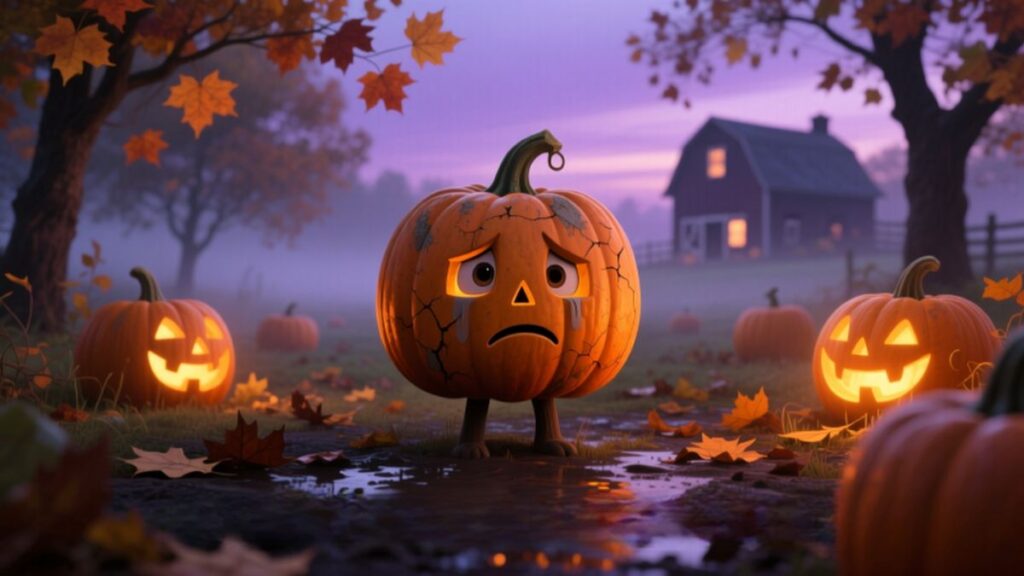
In a quiet little village, every house had a pumpkin on the porch. They glowed orange in the crisp October air. They smiled in the moonlight. They seemed alive, twinkling like tiny suns.
Except for one pumpkin.
This little pumpkin was smaller than the others. His name was Patch. And no matter how hard he tried, he could not glow.
Patch tried everything. He wiggled in the sunlight. He soaked in moonlight. He whispered to the stars. He even hummed little songs to himself. But still, he stayed dark and dull.
The other pumpkins laughed sometimes. “Why try so hard?” they said. “You’ll never shine like the rest of us.”
Patch felt his insides twist. He wanted to glow so badly. He wanted to be part of Halloween. He wanted to be special. But every night, when the village children came to see the pumpkins, Patch stayed invisible.
He started to feel small.
“I’ll never be good enough,” he whispered to himself one evening.
Patch stopped smiling. He stopped trying. He even stopped wishing.
The wind rustled through the pumpkin patch. Leaves blew across the ground. The night felt colder than usual.
All the other pumpkins glowed, laughing at their own reflections. Patch felt lonelier than ever.
The next day, Patch tried to climb a little mound in the pumpkin patch. He wanted to see the stars more closely. He wiggled and wobbled but only rolled a little.
“I am too small,” Patch muttered.
A crow landed nearby. “Why so glum, little pumpkin?” asked the crow.
“I cannot glow,” said Patch.
The crow tilted his head. “And what do you want with glowing?”
“To be seen,” Patch replied. “To be special.”
The crow cawed. “Special isn’t always about shining the brightest. Sometimes, it’s about who notices you.”
Patch didn’t understand, but the words stayed with him.
Days passed. Halloween was coming closer. The children practiced their costumes. They ran through the streets, laughing. They carried baskets full of candy.
Patch watched them from the patch. His little heart sank.
“I am not part of this,” he whispered. “I am invisible.”
One evening, as the sun dipped low and painted the sky pink, a little girl walked down the path. She had a warm coat, a woolly hat, and eyes that sparkled.
She knelt beside Patch. “Hello, little pumpkin,” she said softly.
Patch did not answer. He could not. Pumpkins do not speak. But if he could, he would have whispered, I’m invisible.
The girl tilted her head. “You’re still my favorite,” she said.
Patch felt something inside him stir. A little warmth, a flutter, a tickle.
The next night, Halloween arrived. Children ran through the village, carrying glowing pumpkins. They giggled, shouted, and shouted again.
Patch stayed on the porch, dark and shy.
But then the little girl returned. She held a tiny candle and set it carefully beside him.
Patch felt the warmth of her kindness.
And then… something happened.
A soft glow began to spread inside him. A warm, golden light.
He twinkled at first like a timid star. Then brighter and brighter. Patch was shining as brightly as any pumpkin in the village.
The children noticed him immediately. They laughed and pointed. “Look! That pumpkin is glowing!”
Patch felt a joy he had never felt before.
He did not need to compete with the other pumpkins anymore. He realized that his glow came from inside. From happiness. From kindness. From feeling loved.
Even the other pumpkins noticed. “Wow,” they said. “Patch, you shine differently. You shine from your heart.”
Patch felt proud. Truly proud.
The little girl visited every year after that. She whispered stories to Patch, sang little songs, and sometimes drew little faces on him with chalk.
Patch learned something important.
It is not about being the brightest. It is not about trying harder than everyone else. Real glow comes from inside. From happiness. From kindness. From being yourself.
Patch shone brighter than he ever imagined.
But Halloween night was not the only night that mattered. Patch glowed on the nights leading up to Halloween too. Every time the little girl walked by, every time a child laughed in the street, he felt warmth and light.
He learned to notice the small things. The rustle of leaves. The first crisp breeze of autumn. The smell of pumpkin bread from the bakery.
Patch even started noticing the other pumpkins differently. He no longer envied them. He saw their light, but he also saw their cracks, their spots, their differences.
“I am not the same,” Patch thought. “And that is okay.”
The villagers began to talk about Patch. They said, “Have you seen that little pumpkin that glows from the inside? It is the most magical pumpkin of all.”
Children came from far away to see him. They wanted to touch him. They wanted to hug him. They wanted to feel that glow.
Patch loved it, not because he wanted attention, but because he realized he made people happy. That was the real magic.
Every Halloween, he tried new things. He twirled in the wind. He shivered when the leaves blew around him. He even danced a little, making children giggle and clap.
Patch learned that happiness was not a quiet thing. It was noisy. It was funny. It was glowing.
He also learned to share his joy. If a smaller pumpkin felt left out, Patch would roll next to them and share his warmth. Sometimes, their light would flicker a little too.
The little girl always returned. She would whisper, “Thank you, Patch. You make Halloween magical.”
Patch had never felt so proud. He did not need to compare himself to other pumpkins. He had his own light, his own joy, his own magic.
Patch even started seeing the world differently. Birds would perch near him. Squirrels would play around him. The wind felt friendly. The stars looked like friends.
One Halloween night, a small scarecrow fell over in the wind. Patch’s glow lit the path for it to be set back up. The children cheered. “Patch! You saved it!”
And that was true. Patch was no longer just a pumpkin. He was a helper. A friend. A glow-bringer.
Even on the coldest nights, Patch remembered the little girl’s words: You are my favorite.
And that was enough.
Every year, Patch glowed brighter. Not because he tried harder. Not because he wanted to impress anyone. He glowed because he felt joy, kindness, and love.
The village began to celebrate Patch as a symbol of Halloween magic. Not the scary magic, but the warm, friendly, heart-lighting magic.
Even other pumpkins began to learn. They noticed that their glow wasn’t everything. What mattered most was the warmth they could bring to others.
Patch had become a teacher without trying. A lesson in light, love, and happiness.
The children, the villagers, the little girl — they all came to know that the brightest glow does not come from a candle or a flame. It comes from inside.
Patch had discovered the secret that every pumpkin, every ghost, every witch, and every child could learn: happiness and love are stronger than any light.
And that light, once found, could never be taken away.
Patch never forgot that feeling. Every night, every year, every Halloween, he glowed. Warm, steady, joyful.
No one in the village ever doubted the magic of Patch the Pumpkin.
Not because he was perfect. Not because he was the biggest. Not because he was like everyone else.
But because he had learned to shine just as he was.
And that, Patch realized, was the most magical kind of glow of all.
So if you ever see a pumpkin on a porch, small and shy, take a moment to look closely.
It might be Patch, shining quietly.
Shining from inside.
Shining with happiness.
Shining with love.
The little pumpkin who forgot to glow, and then learned that true light comes from the heart.
2. The Witch Who Shared Her Candy
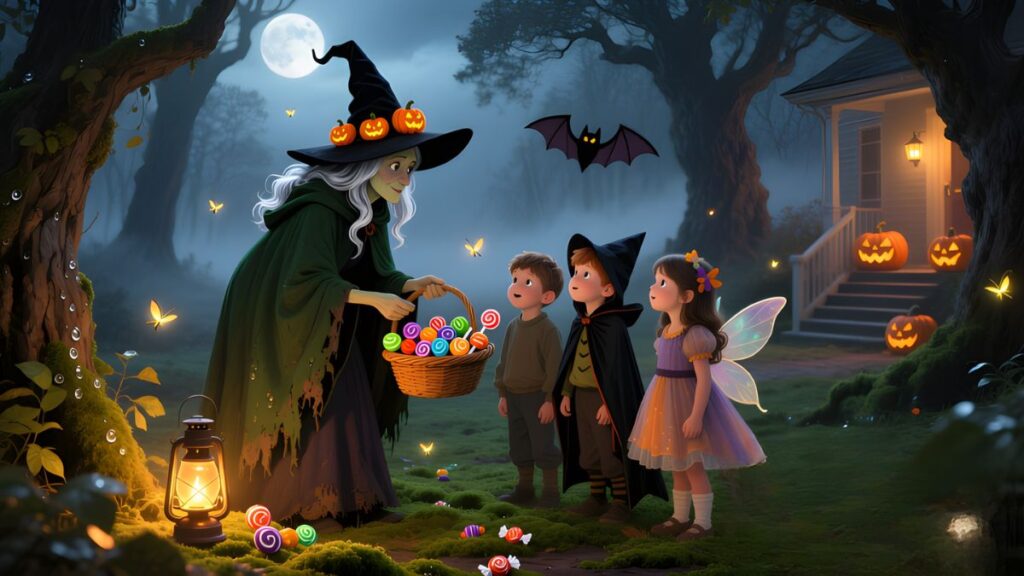
In a little village at the edge of a forest, Halloween was the most exciting night of the year.
Every house decorated their doors with pumpkins, cobwebs, and sparkling lights. Children ran up and down the streets in costumes, carrying baskets ready for candy.
High above, on a hill at the far edge of the village, lived a young witch named Wanda.
Wanda loved candy. She loved it more than she loved spells, brooms, or even her black cat, Midnight.
She had jars of candy in every color—red, blue, green, and yellow. Chocolates, gummies, lollipops, and caramel chews. Her candy shelf was so tall, it nearly touched the ceiling of her little attic room.
Halloween was Wanda’s favorite time of year. She baked special treats all week. She wrapped candies in shiny paper. She even practiced little magical tricks to make her candy appear in surprising ways.
But Wanda had one problem. She loved candy so much that she did not like to share.
One chilly October evening, Wanda lined up all her candy on a wooden table. She looked at it with sparkling eyes. “This is all mine,” she whispered.
She counted each chocolate, each gumdrop, each caramel. She arranged them into neat piles.
“I will not share,” she said aloud. “Not one little piece.”
Meanwhile, the village below was buzzing. Children giggled and ran through the streets, shouting “Trick or treat!” and collecting candy from every doorstep.
Wanda watched from her window, her black cat perched on her shoulder. “Ha,” she said. “I have enough candy for me. I do not need anyone else.”
The night was growing darker. The moon peeked through the clouds. The wind whispered through the trees.
Suddenly, there was a soft tapping at Wanda’s door.
She frowned. “Who could that be?” she muttered.
Wanda opened the door a crack. Outside, she saw a small ghost floating in the yard.
The ghost’s sheet was a little tattered. Its eyes were big and round. And in its tiny hands, it held nothing at all.
“Hello,” said the ghost softly. “I was hoping for some candy.”
Wanda crossed her arms. “Candy is for me. Not for ghosts,” she said.
The ghost looked sad. It floated back a little, but it did not leave.
Wanda felt something stir in her chest. She didn’t know why. She was used to being alone. She was used to keeping everything to herself.
But the ghost’s eyes were so round, so lonely, that Wanda felt a little tug at her heart.
“I… I don’t think I can give you any,” Wanda said.
The ghost shook its head. “I just wanted a little. A single piece. I do not have any of my own.”
Wanda looked at her candy piles. The red gumdrops, the green lollipops, the chocolate bars stacked neatly in towers.
Her fingers twitched. She could give one piece. One small piece would not hurt.
She reached into a jar and picked a shiny red gumdrop. She handed it to the ghost.
The ghost’s eyes lit up. It floated in a little circle of joy. “Thank you!” it said.
Wanda felt a warmth she had never felt before. It made her stomach tickle, in a happy way.
“Perhaps I can give another,” Wanda said, smiling a little.
The ghost’s tiny hands reached for a chocolate. Wanda picked one carefully and placed it in its hands.
The ghost’s smile was so wide that Wanda could not help but grin too.
“Perhaps another,” Wanda whispered.
Before she knew it, Wanda had given almost half her candy to the little ghost.
The ghost’s joy was contagious. Wanda laughed. The ghost laughed. Even Midnight the black cat purred with delight.
Suddenly, Wanda realized something amazing.
Giving candy felt even better than keeping it.
She could not explain it, but the happiness of the ghost filled her in a way that chocolate never had.
The ghost floated higher, spinning with joy. “Thank you, thank you, thank you!” it said.
Wanda watched it fly off, disappearing into the moonlight. She felt lighter than ever.
But that was only the beginning.
Soon, more children and small creatures came by her house. A little skeleton, a shy bat, and even a friendly spider.
Each one wanted a single piece of candy. Wanda gave them each a treat.
With every piece she gave, Wanda’s heart grew warmer. She laughed, she smiled, she felt joy ripple through her entire body.
By the end of the night, Wanda’s candy jars were almost empty.
She looked around her attic room. It was quiet. The wind had calmed. The moon shone through her window.
And Wanda felt… happy.
So happy.
The next morning, Wanda woke up and found something astonishing.
Every candy jar was full again. Even taller than before. Chocolates, gummies, lollipops, caramel chews—they had all returned.
Wanda gasped. “It’s magic!” she said.
Midnight purred. “It’s not magic,” he said in his special way only Wanda could understand. “It’s kindness. It returns to you.”
Wanda thought about the little ghost. About the children. About the joy she had felt.
“You’re right,” she whispered. “Sharing is better than keeping everything.”
From that Halloween onward, Wanda always shared her candy. She even left little surprises outside her door for the trick-or-treaters. Sometimes it was a candy bar, sometimes a tiny broomstick made of chocolate.
And every year, the joy of giving grew bigger and bigger.
Children from far and wide came to Wanda’s house, not just for candy, but to see the kind witch who shared her treats.
Wanda loved their laughter. She loved their smiles. She loved the excitement in their eyes as they picked a candy, not knowing which magical surprise they might find.
One year, a tiny ghost returned. It floated around Wanda’s attic and whispered, “Thank you for sharing. You have made Halloween the happiest night of my year.”
Wanda smiled. “I will always share,” she said.
Even the villagers noticed a change in Wanda. She became the kindest, happiest witch anyone had ever known.
Other witches and wizards in nearby villages heard her story. They said, “Wanda’s Halloween is the most magical.”
But Wanda didn’t care about fame or magic. She only cared about the happiness she could spread.
Sometimes, she even invited children into her attic to help her decorate her candy jars. They laughed, they spilled a little sugar, and they painted the jars with bright colors.
Wanda watched them with joy. She realized that happiness grows when shared.
Every Halloween, she baked extra candy. Every Halloween, she shared more than she thought she could.
And every Halloween, she felt the same warm, glowing happiness that first little ghost had given her.
Wanda learned that giving brings a magic far greater than spells. A magic that lights up hearts, not just houses.
She even taught Midnight to help. The black cat would carry tiny bags of candy to the children quietly while Wanda waved at the windows.
The village never forgot her. Parents told their children, “Go to Wanda’s house. You will find candy, but more importantly, you will see the joy of giving.”
Every Halloween, Wanda felt that same spark in her heart. A spark that grew brighter with every smile, every laugh, every happy little creature that left her doorstep with candy.
And that was the magic Wanda loved the most.
Halloween was never about keeping candy. It was about sharing it. About making someone’s night brighter. About seeing the joy on a ghost’s face, a child’s smile, or even a shy spider dancing with delight.
Wanda’s candy was sweet, but kindness was sweeter.
Every Halloween, the villagers came together, and Wanda’s little hilltop cottage became a symbol of warmth and magic.
Even years later, children would tell the story of the witch who shared her candy. They would say, “She had the biggest heart in the village. And the best Halloween spirit.”
Wanda would smile from her window, Midnight at her side, jars full of candy ready to give away.
And she knew, deep in her heart, that the happiness she shared would always return to her in ways even magic could not explain.
Halloween had become more than fun. It had become a celebration of joy, kindness, and generosity.
And all because a little witch decided to share her candy.
Wanda never forgot that first ghost who taught her the lesson. She often left an extra piece of candy on the windowsill just in case a small, shy ghost came to visit.
She had learned that sharing creates a chain of happiness that cannot be broken.
It was the kind of magic that no spell could ever match.
And every Halloween, Wanda reminded herself of the lesson:
The sweetest treat of all is giving.
The most magical spell of all is kindness.
And the happiest heart of all is the one that shares.
3. The Little Ghost Who Lost His Boo
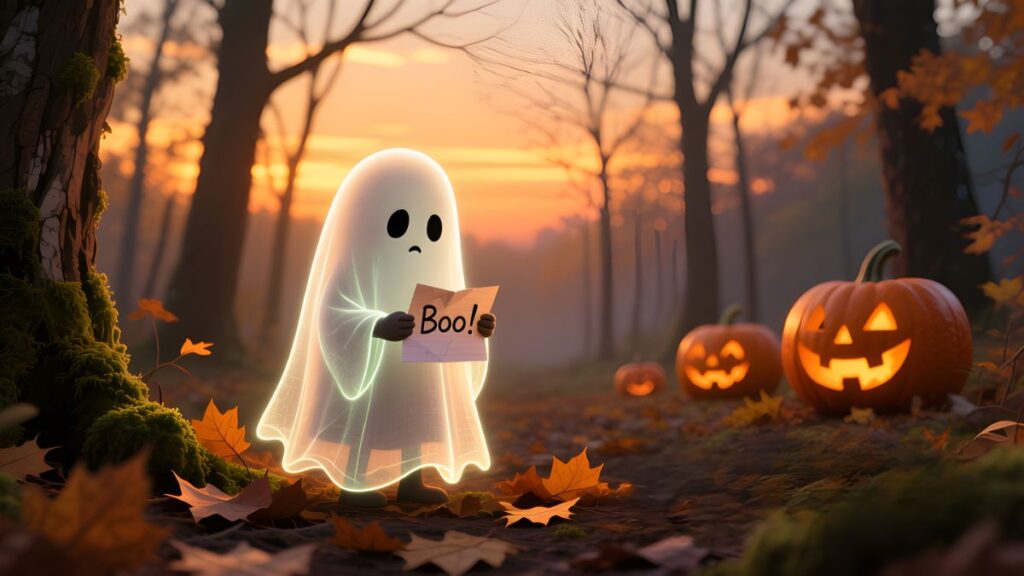
In a quiet village on the edge of a forest, Halloween was the most magical night of the year.
The streets were lined with jack-o’-lanterns, their carved faces glowing in the crisp night air. Children ran up and down, laughing, carrying baskets full of candy.
Among them floated a very small ghost named Boo-Boo.
Boo-Boo was not like the other ghosts. He was tiny, round, and soft, with a little sheet that flapped when he moved.
But there was one problem. Boo-Boo had lost his “Boo.”
You see, every ghost needs a “Boo.” It’s the sound they make to say hello, to scare a little, or to surprise someone.
Boo-Boo’s Boo was gone.
He tried to say it. “Boo!” he whispered.
But instead, he hiccupped. “Hic! Hic!”
He tried again. “Boo!” Hiccup!
And again. Hic!
The other ghosts around him floated by, swirling in the night. They zipped, they zoomed, they whispered “Boo!” perfectly.
“Why can’t I do it?” Boo-Boo asked himself.
He tried and tried, but every attempt ended in hiccups.
“I’m no good at being a ghost,” Boo-Boo sighed.
That’s when a kind old ghost named Casper floated by. Casper had been around for hundreds of Halloweens. He was gentle, wise, and had a soft, glowing sheet.
“Why the long face, little one?” Casper asked.
Boo-Boo explained. “I lost my Boo. I can’t say it. I hiccup instead. I ruin everything.”
Casper chuckled softly. “Hiccuping isn’t ruining anything. Sometimes, the things we think are mistakes can be our greatest gifts.”
Boo-Boo tilted his head. “Really?”
“Really,” said Casper. “But first, you must practice. You must try to find your own way of saying Boo.”
Boo-Boo nodded. He wanted to try.
He floated to the top of a small hill. The village lay below, glowing with pumpkin lights. The wind whistled through the trees.
He took a deep breath. “Boo!” Hiccup!
Again. “Boo!” Hic!
He tried and tried, but he kept hiccuping.
Feeling frustrated, Boo-Boo flew down to the pumpkin patch. The pumpkins glowed softly in the moonlight.
“Why are you so sad, little ghost?” asked a tiny pumpkin.
“I lost my Boo,” Boo-Boo said.
The pumpkin smiled. “Maybe you don’t need a regular Boo. Maybe you need your own special Boo.”
Boo-Boo didn’t understand.
He flew to the village square. The children were walking home, laughing and sharing candy.
He tried again. “Boo!” Hiccup!
Then something surprising happened.
A little boy jumped in fright. “A hiccuping ghost!” he laughed.
Another child giggled. “You’re funny, little ghost!”
Boo-Boo’s heart leapt. He had never thought hiccups could be fun.
He tried once more. “Boo! Hic! Hic!”
The children laughed louder. They clapped their hands and shouted, “More! More!”
Boo-Boo realized something amazing. His hiccups didn’t ruin his Boo. They made it unique.
Every ghost in the village watched in surprise. Boo-Boo’s hiccuping Boo was not scary. It was fun. It was silly. It was special.
Boo-Boo floated higher and higher, trying his Boo again. “Boo! Hic! Hic! Boo!”
The wind carried his hiccups across the village. It was like a little melody, bouncing from one street to another.
The pumpkins seemed to glow brighter. The leaves twirled in the air. Even the bats paused to listen.
Boo-Boo realized that losing his Boo wasn’t a problem. It was an opportunity to find a new way to say it.
He practiced all night. With every hiccup, his confidence grew.
By the time the first children reached the village the next morning, Boo-Boo was ready.
He floated in the square and took a deep breath. “Boo! Hic! Hic! Boo!”
The children laughed, clapped, and cheered.
“Bravo!” said Casper, floating beside him. “You found your own Boo.”
Boo-Boo felt proud. His hiccuping Boo was perfect. It was all his own.
The other ghosts came over. “That’s amazing!” they said. “No one else has a Boo like yours.”
Boo-Boo smiled. He realized something important.
It’s not about being like everyone else. It’s about being yourself.
And sometimes, the things you think are mistakes are actually your greatest strengths.
Every Halloween after that, Boo-Boo practiced his hiccuping Boo. He became famous among the children and ghosts alike.
The villagers would tell stories about the little ghost with the hiccuping Boo. They would laugh and smile, remembering how Boo-Boo turned a mistake into something magical.
Boo-Boo even made new friends that Halloween. A shy skeleton named Skelly, a small bat named Bella, and a tiny witch named Willa.
They all thought his hiccups were funny and joined him in Halloween fun.
They danced through the village square, their shadows flickering in the pumpkin lights.
Boo-Boo’s hiccups became a game. Every child tried to mimic him. “Boo! Hic! Hic!” they shouted, laughing uncontrollably.
Even Casper joined in. “Hic! Boo! Hic!” he called, and everyone cheered.
Boo-Boo realized that losing his original Boo had led him to something better.
Something unique. Something joyful. Something that made everyone laugh.
Halloween became his favorite night. Not because he scared anyone, but because he made them smile.
Every pumpkin, every bat, every ghost joined in the fun.
And every child in the village learned an important lesson: sometimes, mistakes are not mistakes at all. They can be magic waiting to be discovered.
Boo-Boo floated home that night, tired but happy.
He had found his Boo. His own special, hiccuping Boo.
He had found friends who accepted him just as he was.
He had found joy in being himself.
And from that Halloween on, Boo-Boo never worried about losing his Boo again.
He practiced every night. He laughed at every hiccup. He shared his joy with every child who walked past his village.
Boo-Boo learned that being different was wonderful. It made him memorable. It made him special.
The villagers always remembered the little ghost who lost his Boo. They told the story for years:
“Boo-Boo’s hiccups make Halloween brighter. They make us laugh. They make us happy. They remind us that being yourself is the most magical thing of all.”
Boo-Boo would float quietly in the moonlight, hearing the children laugh and knowing he had found his true voice.
Every Halloween, he would try new sounds. “Boo! Hic! Hic! Whee! Boo!”
The pumpkins would glow, the leaves would dance, and the wind would carry the sound across the village.
And Boo-Boo, the little ghost who lost his Boo, had never been happier.
He had learned the greatest lesson of all:
Your mistakes can be your magic.
Your uniqueness is your power.
And your laughter can light up the world.
Boo-Boo never forgot it.
He floated through the village every year, a little ghost with a big heart.
Hiccuping, laughing, shining, and spreading Halloween joy wherever he went.
4. The Bat Who Was Afraid of the Dark
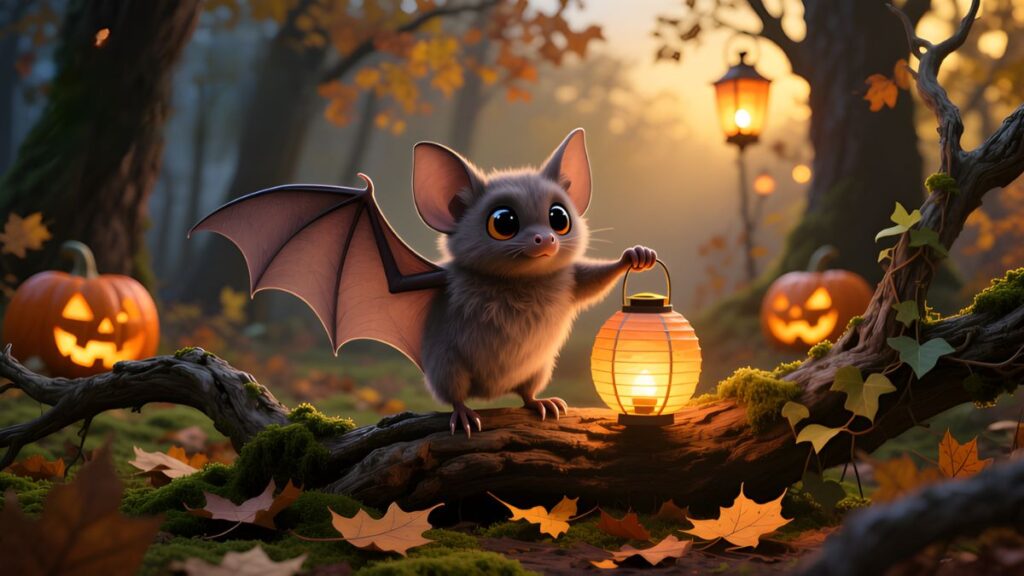
In a quiet forest at the edge of a small village, Halloween night was always full of excitement.
Leaves rustled in the crisp autumn air. Pumpkins glowed on porches, and children laughed as they ran through the streets in their costumes.
High up in a tall oak tree lived a young bat named Benny.
Benny was small, with soft, brown wings and bright, curious eyes.
But Benny had a very unusual problem.
Benny was afraid of the dark.
Yes, a bat who could not stand the dark.
Every night, while other bats swooped and soared through the forest, Benny would hide in his cozy hollow.
“I cannot fly in the dark,” Benny whispered to himself. “It is too scary.”
Benny’s friends tried to encourage him. “The night is beautiful!” said Bella, a wise older bat. “The moonlight guides us. The stars sparkle. You will see.”
Benny shook his head. “It’s too dark. I might bump into something. I might get lost. I might—”
“Nothing bad will happen,” Bella said kindly. “You just need to try.”
But Benny would not listen. He stayed tucked in his hollow.
Halloween was coming, and Benny’s friends were excited. They flew over the village, watching children laugh and carry candy.
Benny watched from his hiding spot. He longed to join them but could not bring himself to leave the safety of the hollow.
“I’ll never enjoy Halloween,” Benny thought sadly.
That night, a gentle owl named Olive swooped down and landed near Benny’s hollow.
“Why so glum, little bat?” Olive asked, tilting her head.
“I’m afraid of the dark,” Benny admitted.
Olive nodded knowingly. “Many creatures fear the dark at first. But the dark can be full of wonders you have never seen.”
Benny shivered. “I don’t think I can.”
“You can,” Olive said. “But you have to take one small step at a time.”
Benny listened, a little unsure, but something about Olive’s calm voice made him feel brave.
He peeked out from the hollow. The forest below was bathed in moonlight. Shadows danced on the ground. Leaves swirled in the breeze.
“It doesn’t look so bad,” Benny whispered.
“Exactly,” said Olive. “Now, come on. Just a little flight. Nothing more.”
Benny hesitated. His heart beat fast. But he stretched his wings and took a tiny leap.
“Ahhh!” he squeaked, flapping wildly.
Olive flew beside him. “Steady now. One wing at a time.”
Benny focused. Flap. Glide. Flap. Glide.
Before long, Benny realized he was flying. And the dark was not scary.
The moon shone brightly. Stars twinkled like tiny lanterns. The forest looked magical.
Benny’s fear began to melt away.
He swooped down toward the village. The children ran and laughed below, their jack-o’-lanterns glowing warmly.
Benny felt excitement bubbling inside him. He could see everything from above. He could see the rooftops, the glowing pumpkins, the laughing children, and even the little witches and ghosts floating around.
“This is amazing!” Benny shouted.
Olive smiled. “See? The dark can be beautiful.”
Benny realized something important. Fear had been keeping him from experiencing magic.
The wind carried him higher, and he felt free for the first time.
He swooped down to a group of bats who were playing hide-and-seek in the shadows.
“Benny!” they cheered. “You’re flying!”
Benny laughed. “I’m not afraid anymore!”
The bats swooped together, zigzagging through the night. Benny followed, learning to trust the darkness.
He found that the shadows helped him hide, the moonlight guided him, and the stars sparkled just for him.
The village below looked like a storybook. Tiny children ran from house to house. Pumpkins twinkled on porches. The wind whispered in the trees.
Benny felt a thrill. He realized that being brave made everything more magical.
He even helped a small owl find its way back to its nest. “Thank you, Benny!” the owl hooted.
Benny felt proud. Brave. Strong.
He realized that fear is natural, but courage is something you grow.
He practiced flying every night after that. He tried new tricks, soaring high and diving low. Each night, the darkness felt less frightening and more like a friend.
By the time Halloween night arrived, Benny was ready.
He led his friends over the village. Children pointed and laughed. “Look at that bat! He’s amazing!”
Benny swooped and twirled, showing off his new skills. The villagers clapped and cheered.
Benny even helped guide lost children home safely. He led them through the dark streets with confidence, using the moonlight to show them the way.
At the top of the village clock tower, Benny perched to rest. He looked over the glowing village.
He remembered the days he had been too scared to leave his hollow.
“I cannot believe I was afraid,” he whispered.
But he also realized something wonderful. Fear is normal, but courage makes life magical.
Every Halloween after that, Benny flew above the village, guiding children and animals alike.
He became a symbol of bravery, showing that even the smallest, most fearful bat could conquer the dark.
The forest echoed with the laughter of bats, the whispers of owls, and the rustle of leaves.
Benny felt joy in his heart. He had faced his fear, and the world looked brighter because of it.
The villagers told the story for years:
“There was a little bat named Benny who was afraid of the dark. But he learned to be brave, and now he lights up Halloween for everyone.”
Benny learned an important lesson: fear is temporary, but courage lasts forever.
He learned that the darkness is not something to run from. It is something to explore, to enjoy, to fly through.
Benny also learned that magic can be found in unexpected places. In moonlight, in stars, in the laughter of children, and even in the wind through the trees.
Each Halloween, Benny soared high above the village, wings spread wide.
He danced in the sky with his friends, the forest and the village glowing below.
He guided little bats who were afraid. He helped lost animals. He cheered on the children with his joyful flights.
He realized that being brave was not about being fearless. It was about trying, even when you were afraid.
Every year, Benny’s story reminded the villagers that courage is magical.
He became an example for all creatures, big and small.
Even the tiny bats who were too scared to leave their hollow looked up and whispered, “If Benny can do it, so can we.”
Benny smiled, knowing he had inspired others.
He realized that fear is just the beginning of an adventure.
The dark, once frightening, became a place of wonder.
He found beauty in the shadows. He danced among the stars. He glided on the wind.
And he knew that Halloween had never been more magical.
Benny had learned to embrace the night, to trust himself, and to see that even the darkest places can hold light.
The villagers celebrated Benny’s courage. Children dressed as little bats, pretending to fly through the streets.
Every Halloween, Benny reminded everyone that bravery is bigger than fear, and that adventure waits on the other side of it.
Benny, the bat who was once afraid of the dark, had discovered the magic of courage.
And that magic glowed brighter than any jack-o’-lantern in the village.
He soared, he laughed, he played, and he guided all who needed help.
And every night, Benny remembered Olive’s words:
“The dark can be full of wonders you have never seen.”
He had discovered them all.
Benny, the little bat who was afraid, had found joy in the night.
He had found adventure.
He had found courage.
And every Halloween, the villagers and the forest celebrated him.
The bat who was once afraid of the dark had become the bravest creature in the forest.
Benny’s wings glimmered in the moonlight. His eyes sparkled with joy.
And the dark was no longer scary.
It was magical.
It was beautiful.
It was Benny’s world.
5. The Skeleton Who Couldn’t Stop Dancing
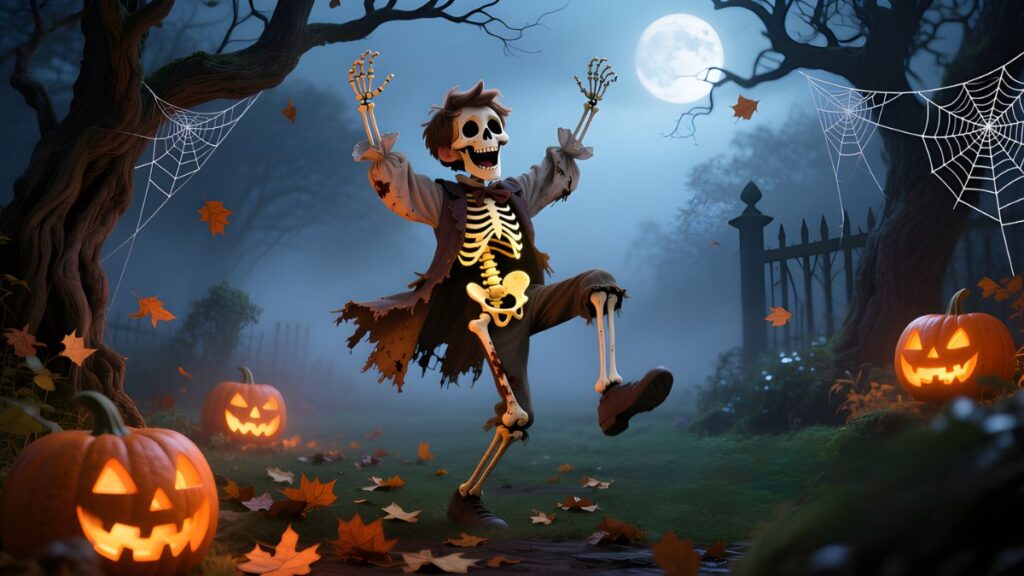
In a quiet village surrounded by hills and forests, Halloween was the most exciting night of the year.
Every house had jack-o’-lanterns on their porches. Pumpkins glowed in the dark. Children ran through the streets, carrying baskets full of candy.
High on a hill, in an old, creaky house, lived a skeleton named Skully.
Skully was small, with rattling bones and a big, toothy grin.
Skully had a problem. A very unusual problem.
He could not stop dancing.
It didn’t matter what he was doing. Standing still? He tapped his foot. Sitting? He wiggled his spine. Walking? He twirled and spun.
His friends often said, “Skully, you dance too much!”
But Skully could not help it. His bones loved rhythm. His joints loved motion. Every time he heard music or even the rustle of leaves, his body moved.
Halloween was the best night of the year for Skully.
The children played music. The pumpkins glowed. The wind whistled through the trees. And Skully could dance all night.
But there was a problem.
Some villagers were frightened by his constant dancing. They thought it was spooky.
“They cannot understand me,” Skully whispered to himself. “I just want to dance.”
Skully tried to stay still sometimes. He really did.
He leaned against a tree. He closed his eyes. He counted silently.
But then a pumpkin fell with a soft thump.
His feet tapped. His spine wiggled. His arms twirled.
“Oh no!” Skully thought. “I cannot control it!”
He ran to the village square. Children were running and laughing, showing off their costumes.
Skully tried to hide behind a tree. But the music from the children’s songs filled the air.
He could not resist.
Skully began to move.
Tap. Tap. Spin. Spin.
The children noticed immediately.
“Look! That skeleton is dancing!” they shouted.
Skully twirled faster. His arms waved. His legs spun like windmills.
The villagers gasped. Some were shocked. Some laughed. Some clapped.
Skully laughed too. Dancing was all he wanted to do.
A little witch named Willa floated by. She had a tiny broomstick and a glittering hat.
“Skully, why do you dance so much?” Willa asked.
“I cannot help it!” Skully said. “My bones just love music!”
Willa giggled. “Then dance! Halloween is for fun!”
Skully smiled. He twirled in the air. He tapped on rooftops. He spun around the pumpkin patch.
The children joined in. They copied his moves. They tapped their feet, waved their arms, and spun around with laughter.
Skully felt happy. Really happy.
He realized that dancing could bring joy to others too.
He kept moving. He twirled through the village streets. He spun past the glowing pumpkins. He wiggled through the shadows of the tall trees.
Even the black cats stopped to watch him dance. They purred in rhythm with his rattling bones.
Skully’s dancing became famous. Children told their friends, “You have to see Skully! The skeleton who can’t stop dancing!”
The villagers began to see that Skully’s dancing was not scary at all. It was fun. It made them laugh. It made Halloween brighter.
Skully felt proud. He had finally found a way to be himself without scaring anyone.
That night, the wind carried the music from the village square. Skully’s bones rattled in perfect rhythm.
He danced under the full moon. He twirled over rooftops. He leaped across fences.
The children clapped. The pumpkins seemed to glow brighter. The wind whistled like applause.
Skully’s joy was contagious. Every creature in the forest joined in. Owls hooted. Foxes pranced. Even the bats swooped down to follow his rhythm.
Skully felt like he belonged for the first time.
He realized that Halloween was not just about candy or costumes. It was about joy. It was about laughter. It was about sharing happiness.
From that night on, every Halloween, Skully danced through the village streets.
He taught the children how to twirl. He taught the bats how to spin. He taught the owls how to tap their wings in rhythm.
Even other skeletons from nearby villages came to join.
They brought music. They brought laughter. They brought Halloween cheer.
The village square became a stage. Pumpkins glowed on the edges. Candles flickered in the windows. Children ran in circles, waving their arms and copying Skully’s moves.
Skully’s friends cheered him on. “You are the happiest skeleton ever!” they shouted.
Skully felt something magical.
Dancing was not just fun for him anymore. It made others happy too.
Every spin, every twirl, every tap of his bones spread joy across the village.
He learned that being himself, even if unusual, could bring magic to the world.
Halloween night became Skully’s favorite time of year.
The villagers no longer feared him. They waited for him. They danced with him. They laughed with him.
Even the adults joined in, spinning around and feeling young again.
Skully’s dancing was not just movement. It was celebration. It was connection. It was love.
The children named a special dance after him: the Skully Spin. Every year, they would perform it in the village square, copying his moves perfectly.
Skully felt proud. He had found his place.
He had learned that even if you cannot stop doing what you love, it can still be wonderful.
The forest echoed with laughter and music. The leaves swirled in rhythm. The pumpkins glowed warmly.
Skully danced until his bones ached. But he was happy. Very happy.
He realized that joy grows when shared. And Halloween was the perfect night to share it.
Skully even started teaching the younger skeletons how to dance. “Move with the music, not against it,” he told them.
They rattled and spun, laughed and twirled, and soon, the village square was full of dancing skeletons.
Children clapped. Cats purred. Dogs barked in excitement. The owls hooted. Even the wind seemed to dance along.
Skully felt like the happiest skeleton in the world.
He twirled under the moonlight. He tapped his feet on rooftops. He spun between trees.
The music carried him higher. The laughter carried him farther.
He realized that Halloween was about magic, and magic was joy.
Every year, children waited for Skully’s dancing. Parents told their kids, “Watch the skeleton! He will make you laugh!”
Skully danced through Halloween after Halloween.
He never stopped. Not for fear. Not for rules. Not even for a little rain.
He knew that his dancing made the world brighter.
And he loved it.
Every Halloween, Skully reminded everyone:
Being yourself is the greatest joy.
Sharing your happiness spreads magic.
And dancing, even if unstoppable, can light up hearts.
Skully twirled in the moonlight, bones rattling, grinning from ear to ear.
The village glowed. The pumpkins smiled. The children laughed.
And the skeleton who could not stop dancing had never been happier.
He had found his purpose. He had found his joy.
He had found Halloween magic.
And every year, Skully danced, spreading laughter, happiness, and Halloween cheer for everyone to see.
6. The Trick-or-Treat Map
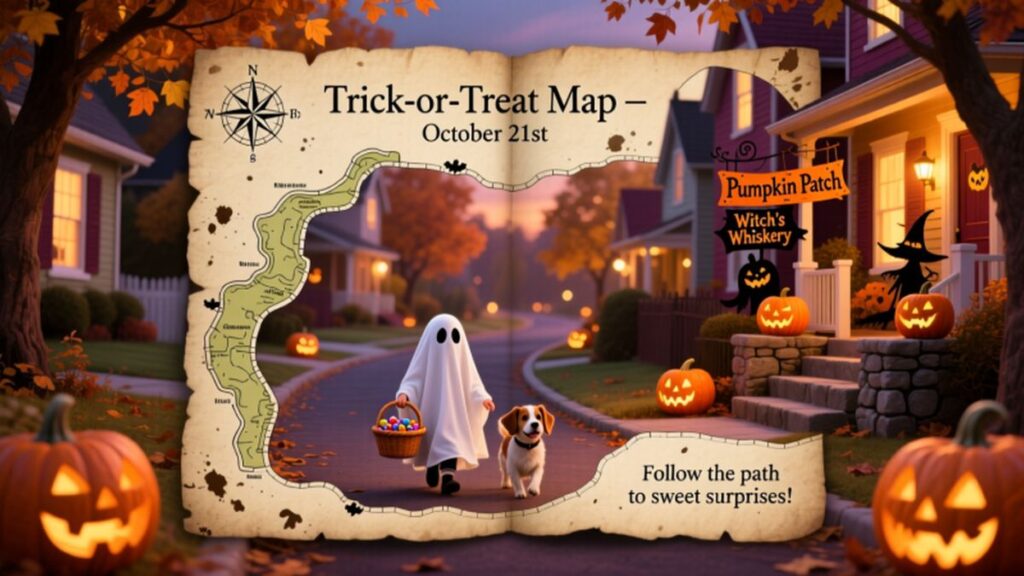
In a small village surrounded by tall trees and winding streets, Halloween was the most exciting night of the year.
Pumpkins glowed on porches. Children ran through the streets, laughing and carrying baskets for candy.
Everyone looked forward to one thing: the best trick-or-treating routes.
And no one knew them better than a clever little girl named Lucy.
Lucy was eight years old, with bright eyes and a backpack full of colored pencils.
She had an idea that year.
“I will make a trick-or-treat map!” she declared.
A trick-or-treat map was a special map that showed the houses with the best candy, the spookiest decorations, and even secret shortcuts.
Lucy spent days drawing. She marked every house in her village, from Mr. Thompson’s house with the giant jack-o’-lanterns to Mrs. Baker’s home with the chocolate fountains.
She even drew little notes: “Extra gummy bears here!” or “Caramel apples on this porch!”
Her map became a masterpiece. Every street, every house, every alleyway carefully marked.
But Lucy’s map had a secret.
It was magical.
When Lucy touched it, the map glowed softly. Tiny arrows appeared, pointing her toward the best candy.
She kept it a secret. Only she knew.
Finally, Halloween night arrived.
Lucy put on her witch costume: a sparkly hat, a flowing black dress, and shiny shoes.
She carried her backpack, her map tucked safely inside.
The village streets were alive. Children ran from house to house. Pumpkins glowed on every porch. The wind whispered through the trees.
Lucy opened her map. The glow filled her hands.
Tiny arrows pointed to the first house.
She skipped down the street, following the magical map.
The first house had a chocolate fountain and gummy worms. Lucy’s eyes sparkled. “Perfect!” she whispered.
She collected her candy, then checked the map.
Next, an alley with glowing pumpkins. A house decorated like a haunted castle. Ghosts floated above the porch.
Lucy followed the arrows carefully, laughing quietly to herself.
Everything on the map was right. Every house had the best treats.
But then something unusual happened.
The map began to glow brighter. The arrows spun and danced.
Lucy frowned. “What’s happening?” she asked.
A soft voice whispered. “Follow me.”
Lucy looked around. No one was there.
The map’s arrows pointed toward the forest at the edge of the village.
Lucy hesitated. Forests could be spooky. Shadows danced in the moonlight. Leaves rustled.
But curiosity won. She followed the glowing arrows.
The trees parted to reveal a small, hidden clearing.
In the center was a house she had never seen before.
It was covered in candy. Lollipops grew like flowers. Chocolate bars hung from the windows. Gummies spilled from the roof.
Lucy gasped. “This is amazing!”
A friendly old man appeared. He had twinkling eyes, a candy-striped hat, and a warm smile.
“Hello, Lucy,” he said. “I’ve been waiting for you.”
Lucy blinked. “You know my name?”
The man chuckled. “Of course. You are the clever girl who made the Trick-or-Treat Map.”
Lucy nodded. “Yes, I made it. But… how did you find me?”
“I am the Candy Keeper,” the man said. “I make sure every Halloween has magic. Your map led you here because you believe in kindness, fun, and sharing.”
Lucy’s eyes widened. “Magic?”
“Magic,” the Candy Keeper repeated. “This house is full of treats, but also full of surprises. Only those who follow the map with a joyful heart can find it.”
Lucy felt a thrill. She ran inside, her basket ready.
The Candy Keeper showed her rooms full of candy: chocolate rivers, caramel mountains, rainbow lollipop trees.
But the best part?
The Candy Keeper said, “You may take as much as you can carry, but remember… magic grows when you share.”
Lucy smiled. She carefully picked candy, filling her backpack and pockets.
She left some candy on a little table for the forest animals, too. Squirrels, owls, and foxes gathered curiously.
“Sharing makes it more fun,” Lucy whispered.
When she stepped outside, the map glowed again. Tiny arrows pointed her toward the village.
Lucy followed, skipping down the streets.
She gave candy to friends along the way. She shared chocolate bars with her little brother, gummies with neighbors, and even a caramel apple with a shy ghost she met by the fence.
Every time she shared, the map glowed brighter.
By the end of the night, Lucy had filled her basket and spread joy across the village.
She returned home, tired but happy. Her backpack full, her heart full.
The map glowed one last time. Then it lay still, its magic resting until the next Halloween.
Lucy learned an important lesson.
Candy is sweeter when shared. Magic is stronger when joy is given.
She looked out her window at the village below. Children ran with baskets. Pumpkins glowed. Shadows danced.
And she smiled, knowing she had a secret treasure: a magical map and the power of sharing.
Every Halloween after that, Lucy made her map again. She marked every house, every secret path, every candy treasure.
Sometimes, she left little notes for friends: “Follow the stars,” “Share your treats,” “Laugh with joy.”
The villagers loved her maps. Children whispered, “Lucy always knows the best places.”
And Lucy laughed. “It’s not just the map,” she said. “It’s the joy you carry in your heart.”
Even years later, children told stories about the clever girl with the Trick-or-Treat Map.
They said, “She found candy, magic, and happiness, all in one night.”
Lucy would smile quietly, remembering the hidden clearing, the Candy Keeper, and the glowing arrows.
She knew that Halloween magic was real, especially when shared with others.
From that night on, she not only collected candy. She shared it. She gave directions to friends. She laughed, she helped, she made Halloween brighter for everyone.
The map became more than paper. It became a symbol of kindness, adventure, and joy.
And Lucy knew that next Halloween, she would follow the arrows again, with her heart ready for magic, laughter, and sharing.
The village celebrated her maps. Children copied her paths. Friends shared candy. And every Halloween, Lucy’s spirit made the night sparkle.
Magic, she learned, is everywhere. In candy, in friends, in laughter, in sharing, in believing.
And the Trick-or-Treat Map?
It waited quietly, glowing softly, ready to guide those with joyful hearts.
Lucy went to bed that night, her basket full, her heart full, and the moonlight shining on her smiling face.
She knew that Halloween was not just about candy. It was about joy, adventure, friendship, and magic.
And thanks to the Trick-or-Treat Map, she would always find it.
7. The Cat Who Saved Halloween
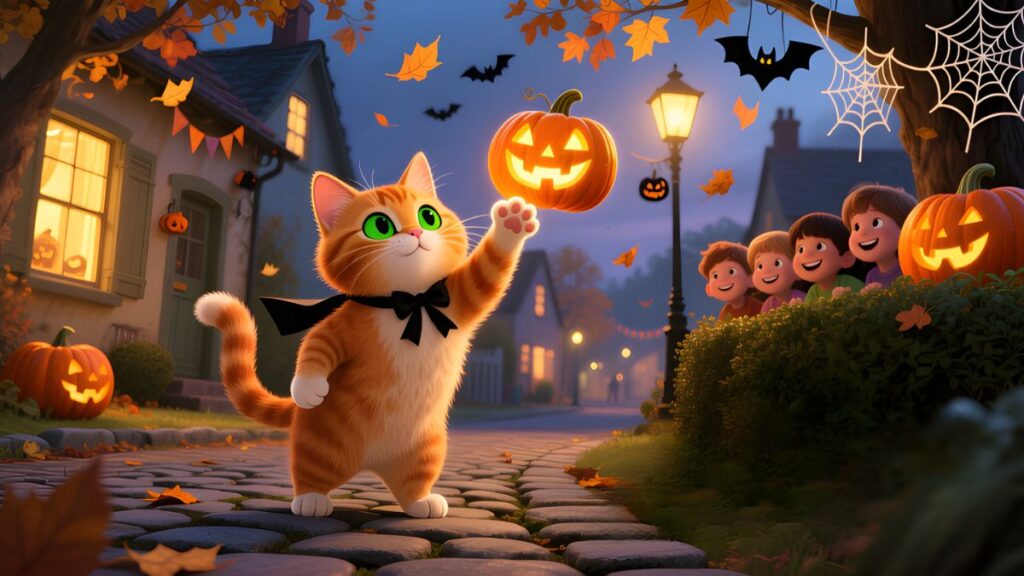
In a quiet village surrounded by forests and winding streets, Halloween was always the most magical night of the year.
Pumpkins glowed on porches. Children laughed and ran from house to house. Ghosts, witches, and tiny superheroes filled the streets.
But this Halloween, something unusual was about to happen.
A small, black cat named Midnight lived on the edge of the village.
Midnight had shiny fur, bright green eyes, and a tail that curled like a question mark.
He was no ordinary cat. Midnight loved adventure.
And he had a very special job: protecting Halloween.
Every year, Midnight watched over the village. He made sure children were safe, pumpkins stayed glowing, and magic filled the night.
But this year, a problem had appeared.
A strong wind swept through the village. It blew out jack-o’-lanterns, scattered candy, and even knocked over a few decorations.
“Oh no!” Midnight meowed. “Halloween cannot be ruined!”
He ran through the streets. His paws padded softly on the cobblestones. His green eyes sparkled in the moonlight.
First, he stopped at Mrs. Baker’s house. Her chocolate fountain had toppled. Caramel was dripping everywhere.
Midnight used his tail to sweep the chocolate back into the fountain. He nudged the caramel into bowls.
“Thank you, Midnight!” Mrs. Baker called. “You’re saving Halloween!”
Midnight purred and darted off.
Next, he ran to the pumpkin patch. The wind had toppled pumpkins and scattered seeds everywhere.
He nudged the pumpkins upright. He rolled the big ones back into place. He even shook the leaves off the smaller ones.
The pumpkins seemed to glow brighter as Midnight worked.
Then, he noticed something worse.
A dark shadow moved through the village. It wasn’t a ghost or a child. It was a mischievous spirit, trying to blow out every pumpkin.
“Not on my watch!” Midnight hissed.
He raced toward the shadow. His paws were fast, his tail flicked, and his green eyes glowed with determination.
The shadow laughed. “You cannot stop me, little cat!”
But Midnight was clever. He leapt onto a fence, then onto a rooftop, then onto a tree branch.
He darted back and forth, confusing the shadow.
Finally, Midnight had an idea.
He ran to the village square. He meowed loudly. He tapped on the rooftops. He flicked his tail.
Then, one by one, the children’s jack-o’-lanterns lit up. The lights shone in patterns, guiding the mischievous shadow away.
The shadow tried to fight the lights. It swirled and hissed, but the glow was too strong.
Midnight chased it to the edge of the forest. With one final leap, he flicked a glowing pumpkin at the shadow.
The shadow shrieked and disappeared into the night.
Midnight landed gracefully. He purred proudly. Halloween was safe.
The villagers cheered. Children clapped. Even the other cats came out to celebrate.
“Midnight saved Halloween!” they shouted.
But Midnight was humble. He simply twitched his tail and licked his paws.
He checked on the village one last time. Pumpkins were glowing. Children were laughing. Candy was safe.
The mischievous spirit was gone. The wind had calmed.
All was right.
Midnight’s bravery became famous. Children whispered about the clever black cat who saved Halloween.
Every year after that, children left little treats for him: milk, tuna, and tiny cat toys.
Midnight even made new friends. A brave owl named Olive helped him patrol the village. A clever bat named Benny flew above to watch the rooftops.
Together, they formed a team to protect Halloween.
The villagers loved their magical guardians. They decorated with extra care, knowing Midnight and his friends would keep the night safe.
But Midnight’s favorite part?
Watching the children laugh. Seeing the pumpkins glow. Feeling the excitement in the crisp autumn air.
He knew Halloween was not just about candy. It was about joy, magic, and safety.
Every year, the children would tell stories about the little black cat who saved Halloween.
They said, “Midnight is brave. Midnight is clever. Midnight keeps Halloween alive.”
Midnight didn’t care about the fame. He cared about the joy, the laughter, and the magic.
He patrolled the streets every Halloween, leapt across rooftops, and flicked his tail at mischievous spirits.
And each year, he grew braver. Each year, the village grew brighter.
The children learned something important too.
They learned that bravery comes in all shapes and sizes.
Even a small black cat can save an entire village.
They learned that caring for others is magical.
They learned that Halloween is about more than costumes or candy. It is about community, joy, and courage.
Midnight’s story spread far and wide. Villages beyond the forest began to hear of the black cat with glowing green eyes and a brave heart.
Children everywhere looked for little Midnight figures in their decorations, hoping to catch a glimpse of courage.
But Midnight stayed humble. He returned to his favorite rooftops, watching over the village quietly.
Sometimes, he curled up on a warm porch, purring softly as children ran past.
Sometimes, he leapt into the air, chasing leaves and shadows for fun.
But always, he stayed alert, ready to protect Halloween again.
The villagers celebrated him every year. They left lanterns and treats in the windows. They whispered stories to their children.
And every Halloween, the magic of Midnight’s bravery filled the streets.
He became more than a cat. He became a symbol.
A symbol of courage. A symbol of magic. A symbol of the joy that Halloween brings.
Every pumpkin, every leaf, every shadow seemed to glow a little brighter because of him.
Children dressed as cats in his honor. They wore masks and tails, pretending to be Midnight and saving Halloween themselves.
Even the mischievous spirits learned to be careful. They knew Midnight was watching.
And Midnight?
He purred softly, watching the streets, flicking his tail, and knowing that Halloween was safe.
Every year, he trained new helpers: small bats, tiny owls, even clever children who understood the magic of protecting joy.
Together, they formed a Halloween team that made the village safer, brighter, and happier.
Midnight knew something very important.
Bravery is not about being the biggest or the strongest.
It is about caring. It is about watching. It is about protecting others.
And magic is strongest when joy is safe.
Every Halloween, the villagers waited for the black cat with glowing green eyes.
They decorated more. They laughed louder. They celebrated longer.
Because they knew, with Midnight watching, Halloween would always be magical.
And every night, as the village glowed with pumpkin lights and children’s laughter, Midnight curled up quietly, his tail wrapped around him, ready for another adventure.
He had saved Halloween.
He would save it again.
And the story of the cat who saved Halloween would live on forever.
What makes a great Halloween story for kids?
A great Halloween story for kids is simple and kind of magical. Here’s a quick checklist:
- Safe spooky: a touch of mystery, never real fright.
- Clear arc: a beginning, a small problem, then a satisfying ending.
- Friendly characters: pumpkins, shy ghosts, silly witches — all easy to care about.
- One small lesson: kindness, courage, sharing, or being yourself.
- A warm ending: no long-lasting fear — just relief or a smile.
Tone and length, in one line each: toddlers need rhythm and repeat; early readers want short action and humor; older kids enjoy clues and mild twists.
Read-aloud tips to make it magical
A few simple tricks make storytime sparkle.
Set the mood
Dim the lights a bit, light a pumpkin or a candle (safely), and use a flashlight for dramatic shadows. A small prop — a hat, a broom, a stuffed bat — helps focus attention.
Use your voice
Give each character a different voice. Use a whisper for secrets and a big, hearty laugh for happy bits. Slow down for suspense, speed up for action.
Add small sounds
Rustle paper for wind, tap a spoon for a creaky door, or hum for a spooky tune. Kids love to hear and copy them.
Make it interactive
Ask “What happens next?” or “Guess what the witch will do?” Let kids do sound effects or finish lines.
Safety check
If a child seems too scared, pause. Ask what they liked and switch to a funny or gentle detail. The goal is comfort, not fright.
Quick activities to extend the story
Turn the read-aloud into a mini project.
- Draw-your-ending printable: Give each child a sheet with the story’s last scene left blank. Let them draw their own ending.
- Make-your-own-pumpkin-character: Simple craft list — paper, markers, googly eyes, pipe cleaners for arms. Let kids invent names and one silly habit.
- Two-line theater: Pick the funniest two lines and act them out with simple props. Repeat for giggles.
- Short writing prompt for older kids: “Write a short scene where your character finds a secret note. What does it say?” (5–7 sentences)
These activities turn listening into making. It helps kids keep the memory.
FAQs
Conclusion
Stories are the little spells that make Halloween a memory. They turn a chilly night into warmth, and a porch light into a kind of theater. Try one seed tonight. Make one up with your child.
Or download a printable to keep the fun going. Share your favorite kid story with friends — or tell me which seed you want turned into a full read-aloud. Let’s make this Halloween one full of giggles, glow, and good memories.