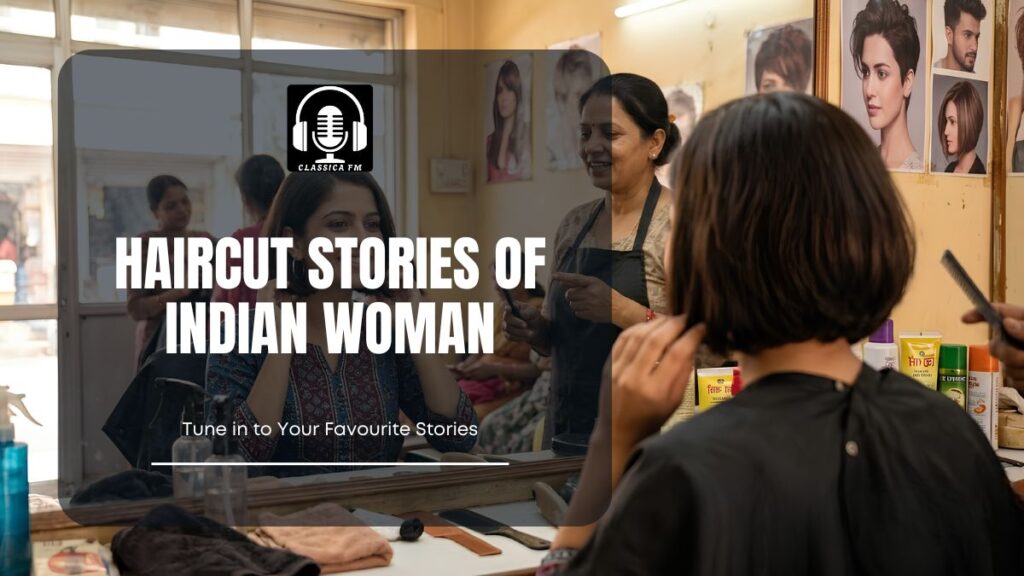
Hair has always been an important part of personal appearance, identity, tradition, and self-expression in India. For Indian women, a haircut can carry meanings that go far beyond changing a hairstyle. It can be connected to family traditions, cultural expectations, personal choices, modern fashion, important life events, and moments of personal transformation.
Haircut stories of Indian women explore these experiences from different perspectives. Some may focus on a woman’s decision to change her hairstyle after years of keeping her hair long. Others may explore childhood memories, salon experiences, family reactions, changing beauty preferences, or the confidence that can come with choosing a hairstyle for oneself.
The topic offers a broad range of experiences because Indian women come from diverse regions, communities, generations, and cultural backgrounds. There is no single Indian experience with hair, and individual preferences can differ greatly.
This guide explores the cultural background, themes, types, experiences, and storytelling possibilities surrounding haircut stories of Indian women.
The Importance of Hair in Indian Culture
Hair has historically held cultural and social significance in India. Long hair, traditional hairstyles, braids, buns, and other forms of hair presentation have been associated with different communities, generations, occasions, and personal preferences.
At the same time, modern Indian women increasingly experiment with a wide range of hairstyles.
These can include:
- Short haircuts
- Medium-length styles
- Layered haircuts
- Bobs
- Pixie-inspired styles
- Shoulder-length cuts
- Traditional long hairstyles
- Low-maintenance hairstyles
This combination of tradition and modern personal expression provides a rich background for haircut-related storytelling.
Why Haircut Stories of Indian Women Are Interesting
A haircut can represent different things for different people.
For one woman, it may simply be a practical decision.
For another, it may represent a significant personal change.
For someone else, it may be connected to a family tradition or an important event.
Haircut stories can therefore explore:
- Personal identity
- Family relationships
- Cultural expectations
- Individual choice
- Fashion
- Confidence
- Practicality
- Growing up
- Major life changes
- Nostalgia
Haircut Stories of Indian Woman
The Village Girl Who Challenged Everyone With a Haircut
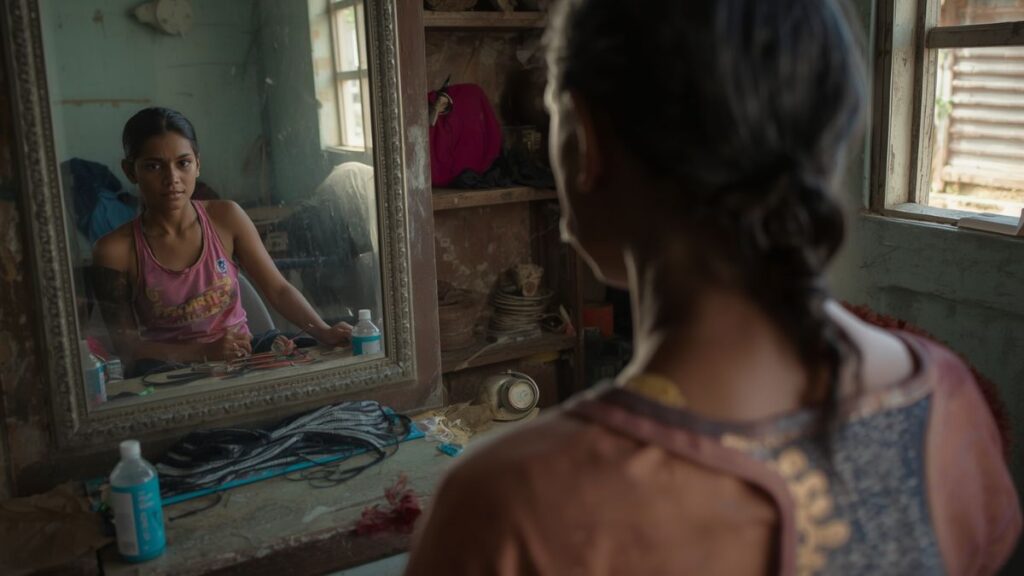
Moral: True courage comes from having the confidence to make your own choices.
In a small village surrounded by green fields and quiet roads, everyone knew Kavya.
She was the girl who ran faster than most boys.
The girl who spent evenings practicing on dusty village grounds.
The girl who dreamed of becoming a professional athlete.
But in her village, people did not always see her dreams.
They saw her long hair.
They saw a girl who was expected to follow traditions.
They saw someone who should behave a certain way.
For years, Kavya tried to balance her dreams with everyone’s expectations.
Until one day, a simple haircut became a symbol of courage.
It was not just about changing her appearance.
It was about choosing her own path.
The Girl With a Big Dream
Kavya grew up in a traditional village in Rajasthan.
Her family was simple but hardworking.
Her father, Mohan, was a farmer.
Her mother, Sita, managed the household and took care of the family.
They did not have many luxuries, but they always encouraged Kavya to study and work hard.
From childhood, Kavya was different.
While other children enjoyed playing games casually, she took every competition seriously.
Running.
Jumping.
Training.
Improving.
Her teachers noticed her talent early.
“You have something special,” her sports teacher told her.
“You should continue practicing.”
Those words stayed with her.
The Hair Everyone Talked About
Like many girls in her village, Kavya had long hair.
Her mother had taken care of it since she was a child.
Every morning before school, Sita would braid her daughter’s hair.
During festivals, she would decorate it with flowers.
Relatives often praised it.
“Such beautiful hair.”
“She looks so traditional.”
“Don’t ever cut it.”
Kavya smiled whenever people complimented her.
But secretly, her hair had become difficult to manage.
Especially during training.
The Problem During Practice
As Kavya became more serious about athletics, managing her long hair became harder.
During running practice, her hair would become uncomfortable.
She had to spend extra time tying it carefully.
Sometimes, during competitions, she worried about her appearance instead of focusing completely on her performance.
One day, after losing an important race, her coach asked,
“What happened today?”
Kavya looked down.
“I don’t know.”
Her coach smiled.
“I think you know.”
“You were not focused.”
Those words made her think.
A Difficult Decision
That evening, Kavya stood in front of the mirror.
She looked at her long hair.
It carried years of memories.
Her mother’s care.
Family traditions.
Childhood moments.
But she also thought about her dreams.
Could something as simple as hair stop her from becoming the person she wanted to be?
She knew the answer.
No.
But she also knew that people would have opinions.
What People Would Say
The next day, Kavya told her closest friend, Neha.
“I want to cut my hair.”
Neha looked surprised.
“Really?”
Kavya nodded.
“I think it will help me during training.”
Neha smiled.
“Then why are you worried?”
Kavya looked away.
“Because everyone will talk.”
And she was right.
In a small village, news traveled quickly.
Especially when someone did something unexpected.
The Family Conversation
That evening, Kavya gathered courage and spoke to her parents.
“Papa, Ma, I want to cut my hair.”
Her father looked surprised.
“Why?”
“For my training.”
Her mother became quiet.
Not angry.
Just emotional.
“This hair…”
“I know, Ma.”
“You have had it since childhood.”
Kavya sat beside her.
“I love my hair.”
“But I also love my dream.”
Her mother looked at her carefully.
“You are sure?”
Kavya nodded.
“Yes.”
A Father’s Concern
Mohan was not against his daughter’s choice.
But he worried about society.
“What will people say?”
Kavya smiled.
“People will talk for a few days.”
“Then they will find something else to discuss.”
Her father laughed softly.
He realized his daughter had grown.
She was no longer the little girl who needed permission for everything.
She was becoming a young woman making thoughtful decisions.
The Salon Visit
The nearest salon was in a nearby town.
For Kavya, the journey felt bigger than the distance.
It felt like she was walking toward a new version of herself.
When she sat in the chair, the stylist asked,
“Are you sure?”
Kavya smiled.
“Yes.”
As the scissors moved through her hair, she felt a mixture of emotions.
She remembered her childhood.
Her mother’s hands braiding her hair.
Family celebrations.
Old photographs.
But she also imagined herself running freely.
Training harder.
Chasing her dream.
Facing the Village
When Kavya returned home, people noticed immediately.
Some were surprised.
Some whispered.
Some questioned her decision.
“Why did she cut such beautiful hair?”
“Girls should not change traditions.”
“What was the need?”
Kavya heard everything.
But this time, she did not feel hurt.
She understood something.
People often criticize things they do not understand.
The First Competition
A few weeks later, Kavya participated in an important athletics competition.
For the first time in years, she felt completely comfortable.
No distractions.
No worries.
Just focus.
She ran with confidence.
She gave everything she had.
And she won.
When she returned home with her medal, the same people who had questioned her decision congratulated her.
Changing People’s Thinking
Slowly, attitudes began to change.
People started seeing the reason behind her choice.
They understood that the haircut was not about disrespecting tradition.
It was about supporting a dream.
Young girls in the village started looking up to Kavya.
Some told her,
“I want to play sports too.”
Kavya smiled.
“Then work hard.”
Her Mother’s Pride
One evening, Sita watched Kavya practicing.
She smiled.
“You know, I thought I would miss your long hair.”
Kavya laughed.
“Do you?”
Her mother smiled.
“Sometimes.”
“Because it reminds me of your childhood.”
“But this hairstyle reminds me of your courage.”
Those words meant more than any compliment.
Years Later
Years passed.
Kavya continued training.
She represented her state in athletics.
She achieved things she once only dreamed about.
Whenever someone asked about her journey, they expected her to talk about medals.
But sometimes, she mentioned something else.
Her haircut.
Not because it was the biggest achievement.
But because it was the moment she learned to trust herself.
The Real Meaning Behind Her Choice
Kavya eventually understood that courage does not always come from big decisions.
Sometimes, courage begins with small personal choices.
A haircut.
A new opportunity.
A decision to believe in yourself.
The world may have seen it as a change in appearance.
But for Kavya, it was the beginning of confidence.
Moral of the Story
True courage comes from having the confidence to make your own choices.
Following traditions can be meaningful, but personal dreams and happiness matter too.
Everyone has the right to make choices about their own life and appearance.
A small decision can sometimes become the first step toward achieving something much bigger.
The Daughter Who Cut Her Hair Before Leaving India
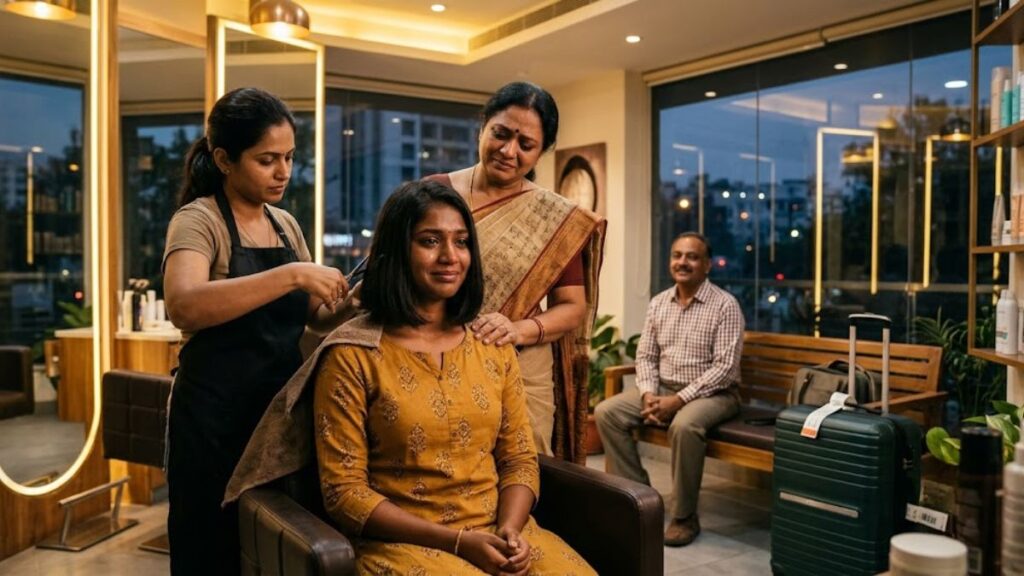
Moral: Leaving home does not mean leaving your roots behind.
The day Ananya received her acceptance letter from a university abroad, her entire family celebrated.
Her parents distributed sweets.
Her relatives called with congratulations.
Her neighbors proudly said,
“She is going to build a bright future.”
Everyone was happy.
Everyone except Ananya.
Not because she wasn’t excited.
She had dreamed about studying overseas since childhood.
She had spent years preparing.
Learning new skills.
Improving her grades.
Working toward independence.
But now that the dream was becoming real, she felt something she had never expected.
Fear.
Leaving India meant leaving behind everything familiar.
Her childhood home.
Her mother’s voice in the kitchen every morning.
Her father’s evening conversations.
Her grandmother’s stories.
The street where she had grown up.
The people who had watched her become who she was.
And before leaving, she made one unexpected decision.
She decided to cut her long hair.
For everyone else, it was just a haircut.
For Ananya, it was a symbol of becoming a new version of herself.
The Hair Her Mother Had Always Loved
Since childhood, Ananya had always had long hair.
Her mother, Sunita, took special care of it.
Every Sunday morning, when Ananya was young, her mother would sit behind her and gently apply oil to her hair.
She would braid it before school.
Fix it before family functions.
Teach her how to care for it.
“Your hair is like a part of your childhood,” Sunita would say.
Ananya would laugh.
“How can hair be childhood?”
Her mother would smile.
“Because I have watched you grow while taking care of it.”
Over the years, her hair became connected with countless memories.
Her first day of school.
College festivals.
Family weddings.
Festival celebrations.
Photos with her parents.
It was not just hair.
It was a timeline of her life.
The Dream of Going Abroad
From a young age, Ananya loved learning about different countries.
She enjoyed discovering new cultures.
She watched documentaries about foreign cities.
She read stories about students who built successful careers overseas.
Her parents always supported her dreams.
But they also worried.
Like every parent, they wondered:
Will she be okay alone?
Will she miss home?
Will she adjust?
When Ananya finally received her university admission letter, her father proudly said,
“You worked hard for this.”
Her mother hugged her.
But later that night, Sunita quietly cried.
Not because she was unhappy.
Because her daughter was growing up.
Preparing to Leave
The months before departure passed quickly.
There were endless preparations.
Visa paperwork.
Shopping.
Packing.
Family gatherings.
Everyone gave Ananya advice.
“Take care of yourself.”
“Call home regularly.”
“Don’t forget your culture.”
“Be careful.”
She smiled and listened.
But inside, she felt a mixture of excitement and sadness.
She knew she was moving toward her dreams.
But she also knew she was leaving behind a life she loved.
The Idea of a Haircut
One evening, while organizing her luggage, Ananya looked at old photographs.
She saw herself with the same long hair in almost every picture.
School.
College.
Family trips.
Celebrations.
She touched her hair and thought,
“I have carried this version of myself for so long.”
She wondered what it would feel like to change.
Not because she disliked her appearance.
Because she wanted something that represented her new journey.
A new country.
A new environment.
A new responsibility.
Telling Her Mother
The next morning, Ananya told Sunita.
“Mom, I want to cut my hair.”
Her mother stopped what she was doing.
“Cut your hair?”
Ananya nodded.
“Yes.”
For a moment, there was silence.
Sunita looked at her daughter’s long hair.
Not with anger.
With memories.
“This hair…”
“I know, Mom.”
“You have kept it for so many years.”
Ananya smiled.
“But I am not cutting my memories.”
Her mother looked at her.
“I know.”
“Then why are you worried?”
Sunita smiled softly.
“Because mothers remember everything.”
A Mother’s Realization
That evening, Sunita sat with Ananya and looked through old photographs.
She remembered the little girl who once refused to sit still while getting her hair braided.
The teenager who complained about school hairstyles.
The young woman who was now preparing to build a life far away.
She realized something.
Her daughter’s hair had grown.
But so had her daughter.
The haircut was not about rejecting the past.
It was about accepting the future.
The Salon Visit
Two days before her flight, Ananya visited a salon with her mother.
She felt nervous.
The stylist asked,
“How much would you like to cut?”
Ananya looked at her mother.
Then at herself in the mirror.
“Enough to feel different.”
The stylist smiled.
As the scissors moved through her hair, Ananya felt emotional.
She watched years of growth fall gently.
A part of her felt like she was saying goodbye.
But another part felt free.
The New Reflection
When the haircut was complete, Ananya looked into the mirror.
Her hair was shorter.
Lighter.
More practical.
She smiled.
She looked different.
But she still looked like herself.
Her mother stood behind her.
For a few seconds, she said nothing.
Then she smiled.
“You look like the same Ananya.”
“But stronger.”
Those words stayed with her.
The Airport Goodbye
On the day of her flight, the airport was filled with emotions.
Her father gave her advice.
Her mother checked her luggage several times.
Her grandmother blessed her.
Everyone tried to be strong.
Before Ananya entered security, her mother touched her new haircut.
“You know something?”
“What?”
“When you were little, I used to braid your hair because I wanted to protect you.”
Ananya smiled.
“And now?”
“Now I know you can protect yourself.”
A New Country
Life abroad was not always easy.
There were lonely days.
Cultural differences.
Difficult assignments.
Moments when she missed home deeply.
Sometimes she would look at old pictures from India.
She missed her mother’s cooking.
Her father’s advice.
The familiar sounds of home.
But whenever she felt uncertain, she remembered that haircut.
The day she chose change.
The day she decided she was ready.
Carrying Home With Her
Many people assumed that moving abroad would change Ananya completely.
But it didn’t.
She continued celebrating Indian festivals.
She cooked traditional food.
She stayed connected with her family.
She made friends from different cultures while staying connected to her own.
She learned an important lesson.
Growing does not mean forgetting where you came from.
Years Later
After several years, Ananya returned to India for a visit.
Her mother looked at her and smiled.
“You changed.”
Ananya laughed.
“Because of my haircut?”
Her mother shook her head.
“No.”
“Because of everything you experienced.”
They sat together that evening, looking through old photographs.
Ananya saw pictures from before she left.
Long hair.
Young face.
Nervous smile.
Then she saw newer pictures.
Confidence.
Independence.
A life she had built herself.
The Meaning Behind the Haircut
Years later, Ananya realized the haircut was never really about her hair.
It represented a moment.
A moment when she accepted that growing up meant stepping into uncertainty.
It was the moment she understood she could leave home without losing home.
Her family, culture, and memories were not things she had to leave behind.
They were the foundation that helped her move forward.
Moral of the Story
Leaving home does not mean leaving your roots behind.
Life often requires us to enter unfamiliar places and become different versions of ourselves.
Growth does not mean forgetting our past.
It means carrying the love, values, and memories that shaped us while creating a new future.
Sometimes, a small change can remind us that we are strong enough to begin again.
The Widow Who Cut Her Hair to Start a New Life
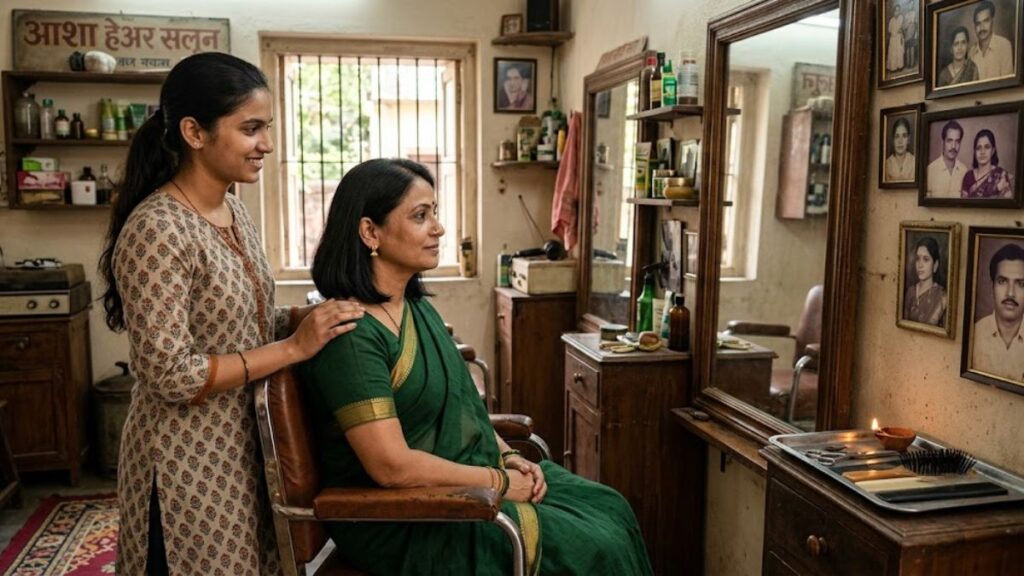
Moral: A person’s identity is not defined by their past; every person deserves a chance to begin again.
For many years, Lakshmi believed that life was something that happened to her, not something she could choose.
She had always been the person who fulfilled responsibilities.
A loving daughter.
A devoted wife.
A caring mother.
A woman who placed everyone’s needs before her own.
In her family, she was known for her patience and kindness.
But after losing her husband unexpectedly, Lakshmi felt as if a part of her identity had disappeared.
For years, she lived according to what others expected from her.
She wore the same simple clothes.
Followed the same routines.
Avoided celebrations.
And never thought about what she wanted for herself.
Until one day, a simple haircut helped her understand that moving forward did not mean forgetting her past.
It meant accepting that she still had a future.
The Woman Everyone Admired
Lakshmi grew up in a small town in South India.
From childhood, she was taught the importance of family values and responsibility.
Her parents often told her,
“A woman’s strength comes from her ability to care for others.”
Lakshmi believed those words deeply.
She married Rajesh when she was twenty-three.
Their marriage was not a dramatic love story from movies.
It was something quieter.
They became friends first.
They learned each other’s habits.
They supported each other’s dreams.
Rajesh admired Lakshmi’s patience.
Lakshmi admired his honesty and kindness.
Together, they built a peaceful life.
The Hair That Carried Memories
Lakshmi had always kept her hair long.
It was thick, dark, and carefully maintained.
Her mother had taught her how to care for it when she was young.
Every weekend, her mother would sit behind her and apply warm oil to her hair.
After marriage, Rajesh would often compliment her.
“Your hair reminds me of the person you are,” he would say.
“Strong and beautiful.”
Lakshmi would laugh.
“It’s just hair.”
But secretly, she loved those words.
Over the years, her hair became connected with memories.
Her wedding day.
Family celebrations.
The birth of her children.
Photographs from happier times.
It was not just a hairstyle.
It was a collection of moments.
The Loss That Changed Everything
When Rajesh passed away after a sudden illness, Lakshmi felt lost.
The house that once felt warm became silent.
The morning conversations disappeared.
The evening walks ended.
The future she had imagined no longer existed.
Everyone around her offered sympathy.
But sympathy slowly became expectations.
People told her what she should do.
How she should dress.
How she should behave.
What was appropriate.
What was not.
Lakshmi listened quietly.
She didn’t argue.
She didn’t complain.
But inside, she felt like she was slowly disappearing.
Living in the Past
For years after Rajesh’s death, Lakshmi avoided making changes.
She stopped buying new clothes.
She avoided social gatherings.
She kept her hairstyle exactly the same.
Whenever someone suggested doing something different, she would say,
“Maybe later.”
But later never came.
Her children noticed.
Her daughter Priya often worried about her.
“Amma, you should do something for yourself.”
Lakshmi would smile.
“I am fine.”
But Priya knew she wasn’t.
The Forgotten Dream
One afternoon, while cleaning an old cupboard, Lakshmi found a notebook.
It belonged to her younger self.
Inside were small dreams she had written before marriage.
Learn painting.
Travel to new places.
Learn new skills.
Start something of her own.
She smiled while reading them.
Then she became quiet.
Somewhere along the way, she had forgotten that she was also a person with dreams.
Not just someone’s wife.
Not just someone’s mother.
A New Opportunity
A few months later, Lakshmi’s daughter encouraged her to join a local women’s community group.
At first, she refused.
“I am too old for these things.”
Priya shook her head.
“Amma, you are not old.”
“You are just starting again.”
After some hesitation, Lakshmi joined.
There, she met women with different stories.
Some had started businesses.
Some learned new skills after difficult experiences.
Some had rebuilt their lives after loss.
Listening to them changed something inside her.
She realized everyone carried pain.
But everyone also carried possibility.
The Thought of a Haircut
One day, while attending a workshop, Lakshmi saw a woman with short hair.
The woman looked confident and happy.
For some reason, Lakshmi kept thinking about her.
Not because of the haircut.
Because of the confidence.
That evening, she looked at herself in the mirror.
Her long hair was still beautiful.
But she suddenly felt that it belonged to an older version of herself.
A version that was connected only to the past.
She wondered,
“Can I become someone new?”
Talking to Her Daughter
When Lakshmi mentioned wanting a haircut, Priya looked surprised.
“Really?”
Lakshmi smiled.
“Yes.”
“Are you sure?”
“I think so.”
Priya held her mother’s hand.
“Amma, you don’t have to prove anything to anyone.”
“I know.”
“Then why do you want to do it?”
Lakshmi thought for a moment.
“Because I want to choose something for myself.”
The Salon Visit
The next week, Lakshmi entered a salon for the first time in years.
She felt nervous.
The stylist asked,
“What kind of haircut would you like?”
Lakshmi looked at her reflection.
“I want something that feels lighter.”
The stylist smiled.
“Sometimes a new hairstyle can feel like a new beginning.”
As the scissors moved through her hair, Lakshmi felt emotional.
She remembered her mother.
Her wedding.
Rajesh.
Her children growing up.
Every piece of hair carried memories.
But she also understood something important.
Cutting her hair was not cutting away her memories.
Seeing Herself Again
When the haircut was complete, Lakshmi looked into the mirror.
Her hair was shorter.
Neater.
Easier to manage.
But the biggest change was not her appearance.
It was her expression.
She looked peaceful.
She smiled.
“I forgot what it felt like to do something just because I wanted to.”
The stylist smiled.
“Then maybe this haircut was not about your hair.”
Lakshmi nodded.
“Maybe it was about finding myself again.”
The Family Reaction
When she returned home, her children were surprised.
Her son smiled.
“You look different.”
Lakshmi became nervous.
“Is that okay?”
He hugged her.
“Of course.”
“You look happy.”
Those words meant more than any compliment about her hairstyle.
A New Chapter
After that day, Lakshmi slowly began changing other parts of her life.
She started painting classes.
She traveled with her friends.
She attended family events again.
She laughed more.
She stopped feeling guilty about enjoying life.
She still remembered Rajesh.
She still missed him.
But she no longer believed happiness was disrespectful to his memory.
Years Later
Years later, Lakshmi’s granddaughter asked her,
“Why did you cut your hair?”
Lakshmi smiled.
“Because I wanted to remember something.”
“What?”
“That life doesn’t end when one chapter closes.”
“It simply begins a different chapter.”
Her granddaughter smiled.
“You look beautiful.”
Lakshmi laughed.
“Thank you.”
But inside, she knew something.
The haircut had never made her beautiful.
It had simply reminded her that she already was.
Moral of the Story
A person’s identity is not defined by their past; every person deserves a chance to begin again.
Life can bring unexpected losses and difficult changes, but those moments do not have to define who we become.
Moving forward does not mean forgetting the people or memories we love.
It means carrying those memories with us while allowing ourselves to continue growing.
Sometimes, a small personal choice, like a haircut, can become a powerful reminder that a new beginning is always possible.
Traditional Hair and Changing Hairstyles
For generations, long hair has been a common hairstyle preference among many Indian women. Braids, buns, and other traditional hairstyles have also played an important role in everyday life and special occasions.
Modern lifestyles have introduced more hairstyle choices.
Busy schedules, professional environments, travel, changing fashion preferences, and individual expression can all influence decisions about hair length and styling.
This does not mean that traditional hairstyles have disappeared. Instead, Indian women today have a wider range of choices.
The Decision to Cut Long Hair
One of the most significant themes in Indian women’s haircut stories is the decision to cut long hair.
For someone who has maintained long hair for many years, removing a substantial amount of length can feel like a major change.
The decision may be motivated by:
- Easier maintenance
- Hot weather
- A busy lifestyle
- Hair damage
- A desire for change
- Professional requirements
- Personal preference
- A new stage of life
The emotional significance depends entirely on the individual.
Family Reactions to Haircuts
Family opinions can sometimes become an important part of an Indian woman’s haircut experience.
Parents, grandparents, siblings, spouses, or other relatives may have different views about hairstyle changes.
Reactions can range from:
- Encouragement
- Surprise
- Curiosity
- Concern
- Appreciation
- Traditional preferences
These differences can create interesting conversations about personal choice and changing attitudes toward appearance.
Haircuts and Personal Independence
For some women, choosing a hairstyle independently can represent greater personal freedom.
This can be particularly meaningful when someone has traditionally followed family preferences regarding hair.
Choosing a haircut can become an opportunity to express:
- Individuality
- Personal taste
- Confidence
- Independence
- Changing priorities
The significance of the decision varies from person to person.
First Haircuts and Childhood Memories
Childhood haircut experiences can become memorable family moments.
Parents may choose a child’s hairstyle based on:
- Convenience
- School requirements
- Hair maintenance
- Family preferences
- Seasonal considerations
Photographs from childhood can later become reminders of these early experiences.
For many Indian women, childhood haircuts may also be associated with school years, summer vacations, family trips, or visits to relatives.
School and College Haircut Experiences
School and college can represent different stages of personal style.
School students may have to follow particular grooming rules, while college students often have greater freedom to experiment.
College can therefore become a period when young women explore:
- Different hair lengths
- New hairstyles
- Modern cuts
- Low-maintenance styles
- Personal preferences
A haircut during this period can become associated with friendships, independence, and a new stage of life.
Haircuts for Professional Life
Entering the workplace can influence hairstyle decisions.
Some women may choose hairstyles that are:
- Easy to maintain
- Comfortable during long workdays
- Suitable for professional environments
- Practical for commuting
- Easy to style
A haircut can therefore be part of adjusting to a new professional routine.
However, there is no single hairstyle that defines professionalism. Individual workplaces and personal preferences differ.
Haircuts During Major Life Changes
Haircut stories can become particularly meaningful when connected to major transitions.
These may include:
- Graduation
- Starting a career
- Moving to another city
- Marriage
- Becoming a parent
- Returning to work
- Starting a new business
- Beginning a new chapter in life
The haircut can serve as a visible marker of an internal or lifestyle change.
Indian Women and Summer Haircuts
Indian summers can influence hairstyle decisions because heat and humidity can make long or thick hair more difficult to manage.
Some women may choose shorter or simpler hairstyles for greater convenience.
Summer haircut experiences can involve:
- Shorter lengths
- Easier-to-manage hairstyles
- Travel-friendly haircuts
- Low-maintenance styles
- Haircuts before vacations
The important factor is that comfort and personal preference should guide the decision.
Haircuts Before Festivals and Special Occasions
Hair and hairstyles are often important parts of preparation for celebrations in India.
Women may consider changing or refreshing their hairstyles before:
- Weddings
- Festivals
- Family celebrations
- Birthdays
- Religious occasions
- Vacations
- Important photographs
A haircut can become part of the preparation and the memories associated with the occasion.
Wedding-Related Haircut Experiences
Marriage can bring many changes to a person’s lifestyle and appearance.
Some women may choose a new haircut before or after marriage, while others may maintain their existing hairstyle.
Wedding-related haircut content can explore:
- Pre-wedding grooming
- Trying a new hairstyle
- Post-wedding changes
- Personal preferences
- Family opinions
- Adjusting to a new stage of life
The decision should remain personal rather than being presented as a requirement of marriage.
Haircuts and Modern Indian Fashion
Indian women increasingly have access to global hairstyle trends through:
- Social media
- Fashion magazines
- Films
- Television
- Beauty websites
- Hairstylists
- Online hairstyle communities
This has expanded the number of styles people can discover and consider.
However, trends do not suit everyone equally. Hair texture, maintenance requirements, lifestyle, and individual preference remain important.
Regional Diversity in Indian Haircut Experiences
India is culturally and geographically diverse, so haircut experiences can differ significantly between regions and communities.
Factors may include:
- Local beauty traditions
- Climate
- Haircare practices
- Cultural customs
- Family traditions
- Urban or rural environments
- Access to salons and professional hairstylists
A good collection of Indian women’s haircut content should recognize this diversity rather than presenting one experience as universal.
Urban and Rural Haircut Experiences
Access to hairstyles and salon services can vary between urban and rural environments.
Urban women may have access to:
- Large salons
- Specialized hairstylists
- International hairstyle trends
- Premium haircare services
In smaller towns and rural areas, local salons and traditional approaches may be more common.
These differences can provide additional perspectives for haircut-related content.
Haircut Stories Across Generations
Different generations may have different attitudes toward hair.
Older Generations
They may have stronger connections to traditional hairstyles and long hair.
Middle Generations
They may balance traditional expectations with modern professional and lifestyle requirements.
Younger Generations
They often have greater exposure to diverse hairstyles and may place greater emphasis on individual expression.
These are broad trends rather than universal rules. Every individual has their own preferences.
Haircuts and Self-Expression
A haircut can be one way for an Indian woman to express herself.
She may choose a hairstyle based on:
- Personality
- Comfort
- Fashion
- Career
- Lifestyle
- Hair texture
- Personal identity
- Practicality
The important point is that there is no single correct hairstyle.
Haircuts and Confidence
A new haircut can sometimes make someone feel refreshed or more comfortable.
Women may feel:
- More confident
- More comfortable
- More expressive
- More modern
- More independent
- Excited about a change
However, confidence should not be reduced to physical appearance. A haircut can contribute to how someone feels about themselves, but personal confidence comes from many different aspects of life.
Emotional Haircut Experiences
Some haircut decisions can be emotionally significant.
This can happen when:
- Someone cuts hair they have grown for years
- A hairstyle is connected to childhood
- A woman changes her hair after a major life event
- A haircut marks a new beginning
- A familiar hairstyle is changed for the first time
These experiences can provide meaningful themes for storytelling.
Funny and Unexpected Haircut Experiences
Not every haircut experience is serious.
Unexpected results, hairstyle experiments, misunderstandings, and unusual salon experiences can create humorous memories.
Funny haircut content can explore:
- Miscommunication
- Unexpected length
- Trying a trend for the first time
- DIY attempts
- Last-minute changes
- Reactions from friends and family
The humor should remain respectful and relatable.
Salon Experiences of Indian Women
The salon experience itself can be an important part of haircut content.
A typical salon visit may involve:
- Discussing the desired hairstyle
- Assessing hair length and texture
- Deciding how much hair to remove
- Choosing the appropriate cut
- Styling the finished hair
- Discussing maintenance
Communication between the customer and stylist is particularly important when making a significant change.
Communicating With a Hairstylist
Clear communication can reduce misunderstandings.
Women can discuss:
- Desired length
- Layers
- Overall shape
- Styling preferences
- Maintenance requirements
- Previous haircut experiences
- What they do not want
Reference photographs can also help communicate a general idea.
It is important to remember that a reference photograph may look different depending on hair texture, density, face shape, and styling.
Hair Texture and Indian Haircut Choices
Indian women have a wide range of hair textures.
Hair may be:
- Straight
- Wavy
- Curly
- Coily
- Fine
- Thick
- Dense
A hairstyle that works well for one person may require a different approach for another.
This is why haircut decisions should consider the individual’s natural hair characteristics rather than relying only on photographs of a particular style.
Low-Maintenance Haircuts
Busy lifestyles can make maintenance an important consideration.
A low-maintenance haircut may reduce the amount of time needed for:
- Washing
- Drying
- Brushing
- Styling
- Detangling
This can be especially useful for people balancing work, education, travel, family responsibilities, or other commitments.
Haircut Stories and Personal Memories
Haircuts can become visual markers of different periods in life.
Looking at old photographs may remind someone of:
- School
- College
- First employment
- Family celebrations
- Travel
- Friendships
- Relationships
- Important milestones
This connection between hairstyles and memories makes haircut stories particularly suitable for nostalgic content.
How to Create Haircut Stories of Indian Women
When developing stories or articles around this topic, focus on the experience rather than simply describing the hairstyle.
A useful structure can include:
The Background
Explain the person’s relationship with her hair.
The Reason for the Haircut
Explain why the change is being considered.
The Decision
Explore the thoughts and circumstances behind the choice.
The Haircut Experience
Describe the salon visit or haircut process at an appropriate level.
The Reaction
Discuss how the person feels about the change and how others respond.
The Meaning
Explain why the haircut became memorable.
This structure provides depth without requiring every story to follow exactly the same plot.
How to Build a Collection of Indian Women’s Haircut Stories
A broader collection can be divided into different categories.
By Age
- Childhood
- Teenage years
- College years
- Young adulthood
- Adulthood
By Theme
- Emotional
- Funny
- Transformational
- Nostalgic
- Inspirational
- Family-focused
By Occasion
- Summer
- Festivals
- Weddings
- Graduation
- College
- New job
- Vacation
By Hair Change
- Long to short
- Medium-length transformation
- Layered haircut
- Bob-style haircut
- Low-maintenance haircut
- First major haircut
This organization helps create variety and prevents every article from covering the same experience.
What Makes Indian Women’s Haircut Stories Memorable?
A memorable haircut story usually involves something beyond the haircut itself.
Important elements can include:
- A meaningful reason for the change
- A strong personal connection
- Family or cultural context
- A major life transition
- An unexpected experience
- A dramatic transformation
- A memorable reaction
- A feeling of personal growth
The hairstyle becomes memorable because of the experience attached to it.
Common Mistakes to Avoid
When creating content around Indian women’s haircut experiences, avoid assuming that every woman shares the same cultural expectations.
It is also important to avoid:
- Stereotyping Indian women
- Treating long hair as mandatory
- Assuming family members always oppose short hair
- Presenting one hairstyle as universally attractive
- Equating beauty with hair length
- Overgeneralizing regional traditions
- Ignoring individual choice
Indian women have diverse experiences and preferences, and good storytelling should reflect that diversity.
Final Thoughts
Haircut stories of Indian women provide a rich subject because hair can connect personal appearance with culture, family, memories, lifestyle, and individual identity.
A haircut may be a practical decision, a fashion choice, a childhood memory, a response to changing circumstances, or a symbolic representation of a new stage in life. The meaning depends on the individual woman and the circumstances surrounding her decision.
The diversity of India also makes this topic particularly broad. Experiences can differ by generation, region, family, lifestyle, hair type, cultural background, and personal preference.
The strongest content should therefore avoid presenting one experience as universal. Instead, it should highlight the many different ways Indian women relate to their hair and the decisions they make about their appearance.
By separating stories into themes such as long-hair transformations, childhood experiences, emotional haircuts, summer haircuts, family traditions, salon experiences, professional hairstyles, and major life changes, a larger collection can provide varied perspectives while keeping each individual story distinctive.
Ultimately, a haircut is only the visible part of the experience. The memories, decisions, relationships, emotions, and personal meaning behind it are what can turn an ordinary haircut into a story worth remembering.