A bedtime story for adults with anxiety, overthinking, and nighttime stress
Intro: A Bedtime Story for Adults with Anxiety
If you are reading this at night, you may already be tired.
Not just physically.
But mentally.
Emotionally.
This bedtime story for adults with anxiety is written for moments when thoughts move too fast, the body feels restless, and sleep feels far away.
You do not need to focus hard.
You do not need to remember anything.
You only need to read slowly.
Or let the words read themselves.
“The Train That Only Went as Fast as Calm” is a calming sleep story designed to ease anxiety, quiet racing thoughts, and gently guide the mind toward rest.
It contains no danger.
No urgency.
No pressure.
Only steady calm.
Why Bedtime Stories Help Adults with Anxiety
Many adults with anxiety struggle at night.
The body is tired, but the mind keeps working.
Gentle bedtime stories can help because they:
- Slow down anxious thinking before sleep
- Give the mind a single, calming focus
- Reduce nighttime overthinking
- Support nervous system regulation
- Create emotional safety at bedtime
- Improve sleep quality over time
This story uses short paragraphs, soft imagery, and predictable pacing so your brain does not need to stay alert.
You are allowed to relax.
Chapter 1: The Station Where Nothing Is Urgent
.png "The Train That Only Went as Fast as Calm 1")
The station appeared as evening settled in.
Not suddenly.
Not dramatically.
It arrived the way calm arrives.
Quietly.
The platform was wide and open.
There were no crowds.
No rushing footsteps.
No loud announcements.
A clock hung above the platform.
Its hands moved slowly.
As if time itself had learned to breathe.
You did not feel late.
You did not feel early.
You felt exactly where you needed to be.
A sign near the bench read:
THIS TRAIN DEPARTS WHEN YOU FEEL READY.
You sat down.
The bench was warm.
Supportive.
Like it had been waiting for you.
Chapter 2: The Train That Moves at the Speed of Calm
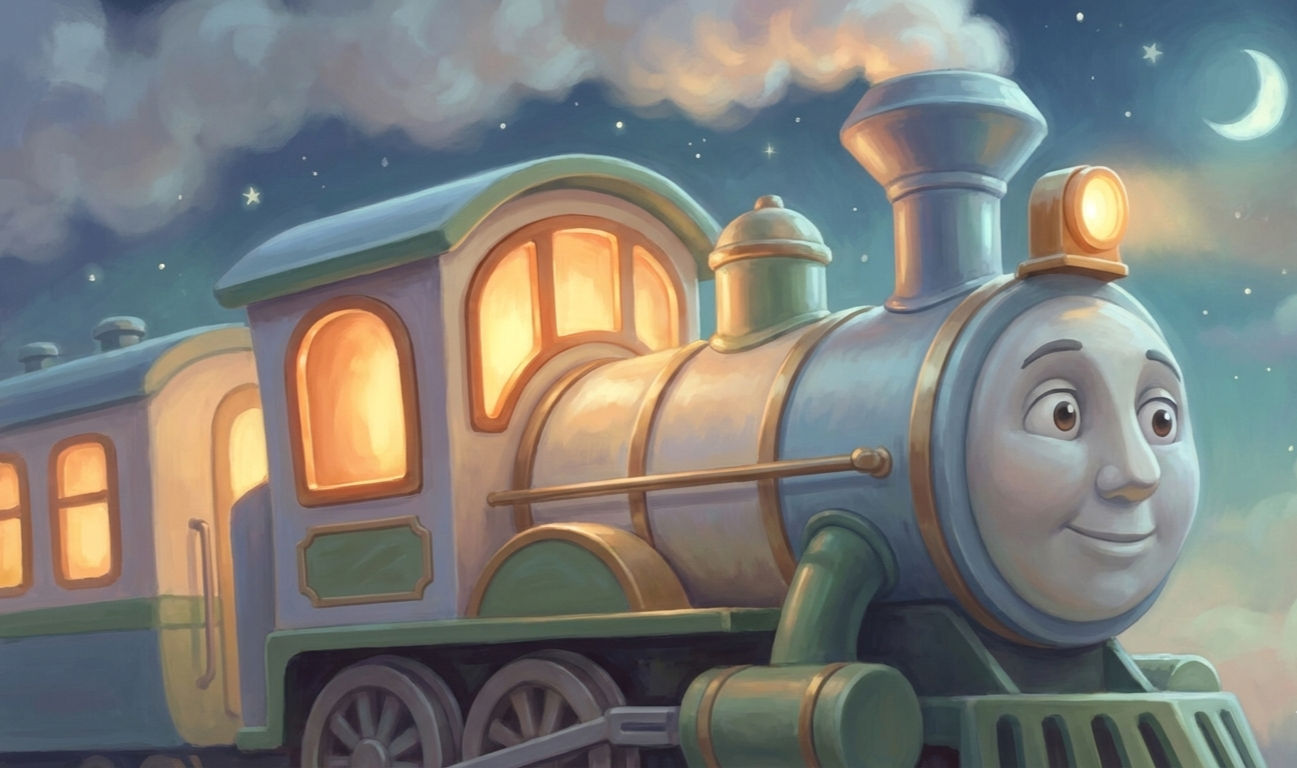
The train arrived without noise.
No screeching.
No sudden movement.
It simply appeared.
Long.
Steady.
Safe.
A small plaque near the door read:
THIS TRAIN ONLY GOES AS FAST AS CALM.
The door opened slowly.
Nothing rushed you.
Nothing pushed you.
Inside, the lights were soft and warm.
Like lamps in a quiet home.
The seats were wide.
Comfortable.
Each one spaced far enough apart to breathe.
A conductor passed by.
They smiled.
“Welcome,” they said gently.
Nothing else was required.
Chapter 3: When the Body Begins to Relax
The train began to move.
So slowly you barely noticed.
There was no jolt.
No sharp pull.
Your body stayed relaxed.
Outside the window, the world softened.
Trees stood still long enough to be noticed.
Hills rested.
The sky deepened into evening blue.
You noticed your breathing change.
In.
Out.
In.
Out.
The train adjusted itself to you.
Whenever your thoughts tried to speed up, the train slowed.
Always.
Chapter 4: Other Passengers with Quiet Minds
There were other passengers on the train.
But no one stared.
No one demanded conversation.
Some rested with eyes closed.
Some looked out the windows.
Some simply sat.
Doing nothing.
Being enough.
Across from you, someone held a book they were not reading.
They smiled softly.
No words followed.
Here, silence was comfortable.
The train hummed.
Low.
Steady.
Like reassurance moving through the air.