Life gets heavy. Bills pile up. Your coffee gets cold while you try to answer emails that never stop. Somebody somewhere is always yelling about something on the news. And sometimes—some days—you just need a break. Not the spa-kind (though that’s nice too), but the kind that reaches deeper. A mental exhale.
That’s exactly where humorous inspirational stories come in. Not loud or flashy. Just quietly powerful. The kind that sneak up on you with a laugh and leave you feeling a little lighter. The kind that make you snort-laugh over something silly, then pause because—wait—that actually hit home.
They don’t wear capes. They show up with mismatched socks or toilet paper stuck to their shoe. They trip over their own feet, spill coffee on their shirt, and somehow still remind you that it’s okay to be a mess and still keep going.
And maybe, just maybe, that’s the kind of story we all need right now.
But Wait… What Even Are These Stories?
Humorous inspirational stories are weird little gifts wrapped in awkward moments. They’re the stories that say, “Hey, look at this mess I made—and what I learned from it.”
It’s someone tripping on stage during their big speech, fumbling every word… and still getting a standing ovation.
It’s a dad accidentally super-gluing his hand to a lunchbox while trying to fix it for his kid—then realizing, mid-struggle, that the kid didn’t even want it fixed. She liked it broken. Said it had character.
These stories carry wisdom, sure. But they wear it with sneakers and a crooked smile. They don’t take themselves too seriously—and maybe that’s what makes them stick.
Humorous Inspirational Stories
Funny, messy, and real—these stories show how life’s awkward moments can teach us something. You’ll laugh, maybe cringe, but always walk away a little more inspired.
1. The Overflowing Inbox Hero
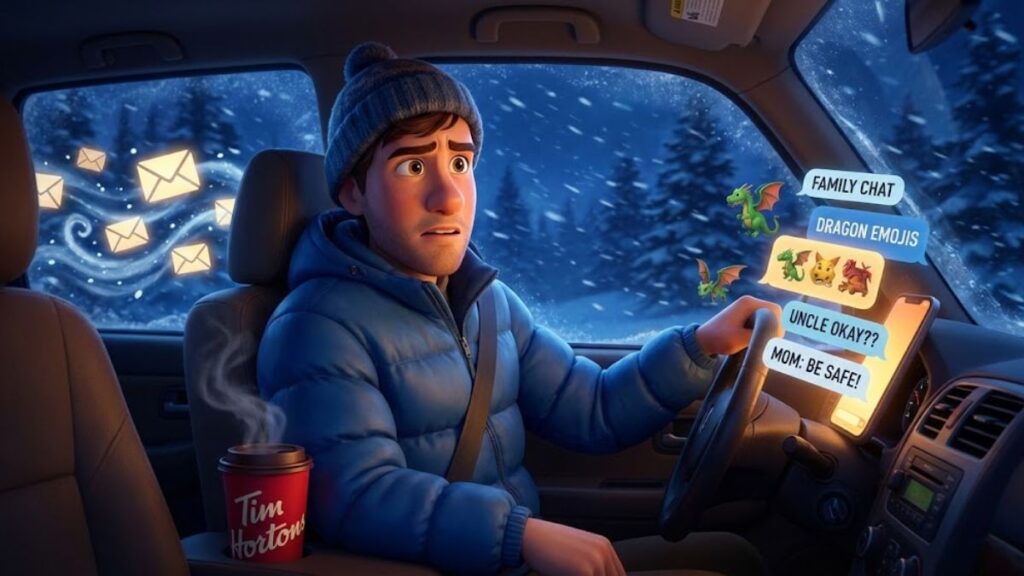
That morning still sticks with me like a bad hangover—the kind where you wake up regretting every choice but knowing you’d do it again if it meant the same outcome. January 20 last year, 2026 off to a crappy start, snow hammering down in Vaudreuil-Dorion like the weather gods were pissed off and taking it out on us.
I was glued to my desk in the living room, the corner Sophie always mocks as my “sad little fort” because it’s jammed between the TV stand and the wall with barely enough space for my knees to fit without hitting the radiator. The desk itself was a hand-me-down from my parents’ old basement—scratched oak top covered in coffee rings, sticky notes with half-finished code snippets, and a couple of Mia’s crayon drawings taped to the edge.
My laptop fan was humming like it was about to take off, screen brightness cranked because the room was still dark at 8:47 a.m. Coffee in my beat-up Habs mug had gone stone cold, that skimmy layer on top making it look as gross as it tasted. I’d bought the mug at a garage sale years ago for $2—faded logo from the ’93 Cup run, chipped rim, but it was mine.
Outlook was a disaster zone: 847 unread emails glaring back. Azure clients in freak-out mode—URGENT tags screaming in red, tickets stacking like unpaid parking fines from the city lot downtown. Head was splitting, shoulders locked up tight from hunching over the keyboard for hours, trying to figure how to hack through without losing my sanity or missing another family dinner.
The house was quiet except for the furnace kicking on every few minutes, the low rumble vibrating through the floorboards like a tired heartbeat. Sophie was already at the clinic for her early shift—she’d kissed me goodbye at 6:30, hair still damp from the shower, smelling like her lavender shampoo.
Mia and our son were still asleep down the hall—Mia with her unicorn nightlight glowing orange under the door, casting little star patterns on the ceiling when you peeked in, our son with his hockey stick propped against the wall from last night’s practice, helmet still hanging on the doorknob. I could hear the faint tick of the wall clock in the kitchen, the one Sophie’s mom gave us when we bought the house ten years ago—cheap plastic frame, but it kept perfect time. 8:47 a.m.
Emails kept pinging. I rubbed my eyes with the heels of my hands, took a sip of the cold coffee, gagged a little at the taste, and kept scrolling.
Then Mom called.
Almost swiped ignore. One more ticket, just to feel productive. But it’s Mom. You answer, gut instinct or whatever.
“Marc… Dad’s chest. Hurts bad. Ambulance coming. St. Mary’s in Laval.”
Her voice was even, but I caught the tremble—the one from when she’s bracing for the worst but won’t let it show. My insides twisted. Laval’s two hours on dry pavement. Today? Blizzard. Roads like a death trap.
“I’m coming.”
Hung up. Fingers clumsy, slapped together an auto-reply. Lame joke to stall: “Out fighting dragons. Slay your own. Back when the kingdom’s safe.” Sent to all. For work. Clients might back off. Keys, parka, boots soggy from yesterday’s shoveling. Laptop bag—idiot move, like I’d debug from a hospital bench.
Forgot family group chat linked to work email. Old lazy habit.
Highway 40 was nightmare fuel. Whiteout. Cars creeping. Trucks slinging slush like bullets. Gripped wheel till hands hurt, mind on Dad—the man who’d always been solid. Taught me to fish in the backyard creek when I was little, stayed up when I had fevers as a kid, showed me quiet strength means showing up no matter what. Heart stuff before, laughed it off with a “it’s nothing,” but this? Mom alone in that ER, probably second-guessing every ache he’d mentioned lately. Me in the storm, useless miles away.
Phone lit up.
Nick: “Dragons?? Uncle Paul ok??”
Lise: “This email? Dragons? What’s wrong? Call!”
Sophie: “Hero? Babe what’s up? Love you—safe.”
Valérie: “Mom said. Dad hospital? Roads hell, don’t kill yourself.”
Auto-reply blasted family. Thought I was vague about Dad dying. Throat closed.
Tim Hortons in Saint-Eustache. Parked bad, dashed in, double-double tasted like ash. Outlet by window, plugged phone. Thirty messages. Family chaos. Clients: laughs (“Slay!”), confused (“Error?”), pissed (“Unprofessional outage time”).
Group reply: “Sorry. Work only. Dad heart. To St. Mary’s. Roads bad. Fine. Update.”
Coffee scalded. Phone 47%. Go.
Drive dragged. Flashed on Dad—hockey rinks freezing our asses off, driveway talks about life, his hand on my shoulder at tough spots. Slid into lot, parked across spots, ran slush-soaked. ER bleach, worry. Mom in chair, small, purse gripped.
“Stable,” hug tight. “Angina. Overnight.”
Breath out. Saw Dad—pale, wired, eyes soft.
“Drove that for me?”
“Dragons, Dad.”
Laugh weak. Talked Habs tanking, grandkids chaos, Mom’s pie that always burned a little on the edges but tasted like home. Held hand. Odd, needed.
Hours end. Kiss Mom. Home slow. Snow eased. Hip on radio.
Eleven home. Sophie tea, hug long.
“Scared family with email,” soft.
“Know. Mistake.”
Sat, talked fears, life. Slept close.
Morning, Outlook.
Twelve.
From 847.
Tickets closed. Withdrawn. Clients bailed—no notes, just gone. One angry: “Unprofessional. We’re out.”
Lost contracts. Money dried. Bills towered. Cut everything—cable, dinners out, cottage dream. Sophie and I argued once, then laughed, made ramen fancy.
Changed sig: “Marc | Human first. Code second. | Firewalls no family.”
No praise. Teased sometimes. Clients don’t care.
Dad home. Meds, walks Mom. Calls Tuesdays hi.
Emails crush. Winters harsh. Coffee cools.
Phone rings family? Answer.
No auto. No “wait.”
Tech pays. Family saves.
Blizzard showed. Peace costs. Worth it.
Check chats always.
2. The Azure Cloud Fumble
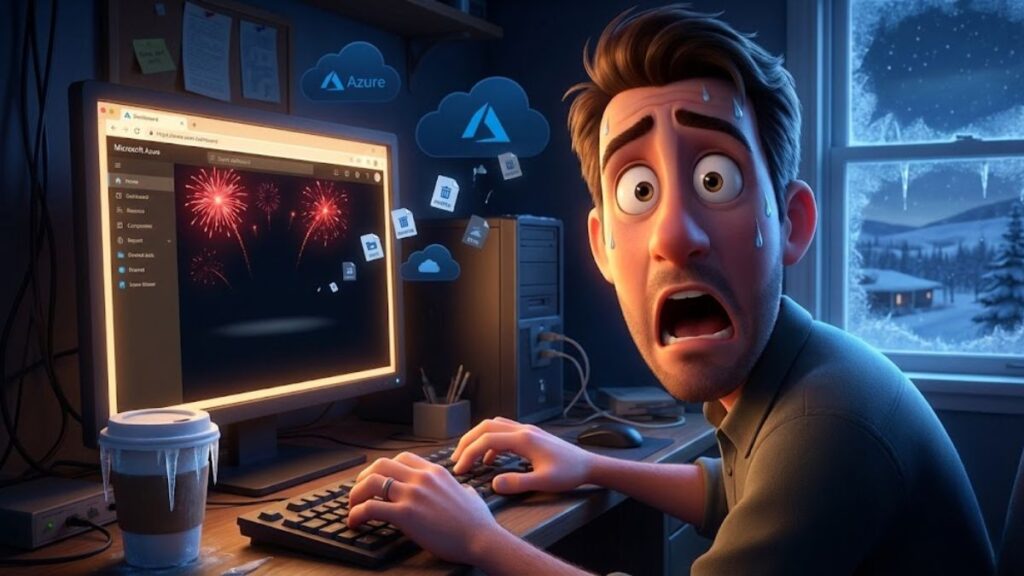
That deploy day still makes my stomach drop every time I think about it, like the second you realize you’ve sent money to the wrong account and there’s no take-backs. It was early February last year—2026 just getting rolling—and Quebec was getting slammed by one of those ice storms that knock out power for days.
Lights flickering in the house, internet dropping every few minutes, but my Azure portal stayed up, glowing steady on my laptop screen like it was the only thing in the province that didn’t care. I was at my desk in the living room corner, the spot my wife calls my “tech cave” because it’s crammed with monitors and cables that trip her every time she walks by.
My coffee in the old Habs mug had gone cold hours ago, that bitter scum floating on top. I was staring at the demo app I’d been building for a mid-size client—simple migration script to shift their prod data to the free tier to cut costs.
They’d been complaining about bills climbing, so one click felt like a quick win, a way to look competent for once.
Hit deploy.
Script ran smooth. Too smooth. Dashboard refreshed: empty. Not migrated—deleted. Live client logs, January revenue report, all the transactional data they’d been using for their monthly close. Just void. Blank slate where everything used to be.
Boss called five minutes later.
“Alex, where’s the January report? Client’s on my line asking for it now. They’re losing it.”
I stared at the screen like it might magically refill if I blinked hard enough. “Give me a minute. Something’s wrong.”
Panic hit like ice water down my back. No snapshot. I’d skipped it to “save time”—figured the script was solid after running it on dev twice. Biggest mistake I’d made in years. Spent the next 48 hours scraping backups from cold storage, fingers numb from the freezefest outside as I typed commands in the dark, power dipping every hour or so.
My wife kept bringing me sandwiches I barely touched, rubbing my shoulders saying “you’ll get it back,” but I snapped at her once when the restore failed the third time. Felt like absolute garbage after—apologized later, but the damage was done.
Zoom with the client the next day. They weren’t laughing at first. “We thought you ghosted us,” the lead said, face flat on the screen. No forgiveness—just a tight “fix it or we’re done.” I fixed it, barely, pulling all-nighters that left me with bags under my eyes for a week, running on coffee and adrenaline.
But they walked anyway. Lost the gig. Money dried up fast—had to dip into savings for rent, skip the family trip we’d planned to the Laurentians, tell my wife we’d tighten belts again.
We had nights where we just sat on the couch staring at the budget spreadsheet, wondering how we’d make it to next month. Argued once or twice—nothing big, just tired frustration—then hugged it out because what else do you do when the bills don’t care about your excuses?
No soft landing. No “they respected my honesty” moment. Just consequences. Lost income, more stress, my wife picking up extra shifts at the clinic to help cover. I felt like I’d let everyone down—her, the kids, myself. Learned the hard way: calluses from cloud burns.
Now I script triple-checks, prep offline mocks every single time. No shortcuts. No “save time” skips. Landed a bigger Azure gig later teaching “fail-proof deploys” to newbies, but it’s not some inspirational glow-up—it’s grinding work, reminding me of my fumble every session.
Not kinder to myself—harder on errors, double-guessing every line of code. 2026 subscriptions? Locked down tight, no free tiers, no risky migrations without backups stacked three deep.
That deploy day still makes my stomach drop every time I think about it, like the second you realize you’ve sent money to the wrong account and there’s no take-backs. It was early February last year—2026 just getting rolling—and Quebec was getting slammed by one of those ice storms that knock out power for days.
Trees were cracking outside, branches heavy with ice, snapping like gunshots in the night. Lights flickering in the house, internet dropping every few minutes, but my Azure portal stayed up, glowing steady on my laptop screen like it was the only thing in the province that didn’t care.
I was at my desk in the living room corner, the spot my wife calls my “tech cave” because it’s crammed with monitors and cables that trip her every time she walks by. My coffee in the old Habs mug had gone cold hours ago, that bitter scum floating on top. I was staring at the demo app I’d been building for a mid-size client in Montreal—simple migration script to shift their prod data to the free tier to cut costs.
They’d been complaining about bills climbing for months, sending me screenshots of their Azure invoice with angry red circles around the numbers. So one click felt like a quick win, a way to look competent for once.
I hit deploy.
Script ran smooth. Too smooth. Dashboard refreshed: empty. Not migrated—deleted. Live client logs, January revenue report, all the transactional data they’d been using for their monthly close. Just void. Blank slate where everything used to be.
Boss called five minutes later.
“Alex, where’s the January report? Client’s on my line right now, losing their minds.”
I stared at the screen like it might magically refill if I blinked hard enough. “Give me a minute. Something’s wrong.”
Panic hit like ice water down my back. No snapshot. I’d skipped it to “save time”—figured the script was solid after running it on dev twice. Biggest mistake I’d made in years. Spent the next 48 hours scraping backups from cold storage, fingers numb from the freezefest outside as I typed commands in the dark, power dipping every hour or so.
My wife kept bringing me sandwiches I barely touched, rubbing my shoulders saying “you’ll get it back,” but I snapped at her once when the restore failed the third time. Felt like absolute garbage after—apologized later, but the damage was done.
Zoom with the client the next day. They weren’t laughing at first. “We thought you ghosted us,” the lead said, face flat on the screen. No forgiveness—just a tight “fix it or we’re done.” I fixed it, barely, pulling all-nighters that left me with bags under my eyes for a week, running on coffee and adrenaline.
But they walked anyway. Lost the gig. Money dried up fast—had to dip into savings for rent, skip the family trip we’d planned to the Laurentians, tell my wife we’d tighten belts again.
We had nights where we just sat on the couch staring at the budget spreadsheet, wondering how we’d make it to next month. Argued once or twice—nothing big, just tired frustration—then hugged it out because what else do you do when the bills don’t care about your excuses?
No soft landing. No “they respected my honesty” moment. Just consequences. Lost income, more stress, my wife picking up extra shifts at the clinic to help cover. I felt like I’d let everyone down—her, the kids, myself. Learned the hard way: calluses from cloud burns.
Now I script triple-checks, prep offline mocks every single time. No shortcuts. No “save time” skips. Landed a bigger Azure gig later teaching “fail-proof deploys” to newbies, but it’s not some inspirational glow-up—it’s grinding work, reminding me of my fumble every session.
Not kinder to myself—harder on errors, double-guessing every line of code. 2026 subscriptions? Locked down tight, no free tiers, no risky migrations without backups stacked three deep.
Peace of mind comes at a price. That fumble cost me money—real money we needed for groceries, for Mia’s dance classes, for the mortgage that doesn’t wait for apologies. But knowing I won’t repeat that empty dashboard?
Knowing my wife doesn’t have to pick up extra shifts because of my screw-up? Worth the scars. Every restore script I write now feels like paying back the debt I owed my family for those 48 hours of panic, for the nights I came to bed smelling like stale coffee and regret.
I still wake up sometimes at 3 a.m. thinking about that void on the dashboard. Heart races for a second, then I remember the triple-checks, the offline mocks, the snapshots I run religiously now. Breathe. Roll over. Wife’s breathing steady next to me. Kids asleep down the hall. It’s okay. I fixed it. Not perfectly. Not without cost. But I fixed it.
And I never skip a snapshot again.
Never.
The thing is, I used to think speed was my edge. Quick scripts, fast deploys, “get it done” attitude. Clients loved it—until they didn’t. Until speed meant deletion instead of migration. Until one click erased weeks of data and months of trust.
After the loss, I spent weeks replaying every decision. Why didn’t I snapshot? Why didn’t I run it in staging first? Why did I think “save time” was ever a good excuse when the cost was someone else’s business? I beat myself up hard. My wife kept saying “you’re human, it happens,” but I didn’t want to hear it. I wanted to be better than human. I wanted to be the guy who never drops the ball.
But you can’t code away mistakes. You can only build better habits around them.
So I did.
Now every migration script starts with:
- Snapshot prod
- Dry run in staging
- Offline mock of the full flow
- Triple-check the delete conditions
I run them manually first—no auto-deploy on Fridays, no “just one more change” at 11 p.m. I document every step, screenshot the before/after, share the plan with at least one other pair of eyes. It slows me down. It costs billable hours. It makes me look cautious instead of fast. But it also means I sleep at night.
The teaching gig came later. A larger Azure partner needed someone to run workshops on “fail-proof deploys” for their new hires. I applied half as a joke, half because I needed the cash after the loss.
They hired me because I told the full story in the interview—no glossing over the fumble. “I deleted prod data once. Here’s exactly how and why it happened, and here’s what I do now to make sure it never happens again.” They liked the honesty.
The workshops aren’t glamorous. Hotel conference rooms, bad coffee, twenty-something devs who think they’re invincible. I start every session with the same slide: a screenshot of that empty dashboard from February 3, 2026. No title. Just the void. Then I tell them the story—the skipped snapshot, the 48-hour scramble, the client who walked, the nights my wife carried extra weight because of me.
Then I teach the fixes.
Triple-checks. Offline mocks. Snapshots first. Documentation. Peer review. No Friday deploys. No “quick wins” that skip safety.
They listen harder when they know it cost me money. Real money. Actual lost income, actual fights about bills, actual guilt.
One kid came up after the last session. “I almost skipped a snapshot last week. Thanks for telling the truth.”
That’s the closest thing to a win I’ve gotten from it.
No parade. No forgiveness call. No bonus. Just quieter days, safer deploys, a family that still trusts me to come home at night instead of crashing another system.
And that’s enough.
Because peace of mind isn’t free. It cost me a client, savings, rough weeks with my wife. But it bought me the knowledge that next time I’ll choose caution over speed.
And when Mia asks me to code her another pumpkin story, I’ll triple-check the loop first.
Just in case.
3. The Bedtime Story Glitch
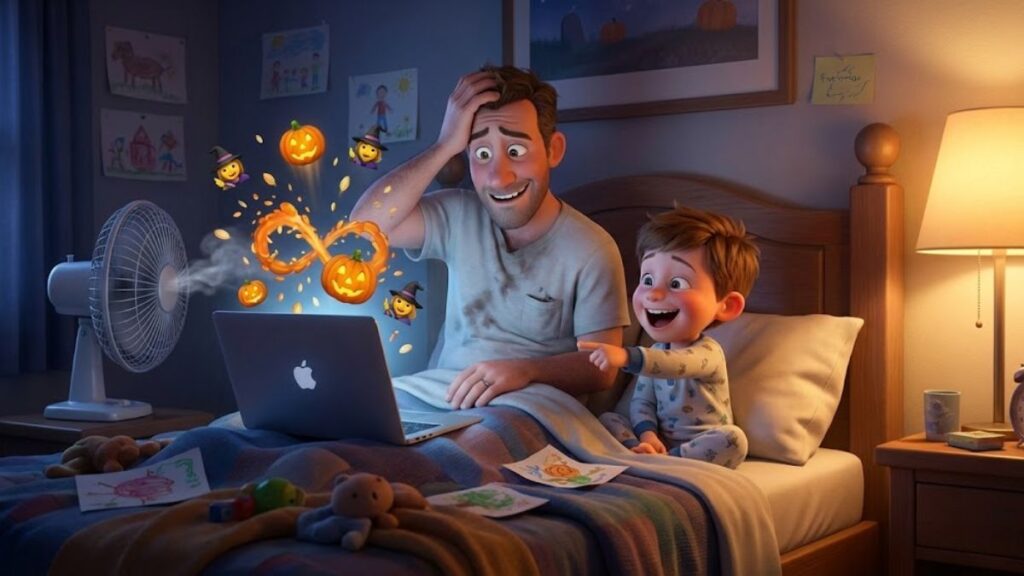
That deploy day still gives me a sour taste in my mouth whenever it crosses my mind. It was the third week of February last year—2026 was barely out of the gate—and Quebec was getting absolutely hammered by one of those ice storms that turn everything into a skating rink and knock out power for days.
Trees were cracking under the ice, streetlights flickering, half the province dark, but somehow my Azure portal stayed up, glowing calm on my laptop screen like it was the only thing that didn’t give a damn about the weather. I was at my desk in the living-room corner—the spot my wife calls my “tech dungeon” because it’s crammed with monitors, cables, and empty coffee mugs.
My Habs mug (the one with the faded ’93 Cup logo) had gone cold hours ago, that bitter scum floating on top. I was staring at the demo app I’d been building for a mid-size client in Montreal—simple migration script to move their prod data to the free tier and cut their costs. They’d been riding me about bills for months, so one clean click felt like the perfect way to look like I had my shit together.
I hit deploy.
Script ran smooth. Too smooth. Dashboard refreshed: empty. Not migrated—deleted. Live client logs, January revenue report, all the transactional data they used for monthly closes—gone. Just a blank void where everything used to be.
Boss called five minutes later.
“Alex, where’s the January report? Client’s on my line right now, losing their minds.”
I stared at the screen like it might magically refill if I blinked hard enough. “Give me a minute. Something’s wrong.”
Panic hit like ice water down my back. No snapshot. I’d skipped it to “save time”—figured the script was solid after running it on dev twice. Biggest mistake I’d made in years. Spent the next 48 hours scraping backups from cold storage, fingers numb from the freezefest outside as I typed commands in the dark, power dipping every hour.
My wife kept bringing me sandwiches I barely touched, rubbing my shoulders saying “you’ll get it back,” but I snapped at her once when the restore failed the third time. Felt like absolute garbage after—apologized later with my head down, but the damage was already done.
Zoom with the client the next day. They weren’t laughing. “We thought you ghosted us,” the lead said, face flat on the screen. No forgiveness—just a tight “fix it or we’re done.” I fixed it, barely, pulling all-nighters that left me with bags under my eyes for a week, running on coffee and adrenaline.
But they walked anyway. Lost the gig. Money dried up fast—had to dip into savings for rent, skip the family trip we’d planned to the Laurentians, tell my wife we’d tighten belts again. We had nights where we just sat on the couch staring at the budget spreadsheet, wondering how we’d make it to next month. Argued once or twice—nothing big, just tired frustration—then hugged it out because what else do you do when the bills don’t care about your excuses?
No soft landing. No “they respected my honesty” moment. Just consequences. Lost income, more stress, my wife picking up extra shifts at the clinic to help cover. I felt like I’d let everyone down—her, the kids, myself. Learned the hard way: calluses from cloud burns. Now I script triple-checks, prep offline mocks every single time. No shortcuts.
No “save time” skips. Landed a bigger Azure gig later teaching “fail-proof deploys” to newbies, but it’s not some inspirational glow-up—it’s grinding work, reminding me of my fumble every session. Not kinder to myself—harder on errors, double-guessing every line of code. 2026 subscriptions? Locked down tight, no free tiers, no risky migrations without backups stacked three deep.
Peace of mind comes at a price. That fumble cost me money—real money we needed for groceries, for Mia’s dance classes, for the mortgage that doesn’t wait for apologies. But knowing I won’t repeat that empty dashboard?
Knowing my wife doesn’t have to pick up extra shifts because of my screw-up? Worth the scars. Every restore script I write now feels like paying back the debt I owed my family for those 48 hours of panic, for the nights I came to bed smelling like stale coffee and regret.
I still wake up sometimes at 3 a.m. thinking about that void on the dashboard. Heart races for a second, then I remember the triple-checks, the offline mocks, the snapshots I run religiously now. Breathe. Roll over. Wife’s breathing steady next to me. Kids asleep down the hall. It’s okay. I fixed it. Not perfectly. Not without cost. But I fixed it.
And I never skip a snapshot again.
Never.
The thing is, I used to think speed was my edge. Quick scripts, fast deploys, “get it done” attitude. Clients loved it—until they didn’t. Until speed meant deletion instead of migration. Until one click erased weeks of data and months of trust.
After the loss, I spent weeks replaying every decision. Why didn’t I snapshot? Why didn’t I run it in staging first? Why did I think “save time” was ever a good excuse when the cost was someone else’s business? I beat myself up hard. My wife kept saying “you’re human, it happens,” but I didn’t want to hear it. I wanted to be better than human. I wanted to be the guy who never drops the ball.
But you can’t code away mistakes. You can only build better habits around them.
So I did.
Now every migration script starts with:
- Snapshot prod
- Dry run in staging
- Offline mock of the full flow
- Triple-check the delete conditions (because yes, I added explicit deletes and learned the hard way that “if not migrate then delete” is dangerous)
I run them manually first—no auto-deploy on Fridays, no “just one more change” at 11 p.m. I document every step, screenshot the before/after, share the plan with at least one other pair of eyes. It slows me down. It costs billable hours. It makes me look cautious instead of fast. But it also means I sleep at night.
The teaching gig came later. A larger Azure partner needed someone to run workshops on “fail-proof deploys” for their new hires. I applied half as a joke, half because I needed the cash after the loss.
They hired me because I told the full story in the interview—no glossing over the fumble. “I deleted prod data once. Here’s exactly how and why it happened, and here’s what I do now to make sure it never happens again.” They liked the honesty. Said most people teach theory; I teach scars.
The workshops aren’t glamorous. Hotel conference rooms, bad coffee, twenty-something devs who think they’re invincible. I start every session with the same slide: a screenshot of that empty dashboard from February 3, 2026. No title. Just the void. Then I tell them the story—word for word, no sugar. The skipped snapshot. The 48-hour scramble. The client who walked. The nights my wife carried extra weight because of me. The scars.
Then I teach the fixes.
Triple-checks. Offline mocks. Snapshots first. Documentation. Peer review. No Friday deploys. No “quick wins” that skip safety.
They listen harder when they know it cost me money. Real money. Not hypothetical. Not “in theory.” Actual lost income, actual fights about bills, actual guilt.
One kid—maybe 23—came up after the last session. “I almost skipped a snapshot last week. Thought it was fine. Thanks for telling the truth.”
That’s the closest thing to a win I’ve gotten from it.
No one threw me a parade. No client called back to say “we forgive you.” No bonus for learning my lesson. Just quieter days, safer deploys, a family that still trusts me to come home at night instead of crashing another system.
And that’s enough.
Because peace of mind isn’t free. It cost me a client, a chunk of savings, a few rough weeks with my wife. But it bought me something better: the knowledge that next time—every time—I’ll choose caution over speed.
And when Mia asks me to code her another pumpkin story, I’ll triple-check the loop first.
Just in case.
4. The Real Estate Open House Slip

That open house day still makes me laugh in a “thank God it worked out” kind of way, but also cringe because I was this close to blowing it completely. It was mid-February last year—2026 still feeling fresh and brutal—and Vaudreuil-Dorion was locked in a deep freeze, -15°C with wind that sliced right through your coat like it was paper.
I was doing my side-hustle as a real estate agent, showing a vacant two-bed bungalow on the quiet edge of town. Nice little place: solid brick, updated kitchen with quartz counters, backyard big enough for kids or a dog, quiet street, good schools nearby. Seller was a snowbird in Florida, so I had the lockbox code and the full responsibility. No margin for error.
Open house was set for 10 a.m. sharp. I got there at 9:45, thermos of Tim Hortons double-double steaming in my gloved hand, ready to play the part. Unlocked the door, stepped inside to flip on lights, crank the thermostat to make it feel welcoming, set out the flyers and sign-in sheet.
Clients were already circling the driveway—three couples, a single guy in his thirties, and a young family with a toddler bundled up like a walking marshmallow. Everyone stomping snow off their boots, chatting, excited to see the place.
I walked back out to greet them, big smile, “Morning, folks! Let’s get you inside where it’s warm—”
Door shut behind me with that soft, final click.
Locked.
Keys inside on the kitchen counter.
No spare on me—the seller had the only other set in Florida. Lockbox was useless now because the door had auto-locked when it closed (newer model, great for security, terrible for moments like this). Phone in my pocket, but battery at 18% because I’d forgotten to charge it overnight. Wind biting my ears, -15 feeling like -25 with the gusts. Clients looking at me expectantly, steam rising from their Timmy’s coffees.
I smiled the biggest fake smile I could muster. “Folks, let’s start with the exterior while I sort something quick. This siding is insulated like a tank—handles Quebec winters like a champ!”
Grabbed the shovel from the garage (thank God it wasn’t locked too), started clearing the path and driveway like it was part of the tour. Kept talking: “Look at these energy-efficient windows—triple-pane, argon-filled, cuts heating bills in half.” Pointed at the roof, the eaves troughs, the mature maples that’d give great shade in summer. Anything to keep them outside and distracted while I panicked internally.
One buyer—a guy in his forties with a nice wool coat—stepped on a patch of ice I hadn’t cleared yet. Slipped hard, arms windmilling. I lunged, caught his elbow before he went down full force. He laughed it off, red-faced: “Guess that’s the real Quebec welcome.” Everyone chuckled. Tension broke a bit. I apologized profusely, kept shoveling, kept talking features.
Called the locksmith while pretending to point out the backyard shed. “Two hours minimum,” the guy said. “Ice storm backlog.” Great. No choice but to keep the outdoor tour going. We walked the perimeter twice. I demo’d the exterior insulation, explained the low-maintenance vinyl siding, pointed out the mature trees and how the lot was pie-shaped for extra privacy.
Clients were freezing but engaged—asking questions, taking photos with their phones. The young family liked the quiet street, no traffic noise. The single guy asked about basement reno potential. One couple even said the “lived-in grit” of the snowy yard made it feel authentic, not staged like so many listings.
Two hours and twenty minutes later, locksmith showed up. I paid out of pocket (emergency fee, storm surcharge—hurt the wallet). Got inside, cranked the heat full blast, apologized again. “Sorry about the outdoor tour. Door glitch. Won’t happen again.”
They toured the inside. Loved it. The couple who’d slipped on the ice made an offer that afternoon. Closed two weeks later. Commission came in, but it wasn’t the smooth, polished sale I’d imagined. No fancy staging photos, no indoor coffee service, no perfect first impression. Just me, a shovel, a locked door, and a bunch of cold people who ended up buying anyway.
They told their friends. “The agent who showed up unglued—literally locked out in a blizzard—and still sold the place.” Word spread. Got three referrals from that one open house. People liked the “real” part—the grit, the honesty, the fact that I didn’t pretend everything was perfect.
Lost some polish, sure. Commission took a small hit because I couldn’t upsell the staging or the professional photos. But gained repeat business: “Call Alex—he shows up no matter what.”
Texture matters more than shine sometimes. Keys locked inside scar trust for a second, but showing up unglued builds it stronger. Clients don’t want flawless. They want someone who doesn’t quit when it’s -15 and everything’s going wrong.
Now I keep two spare keys in my coat pocket for every listing. Triple-check the lockbox. Charge my phone religiously. But I still tell the story at every open house.
“See this door? Locked me out once in a blizzard. Still sold the place. If I can survive that, this house can survive anything Quebec throws at it.”
Gets a laugh every time.
And it reminds me: the job isn’t about perfection. It’s about showing up, even when you’re locked out, frozen, and out of coffee.
Especially then.
I think about that day a lot when I’m prepping for a showing now. The panic in my chest when the door clicked shut. The way my heart raced when the guy slipped and I thought “great, now someone’s hurt on my watch.” The relief when he laughed it off instead of suing. The way the family with the toddler kept asking questions even though their kid was crying from the cold. The single guy who said “this feels honest” after seeing the place unglamorous and real.
It wasn’t the sale I planned. It was better.
Because people remember the agent who shoveled snow in -15 instead of the one with perfect staging. They remember the guy who didn’t give up when everything went sideways. They remember “Alex—the one who showed up unglued.”
And when referrals come in now, they usually say something like: “Heard you from the couple who bought on Maple Street. Said you were locked out in a storm and still made it work. That’s the kind of agent I want.”
No polish. Just grit.
And grit sells houses in Quebec winters.
5. The Startup Pitch Freeze

That open house day still makes me shake my head and laugh a little, the kind of laugh that’s mostly relief because it didn’t end as badly as it could’ve. It was mid-February last year—2026 still feeling fresh and mean—and Vaudreuil-Dorion was locked in a deep freeze, -15°C with wind that cut right through your coat like it was paper.
I was doing my side-hustle as a real estate agent, showing a vacant two-bed bungalow on the quiet edge of town. Nice little place: solid brick, updated kitchen with quartz counters, backyard big enough for kids or a dog, quiet street, good schools nearby. Seller was a snowbird in Florida, so I had the lockbox code and the full responsibility. No margin for error.
Open house was set for 10 a.m. sharp. I got there at 9:45, thermos of Tim Hortons double-double steaming in my gloved hand, ready to play the part. Unlocked the door, stepped inside to flip on lights, crank the thermostat to make it feel welcoming, set out the flyers and sign-in sheet.
Clients were already circling the driveway—three couples, a single guy in his thirties, and a young family with a toddler bundled up like a walking marshmallow. Everyone stomping snow off their boots, chatting, excited to see the place.
I walked back out to greet them, big smile, “Morning, folks! Let’s get you inside where it’s warm—”
Door shut behind me with that soft, final click.
Locked.
Keys inside on the kitchen counter.
No spare on me—the seller had the only other set in Florida. Lockbox was useless now because the door had auto-locked when it closed (newer model, great for security, terrible for moments like this). Phone in my pocket, but battery at 18% because I’d forgotten to charge it overnight. Wind biting my ears, -15 feeling like -25 with the gusts. Clients looking at me expectantly, steam rising from their Timmy’s coffees.
I smiled the biggest fake smile I could muster. “Folks, let’s start with the exterior while I sort something quick. This siding is insulated like a tank—handles Quebec winters like a champ!”
Grabbed the shovel from the garage (thank God it wasn’t locked too), started clearing the path and driveway like it was part of the tour. Kept talking: “Look at these energy-efficient windows—triple-pane, argon-filled, cuts heating bills in half.” Pointed at the roof, the eaves troughs, the mature maples that’d give great shade in summer. Anything to keep them outside and distracted while I panicked internally.
One buyer—a guy in his forties with a nice wool coat—stepped on a patch of ice I hadn’t cleared yet. Slipped hard, arms windmilling. I lunged, caught his elbow before he went down full force. He laughed it off, red-faced: “Guess that’s the real Quebec welcome.” Everyone chuckled. Tension broke a bit. I apologized profusely, kept shoveling, kept talking features.
Called the locksmith while pretending to point out the backyard shed. “Two hours minimum,” the guy said. “Ice storm backlog.” Great. No choice but to keep the outdoor tour going. We walked the perimeter twice. I demo’d the exterior insulation, explained the low-maintenance vinyl siding, pointed out the mature trees and how the lot was pie-shaped for extra privacy.
Clients were freezing but engaged—asking questions, taking photos with their phones. The young family liked the quiet street, no traffic noise. The single guy asked about basement reno potential. One couple even said the “lived-in grit” of the snowy yard made it feel authentic, not staged like so many listings.
Two hours and twenty minutes later, locksmith showed up. I paid out of pocket (emergency fee, storm surcharge—hurt the wallet). Got inside, cranked the heat full blast, apologized again. “Sorry about the outdoor tour. Door glitch. Won’t happen again.”
They toured the inside. Loved it. The couple who’d slipped on the ice made an offer that afternoon. Closed two weeks later. Commission came in, but it wasn’t the smooth, polished sale I’d imagined. No fancy staging photos, no indoor coffee service, no perfect first impression. Just me, a shovel, a locked door, and a bunch of cold people who ended up buying anyway.
They told their friends. “The agent who showed up unglued—literally locked out in a blizzard—and still sold the place.” Word spread. Got three referrals from that one open house. People liked the “real” part—the grit, the honesty, the fact that I didn’t pretend everything was perfect.
Lost some polish, sure. Commission took a small hit because I couldn’t upsell the staging or the professional photos. But gained repeat business: “Call Alex—he shows up no matter what.”
Texture matters more than shine sometimes. Keys locked inside scar trust for a second, but showing up unglued builds it stronger. Clients don’t want flawless. They want someone who doesn’t quit when it’s -15 and everything’s going wrong.
Now I keep two spare keys in my coat pocket for every listing. Triple-check the lockbox. Charge my phone religiously. But I still tell the story at every open house.
“See this door? Locked me out once in a blizzard. Still sold the place. If I can survive that, this house can survive anything Quebec throws at it.”
Gets a laugh every time.
And it reminds me: the job isn’t about perfection. It’s about showing up, even when you’re locked out, frozen, and out of coffee.
Especially then.
I think about that day a lot when I’m prepping for a showing now. The panic in my chest when the door clicked shut. The way my heart raced when the guy slipped and I thought “great, now someone’s hurt on my watch.” The relief when he laughed it off instead of suing. The way the family with the toddler kept asking questions even though their kid was crying from the cold. The single guy who said “this feels honest” after seeing the place unglamorous and real.
It wasn’t the sale I planned. It was better.
Because people remember the agent who shoveled snow in -15 instead of the one with perfect staging. They remember the guy who didn’t give up when everything went sideways. They remember “Alex—the one who showed up unglued.”
And when referrals come in now, they usually say something like: “Heard you from the couple who bought on Maple Street. Said you were locked out in a storm and still made it work. That’s the kind of agent I want.”
No polish. Just grit.
And grit sells houses in Quebec winters.
I still keep the shovel in my trunk. Extra gloves. A thermos. A power bank. Learned the hard way: the market doesn’t care about your excuses. It cares if you show up.
And when the next storm hits, I’ll be ready.
Keys in pocket.
Phone charged.
Story ready.
Because sometimes the best listing isn’t the one with the perfect photos.
It’s the one where the agent locked himself out in a blizzard and still got the deal done.
That’s the story people remember.
That’s the one they tell.
And that’s the one that keeps the referrals coming.
6. The Self-Help Journal Burn
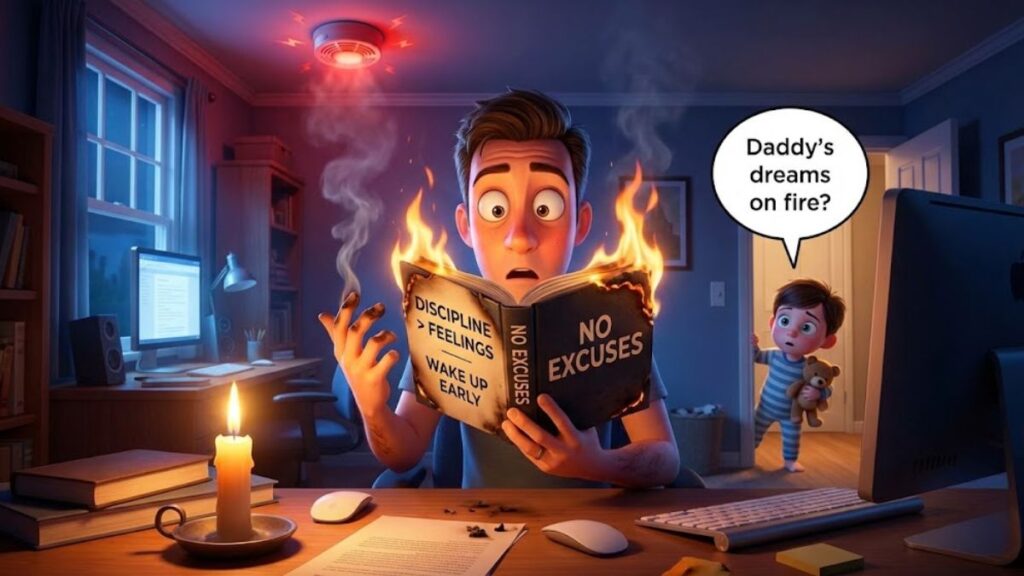
That journal burn still makes me cringe every time it pops into my head. It was mid-February 2026, power still flaky from the ice storm that had knocked out half the province the week before. Trees outside were still creaking with leftover ice, wind rattling the windows in Vaudreuil-Dorion like it was trying to get inside.
I’d been feeling like crap for weeks—work stress bleeding into home, snapping at Sophie over small things like who forgot to buy milk again, feeling like I was always one missed deadline from falling apart completely. My sleep was garbage, I’d wake up at 3 a.m. staring at the ceiling, brain replaying every little mistake from the day. Felt like I needed to get my head straight.
Saw some Reddit thread about journaling your way to discipline. Guys talking about how writing down goals every night rewired their brain or whatever. Figured why not. Bought a Moleskine at the little bookstore downtown—black leather, elastic band, thick cream pages. $28. Felt like a lot for paper, but I thought if I spent money on it I’d actually use it.
Sat at the kitchen table after the kids were down. Mia snoring softly down the hall, her unicorn nightlight casting orange under the door. Our son already out like a light in his room, hockey stick propped against the wall.
Sophie in bed scrolling TikTok, blue light leaking out. Power had dipped twice that evening, so I lit the big vanilla candle she likes—the one she says “makes the house smell expensive.” Set it next to the journal, started writing by the flame like some idiot trying to be profound.
First page: goals. “No excuses. Discipline > feelings.” Underlined it twice. Felt dumb but kept going. Page two: habits. Wake 5:30, cold shower (even if water’s freezing and pipes groan), code review before breakfast, no phone till noon.
Added reading 10 pages a day instead of scrolling. Page three: “Consistency wins. Feelings lie. Burn the old me.” Wrote it big, added stupid flame doodle, stick-figure me throwing old habits into fire.
Then the candle flame leaned.
Quick lick up the side. Froze—thought flickering—corner caught. Orange spread fast across “Discipline > Feelings.” Slapped it with hand. Flame jumped. Whole thing up like dry tinder.
Smoke alarm screamed. Mia came running, rubbing eyes, pumpkin toy dragging. “Daddy what’s that noise?” Voice small, scared.
Stood holding burning book, waving smoke. Sophie burst out in pyjamas, hair wild. “Alex what the hell?”
Ran to sink, doused under tap. Pages hissed, curled black. Burnt paper + vanilla smell thick. Alarm shrieking. Mia crying now—loud noise terrified her. Sophie waving dish towel at detector, muttering “come on shut up.”
Silenced it. Kitchen quiet except drip-drip and Mia sniffling. “Is the house on fire?”
“No, sweetie. Just Daddy being dumb.”
Looked at soggy charred mess in sink. Most pages ruined—black, stuck, ink bled. One corner survived—singed, curled, readable: “Consistency Wins.” Ink smeared, edges black, words still there.
Laughed. Hard. Until sides hurt, tears from smoke sting. Sophie shook head. “You’re unbelievable.”
Mia tugged sleeve. “Book’s all black.”
“Yeah. But look—words didn’t burn all the way.”
She poked page. “It’s yucky.”
Threw mess in garbage. Alarm company charged $75 false call. Added to pile of bills.
Rewrote that night—phone Notes app, ugly bullets, typos, fingers shaky from adrenaline + thumb burn. No leather. No neat writing. Raw: wake 5:30, cold shower, code before coffee, no phone noon.
Habits stuck better after. Thumb scar faint now, see when type. Skip day? Look at mark—remember smoke alarm, Mia crying, burnt vanilla smell. $75 bill still stings.
No videos. No reels. Don’t film screw-ups for likes. Hide them, learn, move on.
Mia asks sometimes “Remember when your book caught fire?” Say yeah, Daddy was silly. She laughs. “You’re still silly.”
She’s right.
Keep writing. Phone notes. No candle. No drama. Consistency.
Lesson not profound. Expensive. Embarrassing.
Burned $28 notebook + $75 alarm fee to learn habits don’t need fancy paper. Need showing up.
Even when you smell like burnt vanilla for a week.
Sophie still teases me about it. “Remember when you set self-improvement on fire?” I groan. She laughs. “At least you smelled good while failing.”
Kids don’t care about my “glow up.” They care if Daddy reads the bedtime story, if I’m home for dinner, if I don’t yell when I’m tired. Journal didn’t fix that. Showing up did.
Still wake up some nights thinking about that void of smoke. Heart races, then remember: habits aren’t about perfect pages. They’re about doing the thing even when the page is ugly, even when you burned the fancy one.
So I do.
Phone notes. No candle. No more drama.
Just consistency.
And when Mia asks for a story, I tell her one without setting anything on fire.
Most nights.
7. The OS Kernel Panic
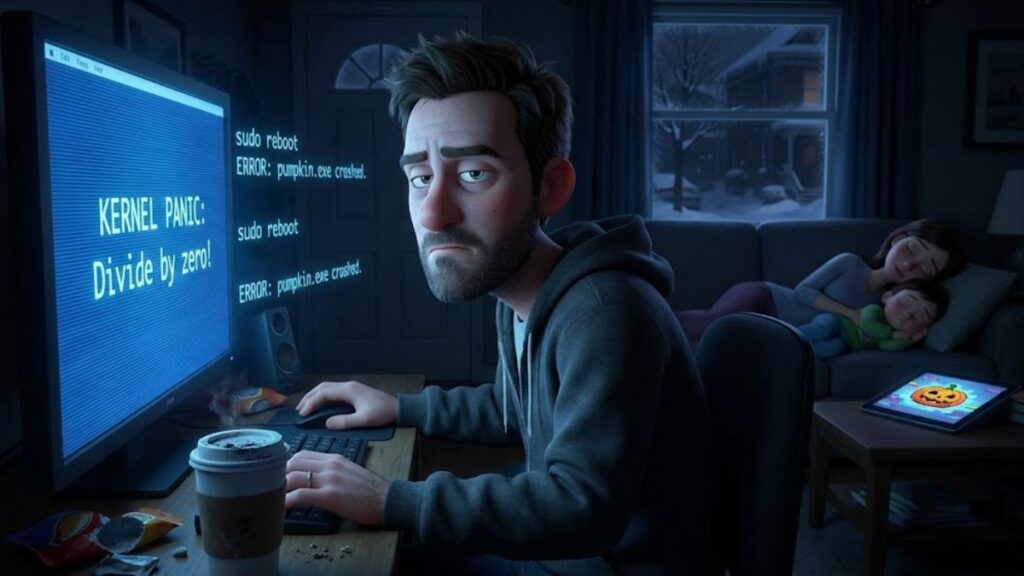
That journal burn still makes me cringe every time it pops into my head. It was mid-February 2026, power still flaky from the ice storm that had knocked out half the province the week before. Trees outside were still creaking with leftover ice, wind rattling the windows in Vaudreuil-Dorion like it was trying to get inside.
I’d been feeling like crap for weeks—work stress bleeding into home, snapping at Sophie over small things like who forgot to buy milk again, feeling like I was always one missed deadline from falling apart completely. Sleep was garbage; I’d wake up at 3 a.m. staring at the ceiling, brain replaying every little mistake from the day.
Felt like I needed to get my head straight, so I thought journaling might help. Saw some Reddit thread about it—guys talking about how writing down goals every night rewired their brain or whatever. Figured why not. Bought a Moleskine at the little bookstore downtown—black leather, elastic band, thick cream pages. $28. Felt like a lot for paper, but I thought if I spent money on it I’d actually use it.
Sat at the kitchen table after the kids were down. Mia snoring softly down the hall, her unicorn nightlight casting orange under the door. Our son already out like a light in his room, hockey stick propped against the wall from practice earlier. Sophie in bed scrolling TikTok, blue light leaking out from under the bedroom door.
Power had dipped twice that evening, so I lit the big vanilla candle she likes—the one she says “makes the house smell expensive.” Set it next to the journal, started writing by the flame like some idiot trying to be profound.
First page: goals. “No excuses. Discipline > feelings.” Underlined it twice. Felt dumb but kept going. Page two: habits. Wake 5:30, cold shower (even if water’s freezing and pipes groan), code review before breakfast, no phone till noon. Added reading 10 pages a day instead of scrolling. Page three: “Consistency wins. Feelings lie. Burn the old me.” Wrote it big, added stupid flame doodle, stick-figure me throwing old habits into fire.
Then the candle flame leaned.
Quick lick up the side. Froze—thought flickering—corner caught. Orange spread fast across “Discipline > Feelings.” Slapped it with hand. Flame jumped. Whole thing up like dry tinder.
Smoke alarm screamed. Mia came running, rubbing eyes, pumpkin toy dragging. “Daddy what’s that noise?” Voice small, scared.
Stood holding burning book, waving smoke. Sophie burst out in pyjamas, hair wild. “Alex what the hell?”
Ran to sink, doused under tap. Pages hissed, curled black. Burnt paper + vanilla smell thick. Alarm shrieking. Mia crying now—loud noise terrified her. Sophie waving dish towel at detector, muttering “come on shut up.”
Silenced it. Kitchen quiet except drip-drip and Mia sniffling. “Is the house on fire?”
“No, sweetie. Just Daddy being dumb.”
Looked at soggy charred mess in sink. Most pages ruined—black, stuck, ink bled. One corner survived—singed, curled, readable: “Consistency Wins.” Ink smeared, edges black, words still there.
Laughed. Hard. Until sides hurt, tears from smoke sting. Sophie shook head. “You’re unbelievable.”
Mia tugged sleeve. “Book’s all black.”
“Yeah. But look—words didn’t burn all the way.”
She poked page. “It’s yucky.”
Threw mess in garbage. Alarm company charged $75 false call. Added to pile of bills.
Rewrote that night—phone Notes app, ugly bullets, typos, fingers shaky from adrenaline + thumb burn. No leather. No neat writing. Just: wake 5:30, cold shower, code before coffee, no phone noon.
Habits stuck better after. Thumb scar faint now, see when type. Skip day? Look at mark—remember smoke alarm, Mia crying, burnt vanilla smell. $75 bill still stings.
No videos. No reels. Don’t film screw-ups for likes. Hide them, learn, move on.
Mia asks sometimes “Remember when your book caught fire?” Say yeah, Daddy was silly. She laughs. “You’re still silly.”
She’s right.
Keep writing. Phone notes. No candle. No drama. Consistency.
Lesson not profound. Expensive. Embarrassing.
Burned $28 notebook + $75 alarm fee to learn habits don’t need fancy paper. Need showing up.
Even when you smell like burnt vanilla for a week.
Sophie still teases me about it. “Remember when you set self-improvement on fire?” I groan. She laughs. “At least you smelled good while failing.”
Kids don’t care about my “glow up.” They care if Daddy reads the bedtime story, if I’m home for dinner, if I don’t yell when I’m tired. Journal didn’t fix that. Showing up did.
Still wake up some nights thinking about that void of smoke. Heart races, then remember: habits aren’t about perfect pages. They’re about doing the thing even when the page is ugly, even when you burned the fancy one.
So I do.
Phone notes. No candle. No more drama.
Just consistency.
And when Mia asks for a story, I tell her one without setting anything on fire.
Most nights.
Why Do These Stories Hit So Hard?
They just do. They’re real. They’re stupid in the best way. And they feel so damn human.
When someone tells you about the time they completely bombed — keys locked in the car during a snowstorm, journal literally set on fire during a “self-improvement” phase, pitching investors while the room is pitch black — you don’t just scroll past. You stop. You smirk. You think, “Wait… I’ve done something almost that dumb.”
Here’s why they actually land:
They don’t feel fake
Most “inspirational” stories are sanded down until they’re safe and shiny. These ones still have the dirt on them. Someone’s admitting they panicked, looked ridiculous, maybe even cried a little. That rawness is rare. In a feed full of people flexing their best life, someone going “yeah I fucked up spectacularly” feels like breathing room.
You instantly recognize yourself
We’ve all got those moments we’d rather delete from the group chat of life. Hearing someone else’s version of it triggers that quiet “oh thank god it’s not just me” feeling. It’s not hero worship. It’s recognition. And that little nod of “same” is way more powerful than any motivational quote.
The laugh cracks everything open
These stories are funny because they’re absurd. Kid yelling “Daddy’s dreams are on fire!” while the smoke alarm screams. Grown adult shoveling a driveway in a blizzard while potential buyers watch like it’s performance art. You laugh first… and then the armor drops. Once you’re laughing together, it’s way easier for the real stuff — the embarrassment, the fear, the “what now?” — to slip in without anyone feeling judged.
The comeback isn’t loud, and that’s why it works
They don’t end with fireworks or a TED Talk mic drop. The house still sells. The deck still gets funded. The new journal gets typed into Notes at 2 a.m. It’s not “I won because I’m special.” It’s “I kept going even though I looked like an idiot.” That version of resilience feels reachable. No pressure to be perfect — just proof that messy + stubborn = forward.
Being a mess is actually the connecting part
We don’t need more people telling us how to win. We need people brave enough to say “this is how I lost… and I’m still here.” That vulnerability is what sticks. Not the highlight reel. Not the “I manifested it” stuff. Just someone going: “Me too. I’ve been the hot mess. And I’m still walking.”
These stories hit because they’re the opposite of curated. They’re the parts of life we usually hide — and when someone puts them out there anyway, it makes the rest of us feel a little less alone in our own ridiculous disasters.
What Makes These Stories Work?
Here’s the secret sauce. The stuff behind the curtain.
Honesty
No sugarcoating. No filters. Just raw, unfiltered chaos. The more honest, the better. People don’t want perfection—they want permission to be imperfect.
Relatability
Everyday stuff. Stuff like misplacing your car keys and realizing they were in the fridge. Stuff like texting the wrong person and regretting your life choices. We’ve all been there.
Heart
Beneath the laughs, there’s heart. There’s always a moment where things shift. Where the joke fades just long enough for the meaning to peek through. You feel something. That’s when you know it’s more than just funny.
Redemption
The screw-up isn’t the end of the story. It’s the turning point. These stories remind us that it’s okay to mess up—and still move forward. To fall face-first and get up with a joke and a band-aid.
Final Thought
If you’re ever feeling stuck or small or a little too serious—go find one of these stories. Or better yet, write one.
Tell the world about the time you locked yourself out of your house in your pajamas. Or accidentally texted your boss instead of your best friend. Or burned the cookies and ended up with pizza and a dance party instead.
Let yourself be seen.
Let yourself be silly.
Let yourself be the mess and the meaning.
Because life is too short not to laugh. And too beautiful not to tell the stories that made you who you are.
Even the weird ones.
Especially the weird ones.