
After a long day, many people look for simple ways to relax and quiet their minds before bed. While some prefer music or meditation, others enjoy reading Short Adult Bedtime Stories to Fall Asleep. These stories provide a gentle escape from daily stress and help readers transition into a calmer state of mind.
Unlike action-packed novels or suspenseful thrillers, Short Adult Bedtime Stories to Fall Asleep focus on peaceful settings, comforting characters, and soothing narratives. Their purpose is not to create excitement but to encourage relaxation and restful sleep.
Why Short Adult Bedtime Stories to Fall Asleep Are So Popular
Modern life often leaves people feeling mentally exhausted. Work responsibilities, family obligations, social media, and constant notifications can make it difficult to unwind at the end of the day.
This is one reason why Short Adult Bedtime Stories to Fall Asleep have become increasingly popular. They offer a quiet moment away from screens, worries, and daily pressures.
Many readers enjoy these stories because they:
- Help reduce stress before bedtime
- Encourage relaxation and mindfulness
- Create a calming nighttime routine
- Shift attention away from daily concerns
- Promote a peaceful mental state before sleep
The gentle nature of Short Adult Bedtime Stories to Fall Asleep makes them an ideal choice for evening reading.
Short Adult Bedtime Stories to Fall Asleep
Sometimes the best way to end the day is with a simple story. These Short Adult Bedtime Stories to Fall Asleep offer comfort, relaxation, and a peaceful escape before sleep.
1. The Last Light in the Bookstore

The Last Light in the Bookstore
Emma closed her bookstore at exactly nine o’clock every evening.
Not because anyone told her to.
Not because a company policy required it.
But because, after twelve years of owning the little shop, nine o’clock simply felt right.
Customers knew it.
The people who lived nearby knew it.
Even the stray orange cat that sometimes slept outside the front window seemed to know it.
At a few minutes before nine, the bookstore would grow quieter.
The final customers would make their selections.
The doorbell above the entrance would ring one last time.
Then the shop would belong to Emma alone.
It was her favorite part of the day.
The bookstore sat on a narrow street between a bakery and an antique shop. It wasn’t particularly large. Tourists rarely visited. It wasn’t the kind of place that appeared in travel guides or social media posts.
Yet people loved it.
The shelves were made from dark wood that had aged beautifully over the years.
Comfortable chairs sat near the windows.
Small lamps cast warm pools of light across reading corners.
The scent of paper, coffee, and old books seemed permanently woven into the building itself.
Many customers arrived intending to stay for ten minutes and ended up remaining for an hour.
Emma never minded.
Books deserved time.
People did too.
On a rainy Thursday evening in late autumn, the weather kept most people indoors.
Rain tapped steadily against the windows.
Streetlights reflected across wet pavement.
The bakery next door had already closed.
Only a handful of customers visited the bookstore that day.
By eight thirty, the shop was nearly empty.
Emma stood behind the counter organizing a stack of recently returned novels.
Outside, wind pushed leaves along the sidewalk.
Inside, everything felt warm and peaceful.
A young woman sat reading near the travel section.
An elderly man browsed history books.
A college student searched through the poetry shelves.
The quiet atmosphere felt almost magical.
Emma often thought bookstores sounded different from other places.
Libraries were silent.
Coffee shops were busy.
Bookstores existed somewhere in between.
There was always a soft rustle of turning pages.
The occasional movement of a chair.
The faint sound of footsteps across wooden floors.
Small sounds.
Comforting sounds.
The kind that made people slow down.
At eight forty-five, the elderly man carried a book to the counter.
“Closing soon?” he asked.
“In about fifteen minutes.”
He smiled.
“I should probably make a decision then.”
Emma laughed softly.
“Or come back tomorrow.”
“That’s the problem,” he said. “There are too many books and not enough tomorrows.”
Emma liked that.
She watched him leave a few minutes later with a thick biography tucked under his arm.
By five minutes to nine, the remaining customers gathered their things and headed toward the door.
The young woman purchased a travel guide.
The student bought a collection of poems.
Soon the bookstore was empty.
Only the rain remained.
Emma locked the front door and began her nightly routine.
She returned misplaced books to their proper shelves.
Straightened chairs.
Collected abandoned bookmarks.
Checked inventory notes.
The routine rarely changed.
There was comfort in repetition.
As she walked through the fiction section, she noticed a hardcover novel resting alone on a small reading table.
Someone must have returned it earlier.
She picked it up and prepared to place it back on the shelf.
But when she opened the cover, something slipped out.
A folded piece of paper.
It landed softly on the table.
Emma paused.
Curious.
She unfolded it carefully.
The note contained only a few lines.
The handwriting was neat but unfamiliar.
It read:
“Thank you for keeping this place open.
You may never know how much it helped me.
Some days this bookstore was the quietest part of my life.
Thank you.”
That was all.
No name.
No date.
No explanation.
Nothing else.
Emma read the note again.
Then once more.
The words were simple.
Yet something about them stayed with her.
She looked around the empty bookstore.
The shelves.
The lamps.
The reading chairs.
The familiar spaces she saw every single day.
For years, she had focused on practical things.
Sales.
Invoices.
Rent.
Deliveries.
Book orders.
Repairs.
The thousands of small responsibilities that came with owning a business.
She rarely stopped to consider what the bookstore meant to other people.
Of course, she knew customers enjoyed reading.
That wasn’t surprising.
But the note suggested something deeper.
Maybe people weren’t only visiting for books.
Maybe they were visiting for peace.
The thought lingered in her mind.
Outside, the rain continued falling steadily.
Emma folded the note and slipped it into her pocket.
Then she resumed her routine.
Yet everything felt slightly different now.
As she moved through the aisles, memories surfaced.
She remembered the teenage boy who spent entire afternoons studying in the corner after school.
The retired teacher who visited every Saturday morning.
The young mother who brought her daughter in once a week and allowed her to choose a new storybook.
The businessman who stopped by every Friday evening before heading home.
They all came for books.
But perhaps they also came for something else.
A break from noise.
A moment of calm.
A place where nobody expected anything from them.
The realization made Emma smile.
At exactly nine fifteen, she began turning off the lights.
The lamp near the entrance went dark first.
Then the children’s section.
Then the history shelves.
Gradually, shadows filled the bookstore.
Only one light remained.
The small brass lamp behind the counter.
The last light in the bookstore.
Emma stood beside it for a moment.
Rain tapped softly against the windows.
The street outside was almost empty.
The bookstore felt peaceful.
Complete.
She looked around one final time.
The note rested in her pocket.
Its message seemed simple.
Yet it had transformed an ordinary evening into something memorable.
People often underestimate small things.
A kind word.
A welcoming smile.
A comfortable chair.
A quiet room.
A place to sit and breathe.
Perhaps those things mattered more than anyone realized.
Emma switched off the final lamp.
Darkness settled gently across the room.
For a few seconds she stood still.
Listening to the rain.
Listening to the silence.
Then she gathered her coat and stepped outside.
The cool evening air greeted her immediately.
The street glistened beneath the glow of streetlights.
Water pooled along the curb.
The rain had softened to a gentle drizzle.
Before leaving, Emma turned and looked through the bookstore window.
Inside, everything was dark.
The shelves appeared as faint outlines.
The reading chairs sat quietly near the glass.
The entire shop looked peaceful.
Almost asleep.
She smiled.
Then began walking home.
The journey took about fifteen minutes.
Normally she spent the walk thinking about tasks that still needed attention.
Orders to place.
Bills to pay.
Repairs to schedule.
Tonight was different.
She thought about the note.
Who had written it?
When?
Why leave it inside a returned novel?
She would probably never know.
Yet somehow that didn’t matter.
The mystery wasn’t important.
The message was.
Someone had found comfort in her bookstore.
Someone had needed a quiet place.
Someone had taken the time to say thank you.
That was enough.
When Emma reached her apartment, she made herself a cup of tea and sat beside the window.
Rain continued falling outside.
The city looked peaceful.
She removed the note from her pocket and read it one more time.
Then she placed it inside a small wooden box where she kept meaningful things.
Old photographs.
Letters.
Postcards.
Memories.
The note belonged there.
Over the following weeks, Emma found herself paying more attention to the people who visited the bookstore.
Not in an intrusive way.
Simply with greater awareness.
She noticed how often customers lingered.
How many sat quietly reading.
How many seemed grateful for a calm place in a busy world.
The bookstore hadn’t changed.
But her understanding of it had.
Months later, she would still think about that rainy evening.
Not because anything dramatic happened.
Nothing dramatic had happened at all.
A note was discovered.
A bookstore closed.
Rain fell outside.
That was it.
Yet sometimes the most meaningful moments arrive quietly.
Without fanfare.
Without announcement.
Without anyone realizing their importance until later.
Years afterward, Emma would struggle to remember what book the note had been hidden inside.
She wouldn’t remember what day of the week it was.
She wouldn’t remember exactly how hard it rained.
But she would remember the feeling.
The realization that small acts of kindness often travel farther than we expect.
That creating a peaceful place can matter more than we realize.
And that sometimes a simple thank-you can illuminate an entire evening.
Much like the final lamp glowing softly inside a bookstore before closing time.
Small.
Unassuming.
Yet bright enough to make a difference.
2. The Cabin by the Lake
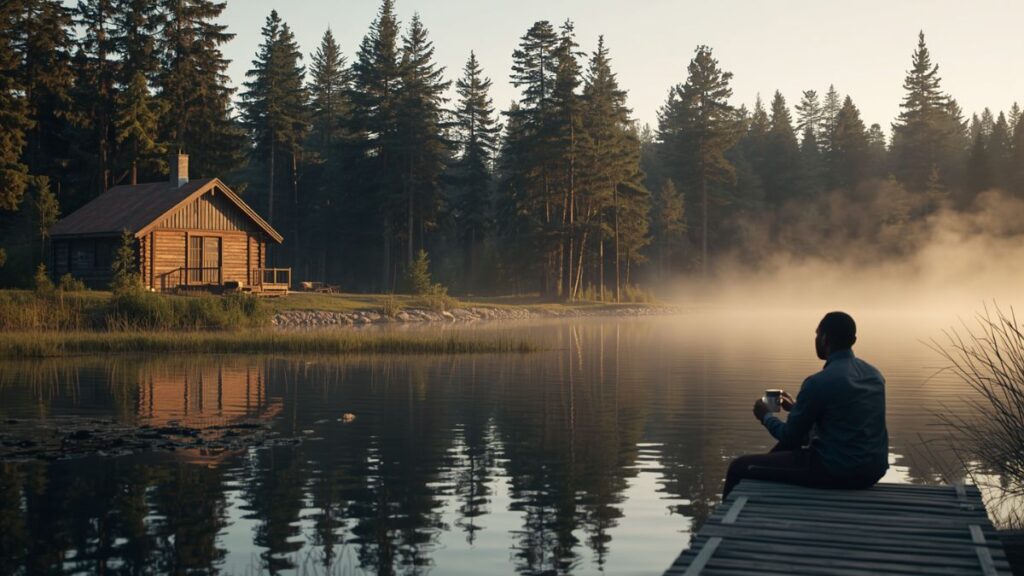
Daniel hadn’t planned on spending the weekend alone.
The reservation had been made nearly three months earlier during a particularly stressful week at work. At the time, booking a small cabin beside a remote lake had felt like a promise to himself. A reminder that life could be slower than deadlines, meetings, and endless notifications.
As the date approached, however, he almost canceled.
There were too many things to do.
Emails waiting for responses.
Projects waiting for completion.
Laundry waiting to be folded.
The usual list of responsibilities that seemed to grow longer every day.
Still, on a quiet Friday afternoon, he packed a small bag, locked his apartment door, and started driving.
The city slowly disappeared behind him.
Tall buildings became smaller.
Traffic became lighter.
The constant noise faded mile by mile.
Soon the roads were lined with forests instead of concrete.
The air felt cleaner somehow.
Lighter.
By the time he turned onto a narrow road surrounded by pine trees, Daniel realized he had not checked his phone in almost an hour.
That alone felt unusual.
The cabin appeared at the end of a gravel path.
It was exactly as the photographs had shown.
Small.
Simple.
Wooden.
A porch faced the lake.
A single chimney rose from the roof.
The entire place seemed designed for one purpose: peace.
Daniel parked his car and stepped outside.
The silence surprised him.
Not complete silence.
The gentle kind.
The kind filled with distant birds, rustling leaves, and water moving softly against the shoreline.
He stood still for a moment.
Listening.
The lake stretched out before him like polished glass.
The afternoon sun reflected off its surface.
Small ripples moved lazily across the water.
Nothing seemed rushed.
Not the clouds.
Not the wind.
Not the lake itself.
Daniel took a deep breath.
For the first time in weeks, he felt his shoulders relax.
Inside, the cabin was cozy and uncomplicated.
A small kitchen occupied one corner.
A wooden table sat near a window overlooking the lake.
There was a bookshelf filled with novels left behind by previous guests.
A comfortable chair stood beside a stone fireplace.
Everything felt warm and welcoming.
There was no television.
No smart speaker.
No unnecessary distractions.
Only the essentials.
At first, Daniel wasn’t sure what to do.
Back home, every spare moment was usually filled with something.
Work.
Entertainment.
Errands.
Messages.
There was always a task waiting.
Here, there was nothing.
The absence felt strange.
Almost uncomfortable.
So he unpacked slowly.
Placed a book on the table.
Stored groceries in the kitchen.
Made himself a cup of coffee.
Then he sat on the porch overlooking the water.
The lake remained perfectly calm.
A family of ducks crossed the surface in a neat line.
Far away, a fisherman guided a small boat toward the opposite shore.
The entire scene seemed untouched by urgency.
Daniel found himself watching for nearly an hour.
Not because anything exciting happened.
Because nothing did.
And somehow that felt refreshing.
As evening approached, the sunlight softened.
Golden reflections danced across the water.
The trees surrounding the lake seemed to glow.
Daniel prepared a simple dinner and ate beside the window.
Normally he would have watched videos or checked messages while eating.
Tonight he simply watched the sunset.
The sky transformed slowly.
Blue became orange.
Orange became pink.
Pink faded into purple.
The change happened so gradually that it almost felt invisible.
Yet when darkness arrived, it felt complete.
After dinner, Daniel lit a small fire in the fireplace.
The crackling sound filled the room.
He selected a novel from the bookshelf and began reading.
The story was simple.
Nothing dramatic.
Nothing intense.
Just the sort of book that encouraged a person to slow down.
Hours passed without him noticing.
Eventually he set the book aside and looked out the window.
The lake reflected the moonlight.
The surface shimmered softly beneath the stars.
Daniel couldn’t remember the last time he had seen so many stars.
The city lights usually hid them.
Here, the sky seemed endless.
He stood by the window for several minutes.
Watching.
Thinking.
Breathing.
Then he went to bed.
That night he slept more deeply than he had in months.
When morning arrived, sunlight streamed through the curtains.
Birdsong drifted through the open window.
For a moment, Daniel forgot where he was.
Then he remembered.
The cabin.
The lake.
The quiet.
A smile appeared on his face.
He made coffee and stepped onto the porch.
The world seemed even calmer than the day before.
A thin layer of mist hovered above the water.
The forest reflected perfectly on the lake’s surface.
Everything felt still.
Balanced.
Peaceful.
Daniel sat with his coffee and watched the morning unfold.
He wasn’t waiting for anything.
There was no schedule.
No meeting.
No deadline.
Just a quiet morning beside the water.
Later, he decided to explore.
A narrow trail wound through the forest behind the cabin.
Tall trees shaded the path.
Sunlight filtered through branches overhead.
The air carried the scent of pine and damp earth.
As he walked, Daniel noticed things he would normally overlook.
The pattern of bark on a tree.
The sound of leaves moving in the wind.
Tiny wildflowers growing beside the trail.
A squirrel darting between branches.
Small details.
Ordinary details.
Yet somehow they felt important.
Perhaps because he was actually paying attention.
Back home, his mind was often somewhere else.
Focused on tomorrow.
Focused on work.
Focused on the next task.
Here, his attention remained exactly where he was.
One step at a time.
One moment at a time.
When he returned to the cabin, he felt lighter.
Not because anything had changed.
But because he had finally stopped rushing.
The afternoon passed peacefully.
He read.
Wrote a few thoughts in a notebook.
Watched clouds drift across the sky.
At one point, he simply sat on the dock extending into the lake.
Doing absolutely nothing.
At first, that would have seemed like wasted time.
Now it felt valuable.
There was something surprisingly comforting about allowing a moment to exist without trying to improve it.
The lake didn’t need improvement.
The sky didn’t need improvement.
The afternoon didn’t need improvement.
It was enough exactly as it was.
That realization stayed with him.
As evening approached once again, Daniel noticed how different he felt compared to the day before.
His thoughts seemed quieter.
His breathing slower.
The constant mental noise had faded.
Not completely.
But enough.
Enough to notice the difference.
Enough to appreciate it.
That night, he sat outside after sunset.
The air was cool.
The stars appeared one by one.
The lake reflected the moonlight just as it had before.
Everything felt familiar now.
Comfortable.
He thought about returning home the next day.
Normally that idea would have filled him with anxiety.
Instead, he felt calm.
The city would still be there.
The work would still be waiting.
The responsibilities would still exist.
But perhaps he could carry some of this peace back with him.
Perhaps the lesson wasn’t about escaping life.
Perhaps it was about remembering how to experience it.
The cabin had not changed anything dramatic.
It hadn’t solved problems.
It hadn’t transformed his future.
What it had done was simpler.
It reminded him to slow down.
To notice.
To appreciate.
To breathe.
Sometimes the most meaningful experiences are also the quietest.
The next morning arrived too soon.
Daniel packed his bag.
Cleaned the cabin.
Loaded his car.
Before leaving, he walked down to the lake one final time.
The water remained calm.
The trees remained still.
The same gentle peace filled the air.
He stood there for several minutes.
Not wanting to rush the goodbye.
Eventually he smiled.
Then turned toward the car.
As he drove away, the cabin disappeared behind the trees.
Yet something remained with him.
A feeling.
A memory.
A quiet understanding.
The lake had taught him something without saying a word.
That life does not always require movement.
That productivity is not the same as peace.
That rest is not wasted.
And that sometimes the most important thing a person can do is sit beside a quiet lake and simply watch the world move at its own pace.
Hours later, the city skyline appeared in the distance.
Traffic returned.
Buildings grew taller.
Phones buzzed again.
Life resumed.
Yet Daniel noticed something surprising.
The noise felt different now.
Not because the city had changed.
Because he had.
Somewhere between the cabin and the lake, he had remembered something easy to forget.
The world moves fast.
But not everything has to.
And on difficult days afterward, whenever work became overwhelming or life felt too crowded, Daniel would close his eyes for a moment and picture the still water beneath the morning mist.
The quiet dock.
The whispering trees.
The small cabin by the lake.
And each time, he felt a little calmer.
A little lighter.
As if part of that peaceful weekend had never really ended.
3. The Garden at Sunset
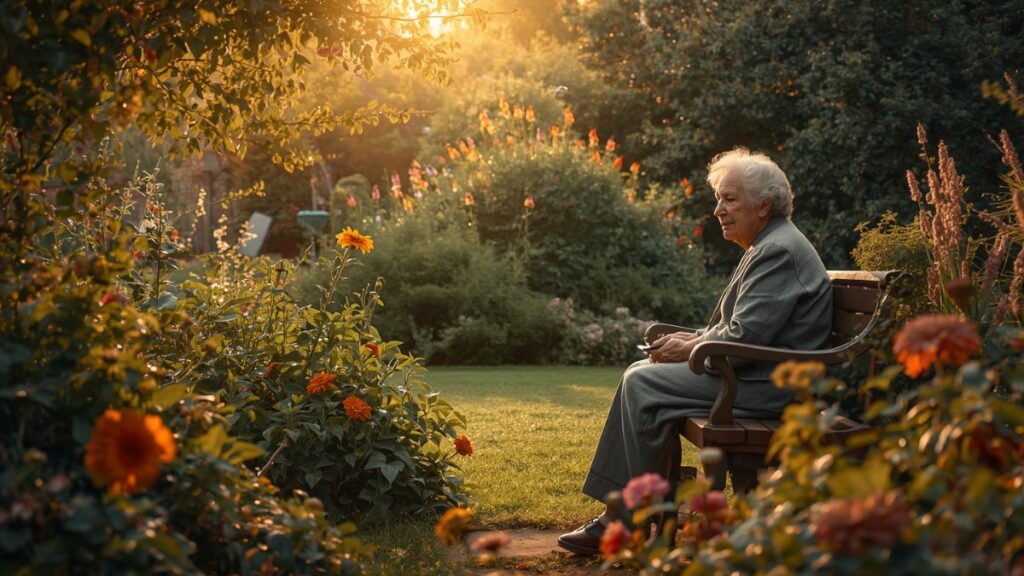
Margaret spent every evening in her garden.
It had become a habit so natural that she no longer thought about it.
After dinner, she would wash the dishes, put away the tea cups, and step through the back door of her small cottage. No matter the season, she always found a reason to spend a little time among the flowers.
The garden wasn’t large.
In fact, most people would probably describe it as modest.
A narrow stone path curved through flower beds filled with roses, lavender, daisies, and wildflowers. A wooden bench sat beneath a small maple tree near the back fence. Bird feeders hung from low branches, attracting sparrows and finches throughout the day.
To Margaret, however, it felt enormous.
Not because of its size.
Because of the memories it contained.
Every section of the garden reminded her of something.
The roses had been planted the year she moved into the cottage.
The lavender came from cuttings a neighbor had shared many summers ago.
The maple tree had been no taller than her knee when she first placed it into the ground.
Now it stretched high above her bench, providing shade during warm afternoons.
Over the years, the garden had changed.
Flowers came and went.
Plants grew larger.
Paths shifted.
Seasons passed.
Yet it always remained her favorite place.
Especially at sunset.
Margaret loved the way the evening light transformed everything.
The colors seemed softer.
The air felt calmer.
Even the birds sounded quieter.
The garden seemed to settle down for the night just as she did.
One particularly warm summer evening, Margaret followed her usual routine.
The day had been pleasant.
Sunshine filled the sky from morning until late afternoon.
A gentle breeze carried the scent of flowers through the open windows of her cottage.
By the time evening arrived, the world seemed wrapped in golden light.
Margaret carried a small watering can into the garden.
She moved slowly along the path, stopping occasionally to pull a weed or trim a fading bloom.
There was no rush.
There never was.
Gardening had taught her patience.
Plants operated on their own schedules.
They ignored calendars.
They ignored deadlines.
They grew when they were ready.
Bloomed when conditions were right.
Rested when necessary.
There was something comforting about that.
As she watered the final flower bed near the fence, something caught her attention.
A single flower had opened.
Margaret paused.
She stepped closer.
The flower stood among several others of the same variety.
The others had bloomed weeks earlier.
In fact, most had already begun fading.
Yet this one had only just opened.
Its petals looked fresh and perfect.
Bright and vibrant against the evening light.
Margaret smiled.
“Well, look at you,” she said softly.
The flower seemed almost out of place.
Late.
Unexpected.
Yet beautiful.
She set down the watering can and crouched beside it.
For several moments, she simply looked.
The flower wasn’t concerned about being late.
It wasn’t trying to catch up.
It wasn’t comparing itself to the others.
It had bloomed exactly when it was ready.
No sooner.
No later.
The thought stayed with her.
Margaret sat on the nearby bench and watched the sunset.
The sky shifted gradually from blue to gold.
Then orange.
Then soft shades of pink.
The familiar evening display unfolded slowly across the horizon.
As she sat there, memories drifted through her mind.
She thought about different periods of her life.
Moments when she had felt behind.
Moments when she had worried that things weren’t happening quickly enough.
When she was younger, she had imagined life following a specific timeline.
Certain goals would be achieved by certain ages.
Certain dreams would arrive according to a schedule.
At least that was the plan.
Life, however, had different ideas.
Some opportunities appeared later than expected.
Some plans changed completely.
Some achievements took years longer than she imagined.
There had been times when those delays felt frustrating.
Times when she compared herself to others.
Times when she wondered whether she was moving too slowly.
Looking back now, many of those worries seemed unnecessary.
The important moments had arrived eventually.
Not always when she wanted them.
But often when she needed them.
The late-blooming flower reminded her of that.
Life rarely follows perfect timelines.
People grow at different speeds.
Dreams develop in different seasons.
Some journeys simply take longer.
That doesn’t make them less meaningful.
A robin landed nearby and began hopping across the grass.
Margaret watched it search for insects beneath the fading sunlight.
The garden seemed especially peaceful that evening.
The breeze moved gently through the leaves.
The flowers swayed softly.
Somewhere in the distance, a dog barked once and then fell silent.
The world felt unhurried.
And for perhaps the first time in weeks, Margaret felt the same way.
Recently, she had been worrying about several things.
Nothing dramatic.
Just the usual concerns that seem to appear as people move through life.
Questions without immediate answers.
Decisions that didn’t need to be rushed but somehow felt urgent anyway.
She had spent days thinking about them.
Analyzing possibilities.
Imagining outcomes.
Searching for certainty.
Now, sitting beside the flower, those concerns seemed smaller.
Not because they had disappeared.
Because her perspective had changed.
Some things require action.
Others require patience.
Knowing the difference is often difficult.
The flower, however, seemed to understand perfectly.
It hadn’t forced itself to bloom earlier.
It hadn’t worried about the flowers beside it.
It simply followed its own timing.
Margaret laughed quietly to herself.
It was strange how often nature offered lessons when people slowed down enough to notice.
The sun continued sinking lower.
Shadows stretched across the garden.
The golden light softened further.
Everything appeared peaceful.
The flower glowed gently in the evening light.
Its petals almost seemed illuminated from within.
Margaret found herself grateful for the unexpected discovery.
Had the flower bloomed earlier, she probably wouldn’t have thought much about it.
Instead, its timing transformed a simple moment into something meaningful.
She remained on the bench long after the sun disappeared.
Twilight settled over the garden.
The first stars appeared overhead.
Crickets began their nightly chorus.
The air cooled slightly.
Still, Margaret didn’t feel ready to go inside.
There was no reason to hurry.
The dishes could wait.
The house wasn’t going anywhere.
The evening felt too beautiful to rush through.
Eventually she stood and walked one final lap around the garden.
She paused beside the flower once more.
The petals had begun folding slightly as night approached.
Tomorrow it would greet the morning sun.
Tomorrow it would continue blooming.
At its own pace.
Just as it always intended.
Margaret smiled.
Then she returned to the cottage.
That night she slept deeply.
When morning arrived, sunlight streamed through the kitchen window.
Birds gathered at the feeder outside.
The day began quietly.
After breakfast, Margaret carried a cup of tea into the garden.
The late-blooming flower remained exactly where she had left it.
Bright.
Confident.
Beautiful.
She smiled again.
Over the following days, the flower continued blooming.
Each evening Margaret visited it.
Not because it required special attention.
Because it reminded her of something important.
A lesson she had spent years learning.
Life cannot always be rushed.
Growth cannot always be forced.
Some things need time.
Relationships.
Dreams.
Healing.
Understanding.
Even happiness sometimes arrives later than expected.
And that’s perfectly okay.
Weeks later, the flower eventually faded.
Its petals drifted away.
Its season ended.
Yet the lesson remained.
Long after the bloom disappeared.
Long after summer gave way to autumn.
Margaret continued thinking about that evening.
The quiet garden.
The fading sunlight.
The single flower blooming later than all the others.
Whenever life felt uncertain, she remembered it.
Whenever she felt tempted to compare her journey to someone else’s, she remembered it.
Whenever she worried that something was taking too long, she remembered it.
The memory always brought the same sense of calm.
Because the flower had shown her something simple and true.
Not everything unfolds according to a schedule.
Not every journey follows the same path.
And sometimes the most beautiful things appear exactly when they are meant to.
As the seasons continued changing and the years quietly passed, Margaret spent many more evenings in her garden.
She watched countless sunsets.
Planted new flowers.
Pulled countless weeds.
Shared the space with birds, butterflies, and passing seasons.
Yet among all those memories, one summer evening remained especially clear.
The evening a single flower bloomed later than the rest.
And reminded her that life, much like a garden, has its own timing.
A timing that cannot be rushed.
A timing that doesn’t need to be.
And in accepting that, Margaret found a peace she carried with her long after the sun had set.
4. The Lighthouse Window

For more than forty years, Thomas had watched the sea from the same window.
The window stood near the top of an old lighthouse perched on a rocky stretch of coastline. From there, he could see miles of open water in every direction. On clear days, the horizon seemed endless. On stormy nights, the ocean became a shifting wall of darkness and white foam.
Most people would have grown tired of the view.
Thomas never did.
Every morning, he climbed the narrow spiral staircase to the lantern room. Every evening, he made the same journey again. The steps creaked beneath his boots in familiar places. The handrail had become smooth from decades of use.
The routine rarely changed.
And Thomas liked it that way.
He lived alone in a small cottage beside the lighthouse. The building was simple but comfortable. A stone fireplace warmed the living room during winter. Shelves filled with books lined the walls. Old photographs rested on a wooden mantel above the hearth.
The sea was his closest neighbor.
For many people, such a life might have seemed lonely.
To Thomas, it felt peaceful.
The lighthouse had been part of his life for so long that he could hardly remember a time without it.
When he first arrived, he had been a young man with dark hair and endless energy. He had viewed the position as an adventure.
Years passed.
The adventure became a profession.
The profession became a way of life.
Now his hair was silver.
His movements were slower.
Yet each evening, he still climbed the stairs and looked through the same window.
And each evening, the sea looked different.
That was one of the things he loved most.
No two sunsets were ever identical.
No two tides behaved exactly the same way.
The ocean was familiar and unpredictable at the same time.
It always gave him something new to notice.
One calm summer evening, Thomas carried a cup of tea to the lantern room and settled beside the window.
The weather had been unusually pleasant all day.
The sea was calm.
The sky was clear.
A gentle breeze drifted through an open vent near the top of the lighthouse.
Far below, waves rolled softly against the rocks.
The sound was steady and comforting.
Like a heartbeat.
Thomas leaned back in his chair and gazed toward the horizon.
The sun hung low above the water.
Golden light stretched across the ocean like a shimmering path.
Fishing boats were slowly making their way home.
A few seabirds glided above the waves.
Everything seemed peaceful.
As he watched the boats move through the evening light, memories began to surface.
The lighthouse had witnessed most of his life.
And in many ways, he had witnessed the lives of countless strangers.
Not directly.
But from a distance.
Ship captains.
Sailors.
Fishermen.
Travelers.
People heading home.
People beginning journeys.
People crossing the sea under the guidance of a light they would never truly know.
Thomas often wondered about them.
Where they came from.
Where they were going.
What stories they carried.
The lighthouse never asked questions.
It simply stood watch.
Night after night.
Year after year.
Its purpose was simple.
Show the way.
Thomas appreciated that simplicity.
The modern world often seemed complicated.
People chased bigger goals.
Bigger achievements.
Bigger recognition.
The lighthouse asked for none of those things.
It simply did its job.
Quietly.
Reliably.
Without applause.
As the sun continued sinking lower, Thomas remembered a storm from many years earlier.
The memory remained vivid despite the passage of time.
The wind had been fierce.
Rain had battered the lighthouse windows.
Waves had crashed against the cliffs with tremendous force.
Visibility had nearly vanished.
Even experienced sailors struggled during storms like that.
Thomas remembered standing beside the lantern throughout the night.
Watching.
Waiting.
Ensuring the light continued shining.
At one point, a fishing vessel appeared briefly through the darkness.
Only for a moment.
Then it disappeared again.
Hours later, he learned that the crew had reached harbor safely.
The captain later visited the lighthouse.
He shook Thomas’s hand and thanked him.
“You don’t realize how important that light is until you can’t see anything else,” the captain had said.
Thomas never forgot those words.
Over the years, similar moments accumulated.
Small moments.
Quiet moments.
Easy to overlook.
Yet together they formed something meaningful.
The lighthouse wasn’t famous.
Neither was Thomas.
Most people would never know his name.
But countless people had depended on that light.
And somehow, that felt enough.
The sun finally disappeared beneath the horizon.
Twilight settled across the sea.
The sky shifted from gold to deep blue.
One by one, stars began appearing overhead.
Thomas loved this time of day.
The transition between daylight and darkness always felt special.
The world seemed to slow down.
Even the ocean appeared calmer.
He stood and walked toward the window.
The glass reflected faint traces of the lantern room behind him.
Beyond it stretched the vast night sea.
Beautiful.
Silent.
Endless.
Thomas thought about how many evenings he had spent here.
Thousands, probably.
Perhaps more.
At first glance, those evenings might have appeared identical.
Yet each one carried its own memories.
Its own lessons.
Its own quiet significance.
Life often works that way.
People expect important moments to arrive dramatically.
With celebration.
With recognition.
With certainty.
But many meaningful contributions happen quietly.
A teacher helping a student.
A neighbor offering support.
A friend providing encouragement.
A lighthouse guiding ships through darkness.
Small acts.
Simple acts.
Yet their impact can last far beyond the moment itself.
Thomas smiled as he considered this.
In his younger years, he occasionally worried that his life wasn’t exciting enough.
He saw others traveling the world.
Building businesses.
Pursuing ambitious careers.
Meanwhile, he remained beside the same stretch of coastline.
Watching the same sea.
Maintaining the same light.
At times, he wondered whether he should have done more.
Seen more.
Achieved more.
Age had changed his perspective.
Now he understood that purpose isn’t measured by attention.
Nor by recognition.
Purpose often reveals itself through consistency.
Through showing up.
Through helping others in whatever way one can.
The lighthouse had never sought admiration.
Yet it mattered.
Thomas had never sought praise.
Yet perhaps he mattered too.
The realization filled him with gratitude.
Not pride.
Not regret.
Gratitude.
The simple kind.
The kind that arrives when a person finally appreciates the value of ordinary things.
The stars multiplied overhead.
Soon hundreds of tiny lights filled the sky.
Their reflections shimmered across the water.
The scene felt timeless.
As though it could have belonged to any century.
Thomas sat beside the window once more.
His tea had grown cold.
He didn’t mind.
The view was enough.
Far in the distance, a ship appeared.
Only a few lights were visible.
Tiny points against the darkness.
Thomas watched as it moved steadily across the horizon.
The vessel would likely pass through the area without ever thinking about the man inside the lighthouse.
That was perfectly fine.
The work had never been about recognition.
It had always been about service.
About helping.
About contributing something useful.
The ship continued onward.
The lighthouse beam swept across the water.
Steady.
Reliable.
Constant.
Just as it always had.
Hours later, Thomas finally descended the staircase and returned to his cottage.
The night remained calm.
Moonlight illuminated the path.
The sea whispered softly against the shore.
Inside, he added a log to the fireplace and settled into his favorite chair.
A framed photograph sat nearby.
It showed the lighthouse decades earlier.
The image had faded slightly over time.
Yet the structure remained recognizable.
Strong.
Steady.
Enduring.
Much like the memories it contained.
Before going to bed, Thomas stepped outside one final time.
The lighthouse beam rotated slowly overhead.
Its light swept across the darkness and out toward the sea.
He watched it for several minutes.
Then smiled.
Not because of anything extraordinary.
Because of something simple.
He had spent a lifetime helping people he would never meet.
Guiding journeys he would never fully know.
Contributing in ways that rarely attracted attention.
And somehow, that felt like a life well lived.
As he turned toward the cottage, the stars continued shining above the ocean.
The lighthouse continued its silent work.
And Thomas carried with him a quiet understanding.
That significance does not always arrive in grand gestures.
Sometimes it exists in small contributions repeated faithfully over time.
A kind word.
A helping hand.
A welcoming presence.
A light in the darkness.
The world is often shaped by people who never appear in headlines.
People who simply do their part.
People who make life a little safer, a little brighter, or a little easier for others.
Thomas had spent decades being one of those people.
And standing beneath the stars on that peaceful night, he felt grateful for every year.
Grateful for every ship.
Grateful for every sunset.
Grateful for every quiet evening spent beside the lighthouse window.
Because in the end, he realized something important.
A life does not need to be loud to be meaningful.
Sometimes a simple light, shining steadily through the darkness, is more than enough.
5. The Empty Bench
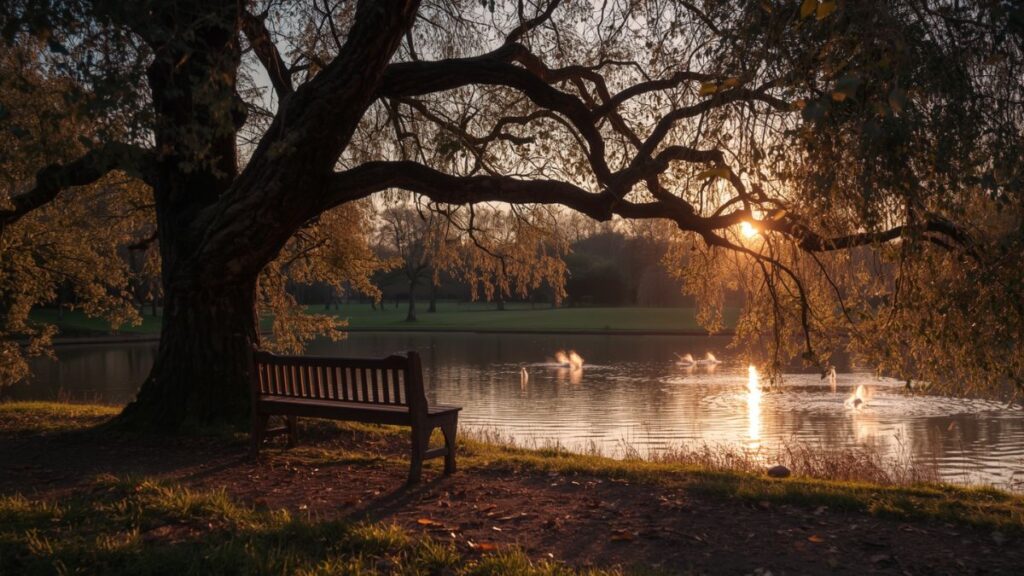
Every evening, Olivia walked through the same park on her way home.
The route added nearly fifteen minutes to her journey, but she never minded. After spending the day surrounded by traffic, crowded sidewalks, and the constant noise of the city, the park offered something she valued more with each passing year.
Quiet.
Not complete silence.
The pleasant kind.
The kind filled with rustling leaves, distant birdsong, and the gentle sound of water moving across a pond.
It was enough to make her slow down.
Enough to help her leave the day behind before stepping through her front door.
The park itself wasn’t particularly large.
A winding path curved beneath rows of old trees.
Flower beds brightened the walkways during spring and summer.
A small pond sat near the center, reflecting the sky like a mirror on calm evenings.
Children played there during the afternoons.
Dog walkers visited throughout the day.
Retirees often occupied the benches scattered along the paths.
Yet by evening, the crowds usually faded.
The park became quieter.
More reflective.
That was when Olivia liked it most.
Among all the places in the park, one spot held a special place in her routine.
An old wooden bench overlooking the pond.
The bench sat beneath a large oak tree whose branches stretched wide across the water.
Its paint had faded long ago.
The wood showed signs of age.
One armrest leaned slightly to one side.
Yet Olivia always chose that bench.
She wasn’t entirely sure why.
Perhaps because it faced west and offered a perfect view of the sunset.
Perhaps because it was rarely occupied when she arrived.
Or perhaps because it had become familiar.
Like an old friend waiting patiently at the end of each day.
One warm evening in late summer, Olivia followed her usual route through the park.
The day had been long.
Nothing unusual had happened.
No crisis.
No celebration.
Just meetings, emails, errands, and the endless collection of small responsibilities that filled adult life.
By the time she reached the park, she felt tired.
Not physically.
Mentally.
The kind of tiredness that comes from thinking too much for too long.
The sun was already beginning its slow descent toward the horizon.
Golden light filtered through the trees.
Shadows stretched across the grass.
The entire park seemed wrapped in a calm glow.
Olivia smiled as she spotted the bench.
Empty, as usual.
She walked over and sat down.
The wood felt warm from the afternoon sun.
For several moments, she simply watched the pond.
A pair of ducks drifted slowly across the water.
Small ripples spread outward behind them.
Dragonflies skimmed the surface.
Nearby, a light breeze stirred the leaves overhead.
Everything felt peaceful.
She took a deep breath.
Then another.
Gradually, the tension she had carried throughout the day began to loosen.
This was one reason she loved the bench.
It seemed impossible to sit there and remain rushed.
The view encouraged patience.
The atmosphere encouraged stillness.
And stillness had become increasingly rare.
As the ducks disappeared toward the far side of the pond, Olivia found herself studying the bench itself.
She had sat there hundreds of times.
Perhaps thousands.
Yet she had never really considered its history.
The bench was old.
Much older than she was.
How many people had sat there before her?
How many conversations had taken place beneath the oak tree?
How many sunsets had been watched from this exact spot?
The thought fascinated her.
A bench, after all, spends its entire existence observing.
People come and go.
Seasons change.
Years pass.
Yet the bench remains.
Quietly witnessing everything.
Olivia imagined the stories it might tell if it could speak.
Perhaps a young couple had shared their first conversation there decades ago.
Perhaps someone had celebrated good news while sitting beneath the tree.
Perhaps someone had come seeking comfort after a difficult day.
The possibilities seemed endless.
The bench connected strangers across time.
People who would never meet.
People whose lives briefly intersected through a shared place.
The idea brought a smile to her face.
As she watched the sunlight dance across the pond, memories began surfacing.
Not dramatic memories.
Simple ones.
The kind often forgotten until a quiet moment invites them back.
She remembered visiting parks as a child with her parents.
She remembered feeding ducks with stale bread.
She remembered riding a bicycle along winding paths.
She remembered sitting beside her grandfather on another bench many years ago.
He had loved parks.
Loved slow walks.
Loved sitting beneath trees and observing the world.
At the time, Olivia never understood why.
She had always wanted movement.
Activity.
Excitement.
Stillness seemed boring.
Now, years later, she finally understood.
The older she became, the more she appreciated places that asked nothing of her.
Places where she didn’t need to perform.
Compete.
Achieve.
Or prove anything.
The bench offered exactly that.
A simple place to exist.
Nothing more.
Nothing less.
The sun continued sinking lower.
The pond reflected shades of gold and orange.
The ducks had disappeared.
The park grew quieter.
A jogger passed by.
A man walked his dog along the path.
Then silence returned.
Olivia leaned back and watched the changing sky.
Lately, she had been thinking about time.
Not in a negative way.
More with curiosity.
The years seemed to move faster now.
Months passed almost unnoticed.
Seasons arrived and departed with surprising speed.
Life remained busy.
Yet certain moments stood out.
Moments like this.
Simple evenings.
Quiet reflections.
Unexpected pauses.
They often became the memories she valued most.
Not promotions.
Not purchases.
Not achievements.
Just peaceful moments she almost overlooked while living them.
The realization felt important.
So much of life is spent chasing the next milestone.
The next goal.
The next accomplishment.
Yet happiness often hides in ordinary places.
A familiar walk.
A comfortable bench.
A sunset reflected on still water.
The things that matter most are not always the things people talk about.
As these thoughts drifted through her mind, Olivia noticed her reflection in the pond.
The water was unusually calm.
The image appeared clear.
For a moment, she studied it.
Not critically.
Not judgmentally.
Simply thoughtfully.
The reflection reminded her of how much life had changed.
The young woman she once imagined becoming was not exactly the person she became.
Some dreams had unfolded as expected.
Others had changed entirely.
Some plans succeeded.
Others quietly disappeared.
Yet looking back, she felt surprisingly content.
Life had not followed a straight path.
Few lives do.
There had been mistakes.
Unexpected detours.
Moments of uncertainty.
But there had also been friendships.
Growth.
Experiences.
Lessons.
And countless small joys.
The bench seemed like a fitting place to recognize that.
The evening air cooled slightly.
The sky deepened into shades of pink and purple.
The first stars began appearing overhead.
Olivia realized she had been sitting there for nearly an hour.
It felt like ten minutes.
Time moved differently in peaceful places.
She stood and stretched.
Then paused.
For some reason, she turned and looked at the bench once more.
Still empty.
Still waiting.
Tomorrow someone else would sit there.
Perhaps a student.
Perhaps a retiree.
Perhaps a visitor seeing the park for the first time.
Whoever it was would bring their own thoughts.
Their own memories.
Their own worries and hopes.
And the bench would welcome them just as it had welcomed countless others.
The thought made Olivia smile.
There was something comforting about that continuity.
The idea that some places remain steady while everything else changes.
The bench would still be there.
The pond would still reflect the sky.
The oak tree would still spread its branches above the water.
Life would continue moving forward.
Yet some small pieces of peace would remain available to anyone willing to pause long enough to notice them.
Olivia began walking home.
The path curved gently through the park.
Streetlights flickered on one by one.
Crickets sang from the grass.
Behind her, the bench grew smaller and eventually disappeared from view.
Yet the feeling remained.
A quiet sense of gratitude.
Gratitude for the evening.
For the park.
For the reminder that ordinary moments often contain extraordinary value.
When she reached home, she made a cup of tea and sat by her window.
The city lights sparkled in the distance.
Cars moved along nearby streets.
Life continued as it always did.
Yet she felt calmer.
Lighter.
More present.
All because of a simple bench beside a pond.
Years later, Olivia would remember many things about that evening.
The golden light.
The still water.
The ducks.
The reflection.
The thoughts that arrived unexpectedly.
But most of all, she would remember the lesson.
That peace is rarely something we discover.
More often, it is something we notice.
It waits quietly in familiar places.
On evening walks.
Beneath old trees.
Beside still water.
On empty benches.
Patiently waiting for us to slow down enough to see it.
And whenever life felt especially busy after that, Olivia returned to the park.
The bench wasn’t always empty.
The weather wasn’t always perfect.
The sunsets varied from day to day.
Yet the feeling remained remarkably consistent.
Each visit offered the same gentle reminder.
That not every meaningful moment needs to be exciting.
Not every valuable experience needs to be extraordinary.
Sometimes the most memorable parts of life are the quiet pauses in between.
A peaceful evening.
A calm reflection.
An empty bench waiting beneath an old oak tree.
And for Olivia, that was more than enough.
What Makes a Good Bedtime Story for Adults?
Not every story works well before sleep.
Fast-paced plots, intense drama, and unexpected twists can stimulate the mind instead of calming it. The best Short Adult Bedtime Stories to Fall Asleep usually share several characteristics.
Simple Storylines
The plot should be easy to follow without requiring intense concentration.
Readers should be able to enjoy the story without worrying about remembering complex details.
Gentle Pacing
Events unfold gradually and naturally.
There is no rush, allowing readers to relax and become immersed in the atmosphere.
Comforting Settings
Many Short Adult Bedtime Stories to Fall Asleep take place in peaceful environments such as:
- Quiet villages
- Cozy cottages
- Lakeside cabins
- Mountain retreats
- Small bookstores
- Garden paths
- Seaside towns
These locations help create a sense of calm and security.
Positive Emotional Tone
While stories may include challenges or reflection, they generally maintain a hopeful and comforting mood.
Readers often finish feeling relaxed rather than emotionally overwhelmed.
Benefits of Reading Short Adult Bedtime Stories to Fall Asleep
Reading before bed can offer several benefits beyond simple entertainment.
Reduced Mental Clutter
Many people carry thoughts from the day into the evening. Work responsibilities, unfinished tasks, and everyday concerns can make it difficult to relax before bed.
Reading Short Adult Bedtime Stories to Fall Asleep provides a gentle distraction from ongoing worries and responsibilities. By focusing on a calming narrative, readers can temporarily shift their attention away from stress and allow their minds to settle.
Improved Relaxation
The steady pace of bedtime stories encourages slower thinking and emotional calmness.
Unlike fast-paced entertainment, Short Adult Bedtime Stories to Fall Asleep create a soothing reading experience that helps reduce mental tension. Gentle storytelling, peaceful settings, and comforting themes can make it easier to unwind at the end of the day.
Better Sleep Habits
Establishing a nightly reading routine can help signal to the brain that it is time to rest.
Many people find that reading Short Adult Bedtime Stories to Fall Asleep before bed creates a consistent habit that supports relaxation. Over time, this routine can become an important part of preparing for a restful night’s sleep.
Less Screen Exposure
Reading stories instead of scrolling through phones or social media can reduce stimulation before sleep.
Replacing screen time with Short Adult Bedtime Stories to Fall Asleep allows readers to step away from constant notifications, news updates, and online distractions. This can create a calmer environment and help the mind transition more naturally toward sleep.
Enhanced Imagination
Even simple bedtime stories encourage creativity and visualization, helping readers engage with pleasant mental imagery.
Whether imagining a quiet cabin in the woods, a peaceful seaside cottage, or a starlit garden, Short Adult Bedtime Stories to Fall Asleep allow readers to mentally explore relaxing environments that promote comfort and tranquility before bed.
Common Themes in Short Adult Bedtime Stories to Fall Asleep
Although every story is unique, certain themes frequently appear in Short Adult Bedtime Stories to Fall Asleep.
Quiet Reflection
Many stories focus on characters taking a moment to pause and appreciate life.
Simple observations often become meaningful experiences.
Nature and Tranquility
Natural settings are common because they create soothing imagery.
Stories may include:
- Gentle rainfall
- Rustling leaves
- Ocean waves
- Mountain sunsets
- Starlit skies
- Peaceful gardens
These details help create a relaxing atmosphere.
Everyday Kindness
Acts of kindness often play an important role in Short Adult Bedtime Stories to Fall Asleep.
A friendly conversation, a thoughtful gesture, or a small act of generosity can become the heart of the narrative.
Nostalgia
Some stories evoke warm memories of simpler times.
Childhood experiences, family traditions, and familiar places often create comforting emotional connections.
Personal Peace
Many characters discover contentment through simple moments rather than dramatic achievements.
This theme helps reinforce feelings of calm and satisfaction.
Ideal Settings for Short Adult Bedtime Stories to Fall Asleep
The setting often contributes as much to relaxation as the story itself. Many Short Adult Bedtime Stories to Fall Asleep use peaceful locations that help readers unwind and imagine calming scenes before bed.
A Quiet Cabin
A wooden cabin surrounded by trees creates an immediate sense of peace and privacy.
The sound of rain on the roof, a crackling fireplace, or a nearby stream can make the setting especially relaxing.
A Seaside Cottage
Gentle waves, cool ocean breezes, and the rhythmic sound of the sea provide naturally soothing imagery.
These settings often create a calm and restful atmosphere.
A Small Village
Stories set in close-knit villages often feel warm and comforting.
Quiet streets, friendly neighbors, and simple daily routines can help create a sense of familiarity and peace.
A Cozy Bookstore
Shelves filled with books, soft lighting, and quiet surroundings create an inviting atmosphere.
Such settings often encourage reflection, relaxation, and a slower pace.
A Garden at Sunset
Flowers, birdsong, and fading sunlight offer a peaceful backdrop for bedtime storytelling.
The natural beauty and gentle pace of a garden setting make it a popular choice in Short Adult Bedtime Stories to Fall Asleep.
The Emotional Journey in Short Adult Bedtime Stories to Fall Asleep
Unlike dramatic fiction, the emotional structure of Short Adult Bedtime Stories to Fall Asleep is intentionally gentle and calming. The goal is to help readers relax and gradually settle into a peaceful state of mind.
A Calm Beginning
The story starts in a familiar and peaceful setting.
Whether it is a quiet cabin, a seaside cottage, or a small village, the opening immediately establishes a sense of comfort and relaxation.
A Small Event
Something simple occurs that captures the character’s attention.
This might be a chance encounter, a thoughtful gesture, a beautiful sunset, or a quiet discovery that gently moves the story forward.
Reflection
The character considers the experience and its meaning.
These moments of reflection often encourage readers to slow down, appreciate simple pleasures, and connect with the story on an emotional level.
Quiet Resolution
The story concludes with understanding, gratitude, contentment, or peace.
Rather than ending with suspense or excitement, Short Adult Bedtime Stories to Fall Asleep typically leave readers with a comforting feeling that supports relaxation before sleep.
This simple structure helps bedtime stories remain soothing, enjoyable, and easy to follow at the end of a busy day.
Why Simplicity Matters
One reason Short Adult Bedtime Stories to Fall Asleep work so effectively is their simplicity.
The goal is not to impress readers with complex plots.
Instead, these stories focus on:
- Atmosphere
- Emotion
- Comfort
- Reflection
- Relaxation
Simple storytelling often has the strongest calming effect before bed.
Writing Effective Short Adult Bedtime Stories to Fall Asleep
For writers, creating relaxing bedtime stories requires a different approach than writing traditional fiction. The focus should be on comfort, simplicity, and a soothing reading experience.
Focus on Atmosphere
The setting should feel comforting and immersive.
Peaceful locations, gentle sounds, and calming descriptions help create the relaxing mood that readers expect from Short Adult Bedtime Stories to Fall Asleep.
Keep Conflict Minimal
Small challenges are fine, but intense drama should be avoided.
The goal is to maintain a sense of calm rather than create tension or suspense that keeps readers awake.
Use Gentle Language
Soft descriptions and natural pacing help create a relaxing reading experience.
Simple, easy-to-follow storytelling allows readers to unwind without becoming mentally overwhelmed.
Encourage Visualization
Descriptions of nature, weather, and surroundings help readers imagine peaceful scenes.
Whether it is a quiet forest, a seaside sunset, or a cozy cabin, vivid yet gentle imagery can make Short Adult Bedtime Stories to Fall Asleep more immersive.
End Calmly
The conclusion should leave readers feeling settled and relaxed.
Many bedtime stories end with reflection, gratitude, or contentment, providing a peaceful finish that supports restful sleep.
Why Readers Continue to Enjoy Bedtime Stories
The appeal of Short Adult Bedtime Stories to Fall Asleep extends far beyond childhood.
Adults often seek the same comfort that bedtime stories once provided.
These stories offer:
- Emotional comfort
- Mental relaxation
- Temporary escape from stress
- Gentle reflection
- A peaceful end to the day
In a world filled with constant noise and distractions, the quiet simplicity of a bedtime story remains remarkably powerful.
The Future of Short Adult Bedtime Stories to Fall Asleep
As wellness and self-care continue to grow in popularity, more readers are discovering the benefits of bedtime storytelling.
Today, Short Adult Bedtime Stories to Fall Asleep can be enjoyed through:
- Books
- E-books
- Mobile reading apps
- Audio storytelling platforms
- Podcasts
- Digital libraries
This accessibility allows readers to enjoy relaxing stories whenever they need a moment of calm.
Conclusion
Short Adult Bedtime Stories to Fall Asleep offer more than simple entertainment. They provide comfort, relaxation, and a gentle transition from the busyness of daily life to the quiet of night.
Through peaceful settings, soothing narratives, and meaningful yet uncomplicated themes, these stories help readers slow down, reflect, and prepare for restful sleep. Whether set in a cozy cabin, a seaside cottage, or a quiet village, the best bedtime stories remind us that sometimes the simplest moments are the most comforting.
For anyone seeking a peaceful nighttime routine, Short Adult Bedtime Stories to Fall Asleep remain one of the most enjoyable and effective ways to end the day.