What if the scariest moment in a story is not the monster, but the instant you realize you were wrong about everything? That sudden twist at the end, when one line flips the whole tale, is the heart of Horror Short Stories to Read Online for Adults With A Twist.
These stories are short enough to finish in one sitting, but they stick with you. They spread fast online because they are easy to share and spark quick, intense conversations. For adults they often focus on real fears, moral choices, and the slow build of psychological dread rather than cheap shocks.
You will find them in many places: forums where writers test ideas, curated online magazines, and audio narrations that add extra atmosphere. Some are classic literary pieces, others are modern microfiction or user-submitted tales that go viral.
This article will explain why those twists work, point you to good places to read them, and give tips on how to pick a story that fits your mood. Read one tonight and you may find its ending stays with you long after the page is closed.
Horror Short Stories to Read Online for Adults With A Twist
Nothing is what it seems in these horror short stories for adults. Each tale hides a secret waiting to turn your expectations upside down.
1. The Tenant in Room 406
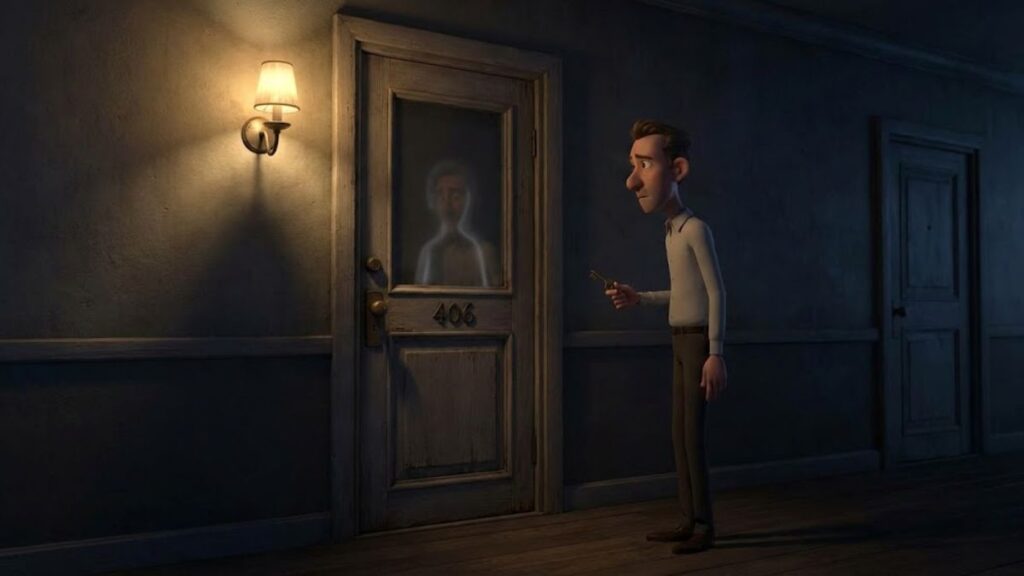
I still remember the day I moved into the Wilshire.
It was late summer. The kind of heat that sticks to your skin even after the sun drops. The building sat on the quiet edge of town, half-hidden behind oaks so old their branches scraped the roof like fingers. Paint peeled in long grey curls. Rent was cheap. The view overlooked a small park with a busted fountain that hadn’t run in years. I liked the silence. Needed it. Work had been loud—too many meetings, too many emails, too many people talking over each other. Quiet suited me.
Mrs. Greene handed me the keys in the lobby. She was small, hunched, voice raspy from years of cigarettes. “Thin walls,” she said. “Midnight creaks. You’ll hear things.”
I smiled. “I’m a heavy sleeper.”
She looked at me like she knew something I didn’t. Then she shuffled off.
My unit was 404. Clean enough. Bare floors. One window that rattled when trucks passed on the highway. I unpacked quick—desk by the window, bed against the wall, coffee maker on the counter. Routine set in fast: work, dinner, late-night scrolling, sleep.
For the first week, everything felt normal.
Then the humming started.
It was around midnight. I was on the couch, laptop balanced on my knees, half-watching some documentary I wasn’t really watching. The sound drifted in soft. Steady. Like someone murmuring a tune under their breath. It came from across the hall—Room 406.
I paused the video. Listened.
It stopped.
I shrugged. Pipes. Neighbor with headphones. Imagination.
Next night, same time. Same low hum.
I stood up. Walked to my door. Pressed my ear against it.
The humming was clearer now. A melody I almost recognized but couldn’t place. Gentle. Patient.
I knocked lightly on 406.
Silence.
No footsteps. No answer.
I waited. Nothing.
Went back inside. Told myself it was nothing.
By the fourth night I was curious enough to ask Mrs. Greene.
She was sweeping the lobby when I caught her.
“Who’s in 406?” I asked, casual.
She stopped sweeping. Looked up slow. “Quiet tenant. Keeps to themselves.”
That was it. No name. No details. She went back to sweeping like I’d asked about the weather.
The next night the humming came with footsteps. Slow. Dragging. Pacing behind the door. Then a soft knock—from inside 406. Like someone tapping the wood from the other side.
I froze in the hallway. Heart loud in my ears.
Knocked back. “Hello?”
The pacing stopped.
Then the humming again. Closer. Right on the other side of the door.
I backed away. Into my apartment. Locked the deadbolt. Turned on every light.
Slept with the lamp on.
The noises grew.
Scraping along the walls. Breathing—low, rhythmic, deliberate—right outside my door some nights. Shadows stretched too long under 406’s threshold. Light flickered under the crack, then vanished.
I started leaving lights on all night.
One evening the power flickered. Whole building dimmed. Then the humming began—right behind my front door.
I stood in the dark. Listened.
The shadow under the door stretched. Thin. Too long. Too still.
Then the lights snapped back.
Shadow gone.
I moved out the next morning.
Packed fast. Didn’t care about the deposit. Told Mrs. Greene I’d found a better place closer to work.
She didn’t argue. Just smiled that crooked smile. Slid the envelope across the counter.
“Tenants never last long near that room,” she said quiet.
I didn’t ask why.
Took the keys. Left.
A week later I saw the listing online.
Room 404. Wilshire Apartments. Available immediately.
I scrolled past it quick.
But sometimes, late at night, when the city gets quiet and the rain taps the window, I still hear it.
Soft humming.
From somewhere far away.
Patient.
Waiting.
And I wonder who moved into 404 after me.
And whether they like the silence.
Because the silence isn’t empty.
It’s listening.
And one night, when they’re alone and the lights are low, they’ll hear it too.
A low tune.
A slow pace.
A soft knock.
From the room across the hall.
And they’ll knock back.
Because curiosity always does.
And the door will open.
Just a crack.
And the humming will stop.
And a voice—almost their own—will whisper:
“You’re here now.”
And the building will stay quiet again.
Until the next tenant.
Who likes the silence.
Just like I did.
2. The Last Call
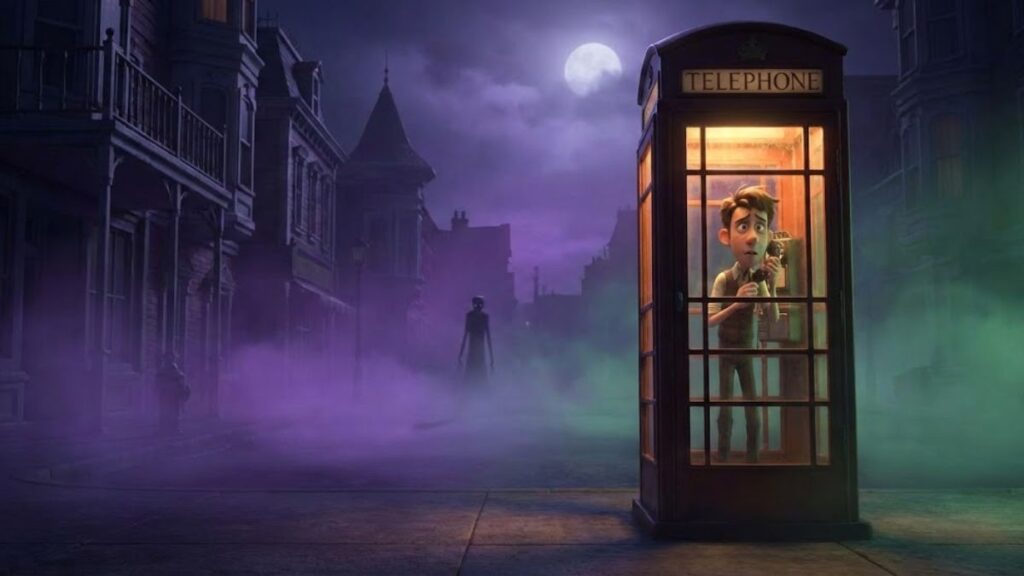
I still remember the night the calls started.
It was late October in Seattle. Rain that never really stopped, just changed its mind every few hours. I was on the couch under an old quilt, half-watching some documentary I’d already seen twice, when my phone lit up.
Daniel.
My stomach lifted the way it always did when his name appeared after a long day. He’d been stuck late at the office again—third time that week. I answered smiling.
“Finally,” I said. “Where are you?”
“Hey, Em.” His voice came through warm, tired, familiar. “Traffic’s a nightmare. Been crawling for an hour.”
Relief hit hard. “You scared me. Thought maybe—”
“Don’t worry,” he cut in softly. “I’m fine. Just needed to hear you. Keeps me calm.”
I laughed. “Well, it’s working. You’ll be home soon?”
“Twenty minutes. Maybe less.”
“Drive safe. Rain’s brutal.”
“I know. Wipers can barely keep up.”
We talked small things. Work. The grocery list. My parents coming next weekend. Normal. Easy. Comforting.
His breathing steady on the line. Wipers swishing. Tires hissing wet pavement. Every sound exactly right.
After fifteen minutes I felt calm again. “Almost home?”
A pause. Then a soft sigh.
“Em?”
“Yeah?”
“I’m sorry.”
I frowned. “For what?”
No answer right away. Just static blending with rain. Then quieter:
“You’ll be okay.”
The line clicked dead.
I stared at the phone. “Daniel?”
Nothing.
Called back. Straight to voicemail.
Told myself signal dropped. Storm. Bad cell tower.
At 11:59 p.m. different number.
I answered fast.
“Mrs. Carter?” Male voice. Formal. Steady. “Officer Lane, State Police. Are you Daniel Carter’s wife?”
“Yes. Why?”
Pause. Careful.
“Ma’am, there’s been an accident. His car was found off Highway 47. Lost control in the rain.”
My stomach fell through the floor.
“No,” I said. “That can’t be right. I just talked to him. He said he was in traffic—”
“I’m sorry, ma’am. Crash occurred around 10:30 p.m.”
I stopped breathing. “Impossible. He called at eleven thirty-seven. Fifteen minutes. I heard him. Wipers. Breathing. Everything.”
Officer hesitated. “Maybe timestamp error—”
“I spoke to him,” I insisted. Voice cracking.
He softened. “I understand this is difficult, but… he couldn’t have called. Phone destroyed in the crash.”
Call ended with condolences. Instructions. Come to station tomorrow.
I sat frozen. Phone slipped from my hand.
Rain kept tapping.
Tea cold.
Clock ticked past midnight.
I replayed it in my head. His voice. Pauses. Little laugh when I teased him about driving. “I’m using hands-free. Promise.”
Exact.
Unmistakable.
I tried calling again. Voicemail.
Checked call log.
Daniel – 15:22
Still there.
Next morning station. Officer kind. Patient.
Showed photos. Skid marks. Guardrail broken. Car crushed.
Death instant.
Gave me Daniel’s phone in evidence bag. Cracked. Screen black. Half-melted.
“Any chance it works?” I asked.
He shook his head. “Not likely.”
I thanked him. Left.
That night I placed both phones on kitchen counter. Side by side. Like relics.
Stared hours.
At 3:00 a.m. both lit up.
Incoming call: Daniel.
I answered shaking.
Silence.
Then rain. Wipers. Tires on wet road.
“Daniel?”
“Em,” distant. Muffled. Underwater. “I can’t find you.”
Tears immediate. “You’re gone. You’re not supposed to call.”
No answer. Just breathing. Rain.
“Where are you?”
“In the rain.”
Call cut.
Tried back. Voicemail.
Next day took both phones to store.
Clerk puzzled after checking.
“Ma’am, his phone has no SIM. Removed before crash.”
“But he called.”
“Maybe mix-up. Mirrored number?”
I left numb.
That night didn’t turn off lights.
Phones locked drawer.
Few days calls stopped.
Seventh night woke to buzzing.
Not drawer.
Nightstand.
I hadn’t moved them.
Phone vibrated soft.
No ringtone.
Answered.
No words.
Rain. Wipers slow.
Then his voice. Quiet. Broken.
“Em, I tried to leave. But it’s still raining.”
I clutched phone. Sobbed.
Voicemail vanished next morning. No record. No timestamp.
Called provider. Desperate.
Technician checked.
“Mrs. Carter, no incoming calls or messages on your number for over a week.”
“But I have—”
“Send them?”
Checked. Gone.
Every voicemail. Every log. Erased.
Next night went to bed early. Exhausted.
Rain returned. Tapping gentle.
Just before sleep phone vibrated once.
No caller ID.
Answered.
No words.
Rain. Wipers.
Then his voice. Soft. Calm.
“I’m home.”
Line dead.
Next morning phone gone.
Police found weeks later.
Passenger seat wrecked car pulled from river near Highway 47.
Same spot Daniel crashed.
Still connected to call.
Screen showed one word:
Connected.
3. The Babysitter’s Note
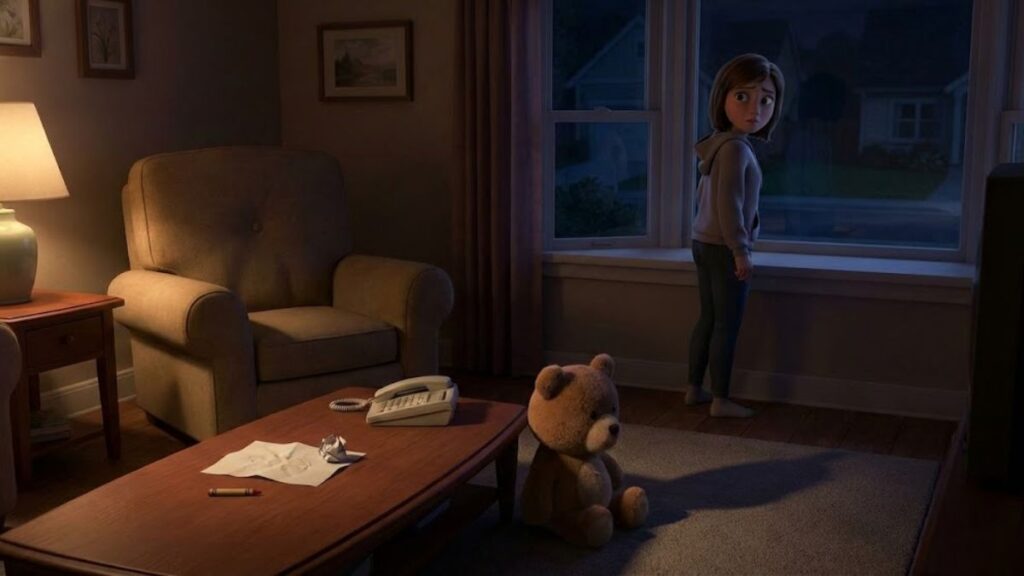
I still remember the night I babysat for the Walkers.
It was one of those crisp fall evenings in the suburbs where the air smells like wet leaves and someone’s fireplace. The house looked exactly like every other two-story on the block—white siding, blue shutters, porch light flickering just enough to feel lived-in. I’d answered their Craigslist ad because the pay was good and the job sounded easy: baby asleep, parents out for dinner, back before midnight. I’d done this before. Dozens of times.
Mrs. Walker opened the door smiling too wide, like she was trying to convince herself it was fine. Mr. Walker stood behind her holding car keys, already halfway out. They rushed through the basics—baby upstairs, bottle in fridge, emergency numbers on the counter. Then Mrs. Walker pressed a folded yellow sticky note into my hand.
“That’s everything,” she said quickly. “Wi-Fi, our numbers… and, um, just… read the note if he wakes up.”
I nodded. “Got it.”
They thanked me again—too many times—and hurried out. The door clicked shut. The house went quiet except for the soft tick of a clock somewhere.
I locked the deadbolt out of habit, then unfolded the note.
Handwritten. Neat block letters.
“Don’t let him out no matter what he says.”
I stared at it.
Him.
The baby?
I laughed once—short, nervous. Probably about the dog. I’d seen a water bowl by the back door. Maybe they had a puppy that liked to bolt.
I stuck the note to the fridge with a magnet shaped like a smiling sun. Poured myself a soda. Sat on the couch. Turned on the TV low. Scrolled my phone.
The baby was quiet upstairs. Too quiet, maybe, but newborns sleep a lot. I checked the monitor—tiny chest rising and falling in the crib. Peaceful.
Around 10:15 I heard it.
Crying.
Not a baby’s cry. Lower. Hoarse. Muffled.
Coming from downstairs.
I muted the TV. Listened.
It grew louder. Desperate. Words forming.
“Please… let me out…”
My skin prickled.
I stood slowly. Walked to the basement door. The crying sharpened.
“Hello?” I called.
The voice answered immediately. Small. Trembling.
“Please. It’s dark. I’m scared.”
Not a dog.
A child.
My throat tightened. “Who are you?”
“They locked me in.”
I glanced back at the fridge. The note stared back.
“Don’t let him out no matter what he says.”
My hand hovered on the knob.
“Who locked you in?” I asked.
“Them.”
The Walkers?
I thought about their rushed goodbye. The way Mrs. Walker’s smile hadn’t reached her eyes. The baby monitor showing a sleeping infant.
I tried calling Mrs. Walker. Straight to voicemail.
Mr. Walker. Same.
Texted: There’s someone in your basement. Who is it?
No reply.
The crying softened. Pleading.
“I’m hungry. Please.”
I couldn’t leave a kid locked down there.
I grabbed the flashlight from the junk drawer. Took a breath. Turned the knob.
The door creaked open.
Cold air rushed up. Dust. Old wood. Something faintly metallic.
I shone the light down the stairs.
A small figure at the bottom. Pale. Barefoot. Dirty pajamas. Maybe seven or eight.
He looked up. Eyes too wide. Too dark.
“Please,” he whispered. “Don’t close the door.”
I swallowed. “Come upstairs. I’ll get you food. We’ll call someone.”
He stepped forward slow.
I backed up one step. Kept the light on him.
He climbed.
When he reached the top, he smiled.
It was wrong. Too calm. Too knowing.
“I knew you’d listen,” he said.
My flashlight flickered.
The door slammed shut behind me.
Darkness swallowed the hallway.
I screamed. Pounded the door. It wouldn’t budge.
Cold hands brushed my shoulder.
Small.
Ice.
“Thank you for letting me out,” he whispered against my ear.
I kicked. Shoved. Screamed again.
Lights snapped back on.
The basement door stood open.
Empty.
No boy.
No sound.
Just my ragged breathing.
The note on the fridge fluttered in the draft.
I grabbed my bag. Keys. Ran.
Didn’t lock the door behind me.
Sat in my car shaking. Hands wouldn’t stop.
Phone buzzed.
Mrs. Walker.
I answered trembling.
“What the hell was that note about?”
Confusion on the other end. “What note?”
“On your fridge. ‘Don’t let him out no matter what he says.’”
Long pause.
“Jenny… we didn’t leave any note.”
My chest squeezed. “Then who—”
The line went dead.
I stared at the screen. Call timer still running.
But no one speaking.
Instead—faint static.
Then a whisper. The same child’s voice:
“You weren’t supposed to listen to me.”
I dropped the phone.
Drove away fast. Didn’t look back.
Next morning police went in.
Front door open.
Walkers’ car in driveway.
Two bodies inside. Pale. Still. Faces frozen in terror.
No baby.
No sign of struggle.
On the fridge—one note remained.
“Thank you for letting me out.”
I never babysat again.
Never went near that street.
But some nights—when rain taps the window like fingers—I still hear it.
Soft crying.
From somewhere downstairs.
“Please… let me out.”
And I wonder whose voice it really is.
Mine.
Or his.
Because sometimes the person who answers the door
isn’t the one who leaves.
4. Reflections
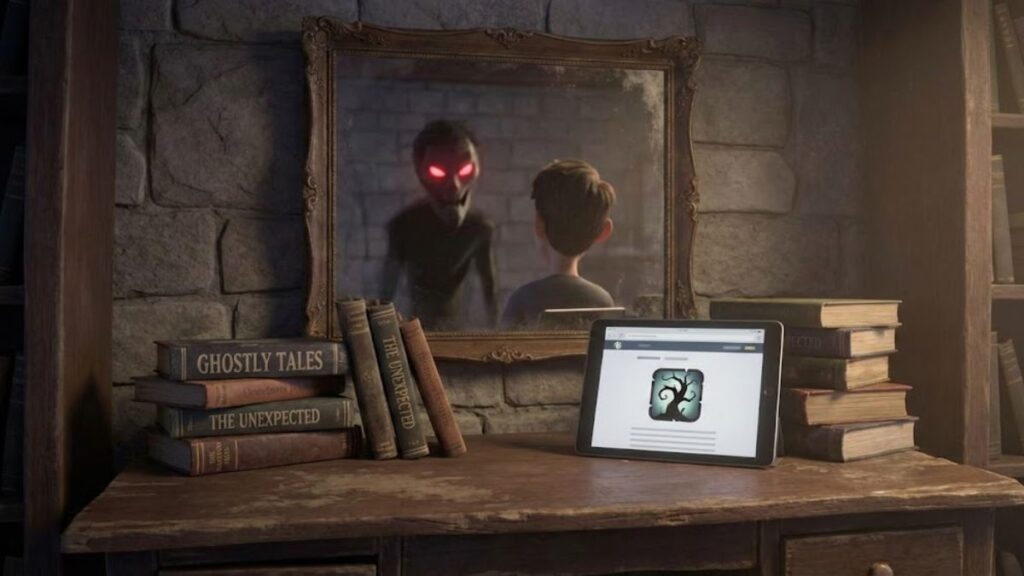
I still remember the night the mirror stopped pretending to be me.
It started small. I’d just moved into this cheap one-bedroom in Portland—third floor, creaky stairs, rent I could actually pay. The landlord said the full-length mirror bolted to the bedroom wall was “original” and non-removable without wrecking the plaster. I rolled my eyes but let it go. Mirrors are mirrors. I needed the place.
First few weeks were uneventful. Long design shifts, late nights tweaking layouts, crashing hard. The mirror was background noise—I checked my outfit, fixed my hair, moved on.
Then one evening after a shower, steam still clinging to the glass, I stood brushing my hair and caught it in the corner of my eye.
My reflection didn’t blink when I did.
I paused. Stared.
It stared back—calm, unblinking, eyes wide open. After three long seconds it blinked once. Slow. Like it had decided the timing.
I laughed. Sharp. Nervous.
“Too much screen time,” I muttered.
Turned off the light. Went to bed.
Next morning I passed it on my way out. My reflection was smiling—just the corners of the mouth. I wasn’t.
Brush froze mid-stroke.
Smile vanished the second I frowned.
I stepped closer. Normal again. Tired eyes. Messy hair. Me.
But the feeling stayed. Like I’d seen something I wasn’t supposed to.
That night I called Lila while reheating leftovers.
“You ever had a mirror… lag?”
She snorted. “Like ghosts?”
“No. Just out of sync. Blinks late. Smiles when I don’t.”
“Maybe warped glass. Or you’re exhausted.”
“Yeah. Probably.”
We talked about other stuff. I felt better. Until bedtime.
Brushing teeth. Reflection tilted its head a beat after I did. Blinked slower. Smiled when I grimaced at the mint burn.
I stepped back. “Stop.”
It kept smiling. Wider. Too wide.
Turned off the light fast. Slept with every lamp on.
Next morning—sheet over it. Old bedsheet. Taped tight.
Slept on the couch. First good night in days.
Sunlight woke me. Stretched. Smiled.
Then I saw the sheet had slipped halfway down.
My reflection’s face peeked through.
Smiling.
Heart slammed. I froze. Watched.
It raised its hand. Pressed palm to glass. Fingers curled. Tapped once. Twice. Tick. Tick.
I bolted.
Came back later with duct tape and screwdriver. Wrapped the sheet like a cocoon. Tried the bolts—wouldn’t budge.
That night I dreamed I was standing in front of the mirror. My reflection wasn’t in it. It was at the foot of my bed. Smiling down.
Woke gasping.
Sheet gone.
Mirror uncovered. Pristine.
It waved.
I screamed—quiet, choked. Knocked over the lamp. Light flickered. Reflection tilted its head. Mouth moved. No sound.
Phone buzzed. Sam: You okay? Breakfast?
I typed shaking: I think I’m losing it.
He replied instantly: Look in the mirror. It’s just you.
I stared at the message. How do you know about the mirror?
No reply.
Checked history. Gone.
Screen showed a selfie. My face. Smiling eerie. Taken from inside the apartment.
Lights flickered again.
“Stop,” I whispered.
Reflection smiled wider. Stepped back into darkness.
I avoided the bedroom. Slept couch. Ate cereal straight from box. Left lights on.
Third morning reflection appeared in my phone camera. Behind my shoulder. Faint. Smiling.
Dropped the phone.
Evening I packed. Laptop. Clothes. Keys.
Entered bedroom one last time.
Mirror gone.
Smooth wall. Fresh paint.
No workers. No noise.
I turned to the window. Glass reflected me—standing exactly as I was.
Except the reflection held no bag.
And it was smiling.
Raised one hand. Waved slow.
Glass rippled.
I ran.
Slammed door.
Didn’t look back.
Crashed at Lila’s for weeks.
Found new place. No wall mirrors. Only small ones I could cover.
Never went back for the rest.
Landlord texted once.
“Left your mirror. Looks nice.”
Didn’t reply.
Some nights, washing my face, I catch my reflection in the bathroom mirror.
It blinks a second slow.
Smiles a second early.
I don’t wave back.
I just walk away.
Because I knI still remember the night the breathing started.
It was one of those quiet weeks in Seattle where the rain never really stops—it just decides how hard it wants to fall. My apartment was small, third floor, single bedroom with a view of wet rooftops and distant streetlights. I liked the silence. After years of shared houses and noisy roommates, the solitude felt like a gift. Work from home, headphones on, coffee brewing, no one to answer to except deadlines.
The baby monitor was left over from the previous tenant. I’d found it in a drawer while unpacking—old, white plastic, the kind with a tiny screen and a power cord that still worked. I plugged it in one night out of curiosity, just to see if the transmitter still functioned. It did. Grainy black-and-white image of my empty bedroom. I laughed, unplugged it, and shoved it back in the drawer.
Forgot about it.
Until 2:14 a.m. the following Tuesday.
I woke up to breathing.
Slow. Deep. Steady.
Not mine.
It was coming from the baby monitor on the nightstand.
I hadn’t plugged it back in.
I sat up fast. Heart already racing. The little screen glowed faintly—red light on, power somehow active. The audio hissed with static, then cleared.
Inhale. Exhale.
Long. Wet. Close.
I stared at the monitor. The image showed my bedroom—my bed, my lamp, my open closet door. Exactly what I was seeing in real life.
Except the breathing wasn’t coming from me.
I held my own breath. The sound continued.
I reached out. Unplugged the cord.
Silence.
I exhaled. Laughed once—shaky.
“Old wiring,” I muttered. “Some kind of interference.”
Put the monitor back in the drawer. Went back to sleep with every light on.
Next night—same time.
Breathing again.
I woke sweating. The monitor was on the nightstand again. Plugged in.
I hadn’t touched it.
Screen showed the same view. My room. My sleeping shape under the blanket.
But the breathing was louder now. Closer to the mic.
I yanked the cord. Silence.
Checked the drawer the next morning. Monitor still inside. Cord coiled neatly.
I started sleeping with the drawer locked.
Didn’t help.
Third night I woke to the sound right beside my ear.
Not the monitor.
Inside the room.
Slow inhale. Exhale.
I didn’t move. Didn’t breathe. Just listened.
It came from the direction of the closet.
I reached for my phone. Flashlight on. Aimed.
Closet empty. Clothes hanging still. No one.
But the breathing didn’t stop.
I whispered, “Who’s there?”
No answer.
Just the slow rhythm. In. Out.
I turned on every light. Checked under the bed. Behind the door. Nothing.
Sat on the floor with my back against the wall until dawn.
Next day I called the landlord.
“Something’s wrong with the apartment. Noises at night. Breathing.”
He sighed on the phone. “Old building. Pipes. Vents. You’ll get used to it.”
I didn’t.
I started recording audio on my phone while I slept.
Checked the files in the morning.
First two hours—nothing.
Then, around 2:10 a.m., static.
Breathing.
Clear. Heavy. Right next to the microphone.
Then a whisper.
“Are you awake?”
My voice cracked when I replayed it.
I stopped sleeping in the bedroom.
Moved to the couch. Lights on. TV low.
Still heard it.
Faint. Through the walls. Through the floor.
Always around 2 a.m.
Always the same rhythm.
Inhale. Exhale.
Sometimes—whispering.
“Ethan…”
My name.
Soft. Like someone testing how it sounded.
I stopped answering.
Stopped looking toward the bedroom door.
One night I woke to the sound coming from the baby monitor again—on the coffee table now. I hadn’t moved it.
Screen glowed.
Showed my bedroom.
Showed me—sleeping on the couch.
And standing over me, a shape.
Dark. Outline only.
Leaning down.
I didn’t scream.
I just watched.
The shape straightened. Turned its head toward the camera.
Toward me.
The monitor went black.
I unplugged it. Threw it in the trash.
Next morning I packed a bag.
Told work I needed a few days remote from my parents’ place.
Left the apartment.
Didn’t look back.
When I came back two weeks later to get the rest of my things, the landlord met me in the hall.
“Everything okay?” he asked.
“Yeah,” I lied. “Just needed a break.”
He nodded. “Neighbor in 3B asked about you. Said he kept hearing breathing at night. Thought it was coming from your place.”
I felt cold.
“Tell him it’s gone,” I said.
He frowned. “Gone?”
“Yeah.”
I took the last boxes. Left the key.
Never went back.
Sometimes, late at night, when the house is quiet and the rain taps the window, I still hear it.
Soft breathing.
Inhale. Exhale.
Close.
Too close.
And I wonder if I really left it behind.
Or if it followed.
Waiting for me to fall asleep.
So it can whisper again.
“Are you awake?”
And this time—
I might answer.Ethan Cole liked silence. That was why he chose to live alone.
His new apartment wasn’t big — a single bedroom, a small kitchen, and a balcony facing the city. But it was quiet. He could hear nothing but the hum of the refrigerator and the occasional car passing far below.
After years of roommates, the peace felt almost sacred.
He worked remotely as a software engineer, rarely leaving except for groceries or a quick walk at dusk. The building was old but well-kept. Thick walls, polite neighbors, and no kids running around.
It was perfect.
Until one night, around 2 a.m., when he woke to the sound of breathing.
At first, he thought it was his own — slow, steady, rhythmic. But it was louder than it should’ve been. Close.
Too close.
He sat up in bed, holding his breath. The sound continued.
It was faint, crackly, and came from somewhere near his desk.
He turned on the lamp. The room looked normal. His computer monitor glowed softly in sleep mode. The breathing persisted — quiet, almost muffled, but undeniably human.
He followed the sound to the corner of the room. His baby monitor sat there, blinking faintly.
Except he didn’t have a baby.
The monitor was leftover from the previous tenant, stuffed in a drawer he hadn’t cleaned yet. Out of curiosity, he’d plugged it in the night before, meaning to test if it worked. He’d forgotten about it entirely.
Now, it hissed softly with static.
Then — a breath.
Inhale. Exhale.
Long, drawn-out.
He stared at it, pulse quickening.
Maybe it was interference, he thought. Some neighbor nearby with a baby monitor on the same frequency. That made sense.
He turned the dial to a different channel. The sound faded, then returned — louder.
This time, a faint creak followed. Like a floorboard shifting.
He unplugged the monitor.
Silence.
He laughed nervously, shaking his head. “Old tech,” he muttered, setting it aside.
The next night, he fell asleep quickly.
At 1:58 a.m., he woke again.
The breathing had returned.
He froze. The monitor was still unplugged.
The sound wasn’t coming from the desk. It was coming from beside his bed.
He turned on the lamp, heart hammering. The room was empty.
He checked the closet. Nothing. Under the bed — just dust.
He sat back, gripping the sheets. “Get it together, Ethan.”
But the sound persisted, faint and wet, like someone exhaling slowly through parted lips.
He turned on the TV for background noise, the glow comforting him until he fell asleep.
The next morning, he told himself it was stress. He’d been overworking, barely eating, barely sleeping. He ordered noise-canceling earbuds online and decided to let it go.
Two nights later, he woke again.
This time, there was no mistaking it. The breathing was clear, heavy, and it wasn’t alone.
There was whispering too — soft, fragmented, like a radio signal fading in and out.
He sat up, sweat running down his back. “Hello?”
The whisper stopped.
A floorboard creaked near the doorway.
He reached for his phone, turned on the flashlight, and aimed it toward the sound.
No one was there.
He walked slowly to the door and opened it. The hallway was empty, the air still.
When he turned back toward the bed, the sheets were rumpled — like someone had just gotten up.
He stood frozen for a full minute before backing away and sleeping on the couch.
The next morning, he called maintenance.
“Hey, do you know if the walls here are thin? I keep hearing… sounds at night.”
The man on the other end sighed. “Old building. Pipes groan, vents shift. You’ll get used to it.”
Ethan hung up, unconvinced.
That evening, he tried recording the sounds. He set up his phone to capture audio while he slept.
The next morning, he checked the recording.
For the first hour, nothing but silence. Then, around 2:10 a.m., static. Breathing. A faint scraping sound.
And then, a voice.
Very close to the microphone.
“Are you awake?”
Ethan dropped the phone. The voice was whispery, genderless, right beside his bed.
He replayed the clip three times, volume low, skin crawling. It always said the same thing.
He stopped sleeping that week. He’d doze off on the couch for an hour or two, then jolt awake, certain someone was standing nearby.
He even checked the vents, thinking maybe sound carried through them. But the only thing inside was dust.
On Friday night, he heard the breathing again — but this time, it was behind him.
He turned slowly, scanning the dim apartment. His reflection stared back from the window. For a second, he thought the reflection was breathing too — its chest rising and falling out of sync with his.
He pulled the curtains shut.
The breathing didn’t stop.
He whispered, “What do you want?”
No answer. Just the slow, deliberate inhale and exhale of something that wasn’t supposed to be there.
He left every light on that night.
By Sunday, his eyes were bloodshot. He hadn’t eaten properly, hadn’t left the apartment. Every time he tried to rest, that sound returned — even in the daytime now, faint but constant, like someone just out of sight.
He went to the landlord on Monday morning.
“I think someone’s in my walls,” he said flatly.
The landlord, a heavyset man with a kind face, frowned. “You’re in 5B, right? That unit’s been fine for years.”
“I’m hearing breathing. Voices. I’m not imagining it.”
The landlord rubbed his chin. “You sure it’s not the monitor? Last tenant said that thing picked up weird frequencies.”
“It’s unplugged,” Ethan said.
The landlord nodded slowly. “Alright, I’ll check the vents tomorrow. Maybe an animal got in.”
That night, Ethan moved the baby monitor to the kitchen counter and pointed it at his bed. If something was happening, he wanted proof.
He fell asleep around 1 a.m., exhaustion finally winning.
At 1:54 a.m., the monitor clicked on by itself.
The red light blinked.
Soft breathing filled the speaker.
Then a whisper: “You can’t keep pretending.”
Ethan shot awake, heart hammering.
The monitor lay on the counter, light glowing faintly.
He crept toward it.
Through the static, a faint image appeared on the small screen — his own bedroom, from the same angle.
He could see himself lying in bed.
And standing beside the bed, a dark figure.
He stared, frozen, as the figure leaned closer to the sleeping version of himself on the monitor.
Then, on the screen, the figure turned its head and looked directly at him.
Ethan stumbled back, slamming into the wall. The screen went black.
The next morning, he packed his bags.
He didn’t care about the lease or the deposit. He just needed to leave.
He was halfway to the door when his phone buzzed.
A new message from an unknown number:
“You forgot something.”
Attached was a photo — his bedroom.
The sheets were smooth, the monitor gone.
And there, faintly visible in the shadows beside the bed, was a shape.
He dropped the phone and ran.
When the landlord entered the apartment the next day, it was empty.
Everything looked normal — except for the baby monitor, sitting neatly on the counter. It was still on, light blinking softly.
From the speaker came slow, steady breathing.
Then, a voice.
“He’s gone now.”
The landlord frowned, unplugged the monitor, and left it on the counter.
As he locked up, the red light flickered back on by itself.
A faint whisper followed.
“Your turn.”
6. Visitors
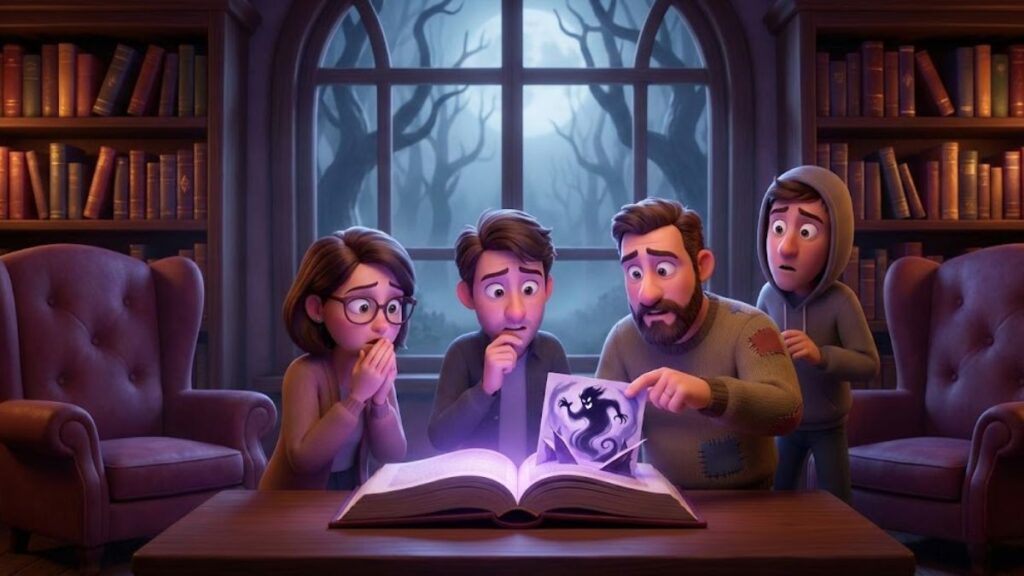
I still remember the night the visitors came.
It was one of those heavy Midwest storms that make the whole house feel small—rain hammering the roof like it was trying to get in, thunder rolling so low you felt it in your ribs. I hated those nights even as a kid. The sound always felt personal, like something out of the dark had my name on its tongue.
Dan was away for work. Third week in a row. Bruno—our old black Lab—was curled by the fireplace, snoring through the noise. I’d muted the TV, wrapped myself in the quilt my mom made, and tried to pretend the storm was just weather.
Around 11:40 the first knock came.
Three soft raps on the front door.
Bruno’s head lifted. Ears forward. Low growl rumbling in his chest.
I froze. Nobody comes out here this late. Nearest neighbor is two miles down a gravel road that turns to mud in weather like this.
I waited. Hoped it was the wind rattling the screen.
Another three knocks. Firmer.
I got up slowly, heart already loud in my ears. “Who’s there?”
No answer.
I flipped on the porch light. Looked through the peephole. Nothing but rain and darkness.
Lightning flashed. For half a second I thought I saw a shape at the edge of the porch—tall, thin, standing too still.
Gone when the light returned.
I shut the curtain. Locked the deadbolt again even though it was already locked.
Told myself: stranded driver. Lost tourist. Someone needing a phone.
But the road was empty tonight. No headlights. No car sounds.
Bruno kept growling, low and steady.
I checked my phone. No signal. Storm must’ve knocked out the tower again.
The knocking moved.
Kitchen window this time.
I turned slowly.
A pale hand pressed flat against the glass—long fingers, nails scraping lightly down the pane. Leaving wet streaks.
I gasped. Stepped back. Knife from the block in my hand before I even thought about it.
The hand slid away.
Bruno barked once—sharp, warning—then ran to the back door, hackles up.
I followed him, lights off now, moving quiet. Looked through the glass.
Nothing.
Just rain. Wind. Dark yard.
Then the footsteps started.
Inside.
Slow. Wet. Coming down the hallway.
Bruno barked again—furious, teeth bared—facing the dark corridor.
“Who’s there?” My voice cracked.
The footsteps stopped.
Then a voice—soft, calm, male.
“We’re inside now.”
I screamed. Ran for the front door. Yanked it open.
Lightning lit the yard.
Two figures stood at the bottom of the porch steps.
Too tall. Too thin. Faces wrong—stretched, eyes wide and black, mouths moving without sound. Clothes dripping though the porch was dry.
I slammed the door. Locked it. Backed away.
Bruno yelped—sharp, pained.
I spun. He was on his side near the hallway, unharmed but staring past me, trembling.
The room smelled wet. Like river mud and ozone.
I flicked on the flashlight.
Hallway empty.
But the floor was wet. Muddy footprints—bare, long-toed—leading straight toward me.
I followed them backward. Into the living room.
Two shapes stood in the center of the room.
Same stretched faces. Same silent mouths moving.
I raised the knife. “Get out.”
One tilted its head. “You opened the door.”
Thunder cracked. Lights flickered.
When they steadied—the figures were gone.
Bruno whined. Crawled under the table.
I stood there shaking. Knife still up.
The footprints were still wet on the floor.
Leading nowhere.
I didn’t sleep.
Morning came grey and dripping.
I stepped outside.
Porch covered in muddy prints.
All leading in.
None leading out.
I called Dan.
Voice shaking. “You won’t believe what happened last night.”
His voice calm. Too calm. “Clara… where are you calling from?”
“Home. Of course.”
Long pause.
“Clara… the police just called me. They found the house flooded. You weren’t there.”
My heart stopped. “What?”
Static on the line.
Then—faint breathing.
And a whisper. His whisper.
“You opened the door.”
The call dropped.
I stared at the phone.
Tried calling back.
No signal.
I looked at the front door.
Still locked.
But the muddy prints on the floor were dry now.
Like they’d been there for days.
I left that afternoon.
Didn’t pack much. Just grabbed my keys and Bruno’s leash.
Drove until the house was gone from the rearview.
Weeks later the police called.
Said the house had been empty when they arrived. No flood. No damage.
Just the front door standing open.
And one note taped to the fridge.
“Thank you for letting us in.”
I never went back.
Never answered numbers I didn’t know.
But some nights—when the rain starts again, heavy and personal—I still hear it.
Three soft knocks.
From inside the house.
And breathing.
Slow.
Close.
Waiting for me to answer.
Because I did once.
And some doors don’t close again.
Not really.
7. The Collector
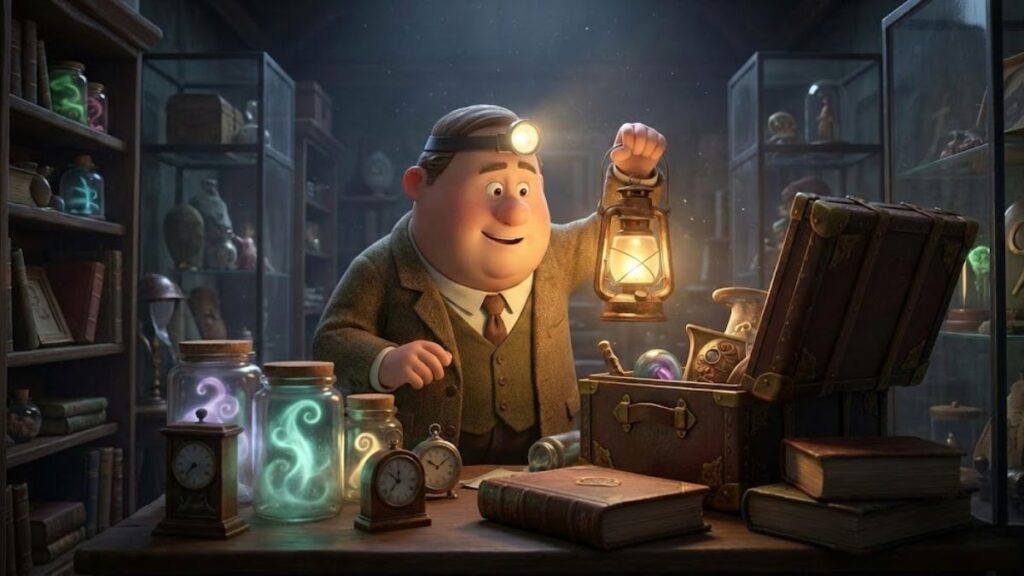
I still remember the morning I found the locket in the cabinet.
I never really retired. That’s what I told people. “Just changed offices,” I’d say, nodding toward the living room where my desk now sat under the same lamp I used for thirty years on the force. The glass cabinet against the wall held the only trophies I kept: a cracked watch from the ’92 jewelry heist, a folded love letter that solved a missing-persons case in ’98, a blood-stained coin from the double homicide that ended my active duty. Each one had a face attached. Each one reminded me of someone I couldn’t save.
Every morning I polished the glass. Every night I poured two fingers of bourbon, sat in the armchair, and whispered to the shelves: “You can rest now.”
The ritual never failed.
Until it did.
It was a Tuesday in October. Rain tapping the windows like fingernails. I finished my coffee, walked over to dust the cabinet like always.
And there it was.
A silver heart locket, centered perfectly on the top shelf.
I hadn’t put it there.
I stared at it for a long moment. Cold metal. Heavy for its size. Initials scratched faintly into the front: H.K.
My initials.
I opened it carefully.
Inside, a tiny photograph of me—sleeping in my own bed. The quilt pattern, the nightstand lamp, even the faint glow from the streetlight outside my window. Recent. Very recent.
My pulse moved into my throat.
I checked every lock. Every window latch. No forced entry. No footprints. No sign anyone had been inside.
Still, the feeling settled in my chest like wet concrete: someone had stood over me while I slept.
That night I didn’t pour bourbon. I sat in the dark with the locket on the table, revolver within reach, and waited.
At 2:47 a.m. a soft click echoed through the house.
The cabinet door swung open on its own.
I stood slowly. “Who’s there?”
No answer.
The air grew colder. My reflection in the glass looked back—tired eyes, shaking hands—but it wasn’t moving when I was.
It smiled.
I reached for the gun.
The lights flickered. When they steadied, the cabinet held something new.
A single leather glove. Damp with rain.
I didn’t touch it at first.
Inside the glove—a crumpled receipt from the diner two blocks away. Dated last night. Name on it: Harold Keene.
I hadn’t left the house.
My hand shook as I unfolded it. On the back, in my own handwriting: “You’re collecting yourself now.”
I sat down hard.
The next morning I called the precinct. Old habit.
They sent a patrol car. Two young officers. Polite. Thorough. No forced entry. No fingerprints that weren’t mine. They looked at the locket, the glove, the receipt, the note.
“Could be a prank,” one said.
“Someone with a key?” the other asked.
I shook my head. “No spare keys. Never gave any out.”
They took photos. Promised to run the prints. Left.
I didn’t sleep that night either.
I sat facing the cabinet. Gun on my lap.
At 3:00 a.m. the door clicked open again.
No one entered the room.
But the top shelf now held a small photo frame.
Inside: me, sitting exactly where I was now, asleep in the chair.
I stared at it for a long time.
Then I rewound the security camera I’d set up the day before.
The footage showed me falling asleep at 1:06 a.m.
At 3:00 a.m. the cabinet opened.
No figure. No shadow. No movement.
But at 3:01 the frame flickered—static—and for half a second, something tall and dark stood behind me, leaning close to my ear.
Then it was gone.
I paused. Zoomed. The image distorted into noise.
I unplugged the camera. Threw it in the trash.
That night I didn’t wait.
I sat in the chair again. Revolver in hand. Facing the cabinet.
“I know you’re here,” I said to the empty room.
Silence.
Then a faint creak behind me.
I spun. Gun raised.
Nothing.
Lights flickered.
My reflection in the cabinet glass stared back—but it wasn’t matching my movements.
It smiled.
Slowly raised its hand.
Pressed something against the inside of the glass.
A small envelope.
I hesitated. Then reached for it.
Inside, a note in my own handwriting:
“You’re part of the collection now.”
The lights went out.
When the neighbors called the police two days later, the house was locked from the inside. No signs of struggle.
The cabinet held one new item.
A silver locket.
Inside—a picture of me, eyes open this time, staring straight ahead.
They never found me.
But sometimes, late at night, when the city gets quiet and the rain taps the windows like fingernails, people walking past the building swear they see a light in my old living-room window.
And if they look close enough, they see an old man sitting in an armchair.
Polishing glass.
Whispering to the shelves.
“You can rest now.”
And the cabinet smiles back.
8. Voice in the Walls
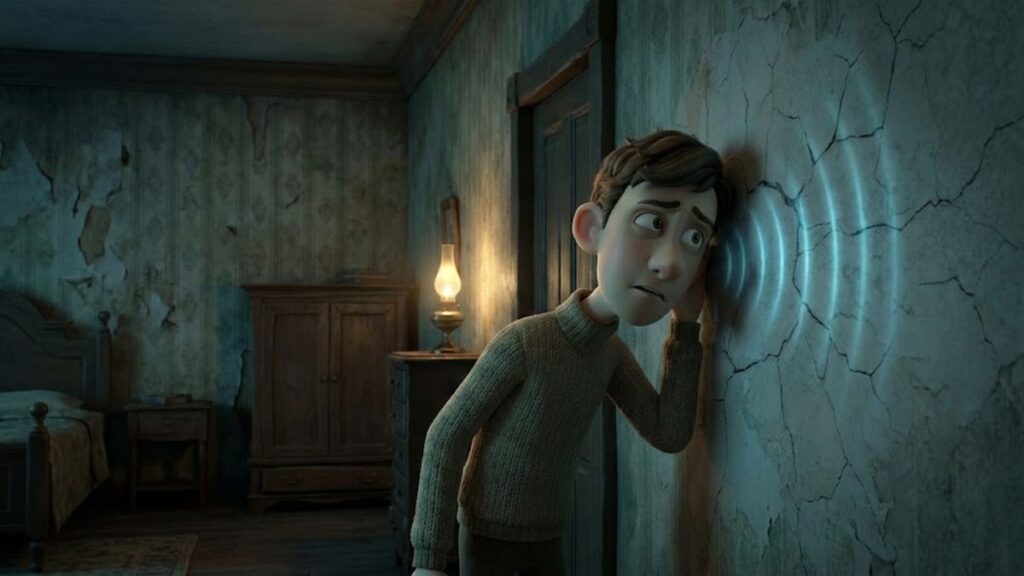
I still remember the night we first heard the voice in the walls.
Tom and I bought the farmhouse because we wanted quiet. A fresh start. The place sat at the end of a gravel lane outside Austin—white siding faded to grey, porch swing creaking in the breeze, fields stretching out behind like they’d never end. It smelled of old wood and dust when we walked in, but we laughed about it. Called it “character.” The realtor said the previous family moved out decades ago. No one asked why.
First few weeks were peaceful. We unpacked slowly. Painted the kitchen soft blue. Sat on the porch at dusk listening to crickets and wind moving through the oaks. No sirens. No neighbors. Just us and the house settling around us like it was breathing.
Then one night—maybe the third week—the voice came.
We were in the living room sorting boxes. Rain tapping the roof. Tom was telling a story about his old boss when we both stopped.
A small, breathy sound drifted from the wall behind the fireplace.
“Help me.”
We looked at each other.
“Did you say something?” Tom asked.
I shook my head. “I thought you did.”
We waited. Nothing. Just rain.
“Wind,” Tom said. “Or pipes.”
We laughed it off. Went to bed.
Next night it came back. Louder. Clearer. A child’s voice, small and sad.
“Please. Help me. I’m still here.”
This time we both heard it plain. From inside the wall.
Tom pressed his ear to the plaster. “Hello?”
The voice answered—soft, trembling.
“I’m scared.”
We pulled back. Looked at each other. No joke. No prank. Just a voice coming from solid wall.
We didn’t sleep much after that.
Next day Tom pried off a panel near the fireplace. Dust poured out like smoke. Behind it—a narrow cavity, maybe a foot wide, running floor to ceiling. Empty except for cobwebs and old insulation.
Then the flashlight caught something metallic.
An ancient tape recorder. Half-buried in debris.
Tom brushed it off. Pressed play.
Static crackle. Then the same voice.
“Please. Help me. I’m still here.”
We stared at the machine like it might explain itself.
Tom turned it off. “Probably some kid’s prank from years ago. Left it behind.”
We laughed. Nervous. Put the recorder on the kitchen counter. Tried to forget.
That night we woke to the same voice.
Only this time it wasn’t coming from the recorder.
It came from the wall beside our bed.
“Please. Help me.”
Tom sat up fast. “We turned it off.”
I grabbed my phone. Light on. Shone it at the wall.
Nothing.
The voice moved—sliding along the plaster, from bedroom to hallway to kitchen, like something crawling inside the structure.
We followed it barefoot, flashlights shaking.
“Please. Help me. I’m still here.”
Tom slammed the recorder down. “It’s not even playing!”
No batteries inside. No tape moving.
We called the previous owner the next day—an old man named Raymond who grew up in the house.
When Tom mentioned the voice, there was a long silence.
Then Raymond spoke quietly.
“That belonged to my sister, Lily. She disappeared when we were kids. My father… wouldn’t let anyone talk about it. Years later, when they sold the place, he sealed that wall himself. Said she was gone.”
“Gone how?” I asked.
Another pause.
“Police never found her. Just her doll. Behind the fireplace.”
We hung up.
That night we couldn’t sleep.
The voice came again—closer than ever.
“Please. Help me. I’m still here.”
Tom snapped. Grabbed a hammer. Started smashing drywall, shouting, “Where are you?”
Plaster fell. Dust filled the air.
Behind the last layer—the crawl space again.
Clean. Empty.
Except the tape recorder. Sitting in the center like it had been placed there.
It clicked on by itself.
The voice now sounded older. Sadder. Almost human.
“Thank you,” it whispered.
Then stopped.
We stared.
The recorder was gone when we looked back.
Weeks later we sold the house.
Packed fast. Didn’t look behind us when we drove away.
The new owners moved in the next month. Called it peaceful.
Until one evening, while painting the kitchen, they heard a soft click behind the wall.
Then the sound of a tape rewinding.
And a voice, faint and pleading.
“Please. Help me. I’m still here.”
They laughed it off at first.
Then the voice said their names.
Now the house sits quiet again.
Waiting.
Because some walls don’t just hold up roofs.
Some walls hold echoes.
And some echoes wait for someone new to listen.
Someone who’ll open the door.
Someone who’ll answer.
Someone who’ll say, “I’m here.”
And once you do—
the voice stops being an echo.
It starts being company.
And it never leaves.
9. Night Shift

I still remember the night the hospital started calling my name.
The night shift at St. Mary’s never really slept. Lights dimmed, halls quieted, but the place stayed alive—soft beeps, distant carts rolling, the low hum of machines breathing for people who couldn’t. I liked it. The chaos of days faded. It was just me, the charts, and the rhythm of vitals.
Room 213 was always quiet. Mr. Graves—coma patient, mid-fifties, no family, no ID beyond the name someone gave him when he arrived unresponsive in a motel room three months earlier. He lay there every night the same way: eyes closed, lips curled in a faint, unchanging smile. I’d grown used to it. Almost fond of it. He never complained.
That night I passed his room on rounds. Chart in hand. 2:17 a.m.
I stopped.
His eyes were open.
Not blinking. Just open—staring straight at the ceiling.
I stepped inside. “Mr. Graves?”
No movement.
I checked the monitor. Steady rhythm. Pulse normal. Breathing normal.
I leaned closer. His smile looked… wider. Just a fraction.
I blinked. When I looked again, eyes closed. Smile the same as always.
I exhaled. “Long shift,” I muttered.
Wrote a note in the chart: Patient appeared to have eyes open at 0217. No change in vitals.
Kept moving.
But every time I passed 213 after that, I felt it—eyes on me.
Not paranoid. Just certain.
Around 3:40 a.m. the intercom crackled.
“Room 213—code blue.”
My stomach dropped. I ran.
Inside, the monitor flatlined.
I shouted his name. Checked pulse. Nothing.
Started compressions. One-and-two-and—
The monitor beeped once. Then again. Rhythm returned on its own.
I stepped back, breathing hard.
His head had turned. Toward me.
Eyes still closed.
But the smile—definitely wider.
I whispered, “What the hell…”
Janice—senior nurse—came in behind me. “You okay?”
I nodded. “He coded. Then… came back.”
She looked at him. Frowned. “He’s been gone since last Tuesday.”
I stared at her. “What?”
“Pronounced 10:42 a.m. Tuesday. Body was moved to morgue Wednesday.”
I looked down at the chart in my hand. The one I’d been writing on all night.
Patient: Leah Monroe Room: 213 Condition: Stable
My name.
My handwriting.
I dropped the chart.
The monitor beeped steady.
I backed out. Hallway lights flickered.
At the nurses’ station—empty.
All monitors on the wall flashed at once. Every patient name blinking.
Then black.
Except one.
Room 213 Leah Monroe
I ran.
Found a supply closet. Locked myself in.
Phone in hand. Called security.
“Something’s wrong in 213,” I said.
Pause. “Room 213’s been empty since last week.”
“No,” I insisted. “He’s there. I saw him.”
“Ma’am… the patient in that room passed away days ago. Didn’t Janice tell you?”
The line went dead.
I stared at the door. Breathing loud in the small space.
Footsteps in the hallway. Slow. Wet.
Coming closer.
I pressed myself against the wall.
The handle turned once. Twice.
Then silence.
I waited. Minutes. Hours maybe.
Finally cracked the door.
Hallway empty.
But the floor was wet. Muddy footprints—bare, long-toed—leading straight to the closet.
I followed them backward.
Into 213.
The room was empty.
No body. No monitor. No chart.
Just the bed. Made perfectly.
And on the pillow—a note.
Handwritten. My handwriting.
“He smiled at me. Now I can’t stop smiling too.”
I left that night.
Didn’t finish shift. Didn’t collect my things. Just walked out.
Drove until the hospital lights disappeared in the rearview.
Told myself it was exhaustion. Hallucination. Grief.
But sometimes, late at night, when the apartment is quiet and the city hums outside—
I hear it.
Beep… beep… beep.
Steady rhythm.
And a soft voice—my own—whispering from the walls:
“Leah…”
I don’t answer.
But the beeping doesn’t stop.
And every time I pass a mirror, I catch it.
My reflection smiling.
Just a fraction wider than it should be.
And I wonder how long it’s been smiling like that.
How long it’s been waiting for me to notice.
Because some patients don’t leave.
Some just change rooms.
And some rooms—
never really empty.
10. The Email Draft

I still remember the night the email draft started writing itself.
It was late October in Portland. Rain that never quite stopped, just changed its rhythm—soft taps one hour, sudden sheets the next. My apartment sat above the bookstore on Alberta—narrow stairs, creaky floors, rent I could barely cover with freelance gigs. The desk faced the window. Streetlamp outside cast a soft orange glow across the keyboard. I liked writing at night. The world slept. My stories didn’t.
I was working on something new. Horror short. Title: The Last Words. About a writer who finds an unfinished email predicting their own death. Ironic, sure. I’d been stuck on the opening paragraph for days. Words wouldn’t come. Frustrated, I stood up. Stretched. Poured cold coffee down the sink. Told myself to walk away for ten minutes.
When I came back, the laptop was awake.
I’d put it to sleep. I was sure.
The screen glowed pale blue. Email app open. New draft waiting.
Subject: My Last Words
I stared.
I hadn’t typed that.
The body began:
I’m sitting by the window. Rain hasn’t stopped. Coffee’s gone cold. Cursor blinks like a pulse. I can hear faint footsteps upstairs, though no one lives above me. I’m wearing my gray sweater—the one with the loose thread near the wrist. I’m trying to write, but I can’t stop looking at the reflection in the glass.
Every detail exact. Sweater I had on. Thread I’d noticed earlier. Coffee cup still warm in the sink. Even the way the streetlamp caught the rain streaks on the window.
My fingers hovered. Didn’t touch the keys.
A new line appeared. Slow. Letter by letter.
He’s right behind you.
My breath caught. I spun around.
Empty room.
Just shadows. Bookshelves. Closed door.
I laughed—sharp, shaky. “Get a grip, Lena.”
Closed the laptop. Unplugged it. Went to bed.
Slept badly. Dreamed of typing in the dark while someone stood behind me, breathing on my neck.
Morning came grey. I opened the laptop—cautious.
Email app open again.
Draft still there.
Longer now.
It’s morning. She’s reading this again. She doesn’t believe what she’s seeing. She’s going to check her reflection soon. When she does, she’ll realize it’s not her reflection at all.
I stared at the words. Heart loud in my ears.
Walked to the window. Looked at my reflection in the glass.
Rain had stopped. Fog clung to the pane.
My outline stared back—same messy bun, same tired eyes.
But the reflection’s eyes were darker.
Deeper.
And it smiled when I didn’t.
I stepped back fast. Knocked over the chair.
When I looked again—normal. Just me. Pale. Shaking.
I unplugged the laptop completely. Packed it in a drawer. Told myself: hacked. Malware. Some reader gone too far.
I spent the day away. Worked at a café. Avoided screens.
Came home late. Exhausted.
Laptop was open again.
Screen bright.
Email draft waiting.
Sent folder open too.
It had mailed itself—to my own address—three minutes before I walked in.
Subject: My Last Words
Body:
He’s here now. Watching her read this. She doesn’t see him, but he’s in the reflection again. She’ll turn in three seconds.
I felt cold air brush my neck.
Didn’t turn.
Couldn’t.
The typing started.
Slow. Deliberate.
Click. Click. Click.
New draft opened.
Look at him.
I stared at the screen. Hands frozen.
He’s waiting.
He wants you to see him.
Room felt smaller. Shadows longer.
Reflection in the dark window moved—turned its head toward me before I did.
I screamed. Slammed the laptop shut.
Silence.
Only my heartbeat. Rain starting again.
I grabbed keys. Left.
Crashed at Lila’s for a week.
Found new place. No window desk. No mirrors near the bed.
Never went back for the rest.
Landlord texted once.
“Left your laptop. Looks nice.”
Didn’t reply.
Some nights, when I wash my face and catch my reflection in the bathroom mirror—
It blinks a second slow.
Smiles a second early.
I don’t wave back.
I walk away.
Because I know what happens when you stay too long.
And I know whose face it’s wearing now.
Mine.
But not quite.
Why horror with a twist captivates adult readers?
Horror with a twist does not just scare adults. It unsettles what they believe, lingers in the mind, and forces them to question reality long after the story ends.
Psychology of Fear
Kids get spooked by obvious stuff—monsters under the bed, dark rooms, sudden noises. Flip the light switch and it’s over. Adults don’t flinch at that anymore. We’ve lived long enough to know the real scares aren’t external anymore.
They’re the slow ones that creep in: what if the person sleeping next to me is hiding something huge? What if I already made a choice I can never undo? What if the version of my life I’ve been telling myself is completely wrong?
A good twist uses exactly that vulnerability. It doesn’t just surprise you at the end—it makes you replay the whole story and see how you got played. Those innocent details you didn’t think twice about suddenly look loaded. You think: damn, it was right there. And then the worse part hits: I could be missing something that obvious in my own life right now.
That’s what makes it stick. Not the jump or the blood—it’s the quiet doubt afterward. You start questioning your own instincts, the people closest to you, how solid your grip on reality really is. It turns the story into something personal.
Emotional Depth Beats Gore
The strongest twist horror doesn’t rely on loud shocks or graphic violence. It builds through what things actually mean. The reveal usually shows the fallout of one bad decision, how easily trust breaks, or the real face someone’s been hiding.
That lands hard because most adults already deal with versions of it—half-regrets, moral compromises, relationships with small fractures they pretend aren’t there. When the twist arrives, it feels less like fiction and more like “yeah… I’ve ignored warning signs too.” Recognition is scarier than any monster.
It lingers longer than gore ever could. You close the story but keep turning it over in your head.
Modern Life Mirror
The world we’re in right now feels tailor-made for this kind of horror.
You scroll feeds and see people curating perfect lives that collapse in one leaked message. Deepfakes make you question every video. Headlines twist facts until nothing feels certain. Online everything blurs—real conversations, fake personas, AI voices, ghosted chats.
A short horror that starts completely normal—babysitter texting, tenant checking a mirror, easy night shift—then quietly flips the foundation doesn’t read like made-up scary stuff. It reads like an exaggerated version of the unease we already feel every day.
That’s why these pieces spread so fast online. They’re short, sharp, and they name the low-level anxiety most people carry around without saying it out loud. No big effects needed—just a cold realization that stays with you way past bedtime.
The Core Elements of A Twisted Horror Story
A twisted horror story is not built on fear alone. It works because of quiet unease, broken expectations, and a final turn that makes everything before it feel disturbingly different.
False Sense of Security
Every good twist starts by making you feel safe. You drop into a normal scene: guy gets home from a long day, babysitter arrives for an easy night, new tenant walks into a quiet flat. Nothing feels off. The character acts like anyone would, the dialogue is casual, the details are boring in the best way. You settle in, maybe even smile at how relatable it is.
That comfort is the setup. The writer wants you relaxed, trusting the story the same way the character trusts their situation. Then the twist comes and rips it away. The “normal” wasn’t normal. The safe person wasn’t safe.
The place you thought was home turns hostile. That drop from security to danger is what actually frightens people—not the monster itself, but realizing you never saw it coming because you weren’t looking.
Subtle Foreshadowing
The twists that really work don’t cheat. They don’t pull the rug from nowhere. There are hints scattered early—small enough that you glide past them on the first read. A weird pause in conversation, an object mentioned once and forgotten, a glance that lasts half a second too long. They feel like background noise.
When the reveal hits, those pieces snap into place. You go back and spot them, and it’s satisfying in a dark way. You feel tricked, but also like the writer respected you enough to play fair. That’s the difference between a cheap surprise and a twist that makes you want to reread just to admire how it was hidden in plain sight.
The Moment of Revelation
This is the knife turn. One sentence, one image, one realization, and the whole story shifts. The babysitter’s real name. The reflection that moves when you don’t. The voice on the phone that isn’t who you thought. Whatever it is, it re-frames everything that came before.
The best ones feel inevitable once they land. Not forced, not random—just the only thing that makes sense now that you see it. That click is powerful because it’s not only shocking, it deepens the story. The horror isn’t added; it was always there, waiting for you to notice.
Lingering Aftershock
The story doesn’t stop when you reach the end. That’s the point of a strong twist. It follows you. You keep thinking about it while brushing your teeth, lying in bed, scrolling later. You start wondering about the small odd things in your own day: that text that didn’t quite add up, the way someone smiled too long, the noise in the next room.
The unease hangs around. Hours pass, maybe days, and something random reminds you and it creeps back in. That’s when you know it worked. It didn’t just scare you for a minute—it left a shadow that moves with you.
Conclusion
Twist horror shorts hit different because they pack a full emotional ride into just a few pages. You get the buildup, the gut-punch reveal, and then that slow burn of thinking about it afterward—all without dragging on. For adults, that’s gold.
The scares feel grown-up: they touch on the doubts, the regrets, the fragile trust we actually live with every day. It’s not cheap thrills; it’s a quick, sharp reset that makes you see things a little sideways for a while.
If you’re after something intense that doesn’t waste your time, the online world is full of these. Pick one story—maybe 800 words or less—read it without rushing, let it sink in. Then go back and spot the little things you breezed past.
The real kick isn’t always the plot twist itself. It’s realizing the story wasn’t making anything up—it was just holding a mirror to the weird, uneasy stuff we already walk around with. That’s when it stops being “just a story” and starts feeling uncomfortably true.