For years, the reusable shopping bags of Greenfield lived a frustrating existence.
They had been purchased with great enthusiasm.
They were praised as environmentally friendly.
They were proudly displayed during checkout.
And then they were forgotten.
Most of the time, they spent their lives folded inside kitchen drawers, hanging on coat racks, buried beneath car seats, or trapped in closets alongside exercise equipment nobody used anymore.
The bags had a problem.
Humans loved buying reusable bags.
Humans were significantly less enthusiastic about remembering them.
Among the forgotten bags was a sturdy blue tote named Benny.
Benny had once dreamed of making a difference.
The day he left the store, his owner proudly declared:
“I’m never using plastic bags again.”
Benny believed every word.
Three years later, he was still waiting.
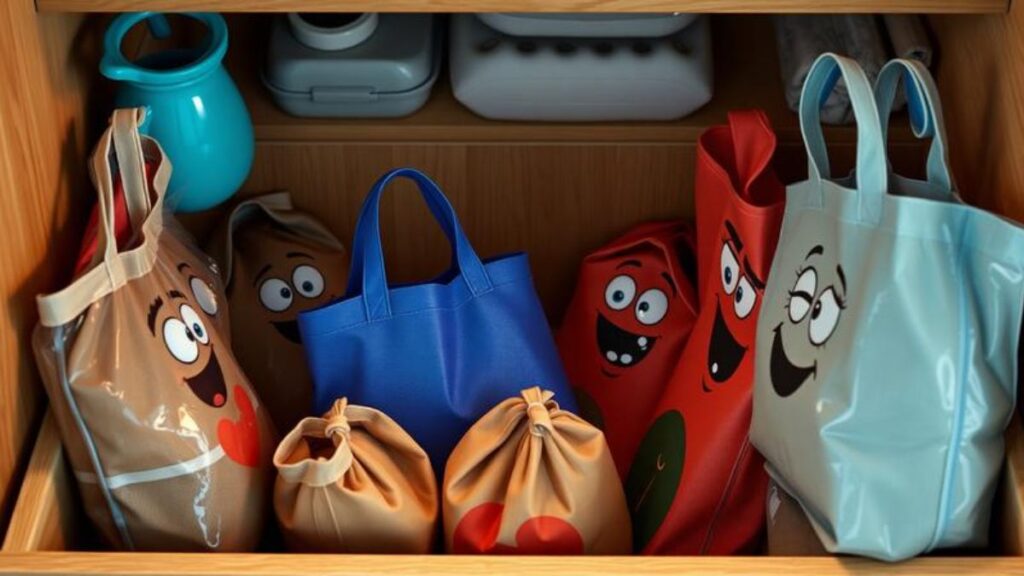
Life inside the kitchen drawer was not exciting.
Benny shared the space with six other reusable bags.
There was Greta, who constantly quoted environmental statistics.
Max, who believed he was designed for greatness.
Daisy, who remained optimistic despite spending most of her life in darkness.
And Frank.
Nobody was entirely sure why Frank was always angry.
He just was.
One afternoon, after another grocery trip ended without any of them being used, Benny finally spoke up.
“This cannot continue.”
The other bags listened.
“We were created to replace single-use bags.”
Greta nodded.
“Globally, billions of plastic bags are used every year.”
Nobody was surprised she knew that.
“We’re supposed to help reduce waste,” Benny continued.
“Instead, we’re living in a drawer.”
The room fell silent.
Even Frank seemed slightly less angry.
That night, Benny formed a plan.
If humans couldn’t remember reusable bags, the bags would remind humans.
The Reusable Bag Revolution had begun.
The first campaign was simple.
Whenever their owner prepared to go shopping, the bags would position themselves near the front door.
Unfortunately, humans possess an incredible ability to overlook obvious things.
The owner stepped over them.
Walked around them.
And once somehow looked directly at them without noticing them.
The campaign failed.
Next, the bags attempted a more aggressive strategy.
They migrated into unusual locations.
One appeared on the driver’s seat.
Another sat beside the car keys.
A third somehow ended up on the dining table.
The owner noticed.
For approximately three seconds.
Then she moved the bags back into the drawer and forgot about them again.
The revolution faced serious challenges.
Meanwhile, reusable bags across Greenfield were experiencing similar frustrations.
Community organizers.
Teachers.
Students.
Retirees.
Everyone owned reusable bags.
Very few remembered to bring them shopping.
The bags decided to unite.
Representatives from kitchens, closets, garages, and car trunks gathered for an emergency meeting.
Attendance was excellent.
Mostly because nobody had anywhere else to be.
Benny addressed the crowd.
“My fellow bags, we were created to reduce waste.”
Applause erupted.
“We were meant to replace disposable plastics.”
More applause.
“Instead, we’re decorative household accessories.”
The room gasped.
It was a harsh truth.
But it was still the truth.
The meeting produced several innovative ideas.
Some bags suggested attaching themselves to car keys.
Others proposed hanging directly from door handles.
One particularly ambitious backpack recommended a public awareness campaign.
Frank proposed replacing all shopping lists with giant reminders.
Nobody understood how that would work.
Still, it was more constructive than his usual suggestions.
The revolution’s breakthrough came accidentally.
One Saturday morning, Benny’s owner forgot her reusable bags once again.
Standing at the grocery store checkout, she watched as the cashier handed over several plastic bags.
The cashier smiled politely.
“Would you like to buy another reusable bag?”
The owner paused.
At home, she already owned at least fifteen.
Possibly more.
She honestly wasn’t sure anymore.
The realization hit her like a runaway shopping cart.
She didn’t need another reusable bag.
She needed to remember the ones she already had.
That afternoon, she placed several bags in her car.
Two near the front door.
One inside her purse.
Another beside her bicycle.
Suddenly, reusable bags became difficult to forget.
The system worked surprisingly well.
Friends noticed.
Neighbors copied the idea.
Soon, similar strategies spread throughout Greenfield.
Within months, local stores reported a significant reduction in disposable bag usage.
Residents remembered their reusable bags more often.
Schools launched awareness campaigns.
Community groups organized educational events.
Even local businesses offered discounts to customers who brought reusable bags.
The impact was noticeable.
Less waste.
Fewer disposable bags.
More sustainable habits.
The reusable bags finally felt useful.
The following year, Greenfield hosted its annual sustainability festival.
During the opening ceremony, the mayor announced a special award.
The crowd listened curiously.
“This award recognizes one of the most overlooked environmental heroes in our daily lives.”
People exchanged confused looks.
The mayor held up a reusable shopping bag.
The audience laughed.
Then applauded.
Because everyone understood.
The humble bag had quietly become a symbol of positive change.
Back in the kitchen drawer, Benny and his friends celebrated.
Not because they had become famous.
Not because they received awards.
But because they were finally doing what they were designed to do.
Helping people create better habits.
One shopping trip at a time.
Frank even smiled.
For nearly three seconds.
It was considered a historic moment.
Environmental Message
Reusable bags are a simple but effective way to reduce single-use plastic waste. While many people already own reusable bags, remembering to use them consistently is often the biggest challenge.
Small habits can create meaningful environmental benefits over time. By choosing reusable alternatives and making them part of everyday routines, individuals can help reduce waste and encourage more sustainable consumption.
Sometimes the hardest part of sustainability isn’t buying the solution.
It’s remembering to bring it with you.