She scrolls through a feed full of perfect trees and smiling faces, and for a moment the holiday looks like something everyone else can do but her. In the hallway she passes as friends trade small, awkward gifts, the exchange feels both familiar and strange.
That feeling, caught between memory and expectation, is the place where Christmas Stories for Teens come alive.
Christmas Stories for Teens are not only about nostalgia. They are about the way the season presses on the things that matter to young people: identity, relationships, and decisions that point toward adulthood.
The holidays are a lens that makes small truths brighter and small pressures heavier. For a teen, a broken ornament can be a sign of a family rift.
A canceled pageant can be a moment of personal reckoning. A snowed-in night can be a place where someone finally speaks the truth.
This article explains why Christmas Stories for Teens connect with young readers, what themes and tones work, and how to write, read, and share these stories in ways that feel honest.
You will find a reader profile, a look at the moods and stakes that define teen holiday fiction, a map of core genres and their tropes, character types, a structural blueprint writers can follow, format and style advice, reading suggestions, classroom and sharing ideas, and practical prompts.
Whether you want to read something that fits how you feel this season, or you want to write one scene that lands, this guide is written to be simple, direct, and useful.
Christmas Stories for Teens
Christmas stories for teens capture the magic, the mess, and the moments that make the season unforgettable. They let young readers laugh, reflect, and dream during the holidays.
The Snowed-In Secret
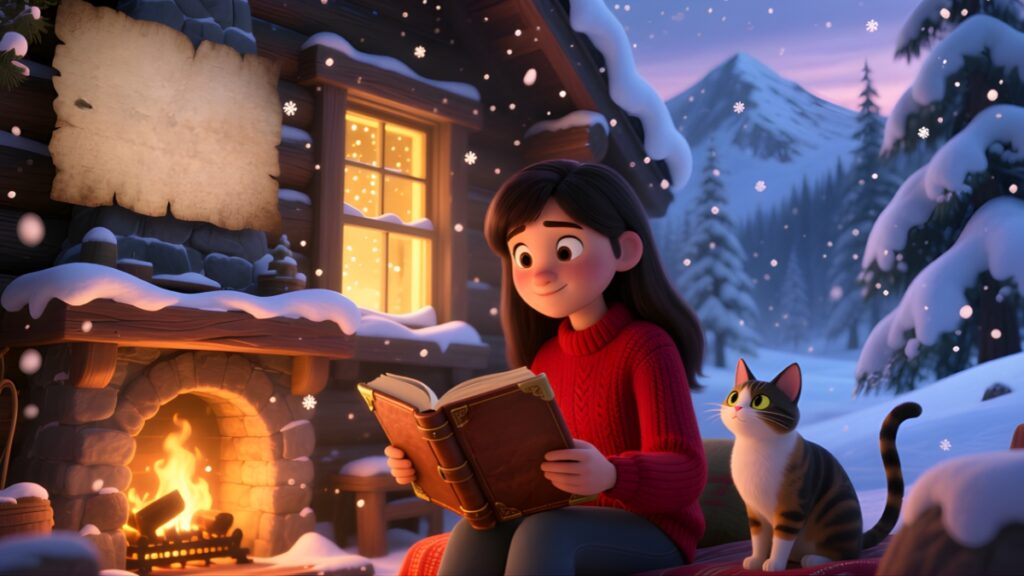
The snow started early that morning.
Maya stared out the bus window.
Flakes fell like tiny white feathers.
She shivered. Not from the cold. From the thought of spending three days in a cramped cabin.
Liam sat across from her.
He stared down at his hands. Silent, brooding.
They hadn’t spoken much before. Not since the first week of school.
And now they were paired for the trip.
Maya rolled her eyes.
The bus jolted.
A patch of ice.
The driver swore under his breath.
Maya tightened her grip.
The cabin came into view.
Small. Wooden. Cozy-looking.
But with the storm outside, it seemed tiny and fragile.
Inside, the smell of pine hit her.
Cinnamon from the kitchen mingled with wet coats and snow boots.
The other students were already unpacking.
Some argued over beds.
Others laughed, oblivious to the growing wind outside.
Liam just dropped his bag.
“Great,” Maya muttered.
He didn’t respond.
They were assigned chores.
Maya got the kitchen.
Liam got the fireplace.
Neither wanted to talk.
The first night was long.
The wind howled.
Snow pounded against the windows.
Maya tried to read.
Liam tried to sketch.
But the storm made it impossible to concentrate.
At dinner, a tray slipped.
Soup splashed.
Liam jumped back.
“Watch it,” Maya snapped.
“I did,” he muttered.
Silence.
Then, laughter.
It was awkward. Forced. But real.
Later, they sat by the fire.
Warmth spread through the cabin.
Maya fiddled with a strand of hair.
“I hate snow,” she said quietly.
Liam didn’t answer.
“You ever been trapped somewhere?” she asked.
He shrugged.
“Yes. Once. Camping trip. Got lost for a night.”
Maya’s eyes widened.
“Really?”
He nodded.
“I didn’t tell anyone. My parents would have freaked.”
Something shifted.
They started sharing small secrets.
Like favorite books.
Or songs that made them cry.
Or fears they never admitted.
Liam showed her his sketchbook.
Mountains. Trees. Storms. Faces.
Maya realized he noticed everything.
And captured it.
The next morning, the storm was worse.
They had to clear paths to the firewood.
Cold bit at their cheeks.
Hands red, noses running.
But they laughed.
Slipped. Fell. Got back up.
They weren’t just surviving the snow.
They were surviving together.
In between chores, they talked about family.
Maya’s little brother.
Her mom’s messy kitchen.
Her dad, always traveling.
Liam spoke of his sister.
His parents.
The pressure of grades and soccer.
No one else listened like they did.
By nightfall, the cabin felt different.
Not small. Not trapped.
Safe. Warm. Alive.
A fire crackled.
Outside, the storm raged.
Inside, the bond grew.
They played games.
Board games, card games, even storytelling competitions.
Maya cheated sometimes.
Liam laughed instead of complaining.
They found joy in the smallest things.
A shared joke.
A dropped marshmallow.
A snowball through the window.
By the second day, they weren’t talking about chores anymore.
They were talking about dreams.
Future plans.
College. Travel. Art. Music.
Liam confessed he wanted to be an illustrator.
Maya wanted to travel the world.
They shared fears, too.
Fear of failing. Fear of being forgotten.
But with each confession, trust grew.
At night, they sat on the porch.
Snowflakes dusted their hair.
“Scary out here,” Maya whispered.
“But beautiful,” Liam said.
Maya smiled.
The storm lasted three days.
Three days of laughter, arguments, secrets, and quiet moments.
By the last night, the cabin felt like a little universe.
They weren’t trapped.
They were free.
Free to talk. Free to laugh. Free to be themselves.
Liam drew a picture of the cabin.
Maya added details he hadn’t noticed.
Together, they created a memory.
A secret memory.
One they wouldn’t share with anyone else.
On the final morning, the roads cleared.
The bus was ready.
Students packed quickly.
Maya and Liam carried their bags.
A glance. A smile.
No words needed.
They both knew.
The snowstorm had changed everything.
Outside, the world was bright and white.
Inside, they carried warmth.
A bond forged in snow and secrets.
It wasn’t just friendship.
It wasn’t just a crush.
It was something new.
Something rare.
As the bus pulled away, Maya looked at Liam.
He looked back.
The secret stayed between them.
A promise without words.
And they knew the memory would last far longer than the snow.
The Last-Minute Gift Swap
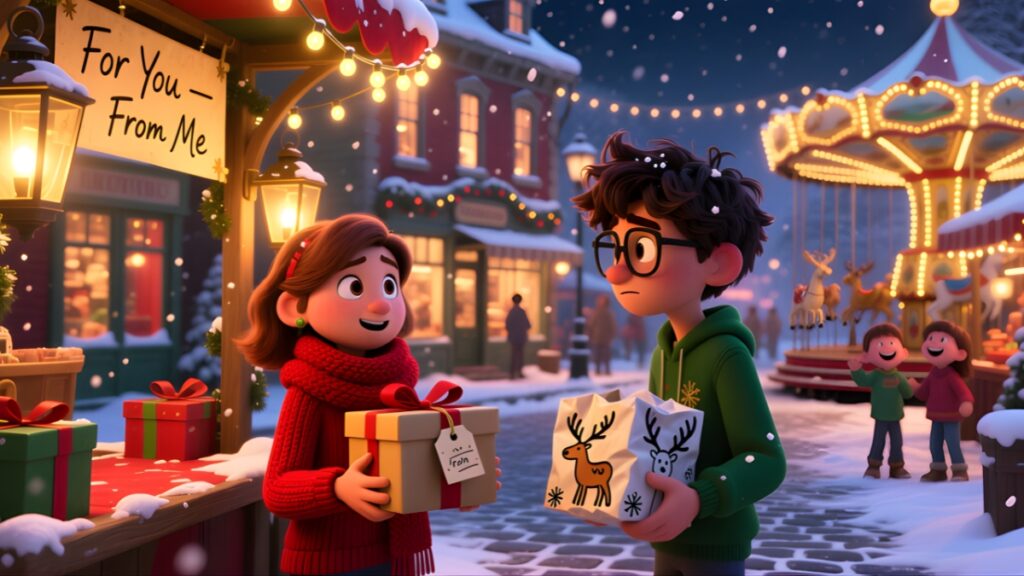
Maya froze at the mall entrance.
The smell of pine and cinnamon hit her instantly.
She sighed.
Crowds pushed past her.
Her list was empty.
Not a single gift checked off.
And it was December 23rd.
Two days until Christmas.
She groaned loudly.
Her best friend, Jamie, was impossible to shop for.
Every idea she had seemed wrong.
She wandered toward the first store.
A display of snow globes caught her eye.
Maybe.
No.
Too cliché.
Next, she checked the book store.
Jamie had read everything she loved.
Every option seemed used or boring.
Clothes? Wrong size. Wrong style. Wrong everything.
Maya sank onto a bench, her list crumpled in her hands.
“Need help?”
A voice startled her.
A tall boy stood there, holding a stack of gift cards.
She shook her head.
“Uh, no thanks,” she mumbled.
“Shopping for someone tricky?” he asked.
She gave a small nod.
Jamie, she said quietly.
“Oh,” he said. “I get that. I’ve been there.”
He smiled.
Maya frowned.
“Who are you shopping for?” she asked.
“Same problem,” he admitted.
“I’m Leo,” he said.
“I’m Maya,” she said.
They shook hands, awkwardly.
For a moment, they just stared at the bustling crowd.
Then Maya remembered she had no idea what to do next.
Leo opened his tiny notebook.
“Check this out,” he said.
Inside were sketches and notes from past gifts he’d given.
Some were perfect.
Some were disasters.
They laughed.
Maya realized she needed a plan.
A gift for Jamie had to be meaningful.
Not just something cute.
Something she remembered Jamie mentioning months ago.
A hobby Jamie joked about but never fully admitted.
It clicked.
The perfect idea.
Maya bolted toward the store that might have it.
Leo followed.
The mall felt chaotic.
Shoppers everywhere.
Holiday music blared.
The escalators were crowded.
Snow fell lightly outside, visible through the skylights.
Every aisle was a challenge.
They dodged carts and small children.
The item Maya wanted was gone.
She clenched her fists.
Then she spotted another.
Her heart raced.
She grabbed it.
Victory.
Leo cheered.
“Nice save,” he said.
They compared items.
Both had faced mall chaos.
Both had found a win.
Next, they tackled wrapping.
Maya’s fingers fumbled with tape.
Ribbons slipped.
Leo laughed at her struggles.
Finally, the gift was perfect.
Shiny paper, neat ribbon, a small note tucked inside.
She placed it under the tree at home.
The next morning, Jamie tore it open.
Her eyes widened.
“You remembered!” she shouted.
Maya grinned.
“I did,” she said.
Jamie hugged her tight.
“This is amazing,” she said.
The gift wasn’t expensive.
It wasn’t flashy.
It was thoughtful.
Every detail mattered.
Maya felt warmth spread through her chest.
The holiday wasn’t about shopping stress.
It was about moments like this.
About seeing someone you care about smile.
Later, Maya ran into Leo again.
He held his own wrapped gift.
They compared stories.
The chaos.
The near disasters.
The joy when the perfect item was finally found.
They laughed until their sides hurt.
They shared a coffee.
They talked about family.
School.
Holidays past.
Maya realized something important.
It wasn’t the perfect gift that mattered.
It was the thought behind it.
The care.
The effort.
Even the frantic search and last-minute panic were part of the magic.
The day passed in a blur of laughter and stories.
Shoppers shouted, bells rang, music played.
Maya and Leo stayed in their own bubble.
Talking, joking, sharing.
By the evening, Maya walked home.
Her bag was light.
Her heart was full.
Snow dusted the streets.
Lights twinkled in every window.
She thought about Jamie’s smile.
And about Leo.
About how a stressful, last-minute scramble had turned into something joyful.
She realized she might even look forward to gift hunting next year.
Not because it was fun.
But because it led to moments like this.
Small, real, meaningful moments.
The kind that stick in your memory.
That feel like Christmas itself.
At home, Maya set her gift by the tree.
She smiled again.
Jamie ran in to check the tree.
Gasps and laughter filled the room.
The chaos of the past two days melted away.
It didn’t matter anymore.
She had succeeded.
And learned something about herself.
About caring.
About giving.
About taking a little risk to make someone happy.
Later that evening, Maya texted Leo.
“Thanks for helping me survive the mall chaos.”
A reply came instantly.
“Anytime. Merry Christmas.”
Maya grinned.
This Christmas had been stressful.
Overwhelming.
Even exhausting.
But in the end, it was perfect.
Not because of gifts.
Not because of decorations.
But because of people.
The effort.
The thought.
The laughter.
The moments that make you feel alive.
She looked at the glowing tree.
The last-minute panic faded into memory.
And she knew she’d remember this Christmas forever.
Holiday Lights and Hidden Letters
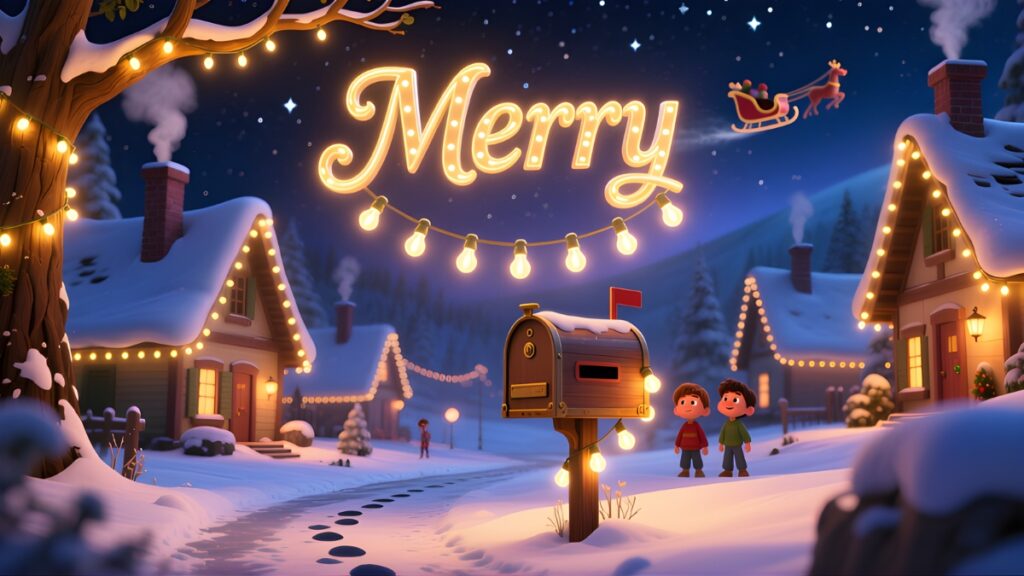
Maya walked down the street, bundled in her scarf.
The cold nipped at her cheeks.
Twinkling lights lined every house.
Each window glowed with color.
Holiday music floated through the air.
She smiled, even though her mind was elsewhere.
The school had assigned a holiday project.
Decorate the classroom.
Add lights.
Make it festive.
Simple, right?
Except for Maya, nothing felt simple.
She had been distracted lately.
Thinking about her family.
Her little brother.
School stress.
And something strange she couldn’t name.
Her first stop was the storage closet.
Boxes of decorations waited.
Tinsel.
Ornaments.
String lights tangled together like spaghetti.
Maya sighed.
She began untangling the lights.
One strand, bright blue, flickered.
She straightened it.
And noticed something odd.
A small envelope tucked behind the lights.
Curious, she pulled it out.
It was yellowed and fragile.
No stamp.
No date.
Just her name.
Maya blinked.
“Must be a mistake,” she whispered.
She opened it carefully.
Inside was a letter.
Handwritten.
Curly, neat handwriting.
It read: “Meet me under the big oak at night. Bring the lights.”
Maya frowned.
A note from who?
When?
Why?
She glanced around the empty classroom.
No one.
The lights twinkled.
She felt a thrill.
A little adventure.
Maybe harmless.
Maybe magical.
She stuffed the note in her pocket.
The next day, she told her friend Leo about it.
He raised an eyebrow.
“Hidden letters in the school closet?” he said.
“Yeah,” Maya said.
“Creepy?”
“Maybe,” she admitted.
“But kind of exciting too.”
Leo grinned.
“You’re going to check it out, aren’t you?”
Maya bit her lip.
“Maybe,” she said.
That night, she snuck out.
Snow covered the ground.
The big oak stood at the edge of the schoolyard.
Branches glittered with frost.
She carried the blue lights from the closet.
Each step crunched softly.
She scanned the yard.
Empty.
Then she noticed something.
Another envelope.
Pinned to the tree.
Her name again.
Maya’s heart thumped.
She opened it.
“Wrap the lights around the trunk. Then wait.”
Her hands shook.
She did as the note said.
The lights glowed around the tree.
A soft hum of magic seemed to fill the air.
Then she heard footsteps.
Leo emerged from behind the bushes.
“Shouldn’t you be home?” she whispered.
He shrugged.
“Curiosity got the better of me.”
They looked at each other.
Then, another figure appeared.
Small. Shadowy.
A boy, about their age.
He held an envelope.
“Finally,” he said.
Maya stared.
“Who are you?”
“I’m Ethan,” he said.
He smiled nervously.
“I used to go to this school years ago. I left letters for someone who loved the holidays as much as I did. I guess you found them now.”
Maya frowned.
“Why?”
Ethan shrugged.
“Because holidays are magic,” he said simply.
He handed her a final letter.
“The best secrets are shared with those who notice them. Merry Christmas.”
Maya blinked.
Leo grinned beside her.
“That’s… kind of sweet,” he said.
The three of them stood under the oak, snow falling softly.
Maya wrapped the remaining lights around her arms.
They twinkled.
Ethan laughed.
Leo joined in.
The moment felt perfect.
Magical, even.
They spent the next hour decorating the oak together.
Ornaments from the classroom.
Ribbons from home.
Every small touch added to the glow.
Maya realized the holiday spirit wasn’t about gifts.
Or money.
Or perfect decorations.
It was about connection.
Shared moments.
Little secrets.
Laughter.
And a feeling of belonging.
By the time they finished, the tree shone brighter than any streetlight.
Snowflakes danced in the glow.
Maya felt a warmth in her chest.
Leo smiled.
Ethan grinned.
It was a secret they shared.
A story they would always remember.
Maya felt proud.
Proud of finding the letters.
Proud of keeping the secret.
Proud of helping make the night magical.
She couldn’t wait to tell her little brother about it.
But she would save some magic for herself.
The next day at school, the tree stood in the yard.
Other students noticed.
They whispered about how beautiful it looked.
No one knew the story behind it.
Maya, Leo, and Ethan shared a glance.
Silent. Knowing.
The secret had bonded them.
They laughed quietly.
It felt like a small holiday miracle.
After class, Maya kept the letters in her pocket.
She read them again.
And again.
Every word felt special.
Every sentence felt like it had been written just for her.
She tucked them away carefully.
The rest of the day passed in a blur.
Snow fell lightly outside.
Friends talked about gifts and cookies and holiday parties.
Maya smiled.
She had something different.
A story of magic.
Of lights.
Of hidden letters.
Of new friends.
That night, she looked out her window.
The oak in the schoolyard twinkled in the distance.
Lights wrapped around it like a warm hug.
She felt grateful.
Grateful for curiosity.
For adventure.
For magic hidden in everyday places.
Maya finally understood what Ethan meant.
Holidays weren’t just about cheer.
They were about noticing small wonders.
And sharing them with the people who matter.
Leo texted her later.
“Thanks for the adventure.”
Maya smiled.
“Anytime. Merry Christmas,” she typed back.
She felt the warmth linger.
Even as snow continued to fall.
Even as the night grew quiet.
The letters had brought more than mystery.
They had brought connection.
A spark of holiday magic she would never forget.
By the end of the week, the oak had become a tradition.
Other students added decorations.
But Maya knew the true story.
The secret letters.
The hidden magic.
And the friends she had made along the way.
Even when the snow melted, the memory remained.
Bright, shimmering, unforgettable.
A story she would carry with her every Christmas.
Maya smiled again.
And for the first time that season, she felt the full warmth of the holidays.
The Christmas Dare
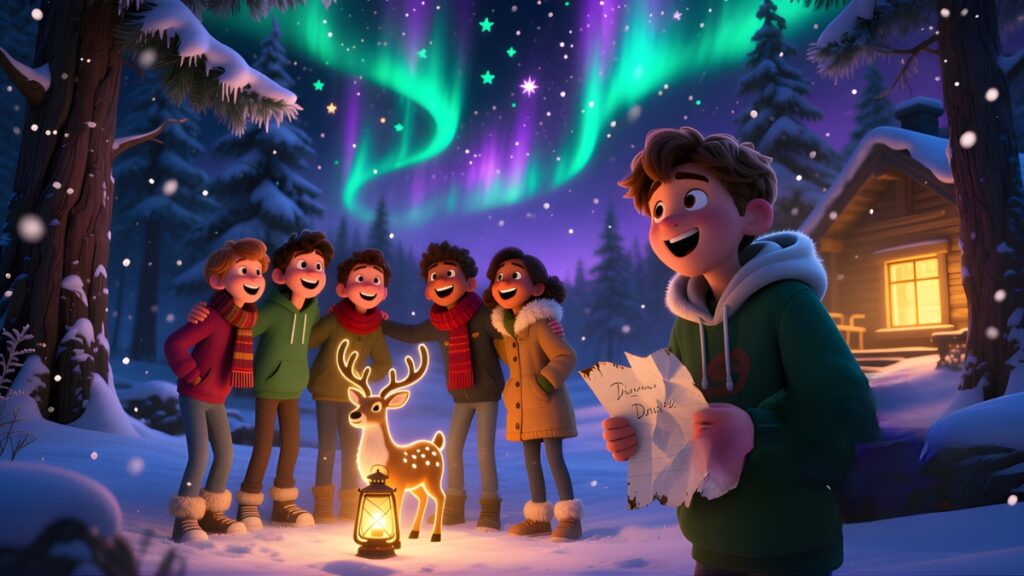
The hallway was crowded.
Students shoved past lockers.
Laughter and chatter filled the air.
Maya clutched her notebook.
She wasn’t ready.
Not for this.
Not for the dare.
“Are you in or out?” Jamie asked, smirking.
Maya froze.
Her cheeks warmed.
“I… I don’t know,” she stammered.
“You said you were brave,” Jamie teased.
“I am,” Maya said quickly.
“Then it’s time to prove it,” Jamie said.
A group of friends circled around.
Eyes gleamed.
Phones were out.
Recording.
Maya sighed.
The dare?
Simple.
Or impossible.
She had to serenade the cafeteria.
Alone.
In front of everyone.
For thirty seconds.
Her heart thumped.
“Go on,” Jamie said.
Maya gulped.
She glanced at the cafeteria door.
The lunch period was halfway through.
People were already watching.
Whispers spread.
She took a deep breath.
Stepped inside.
Everyone stopped.
All eyes on her.
Her palms were sweaty.
The song she had chosen played softly from her phone.
She pressed play.
Her voice shook at first.
Off-key.
But then…
Confidence grew.
She looked around.
Some kids were laughing.
Some were cheering.
Some even clapped along.
Thirty seconds felt like forever.
Then it was over.
Applause erupted.
Maya’s face burned.
But it was good.
She had done it.
Jamie hugged her tightly.
“You were amazing!” she shouted.
Maya grinned.
“Thanks,” she whispered.
The dare didn’t stop there.
Over the next week, friends added more challenges.
Bake cookies for the school office.
Decorate the principal’s door.
Leave anonymous holiday notes in lockers.
Maya followed each dare.
Sometimes hesitant.
Sometimes laughing the whole time.
Each one brought new surprises.
One dare led her to Leo.
He was trying to hang lights in the gym.
Maya tripped over a cord.
“Need a hand?” she asked.
Leo smiled.
“You sure do,” he said.
Together, they untangled lights.
They laughed at the mess.
String after string, knot after knot.
By the end, the gym glowed.
A hundred tiny bulbs twinkled.
Maya stepped back.
It looked magical.
Like something out of a story.
Leo gave her a thumbs-up.
“Thanks for the help,” he said.
She smiled.
Each dare taught her something.
Courage.
Humor.
The joy of small acts.
By the last day before winter break, the group gathered for the final dare.
It was the biggest yet.
A secret snowball fight.
In the middle of the courtyard.
Everyone participated.
Maya dodged and laughed.
Leo threw one carefully.
Hit her square in the shoulder.
She laughed.
Then threw one back.
A flurry of snow swirled around them.
The air smelled like pine and frost.
Everything felt alive.
When the snowball fight ended, everyone was breathless.
Faces red.
Eyes sparkling.
Jamie grinned.
“You survived all the dares,” she said.
“You were brave,” she added.
Maya looked around.
At the friends.
At the lights.
At the snow.
She realized something important.
The dares weren’t about embarrassment.
They weren’t about proving anything to anyone else.
They were about discovering courage.
About finding joy.
About sharing moments that mattered.
Maya felt proud.
Proud of herself.
Proud of her friends.
The holidays had never felt this alive.
Later that evening, she walked home.
Snow fell softly.
Her cheeks burned.
Her heart felt warm.
She thought about the dares.
The laughter.
The fun.
The tiny victories.
She realized holidays weren’t about perfection.
Or presents.
Or schedules.
They were about moments like this.
Spontaneous. Real. Magical.
The next morning, Maya and Leo met at the schoolyard.
He handed her a small gift.
Wrapped in shiny paper.
“You earned it,” he said.
Maya smiled.
“It’s perfect,” she said.
She didn’t open it yet.
She wanted the memory to last.
They walked together to class.
Snow crunched beneath their feet.
The sun glinted on ice and frost.
Everything felt new.
Fresh.
Bright.
By the end of the day, Maya knew this Christmas would stay with her.
Not because of gifts.
Not because of snow.
But because of courage.
Friendship.
Daring to try.
And the joy that came from doing something scary and fun.
The dares had changed her.
Made her braver.
Made her see the magic in ordinary moments.
She smiled, watching snowflakes fall.
The holiday lights twinkled in the school windows.
Everything was perfect.
Not because it was planned.
But because it was real.
She looked at Leo.
He smiled back.
And for the first time, Maya felt that spark.
The one that made everything feel like Christmas.
Blizzard of Wishes
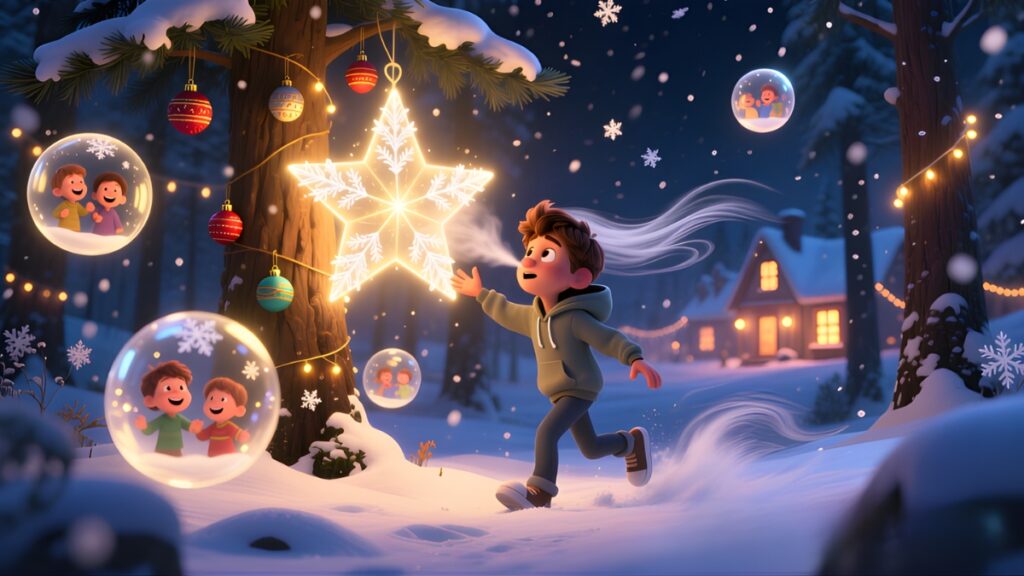
The snow started early.
Soft at first.
Then heavier.
By noon, the streets were white.
Maya peered out her window.
Her neighborhood disappeared under a thick blanket.
The wind howled.
Trees bent under the weight.
She wrapped herself in a thick scarf.
Boots laced tightly.
Gloves on.
Today was perfect for her plan.
A list of wishes.
Small wishes.
Random wishes.
For anyone who needed them.
Her little notebook lay on the table.
Each page filled with ideas.
“Bring joy,” she whispered.
Number one: Mrs. Lopez, the neighbor.
She always smiled.
But her grocery bag had torn yesterday.
Maya grabbed a spare bag.
Packed apples.
Bread.
A small note: “Hope this helps. Merry Christmas.”
She trudged through the snow.
Cold bit her cheeks.
Her boots sank into drifts.
She arrived at Mrs. Lopez’s door.
Knocked softly.
No answer.
She slipped the bag under the mat.
Ran back before anyone noticed.
Wish number two: the mailman.
He braved icy streets every day.
Maya left a thermos of cocoa on the porch.
Another note: “Thanks for delivering smiles.”
Her heart warmed despite the cold.
Wish number three: the stray cat in the alley.
She wrapped a small blanket around a tin of cat food.
Set it carefully by a fence.
It meowed softly.
Maya smiled.
Walked on.
Each wish took effort.
Time. Energy.
The snow grew heavier.
Visibility dropped.
Her cheeks burned.
Boots soggy.
But she didn’t stop.
Number four: the elderly man across the street.
Always sitting by the window.
Alone.
Maya left a small box of cookies.
A note: “Happy Holidays. You’re not forgotten.”
She paused.
Snow swirled around her.
She shivered.
But also felt alive.
The final wish: the lonely teen at school.
Maya had seen him sitting alone at lunch.
Always quiet.
Always overlooked.
She scribbled a short note.
Folded it neatly.
Left it in his mailbox.
A small gesture.
Nothing big.
But maybe enough.
On her way home, she slipped.
Snowdrift caught her off guard.
She laughed.
Fell into it.
Snow inside her gloves.
Cold on her face.
But she didn’t care.
She was on a mission.
By evening, the neighborhood glowed.
Streetlights reflected off snow.
Windows sparkled.
Maya’s heart glowed too.
She imagined smiles opening the notes.
Warm hands holding cocoa.
Eyes lighting up at cookies.
Small joys.
Simple acts of kindness.
At home, she sipped cocoa.
Boots drying.
Fingers warming.
She felt proud.
Happy.
Her family noticed.
“Why so cheerful?” her little brother asked.
Maya smiled mysteriously.
“Just a little Christmas magic,” she said.
The next day, Mrs. Lopez waved from her porch.
The mailman tipped his hat.
The elderly man smiled.
The stray cat meowed.
Even the lonely teen at school smiled shyly at her.
Maya felt warmth spread.
The magic wasn’t in presents.
Or decorations.
Or big gestures.
It was in small acts.
Thoughtful actions.
Genuine care.
Snow continued to fall.
Softly.
Relentlessly.
But it didn’t bother Maya.
She had joy to carry inside.
That evening, Leo appeared at her door.
“You’ve been busy,” he said, eyes twinkling.
Maya grinned.
“I have a list,” she said.
“Of wishes?” he asked.
“Yes,” she said simply.
They spent the evening together.
Sipping cocoa.
Sharing laughs.
Watching snow fall outside.
Maya realized something.
Christmas wasn’t about perfection.
Or fame.
Or recognition.
It was about connection.
About noticing others.
About doing small things that mattered.
Leo smiled.
“You’ve inspired me,” he said.
Maya felt warmth.
Not just from cocoa.
Or the fire.
But from the act itself.
Giving.
Caring.
The next morning, they checked on the stray cat.
It purred loudly.
Leo laughed.
Maya laughed.
And for the first time, she understood.
The blizzard outside wasn’t a problem.
It was part of the adventure.
Part of the magic.
Each snowflake a little sparkle in the world.
Each step a chance to spread joy.
They made plans for the next day.
More wishes.
More surprises.
The neighborhood buzzed quietly with excitement.
Small gestures became contagious.
Neighbors noticed.
Students noticed.
Even strangers smiled.
Maya felt proud.
Joyful.
Alive.
The snowstorm raged on.
Cold. Relentless. Beautiful.
Maya didn’t mind.
She had discovered something greater.
Magic lived in small acts.
Not gifts.
Not money.
Not fame.
In kindness.
In thoughtfulness.
In courage to care.
By the end of the week, the snow melted slightly.
But the warmth remained.
The wishes had touched lives.
People thanked her.
People smiled.
The stray cat purred on her porch.
Leo stayed close.
Together, they made plans for next year.
Bigger wishes.
More magic.
Maya closed her notebook.
Checked her list.
Every wish fulfilled.
She felt accomplished.
Proud.
Joyful.
The blizzard had brought more than snow.
It brought connection.
Laughter.
Hope.
The true spirit of Christmas.
She looked out the window one last time.
The sun reflected off the snow.
Glittering. Sparkling.
She whispered softly:
“Merry Christmas to all. And to all… small wonders.”
Her heart swelled.
She had learned the secret.
Holidays were about giving.
Not receiving.
About noticing.
About caring.
And she would carry this lesson forever.
Even when the snow melted.
Even when the blizzard ended.
Even when the holidays passed.
The warmth of wishes stayed.
Bright. Shimmering. Magical.
And in that moment, Maya knew she had truly experienced Christmas.
The Ghost of Christmas Past…Again
Maya hated the stairs.
The old house groaned with every step.
Lights flickered.
Shadows danced on the walls.
She shivered.
Not from cold.
From the stories she’d heard.
The house had been empty for years.
Some said it was haunted.
Maya rolled her eyes.
Of course it was haunted.
Every year, her mom told the same story.
“Ghosts of Christmas past visit those who need them,” her mom whispered.
Maya laughed.
Until now.
Tonight, the wind howled.
Snow pressed against the windows.
And Maya felt… uneasy.
Her little brother peeked around her shoulder.
“Are you sure we should be here?” he asked.
Maya shrugged.
“I’m fine,” she said.
But her hands trembled.
The first room was dusty.
Cobwebs hung like tinsel.
A cold draft whispered through.
Then she heard it.
A soft giggle.
Not from her brother.
Not from anyone else.
Maya froze.
“Hello?” she called.
No answer.
The snowstorm outside rattled the windows.
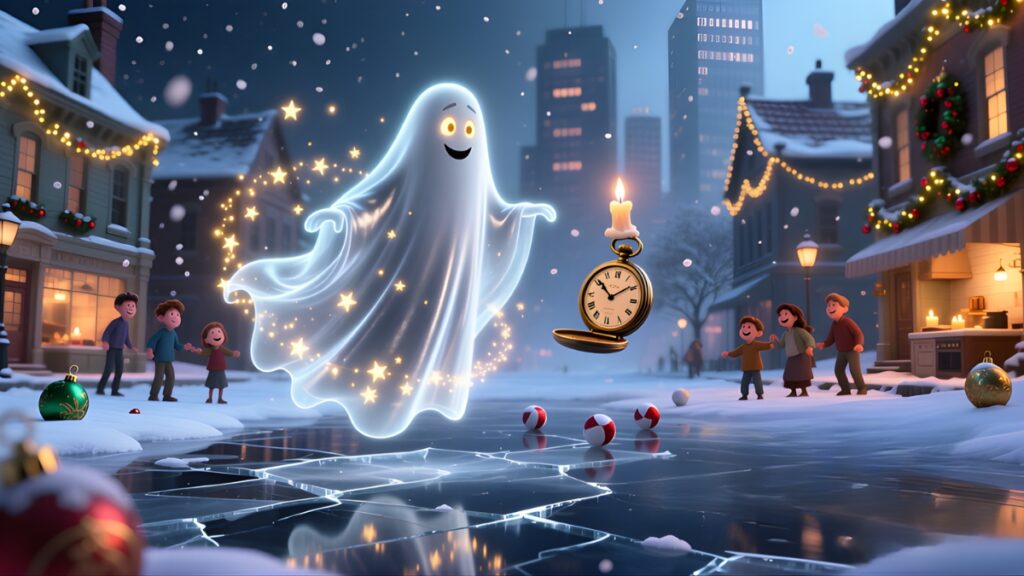
Suddenly, a figure appeared.
Transparent. Glowing faintly blue.
A ghost.
Maya gasped.
“You… you’re real,” she whispered.
The ghost tilted its head.
“Finally,” it said.
Maya blinked.
“Who… what are you?”
“I’m your past,” the ghost said simply.
Maya frowned.
“My past?”
“Yes,” it said.
“I visit teens who need to remember. Or forgive.”
Maya’s heart thumped.
She wasn’t sure if she wanted to remember.
Or forgive.
The ghost reached out.
“Come,” it said.
Maya hesitated.
Then followed.
Suddenly, she was elsewhere.
The living room of last Christmas.
Her family sat together.
The fire burned bright.
Her little brother laughed.
Her parents exchanged gifts.
Maya froze.
She remembered that day.
The argument.
The harsh words.
The gift she had refused to open.
Tears came unbidden.
The ghost floated beside her.
“You see,” it said.
“Memories shape us. But they don’t define you.”
Maya nodded slowly.
“I… I wish I could change it.”
The ghost smiled softly.
“You can. Not the past. But how you move forward.”
Suddenly, they were elsewhere again.
A different Christmas.
One she had avoided remembering.
She was sitting alone.
Watching neighbors celebrate.
Feeling left out.
Sad. Angry. Lonely.
“I hated this day,” Maya admitted.
The ghost’s glow brightened.
“Your feelings mattered. And still do. But you survived. You grew.”
Maya took a deep breath.
“I guess so,” she said quietly.
The ghost waved its hand.
They were in a snowy field now.
Lights twinkled from a nearby town.
Children laughed.
Families celebrated.
Maya realized she had missed these moments.
Obsessed with her mistakes.
Her regrets.
The ghost nodded.
“See? You are ready to forgive yourself.”
Maya’s chest felt lighter.
She wanted to cry.
But also laugh.
The ghost gestured to a small house nearby.
“Go inside,” it said.
Maya stepped in cautiously.
Inside, a small tree glowed.
Ornaments gleamed.
Stockings hung perfectly.
Her family sat around.
Smiles bright.
“Welcome back,” her mom said softly.
Maya felt warmth flood her.
The ghost whispered: “You are ready.”
She nodded.
“Thank you,” she said.
The ghost faded slowly.
“Remember,” it said.
“Christmas is about love. Forgiveness. Moments that matter.”
Maya blinked.
She was alone now.
But not afraid.
Snow fell outside.
Soft and silent.
Her little brother tugged her sleeve.
“Are we leaving?” he asked.
She smiled.
“Yes,” she said.
But inside, she felt different.
Light.
Free.
Ready for the holidays.
The next morning, Maya helped her mom decorate.
Tree lights twinkled.
Ornaments shone.
Her brother placed the star on top.
Maya laughed.
It felt real.
Joyful.
She thought of the ghost.
And the lessons it had taught her.
About herself.
About family.
About forgiveness.
She wrapped gifts carefully.
With thought and love.
Every ribbon mattered.
Every note mattered.
Later, she walked outside.
Snow crunched beneath her boots.
Neighbors waved.
Children played.
Maya waved back.
She noticed small details.
Lights in windows.
Wreaths on doors.
Laughter carried through the air.
She realized Christmas wasn’t about perfection.
Or regrets.
Or past mistakes.
It was about now.
Moments you could create.
And share.
That afternoon, Maya visited her grandparents.
She told stories.
Shared cookies.
Helped hang decorations.
Her heart swelled with warmth.
The snowstorm outside didn’t matter.
Or the cold.
She had discovered something greater.
Magic lived in love.
In forgiveness.
In shared laughter.
That night, she left cookies and milk for Santa.
Carefully arranged.
With a note: “Thank you for reminding me of the magic.”
Maya smiled.
She felt the past settle softly behind her.
Not forgotten.
But forgiven.
The ghost had been right.
Christmas was about love.
Connection.
And moving forward.
Snowflakes danced outside her window.
Soft. Silent. Beautiful.
Maya curled up with a blanket.
Thoughts of her past visits played in her mind.
But she felt lighter.
Braver.
Ready.
The next morning, her family gathered for Christmas breakfast.
Her parents smiled.
Her little brother chattered endlessly.
She laughed.
Gifts were opened.
Stories told.
She felt grateful.
For family.
For lessons learned.
For the ghost.
And for herself.
Later, she walked outside.
Snow fell gently.
The world glittered.
She breathed deeply.
Maya knew she would never forget this Christmas.
Or the lessons it had taught her.
Forgiveness.
Courage.
Love.
She glanced at the sky.
Soft snowflakes landed on her hair.
On her coat.
On her gloves.
And she whispered softly:
“Merry Christmas to all… and to all, a new beginning.”
Her heart was full.
Joyful.
Light.
Ready for the year ahead.
The ghost would visit again, perhaps.
Or maybe not.
It didn’t matter.
Maya carried the lessons inside her.
Forever.
The house seemed warmer now.
Snow fell silently outside.
Lights twinkled in every window.
And Maya knew the true magic of Christmas.
It wasn’t in gifts.
Or snow.
Or lights.
It was in love.
In forgiveness.
In the moments you created and shared.
Maya smiled.
And for the first time that season, she felt truly at peace.
A Playlist for the Heart
Maya sat on her bed.
Headphones in.
Phone in hand.
The world outside was gray.
Rain dripped against the window.
She scrolled through her music app.
Nothing felt right.
Every song seemed empty.
She sighed.
The holidays were coming.
But she didn’t feel festive.
Not yet.
Her best friend Jamie burst in.
“Finally!” she exclaimed.
“Why are you hiding here?”
Maya shrugged.
“Not hiding. Just… thinking.”
Jamie rolled her eyes.
“Thinking too much, probably. Come on. Help me make a playlist.”
Maya raised an eyebrow.
“A playlist?”
“Yes! For the school dance. For everyone to enjoy. For… us.”
Maya smiled faintly.
Maybe it could be fun.
They opened a new playlist.
The first song went on.
Upbeat.
Cheerful.
Jamie danced in the small space.
Maya laughed.
Her fingers hovered over the screen.
“What about this one?” she asked.
Jamie nodded.
“Perfect. Add it.”
The playlist grew.
Song by song.
Each one a memory.
A thought.
A feeling.
Maya noticed something.
She felt lighter.
The music carried her.
Every beat, every lyric, seemed to speak to her.
She added a song about friendship.
One about courage.
One about hope.
Her heart felt warmer.
Jamie hummed along.
Then, Maya saw it.
A song she had forgotten.
From last year.
A song that reminded her of Leo.
Her crush.
Her secret.
She hesitated.
Then added it.
Jamie glanced at her.
“You okay?”
Maya nodded.
“Yeah. Just… remembering.”
The playlist grew.
They added funny songs.
Serious songs.
Songs that made them think.
Songs that made them laugh.
By the end of the night, it was long.
Complete.
Ready to share.
The next day at school, they tested it.
Playing through the classroom speakers.
Students perked up.
Heads turned.
Smiles spread.
The playlist worked.
Everyone tapped their feet.
Sang along quietly.
Maya felt proud.
It wasn’t just music.
It was connection.
A way to share feelings.
Without saying a word.
Later, Leo stopped by.
“Did you make this?” he asked.
Maya nodded.
He smiled.
“Can I suggest one more song?”
She grinned.
“Of course.”
He added it.
Then stayed to listen.
The music played softly around them.
Snow fell outside the windows.
The holiday lights reflected off the classroom floor.
Maya felt a flutter in her chest.
The playlist wasn’t just for the dance.
It was for her.
For Leo.
For Jamie.
For the moments they shared.
Every song told a story.
Every beat carried a memory.
By evening, the playlist had grown even longer.
Students whispered.
Danced quietly.
Shared secrets through lyrics.
Maya realized something important.
The playlist wasn’t just music.
It was a bridge.
A way to connect hearts.
To share feelings.
To make moments last.
Later, she walked home with Leo.
Rain had turned to snow.
Soft flakes fell around them.
He handed her a small note.
“Your playlist… it’s amazing,” he said.
Maya smiled.
“Thanks,” she whispered.
They walked in silence.
Snow crunching beneath their feet.
Lights twinkled from houses.
Music hummed softly in her headphones.
Maya realized she wasn’t alone.
She never had been.
The playlist had reminded her.
Of friendship.
Of love.
Of courage.
Of hope.
That night, she sat on her bed again.
Headphones in.
Phone in hand.
But this time, she listened differently.
Not scrolling.
Not searching.
Just listening.
To the memories.
The feelings.
The magic of the holidays.
The playlist for the heart.
It wasn’t about perfection.
Or the perfect song.
Or impressing anyone.
It was about sharing.
Caring.
Connecting.
And Maya felt warm inside.
Even as snow continued to fall.
Outside, the world was cold.
But inside, the music carried warmth.
She added one last song.
A song about beginnings.
About joy.
About love.
And for the first time that season, Maya smiled.
Truly smiled.
The playlist was complete.
And so was she.
She knew this Christmas would stay with her.
Long after the music ended.
The songs, the feelings, the memories.
All stitched together.
A soundtrack of friendship, love, and courage.
Maya looked out her window.
Snowflakes danced in the streetlights.
Music echoed softly in her ears.
She whispered quietly:
“Merry Christmas to all… and to all, a song in your heart.”
Her heart swelled.
Joyful.
Bright.
Full.
The playlist had done more than entertain.
It had reminded her what mattered.
Connection.
Love.
Moments shared.
And she carried that feeling with her forever.
Understanding the Teen Reader
Teens are at a unique stage of life. Their thinking has grown more abstract. They can imagine futures and multiple outcomes. That development comes with intense identity work.
Teens test boundaries, try on different roles, and sort through what matters to them. Emotionally, they notice when something is real.
They can tell when a voice sounds staged or when an adult writer is trying too hard to be “hip.” That makes authenticity crucial.
What teens look for in stories changes with this development. They want believable voice and dialogue. They want characters who make both smart and messy choices. They often prefer moral ambiguity to simple good-versus-bad answers.
Comedy matters. So does catharsis. A funny line that lands in a tense moment can help a reader breathe and then return to the deeper feeling.
Holiday stories for teens usually pivot on the same concerns that shape other YA fiction. Friendship dynamics, first romance, family strain, social standing, mental health, part-time work, and social media life all show up.
But the holidays amplify those concerns. Reunions reopen history. Traditions press on identity. Scarcity and grief feel more visible under bright lights and public cheer.
For writers and editors, the practical rules are simple. Respect the reader’s intelligence. Do not condescend. Use realistic diction without imitating fleeting slang. Let dialogue reveal character. Show interior life in small, sensory moments.
Give the teen space to be conflicted rather than forcing a tidy moral. Most of all, be precise with details that make scenes feel lived in.
What Makes a “Teen” Christmas Story? The Mood and Stakes
The shift from children’s holiday stories to teen holiday stories is a shift of stakes. For younger readers, the plot often turns on immediate delight and wonder.
For teens, a holiday moment can be future-facing. Choices made over winter break can affect relationships, educational plans, or a sense of self that lasts long after the lights come down.
Tone and atmosphere are flexible but important. Holiday settings carry two kinds of energy at once.
On one hand, there is comfort: warm drinks, string lights, the ritual of songs and food. On the other is pressure: family obligations, awkward reunions, and social comparisons.
The same scene can feel cozy or claustrophobic depending on what the characters bring to it. A small town snowfall can mean romance or the need to confront someone you have been avoiding.
Good teen holiday fiction balances sensory detail with realistic tension. Names, textures, smells, and small actions anchor the reader.
At the same time, those sensory details should sit against an emotional friction that matters to the character. The holiday should feel necessary to the story, not just a pretty background.
Relatable scenes are often quiet and precise. An awkward family dinner where a parent asks about life plans. A late-night drive to a tree lot after a fight with a best friend.
A teen working a seasonal job and watching a rumor spread on social media. These scenes read true because they connect the ordinary pressures of teen life to the symbolic weight of the holiday.
Short hooks that work for teens are often small and direct. For example: “She came home for winter break and found his note pinned to the tree.”
Or: “The storm stranded them at a diner, and the truth came out with the coffee.” Keep the stakes clear, but keep the voice grounded.
The Big Three: Core Genres and Tropes
Teen holiday stories range from cozy romances to heartfelt dramas and dark winter tales. Knowing the core genres and tropes helps writers create stories that resonate.
Holiday rom-coms: comfort and wish fulfillment
Core tropes: snowed-in meet-cute, fake dating, mistaken identity, secret admirers.
Why it works: light, hopeful stories let teens imagine connection without heavy consequences.
Tone and pace: witty, forward-moving, comedy lowers tension before a satisfying close.
Notes: sharp dialogue, small rituals like playlists or recipes, linked or dual-perspective formats work well.
Blue Christmas: contemporary drama and realism
Core tropes: grief, economic strain, housing instability, strained or blended families, found family.
Why it works: validates hard holidays and offers coping, recognition, and realistic repair.
Tone and pace: quiet, reflective, character-driven, often cathartic.
Notes: focus on small acts of kindness and plausible, grounded solutions.
Darker fantasy, horror, and mythic winter: symbolic and tense
Core tropes: winter folklore, Krampus, haunted holidays, bargains with spirits, cursed gifts.
Why it works: explores guilt, shame, and identity through metaphor and folklore.
Tone and pace: atmospheric, tense, often allegorical, endings can be ambiguous but emotionally true.
Notes: use season and setting to heighten dread or wonder, let supernatural elements probe real stakes.
Character Archetypes and Relationship Maps
Certain character types appear often in teen holiday fiction. They are useful because they embody the tensions the season brings. Use them as starting points, then twist them to avoid clichés.
The Cynic
A teen who resists holiday sentiment. Their arc usually involves learning to be open without losing agency.
The Holiday Enthusiast
The person who loves tradition. Their faith in ritual can be genuine or a defense against loneliness.
The Hometown Ex
An old lover or friend whose presence forces the protagonist to confront past choices.
The Caregiver Parent
A well-meaning adult who tries to fix things but can also cause frustration. Their limitations create stakes.
The Outsider Teen
A newcomer or someone who feels different from family and community. They are well placed to see hypocrisy and possibility.
Relationship dynamics to explore
Sibling rivalry that reveals buried affection. Parent-child reconciliation where both sides admit failure and hope. Friendship betrayal and repair. Forgiveness that is practical rather than theatrical. Found family forming between teens and non-parental adults.
Subverting archetypes
Keep characters alive by flipping expectations. Make the holiday enthusiast brittle or anxious. Let the cynic act with quiet compassion. Make the ex a true ally rather than a villain. These reversals feel real because people are rarely only one thing.
A simple mapping exercise
For each main character, list five items: a fear, a desire, a secret, a small habit, and a token object. Then draw lines showing who depends on whom and who owes what. That map will find places where conflict and tenderness meet.
Structural Blueprint: How to Write or Analyze a Teen Holiday Story
Below is a practical blueprint you can use to build a story or to assess a draft. The beats are flexible, but they help keep the emotional logic clear.
Setup and inciting incident
Open with the ordinary world of the teen. Show a routine and then introduce the disruption. Typical inciting incidents include a travel delay, a family ultimatum, a lost tradition, forced proximity, or an unexpected inheritance.
Begin with a sensory detail: the sound of a heater, the taste of burnt pastry, the light in a closed shop.
Writing exercise: Write a 200-word opening where your protagonist is packing to leave for the holidays and finds something that complicates leaving.
First act: establishing stakes and relationships
Introduce the social map: friends, romantic interests, parents, siblings, workplace, and community rituals. Make clear what the protagonist wants and what they fear.
Use behavior to show relationships. A parent who buttons a coat with trembling hands says a lot with a small gesture.
Anchor the holiday world with rituals or settings: a local tree lighting, a mall charity event, a family recipe. These details give the plot places to meet.
Midpoint: the magic or the reveal
Midpoint events raise the stakes and pivot the character. It can be literal magic, like a wish that seems to work, or a reveal, like a secret note, an exposed lie, or a sudden loss.
The midpoint should complicate the protagonist’s path in a way that forces an inward choice.
Consider three possible midpoints for your story. Choose the one that most directly tests the protagonist’s central flaw.
Tests and deepening conflict
After the midpoint, escalate pressures. External tests might include a job loss, a public humiliation, a family crisis, or a deadline.
Internal tests are about fear and habit: the unwillingness to ask for help, the need to control, or the impulse to flee.
Subplots should reflect the main arc. A friendship split can mirror the protagonist’s difficulty trusting adults. Keep scenes purposeful so every chapter moves toward the climax.
Climax: public or personal reckoning
The climax often happens in a public, ritualized moment: a school concert, a town pageant, a tree lighting, or a viral social moment.
The protagonist must make a visible choice that shows growth. This is when the moral learning becomes action: telling the truth, accepting help, or refusing to perform.
Make the choice specific and hard. The climax should not feel like a reward for good behavior but like the result of real inward change.
Resolution: hope, not perfection
Resolutions in YA holiday stories often offer a plausible, hopeful step rather than total closure. Relationships improve gradually.
The protagonist might start a new tradition, reach out to someone, or accept a plan that is imperfect but honest.
Mini exercise: Write a final scene of 150 to 200 words that focuses on a single sensory image to signal emotional change.
Formats and Styles that Work
Holiday stories can fit many forms. The format you choose affects voice, pacing, and audience.
Short stories
One-sitting reads work well in anthologies and classrooms. Targets: 2,000 to 6,000 words. Focus on a single emotional pivot and use a strong image or motif.
Novellas and serials
Longer forms allow deeper arcs and multiple points of view. Novellas are a good fit when you need room to show repair. Serialized stories work well on newsletters or platforms where readers expect episodic content.
Diary and epistolary formats
Letters, text chains, or public posts are useful when the voice is intimate. They can show the difference between private feeling and public performance.
Graphic novels and illustrated fiction
Visuals make the mood immediate, especially for younger teens or reluctant readers. Repeating visual motifs across panels creates emotional echoes.
Audio and multimedia
Podcasts and audio dramas can use sound to make the season feel real. A creaking door, distant carols, or a cough at midnight add depth.
Tone and voice advice
Keep language tight and true. For short forms, focus on immediacy. For longer forms, let scenes breathe. For epistolary formats, ensure the reason for the form is plausible. For graphics, use visual detail to carry subtext.
Writing Tips and Prompts for Creators
Fresh ideas and practical tips can turn holiday moments into memorable teen stories. Prompts help spark creativity and keep writing fun.
Voice and dialogue
Listen closely to how teens actually speak. Avoid pasting in slang that dates the story quickly. Instead, aim for rhythm: short lines when tension is high, quieter sentences when a character thinks alone. Let dialogue do more than move plot. Use it to reveal fear, humor, and habit.
Showing versus telling
Use small, specific details to show interior life. A character who straightens a crooked ornament before a family photo tells you about control and care more than a paragraph stating those facts. Pick sensory anchors and return to them.
Plot and pacing
Balance heavy emotional beats with lighter moments. A comic scene after a sad one keeps readers engaged and believable. Make sure every scene either complicates the character or shifts a relationship.
Diversity and sensitivity
Portray diverse holiday practices honestly. Avoid making cultural traditions set dressing. When you write outside your experience, consult sensitivity readers and be precise in names, food details, and rituals.
Sharing, Discussion, and Classroom Use
Holiday stories are easy to share and teach. Their ritual nature makes them useful for building conversation and empathy.
Ways to share
- Book clubs with short reads are quick and inclusive.
- Social media challenges where teens post short scenes or microfiction can be a way of sharing in small doses.
- Reading nights at libraries or classrooms let students hear different voices aloud.
- Writing exchanges where classmates swap scenes and give limited feedback build craft without pressure.
Discussion questions
- Who changes the most and how does the story show it?
- What would you have done in the protagonist’s place?
- How does the holiday setting change stakes?
- Which object or image carried the most meaning and why?
Assignment ideas for teachers
- Rewrite a classic holiday scene from a teen point of view.
- Create a class anthology of flash fiction around one theme, such as “lost things” or “small kindnesses.”
- Adapt a short story into a podcast episode, focusing on sound design and dialogue.
- Pair stories from different cultures and ask students to compare rituals and family dynamics.
Accessibility and safety
Provide audio versions, large print, and translations when possible. When asking students to share personal writing, offer opt-out options and create a clear, supportive feedback structure. Avoid forcing public performance of pieces that deal with private trauma.
Benefits of Christmas Stories for Teens
Holiday fiction offers several kinds of gain.
Emotional
These stories help teens process grief, loneliness, and joy. They invite readers to witness complicated feelings and not feel alone in them.
Social
Shared stories create rituals. Recommending a book or reading aloud can be a way to start conversations with family or friends.
Cognitive
Holiday plots often involve moral choices and identity questions. Engaging with them helps teens practice perspective taking and problem solving.
Creative
Seasonal prompts motivate writing, art, and music projects. The holiday vocabulary gives clear, repeatable symbols writers can use to sharpen metaphor and scene work.
Practical
Stories can be used in counseling, classrooms, and community programs. They give concrete ways to talk about difficult topics and model small acts of care.
Conclusion
Christmas stories for teens do important work. They are not simply nostalgia. They let young readers test identity, feel permission to be complicated, and practice moral choices in a safe space.
The season adds ritual and urgency, but the heart of a good holiday story is the same as any good YA story: believable characters, necessary stakes, and an honest voice.
If you read one short holiday story tonight, notice a single detail that lingers. If you write, try the 200-word snowed-in opening and see what truth the scene wants to reveal. If you teach, invite students to reframe a classic scene and make it their own.
Write or read one small thing. Share it with someone. Holiday stories do not promise perfect endings. They promise company, and that is often enough.