Hey, if you’re a teacher scrolling through this on a tough day (or even a good one), I get it. Teaching can feel exhausting, underappreciated, and sometimes straight-up thankless. But every now and then, you hear a story that hits you right in the feels and reminds you: what you do actually changes lives. Like, really changes them.
These Inspirational Short Stories for Teacher are short, true(ish—drawn from real accounts shared by students and teachers over the years) stories of educators who went the extra mile. They’re not fairy tales; they’re proof that your patience, kindness, and belief in a kid can echo for decades.
7 Inspirational Short Stories for Teacher
Unlock the power of perseverance with 7 short, inspirational stories that will leave you motivated and ready to conquer anything. From overcoming challenges to achieving dreams, these stories remind you that anything is possible!
Teddy Stoddard and the Bracelet

It was the first day of fifth grade.
Mrs. Jean Thompson stood at the front of her classroom.
She looked out at the bright, eager faces and smiled.
“Boys and girls,” she said warmly, “I love each and every one of you the same.”
She wanted to start the year right.
She meant it in that moment.
But teachers are human.
Some children steal your heart right away.
Others make it harder.
Teddy Stoddard was one of the harder ones.
He sat near the front, shoulders hunched.
His clothes were wrinkled and too small.
His hair looked like it hadn’t seen a comb in weeks.
His face was often dirty.
He rarely spoke.
When he did, his voice was low and unsure.
His papers came back covered in red marks.
Incomplete sentences.
Careless mistakes.
Low effort.
The notes from his previous teachers were harsh.
“Teddy is slow.”
“Unmotivated.”
“Trouble.”
“Does not try.”
Mrs. Thompson found herself responding the same way.
She called on him less.
She corrected him more sharply.
She sighed when she graded his work.
It was subtle.
But children notice everything.
Teddy pulled back even more.
One afternoon the math lesson went badly.
Teddy stared at the board like it was written in another language.
Mrs. Thompson felt frustration rise.
After the bell, she decided to look deeper.
She pulled his permanent file.
The folder was thick.
She opened it slowly.
What she read changed her.
Teddy’s mother had been sick for a long time.
Cancer.
She fought hard.
But she died the year before.
Teddy’s father was broken by grief.
He worked long hours.
He barely spoke to his son.
Teddy went to live with an aunt and uncle.
They had their own children.
They had little patience left for a grieving boy.
Home was no longer safe or warm.
The reports from earlier years told a different story.
“Eager learner.”
“Helpful.”
“Enjoys school.”
That little boy had disappeared.
Mrs. Thompson sat at her desk long after everyone left.
The file lay open.
Her heart felt heavy.
She had been judging a child who was hurting deeply.
She had been adding to his pain.
She made a quiet promise to herself.
She would change.
The change started small.
She greeted Teddy by name every morning.
Her voice was soft and genuine.
When he gave a shaky answer, she nodded.
She encouraged him to try again.
She praised the tiniest efforts.
“Teddy, your handwriting is so much neater today.”
“Great job staying focused.”
She gave him extra time on assignments.
She offered help without making him feel small.
Christmas came.
The classroom smelled of pine and sugar cookies.
Paper chains hung from the ceiling.
A small tree sparkled in the corner.
The children brought gifts one by one.
Most were sweet and simple.
Handmade cards.
Scented soap.
A pretty bookmark.
Then Teddy walked up slowly.
He held a package wrapped in brown grocery-bag paper.
Old tape held it together in layers.
The class watched.
A few children giggled quietly.
Mrs. Thompson unwrapped it carefully.
Inside was an old rhinestone bracelet.
Several stones were missing.
Next to it sat a small bottle of cheap perfume.
The kind that comes from the discount bin.
The giggles grew louder.
Mrs. Thompson didn’t hesitate.
She slipped the bracelet onto her wrist.
She turned it so the light caught the remaining stones.
“Teddy,” she said clearly, “this is beautiful. Thank you.”
She opened the perfume.
She dabbed a little on her wrist.
She closed her eyes and smiled.
“And this smells wonderful. Like spring flowers.”
The room went quiet.
Teddy’s eyes lifted.
For the first time all year, he looked straight at her.
Something soft flickered there.
The next day Teddy stayed after the bell.
The other children ran out to recess.
He waited until the classroom was empty.
He walked up slowly.
“Mrs. Thompson,” he said in a small voice.
“Yesterday… you smelled just like my mom used to.”
He swallowed.
“And the bracelet… it looks really pretty on you.”
He looked down, then up again.
“I’m sorry my work has been so bad.”
“I’ll try harder now.”
“I promise.”
From that day everything began to shift.
Mrs. Thompson stayed late to help him.
She found books he might enjoy.
She celebrated every small win.
A finished homework page.
A correct answer in class.
A smile shared with another child.
Teddy started raising his hand.
He started laughing at recess.
His grades climbed.
First from failing to average.
Then to above average.
By spring he was one of the strongest students.
More than that, the quiet, withdrawn boy came back to life.
On the last day of school he gave her a note.
“You are the best teacher I ever had.”
“Thank you for making me feel important.”
The next year a note appeared under her door.
“Dear Mrs. Thompson, I wanted you to be the first to know.”
“I will be graduating second in my high school class.”
“Love, Teddy.”
A few years later another note came.
“Dear Mrs. Thompson, college is hard but I like it.”
“Thank you again.”
“Love, Teddy Stoddard.”
Time passed quietly.
Then one spring a formal invitation arrived.
Theodore J. Stoddard, M.D., was getting married.
He asked Mrs. Thompson to come.
He asked her to sit in the front row.
The seat usually saved for the mother of the groom.
His note read simply:
“You are the only family I have now.”
“Dad died last year.”
She attended the wedding.
She watched the boy she once almost gave up on walk down the aisle.
He was a doctor now.
At the reception he found her.
“Mrs. Thompson,” he said quietly.
“Thank you.”
“Thank you for believing in me when I couldn’t believe in myself.”
“Thank you for making me feel important.”
“You changed everything.”
She hugged him tightly.
Tears ran down her face.
“Teddy,” she whispered.
“You have it backward.”
“You changed me.”
“I didn’t really understand teaching until I met you.”
That’s the whole story.
No magic.
No big speeches.
Just one teacher who stopped writing a child off.
She chose kindness over frustration.
She wore a broken bracelet like treasure.
She praised cheap perfume like fine fragrance.
Small acts.
Huge forever change.
If you have a Teddy in your classroom right now—quiet, messy, angry, distant—maybe this is your moment.
Pull the file.
Ask a gentle question.
Listen.
Believe a little longer.
Because that one decision can echo for decades.
That child might grow up to save lives.
Or raise kind children.
Or simply live with the knowledge that someone once saw them as worth it.
And maybe one day you’ll get your own note.
Or maybe you won’t.
Either way, the light you helped turn back on stays on.
That’s what teaching really is.
From “Retard” Label to Teacher of the Year

Patty’s earliest memories weren’t of playgrounds or birthday parties.
They were of cold hallways and locked doors.
At age 2 she was removed from her biological mother.
Placed in an institution meant for “unwanted” children.
The building also housed adults and kids with severe mental disabilities.
Patty lived there for seven years.
Seven years of routine, rules, and labels.
The staff called her “mentally retarded.”
That phrase followed her like a shadow.
It wasn’t a diagnosis based on testing.
It was a catch-all for kids society didn’t know what to do with.
She learned to stay quiet.
To avoid attention.
To survive.
Then, when she was 9, everything shifted.
A young couple—barely 22 themselves—decided to adopt.
They had no children yet.
They wanted to build a family.
They became Patty’s 37th foster placement.
This time it stuck.
They brought her home.
They gave her a bedroom.
A real bed.
Clothes that fit.
Meals at a table.
But the school system didn’t know her new story.
Records were spotty.
The label stuck.
They placed her in a special education school.
A separate building for “retarded” children.
Patty spent three years there.
She hated every day.
The work felt babyish.
The other kids had very different needs.
She felt trapped.
She felt insulted.
She begged her new parents: “Please let me try regular school.”
They listened.
They asked questions.
They pushed.
The director of the special ed program pushed back harder.
She sat across from Patty’s foster parents.
She spoke plainly.
“Once a retard, always a retard.”
Those six words burned into Patty.
They were meant to discourage.
Instead they fueled her.
She thought: I’ll show you.
I’ll show everyone.
After weeks of meetings and paperwork, the transfer happened.
Fourth grade.
A new public school.
A new classroom.
A new teacher: Margaret Leonard.
Margaret was in her 30s or 40s—experienced, calm, kind-eyed.
She didn’t get a long briefing on Patty.
Just the basics: new student, special ed background, catch-up needed.
But Margaret looked at Patty and saw a girl.
Not a label.
Not a file.
A girl with big brown eyes that had seen too much.
A girl who flinched at loud voices.
A girl who tried to disappear into her desk.
Margaret decided right away: this child needs belief more than anything.
She started simple.
A warm hello every morning.
A smile that reached her eyes.
She sat Patty near the front—not to watch her, but to help her feel included.
When Patty struggled with reading or math, Margaret didn’t sigh or move on.
She knelt beside the desk.
She explained again.
Slower.
With different words.
She used her hand to guide Patty’s finger along the page.
She praised effort, not just answers.
“Good thinking, Patty.”
“You’re getting it—keep going.”
Patty felt something new.
Someone expected her to learn.
Someone thought she could.
Margaret went further.
She stayed after school sometimes.
She offered weekend help.
Not mandatory tutoring—just “if you want extra time, come by.”
Patty wanted it.
She showed up.
Saturday mornings in the empty classroom.
Margaret brought snacks.
They worked on phonics.
Multiplication tables.
Sentence structure.
Margaret never rushed.
She never made Patty feel stupid.
She shared stories from her own life.
Little failures she had overcome.
She said things like: “Everyone learns at their own pace. Yours is just fine.”
Patty soaked it up.
For the first time, school felt safe.
She started raising her hand.
She finished homework.
Her handwriting improved.
Her reading sped up.
She caught up.
Then she pulled ahead.
By the end of fourth grade, Patty was on grade level.
More than that—she felt smart.
She felt seen.
Margaret became her anchor.
Patty thanked her constantly.
Small notes.
A drawn picture.
A shy hug at the door.
Margaret just smiled.
“You’re doing the hard work, Patty. I’m just here to cheer.”
High school arrived.
Patty entered mainstream classes.
She graduated on time.
Proud.
Then college.
She chose education.
Elementary and Special Education—dual degree.
She wanted to reach kids like her.
Kids labeled too soon.
Kids told they couldn’t.
She volunteered 80 hours at an institution.
The same kind she grew up in.
She walked those halls again.
This time as a helper.
She read to residents.
She played games.
She listened.
She gave them the dignity no one gave her as a child.
Years passed.
Patty taught.
Classroom after classroom.
She brought empathy that can’t be taught in college.
When a student came in angry or withdrawn, she didn’t judge.
She asked quiet questions.
She offered extra time.
She believed.
In 2013, the envelope arrived.
“Teacher of the Year” for her district.
She stood on stage.
Tears in her eyes.
The award felt huge.
But she thought of Margaret.
If Margaret were still alive (Patty doesn’t know for sure), she would have been in the audience.
Clapping hardest.
Patty still says it out loud sometimes.
“I owe who I am today to her compassion and dedication.”
Margaret didn’t perform miracles.
She didn’t have fancy programs or grants.
She had time.
She had weekends.
She had belief that refused to quit.
She tutored patiently.
She spoke kindly.
She saw potential when others saw permanent limits.
That was enough.
Patty caught up.
Graduated.
Earned degrees.
Became a teacher.
Won awards.
Helped hundreds of kids.
The old director’s words—”once a retard, always a retard”—still echo in Patty’s mind on hard days.
But they sound small now.
Patty proved them wrong.
Not with anger.
With persistence.
With love poured back into the world.
If you’re a teacher reading this right now…
Look around your room.
There might be a Patty sitting in one of those desks.
Thick file.
Trauma history.
A label someone else stuck on.
Quiet.
Behind.
Told too many times they can’t.
You don’t need to fix their whole life.
You just need to show up like Margaret did.
Greet them warmly.
Kneel by their desk.
Explain again.
Praise the effort.
Offer extra time.
Believe—really believe—they can.
Work weekends if it helps.
Use kind words every single day.
Because you might be their Margaret Leonard.
You might be the one who helps them prove the doubters wrong.
You might be the reason they graduate.
Go to college.
Become a teacher.
Or simply walk through life knowing someone once saw them as capable.
As worthy.
Patty still carries that gratitude.
Decades later.
She honors Margaret by being that teacher every day.
The 2013 award was wonderful.
But the deepest reward?
Turning her own pain into purpose.
Helping kids rewrite their stories.
Because one teacher took a chance.
Refused to accept a cruel label.
And changed everything.
That’s the quiet power you hold.
In your classroom.
Right now.
Every day.
The Boy Who Couldn’t Speak—Until Someone Stayed Late

The fifth-grade classroom buzzed most days.
Kids laughed.
They talked over each other.
They shouted answers.
But one boy stayed silent.
He sat in the back row.
Head down.
Hands fidgeting.
His name was Alex.
(Names change in these stories to protect privacy, but the heart stays true.)
Alex had severe speech and writing issues.
Words got stuck in his throat.
Sentences broke apart.
His handwriting was barely readable.
He couldn’t explain what he needed.
Simple things—like going to the bathroom—became emergencies.
He had accidents.
Often.
The other kids stared.
Some whispered.
Some laughed.
Teachers tried at first.
They asked questions.
They waited.
But frustration built fast.
“Use your words, Alex.”
“Come on, try harder.”
They moved on.
They had twenty-five other kids.
Lesson plans.
Tests.
Schedules.
Alex felt smaller every day.
He stopped raising his hand.
He stopped trying.
He just waited for the bell.
Most teachers sighed when they saw his name on the roster.
They read his file.
“Severe expressive language delay.”
“Possible apraxia or neurological issue.”
“Needs speech therapy—limited progress.”
They did what they could in class.
But extra time?
After school?
That felt like too much.
Then came Ms. Rivera.
She was new to the school that year.
Fifth-grade general ed with a background in special education.
She didn’t skim files.
She read every note.
Every comment.
Every failed goal.
She watched Alex the first week.
He never spoke above a whisper.
Even “here” during roll call came out mumbled.
He wet his pants twice.
The class giggled.
Alex cried silently.
Ms. Rivera didn’t scold.
She cleaned up quietly.
She gave him fresh clothes from the nurse.
She said softly, “It’s okay. Accidents happen. We’ll figure this out together.”
Alex looked up once.
Surprised.
No one had said that before.
Ms. Rivera made a plan.
She talked to the speech therapist.
She talked to his parents.
They were tired.
Worried.
Hopeful but worn down.
She asked for permission.
“Could I stay after school with him? A few days a week?”
They said yes.
Gratefully.
The work started small.
After the bell.
Empty classroom.
Just the two of them.
Ms. Rivera sat on the floor.
Eye level.
No pressure.
She started with sounds.
Not words yet.
Just single sounds.
“Buh.”
He tried.
It came out garbled.
She smiled.
“Good try. Again?”
“Buh.”
Better.
She clapped softly.
“Perfect! That’s a strong B.”
They did it for ten minutes.
Then stopped.
No homework.
No pressure.
Just practice.
The next day, more sounds.
“Mmm.”
“Puh.”
“Tuh.”
Alex’s face relaxed a little.
He wasn’t being rushed.
He wasn’t failing.
He was learning.
Weeks passed.
Sounds became syllables.
Ba.
Ma.
Pa.
Then simple words.
“Ball.”
“Man.”
“Cat.”
Ms. Rivera used pictures.
Toys.
Mirrors so he could see his mouth.
She modeled slowly.
She waited.
She never finished his sentences.
She never looked impatient.
Alex started to smile.
Small ones.
After a month, short phrases.
“I want water.”
It took effort.
His face strained.
But the words came.
Ms. Rivera cheered quietly.
“Alex! You said a whole sentence!”
His eyes widened.
He repeated it.
Faster.
Prouder.
The after-school sessions became daily.
Ms. Rivera stayed late.
She missed her own plans sometimes.
But she never complained.
She told him stories.
About her own struggles learning piano as a kid.
How she messed up notes.
How practice made it better.
“You’re doing the same thing,” she said.
“Every try makes your voice stronger.”
Alex believed her.
A little more each day.
Spring arrived.
The class was studying animals.
They had to present.
Most kids groaned.
Alex froze.
Ms. Rivera pulled him aside.
“You don’t have to do the whole thing.”
“But let’s try one sentence.”
“In front of the class.”
He shook his head.
Scared.
She didn’t push.
She said, “Only if you’re ready.”
The day came.
Kids shared.
Then Alex’s turn.
He stood slowly.
Hands shaking.
Ms. Rivera stood beside him.
Not in front.
Just close.
She nodded.
He took a breath.
The room quieted.
Everyone watched.
Alex opened his mouth.
“I… like… dogs.”
The words came clear.
Not perfect.
But full.
A sentence.
His own.
The class erupted.
Cheers.
Claps.
“Whoa, Alex!”
“You did it!”
Even the kids who teased before smiled.
Alex’s face lit up.
Red.
Proud.
Tears in his eyes.
Ms. Rivera hugged him.
Quietly.
“I’m so proud of you.”
After school that day.
She said, “You deserve a celebration.”
She took him to a nearby diner.
Nothing fancy.
Just burgers.
Fries.
Milkshakes.
They sat in a booth.
Alex talked.
Short sentences at first.
Then longer.
He told her about his dog.
About wanting to play soccer.
About being scared before.
Ms. Rivera listened.
Really listened.
She asked questions.
She laughed at his jokes.
For the first time in his life.
Someone believed in him enough.
To stay late.
To practice daily.
To celebrate small wins.
To take him to dinner.
Just because.
That belief stuck.
Alex carried it home.
He carried it to middle school.
He kept working.
Speech therapy.
Extra practice.
By high school.
He spoke in class.
He joined debate.
He made friends.
He still had challenges.
But the silence was gone.
The shame was gone.
Years later.
He tracked down Ms. Rivera.
She had moved schools.
But he found her.
He sent a letter.
“Thank you for staying late.”
“Thank you for believing.”
“Thank you for dinner.”
“I speak every day now.”
“Because of you.”
Ms. Rivera cried reading it.
She kept the letter in her desk.
A reminder.
On tough days.
When kids struggle.
When progress feels slow.
She thinks of Alex.
She thinks of the cheers.
The milkshake.
The boy who couldn’t speak.
Until someone stayed late.
This story isn’t rare.
Teachers do this quietly.
Every year.
Extra minutes.
Extra patience.
Extra belief.
They don’t always get letters.
They don’t always get thank-yous.
But the impact lasts.
Forever.
If you’re a teacher.
And there’s a child in your room.
Who can’t get the words out.
Who frustrates easily.
Who hides.
Stay late sometimes.
Start with sounds.
Praise the effort.
Celebrate the sentence.
Believe.
Because you might be the one.
Who unlocks their voice.
Who gives them dinner.
Who changes everything.
One patient afternoon at a time.
That’s the real magic of teaching.
The Shy Theatre Kid Who Found Belonging

High school felt endless to Sarah.
Hallways too bright.
Lockers too loud.
People too sure of themselves.
She moved through it all like a ghost.
Head down most days.
Hoodie up even in summer.
She spoke in monosyllables.
Avoided eye contact.
Ate lunch alone in the library corner.
Friends were few and distant.
She felt worthless.
Like she was taking up oxygen no one wanted her to breathe.
No one seemed to notice her absence.
She didn’t expect them to.
One rainy Tuesday after lunch.
She skipped the cafeteria noise.
Wandered toward the arts wing.
Heard music leaking from under a door.
Pushed it open just a crack.
The theatre room smelled like dust, wood, and possibility.
Kids were scattered across the stage.
Some laughing.
Some arguing over lines.
Some hugging like old family.
A poster on the wall: “Auditions this week – No experience needed. All are welcome.”
Sarah almost closed the door.
Then a voice cut through gently.
“You’re welcome to come in.”
Ms. Elena Harper stood at the edge of the stage.
Late 40s.
Colorful scarf.
Glasses on a chain.
Eyes that looked kind without trying.
Sarah froze.
“I… I was just looking.”
Ms. Harper smiled—no big production.
“Looking is a great place to start.”
“Grab a seat if you want. We’re just running lines.”
Sarah slipped into the back row.
Sat on her hands.
Watched.
No one stared.
No one asked questions.
Ms. Harper kept glancing back.
Not pushy.
Just aware.
The next day Sarah came back.
Same seat.
Same silence.
Ms. Harper greeted her by name—she’d asked someone.
“Hi, Sarah. Glad you’re here again.”
No expectations.
Sarah stayed longer that time.
Helped coil extension cords after rehearsal.
Learned how to hang a blackout curtain.
Felt useful.
Invisible still—but in a safe way.
Weeks turned into months.
She started helping more.
Painting sets.
Sorting props.
Running lines with quieter kids.
Ms. Harper noticed.
Never made a fuss.
Just said, “You’re good at this, Sarah. Steady hands. Good eye.”
Small words.
Big impact.
Spring musical auditions arrived.
The show: a classic with big chorus numbers.
Ensemble spots open—no solos required.
Sarah’s heart raced just thinking about it.
Ms. Harper found her folding programs one afternoon.
Quiet moment.
“You thinking about trying out?”
Sarah shook her head fast.
“I can’t. I don’t sing. Or dance. Or… talk in front of people.”
Ms. Harper sat beside her on the floor.
Legs crossed like a kid.
“You don’t have to be loud to be on stage.”
“You just have to be there.”
“I can help you prepare. After school. Just us. No one else has to know.”
Sarah looked up.
Eyes wide.
“Why?”
Ms. Harper shrugged lightly.
“Because I see something in you.”
“Quiet strength.”
“Depth.”
“Worth putting on a stage—even if it’s just the back row.”
Sarah swallowed.
Nodded once.
They practiced in the empty theatre after hours.
Ms. Harper played piano softly.
Taught breathing.
Simple scales.
No judgment when notes cracked.
Honest feedback wrapped in kindness.
“Your tone is warm—lean into that.”
“Your movement is careful—use it to show thoughtfulness.”
Sarah sang louder each time.
Moved freer.
Audition day came.
She stood on the stage.
Lights blinding.
Voice shaking.
Sang a short piece.
Moved through basic choreography.
It wasn’t perfect.
But it was hers.
Ms. Harper clapped from the seats.
Gave notes later.
Gentle.
Specific.
Sarah made ensemble.
Small part.
Big victory.
Opening night.
Backstage nerves hit hard.
Sarah wanted to run.
Ms. Harper found her in the wings.
Hand on shoulder.
“Breathe with me.”
“You belong here.”
“Even if you mess up—it’s safe.”
Sarah stepped out.
Lights hit.
Music swelled.
She sang.
Quiet at first.
Then stronger.
The audience didn’t single her out.
But she felt seen.
For real.
Over four years Sarah grew.
Freshman to senior.
Ensemble to featured roles.
She learned lines.
Memorized blocking.
Hit marks.
But more than that.
Ms. Harper taught deeper lessons.
Self-love: “Talk to yourself the way you’d talk to a friend having a bad day.”
Hard work: “Show up on time. Give your best. Even when no one’s watching.”
Inclusion: “Every person in this room has value. Make sure they know it.”
The theatre became family.
No cliques.
No drama (well, not the bad kind).
Mistakes were celebrated.
“Fail big tonight—means you’ll learn bigger tomorrow.”
Sarah made real friends.
Ones who checked in when she was quiet.
Who celebrated small wins.
Who stayed late to run lines.
Off stage she changed.
Smiled in class.
Spoke up.
Applied for college scholarships.
Theatre education major.
She wanted to pass it on.
Graduation night.
Sarah found Ms. Harper backstage.
Hugged her longest.
Tears.
“Thank you for seeing me when I couldn’t see myself.”
Ms. Harper held tight.
“You did the growing.”
“I just opened the door.”
Years later.
Sarah was teaching drama in another state.
Got the message.
Ms. Harper sick.
Cancer.
Aggressive.
The alumni network exploded.
Group chats.
Emails.
Old cast photos shared.
Memories poured in.
Sarah flew home.
Others drove.
Flew.
Took trains.
Dozens showed up.
Organized meals.
Fundraisers.
Rides to chemo.
A benefit performance.
They filled the old auditorium.
Current students performed scenes Ms. Harper had directed.
Alumni joined.
Sarah took the stage again.
Spoke a monologue she’d done senior year.
Voice steady.
Strong.
Ms. Harper watched from the front row.
Wheelchair.
Blanket.
Tears shining.
After curtain.
Sarah knelt.
“You built this family.”
“You gave me belonging when I had none.”
Ms. Harper whispered.
“You all gave me purpose.”
“Every single one of you.”
Treatment continued.
Slow.
Hard.
But Ms. Harper fought.
Returned part-time.
Still directing.
Still believing in kids.
Sarah visits when she can.
Brings coffee.
Photos.
Stories from her own classroom.
She tells her students:
“I was the shy kid in the back.”
“My teacher saw spark where I saw nothing.”
“She made a safe place.”
“It changed my life.”
This pattern repeats.
In black-box theatres.
Community halls.
School stages everywhere.
Shy kids wander in.
Teachers notice.
They offer small jobs.
Honest notes.
Safe mistakes.
They teach belonging.
Self-worth.
Courage.
And years later.
When the teacher needs support.
The kids return.
Grown.
Grateful.
Rallying.
Because one safe space.
One person who believed.
Changed everything.
If you’re teaching now.
And a quiet kid lingers at your door.
Unsure.
Invisible.
Don’t push.
Invite.
Give a small task.
Praise truthfully.
Make failure safe.
Build the space.
You might be their Ms. Harper.
You might spark the bloom.
On stage.
In life.
Forever.
And someday.
They’ll come back.
Show up.
Remind you.
You mattered.
Deeply.
That’s the enduring gift of teaching theatre.
Of teaching anything.
See the spark.
Fan it gently.
Watch it become fire.
One quiet kid at a time.
Math Trauma Turned into a Mission
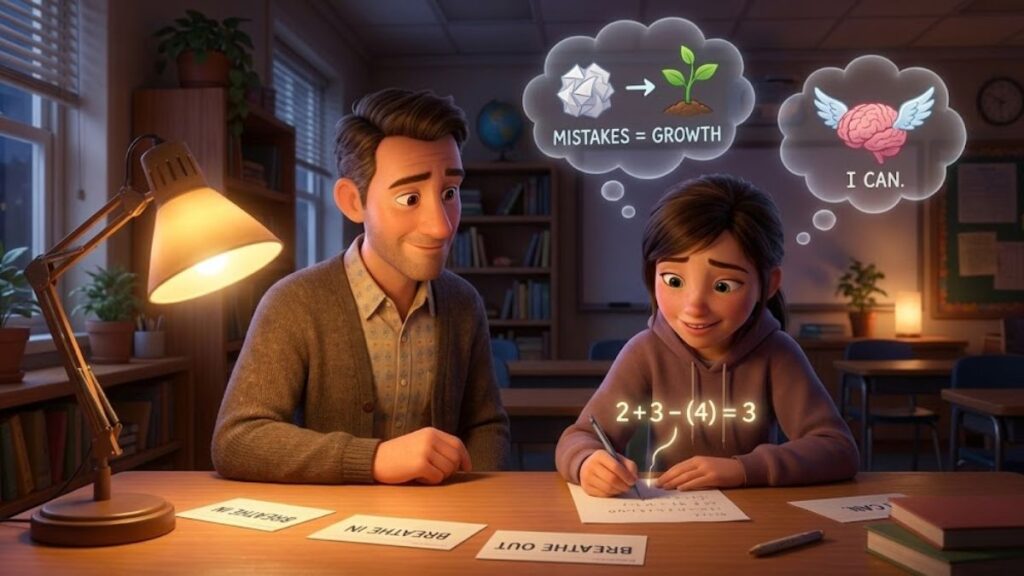
Vanessa still remembers the exact moment math turned from subject to nightmare.
She was fifteen, sitting in grade 10 algebra.
The teacher called her to the board for a simple quadratic equation.
Her hand shook holding the chalk.
The class watched.
She stared at x² + 5x + 6 = 0.
Blank.
Nothing.
The silence stretched.
Someone whispered “just factor it.”
She couldn’t.
She handed the chalk back.
Sat down.
Face burning.
That was the beginning.
By grade 11, the fear had roots.
She failed the course.
Summer school didn’t help.
Retook it the next year.
Same room.
Same posters.
Same sinking feeling.
Failed again.
The report card landed like a slap.
Parents didn’t yell.
They just looked tired.
Disappointed.
Vanessa internalized it all.
“I’m broken.”
“I’m dumb at this.”
“I’ll never get it.”
She avoided numbers everywhere.
Grocery receipts made her anxious.
Budgets felt impossible.
Career ideas shrank.
No engineering.
No finance.
No science.
She felt hopeless.
Trapped by something she couldn’t name.
Math anxiety wasn’t a buzzword yet.
But the symptoms were textbook.
Racing heart.
Sweaty palms.
Mind going white.
It wasn’t lack of intelligence.
It was trauma wired into every calculation.
Most teachers saw the repeated failure.
Saw “needs improvement.”
Offered worksheets.
Suggested after-school help.
But Vanessa felt exposed.
Judged.
Like the problem was her.
Then Mr. Daniel Reyes arrived.
New to the school.
Assigned the repeat class.
He looked ordinary.
Mid-30s.
Button-down shirts.
Quiet smile.
But he taught differently.
Day one.
No syllabus dive.
No diagnostic test.
He passed out index cards.
“Write one honest sentence: How does math make you feel?”
No names.
Anonymous.
Vanessa wrote:
“Like I’m going to throw up and fail forever.”
He collected them.
Read several aloud.
Hers included.
His voice stayed even.
“These feelings are real and common.”
“Math anxiety affects millions.”
“It’s not about being ‘bad at math.’”
“It’s about the brain associating numbers with danger.”
“We’re going to change that association.”
“Slowly. Safely.”
Vanessa’s shoulders dropped a fraction.
Someone named the monster.
He didn’t promise As.
He promised safety.
He rewrote class norms.
No timed drills for the first month.
Mistakes went on the “Growth Wall”—anonymous examples everyone learned from.
He called wrong answers “data points.”
Not failures.
He shared his story early.
“I failed calculus twice in college.”
“Thought I wasn’t cut out for teaching math.”
“A professor sat me down.”
“Asked about my feelings, not my scores.”
“Helped me see the fear was the block—not my brain.”
Vanessa listened.
Really listened.
He gave individual check-ins.
After class.
Two minutes.
“How’s your anxiety level today? 1–10?”
“If it spikes, signal me. We pause.”
He taught 4-7-8 breathing.
In four.
Hold seven.
Out eight.
She practiced under her desk during lessons.
He let her use scrap paper for doodles when panic rose.
He broke every topic into micro-steps.
One example.
One variation.
One try.
Celebrated tiny wins quietly.
“You factored that correctly. That’s your brain doing the work.”
No over-the-top praise.
Just ownership.
He assigned “Math Memory Maps.”
Write every math memory—good, bad, neutral.
Vanessa filled three pages.
Kindergarten number lines felt fun.
Grade 3 timed tests felt like punishment.
Grade 7 public shaming for wrong answers.
Mr. Reyes read privately.
Wrote notes back.
“Your history explains the fear.”
“It does not predict your future.”
He helped reframe.
Wrong answer? “What information does this give us?”
Stuck? “Let’s name the feeling, then try one small step.”
She started seeing patterns in her panic.
Not just in polynomials.
Progress crawled.
But it moved.
Midterm.
She sat.
Breathed.
Finished every question.
Score: 71.
She stared at the paper.
Cried in the bathroom.
Happy, shocked tears.
Mr. Reyes saw her in the hall.
Nodded.
“That 71 means more than any perfect score.”
“You showed up for yourself.”
She passed the year.
C+.
Felt like gold.
Graduated.
Went to community college.
Took math electives.
Voluntarily.
Mr. Reyes wrote her letters of recommendation.
She visited him sometimes.
Kept in touch via email.
Years on.
She finished a bachelor’s in education.
Focused on learning support.
Specialized in math anxiety.
Started small.
Tutoring after school.
One nervous middle-schooler at a time.
She used his techniques.
Breathing.
Reframing.
Growth walls.
Kids relaxed.
Smiled.
Said “I get it now.”
Word spread.
Parents called.
Schools invited her for workshops.
She launched an online presence.
“The Math Guru.”
Nickname stuck.
She wrote a book.
“Rewiring the Fear: Healing Math Trauma Step by Step.”
Personal story first chapter.
Mr. Reyes’s methods throughout.
Student testimonials.
Practical tools: breathing scripts, autobiography prompts, “data point” journals.
It gained traction.
Teachers bought copies.
Parents read it aloud to crying kids.
She started “Math Without Fear” podcast.
Weekly episodes.
Interviews with anxious adults.
Tips for parents.
Listener stories.
Thousands downloaded.
Messages poured in:
“I’m 45 and still panic at gas pumps. Your episode helped.”
“My daughter cried less this week.”
“Thank you for saying it’s not stupidity.”
Vanessa answered many personally.
Cried reading them.
Always credited Mr. Reyes.
Tracked him down a decade later.
Same classroom.
Same school.
Invited him on the podcast.
He came.
On air.
She teared up.
“You saw the blocks, not the scores.”
“You gave me safety when I had none.”
“You changed my life.”
Mr. Reyes spoke softly.
“You did the rewiring, Vanessa.”
“I just held the flashlight.”
Her work expanded.
School district partnerships.
Online courses.
Corporate workshops for adults.
Helping thousands.
Kids who once hid homework.
Adults who avoided promotions.
She turned deepest shame into mission.
Because one teacher saw trauma.
Offered empathy.
Gave time.
Reframed everything.
The ripple keeps going.
If you teach math.
Or any subject.
And a student freezes.
Eyes wide.
Hands trembling.
Shame radiating.
Pause.
See the fear first.
Name it.
Breathe with them.
Break it tiny.
Celebrate the effort.
Believe the block can move.
You might be their Mr. Reyes.
You might spark the healer.
The tutor.
The author.
The voice for thousands.
One safe moment at a time.
Vanessa keeps his first note framed.
“Your past explains. It doesn’t define.”
Reads it when doubt creeps.
Then records another episode.
Tutors another kid.
Writes another page.
Helps another heart heal.
Because someone once helped hers.
And the mission spreads.
Quietly.
Powerfully.
Forever.
Benny’s Turnaround from Expulsion
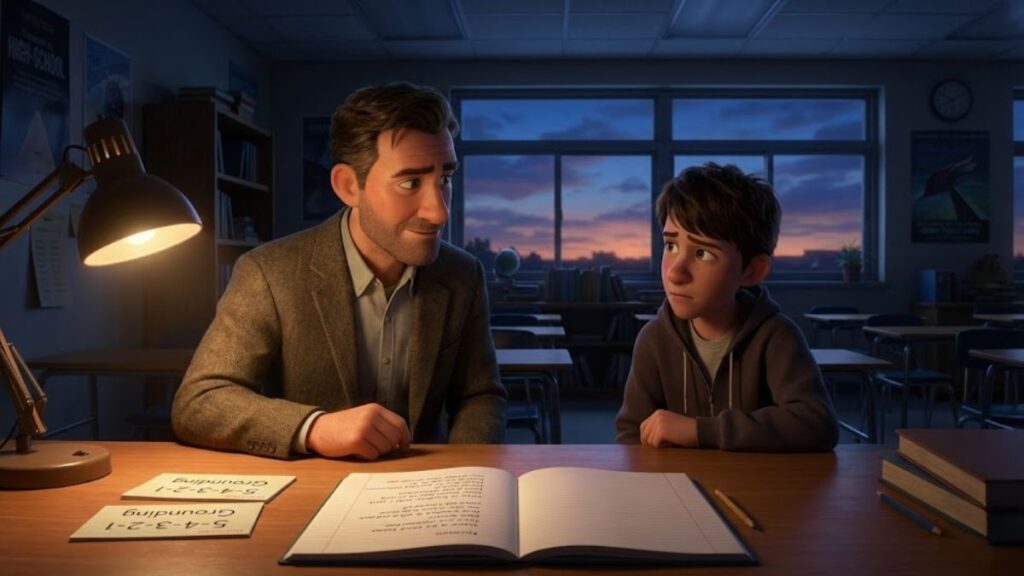
Benny turned seventeen feeling like he was already disappearing.
Junior year had become a slow-motion crash.
He rolled into first period twenty minutes late most mornings.
Eyes bloodshot from whatever kept him up.
Hands unsteady as he dropped his backpack.
Clothes carried the faint, unmistakable smell of weed mixed with cheap body spray trying to cover it.
In the staff lounge, teachers traded the same updates.
“Benny again.”
“Positive on the last random test.”
“Dad bailed years ago.”
“Mom’s pulling double shifts at the hospital—barely home.”
“He’s heading for the exit.”
The school had protocols.
Warnings.
Parent conferences that never happened.
In-school suspensions.
Out-of-school suspensions.
Each one pushed him further out.
Benny felt the distance growing.
Part of him welcomed it.
No more pretending he cared.
No more failing in front of people who expected better.
Just fade away.
Then came the incident.
A shoving match in the parking lot after school.
Someone said something about his mom.
Fists flew.
Security broke it up.
The next morning: principal’s office.
Drug-dog alert on his locker earlier that week.
Positive for THC.
Papers already prepared.
Expulsion hearing scheduled.
Benny sat across from the administrator.
Numb.
Staring at the floor.
He’d seen it coming for months.
The principal spoke evenly.
“We’ve exhausted options.”
“Recommendation is expulsion effective immediately.”
Benny nodded once.
Ready to sign.
But Mr. Carlos Mendoza was in the room.
Senior English teacher.
Late 40s.
Always in the same navy blazer with frayed elbows.
Quiet reputation for never raising his voice.
He’d taught Benny sophomore year.
Remembered the kid who lingered after class to borrow books.
Who wrote raw, honest poems about absent fathers and empty houses.
Who once admitted he liked reading because it let him escape.
Mr. Mendoza had watched the slide.
The absences.
The glassy eyes.
The sarcasm turning bitter.
He hadn’t looked away.
When the principal asked for final signatures.
Mr. Mendoza spoke.
“I’d like a word alone with you first.”
In the hallway.
He looked the principal in the eye.
“I’m not signing yet.”
“I want to take him on.”
The principal raised an eyebrow.
“He’s a walking liability, Carlos.”
“Fights. Drugs. Attendance.”
Mr. Mendoza didn’t flinch.
“Every kid is a liability until someone decides the risk is worth it.”
“I’ll monitor him daily.”
“Check-ins.”
“Tutoring.”
“Counseling referrals.”
“I’ll drive him if I have to.”
The principal exhaled.
“We’ll do probation.”
“One strike left.”
“Mandatory weekly drug screens.”
“Mandatory after-school with you.”
“Any slip—automatic expulsion.”
Mr. Mendoza agreed.
Benny heard the news from the office door.
He laughed—short, bitter.
“You’re wasting your time.”
Mr. Mendoza just said:
“Maybe.”
“But I’m doing it anyway.”
“Come to my room after last bell.”
“Starting today.”
Benny showed up.
Mostly out of curiosity.
Empty classroom.
Mr. Mendoza grading papers.
Chair already pulled out.
No lecture.
Just:
“Sit.”
“Homework first.”
Benny stared at his English packet.
Words swam.
Head pounding.
Mr. Mendoza noticed.
“Mind racing?”
Benny shrugged.
Mr. Mendoza stood.
Walked him through grounding.
“Name five things you see.”
Benny muttered them.
“Four you can touch.”
He touched the desk.
Chair.
His sleeve.
Pencil.
“Three you hear.”
Clock ticking.
Cars outside.
Breath.
It slowed the spin.
They read a poem.
Line by line.
Mr. Mendoza asked:
“What’s this line doing to you?”
Benny answered.
Short.
Honest.
First real words in weeks.
Days became routine.
After bell.
Mr. Mendoza stayed.
Listened when Benny talked.
Sat in silence when he didn’t.
Benny opened cracks.
About friends who always had something.
About nights alone in the apartment.
About missing his dad’s voice even though he hated him.
Mr. Mendoza listened.
Shared his own scars.
Brother overdosed at nineteen.
How he blamed himself for years.
How a college mentor pulled him back.
“I’m not trying to fix you,” he said one afternoon.
“I’m trying to make sure you know someone sees you.”
Benny tested dirty again.
Week three.
Mr. Mendoza saw the result.
Didn’t explode.
Just:
“We start over tomorrow.”
“Same time.”
He connected Benny to an off-site counselor.
Drove him there after school.
Waited in the parking lot forty-five minutes.
Benny came out raw.
Mr. Mendoza handed him a bottle of water.
Drove home in quiet.
No questions.
Benny started showing up cleaner.
Homework finished.
Essays turned in.
Not perfect.
But effort.
He wrote about anger.
About wanting better.
Mr. Mendoza pushed gently.
“Dig deeper here.”
“Stronger verb there.”
Gave honest feedback.
Celebrated small steps.
Junior year ended.
Benny passed.
Barely.
Summer.
Mr. Mendoza texted weekly.
“How’s the part-time job?”
“Staying straight?”
Benny replied.
Short texts at first.
Then paragraphs.
Senior year.
Clean screens.
Joined a peer recovery group.
Helped run after-school sessions for freshmen.
Mr. Mendoza watched from the door.
Proud.
Quiet.
Graduation.
Benny crossed the stage.
Tassel flipped.
Diploma real.
He found Mr. Mendoza in the crowd.
Hugged him.
First time.
Whispered:
“You didn’t let me go.”
Mr. Mendoza held on.
“You fought to stay.”
Years unfolded.
Community college.
Associate’s in human services.
Bachelor’s in social work.
Benny started in group homes.
Then street outreach.
After-school programs for at-risk teens.
He saw himself in every angry, high, scared kid.
Sat with them.
Listened to the same stories.
Stayed late.
Believed when they laughed it off.
He told them straight:
“I was expelled almost.”
“My teacher wouldn’t quit.”
“Stayed after every day.”
“Believed when I couldn’t.”
“Now I do it for you.”
He kept contact with Mr. Mendoza.
Holiday cards.
Phone calls.
Wedding invitation years later.
Mr. Mendoza came.
Sat quietly.
Watched Benny marry.
Clean.
Stable.
Father-to-be.
After the ceremony.
Benny pulled him aside.
“Thank you doesn’t cover it.”
Mr. Mendoza smiled.
“You built this life.”
“I just refused to let the system throw you away.”
Benny’s work grew.
Workshops in schools.
Speaking engagements.
Shared raw truth.
Kids listened.
Some texted later.
Some showed up at his office months clean.
The cycle cracked.
Because one teacher.
Saw the kid behind the mess.
Stayed late.
Listened hard.
Invested time.
Risked his own reputation.
When walking away would’ve been simpler.
If you teach.
And a Benny sits in your class.
Red-eyed.
Defiant.
Slipping fast.
Don’t rush the referral.
Don’t count the strikes.
Pull the chair.
Stay after.
Listen without fixing.
Ground the panic.
Connect to help.
Believe—even when evidence says otherwise.
Because you might be the reason he graduates.
Builds a career helping others.
Breaks a family pattern.
Saves the next kid.
One determined afternoon at a time.
Benny still repeats Mr. Mendoza’s quiet line.
“You’re not alone.”
He says it to every teen who thinks they’re too far gone.
And the belief passes on.
Steady.
Unbroken.
That’s what real second chances look like.
Backed by investment.
Changing generations.
The Quiet Grieving Student Who Asked to Write About Her
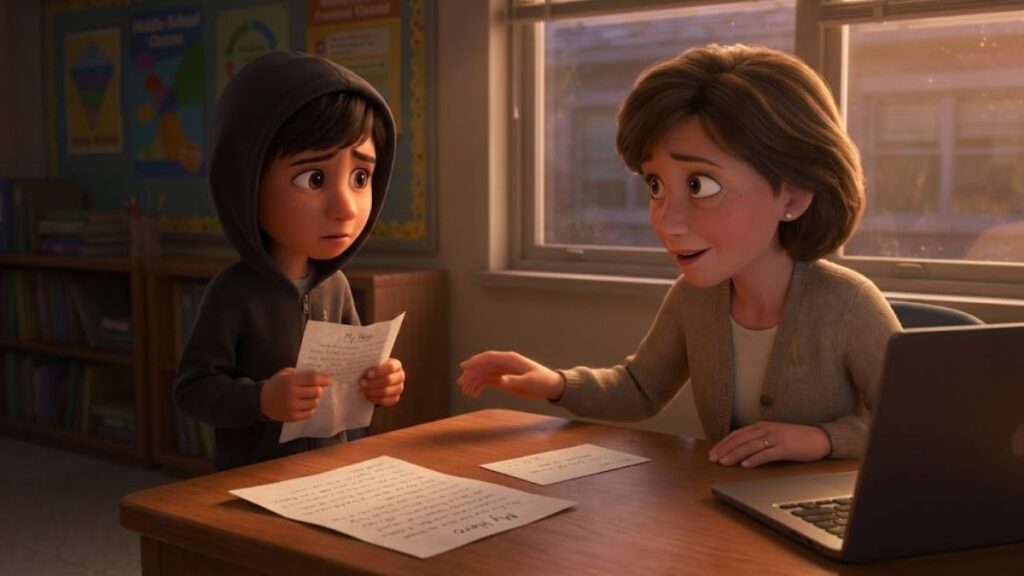
The classroom felt like a battlefield some days.
Eighth-grade language arts.
Twenty-eight voices competing at once.
Chairs scraping.
Pencils tapping.
Someone always talking over the lesson.
Ms. Elena Vasquez had learned to project without shouting.
She moved between desks.
Redirected gently.
Kept the pace steady.
But in the far back corner sat Marcus.
Fourteen years old.
Hood perpetually up.
Arms crossed like armor.
He rarely lifted his head.
When called on, he answered in single words.
Flat tone.
Eyes fixed on the wood grain of his desk.
He wasn’t defiant.
He wasn’t disruptive.
He was simply… gone.
Ms. Vasquez noticed him the first week.
Not because he stood out.
Because he faded in.
She pulled his file quietly one afternoon.
Father killed in a car accident the previous July.
Sudden.
No warning.
Mother working night shifts at the factory.
Older sister off at university two states away.
Marcus now living with an aunt who had three kids of her own.
No formal counseling noted.
No behavior referrals.
Just a single line in the counselor’s log: “Student appears withdrawn since bereavement.”
She closed the folder.
Sat for a long minute.
Decided she wouldn’t make a spectacle.
No big talks.
No forced sharing circles.
Just consistency.
Every morning as the bell rang.
She stood at the door.
Greeted each student by name.
When Marcus shuffled in last.
She said softly:
“Morning, Marcus.”
Never louder.
Never expectant of a reply.
He usually gave a tiny nod.
Sometimes nothing.
But she kept saying it.
Every single day.
When she handed back graded work.
She wrote short comments.
“Clear main idea here.”
“Good detail in this example.”
“You have a strong voice when you choose to use it.”
Nothing exaggerated.
Nothing that would embarrass him.
Just honest acknowledgment.
When the class erupted into side chatter.
She redirected the group.
Never singled him out for silence.
When he missed three days in a row.
She slipped the missed assignments into his locker with a sticky note.
“Take your time. We’ll catch up when you’re ready.”
No guilt.
No deadline pressure.
Just presence.
Marcus felt it.
Even if he never said so.
Inside, grief sat heavy.
Like a stone in his chest.
He woke up tired every day.
Aunt’s house loud with little cousins.
No quiet corner to think.
School felt loud too.
But Ms. Vasquez’s voice cut through differently.
Calm.
Steady.
She never pushed him to “open up.”
Never asked “how are you feeling?”
She just kept showing up the same way.
Kind.
Predictable.
Safe.
Spring arrived.
The big end-of-year project.
Personal narrative essay.
Topic: “Write about a person who has made a positive difference in your life. Explain how and why.”
The room exploded with chatter.
Kids shouted ideas.
Best friends.
Grandparents.
Coaches.
Marcus listened.
Said nothing.
That Friday afternoon.
After the final bell.
Kids streamed out.
Laughing.
Planning weekends.
Marcus stayed.
He waited until the last backpack disappeared down the hall.
Then walked to her desk.
Hands deep in hoodie pockets.
Hood still up.
Ms. Vasquez looked up from her gradebook.
“Marcus?”
He shifted weight.
Looked at the floor.
Then lifted his eyes.
“Can I write about you?”
She paused.
Pen still in hand.
For a second she wasn’t sure she heard right.
“Why me?”
Marcus swallowed.
Voice barely above a whisper.
“You’re always kind.”
“Even when everyone else is loud.”
“Even when I don’t talk much.”
“You don’t get mad.”
“You don’t make me feel weird for being quiet.”
“My dad died last summer.”
“I didn’t tell anyone at school.”
“But you never pushed me.”
“You just… kept being nice.”
“Every day.”
“I want to write about that.”
Ms. Vasquez felt heat behind her eyes.
She set the pen down.
Nodded slowly.
“Of course you can.”
“Only if it feels okay for you.”
“Write whatever you need to say.”
He gave a small nod.
Turned.
Almost left.
Then stopped.
Looked back.
“Thanks.”
One word.
Carried weight.
He walked out.
She sat motionless for several minutes.
The classroom suddenly felt very quiet.
She replayed every small interaction in her mind.
The daily greetings.
The short notes on papers.
The assignments left in his locker.
None of it had felt monumental.
Just routine.
Just decency.
But to Marcus.
It had been a lifeline.
He turned in the essay six days later.
Twelve pages.
Typed.
Double-spaced.
Title centered at the top:
“The Teacher Who Saw Me When I Was Invisible”
He wrote about the accident.
The phone call.
The funeral.
The way everything went blurry after that.
How school felt pointless.
How people asked “how are you” but didn’t really want the answer.
How he stopped talking because words hurt too much.
Then he described Ms. Vasquez.
Not in grand terms.
In specifics.
The way she said his name every morning like it belonged in the room.
The way she never forced him to read aloud.
The way she wrote “I like how you explained this” on a half-finished paragraph.
The way she didn’t make him feel broken for grieving.
He ended with:
“She didn’t know my dad died.”
“She didn’t need to know.”
“She just kept being kind.”
“That was enough.”
Ms. Vasquez read it after school.
Alone.
Door closed.
She cried quietly.
Not dramatic tears.
The kind that come from deep recognition.
She wrote feedback in green pen.
“Powerful, honest writing.”
“Strong organization and voice.”
“You’ve captured something very real here.”
At the bottom:
“Thank you for letting me be part of your story, Marcus.”
“You are seen.”
“You matter.”
She never mentioned the essay in class.
He never brought it up.
But something eased.
He started answering questions occasionally.
Short sentences.
But voluntary.
He joined a small group discussion once.
Spoke twice.
Smiled—barely—when a classmate agreed with him.
End of year.
He left a card on her desk.
Hand-drawn bookmark inside.
Front: a simple open book.
Inside, in careful handwriting:
“Thanks for being kind when everything felt hard.”
“Marcus”
She kept it.
Tucked in her planner.
Years moved forward.
Marcus went to high school.
Quiet but steady.
Graduated.
Went to community college.
Then university.
Majored in psychology.
Minored in counseling.
He wanted to work with kids in crisis.
Kids who lost parents.
Kids who withdrew.
He got his master’s.
Started as a middle-school counselor.
First job.
Same district.
Different building.
He thought of Ms. Vasquez often.
Especially on tough days.
One afternoon in his fourth year.
He opened his email.
Subject line: “From Marcus – Your Former Student”
He wrote:
“I’m a school counselor now.”
“I sit with kids who are grieving.”
“Kids who don’t talk much.”
“I say their names every day.”
“I leave little notes on their work.”
“I give them space.”
“I don’t push.”
“Because someone once gave that to me.”
“You didn’t know how much it helped.”
“But it changed everything.”
“Thank you.”
Ms. Vasquez read it at her desk.
Same classroom.
Same grade.
Different kids.
She printed the email.
Added it to the drawer.
Beside the bookmark.
Beside other quiet notes collected over time.
She cried again.
Softly.
Gratefully.
She replied:
“I’m proud of the man you’ve become.”
“You’re giving back what was given to you.”
“Keep saying their names.”
She still greets every student by name.
Every morning.
Even the loud ones.
Even the ones who don’t answer.
Because somewhere in the room.
There is always another Marcus.
Hiding grief.
Waiting for someone.
To keep being kind.
Without needing to know why.
The biggest impacts.
Often arrive in whispers.
In small routines.
In quiet requests.
In one student staying after class.
To ask if he can write about you.
That’s teaching.
The real kind.
The kind that echoes for decades.
One steady, gentle hello at a time.
Benefits of Reading These Kinds of Stories
Short inspirational stories boost motivation, build resilience, and spark positive thinking in minutes.
- Gives you a quick emotional reset when burnout creeps in
- Reminds you that small daily actions add up to massive long-term impact
- Helps combat the “am I even making a difference?” doubt
- Boosts motivation to keep showing up with empathy and energy
- Inspires creative ways to connect with tough students
- Builds pride in the profession—because yes, teachers are heroes (even on coffee-only days)
Why These Stories Hit So Hard (The Real Reasons)
These stories hit hard because they feel real, emotional, and deeply relatable.
- Teachers often see the “problem” kids others write off—and flip the script
- A single moment of genuine care can heal deep wounds like trauma, labels, or low self-worth
- Belief from an adult outside the family is insanely powerful for a struggling child
- The payoff usually comes years later, so these reminders keep you going when results aren’t instant
- They prove teaching isn’t just about curriculum—it’s about building humans who believe in themselves
- In a world quick to criticize education, these show the quiet, profound good happening every day
Wrapping It Up
Look, teaching isn’t glamorous every day. Paperwork piles up, parents complain, budgets shrink, and some kids test every limit. But these stories? They’re real proof that your extra five minutes, your “I believe in you,” your refusal to give up—they matter. A lot.
You might not get a wedding invite or a thank-you note for years (or ever). But you’re planting seeds that grow into doctors, lawyers, teachers, parents who break cycles. You’re the reason someone believes they’re worth it.
So next tough morning, remember: you’re probably someone’s Mrs. Thompson or Margaret Leonard right now. Keep going. The world needs you in that classroom. You’ve got this—and thank you, seriously, for everything you do. One kid at a time. ❤️