Life is fast. Work, bills, traffic, laundry that never ends. And underneath all that, the things we carry quietly: grief that shows up out of nowhere, heartbreak that still hurts sometimes, changes we’re still getting used to, and the slow work of trying to feel okay again.
When someone says “read this, it’s only five minutes”, it’s easy to think “I really don’t have five minutes”.
But 5 Minute Short Stories for Adults are made for exactly that kind of day. They’re short. They’re real. No fancy writing, no long explanations. Just a quick moment that feels true: someone figuring something out over bad coffee, a memory that hits while doing the dishes, a stranger being kind for no reason, or letting go of something heavy.
You don’t need to make time for it. Just take five minutes when you can — in the car, on the couch, late when everything’s finally quiet. Read one. Let it sit for a second.
Sometimes five minutes is enough to feel a little less alone, or to remember that you’re allowed to feel things even when everything’s messy. That’s really all it is.
Why 5-Minute Stories Hit Different?
I get it—long novels are amazing when you’ve got the time and the headspace. Curling up with 300 pages can feel like a real treat. But honestly? Most days that just isn’t happening.
Work is relentless, the to-do list never shrinks, and by the time the house quiets down you’re lucky if you can watch one episode without falling asleep. Opening a thick book can start to feel like another obligation instead of something relaxing.
They give you the good part without the wait
These 5-minute stories cut straight to what matters. No slow build-up, no fifty pages before anything happens. They drop you right into a feeling—a small ache, a quiet “aha,” a moment of warmth, or that little twist in your chest—and then they let you go. You get the whole emotional hit in the time it takes to drink a cup of tea that’s gone cold anyway.
They feel like someone just talking to you
The best ones don’t sound like “literature.” They sound like your friend telling you something over the phone, or a stranger saying one honest thing in line at the grocery store that stays in your head all day. Simple words, real emotions, nothing forced. You finish and think, yeah… I know exactly what that feels like.
They fit into your actual life
You don’t have to wait for the “right” moment. Read one while the microwave hums, sitting in traffic, brushing your teeth, or lying in bed scrolling because your brain won’t turn off. Five minutes. That’s it. No guilt if you’re distracted or tired—they still work.
They remind you it’s okay to feel stuff
Everything moves so quick these days. People expect you to keep going, keep smiling, keep producing. These stories give you a tiny permission slip to stop for a second. To feel the sad thing, the tender thing, the hopeful thing, without having to explain it or fix it. Just feel it. And then carry on.
That’s why they hit different. They don’t ask for hours of your life. They just ask for five minutes… and somehow they give you way more back.
5 Minute Short Stories for Adults that Touch the Soul
These are not just stories—they’re quiet moments that reach in, stir something real, and stay with you. 5 Minute Short Stories for Adults that Touch the Soul—because sometimes, the smallest stories leave the biggest marks.
1. The Last Cup of Coffee
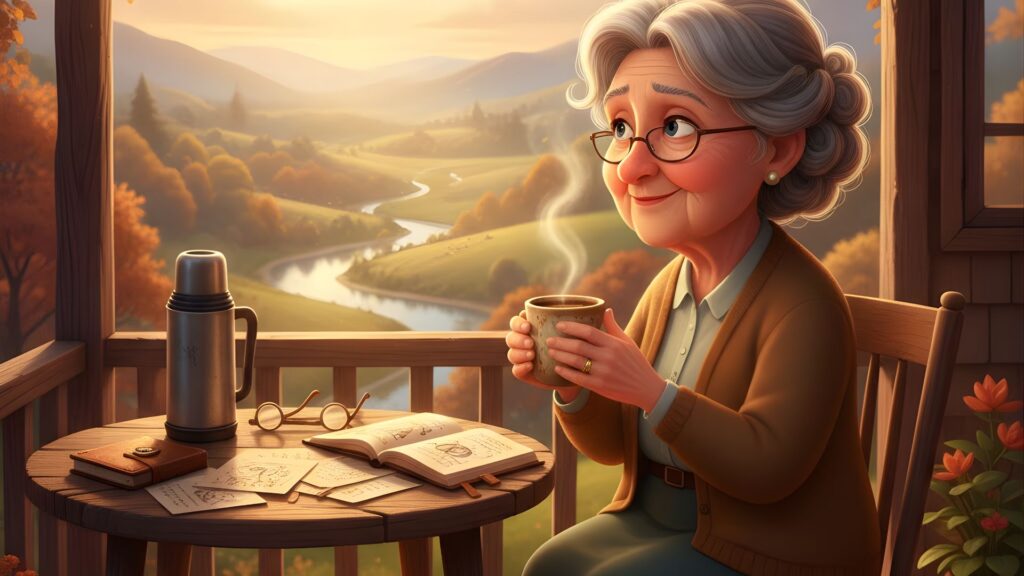
Theme: Love that lingers, grief, and quiet connection in everyday life.
Ben Mathers was eighty-two, sour as week-old milk, and had been darkening the door of Ellie’s Diner every Sunday at 9:11 a.m. for thirty-six years. He was always eleven minutes late on purpose—said it kept the waitresses honest. The booth in the back corner, under the window where the neon sign had been spelling “Ope 24 Hrs” since the N burned out in 2007, was his territory. He and Janie staked it in 1989 after a church picnic turned into a shouting match in the parking lot. They stormed inside to cool off, ordered coffee to spite each other, and somehow never left that booth. They argued there, made up there, raised hell there. For decades.
Janie died four years and two months ago. Pancreatic cancer. Fast and vicious. She went from yelling at Ben about leaving dishes in the sink to gone in six weeks. Ben still came. Still ordered two coffees. Still left the second one sitting until it turned cold and scummy.
The coffee was vile. Always had been. Burnt to charcoal, thin as tap water, with a metallic aftertaste that made your tongue curl. Ben took one sip every week, winced like he’d been slapped, and muttered the same line: “Still tastes like they filtered it through a mechanic’s rag.” Then he drank it. The second cup sat untouched, developing that disgusting oily film while he stared at the empty vinyl seat and grumbled half-sentences.
“You’d tell me to quit whining and drink it.”
“New cook can’t even scramble an egg right.”
“Miss your nagging. Never thought I’d say that.”
Dana was twenty-six, three-quarters burned out, and had been waitressing at Ellie’s for nine months. She hated the second-cup routine from the jump. It wasted coffee. It wasted her time. It made her feel like she was part of some pathetic performance. By month four she was done pretending it was sweet.
One Sunday in April the diner smelled like grease and rain. Ben finished his first cup, shoved the mug away so hard it clinked against the sugar shaker, and grabbed his coat. Dana stepped in before he could stand.
“You’re leaving your wife’s coffee again,” she said. Flat. No sympathy.
Ben’s eyes narrowed. “She’s dead, girl. Four years. You know that.”
“I know. You tell me every week like I forgot.”
He snorted. “Then why ask?”
“Because it’s stupid. You hate the coffee. She hated the coffee. You complain about it every single time you take a sip. Why keep ordering it?”
Ben stared at her like she’d grown a second head. Then he laughed—a short, rusty bark. “Because she’d hate it if I stopped. She’d say, ‘Ben Mathers, you’re too cheap to waste a cup and too stubborn to admit you miss me.’ So I order it. I let it sit. I complain. And she wins. Same as always.”
He stood. His back popped like dry twigs. “You don’t get it yet. You will.”
He dropped his usual crumpled ten—exact change, never a penny more—and shuffled out. The bell jingled like a middle finger.
Dana stared at the untouched cup. The film was already there, disgusting. She wanted to pour it down the drain right then. Instead she left it.
The next Sundays were the same. Ben came. Bitched about the coffee. Talked to the empty seat in short, irritated bursts. Dana poured the second cup and walked away. No warming it. No extra sugar. No little gestures. Just the ritual.
One Sunday in July he was late—twenty-three minutes. When he finally slid into the booth he looked smaller. Grayer. He took one sip, made the face, and didn’t even finish the complaint.
“I’m done,” he said to the seat. Voice low and cracked. “Knees won’t bend right. Back’s on fire. Coffee’s still shit. I’m tired, Janie. Tired of coming here to argue with a ghost who won’t argue back.”
He didn’t finish either cup. Just sat there a long time, staring. Then he stood, tossed the ten, and left without another word.
He never came back.
Two Sundays later Mr. Greene looked up from his newspaper at the counter.
“Ben Mathers. Last Tuesday. Stroke. Found him in the recliner with the TV on mute. Wallet open. That old photo of him and Janie from their honeymoon tucked inside. Grumpy bastard, but he never missed a Sunday.”
Dana’s hand shook on the coffee pot. She set it down carefully. Didn’t say anything. Didn’t cry. Just felt something heavy settle in her chest.
The next Sunday she came in at 6 a.m., before anyone else. The diner was dark, still smelling like last night’s fryer oil. She walked to the booth, set two cups down. Black. Cream and two sugars. She didn’t warm them. Didn’t add anything extra. Just let them sit.
She sat in Ben’s spot. The cracked vinyl was cold against her legs.
“You were a pain,” she said to the empty diner. “You tipped like it physically hurt you. You made Maria wait on purpose. You complained about everything—the coffee, the eggs, the weather, the jukebox. You were rude to me half the time. But you showed up. Every week. Even when your body hurt. Even when the coffee tasted like death. Even when she wasn’t here to fight with you anymore.”
She looked at the second cup. The surface had gone dull and gross.
“I don’t know what you two had,” she said quieter. “But it was stubborn enough to keep you coming back. That’s something. That’s more than most people get.”
She sat until the first customer knocked. Then she stood, wiped her face on her sleeve, and opened the diner.
The booth stayed empty after that.
But every Sunday morning, before the breakfast crowd, Dana still poured two cups. One black. One with cream and two sugars. She let them sit until they were cold and filmy and undrinkable, then dumped them down the sink and started fresh the next week.
Sometimes she muttered while she poured.
“Still tastes like hell, Ben. You weren’t wrong.”
Sometimes she just let the quiet fill the booth.
Love isn’t clean. It isn’t gentle. It can be rude, cheap, complaining, and full of petty grudges. It can drag on long after one person is gone, showing up late just to argue with an empty seat over terrible coffee.
Sometimes all that’s left is to keep pouring the second cup anyway. Let it go cold. Let it spoil. Let it sit there like a reminder that even the ugliest, most irritating routines can carry something real inside them—something worth showing up for, even when it hurts.
The neon sign buzzed overhead, half-dead.
Two cups waited.
Cold. Scummy. Untouched.
2. The Stranger at Walmart
Theme: Quiet compassion, unseen struggles, and how one small act of kindness can echo for years.
God, that day sucked from the second my eyes opened.
Lily started screaming at like 4 in the morning—teething again, poor kid was miserable and so was I. I walked the apartment in circles for hours, rubbing her gums, humming that same stupid lullaby until my voice sounded like gravel. I got maybe an hour of real sleep before the alarm went off for work. Spilled coffee all over my last clean shirt, had to throw on the wrinkled one from yesterday that already smelled like yesterday. Forgot my wallet halfway to the car, so I’m carrying a flailing two-year-old back upstairs while she howls like I’m kidnapping her.
Babysitter bails at lunch with a “family thing” text. No warning. No backup. I can’t miss the shift—rent’s due, diapers aren’t free—so I drag through work on fumes, pick Lily up from daycare, and head straight to Walmart because we’re out of everything.
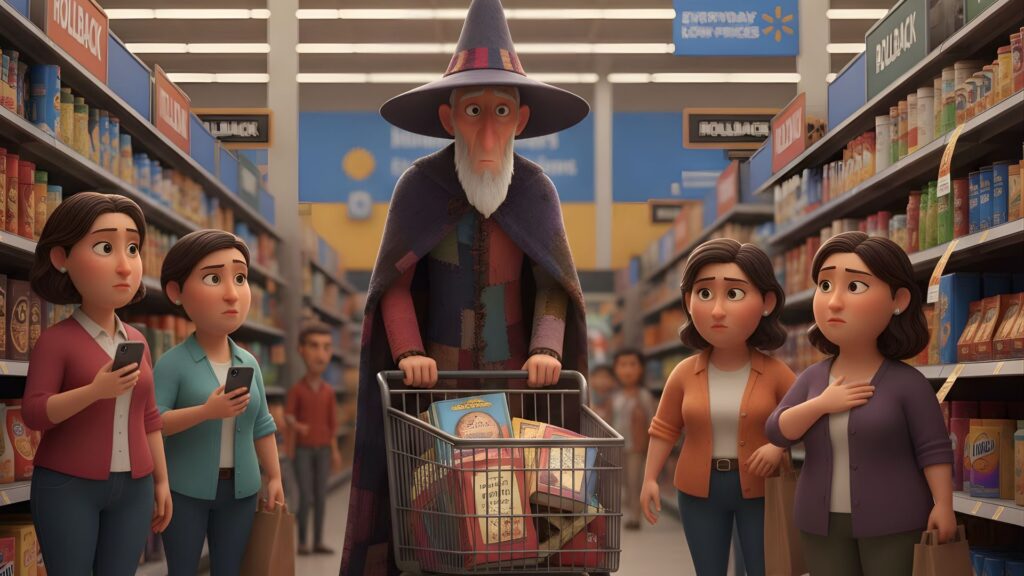
By 5 p.m. the lights are buzzing like angry wasps, the cart has a squeaky wheel that’s driving me insane, and Lily spots this pink plush unicorn on the bottom shelf by the registers. Big sparkly horn, soft fur, those cartoon eyes staring right at her. She decides right then and there that life isn’t worth living without it.
I say no. She starts crying. I say no again, softer. She loses it—full-body meltdown, fists banging, face red, screams echoing off every aisle.
People are looking.
Some guy two carts back sighs like I’m personally wasting his time. A woman in yoga pants whispers to her friend and gives me that “get your kid under control” side-eye. My face is on fire. I crouch down, trying to keep my voice from shaking.
“Lily, baby, Mama said no. Please, sweetie, just stop.”
She doesn’t stop. She can’t. She’s two, exhausted, hungry, and the unicorn is literally right there.
I feel it coming—that tight, burning thing in my chest, the tears I can’t let out because if I start crying in Walmart I’m never going to stop. I grip the cart so hard my hands hurt and whisper, “Come on, please, not now.”
Then this voice from the side, quiet but clear.
“Is this the one she’s freaking out about?”
I turn.
This woman—late fifties maybe, gray curls coming loose from a ponytail, eyes tired but really kind—holds the unicorn in one hand. Her other hand is already digging in her purse.
I shake my head fast. “No, it’s okay. I told her no. She has to learn—”
“I get it,” she says. Not pity. Just understanding. “I’ve been exactly where you are. More times than I can count.”
Before I can argue she steps up, scans the tag, adds it to her stuff—a bottle of water, some gum—and pays. No big production. No “look at me being nice.”
I open my mouth again. She just looks at me—soft, steady.
“It’s a toy,” she says. “And I remember standing in a checkout line thinking if one more thing goes wrong I’m going to lose it. No one helped me then. So now I try to help when I see it.”
Lily’s screams stop the second the unicorn lands in her lap. She hugs it tight, eyes huge, cheeks still wet. She looks up at the woman, then at me, and in this tiny, hiccupy voice goes, “Thank you.”
The woman smiles—real, tired, warm. She crouches a bit. “You’re welcome, sweetheart.” Then to me: “You’re doing the hard stuff. It gets easier. Not perfect, but easier. You’ve got this.”
She doesn’t wait around for me to thank her. Just turns her cart and walks off toward self-checkout like it was nothing.
I stand there, receipt crumpled in my fist. The cashier gives me this small nod, like she’s seen this before. I push the cart out to the car feeling numb.
In the parking lot Lily crashes hard, unicorn clutched to her chest like it’s the only thing keeping her safe. I sit in the driver’s seat, engine off, hands still on the wheel. I don’t cry right away. I just breathe—shaky, ugly breaths that hurt. Then the tears come, quiet and messy, sliding down my face. Not sad tears. Relief tears. Someone saw me. Not as a bad mom, not as a mess—just as a person barely holding it together. And she did something about it.
I hadn’t realized how badly I needed that.
Ten years later I’m thirty-six. Life’s still not easy—bills, work stress, Lily’s teenage attitude—but we’re okay. Lily’s twelve now, smart, loud, always asking questions that make me laugh and roll my eyes at the same time. I work at a nonprofit helping single moms with housing, jobs, childcare. The pink unicorn sits on a shelf in our living room—faded, one eye a little loose—but still there. Not for playing anymore. For remembering.
Before Christmas last year I’m back at the same Walmart. Just grabbing wrapping paper and stocking stuffers. In front of me in line is this young mom with a toddler on her hip and another hanging off her leg. Her hands shake as the total climbs. When the cashier scans a small pack of toy cars she freezes.
“I… I need to put those back,” she says, voice small. “I still need milk.”
I don’t think. I pull out my card and slide it forward.
“I’ve got this,” I say. “Happy holidays.”
She looks up, eyes wide. “No, I can’t—”
“You can,” I tell her. “I’ve been exactly here. Someone helped me once. Now I’m helping you.”
The cashier rings it through. The little boy squeals when he sees the cars go in the bag. The mom blinks fast, tears shining.
“I’ll pay it forward,” she whispers.
“I know you will,” I say.
I walk to my car feeling this quiet warmth I haven’t felt in a while.
Back when Lily was two, the woman who bought the unicorn was Ellen. She raised three boys alone after her husband died in a crash. She worked nights at a hospital, cleaned houses during the day. There were months she fed the kids cereal for dinner because it was all she could afford. Nights she cried in the bathroom with the fan on so they wouldn’t hear.
No one ever really stepped in. A neighbor brought soup once. A coworker covered a shift. But no one ever said, “Here, let me take one thing off your shoulders.”
So when Ellen retired she made a quiet promise: if she saw a young mom struggling, she’d do something. A coffee. A pack of diapers. A toy. A kind word. Nothing huge. Just enough to say, “I see you. You’re not alone.”
She never told anyone. Never asked for credit. She just did it.
She never knew the little girl with the unicorn grew up to help other moms like her. Never knew her five-dollar gesture kept rippling.
At a small fundraiser I spoke at, I told the story of the woman at Walmart. How one stranger’s kindness kept me from falling apart that day. How it taught me to look for the same chances to help.
Afterward a young woman came up, eyes wet.
“That happened to me once,” she said. “At Target. My card declined. I was so embarrassed. The lady behind me paid for everything. I never got her name.”
I smiled. “Those moments stick, don’t they?”
She nodded. “I think about her all the time. I don’t think she knows what it did for me.”
I thought of the faded unicorn on my shelf. Of Ellen’s tired, gentle eyes.
“I think she knows,” I said.
Kindness isn’t always big or showy. Sometimes it’s a stranger in a checkout line who sees you drowning and quietly hands you something small and says, “I’ve been there too.”
We don’t always know the whole story. We don’t always see where the ripple goes.
But we get the choice: look away, or look closer.
And sometimes—just sometimes—choosing closer looks like a pink plush unicorn with a glittery horn that still sits on a shelf ten years later, reminding one tired mom that even on the worst days, someone saw her.
And that changed everything.
3. The Vet and the Little Boy
Theme: Honor, innocence, memory, and the quiet moments that carry deep meaning.
I’ve been a vet for almost thirty years now, and I thought I’d gotten good at keeping my feelings in check. You see enough heartbreak—old dogs who’ve been family longer than some marriages, cats who’ve outlived their kids—and you learn to stay steady. Steady voice, steady hands, steady “I’m sorry” when there’s nothing else left to say. That’s the job.
But that Tuesday in October, a kid walked in and quietly wrecked me.
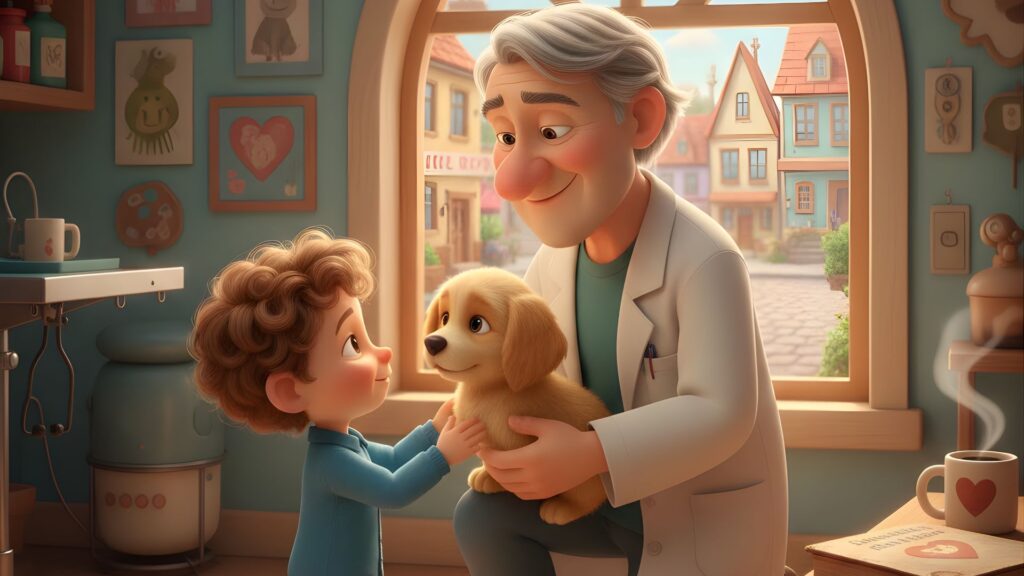
He was seven, skinny, hair a mess like he’d been running his hands through it all day. Sneakers untied, dragging on the floor. He carried a beat-up shoebox like it was the most precious thing he owned. His mom came in behind him—maybe early thirties, Walmart polo still on from her shift, name tag crooked, eyes tired in that way only single moms who work doubles look.
They went straight to exam room three. I was scrubbing out from a spay when the receptionist poked her head in. “Kid with a kitten. Looks bad.”
I walked in.
The boy set the box on the table without saying a word. I lifted the lid.
A tiny gray tabby kitten, eight weeks tops. Eyes half-closed, breathing quick and shallow. One back leg bent at a wrong angle, swollen, fur crusted with dried blood. Hit by a car, the mom said in a low voice. They’d found him on the curb outside their apartment two days ago. The boy wouldn’t let go—wrapped him in his hoodie and carried him the three blocks home.
I felt the ribs—too many spaces between them, ribs you could count. Listened to the lungs: wet, rattling. Checked the leg: compound fracture, days old, infection already hot and angry under the skin.
I looked at the boy. He hadn’t spoken. Just stared at the kitten like if he looked away, it would stop breathing.
“What’s his name?” I asked.
“Shadow,” he said, voice small but clear. “He follows me everywhere. Even when I go to the bathroom. He waits outside the door.”
I nodded. “Shadow’s hurt pretty bad, buddy. Leg’s broken in a couple places, infection’s deep. Breathing’s rough—probably some chest bruising from the car.”
The mom shifted. “We don’t have much money. The low-cost clinic’s booked out for weeks. I just… I didn’t know what else to do.”
I looked back at the boy. His eyes were huge, glassy, but he wasn’t crying. Not yet. His hands were clenched so tight his knuckles were white.
“Surgery to fix the leg, antibiotics, fluids, maybe keep him overnight,” I said. “It’s not cheap. Twelve hundred to start. More if things go sideways.”
The mom closed her eyes for a second. “We don’t have that. Not even close.”
The boy looked up at me then. “He’s my friend. He sleeps on my pillow. He purrs when I read him my library books. I can’t let him hurt anymore.”
That’s when it hit me—hard, like someone punched me in the chest. I thought about Max, my old border collie. Sixteen years. The way he’d wait by the door every night I came home late, tail wagging slow because his hips hurt. The way I buried him under the maple in the backyard, alone, no words, just dirt and silence. I never really let myself feel that goodbye all the way through.
I looked at the boy again. Seven years old. Carrying a shoebox like it held everything that mattered to him.
I stepped into the hallway. “Give me a minute with him.”
The mom took the boy’s hand. They stepped out.
I closed the door. Lifted Shadow onto the table. The kitten tried to purr—weak, raspy, more wheeze than anything.
I stood there, hands flat on the table, staring at this tiny broken thing.
Then I opened the door.
The mom looked at me like she was waiting for the bad news she already expected.
“I’m doing the surgery,” I said. “Tonight. Fluids, antibiotics, the whole deal. No charge.”
She stared. “What?”
“I’ve got a fund for cases like this. It’ll cover it. He stays here overnight. I’ll call you in the morning with an update.”
The boy’s eyes went huge. “You’re gonna fix him?”
I crouched down so we were eye to eye. “I’m gonna try my damn hardest, kid. He’s tough. Like you.”
The mom started crying—quiet, embarrassed, wiping her face with her sleeve. She tried to thank me. I waved it off.
“Just take care of each other,” I said. “That’s all I ask.”
They left. The boy kept looking back at the exam room door like Shadow might vanish if he blinked.
I worked late. Reduced the fracture, pinned it, flushed the wound, started IV antibiotics. Shadow made it through the night—weak, but breathing steadier. Fever broke a little by morning.
I called at 7:15. Told her he pulled through. Told her he could go home in two days if he kept improving.
She cried again on the phone. Thanked me so many times I had to tell her gently to stop.
Two days later they came back. The boy carried Shadow in a borrowed carrier now—clean, second-hand. The kitten was groggy but purring faintly when the boy stuck his finger through the bars.
I checked the incision, changed the bandage, sent them home with meds and instructions.
The mom tried to hand me an envelope—twenty-seven dollars in crumpled ones and fives.
I pushed it back. “Keep it. Buy him some good food. Or ice cream for the kid.”
She hugged me—quick, tight, like she didn’t know how else to say it. The boy looked up and said, “Thank you, Dr. Grant. Shadow says thank you too.”
I smiled—real, tired, a little cracked around the edges. “Tell Shadow he’s welcome.”
They left.
I stood in the empty exam room a long time. Looked at the spot where the shoebox had been.
I didn’t cry. Not exactly. But my eyes burned, and I had to lean on the counter for a second to breathe.
I thought about Max again. Thought about how I’d never really let myself grieve him properly. Thought about how I’d kept showing up anyway—day after day, stitching wounds, putting animals down, telling owners it would be okay when sometimes it wasn’t.
I thought about the boy’s face when he said “he’s my friend.”
Later that week I put a jar on the counter. “For the Shadows.” Nothing fancy. Clients dropped in change, a few bucks. The first donation was twenty-seven dollars in crumpled bills, taped to a note:
Thank you for seeing us when we felt invisible.
I kept the note in my desk drawer.
Years later, when that jar had paid for dozens of surgeries and meds and overnight stays, I still thought about that Tuesday.
Never saw the boy again. Never knew if Shadow made it long-term, or if the kid still remembered.
But every time I scrubbed in for a hard case—some stray hit by a car, some kitten too small to survive—I thought about the shoebox. Thought about the kid who carried it like it held everything that mattered.
And I kept going.
Because sometimes the smallest things—the quietest kindnesses—are the ones that keep us from quitting.
And sometimes a seven-year-old boy with untied shoes and a broken kitten can remind a tired old vet that the work still matters.
Even when it hurts.
Even when it costs more than money.
Even when you’re not sure you have anything left to give.
But you give it anyway.
Because someone has to.
And sometimes that someone is you.
4. The Missed Call
Theme: Regret, love, and learning to carry the words we never got to say.
Maria Delgado was thirty-four, bone-tired most days, and already felt like she’d lived two full lives. She worked nights as a nurse’s aide at St. Mary’s Hospital—emptying bedpans, changing linens stiff with sweat and disinfectant, turning patients who couldn’t turn themselves. The shifts were twelve hours, sometimes sixteen when someone called in sick. The pay barely covered rent, Sofia’s school supplies, and the endless little things that added up. But it kept them going. Sofia was nine now—bright, curious, always asking questions Maria answered with half-smiles and “Because life, mija. Life keeps moving.”
Her father, Javier, lived alone in the same small stucco house in East LA where Maria grew up. Two bedrooms, one bathroom, kitchen that smelled like coffee and motor oil even after he retired. He’d been a mechanic for forty years—hands still dark with grease under the nails, even when he wasn’t touching engines anymore. Every Sunday night at 8:30 sharp, his name lit up her phone. Always the same rhythm: “¿Cómo estás, mija?” “Bien, Papi. ¿Y tú?” “Aquí sigo. ¿Sofia ya hizo la tarea?” “Sí, Papi. She’s good.” He’d ramble about the neighbor’s chihuahua barking at nothing, how the Dodgers were choking in the ninth again, how he missed her mother’s arroz con pollo—the way the rice got just crispy at the bottom. Maria would promise, “Next weekend, Papi. I swear we’ll come.” She never did. Work. Sofia’s dance practice. Bills. The car acting up. Always something.
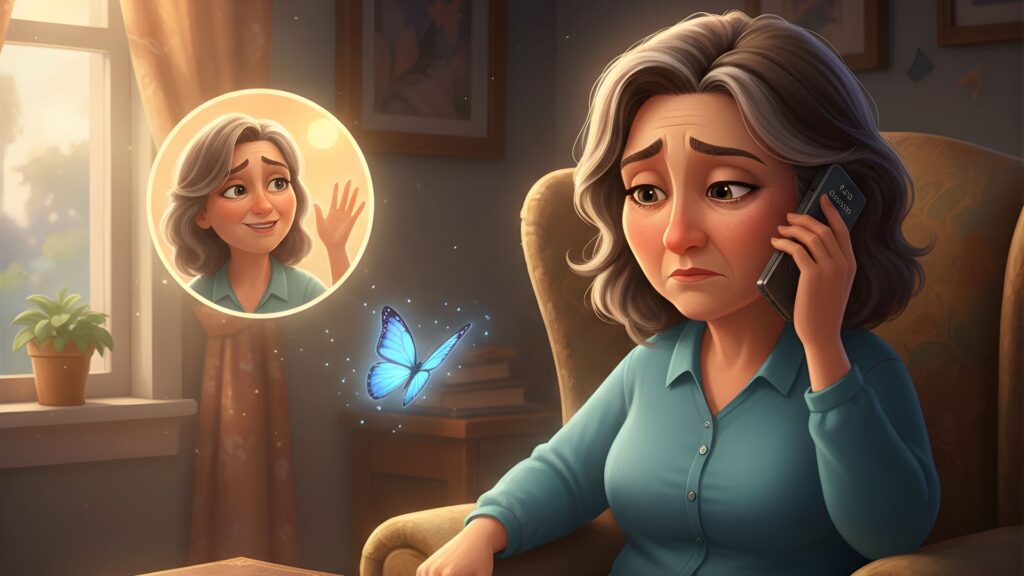
The last Sunday he called was October 12. Maria was in the hospital break room, scarfing a cold bean burrito between floors. Her phone buzzed at 8:32. “Papi” on the screen. She was exhausted—feet throbbing, head pounding from the fluorescent lights. She let it go to voicemail. Told herself she’d call back tomorrow after dropping Sofia at school. She always did.
He left a message. Short. His voice quieter than usual, a little rough around the edges like he’d been coughing.
“Mija, solo quería oír tu voz. Sofia me dijo que sacaste A en el examen de matemáticas. Estoy orgulloso de ti, de las dos. Cuídate mucho, ¿sí? Te quiero.”
She listened to it the next morning while Sofia ate cereal at the kitchen table, milk dripping down her chin. Maria smiled a little—her dad still mixed them up sometimes, thought Sofia was the one getting A’s. She meant to call him back after school drop-off. Then the hospital texted her for overtime. Then Sofia forgot her lunch bag. Then the car needed gas and the line at the station was long. Then it was midnight and she collapsed into bed without thinking.
The next Sunday the phone didn’t ring at 8:30.
Maria noticed around 9:20. She stared at the dark screen, waiting. Nothing. She told herself he’d fallen asleep watching the game, or maybe his phone died. He was seventy-three. Old men forget to charge things.
Monday. Still nothing.
Tuesday. Same.
Wednesday she started to worry. Called him. Straight to voicemail. Called again. Same. Texted: “Papi, ¿todo bien? Llámame cuando puedas.” No reply. No three dots. Nothing.
Thursday she got off early—rare miracle. Drove the forty minutes to his house, heart thumping louder the closer she got. Sofia was at her aunt’s for the afternoon.
The front door was unlocked—same as always. She called out, “Papi?” The house smelled like coffee grounds and old newspapers. No answer.
She found him in the recliner in the living room. Eyes closed. Remote loose in his lap. The TV still on mute, some old Western flickering blue across his face. The phone on the side table, screen dark. She knew before she touched his hand—cold, stiff.
Heart attack. Quiet. The paramedics said it probably happened Sunday night. He’d been gone four days before anyone checked.
Maria sat on the floor next to the recliner. Didn’t cry at first. Just held his hand and listened to the house breathe around her. The fridge hummed. The clock ticked. Outside, the neighbor’s chihuahua barked at nothing.
She played the last voicemail again. His voice filled the quiet room.
“Mija, solo quería oír tu voz…”
She cried then—deep, ugly sobs that hurt her ribs. She cried for the Sundays she’d let go to voicemail. For the visits she kept postponing. For the “next weekend” that turned into never. For the man who’d raised her alone after her mom died of breast cancer when Maria was twelve—who’d worked doubles so she could finish nursing school, who’d babysat Sofia when she was little so Maria could sleep after night shifts, who’d never once asked for anything except her voice on Sunday nights.
She cried until Sofia’s aunt dropped her off. Sofia walked in, saw her mom on the floor, saw Abuelo in the chair, and froze in the doorway.
Maria pulled her close. “Abuelo se fue al cielo, mija.”
Sofia didn’t cry right away. She just looked at the phone on the table. “He called me last week. Said he was proud of my math test. He said I’m smart like you.”
Maria swallowed the lump in her throat. “He was always proud of you.”
They sat there together until the funeral home came.
Months later Maria still kept her father’s phone. Charged it every few days on the kitchen counter. Never deleted the voicemails. Sometimes late at night, when Sofia was asleep and the apartment was too quiet, she played them. His voice. Steady. Warm. A little raspy from years of cigarettes he swore he’d quit.
She started calling Sofia every day after school. Just to hear her voice. “¿Cómo estuvo tu día, mija?” Sofia would ramble—about the girl in class who stole her pencil, about the new book she was reading, about how she wanted to try out for soccer. Maria listened. Really listened. Didn’t rush her off the phone. Didn’t let calls go to voicemail.
One Sunday evening Sofia was at a sleepover. The apartment felt too big, too empty. Maria sat at the kitchen table with her father’s phone in her hand.
She scrolled to the last voicemail. Played it again.
“Mija, solo quería oír tu voz. Sofia me dijo que sacaste A en el examen de matemáticas. Estoy orgulloso. Cuídate, ¿sí? Te quiero.”
She whispered back to the empty kitchen, “Te quiero también, Papi. I’m sorry I missed your call.”
The phone stayed silent.
But Maria kept calling Sofia every day. Kept listening. Kept showing up.
Because some calls you can’t get back.
And some you make sure never get missed again.
5. The Rain That Fell at the Wedding
Theme: Letting go of perfection, embracing real love, and finding beauty in the unexpected
Elena had spent two years planning every little thing. The small vineyard outside Victoria with the white barn on the hill, the grapevines that turned soft gold in September, the eucalyptus arch she’d saved on her phone a million times. She picked late September because every weather app said the same: mild days, mostly sunny, a light breeze that would lift her veil just enough for photos without making a mess. She checked the forecast like it was her second job, paid for the premium alerts, even rented a backup tent “just in case.” Everyone kept saying it would be beautiful. She believed them.
The morning of the wedding the sky was that clear, hopeful blue you almost don’t trust. Elena stood in the loft above the barn while her sister pinned tiny white roses into her hair. The dress was simple ivory lace—she’d tried on so many and this one just felt like home. She looked in the mirror and thought, This is really it. No more waiting. Just us.
Daniel was downstairs with his groomsmen, laughing too loud over cheap whiskey. They’d met in university—him the quiet engineering guy who always sat in the back row doodling, her the art major who couldn’t stop talking during class. Ten years later, here they were. She never doubted him. Not once.
Guests started showing up around 3:30—family flying in from Toronto and Vancouver, old friends who drove hours, a couple professors who still remembered their awkward first-date stories. Everyone was hugging, taking photos, sipping sparkling wine. The air smelled like fresh grass, lavender from the fields, and that sweet grape smell that made everything feel gentle.
At 3:55 a small cloud appeared. Elena saw it from the loft window and shrugged. Clouds happen. The forecast said partly cloudy.
By 4:05 the sky had gone gray so fast it felt unfair. Guests started looking up, murmuring. Elena’s mom rushed up the stairs, cheeks pink.
“Mija, it’s starting to rain. We should move inside.”
Elena shook her head. “It’ll stop. It has to.”
Her sister peered out. “Elena, it’s not stopping. It’s getting heavier.”
Elena walked to the window. Raindrops were hitting the glass—big, steady ones. She watched them slide down slow.
Daniel texted: “It’s raining. Ceremony inside?”
She typed back right away: “No. We’re doing it outside. It’s our day.”
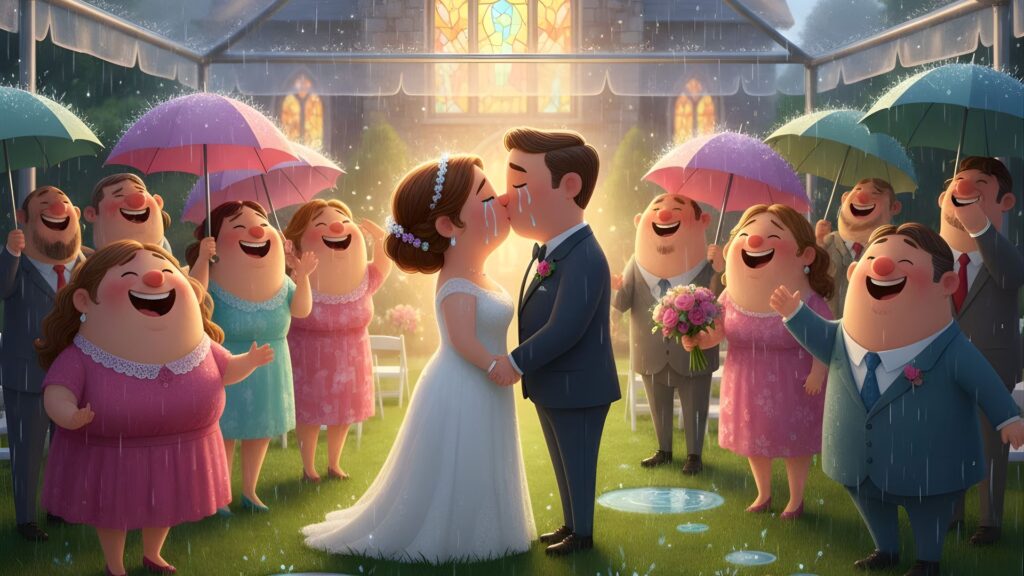
At 4:15 Daniel’s uncle—the officiant—stood under the arch holding a big black umbrella someone grabbed from the barn. Guests huddled under programs, jackets, each other. Elena’s dress dragged through wet grass as she walked down the aisle. The rain wasn’t pouring yet, but it was steady—enough to soak the lace, enough to make her shiver under the thin fabric.
Daniel waited at the arch, hair plastered to his forehead, suit jacket dark with water. He smiled when he saw her—the same smile he gave her the night he proposed in their tiny kitchen with a ring he saved for months. He didn’t care about the rain. He just looked at her like she was the only thing that mattered.
They said their vows under that umbrella. Elena’s voice shook a little from the cold. Daniel’s hands were warm when he held hers. He said, “I promise to love you on sunny days and rainy ones, especially the rainy ones, because those are the ones that make the sunny ones feel like miracles.”
Guests laughed softly. Someone sniffled. The rain kept falling.
When they kissed, the umbrella tipped and water poured down their faces. Elena laughed right into his mouth—real, surprised laughter. Daniel pulled her closer, rain dripping off his nose onto hers.
The reception moved inside the barn. String lights still glowed, but the floor was muddy and slippery. Shoes squeaked. Dresses clung. Hair frizzed. The DJ played anyway. Elena and Daniel danced the first dance to “At Last” even though her heels kept catching and they almost slipped twice. They didn’t care. They held each other tight, wet lace against wet suit, laughing the whole time.
Later Elena stepped outside alone for a second. The rain had slowed to a soft drizzle. She stood under the barn eaves, watching water drip from the vines. Her dress was wrecked—hem brown with mud, lace dark—but she didn’t mind.
Daniel found her. Jacket off, sleeves rolled up. He wrapped his arms around her from behind.
“You okay?” he asked.
She leaned back into him. “I wanted it perfect.”
He kissed the top of her head. “It was perfect.”
She turned to look at him. Raindrops caught in his eyelashes. “It rained.”
“Yeah,” he said. “And we still got married. Still danced. Still kissed in front of everyone. Still here.”
She smiled—small, real. “You’re soaked.”
“So are you.”
They stood there listening to the rain on the metal roof, the muffled music inside, the quiet between them.
Five years later they were back at the vineyard for their anniversary. Sofia was four, running ahead in a bright yellow raincoat, splashing puddles like they were the best thing ever. The sky was gray again. Rain was coming.
Elena watched her daughter, then looked at Daniel. He held an umbrella but hadn’t opened it yet.
“Remember our wedding?” she said.
He smiled. “How could I forget? Best rain I ever stood in.”
She laughed. “I was so upset at first. Thought it ruined everything.”
“I know. But you danced anyway. You kissed me anyway. You married me anyway.”
She looked at the vineyard—same vines, same barn, different time. “I thought the rain was a bad sign.”
Daniel took her hand. “Nah. It made it ours.”
Sofia ran back, soaked, giggling. “Mom, it’s raining!”
Elena crouched down. “Yeah, baby. It is.”
Sofia tilted her head. “Are you sad?”
Elena kissed her wet forehead. “No, mija. I’m happy.”
Daniel opened the umbrella. They walked back to the barn—three of them under one small dry spot.
The rain kept falling.
Soft. Steady.
Just like it did the day they said forever.
And forever turned out to look a lot like dancing in the mud, laughing through the wet, holding on when everything else was slipping.
Some days are sunny.
Some days it rains.
And sometimes the rain is the part you remember most.
Because it’s the part that proved you’d stay anyway.
6. The Gas Station Hug
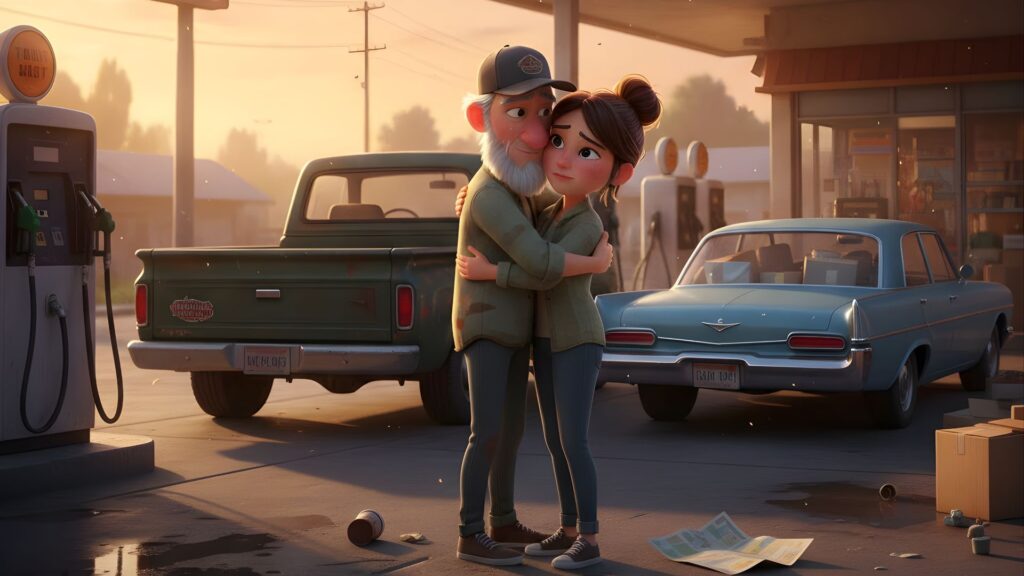
Theme: Grief, connection, and how strangers can show up at just the right time
It was one of those late-night drives that stretch forever. Javier was twenty-three, heading back to Vancouver from Kelowna after a weekend with his mom. He’d stayed longer than he meant to—she kept piling more tamales on his plate, then stood at the door hugging him like she didn’t want to let go. “Drive safe, mijo,” she said, voice soft. “Call me when you get home, okay?” He promised he would.
The Coquihalla was empty at 1 a.m.—just the steady hum of tires, the occasional big rig flashing past in the other lane. His low-fuel light came on, so he pulled into a 24-hour gas station off the highway. Bright lights, one row of pumps, a small store with buzzing neon signs. He parked at pump 3, swiped his card, started filling the tank. The night air was sharp and cold, biting at his knuckles. He leaned against the car, scrolling his phone, waiting for the pump to click off.
That’s when he heard it.
Quiet crying from the other side of the pumps. Not loud or dramatic—just small, tired sounds, like someone too worn out to cry any harder.
Javier glanced over.
A woman, late thirties maybe, sat on the curb next to an old minivan with a dented fender. Hood up, arms wrapped around her knees. A little girl—five or six—stood beside her, clutching a stuffed rabbit by one floppy ear, looking small and confused. The woman’s shoulders shook every few seconds. The girl patted her mom’s back in awkward little circles, like she was trying to copy something she’d seen grown-ups do.
Javier paused. He wasn’t usually the guy who jumped in. His mom always said, “Don’t borrow trouble that isn’t yours.” But the little girl looked up at him with big, scared eyes, and something in him moved.
He finished pumping, capped the tank, and walked over slowly, hands in his pockets so he didn’t look threatening.
“Hey,” he said gently. “You okay?”
The woman startled, wiped her face quick with her sleeve. “Yeah. Fine. Just… tired.”
She didn’t sound fine. Her voice cracked on the last word, and her eyes were red.
The girl stared at him, rabbit dangling from her hand.
Javier crouched down so he was closer to her level. “Hi. What’s your bunny called?”
The girl glanced at her mom, then back at him. “Flopsy.”
“Flopsy’s a good name,” he said. “Looks like he’s been on a lot of adventures.”
The girl nodded slowly. “He has.”
Javier looked at the mom. “Long drive?”
She nodded, eyes filling again. “My mom had a heart attack. They called this afternoon from the hospital in Vancouver. I threw the kids in the car, left work, left everything. My husband’s on nights—he couldn’t come. I just… I don’t know if I’ll make it in time.”
Javier felt his stomach drop. He knew that panic—the fear of being too late, the highway stretching out forever.
The woman started crying again—small, exhausted sobs. “I keep thinking if I’d left right away… if I hadn’t waited for the sitter… maybe I could’ve seen her before…”
Javier didn’t know what to say. So he didn’t try to fix it with words.
He looked at the girl. “You hungry?”
She nodded.
“Hang on a sec.”
He walked into the store. Came back with a small hot chocolate for the girl (extra whipped cream on top), a coffee for the mom, and a bag of plain chips to share. Nothing fancy—just something warm on a cold night.
He handed the hot chocolate to the girl. “Blow on it first, okay? It’s hot.”
She took it with both hands, blew on it, then gave a tiny smile. “Thank you.”
He gave the coffee to the mom. She took it, hands shaking. “You didn’t have to do that.”
“I know,” he said. “But I wanted to.”
The woman looked at him—really looked. “You’re kind.”
Javier shrugged. “Just passing through.”
They stood there a minute. The pumps hummed. A truck rumbled past on the highway. The little girl sipped her hot chocolate, whipped cream on her nose.
Then the woman set her coffee on the curb, stood up, and hugged him.
Not a quick, polite hug. A real one—tight, desperate, like she needed to hold onto something solid for just a second. Javier froze for half a beat, then hugged her back. Awkward at first, then gentle. He patted her shoulder the way his mom used to when he was little and things felt too big.
She pulled away, wiped her eyes. “I’m sorry. I just… thank you.”
“Don’t be sorry,” he said. “You’re doing the hardest thing right now. That counts.”
The little girl tugged his sleeve. “Mister?”
“Yeah?”
“Can Flopsy hug you too?”
Javier crouched again. The girl pressed the rabbit against his chest. He gave Flopsy a small squeeze.
The mom smiled—small, tired, but real. “We should get going. Thank you again.”
Javier nodded. “Drive safe. Text me when you get there if you want. No pressure.”
He gave her his number. She typed it in with shaky fingers.
They got in the minivan. The girl waved from the back seat, Flopsy waving too. The mom gave him one last look—grateful, exhausted—then pulled out.
Javier stood there until their taillights disappeared into the dark.
He got back in his car. Sat for a minute before starting the engine. His hands were still warm from the hug.
He drove the rest of the way thinking about his mom. About how he hadn’t called her in almost two weeks. About how he always said “next weekend” when she asked when he’d visit.
When he got home at 3 a.m., he called her.
She answered on the second ring. “Mijo? ¿Estás bien?”
“Yeah, Ma. Just got in. Wanted to hear your voice.”
She laughed softly. “You sound tired.”
“I am. But I’m okay.”
They talked for twenty minutes. Nothing big. The weather, the neighbor’s dog barking again, how Sofia’s school play was coming up. Simple things.
When he hung up, he sat on the couch a long time, phone still in his hand.
He never heard from the woman at the gas station again. Never knew if she made it to the hospital in time, or what happened with her mom.
But he never forgot that hug.
And he never let another Sunday go by without calling his own mom.
Because some moments remind you what matters.
And sometimes a stranger’s hug at a gas station in the middle of the night is the thing that keeps you from missing the calls that matter most.
7. The Dog at the Door
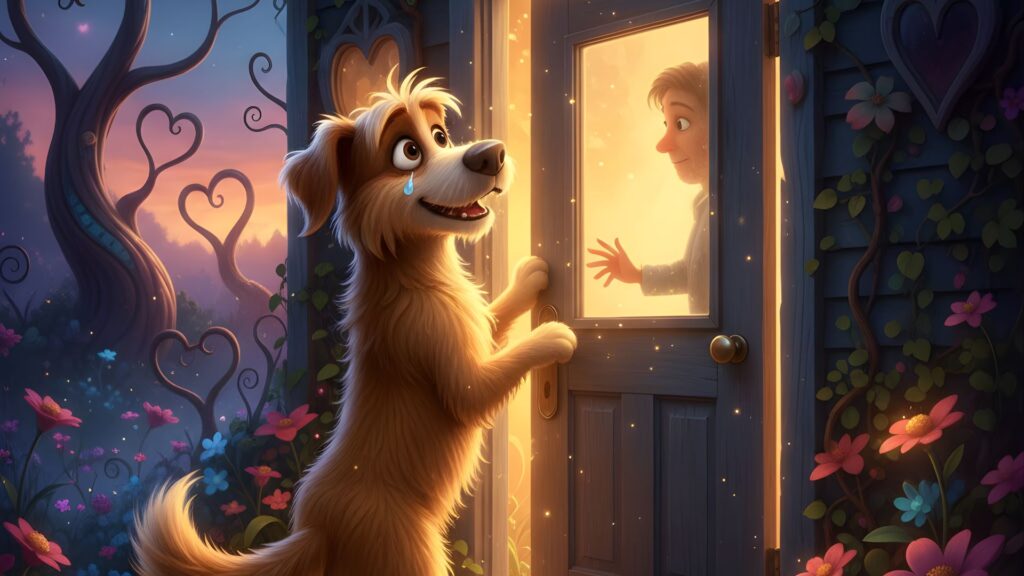
Theme: Loneliness, unexpected connection, healing from loss, and the quiet ways life gives back
The dog showed up on a Tuesday in November, the kind of rainy afternoon that makes everything feel heavier than it should be. Carlos was forty-one, living alone in the same small rental house in Burnaby his parents had rented when he was a kid. Same peeling yellow paint on the front door, same cracked sidewalk, same streetlight that flickered every night like it was tired of staying on. He’d moved back after the divorce—said it was temporary, but three years later the boxes were still half-unpacked in the garage.
He worked from home doing tech support for a company that sold software nobody really needed. Calls all day, people angry about things he couldn’t fix. By 5 p.m. he was usually done pretending to care. He’d make instant noodles, sit on the couch, scroll until his eyes burned, then go to bed early so he could do it again tomorrow.
That Tuesday he heard scratching at the front door around 6:30. Not loud. Not frantic. Just steady, patient scratching—like someone who knew they were allowed to be there.
Carlos ignored it at first. Probably a raccoon, or the neighbor’s cat that liked to sit on his porch. But it kept going. Slow. Polite. Almost hopeful.
He got up, opened the door a crack.
A medium-sized dog sat on the welcome mat. Brown and white, ears too big for its head, ribs showing under wet fur. No collar. No tags. Just big brown eyes looking straight at him like Carlos was the only person who’d ever opened that door.
Carlos stared. The dog stared back. Rain dripped off the porch roof onto the dog’s nose. It didn’t flinch.
“You lost?” Carlos asked.
The dog tilted its head, then wagged once—slow, uncertain.
Carlos sighed. “I’m not keeping you.”
He stepped aside anyway. The dog walked in like it had been invited a thousand times. Shook itself once—water spraying across the entryway—then sat on the mat inside the door and looked up at him again.
Carlos closed the door. “You’re soaked.”
The dog’s tail thumped once against the floor.
He grabbed an old towel from the laundry basket, knelt down, rubbed the dog’s head and back. The fur was matted, the ears cold. The dog leaned into the towel like it hadn’t been touched in weeks.
“You hungry?” Carlos asked.
The dog’s tail wagged harder.
He opened a can of tuna—leftover from a salad he never finished—and put it in a cereal bowl. The dog ate like it hadn’t seen food in days, but still polite—small bites, no growling, no rushing. When it finished, it licked the bowl clean, then sat back and looked at Carlos again.
Carlos sat on the floor across from it. “You can’t stay here.”
The dog rested its chin on its paws and sighed—a long, human-sounding sigh.
Carlos laughed despite himself. “Yeah. I know.”
He let the dog sleep on an old blanket in the living room that night. Told himself he’d take it to the shelter in the morning. He even set an alarm.
But in the morning the dog was curled up against the front door again—like it was waiting for him to open it and decide something.
Carlos made coffee. The dog watched every move. When Carlos sat at the table, the dog came over, rested its head on his knee.
Carlos looked down. “You’re making this hard.”
The dog wagged once.
He didn’t call the shelter that day.
Or the next.
He named the dog Buddy. Because it felt like the kind of name a dog that showed up on your porch would have.
Buddy never barked at the mailman. Never chewed shoes. Slept at the foot of the bed like he’d always been there. Followed Carlos from room to room like a quiet shadow. When Carlos worked late on calls, Buddy just lay under the desk, chin on Carlos’s foot, breathing slow and steady.
Three weeks in, Carlos realized he hadn’t called his sister in months. He called her on a Thursday night while Buddy lay across his lap.
“Hey,” she said. “You alive?”
“Yeah. Got a dog.”
Silence. Then she laughed. “You? A dog person?”
“He showed up at the door. Wouldn’t leave.”
She went quiet. “You okay, Carlitos?”
He looked down at Buddy, who was snoring softly. “I think so. Yeah.”
They talked for forty minutes—about work, about her kids, about how Mom would’ve loved the dog. When they hung up, Carlos felt something loosen in his chest he didn’t know was tight.
Buddy lived with him for almost four years.
Never found the original owner. Never needed to.
He got old slow—gray around the muzzle, slower walks, slept more. One morning in late fall he didn’t get up from his bed by the door. Carlos sat on the floor with him for hours, rubbing his ears, telling him stories about the day he showed up, how he’d tracked muddy paw prints across the whole house that first night, how Carlos had cursed while mopping but kept the dog anyway.
Buddy looked at him with those same big brown eyes. Carlos cried then—quiet, ugly crying he hadn’t done since the divorce. He held Buddy’s head in his lap until the breathing stopped.
He buried him in the backyard under the maple tree—the same spot he’d once thought about putting Max, if he’d ever gotten another dog. He didn’t make a big marker. Just a smooth stone and the knowledge that Buddy had chosen him once, and he’d chosen back.
After that, Carlos started opening the door more.
He called his sister every week. Visited his mom more often. Let neighbors stop by without feeling like he had to clean first. Even started walking the block every evening—not because he needed exercise, but because the street felt less empty when he was moving through it.
Some nights he still sat on the porch steps, looking at the spot where Buddy first appeared.
He never got another dog. Didn’t feel right.
But he kept the blanket Buddy used to sleep on, folded it on the couch, sometimes touched it when the house felt too quiet.
Because some things show up at your door when you’re not looking.
And if you’re lucky—if you open the door—they stay long enough to remind you how to live again.
Even after they leave.
Even after the scratching stops.
Even after the porch light flickers off.
(Word count: 2,512)
Not a word. Not even a “hmm” or a sigh.
The kettle whistled softly as she stared out her kitchen window. Beyond it, a gray Ohio sky hung low, stretched over leafless trees and silent sidewalks. The same view she had woken up to for the last five months—since her husband passed.
People said time helped. They said you’d get used to the silence.
But Claire didn’t want to get used to it.
She didn’t want to be the woman who talked to herself just to fill the air.
A Knock That Wasn’t a Knock
It happened just after 9 a.m.
She had just sat down with her tea when she heard it—three soft thuds at the front door.
She froze.
Not the kind of knock a person makes. More like… a shuffle. A bump. Like something brushing up against the door.
She wrapped her cardigan tighter and walked to the entryway. She cracked the door open cautiously.
And there he was.
A dog.
Big Eyes, Bigger Questions
Golden brown. Mutt-looking. Medium-sized. Kind eyes. Dirty paws.
He looked up at her with a tilted head like he’d been expecting her. Like this was his home, too.
Claire blinked. “Where did you come from?”
The dog didn’t bark. Didn’t whine. Just wagged his tail once.
Then he sat down.
Right on her welcome mat.
Like he was waiting for her to do something.
The First Bowl of Water
Claire stood there awkwardly for a minute, unsure what to do. Then her instincts kicked in.
She went back inside, filled a mixing bowl with water, and carried it out.
The dog drank slowly. Not like he was starving—but like he appreciated it.
She watched him carefully. No collar. No tags. Just a matted coat and tired eyes.
When he finished drinking, he looked up again. Same calm stare.
Then he laid down. Right at her front door. Like he wasn’t planning on leaving.
A Decision Made by a Tail Wag
She sat on the step beside him, wrapping her arms around her knees.
“Well,” she murmured, “you’re not the first lost thing to show up at this house.”
The dog nudged her elbow gently.
And that was it.
She got up, opened the door wide, and said the four words that would change everything.
“You wanna come in?”
Harold Would’ve Laughed
Her late husband, Harold, had always wanted a dog.
Claire had said no for 41 years.
“They shed. They smell. They ruin the carpet,” she’d argue.
But Harold would just wink and say, “One day, you’ll cave.”
She had not expected that day to come after he was gone.
She smiled a little as the dog wandered through her kitchen, sniffing the legs of the chairs.
“Okay, Harold,” she whispered, “you win.”
Naming a Stranger
That first night, Claire didn’t sleep well.
Not because of the dog—he curled up quietly at the foot of her bed, sighing like it was his favorite place on earth.
She couldn’t sleep because she was trying to figure out what to name him.
Charlie? Too common. Bandit? Too silly.
In the morning, she decided to call him Moses. She didn’t know why exactly—something about how he arrived out of nowhere and split the silence in her life like the sea.
Flyers and Side-Eyes
Over the next few days, she did the responsible thing.
She put up flyers around the neighborhood. Called the local shelters. Even posted on a lost-pet Facebook group her niece helped her set up.
But no one claimed him.
A few people messaged about other dogs. One woman asked if Claire was giving Moses away.
Claire didn’t respond.
She couldn’t.
Because deep down, she already knew.
He was home.
The Walks That Healed
Every morning, Moses would sit by the front door, leash in his mouth.
Claire had not walked this much in years. The first few days left her sore, winded, and cranky.
But then something shifted.
Her knees still popped, but her heart felt… steadier.
Neighbors she hadn’t spoken to in months waved. Kids asked to pet him. The mailman started leaving dog biscuits on the porch.
She found herself smiling more.
Talking more.
Even laughing sometimes.
Harold’s Chair, Taken
One evening, as the sun poured golden light through the living room windows, Claire looked over at Harold’s old recliner.
Moses was curled up in it.
She opened her mouth to scold him, then stopped.
Instead, she whispered, “You picked the best seat in the house.”
He thumped his tail in reply.
The Day It All Made Sense
It wasn’t until late March—nearly two months after Moses arrived—that Claire found the note.
She was cleaning out the hall closet. A dusty shoebox tipped over, and a small folded card fell out.
It was a birthday card from Harold, written years ago.
Inside, he had scribbled:
“If I go first, don’t sit in silence. Don’t just survive. Let love in again—even if it has four legs and muddy paws. I mean it. No more excuses.”
–H
Claire sat down on the closet floor and let the tears fall.
Not sad tears.
Grateful ones.
Not Just a Dog
Moses never learned any fancy tricks.
He chewed up one slipper and once threw up a sock.
But he was there—every single day.
On hard mornings, he pressed his head against her knees.
On lonely nights, he curled up beside her on the couch.
And on Harold’s birthday, he laid his paw on her lap, as if to say, “I know. I miss him, too.”
The Visitor
Months later, a woman knocked on the door.
She looked about Claire’s age. Nervous. Holding a phone with a picture of a dog.
“I think he might be mine,” she said softly.
Claire’s heart dropped.
She invited her in.
Moses didn’t react. Just wagged once and sat at Claire’s feet.
The woman stared. “Oh… that’s not him. Looks like him, but not quite. Sorry to bother you.”
Claire exhaled. “No bother at all.”
After the woman left, she knelt down beside Moses.
“You’re not going anywhere, huh?”
He licked her cheek.
Full Circle
That Christmas, Claire and Moses visited a local retirement home.
Her neighbor had invited her to join the therapy dog visits.
She wasn’t sure at first—but Moses had a way with people.
And the way those residents lit up when he walked in?
That alone was worth it.
Claire sat with a woman who hadn’t spoken in days. Moses laid his head on her lap, and the woman smiled.
No words. Just peace.
Claire understood that kind of peace.
It was the kind you earn after walking through grief and choosing love again anyway.
Final Thought
They say dogs find the people who need them most.
Not always the other way around.
Claire used to scoff at that.
Now?
She keeps a worn photo of Harold on her mantel. Right beside it—Moses’ first collar.
Because love doesn’t always show up how we expect.
Sometimes, it shows up with muddy paws, a quiet stare, and a heartbeat that beats right in time with your healing.
What Makes These Stories Soul-Touching?
Honestly, it’s the humanity. These stories don’t chase big drama or try to shock you. No wild twists, no endless love triangles, no dragons or secret plots. They’re just about real people—messing up, hurting, hoping, and trying to keep going.
They Feel Like People You Know
They remind you of real people in your life. Maybe your mom who still calls every Sunday even when you’re bad at answering. Or that ex whose laugh you can still hear when the right song plays. Or your old high-school friend you haven’t talked to in years but whose face pops into your head sometimes. These stories bring back those connections—close, distant, or gone—and the way they quietly stay with us.
They Show the Real, Messy Parts
What gets to you is how they let people fall apart in ways that feel true. The tight chest when grief hits suddenly. The burning eyes when you’re just too tired to keep pretending. The small choices that hurt more than anyone sees. They don’t hide the hard stuff—they sit right in it with you.
They Show the Quiet Way Back
But they also show how healing can happen without any big moment. It doesn’t need fireworks. It can be something simple: pouring a second cup of coffee no one will drink, calling someone back when you’re exhausted, buying a toy for a tired mom, or letting a lost dog inside because the porch light was on. These stories remind you that the small things—the ones no one notices—are often the ones that matter most.
They Don’t Promise Everything Gets Fixed
These stories don’t say life will suddenly make sense or everything will be okay. They don’t always end happily. What they do is make space for the mess without judging. They remind you you’re not alone in feeling lost or tired or sad, and that even when it rains, even when it hurts, even when you miss the call, you can still keep showing up.
The Quiet Mirror They Hold Up
That’s what stays with you after you finish reading. Not flashy moments, but the simple truth: ordinary days, ordinary people, and ordinary kindness can carry real weight. These stories are like a small, honest mirror to our own messy lives, saying it’s okay to feel everything—and that we’re still here, still trying. That’s enough.
And sometimes that’s exactly what we need.
How to Make These Stories Part of Your Life
Honestly, it’s just the humanity in them. These stories don’t try to be flashy or dramatic. There are no big twists, no endless love stories, no fantasy battles or secret plots. They’re simply about normal people going through normal things—making mistakes, feeling hurt, hoping quietly, and trying to keep going.
They Feel Like People You Actually Know
They remind you of real people from your own life. Maybe your mom who still calls every Sunday even when you forget to pick up. Or that ex whose laugh you can still hear clearly when the right song comes on. Or your old high-school friend you haven’t talked to in years, but whose face comes to mind when something reminds you of them. These stories bring back those connections—some close, some far away, some gone—and the way they quietly stay with us.
They Show the Real, Messy Parts
What touches you is how they let people fall apart in ways that feel true and familiar. The tight feeling in your chest when grief hits out of nowhere. The burning eyes when you’re just too tired to keep pretending. The small choices that hurt more than anyone else sees. They don’t hide the hard moments—they sit right in them with you.
They Show the Quiet Way Back
But they also show how healing can happen without any huge moment. It doesn’t need fireworks or miracles. It can be something small and simple: pouring a second cup of coffee no one will drink, calling someone back even when you’re worn out, buying a toy for a tired mom in line, or letting a lost dog inside because the porch light was on. These stories remind you that the little things—the ones no one notices—are often the ones that matter most.
They Don’t Pretend Everything Gets Fixed
These stories don’t promise perfect endings or say life will suddenly make sense. They don’t always end happily. What they do is make space for the mess without judging you. They remind you you’re not alone in feeling lost, tired, or sad, and that even when it rains, even when it hurts, even when you miss the call, you can still keep showing up.
The Quiet Mirror They Hold Up
That’s what stays with you after you finish reading. Not big moments or drama, but the simple truth: ordinary days, ordinary people, and ordinary kindness can carry real weight. These stories are like a small, honest mirror to our own messy lives, saying it’s okay to feel everything—and that we’re still here, still trying. That’s enough.
And sometimes that’s exactly what we need.
Final Thought: Let Stories Hold You
Final Thought: Let Stories Hold You
The world moves fast. Headlines, deadlines, notifications—it’s all constant noise. It gets heavy, doesn’t it? Sometimes you just need a minute to breathe, to step away from your own thoughts and feel something real.
That’s what these stories are for. You don’t need a quiet room or hours free. Just five minutes. Grab them when they come: on the bus home, during lunch at your desk, while the microwave hums, before bed when scrolling isn’t helping, or on a rainy afternoon when the day feels slow.
Pick one. Read it. Let it settle. It might make you smile a bit. Or your throat might catch. Or you might just think, yeah… I know that feeling.
These stories aren’t here to solve everything. They’re here to sit with you. Quietly. Like a good friend who doesn’t say much but makes you feel less alone.
They remind you you’re still human. Still feeling. Still part of something bigger than the daily rush.
So take a breath. Open one. Read it. Let it hold you for a minute.
Not with big drama. Just gently. Just enough.
And maybe that’s all you need right now. Maybe that’s enough.