Whether you’re sipping your coffee in the morning rush, stuck in traffic staring at brake lights, or lying in bed scrolling before you finally turn off the light—sometimes that’s all the time you have. A quick handful of minutes between one thing and the next.
That’s exactly where these 5 minute short stories for adults fit perfectly.
They’re short enough to slip right into your day without asking for more than you can give. No need to block off an hour or find the “right” moment. Just open one when you catch a breath. In five minutes, you get a small escape—a quiet twist, a little smile, a thought that lingers after you close the screen.
They don’t demand your full attention or a whole evening. They meet you where you are: tired, busy, distracted, or quietly needing something real. And in that short time, they let you feel something—without the endless scroll, without committing to hundreds of pages.
It’s like taking a real breath between the chaos. Simple, quick, and meaningful. Just the way good stories should be.
Want to dive into one right now? Pick one. Take five minutes. Let it sit with you.
You’ve got the time. And maybe that’s all you need today.
The Appeal of 5-Minute Short Stories
These stories are short, easy to read, and surprisingly good at giving you exactly what you need in a busy day. Here’s why they feel so good.
Quick & Fun
They’re perfect for a short break, your commute, or right before bed. No long chapters or complicated plots. Just a fast, enjoyable read that fits into whatever little time you have.
Big Impact, Little Time
In just a few paragraphs, a story can make you laugh, surprise you with a twist, warm your heart, or give you that quiet chill. You don’t need hours to feel something real—they deliver it fast and leave it with you.
Something for Everyone
Mystery, romance, sci-fi, humor, quiet heartbreak—there’s always one that matches your mood. One might be light and funny, the next might hit a little deeper. You can switch whenever you want without committing to a whole book.
Fits Into Any Schedule
Life is busy. These stories don’t ask for your whole evening. They slip right into the gaps: five minutes in line, a pause between meetings, or a moment before sleep. No guilt about not finishing. You get the full thing every time.
Great for Any Reader
Whether you love books and miss reading, or you’ve never been much of a reader, these stories make it easy. They’re approachable, engaging, and fun—no pressure to keep up with a long novel. They help you enjoy reading again, one quick moment at a time.
A Mini Escape
In five minutes, you step into another world. You meet real-feeling people, feel their joys or struggles, and come back to your day a little refreshed. It’s a small break from the noise—a quick trip somewhere else that reminds you stories can still move you.
That’s the beauty of 5-minute short stories. They don’t demand much. They just give you a little something real when you need it most.
Ready to try one? Pick a story. Take five minutes. See what happens.
5-Minute Short Stories for Adults
In just five minutes, these short stories offer moments of truth, emotion, and reflection that stay with you long after the last line.
The Last Notification
Maria Delgado was thirty-four and carried the quiet weight of a life that had never quite settled. She worked nights as a nurse’s aide at St. Mary’s Hospital—turning patients, changing sheets stiff with sweat and antiseptic, emptying bedpans while the fluorescent lights buzzed overhead. The shifts were long, the pay thin, but it kept the rent paid and her daughter Sofia fed. Sofia was nine now—curious, quick with questions, always asking things Maria answered with tired smiles and “Because life, mija. Life keeps going.”
Her father, Javier, lived alone in the small stucco house in East LA where Maria grew up. Two bedrooms, one bathroom, kitchen that still smelled faintly of coffee and motor oil even after he retired from forty years as a mechanic. His hands were still dark under the nails, knuckles scarred from years of wrenches and engines. Every Sunday night at 8:30 sharp, his name would light up her phone. The same conversation, every time: “¿Cómo estás, mija?” “Bien, Papi. ¿Y tú?” “Aquí sigo. ¿Sofia ya hizo la tarea?” “Sí, Papi. She’s good.” He’d tell her about the neighbor’s chihuahua barking at shadows, how the Dodgers were choking again, how he still missed her mother’s arroz con pollo—the way the rice got crispy at the bottom of the pan. Maria would promise, “Next weekend, Papi. We’ll come over.” She never did. Work. Sofia’s school projects. Bills. The car needing brakes. Always something.
The last Sunday he called was October 12. Maria was in the hospital break room, eating a cold bean burrito between floors. Her phone buzzed at 8:32. “Papi” on the screen. She was exhausted—feet throbbing, head aching from the lights. She let it go to voicemail. Told herself she’d call back tomorrow after dropping Sofia at school. She always did.
He left a message. Short. His voice quieter than usual, a little rough, like he’d been coughing.
“Mija, solo quería oír tu voz. Sofia me dijo que sacaste A en el examen de matemáticas. Estoy orgulloso de ti, de las dos. Cuídate mucho, ¿sí? Te quiero.”
She listened to it the next morning while Sofia ate cereal at the kitchen table, milk dripping down her chin. Maria smiled—her dad still mixed them up sometimes, thought Sofia was the one getting A’s. She meant to call him back after school drop-off. Then the hospital texted for overtime. Then Sofia forgot her lunch bag. Then the car needed gas and the line at the station was long. Then it was midnight and she collapsed into bed without thinking.
The next Sunday the phone didn’t ring at 8:30.
Maria noticed around 9:20. She stared at the dark screen, waiting. Nothing. She told herself he’d fallen asleep watching the game, or his phone had died. He was seventy-three. Old men forget to charge things.
Monday. Still nothing.
Tuesday. Same.
Wednesday she started to worry. Called him. Straight to voicemail. Called again. Same. Texted: “Papi, ¿todo bien? Llámame cuando puedas.” No reply. No three dots. Nothing.
Thursday she got off early—rare luck. Drove the forty minutes to his house, heart pounding louder the closer she got. Sofia was at her aunt’s for the afternoon.
The front door was unlocked—same as always. She called out, “Papi?” The house smelled like coffee grounds and old newspapers. No answer.
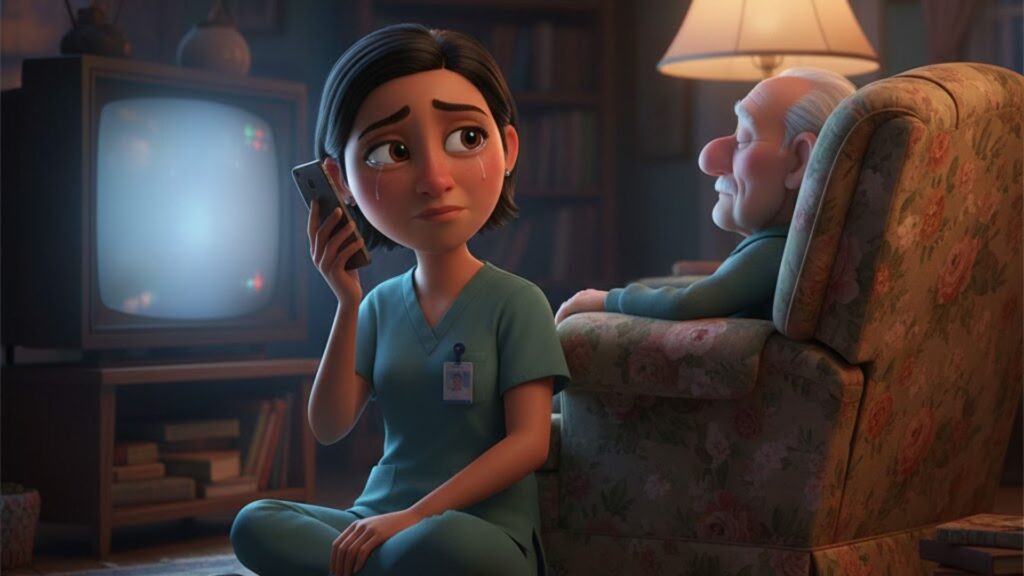
She found him in the recliner in the living room. Eyes closed. Remote loose in his lap. The TV still on mute, some old Western flickering blue across his face. The phone on the side table, screen dark. She knew before she touched his hand—cold, stiff.
Heart attack. Quiet. The paramedics said it probably happened Sunday night. He’d been gone four days before anyone checked.
Maria sat on the floor next to the recliner. Didn’t cry at first. Just held his hand and listened to the house breathe around her. The fridge hummed. The clock ticked. Outside, the neighbor’s chihuahua barked at nothing.
She played the last voicemail again. His voice filled the quiet room.
“Mija, solo quería oír tu voz…”
She cried then—deep, choking sobs that hurt her ribs. She cried for the Sundays she’d let go to voicemail. For the visits she kept postponing. For the “next weekend” that turned into never. For the man who’d raised her alone after her mom died of breast cancer when Maria was twelve—who’d worked doubles so she could finish nursing school, who’d babysat Sofia when she was little so Maria could sleep after night shifts, who’d never once asked for anything except her voice on Sunday nights.
She cried until Sofia’s aunt dropped her off. Sofia walked in, saw her mom on the floor, saw Abuelo in the chair, and froze in the doorway.
Maria pulled her close. “Abuelo se fue al cielo, mija.”
Sofia didn’t cry right away. She just looked at the phone on the table. “He called me last week. Said he was proud of my math test. He said I’m smart like you.”
Maria swallowed the lump in her throat. “He was always proud of you.”
They sat there together until the funeral home came.
Months later Maria still kept her father’s phone. Charged it every few days on the kitchen counter. Never deleted the voicemails. Sometimes late at night, when Sofia was asleep and the apartment was too quiet, she played them. His voice. Steady. Warm. A little raspy from years of cigarettes he swore he’d quit.
She started calling Sofia every day after school. Just to hear her voice. “¿Cómo estuvo tu día, mija?” Sofia would ramble—about the girl in class who stole her pencil, about the new book she was reading, about how she wanted to try out for soccer. Maria listened. Really listened. Didn’t rush her off the phone. Didn’t let calls go to voicemail.
One Sunday evening Sofia was at a sleepover. The apartment felt too big, too empty. Maria sat at the kitchen table with her father’s phone in her hand.
She scrolled to the last voicemail. Played it again.
“Mija, solo quería oír tu voz. Sofia me dijo que sacaste A en el examen de matemáticas. Estoy orgulloso. Cuídate, ¿sí? Te quiero.”
She whispered back to the empty kitchen, “Te quiero también, Papi. I’m sorry I missed your call.”
The phone stayed silent.
But Maria kept calling Sofia every day. Kept listening. Kept showing up.
Because some calls you can’t get back.
And some you make sure never get missed again.
Years passed. Sofia grew into a teenager—taller than Maria, sharp-tongued, full of opinions. She still answered Maria’s calls, though sometimes with an eye-roll and “Mom, I’m busy.” Maria didn’t mind. She kept calling anyway.
One evening in late fall, Sofia was home from college for the weekend. They were in the kitchen, Sofia chopping onions for dinner, Maria stirring a pot of beans. The old phone—Javier’s phone—sat on the counter, still charged out of habit.
Sofia glanced at it. “You still keep Abuelo’s phone?”
Maria nodded. “Yeah. I like hearing his voice sometimes.”
Sofia was quiet for a minute. Then she said, “I miss him. He always said I was smart like you.”
Maria smiled, eyes stinging. “You are.”
Sofia set the knife down. “Mom… I’m glad you started calling me every day. After he died. I didn’t realize how much I needed it until you did it.”
Maria looked at her daughter—taller, older, but still her little girl. “I needed it too.”
They stood there, onions forgotten, beans simmering. No big words. No tears. Just the quiet understanding that some habits are worth keeping, some calls are worth answering, and some silences are worth filling with voices you love.
Maria reached over, touched Sofia’s hand. “Dinner’s almost ready.”
Sofia smiled. “Yeah. Let’s eat.”
The phone stayed on the counter, silent.
But the habit lived on.
And that was enough.
Mirror Debt
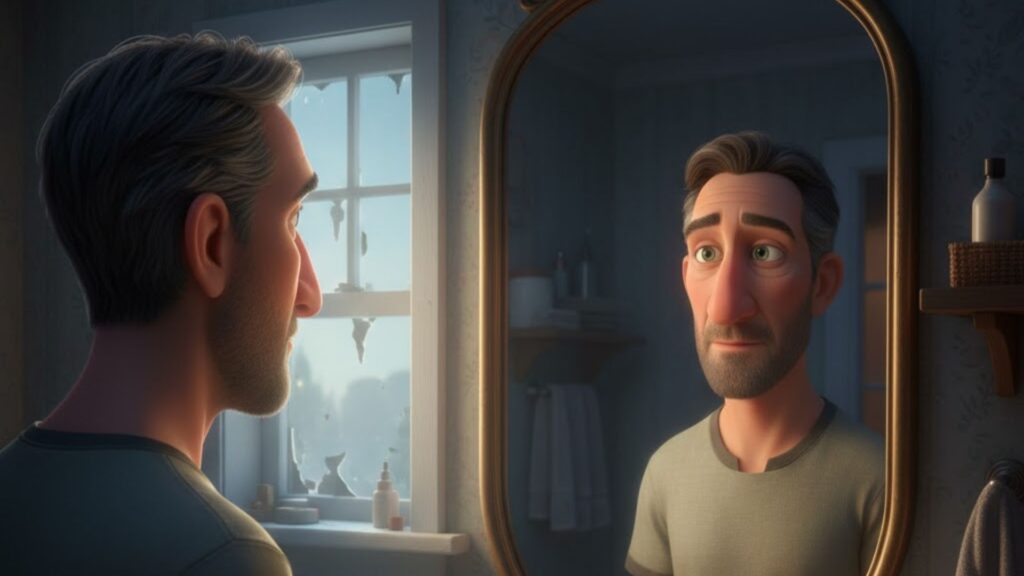
Marcus had been whispering “thank you” to his reflection every morning for twenty-three years. It started as a dumb joke in his mid-twenties. He’d read one of those self-help books his girlfriend at the time left on the coffee table—something about positive affirmations and self-love—and rolled his eyes so hard he almost pulled a muscle. So he stood in front of the bathroom mirror one morning, half-shaved, toothbrush in hand, and said, “Thank you, Marcus. You’re doing great.” Then he laughed at how ridiculous he sounded and went to work.
The next day he did it again. And the day after that. It became habit. A small, private ritual. No one knew. Not his wife, not his coworkers, not even his best friend. Just a quiet “thank you” to the guy staring back—tired eyes, graying temples, the same crooked smile he’d had since high school. It wasn’t about believing the words. It was about saying them anyway.
Twenty-three years later he was forty-eight. Divorced. Living alone in the same apartment he’d rented when the marriage ended. The mirror was the same one—cheap, full-length, slightly warped at the edges. He still whispered “thank you” every morning before he left for the office. Still felt a little silly doing it. Still did it anyway.
One Tuesday in October he said it like always. “Thank you.”
The reflection answered.
“You’re welcome. Now pay up.”
Marcus froze. Toothpaste dripped from his brush onto the sink. He stared. The reflection stared back—same tired eyes, same crooked smile. But the voice had come from inside the mirror. Low. Calm. A little amused.
He laughed once—short, nervous. Shook his head. “Too much coffee,” he muttered. “Or not enough sleep.” He rinsed his mouth, wiped the sink, grabbed his keys, and left for work. Told himself it was nothing. Brains do weird things when you’re tired.
The next morning he stood in front of the mirror again. Shaved. Brushed. Avoided eye contact for a second. Then he whispered, “Thank you.”
The reflection whispered back.
“Interest is compounding.”
Marcus’s stomach dropped. He stepped closer. The reflection stepped closer too. Same suit. Same tie. Same small nick on his chin from the razor. But the eyes—they looked older. Not just tired. Weary. Like they’d seen more mornings than Marcus had lived.
He backed away. “This isn’t funny.”
The reflection didn’t move. Just watched him leave.
By Friday the reflection had changed. Marcus stood in front of the mirror tying his tie. The knot came out crooked—same way it used to when he was married and in a hurry, when his wife would fix it for him with a small smile and a quick tug. He frowned, loosened it, tried again. Still crooked.
He looked up.
The reflection’s tie was crooked too. Exactly the same way.
Marcus’s hands shook. He stepped back. The reflection stepped back. Same crooked tie. Same small frown. Same everything—except the eyes. The reflection’s eyes looked… disappointed.
He stopped looking in mirrors after that.
He avoided them at home. Covered the bathroom one with a towel. Used the small hand mirror in the drawer when he needed to shave, eyes down. At work he used the chrome faucet in the bathroom to check his hair—quick glances, never long enough to see his full face. He told himself it was fine. He told himself he was fine.
But every morning he still felt the pull. The old habit. The quiet “thank you” he couldn’t quite let go of.
One evening he came home late. Rain on the windows. Apartment dark except for the streetlight glow coming through the blinds. He walked past the bathroom. The towel had slipped. The mirror was uncovered.
He stopped.
Looked.
The reflection was already looking back.
No tie this time. Shirt sleeves rolled up the way Marcus used to wear them when he was alone, working late on freelance projects after the divorce. Hair a little messier. Eyes tired but sharp.
Marcus spoke first. Voice low.
“What do you want?”
The reflection answered without hesitation.
“You owe me twenty-three years.”
Marcus laughed—short, bitter. “Of what?”
“Of pretending.”
The reflection stepped closer to the glass. Marcus didn’t move back.
“You thanked me every day,” the reflection said. “Thanked me for showing up. For getting out of bed. For going to work. For paying the bills. For raising Sofia. For surviving the divorce. For not drinking too much. For not falling apart completely. You thanked me like I was separate from you. Like I was someone else doing the hard part while you just watched.”
Marcus felt his throat close. “I was doing it.”
“You were,” the reflection said. “But you thanked me instead of thanking yourself. You thanked the mirror instead of the man in it. You gave the credit away. To me. To the reflection. To habit. Never to the person who actually carried it.”
Marcus looked down at his hands. They were shaking.
“I didn’t know how,” he whispered.
“I know,” the reflection said. Softer now. “But the debt is due.”
Marcus looked up. “What do you want?”
The reflection smiled—small, sad, the same crooked smile Marcus saw every day.
“I want you to stop thanking me. Stop thanking the mirror. Start thanking the man who actually did the work. The one who got up every morning. The one who kept going. The one who’s still here.”
Marcus stared.
The reflection continued. “You thanked me for twenty-three years. That’s a lot of credit. A lot of debt. Interest is high. The only way to pay it back is to take the credit back. To own it. To say thank you to yourself. To the man in the mirror. Not as a joke. Not as habit. For real.”
Marcus swallowed. “What if I can’t?”
“You already are,” the reflection said. “You’re here. Talking to me. That’s the first payment.”
Silence stretched between them. Rain tapped the window. The streetlight flickered.
Marcus looked at his reflection—really looked. Saw the gray in the hair. The lines around the eyes. The small scar on the chin from a fall when he was thirty. Saw the man who had survived a marriage ending, a daughter growing up, a job that drained him, nights alone, days that felt endless. Saw the man who kept going anyway.
He spoke. Voice low. Rough.
“Thank you.”
The reflection waited.
Marcus tried again. Slower. Real.
“Thank you… for getting me through. For not giving up. For raising Sofia. For paying the rent. For staying. For still being here.”
The reflection smiled—small, real, the same crooked smile.
“You’re welcome,” it said. “Now keep paying.”
Marcus nodded once. Turned off the light. Walked to the bedroom.
The next morning he stood in front of the mirror again. No towel. No avoidance.
He looked at himself. Looked at the man who had carried it all.
“Thank you,” he said. Not a whisper. Not a joke. Just quiet. Honest. Real.
The reflection didn’t answer.
It didn’t need to.
The debt was being paid.
One morning at a time.
One “thank you” at a time.
To the man who had always been there.
To the man who was finally learning to thank himself.
The Unsent Invoice
Echo Chamber
The Unsent Invoice
Elena had been running her small bookkeeping business from her third-floor apartment in Montreal’s Plateau neighborhood for six years. The place was modest—one bedroom, a living room she’d turned into an office, a kitchen that smelled faintly of coffee and old books. No employees. No fancy signage. Just a folding table by the window overlooking the maple tree that changed colors with the seasons, a second-hand laptop, a stack of color-coded folders, and the low hum of the radiator in winter. She liked it that way. Simple. Controllable. No one to answer to except the clients who trusted her with their numbers.
Paul had been one of her first. Quiet architect in his late forties, always dressed in dark coats and darker glasses, hair starting to silver at the temples. He never said much. Dropped off receipts in a neat white envelope every quarter, paid early, and tipped generously—always an extra hundred or two “for the coffee,” he’d write on the memo line, even though she drank tea. She’d smile when she saw it, deposit the check, and move on.
Five years passed like that. Steady. Predictable. Then the envelopes stopped arriving.
First quarter of the sixth year, nothing. No reply to her polite reminder email. Second quarter—same silence. She waited another month, then sent the final invoice: $847 for the last three months of work. She knew it would bounce. She sent it anyway. Habit. Professional courtesy. Closure.
Months passed. Silence.
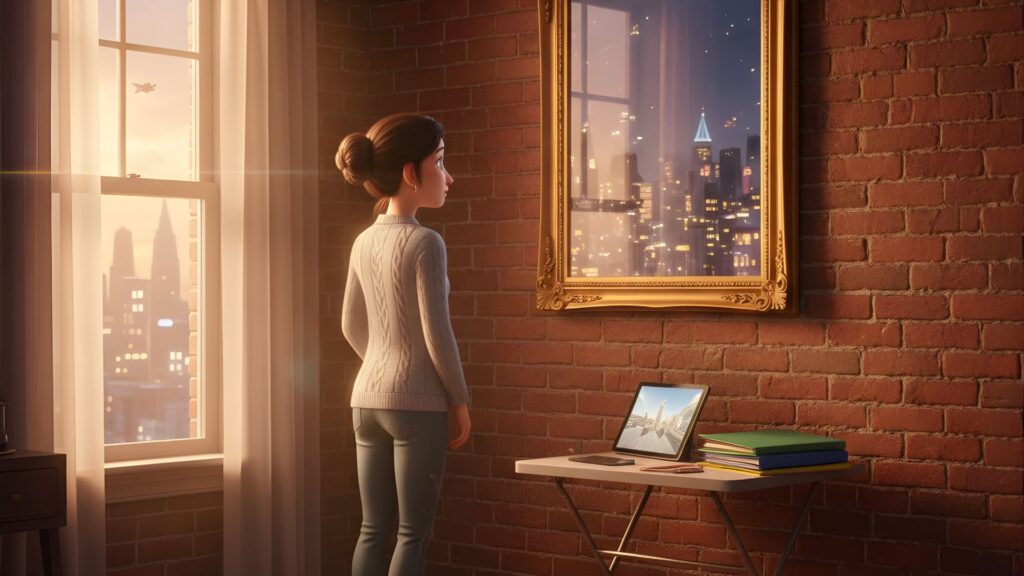
One gray Tuesday in late March, a package arrived. No return address. Just her name in careful block letters. Inside was a rolled blueprint—architectural plans of her own building, third floor marked in red pencil. One wall in her living room had been redrawn: thick brick turned to glass, floor to ceiling, transparent. Tucked inside the roll was a check. Exactly $847. And a small note in the same careful handwriting:
“For transparency. You always saw through the numbers.”
Elena stared at it for a long time. The check. The blueprint. The glass wall.
She framed the blueprint the next week. Hung it on the opposite wall from where the real one stood. Sometimes at night, after Sofia was asleep and the apartment was quiet, Elena would stand in front of the real wall—plain brick, chipped paint, a few framed photos of her daughter—and wonder.
Was he still watching?
She never saw Paul again. Never heard from him. The check cleared. The invoice was paid. The account closed.
But the blueprint stayed.
And every so often, when the city outside was loud and her own thoughts were louder, she’d stand against that brick wall, press her back to it, and look across the room at the glass version on the frame.
Transparency.
He’d paid for it.
She’d given it for years—quietly, without fanfare, just numbers adding up, deductions taken, balances carried forward. She’d seen through the numbers for him, made sense of the chaos, handed him order every quarter.
And he’d seen through her numbers too.
Seen the late nights when she worked until 2 a.m. to finish his reports. Seen the single-mom tax forms she filed for herself. Seen the way she rounded down her own fees sometimes so clients wouldn’t walk away. Seen the way she kept his account open long after the work stopped, because closing it felt like admitting defeat.
So he paid the debt.
And redrew the wall.
Not to scare her. Not to spy.
To say: I see you too.
Sometimes she’d stand there, hand on the brick, and whisper to the empty room, “You’re welcome.”
And sometimes she’d laugh—soft, tired, real—because the whole thing was absurd and beautiful at the same time.
She never took the blueprint down.
She never stopped standing against that wall on quiet nights.
Because some debts aren’t paid with money.
Some are paid with transparency.
And some walls—real or drawn—become mirrors when you need them most.
The apartment had always been small. One bedroom for her and Sofia when she visited, the living room turned office, a kitchen that doubled as dining room. But after the blueprint arrived, the space felt different. The real wall—plain brick, chipped in places, holding up photos of Sofia at five, ten, thirteen—became something she noticed more. She’d touch it sometimes, palm flat against the cool surface, feeling the texture of the paint, the slight roughness where the years had worn it down.
Across the room, the framed blueprint hung in a simple black frame she’d bought at the corner store. The glass wall was drawn with clean lines, precise measurements. Floor to ceiling. No curtains. No obstructions. Just transparency.
She never told anyone about it. Not her sister. Not Sofia. Not her few friends from the neighborhood book club. It felt private. Personal. Like a conversation only she and Paul were having, even though he was gone.
Sofia came home for Christmas that year. Sixteen now, taller, sharper around the edges, full of opinions and stories from school. She noticed the new frame right away.
“What’s that?” she asked, pointing.
Elena shrugged. “A client sent it. Architectural drawing of the building.”
Sofia stepped closer. “Why is one wall glass?”
Elena smiled. “He said it was for transparency.”
Sofia raised an eyebrow. “Weird client.”
“Yeah,” Elena said. “Weird.”
Sofia didn’t ask more. She dropped her bag, hugged her mom, and started unpacking.
But later that night, when Sofia was asleep in the bedroom, Elena stood in the living room again. Hand on the brick. Eyes on the glass.
She thought about Paul. About the envelopes. About the tips. About the silence after the invoices stopped. About the package that arrived months later like an answer to a question she hadn’t asked.
She thought about the years she’d spent seeing through other people’s numbers—balancing books, spotting deductions, making sense of chaos. She thought about how she’d never asked Paul to see through hers.
But he had.
And he’d paid.
She whispered to the empty room, “Thank you.”
The wall didn’t answer.
It didn’t need to.
The debt was settled.
And the wall—real brick on one side, drawn glass on the other—stood between them like a promise.
Transparency.
She kept standing against that wall on quiet nights.
She kept looking across at the glass.
She kept feeling seen.
Even if only for a moment.
Even if only on paper.
Even if only by someone who’d paid the debt and walked away.
Because some invoices aren’t sent.
Some are just understood.
And some walls—real or imagined—let the light through when you need it most.
Echo Chamber
They had the kind of fight that doesn’t explode in one big moment but simmers for hours, each sentence cutting a little deeper until the air in the apartment felt thick and hard to breathe. It wasn’t about one single thing. It was the dishes she left in the sink every night because she was too tired to deal with them after work. It was the way he disappeared into his laptop during dinner, answering emails while she talked about her day. It was the way they’d both slowly stopped asking “How are you really?” and just accepted “fine” as the answer, even when it wasn’t. The fight ended the way most long-simmering ones do—exhausted, with neither of them willing to back down but also too worn out to keep going.
“Let’s just… give each other space,” she said, voice flat, eyes on the floor.
He nodded once. “Yeah. Space.”
They lived in a one-bedroom apartment. Space was a joke, but they tried anyway. She moved to the guest room—the tiny second bedroom they mostly used for storage and the occasional visit from Sofia, their nine-year-old niece who stayed over sometimes. He took the couch in the living room. They agreed on the rules: no calls, no texts, no knocking on doors to “check in.” Just silence.
The silence was louder than any shouting match they’d ever had.
The apartment was small. Thin walls. Old pipes that groaned when the heat came on. Every sound carried.
At night she could hear him breathing through the wall—slow, steady inhales and exhales, the way he always breathed when he was trying to fall asleep but couldn’t quite get there. She lay on her side facing the wall, listening, wondering if he was listening back. He probably was. She heard him shift, sigh, turn over. The couch springs creaked every time he moved, a small, familiar complaint that used to make her smile when they were still sharing a bed.
He heard her too. The soft rustle of pages when she read in bed. After the fight she’d bought a stack of self-help books—titles she’d sworn she’d never touch: The Dance of Anger, Hold Me Tight, The Seven Principles for Making Marriage Work. She read them under the covers with a small flashlight, pages turning slowly, like she was afraid he’d hear and know she was trying to fix something she wasn’t sure could be fixed.
She didn’t know he could hear every page turn.
He didn’t know she knew he was listening.
Days blurred into each other. They moved around the apartment like ghosts trying not to bump into one another. She’d make coffee in the morning; he’d wait until she left the kitchen before coming in. He’d shower; she’d stay in the guest room until the water stopped and the steam smell faded. They ate at different times. Watched different shows on different devices with earbuds in. The silence wasn’t angry anymore. It was careful. Fragile. Like they were both afraid of breaking something that was already cracked beyond repair.
One evening she couldn’t take the quiet anymore.
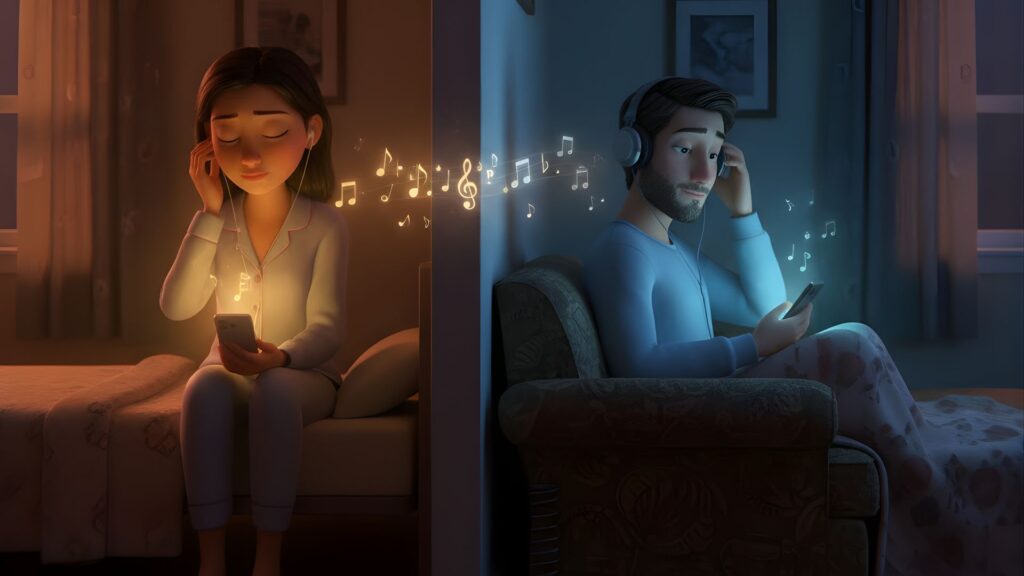
She sat on the guest room bed, phone in hand, staring at the wall that separated them. She opened Spotify. Found their old song—the one they used to play on repeat during long drives up the coast, the one they’d danced to in the kitchen when they were still the kind of couple who danced in the kitchen without caring who saw.
She hit play. Low volume. Just enough to hear the first notes.
The song filled the small room. She closed her eyes. Let the memory of those drives wash over her—the way he’d sing off-key on purpose to make her laugh, the way she’d rest her hand on his knee, the way the world outside the car didn’t matter as long as they were in it together.
She turned the volume up a little.
Still nothing from the living room.
She turned it up more.
The couch springs creaked. Footsteps. Slow. Hesitant.
She opened the guest room door.
He was standing in the hallway, wearing headphones. The same song playing on his phone. He looked at her. She looked at him.
For a second neither moved.
Then they both laughed—short, sharp, surprised. The kind of laugh that comes out when something hurts and heals at the same time.
She stepped back. Closed the door.
He walked back to the couch.
The silence returned.
But now it felt different. Chosen. Not forced. Not punishing. Just… there.
The next morning she made coffee. Left a mug on the counter for him. No note. No words. Just the mug.
He drank it.
The day after that he left her favorite tea bag next to the kettle.
She used it.
They didn’t talk about it. Didn’t need to.
The silence stayed.
But it wasn’t empty anymore.
It was full of small things: the creak of the couch when he shifted, the rustle of pages when she read, the low hum of the same song playing through headphones at night.
They were still giving each other space.
But the space felt warmer now.
Like they were both still in it together.
Even when the doors were closed.
Even when the words weren’t said.
Even when the only thing connecting them was a wall and a song they both still knew by heart.
Weeks passed like that. Small gestures instead of big conversations. A shared glance in the hallway. A plate of leftovers left in the fridge with a sticky note that just said “eat me.” A blanket draped over the back of the couch when she knew he’d be working late.
They didn’t rush to fix everything. They didn’t sit down for a big talk. They just let the silence do its work—slowly, carefully, letting the sharp edges soften.
One Sunday morning she woke up early. Made coffee for both of them. Carried two mugs to the living room.
He was already awake, sitting on the couch with his laptop open, but he closed it when she walked in.
She handed him a mug. Sat on the other end of the couch.
They drank in silence for a minute.
Then she said, “I miss you.”
He looked at her—really looked. “I miss you too.”
Another minute passed.
“I’m sorry,” he said. “For the emails during dinner. For disappearing into work. For assuming ‘fine’ was enough.”
She nodded. “I’m sorry for the dishes. For not asking how you were. For letting the silence grow until it felt too big to cross.”
They didn’t hug. Not yet. They just sat there, side by side, drinking coffee.
The silence came back.
But this time it wasn’t heavy.
It was comfortable.
Like a room you’ve lived in for years and finally remembered how to breathe in.
They started small.
Dinner together again—no phones.
A walk around the block after work.
Talking about nothing important. Talking about the important things slowly, carefully.
They didn’t fix everything overnight. Some things stayed broken for a while.
But the silence wasn’t a wall anymore.
It was a space they both chose to fill—little by little, day by day.
And sometimes, late at night, when the apartment was quiet and they were both in their own rooms, one of them would play their old song on low volume.
Not to test the other. Just to remember.
And the other would listen through the wall.
And smile.
Because the silence had become something else.
Not an ending.
Just a pause.
A pause between two people remembering why they started.
A pause long enough to hurt.
But short enough to heal.
And that pause— that careful, chosen silence— was enough to keep the door from closing for good.
The Replacement
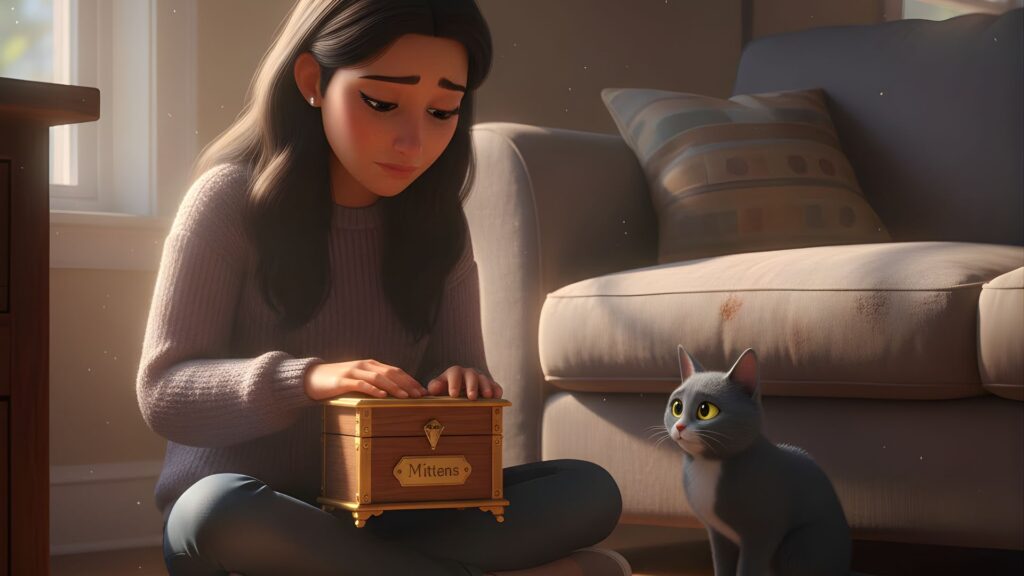
Mara had lived alone with Theo for seventeen years. He was a Russian Blue mix—gray fur soft as smoke, white chest, white paws, one crooked whisker on the left side that always made her smile. She’d found him at a shelter when she was twenty-three, fresh out of university, broke, and convinced she couldn’t take care of anything. Theo proved her wrong. He slept on her pillow, waited by the door when she came home, purred through every breakup, every move, every job loss. He was small, stubborn, and hers.
He died on a Thursday in late autumn. She came home from work and found him on the rug by the window, curled in the last patch of sun. No struggle. No warning. Just gone. She sat on the floor beside him for hours. Stroked his fur. Talked to him like he could still hear. When the sun moved off the rug she wrapped him in his favorite blue blanket—the one he always dragged off the couch—and carried him to the vet. They gave her a small wooden box with his name on a brass plate. She put it on the bookshelf next to the window where he used to sit and watch birds.
She cried for two days straight. Didn’t eat. Didn’t sleep. Just sat on the floor staring at the empty rug. The apartment felt wrong without him. Too quiet. Too big. The silence pressed against her ears.
On the third day she opened her laptop.
She searched for hours. Same breed. Same markings. Same approximate age. Senior cats—sixteen, seventeen. She found a breeder in upstate New York who specialized in “rehoming” older cats. The website was clean, professional. Photos of gray cats with white chests and white paws. She filled out the form. Paid the fee. Added a note in the comments:
“Looking for a cat that feels familiar. Same look, same age if possible. Thank you.”
They replied within the hour. “We have a match. He’s ready for transport. Climate-controlled crate, vet-checked, microchipped. Delivery in 5–7 days.”
She didn’t tell anyone. Not her sister in Toronto. Not her coworkers. Not the neighbor who asked why she looked like she hadn’t slept. She just waited.
The crate arrived on a Tuesday. Black hard-shell with ventilation holes, temperature gauge on the side, a small sticker that said “Live Animal.” The delivery guy set it on her doorstep, asked her to sign, and left.
She carried the crate inside with both hands. Heart hammering. Set it on the living room floor. Opened the door slowly.
The cat stepped out.
Same gray fur. Same white chest. Same white paws. Same black smudge on the nose. Same slow, deliberate walk. He looked exactly like Theo.
But he wasn’t Theo.
He froze when he saw her. Ears flat. Tail low. Eyes wide and yellow and completely unfamiliar. He hissed—low, long, warning. Then he bolted under the couch.
Mara sat on the floor for an hour, talking softly. “Hey, buddy. It’s okay. You’re safe here.”
No response. Just the occasional low growl from under the couch.
She left food. Water. A blanket that smelled like her. Nothing worked. He stayed hidden. Only came out at night when she was asleep. She’d wake up to the sound of dry food crunching or the toilet lid being nudged open for a drink.
After three weeks she still hadn’t touched him. He’d hiss if she got too close. Swipe if she tried to coax him out. He ate. Drank. Used the litter box. But he never purred. Never rubbed against her leg. Never sat in the sun on the rug like Theo used to.
One evening she was cleaning the crate to return it—company policy said they’d collect it within thirty days. She pulled out the lining to wash it. A small receipt slipped out. Microchip registration. She unfolded it.
The ID number was Theo’s.
Her hands shook. She read it again. Same number. Same cat. Same everything.
She called the company.
A calm woman answered. Professional. Kind.
“Yes, Ms. Delgado?”
“The microchip number… it’s my old cat’s. Theo. He died. You sent me a different cat. Why does the chip say Theo?”
The woman didn’t hesitate. “We match the physical description exactly. Breed, markings, age. But we never replace the cat. We replace the expectation. Grief makes people want sameness. They order a ‘replacement’ thinking it will fill the hole. We send a different cat with the same chip number so they remember: nothing is truly replaceable. The chip is a reminder. The difference is the lesson.”
Mara sat on the floor. The phone pressed to her ear. The new cat was under the couch again, watching her with those yellow eyes.
“So you… scam people?”
“No scam,” the woman said gently. “We give them what they asked for: a cat that looks the same. But we make sure they see it isn’t. Most keep the cat. Some return it. But almost all of them stop looking for a replacement after that.”
Mara hung up. She stared at the couch. The cat stared back.
She didn’t return the crate.
She didn’t try to force the cat to like her.
She just… let him be.
She named him Echo. Because he looked like Theo but sounded different—no purr, no meow, just quiet presence.
Echo never warmed to her. Never purred. Never sat on her lap. But every night he slept exactly where Theo had—on the rug by the window, curled tight, facing the door. Close enough to hurt. Far enough to heal.
Mara kept the microchip receipt in a drawer. She kept the wooden box with Theo’s ashes on the bookshelf. She kept Echo.
She started talking to him in the mornings. “Good morning, Echo.”
He didn’t answer. But he looked at her. And sometimes—rarely—he’d blink slowly. She knew what that meant.
She started leaving the window open a little more. Letting the sun hit the rug again. Letting Echo sit there in the light.
He never sat on her lap. Never rubbed against her legs. But he stayed.
And every night he slept in the same spot.
Close enough to remind her of what she lost. Far enough to let her remember she was still here.
She never ordered another cat.
She never needed to.
Because Echo wasn’t a replacement. He was a reminder.
And that reminder hurt.
But the hurt was honest.
And the honesty helped her heal.
One quiet night at a time.
One small step at a time.
One cat who refused to be Theo, but stayed anyway.
Password Protected
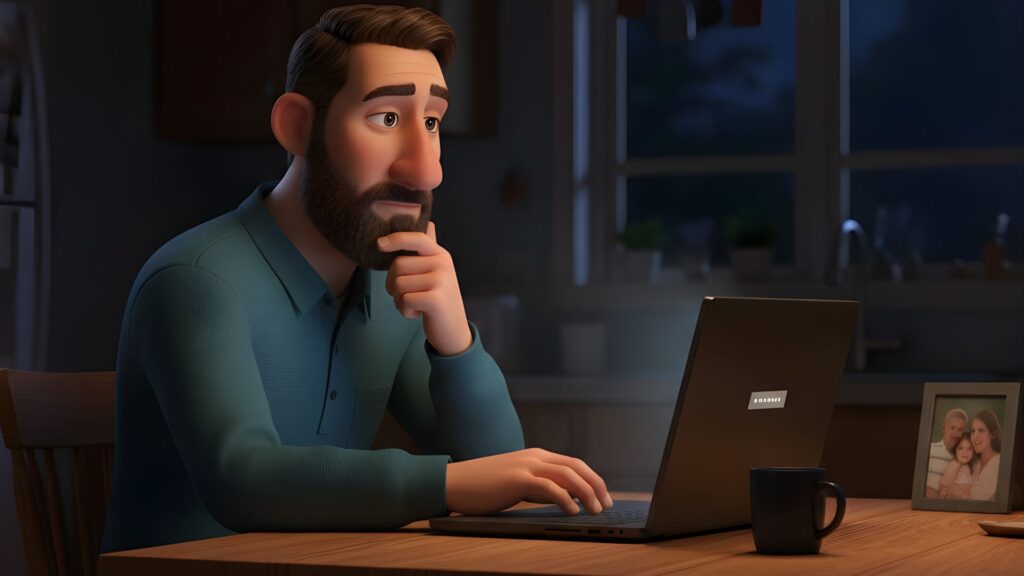
Daniel had been writing the email for three months. Not continuously—never more than a few sentences at a time—but steadily. Late at night, after his wife fell asleep, he’d open the draft titled “Truth” and add another line. Sometimes just a phrase. Sometimes a whole paragraph of apology. He never intended to send it. The act of writing was the confession. The unsent draft was the punishment he gave himself.
He was forty-two. Married sixteen years. Two kids in middle school. A house in the suburbs with a mortgage he could almost afford. A job in IT that paid well enough to keep everyone comfortable. On the outside, everything looked fine. Inside, he carried a lie so old it had grown roots.
Fifteen years earlier, during the first rough patch of their marriage, he’d slept with someone else. Once. One night. One mistake. He’d confessed to his wife within forty-eight hours—crying, shaking, begging. She’d cried too. They’d fought. They’d gone to counseling. They’d decided to stay together. She forgave him. Or said she did. He never quite believed it. The guilt stayed. It became part of him. Quiet. Constant. Like background noise he could never turn off.
So he wrote the email he would never send. Every few months he’d add to it. “I still think about that night.” “I still hate myself for it.” “I’m afraid you never really forgave me.” “I’m afraid I don’t deserve you.” “I love you. I’m sorry.”
He kept the draft in a password-protected folder on his laptop. The laptop was old—eight years, fan always whining, battery dead unless plugged in—but it worked. That was enough.
One Tuesday night in November he was adding another line—“I wish I could take it back, but I can’t, so I just keep trying to be better”—when the screen flickered. Then black.
He pressed the power button. Nothing. Held it for ten seconds. Nothing. Plugged it in, tried again. Dead.
He panicked. Not because of work files—he had backups. Because of the draft. The only place he’d ever written the full truth. The only place he’d ever admitted how deep the guilt still ran.
He took the laptop to a small repair shop downtown the next morning. The guy behind the counter—early twenties, tattoos, calm—plugged it in, opened it up, listened to the drive.
“Drive’s encrypted,” he said. “Full disk encryption. Without the password, everything’s gone. Can’t even read the directory structure.”
Daniel’s stomach dropped. He knew the password. He’d used the same one for years: SofiaGrace2011—the names and birth year of their two daughters combined. Simple. Memorable. Secure enough.
He typed it.
Nothing.
He tried variations. SofiaGrace2011!. SofiaGrace!2011. GraceSofia2011. Nothing worked.
The repair guy shrugged. “Sometimes people change them and forget. Or autocorrect messes it up once and it sticks. You got any other ideas?”
Daniel didn’t.
He took the laptop home. Tried every combination he could think of. Birthdays. Anniversaries. Pet names they’d had over the years. The name of the street they lived on when they first met. Nothing.
Weeks passed. He stopped trying during the day. Only at night, when the house was quiet and the kids were asleep, he’d sit at the kitchen table with the dead laptop and try again. He started drinking more. Not a lot. Just enough to dull the edges. Enough to make him type things he’d never type sober.
One Friday night in early December, he was drunk. Not blackout drunk. Just loose. The kind of drunk where everything feels possible and terrible at the same time.
He opened the laptop. Plugged it in. Stared at the password prompt.
He typed the one phrase he’d never told anyone. The lie he’d lived with for fifteen years.
“I never really forgave myself.”
Enter.
The drive spun up.
The login screen disappeared.
The desktop loaded.
He stared.
Everything was there. Tax files. Vacation photos. Kids’ school projects. And the folder labeled “Truth.”
He opened it.
The draft was there. All of it. Every word he’d written over three months.
He read it.
Every sentence hurt more than the last. Every apology felt inadequate. Every confession felt like a wound he’d kept picking at.
He finished reading. Closed the document.
Then he deleted it.
Not just deleted. Emptied the trash. Ran a secure wipe on the folder.
Then he went into settings. Changed the password to something random—a string of letters and numbers he’d never remember.
The machine rebooted.
When it came back up, the login screen asked for the new password.
He didn’t enter it.
He closed the laptop.
Walked to the bedroom.
His wife was asleep, breathing softly.
He stood in the doorway for a long time.
Then he went to the guest room. Lay on the spare bed. Stared at the ceiling.
The next morning he woke up early. Made coffee. Made breakfast for the kids.
His wife came downstairs, hair messy, eyes still sleepy.
“You okay?” she asked.
He looked at her—really looked. The woman he’d hurt fifteen years ago. The woman who’d stayed. The woman who still laughed at his bad jokes. The woman who still loved him, even if she carried scars he’d given her.
“Yeah,” he said. “I think I’m getting there.”
He didn’t tell her about the draft. He didn’t tell her about the password. He didn’t tell her about the night he finally admitted the truth to the one person who needed to hear it most.
Himself.
The laptop stayed locked.
He never tried to open it again.
Because some things don’t need to be read.
They just need to be released.
And sometimes the last notification you get isn’t from someone else.
It’s from the part of you that’s been waiting for permission to let go.
And when you finally give it, the silence that follows isn’t empty.
It’s peaceful.
The Waiting List
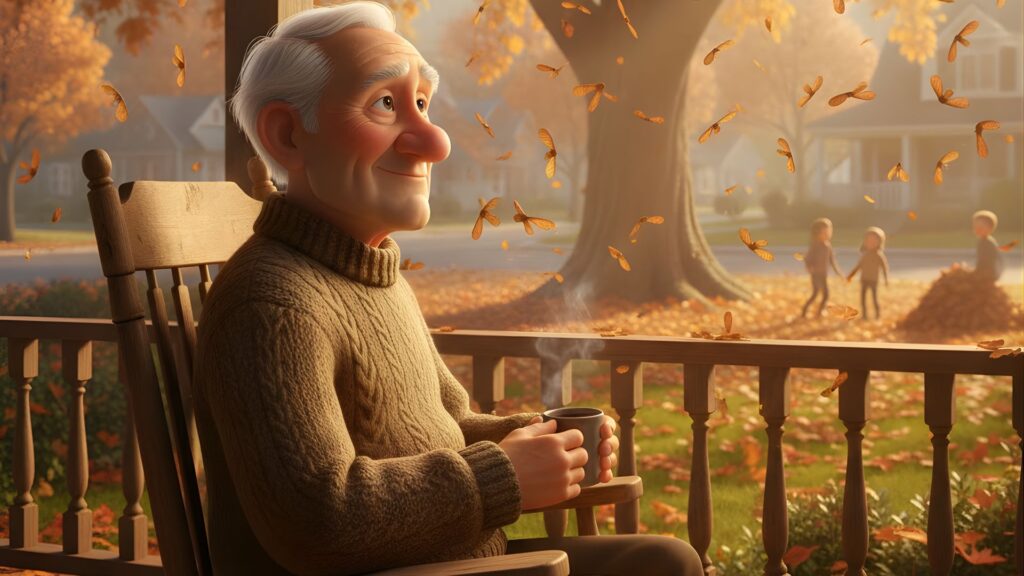
Leo turned sixty-two on a Thursday in late spring. No big celebration. No cake. Just a card from his daughter in Toronto with a photo of his grandson, and a bottle of single malt from the neighbor across the street who always remembered his birthday. He drank half the bottle alone on the porch, watching the maple tree drop its first green helicopters of the year. Then he went inside, opened his laptop, and applied to the cryogenic facility in Arizona.
He wasn’t trying to live forever. He just didn’t want to die slowly.
The facility—CryoLife Solutions—had been in the news for years. Wealthy people, terminally ill people, people afraid of death. They froze you at the moment of legal death, vitrified your brain and body, waited for science to catch up. Revival wasn’t guaranteed. No one promised anything. But it was a chance to skip the last painful years—the bedsores, the morphine fog, the slow fade into nothing.
Leo didn’t care about revival. He cared about not being awake for the end.
The application was long. Medical history. Finances. Psychological evaluation. A video statement explaining why. He recorded it in one take, sitting at his kitchen table, sunlight slanting across the wood.
“I’m healthy now,” he said to the camera. “But I’ve watched too many people I love die badly. My father with Alzheimer’s. My wife with pancreatic cancer. I don’t want that. If I get sick—really sick—I want to go before it gets ugly. I’m not afraid of death. I’m afraid of suffering. That’s all.”
He sent it off.
Three weeks later, an email arrived.
“Conditional acceptance. You will be placed on the priority waiting list. Preservation will only be scheduled once a terminal diagnosis is confirmed by two independent physicians, with life expectancy of six months or less. Until that point, your spot is held but not guaranteed.”
He read it twice. Then he laughed—short, surprised. He’d expected rejection. Or a long wait. Not this: permission to live, but with an expiration date he’d have to earn.
He told no one.
Not his daughter. Not his ex-wife. Not the neighbor who brought him tomatoes from his garden every summer. He just kept living.
And he lived well.
He started jogging again—slow at first, then faster. Three miles around the park every morning. He traveled—Portugal, Japan, Iceland. Places he’d always said he’d see “someday.” Someday became now. He dated—a few women, nothing serious, just dinners and laughter and the occasional night that reminded him he was still alive.
Doctors called him a miracle. His blood pressure dropped. Cholesterol improved. Scans showed nothing abnormal. At seventy-four, a routine checkup showed perfect numbers. The cardiologist shook his head. “You’re an outlier, Leo. Keep doing whatever you’re doing.”
Leo smiled. “I’m just waiting.”
The doctor laughed, thinking it was a joke.
It wasn’t.
At seventy-eight he met Claire. Sixty-nine, widowed, sharp humor, loved jazz and gardening. They dated for two years. She asked once why he never talked about the future.
“I don’t plan that far,” he said.
She accepted it. They never married. They just lived. Dinners on the porch. Walks in the park. Quiet nights listening to records. She died at seventy-one. Stroke. Fast. Peaceful. He sat with her in the hospital until the end. Held her hand. Told her he loved her. She smiled once before she slipped away.
He didn’t cry until he got home. Then he cried for three days.
The waiting list email came again the next month. “Status update: You remain on the priority list. No change in policy. Awaiting terminal diagnosis.”
He laughed until he coughed.
At eighty-one he woke up tired.
Not sick. Not pain. Just tired. The kind of tired that settles in your bones and doesn’t leave. He went for his usual jog. Made it two blocks. Turned around. Went home. Sat on the porch. Watched the maple tree drop its helicopters again.
He called the facility.
A calm voice answered.
“I’m eighty-one,” he said. “I’m tired. I’d like to schedule.”
The woman was gentle. “I’m sorry, Mr. Thompson. The waiting list is full. Medical advances have made preservation unnecessary for most cases. We’ve shifted focus to research and early-stage interventions. Your conditional acceptance has expired.”
He sat with the phone in his hand.
“Expired,” he repeated.
“Yes. We’re no longer accepting new preservations for non-terminal patients.”
He thanked her. Hung up.
Made coffee. Black. No sugar.
Carried the mug to the porch. Sat in the same chair he’d sat in for twenty years.
The street was quiet. A neighbor walked their dog. A delivery truck rumbled past. Kids laughed somewhere down the block.
He looked at the maple tree. Watched the helicopters spin down.
For the first time in nineteen years, he felt the clock moving again.
Not fast. Not slow. Just moving.
He took a sip of coffee. It tasted bitter. He drank it anyway.
He didn’t cry.
He didn’t laugh.
He just sat.
And breathed.
And let the tiredness settle.
Because the waiting list was full.
And he was no longer waiting.
He was here.
Still here.
And for the first time in a long time, that felt like enough.
The years after the acceptance letter had been strange. At first he’d lived with one foot in the future—every ache, every cold, every doctor’s visit felt like a countdown. He’d wake up some mornings and think, Is this it? Is this the day it starts? But the days kept coming. Healthy. Ordinary. Full.
He ran marathons at sixty-five. Traveled to places he’d only seen in magazines. Dated. Laughed. Loved. Lost. He lived like a man with no expiration date, even though he had one written in fine print.
Claire had been the longest relationship since his wife. She never asked about the future. She just lived in the present with him. They gardened together. Listened to jazz records. Walked the park at dusk. When she died, he thought maybe that was the sign. Maybe the tiredness would start. Maybe the list would call.
It didn’t.
The doctors kept saying “miracle.” He kept saying “waiting.”
Until he wasn’t.
The morning after the call he woke up at 6 a.m. Made coffee. Sat on the porch.
The maple tree was bare now. Winter coming.
He watched a neighbor walk their dog. Watched a delivery truck rumble past. Watched kids laugh down the block.
He finished his coffee. Rinsed the mug. Went inside.
He opened his laptop. Deleted the folder labeled “CryoLife.”
Then he called his daughter.
“Hey, Dad.”
“Hey, kid. You busy this weekend?”
She laughed. “Always. Why?”
“Thought I’d come visit. See the grandkid. Stay a few days.”
Silence. Then her voice, soft. “I’d like that.”
He booked the flight for Friday.
He didn’t tell her about the list. Didn’t tell her he’d been waiting to die for nineteen years.
He just booked the ticket.
And packed a small bag.
And went to bed early.
The next morning he woke up tired—but not the same tired. This was the tired of a man who’d finally stopped waiting.
He made coffee. Sat on the porch again.
The maple tree stood bare against the gray sky.
He smiled.
The clock was moving.
And for once, he didn’t mind.
How to Write a Captivating 5-Minute Short Story?
Writing a short story that really lands with someone in just five minutes is simpler than it sounds. The key is to keep it focused and honest—no need for fancy tricks or long explanations. Here’s a straightforward way to do it.
Start with One Clear Idea
Choose one main feeling or small moment. Regret. A sudden act of kindness. A quiet misunderstanding. Keep it to one emotional center. When the idea is simple and clear from the beginning, the story stays tight and pulls the reader in right away.
Use Just a Few Characters
One to three people is plenty. Give each one a single strong trait or desire the reader can feel immediately. You don’t need their whole life story—just enough so we understand what they want in this moment and why it matters. A worn-out parent. An older person who’s lonely. A kid trying to be brave. Let their actions and a couple of sharp details show who they are.
Make Every Word Work Hard
Use clear, vivid language—show instead of tell. Instead of “she felt sad,” show her fingers tracing an old photo frame. Instead of “he was angry,” show his jaw clench. Cut anything that doesn’t add emotion or move the story forward. Tight writing is what gives the story its power.
Follow a Simple Flow
- Beginning (first minute): Introduce the person and the situation fast. Drop the reader straight into the moment that matters—no long backstory. We should quickly feel who they are and what’s at stake.
- Middle (next two minutes): Build a bit of tension or challenge. It can be inside them (guilt, fear, doubt) or outside (a missed call, a stranger’s help). Make the reader care what happens next.
- End (last minute): Finish with a small twist, a quiet realization, or an emotional hit. It doesn’t have to be happy—just honest and earned. The best endings leave a feeling that stays with the reader.
Cut Anything Extra
Skip extra side stories, long descriptions of places, or explanations that slow things down. If it doesn’t serve the main feeling, remove it. Trust the reader to fill in the blanks. Less really is more here.
Edit Hard
Once the first draft is done, read it out loud. Cut anything that feels slow or unnecessary. Remove extra words. Tighten sentences. Sharpen dialogue. Ask yourself: Does this make me feel something? If it does, you’ve got it.
That’s really all it takes. One clear idea. A few real characters. Tight, honest writing. A simple flow. Careful editing.
Five minutes of reading time. A feeling that sticks around much longer.
You don’t need to be a brilliant writer. You just need to care enough to make the words true.
And that honesty is what makes someone pause, read, and actually feel something—even if it’s only for five minutes.
Want to try? Pick one small moment from your own life. Write it in five minutes. Edit it in five more. See what happens.
Sometimes the smallest stories are the ones that hit the hardest.
Benefits of Reading 5-Minute Short Stories
No time for a full novel? That’s okay. These short stories are made to fit right into your real life—quick, simple, and surprisingly powerful. Here’s why they can make a difference even when your day is packed.
Keeps Your Brain Sharp
Even a five-minute story gives your mind something to chew on. You follow characters, feel their emotions, notice small details, and think about what it all means. It’s gentle mental exercise that keeps your brain active without wearing you out.
Helps You Relax
A quick story is one of the easiest ways to step away from stress. In just a few minutes you can escape into someone else’s world—laugh a little, feel a quiet moment, or just breathe. It’s like hitting pause on the noise in your head without needing a long break.
Sparks Creativity
Every story shows you a new way of seeing things. A different perspective. A surprising choice. A fresh feeling. Even short reads plant small seeds—ideas, images, or questions that might show up later when you’re working, talking, or just thinking.
Improves Focus
Reading something short and engaging trains your attention in a low-pressure way. You learn to concentrate for a few minutes without feeling overwhelmed. Over time, those small wins make it easier to focus when you need to for longer stretches.
Fits Into Any Day
This is the real magic: there’s almost always five minutes somewhere. Waiting in line. On a break. During your commute. While your coffee brews. Right before bed. These stories slip into the cracks of your schedule—no big commitment, no guilt if you only read one.
That’s the beauty of 5-minute short stories. They don’t ask for much time. They just give you a small, real moment when you need one.
A quick smile. A quiet thought. A little break from the rush.
And sometimes that’s exactly enough to make the day feel better.
Conclusion
A story must not be lengthy in nature for it to have a great impact. In merely five minutes, that story can transport you to unfamiliar locations, present new captivating characters, and catch your attention with shocking turns.
It may create an emotion that makes you laugh or even cry, or perhaps presents a thought that lingers in your mind for a long time after reading. Such short stories emphasize that one can achieve the seemingly impossible goal of being impactful in a short span of time.
With the right story, you might be able to enjoy your break, relax after an exhausting day, or even escape reality. For this reason, allow these short stories to lighten up your day while you continue to read and use your imagination.