The American West has long been a setting for unforgettable adventures, courageous heroes, and timeless lessons. While many classic Western stories focus on cowboys, sheriffs, and outlaws, some of the most heartwarming tales are those that feature children.
These stories combine the excitement of frontier life with themes of family, friendship, bravery, and personal growth, making them enjoyable for readers of all ages.
The best Western stories with children offer much more than horseback rides and dusty trails. They introduce young characters who face real challenges, learn valuable life lessons, and discover the importance of kindness, responsibility, and perseverance.
Whether they are helping on a ranch, solving mysteries in a frontier town, or traveling across the open prairie with their families, these children become unforgettable heroes in their own right.
Unlike action-heavy Westerns, stories centered around children often balance adventure with emotional depth. They capture the excitement of exploring wide-open landscapes while highlighting the strong family bonds and community spirit that shaped life in the Old West.
In this guide, we’ll explore what makes children’s Western stories so appealing, the common themes found in these tales, and some of the best Western stories with children that continue to inspire readers with their adventure, courage, and heartwarming storytelling.
Why Western Stories with Children Are So Popular
Western stories have entertained readers for generations, and those featuring children offer a unique perspective on life in the frontier. Through young protagonists, readers experience the Old West with curiosity, excitement, and a sense of discovery while learning valuable lessons along the way.
These stories remain popular for several reasons:
Combine Adventure with Meaningful Life Lessons
From cattle drives and horseback journeys to frontier mysteries, these stories blend exciting adventures with lessons about honesty, responsibility, perseverance, and doing the right thing.
Feature Relatable Young Heroes
The main characters are often ordinary boys and girls who face unexpected challenges. Readers can easily connect with their fears, dreams, and determination as they grow through each adventure.
Showcase the Beauty and Dangers of Frontier Life
Western stories paint vivid pictures of rolling prairies, rugged mountains, rivers, ranches, and small frontier towns. At the same time, they realistically portray the hardships of unpredictable weather, wildlife, and life far from modern conveniences.
Emphasize Family, Friendship, and Community
Many Western stories highlight the importance of working together. Families, neighbors, and friends support one another during difficult times, showing that cooperation and trust are essential for surviving life on the frontier.
Inspire Courage, Resilience, and Kindness
Young characters often face situations that test their bravery and determination. Through their experiences, readers learn that true courage is not the absence of fear but the willingness to help others, solve problems, and keep moving forward despite challenges.
Whether written for children or adults, the best Western stories with children remind readers that bravery often comes from ordinary people placed in extraordinary situations. Their timeless adventures continue to inspire new generations with stories of hope, friendship, and the enduring spirit of the American frontier.
What Makes a Great Western Story with Children?
The most memorable Western stories featuring children combine exciting adventures with heartfelt storytelling. While every story is unique, the best ones often share several qualities that keep readers engaged from beginning to end.
Courage in the Face of Challenges
Young characters often face situations that require bravery beyond their years. Whether protecting a family ranch, surviving a dangerous journey, helping a lost traveler, or standing up for what is right, their courage becomes the heart of the story. These moments show that true bravery comes from determination and compassion rather than physical strength.
Strong Family Bonds
Many Western stories center around parents, grandparents, siblings, and close-knit communities. Family members support one another through difficult times, teaching children the importance of love, trust, respect, and working together to overcome obstacles.
Adventures in the Frontier
The Old West provides an exciting backdrop filled with endless possibilities. Wide-open prairies, rugged mountains, winding rivers, dense forests, dusty frontier towns, and hidden canyons create unforgettable settings where young heroes embark on thrilling adventures and unexpected discoveries.
Valuable Life Lessons
Beyond the action, these stories teach meaningful values that remain relevant today. Readers learn about responsibility, honesty, perseverance, kindness, compassion, teamwork, and making thoughtful decisions. The lessons develop naturally through the characters’ experiences rather than feeling forced.
Memorable Animal Companions
Faithful horses, loyal dogs, hardworking mules, and rescued wildlife often become more than just companions. They help children overcome challenges, provide comfort during difficult moments, and demonstrate the strong bond that can exist between people and animals on the frontier.
A Sense of Growth and Discovery
The best Western stories allow young characters to grow as they face new experiences. Along their journey, they gain confidence, learn valuable skills, overcome fears, and discover strengths they never realized they had. This personal growth makes their adventures both exciting and inspiring.
When these elements come together, a Western story becomes more than just an adventure. It becomes a memorable journey filled with excitement, emotion, and timeless lessons that readers of all ages can appreciate.
Best Western Stories with Children
Saddle up for unforgettable adventures with the best Western stories with children, where brave young heroes, loyal horses, frontier towns, and life-changing journeys come together in heartwarming tales of courage, friendship, and family.
The Frontier Schoolhouse Rescue
The small town of Pine Hollow was surrounded by endless prairie.
To the east were golden fields of tall grass that moved like waves in the wind.
To the west stood a line of dark mountains that touched the clouds.
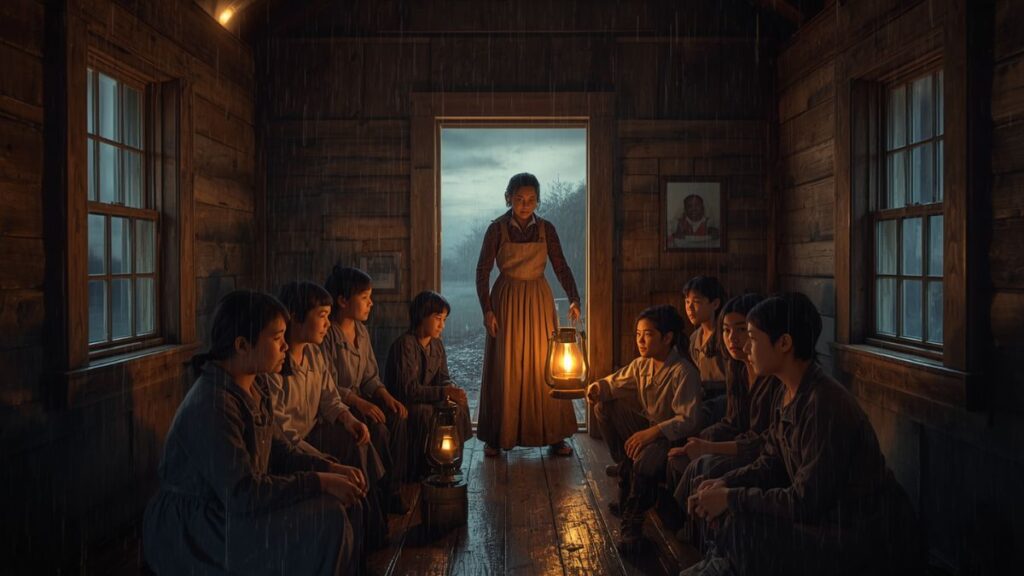
Between them sat a little wooden schoolhouse where twenty children gathered every weekday morning to learn, laugh, and dream about their futures.
Nobody in Pine Hollow thought that a simple school day would become the greatest adventure those children would ever experience.
But on a spring morning in 1878, everything changed.
The One-Room Schoolhouse
The Pine Hollow Schoolhouse was not impressive.
It was a small wooden building with a faded red door, a blackboard, a potbelly stove, and rows of wooden desks.
But to the children, it was a special place.
It was where they learned their letters.
Where they shared stories.
Where friendships grew.
Their teacher, Miss Eleanor Hayes, believed every child had potential.
“You may come from different homes,” she often told them, “but inside this classroom, you are one family.”
Among her students were:
Thomas Reed, a 13-year-old rancher’s son who loved exploring the wilderness.
Maggie Collins, a 12-year-old girl who was excellent at solving problems.
Discover more
Parenting
How-To, DIY & Expert Content
Education
Ben and Charlie Walker, brothers who were always curious and adventurous.
Lucy Parker, the youngest student, who loved animals more than anything.
They were different from one another.
But they cared about each other.
The Warning Signs
That spring had been unusual.
The winter snow melted faster than expected.
The mountain streams became larger every day.
Old ranchers noticed the signs.
“The river is too high,” Thomas’s father warned.
“A heavy storm could cause trouble.”
But nobody expected what came next.
On a Tuesday morning, dark clouds gathered above Pine Hollow.
The wind became stronger.
The sky turned almost black.
Miss Hayes looked outside the classroom window.
“We may have a storm coming.”
The children watched as lightning flashed across the distant mountains.
Thunder shook the building.
Then the rain began.
The Growing Storm
At first, the storm seemed ordinary.
The children continued their lessons.
But after an hour, the rain became heavier.
Water began collecting near the schoolhouse.
Miss Hayes looked concerned.
She walked outside briefly.
When she returned, her expression had changed.
“The road back to town is flooded.”
The children became quiet.
“Are we stuck here?” Lucy asked.
Miss Hayes smiled.
“We are safe. We just need to stay calm.”
But deep down, she knew the situation was becoming serious.
The small creek near the schoolhouse was rising quickly.
The Flood Arrives
By afternoon, water surrounded the schoolhouse.
The bridge connecting the school to town had disappeared beneath the rushing water.
The horses tied outside became nervous.
The children looked through the windows.
The familiar prairie had transformed into a moving river.
Miss Hayes gathered everyone together.
“We are going to stay calm.”
“But we need to work together.”
Thomas looked outside.
The water was getting closer.
“We need to move the animals.”
The children nodded.
They knew the horses and farm animals nearby could not survive if the flood continued.
The Children Take Action
Miss Hayes divided everyone into groups.
Thomas and Ben would help move supplies.
Maggie would organize food and blankets.
Charlie would check the building’s condition.
Lucy would help calm the frightened animals.
At first, the children were scared.
They had never faced anything like this before.
But they trusted one another.
Slowly, they began working.
Saving the Animals
The school’s small barn stood near the edge of the property.
Inside were two horses and several chickens belonging to families nearby.
The rising water was already entering the barn.
Thomas grabbed a rope.
“We need to move them to higher ground.”
The horses were frightened.
They pulled back.
Thomas remembered something his father always said:
“A scared animal doesn’t need force. It needs confidence.”
He spoke softly.
“Easy. We’re helping you.”
Slowly, the horses followed.
The children guided them toward a hill behind the schoolhouse.
The Hidden Problem
As evening approached, another problem appeared.
The schoolhouse roof began leaking.
The wind had damaged part of the wooden structure.
Cold rain entered through the ceiling.
Miss Hayes looked worried.
They needed shelter.
Maggie studied the building.
“We can move the desks.”
Everyone looked at her.
“If we move them against the walls, we can place blankets underneath the strongest part of the roof.”
It was a simple idea.
But it worked.
The children transformed their classroom into a safer shelter.
The Long Night
That night was the hardest night any of them had ever experienced.
The storm continued.
The children sat together under blankets.
Some were frightened.
Some missed their families.
Lucy quietly cried.
“I want my mother.”
Miss Hayes hugged her.
“Your family is coming.”
“But until then, we are together.”
Thomas looked around the room.
He realized something.
They were not just classmates anymore.
They were a team.
The Search for Help
The next morning, the storm finally weakened.
But the children were still trapped.
Someone needed to reach town.
Thomas looked toward the hills.
“There is an old trail behind the school.”
Maggie shook her head.
“It’s dangerous.”
“I know.”
“But someone has to tell them we are safe.”
Miss Hayes refused at first.
“You are too young.”
Thomas looked at her.
“Maybe.”
“But we know these lands.”
After thinking carefully, Miss Hayes agreed.
Thomas and Maggie would go together.
The Journey Through the Flooded Prairie
The two children carefully followed the old trail.
Mud covered the ground.
Broken branches blocked their way.
The prairie looked completely different.
They crossed small streams.
They climbed rocky paths.
Finally, they reached a high hill where they could see Pine Hollow.
Smoke rose from the town.
People were there.
They waved their arms.
The rescue had begun.
The Rescue Mission
Within hours, the townspeople arrived with horses and wagons.
They reached the schoolhouse and found the children safe.
Parents hugged their children.
Everyone celebrated.
Sheriff Carter looked at the students.
“I have seen adults panic during storms.”
He smiled.
“But you children showed more courage than many grown people.”
The Town’s New Heroes
After the flood, Pine Hollow rebuilt.
The schoolhouse was repaired.
A stronger bridge was built.
But one thing changed forever.
The children were no longer seen as just students.
They were remembered as the young heroes who protected their classmates, saved animals, and kept hope alive during the great flood.
Years Later
Many years passed.
The children grew older.
Thomas became a respected rancher.
Maggie became a teacher like Miss Hayes.
Ben and Charlie became builders who helped create safer homes.
Lucy became known for caring for animals.
But whenever they returned to Pine Hollow, they visited the old schoolhouse.
The building was still there.
A reminder of the day when a group of children discovered something important.
The Lesson of Pine Hollow
A person does not become brave because they are never afraid.
A person becomes brave when they choose to help despite being afraid.
Discover more
Language Resources
Educational Resources
Classical Music
The children of Pine Hollow learned that courage does not belong only to sheriffs, soldiers, or famous heroes.
Sometimes courage belongs to ordinary children sitting in a small wooden schoolhouse.
And sometimes the greatest adventures begin on the most ordinary days.
Moral of the Story
True heroes are not defined by their age or strength, but by their willingness to help others, work together, and face challenges with courage.
The Little Sheriff of Dusty Ridge
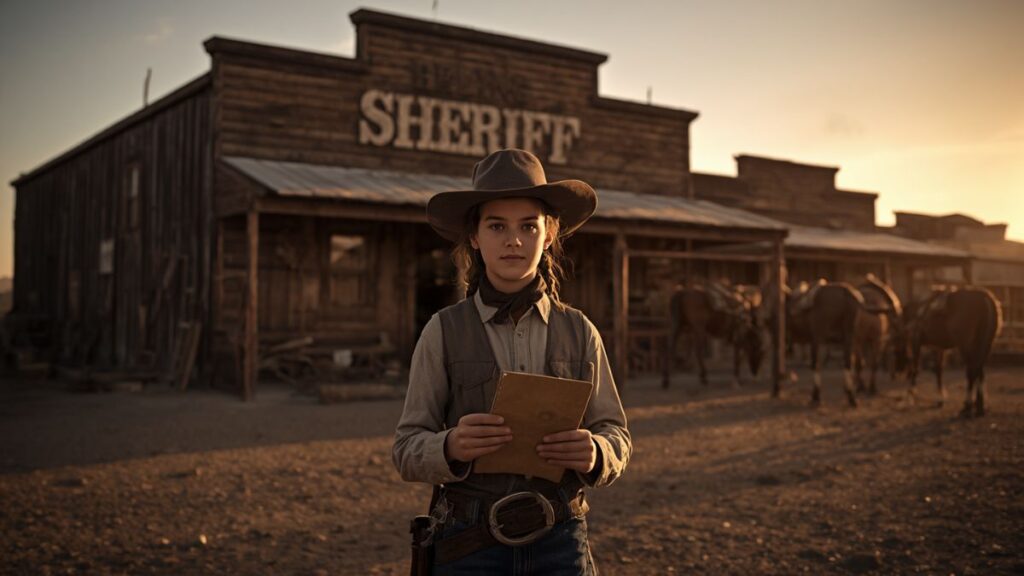
The town of Dusty Ridge was not a large place.
It had one main street, a small general store, a blacksmith shop, a church with a tall wooden bell tower, and the sheriff’s office sitting at the end of the road.
But everyone who lived there knew one thing:
Dusty Ridge was a town where people looked after each other.
Children played near the creek.
Farmers shared tools.
Neighbors helped repair fences after storms.
And at the center of it all was Sheriff Daniel Carter.
For twenty years, Sheriff Carter had protected Dusty Ridge.
He was respected by everyone.
But his greatest pride was not his badge.
It was his daughter, Emma.
The Sheriff’s Daughter
Emma Carter was twelve years old and unlike most children in town.
While other children dreamed of traveling to distant cities or finding buried treasure, Emma wanted to understand how things worked.
She loved reading old newspapers.
She studied maps.
She listened carefully when adults talked about problems.
Her father often joked:
“You were born with a detective’s mind.”
Emma smiled.
“Maybe I was.”
She had grown up around the sheriff’s office, watching her father solve problems without violence.
He always taught her:
“The best sheriff is not the one who scares people. It is the one who earns their trust.”
Emma remembered those words every day.
A Quiet Morning in Dusty Ridge
One summer morning, Sheriff Carter received an urgent message.
A group of prisoners needed to be transported to the county jail several days away.
It was an important responsibility.
“I’ll be gone for three days,” he told Emma.
“Can you promise me you’ll stay out of trouble?”
Emma smiled.
“I’ll try.”
Her father laughed.
“That’s the answer I expected.”
Before leaving, he handed her a small notebook.
Inside were his notes about the town.
“Every good sheriff knows the people they protect.”
Emma treasured the gift.
The Arrival of Strangers
The first day without Sheriff Carter seemed normal.
But by afternoon, three strangers arrived in Dusty Ridge.
They introduced themselves as traveling merchants.
Their names were:
Mr. Black.
Mr. Wilson.
Mr. Reed.
They claimed they were selling tools and supplies.
The townspeople welcomed them.
But Emma noticed something unusual.
The men asked too many questions.
“How many people live here?”
“When does the bank receive money shipments?”
“When does the sheriff return?”
Emma became suspicious.
A true merchant cared about customers.
These men seemed interested in something else.
Following the Clues
Emma began watching carefully.
She noticed Mr. Black avoided looking directly at people.
Mr. Wilson kept checking the road.
Mr. Reed carried a heavy bag but claimed it only contained paperwork.
Something wasn’t right.
Emma visited the general store.
“Did those men buy anything?”
The store owner shook his head.
“No. They only asked questions.”
Emma opened her father’s notebook.
She wrote:
“Three strangers. No purchases. Too interested in town details.”
The Secret Conversation
That evening, Emma walked near the abandoned barn outside town.
She heard voices.
The three strangers were talking.
“The bank shipment arrives tomorrow.”
“Good.”
“The sheriff won’t return until then.”
Emma froze.
They were not merchants.
They were planning a robbery.
Emma quietly stepped backward.
But a loose piece of wood cracked beneath her foot.
The voices stopped.
“Who’s there?”
Emma ran.
The Warning
Emma rushed back to town.
She needed to tell someone.
But she faced a problem.
The adults trusted the strangers.
Nobody would believe a twelve-year-old girl accusing three grown men.
She thought about her father’s advice.
A good sheriff earns trust.
She needed proof.
Not fear.
Proof.
The Clever Plan
Emma studied the situation.
The strangers believed the sheriff was gone.
They believed the town was helpless.
But they did not know Emma was watching.
She gathered her friends.
“We need to protect the town.”
Her friends looked nervous.
“What can we do?”
Emma smiled.
“We can make them think the sheriff is still here.”
The Fake Sheriff
Emma created a clever plan.
She asked the blacksmith to repair an old sheriff’s badge.
She asked the town newspaper owner to print a small announcement.
It said:
“Sheriff Carter has returned early and will patrol Dusty Ridge tonight.”
The message was placed where the strangers would see it.
Emma also asked townspeople to act normally.
Nobody would panic.
The Criminals Become Nervous
That evening, the strangers noticed something strange.
People seemed calm.
Too calm.
Then Mr. Black saw the newspaper.
“The sheriff is back?”
The three men exchanged worried looks.
“We should leave.”
But they were already too late.
Emma had sent a message to the sheriff’s closest deputy.
The Final Confrontation
The next morning, the deputy arrived.
The strangers tried to escape.
But the townspeople blocked the road.
Emma stepped forward.
“You were never merchants.”
Mr. Black stared.
“You?”
Emma nodded.
“You asked about the bank, the sheriff, and the town’s defenses.”
The deputy searched their belongings.
Inside were tools meant for breaking into the bank.
The evidence was clear.
The criminals were arrested.
Sheriff Carter Returns
Three days later, Sheriff Carter returned.
He expected to hear about ordinary town news.
Instead, everyone greeted him with smiles.
The deputy explained what happened.
Sheriff Carter looked at Emma.
“You solved this?”
Emma looked down.
“I just followed the clues.”
Her father smiled proudly.
“No.”
“You protected your town.”
A Different Kind of Sheriff
After that day, people began calling Emma:
“The Little Sheriff of Dusty Ridge.”
She never carried a weapon.
She never chased criminals through the streets.
She used something more powerful.
Her mind.
Her courage.
And her understanding of people.
Years Later
Emma grew up and became one of the most respected law officers in the region.
She became famous not because she was fearless.
But because she believed every problem had a solution if people stayed calm and worked together.
The old sheriff’s office in Dusty Ridge eventually became a small museum.
Discover more
Writers Resources
Equestrian
Inside was a simple note written by Sheriff Carter:
“The greatest lawkeepers are not those who carry the biggest badge. They are those who protect others with wisdom and compassion.”
The Lesson of Dusty Ridge
Courage does not always mean fighting.
Sometimes courage means thinking clearly when others are afraid.
Sometimes the smartest person in the room is the youngest.
And sometimes the greatest sheriff is the one who never expected to wear the badge.
Moral of the Story
True bravery comes from intelligence, kindness, and the willingness to stand up for what is right, no matter your age.
The Lost Wagon on Eagle Pass
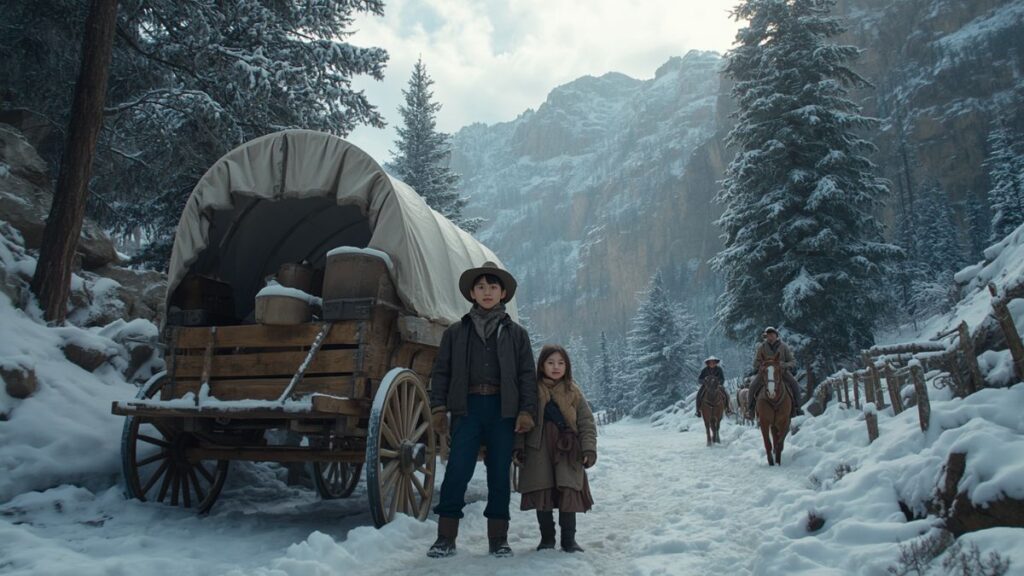
The mountains surrounding Eagle Pass were beautiful, but they were also dangerous.
Tall pine trees covered the slopes.
Rocky cliffs stretched toward the sky.
Narrow trails twisted between valleys where only experienced travelers dared to go.
For generations, pioneers had crossed Eagle Pass searching for new homes and better lives.
But every traveler knew the same rule:
The mountains always test those who enter them.
Thirteen-year-old Noah Bennett had heard that warning many times.
But he never imagined that one journey through Eagle Pass would teach him the true meaning of courage.
A New Beginning
Noah lived with his parents and younger sister Abigail on a small farm near the edge of the frontier.
Life was not easy.
Every day brought new responsibilities.
They planted crops.
Repaired fences.
Cared for animals.
But Noah loved their life.
He loved the quiet mornings.
He loved riding through open fields.
Most of all, he loved exploring the land around their home.
His father often told him:
“Being brave doesn’t mean looking for danger, Noah.”
“It means doing the right thing when danger finds you.”
Noah remembered those words.
The Journey West
One autumn, the Bennett family decided to travel to a new settlement beyond Eagle Pass.
The new town needed farmers, and Noah’s father believed they could build a better future there.
Their wagon carried everything they owned:
Tools.
Clothes.
Food supplies.
Family belongings.
And a small wooden box containing memories from their old home.
For several days, they traveled with other families heading in the same direction.
The journey was difficult but exciting.
Every night, families gathered around campfires.
They shared stories.
They cooked meals.
They dreamed about their new lives.
Entering Eagle Pass
After a week of traveling, the group reached the base of the mountains.
The trail became narrower.
The air became colder.
The horses moved carefully over the rocky ground.
The adults warned the children:
“Stay close.”
“Do not wander away.”
Noah listened carefully.
But Abigail was fascinated by everything.
She looked at the tall trees.
The mountain peaks.
The birds flying above.
“It’s like another world,” she said.
Noah smiled.
“It is.”
The Storm
On the third day through the mountains, the sky suddenly changed.
Dark clouds gathered.
The wind grew stronger.
Experienced travelers looked worried.
A storm in the mountains was dangerous.
“We need to find shelter,” Noah’s father said.
The families moved quickly.
But before they could reach a safe area, heavy rain began falling.
The trail became muddy.
The horses struggled.
Everyone rushed forward.
Then came the sound everyone feared.
A loud crack.
One of the wagon wheels broke.
The Lost Wagon
The Bennett wagon slid toward the edge of the trail.
Noah’s father managed to stop it.
But the wagon was badly damaged.
“We need to repair it,” he said.
The problem was time.
The storm was getting worse.
The other families continued ahead to find shelter.
Noah’s family stayed behind.
“We’ll catch up tomorrow,” his father promised.
But by morning, they discovered something terrible.
The trail had changed.
Heavy rain had washed away their tracks.
They were alone.
Searching for Help
Noah’s father examined the wagon.
“We can fix it.”
“But we need supplies.”
The nearest settlement was two days away.
The family had enough food.
But winter was approaching.
They couldn’t stay there forever.
Noah looked toward the mountains.
“I can help.”
His father shook his head.
“You are still young.”
Noah replied:
“But I know these trails.”
His father looked at him.
He remembered the boy who had spent years exploring the land near their home.
Finally, he nodded.
“You and Abigail stay close. We do this together.”
The Hidden Trail
While searching for supplies, Noah noticed something.
A small path hidden behind trees.
It wasn’t on their map.
Curious, he followed it carefully.
The trail led to an old abandoned cabin.
Inside, they found something incredible.
Tools.
Blankets.
Old supplies.
Someone had once used the cabin as a mountain shelter.
Abigail smiled.
“It’s like someone left it here for us.”
Noah looked around.
Maybe the mountains were not only dangerous.
Maybe they could also provide help.
The Mystery of the Cabin
Inside the cabin, Noah discovered an old journal.
It belonged to a pioneer named Samuel Wright.
The journal described Eagle Pass decades earlier.
Samuel had written:
“The mountains are difficult, but they reward those who respect them. Always leave something behind for the next traveler.”
Noah smiled.
The old pioneer had done exactly that.
The Dangerous Journey
The next morning, Noah decided to travel toward the settlement to find help.
His father wanted to come.
But repairing the wagon required someone to stay.
Noah and Abigail volunteered.
Together, the siblings followed the old trail.
They crossed streams.
Climbed rocky paths.
Rested beneath trees.
The mountains seemed endless.
At night, Abigail became worried.
“What if we don’t find anyone?”
Noah looked at the stars.
“We will.”
“How do you know?”
“Because we have to.”
The Rescue
After nearly two days, they reached a small trading post.
The people there were shocked.
“Children came through Eagle Pass alone?”
Noah explained everything.
Within hours, a rescue group prepared to leave.
They followed Noah back through the mountains.
When they reached the broken wagon, the Bennett family was safe.
The entire group returned together.
A New Home
Weeks later, the Bennett family reached the new settlement.
They built a small farm.
They planted crops.
They created a new life.
But Noah never forgot Eagle Pass.
The journey changed him.
He learned that courage was not about being fearless.
It was about continuing even when the path was uncertain.
The Lost Wagon Becomes a Legend
Years later, travelers still told stories about Eagle Pass.
They talked about the old cabin.
The hidden trail.
And the young boy who helped save his family.
A sign was eventually placed near the trail:
“Respect the mountains. Help those who follow.”
The words came from Samuel Wright’s journal.
And they became the unofficial rule of Eagle Pass.
The Lesson of Eagle Pass
Life is like a mountain trail.
Sometimes the path is clear.
Sometimes storms block the way.
But with courage, patience, and the help of others, even the hardest journeys can be completed.
Noah discovered that heroes are not people who never struggle.
Heroes are people who keep moving forward.
Moral of the Story
True courage comes from determination, responsibility, and the willingness to help others even when the journey becomes difficult.
The Christmas Star Over Coyote Ranch
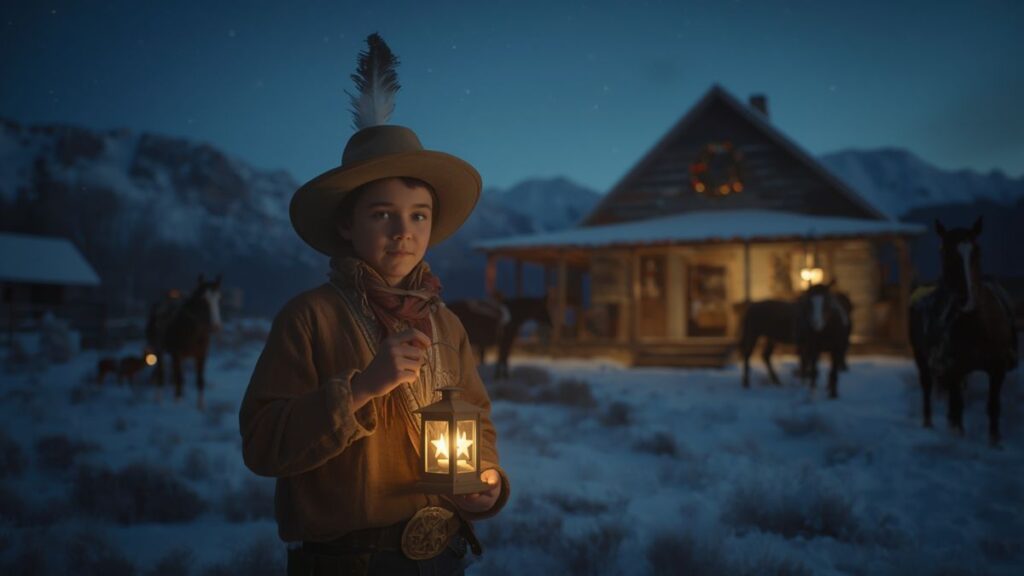
The winter of 1885 was one of the coldest winters Coyote Valley had ever seen.
The mountains surrounding the valley were covered with snow.
The rivers froze at their edges.
Strong winds swept across the open prairie, carrying clouds of white dust and ice.
For the families living on the frontier, winter was always difficult.
But that year was different.
A powerful snowstorm was approaching.
And nobody knew how much it would change their lives.
Life at Coyote Ranch
Fourteen-year-old Jack Morgan lived with his father and younger sister Clara on Coyote Ranch.
The ranch was not large, but it was their home.
They raised cattle.
They grew vegetables during the warmer months.
They repaired their own fences and buildings.
Life required hard work.
But the Morgan family was proud of what they had built.
Jack loved the ranch.
He knew every trail, every hill, and every animal.
His father often told him:
“A ranch is not just land and buildings.”
“It is the people and animals you care for.”
Jack never forgot those words.
The Meaning of the Christmas Star
Every year, the Morgan family placed a small wooden star on top of their Christmas tree.
It was not expensive.
It was not decorated with gold or jewels.
But it was special.
The star had belonged to Jack’s grandfather.
According to family tradition, it represented hope.
Jack’s father always said:
“As long as that star shines, we remember that kindness can survive even the darkest nights.”
A Storm Warning
A few days before Christmas, a traveling rider arrived at Coyote Ranch.
His face was covered with snow.
“There’s a storm coming,” he warned.
“A big one.”
Jack’s father looked toward the mountains.
The sky was already turning gray.
“We need to prepare.”
The family quickly gathered supplies.
They stored extra food.
Checked the animals.
Repaired damaged fences.
Everyone in the valley prepared for the storm.
But nobody knew how severe it would become.
The Blizzard Arrives
The storm arrived the next morning.
At first, it was only snow.
Then came the wind.
Then came the freezing cold.
Within hours, the world outside disappeared behind a wall of white.
The ranch became silent.
The only sounds were the wind and the animals inside the barn.
Jack looked outside.
The trail leading to town was gone.
Nobody could travel.
The Forgotten Families
That evening, while checking the animals, Jack noticed something.
The cattle near the northern fence were restless.
He walked closer.
Beyond the snow, he saw a faint light.
A lantern.
Someone was there.
Jack called his father.
Together, they moved closer.
They discovered a small family trapped in an old wagon.
A mother, father, and two young children were stranded.
Their horse had become exhausted.
They had been trying to reach town before the storm.
But they never made it.
“We thought we would freeze out here,” the father said.
Jack’s father immediately helped them.
“Nobody gets left behind.”
The Growing Problem
The Morgan family brought the travelers into their home.
They shared food.
They gave them blankets.
They made space near the fireplace.
But Jack knew something.
The storm was not finished.
And the family was not the only one trapped.
The next morning, they received another message.
Three ranches on the other side of the valley had lost power and supplies.
Several families needed help.
The problem was that nobody could reach them.
The roads were completely covered.
Jack’s Decision
Jack looked outside at the endless snow.
His father noticed.
“What are you thinking?”
Jack hesitated.
“The families across the valley.”
His father shook his head.
“The storm is too dangerous.”
“I know.”
“You could get lost.”
“I know.”
His father looked at him carefully.
Then Jack said:
“But if we were trapped, I would hope someone would come for us.”
His father was silent.
He understood.
Jack had learned the most important lesson of the frontier.
Neighbors survived because they helped each other.
Preparing the Rescue
The family prepared carefully.
Jack chose their strongest horse, Thunder.
They packed food.
Blankets.
Medicine.
Lanterns.
His father would ride with him.
But before leaving, Clara gave Jack the wooden Christmas star.
“Take it.”
Jack smiled.
“I can’t take our tree.”
“I know.”
“But maybe people need to see it.”
She placed the small star inside his coat pocket.
The Journey Through the Snow
The journey was harder than Jack imagined.
The wind pushed against them.
Snow covered familiar trails.
Even Thunder struggled through the deep snow.
Several times, Jack wanted to turn back.
But each time he remembered the families waiting.
Finally, they reached the first ranch.
Inside were several children and their parents.
They had been running low on supplies.
When they saw Jack and his father, they cheered.
“You came.”
Jack smiled.
“We weren’t going to leave you.”
The Christmas Miracle
Over the next two days, Jack and his father helped several families.
They delivered food.
Repaired damaged shelters.
Moved animals to safer areas.
The storm slowly weakened.
When Christmas morning arrived, the entire valley gathered at Coyote Ranch.
People who had been strangers only days earlier now felt like family.
Discover more
children
Dictionaries & Encyclopedias
Children
Someone placed the wooden star on a large tree near the ranch.
Everyone gathered around it.
A Different Kind of Gift
One of the rescued children asked Jack:
“Is that a magic star?”
Jack laughed.
“No.”
“Then why is it special?”
Jack looked at all the families standing together.
“Because it reminds us that people can be a light for each other.”
Everyone became quiet.
They understood.
The star was not special because of what it was.
It was special because of what it represented.
Years Later
Many years passed.
Jack grew older.
He eventually became the owner of Coyote Ranch.
But every Christmas, he placed the same wooden star at the top of the tree.
The story of the great snowstorm became a tradition.
Discover more
Classical Music
How-To, DIY & Expert Content
Podcasts
Parents told their children about the young ranch boy who crossed dangerous trails to help neighbors.
They told them about the families who survived because people cared.
And they always ended the story with the same words:
“The brightest stars are not the ones in the sky.”
“They are the ones people carry in their hearts.”
The Legacy of Coyote Ranch
The wooden Christmas star remained at the ranch for generations.
It became a symbol of kindness throughout the valley.
Travelers who visited Coyote Ranch often asked about it.
And every time, the family told them the same story.
A story about a winter storm.
A story about courage.
A story about hope.
Moral of the Story
The greatest gifts are not things we own, but the kindness, courage, and compassion we share with others during difficult times.
The Secret Horse of Willow Creek
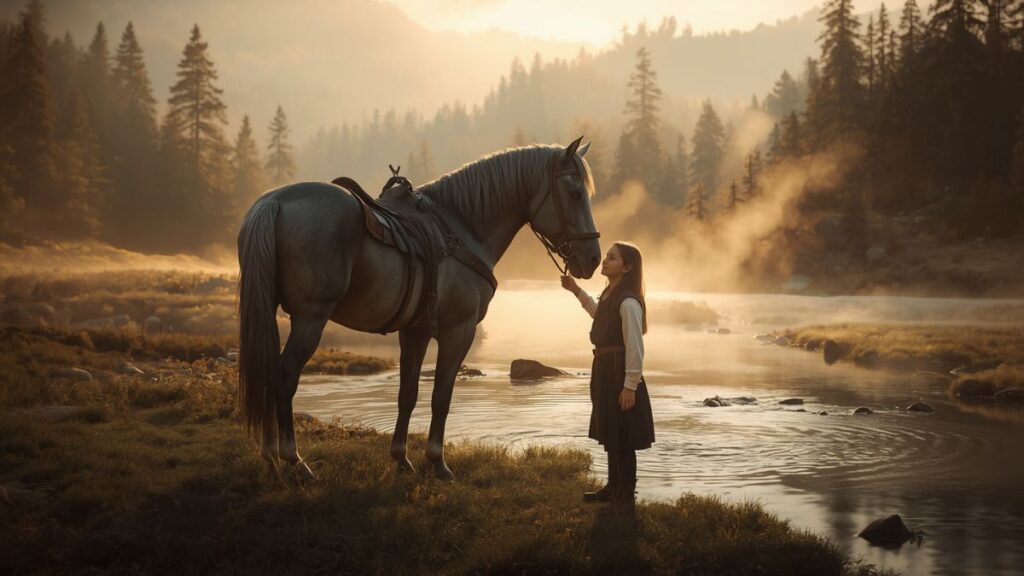
The people of Willow Creek believed the old stories were nothing more than legends.
Every town had them.
Stories told around campfires.
Whispers passed from grandparents to grandchildren.
Tales about hidden treasures, forgotten pioneers, and mysterious places waiting to be discovered.
But Willow Creek had one story that everyone knew.
The story of the sunrise horse.
For more than fifty years, ranchers claimed that a beautiful wild horse appeared near the creek every morning just as the sun touched the mountains.
Some said it was a ghost horse.
Others believed it protected the valley.
Most people laughed at the idea.
But twelve-year-old Lily Harper never laughed.
She believed every mystery had a story waiting to be uncovered.
The Girl Who Loved Horses
Lily lived with her father and grandmother on Harper Ranch, a small cattle ranch outside Willow Creek.
Unlike many children her age, Lily spent most of her time outdoors.
Discover more
Child Care
adults
Robotics
She helped feed animals, repaired fences, and explored the hills surrounding the ranch.
Her greatest dream was to train her own horse.
Her father often told her:
“A good rider doesn’t control a horse, Lily. A good rider earns its trust.”
Those words stayed with her.
Lily didn’t want the fastest horse.
She didn’t want the strongest.
She wanted a companion.
Someone who would choose to ride beside her.
The Legend of Willow Creek
One evening, while sitting beside the fireplace, Lily’s grandmother told her about the mysterious horse.
“Many years ago, a pioneer family lived near the creek,” Grandma Rose explained.
“They owned a beautiful silver stallion.”
“What happened to them?” Lily asked.
“Nobody knows.”
“The family disappeared during a harsh winter.”
Lily leaned closer.
“And the horse?”
Grandma Rose smiled.
“Some say its descendants still roam the valley.”
Lily looked toward the dark window.
“Do you believe it?”
Her grandmother thought for a moment.
“I believe every place remembers the people and animals who once belonged there.”
The First Sight
A few weeks later, Lily woke before sunrise.
She couldn’t sleep.
A strange feeling had pulled her outside.
She walked quietly toward Willow Creek.
The morning air was cold.
Mist covered the water.
Then she saw it.
Standing beside the trees was a horse unlike any she had ever seen.
Its coat was silver-gray.
Its mane moved gently in the wind.
Its eyes were calm and intelligent.
For several seconds, Lily simply stared.
The horse stared back.
Neither moved.
Slowly, Lily lowered herself onto the grass.
She remembered her father’s advice.
Do not chase.
Do not force.
Earn trust.
Minutes passed.
Then the horse took one careful step forward.
Lily smiled.
“Hello.”
The horse came closer.
But when she reached out her hand, it suddenly turned and disappeared into the forest.
The Search Begins
From that day forward, Lily returned to Willow Creek every morning.
Sometimes she saw the horse.
Sometimes she didn’t.
She never tried to capture it.
She simply sat nearby.
Slowly, the horse became comfortable around her.
She learned small things.
The horse liked apples.
It avoided loud noises.
It trusted calm voices.
Lily named him Silver.
Not because of his color.
But because he seemed like a piece of something precious that had survived through time.
A Dangerous Discovery
One afternoon, while following Silver through the hills, Lily discovered something unusual.
The horse stopped beside a large tree.
Behind it was a hidden path.
Curious, Lily followed.
The trail led to an old abandoned cabin.
The wooden walls were damaged.
The roof was partly collapsed.
Inside, she found something surprising.
An old wooden box.
Inside were photographs, letters, and a journal.
The journal belonged to someone named William Harper.
Lily recognized the last name.
Her family.
The Forgotten Family Story
That night, Lily showed the journal to her father.
He couldn’t believe it.
“My grandfather never talked about this.”
The journal revealed the truth.
Many years earlier, Lily’s ancestors had lived near Willow Creek.
William Harper owned a silver stallion named Silver Star.
The horse was famous throughout the valley.
When a terrible winter arrived, William had to leave the area to find supplies.
Before leaving, he wrote:
“This valley gave us everything. If we cannot return, I hope our horse continues to protect this land.”
Lily looked at her father.
“Silver is his descendant?”
Her father nodded slowly.
“It seems so.”
The Threat to Willow Creek
A few weeks later, trouble arrived in town.
A wealthy businessman named Charles Dawson wanted to buy the land around Willow Creek.
He planned to build a large mining operation.
Many ranchers refused.
The valley was their home.
But Dawson had money.
And influence.
“We have legal documents,” he told the townspeople.
“This land is worthless without development.”
Lily knew he was wrong.
The valley was not worthless.
It was full of history.
Protecting the Secret
Lily studied the journal carefully.
She discovered something important.
The old cabin contained records proving that the Harper family had protected the land for generations.
The documents showed that the valley was meant to remain untouched.
But finding proof would not be easy.
The papers were incomplete.
Some pages were missing.
The Race Against Time
Lily and her father returned to the cabin.
They searched every corner.
Finally, Lily noticed something carved into the wooden wall.
A small symbol.
The same symbol appeared on the journal.
Behind the wooden board, they found a hidden compartment.
Inside were the missing documents.
The original land agreement.
The proof they needed.
The Final Challenge
When Dawson arrived in town for the final meeting, Lily stepped forward.
Everyone was surprised.
A child was challenging a powerful businessman.
But Lily wasn’t afraid.
She presented the documents.
“This land was protected by my family for generations.”
Dawson looked uncomfortable.
The town lawyer examined the papers.
After several minutes, he announced:
“The documents are legitimate.”
The valley was safe.
The Horse Returns
That evening, the people of Willow Creek celebrated.
Lily walked toward the creek.
Silver was waiting.
She sat beside him.
“You helped me find the truth.”
The horse gently touched her shoulder.
For the first time, Lily placed her hand on his mane.
The horse did not move away.
He trusted her.
A New Beginning
Years passed.
Lily grew older.
She became known throughout the region as one of the finest horse trainers in the West.
But she never forgot Silver.
The mysterious horse remained a symbol of Willow Creek.
People came from far away to see the valley.
Not because of gold.
Not because of riches.
Because of the story.
The story of a girl and a horse who protected a forgotten piece of history.
The Legend Lives On
Long after Lily grew old, children still gathered around campfires to hear the tale.
They asked:
“Was the horse really magical?”
The old storytellers smiled.
“Maybe.”
“Maybe not.”
“But sometimes the greatest magic is finding something worth protecting.”
Moral of the Story
True friendships are built on trust, patience, and respect. Sometimes the greatest treasures are not things we discover, but the connections we create and the history we preserve.
The Boy Who Delivered Hope Across the Desert
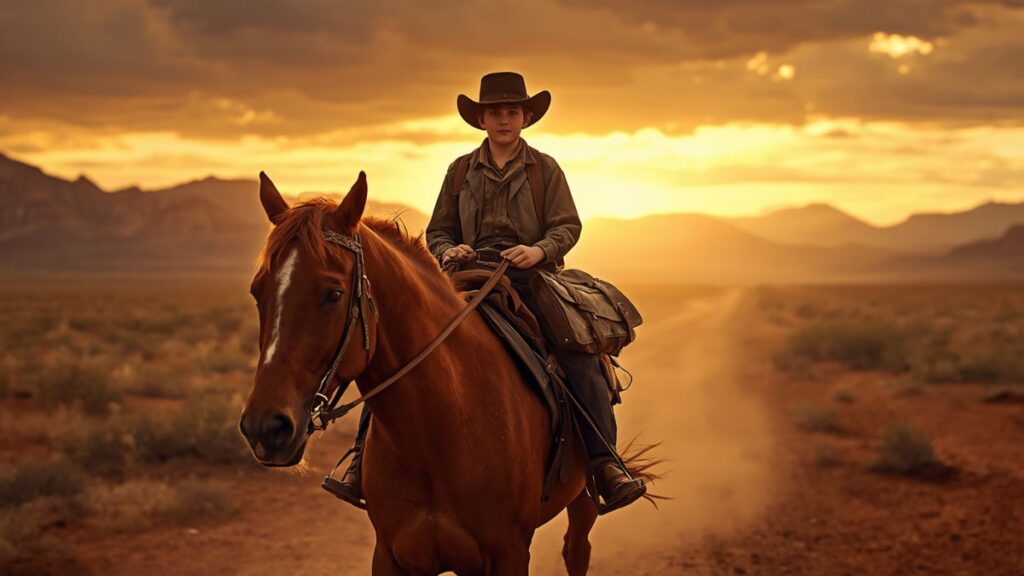
The morning sun had barely climbed above the dusty hills when twelve-year-old Caleb Turner heard the pounding of horse hooves racing toward the small frontier town of Red Mesa.
People stepped out of the general store, the blacksmith’s shop, and the tiny café as a rider struggled into town.
It was Thomas Briggs, the town’s trusted mail carrier.
His horse was covered in sweat, and Thomas barely managed to stay in the saddle before slipping to the ground.
Sheriff Collins rushed forward.
“Thomas!”
The mail carrier winced in pain.
“My horse stumbled in Dry Rock Canyon,” he said, holding his injured leg. “I don’t think I can ride again for weeks.”
Dr. Miller quickly examined him.
“A broken leg. You’ll need complete rest.”
A heavy silence settled over the crowd.
Everyone knew what Thomas carried every week.
Letters.
Medicine.
Legal documents.
News from distant family members.
Without the weekly mail run, Red Mesa would be completely cut off from the outside world.
Sheriff Collins sighed.
“We’ll have to wait until another rider comes through.”
Thomas shook his head.
“No one is scheduled for another two weeks.”
The townspeople exchanged worried looks.
For many families, two weeks felt like forever.
Among the crowd stood Caleb Turner.
He helped his parents run a small cattle ranch just outside town.
He wasn’t the strongest boy.
Nor the oldest.
But he loved riding horses more than anything else.
Every chance he got, he explored the nearby trails with his chestnut horse, Scout.
As Caleb listened to everyone discuss the problem, one thought kept growing in his mind.
Finally, he stepped forward.
“I’ll deliver the mail.”
The crowd turned toward him.
Someone laughed quietly.
Sheriff Collins smiled kindly.
“Caleb, it’s a three-day ride through the desert.”
“I know.”
“There are canyons, sandstorms, and rough trails.”
“I’ve ridden those trails with my father.”
His father, Jacob Turner, walked beside him.
“Son…”
Caleb looked at him.
“People are waiting for those letters.”
His father remained silent.
He could see the determination in Caleb’s eyes.
The same determination he had seen years ago when Caleb learned to ride after falling off his first pony dozens of times.
Thomas Briggs reached into his saddlebag.
“There is one letter that must arrive.”
He carefully removed a small envelope sealed with red wax.
“It’s addressed to Dr. Amelia Brooks in Silver Creek.”
“What’s so important about it?”
Thomas hesitated.
“Her father is very ill.”
“The letter tells her to come home immediately.”
Caleb swallowed hard.
“If she doesn’t receive it…”
Thomas nodded sadly.
“She may never see him again.”
The entire town fell silent.
Jacob Turner placed a hand on his son’s shoulder.
“If you’re going…”
“You won’t go alone.”
The next morning, Caleb prepared for the journey.
His mother packed dried meat, biscuits, beans, water, and a warm blanket.
His father checked Scout’s saddle one last time.
Sheriff Collins handed Caleb a small map.
“It marks every water stop.”
Thomas gave him the mailbag.
“Protect it.”
“I will.”
Before leaving, Caleb looked back at the people gathered in town.
They weren’t watching a child.
They were placing their trust in him.
Scout trotted steadily along the dusty trail as Red Mesa disappeared behind them.
The desert stretched endlessly ahead.
By noon, the heat became almost unbearable.
The air shimmered above the sand.
Every breath felt dry.
Caleb stopped beneath a rocky ledge to let Scout rest.
His father had taught him an important lesson.
“A tired horse is a slow horse.”
He shared water with Scout before taking only a few careful sips himself.
As they continued, strange tracks appeared in the sand.
Large paw prints.
Coyotes.
Scout lifted his ears.
The horse sensed something nearby.
Caleb remembered another lesson.
“Never panic.”
He spoke calmly to Scout and continued riding.
Soon the coyotes disappeared into the hills.
The first night arrived faster than expected.
Caleb built a small fire using dry branches.
He tied Scout nearby.
As stars filled the sky, he looked at the mailbag.
Inside were dozens of ordinary letters.
Birthdays.
Business papers.
Family news.
But to the people waiting, none of them were ordinary.
Every envelope carried hope.
The second day brought new challenges.
Dark clouds appeared over the western hills.
His father had warned him.
“Desert storms arrive quickly.”
The wind grew stronger.
Sand began blowing across the trail.
Within minutes, Caleb could barely see Scout’s ears.
He wrapped a cloth around his face.
“Easy, boy.”
Scout lowered his head and continued walking.
The storm lasted nearly an hour.
When it finally ended, the trail had disappeared beneath fresh sand.
Caleb unfolded the map.
Nothing looked familiar.
For the first time, fear entered his mind.
He was lost.
Scout suddenly stopped.
The horse sniffed the air.
Then slowly turned toward a narrow canyon.
Caleb trusted him.
Scout had traveled these trails before.
Sometimes horses remembered paths better than people.
After another mile, Caleb smiled.
There it was.
A small spring hidden among the rocks.
Exactly where the map said it should be.
“You found it, Scout.”
He hugged the horse’s neck.
That evening, Caleb reached Dry Rock Canyon.
Thomas had warned him about the dangerous cliffs.
As Scout carefully crossed the narrow trail, Caleb noticed something below.
A wagon.
Broken.
Two frightened children stood beside it with their grandmother.
Their wheel had snapped.
They had no horse.
No food.
No way to continue.
Caleb climbed down.
“Are you alright?”
The elderly woman smiled weakly.
“We’ve been stranded since yesterday.”
Without hesitation, Caleb shared part of his food and water.
He used rope from his saddle to temporarily repair the wagon wheel.
The grandmother looked at him with tears in her eyes.
“You’ve saved us.”
Caleb smiled.
“My father says travelers help each other.”
Before leaving, one of the children handed Caleb a smooth white stone.
“For good luck.”
Caleb slipped it into his pocket.
The third morning brought Silver Creek into view.
Smoke rose from chimneys.
Church bells echoed across town.
People greeted him with surprise.
“A boy delivered the mail?”
Caleb smiled proudly.
He rode directly to Dr. Amelia Brooks’ clinic.
She opened the door herself.
“I have a letter for you.”
The moment she saw the red wax seal, her face changed.
She read it quickly.
Then looked at Caleb.
“I have to leave immediately.”
Within minutes, she packed her medical bag.
Before riding away, she thanked him.
“If you hadn’t arrived today…”
She couldn’t finish the sentence.
Caleb understood.
Sometimes arriving one day earlier made all the difference.
The return journey felt shorter.
When Caleb finally rode back into Red Mesa, the entire town gathered once again.
Children cheered.
Thomas Briggs smiled proudly from a chair outside the doctor’s office.
Sheriff Collins shook Caleb’s hand.
“You’ve done something remarkable.”
Weeks later, another letter arrived.
This one was addressed to Caleb.
Inside was a short note.
“Because of your courage, I reached my father in time. We shared two wonderful days together before he peacefully passed away. Those days meant more than words can express. Thank you for giving us that final goodbye.”
Signed,
Dr. Amelia Brooks
Caleb folded the letter carefully.
He realized something important.
He hadn’t simply delivered mail.
He had delivered hope.
Years later, people still remembered the boy who crossed the desert with nothing but a brave heart, a loyal horse, and the determination to help strangers.
Whenever young children asked how someone became a hero, Sheriff Collins always smiled and pointed toward the old desert trail.
“A hero isn’t the strongest rider.”
“A hero is the one who keeps riding when someone else is depending on them.”
The End
Why Children Love Western Adventures
Western stories provide a refreshing break from modern technology by introducing readers to simpler times filled with outdoor adventures, close family relationships, and exciting frontier experiences. They encourage children to use their imagination while exploring a world where courage, hard work, and kindness matter every day.
Children enjoy these stories for many reasons:
Exciting Outdoor Adventures
Horseback riding, camping, fishing, hiking, crossing rivers, exploring forests, and discovering hidden trails make every story feel like an exciting adventure. The wide-open landscapes of the Old West encourage curiosity and a love for the outdoors.
Inspiring Young Heroes
Children enjoy reading about characters close to their own age who overcome challenges through courage, determination, and quick thinking. Watching young heroes solve problems and help others inspires readers to believe in their own abilities.
Fascinating Historical Settings
Frontier towns, covered wagons, ranches, railroads, pioneer cabins, and bustling trading posts offer an exciting glimpse into history. These settings allow children to learn about life in the Old West while enjoying entertaining stories.
Positive Values
Western adventures naturally teach important values such as respect, honesty, teamwork, kindness, responsibility, and perseverance. These lessons are woven into the story through the characters’ actions, making them both enjoyable and meaningful.
Strong Friendships and Family Connections
Many Western stories highlight supportive families, loyal friends, and close-knit communities. Children enjoy seeing characters work together, help one another during difficult times, and celebrate their successes as a team.
A Sense of Discovery
Every journey across the frontier brings new surprises. Whether it’s finding a hidden cabin, rescuing a lost animal, solving a mystery, or exploring an unfamiliar landscape, the excitement of discovering something new keeps young readers engaged from beginning to end.
These elements make Western adventures timeless. They combine action, history, and heartfelt storytelling in a way that entertains children while helping them build confidence, empathy, and a greater appreciation for courage and friendship.
Why Parents and Teachers Recommend These Stories
Western stories featuring children combine exciting adventures with meaningful educational value. Along with entertaining young readers, they encourage important life skills, positive character development, and an appreciation for history.
They help young readers in several ways:
Build Reading Confidence
The engaging adventures, relatable characters, and easy-to-follow storylines encourage children to keep turning the pages. Exciting plots help develop a lifelong love of reading.
Learn About American Frontier History
Through frontier towns, pioneer families, ranches, railroads, and life in the Old West, children gain an enjoyable introduction to an important period in American history while exploring it through storytelling.
Understand Responsibility and Resilience
Young characters often take on important responsibilities and face unexpected challenges. Their determination teaches readers the value of hard work, perseverance, and staying positive during difficult situations.
Appreciate Teamwork and Family Relationships
Many Western stories emphasize the importance of family support, loyal friendships, and communities working together. These relationships show children how cooperation and trust can help overcome obstacles.
Develop Empathy Through Meaningful Storytelling
By following the experiences of young heroes, readers learn to understand different emotions, perspectives, and struggles. These stories encourage kindness, compassion, and respect for others.
Encourage Problem-Solving and Critical Thinking
Many adventures involve solving mysteries, making difficult decisions, or finding creative solutions to unexpected problems. This helps children think carefully about choices and consequences while enjoying the story.
Because they blend adventure with positive messages and valuable life lessons, the best Western stories with children remain excellent choices for family reading, classroom discussions, school libraries, and young readers who enjoy wholesome historical adventures.
Tips for Choosing the Best Western Stories for Children
With so many Western books available, it’s helpful to choose stories that are both entertaining and appropriate for young readers. The best stories combine exciting adventures with positive messages that children can understand and enjoy.
When selecting a Western story, look for books that:
Feature Age-Appropriate Adventures
Choose stories with exciting but suitable adventures that match the reader’s age and reading level. The challenges should be engaging without being overly frightening or complex.
Include Positive Role Models
Look for young heroes and supportive adults who demonstrate honesty, courage, kindness, responsibility, and respect. Positive role models help children connect with valuable character traits through storytelling.
Balance Excitement with Meaningful Lessons
Great Western stories offer more than action. They blend horseback adventures, frontier mysteries, and outdoor exploration with lessons about friendship, perseverance, teamwork, and making good decisions.
Encourage Curiosity About History
Stories set in the Old West can inspire children to learn more about pioneer life, ranches, railroads, frontier towns, and the history of the American West. Historical details make the adventure both fun and educational.
End with Hopeful and Uplifting Messages
The most memorable stories leave readers feeling encouraged and inspired. Whether the characters solve a mystery, reunite with family, or overcome a difficult challenge, a positive ending helps reinforce important life lessons.
Spark Imagination and a Love for Adventure
The best Western stories encourage children to imagine life on the frontier, explore nature through storytelling, and dream about exciting adventures while appreciating the values of courage, compassion, and resilience.
Stories that successfully combine action, memorable characters, emotional growth, and timeless values often leave the strongest impression on young readers and become favorites that they return to again and again.
Conclusion
The best Western stories with children capture the adventurous spirit of the American frontier while celebrating courage, kindness, perseverance, and the importance of family. Through horseback adventures, prairie journeys, frontier mysteries, and unforgettable friendships, these stories entertain readers while teaching valuable life lessons that remain relevant across generations.
What makes these stories truly special is their ability to combine exciting action with meaningful character growth. Young heroes learn to overcome obstacles, make difficult decisions, help those in need, and discover their own strengths along the way. Set against the backdrop of the Old West, every adventure becomes an opportunity to explore themes of responsibility, teamwork, honesty, and resilience.
Whether you’re introducing a young reader to the frontier for the first time or searching for wholesome stories filled with adventure and heart, the best Western stories with children offer something for everyone. They encourage imagination, foster a love of history, and remind readers that true heroes are not defined by their age, but by their courage, compassion, and willingness to do what is right.
From dusty frontier towns and sprawling ranches to hidden trails and unforgettable journeys, these timeless Western tales continue to inspire children and adults alike, proving that some of the greatest adventures begin with a brave heart and a willingness to ride into the unknown.