
What are inspirational stories with moral lessons? Inspirational stories with moral lessons are meaningful narratives that teach valuable principles about life, kindness, honesty, courage, patience, responsibility, and perseverance. They help readers understand important values through relatable characters, emotional experiences, and situations that reflect everyday life.
A good story does more than entertain. It makes us think about our choices, understand other people’s feelings, and recognise the importance of doing what is right, even when it is difficult.
Moral stories are especially valuable because they communicate complicated life lessons in simple ways. A child may learn the importance of honesty from a young boy who admits his mistake. An adult may rediscover the value of patience through the experience of a struggling farmer. Sometimes, a small act of kindness can teach us more than a long lecture.
In this collection, you will find seven inspirational stories with meaningful moral lessons. Each story explores a different aspect of life and offers a reminder that our character is shaped by the decisions we make every day.
Inspirational Stories With Moral Lessons
1. The Boy Who Returned the Lost Wallet
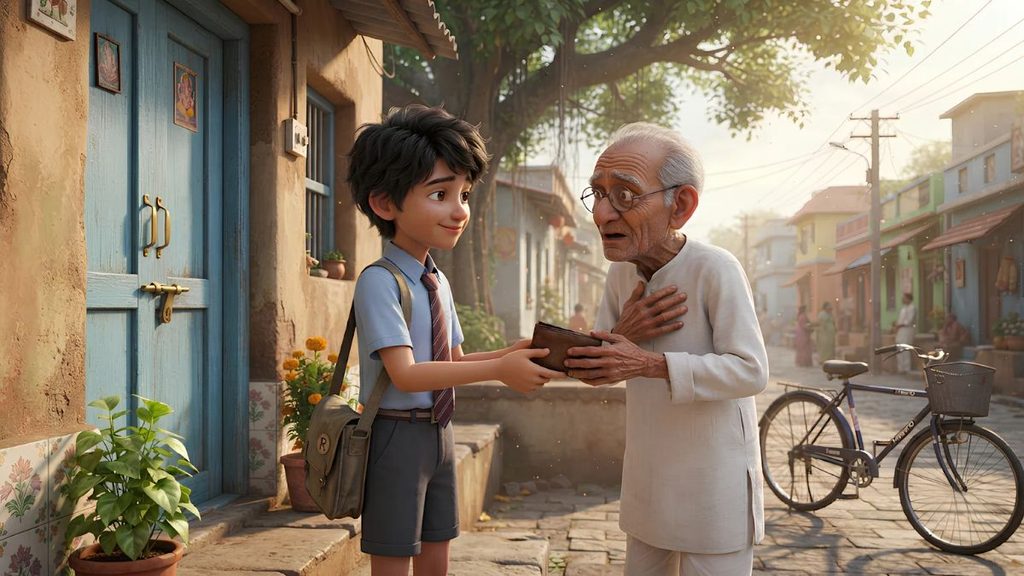
Inspirational Story About Honesty, Integrity, and Doing the Right Thing
Rohan was a twelve-year-old boy who lived with his mother in a small apartment in a busy Indian town. Their home was modest, with two small rooms, an old wooden dining table, and a balcony overlooking a narrow street. They did not own expensive furniture or the latest electronic gadgets, but Rohan had grown up understanding the value of hard work and appreciating the little things in life.
His father had passed away when Rohan was very young. Since then, his mother, Sunita, had taken responsibility for raising him. She worked at a clothing store in the local market, spending long hours attending customers, arranging garments, and managing the shop.
Every morning, she prepared breakfast, packed Rohan’s lunch, and reminded him to study well. Even after returning home tired from work, she made time to help him with his homework.
Rohan understood that life was not always easy for his mother. Sometimes, he noticed her checking the household expenses several times before buying anything. Whenever he asked for something expensive, she would gently explain that they needed to save money for more important things.
He rarely complained.
However, like most children, Rohan had a few wishes of his own.
He loved playing football with his school friends. His old football had become damaged, and he had been dreaming about buying a new one. He also needed a pair of school shoes because the soles of his existing shoes had started separating.
His mother had promised to buy them when she received her next salary.
Rohan was patiently waiting for that day.
An Unexpected Discovery
One afternoon, Rohan was returning home from school. The weather was pleasant, and the streets were filled with the usual afternoon activity.
Small shops were closing their lunch breaks, vegetable sellers were arranging their baskets, and children were walking home in groups.
Rohan was thinking about the football match scheduled for the following weekend when something brown caught his attention.
A wallet was lying near the entrance of a grocery shop.
He looked around, expecting someone to come searching for it. But nobody seemed interested.
He picked it up and examined it.
It was made of dark brown leather and looked slightly worn. When he opened it, he discovered several currency notes, a bank card, a few receipts, and a small photograph of an elderly couple.
There was considerably more money inside than his mother could comfortably save in several days.
Rohan stared at the notes.
For a moment, his imagination began running wild.
He could buy the football immediately. He could purchase new shoes without waiting for his mother’s salary. Perhaps he could even buy a small gift for her.
The possibilities seemed endless.
He looked around again.
Nobody had seen him pick up the wallet.
The grocery shopkeeper was busy attending customers, and the people passing by appeared completely unaware of what had happened.
Rohan could easily put the money in his pocket and walk away.
Nobody would know.
But as he looked at the photograph inside the wallet, something made him pause.
The elderly couple were smiling warmly. The woman was wearing a simple traditional dress, while the man stood beside her with one hand resting on her shoulder.
They looked happy and peaceful.
Rohan suddenly wondered who they were and how worried they might be after losing their wallet.
Perhaps the money was meant for something important.
Perhaps someone was waiting for it.
He remembered a sentence his mother often repeated whenever they discussed honesty.
“Money can buy many things, Rohan, but it cannot buy an honest heart.”
Those words returned to his mind.
He closed the wallet and decided that he needed to find its owner.
The Search for the Owner
Rohan walked towards the grocery shop.
The shopkeeper, Mr Verma, was arranging some packets on a shelf when Rohan approached him.
“Uncle, I found this wallet outside your shop. Do you know who it belongs to?”
Mr Verma took the wallet and examined it carefully.
“Oh! Where did you find it?”
“Near the entrance.”
The shopkeeper opened the wallet and looked at the photograph.
“Wait a minute. I think I know this gentleman.”
He thought for a few seconds.
“An elderly man came here earlier today. He purchased some groceries and seemed to be in a hurry. He might have dropped it while leaving.”
“Do you know where he lives?” Rohan asked.
“I believe he lives in the old residential area near the temple. His name might be Mr Sharma.”
Rohan felt hopeful.
“Can you tell me how to reach his house?”
Mr Verma gave him directions. He also offered to call someone who might know the man’s exact address, but Rohan decided to follow the directions first.
The residential area was nearly twenty minutes away.
Rohan started walking.
As he moved through the narrow streets, he wondered whether he would actually find the owner. The wallet contained a bank card, but there was no phone number or address visible inside.
He passed a small park, a medical shop, and several houses before reaching a lane lined with old buildings.
After asking a vegetable seller for directions, he finally found a modest house with a blue wooden door.
He checked the number.
It matched the address the shopkeeper had described.
Rohan took a deep breath and knocked.
The Elderly Man’s Relief
An elderly man opened the door.
He was wearing a white kurta and spectacles. His expression showed mild curiosity when he saw a schoolboy standing outside.
“Yes, young man? What do you need?”
Rohan looked at him carefully.
“Are you Mr Sharma?”
“Yes, I am.”
Rohan held out the wallet.
“Sir, is this yours? I found it near a grocery shop.”
For a moment, the elderly man did not speak.
Then his eyes widened.
“My wallet!”
He quickly took it and opened it.
He checked the money, the bank card, and the photograph. Everything was still there.
His hands began trembling slightly.
“Oh, thank goodness! I thought I had lost it forever.”
He looked at Rohan with visible relief.
“Where exactly did you find it?”
“Near Verma Uncle’s grocery shop.”
The elderly man shook his head.
“I must have dropped it while taking out my shopping list. I did not even notice.”
He looked inside the wallet again and sighed.
“Do you know how important this money is, my child?”
Rohan shook his head.
“I had withdrawn it to pay for my wife’s medicines. She has been unwell, and I needed to purchase her medicines this evening.”
Rohan suddenly understood why the elderly man was so relieved.
The money was not simply extra cash.
Someone’s health and comfort depended on it.
Mr Sharma invited Rohan inside.
He offered him a glass of water and asked about his family.
Rohan explained that he lived with his mother, who worked at a clothing store.
The elderly man listened carefully.
“You walked all the way here just to return my wallet?”
“Yes, sir. The shopkeeper told me where you lived.”
Mr Sharma smiled.
“You have done something very special today.”
A Reward That Was Not Expected
Mr Sharma opened his wallet and took out a few currency notes.
“Please take this. I want to reward you for your honesty.”
Rohan immediately shook his head.
“No, thank you, sir. I didn’t return it for money.”
The elderly man insisted.
“At least take something. You have saved me from a very difficult situation.”
Rohan hesitated.
He did not want to appear disrespectful by refusing the man’s kindness, but he also did not want to accept money for doing something he believed was right.
Finally, Mr Sharma smiled and offered him a small packet of sweets.
Rohan accepted it.
“Thank you, sir.”
Before leaving, Mr Sharma placed his hand gently on Rohan’s shoulder.
“Your parents must be very proud of you.”
Rohan smiled and began walking home.
He felt strangely happy.
He had not bought a football or new shoes. His financial situation had not changed. Yet he felt that he had accomplished something important.
A Mother’s Proud Moment
When Rohan reached home, his mother was preparing dinner.
She looked surprised when she saw him enter with a packet of sweets.
“Where have you been? You are later than usual today.”
Rohan placed his schoolbag on the chair.
“Something happened on my way home, Mum.”
He told her about finding the wallet, speaking with the shopkeeper, and walking to Mr Sharma’s house.
His mother listened without interrupting.
When he finished, she pulled him into a warm hug.
“I am so proud of you, Rohan.”
Rohan smiled.
“I was thinking about keeping the money for a moment.”
His mother looked at him gently.
“Having a temptation does not make you a bad person. What matters is the decision you make after that.”
She sat beside him.
“Remember something. Life will give you many opportunities to do things that benefit you at someone else’s expense. Sometimes nobody will be watching. Sometimes you may even feel that you deserve something you did not earn.”
She paused.
“But your character is built through the choices you make in those moments.”
Rohan looked down thoughtfully.
His mother continued.
“You may not have bought those shoes today, but you have protected something much more valuable. Your integrity.”
Those words stayed with him.
An Unexpected Visit
Several days passed.
Rohan returned to his usual routine of attending school, completing homework, and playing football with his friends.
He occasionally remembered Mr Sharma, but he did not expect to meet him again.
One Saturday morning, someone knocked on their door.
Sunita opened it and found an elderly gentleman standing outside.
It was Mr Sharma.
“Good morning. Is Rohan at home?”
Sunita called her son.
Rohan came running from the other room.
“Mr Sharma! How are you, sir?”
The elderly man smiled.
“I am doing very well, thanks to you.”
He turned towards Sunita.
“I wanted to meet you personally and thank you for raising such a wonderful child.”
Sunita looked surprised.
Mr Sharma explained the entire incident and told her how important the wallet had been.
“I have lived in this town for many years,” he said. “I have met countless people, but it is always encouraging to meet a young person who understands the importance of honesty.”
Sunita thanked him for his kind words.
Before leaving, Mr Sharma asked about Rohan’s education.
Sunita explained that she was doing her best to provide him with good schooling, although managing all the expenses on a single income was sometimes difficult.
Mr Sharma listened carefully.
He did not make any dramatic promises. Instead, he offered something practical.
“I know a few people who support students from financially modest families. If Rohan ever needs help with books, school supplies, or educational expenses, please let me know. I would be happy to guide you.”
Sunita thanked him sincerely.
After he left, Rohan looked at his mother.
“Do you think he came because I returned his wallet?”
His mother smiled.
“Perhaps. But remember, we should never do good things simply because we expect something in return.”
Rohan nodded.
The Lesson Spreads
A few weeks later, Rohan’s school organised a morning assembly about honesty and responsible behaviour.
The principal discussed how small decisions could reveal a person’s character.
He shared several examples of students helping others, returning lost belongings, and admitting mistakes even when doing so was difficult.
Rohan listened quietly.
He did not tell anyone about the wallet incident because he did not consider himself a hero.
However, one of his classmates mentioned that Rohan had returned a lost wallet containing a large amount of money.
The story quickly spread among the students.
Some praised him.
Others asked why he had not kept at least a small amount.
One boy even joked that Rohan had missed a chance to become rich.
Rohan simply smiled.
He understood that everyone had a different way of looking at the situation.
But he knew something that the others might not fully understand.
The money inside the wallet belonged to someone who needed it.
Keeping it would have brought him temporary happiness, but it might have caused another family considerable hardship.
He had made the decision he could live with.
The Real Meaning of Wealth
Years later, Rohan grew into a responsible young man.
He continued his education and eventually found work in a technology company. His family gradually became more financially comfortable.
He purchased the football he had once dreamed about, bought new shoes whenever necessary, and began helping his mother with household expenses.
But he never forgot the afternoon when he found the brown wallet.
Whenever he saw someone struggling, he tried to help whenever possible.
Sometimes it was a small act, such as helping an elderly person cross the road. Other times, it meant returning something someone had lost or speaking up when another person was being treated unfairly.
One day, while discussing life lessons with a younger relative, Rohan remembered the wallet incident.
The child asked him a question.
“Why didn’t you keep the money? Nobody would have known.”
Rohan smiled.
“Perhaps nobody would have known what I did. But I would have known.”
The child looked confused.
Rohan continued.
“Imagine buying something with money that belongs to another person. You might enjoy that purchase for a few days, but somewhere inside, you would know how you got it. Is that really happiness?”
The child shook his head.
“Honesty is not about being afraid of getting caught,” Rohan explained. “It is about respecting yourself even when nobody is watching.”
He paused and added:
“Sometimes, doing the right thing means giving up something you really want. But that decision helps you become the kind of person you can be proud of.”
Rohan never became wealthy because he returned the wallet. Nor did he receive a life-changing reward.
But he gained something more lasting.
He learned that integrity is not measured by how people behave when everyone is watching. It is measured by the choices they make when they have the freedom to do otherwise.
And that lesson remained with him throughout his life.
Moral of the Story
Honesty is more valuable than money. Doing the right thing is not always easy, especially when we have something to gain by doing otherwise. However, true character is revealed when we choose integrity over personal benefit.
Even when nobody is watching, our decisions matter. A person who respects what belongs to others earns something that money cannot purchase: self-respect, trust, and a clear conscience.
2. The Farmer Who Never Gave Up
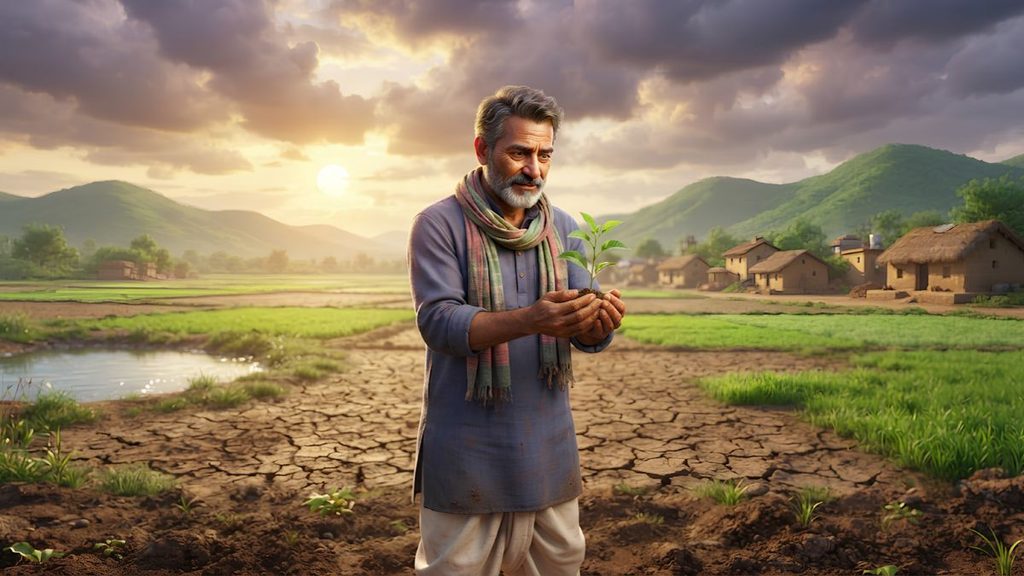
An Inspirational Story About Perseverance, Hard Work, Hope, and Determination
In a small village surrounded by green hills, open fields, and winding dirt roads, there lived a hardworking farmer named Mohan. He was known throughout the village for his dedication to farming and his simple way of life.
Mohan was not a wealthy man. He owned a modest piece of farmland that his father had passed down to him. The land was not particularly large, but it had supported his family for generations. Every morning, Mohan woke up before sunrise, walked through his fields, checked the crops, and worked until the evening.
Farming was more than a profession to him. It was a responsibility, a tradition, and a connection to his family’s past.
His wife, Radha, managed their household, while their two children, Aman and Priya, attended the village school. Like most farming families, they lived according to the seasons. A successful harvest meant food, savings, school fees, and a little security for the future.
Mohan understood that farming involved uncertainty. Sometimes the weather was favourable, while at other times unexpected rain, pests, or changing temperatures damaged the crops.
Still, he believed that hard work and patience could overcome most difficulties.
But one year, he faced a challenge that would test everything he believed.
The Year the Rains Never Came
The monsoon usually arrived around the middle of June. Mohan had prepared his fields, purchased seeds, repaired his farming equipment, and made all the necessary arrangements.
Like every year, he looked towards the sky with hope.
But June passed without meaningful rainfall.
At first, the villagers were not too worried. They believed the monsoon was simply delayed.
July arrived, but the clouds remained scarce. The soil became increasingly dry, and the village ponds began losing water.
Mohan planted his seeds, hoping that rain would arrive soon enough to support their growth.
Unfortunately, the situation became worse.
The few seedlings that emerged struggled to survive. Their leaves turned yellow, and the dry soil began cracking under the intense sunlight.
Every morning, Mohan walked through his fields, hoping to find signs of recovery.
Instead, he watched his hard work slowly disappear.
One afternoon, his neighbour, Ramesh, approached him.
“Mohan, have you seen the condition of your crops? You should stop wasting money on this field.”
Mohan looked towards the dry land.
“I know things are difficult, Ramesh. But perhaps the rain will arrive soon.”
Ramesh shook his head.
“You are being too optimistic. Look around. Nobody is getting enough water. We should think about protecting whatever money we have left.”
Mohan did not respond.
He knew his neighbour was not entirely wrong. His savings were limited, and he had already spent a considerable amount preparing the land.
But giving up seemed even more difficult.
For the first time in many years, Mohan began wondering whether his family would have enough money to survive the season.
When Hard Work Was Not Enough
As August approached, the situation became desperate.
Several farmers had stopped working in their fields. Some travelled to nearby towns in search of temporary employment, while others considered selling their land.
Mohan’s field was almost completely dry.
One evening, he sat outside his house, looking at the empty courtyard.
Radha brought him a glass of water and sat beside him.
“You have been worrying all day,” she said gently.
Mohan sighed.
“I don’t know what to do anymore. I have worked so hard, but nothing is growing. If this continues, we may lose most of our savings.”
Radha looked towards the fields.
“We cannot control the rain, but perhaps we can find another way.”
Mohan remained silent.
“I know things are difficult,” she continued, “but the children are watching us. We need to show them that problems should be faced, not simply feared.”
Her words encouraged him, but they did not immediately solve his problem.
That night, Mohan barely slept.
He kept thinking about the land, the remaining seeds, and the money he owed for agricultural supplies.
The following morning, he decided to visit an agricultural worker in a nearby town.
He wanted to understand whether there was anything he could do differently.
A New Way of Looking at the Land
The agricultural worker, whose name was Mr Suresh, welcomed Mohan into his small office.
Mohan explained everything.
He described the condition of his field, the failed seedlings, the lack of rainfall, and the money he had already invested.
Mr Suresh listened patiently.
“Tell me something, Mohan. Have you tried changing your farming methods?”
Mohan looked confused.
“What do you mean?”
“You have been farming the same way for many years. Perhaps the conditions have changed, and your methods need to change too.”
Mohan explained that his father had always cultivated the same traditional crops.
Mr Suresh nodded.
“Traditional knowledge is valuable, but we must also learn new techniques. When water becomes scarce, we need to think carefully about which crops we grow and how we use the water available to us.”
He showed Mohan some photographs of farms where farmers were using different techniques to conserve moisture.
He explained three important ideas.
First, Mohan could try growing crops that required less water. Certain varieties of millet and pulses were better suited to dry conditions than some water-intensive crops.
Second, he could improve the condition of his soil by adding organic compost and using dry leaves and crop residues as mulch. Covering the soil could help reduce moisture loss.
Third, he could create a small rainwater collection area to store water whenever rainfall returned.
Mohan listened carefully and asked several questions.
“Will these methods guarantee a successful harvest?”
Mr Suresh smiled.
“No farming method can guarantee success, especially when the weather is uncertain. But these methods can improve your chances and help you manage resources more carefully.”
He also advised Mohan not to invest all his remaining money in one experiment.
“Start small. Learn from the results. Expand only when you understand what works on your land.”
For the first time in weeks, Mohan felt a little hopeful.
He realised that he had been waiting for the weather to change without considering whether he could change his approach.
The First Experiment
When Mohan returned home, he shared everything he had learned with Radha.
She listened attentively.
“Do you think these methods will work?” she asked.
“I don’t know,” Mohan admitted. “But I think we should try.”
He decided to divide his farmland into three sections.
In the first section, he planted a drought-tolerant crop that required less water.
In the second section, he experimented with a combination of pulses and vegetables.
He used organic compost to improve the soil and covered parts of the ground with dry straw and agricultural residue to help retain moisture.
The third section was left for a future experiment.
He also began preparing a small rainwater collection pit near the lower end of the field.
It was not an expensive structure. Mohan used his existing tools and asked two neighbours to help him dig it.
His plan was simple: whenever rain arrived, he wanted to collect as much runoff as reasonably possible rather than allowing it to disappear across the land.
The work was exhausting.
Every morning, he woke before sunrise and spent hours preparing the soil.
His hands developed blisters, and his back ached from bending over the field.
Sometimes, he wondered whether he was making another mistake.
But he remembered Mr Suresh’s advice.
Start small. Learn. Improve.
He decided to give the experiment a fair chance.
The Neighbours Begin to Laugh
News of Mohan’s new farming methods quickly spread through the village.
Some villagers were curious, but others were openly critical.
Ramesh, his neighbour, visited one afternoon and looked at the divided field.
“What is all this, Mohan? You are growing different crops in the same land now?”
Mohan smiled.
“I’m trying a few things. Let’s see what happens.”
Ramesh laughed.
“First, you lose your crops because there is no rain. Now you are spending even more time experimenting. Why don’t you accept reality?”
Another farmer standing nearby joined the conversation.
“Perhaps Mohan thinks he can grow crops without water!”
The men laughed.
Mohan felt uncomfortable, but he did not argue.
He knew they were also worried about their own families. Their comments came from frustration as much as disbelief.
He returned to his work.
That evening, Aman approached his father.
“Papa, why do the other farmers laugh at you?”
Mohan placed his tools aside.
“Because they think I am doing something unusual.”
“Does that mean you are wrong?”
Mohan smiled.
“Not necessarily. Sometimes people laugh at an idea because they do not understand it. But that does not mean every new idea is correct either.”
He sat beside his son.
“That is why I am trying to learn. I don’t want to believe something simply because I want it to be true. I want to observe the results.”
Aman nodded.
Mohan continued working.
When the First Attempt Failed
For several weeks, Mohan carefully monitored his field.
He checked the soil, observed the seedlings, and adjusted his watering schedule according to the limited water available.
Some plants began growing.
Others did not.
The vegetable section suffered particularly badly. A few seedlings dried out before they could establish themselves.
Mohan was disappointed.
He had invested time, effort, and money in the experiment.
One evening, he walked through the field and noticed that several plants had completely withered.
He sat on the edge of the field, staring at the ground.
For a moment, he felt the familiar weight of hopelessness returning.
Perhaps Ramesh had been right.
Perhaps he should stop.
But then he noticed something.
The plants growing in the mulched section looked healthier than those in the uncovered area.
Their leaves were still green, and the soil beneath the straw appeared to retain more moisture.
He picked up a little soil and examined it.
It was not completely dry.
That small observation gave him an idea.
The entire experiment had not failed. Some parts had worked, while others needed improvement.
The following morning, he visited Mr Suresh again.
He explained which crops had struggled and which had survived.
Mr Suresh listened and helped him understand the importance of selecting crops suited to local soil and weather conditions.
He also suggested that Mohan seek advice about suitable seed varieties before the next planting.
Mohan returned home with a notebook full of observations.
For the first time, he began treating failure as information rather than a final judgment.
A Small Sign of Hope
One morning, while inspecting the field, Mohan noticed something unusual.
A small green shoot had emerged from the soil.
He bent down to examine it.
Then he found another.
And another.
The drought-resistant plants were slowly growing.
They were not tall or strong yet, but they had survived conditions that had destroyed much of his earlier crop.
Mohan called Radha.
“Come and see!”
She walked towards him, expecting something serious.
“What happened?”
He pointed towards the green shoots.
“Look! They are growing.”
Radha smiled.
For several minutes, they stood quietly in the field.
It was not a large harvest. It was not a solution to all their problems.
But it was proof that their efforts had not been completely wasted.
That evening, Mohan told his children about the plants.
Priya became excited.
“Will we have vegetables to eat now?”
Mohan laughed.
“Not yet. They need time.”
Aman looked towards the field.
“Then we should take care of them.”
Mohan nodded.
“Exactly. Good things need patience.”
The Rain Finally Arrives
Towards the end of September, the weather began to change.
Dark clouds gathered over the distant hills.
The villagers watched the sky with anticipation.
By evening, a gentle rain began falling.
At first, it was only a light shower.
Then the rain became heavier.
People came outside their houses, smiling and looking towards the sky.
Children ran through the streets, enjoying the cool weather.
Mohan stood near the entrance of his field, watching the rain fall over the dry land.
He was not simply celebrating the arrival of water.
He was also waiting to see whether his new collection pit would work.
As the rainwater moved across the field, some of it flowed towards the prepared collection area.
The pit began filling.
Mohan smiled.
His small preparation had made a difference.
The following morning, he walked through the field.
The soil was moist, and the plants looked healthier.
The rain had arrived late, but the land was better prepared to receive it.
Mohan used the stored water carefully, giving priority to the plants that needed it most.
He continued using crop residue as mulch and avoided wasting water on unnecessary irrigation.
He also learned that different plants had different water requirements.
Instead of treating the entire field in exactly the same way, he began managing each section according to its needs.
His approach was becoming more thoughtful.
A Harvest Worth Celebrating
The harvest season arrived.
Mohan’s field did not look like the lush green fields of previous years.
Some crops had produced less than expected, and the vegetables were not as plentiful as he had hoped.
But there was something worth celebrating.
His drought-tolerant crops had survived.
The pulses had produced a modest yield, and the vegetables from the healthier section provided additional food for the family.
Mohan calculated his expenses and earnings.
The result was not extraordinary, but it was enough to prevent the financial disaster he had feared.
He had managed to recover part of his investment and save some money for the next season.
Radha prepared a special dinner that evening.
She made fresh vegetables from their own field and invited a few relatives to celebrate.
Aman and Priya were especially happy.
For them, the harvest was more than food. It was the result of watching their father work through months of uncertainty.
During dinner, Radha looked at Mohan.
“You must be feeling relieved.”
Mohan smiled.
“Yes. But I have learned something more important than earning money this season.”
“What is that?” she asked.
“I have learned that hard work is important, but hard work alone is not always enough. We must also be willing to learn and change.”
Radha nodded.
He continued.
“If I had continued doing exactly what I was doing before, I might have lost everything. The land needed a different approach.”
The Man Who Once Laughed
A few days later, Ramesh visited Mohan’s farm.
He walked around the field, looking at the surviving crops and the small rainwater collection pit.
“I heard you managed to get a harvest,” he said.
Mohan nodded.
“Not a very large one, but enough to support the family and continue farming.”
Ramesh looked at the field.
“Can you tell me what you did differently?”
Mohan was surprised.
A few months earlier, Ramesh had laughed at his efforts.
Now he was asking for advice.
Mohan did not remind him of those earlier comments.
Instead, he explained everything.
He showed him the different crop sections, the use of compost, the straw covering, and the rainwater collection area.
He also explained which experiments had failed.
“Don’t repeat every experiment I tried,” Mohan advised. “Your soil may be different from mine. Speak with an agricultural expert and select methods that suit your land.”
Ramesh listened carefully.
“Would you help me prepare something similar?”
“Of course,” Mohan replied.
Over the following weeks, Mohan helped Ramesh understand the techniques he had learned.
He also encouraged other farmers to visit Mr Suresh for guidance.
Slowly, the village began discussing different approaches to farming rather than simply waiting for the monsoon.
Some farmers started experimenting with less water-intensive crops. Others began collecting rainwater or using crop residue to protect soil moisture.
Not every experiment succeeded, but the farmers became more willing to share their experiences.
A New Beginning
The following farming season brought new challenges.
There was still uncertainty about the weather, and Mohan knew that no single method could protect a farm from every possible problem.
However, he was better prepared.
He planned his crops more carefully, kept a record of expenses, and avoided investing all his savings in one crop.
He also continued improving his soil and water management practices.
His small farm gradually became an example of how determination and learning could work together.
One afternoon, the village school invited Mohan to speak to the students about farming.
He stood in front of a group of curious children and looked at their eager faces.
A teacher asked him to explain how he had managed to continue farming during the difficult drought.
Mohan thought for a moment.
“I did not succeed because I was stronger than the other farmers. I was not even certain that my experiments would work.”
The children listened.
“I succeeded because I stopped believing that there was only one way to solve my problem. When my old methods stopped working, I tried to learn something new.”
A young student raised his hand.
“Did you ever feel like giving up?”
Mohan smiled.
“Many times.”
The children laughed.
He continued.
“Being determined does not mean you never feel afraid or disappointed. It means you do not allow those feelings to make every decision for you.”
He looked towards the classroom window, beyond which the village fields could be seen.
“Sometimes, you need to work harder. Sometimes, you need to ask for help. And sometimes, you need to change your plan. But whatever happens, keep learning.”
The teacher thanked him.
As Mohan walked home that afternoon, he felt grateful.
His journey had not been easy.
He had experienced disappointment, financial pressure, criticism, and uncertainty.
But he had also discovered something valuable.
A difficult season had taught him lessons that several successful years had never taught him.
He understood that perseverance was not simply about repeating the same actions again and again.
It was about continuing towards a meaningful goal while remaining willing to learn, adapt, and improve.
And that was why Mohan never gave up.
Moral of the Story
Perseverance is not about never facing failure. It is about finding the courage to continue, learning from mistakes, and changing your approach when necessary.
Mohan’s journey teaches us that difficult circumstances do not always mean the end of our dreams. Sometimes, they encourage us to discover abilities, ideas, and opportunities we never knew we had.
True determination means refusing to let temporary setbacks decide your future.
3. The Shopkeeper Who Helped a Stranger

An Inspirational Story About Kindness, Compassion, Generosity, and Humanity
In a quiet town surrounded by green fields and narrow streets, there was a small grocery shop owned by a kind-hearted man named Joseph. His shop was not particularly large or modern, but it was one of the most familiar places in the neighbourhood.
People visited every day to purchase vegetables, rice, cooking oil, bread, milk, and other household necessities. Some customers came because his prices were reasonable, while others simply enjoyed talking to him.
Joseph had been running the shop for nearly twenty years. He had built his business slowly, starting with a few shelves of groceries and gradually expanding it into a dependable neighbourhood store.
He was not a wealthy businessman. His earnings were enough to support his family, pay his expenses, and save a little money for emergencies.
However, Joseph had something that many people considered more valuable than wealth.
He had a generous heart.
He believed that running a shop was not simply about selling products and earning money. It was also about understanding people and recognising that everyone faced different struggles.
Sometimes, an elderly customer needed help carrying groceries. Sometimes, a struggling family needed a little extra time to pay for essential items.
Joseph never ignored such situations.
He believed that kindness should be part of everyday life, not something reserved for special occasions.
An Ordinary Evening Turns Unexpected
One rainy evening, Joseph was preparing to close his grocery shop.
The sky had become dark, and heavy rain was falling across the town. Water was flowing along the roadside, and occasional flashes of lightning illuminated the narrow streets.
Most customers had already returned home.
Joseph was arranging the remaining vegetables when he noticed an elderly stranger standing outside his shop.
The man appeared exhausted.
His clothes were completely wet, his hair was dishevelled, and he was carrying a small cloth bag.
He stood near the entrance for a few moments, looking uncertain about whether he should come inside.
Joseph noticed him and immediately approached.
“Please come inside, sir. You will get completely soaked standing there.”
The elderly man hesitated before stepping into the shop.
“Thank you,” he said quietly.
Joseph brought him a chair and offered him a towel.
“Would you like some tea? You look tired.”
The stranger smiled weakly.
“That would be very kind of you.”
Joseph prepared a cup of hot tea and placed it in front of him.
The man held the cup with both hands, allowing the warmth to comfort his cold fingers.
For several minutes, neither of them spoke.
Finally, the stranger looked towards the shelves and asked a question.
“Could I please have something to eat?”
“Of course,” Joseph replied. “What would you like?”
The elderly man looked down at his hands.
“I am sorry to ask, but I don’t have any money with me.”
Joseph looked at him carefully.
The stranger appeared embarrassed.
“I have been travelling since morning. I haven’t eaten anything, and I am feeling very weak.”
Joseph did not ask him why he had no money.
He simply walked towards the kitchen area behind the shop.
A few minutes later, he returned with a plate containing bread, cooked vegetables, and some rice.
“Please eat something first. We can talk afterwards.”
The elderly man looked at the food.
For a moment, his eyes filled with tears.
“Thank you. You have no idea how much this means to me.”
Joseph smiled.
“Don’t worry about it. Everyone needs help sometimes.”
The Story Behind the Stranger
As the elderly man slowly ate his meal, Joseph returned to the counter and continued arranging the shop.
After finishing his food, the stranger began explaining what had happened.
His name was Thomas.
He lived in a small town nearly a hundred kilometres away and had travelled that morning to visit his daughter, who lived in another part of the district.
He had been carrying some money, his identification documents, and his wife’s medical papers inside his wallet.
Unfortunately, somewhere along the journey, he had lost his wallet.
At first, he thought he had left it on the bus.
He contacted the bus conductor, but nobody had found anything.
He also retraced part of his route, hoping to discover where he might have dropped it.
But the wallet was nowhere to be found.
Without money or a working phone, he had struggled to continue his journey.
He had eventually managed to reach Joseph’s town, but he was now unable to afford a return bus ticket.
“I thought I could manage somehow,” Thomas explained. “But after walking for so many hours, I became exhausted.”
Joseph listened without interrupting.
“Have you tried contacting your daughter?” he asked.
“I remember her number, but my phone battery died. I asked someone if I could make a call, but I couldn’t find anyone who could help me.”
Joseph immediately offered his phone.
“Please use mine.”
Thomas dialled the number from memory.
Unfortunately, nobody answered.
He tried again after a few minutes, but the call remained unanswered.
Thomas looked disappointed.
“Perhaps she is busy. I will try again later.”
Joseph understood that the man needed more than a meal.
He needed a safe way to return home.
A Decision That Cost More Than Money
Joseph checked the bus schedule on a noticeboard near his shop.
There was one final bus leaving for a nearby town in approximately forty minutes.
From there, Thomas could find another bus towards his home.
However, he still had no money for the journey.
Joseph looked at the elderly man and considered his own situation.
His business had been slow that month. He had recently paid his supplier, and he needed to save enough money for his family’s household expenses.
Giving away money was not something he could do carelessly.
But he also knew that Thomas was stranded and needed assistance.
He went to the counter, opened a small drawer, and took out some of his personal savings.
He counted enough money to cover the bus journey and a little extra for food.
Then he placed it in front of Thomas.
“Please take this. It should help you reach home.”
Thomas stared at the money.
“I cannot accept this. You have already given me food and tea. I don’t want to take your money.”
Joseph shook his head.
“Please don’t think of it that way. I am helping you because you need help.”
“But how will I repay you?”
Joseph smiled.
“You don’t have to repay me.”
Thomas’s eyes filled with tears.
He had travelled through several places that day, met many people, and explained his situation repeatedly.
Some had ignored him.
Others had looked at him suspiciously.
But Joseph had welcomed him without asking for anything.
“I don’t know what to say,” Thomas whispered.
Joseph placed a hand on his shoulder.
“Just remember this kindness whenever you meet someone who needs help.”
A Small Gesture With a Big Meaning
Before leaving, Joseph packed some food for Thomas.
He included bread, fruit, and a bottle of water.
He also wrote down his shop’s address and telephone number on a small piece of paper.
“If you face any difficulty during your journey, call me.”
Thomas carefully placed the paper inside his shirt pocket.
Joseph then accompanied him to the bus stop.
The rain had become lighter, but the road was still wet.
They walked slowly, with Joseph carrying an umbrella.
When they reached the bus stop, Thomas turned towards him.
“Why are you doing all this for someone you have never met?”
Joseph thought for a moment.
“Because I know what it feels like to need help.”
Thomas looked at him.
Joseph continued.
“When I was younger, my father became seriously ill. Our family did not have much money, and there were days when we struggled to manage even our basic expenses. A neighbour helped us during that difficult period. He never asked for anything in return.”
Joseph smiled.
“I have never forgotten what he did for us. I believe that when someone helps you through a difficult time, you should carry that kindness forward.”
Thomas nodded slowly.
The bus arrived a few minutes later.
Before boarding, he shook Joseph’s hand.
“May God bless you and your family.”
Joseph smiled.
“Take care of yourself, sir.”
He watched the bus disappear into the rainy evening before returning to his shop.
That night, he went home feeling tired but peaceful.
He had no idea that the small decision he had made would eventually change his own life.
The Stranger Returns
Nearly six months passed after that rainy evening.
Joseph continued running his grocery shop as usual. He served customers, managed his accounts, and worked hard to keep his business running.
Occasionally, he remembered Thomas and wondered whether the elderly man had reached home safely.
He had never received a phone call, but he did not feel disappointed.
He had not helped Thomas because he expected a reward or recognition.
One morning, while Joseph was arranging some fresh vegetables outside his shop, a well-dressed gentleman approached him.
“Good morning. Are you Joseph?”
Joseph looked up.
“Yes, that’s me. How can I help you?”
The visitor smiled.
“My name is Daniel. I believe you helped my father several months ago.”
Joseph looked confused.
“Your father?”
“His name is Thomas. He told me about a shopkeeper who helped him when he lost his wallet during a journey.”
Joseph’s face immediately brightened.
“Oh! Yes, I remember him. Is he doing well?”
Daniel smiled.
“He is doing very well now. In fact, he has been talking about you ever since that evening.”
He explained that Thomas had eventually reached home safely. A neighbour had helped him complete the final part of his journey after he arrived in a nearby town.
When Thomas returned home, he told his family everything that had happened.
He described how Joseph had given him food, allowed him to use his phone, and provided money for his journey.
Daniel continued.
“My father was particularly touched because you helped him without knowing anything about him. He said you treated him with dignity when he was feeling helpless.”
Joseph smiled.
“I’m just glad he reached home safely.”
Daniel nodded.
“My father wanted to thank you personally, but travelling has become difficult for him. He asked me to visit you instead.”
Joseph offered Daniel a chair and prepared a cup of tea.
They talked for some time.
During their conversation, Joseph learned that Daniel owned a small food distribution business in a nearby city. His company supplied groceries and packaged food products to several independent retailers.
Daniel had been looking to expand his distribution network.
When he learned that Joseph owned a neighbourhood grocery shop with a good reputation, he became interested in discussing a possible business arrangement.
“I would like to explore whether we can work together,” Daniel said.
Joseph was surprised.
He had never expected his kindness towards Thomas to lead to a business opportunity.
They exchanged contact details and agreed to discuss the possibility further.
An Opportunity to Grow
Over the following weeks, Daniel visited Joseph’s shop several times.
He examined the business, understood its daily operations, and discussed different products that could be supplied at better rates.
Joseph was cautious.
He had spent nearly twenty years building his shop and did not want to make careless decisions.
Daniel respected his concerns.
Eventually, they agreed on a small partnership.
Joseph would purchase selected products through Daniel’s distribution company, allowing him to improve his stock availability and offer more competitive prices.
The arrangement worked well.
Joseph began attracting more customers because he could provide a wider selection of products.
His monthly earnings gradually improved.
He also renovated a small section of his shop, added better storage shelves, and introduced a home-delivery service for elderly customers living nearby.
The business began growing steadily.
But the most interesting change was not financial.
Joseph started receiving more opportunities to help people.
He began keeping a small notebook where he recorded the names of families in the neighbourhood who occasionally struggled to purchase essential groceries.
Whenever possible, he provided basic items at reduced prices or allowed trusted customers to pay later.
He also began keeping some food packets ready for anyone who arrived hungry and genuinely needed assistance.
He never advertised these acts of generosity.
He did not want people to feel embarrassed or believe that they owed him something.
He simply continued doing what he had always believed was right.
Kindness Comes Full Circle
One winter evening, Joseph was closing his shop when he noticed a young boy standing near the entrance.
The boy appeared to be around ten years old.
He was holding a small cloth bag and looking at the bread displayed on the counter.
Joseph approached him.
“Hello, young man. Would you like something?”
The boy looked uncomfortable.
“Uncle, can I have some bread? I don’t have enough money.”
Joseph asked him where his parents were.
The boy explained that his mother was unwell and his father worked in another town. He had come to purchase something for dinner but had discovered that he was short of money.
Joseph gave him a packet of bread, some fruit, and a few other basic food items.
The boy tried to explain that he would bring the remaining money the following day.
Joseph smiled.
“Don’t worry about that. Take these things home. Your mother needs them.”
The boy looked at him with gratitude.
“Thank you, uncle.”
Joseph watched him walk away.
For a moment, he remembered Thomas standing outside his shop on that rainy evening.
The situations were different, but the feeling was familiar.
Someone had needed help, and he had been in a position to offer it.
He realised that kindness was not a single event.
It was something that could continue from one person to another.
Perhaps the boy would remember this moment when he grew older. Perhaps he would help someone else facing a difficult situation.
Joseph could not know.
But he hoped so.
The Stranger’s Final Message
About a year after their first meeting, Thomas finally visited Joseph’s shop again.
This time, he arrived with his son Daniel.
Joseph was delighted to see him.
“Mr Thomas! It is wonderful to see you again. How have you been?”
Thomas smiled warmly.
“Much better, thanks to good people like you.”
They sat together and talked about life.
Thomas explained that his wife was recovering and that his family had been deeply grateful for the help Joseph had provided.
He also shared something that Joseph had not expected.
After returning home, Thomas had started helping elderly people in his neighbourhood who struggled with daily activities.
He helped them purchase groceries, accompanied them to medical appointments, and occasionally paid for essential items when they could not afford them.
Joseph listened with a smile.
Thomas continued.
“That evening, when you helped me, I was feeling helpless. I thought nobody cared about an old man who had lost everything during a journey. But you reminded me that there are still people who help simply because someone needs them.”
He paused.
“I wanted to feel that way again. So I decided to help others whenever I could.”
Joseph looked genuinely happy.
“You have done something wonderful, Mr Thomas.”
Thomas shook his head.
“You started it.”
Joseph smiled.
“No. Someone helped me many years ago. Perhaps this is how kindness travels.”
The two men laughed.
Before leaving, Thomas gave Joseph a small framed photograph.
It showed an elderly man and woman standing beside a grocery shop.
On the back was a handwritten message:
To the man who reminded me that strangers can become family through kindness.
Joseph placed the photograph on a shelf behind his counter.
It remained there for many years.
A Lesson That Changed the Neighbourhood
As time passed, Joseph’s grocery shop became more than a place where people purchased daily necessities.
It became a place where neighbours felt welcome.
Some customers began contributing food packets for families facing financial difficulties. Others helped elderly residents with shopping and transportation.
A local teacher even started bringing students to the shop occasionally to discuss the importance of community service.
Joseph never considered himself responsible for all these changes.
He believed that everyone was simply doing what they could.
One afternoon, a young customer asked him why he was always willing to help people.
“Doesn’t generosity make it difficult to run a profitable business?” the customer asked.
Joseph laughed.
“Of course, a business needs money to survive. I also have a family and responsibilities. Helping others does not mean ignoring those responsibilities.”
He paused before continuing.
“But there is a difference between being careful with money and becoming indifferent to people’s suffering.”
The customer listened.
Joseph explained that he did not give away everything he earned. He managed his expenses, saved for emergencies, and made responsible business decisions.
But whenever he encountered someone who genuinely needed help, he tried to find a way to assist.
“Sometimes I can offer food. Sometimes I can offer a little time. Sometimes all I can do is listen. Not every problem requires a large amount of money.”
The young customer nodded.
Joseph smiled.
“Remember, kindness is not about how much you give. It is about whether you are willing to notice someone else’s difficulties.”
That evening, after closing the shop, Joseph looked at the framed photograph Thomas had given him.
He thought about the rainy evening when a tired stranger had entered his shop.
He had not known the man’s name, family, financial situation, or personal history.
He had simply seen someone who was hungry and needed help.
That single decision had created a friendship, strengthened his business connections, and inspired several other people to become more generous.
But even if none of those things had happened, Joseph knew he would have made the same decision again.
Because the real reward had never been money, business growth, or recognition.
It was knowing that someone had gone home feeling a little less alone.
And that, Joseph believed, was one of the greatest things a person could do for another.
Moral of the Story
True kindness is helping others without expecting anything in return.
Joseph teaches us that generosity does not depend on wealth or social status. Even someone with limited resources can make a meaningful difference through food, time, compassion, and understanding.
A small act of kindness can create a lasting connection and inspire others to help people in need.
Sometimes, the person you help today may never be able to repay you. But they might pass that kindness to someone else, creating a chain of generosity that reaches far beyond your imagination.
4. The Student Who Learned the Value of Patience
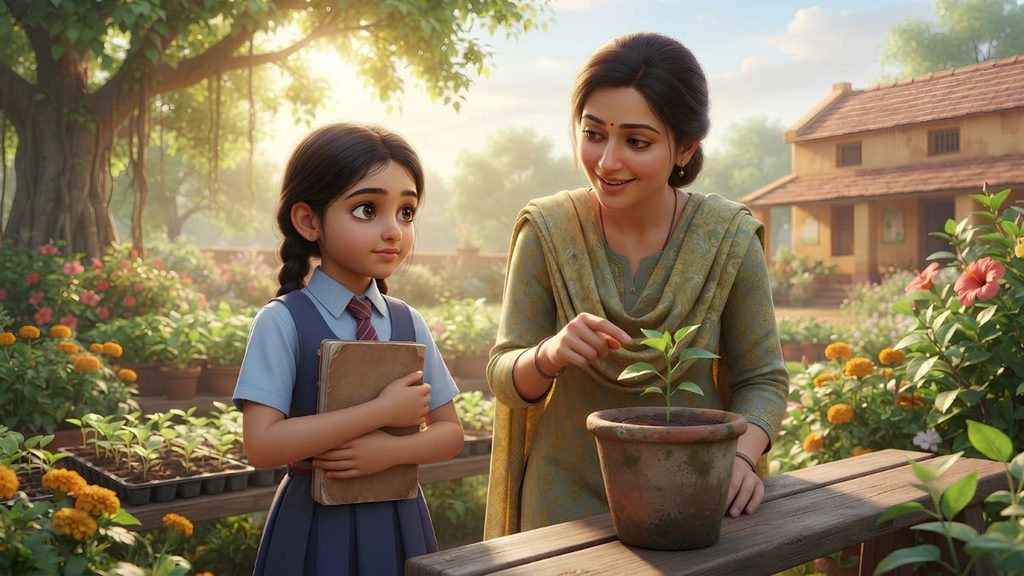
Ananya had always dreamed of becoming a doctor. Ever since she was a little girl, she had admired the doctors who worked at the hospital near her home. She was fascinated by their white coats, their knowledge, and the way they helped people during difficult moments.
Whenever someone in her family became ill, Ananya would sit beside them and imagine herself one day treating patients. She often told her parents that she wanted to become a doctor so she could make a difference in people’s lives.
Her parents supported her dream. They encouraged her to study hard, provided her with books, and reminded her that becoming a doctor required dedication and years of learning.
Ananya was a bright student. She attended her classes regularly, completed her homework, and spent several hours studying every evening. Her teachers appreciated her curiosity and her willingness to participate in classroom discussions.
However, despite her intelligence and hard work, Ananya had one weakness.
She was impatient.
She wanted everything to happen quickly. If she studied a difficult chapter, she expected to understand it immediately. If she practised a mathematics problem and got the wrong answer, she became frustrated. If she received a lower score than expected in a test, she started doubting her abilities.
Ananya believed that hard work should produce immediate results.
Whenever she saw her classmates scoring better marks, she felt discouraged. She wondered why they seemed to understand certain subjects so easily while she had to spend hours studying the same topics.
Her impatience gradually began affecting her confidence.
The Disappointing Test Result
One Monday morning, Ananya’s class received the results of their latest science examination.
She had prepared carefully for the test. During the previous week, she had studied every evening, revised important questions, and completed several practice papers.
She was confident that she would receive excellent marks.
When her teacher, Mrs. Meera, entered the classroom carrying the answer sheets, Ananya sat upright in her chair.
The teacher began distributing the papers.
Some students smiled after seeing their marks. Others quietly examined their mistakes.
When Mrs. Meera placed Ananya’s paper on her desk, Ananya immediately looked at the score.
It was much lower than she had expected.
She stared at the number for several seconds, hoping she had misunderstood it. But the marks were correct.
Her heart sank.
She had made mistakes in questions she believed she knew well. She had also left one answer incomplete because she had become confused while writing it.
Throughout the remaining class, Ananya could barely concentrate.
After the lesson ended, she approached Mrs. Meera.
“Ma’am, may I speak with you?” she asked.
“Of course, Ananya. Is something troubling you?”
Ananya showed her the answer sheet.
“I studied so much for this examination, but I still didn’t get the marks I wanted. I don’t understand what I am doing wrong. Perhaps I am not capable of achieving my dream.”
Mrs. Meera examined the paper carefully.
“How many hours did you study for this examination?” she asked.
“Almost four hours every day, ma’am.”
“And how did you prepare?”
“I read every chapter, memorised the important points, and solved practice questions. But I still made mistakes.”
Mrs. Meera smiled gently.
“Ananya, studying for several hours is important, but learning is not simply about how much time you spend with your books. It is also about how patiently you understand what you are studying.”
Ananya looked confused.
“But shouldn’t hard work bring good results?”
“Yes, but sometimes those results take time. Let me show you something.”
Mrs. Meera asked Ananya to follow her.
A Lesson in the School Garden
Behind the school building was a small garden maintained by the students.
It was not particularly large, but it was full of colourful flowers, green plants, and a few young trees. Several clay pots stood along a narrow pathway.
Mrs. Meera led Ananya towards a group of plants.
“Look at these plants,” she said. “Do you know how long they have been growing?”
Ananya examined them.
“Some look quite young, while others are bigger. I am not sure.”
“These plants were planted several months ago. When we first placed their seeds in the soil, nothing appeared above the ground for many days.”
Ananya looked at the soil inside one of the pots.
“But how did you know they would grow?”
“We didn’t know exactly when they would appear. We simply gave them what they needed. We watered them regularly, protected them from harsh sunlight, and made sure the soil was suitable.”
The teacher pointed towards a small plant with only a few leaves.
“Imagine if I had planted this seed and then become impatient after two days. What would have happened if I had dug it out of the soil because I couldn’t see any growth?”
Ananya smiled.
“The seed would never have grown properly.”
“Exactly. Growth does not always happen where we can see it. Beneath the soil, the seed is developing roots before it becomes visible.”
Mrs. Meera paused before continuing.
“Learning works in much the same way. Sometimes you study a subject for several days without noticing much improvement. You may feel that you are making no progress. But every time you understand a new concept, correct a mistake, or practise a difficult question, you are building something inside your mind.”
Ananya listened carefully.
The teacher continued.
“You are expecting yourself to become successful immediately. You are judging your abilities after every examination instead of looking at your progress over time.”
Ananya looked down at her answer sheet.
“I suppose I become disappointed whenever I make mistakes.”
“Making mistakes does not mean you are failing. It means you have discovered something that needs more attention. The real problem is not making a mistake. The problem is refusing to learn from it.”
For the first time that day, Ananya began to understand what her teacher was trying to explain.
A Different Way of Studying
The following morning, Ananya visited Mrs. Meera before classes began.
“Ma’am, I have been thinking about what you told me yesterday. I want to improve, but I don’t know where to begin.”
Mrs. Meera was pleased to see her.
“Good. The first step is understanding that improvement is a process. We will make a plan that allows you to learn steadily instead of rushing through everything.”
She took a notebook from her desk and began writing.
“First, divide your difficult subjects into smaller topics. Don’t try to understand an entire chapter in one sitting. Focus on one concept at a time.”
Ananya nodded.
“Second, practise regularly. Even thirty minutes of focused practice can be useful if you use that time properly.”
The teacher wrote another point.
“Third, review your mistakes. Whenever you get a question wrong, write it down and try to understand why your answer was incorrect.”
“Should I solve the same question again?” Ananya asked.
“Yes. But don’t simply memorise the correct answer. Understand the reason behind it. That way, you will be better prepared when you face a similar question.”
Mrs. Meera then added one final suggestion.
“Most importantly, stop judging yourself after every test. Instead, compare your performance over several weeks. Improvement may be small at first, but small improvements can eventually create a big difference.”
Ananya thanked her teacher and returned to her classroom.
That evening, she opened a fresh notebook and divided it into sections for different subjects.
She wrote down the topics she found difficult and created a weekly study schedule.
For the first time, she was not trying to finish everything as quickly as possible.
She was trying to understand everything properly.
The First Test of Patience
Following the new schedule was not easy.
During the first few days, Ananya struggled with a complicated chapter in chemistry. She read the same explanation several times but still found it difficult to understand.
Earlier, she would have closed the book in frustration.
This time, she reminded herself of the garden.
A seed needed time beneath the soil before it could become a plant.
So she divided the chapter into smaller sections. She watched her teacher’s explanations carefully, wrote down the important concepts, and solved a few basic questions before moving towards more difficult ones.
Whenever she became confused, she marked the topic and returned to it later.
Slowly, the chapter began making sense.
She experienced another difficulty when she attempted a practice examination.
Her score was still not very high.
For a moment, she felt the familiar disappointment returning.
Then she opened her mistake notebook.
She noticed that most of her wrong answers came from three topics. Instead of thinking that she was a poor student, she decided to focus on those areas.
She revised the concepts, solved additional questions, and attempted another practice paper.
Her score improved slightly.
It was not a remarkable achievement, but it was better than before.
Ananya smiled.
For the first time, she felt proud of a small improvement.
Learning to Accept Mistakes
As the weeks passed, Ananya began changing the way she thought about examinations.
Previously, every wrong answer felt like proof that she was not intelligent enough.
Now, she treated mistakes as information.
Whenever she received a practice paper, she did not look at the total marks first. Instead, she examined the questions she had answered incorrectly.
She asked herself several questions.
Had she misunderstood the concept?
Had she forgotten an important detail?
Had she rushed through the question?
Had she made a calculation error?
By identifying the reason behind each mistake, she began improving her preparation.
She also started asking more questions in class.
Earlier, she had avoided raising her hand because she was afraid her classmates might laugh if she asked something simple.
Now, she understood that asking questions was part of learning.
One afternoon, while discussing a biology lesson, she raised her hand.
“Ma’am, could you explain that process once more? I understand the first part, but I am confused about what happens next.”
Mrs. Meera repeated the explanation using a simple diagram.
Ananya finally understood the concept.
“Thank you, ma’am,” she said.
Her teacher smiled.
“Never feel embarrassed about asking questions. A person who wants to learn should never be afraid of admitting what they don’t know.”
That sentence stayed with Ananya.
She realised that patience was not just about waiting. It also meant being willing to learn, even when progress felt slow.
The Comparison Trap
Although Ananya was improving, she sometimes struggled when comparing herself with other students.
One of her classmates, Rohan, was particularly good at mathematics. He could solve difficult problems quickly and often finished his tests before everyone else.
Ananya admired his ability but also felt jealous.
One day, after seeing Rohan complete a difficult exercise in a few minutes, she became discouraged.
“How do you understand these questions so quickly?” she asked him.
Rohan laughed.
“I used to find them difficult too. My older brother helped me practise during the holidays. We solved similar questions almost every day.”
Ananya was surprised.
“So you didn’t understand them immediately?”
“Not at all,” Rohan replied. “I made plenty of mistakes. I just kept practising.”
His answer made Ananya think.
She had been comparing her present abilities with someone else’s developed skills without knowing how much effort had gone into building them.
She decided to stop using other students’ marks as a measure of her own worth.
Instead, she began comparing her current performance with her earlier performance.
At the beginning of the month, she could barely solve five questions from a difficult topic.
By the end of the month, she could solve fifteen.
That was progress.
It was her progress, and it mattered.
The Difficult Examination
Several months passed.
The annual examinations were approaching, and the entire school was preparing for them.
Ananya followed her study schedule carefully. She revised each subject, practised previous examination papers, and discussed difficult topics with her teachers.
There were still days when she felt tired.
Sometimes, she wanted to complete an entire syllabus in one evening. On other days, she worried that she was not doing enough.
But she had learned to recognise those feelings.
Whenever she became anxious, she returned to her plan.
She reminded herself that one difficult day did not erase weeks of hard work.
A few days before the examination, her mother noticed her studying late at night.
“Ananya, you should take a break. You have been studying for hours.”
“I still have two chapters left, Mom.”
“You have worked hard for months. Don’t exhaust yourself now. Get some sleep and continue tomorrow.”
Ananya hesitated.
She remembered her old habit of rushing through everything because she feared that time was running out.
This time, she closed her books.
Her mother brought her a glass of warm milk, and they sat together for a while.
“Are you nervous?” her mother asked.
“A little. But I think I am better prepared than before.”
“Then trust the work you have done.”
Ananya went to bed early.
The next morning, she revised the remaining chapters with a fresh mind.
When the examination day arrived, she entered the classroom feeling nervous but confident.
The question paper was challenging.
Some questions required careful thinking, and a few were based on topics she had previously found difficult.
However, she did not panic.
She read each question slowly, managed her time, and answered the questions she understood before returning to the more difficult ones.
When she encountered a question she could not solve immediately, she did not waste several minutes becoming frustrated.
She moved forward and returned to it later.
By the end of the examination, she had answered most of the questions.
For the first time, she left an examination hall without feeling that one difficult question had ruined everything.
The Reward of Consistent Effort
A few weeks later, the examination results were announced.
Students gathered outside the classroom as Mrs. Meera arrived with the result sheets.
Ananya stood quietly near her desk.
She was hopeful, but she had learned not to place all her happiness on a single number.
Mrs. Meera began announcing the results.
When she reached Ananya’s name, she paused and smiled.
“Ananya has achieved one of the highest scores in the class this year. Her improvement has been remarkable.”
The classroom filled with applause.
Ananya could hardly believe what she had heard.
She walked towards the teacher and received her answer sheet.
Her marks were excellent.
But what made her happiest was not simply the high score. It was knowing how far she had come.
She remembered the disappointing examination months earlier, the difficult chemistry chapter, the practice papers filled with mistakes, and the evenings when she had wanted to give up.
All those small efforts had brought her to this moment.
“Ma’am, I finally did it!” she said excitedly.
Mrs. Meera smiled.
“Yes, you did. But remember something important. Your success did not happen on the day you received these marks. It happened every day when you chose to continue learning instead of giving up.”
Ananya looked at her teacher.
“I think I understand what you meant in the garden now.”
“Tell me.”
“Growth takes time. I was expecting everything to happen immediately, but I wasn’t giving myself enough time to improve.”
Mrs. Meera nodded.
“Exactly. You cannot force a seed to become a tree overnight. You can only provide the right conditions and take care of it every day.”
A Dream That Continued to Grow
Years passed, and Ananya continued following the same principles.
She completed her school education with excellent results and eventually secured admission to a medical college.
Medical school was far more challenging than she had imagined.
There were long lectures, demanding examinations, complicated medical subjects, and practical training sessions that required tremendous concentration.
At times, she found herself struggling again.
There were subjects that took weeks to understand. There were examinations that did not go as planned. There were days when she questioned whether she was capable of handling the responsibility of becoming a doctor.
But she was no longer the impatient student who believed that one disappointing result could destroy her future.
She knew that learning was a lifelong process.
Whenever she faced a difficult subject, she broke it into smaller sections. Whenever she made a mistake, she tried to understand it. Whenever progress seemed slow, she reminded herself that meaningful growth often happened gradually.
One evening, during her final years of medical training, Ananya visited her old school.
She walked through the familiar corridors and eventually reached the garden behind the building.
Much had changed.
Some of the plants had grown into large bushes, and the young trees had become tall enough to provide shade.
Mrs. Meera was sitting nearby, reading a book.
Ananya approached her.
“Good evening, ma’am.”
Mrs. Meera looked up and smiled with surprise.
“Ananya! It is wonderful to see you. How are your studies going?”
“They are going well, ma’am. I am getting closer to becoming a doctor.”
“That is wonderful news. I always knew you had the determination to achieve your dream.”
Ananya looked towards the plants.
“Do you remember the day you brought me here after I received a disappointing examination result?”
“Of course I do.”
“I still remember what you told me about the seeds. I think that was one of the most important lessons I ever learned.”
Mrs. Meera closed her book.
“Why do you say that?”
“Because I realised that success is not always about reaching a destination quickly. Sometimes it is about becoming a better person through the journey. I used to think that if I wasn’t successful immediately, I was failing. Now I understand that every day of learning matters.”
The teacher smiled proudly.
“That is the real meaning of patience, Ananya. It does not mean sitting quietly and waiting for success to arrive. It means continuing to work, even when the results are not visible yet.”
Ananya nodded.
She looked at the small plants growing beside the pathway.
Some were tall, some were short, and some were still developing their first leaves.
Yet each was growing in its own time.
She realised that people were much the same.
Everyone had a different journey, different challenges, and a different pace of progress.
There was no reason to compare her beginning with someone else’s middle or to abandon her dreams simply because they required more time than she had expected.
As she said goodbye to Mrs. Meera, Ananya felt grateful.
Her teacher had not simply helped her become a better student. She had taught her how to face difficulties without losing confidence.
And that lesson would remain valuable long after her examinations were over.
Years later, when Ananya began treating patients, she carried the same patience into her medical practice. She listened carefully, explained treatments calmly, and understood that recovery often required time.
She had finally learned that meaningful achievements, whether in education, relationships, careers, or personal growth, rarely happen overnight.
They are built through small actions repeated with dedication.
The impatient student who once doubted herself had become a confident doctor, not because she had discovered a shortcut to success, but because she had learned the value of patience.
Moral of the Story
Success takes time, and meaningful progress cannot always be measured immediately. Patience, consistent effort, and the willingness to learn from mistakes are more valuable than expecting instant results.
Just as a seed needs time, care, and the right conditions to grow into a strong tree, people need time and dedication to develop their abilities. Never give up simply because your efforts have not produced visible results yet. Keep learning, keep practising, and trust the process.
5. The Rich Man and the Empty House

There was once a wealthy businessman named Rajesh who lived in a magnificent mansion on the outskirts of a busy city. His house stood behind tall iron gates, surrounded by beautiful gardens, fountains, and carefully trimmed lawns. Inside, every room was decorated with expensive furniture, shining floors, elegant paintings, and luxurious decorations.
Rajesh owned several businesses, multiple properties, and a collection of expensive cars. His bank accounts were full, and he could afford almost anything he wanted.
People in the city often admired his success. Whenever he attended social gatherings, people gathered around him to discuss business, money, and investments. Many considered him one of the luckiest men in the city.
Yet there was something unusual about Rajesh’s life.
Despite having everything money could buy, he was deeply unhappy.
His mansion was enormous, but it rarely felt like a home. His dining table could accommodate twelve people, but most evenings he ate alone. His living room had comfortable sofas and a large television, but there was nobody with whom he could share a conversation.
His children lived in different cities, his wife had passed away several years earlier, and most of his old friends had gradually disappeared from his life.
Rajesh had spent so many years building his fortune that he had forgotten how to build relationships.
He had become rich in possessions but poor in companionship.
The Man Who Had Everything Except Happiness
Rajesh had not always been wealthy.
He had grown up in a small house with his parents and two younger sisters. His father worked as a shop assistant, while his mother managed the household.
Their family did not have much money, but their home was always full of laughter.
They shared meals around a small wooden table, celebrated festivals together, and spent evenings talking about their day.
Whenever Rajesh returned from school, his mother would ask him about his lessons. His father often told him stories about honesty, hard work, and treating people with kindness.
Those were simple days, but they were filled with warmth.
As Rajesh grew older, he became determined to escape poverty.
He studied hard, started working at a young age, and eventually opened a small trading business. His first few years were difficult. He worked long hours, travelled frequently, and took several financial risks.
His efforts gradually paid off.
His small business expanded into a successful company. He hired employees, opened new branches, and began investing in property.
With every achievement, his wealth increased.
However, his priorities slowly changed.
He stopped visiting his parents regularly because he was always busy. He missed family celebrations because of business meetings. He postponed holidays, ignored invitations, and rarely spent time with his friends.
Whenever someone complained about his absence, he gave the same answer.
“I am working hard for the future. Once I become successful enough, I will have plenty of time for everyone.”
His family believed him.
His parents waited for his visits. His sisters continued inviting him to important occasions. His wife patiently accepted his long working hours.
But the future he kept promising never seemed to arrive.
There was always another business opportunity, another investment, another meeting, or another financial target.
By the time Rajesh realised how much time had passed, many of the people who once filled his life were no longer around.
A Birthday Without Celebration
On his sixty-second birthday, Rajesh woke up expecting a few phone calls.
He had planned to spend the evening with his children, who had promised to visit.
His housekeeper prepared his favourite breakfast. The dining room was decorated with flowers, and a large birthday cake had been ordered from an expensive bakery.
Rajesh wore a new suit and waited for his children.
At noon, his daughter called.
“Happy birthday, Dad! I am really sorry, but I won’t be able to come today. There is an important meeting at work. I will visit next month.”
Rajesh tried to hide his disappointment.
“That’s fine. Take care of your work.”
A little later, his son sent a message.
“Happy birthday, Dad. Sorry I couldn’t make it. I have some urgent commitments. We will celebrate together soon.”
Rajesh read the message twice.
He looked at the beautifully decorated dining room.
Everything was ready, but nobody was coming.
He called an old friend, hoping they might meet for dinner. The friend answered politely but explained that he was travelling.
Another friend did not answer.
By evening, Rajesh sat alone at the large dining table.
The birthday cake stood in front of him. Several candles were burning, but there was nobody to sing for him.
He cut a small piece and placed it on a plate.
The house was silent.
He looked around at the expensive decorations and suddenly felt that none of them mattered.
For the first time in many years, he missed his childhood home.
He remembered his mother bringing a homemade cake to the table, his father joking about his age, and his sisters arguing over who would receive the biggest piece.
There had been no expensive furniture or grand decorations.
But there had been love.
Rajesh put down his fork.
He realised that he had spent his life collecting things while allowing the people who mattered most to drift away.
The Unexpected Visitor
A few days later, Rajesh decided to visit the old neighbourhood where he had grown up.
The area had changed considerably. Some old houses had been replaced by modern buildings, and the small shops he remembered were now larger stores.
Yet a few familiar places remained.
As he walked through the narrow streets, he noticed a small tea stall near the corner.
An elderly man was sitting outside, serving tea to customers.
Rajesh recognised him immediately.
It was Mohan, an old friend from his childhood.
“Mohan!” Rajesh called out.
The elderly man looked up.
For a moment, he seemed confused. Then his face brightened.
“Rajesh? Is that really you?”
The two men shook hands warmly.
Mohan invited Rajesh to sit.
“Where have you been all these years? I heard you became a very successful businessman.”
Rajesh smiled faintly.
“Yes, life became busy. I should have visited earlier.”
Mohan brought him a cup of tea.
They began discussing their childhood memories. They laughed about schoolteachers, cricket matches, and the small adventures they had experienced as boys.
For the first time in months, Rajesh felt comfortable.
There was no business discussion, no financial negotiation, and no pressure to impress anyone.
They were simply two old friends talking.
After some time, Mohan asked, “How is your family?”
Rajesh looked down.
“My children live far away. My wife passed away some years ago. I have a large house, but I spend most of my time alone.”
Mohan listened quietly.
Then he said something that surprised Rajesh.
“Perhaps your house is large, but you have forgotten what makes a house feel like a home.”
Rajesh looked at him.
“What do you mean?”
Mohan smiled.
“A home is not made by expensive furniture, beautiful walls, or a large garden. It is made by the people who fill it with affection. Without them, even a palace can feel empty.”
Rajesh remained silent.
Mohan continued.
“When we were young, your family had very little money, but everyone wanted to visit your house. Your mother always welcomed people. Your father enjoyed talking to the neighbours. Your sisters were always laughing. I still remember those evenings.”
Rajesh felt a lump in his throat.
He knew Mohan was right.
The Empty House
That evening, Rajesh returned to his mansion.
As he walked through the front door, he noticed the silence more clearly than ever.
The marble floors reflected the lights hanging from the ceiling. The expensive paintings decorated the walls. The furniture looked perfect.
But the house felt lifeless.
He walked into the dining room and looked at the twelve chairs around the table.
He remembered how his family had once gathered around a much smaller table.
He entered the living room and noticed the empty sofa.
He walked through the garden, where several beautiful plants had been carefully maintained by the gardener.
Everything looked perfect.
Yet he could not remember the last time he had sat there with someone he loved.
Rajesh went upstairs and opened an old cupboard.
Inside were several family photographs.
One showed him standing beside his parents on his wedding day. Another captured his children when they were small. A third showed his wife smiling during a family holiday.
He sat on the edge of his bed and looked at the photographs.
He remembered promising his wife that they would travel together after his business became stable.
He remembered telling his children that he would attend their school functions next time.
He remembered promising his parents that he would visit them more often.
He had always believed there would be another opportunity.
But time had moved forward without waiting for him.
His parents had passed away. His wife was gone. His children had grown up and built lives of their own.
Rajesh finally understood the cost of his endless pursuit of wealth.
He had not lost everything.
He still had money, property, and professional success.
But he had neglected the relationships that gave his life meaning.
A Decision to Change
The next morning, Rajesh woke up earlier than usual.
He sat near the window with a cup of tea and thought about his conversation with Mohan.
For years, he had believed that happiness would come after reaching his next financial goal.
He had thought that more money would give him more freedom, more comfort, and more satisfaction.
But each achievement had only created another target.
He had never asked himself whether he was becoming the kind of person he wanted to be.
After breakfast, he called his daughter.
“Good morning, sweetheart. How are you?”
His daughter sounded surprised.
“Good morning, Dad. Is everything okay?”
“Everything is fine. I just wanted to talk to you.”
They spoke for nearly half an hour.
Rajesh asked about her work, her health, and her family. He listened carefully instead of checking his phone or rushing to end the conversation.
Before hanging up, he said, “I miss you. I know I haven’t always been present, but I would really like us to spend more time together.”
His daughter became quiet.
Then she replied, “I miss you too, Dad. We should have more conversations like this.”
After the call, Rajesh contacted his son.
He also called his sisters and invited them to visit.
Some conversations were easy. Others were emotional. A few relatives were still hurt by his long absence.
Rajesh did not become defensive.
He listened.
He understood that relationships could not be repaired with one phone call or a few expensive gifts.
They needed time, attention, and genuine effort.
Bringing Life Back Into the Mansion
Over the following weeks, Rajesh began making small changes.
He stopped scheduling unnecessary business meetings during weekends.
He reduced his working hours and began spending more time outside his office.
He invited Mohan and a few old friends to his house for tea.
At first, Mohan was surprised.
“Are you sure you want me to visit your mansion?” he joked. “I might accidentally break something expensive.”
Rajesh laughed.
“Don’t worry. You can break the silence instead.”
For the first time, the large living room was filled with genuine laughter.
Rajesh also began inviting children from a nearby community centre to use the garden for reading and outdoor activities.
He noticed that many children had no quiet place to study.
So he arranged a small library in one of the unused rooms of his mansion.
He filled the shelves with storybooks, educational material, and reference books.
He also invited a few retired teachers to volunteer and help the children with their studies.
The room that had once remained empty slowly became a place of learning.
Rajesh enjoyed watching the children read, ask questions, and discuss their favourite stories.
Their energy brought a new kind of happiness into his home.
One afternoon, a little boy approached him.
“Uncle, why did you make this library?”
Rajesh smiled.
“Because I had a room that was not being used, and I thought it could become something useful.”
The boy looked around.
“It is very nice. I like coming here.”
Rajesh nodded.
“Then you should come whenever you want. This place belongs to everyone who wants to learn.”
The boy thanked him and returned to his book.
Rajesh watched him for a moment.
He realised that helping others had given him a sense of purpose that another business achievement never could.
Rebuilding Family Relationships
A few months later, Rajesh’s daughter and son visited him together.
They had not spent a full weekend with their father in years.
This time, Rajesh did not organise an expensive celebration.
He simply prepared a family dinner.
His daughter helped arrange the table, while his son played old songs from their childhood.
They spent hours discussing memories.
His son remembered how Rajesh had once promised to teach him cricket but had missed several practice sessions because of work.
His daughter recalled waiting outside her school after a performance, hoping her father would arrive.
Rajesh listened to both of them.
“I am sorry,” he said quietly. “I kept telling myself that I was working for your future. I thought providing money and comfort was enough. I didn’t understand how much you needed my time.”
His daughter reached across the table and held his hand.
“We know you worked hard for us, Dad. But we also wanted you to be there.”
Rajesh nodded.
“I understand that now. I cannot change the past, but I can try to make better choices from today.”
They continued talking.
There were no grand promises about becoming a perfect family overnight. Instead, they agreed to stay in regular contact and plan visits more often.
The following morning, they had breakfast together in the garden.
For Rajesh, it was one of the happiest mornings he had experienced in years.
The mansion looked exactly the same, but it no longer felt empty.
Discovering the Real Meaning of Wealth
As time passed, Rajesh began viewing his success differently.
He still managed his businesses and maintained his investments, but money was no longer the only measure of achievement.
He started supporting local education programmes, helped provide books to underprivileged children, and offered financial assistance to a small community health centre.
He did not do these things to receive public recognition.
He simply wanted to use his resources to make life better for others.
His old friend Mohan occasionally visited him.
One afternoon, while sitting in the garden, Mohan looked towards the mansion and smiled.
“Your house feels different now.”
Rajesh laughed.
“Does it?”
“Earlier, everything looked beautiful, but nobody seemed to live here. Now I can hear children laughing, people talking, and music coming from the living room.”
Rajesh looked towards the library.
A few children were sitting near the window, reading their books.
His housekeeper was arranging flowers in the dining room. His son had called that morning to discuss a family trip. His daughter had sent photographs of her children.
The house was slowly becoming a place where people wanted to spend time.
Mohan took a sip of tea.
“So, are you still the richest man in the city?”
Rajesh smiled.
“Perhaps I am not the richest man by the standards I used to follow.”
He looked around the garden.
“But I feel richer than I have felt in years.”
Mohan nodded.
“Then you have finally understood.”
Rajesh continued.
“I spent most of my life trying to build a successful business. I believed that once I had enough money, I would finally be happy. But I forgot that money can buy a beautiful house without filling it with love.”
He paused.
“Now I understand that a person’s real wealth is not simply what they own. It is also the people who care about them, the memories they create, and the good they do for others.”
A Home Filled With Meaning
Several years later, Rajesh’s mansion had become known in the neighbourhood for a very different reason.
People no longer talked only about its expensive furniture, beautiful gardens, or luxurious rooms.
They talked about the library where children could study, the gatherings where neighbours shared meals, and the family celebrations that brought people together.
Rajesh’s children visited regularly. His grandchildren loved playing in the garden. His old friends occasionally gathered for tea and long conversations.
The mansion had become a welcoming place.
One evening, Rajesh stood near the entrance and watched his grandchildren running across the lawn.
Their laughter reminded him of his childhood.
He thought about his parents, his wife, and the simple home where his journey had begun.
He wished he could bring those days back, but he knew that life did not offer a way to repeat the past.
What he could do was appreciate the present.
He could make time for the people who were still part of his life. He could help others. He could create memories that would remain long after his possessions were gone.
As the sun began setting, his granddaughter ran towards him.
“Grandpa, come and play with us!”
Rajesh smiled.
“Give me a minute. I am coming.”
He placed his phone on the table and walked towards the children.
For once, there was no meeting to attend, no financial report to review, and no urgent business decision waiting for him.
There was only a beautiful evening and the people he loved.
And that was enough.
Rajesh had finally discovered that a house becomes a home not because of its size, price, or decorations, but because of the love, kindness, and memories shared within its walls.
He had spent years building a mansion.
It took him much longer to understand how to fill it.
Moral of the Story
True wealth is not measured by money, expensive possessions, or the size of a house. It is measured by love, relationships, kindness, and the meaningful memories we create with others.
Money can provide comfort and security, but it cannot replace family, friendship, or genuine companionship. Do not become so busy building your future that you forget to enjoy the people who make your present meaningful.
A beautiful house can be purchased, but a happy home must be built through love, care, and time.
6. The Girl Who Shared Her Umbrella

The rain began on a quiet afternoon when most people in the small town of Greenfield were preparing to return home from work and school.
Dark clouds had gathered over the town since morning, but nobody expected such a heavy downpour. Within minutes, the streets were covered with water, shopkeepers rushed to protect their goods, and people hurried towards nearby shelters.
Children ran through the narrow lanes, laughing as they tried to avoid the puddles. Some people opened their umbrellas, while others stood beneath shop awnings, waiting for the rain to slow down.
Among the people walking home was a twelve-year-old girl named Meera.
Meera was a cheerful and thoughtful student who lived with her parents in a modest house near the town’s main market. Her father worked as a mechanic, and her mother ran a small tailoring business from home.
They did not have many luxuries, but Meera had grown up understanding the importance of kindness, honesty, and helping others.
Her parents often reminded her that a good person was not someone who owned the most expensive things, but someone who treated others with respect.
Meera tried to follow those lessons in her daily life.
She helped her mother with household chores, shared her lunch with classmates, and regularly assisted an elderly neighbour with carrying groceries.
That afternoon, she was returning from school with a bright yellow umbrella.
It was not a particularly expensive umbrella. Its handle had a small scratch, and one of its metal ribs occasionally made a clicking sound when opened.
But Meera loved it because her father had bought it for her at the beginning of the rainy season.
She held it above her head and walked carefully along the wet pavement.
She was looking forward to reaching home, changing into dry clothes, and enjoying a warm cup of tea with her mother.
However, something she noticed near a bus stop would change the course of her afternoon.
The Stranger Standing in the Rain
As Meera approached the bus stop, she noticed an elderly woman standing beneath a small tree.
The woman was wearing a simple cotton saree and carrying a cloth shopping bag. Her hair was grey, and her clothes were already soaked from the rain.
She looked uncomfortable and tired.
Several people were standing nearby, waiting for the rain to stop. Some were checking their phones, while others were trying to arrange transport.
Nobody seemed to notice the elderly woman.
Meera slowed down.
She looked at the woman and then at her own umbrella.
The yellow umbrella was large enough for two people, although they would have to walk close together.
Meera took a few steps towards her.
“Excuse me, aunty. Are you waiting for someone?” she asked.
The elderly woman looked up.
“Oh, no, dear. I am waiting for the rain to become lighter. My house is a little far from here.”
“Do you have an umbrella?”
The woman smiled faintly.
“I brought one when I left home, but unfortunately, it broke on the way. I thought I could manage, but the rain became much heavier.”
Meera looked at the wet shopping bag.
“Where do you live?”
“Near the old post office. It is about fifteen minutes from here.”
Meera knew the area. It was not extremely far, but walking there in such heavy rain without protection would be difficult for the elderly woman.
Meera thought for a moment.
Then she smiled.
“Come with me, aunty. We can share my umbrella.”
The woman looked surprised.
“Are you sure? You will also get wet.”
“That’s okay. My umbrella is big enough for both of us.”
The elderly woman hesitated.
She did not want to inconvenience the young girl.
But Meera gently moved closer and adjusted the umbrella so that it covered both of them.
“Let’s go before the rain becomes even heavier,” she said.
And together, they began walking down the wet street.
A Small Act of Kindness
The rain continued falling heavily.
Meera held the umbrella carefully, trying to keep it above the elderly woman’s head. Since the woman was shorter than her, Meera had to adjust the handle several times.
The wind occasionally pushed the rain sideways, wetting their shoes and the edges of their clothes.
Meera’s schoolbag became slightly damp, but she did not complain.
As they walked, the elderly woman introduced herself.
“My name is Shanti Devi. What is your name, dear?”
“I am Meera.”
“Which school do you attend?”
Meera told her the name of her school and explained that she was studying in the seventh grade.
Shanti Devi smiled.
“Do you enjoy school?”
“Yes, aunty. I like English and science. Mathematics is sometimes difficult, but I am trying to improve.”
The elderly woman laughed softly.
“That is good. Never stop trying. Learning something new takes time.”
They continued walking.
After a few minutes, Shanti Devi noticed that Meera was holding the umbrella in such a way that most of the rain was falling on her own shoulder.
“Meera, move the umbrella towards yourself. You are getting wet.”
Meera adjusted it slightly.
“It’s fine, aunty. I am not getting too wet.”
“But your uniform is already wet.”
Meera smiled.
“At least you are protected.”
Shanti Devi looked at her with affection.
She had not expected such kindness from a stranger, especially a young girl who was also trying to reach home before the rain became worse.
They passed a small bakery, a medical shop, and several houses.
During the walk, Meera asked whether Shanti Devi lived with her family.
The woman explained that she lived with her husband, who had difficulty walking because of his age.
Their children lived in different cities and visited whenever their work allowed.
“I was returning from the market,” Shanti Devi explained. “I needed a few things for dinner. I didn’t expect the weather to change so suddenly.”
Meera nodded.
“That happens sometimes. My mother also gets caught in the rain when she goes to buy groceries.”
The conversation made the journey feel shorter.
Before long, they reached a narrow lane near the old post office.
Shanti Devi pointed towards a small house at the end of the street.
“That is my home.”
Meera walked her to the front gate.
The elderly woman looked at her with gratitude.
“Thank you so much, dear. I don’t know how I would have reached home without your help.”
Meera smiled.
“It was nothing, aunty. I was going in the same direction.”
Shanti Devi shook her head.
“Perhaps it seems like nothing to you, but it means a great deal to me.”
She invited Meera inside to dry herself and have something warm to drink.
Meera politely declined.
“Thank you, aunty, but I should go home now. My mother will be waiting for me.”
“At least tell me where you live. I would like to thank your parents for raising such a thoughtful child.”
Meera gave her the name of her neighbourhood.
Then she waved goodbye and began walking home.
The Unexpected Consequence
By the time Meera reached home, her shoes were wet, her uniform was damp, and a few drops of rain had reached her schoolbooks.
Her mother opened the door.
“Meera! What happened? You are completely wet!”
Meera removed her shoes and placed her schoolbag near the entrance.
“The rain was very heavy, Mom.”
Her mother quickly brought a towel.
“Why didn’t you come straight home? You could have waited somewhere until the rain slowed down.”
Meera dried her hair and explained what had happened at the bus stop.
Her mother listened carefully.
“You shared your umbrella with an elderly woman?”
“Yes, Mom. Her umbrella had broken, and she couldn’t walk home in the rain. Her house was nearby, so I helped her.”
Her mother smiled proudly.
“That was very thoughtful of you. But next time, make sure you also stay protected. Helping someone should not mean completely ignoring your own safety.”
Meera nodded.
Her mother prepared a warm drink and helped her change into dry clothes.
Later that evening, Meera forgot about the incident and began completing her homework.
For her, sharing the umbrella had been a simple act of kindness.
She had not expected anything in return.
She did not know that the woman she had helped was about to become an important part of her life.
A Knock at the Door
The following Saturday morning, Meera was sitting in the living room when someone knocked on the front door.
Her mother opened it.
A familiar elderly woman stood outside.
It was Shanti Devi.
She was carrying a small basket covered with a clean cloth.
“Namaste,” she greeted Meera’s mother. “I hope I am not disturbing you.”
Meera immediately recognised her.
“Aunty! Please come inside.”
Shanti Devi entered the house and greeted everyone.
She placed the basket on the table.
“I brought some homemade sweets for Meera. She helped me so much the other day that I wanted to thank her.”
Meera’s mother smiled.
“You really didn’t need to do that. She was happy to help.”
“I know,” Shanti Devi replied. “That is exactly why I wanted to meet you.”
She explained how difficult the walk home would have been without Meera’s umbrella.
Her husband had been waiting for her and was worried because the rain had become so heavy.
“When Meera walked me home, I felt as though someone from my own family had come to help me,” she said.
Meera’s mother looked at her daughter with pride.
Shanti Devi then turned towards Meera.
“Would you like to visit our home sometime? My husband would love to meet you.”
Meera smiled.
“I would love to, aunty.”
Before leaving, Shanti Devi thanked the family once more.
Meera’s mother offered her some tea, and the two women spent a few minutes talking.
That small visit marked the beginning of an unexpected friendship.
A Friendship Across Generations
Over the following weeks, Meera occasionally visited Shanti Devi and her husband, Mr. Sharma.
Their home was small but welcoming.
It had a narrow front garden, a wooden swing near the entrance, and several potted plants along the windows.
Mr. Sharma was a retired schoolteacher who enjoyed reading newspapers and discussing history.
When he first met Meera, he asked her about her studies.
“Shanti told me you are a hardworking student. What would you like to become when you grow up?”
Meera thought for a moment.
“I am not completely sure, uncle. Maybe a scientist or a teacher.”
Mr. Sharma smiled.
“Those are wonderful choices. But whatever you become, remember to remain a good human being.”
Meera nodded.
During her visits, she helped Shanti Devi water the plants and occasionally carried small items from the market.
In return, Shanti Devi shared stories about her childhood, her family, and the town as it had been many decades earlier.
Meera particularly enjoyed listening to Mr. Sharma’s stories.
He told her about historical events, famous discoveries, and the importance of education.
Sometimes, he helped her with difficult school subjects.
Meera discovered that he had a talent for explaining complicated ideas in simple language.
One afternoon, she brought her mathematics notebook.
“Uncle, I cannot understand this problem. My teacher explained it, but I am still confused.”
Mr. Sharma examined the question.
“Let’s solve it together. There is no need to rush.”
He explained the steps slowly, using everyday examples.
Within a few minutes, Meera understood the problem.
“That was much easier than I expected!” she exclaimed.
Mr. Sharma laughed.
“Sometimes, the right explanation makes all the difference.”
Their friendship continued growing.
The elderly couple began looking forward to Meera’s visits, while Meera enjoyed spending time with people who had so much experience and wisdom to share.
The Day Meera Needed Help
One afternoon, Meera returned from school looking upset.
She had received a disappointing result in a mathematics test.
She had prepared for several days but had made mistakes in the examination.
When she visited Shanti Devi later that evening, the elderly woman noticed her silence.
“Is everything all right, dear?”
Meera shook her head.
“I didn’t get good marks in my test. I studied hard, but I still made mistakes.”
Shanti Devi listened patiently.
“That must be disappointing. But one examination does not decide your future.”
Mr. Sharma, who was sitting nearby, put down his newspaper.
“Would you like me to look at your paper?”
Meera handed it to him.
He examined the questions and identified a few areas where she had gone wrong.
“You understand the basic concepts,” he explained. “But you are making small mistakes because you rush through the questions.”
Meera looked surprised.
“How did you know?”
“Because I have seen this many times during my teaching career. Students sometimes know the answer but lose marks because they become nervous or hurry.”
He explained how she could approach similar questions more carefully.
Meera spent the next half hour discussing the problems with him.
By the time she left, she was feeling much better.
On her way home, she thought about something.
She had shared her umbrella with Shanti Devi because the elderly woman needed help.
But now, when she needed guidance, Shanti Devi and her husband had supported her.
The kindness she had offered had returned in a different form.
The School’s Kindness Campaign
A few months later, Meera’s school announced a special programme.
The teachers wanted students to participate in a community kindness campaign.
Each student was asked to perform one meaningful act of kindness and write about the experience.
Some students planned to donate books. Others wanted to help clean public spaces or distribute food to people in need.
When Meera heard about the activity, she immediately thought of the rainy afternoon.
She asked her teacher whether she could write about sharing her umbrella.
“Of course,” the teacher replied. “Small acts of kindness can be just as meaningful as large charitable activities.”
Meera wrote a detailed account of how she had met Shanti Devi and helped her reach home.
She explained that she had not planned to do anything special that day.
She had simply noticed someone who needed help.
She also wrote about the friendship that developed afterwards and how the elderly couple had helped her with her studies.
Her teacher read the account carefully.
“This is a beautiful example of how one small action can create a lasting connection,” she said.
When the school organised a gathering to discuss the students’ experiences, Meera was invited to share her story.
Standing in front of her classmates, she felt nervous.
She held the microphone and began speaking.
“I used to think that helping someone meant doing something big. But that day, I realised that sometimes kindness is as simple as sharing what you already have.”
She paused.
“I had an umbrella, and someone nearby needed protection from the rain. I didn’t know her, and I didn’t expect anything in return. I just wanted to help.”
She continued explaining how the elderly couple had become her friends and how their guidance had helped her.
Several students listened carefully.
One boy raised his hand.
“What if the person you help never thanks you?”
Meera smiled.
“I don’t think we should help people only because we expect them to thank us. If someone needs help and we can safely provide it, that should be enough.”
Her answer received warm applause.
Kindness Spreads
The story encouraged several students to think differently about helping others.
One student began carrying an extra water bottle to share with anyone who needed it.
Another started helping younger children with their homework.
A group of friends began visiting a nearby old-age home once a month.
The school also decided to place a collection box near the library where students could donate books, stationery, and other useful items.
Meera was happy to see the response.
She had not expected her small story to inspire so many people.
A few days later, her teacher approached her.
“Meera, do you realise what happened?”
“What, ma’am?”
“Your act of kindness did not end when you walked Shanti Devi home. It encouraged other students to help people around them. That is how kindness spreads.”
Meera smiled.
She remembered how a simple decision to share an umbrella had created a friendship, helped her during a difficult time, and inspired others at school.
It was a small action, but its impact had travelled much further than she had imagined.
Another Rainy Afternoon
Several months later, the rainy season returned.
One afternoon, Meera was walking home with her familiar yellow umbrella.
The handle still had the same small scratch, and one of its ribs still made a clicking sound.
As she approached the market, she noticed a young boy standing near a roadside shop.
He was holding a schoolbag above his head, trying to protect his books from the rain.
His clothes were already wet.
Meera stopped.
“Hey, do you need some help?”
The boy looked at her.
“I forgot my umbrella at school. My house is nearby, but I don’t know how I will get there without getting completely wet.”
Meera smiled.
“Come along. We can share mine.”
The boy stepped closer.
They began walking together.
As they crossed the street, Meera adjusted the umbrella so that both of them were protected.
She remembered the day she had helped Shanti Devi.
She also remembered how that simple act had brought so much happiness into her life.
Now she was helping someone else.
When they reached the boy’s house, he thanked her.
“Thank you, didi!”
Meera smiled.
“You’re welcome. Remember to bring your umbrella next time.”
The boy laughed and ran towards his front door.
Meera continued walking home.
The rain was still falling, but she felt unusually happy.
She understood something important.
Kindness did not need to be expensive or complicated. It did not require a special occasion or a carefully planned activity.
Sometimes, it began with noticing someone else’s difficulty and choosing not to ignore it.
A little time, a few thoughtful words, or something as simple as an umbrella could make a difficult day easier for another person.
And when kindness was shared, it often inspired more kindness.
Meera reached home with a damp shoulder and a smile on her face.
Her mother opened the door.
“You’re wet again!”
Meera laughed.
“I shared my umbrella with someone who needed it.”
Her mother shook her head affectionately.
“That umbrella seems to be doing more than keeping you dry.”
Meera looked at the yellow umbrella and smiled.
“Maybe that’s what it is meant for.”
She placed it near the entrance, ready for the next rainy day.
And somewhere in the town, another person had gone home feeling a little less alone.
Moral of the Story
A small act of kindness can make a big difference in someone’s life. You do not need to be wealthy, powerful, or important to help another person. Sometimes, sharing what you already have, offering your time, or simply noticing someone in need is enough.
Kindness is not about expecting rewards or recognition. It is about making another person’s difficult moment a little easier.
Like Meera’s umbrella, even the simplest things can provide comfort when shared with a generous heart.
7. The Old Man Who Planted Trees
In a small village surrounded by dry fields and rocky hills, there lived an elderly man named Hariram. He was known throughout the village for his quiet nature, simple lifestyle, and unusual habit of planting trees.
Every morning, before the sun appeared above the hills, Hariram would leave his little house carrying a spade, a water container, and a small bag filled with seeds.
He would walk along the dusty paths, stop at an empty patch of land, dig a small hole, place a seed inside, cover it with soil, and water it carefully.
Then he would move to another place and repeat the process.
Some days, he planted only two or three seeds. On other days, he managed to plant ten or more.
He planted trees beside roads, near empty fields, along the village boundary, and on pieces of land that nobody seemed interested in using.
People often watched him from a distance.
Some admired his dedication, but many thought his habit was strange.
After all, Hariram was already an old man. Some of the trees he planted would take decades to grow. He might never live long enough to sit beneath their branches or enjoy their shade.
Yet he continued planting.
Whenever someone asked why he worked so hard for something he might never benefit from, he gave the same answer.
“I am planting these trees for the people who will come after me.”
Most villagers smiled politely and continued with their work.
But Hariram never stopped.
A Village That Had Forgotten Its Greenery
The village had not always been dry and dusty.
When Hariram was a young boy, the surrounding area was filled with trees. Large banyan trees provided shade near the market, mango trees grew beside several houses, and birds filled the mornings with their songs.
The village pond remained full during the rainy season, and cattle rested beneath the branches of old trees.
Children played in the shade, travellers stopped to drink water, and farmers often sat beneath trees after finishing their work.
But over the years, things began to change.
More land was cleared for houses and farming. Trees were cut down to make space for roads and buildings. Some were used for firewood, while others were removed to sell timber.
Nobody thought much about the consequences at first.
The village became more crowded, and the number of trees gradually decreased.
Summer afternoons grew hotter. The dusty roads offered little protection from the sun. Birds became less common, and the small pond began drying earlier each year.
Hariram noticed these changes.
He remembered the cool mornings of his childhood and the peaceful afternoons beneath the trees.
He also remembered something his father had once told him.
“A tree is not only a plant. It is a gift to everyone who comes after us.”
His father had planted several trees around their home. Hariram had grown up watching those trees become stronger and taller.
When his father passed away, the trees remained.
They continued providing shade, sheltering birds, and producing fruit long after the person who planted them was gone.
That memory stayed with Hariram throughout his life.
He understood that planting a tree was a way of caring for the future.
And he decided to do something about the disappearing greenery in his village.
The Villagers Question His Efforts
One morning, Hariram was planting a young neem sapling beside the village road when three men stopped nearby.
They were returning from the market and recognised him immediately.
“Hariram ji, you are planting trees again?” one of them asked.
Hariram smiled.
“Yes. This place needs some shade.”
The man looked at the small sapling.
“How long will this tree take to become big?”
“Several years,” Hariram replied.
“And how old are you now?”
Hariram laughed.
“Old enough to know that trees need time.”
The men exchanged amused looks.
Another man said, “Why are you working so hard? You may not even be alive when this tree becomes large enough to provide shade.”
Hariram gently pressed the soil around the sapling.
“That may be true. But someone else will enjoy it.”
The first man shook his head.
“You should spend your remaining years resting. Let younger people worry about planting trees.”
Hariram looked towards the dry fields.
“If everyone waits for someone else to do something, who will begin?”
The men had no immediate answer.
They continued walking, laughing about the old man’s unusual dedication.
Hariram picked up his water container and carefully poured water around the young plant.
He did not feel offended.
He had heard similar comments many times before.
He knew that not everyone would understand his efforts.
But he also knew that the trees did not need approval from the villagers to grow.
They needed soil, water, sunlight, and time.
A Young Boy Becomes Curious
Among the people who regularly watched Hariram was a ten-year-old boy named Aman.
Aman lived with his parents near the village school. He was energetic, curious, and always interested in discovering new things.
Whenever he saw Hariram walking with his tools, he wondered why the old man spent so much time planting trees.
One afternoon, Aman approached him.
“Grandfather, why do you plant so many trees?”
Hariram was sitting beneath the small shade of a young tree, taking a short break.
He looked at the boy and smiled.
“Because our village needs them.”
“But why don’t you plant trees in your own garden? You could enjoy them there.”
Hariram laughed.
“I already have some trees near my house. But the roads, fields, and empty spaces need trees too.”
Aman looked at the dry ground.
“Will these trees really make a difference?”
“They will, if we take care of them.”
“How?”
Hariram picked up a small seed from his bag.
“Look at this. It is very small. If I place it in the soil and water it regularly, it may grow into a strong tree. One day, it could provide shade to many people.”
Aman examined the seed.
“Even though it is so small?”
“Yes. Many important things begin with something small.”
Hariram continued explaining that trees provided shade, supported birds and insects, helped hold the soil together, and made the surroundings more pleasant.
Aman listened carefully.
He had never thought much about where trees came from or how much care they required.
“Can I help you?” he asked.
Hariram’s face brightened.
“Of course. Would you like to plant one?”
Aman nodded enthusiastically.
Hariram showed him how to dig a small hole, place the seedling upright, cover its roots with soil, and water it gently.
Aman carefully followed each instruction.
When he finished, he looked proudly at the little plant.
“I planted my first tree!”
Hariram smiled.
“Remember, planting it is only the beginning. You must also help it grow.”
Aman promised that he would return to water it.
The First Challenge
For several weeks, Aman accompanied Hariram whenever he could.
He helped carry water, collected fallen seeds, and learned to recognise different types of plants.
He enjoyed the work, especially when Hariram explained interesting facts about the trees.
But caring for young plants was not always easy.
Some days were extremely hot, and the soil dried quickly.
On other days, animals wandered near the newly planted saplings and damaged them.
A few plants did not survive despite their efforts.
One morning, Aman noticed that the little sapling he had planted had become weak.
Its leaves were drooping, and the soil around it was dry.
He immediately ran to find Hariram.
“Grandfather! My tree is dying!”
Hariram followed him to the spot.
He examined the plant carefully and touched the soil.
“It needs water. The last few days have been very hot.”
Aman quickly brought a container.
Together, they watered the plant and placed a few small protective sticks around it.
Aman looked worried.
“Will it survive?”
“We will give it the care it needs. Sometimes plants struggle, just as people do.”
The boy stared at the weak sapling.
“What if it doesn’t grow?”
Hariram placed a reassuring hand on his shoulder.
“Then we will learn from what happened and plant another one. Caring for something means continuing to try, even when the first attempt is difficult.”
Aman nodded.
He decided to check the plant every morning before going to school.
Over the next few days, its leaves slowly became stronger.
Aman was delighted.
He realised that growing a tree required more than enthusiasm. It required regular attention and patience.
A Difficult Summer
That year, the summer was particularly harsh.
For several weeks, the village received almost no rain.
The days became unbearably hot, and the water level in the village pond dropped.
Farmers worried about their crops, and villagers tried to conserve water.
Hariram’s work became more difficult.
He still wanted to care for the young trees, but carrying water from his home to distant planting sites was exhausting.
His age made the task even harder.
Some mornings, he had to stop several times along the way to rest.
Aman noticed that Hariram was becoming tired.
One day, he said, “Grandfather, you should not carry all this water yourself. It is too heavy.”
Hariram smiled.
“I am managing, child.”
“But you look exhausted.”
Hariram sat on a nearby stone.
“Perhaps I am getting older. But these plants still need attention.”
Aman thought for a moment.
“I can ask my friends to help.”
Hariram looked at him with interest.
“Do you think they will come?”
“I don’t know. But I can ask them.”
The following day, Aman spoke to several classmates.
He explained what Hariram was doing and asked whether they could help water the young trees.
At first, some children were uninterested.
“Why should we spend our free time watering plants?” one boy asked.
Aman replied, “Because these trees will belong to all of us. We will be able to sit under them when they grow.”
Another child asked, “Will they really become big?”
Aman remembered Hariram’s words.
“They need time, but they will grow if we care for them.”
His enthusiasm convinced a few classmates.
The next morning, five children joined him.
They divided the work, carried small containers of water, and visited the nearby saplings.
It was not enough to solve every problem, but it made Hariram’s work easier.
For the first time, his efforts were becoming a shared responsibility.
A Lesson That Spread Through the Village
As the children continued helping, more villagers began noticing their activities.
Some parents appreciated their enthusiasm and allowed them to participate.
A local shopkeeper began giving them empty water containers.
A farmer offered a small piece of land near his field for planting more trees.
Another villager donated several young saplings.
Hariram was surprised by the growing support.
One evening, a man who had previously laughed at his efforts approached him.
“Hariram ji, I heard the children are helping you. It seems your idea is becoming popular.”
Hariram smiled.
“The trees are not mine. They belong to everyone.”
The man looked towards the road, where several young saplings stood in a neat row.
“I was wrong to laugh at you. Perhaps I should plant a few trees near my house too.”
Hariram nodded warmly.
“That would be wonderful. Even one tree can make a difference.”
The man promised to begin the following week.
Slowly, the villagers started thinking differently about their surroundings.
Some began planting trees outside their homes. Others volunteered to protect young plants from animals.
The village school introduced a small gardening activity, allowing students to learn how to grow and care for plants.
What had begun as one old man’s personal effort was gradually becoming a community project.
The Old Man’s Health Begins to Decline
Despite the growing support, Hariram’s health began weakening.
His knees hurt more often, and he sometimes struggled to walk long distances.
His family encouraged him to rest.
One morning, his son said, “Father, you have worked hard throughout your life. Please take care of yourself now. You cannot continue carrying heavy containers every day.”
Hariram understood his son’s concern.
“I know, but I don’t want the young plants to suffer.”
His son replied, “We can help. You don’t have to do everything yourself.”
Hariram looked at him.
For years, he had believed that the work would stop if he could no longer perform it personally.
Now he began understanding that the real purpose was not for him to plant every tree.
It was to encourage others to continue.
He agreed to reduce his daily work.
Instead of walking to distant locations, he began spending more time teaching children how to plant saplings and care for them.
He showed them how to identify healthy plants, protect young roots, and recognise when the soil needed water.
He also helped the villagers organise a small planting schedule.
Each family volunteered to care for a few trees near their homes.
Aman became one of the most enthusiastic helpers.
He started maintaining a notebook where he recorded the planting dates and condition of the saplings.
Whenever a plant showed signs of damage, he informed the others.
Hariram was proud of him.
“You have become a good caretaker,” he said one afternoon.
Aman smiled.
“I learned from you, grandfather.”
Hariram looked at the young boy and felt something special.
He had once worried that nobody would continue his work.
Now he could see that the next generation was beginning to understand its importance.
Years of Patience
Several years passed.
The village slowly began to change.
The saplings planted by Hariram and the children grew taller.
The neem trees developed thick branches. The mango trees began spreading their leaves, and the trees beside the roads provided welcome shade during summer.
Birds started returning to the area.
Small nests appeared among the branches, and the mornings became livelier with birdsong.
The villagers noticed that some roads were less exposed to the harsh afternoon sun.
Children began gathering beneath the trees after school.
Farmers rested near the fields, and travellers occasionally stopped to enjoy the shade.
The old planting sites had become small green spaces.
Some trees had even started producing fruit.
Aman, who had once been a curious ten-year-old, was now a young man.
He had continued caring for the trees and encouraged other students to participate.
He also helped organise an annual planting day at the school.
Every year, children planted new saplings and learned about their responsibility towards the environment.
Hariram was now much older.
He could no longer walk long distances, but he enjoyed sitting near his home and watching the village become greener.
Sometimes, children visited him to ask questions about the trees.
He always welcomed them.
He had become a familiar figure in the village, not because of his wealth or status, but because of the kindness and dedication he had shown over the years.
The Tree That Became a Symbol
One afternoon, Aman visited Hariram carrying a small wooden plaque.
“Grandfather, I have something to show you.”
Hariram looked curious.
Aman placed the plaque beside him.
It read:
The Greenfield Community Garden, planted through the efforts of Hariram and the people of our village.
Hariram read the words slowly.
His eyes filled with emotion.
“You made this?”
“Yes. We thought it would be a nice way to recognise your efforts.”
Hariram shook his head.
“You should have written the names of everyone who helped. I did not do this alone.”
Aman smiled.
“We know, grandfather. But it was your first step that inspired all of us.”
Hariram looked towards the garden.
Near its centre stood a large tree that had grown from one of the earliest saplings he had planted.
Its branches spread widely, offering shade to several children sitting beneath it.
Hariram remembered planting that tiny sapling many years earlier.
At the time, it had seemed almost impossible that it would ever become so large.
Now it stood strong, providing shelter and comfort to people he might never have met otherwise.
Aman noticed his grandfather looking at it.
“Do you remember planting this tree?”
Hariram smiled.
“Of course. It was one of the first trees we planted near the garden.”
“Look how big it has become.”
Hariram nodded.
“That is the beauty of planting trees. You begin with something small, but you never know how many lives it may touch.”
The Old Man’s Final Lesson
As the sun began setting, Hariram asked Aman to sit beside him.
“Tell me something,” he said. “Why do you think I spent so many years planting trees?”
Aman thought for a moment.
“Because you wanted to make the village greener.”
“That is true. But there was another reason.”
“What was it?”
Hariram looked towards the children playing beneath the branches.
“I wanted to leave something useful behind. When I was young, I enjoyed the shade of trees planted by people who had lived before me. I never met some of those people, but their efforts made my life better.”
He paused.
“I wanted to do the same for others. I knew I might not enjoy the shade of every tree I planted. But I hoped that children like you would.”
Aman looked at him thoughtfully.
“So you planted trees for people you might never meet.”
Hariram smiled.
“Exactly. That is one of the most beautiful things we can do in life. We can make the world better for people whose names we may never know.”
Aman remained quiet for a moment.
Then he said, “I promise I will continue your work.”
Hariram gently held his hand.
“Do not continue it only because I asked you to. Continue it because you understand why it matters.”
Aman nodded.
“I understand, grandfather.”
Hariram looked peaceful.
He knew that the trees would continue growing, the children would continue learning, and the village would remain greener because people had taken responsibility for their surroundings.
He had spent much of his life planting seeds.
Now those seeds had grown into something much larger than he had ever imagined.
A Legacy That Continued Growing
Years later, Hariram was no longer alive, but his work remained visible throughout Greenfield.
The trees he had planted had become part of the village’s identity.
The community garden was regularly maintained, and the annual planting day had become a much-loved tradition.
Aman eventually became a teacher.
He often took his students to the garden and told them the story of the old man who had planted trees without expecting to enjoy their shade.
One day, a young student asked him a question.
“Sir, why did Hariram grandfather plant so many trees when he knew he might not live long enough to see them grow?”
Aman smiled.
“Because he understood that life is not only about what we receive. It is also about what we leave behind.”
The student looked towards the trees.
“But he didn’t know us. Why would he work so hard for people he had never met?”
Aman answered gently.
“Because he cared about the future. He believed that people should do good things even when they may never receive a reward.”
He pointed towards a large tree near the garden entrance.
“That tree provides shade to you today. Someone planted it years before you were born. You may never know who that person was, but you are enjoying the result of their kindness.”
The children looked at the branches above them.
Aman continued.
“One day, you can plant a tree that will provide shade to someone else. You may never meet that person, but your actions will still make their life better.”
After the lesson, the students collected a few saplings and began preparing the soil.
Aman watched them with a smile.
He remembered Hariram’s words and the small seedling they had once planted together.
The old man’s work had not ended with his life.
It had become a tradition carried forward by an entire community.
And every new tree was another reminder that the most meaningful contributions are not always the ones we personally enjoy.
Sometimes, the greatest gift we can leave behind is something that continues helping others long after we are gone.
Moral of the Story
The greatest contributions are not always the ones we personally benefit from. Sometimes, true kindness means doing something today that will make life better for future generations.
Hariram planted trees even though he knew he might never enjoy the shade of every one of them. His actions teach us the importance of patience, responsibility, generosity, and caring for the future.
We do not need to wait until we are wealthy or powerful to make a difference. A small positive action, repeated consistently and shared with others, can create a lasting impact.
Just as one seed can grow into a tree that benefits an entire community, one thoughtful action can inspire generations.
What Do These Inspirational Stories Teach Us?
Each story highlights a different value, but they all share one important message: our daily decisions shape the kind of people we become.
Here are the central moral lessons from these stories.
| Story | Main moral lesson |
|---|---|
| The Boy Who Returned the Lost Wallet | Honesty and integrity |
| The Farmer Who Never Gave Up | Perseverance and adaptability |
| The Shopkeeper Who Helped a Stranger | Kindness and generosity |
| The Student Who Learned the Value of Patience | Patience and consistency |
| The Rich Man and the Empty House | Family and meaningful relationships |
| The Girl Who Shared Her Umbrella | Compassion and empathy |
| The Old Man Who Planted Trees | Responsibility and legacy |
Why Are Inspirational Stories With Moral Lessons Important?
Inspirational stories help us understand values through situations that feel familiar. Instead of simply telling readers what they should do, they show how decisions influence people and their surroundings.
There are several reasons these stories remain valuable.
1. They encourage positive behaviour. Stories about honesty, kindness, and responsibility remind readers that good character is reflected in everyday actions.
2. They make difficult lessons easier to understand. Ideas such as patience, sacrifice, and perseverance can sometimes feel abstract. A relatable character makes these values easier to remember.
3. They develop empathy. When readers experience a situation through a character’s perspective, they become more aware of other people’s feelings and struggles.
4. They inspire personal growth. A story about someone overcoming failure can encourage readers to approach their own challenges with renewed confidence.
5. They promote meaningful conversations. Parents, teachers, and families can use moral stories to discuss important questions about right and wrong, relationships, and responsibility.
How to Apply These Moral Lessons in Everyday Life
Reading an inspirational story is only the beginning. Its real value comes when we apply its message to our own decisions.
You do not need to make dramatic changes to live by these lessons. Small, consistent actions can have a lasting impact.
- Practise honesty: Be truthful even when admitting a mistake feels uncomfortable.
- Stay determined: When something does not work, look for a better approach instead of immediately giving up.
- Help others: Offer support when someone needs assistance, even if you receive nothing in return.
- Be patient: Give yourself time to learn new skills and achieve meaningful goals.
- Value relationships: Make time for family and friends rather than allowing work to consume every moment.
- Show empathy: Listen carefully before judging someone else’s situation.
- Think about the future: Make choices that benefit not only you but also the people and environment around you.
Final Thoughts
Inspirational stories with moral lessons remind us that a meaningful life is built through everyday choices.
Being honest when nobody is watching, helping someone without expecting a reward, staying patient during difficult times, and making sacrifices for people we love are all examples of values that shape our character.
The seven stories in this collection show that success is not measured only by money, achievements, or recognition. It is also reflected in how we treat others, how we respond to challenges, and what we contribute to the world around us.
Perhaps the greatest lesson is that we do not need to wait for extraordinary opportunities to become better people. Every ordinary day gives us a chance to practise kindness, demonstrate courage, and make a positive difference.
A good story may inspire us for a moment, but a good moral lesson can guide our decisions for a lifetime.