Chapter 1: What Teachers Notice
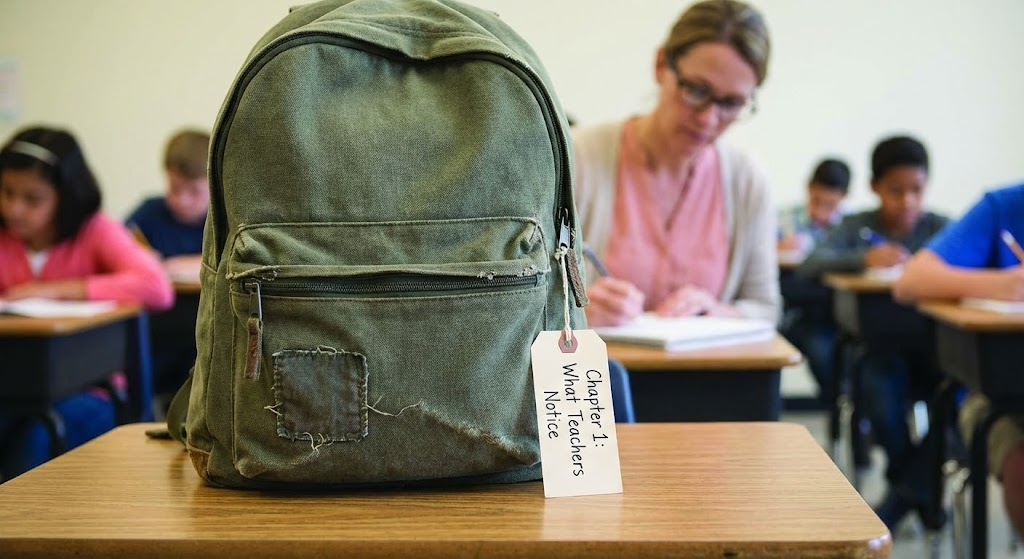
Ms. Thompson arrived at Lincoln Middle School before the sun rose.
The parking lot was empty.
The building looked quiet from the outside.
Inside, it already felt busy.
The air carried the smell of cleaning solution and old books.
She unlocked her classroom and turned on the lights.
This was her eleventh year teaching seventh grade English.
She knew the rhythm of the school well.
She knew when the hallways would be loud.
She knew which lockers stuck.
She knew which students rushed and which ones lingered.
She also knew that the smallest details often mattered the most.
Teachers noticed things others missed.
They noticed who stopped raising their hand.
They noticed who stopped turning in work.
They noticed who tried to disappear.
That year, she noticed Jamal.
Jamal was not disruptive.
He was not failing.
He was not loud.
He was easy to overlook.
He sat near the aisle in the third row.
He followed instructions.
He did his work.
But he always carried his books in his arms.
Every single day.
Loose papers stuck out from between the covers.
Sometimes a worksheet slid to the floor.
Sometimes a corner bent.
He always picked it up quickly.
Without drawing attention.
Without asking for help.
Ms. Thompson first noticed this during hallway duty.
Students poured in from buses and drop-offs.
Backpacks bounced.
Shoes squeaked.
Voices echoed.
Jamal walked carefully.
He held his books tight.
He kept his eyes forward.
No backpack.
Not once.
She told herself not to assume.
Some students preferred messenger bags.
Some kept books in lockers.
But Jamal did not use his locker.
She had noticed that too.
In class, the pattern continued.
When students took out materials, Jamal stacked his books neatly.
By the end of the period, the stack had shifted.
Papers no longer aligned.
He shoved them back into place with care.
As if the mess was his fault.
Ms. Thompson watched quietly.
She did not comment.
She waited.
One afternoon during independent reading time, a paper slipped.
It landed face down near the aisle.
Jamal froze.
The room stayed quiet.
Ms. Thompson walked over.
She picked it up.
The paper was wrinkled.
The ink had bled slightly.
Not from today.
From earlier.
From rain or damp air.
She placed it back on his desk.
“Here you go,” she said.
He whispered thank you.
She nodded and moved on.
That evening, she stayed late.
The building emptied.
The noise faded.
She graded essays.
She reorganized her desk.
She thought about Jamal.
She thought about the difference between ability and access.
She thought about how students learned to adapt quietly.
She also thought about the supply closet.
The supply closet was small.
It was cluttered.
It held years of leftover items.
Binders.
Folders.
Unclaimed jackets.
At the bottom was a box labeled Lost and Found.
Inside was a backpack.
Dark blue.
Plain.
No name inside.
It had been there since the previous spring.
No one had claimed it.
Ms. Thompson closed the closet door.
She did not take the backpack yet.
She knew that help had to be offered carefully.
Too much attention could cause harm.
Too many words could shut a student down.
She needed the right moment.
She turned off the lights and left the building.
The next morning, Jamal arrived early.
He walked in holding his books.
Same as always.
Ms. Thompson watched him take his seat.
She watched him place the books down.
She knew what she would do.
But she would wait.
Chapter 2: The Quiet Offer
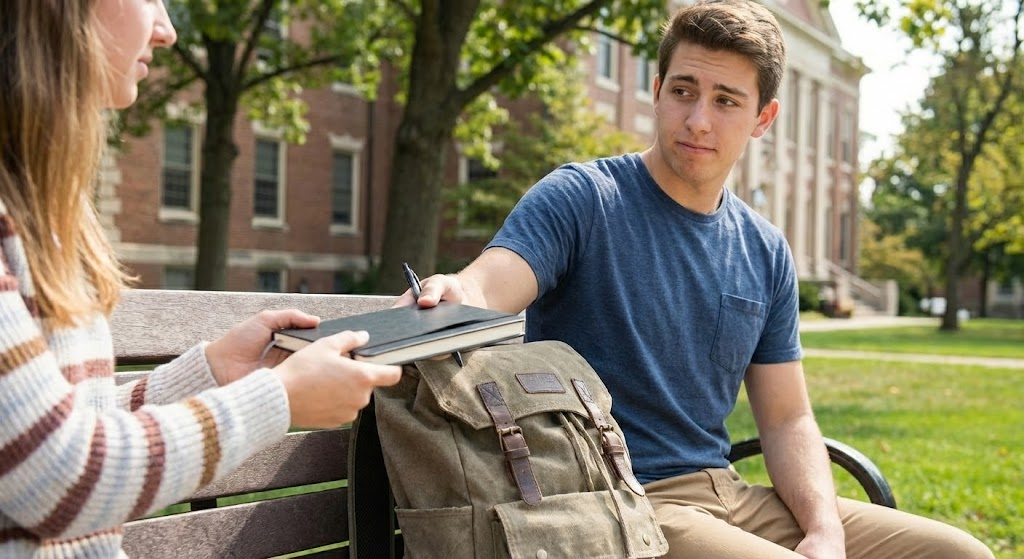
Lunch duty was always loud.
Trays clattered.
Voices overlapped.
Students laughed, argued, and rushed to get food.
The cafeteria smelled of pizza, apples, and disinfectant.
Ms. Thompson stood near the exit, scanning the room.
She noticed Jamal as he came in, holding his books again.
He kept his eyes on the floor.
He did not smile.
He did not speak.
He just walked with care.
Ms. Thompson called out softly.
“Jamal, could you help me with something after lunch?”
He froze.
His brow furrowed.
Then he nodded, quietly.
“Okay, ma’am.”
No one else noticed.
She did not want them to.
It was a simple offer, but it mattered.
After lunch, the cafeteria emptied.
Students left trays behind.
A few stayed talking in small groups.
Ms. Thompson waited until it was quiet.
She motioned for Jamal to follow her.
They walked to the supply closet together.
Inside, the air smelled of paper and dust.
The closet was small, barely wide enough for two people.
Boxes lined the walls.
Binders, folders, old supplies, unclaimed jackets.
At the bottom, she pulled out the backpack.
Dark blue.
Plain.
No name inside.
It had been unclaimed for months,
Ms. Thompson held it casually.
“No one claimed this,” she said.
“It looks like it’s still in good shape.”
She paused.
“You can have it if you want.”
She did not press.
She did not hover.
She simply placed it on a shelf and returned to sorting papers.
Giving him space.
Jamal stared at the backpack.
He picked it up.
He turned it in his hands.
Tested the zipper.
Checked the straps.
“It still works,” he said quietly.
“Yes,” she replied.
“If it works for you, it works.”
He nodded.
No words beyond that.
No visible reaction.
But something shifted.
The next morning, Jamal walked into class wearing the backpack.
It fit neatly on his shoulders.
Not flashy.
Not unusual.
Just functional.
Ms. Thompson noticed immediately.
She said nothing.
Neither did anyone else.
He set his books in order.
He sat down.
And for the first time in weeks, he looked slightly more at ease.
Over the next few weeks, small changes appeared.
Jamal no longer dropped papers.
His homework arrived on time.
He began staying after class for a few minutes at a time.
Asking questions.
One question at a time.
Nothing dramatic.
But steady.
Other students began to notice subtle changes too.
He participated more quietly.
He raised his hand.
He even smiled once or twice during group discussions.
No one made a big deal.
Ms. Thompson did not need to.
The change was already happening.
One afternoon, she asked students to write a short reflection.
The prompt was simple:
“What helps you feel ready to learn?”
Jamal wrote three sentences.
“I feel ready when I know where my things are.
I feel ready when I am not worried about being noticed.
I feel ready when I can sit down and start.”
Ms. Thompson read it twice.
No grade.
No mark.
Just a quiet note: “Thank you for explaining this.”
Jamal’s mother came to conferences in November.
She was tired but attentive.
She listened carefully.
Asked thoughtful questions.
Ms. Thompson shared his progress.
She did not mention the backpack.
She didn’t need to.
Jamal’s mother nodded knowingly.
“He likes your class,” she said.
That was all that mattered.
Winter arrived with early snow.
The hallways grew slippery.
Coats hung heavy on hooks.
Students walked cautiously to the buses.
Jamal carried the backpack each day.
It looked slightly faded.
But it held.
It held his books.
It held his papers.
And quietly, it held him too.
One afternoon, after a particularly busy day, Jamal stayed behind.
He stood near the desk.
He looked unsure.
Ms. Thompson waited patiently.
“I just wanted to say…” he began.
Then stopped.
She waited.
“No rush,” she said softly.
Finally, he said, “Thanks for letting me keep it.”
“You’re welcome,” she replied.
He left quickly, back to the hallways and the buses.
The backpack was no longer just an object.
It had become a symbol of trust.
In those weeks, Ms. Thompson reflected on what she had learned.
Support did not need fanfare.
It did not need rules or announcements.
Small gestures, offered quietly, could make a difference.
Small gestures could change a student’s confidence, their behavior, their sense of belonging.
Sometimes the smallest things mattered the most.
By the end of the semester, Jamal was still quiet.
Still careful.
Still unassuming.
But now, he participated.
Now, he carried himself with subtle confidence.
Now, he showed up.
No one would have noticed the difference without careful attention.
But Ms. Thompson noticed.
And she knew that noticing was sometimes the most important first step.
Chapter 3: Small Victories
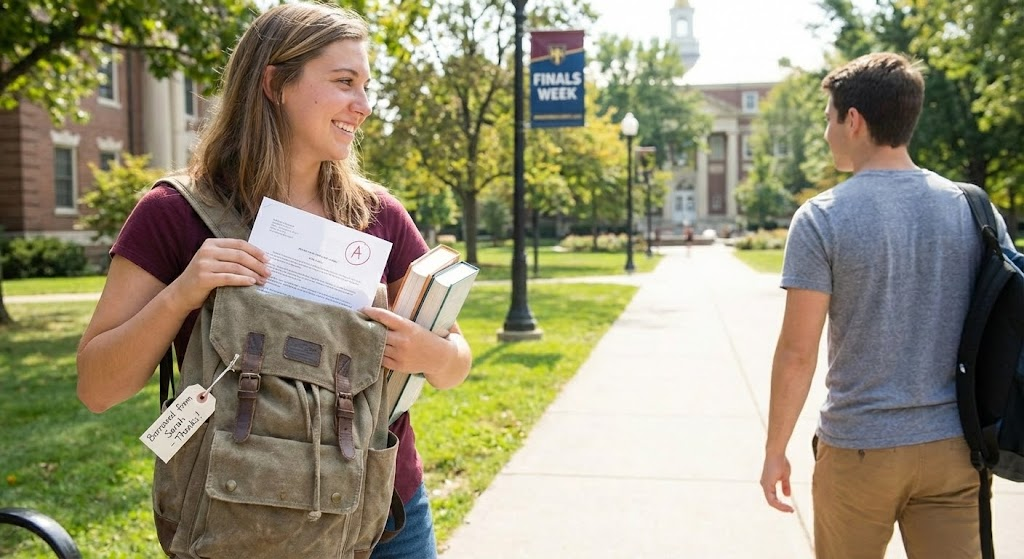
Spring arrived slowly at Lincoln Middle School.
The hallways smelled faintly of chalk and dust.
Students shuffled in with jackets half-zipped, backpacks swinging.
Jamal carried his backpack every day now.
It rested squarely on his shoulders.
No papers fell.
No books slipped out.
Ms. Thompson noticed other subtle changes.
He began speaking up during discussions.
Not often.
Not loudly.
But enough to be counted.
He answered questions carefully.
He raised his hand.
Sometimes, he smiled briefly.
Sometimes, he nodded when a peer made a point.
It was quiet progress.
But it mattered.
One morning, she asked the class to form reading pairs.
Students shuffled.
They whispered.
They joked.
Jamal hesitated.
He looked at Ms. Thompson.
She gave a small nod.
He approached a classmate quietly.
They read together.
They shared a few sentences.
No drama.
No fanfare.
But Jamal stayed engaged for the full twenty minutes.
During independent work, he even started leaving small notes for Ms. Thompson.
One day, she found a sticky note tucked into a folder.
It said: “I finished the first draft. Please check.”
No excuses.
No complaints.
Just communication.
She smiled.
She replied in another sticky note: “Good work, Jamal. See you after class.”
After school one day, he approached her desk.
“Can I ask a question?” he said.
“Of course,” she replied.
He leaned over the desk.
He pointed to a paragraph in his essay.
“I don’t understand this part,” he said.
Ms. Thompson explained.
Step by step.
Slowly.
Carefully.
Jamal nodded.
He copied notes into his notebook.
He thanked her and left.
It was ordinary.
But it was a victory.
Over the next weeks, she continued watching.
Other students started to notice.
A few classmates asked Jamal for help with organizing papers.
He showed them quietly.
No boasting.
No show.
Just steady, careful help.
Ms. Thompson knew this was another sign.
He was gaining confidence.
He was learning responsibility.
He was learning agency.
In class, he volunteered for a group presentation.
Ms. Thompson had not asked him.
He raised his hand.
He took a small role at first.
Reading two paragraphs aloud.
He stumbled slightly.
Then continued.
Finished.
The group looked relieved.
Jamal looked proud.
Not overconfident.
Not loud.
Proud enough.
Outside class, he started arriving slightly earlier.
Not by much.
Five minutes.
But enough to get organized.
Enough to prepare.
He organized his desk, sharpened his pencils, and checked his backpack.
The backpack was no longer just a tool.
It was a companion.
A symbol.
A quiet reassurance.
Ms. Thompson kept noticing small victories.
The quiet thank-you notes.
The organized papers.
The steady participation.
Even the small smiles.
These were milestones.
Not public ones.
Not graded ones.
But real ones.
At the end of March, the school held a writing workshop.
Students could read aloud their essays.
Jamal signed up quietly.
Ms. Thompson almost didn’t notice.
Until he walked to the front.
He adjusted the microphone.
He cleared his throat.
And began reading.
His voice was soft.
Sometimes shaky.
But steady enough.
The room was attentive.
Peers listened.
Teachers listened.
No interruptions.
No distractions.
Jamal read his essay.
He finished.
He looked at Ms. Thompson.
She nodded.
“Good job,” she mouthed.
He returned to his seat.
A small smile appeared on his face.
Just a small one.
But it was genuine.
After class, he stayed behind.
“I was nervous,” he said quietly.
“That’s okay,” Ms. Thompson replied.
“You did really well.”
“Thanks,” he said.
No further explanation.
No fuss.
Just acknowledgment.
At home that night, he told his mother about reading aloud.
She smiled proudly.
Not just at the reading.
At his confidence.
At his willingness to try.
He never mentioned the backpack.
But she understood.
Ms. Thompson reflected on this quietly in her empty classroom.
The backpack had been a small object.
But it had changed much more.
It had given Jamal a foundation.
A sense of security.
A way to focus on learning.
The lessons were not about possessions.
They were about care, awareness, and trust.
She realized teaching often worked in the same way.
Small gestures.
Quiet attention.
Consistent support.
Nothing flashy.
Nothing grandiose.
Just noticing.
Just responding.
Just giving the student room to grow.
By the end of the chapter, Jamal had not become outgoing.
He had not become a class leader.
But he had become himself.
Confident in his own way.
Capable of small victories.
Proud of small accomplishments.
And willing to take steps forward.
Chapter 4: Quiet Growth

Spring turned to early summer at Lincoln Middle School.
The hallways smelled of dry markers and paper.
Lockers rattled as students rushed in and out.
The sun streamed through dusty windows.
Jamal carried his backpack every day.
No papers slipped.
No books fell.
Everything had a place.
Ms. Thompson noticed changes beyond organization.
Jamal spoke more during lessons.
Not often.
Not loudly.
But enough to matter.
He answered questions.
He asked for clarification.
He participated in group discussions.
Small steps.
But consistent.
Other students began to notice.
They asked him questions about assignments.
He answered carefully.
No prideful gestures.
No showiness.
Just clear answers.
Peers respected him quietly.
Confidence does not always announce itself.
Sometimes it is silent.
One morning, Ms. Thompson asked students to read aloud in pairs.
Jamal paired with a student who struggled with reading fluency.
He guided her patiently.
Did not correct too harshly.
Did not laugh.
He modeled calm attention.
The student relaxed.
They read together for twenty minutes.
Jamal did not rush.
Jamal did not hesitate.
He led quietly.
Ms. Thompson saw the power of small moments.
This was not a dramatic change.
No certificates.
No awards.
Just consistent, careful behavior.
She knew that would last longer than any praise.
Long after grades faded, these habits would matter.
At home, Jamal’s mother noticed subtle changes.
He carried himself differently.
He organized homework.
He asked for help when he needed it.
He smiled more.
Not at everyone.
Not all the time.
But enough.
Enough to be noticeable.
One day, a writing assignment required personal reflection.
Jamal wrote:
“I like being prepared. I like knowing I have what I need. It makes learning easier.”
Ms. Thompson read it twice.
She left a note:
“Your awareness matters. Keep noticing.”
No grade.
No fuss.
Just acknowledgment.
By mid-year, Ms. Thompson noticed Jamal volunteering quietly for class activities.
He offered to distribute papers.
He helped rearrange desks.
He asked questions when unsure.
He even helped another student organize notes.
Small acts of leadership.
Quiet leadership.
One afternoon, after a long day, Jamal stayed behind again.
“Can I ask a question about my essay?” he said.
Ms. Thompson nodded.
He pointed to a paragraph.
“I don’t understand this,” he said.
Step by step, she explained.
He copied notes carefully.
He thanked her and left.
Small moments.
But important.
The school announced a spring reading workshop.
Students could read their essays aloud.
Jamal signed up quietly.
Ms. Thompson almost did not notice.
Until he walked to the front of the room.
He adjusted the microphone.
He cleared his throat.
He began reading.
Soft voice.
Occasional pauses.
But steady.
The room was quiet.
Peers listened.
Teachers listened.
No interruptions.
No distractions.
Jamal read his essay to the end.
Finished without faltering.
Ms. Thompson nodded.
He returned to his seat.
A quiet smile appeared.
Not proud in a loud way.
But proud enough.
After class, he stayed behind.
“I was nervous,” he admitted.
“That’s normal,” Ms. Thompson said.
“You did very well.”
“Thanks,” he replied.
No further words.
No explanation needed.
Ms. Thompson reflected on this quietly.
The backpack had been small.
But it had done more than carry papers.
It had carried confidence.
It had carried trust.
It had carried the possibility of small, consistent growth.
Sometimes the smallest gestures created the biggest changes.
By the end of the chapter, Jamal had not changed overnight.
He had not become a classroom leader.
He had not become outgoing.
But he had grown in his own quiet way.
He participated.
He asked questions.
He helped others.
He carried himself with subtle confidence.
The backpack had been the first step.
A small, quiet step.
Chapter 5: The Last Lesson
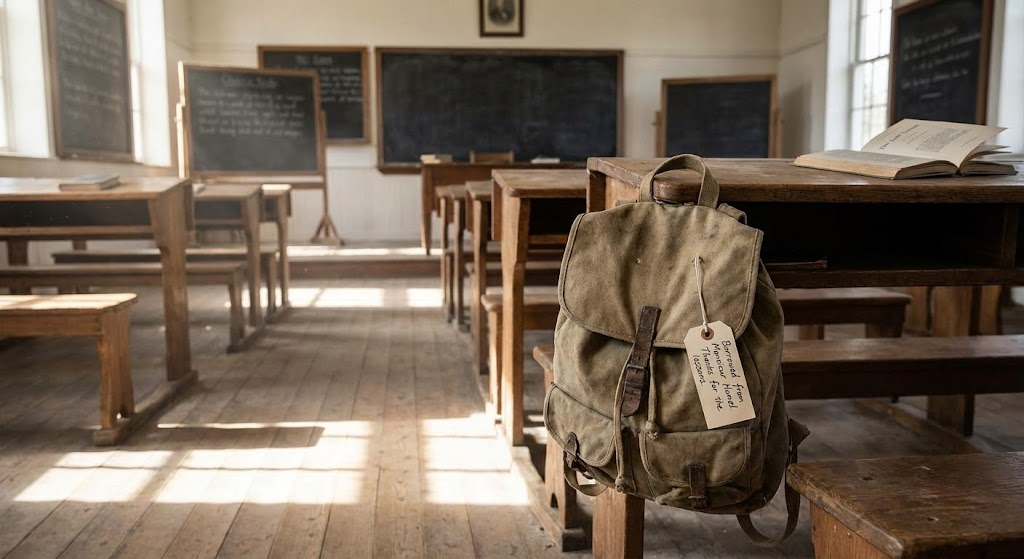
By the end of the school year, Lincoln Middle School was alive with activity.
Lockers slammed.
Students chattered in the hallways.
Posters hung crookedly on the walls.
Spring air drifted through open windows.
Jamal carried his backpack every day.
It was worn slightly at the corners now.
Faded from months of use.
But it held firmly.
Ms. Thompson noticed how much he had grown.
Small victories had accumulated.
Quiet participation.
Steady homework.
Confidence in asking questions.
Helping others.
Each step had been subtle.
But together, they told a story.
A story of trust, consistency, and patience.
The week before the last, the school held a final writing showcase.
Students could read essays aloud or display projects.
Jamal signed up quietly, just as he had done before.
Ms. Thompson almost didn’t notice.
Until he walked to the front.
He adjusted the microphone.
He cleared his throat.
And began reading.
His voice was soft.
Occasionally paused.
But steady.
He read his reflection essay on what made him feel ready to learn.
The room was quiet.
Peers listened attentively.
Teachers listened.
No interruptions.
No distraction.
Jamal finished and returned to his seat.
A small, satisfied smile appeared.
Ms. Thompson felt a familiar quiet pride.
After the showcase, Jamal stayed behind.
“I was nervous,” he said softly.
“That’s okay,” Ms. Thompson replied.
“You did very well. You should be proud.”
He nodded.
“Thanks,” he said, quietly confident.
No more hesitation.
No more fear of small mistakes.
Just steady growth.
The last day of school arrived.
Lockers emptied.
Classrooms were decorated for the summer.
Parents attended awards ceremonies.
Teachers signed yearbooks.
Ms. Thompson watched students depart.
Some hugged.
Some waved.
Some disappeared quickly into the warm afternoon.
Jamal appeared at her desk.
Carrying the backpack.
Dark blue.
Faded slightly.
He held it carefully.
“Hi, Ms. Thompson,” he said.
“Hi, Jamal,” she replied.
“You did well this year,” she said.
He nodded.
“Thanks,” he said.
Then paused.
“I wanted to show you this,” he continued.
He held up the backpack.
“It’s lasted the year. It helped me stay organized. It helped me focus.”
Ms. Thompson smiled.
“It’s done more than carry books,” she said.
“It carried your confidence too.”
He nodded quietly.
At the school reunion ten years later, Jamal returned.
He had grown taller.
Dressed professionally.
He walked into her classroom carrying a backpack.
The same one.
Slightly faded.
Still functional.
“I graduated from community college last week,” he said.
Ms. Thompson smiled.
“Congratulations,” she replied warmly.
“I brought this backpack,” he said.
He held it out.
“I wanted you to see that it made it.”
She touched it gently.
“I see it did,” she said.
He smiled quietly.
“Thank you,” he said.
The backpack was no longer just a school item.
It had been a symbol.
A symbol of small, quiet gestures that made a difference.
A symbol of trust.
A symbol of growth.
Ms. Thompson returned it to her supply closet.
Placed it carefully on the shelf.
Ready for the next student.
Ready to carry more than books.
Ready to carry confidence, trust, and small victories.
Reflecting on the year, she realized teaching was often like this.
Quiet attention mattered more than grand gestures.
Consistency mattered more than awards.
Care mattered more than announcements.
Sometimes, the smallest acts—the unclaimed backpack, a note, a kind word—created the largest impact.
She smiled, thinking of Jamal.
Small steps had led to steady growth.
Quiet victories had become lasting lessons.
She knew other students would come.
Other backpacks would be needed.
Other small gestures would make a difference.
And she would be ready.
The year ended, but the lesson remained.
Teaching was not about instant change.
It was about noticing.
Responding.
Trusting the process.
Believing in small victories.
Believing in students.
And sometimes, believing in the power of a simple borrowed backpack.
End of Story