
Sacrifice is one of the most powerful themes in storytelling because it reflects something deeply human: the willingness to give up something valuable for someone or something that matters more.
For adults, stories about sacrifice can carry an especially strong emotional impact. Adult life is filled with difficult choices involving family, friendships, careers, relationships, responsibilities, dreams, money, and personal values. Sometimes doing the right thing means giving up comfort. Sometimes it means putting a personal ambition on hold. At other times, sacrifice means admitting a mistake, forgiving someone, or giving another person a second chance.
Stories About Sacrifice for Adults explore these complicated decisions through relatable characters and meaningful situations. They can entertain readers while also encouraging them to think about what they value most in their own lives.
This collection is designed to explore the meaning of sacrifice, the different forms it can take, and the moral lessons that can emerge from difficult choices.
What Are Stories About Sacrifice for Adults?
Stories about sacrifice for adults are narratives centered around characters who willingly give up something important to benefit another person, protect a relationship, fulfill a responsibility, or remain faithful to their values.
The sacrifice does not necessarily have to be dramatic.
A character might sacrifice:
- Time to help someone in need
- Money to support a family member
- Comfort to care for another person
- A career opportunity to fulfill an important responsibility
- Pride to apologize
- Personal ambitions to support someone they love
- Freedom or convenience to keep a promise
- A treasured possession to help someone through a difficult period
What makes these stories meaningful is the personal cost of the decision.
If giving something away has no emotional or practical importance to the character, it may not feel like a genuine sacrifice. The strongest stories show that the character has something valuable to lose but chooses to give it up because another value matters more.
Stories About Sacrifice for Adults
1. The Sunday Table

Sacrifice Type: Sacrificing Time
Julian Carter had spent most of his adult life believing that time was something that could be organized.
He had calendars for everything.
Meetings.
Supplier calls.
Staff training.
Restaurant inspections.
Financial reviews.
Even his occasional vacations were scheduled months in advance.
At forty-two, Julian owned three successful restaurants in Manchester. His first restaurant had started as a tiny twelve-table establishment. Over the years, it had grown into a popular local business with dozens of employees.
People admired his discipline.
They often said, “Julian knows how to manage his time.”
Julian believed them.
Until he met Beatrice Morgan.
Beatrice lived in a small red-brick house two streets away from Julian’s first restaurant.
She was seventy-eight years old and had lived there for nearly fifty years.
Her husband, Edward, had been a schoolteacher.
They had married when they were both twenty-six.
For almost five decades, Sunday lunch had been their tradition.
Every Sunday, Edward cooked roast chicken.
Beatrice prepared vegetables.
They set the table with their best plates.
Sometimes their daughter visited.
Sometimes neighbors came.
Sometimes it was only the two of them.
But the table was always set.
Then Edward died.
The house became quiet.
The Sunday table remained.
But there was only one plate.
Julian first met Beatrice on a rainy Sunday afternoon.
He was leaving his restaurant when he noticed an elderly woman struggling with several grocery bags.
“Mrs. Morgan?”
She looked surprised.
“Do I know you?”
“Not exactly. I own the restaurant down the street.”
“Oh.”
Julian took the bags.
“Let me help.”
Beatrice smiled.
“Thank you.”
He carried the groceries to her house.
When they reached the front door, Beatrice hesitated.
“You must be busy.”
“I am.”
“Then I won’t keep you.”
Julian smiled.
“You’re not keeping me.”
He handed her the bags.
“Have a good evening.”
“Thank you, Mr. Carter.”
“Julian.”
“Julian.”
She smiled.
“Thank you, Julian.”
He walked away.
He thought that would be the end of it.
It wasn’t.
The following Sunday, Julian saw Beatrice again.
She was sitting alone at a small table near the window of his restaurant.
He approached.
“Everything all right?”
Beatrice looked up.
“Yes.”
“Are you waiting for someone?”
She smiled faintly.
“No.”
Julian glanced at the table.
There was only one plate.
“Would you like some company?”
Beatrice looked surprised.
“I wouldn’t want to interrupt your work.”
“It’s Sunday.”
“Isn’t that your busiest day?”
“It is.”
She looked toward the empty chair across from her.
“Then shouldn’t you be working?”
Julian laughed.
“Probably.”
He pulled out the chair.
“Do you mind if I sit for five minutes?”
Beatrice smiled.
“Not at all.”
They talked.
About the restaurant.
About Manchester.
About her husband.
About Julian’s childhood.
Five minutes became twenty.
Eventually, Julian returned to work.
Before leaving, Beatrice said:
“That was nice.”
Julian smiled.
“So was the conversation.”
The next Sunday, she returned.
Julian noticed her immediately.
She was sitting at the same table.
This time, there were two cups of tea.
One was waiting for him.
He laughed.
“You planned this.”
“Perhaps.”
He sat down.
They talked again.
And again the following Sunday.
Soon, Sunday afternoons became a quiet tradition.
Julian would sit with Beatrice for an hour before returning to his restaurant.
At first, he thought he was doing her a favor.
Eventually, he realized something.
He was looking forward to those conversations.
Beatrice had a way of asking questions nobody else asked.
One afternoon, she said:
“Are you happy?”
Julian nearly laughed.
“What kind of question is that?”
“A simple one.”
“I own three restaurants.”
“That’s not what I asked.”
Julian looked at her.
“I suppose I am.”
“Suppose?”
He smiled.
“I’ve been busy.”
“Busy isn’t the same as happy.”
Julian didn’t answer.
Beatrice sipped her tea.
“My husband used to say that if you don’t make time for people, eventually you’ll have plenty of time and nobody to spend it with.”
Julian remembered the words.
He had never considered time that way.
As the months passed, Julian’s business became more demanding.
His second restaurant was struggling.
A supplier had increased prices.
One of his chefs resigned.
A third location was being considered.
His calendar became crowded.
One Sunday morning, Julian looked at his schedule.
There were fourteen appointments.
He called Beatrice.
“I’m sorry.”
“What happened?”
“I can’t make it today.”
There was a pause.
“Of course.”
“I’ll come next Sunday.”
“I understand.”
Julian hung up.
He expected to feel relieved.
Instead, he felt strangely guilty.
That evening, after the restaurant closed, Julian received a message.
It was from Beatrice.
Thank you for all the Sundays.
Nothing more.
Julian stared at the message.
He suddenly realized that he had begun treating their meetings like appointments.
But they weren’t appointments.
They were time.
Time she had been giving him too.
He called her.
“Are you still awake?”
Beatrice laughed.
“At my age, I sleep whenever I want.”
Julian smiled.
“I’m sorry.”
“For what?”
“For canceling.”
“You don’t need to apologize.”
“I do.”
There was a pause.
“Can I come tomorrow?”
“Tomorrow isn’t Sunday.”
“I know.”
Beatrice laughed.
“Then come tomorrow.”
Julian visited the following evening.
Beatrice had prepared dinner.
Nothing fancy.
Soup.
Bread.
Roasted vegetables.
Julian looked at the table.
“There are two plates.”
“There are.”
He smiled.
They ate together.
After dinner, Beatrice showed him an old photograph album.
She told him stories about Edward.
Their wedding.
Their first house.
Their daughter’s childhood.
Their holidays.
Their arguments.
Their ordinary Sundays.
Julian listened.
He realized that most of the stories weren’t about expensive trips or major achievements.
They were about small moments.
Edward bringing flowers home unexpectedly.
Beatrice burning a birthday cake.
Their daughter learning to ride a bicycle.
A rainy afternoon spent playing cards.
The life they had built was made mostly of ordinary hours.
But those hours had become precious memories.
Julian began changing his schedule.
He stopped accepting unnecessary Sunday meetings.
He delegated certain responsibilities.
He trained his managers to make decisions without him.
His business did not collapse.
In fact, it became more efficient.
For the first time, Julian realized that being needed everywhere was not the same as being successful.
He began protecting his time.
Not because he wanted more free time.
Because he wanted meaningful time.
Beatrice noticed.
“You’ve changed.”
“How?”
“You aren’t checking your phone.”
Julian looked at the phone on the table.
He had forgotten it was there.
“I suppose that’s progress.”
“It is.”
“Do you miss Edward?”
Beatrice became quiet.
“Every day.”
“What do you miss most?”
She thought.
“His presence.”
“Not something he did?”
“No.”
She smiled sadly.
“Just knowing he was in the next room.”
Julian understood.
Sometimes love wasn’t about grand gestures.
It was simply about being there.
Years passed.
Julian’s restaurants continued to succeed.
He opened a fourth location.
But he refused to let the business consume his entire life.
Sunday remained sacred.
Beatrice remained at the center of it.
Sometimes they ate at the restaurant.
Sometimes they cooked at her house.
Sometimes they simply sat in the garden.
They talked about everything.
Politics.
Books.
Food.
Travel.
Regrets.
Dreams.
Julian began telling Beatrice things he didn’t tell anyone else.
His fear of failure.
His loneliness.
His worries about growing older.
She always listened.
One winter, Beatrice became ill.
Julian noticed she was moving more slowly.
“Have you seen your doctor?”
“Yes.”
“What did he say?”
“That I’m old.”
Julian laughed.
“That’s not a medical diagnosis.”
“It’s the one I prefer.”
Her health gradually declined.
She could no longer walk to the restaurant.
So Julian began visiting her house every Sunday.
He brought food.
Sometimes they watched old movies.
Sometimes they sat quietly.
One Sunday, Beatrice looked at him.
“Do you know what I like most about Sundays?”
“What?”
“They used to belong to Edward.”
She smiled.
“Now they belong to you.”
Julian felt a lump in his throat.
“I’m honored.”
Beatrice died peacefully one spring morning.
Julian received the call while preparing for a staff meeting.
He stopped everything.
He drove to her house.
The blue curtains were still open.
The garden was beginning to bloom.
Her daughter was there.
She hugged Julian.
“She talked about you all the time.”
Julian closed his eyes.
“She talked about you too.”
They stood together in silence.
The following Sunday felt strange.
Julian woke early.
He instinctively reached for his phone.
He had no message from Beatrice.
No invitation.
No question.
No reminder.
He drove to her house.
The door was closed.
The garden was quiet.
Julian stood outside for several minutes.
Then he noticed something.
The old table was still visible through the window.
Two chairs.
Two places.
He smiled sadly.
Julian decided not to let the tradition disappear.
He began inviting people from the neighborhood to Sunday lunch.
Older residents who lived alone.
People who had recently lost partners.
Young professionals who had moved to the city and knew nobody.
Parents who needed company.
Sometimes there were six people.
Sometimes twenty.
There was no fixed menu.
No formal invitation.
Just one rule:
Nobody eats alone if they don’t want to.
Julian called it the Sunday Table.
The restaurant eventually created a special community program.
Every Sunday, a section of the restaurant was reserved for people who wanted company.
The meals were affordable.
Sometimes free.
People came.
They talked.
They laughed.
They shared stories.
The restaurant became known for something that had nothing to do with its food.
It became a place where people felt welcome.
Years later, Julian was asked by a journalist why he had started the Sunday Table.
He thought for a moment.
“There was an elderly woman who taught me something.”
“What did she teach you?”
“That time is more valuable than money.”
The journalist smiled.
“She was your customer?”
Julian shook his head.
“She was my friend.”
One Sunday afternoon, Julian’s granddaughter sat beside him at the community table.
“Granddad?”
“Yes?”
“Why do you always keep Sundays free?”
Julian smiled.
“Because someone once taught me that people remember your presence more than your possessions.”
She looked around the crowded restaurant.
“Who?”
“Her name was Beatrice.”
“What was she like?”
Julian smiled.
“She was very good at making people slow down.”
His granddaughter laughed.
“Like you?”
“Especially like me.”
Julian looked around.
An elderly couple were discussing a crossword puzzle.
Two university students were sharing dessert.
A widower was telling stories about his late wife.
A young mother was laughing with another family.
People who had arrived alone were leaving with new friends.
Julian looked at the empty chair beside him.
For a moment, he imagined Beatrice sitting there.
He could almost hear her voice.
Busy isn’t the same as happy.
Julian smiled.
She had been right.
He eventually understood the real sacrifice he had made.
It wasn’t giving up a few hours each Sunday.
It was changing the way he understood his life.
He had once believed that success meant controlling every minute.
Now he understood that some minutes should never be controlled.
They should simply be shared.
A conversation with an elderly neighbor.
A meal with a friend.
A walk with a parent.
An evening with a child.
A cup of tea with someone who needs company.
These moments might look insignificant on a calendar.
But years later, they could become the memories people treasured most.
The Sunday Table continued long after Julian retired.
He eventually handed his restaurants to his managers.
But every Sunday, he still came.
He sat at the same kind of table.
He listened.
He laughed.
He welcomed strangers.
And when someone thanked him for giving up his Sunday, Julian always smiled.
“I didn’t give it up.”
He would look around the room.
“I gave it to people.”
That was the lesson Beatrice had left him.
Time is one of the few things we can never earn back.
Once an hour disappears, it is gone forever.
So when we give our time to another person, we aren’t giving them something replaceable.
We are giving them a part of our life.
And sometimes, that is the greatest gift we can give.
Moral Lesson
Giving someone your time can be one of the most meaningful ways to show that you care. Money can replace possessions, but time cannot be recovered. Being present for someone, especially when they feel lonely or forgotten, can create memories that last far beyond the moment itself.
2. The Savings Account

Sacrifice Type: Sacrificing Money
Victoria Hayes had a number written on a piece of paper above her desk.
£48,000.
It wasn’t her salary.
It wasn’t the price of a house.
It wasn’t a business loan.
It was the amount she needed to open the bookstore she had dreamed about since she was nineteen.
For eleven years, Victoria had saved for it.
Every month, she transferred money into a separate savings account.
She called it The Blue Door Fund.
She had already chosen the name for her future bookstore.
The Blue Door Bookshop.
It would have dark wooden shelves, comfortable chairs, tall windows, and a little reading corner near the back.
She imagined rainy afternoons with customers drinking coffee while reading novels.
She imagined children discovering books for the first time.
Most importantly, she imagined finally building something that belonged entirely to her.
At thirty-eight, Victoria believed she was finally close.
Then her brother lost everything.
Marcus Hayes was five years younger than Victoria.
As children, they had been inseparable.
Victoria was the organized one.
Marcus was the dreamer.
Their mother used to joke that if Victoria had a map, Marcus would deliberately walk in the opposite direction just to see what happened.
They were different, but they loved each other.
As adults, however, their lives became complicated.
Victoria moved to London and worked as an editor for a publishing company.
Marcus stayed in their hometown and eventually opened a small furniture workshop.
He was talented with his hands.
He could take a damaged piece of wood and turn it into something beautiful.
His workshop wasn’t large, but it was his pride.
For eight years, he worked there.
Then one night, everything changed.
It happened in November.
A storm moved across the town.
Strong winds knocked down electrical lines.
At around two in the morning, a transformer malfunctioned near Marcus’s workshop.
The fire department arrived quickly.
But the building was already burning.
By morning, almost everything was gone.
The machines.
The tools.
The finished furniture.
The office.
Years of work.
All reduced to smoke and broken walls.
Victoria drove home immediately.
When she arrived, Marcus was standing across the street.
He was staring at the ruins.
She walked toward him.
“Marcus.”
He didn’t turn.
“I couldn’t save anything.”
Victoria put a hand on his shoulder.
“You got out safely.”
He nodded.
“That’s supposed to make me feel better?”
She didn’t answer.
There are moments when words cannot repair anything.
So she simply stood beside him.
The insurance company eventually inspected the site.
Marcus had insurance.
But not enough.
The payment would cover part of the damage.
Not the equipment.
Not the lost contracts.
Not the months of income he would need while rebuilding.
Marcus had also taken out a loan to expand the workshop the previous year.
Now he had debt.
No building.
No income.
And almost no savings.
One evening, Victoria found him sitting alone in their mother’s old kitchen.
“How much do you need?”
Marcus shook his head.
“I don’t.”
“You do.”
“I’ll figure it out.”
“You always say that.”
“Because I always do.”
Victoria sat across from him.
“You don’t have to do this alone.”
Marcus looked at her.
“I know.”
But he didn’t ask for help.
Victoria understood why.
Marcus had always been proud of being independent.
As children, he had hated asking anyone for anything.
Even when he needed help with homework, he would struggle for an hour before admitting he didn’t understand the problem.
Now he was thirty-three.
The idea of admitting that he couldn’t rebuild his business must have been unbearable.
Victoria didn’t push him.
Instead, she began researching.
She looked at business grants.
Small-business loans.
Government programs.
Community funding.
Equipment leasing.
Anything that could help.
Most options required Marcus to invest money he didn’t have.
One evening, Victoria opened her savings account.
The balance was:
£47,860.
She stared at the number.
Her dream was almost within reach.
She could practically see the bookstore.
She had already spoken with a property agent.
There was a small building available on a quiet street.
It had blue doors.
Victoria had laughed when she first saw it.
It felt like fate.
The deposit would require £20,000.
Renovations would cost another £15,000.
Shelving and furniture would take another £8,000.
She had spent years planning every detail.
She was finally close.
Then she thought about Marcus.
Victoria closed the banking app.
She didn’t sleep much that night.
The next morning, she called him.
“Come to London.”
“Why?”
“I want to talk.”
“About what?”
“Your workshop.”
Marcus sighed.
“Victoria.”
“Just come.”
They met at a small café.
Marcus looked exhausted.
Victoria placed a folder on the table.
“What is this?”
“Business plans.”
He opened it.
She had calculated the cost of rebuilding his workshop.
He looked at her.
“When did you do this?”
“Last night.”
“You didn’t sleep.”
“No.”
He closed the folder.
“I appreciate it, but I can’t take money from you.”
“I didn’t offer.”
“You were going to.”
“Maybe.”
“I know you.”
Victoria smiled.
“Unfortunately, I know you too.”
Marcus stared out the window.
“I’ll rebuild.”
“I know.”
“It’ll take time.”
“I know.”
“I might have to start smaller.”
“I know.”
“Then why are we having this conversation?”
Victoria took a breath.
“Because I have money.”
Marcus immediately shook his head.
“No.”
“Listen.”
“No.”
“It’s my money.”
“I know.”
“I saved it.”
“I know.”
“For something important.”
Marcus looked at her.
“Your bookstore.”
Victoria nodded.
Silence filled the table.
“You can’t use that.”
“Why?”
“Because it’s your dream.”
“So is your workshop.”
“It’s different.”
“How?”
“I can rebuild later.”
“So can I.”
“No, Victoria.”
He leaned forward.
“You’ve waited eleven years.”
She looked down.
“I know.”
“You shouldn’t give that up for me.”
Victoria went home that evening.
She stood in front of the picture she had pinned above her desk.
A photograph of the building that would become her bookstore.
She had written beneath it:
One day.
She had imagined that day for years.
But now another thought entered her mind.
What if dreams weren’t always supposed to happen exactly when we planned them?
What if sometimes the most important decision was not what we wanted to build for ourselves, but who we were willing to help rebuild?
She didn’t have an answer.
Not yet.
Three days later, Victoria returned home.
Marcus was in the kitchen.
She placed a bank document on the table.
He looked at it.
“What is this?”
“An account.”
“Whose?”
“Yours.”
Marcus stared at her.
“Victoria.”
“I’ve transferred £25,000.”
He pushed the paper toward her.
“Transfer it back.”
“No.”
“Yes.”
“No.”
“You’re not listening.”
“I am.”
“You can’t do this.”
“I can.”
“Your bookstore—”
“Can wait.”
Marcus became silent.
Victoria continued.
“I’ve spent eleven years saving for a dream. I still want it. I’m not pretending I don’t.”
“Then why?”
“Because you need help now.”
She looked directly at him.
“And I don’t want to spend the next eleven years wondering whether I could have helped my brother when I had the chance.”
Marcus’s eyes filled with tears.
He looked away.
For several minutes, neither spoke.
Finally, Marcus said:
“I don’t know how to repay you.”
“You don’t.”
“I have to.”
“No.”
“Victoria.”
“You don’t owe me.”
“But—”
“If you want to repay me, rebuild.”
He looked at her.
“Rebuild what?”
“Your workshop.”
Marcus used the money carefully.
He didn’t buy expensive equipment.
He rented a smaller building.
He purchased secondhand machines.
He negotiated with suppliers.
He hired one assistant instead of three.
He started with small furniture orders.
Victoria helped him create a website.
Their cousin helped with social media.
Friends from the town shared his story.
Slowly, customers returned.
The first year was difficult.
The second was better.
By the third year, Marcus had six employees.
The workshop was profitable again.
But Victoria’s bookstore remained a dream.
She had started saving again.
This time, she didn’t know how long it would take.
One evening, Marcus visited Victoria.
He carried a large wooden box.
“What is that?”
“Open it.”
She lifted the lid.
Inside was a beautiful wooden sign.
It had been carefully carved.
THE BLUE DOOR BOOKSHOP
Victoria stared at it.
“You made this?”
“Of course.”
She touched the lettering.
“It’s beautiful.”
“There’s more.”
He handed her a small envelope.
Inside was a check.
Victoria looked at the amount.
£25,000.
She immediately shook her head.
“No.”
“Yes.”
“Marcus.”
“Listen.”
“I don’t want this.”
“It’s not repayment.”
“Then what is it?”
“An investment.”
She looked at him.
“In what?”
“Your dream.”
Marcus explained that his workshop had grown enough to support the payment.
He wasn’t giving Victoria money because he felt guilty.
He was helping her because she had once believed in him when he couldn’t believe in himself.
“You gave me a second chance,” he said.
“Now I’m giving you one.”
Victoria looked at the check.
She began crying.
Marcus smiled.
“You’re terrible at accepting help.”
She laughed through her tears.
“I learned from you.”
A year later, Victoria finally opened her bookstore.
The building had blue doors.
The shelves were made by Marcus.
The tables were built in his workshop.
The sign hung above the entrance.
THE BLUE DOOR BOOKSHOP
On opening day, Marcus stood beside her.
Victoria looked around.
Books filled the shelves.
Children sat in the reading corner.
Customers walked through the door.
There was a small café in the back.
She had dreamed about this moment for eleven years.
But it didn’t feel exactly the way she had imagined.
It felt better.
Because now the dream contained another story.
A story about a brother.
A fire.
A workshop.
A savings account.
And a choice.
That evening, after the customers left, Victoria and Marcus sat at a table near the window.
“You got your dream,” Marcus said.
Victoria smiled.
“We got ours.”
Marcus looked around.
“You really think so?”
She nodded.
“Yes.”
He smiled.
“Then it was worth it.”
Years later, the Blue Door Bookshop became a beloved part of the neighborhood.
It hosted book clubs.
Children’s reading programs.
Writing workshops.
Local art exhibitions.
Marcus occasionally displayed handmade furniture there.
Victoria kept a small framed photograph near the cash register.
It showed two children sitting beside their mother.
On the back was a handwritten sentence:
Take care of each other.
Whenever someone asked about the photograph, Victoria told them:
“That’s my brother.”
“Did he help you start the bookstore?”
Victoria smiled.
“He helped me understand what it was for.”
One rainy evening, Victoria closed the shop late.
Marcus was waiting outside.
He held an umbrella.
“You didn’t need to come.”
“I know.”
They walked together down the quiet street.
Victoria looked at the blue doors behind them.
“You know what I’ve realized?”
“What?”
“Money is strange.”
“How?”
“We spend years saving it because we think it will give us freedom.”
Marcus smiled.
“And?”
“Sometimes the best thing money can give us is the ability to help someone when they need us.”
Marcus nodded.
“That’s true.”
They continued walking.
Neither of them knew exactly what the future would bring.
But they knew something more important.
Their dreams did not have to compete with love.
Sometimes a dream could be delayed without being destroyed.
Sometimes giving something away could eventually bring something greater back.
And sometimes the most valuable thing a person could possess was not money at all.
It was the ability to use what they had to change another person’s life.
Victoria eventually realized that the £25,000 she had given Marcus had not disappeared.
It had changed form.
Part of it became machines.
Part became wood.
Part became a workshop.
Part became jobs.
Part became hope.
And eventually, part of it returned to her as the wooden sign hanging above her dream.
She had once thought she was sacrificing her future.
Instead, she had discovered that generosity could become part of the future she was building.
Her bookstore was no longer simply a business.
It was a reminder.
A reminder that success was not always about keeping everything we worked hard to earn.
Sometimes success meant knowing when to share it.
And sometimes the money we give away becomes more valuable than the money we keep.
Moral Lesson
True generosity is measured by the willingness to share what matters, not simply by the amount given. Victoria’s sacrifice shows that helping someone in a difficult moment does not necessarily destroy our own dreams. Sometimes generosity strengthens relationships, creates new opportunities, and gives our achievements a deeper meaning.
3. The Mountain Road in December

Sacrifice Type: Sacrificing Personal Comfort
Daniel Foster had always believed that difficult journeys were easier when you knew exactly where you were going.
That belief had served him well.
At thirty-nine, Daniel was a civil engineer based in Geneva. His work took him across Switzerland, France, and northern Italy, where he inspected bridges, mountain roads, tunnels, and construction projects.
He was practical.
He planned carefully.
He carried emergency supplies in his car.
He checked the weather before every journey.
And he rarely took unnecessary risks.
On a cold December evening, however, Daniel discovered that preparation could not protect him from every difficult choice.
Sometimes the hardest decisions arrived unexpectedly.
And sometimes doing the right thing meant giving up the comfort of simply continuing on your way.
Daniel had spent the entire week working on a bridge inspection near Grenoble.
By Friday afternoon, he was exhausted.
His original plan was simple.
Drive through the mountains.
Stay overnight at a small hotel.
Continue to Geneva the next morning.
The weather forecast had predicted snow, but nothing severe.
At least, that was what everyone expected.
By six in the evening, Daniel had already been driving for nearly three hours.
Snow began falling.
At first, it was light.
Tiny flakes touched the windshield and disappeared beneath the wipers.
Then the snowfall became heavier.
Daniel reduced his speed.
The mountain road became increasingly difficult to see.
He checked the dashboard clock.
8:17 p.m.
He was less than an hour from the hotel.
“Almost there,” he said to himself.
He turned on the radio.
The weather report warned of rapidly worsening conditions.
Daniel frowned.
He considered stopping earlier.
But the hotel was close.
And he was tired.
All he wanted was a warm shower, a hot meal, and a soft bed.
He continued driving.
At 8:46 p.m., Daniel saw something ahead.
A vehicle.
It was parked awkwardly beside the road.
Its hazard lights were flashing.
Daniel slowed.
As he approached, he realized it was a family car.
A dark blue station wagon.
It had slid partially off the road.
Daniel stopped.
He looked toward the vehicle.
A man was standing outside.
He was waving.
Daniel hesitated.
He could see the snow accumulating quickly.
Helping could take time.
Perhaps ten minutes.
Perhaps an hour.
He looked toward the road ahead.
The hotel was waiting.
Warmth.
Food.
Rest.
Then he looked back at the stranded car.
Daniel pulled over.
The man ran toward him.
“Please!”
Daniel lowered his window.
“Is everyone okay?”
“My wife and children are inside.”
“Anyone injured?”
“My daughter has a fever.”
Daniel immediately turned off his engine.
“How long have you been here?”
“Almost forty minutes.”
“Does the car start?”
“No. I think the battery is dead.”
Daniel grabbed his flashlight.
“Stay inside the car.”
The man looked relieved.
“Thank you.”
Daniel walked toward the vehicle.
Inside were a woman and two children.
The younger child, a girl of perhaps six years old, was wrapped in a blanket.
Her face was pale.
Daniel opened the passenger door.
“Hello.”
The little girl looked at him.
“Are you a firefighter?”
Daniel smiled.
“No.”
“Are you going to help us?”
“I’ll do my best.”
She nodded.
“Okay.”
Daniel examined the car.
The battery was indeed dead.
He connected his jumper cables.
Nothing happened.
He tried again.
Still nothing.
The snow was becoming heavier.
Daniel checked his phone.
One bar of signal.
He called the emergency service.
The operator answered.
Daniel explained their location.
“We have a recovery team on the way,” the operator said.
“How long?”
There was a pause.
“At least ninety minutes.”
Daniel looked toward the family.
Ninety minutes.
In these conditions, it could be longer.
“Send them as quickly as possible.”
“We will.”
Daniel ended the call.
The father approached.
“What did they say?”
“Ninety minutes.”
The man’s face fell.
“My daughter is sick.”
“I know.”
“What do we do?”
Daniel looked at the vehicle.
The heating system was still working intermittently.
But the fuel was running low.
They couldn’t remain there indefinitely.
Daniel opened his own car.
He had emergency blankets.
Water.
Food.
A first-aid kit.
A flashlight.
Two bottles of thermal water.
He handed them over.
“Use these.”
The father looked at the supplies.
“Thank you.”
Daniel nodded.
Then he looked at his watch.
9:32 p.m.
The hotel was now almost certainly unreachable before the rescue team arrived.
He sighed.
There went his warm shower.
Daniel spent the next hour moving between the two cars.
He checked the little girl’s temperature.
It was high.
He gave her water and wrapped another blanket around her.
Her mother looked frightened.
“She has been sick since this afternoon.”
“Does she have any medication?”
“Yes.”
“Good. Follow the dosage you’ve already been given by her doctor.”
The woman nodded.
Daniel wasn’t a doctor.
He knew that.
His role was simply to keep them safe until professional help arrived.
At 10:15 p.m., the family car became colder.
The engine had stopped completely.
The father looked at Daniel.
“What if the rescue team doesn’t get here?”
Daniel looked toward the road.
Snow was falling heavily.
“We’ll figure something out.”
The man nodded.
“But how?”
Daniel didn’t know.
He looked at his own car.
Then at the family.
Then at the road.
A thought came to him.
He opened the trunk.
“Everyone gets into my car.”
The father stared at him.
“All of us?”
“Yes.”
“But your car isn’t big enough.”
“It doesn’t have to be comfortable.”
They squeezed inside.
The mother sat in the front.
The father and two children sat in the back.
Daniel started the engine.
The heater began blowing warm air.
The little girl slowly stopped shivering.
Daniel felt relieved.
But the situation was still dangerous.
They couldn’t simply drive away.
The road ahead was covered in snow.
The road behind was becoming difficult too.
Daniel called the emergency service again.
“We’re all in my vehicle.”
“Can you drive?”
“Not safely.”
“Then stay where you are.”
Daniel looked at the family.
He knew that was the right decision.
So they waited.
The first hour was uncomfortable.
The second was worse.
Daniel’s legs became stiff.
His back hurt.
The windshield repeatedly needed clearing.
The children fell asleep.
The adults whispered.
Daniel stayed awake.
At midnight, the father said:
“You should rest.”
“I’ll be fine.”
“You’ve been awake all day.”
“So have you.”
The man smiled weakly.
“My name is Thomas.”
“Daniel.”
“My wife is Claire.”
“Nice to meet you.”
Thomas looked at the sleeping children.
“You don’t know what this means to us.”
Daniel shrugged.
“I couldn’t leave you.”
Thomas looked at him.
“Why?”
Daniel thought about it.
“Because I wouldn’t want someone to leave me.”
At 1:20 a.m., the rescue team called.
Their vehicle was delayed.
Another road had been blocked.
Daniel looked at the clock.
He had been sitting in the car for nearly five hours.
His hotel reservation was meaningless now.
His bed was meaningless.
His plans were meaningless.
All that mattered was keeping the family safe.
At 2:10 a.m., the little girl woke up.
She looked at Daniel.
“Are we still stuck?”
“Yes.”
“Are you tired?”
“A little.”
“Why don’t you go home?”
Daniel smiled.
“Because you need help.”
She thought about that.
“Are you my hero?”
Daniel laughed softly.
“No.”
“Yes, you are.”
Her mother smiled.
Daniel looked away.
He wasn’t comfortable with the word.
Hero.
He didn’t feel like one.
He felt cold.
Hungry.
Tired.
His back hurt.
He wanted to sleep.
He wanted a hot shower.
He wanted to be somewhere else.
But he stayed.
At 3:40 a.m., Daniel noticed something.
The snow had stopped.
The clouds were beginning to clear.
He stepped outside.
The mountain sky was filled with stars.
It was beautiful.
The cold was intense.
He looked down the road.
In the distance, he saw headlights.
The rescue team.
Daniel smiled.
“They’re here.”
Everyone woke.
The children cheered.
The rescue workers helped move the family into their vehicle.
A medical team examined the little girl.
Fortunately, she was stable.
Thomas shook Daniel’s hand.
“I don’t know how to thank you.”
“You don’t have to.”
“I mean it.”
“I know.”
Claire hugged him.
“Thank you.”
Daniel smiled.
“Take care of her.”
“We will.”
Before leaving, the little girl handed Daniel something.
A small red ribbon.
“What is this?”
“My lucky ribbon.”
Daniel shook his head.
“You should keep it.”
“I have another one.”
He smiled.
“Thank you.”
She climbed into the rescue vehicle.
Daniel watched them leave.
Then he stood alone beside his car.
The road was empty again.
Snow covered everything.
Daniel looked at the time.
4:17 a.m.
He had spent almost eight hours helping strangers.
He was exhausted.
He had missed his hotel.
He had missed his dinner.
He had ruined his carefully planned journey.
And strangely, he didn’t regret any of it.
He got back into his car.
Before driving, he looked at the red ribbon.
He tied it around the rearview mirror.
Then he started the engine.
Daniel arrived at the hotel shortly after sunrise.
The receptionist looked surprised.
“We weren’t sure you were coming.”
“Neither was I.”
She handed him the key.
“Would you like breakfast?”
“Very much.”
He went upstairs.
Took a long shower.
Changed his clothes.
And slept for almost six hours.
When he woke, his phone had several messages.
One was from his manager.
Where were you last night?
Daniel smiled.
He replied:
Helping someone. I’ll explain Monday.
On Monday, Daniel returned to work.
His manager was waiting.
“You missed the hotel.”
“Yes.”
“You didn’t call.”
“I had no signal.”
“You could have driven away.”
Daniel looked at him.
“There was a family stranded on the road.”
His manager became quiet.
“Everyone okay?”
“Yes.”
“Then I suppose you did the right thing.”
Daniel smiled.
“I think so.”
Months passed.
Daniel occasionally thought about the family.
He wondered how the little girl was doing.
He wondered whether Thomas remembered him.
He assumed they had all returned to their normal lives.
He was wrong.
The following December, Daniel received a letter at his office.
The envelope had no return address.
Inside was a photograph.
It showed a little girl standing beside a Christmas tree.
She was smiling.
On the back, someone had written:
You told me not to be afraid of the snow. I wanted you to know that I’m doing much better.
Daniel smiled.
There was another note.
We still talk about the stranger who stayed.
Daniel sat quietly at his desk.
He looked at the photograph.
Then at the red ribbon hanging from his car keys.
He had forgotten that night would become a memory.
For him, it had simply been a decision.
Stay or leave.
Comfort or responsibility.
Convenience or compassion.
He had stayed.
Years later, Daniel told the story to his son.
His son asked:
“Wasn’t it dangerous?”
“Yes.”
“Weren’t you scared?”
“Yes.”
“Then why did you stay?”
Daniel thought about the question.
“Because being scared doesn’t mean you stop doing what’s right.”
His son nodded.
“Would you do it again?”
Daniel looked toward the red ribbon, still carefully preserved in a small box.
“Yes.”
Daniel eventually realized something important about sacrifice.
People often imagine sacrifice as something enormous.
Giving up a career.
Giving away a fortune.
Changing your entire life.
But sacrifice can also happen on an ordinary night.
It can be giving up a warm bed.
Giving up a comfortable meal.
Giving up a few hours of sleep.
Giving up the certainty that your evening will go according to plan.
None of those things seem important by themselves.
But when another person desperately needs help, they can become meaningful.
Daniel had not saved the family because he was fearless.
He had helped them because their safety mattered more than his comfort.
That was the difference.
Years later, Daniel passed through the same mountain region again.
It was December.
Snow covered the roads.
He stopped at a small roadside café.
As he drank coffee, he noticed a family sitting at the next table.
A little girl was laughing.
Her father was telling a story.
Daniel smiled.
For a moment, he wondered if it could be them.
Then he decided it didn’t matter.
The memory was enough.
He walked outside.
Snow began falling softly.
Daniel looked at the mountains.
The cold air touched his face.
He smiled.
Sometimes the most meaningful sacrifices were not dramatic.
They were simply moments when a person decided:
My comfort can wait. Someone else needs me now.
And sometimes, that decision could become the warmest memory of a very cold night.
Moral Lesson
Doing the right thing may require stepping outside your comfort zone. Daniel sacrificed warmth, sleep, convenience, and his carefully planned journey to help strangers in danger. His experience shows that compassion becomes meaningful when we are willing to act even when helping someone is difficult or inconvenient.
4. The Promotion in Copenhagen

Sacrifice Type: Sacrificing Career Opportunities
Sophie Laurent had spent fifteen years building her career.
She had started as a junior marketing assistant in Paris, working at a small technology company with only twenty employees.
At twenty-four, she stayed late almost every evening.
At twenty-seven, she earned her first promotion.
At thirty-one, she became a department manager.
By thirty-eight, she was one of the most respected people in her company.
She was ambitious, disciplined, and confident.
Sophie didn’t apologize for wanting success.
She liked her work.
She liked solving problems.
She liked leading teams.
She liked seeing an idea become something real.
And after years of effort, she was finally offered the opportunity she had always imagined.
A senior executive position in Copenhagen.
It was the kind of promotion that could transform her career.
There was only one problem.
Her father lived alone in a small town outside Paris.
And he was beginning to need her.
Sophie had always been close to her father, Henri.
Her mother had died when Sophie was twenty-two.
After that, Henri had raised her alone.
He never complained.
When Sophie wanted to study abroad, he encouraged her.
When she moved to Paris for work, he told her to go.
When she received her first promotion, he took her to dinner.
“You worked for this,” he said.
“You should enjoy it.”
Henri had always believed that his daughter’s life should be bigger than his own.
He wanted her to travel.
To succeed.
To take opportunities.
To never feel responsible for his happiness.
For years, Sophie accepted that.
Then Henri turned seventy-four.
The first signs were small.
He forgot appointments.
He misplaced his keys.
He occasionally repeated stories.
Sophie noticed.
Henri dismissed them.
“I’m getting older.”
“Everyone forgets things.”
“Your father is still perfectly capable.”
Sophie smiled.
“Of course.”
But she began calling him every evening.
At first, he answered immediately.
Later, she sometimes had to call twice.
Then three times.
One Saturday, Sophie drove to his house.
She found him standing in the kitchen.
“What are you doing?”
“Making coffee.”
“You already made coffee.”
Henri looked at the counter.
There were two cups.
One was full.
One was empty.
He frowned.
“Did I?”
Sophie didn’t say anything.
She made him sit down.
“Have you eaten?”
“Yes.”
“What did you eat?”
He couldn’t remember.
That frightened her.
Sophie took him to the doctor.
After several examinations, the doctor explained that Henri was experiencing memory problems that required monitoring and support.
It wasn’t an immediate crisis.
But it wasn’t something to ignore.
Henri listened quietly.
Outside the doctor’s office, he said:
“Don’t change your life because of me.”
Sophie looked at him.
“I’m your daughter.”
“Exactly.”
He smiled.
“You have your own life.”
Two months later, Sophie received the email.
Subject: Copenhagen Leadership Opportunity
She opened it.
The company wanted her to relocate.
The salary was significantly higher.
The position was senior.
She would lead a major European division.
The company would provide relocation assistance.
Her manager called.
“This is the opportunity you’ve been waiting for.”
Sophie smiled.
“I know.”
“You deserve it.”
“Thank you.”
“You have seventy-two hours to decide.”
That evening, Sophie visited her father.
Henri was sitting in his garden.
She sat beside him.
“I have news.”
“Good news?”
“Very good.”
He smiled.
“Tell me.”
“I’ve been offered a promotion.”
“How big?”
“Very big.”
“Where?”
“Copenhagen.”
Henri smiled.
“You should take it.”
Sophie looked at him.
“You didn’t even ask about the details.”
“I don’t need to.”
“You don’t know how long I’ll be away.”
“You’ll come home.”
“It’s another country.”
“Planes exist.”
She laughed.
“You’ve already decided.”
Henri looked at her.
“I’ve been waiting for this moment since you were twenty.”
“What moment?”
“The moment someone finally recognizes how talented you are.”
Sophie smiled.
But her eyes were wet.
That night, she couldn’t sleep.
She opened the relocation documents.
Then she opened her father’s medical reports.
She looked at her calendar.
There were meetings.
Flights.
Deadlines.
Her father’s appointments.
She tried to calculate everything.
Could she hire someone?
Yes.
Could she arrange home assistance?
Probably.
Could she visit every weekend?
Possibly.
Could she manage the new job and care for her father?
Maybe.
But “maybe” wasn’t enough.
The next morning, Sophie called her manager.
“I need to ask about the relocation.”
“Of course.”
“Would it be possible to delay it?”
“How long?”
“I don’t know.”
There was silence.
“That’s difficult.”
“I understand.”
“We need someone immediately.”
Sophie thanked him.
Then ended the call.
She knew what that meant.
If she refused the position, someone else would take it.
It might never come again.
Sophie spent the next two days researching every possible solution.
Professional caregivers.
Private nurses.
Neighbors.
Family friends.
Transportation services.
Home delivery.
Emergency contacts.
She created a complete support system for Henri.
Then she realized something.
She was trying to solve a problem that wasn’t entirely practical.
Her father didn’t simply need someone to check whether he had eaten.
He needed someone who knew him.
Someone who knew which stories he liked telling.
Someone who understood why he kept his wife’s old photograph beside the radio.
Someone who knew that he hated hospitals.
Someone who could sit beside him without making him feel like a patient.
Sophie knew that person.
It was her.
She went to her father’s house.
Henri was reading in the living room.
She sat beside him.
“I’ve made my decision.”
He looked at her.
“You accepted?”
“No.”
He became silent.
“You declined?”
“Yes.”
Henri looked disappointed.
“Sophie.”
“I know.”
“You can’t do this.”
“I already did.”
“Why?”
She took his hand.
“Because I don’t want to spend the next few years building a career while wondering whether I should have been here.”
Henri looked away.
“You’re sacrificing too much.”
“Maybe.”
“You’ll regret it.”
“Maybe.”
He turned toward her.
“Then why?”
Sophie smiled.
“Because you’re my father.”
Henri didn’t answer.
After a moment, he said:
“I never wanted to become a burden.”
“You aren’t.”
“I don’t want you giving up your dreams.”
“I haven’t given them up.”
“But Copenhagen—”
“Was one opportunity.”
“An important one.”
“Yes.”
“Then why are you acting like it doesn’t matter?”
Sophie took a breath.
“Because it does matter.”
She looked at him.
“But you matter too.”
The next few years were not easy.
Sophie continued working in Paris.
She accepted a smaller promotion.
Her career slowed.
Friends moved ahead.
People she had trained became directors.
Some colleagues wondered why she hadn’t taken the Copenhagen position.
She didn’t always explain.
Her days became a mixture of work and family responsibility.
Morning meetings.
Doctor appointments.
Emails.
Grocery shopping.
Project deadlines.
Evening walks with Henri.
Sometimes she was exhausted.
Sometimes she wondered whether she had made the wrong decision.
One evening, after a particularly difficult day, Sophie sat alone in her car.
She cried.
Not because she didn’t love her father.
She did.
She cried because she was tired.
Because sacrifice was not always beautiful.
Sometimes it was frustrating.
Sometimes it was lonely.
Sometimes you could love someone deeply and still wish life were easier.
Sophie allowed herself to feel all of it.
Then she wiped her eyes and went inside.
Henri was waiting.
“You look tired.”
“I am.”
“Come sit.”
She sat beside him.
He held her hand.
“I’m sorry.”
“For what?”
“For making your life difficult.”
Sophie shook her head.
“You didn’t choose this.”
“No.”
“But I did.”
He looked at her.
“And I choose it again.”
As Henri grew older, his memory became weaker.
But there were still good days.
On those days, he remembered everything.
They went to cafés.
They walked through parks.
They looked at old photographs.
He told Sophie stories about her mother.
Sometimes she heard stories she had never heard before.
“Why didn’t you tell me this?”
Henri smiled.
“You never asked.”
One spring morning, Henri said:
“Let’s go to Paris.”
Sophie smiled.
“We’re already near Paris.”
“I know.”
“I mean the city?”
“Yes.”
“Why?”
“I want to see where you work.”
Sophie took him.
They walked through the streets.
She showed him her office.
Her colleagues greeted him.
“This is my father.”
Everyone smiled.
One colleague said:
“We’ve heard so much about you.”
Henri looked at Sophie.
“Only good things, I hope.”
“Mostly.”
Everyone laughed.
That evening, they ate dinner together.
Henri raised his glass.
“To my daughter.”
Sophie smiled.
“To you.”
“No.”
He shook his head.
“To you.”
He looked around the restaurant.
“I wanted you to have a bigger life than mine.”
Sophie became quiet.
“You did.”
“But you gave up Copenhagen.”
“Yes.”
“Do you regret it?”
Sophie thought carefully.
“I regret that I couldn’t have both.”
Henri nodded.
“That’s different.”
“Very.”
Several years later, Henri died peacefully.
Sophie was with him.
After the funeral, she returned to work.
She was promoted again.
A new leadership position became available.
This time, it was in Paris.
She accepted.
Her career began moving forward again.
She never became the executive she might have become in Copenhagen.
But she became something else.
A leader who understood responsibility differently.
She encouraged employees to care for their families.
She created flexible work policies.
She refused to praise people simply for working endless hours.
She taught younger managers that success should not require abandoning everything else.
One afternoon, Sophie received an invitation to speak at a business conference.
The topic was leadership.
The organizer asked:
“What is the most important career lesson you have learned?”
Sophie thought about Copenhagen.
She thought about Henri.
She thought about all the years she had spent wondering whether she had made the right choice.
Then she answered:
“Not every opportunity has to be accepted immediately.”
The audience listened.
She continued.
“Sometimes you can say no to something important because something else is more important at that moment.”
She paused.
“And saying no doesn’t mean you’ve failed.”
After the speech, a young woman approached her.
“I needed to hear that.”
Sophie smiled.
“Why?”
“My mother is ill.”
The woman looked down.
“I’ve been offered a job abroad.”
Sophie listened.
Then she said:
“You don’t have to make the same decision I made.”
The woman looked surprised.
Sophie continued:
“You have to make your own.”
“How did you know what was right?”
“I didn’t.”
“Then how did you decide?”
Sophie smiled.
“I asked myself which decision I would be able to live with.”
That question had guided her.
Not perfectly.
Not easily.
But honestly.
Sophie had learned that sacrifice was not always about choosing someone else over yourself.
Sometimes it was about accepting that life came in seasons.
There was a season for ambition.
A season for family.
A season for rebuilding.
And sometimes, one season had to wait for another.
Years later, Sophie visited Copenhagen for the first time.
She walked through the streets.
She visited the office where she might once have worked.
She stood outside the building.
For a moment, she imagined another life.
A different apartment.
A different career.
Different colleagues.
Perhaps greater success.
She allowed herself to wonder.
Then she smiled.
She didn’t feel regret.
She simply felt gratitude for the life she had actually lived.
Her father had taught her that opportunities mattered.
But he had also taught her that people mattered more.
Before leaving Copenhagen, Sophie sat in a quiet café.
She ordered coffee.
She looked through an old photograph on her phone.
It showed Henri sitting in his garden.
He was smiling.
Sophie smiled too.
She whispered:
“I hope I made the right choice.”
Of course, there was no answer.
But she didn’t need one anymore.
She knew.
Some opportunities come only once.
Others return in different forms.
But time with the people we love is often something we cannot postpone forever.
And that was the sacrifice Sophie had chosen.
Not the sacrifice of her entire career.
Not the sacrifice of her dreams.
Only the sacrifice of one opportunity at one particular moment.
And in return, she received something no promotion could have guaranteed:
More time with her father.
More memories.
More conversations.
More ordinary days that eventually became extraordinary memories.
Moral Lesson
A delayed opportunity does not necessarily mean a lost dream. Sometimes important responsibilities deserve priority. Sophie shows that choosing family during an important stage of life does not make ambition wrong or sacrifice meaningless. Life can offer new opportunities later, but some moments with loved ones cannot be repeated.
5. The Restaurant Without a Sign

Sacrifice Type: Sacrificing Personal Ambition
Amelia Bennett had spent twelve years building a reputation as one of the most promising young chefs in London.
She had worked in kitchens where mistakes were corrected with sharp words and long shifts.
She had spent holidays preparing food for strangers while her friends traveled.
She had burned her hands, cut her fingers, missed birthdays, and slept in tiny apartments because every spare pound went toward cooking classes and professional training.
She had never complained.
Cooking was more than a career to Amelia.
It was the dream she had carried since childhood.
Her greatest ambition was to open her own restaurant.
Not a chain.
Not a trendy place designed for social media.
A small, beautiful restaurant where every dish had a story.
She had already chosen the name.
The Lantern Room.
She had even found the perfect building.
It stood on a quiet street in Brighton, England.
The building was old.
The windows were tall.
The kitchen needed renovation.
The dining room needed new furniture.
But Amelia could see the restaurant hidden beneath the dust.
She could imagine warm lights glowing through the windows.
She could imagine customers sitting around wooden tables.
She could imagine her name above the door.
After years of saving, planning, and working, she was finally close.
Then her younger sister called.
“Amelia?”
“What’s wrong?”
There was silence.
Then Sophie said:
“It’s Mum.”
Amelia stopped walking.
“What happened?”
“She collapsed at work.”
“Is she okay?”
“She’s in hospital.”
Amelia closed her eyes.
Their mother, Margaret, was sixty-three.
She had worked as a librarian for almost forty years.
She lived alone in a small town outside Brighton.
Amelia and Sophie had both moved away after university.
Margaret always insisted she was fine.
She hated being treated as fragile.
But now she was in hospital.
And something had changed.
Amelia drove through the night.
When she arrived at the hospital, Sophie was sitting beside their mother’s bed.
Margaret was awake.
She smiled.
“You’re here.”
Amelia hugged her.
“Of course.”
“I’m fine.”
“You’re in a hospital bed.”
“I’ve been in more uncomfortable chairs.”
Amelia laughed despite herself.
The doctor later explained that Margaret had experienced a serious health episode.
She would recover.
But she would need help for some time.
Someone needed to take her to appointments.
Someone needed to make sure she ate properly.
Someone needed to help with medication.
Someone needed to be available if something went wrong.
Sophie lived three hours away.
Amelia lived forty minutes away.
It was obvious who could help most easily.
A week later, Amelia returned to Brighton.
Her restaurant plans were still waiting.
She had a meeting scheduled with the property owner.
The building was ready.
The deposit was available.
The architect had finished the plans.
Everything was happening at once.
She sat in her car outside the building.
The windows were covered with paper.
Amelia imagined them filled with warm light.
She could almost hear the sound of plates.
She could almost smell fresh bread.
She had waited twelve years for this.
Then her phone rang.
It was her mother.
“Amelia?”
“Yes?”
“Could you come by tomorrow?”
“Of course.”
“I need help with something.”
“What?”
Margaret hesitated.
“Nothing important.”
Amelia smiled.
“That means it’s important.”
Her mother laughed.
“Come tomorrow.”
Amelia visited the next morning.
Margaret had a list.
Medication.
Groceries.
Doctor’s appointment.
A broken kitchen drawer.
A letter she didn’t understand.
Amelia fixed everything.
Before leaving, Margaret said:
“You don’t have to keep coming every day.”
“I know.”
“You have your restaurant.”
Amelia looked at her.
“We haven’t opened yet.”
“But you will.”
“Yes.”
Margaret smiled.
“I’m proud of you.”
Amelia hugged her.
That evening, Amelia called the property owner.
“Can we delay the opening?”
“For how long?”
“I don’t know.”
He sighed.
“I can’t hold the property indefinitely.”
“I understand.”
Amelia had a choice.
She could open the restaurant.
Hire someone to care for her mother.
Visit on weekends.
Continue her dream.
Or she could postpone it.
There was no perfect answer.
Both choices carried consequences.
She spent weeks trying to find a solution.
She hired a home-care worker for a few hours each day.
She arranged grocery deliveries.
Sophie began visiting every weekend.
Amelia tried to keep the restaurant project alive.
But she was exhausted.
Her mother needed more support than expected.
And the restaurant required more money than originally planned.
Renovation costs increased.
Equipment became more expensive.
The contractor warned her that opening would require almost all her savings.
One evening, Amelia sat at her kitchen table.
She looked at the financial spreadsheet.
If she opened the restaurant, she would have almost no emergency savings.
If something went wrong, she could lose everything.
If she delayed, she could preserve her savings.
But delaying might mean losing the building.
She didn’t know what to do.
She called her mentor, Gabriel Moreau.
Gabriel had been the chef who gave Amelia her first serious opportunity.
He listened quietly.
“What do you want?”
“The restaurant.”
“What else?”
“My mother.”
“Then what’s the problem?”
“I can’t have both.”
Gabriel thought for a moment.
“Maybe not in the way you imagined.”
“What does that mean?”
“Your dream doesn’t have to disappear because the timing is wrong.”
Amelia was silent.
Gabriel continued.
“You’re treating your dream like a train. Either you get on now or it leaves forever.”
“What should I do instead?”
“Build another road.”
Amelia didn’t understand at first.
Then she did.
She didn’t need a large restaurant.
Not yet.
She could start smaller.
She could cook privately.
She could create a catering service.
She could use a smaller kitchen.
She could save money.
She could stay close to her mother.
The restaurant could wait.
The dream could change shape without dying.
Amelia gave up the building.
It was one of the hardest decisions she had ever made.
She handed the keys back before ever opening the doors.
She cried afterward.
Not because she regretted the decision.
Because she had spent years imagining herself standing inside that building.
Now it belonged to someone else.
For several days, she felt like she had failed.
Then she started cooking.
She rented a small commercial kitchen three mornings a week.
She created a simple catering menu.
She called the business Lantern Table.
There was no restaurant.
No dining room.
No sign.
Just Amelia, her recipes, and a small kitchen.
Her first order was for twenty people.
Then forty.
Then eighty.
Within a year, she had regular clients.
Her food became popular.
People began asking:
“Where is your restaurant?”
Amelia always smiled.
“I don’t have one.”
They looked surprised.
“Then where do you cook?”
“Anywhere people want good food.”
Her mother improved.
Slowly.
Not completely.
But enough.
Margaret began walking again.
She returned to the library part-time.
Amelia continued helping her.
Their relationship changed.
Before, Amelia had always been rushing.
Now she stayed longer.
They drank tea.
They watched old films.
They cooked together.
Margaret had taught Amelia to cook when she was eight.
Now Amelia cooked for her.
One evening, Margaret said:
“I feel guilty.”
“For what?”
“You changed your plans because of me.”
Amelia shook her head.
“I changed my plans.”
“That’s not the same thing.”
“Maybe it is.”
Margaret looked at her.
“You wanted that restaurant.”
“I still do.”
“Then don’t pretend you didn’t give something up.”
Amelia smiled.
“I did.”
Margaret’s eyes filled with tears.
“Why?”
“Because you’re my mother.”
Three years passed.
Lantern Table became successful.
Amelia employed four people.
She started offering cooking classes.
She published recipes.
She appeared on local television.
One evening, a restaurant owner approached her.
“I have a proposal.”
“What kind?”
“I want you to run a restaurant with me.”
Amelia smiled.
“Thank you.”
“But?”
“But I don’t want someone else’s restaurant.”
The owner laughed.
“Still dreaming?”
“Always.”
A few months later, Amelia found another building.
It was smaller than the first.
Much smaller.
It had only thirty seats.
The rent was affordable.
The kitchen was modest.
There was a problem.
The building couldn’t have a large illuminated sign.
Amelia didn’t mind.
She painted the front door herself.
Dark green.
Then she installed a small lantern above it.
No large name.
No flashy branding.
Just a warm light.
Her mother watched from across the street.
“You finally opened it.”
Amelia smiled.
“Not exactly the way I imagined.”
Margaret looked at the little building.
“Maybe better.”
The restaurant opened quietly.
There was no grand launch.
No celebrity guests.
No expensive advertising.
The first evening had fourteen customers.
Amelia cooked every dish herself.
Her mother sat at the corner table.
Sophie helped serve.
Gabriel came from Paris.
At the end of the evening, Amelia stood in the kitchen.
She looked around.
She had finally done it.
But something felt different.
She wasn’t thinking about success.
She wasn’t thinking about awards.
She wasn’t thinking about becoming famous.
She was thinking about how long it had taken.
And who had been beside her.
The restaurant became known for its food.
But people also loved its atmosphere.
There was no sign outside.
No giant logo.
Just a small lantern.
Customers began calling it the restaurant without a sign.
A journalist eventually wrote about it.
“Why no sign?” she asked Amelia.
Amelia smiled.
“I spent years thinking my name needed to be above a door.”
“And now?”
“Now I think the food should speak first.”
One evening, the restaurant was full.
Margaret sat at the corner table.
She watched her daughter move through the dining room.
Amelia stopped beside her.
“How’s everything?”
“Perfect.”
“Food?”
“Wonderful.”
“Service?”
“Excellent.”
Margaret smiled.
“Life?”
Amelia laughed.
“Complicated.”
“Good.”
“Good?”
“Complicated means you’re living.”
Amelia sat beside her.
“I sometimes wonder what would have happened if I’d opened the first restaurant.”
Margaret nodded.
“So do I.”
“Do you think I made the wrong decision?”
Margaret took her hand.
“No.”
“How do you know?”
“Because you’re here.”
That sentence stayed with Amelia.
Because she realized that her sacrifice had never been about abandoning ambition.
She had simply chosen not to measure her life by one opportunity.
She had lost a building.
She had delayed her dream.
She had changed her business plan.
She had accepted that her path would look different from what she had imagined.
But she hadn’t lost herself.
In fact, she had gained something.
She had learned patience.
She had learned responsibility.
She had learned that success could be built slowly.
And she had discovered that ambition did not have to disappear simply because life demanded attention elsewhere.
Years later, Amelia expanded the restaurant.
Then she opened another.
Eventually, she had three locations.
But she kept the original restaurant exactly as it was.
Thirty seats.
Small kitchen.
Green door.
One lantern.
No large sign.
When people asked why she never changed it, Amelia always gave the same answer.
“Because this is where I learned that dreams don’t always need to happen on schedule.”
Margaret lived long enough to see all three restaurants succeed.
She attended every opening.
At each one, Amelia gave her the first plate.
Not because Margaret had funded the restaurants.
Not because she had worked there.
Because she had been part of the reason Amelia learned what success really meant.
One evening, Margaret said:
“You sacrificed a lot for me.”
Amelia shook her head.
“I postponed some things.”
“That’s a sacrifice.”
“Maybe.”
Margaret smiled.
“And was it worth it?”
Amelia looked around the restaurant.
At her staff.
At her customers.
At her sister.
Then she looked at her mother.
“Yes.”
The restaurant without a sign became more than a business.
It became a reminder that personal ambition and responsibility did not always have to be enemies.
Sometimes ambition needed patience.
Sometimes dreams needed to wait.
Sometimes success took a different road.
And sometimes the greatest sacrifice wasn’t giving up a dream.
It was being willing to change the dream so that the people we love could remain part of it.
Amelia had once believed her future depended on a particular building.
She had been wrong.
Her future depended on her willingness to keep going.
The first door closed.
Another opened.
And above that second door, there was only a lantern.
No name.
No promise.
No declaration of success.
Just a warm light telling people:
There is something good inside.
And for Amelia, that was enough.
Moral Lesson
Sometimes personal ambition must be adjusted rather than abandoned. Amelia sacrificed an immediate opportunity to care for her mother, but she did not surrender her dream forever. Her story shows that a delayed dream can return in a different and sometimes more meaningful form.
The Letter She Never Sent
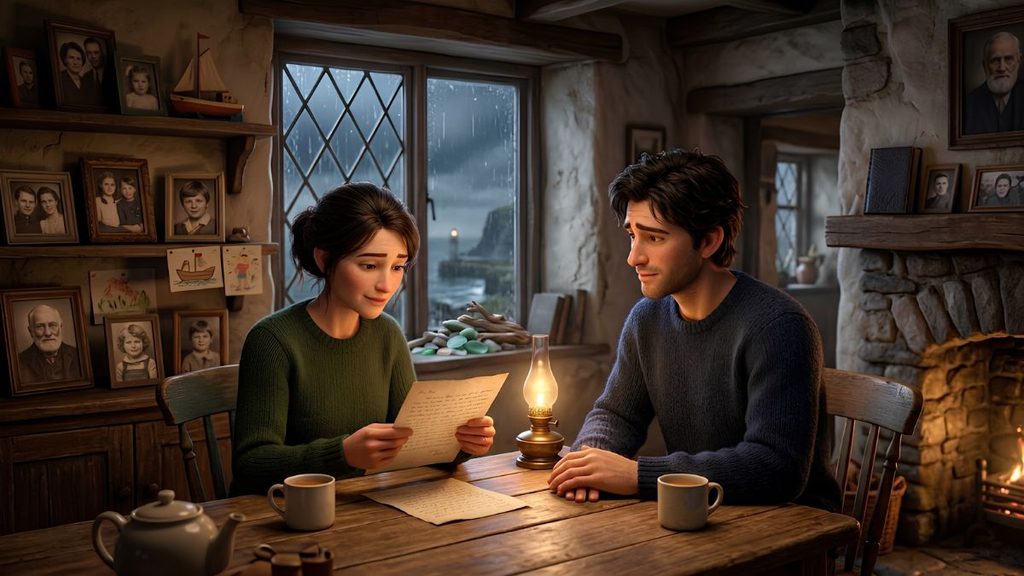
Sacrifice Type: Sacrificing Pride
Eleanor Wright had always been proud of being right.
She wasn’t arrogant.
At least, that was what she told herself.
She was simply confident.
If she believed something, she defended it.
If someone made a mistake, she pointed it out.
If she was hurt, she expected the other person to acknowledge it.
And if someone apologized, she wanted them to explain exactly what they were apologizing for.
Her younger brother, Thomas, used to tease her about it.
“You don’t need to win every argument.”
“I don’t.”
“You do.”
“I just happen to be correct.”
Thomas would laugh.
“You see? That’s exactly what I mean.”
They had always been different.
Eleanor was careful and structured.
Thomas was spontaneous and emotional.
Despite their differences, they were close.
Until one argument changed everything.
Their father had died six years earlier.
His name was Richard Wright.
He had been a quiet man who rarely spoke about his feelings.
After his death, he left behind a small family cottage near the coast.
It wasn’t particularly valuable.
But it meant everything to Eleanor and Thomas.
Their father had repaired the cottage himself.
He had painted the windows.
Built the shelves.
Planted the garden.
It was where the family spent summers.
For years, Eleanor and Thomas agreed that they would keep it.
Then Thomas received an offer for the property.
A developer wanted to buy it.
The money was substantial.
Thomas wanted to sell.
Eleanor refused.
“You can’t sell Dad’s house.”
Thomas stared at her.
“Why not?”
“Because it’s his.”
“He’s gone.”
“That doesn’t mean the house doesn’t matter.”
“It matters to me too.”
“Then why would you sell it?”
Thomas sighed.
“Because I can’t afford to maintain it.”
“We can.”
“You can.”
Eleanor went quiet.
Thomas continued.
“You live in London. You earn twice what I do. You barely use the cottage.”
“That’s not the point.”
“What is the point?”
“It’s family.”
Thomas became frustrated.
“Family isn’t a building.”
Eleanor’s voice hardened.
“You don’t understand.”
“No.”
Thomas shook his head.
“You don’t understand.”
The argument became worse.
Words were said.
Old resentments surfaced.
Thomas accused Eleanor of believing she knew what was best for everyone.
Eleanor accused Thomas of caring more about money than their father’s memory.
Neither apologized.
Thomas left.
They didn’t speak for three months.
Then six.
Then a year.
During that time, Eleanor told herself she was protecting the family.
She told friends that Thomas had changed.
She said he had become selfish.
She said he needed to understand that some things were more important than money.
But privately, she missed him.
She missed their jokes.
Their arguments.
His terrible cooking.
The way he always called her “Ellie” even though she hated the nickname.
She considered calling him.
Several times.
But pride stopped her.
She believed he should apologize first.
After all, he had been the one who wanted to sell the cottage.
He had been the one who had said those hurtful words.
Why should she call?
One rainy evening, Eleanor found an old box while cleaning her apartment.
Inside were photographs.
Her father’s handwriting.
Childhood drawings.
And a letter.
It was addressed to both Eleanor and Thomas.
The letter had been written by their father shortly before his death.
Eleanor had never seen it.
She opened it.
My children,
If you are reading this, I am probably no longer here to annoy you with my terrible jokes.
Eleanor smiled.
Her father had always written like he was speaking.
She continued.
There is something I hope you remember.
This house is only wood, paint, windows, and walls.
What makes it valuable is what happened inside it.
The laughter.
The arguments.
The meals.
The forgiveness.
Eleanor stopped.
She read the next line.
If one day you disagree about what to do with this place, remember that the house is not more important than the people who grew up in it.
Her hands began to shake.
Then came the final paragraph.
Take care of each other. That is the part of this family worth keeping.
Eleanor closed her eyes.
She read the letter three times.
Then she picked up her phone.
She opened Thomas’s contact.
She typed:
We need to talk.
She stared at it.
Then deleted it.
She tried again.
I found Dad’s letter.
Deleted.
Again.
I’m sorry.
She stared at those words.
They were only two words.
But they felt impossibly difficult.
Her pride whispered:
He should apologize first.
She put the phone down.
The next morning, Eleanor went to work.
She couldn’t concentrate.
The letter stayed in her mind.
She thought about the argument.
She thought about Thomas.
She thought about her father’s final words.
She suddenly realized something painful.
She had spent a year protecting her pride while losing time with her brother.
And time was something she couldn’t recover.
That evening, she drove to the coast.
The cottage stood exactly as it had when their father was alive.
The windows needed cleaning.
The garden was overgrown.
But the old blue door was still there.
Eleanor unlocked it.
Inside, everything was quiet.
She walked into the kitchen.
She could almost hear her father laughing.
She could hear Thomas as a child.
She could hear herself arguing about who had to wash the dishes.
She sat at the old kitchen table.
Then she cried.
Not because she was angry.
Because she finally understood.
She had been trying to win an argument that had never needed a winner.
The next morning, Eleanor called Thomas.
He answered after several rings.
“Hello?”
She nearly hung up.
“Thomas?”
“Yes.”
“It’s me.”
“I know.”
Silence.
Eleanor took a breath.
“I found something.”
“What?”
“Dad’s letter.”
Another silence.
“You found it?”
“Yes.”
“What did it say?”
Eleanor looked out the window.
“He wanted us to take care of each other.”
Thomas didn’t answer.
“I think we failed him.”
Thomas sighed.
“Maybe.”
Eleanor swallowed.
“I’ve been angry with you.”
“I know.”
“I still don’t like the idea of selling the cottage.”
“I know.”
“But I don’t want to lose you over it.”
Thomas was silent for several seconds.
Then he said:
“I don’t want to lose you either.”
They agreed to meet at the cottage.
Thomas arrived that afternoon.
Eleanor was waiting outside.
For a moment, neither knew what to say.
Then Thomas smiled.
“You look terrible.”
Eleanor laughed.
“So do you.”
He hugged her.
The argument wasn’t solved.
But something had changed.
They could finally talk.
They sat in the kitchen.
Thomas explained his financial situation.
He had debts.
His business had struggled.
The cottage required repairs.
He couldn’t keep paying for it.
Eleanor listened.
For the first time, she didn’t interrupt.
Then she explained why the cottage mattered so much to her.
She wasn’t really afraid of losing the building.
She was afraid of losing the last physical place that still connected them to their father.
Thomas understood.
“I didn’t know that.”
“I never told you.”
“You were too busy arguing.”
Eleanor smiled.
“That’s probably true.”
They discussed options.
They could sell it.
They could rent it.
They could renovate it.
They could share the costs.
None was perfect.
Eventually, they found a solution.
They sold part of the surrounding land while keeping the cottage itself.
The money helped Thomas.
The cottage remained.
Neither got everything they wanted.
But both got something more important.
They got their relationship back.
Years passed.
Eleanor and Thomas began visiting the cottage regularly.
Sometimes with their children.
Sometimes alone.
They repaired the garden.
Repainted the windows.
Fixed the old shelves.
They discovered that their father had hidden small objects throughout the house.
A coin behind a drawer.
A photograph inside an old book.
A note under the kitchen table.
Their father had apparently enjoyed leaving surprises.
One note said:
If you found this, you are snooping. Well done.
Thomas laughed.
Eleanor smiled.
“It sounds like him.”
One summer evening, they sat outside.
Thomas said:
“Do you remember our argument?”
Eleanor groaned.
“Unfortunately.”
“Do you ever think about what would have happened if you hadn’t called me?”
She looked at him.
“All the time.”
“Me too.”
“Would you have sold the cottage?”
“Probably.”
“Would you have regretted it?”
“Maybe.”
Eleanor nodded.
“I would have regretted losing you more.”
Thomas looked at her.
“Me too.”
Eleanor eventually kept her father’s letter in a frame.
Not because it was beautiful.
Because it reminded her of something she had once forgotten.
Being right wasn’t always the goal.
Sometimes understanding mattered more.
Sometimes an apology was more valuable than an argument.
Sometimes forgiveness had to come before the other person deserved it.
And sometimes the greatest sacrifice a person could make was simply allowing their pride to become smaller than their love.
Several years later, Eleanor became a manager at her company.
Her younger colleagues often came to her with disagreements.
One afternoon, two employees were arguing over a project.
Both insisted they were right.
Eleanor listened.
Then she asked:
“Do you want to win?”
They looked confused.
“What?”
“Do you want to prove that the other person is wrong?”
One nodded.
“Or do you want to solve the problem?”
They became quiet.
Eleanor smiled.
“There is a difference.”
At home that evening, Eleanor looked at the framed letter.
She thought about her father.
Then about Thomas.
She remembered the first phone call.
The hesitation.
The fear.
The pride she had swallowed.
It had been difficult.
But not nearly as difficult as losing someone she loved.
She realized that humility was not weakness.
It was strength.
Admitting you were wrong did not make you smaller.
Apologizing first did not mean you had lost.
Forgiving someone did not mean their behavior had been acceptable.
It meant you valued the relationship enough to stop letting the past control the future.
One Christmas, the entire family gathered at the cottage.
Children ran through the garden.
Adults prepared food.
Someone played music.
Thomas was telling a ridiculous story.
Everyone laughed.
Eleanor looked around.
For a moment, she imagined her father sitting in his old chair.
She smiled.
Thomas noticed.
“What?”
“Nothing.”
“You look emotional.”
“I was just thinking about Dad.”
Thomas nodded.
“Me too.”
Eleanor looked at the house.
“We almost lost this.”
Thomas shook his head.
“No.”
“What?”
“We almost lost each other.”
Eleanor smiled.
“You’re right.”
Later that night, when everyone was asleep, Eleanor sat alone at the kitchen table.
She took out her father’s letter.
She read the final line again.
Take care of each other. That is the part of this family worth keeping.
She folded the letter carefully.
Then she placed it back in its frame.
She understood now.
Her father had never really been asking them to preserve a house.
He had been asking them to preserve their relationship.
The house was only the place where they learned the lesson.
The next morning, Thomas entered the kitchen.
“Coffee?”
“Yes.”
He poured two cups.
They sat together.
Thomas smiled.
“You know, Ellie—”
“Don’t call me that.”
He laughed.
“Some things never change.”
Eleanor smiled.
“Maybe that’s okay.”
They drank their coffee.
The old house stood quietly around them.
The walls had cracks.
The windows were imperfect.
The floor creaked.
But the family was together.
And that was enough.
Moral Lesson
Letting go of pride can require more courage than winning an argument. Eleanor learns that being right is not always worth the emotional cost of losing someone she loves. Sometimes apologizing first, listening without defending yourself, and choosing forgiveness can protect relationships that matter far more than any argument.
The Friend Who Stayed

Sacrifice Type: Sacrificing for Friendship
Lucas Bennett had always believed that adulthood changed friendships.
Not necessarily because people stopped caring.
Life simply became complicated.
People got married.
They changed jobs.
Moved to different cities.
Had children.
Bought houses.
Started businesses.
Took care of parents.
Paid mortgages.
And slowly, without anyone intending it, friendships that once felt permanent could become occasional messages on a phone.
Lucas understood this.
At thirty-seven, he was busy himself.
He worked as an architect in Manchester and spent most of his weekdays moving between construction sites, client meetings, and deadlines.
He had a young daughter, Emma, and a demanding career.
His closest friend, Nathan Cole, lived nearly two hours away.
They had been friends since university.
For years, they had promised that nothing would change.
But eventually, life did.
Lucas and Nathan had met during their first week at university.
Lucas was studying architecture.
Nathan was studying journalism.
They were completely different.
Lucas planned everything.
Nathan rarely planned anything.
Lucas arrived ten minutes early.
Nathan arrived ten minutes late.
Lucas saved money.
Nathan spent his on concerts, books, and terrible coffee.
But they became friends anyway.
They studied together.
Traveled together.
Celebrated birthdays together.
Helped each other through breakups.
When Lucas graduated, Nathan was the first person waiting outside the university building.
When Nathan’s father died, Lucas was the person who drove through the night to attend the funeral.
Their friendship survived distance.
Then marriage.
Then careers.
Then children.
At least, they thought it had.
One Monday morning, Lucas received a message.
Can you talk?
It was from Nathan.
Lucas replied:
Of course. Everything okay?
Nathan didn’t respond.
Ten minutes passed.
Then twenty.
Finally, Lucas’s phone rang.
“Hey.”
Lucas could immediately hear something wrong in his voice.
“What happened?”
“Nothing.”
“Don’t say nothing.”
Nathan laughed weakly.
“I’ve lost my job.”
Lucas sat down.
“What?”
“The newspaper closed my department.”
“I’m sorry.”
“Yeah.”
“What are you going to do?”
“I don’t know.”
Nathan had worked as a journalist for fourteen years.
He loved his profession.
Now he had no income.
He also had a mortgage.
A wife.
Two children.
And almost no savings.
Lucas wanted to help.
But he didn’t know how.
The first month passed.
Lucas called Nathan regularly.
Nathan always sounded optimistic.
“I’m applying everywhere.”
“Good.”
“I’ll find something.”
“I know.”
The second month was harder.
Nathan began selling things.
His camera equipment.
His old guitar.
Some furniture.
Lucas offered money.
Nathan refused.
“I don’t need charity.”
“It’s not charity.”
“I’ll be fine.”
Lucas recognized the tone.
Nathan was embarrassed.
He didn’t want to be rescued.
So Lucas backed away.
For a while.
Then, one Thursday evening, Nathan called again.
“I need a favor.”
“Anything.”
“Can I stay with you for a few days?”
Lucas didn’t hesitate.
“Of course.”
There was silence.
“Lucas?”
“Yes?”
“I mean me and the kids.”
Lucas smiled.
“Of course.”
Nathan exhaled.
“Thank you.”
Nathan arrived the following weekend.
His wife, Olivia, looked exhausted.
Their children, Sophie and Daniel, carried small bags.
Lucas welcomed them into his home.
Emma, Lucas’s daughter, immediately showed Sophie her toys.
The children disappeared upstairs.
Lucas and Nathan stood in the hallway.
“This is embarrassing.”
Lucas shook his head.
“Stop.”
“I’m serious.”
“I know.”
“I never thought I’d be forty and living in my friend’s house.”
“You aren’t forty.”
“I’m thirty-nine.”
“Exactly.”
Nathan laughed.
It was the first genuine laugh Lucas had heard from him in weeks.
The plan was simple.
A few days.
Maybe a week.
Nathan would attend interviews.
Find work.
Return home.
But the job market was difficult.
One interview became two.
Two became five.
Five became ten.
Nothing worked.
A week became two.
Two became a month.
The house became crowded.
There were arguments.
There were awkward mornings.
Bills increased.
Privacy disappeared.
Lucas sometimes came home exhausted and found four extra people in the living room.
He never complained.
But he wasn’t made of patience.
One evening, after a particularly difficult day, Lucas sat alone in his car.
He was tired.
He wanted his old routine back.
He wanted quiet.
He wanted space.
He wanted his house to feel like his house again.
And he felt guilty for thinking it.
The next morning, Nathan approached him.
“I think we should leave.”
Lucas looked at him.
“What?”
“You’ve been patient.”
“I’m fine.”
“No.”
Nathan shook his head.
“I know this is difficult.”
Lucas was silent.
Nathan continued.
“We’ll figure something out.”
Lucas looked at his friend.
Then said:
“You’re not leaving.”
Nathan stared at him.
“Lucas—”
“You stay until you’re ready.”
“But—”
“I mean it.”
Lucas didn’t know how long “until you’re ready” would be.
He simply knew that Nathan needed someone who wouldn’t make him feel like a failure.
So Lucas adjusted.
He created a schedule.
He helped Nathan update his résumé.
He introduced him to people in his professional network.
He searched for freelance writing opportunities.
He even contacted a former client who needed a communications consultant.
Nathan began taking small assignments.
The money wasn’t much.
But it was something.
Months passed.
Nathan eventually found part-time work.
It wasn’t his dream job.
It paid less than his old position.
But it gave him stability.
He moved his family back home.
Lucas helped them move.
At the end of the day, Nathan hugged him.
“I don’t know how I’ll repay you.”
Lucas smiled.
“You won’t.”
“Seriously.”
“Buy me coffee.”
Nathan laughed.
“That’s it?”
“Maybe dinner.”
“Deal.”
For a while, life improved.
Nathan worked.
His children returned to school.
Olivia found part-time work.
Their finances stabilized.
Then something unexpected happened.
Nathan was offered a position at a major media company.
It was in Edinburgh.
The salary was excellent.
The job was exactly what he wanted.
There was only one problem.
The company needed him to start within two weeks.
Nathan accepted.
He called Lucas immediately.
“I got it.”
Lucas smiled.
“I knew you would.”
“I’m moving to Edinburgh.”
There was silence.
“That’s far.”
“I know.”
“When?”
“Two weeks.”
Lucas looked down.
He was happy for his friend.
But part of him felt sad.
Their friendship had already changed once.
Now they would be even farther apart.
The night before Nathan left, the two friends sat outside.
Beer bottles stood on the table.
The children were asleep.
Lucas looked at his friend.
“Remember university?”
Nathan laughed.
“Unfortunately.”
“You were terrible at deadlines.”
“You were unbearable about deadlines.”
“You once submitted an assignment three days late.”
“I got a better grade than you.”
“That was luck.”
“That was talent.”
They laughed.
Then the conversation became quiet.
Nathan said:
“I thought I’d lost everything.”
Lucas looked at him.
“Because of the job?”
“Because of everything.”
He paused.
“When I lost my job, I felt like I had stopped being the person I was supposed to be.”
Lucas listened.
“You didn’t treat me like I was broken.”
“I didn’t think you were.”
“Everyone else did.”
Lucas frowned.
“Who?”
“People.”
Nathan shrugged.
“They started talking to me differently.”
Lucas understood.
Losing a job hadn’t just affected Nathan financially.
It had affected his identity.
His confidence.
His pride.
His sense of worth.
And Lucas had given him something more valuable than a room.
He had given him a place where Nathan didn’t have to pretend everything was fine.
Nathan looked at him.
“You know what I’ll remember?”
“What?”
“Not the money.”
Lucas smiled.
“Good.”
“Not the house.”
“Even better.”
“The fact that you stayed.”
Lucas looked away.
“You’re my friend.”
Nathan nodded.
“Exactly.”
Years passed.
Nathan’s career grew.
He became a senior editor.
Lucas continued working as an architect.
Their children grew up.
They visited each other when they could.
But adulthood remained busy.
Sometimes months passed between visits.
Sometimes they only exchanged messages.
Yet the friendship remained.
One Christmas, Lucas received a package.
Inside was a framed photograph.
It showed Lucas, Nathan, and their families standing outside Lucas’s house.
On the back was a handwritten note.
For the friend who stayed when I didn’t know how to stay standing.
Lucas smiled.
He placed the photograph on his desk.
A year later, Lucas experienced his own difficult period.
His architectural firm lost a major contract.
Several projects were canceled.
His position became uncertain.
He didn’t tell many people.
He didn’t want to worry his family.
One evening, his phone rang.
Nathan.
“How are you?”
“Fine.”
“You’re lying.”
Lucas laughed.
“How do you know?”
“Because I’ve used that word before.”
Lucas became quiet.
Nathan continued.
“Tell me what you need.”
“I don’t know.”
“That’s okay.”
There was a pause.
“Come to Edinburgh.”
Lucas smiled.
“Why?”
“Because sometimes you need someone to remind you that you’re not alone.”
Lucas visited.
Nathan met him at the train station.
They hugged.
Neither said much.
They didn’t need to.
Nathan had learned something from Lucas years earlier.
Friendship wasn’t always about solving problems.
Sometimes it was simply about refusing to disappear when things became difficult.
They spent the weekend talking.
Lucas admitted his fears.
Nathan listened.
Then he helped Lucas connect with several people in his professional network.
Within weeks, Lucas had new opportunities.
He eventually found another position.
His career recovered.
But something else changed.
He became more willing to ask for help.
He no longer saw vulnerability as failure.
Years later, Lucas and Nathan looked back on everything they had survived.
University.
Funerals.
Marriage.
Children.
Career changes.
Financial problems.
Distance.
Success.
Failure.
They realized that friendship had never been about always being available.
That was impossible.
It had been about knowing that when life became truly difficult, the other person would make an effort.
Sometimes that effort meant driving two hours.
Sometimes it meant opening your home.
Sometimes it meant making a phone call.
Sometimes it meant listening.
Sometimes it meant sacrificing comfort.
And sometimes it meant simply saying:
You don’t have to face this alone.
One summer, the two families went on holiday together.
Their children were now teenagers.
Lucas and Nathan sat near the beach.
Nathan looked at him.
“Do you remember when I lived in your house?”
Lucas laughed.
“How could I forget?”
“I thought you’d eventually throw me out.”
“I considered it.”
Nathan laughed.
“You never told me that.”
“You didn’t need to know.”
They watched the children playing.
Nathan became thoughtful.
“I used to think friendship meant having fun together.”
Lucas nodded.
“Me too.”
“But it’s more than that.”
“Definitely.”
Nathan looked at him.
“It’s knowing who will stay when things aren’t fun.”
Lucas smiled.
“That’s friendship.”
That evening, Lucas received a message from Sophie, Nathan’s daughter.
Thank you for helping Dad when he lost his job.
Lucas smiled.
He replied:
He’s my friend.
A moment later, another message arrived.
I know. That’s why I’m thanking you.
Lucas put his phone away.
He looked toward the beach.
Nathan was laughing with his family.
Lucas realized something.
The greatest friendships weren’t measured by how often people spoke.
They were measured by what happened when speaking wasn’t enough.
When someone needed help.
When pride made asking difficult.
When circumstances became inconvenient.
When helping required time, patience, money, space, or emotional energy.
That was when friendship became real.
Lucas never considered himself a hero.
He had simply opened his door.
He had shared his home.
He had listened.
He had made phone calls.
He had sacrificed some comfort.
But those small sacrifices had changed Nathan’s life.
And years later, Nathan had done the same for him.
Neither kept score.
That was the beauty of their friendship.
There was no ledger.
No debt.
No calculation.
Only trust.
As they grew older, Lucas and Nathan occasionally talked about their younger selves.
“We thought we knew everything.”
Nathan laughed.
“We knew nothing.”
“We thought friendship was easy.”
“It isn’t.”
“No.”
Lucas looked toward the sea.
“But the right friendships are worth the effort.”
Nathan nodded.
“Always.”
They sat quietly as the sun began to set.
Two old friends.
Two families.
Two lives that had taken different paths.
They had discovered that friendship didn’t require constant presence.
It required genuine presence when it mattered.
And sometimes the greatest gift one friend could offer another was not money, advice, or solutions.
It was simply staying.
Staying when the other person was embarrassed.
Staying when life became inconvenient.
Staying when there was nothing impressive to offer.
Staying until the person who had fallen found the strength to stand again.
Lucas had once opened his home to Nathan.
Years later, Nathan had opened his heart to Lucas.
Neither man would ever forget it.
Because true friendship wasn’t revealed during celebrations.
It was revealed in the difficult seasons.
And when those seasons came, the best friends were not always the ones with the perfect words.
They were the ones who quietly said:
I’m here.
And meant it.
Moral Lesson
True friendship becomes visible when supporting someone requires genuine effort. A loyal friend does not have to solve every problem. Sometimes the greatest sacrifice is offering time, patience, space, emotional support, or practical help when someone is struggling. Real friendship means being willing to stay when leaving would be easier.
8. The House by the Sea

Sacrifice Type: Sacrificing for Family
When Oliver Hayes first saw the house by the sea, he knew immediately that he wanted it.
It stood on a quiet stretch of coastline in Cornwall, England, where the cliffs descended toward a wide blue horizon.
The house was old.
Its white walls needed repainting.
The wooden windows were worn by years of salt and wind.
The garden had become wild.
But it had something Oliver had never been able to find in London.
Silence.
Real silence.
The kind that arrived after the waves had finished crashing against the rocks.
The kind that made a person hear their own thoughts.
Oliver was thirty-nine and worked as a financial consultant.
He had spent fifteen years building his career.
His salary was excellent.
His apartment was beautiful.
His colleagues respected him.
Yet he felt strangely tired.
For years, he had dreamed of leaving London.
He imagined opening a small guesthouse near the sea.
He would restore an old property, serve breakfast to travelers, read books in the afternoon, and finally live without constantly checking his phone.
The house in Cornwall seemed perfect.
There was only one thing standing between Oliver and his dream.
His younger sister, Clara.
And Clara had no idea how much he was about to give up for her.
Oliver and Clara had grown up in a small town in Devon.
Their parents, Margaret and Daniel, had owned a modest bakery.
Oliver was the older brother.
He had always felt responsible for Clara.
When she was seven, he walked her to school.
When she was twelve, he taught her how to ride a bicycle.
When she was sixteen, he waited outside a concert until she was safely ready to come home.
They fought constantly.
They also loved each other deeply.
Their mother used to say:
“You two can argue for three hours and defend each other for three seconds.”
Oliver would laugh.
Clara would say:
“That’s because he’s annoying.”
Their father would smile.
“That’s what brothers are for.”
As adults, their lives became different.
Oliver moved to London.
Clara stayed near the coast.
She married Daniel Harper, a local carpenter.
They had two children, Noah and Sophie.
For a while, everything seemed ordinary.
Then Clara’s marriage ended.
It happened quietly.
There was no dramatic scandal.
No betrayal.
Just years of small disagreements that eventually became impossible to repair.
Clara moved with her children into a rented cottage.
She found a job at a local school.
She seemed to manage.
At least, that’s what she told Oliver.
One Sunday afternoon, Oliver called her.
“How are you?”
“Fine.”
“You sound tired.”
“I’m a mother.”
“Fair point.”
Clara laughed.
Then she became quiet.
“Oliver?”
“Yes?”
“Can you help me with something?”
“Of course.”
“I’m struggling with the house.”
“What happened?”
“The landlord is selling it.”
Oliver sat down.
“How long do you have?”
“Three months.”
“Can you find another place?”
“Maybe.”
“But?”
Clara hesitated.
“The children finally feel settled here.”
Oliver understood.
Noah had just started secondary school.
Sophie had joined a local dance group.
Their friends lived nearby.
Moving would mean starting again.
Clara didn’t want to uproot them.
But she couldn’t afford a better house.
Oliver drove to Cornwall the following weekend.
He found Clara sitting in the garden.
The children were playing nearby.
“Uncle Oliver!”
Noah ran toward him.
Oliver smiled.
“How’s school?”
“Good.”
“Really?”
“Mostly.”
“That’s what I expected.”
Sophie hugged him.
“Did you bring anything?”
“Chocolate.”
She smiled.
“You’re my favorite uncle.”
“You don’t have another uncle.”
“I know.”
Clara laughed.
For a few hours, everything felt normal.
Then the children went inside.
Oliver looked at his sister.
“How bad is it?”
Clara sighed.
“I don’t know.”
“Tell me.”
“I can probably find another rental.”
“Probably?”
She looked down.
“I’ve been rejected twice.”
“Why?”
“Income.”
Oliver frowned.
“You have a job.”
“Not a high-paying one.”
Silence.
“I’ve applied for more.”
“And?”
“Nothing yet.”
That evening, Oliver stayed in the guest room.
He couldn’t sleep.
He thought about Clara.
Then about the house by the sea.
He had planned to make an offer the following month.
He had already spoken to the owner.
The house was affordable if Oliver used almost all his savings.
It would mean leaving his job.
Starting over.
But it was his dream.
Then another thought came.
He could use some of that money to help Clara.
He rejected the idea immediately.
He wasn’t responsible for solving her life.
Clara was an adult.
She needed to stand on her own.
He repeated that to himself.
But the thought wouldn’t disappear.
The next morning, Oliver drove to the house he wanted to buy.
He stood outside.
The sea was visible beyond the garden.
He could imagine himself living there.
He could see the future.
Then he remembered Noah and Sophie.
He remembered Clara’s face.
He walked to the cliff.
The wind was strong.
Oliver realized something.
He had spent years believing his dream was about a house.
It wasn’t.
It was about freedom.
And perhaps freedom wasn’t always about getting everything you wanted.
Sometimes it was about having enough courage to choose what mattered.
Oliver returned to London.
He called his financial adviser.
“If I use part of my savings to help my sister, how long would it delay my plans?”
“Which plans?”
“Buying property.”
The adviser calculated.
“Possibly two to three years.”
Oliver was silent.
“Is that a problem?”
“Yes.”
“Why?”
“Because I’ve waited a long time.”
The adviser smiled.
“Then perhaps you should decide how much waiting is worth it.”
Oliver didn’t immediately give Clara money.
Instead, he asked questions.
What could she afford?
What kind of home did she need?
Could she increase her income?
Could she reduce expenses?
They spent weeks working through everything.
Eventually, Oliver made an offer.
“I’ll help with the deposit.”
Clara stared at him.
“No.”
“Why?”
“Because I can’t let you do that.”
“You don’t have to pay me back immediately.”
“That’s not the point.”
“What is?”
“You have your own plans.”
“I know.”
“And you’re going to buy that house.”
Oliver was quiet.
“Maybe not yet.”
Clara understood.
“No.”
“Clara—”
“No.”
“You need a home.”
“You need your life.”
“I am not giving up my life.”
“You are giving up your dream.”
Oliver shook his head.
“I’m delaying it.”
“That’s still a sacrifice.”
He smiled sadly.
“Then let it be one.”
Clara refused.
Oliver didn’t pressure her.
Instead, he helped her search.
They found a small house outside town.
It wasn’t perfect.
The kitchen was tiny.
The garden was almost nonexistent.
But it was affordable.
Clara could manage the mortgage with a modest deposit.
Oliver contributed enough to make the purchase possible.
Clara signed the papers.
When she received the keys, she cried.
“I don’t know how to thank you.”
Oliver smiled.
“Invite me for dinner.”
She laughed through her tears.
“That’s it?”
“Maybe dessert.”
Oliver returned to London.
He continued working.
His dream remained postponed.
Two years passed.
Then three.
His savings slowly grew again.
He began searching for houses near the coast.
This time, he didn’t rush.
He wanted to make sure he could help his sister if she needed him again.
One evening, Clara called.
“Oliver?”
“Yes?”
“I have news.”
“What?”
“I got promoted.”
Oliver smiled.
“That’s wonderful.”
“More money.”
“Even better.”
“And I’m thinking about opening a tutoring center.”
“You’re serious?”
“Very.”
Oliver laughed.
“Then maybe you don’t need your big brother anymore.”
Clara became quiet.
“I’ll always need you.”
Oliver finally bought the house by the sea five years after he had first seen it.
It was smaller than the original.
But he loved it.
He renovated the kitchen.
Painted the walls.
Repaired the windows.
Installed bookshelves.
He kept the garden wild.
And he opened a small guesthouse.
The first year was difficult.
The second was better.
Eventually, the place became successful.
But there was something unusual about it.
Oliver never charged Clara’s family when they visited.
Every summer, Clara and the children stayed for a week.
Noah was now a teenager.
Sophie was studying dance.
They would run along the beach.
Cook dinner together.
Sit outside until late.
The house became a second home for them.
One evening, Clara sat beside Oliver on the terrace.
The sea was calm.
“You know something?”
“What?”
“I used to feel guilty.”
“For what?”
“Because you delayed your dream for me.”
Oliver looked at her.
“You didn’t ask me to.”
“I know.”
“Then don’t carry it.”
“But I still think about it.”
Oliver smiled.
“I don’t.”
“Really?”
“Really.”
“Why?”
“Because I got the house.”
Clara laughed.
“Five years later.”
“Still got it.”
She looked toward the sea.
“Was it worth waiting?”
Oliver thought about it.
Then he answered:
“Yes.”
Clara looked at him.
“You never regret it?”
“Sometimes.”
She smiled.
“That’s honest.”
“Of course.”
He continued:
“There were moments when I wondered what would have happened if I’d bought the house earlier.”
“And?”
“I probably would have enjoyed it.”
“Then why are you okay?”
Oliver looked toward the garden.
“Because I enjoyed something else first.”
“What?”
“Being your brother.”
Clara’s eyes filled with tears.
She looked away.
Oliver pretended not to notice.
Years later, Noah became a university student.
Sophie became a professional dancer.
Clara’s tutoring center became successful.
Oliver’s guesthouse became known as one of the most peaceful places on the coast.
People came from different countries.
Some stayed for a weekend.
Some stayed for weeks.
Many asked Oliver why he had chosen such a quiet life.
He always gave the same answer.
“I wanted to build a place where people could slow down.”
They rarely knew that he had first learned how valuable time was by slowing down for his sister.
One summer evening, Oliver found Clara standing near the cliff.
She was watching the sunset.
“Beautiful.”
“Yes.”
They stood together.
After a while, Clara said:
“Do you remember the house I used to rent?”
“Of course.”
“You helped me keep my children from losing their home.”
Oliver smiled.
“They were never going to lose their home.”
“You know what I mean.”
He nodded.
Clara continued:
“I thought you sacrificed your dream for us.”
Oliver looked at the horizon.
“I did.”
She turned toward him.
He smiled.
“But I don’t think sacrifice always means losing something.”
“What does it mean?”
“Sometimes it means deciding what is worth waiting for.”
Clara thought about that.
Oliver continued.
“I wanted the house.”
“I know.”
“But I wanted my family to be okay more.”
“Why?”
“Because houses can be bought again.”
He looked at her.
“Time with people can’t.”
That evening, they had dinner with the children.
The table was crowded.
Everyone talked at once.
Noah told stories.
Sophie argued with him.
Clara complained about both.
Oliver laughed.
The house was noisy.
Nothing like the peaceful retreat he had once imagined.
And yet he loved it.
Because the dream he had wanted was not silence.
It was a life that felt meaningful.
He had found that.
Oliver eventually realized that sacrifice wasn’t always dramatic.
Sometimes nobody applauded.
Nobody wrote about it.
Nobody even knew.
It could look like postponing a purchase.
Giving up savings.
Driving two hours.
Opening your home.
Helping someone start again.
Giving someone time to recover.
And sometimes it meant accepting that your own dream could wait.
His sister had never asked him to save her.
He had chosen to help because he loved her.
That choice changed both their lives.
Years later, when Oliver was older, he sat on the terrace alone.
The sea stretched endlessly ahead.
He thought about the young man who had once stood on the same coast dreaming about this house.
That man had been impatient.
He wanted everything immediately.
Success.
Freedom.
A beautiful home.
A peaceful life.
Now Oliver understood something different.
Life wasn’t a list of things to obtain.
It was a series of choices.
Some choices moved you forward.
Others made you stop.
Some gave you money.
Others gave you memories.
Some protected your ambitions.
Others protected the people you loved.
The difficult part was knowing which mattered most at a particular moment.
Clara came outside carrying two cups of tea.
“Still thinking?”
“Always.”
She handed him one.
“What about?”
“The sea.”
“That’s not what you’re thinking about.”
Oliver laughed.
“You’re right.”
She sat beside him.
They watched the waves.
Neither spoke.
They didn’t need to.
They had spent enough years together to understand silence.
Oliver looked at the house.
The white walls.
The wooden windows.
The small garden.
The lantern beside the front door.
It was everything he had once wanted.
But it meant more now.
Because the road toward it had included sacrifice.
Not a sacrifice he regretted.
A sacrifice that taught him patience.
It taught him that ambition was important.
But love could change the timetable.
It taught him that helping someone didn’t necessarily mean losing yourself.
And most importantly, it taught him that some of life’s best rewards came after you were willing to wait.
As the sun disappeared below the horizon, Clara rested her head against her brother’s shoulder.
“Thank you.”
Oliver smiled.
“For what?”
“For staying.”
He looked at her.
“Always.”
The waves continued moving toward the shore.
The house stood quietly above them.
And for Oliver, there was no better place to be.
Not because he had finally achieved his dream.
But because he had learned what made the dream worth having.
Moral Lesson
Some of the greatest sacrifices are made quietly for the people we love. Oliver delays his dream to help his sister build a secure future for her children, but he eventually discovers that postponing a personal ambition does not mean abandoning it. Sometimes love simply changes the timing of our dreams.
Why Adults Connect With Sacrifice Stories
Adults often face situations where there is no perfect choice.
A person may have to choose between an exciting career opportunity and spending more time with family. Someone may need to decide whether to forgive a friend who caused serious disappointment. A parent may postpone personal plans to support a child. A friend may spend valuable time helping someone rebuild their life.
These situations rarely have simple answers.
That is why sacrifice stories can feel particularly realistic for adult readers.
They encourage readers to consider questions such as:
- What would I be willing to give up for someone I love?
- When does sacrifice become meaningful?
- Is every sacrifice worth making?
- Can helping someone else sometimes require putting aside personal ambition?
- Is apologizing a form of sacrifice?
- How much should friendship require?
- Can sacrifice strengthen a family?
- When should a person protect their own well-being instead?
These questions give sacrifice stories greater depth than simple tales of good versus evil.
Different Types of Sacrifice in Adult Stories
Sacrifice can take many forms, allowing each story to explore a different emotional conflict.
1. Sacrificing Time
Time is one of the most valuable things adults possess.
A person can earn money again, replace possessions, and pursue new opportunities. Time, however, cannot be recovered once it has passed.
A story might feature a successful professional who spends evenings helping an elderly parent, a friend who regularly supports someone going through a difficult period, or a person who gives up their free time to mentor someone.
These stories emphasize that presence can sometimes be more meaningful than material assistance.
Moral lesson:
Giving someone your time can be one of the most meaningful ways to show that you care.
2. Sacrificing Money
Money is another common source of conflict.
An adult character may have savings for a personal goal but decide to use some of that money to help a family member.
Another character might sell a treasured possession to pay for someone’s education or essential needs.
The emotional power comes from the importance of what the character gives away.
The sacrifice becomes meaningful when the character genuinely values the thing being surrendered.
Moral lesson:
Generosity is measured by the willingness to share what matters, not simply by the amount given.
3. Sacrificing Personal Comfort
Sometimes sacrifice means choosing difficulty over convenience.
A person might spend a cold night helping someone stranded during a storm.
A friend might travel a long distance to support someone experiencing a crisis.
A family member might give up sleep and personal time to care for an elderly relative.
These situations remind readers that compassion often requires action.
Moral lesson:
Doing the right thing may require stepping outside your comfort zone.
4. Sacrificing Career Opportunities
Career sacrifice can be particularly relatable for adults.
A character might receive an exciting promotion that requires relocating to another country while an aging parent needs support at home.
Another person may postpone a professional opportunity to care for a child.
These stories can explore the tension between ambition and responsibility.
Importantly, such stories do not have to suggest that ambition is wrong.
Instead, they can show that different stages of life sometimes require different priorities.
Moral lesson:
A delayed opportunity does not necessarily mean a lost dream. Sometimes important responsibilities deserve priority.
5. Sacrificing Personal Ambition
Personal ambition can involve much more than a career.
A character may dream of traveling, becoming famous, starting a business, buying a house, or pursuing a particular lifestyle.
Circumstances may force them to reconsider those plans.
The most meaningful stories allow the character to make the decision freely rather than presenting sacrifice as something automatically expected of them.
Moral lesson:
Sometimes personal success becomes more meaningful when we consider the people who helped us reach it.
6. Sacrificing Pride
Not all sacrifices involve possessions or opportunities.
Sometimes the hardest thing to give up is pride.
A character may need to admit that they were wrong.
They may have to apologize first after an argument.
They might need to ask a friend for help.
Or they may have to forgive someone without receiving the apology they expected.
These stories can be particularly powerful because pride often creates emotional distance between people.
Moral lesson:
Letting go of pride can require more courage than winning an argument.
7. Sacrificing for Friendship
Adult friendships can become complicated as responsibilities increase.
People become busy with careers, marriages, children, financial pressures, and other obligations.
A genuine friend may nevertheless make time for someone during a difficult period.
They may offer practical help, defend their friend against unfair treatment, or simply remain present during a crisis.
Moral lesson:
True friendship becomes visible when supporting someone requires genuine effort.
8. Sacrificing for Family
Family is one of the strongest themes associated with sacrifice.
Parents may work long hours to provide opportunities for their children.
Adult children may care for aging parents.
Older siblings may help younger siblings.
Partners may temporarily put personal plans aside to support one another.
These sacrifices are often quiet and go unnoticed.
That makes them particularly powerful.
Moral lesson:
Some of the greatest sacrifices are the ones made quietly for the people we love.
Sacrifice Does Not Always Mean Giving Up Everything
One important idea in mature sacrifice stories is that sacrifice should not automatically mean destroying one’s own life for another person.
Healthy sacrifice involves judgment.
A person can care for someone without completely neglecting themselves.
For example, an adult might take time away from work to support a family member while still maintaining reasonable personal boundaries.
Another person might provide financial help without putting their own financial future at serious risk.
This creates more realistic storytelling.
The question is not simply:
“What can I give up?”
It can also be:
“What is worth giving up, and why?”
That distinction allows adult sacrifice stories to explore complicated moral decisions rather than presenting sacrifice as a simple virtue.
The Difference Between Sacrifice and Self-Neglect
A powerful adult story can also examine the boundary between sacrifice and self-neglect.
Sacrifice generally involves a conscious decision to give something valuable for a meaningful reason.
Self-neglect can involve repeatedly ignoring one’s own basic needs, boundaries, or well-being.
These are not necessarily the same thing.
For example, staying awake one night to help a loved one during an emergency can be a meaningful sacrifice.
Never sleeping properly because you believe you must solve everyone’s problems is something different.
This distinction gives adult stories greater emotional realism.
Readers can learn that caring for others is important while also understanding the importance of healthy boundaries.
Sacrifice and Love
Love is one of the strongest motivations behind sacrifice.
Romantic relationships, friendships, and family relationships can all inspire characters to make difficult choices.
A person may move to another city to support a partner.
Someone may give up an expensive purchase to help their family.
A spouse may change plans to care for an ill partner.
A friend may travel overnight to help someone facing an emergency.
However, the most effective stories show that sacrifice is meaningful because it is chosen freely.
Love should not simply be measured by how much someone suffers.
Instead, sacrifice can demonstrate commitment, responsibility, compassion, and consideration.
Sacrifice and Forgiveness
Forgiveness can also be presented as a form of sacrifice.
Sometimes a person must sacrifice their desire to remain angry.
This does not mean ignoring serious wrongdoing.
Rather, a character may eventually decide that continuing to carry resentment is damaging their own life.
A story about forgiveness can explore:
- Betrayal between friends
- Family disagreements
- Broken promises
- Workplace conflicts
- Misunderstandings
- Long-standing resentment
- Reconciliation after years apart
Such stories can be particularly meaningful for adults because relationships often carry complicated histories.
Moral lesson:
Forgiveness can require surrendering the desire to remain trapped in the past.
Sacrifice and Personal Growth
Sacrifice stories can also become stories about personal growth.
At the beginning, a character may be selfish, impatient, ambitious, or overly concerned with recognition.
A difficult situation forces them to reconsider their priorities.
They may discover that helping another person gives them a greater sense of fulfillment than personal success.
The character does not necessarily become perfect.
Instead, they develop a better understanding of what truly matters.
This transformation is often what makes the story memorable.
Why Sacrifice Stories Need Emotional Conflict
A sacrifice becomes meaningful when the reader understands what the character stands to lose.
Imagine a character giving away an object they never cared about.
There is little emotional tension.
Now imagine that the object belonged to their late parent and carries decades of memories.
If the character gives it away to help someone who desperately needs assistance, the decision becomes much more powerful.
The reader understands the cost.
Good sacrifice stories therefore establish:
- What the character values
- What they stand to lose
- Why someone else needs help
- What choice the character faces
- Why the decision is difficult
- What happens afterward
- What the character learns
This structure creates emotional depth without requiring an overly dramatic plot.
Common Settings for Adult Sacrifice Stories
Sacrifice can be explored in almost any setting.
Family Homes
Homes provide natural opportunities to explore caregiving, parenting, sibling relationships, aging, and responsibility.
Workplaces
Professional environments can introduce conflicts between ambition, ethics, loyalty, and personal responsibilities.
Hospitals
Medical settings can create emotional stories about family, friendship, courage, and difficult decisions.
Small Towns
Small communities are useful for stories involving neighbors, lifelong friendships, family traditions, and collective support.
Travel Settings
Airports, train stations, hotels, and distant cities can create stories about separation, unexpected assistance, and difficult choices.
Historical Settings
Historical stories can explore sacrifice during wars, economic crises, migrations, natural disasters, or periods of social change.
Everyday Life
Some of the strongest sacrifice stories require no extraordinary setting.
- A kitchen.
- A workplace.
- A school gate.
- A hospital waiting room.
- A quiet street.
Ordinary places can contain extraordinary decisions.
What Makes a Sacrifice Story Memorable?
A memorable story about sacrifice usually contains several important elements.
- A Relatable Character: Readers should understand the character’s hopes, fears, and responsibilities.
- A Meaningful Choice: The character should face a genuine decision rather than an obvious answer.
- Emotional Stakes: The reader should understand what could be lost.
- A Clear Motivation: The sacrifice should have a believable reason.
- Consequences: The decision should affect the character and the people around them.
- A Meaningful Moral: The story should leave readers with something worth thinking about.
Lessons Adults Can Take From Sacrifice Stories
Sacrifice stories can offer lessons that extend beyond the story itself.
- People Matter More Than Possessions: Material objects can be replaced. Relationships often cannot.
- Time Is Valuable: Giving someone your attention can sometimes matter more than giving them money.
- Pride Can Be Expensive: Refusing to apologize can damage relationships for years.
- Success Has Different Definitions: Professional achievement is valuable, but it is not the only measure of a meaningful life.
- Kindness Requires Action: Good intentions matter, but meaningful kindness often requires effort.
- Family Relationships Need Care: Love does not eliminate conflict. Strong relationships require patience, communication, and sometimes sacrifice.
- Friendship Requires Presence: A friend who stays during difficult moments can become more valuable than dozens of casual acquaintances.
Sacrifice and the Meaning of Success
Adult readers often encounter pressure to achieve.
Career advancement.
Financial stability.
Social recognition.
Personal goals.
These achievements can be important.
But sacrifice stories encourage readers to consider a broader definition of success.
A person may have an impressive career but regret missing important family moments.
Another person may earn less money but build a deeply meaningful community.
Someone else may postpone a dream and eventually pursue it later with greater appreciation.
There is no single definition of a successful life.
Sacrifice stories allow readers to explore that idea through characters rather than abstract arguments.
How These Stories Can Encourage Reflection
After reading a sacrifice story, readers can ask themselves:
- What do I value most?
- What would I be willing to give up for someone I love?
- Have I ever sacrificed something meaningful for another person?
- Has someone sacrificed something for me?
- Is there someone I should spend more time with?
- Have pride or resentment damaged one of my relationships?
- Am I confusing success with achievement?
- Can I help someone without neglecting myself?
These questions can make a story stay with the reader long after the final paragraph.
The Power of Quiet Sacrifice
Not every sacrifice needs to be dramatic.
In fact, some of the most moving examples are quiet.
A parent preparing breakfast before leaving for work.
A spouse staying awake beside someone who is sick.
A friend making a difficult journey to attend an important event.
An adult child visiting an elderly parent every weekend.
A sibling quietly paying for another sibling’s education.
A person apologizing despite believing they have been misunderstood.
These actions may never receive recognition.
But they can define relationships.
That is one of the central ideas behind Stories About Sacrifice for Adults.
Sacrifice is not always about heroic gestures.
Sometimes it is about choosing love, responsibility, kindness, or humility when doing so would be easier to avoid.
Final Thoughts
Stories About Sacrifice for Adults provide an opportunity to explore the complicated choices that shape relationships and define character.
The most meaningful sacrifices are not necessarily the biggest ones. They are the sacrifices that reveal what a person truly values.
A character who gives up money may demonstrate generosity.
Someone who gives up comfort may demonstrate compassion.
Someone who postpones ambition may demonstrate responsibility.
Someone who gives up pride may demonstrate humility.
And someone who gives their time may demonstrate love.
These stories remind us that life is rarely about choosing between something good and something bad. Often, adults must choose between two things they genuinely value.
That is what makes sacrifice so powerful as a storytelling theme.
It asks a simple but profound question:
What are we willing to give up for the people and principles that matter most?
The answer can reveal more about a person than any achievement ever could.