Noah was an energetic eight-year-old who loved talking. From the moment he woke up in the morning until he climbed into bed at night, he always had something to say. He loved telling funny stories, sharing exciting ideas, and asking lots of questions.
His family enjoyed his cheerful personality, but there was one problem.
Noah didn’t always listen when other people were speaking.
If his mom started explaining something, Noah often interrupted with a new idea.
If his teacher gave instructions, he sometimes began working before hearing the entire explanation.
When his friends tried to tell a story, Noah would jump in with one of his own before they had finished.
Noah didn’t mean to be rude. He was simply so excited that his thoughts came out before he remembered to listen.
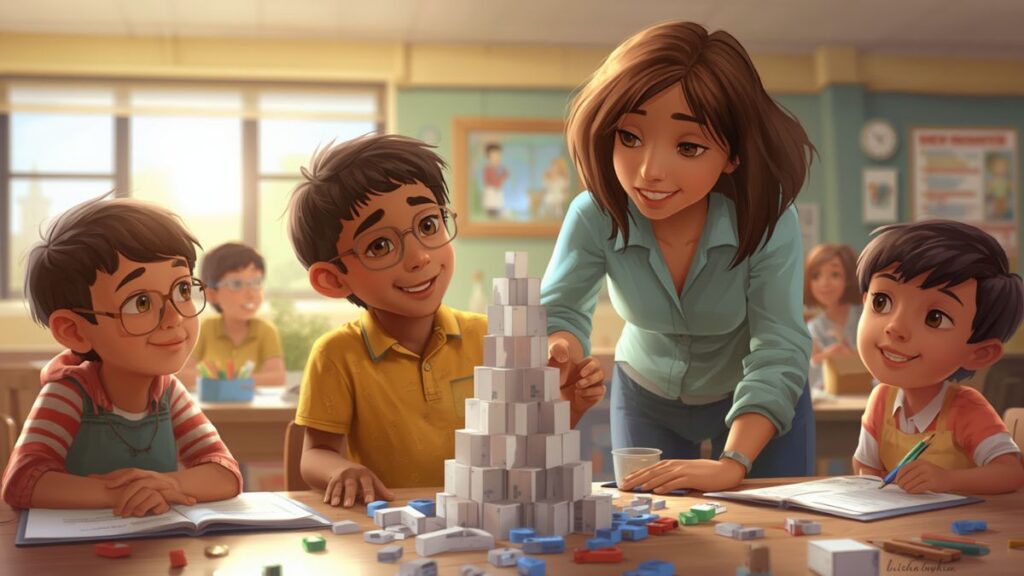
One Monday morning, Mrs. Taylor, his teacher, announced a group science project.
“Today,” she said, “each team will build a bridge using only paper, tape, and straws.”
The classroom buzzed with excitement.
Mrs. Taylor continued, “Before you begin, please listen carefully because there are four important rules.”
Noah was already imagining the tallest bridge in the class.
Without waiting for the instructions to finish, he whispered excitedly to his teammates.
“We should build a giant tower instead!”
His friends looked uncertain.
Mrs. Taylor continued speaking.
“The bridge must stretch between two desks. It must hold at least five books, and every team member must help build it.”
Noah hadn’t heard any of those instructions.
As soon as the teacher finished, he grabbed the supplies.
“Let’s start!” he shouted.
His teammates tried to explain.
“Noah, wait…”
“We need to…”
But Noah was already taping straws together.
Twenty minutes later, every group proudly tested their bridges.
Noah’s team rolled their creation between the desks.
It immediately tipped over.
Mrs. Taylor smiled kindly.
“What happened?”
Ella quietly answered, “We didn’t build a bridge. Noah thought we were making a tower.”
Noah’s cheeks turned red.
He realized he had missed the most important part because he hadn’t listened.
After class, Mrs. Taylor invited Noah to stay for a few minutes.
“You have wonderful ideas,” she said warmly.
“I know.”
“But great ideas become even better when we listen first.”
She picked up two puzzle pieces from her desk.
“Imagine these are conversations.”
She connected them together.
“One piece is talking.”
She pointed to the second.
“The other piece is listening.”
“If one piece is missing, the picture isn’t complete.”
Noah nodded thoughtfully.
That afternoon, he decided to try harder.
When he got home, his younger sister Lily ran toward him.
“Guess what happened today!”
Normally Noah would immediately start telling his own story.
Instead, he remembered the puzzle pieces.
He smiled.
“What happened?”
Lily’s face lit up.
“I learned to ride my bike without training wheels!”
Noah stayed quiet while she told the whole story.
When she finished, she smiled even bigger.
“Thanks for listening.”
Noah felt something surprising.
Listening made someone else feel important.
The next morning, Mrs. Taylor introduced a classroom game called The Listening Challenge.
The rules were simple.
One student would speak for one minute.
The listener could not interrupt.
When the speaker finished, the listener had to repeat the main idea before answering.
Noah partnered with his friend Ava.
Ava talked about her weekend camping trip.
Noah wanted to tell her about fishing with his grandfather.
Instead, he waited.
When Ava finished, Noah smiled.
“You saw a deer near your tent, roasted marshmallows, and watched the stars.”
Ava clapped happily.
“You remembered everything!”
Mrs. Taylor smiled.
“Excellent listening.”
Noah realized listening wasn’t just about being quiet.
It meant paying attention.
During recess, Noah and his friends played soccer.
Daniel called out, “Pass the ball!”
Usually Noah kept dribbling because he was focused on scoring.
This time, he listened.
He passed the ball.
Daniel scored the winning goal.
“Great teamwork!” everyone cheered.
Noah smiled.
Listening had helped the whole team succeed.
Later that week, Noah’s mom asked him to help bake cookies.
She carefully explained the recipe.
“First mix the dry ingredients.”
“Then add the eggs.”
“Finally stir in the chocolate chips.”
Normally Noah rushed ahead.
This time he listened carefully.
The cookies came out perfectly.
His mom laughed.
“Following directions really makes a difference.”
“It sure does,” Noah agreed.
On Friday, the class welcomed a guest speaker who was a firefighter.
The firefighter explained how to stay safe during emergencies.
Noah listened carefully to every word.
When question time arrived, he asked thoughtful questions because he had paid attention to the presentation.
Afterward, the firefighter smiled.
“You’re an excellent listener.”
Those words made Noah feel proud.
A few weeks later, something unexpected happened.
A new student named Ethan joined the class.
He was quiet and shy.
During lunch, Ethan sat alone.
Noah walked over.
“Can I sit here?”
Ethan nodded.
Slowly, Ethan began talking about moving from another city.
Noah wanted to tell him about his own neighborhood.
Instead, he listened.
He learned Ethan loved dinosaurs, drawing, and soccer.
“You like soccer too?” Noah asked after Ethan finished.
Ethan smiled for the first time all day.
“Yes!”
Soon they became friends.
One afternoon, Mrs. Taylor asked the class an interesting question.
“What makes someone a good friend?”
Many hands went up.
“They share,” one student answered.
“They’re kind,” another said.
Mrs. Taylor smiled.
“What else?”
Ella looked at Noah.
“They listen.”
Mrs. Taylor nodded.
“Listening shows people that their thoughts and feelings matter.”
Noah couldn’t stop smiling.
Months earlier, he had been the one who interrupted everyone.
Now people noticed how well he listened.
At home, Noah’s family noticed the change too.
Dinner conversations became calmer.
His dad could finish telling stories.
Lily loved sharing her adventures.
Even the family dog seemed happier because Noah actually listened when Mom said not to feed him from the table.
One Saturday, Noah visited his grandfather.
Grandpa loved telling stories about growing up on a farm.
In the past, Noah often became distracted.
This time, he listened closely.
He learned about old tractors, homemade kites, and fishing in the river.
When Grandpa finished, he smiled warmly.
“I’m glad someone enjoys hearing my stories.”
Noah realized listening was one of the greatest gifts he could give someone.
Near the end of the school year, Mrs. Taylor organized a treasure hunt.
Each team received clues.
One student would read each clue aloud.
Everyone had to listen before moving.
Noah’s team worked together.
They listened carefully to every clue.
Because they paid attention, they found the treasure first.
Inside the treasure chest were bookmarks that read:
Great listeners become great learners.
Mrs. Taylor smiled at Noah.
“I think you’ve discovered something much more valuable than treasure.”
Noah nodded.
“I have.”
He had learned that listening wasn’t about staying silent.
It was about showing respect.
It was about understanding others.
It was about learning new things.
Most of all, it was about making people feel heard and valued.
From that day on, Noah still loved talking, telling stories, and asking questions. But he also learned something just as important: every conversation has two parts. Speaking shares our ideas, but listening helps us understand someone else’s.
By choosing to listen with patience and kindness, Noah became a better student, a better teammate, a better friend, and a more caring member of his family.
And every time someone smiled after being truly heard, Noah knew that listening was one of the most powerful skills anyone could learn.
Moral: Listening carefully shows respect, strengthens friendships, helps us learn, and lets others know that their thoughts and feelings are important.