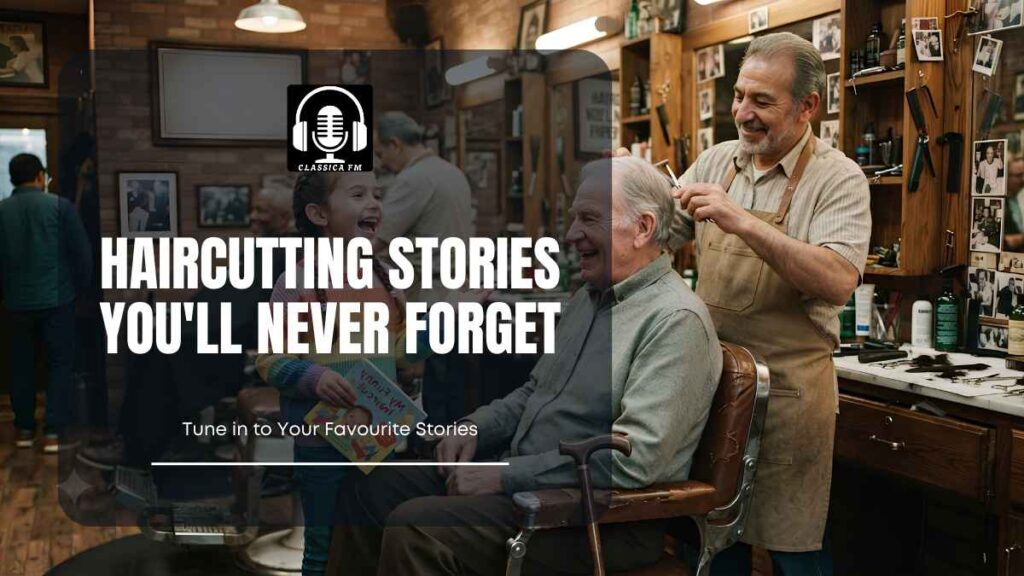
Haircuts are a familiar part of everyday life, but they can also become memorable experiences connected to childhood, personal identity, family traditions, major life changes, humor, and self-expression. This is one reason haircutting stories continue to attract readers who enjoy relatable experiences and personal narratives.
Haircutting stories you’ll never forget can cover many different themes. Some focus on childhood memories, while others explore dramatic hair transformations, funny salon experiences, unexpected haircuts, family traditions, or meaningful moments associated with changing one’s appearance.
However, haircutting stories are not limited to a single type of experience. They can range from short humorous pieces to emotional personal narratives, fictional stories, inspirational experiences, and creative stories built around a simple haircut.
This guide explores everything you need to know about haircutting stories, including their different types, popular themes, audiences, storytelling elements, and what makes a haircut-related story memorable.
What Are Haircutting Stories?
Haircutting stories are stories in which a haircut, barber shop, salon visit, hairstyle, or change in appearance plays an important role in the narrative.
The haircut may be the central subject, or it may simply provide the setting for a larger story about relationships, personal growth, confidence, family, friendship, or change.
These stories can be:
- Funny
- Emotional
- Inspirational
- Nostalgic
- Dramatic
- Heartwarming
- Unexpected
- Educational
- Personal
- Fictional
The appeal comes from the fact that almost everyone can relate to getting a haircut in some way.
Why Are Haircutting Stories So Popular?
Hair is strongly connected to appearance and personal identity. A change in hairstyle can immediately change how someone looks and may influence how they feel about themselves.
Haircutting stories are therefore easy to relate to because they can explore experiences that readers have encountered themselves.
Common reasons people enjoy these stories include:
- They are relatable
- They often contain humor
- They can involve surprising transformations
- They bring back childhood memories
- They explore personal confidence
- They can highlight relationships
- They provide opportunities for emotional storytelling
- They can represent major changes in life
A haircut can also serve as a simple starting point for a much larger narrative.
Common Themes in Haircutting Stories
Although haircutting stories can be very different from one another, several themes appear frequently.
- Change: Haircuts naturally represent physical change. A person may use a new hairstyle to mark a new chapter in life.
- Identity: Hairstyles can be an important part of how people express themselves.
- Confidence: Finding a hairstyle that feels right can influence how someone feels about their appearance.
- Growing Up: Haircuts can mark different stages of childhood, adolescence, and adulthood.
- Family: Haircuts often involve parents, children, siblings, grandparents, and family traditions.
- Friendship: Friends may influence hairstyle choices or participate in memorable haircut experiences.
- Humor: Haircut mistakes and unexpected results provide natural opportunities for comedy.
- Nostalgia: Old hairstyles can remind people of specific periods, places, and relationships.
Haircutting Stories You’ll Never Forget
The Stranger Who Paid for Her Haircut
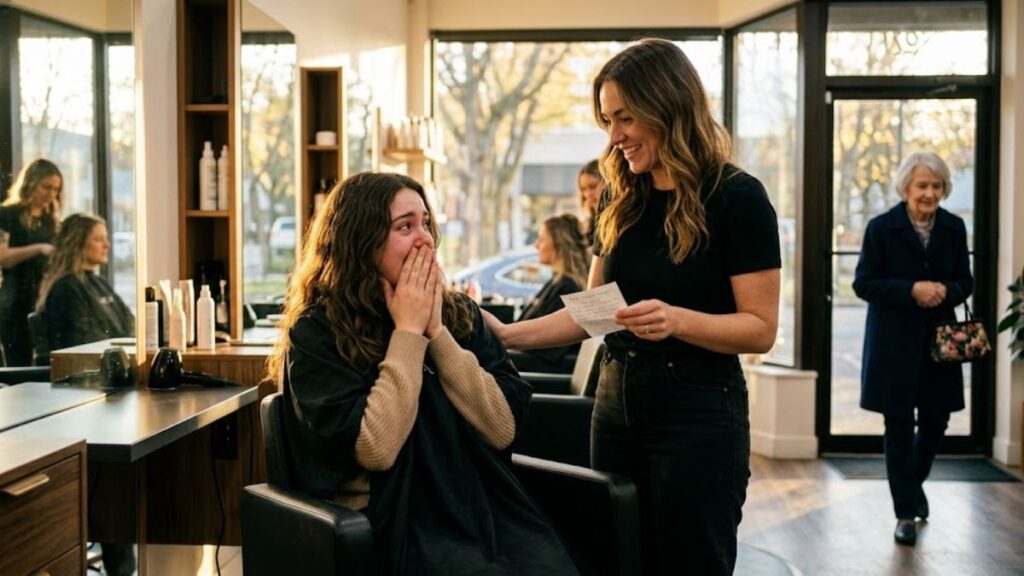
Moral: One unexpected act of kindness can restore someone’s faith in humanity.
For nearly four months, Neha had walked past the same salon every evening on her way home.
Each time she slowed down for a moment, looked through the large glass windows, smiled faintly, and continued walking.
She missed the feeling of sitting in a salon chair, chatting with a hairstylist, and leaving with freshly trimmed hair.
It wasn’t that she didn’t want a haircut.
She simply couldn’t afford one.
Every rupee she earned had a purpose.
Rent.
Electricity.
Groceries.
Bus fare.
Helping her younger brother with college expenses.
A haircut had quietly moved to the bottom of her list.
“It’s only hair,” she often told herself.
“It can wait.”
But deep inside, she knew it wasn’t just about looking different.
Sometimes taking care of yourself reminded you that you mattered too.
A Year Full of Challenges
The previous year had changed everything.
Neha had moved to a new city after accepting her first full-time job at a small publishing company.
She had imagined a fresh beginning filled with excitement.
Instead, the first few months became a lesson in responsibility.
The salary covered only the basics.
Unexpected expenses appeared almost every month.
When her father became ill, she started sending part of her income home.
She never complained.
Her family had sacrificed so much for her education.
Now it was her turn to help.
Still, there were days when she quietly wished life felt a little easier.
Forgetting Herself
As the months passed, Neha noticed she had stopped doing small things that once made her happy.
She no longer bought fresh flowers for her apartment.
She stopped visiting her favorite café.
She postponed replacing worn-out shoes.
And every time she looked in the mirror, she tied her growing hair into the same simple ponytail.
Her long hair had become difficult to manage.
Split ends appeared.
It tangled easily.
Friends occasionally asked:
“When was your last haircut?”
She laughed.
“I honestly don’t remember.”
She never explained why.
An Unexpected Invitation
One Friday afternoon, her colleague Riya smiled and said,
“I’m getting my hair done after work. Come with me.”
Neha hesitated.
“I’ll just keep you company.”
Riya laughed.
“No, you should get one too.”
Neha smiled politely.
“Maybe next month.”
She had said “next month” for four months.
Sitting in the Salon
That evening, she entered the salon for the first time in months.
The atmosphere felt peaceful.
Soft music played in the background.
People chatted comfortably while stylists worked carefully.
For a moment, Neha forgot about money.
She remembered how relaxing a haircut used to feel.
While Riya spoke with her hairstylist, another stylist approached Neha.
“Would you like a haircut today?”
Neha almost said yes.
The word reached her lips.
Then reality returned.
She quietly asked about the price.
The amount was reasonable.
But it was still more than she could spend that week.
She smiled politely.
“I’ll wait for my friend.”
The stylist nodded kindly.
“No problem.”
A Quiet Disappointment
As she waited, Neha looked around the salon.
Everyone seemed relaxed.
Someone was getting their hair colored.
Another customer laughed while looking at her new hairstyle.
Neha wondered why something so ordinary suddenly felt like a luxury.
She wasn’t jealous.
She simply missed taking care of herself.
After about an hour, Riya’s appointment was finished.
She looked wonderful.
“You should really book yours next time,” she said.
Neha smiled.
“I will.”
She knew she probably wouldn’t.
Someone Was Watching
While Neha waited near the reception desk, an elderly woman sitting nearby had quietly observed the entire situation.
She noticed how Neha had looked at the hairstyle catalogue.
How she had touched the ends of her own hair.
How she smiled even though disappointment was visible in her eyes.
The woman remembered being young herself.
She remembered difficult years when every expense had to be carefully planned.
Without saying anything, she walked to the reception desk while Neha was helping Riya collect her bag.
She quietly handed the receptionist her card.
“I’d like to pay for that young woman’s haircut.”
The receptionist looked surprised.
“Are you sure?”
The woman smiled.
“Please don’t tell her who paid.”
A Surprise
As Neha prepared to leave, the receptionist called her name.
“Excuse me.”
Neha turned.
“Yes?”
The receptionist smiled warmly.
“Someone has already paid for your haircut.”
Neha looked confused.
“There must be a mistake.”
“No mistake.”
“I didn’t even book one.”
“You have one now.”
Neha looked around the salon.
“Who paid?”
“I’m sorry,” the receptionist replied.
“They wished to remain anonymous.”
For several seconds, Neha stood speechless.
The Haircut She Didn’t Expect
Her eyes filled with tears.
“I can’t accept this.”
The receptionist smiled gently.
“The person who paid hoped you would.”
Riya whispered,
“You should do it.”
Neha slowly nodded.
For the first time in months, she sat in the salon chair.
The hairstylist smiled.
“So… what are we doing today?”
Neha laughed softly.
“I honestly haven’t thought that far.”
“How about something fresh but simple?”
“That sounds perfect.”
More Than Just Hair
As the stylist carefully trimmed her hair, Neha felt something unexpected.
She wasn’t emotional because of the haircut.
She was emotional because someone she had never met believed she deserved kindness.
No questions.
No expectations.
No recognition.
Just generosity.
When the haircut was finished, she looked into the mirror.
Her hair looked healthier.
Lighter.
Brighter.
But what she noticed most was her smile.
It had been a long time since she had smiled at her own reflection.
Paying It Forward
Before leaving, Neha asked again,
“Can you at least tell me who helped me?”
The receptionist smiled.
“They only left one message.”
“What did it say?”
The receptionist read from a small note.
“Everyone deserves to feel cared for. When you can, do the same for someone else.”
Neha folded the note carefully and placed it inside her wallet.
A New Tradition
Years passed.
Neha’s career improved.
Life became more comfortable.
She never discovered the stranger’s identity.
But she never forgot the kindness either.
Every year on the anniversary of that haircut, she quietly visited a different salon.
She would ask the receptionist,
“Is there someone today who could use a little help?”
Without asking names or stories, she paid for one person’s haircut.
Sometimes it was a student.
Sometimes a single parent.
Sometimes an elderly customer.
She never waited for thanks.
She simply smiled and left.
An Unexpected Full Circle
One afternoon, several years later, a young woman stopped Neha outside a bookstore.
“You don’t know me,” she said nervously.
“But… were you the person who paid for someone’s haircut last month?”
Neha smiled gently.
“Why do you ask?”
The young woman nodded with tears in her eyes.
“That was me.”
“I had been looking for work for months.”
“I hadn’t done anything for myself in nearly a year.”
“That haircut reminded me that someone believed I mattered.”
“I just wanted to say thank you.”
Neha smiled.
“It wasn’t really my kindness.”
The young woman looked confused.
Neha replied,
“It belonged to someone else first.”
Moral of the Story
One unexpected act of kindness can restore someone’s faith in humanity.
The stranger never knew how much that simple haircut meant to Neha. What seemed like a small gesture became a lasting reminder that compassion can appear when we least expect it.
Kindness does not always require grand actions or expensive gifts. Sometimes, the smallest act of generosity can help someone feel seen, valued, and hopeful again.
And when kindness is passed from one person to another, its impact continues long after the moment has ended.
The Barber Who Refused to Charge His Old Teacher
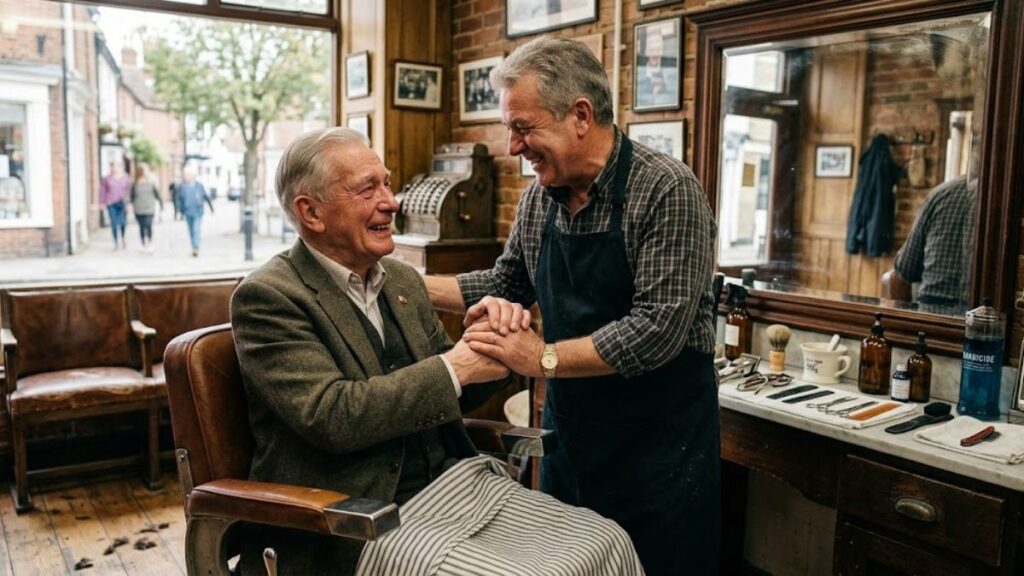
Moral: Gratitude never goes out of style, and kindness always comes full circle.
For more than thirty years, people in the town of Anandpur trusted one barber more than anyone else.
His name was Imran.
His small barbershop stood on the corner of the busiest market street, where the familiar sound of scissors, clippers, and friendly conversations welcomed customers every day.
The shop wasn’t luxurious.
It had two barber chairs, a large mirror, a waiting bench, and walls decorated with old photographs of customers who had become lifelong friends.
People came not only for haircuts but also for conversation.
Discover more
Teaching & Classroom Resources
haircuts
General Reference
Imran remembered birthdays, asked about families, celebrated good news, and comforted people during difficult times.
To everyone else, he was simply a skilled barber.
But very few people knew that his entire career existed because of one teacher who had believed in him many years earlier.
A Difficult Childhood
When Imran was growing up, life was far from easy.
His father worked as a daily wage laborer, while his mother stitched clothes to help support the family.
There were many evenings when money was barely enough to buy groceries.
Discover more
Educational Resources
family
Haircut
School was important to Imran, but it often felt like a luxury.
As he grew older, he began thinking about leaving school to work full-time.
“If I start earning now,” he told himself, “I can help my parents.”
At fifteen, he almost stopped attending classes.
One morning, he packed his schoolbag for what he believed would be the last time.
He planned to tell his teacher that he would not be returning.
The Teacher Who Saw Potential
His class teacher, Mr. Rajesh Verma, noticed something was wrong.
Imran had always been a hardworking student.
That morning, however, he seemed unusually quiet.
After class, Mr. Verma asked him to stay behind.
“Is everything alright?”
Imran hesitated.
Finally, he explained everything.
His family’s financial struggles.
His desire to help.
His decision to leave school.
Mr. Verma listened without interrupting.
When Imran finished speaking, the teacher remained silent for a moment.
Then he said something that stayed with Imran forever.
“Helping your family is honorable.”
“But don’t give up your future while trying to solve today’s problems.”
A Life-Changing Conversation
Imran shook his head.
“We need money now.”
“I understand,” Mr. Verma replied.
“But education will give you choices.”
He opened his desk drawer and handed Imran several books.
“Take these.”
“I’ve already paid for your examination fees.”
Imran looked shocked.
“Sir… why?”
Mr. Verma smiled.
“Because one day you’ll help someone else.”
Those simple words changed everything.
Imran decided to continue studying.
He worked part-time after school while completing his education.
Although he eventually chose barbering as his profession, he always credited his teacher for giving him hope when he needed it most.
Building a Dream
Years later, Imran opened his own barbershop.
He worked tirelessly.
Every satisfied customer brought another recommendation.
Slowly, his small business grew.
He married.
Raised a family.
Became respected throughout the town.
But despite all his success, he never forgot Mr. Verma.
Occasionally he wondered where his old teacher was.
Life became busy.
Years passed.
They never met again.
An Ordinary Morning
One rainy Tuesday morning, business was slow.
Imran swept the shop floor while waiting for customers.
Around ten o’clock, the bell above the door rang softly.
An elderly man entered.
His hair had turned completely white.
His shoulders were slightly bent with age.
He smiled politely.
“Good morning.”
Imran welcomed him warmly.
“Please have a seat.”
As the man removed his glasses, something felt familiar.
His face had changed with time.
But his eyes hadn’t.
Imran looked carefully.
His heart began beating faster.
It couldn’t be.
Recognition
As he placed the barber’s cape around the customer’s shoulders, Imran quietly asked,
“Excuse me…”
“Were you once a teacher at Government High School?”
The elderly man smiled.
“Yes.”
“I retired many years ago.”
Imran’s voice trembled.
“Were you… Mr. Rajesh Verma?”
The teacher looked surprised.
“Yes.”
He studied Imran’s face for a few seconds.
Then suddenly his expression changed.
“Imran?”
The barber smiled.
“Yes, sir.”
Both men laughed.
Years disappeared in an instant.
Remembering the Past
During the haircut, they talked about old times.
Mr. Verma asked about Imran’s family.
Imran shared stories about his business.
Then he quietly said,
“Sir… do you remember the day I wanted to leave school?”
The teacher nodded immediately.
“I remember.”
“I’ve never forgotten what you told me.”
Mr. Verma smiled.
“You made your own future.”
Imran shook his head.
“You gave me permission to believe I had one.”
For several moments, neither of them spoke.
Sometimes gratitude needs no further explanation.
The Bill
The haircut was finished.
Mr. Verma stood, looked in the mirror, and smiled.
“You’ve become an excellent barber.”
He reached into his wallet.
“How much do I owe you?”
Imran folded his arms.
“Nothing.”
Mr. Verma looked confused.
“No, no.”
“I insist.”
Imran smiled gently.
“You paid for this haircut many years ago.”
The teacher frowned.
“I don’t understand.”
Imran replied,
“When everyone else saw a boy ready to quit, you saw someone worth believing in.”
“You paid my exam fees.”
“You bought my books.”
“You gave me hope.”
“Today’s haircut is simply my thank you.”
An Emotional Moment
Mr. Verma became silent.
His eyes filled with tears.
“I don’t even remember paying for those books.”
Imran smiled.
“I do.”
“I remember every word you spoke that day.”
The teacher placed his hand on Imran’s shoulder.
“I only did what any teacher should.”
Imran answered softly,
“You changed my life.”
The Story Spreads
Another customer waiting nearby had quietly witnessed the conversation.
Within days, the story spread throughout the town.
People admired Imran for his gratitude.
But Imran always corrected them.
“The real hero is my teacher.”
“If he hadn’t believed in me, this shop might never have existed.”
Soon afterward, several former students visited Mr. Verma.
Many shared similar stories.
He had quietly helped dozens of children over the years without expecting anything in return.
He had forgotten many of those moments.
His students never did.
A New Tradition
Inspired by that reunion, Imran introduced something new in his shop.
Every year before the school term began, he offered free haircuts to children whose families couldn’t afford them.
When customers asked why, he simply smiled.
“Someone once invested in my future.”
“This is my way of continuing that kindness.”
Years later, many of those children returned as adults.
Some became engineers.
Some became nurses.
Some became business owners.
Whenever they visited his shop, they remembered the barber who believed that every child deserved confidence on the first day of school.
The Final Visit
Several years later, Mr. Verma visited the shop one last time.
His health had become fragile.
Imran gave him another haircut.
Again, he refused payment.
Before leaving, the teacher smiled.
“You’ve repaid me many times over.”
Imran replied,
“No, sir.”
“I’ll never finish repaying kindness.”
Those became the last words they shared.
When Mr. Verma passed away months later, Imran closed his shop for a day.
On the shop’s front door, he placed a small handwritten note.
“Today I remember the teacher who taught me that changing one life is enough to change the world.”
Every customer who read those words understood why gratitude is one of the greatest gifts a person can carry.
Moral of the Story
Gratitude never goes out of style, and kindness always comes full circle.
A teacher’s encouragement may last only a few minutes, but its impact can shape someone’s entire future.
Discover more
Family
Education
Dictionaries & Encyclopedias
When people remember those who helped them and choose to help others in return, kindness continues across generations.
The greatest way to thank someone is not always with words.
Sometimes, it is by living a life that reflects the lessons they taught you.
The Little Girl Who Smiled After Her First Haircut
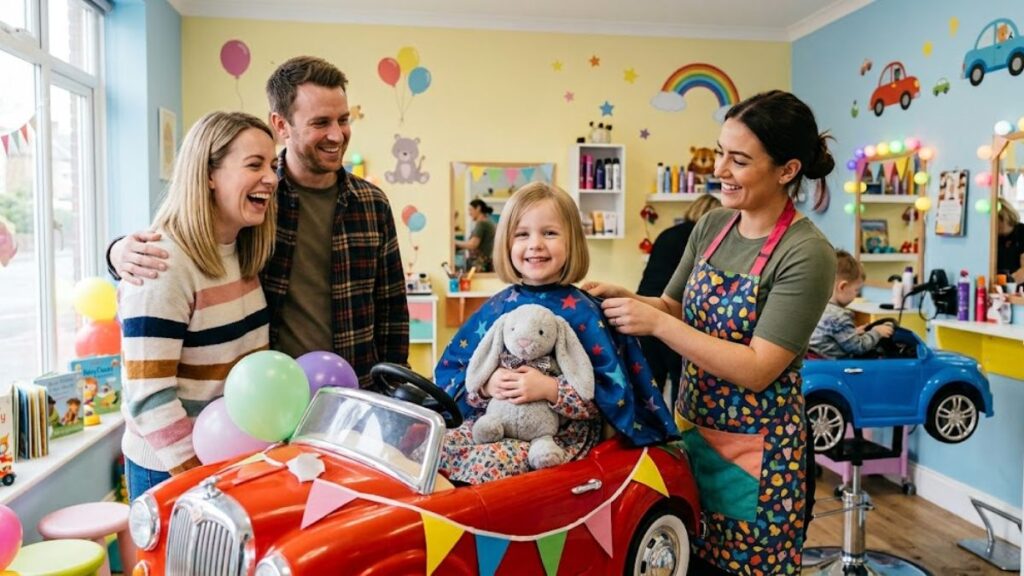
Moral: Courage is not about being fearless. It is about taking small steps, even when you are afraid.
Five-year-old Anvi had one fear that nobody in her family could understand.
She was terrified of haircuts.
The moment someone mentioned the word “salon,” she would hide behind her mother, cover her hair with both hands, and shake her head.
“No haircut!”
It didn’t matter how gently her parents explained it or how many cartoons they showed her about children getting their hair trimmed. To Anvi, the thought of someone coming near her hair with scissors felt frightening.
Her parents often laughed about it at first.
“It’s just a phase,” her father would say.
But as months turned into years, the problem only grew bigger.
Her hair became longer and harder to manage, yet she refused every attempt to cut it.
A Morning Full of Tangles
Every school morning started the same way.
Her mother, Kavya, would gently brush Anvi’s long hair before tying it into two neat ponytails.
Some mornings the brush moved smoothly.
Other mornings, it caught in tiny knots.
“Ouch!” Anvi would cry.
“I’m sorry, sweetheart,” her mother would say softly.
“If we trim your hair a little, it will be much easier.”
Anvi immediately shook her head.
“No.”
Her mother never forced her.
Instead, she patiently continued brushing while telling funny stories to distract her.
Still, she quietly wished Anvi could overcome her fear one day.
The School Announcement
One afternoon, Anvi came home with an exciting letter from school.
The annual class photograph would be taken the following week.
Discover more
Social Sciences
Podcasts
children
Everyone would wear their neat school uniforms for the special picture.
When Kavya read the notice, she smiled.
“This is the perfect time for a little haircut.”
Anvi’s smile disappeared.
“No.”
Her father tried joking.
“What if the camera mistakes your hair for a fluffy cloud?”
Anvi giggled.
But she still answered,
“No haircut.”
Searching for a Solution
That evening, Anvi’s parents decided to try a different approach.
Instead of convincing her with words, they visited a children’s salon nearby.
Discover more
Robot
Language Resources
adults
The salon looked nothing like an ordinary barbershop.
Bright colors covered the walls.
Toy cars served as salon chairs.
Cartoons played on large screens.
There were books, puzzles, and smiling hairstylists who specialized in working with children.
The owner welcomed them warmly.
“We never rush children,” she explained.
“Sometimes the first visit isn’t even about getting a haircut.”
“It’s simply about helping them feel comfortable.”
Kavya liked that idea.
The First Visit
A few days later, they brought Anvi to the salon.
The little girl held her mother’s hand tightly.
She refused to sit in any chair.
Instead, she quietly observed everything around her.
She watched another little boy getting his haircut while laughing at cartoons.
Discover more
Child Care
Radio
Educational Resources
She noticed a little girl receiving a colorful sticker after her haircut.
One hairstylist walked over with a small teddy bear.
“Would you like to help me brush Teddy’s hair?”
Anvi looked at the toy.
Slowly, she nodded.
For the next fifteen minutes, she happily pretended to style the teddy bear’s hair.
Nobody mentioned cutting her own hair.
When it was time to leave, the hairstylist smiled.
“You were a wonderful helper today.”
Anvi smiled back.
That was progress.
Building Trust
Over the next two weeks, Anvi visited the salon several more times.
Sometimes she colored pictures while sitting near the styling chairs.
Sometimes she watched cartoons.
Sometimes she simply talked with the hairstylist, whose name was Rina.
Rina never pressured her.
Instead, she answered every question honestly.
“Will it hurt?”
“No.”
“Why do people cut their hair?”
“To keep it healthy and comfortable.”
“What happens to the hair after it’s cut?”
Rina patiently explained everything.
The more Anvi understood, the less frightening the experience seemed.
The Big Day
One Saturday morning, Anvi surprised everyone.
She walked into the kitchen carrying her favorite stuffed rabbit.
“Mama…”
“Can we visit the salon today?”
Kavya looked surprised.
“For a visit?”
Anvi took a deep breath.
“For… a little haircut.”
Her parents exchanged happy smiles but stayed calm.
They knew this moment had taken weeks of patience.
Sitting in the Chair
At the salon, Anvi slowly climbed into the bright red toy-car chair.
She hugged her stuffed rabbit tightly.
Rina smiled.
“We’re only going to trim a little today.”
“If you want to stop, just tell me.”
Anvi nodded.
The protective cape felt strange.
The scissors looked big.
Her heart beat faster.
She almost climbed down.
Then her mother gently held her hand.
“You are doing great.”
The First Snip
The room became very quiet.
Rina carefully trimmed the very first small section of hair.
Anvi closed her eyes.
She waited.
Nothing happened.
No pain.
No loud sound.
No scary feeling.
She opened one eye.
“That’s it?”
Rina laughed softly.
“That’s it.”
Everyone smiled.
Slowly, Anvi relaxed.
She even started watching the cartoon playing in front of her.
Within fifteen minutes, the haircut was finished.
A New Smile
When Rina turned the chair toward the mirror, Anvi looked carefully at her reflection.
Her hair was slightly shorter.
Her bangs looked neat.
She looked…
Exactly like herself.
Only happier.
She smiled.
A big, proud smile.
“I like it.”
Her parents clapped.
Not because of the haircut.
Because of her courage.
A Lesson for the Family
On the way home, Anvi asked,
“Mama…”
“Why was I so scared?”
Her mother smiled.
“Sometimes our imagination makes things seem much bigger than they really are.”
Anvi thought about that quietly.
Then she nodded.
“I was brave today.”
“Yes,” her father replied.
“You were.”
Sharing Her Experience
The following Monday at school, several classmates noticed her haircut.
“It looks nice!”
One little girl whispered,
“I don’t like haircuts either.”
Anvi smiled.
“I was scared too.”
“But it wasn’t as bad as I thought.”
Without realizing it, she had become someone else’s encouragement.
A Tradition Begins
Every few months, Anvi visited the same salon.
She no longer cried.
She chatted happily with Rina, picked a cartoon to watch, and even reminded her parents when it was time for another trim.
Years later, when she was a teenager, she laughed while looking through old family photographs.
Discover more
Visual Art & Design
Writers Resources
Adult
One picture showed her sitting nervously in the toy-car salon chair with her stuffed rabbit.
Another showed her smiling proudly after the haircut.
It became one of her favorite childhood memories.
Not because of the hairstyle.
But because it reminded her of the day she learned something important.
Being brave does not mean never feeling afraid.
It means taking the next small step anyway.
A Lesson That Lasted
As an adult, Anvi often remembered that first haircut whenever she faced something unfamiliar.
Starting college.
Attending her first job interview.
Moving to a new city.
Each time she felt nervous, she smiled and remembered the little girl who thought a haircut was impossible.
If she could overcome that fear one careful step at a time, she could overcome new challenges too.
Discover more
Comedy & Humor
Horse
Books & Literature
The lesson stayed with her for the rest of her life.
Moral of the Story
Courage is not about being fearless. It is about taking small steps, even when you are afraid.
Fear is a natural part of growing up, but it becomes easier to overcome when we are treated with patience, understanding, and kindness.
Sometimes, the greatest victories are not the biggest ones.
They are the small moments when we discover we are braver than we believed.
Haircuts as Symbols of Change
One of the most interesting aspects of haircutting stories is that a haircut can represent something much larger than appearance.
People sometimes change their hairstyles when they:
- Start college
- Graduate
- Begin a new job
- Move to another city
- Enter a new relationship
- End an important chapter
- Want a fresh start
- Decide to try something different
This gives haircut-related storytelling an emotional dimension.
The haircut becomes a visible representation of an internal change.
The Role of Hair in Personal Identity
Hair can play an important role in personal presentation.
People make decisions about:
- Length
- Color
- Texture
- Styling
- Maintenance
- Traditional hairstyles
- Modern hairstyles
These choices can reflect personality, lifestyle, cultural practices, professional expectations, or individual preferences.
Because hairstyles can communicate so much about a person, haircutting stories can naturally explore questions of identity and self-expression.
Haircutting Stories Across Different Life Stages
Hair-related experiences can change as people move through different stages of life.
- Childhood: Haircuts may be controlled primarily by parents or guardians.
- School Years: Students may become more interested in personal appearance while also dealing with school rules.
- College: Young adults often experiment with different hairstyles and personal styles.
- Early Career: Professional expectations may influence hairstyle choices.
- Adulthood: People may become more focused on convenience, personal preference, and established style.
- Later Life: Haircuts can become connected to nostalgia, family relationships, traditions, and changing appearance.
These different stages provide many possibilities for haircutting content.
Haircutting Stories for Different Audiences
Haircut-related content can be adapted for different groups of readers.
Stories for Children
Content for children can focus on:
- First haircuts
- Funny salon experiences
- Family traditions
- Trying new hairstyles
- Learning about grooming
Stories for Teenagers
Teen-oriented content can explore:
- Personal style
- School hairstyles
- Trends
- Hair experiments
- Confidence
- Peer influence
Stories for Adults
Adult-focused content can include:
- Professional appearance
- Major transformations
- Nostalgic experiences
- Family traditions
- Barber relationships
- Personal milestones
Stories for Families
Family-oriented content can emphasize:
- Parent-child relationships
- Childhood memories
- First haircuts
- Family traditions
- Shared experiences
Short vs Long Haircutting Stories
Haircutting stories can work in different lengths.
Short Haircutting Stories
Short stories are useful for:
- Social media
- Quick reading
- Story collections
- Blog snippets
- Mobile audiences
They generally focus on one event or idea.
Long Haircutting Stories
Longer stories can explore:
- Character development
- Emotional changes
- Relationships
- Background information
- Multiple events
- Detailed transformations
The appropriate length depends on the audience and purpose.
What Makes a Haircutting Story Memorable?
A memorable haircutting story usually contains more than a description of someone getting their hair cut.
Strong stories often include several elements.
- A Clear Beginning: The reader should understand the situation and why the haircut matters.
- An Interesting Reason: There should be a reason the haircut is significant.
- A Change or Unexpected Element: Something should happen that moves the narrative forward.
- Emotional Connection: The story becomes stronger when readers understand how the experience affects the person involved.
- A Meaningful Ending: The conclusion should provide a sense of resolution, reflection, humor, or personal growth.
How to Develop a Haircutting Story
A good haircutting story usually benefits from a clear structure.
- Establish the Situation: Explain where the experience takes place and who is involved.
- Introduce the Reason for the Haircut: Explain why the haircut is happening.
- Build the Experience: Describe the decisions, expectations, conversations, or circumstances surrounding the haircut.
- Introduce the Main Moment: This could be a transformation, surprise, emotional realization, funny mistake, or important interaction.
- Show the Result: Explain what changed after the haircut.
- End With Meaning: The ending can focus on what the person learned, remembered, felt, or experienced.
Haircutting Stories and Self-Expression
A hairstyle can be a form of creative expression.
People may choose hairstyles based on:
- Fashion
- Personality
- Convenience
- Culture
- Profession
- Individual preferences
- Current trends
Stories about these choices can explore how people develop their own identities and become comfortable expressing themselves.
Writing Haircutting Content Without Repeating the Same Idea
Because haircutting is a focused subject, writers should avoid creating many pieces that feel identical.
Different articles can instead focus on different angles, such as:
- Humor
- Childhood
- Family
- Transformation
- Personal growth
- Barber shops
- Nostalgia
- Self-expression
- Confidence
- Life changes
This creates a broader content collection while giving every story a distinct purpose.
How to Organize a Haircutting Story Collection
If you are creating a website or content series around haircutting stories, organizing stories into categories can make navigation easier.
Possible categories include:
- Funny Haircutting Stories: For humorous and unexpected experiences.
- Emotional Haircutting Stories: For meaningful and reflective experiences.
- Childhood Haircutting Stories: For first haircuts and childhood memories.
- Barber Shop Stories: For stories centered around barbers and salon experiences.
- Hair Transformation Stories: For dramatic changes in hairstyle and appearance.
- Family Haircut Stories: For family traditions and shared memories.
- Short Haircutting Stories: For quick, easy-to-read experiences.
- Long Haircutting Stories: For detailed narratives with deeper character development.
Tips for Creating Engaging Haircutting Content
When developing haircut-related content, keep the reader’s experience in mind.
- Focus on One Main Idea: Avoid trying to cover too many events in one piece.
- Use Specific Details: Small details can make an experience easier to visualize.
- Create Emotional Connection: Explain why the haircut matters rather than simply describing what happened.
- Avoid Unnecessary Repetition: Each piece should have its own central idea.
- Use Natural Language: Haircutting content should feel conversational and relatable without becoming overly informal.
- Give Each Piece a Clear Ending: Readers should feel that the experience has reached a natural conclusion.
Haircutting Stories as Entertainment
At their core, haircutting stories are a form of entertainment.
They can provide:
- Humor
- Nostalgia
- Surprise
- Emotional connection
- Inspiration
- Relatability
The subject is familiar, which makes it easy for readers to connect with the content.
Haircutting Stories as Creative Writing Prompts
Haircuts can also be useful prompts for writers who want to practice storytelling.
A simple prompt can lead to stories about:
- A childhood memory
- An unexpected transformation
- A family relationship
- A friendship
- A personal decision
- A new beginning
- A difficult choice
The haircut provides the central event while the writer develops the larger narrative around it.
Final Thoughts
Haircutting stories you’ll never forget offer much more than descriptions of hairstyles. They provide a way to explore memories, relationships, identity, confidence, personal transformation, family traditions, and everyday experiences.
The versatility of the topic makes it suitable for many types of content. A haircut can represent a childhood milestone, a fresh start, a funny mistake, a meaningful family tradition, or simply an ordinary experience that becomes memorable over time.
By exploring different themes and audiences, haircutting content can become a diverse collection rather than a series of repetitive stories.
The most effective approach is to give every piece a clear purpose, focus on a distinct experience or theme, and connect the haircut to something meaningful in the person’s life. This allows the subject to remain relatable while providing enough variety for an extensive collection of haircutting content.