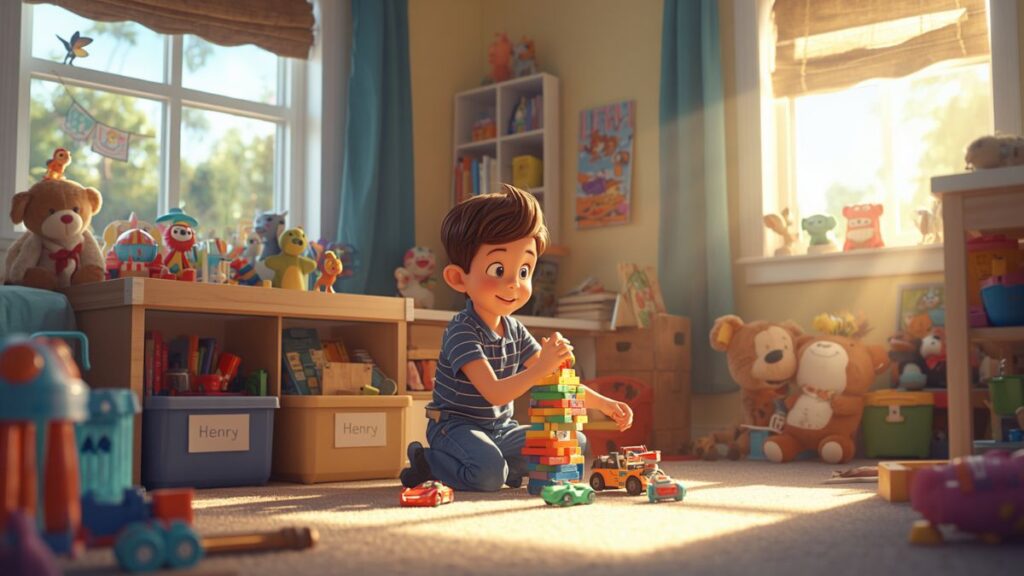
Daniel was a cheerful eight-year-old who loved building tall block towers, riding his bicycle, and playing with his dog, Max. Every afternoon after school, he rushed home, finished his snack, and hurried outside to play.
There was one thing Daniel didn’t enjoy.
Chores.
Whenever his parents asked him to help around the house, he often sighed.
“Can I do it later?”
“I’m busy.”
“I just started playing.”
His parents understood that Daniel enjoyed having fun, but they also wanted him to learn that every family works together to care for their home.
One Friday evening, Daniel’s mom shared some exciting news.
“Grandma and Grandpa are coming over tomorrow.”
Daniel smiled.
“I can’t wait!”
“We’re going to have a family lunch,” his dad added.
“That means we’ll all help get the house ready.”
The next morning, Daniel woke up excited to see his grandparents.
He hurried downstairs, ready to play.
His mom smiled.
“Before we play, everyone has a small job.”
She handed each family member a simple list.
Dad would vacuum the living room.
Mom would prepare lunch.
Daniel’s older sister, Mia, would dust the shelves.
Daniel’s job was to put away his toys, set the table, and water the flowers on the porch.
Daniel looked at his list.
“Can I skip my jobs?”
His dad smiled kindly.
“We all have something important to do.”
“When everyone helps, the work is finished much faster.”
Daniel wasn’t convinced.
He slowly picked up a few toys but soon became distracted by his toy cars.
Within minutes he was racing them across the floor.
His dad walked by carrying the vacuum cleaner.
“How’s your list going?”
Daniel looked around.
Most of his toys were still scattered across the room.
“I forgot.”
His dad smiled.
“Let’s do one job at a time.”
Daniel nodded.
He started placing blocks into their storage box.
Next came the stuffed animals.
Then the toy cars.
Soon the floor was clean.
“That wasn’t too hard,” Daniel admitted.
His next job was setting the table.
Mom showed him where the plates, forks, spoons, and napkins belonged.
Daniel carefully counted each place setting.
“There are six people,” he said.
“So I need six plates.”
When he finished, the dining table looked neat and welcoming.
Mom smiled proudly.
“You’ve helped everyone get ready for lunch.”
Finally, Daniel carried a small watering can outside.
He slowly watered each flower pot on the porch.
Bright red, yellow, and purple flowers gently swayed in the breeze.
“They look happy,” Daniel said.
“They do,” Mom replied.
“Plants need care just like our home does.”
A little while later, Grandma and Grandpa arrived.
“Welcome!” Daniel called happily.
Grandma looked around the house.
“Everything looks wonderful.”
Daniel smiled proudly.
“I helped.”
During lunch, Grandpa said,
“When everyone shares the work, everyone has more time to enjoy being together.”
Daniel looked around the table.
His parents weren’t rushing to finish chores anymore.
Everyone was laughing and talking together.
After lunch, the whole family played a board game.
Daniel realized something.
Because everyone had worked together earlier, they could now relax together.
The following week, Daniel came home from school.
As usual, he wanted to grab his soccer ball.
Then he noticed a basket of clean laundry waiting to be folded.
His mom smiled.
“Would you like to help me fold towels?”
Daniel almost said no.
Then he remembered family lunch.
Helping hadn’t taken very long.
“Okay.”
Mom showed him how to fold each towel.
Together they finished the basket in just a few minutes.
“Thanks for helping,” Mom said.
“Now we have more time to bake cookies.”
Daniel smiled.
Helping first meant more fun afterward.
A few days later, Daniel noticed Max’s water bowl was nearly empty.
Without anyone asking, he filled it with fresh water.
Max wagged his tail happily.
Dad smiled.
“That was thoughtful.”
Daniel grinned.
“I wanted to help.”
On Saturday morning, the family cleaned the backyard.
Dad raked leaves.
Mom trimmed plants.
Mia collected fallen branches.
Daniel swept the patio.
At first he thought it might be boring.
But everyone talked, laughed, and worked together.
Before long, the yard looked beautiful.
Dad smiled.
“Teamwork makes big jobs easier.”
Daniel agreed.
One rainy afternoon, Daniel invited his friend Noah over to play.
They built an enormous train track across the living room.
When it was time for Noah to go home, toy trains covered the floor.
Daniel started walking away.
Then he stopped.
“My toys need to go back.”
Noah smiled.
“I’ll help.”
Together they cleaned everything in just a few minutes.
Daniel noticed it was much easier when two people worked together.
The following month, Daniel’s family planned a picnic.
Before leaving, everyone packed supplies.
Dad carried the cooler.
Mom packed sandwiches.
Mia gathered blankets.
Daniel packed water bottles and fruit.
Because everyone helped, they left the house quickly without forgetting anything.
At the park, Mom smiled.
“Our teamwork made today possible.”
Daniel proudly nodded.
As the weeks passed, helping at home slowly became part of Daniel’s routine.
Some days he fed Max.
Other days he helped unload groceries.
Sometimes he watered plants.
Sometimes he sorted recycling.
Every job mattered.
One afternoon, Daniel asked his dad,
“Do grown-ups always have chores?”
Dad laughed.
“Yes.”
“We all help take care of our home.”
Daniel thought about that.
Helping wasn’t something children did because they had to.
It was something families did because they cared for one another.
Near the end of the school year, Daniel’s teacher asked the class,
“How do you help at home?”
Many students shared ideas.
“I feed my cat.”
“I help cook dinner.”
“I make my bed.”
When it was Daniel’s turn, he smiled.
“I help set the table, clean up my toys, water the flowers, and take care of our dog.”
His teacher smiled.
“Those are important responsibilities.”
Daniel felt proud.
That evening, Grandma visited again.
She noticed Daniel putting his toys away before dinner.
“You’ve become such a helpful young man.”
Daniel smiled.
“I’ve learned that little jobs make a big difference.”
Grandma hugged him.
“They certainly do.”
On the last day of school, Daniel’s class talked about responsibility.
His teacher explained,
“Helping isn’t about doing everything.”
“It’s about everyone doing a small part.”
Daniel immediately thought about his family.
One person cooked.
Another cleaned.
Someone else watered plants.
Everyone shared responsibility.
Together, their home became happier, calmer, and more enjoyable.
That night, Daniel quietly carried his empty plate to the kitchen after dinner.
No one had asked him.
His mom smiled.
“Thank you.”
Daniel smiled back.
“It feels good to help.”
As he looked around his home, he realized something important.
Helping with chores wasn’t just about cleaning or organizing.
It was a way of showing love.
Every toy he picked up.
Every flower he watered.
Every table he helped set.
Every chore he completed made life a little easier for someone else.
And when everyone worked together, there was more time for laughter, games, conversations, and family memories.
From then on, whenever Daniel finished a small chore, he remembered,
“My helping hands make our home happier.”
That simple thought reminded him that even small acts of responsibility could make a big difference every single day.
Moral: Helping with chores is a caring way to support your family. When everyone shares responsibilities, home becomes a happier, cleaner, and more enjoyable place for everyone.