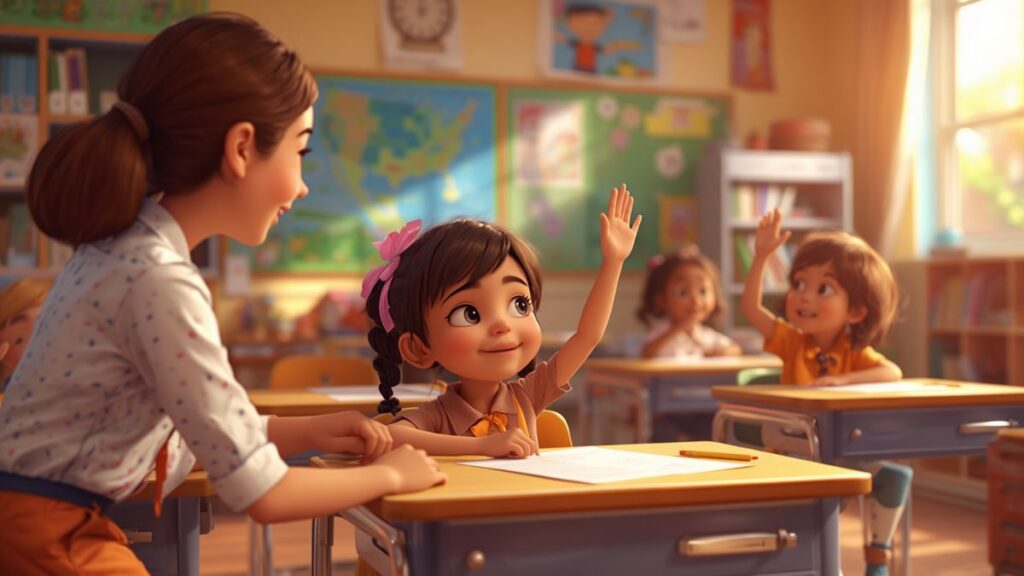
Chloe was a friendly and caring seven-year-old who loved spending time with her classmates. She enjoyed group projects, reading with partners, and playing games during recess. Making new friends came naturally to her because she liked talking, laughing, and helping others.
There was one thing Chloe was still learning.
Personal space.
Sometimes, when Chloe became excited, she stood very close to her classmates while talking.
If a friend was drawing a picture, Chloe leaned over their desk to get a better look.
When someone had colorful markers or an interesting book, she sometimes reached across the desk without asking.
Chloe wasn’t trying to bother anyone.
She simply didn’t realize that everyone has different comfort levels about personal space.
Her teacher, Mrs. Brown, knew Chloe had a kind heart.
She wanted to help Chloe understand how respecting personal space helps everyone feel comfortable and safe.
One Monday morning, Mrs. Brown gathered the class on the reading carpet.
She held up two large circles made from colorful rope.
One circle had plenty of room around it.
The other circle had children standing very close together.
Mrs. Brown asked,
“Which group looks more comfortable?”
Most students pointed to the circle with extra space.
Mrs. Brown smiled.
“That’s called personal space.”
She explained that personal space is the comfortable distance people like to have around their bodies.
“Everyone’s space deserves respect,” she said.
Chloe listened carefully.
She had never thought about it that way before.
Later that morning, the class worked on a drawing activity.
Emma sat beside Chloe, carefully coloring a picture of a butterfly.
Chloe leaned over to watch.
Without realizing it, her elbow bumped Emma’s crayons onto the floor.
Emma looked surprised.
Mrs. Brown walked over calmly.
She smiled kindly.
“Let’s remember our personal space.”
She showed Chloe a simple classroom reminder.
Stop.
Look.
Ask.
Mrs. Brown explained,
“Before moving closer to someone, stop for a moment.”
“Look to see if you’re giving them enough space.”
“If you want to see something or borrow something, ask first.”
Chloe nodded.
“I’ll try.”
The next day, the students worked in pairs to build paper bridges.
Chloe wanted to help Noah fold his paper.
She almost reached across his desk.
Then she remembered.
Stop. Look. Ask.
“Can I help you fold it?” she asked.
Noah smiled.
“Yes, please.”
Together they finished the bridge.
Mrs. Brown smiled proudly.
“You asked first.”
Chloe smiled.
“It felt nice.”
During reading time, students sat on colorful rugs with their books.
Normally Chloe sometimes sat very close to her friends.
This time she noticed there was enough room for everyone.
She chose a spot that gave her and Emma comfortable space.
Emma smiled.
“I’m glad you’re reading with me.”
The two girls enjoyed the story together.
One rainy afternoon, the class completed a science project using magnets.
Each group shared supplies.
When Chloe needed another magnet, she almost reached across Sophia’s workspace.
She stopped.
“May I use that magnet when you’re finished?”
Sophia nodded.
“Of course.”
A few minutes later she happily passed it over.
Everyone continued working peacefully.
That evening at home, Chloe told her parents about personal space.
Her dad smiled.
“Personal space is important everywhere.”
“At home.”
“At school.”
“Even when waiting in line.”
Her mom added,
“Asking before touching someone’s things shows respect too.”
The following Saturday, Chloe and her younger cousin Max built a train track together.
Max carefully arranged every piece.
Chloe wanted to move one section.
She paused.
“Would you like help?”
Max smiled.
“Yes.”
Together they made the train track even bigger.
Her parents noticed how politely Chloe asked before helping.
A few weeks later, Mrs. Brown introduced a classroom activity called Space Bubble.
She asked every student to stretch their arms out to the sides.
“This is one way to imagine your personal space,” she explained.
“When we’re talking with friends, we usually don’t need to stand inside their space bubble.”
The class practiced greeting each other while keeping comfortable distance.
Everyone laughed as they learned.
Chloe found it fun.
Soon she naturally remembered to give people room.
One afternoon, a new student named Lily joined the class.
She was shy and quiet.
During partner work, Chloe smiled warmly.
Instead of sitting too close, she asked,
“Would you like to work together?”
Lily smiled.
“Yes.”
Because Chloe respected her space, Lily felt comfortable talking and sharing ideas.
Mrs. Brown noticed.
“That was very thoughtful.”
As the school year continued, Chloe became more aware of personal space in many situations.
She waited patiently in line without standing too close.
She knocked before entering the reading corner.
She asked before borrowing classroom supplies.
She respected everyone’s desk area.
She also noticed that people smiled more when they felt comfortable.
One afternoon, the class created a giant mural together.
Many students worked side by side.
Instead of reaching across someone else’s painting, Chloe walked around the table and politely asked,
“May I paint this corner?”
Her classmates smiled.
“Sure.”
The mural turned out beautiful because everyone worked respectfully together.
Near the end of the school year, Mrs. Brown asked the class,
“What does respecting personal space mean?”
Hands rose around the room.
“It means giving people room,” Noah answered.
“It means asking before touching things,” Emma added.
Chloe raised her hand.
“It means making everyone feel comfortable.”
Mrs. Brown smiled proudly.
“Exactly.”
“When we respect personal space, we show kindness and respect.”
On the last day of school, every student received a special certificate.
Chloe’s certificate read:
“Kind and Respectful Classmate.”
Mrs. Brown smiled warmly.
“Chloe has learned that respecting personal space helps everyone feel safe, comfortable, and included.”
The class applauded.
Chloe proudly accepted her certificate.
Looking back, she realized she hadn’t stopped being friendly.
She still loved talking with classmates.
She still enjoyed helping others.
She still loved working in groups.
But now she understood that kindness also meant respecting other people’s boundaries.
By stopping for a moment, looking around, and asking before moving closer or borrowing something, she helped everyone feel comfortable.
Her friendships became even stronger because her classmates knew she respected their feelings and their space.
From then on, whenever Chloe wanted to join a conversation, help a friend, or look at someone’s work, she remembered three simple steps.
Stop.
Look.
Ask.
Those three little words helped her become a thoughtful friend, a respectful classmate, and a caring member of her classroom community.
And every day, her classroom became a happier place because everyone felt safe, valued, and respected.
Moral: Respecting personal space means giving others room, asking permission, and showing kindness. These simple actions help everyone feel comfortable, safe, and included.