
A good bedtime story does not need a complicated plot, dramatic characters, or a surprising ending. Sometimes, the best stories for sleep are short, simple, and gentle enough to let the mind gradually slow down.
Short stories for sleep are designed to provide a small amount of entertainment without demanding too much attention. They can be read in a few minutes before bed, making them especially useful for adults who want a peaceful nighttime routine without committing to a long chapter or complicated narrative.
This type of reading can include cozy everyday moments, quiet journeys, peaceful nature scenes, gentle humor, soft romance, nostalgic memories, and light fantasy. The common feature is not necessarily the subject. It is the atmosphere.
The story should feel easy to follow.
There should be little emotional pressure.
And when the story ends, the reader should feel comfortable putting the phone or book aside and settling into sleep.
What Are Short Stories for Sleep?
Short stories for sleep are brief narratives created or selected specifically for nighttime reading.
Unlike conventional short stories, which may depend on suspense, conflict, twists, or emotional intensity, sleep-oriented stories generally place greater emphasis on calmness, simplicity, familiarity, and atmosphere.
A typical sleep story might follow someone:
- Taking an evening walk
- Preparing a simple meal
- Sitting beside a window during rain
- Traveling on a quiet train
- Reading in a small library
- Walking along a beach at sunset
- Caring for a garden
- Drinking tea beside a fireplace
- Staying at a peaceful countryside inn
- Remembering an ordinary childhood afternoon
There does not need to be a major problem to solve.
The story can simply describe an experience.
That makes the reading process less mentally demanding.
Short Stories for Sleep
1. The Night Train Ticket Collector
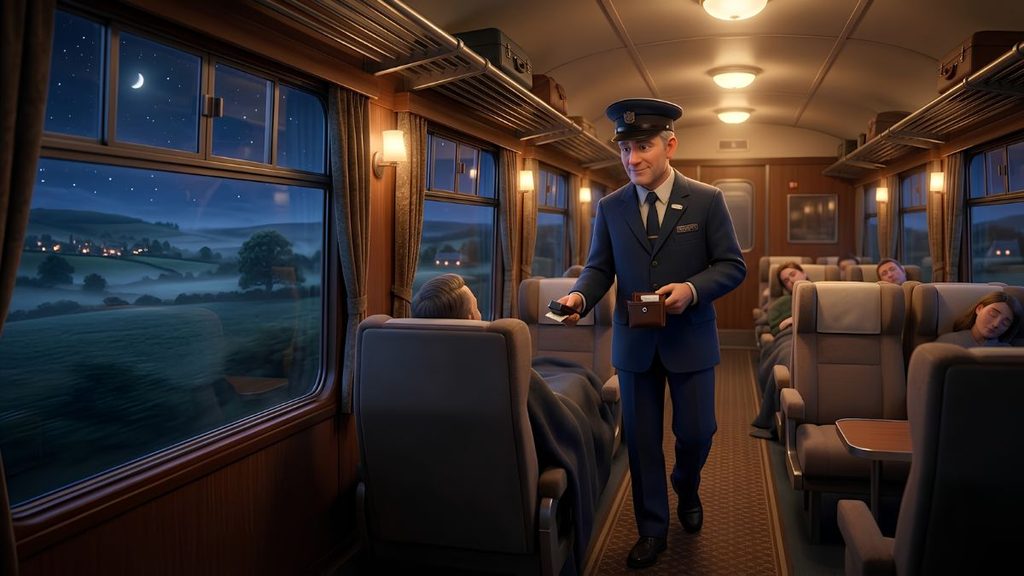
Type: Quiet Transit Story
Why it feels unique: It focuses on the repetitive nighttime rhythm of a train employee rather than travel itself.
The last evening train left the city at 10:18.
Martin was already waiting on the platform.
He had worked on the railway for nearly twelve years, and he knew the evening service well.
It was not the busiest train.
During the afternoon, the carriages were usually crowded with commuters, students, families, and people carrying shopping bags.
But the late train was different.
By ten o’clock, most of the city had become quiet.
The station still had people moving through it, but there were fewer conversations.
The announcements seemed softer.
The platforms were mostly empty.
Martin stood beside the train with his ticket pouch in one hand.
He checked his watch.
10:12.
Six minutes remained before departure.
The platform lights reflected on the polished metal of the train.
A few windows were illuminated inside the carriages.
Martin could see passengers settling into their seats.
One man placed a newspaper beside him.
A woman opened a book.
Someone near the middle of the train was already asleep.
Martin walked slowly toward the first carriage.
He checked the door.
It was closed properly.
Then he continued to the next one.
Everything was ready.
At 10:15, the station announcement confirmed the departure.
Martin returned to the platform.
A small group of passengers boarded.
One elderly couple.
A young woman with a backpack.
A businessman carrying a briefcase.
A man with a small suitcase.
Then there were no more passengers.
The platform became quiet again.
Martin checked his watch.
10:17.
The station clock showed the same time.
At 10:18, the train began to move.
Martin stood near the door as the platform slowly passed behind him.
The station lights moved across the windows.
Then the train entered the darkness beyond the station.
His shift had begun.
Martin’s duties were simple.
He checked tickets.
He answered occasional questions.
He made sure the doors between the carriages were secure.
He reported anything unusual to the driver.
Most importantly, he walked through the train regularly.
On the late service, this meant walking through almost empty carriages.
Martin did not mind.
In fact, he liked it.
There was something peaceful about the train at night.
During the day, a railway carriage could feel crowded and energetic.
At night, it became a long moving corridor of warm light.
The sound of the wheels created a steady rhythm beneath everything else.
Click.
Click.
Click.
Click.
Martin walked toward the first carriage.
The first passenger was the elderly man he had noticed earlier.
He was sitting beside the window.
Martin checked his ticket.
“Good evening.”
“Good evening,” the man replied.
Martin smiled and moved on.
A few seats later, the elderly man’s wife was reading a small paperback.
Martin checked her ticket too.
Then he continued.
The next carriage contained more passengers.
Not many.
Perhaps eight.
A woman was looking at her phone.
A student was wearing headphones.
Two passengers were asleep.
Someone had placed a coat over the back of a seat.
Martin walked quietly through the aisle.
He did not want to disturb anyone.
At the end of the carriage, he checked the door.
Secure.
He moved into the next carriage.
This one was almost empty.
Only three passengers were sitting there.
One man was reading a newspaper.
A woman was looking through the window.
The third passenger was asleep with his head resting against the glass.
Martin continued.
The train moved steadily through the countryside.
Outside the windows, there was very little to see.
Occasionally, a farmhouse appeared.
A few lights glowed in the distance.
Then darkness returned.
Martin enjoyed watching those distant lights.
Sometimes there was only one.
A single yellow window in the middle of a dark field.
Then another appeared.
Perhaps a small village.
Perhaps a house beside the railway.
He never knew.
He did not need to know.
The train continued.
At 10:42, Martin reached the final carriage.
He checked the tickets there.
A young woman showed him hers.
She was reading a magazine.
An older man was asleep.
A mother and daughter sat together near the window.
Martin thanked them and walked back toward the front.
The train was warm.
The windows were slightly fogged around the edges.
The lights inside the carriages were soft.
Martin noticed that several passengers had already fallen asleep.
He continued his walk.
At the next carriage, he stopped near the door.
He looked through the window.
The countryside was completely dark.
Then a small station appeared.
The train slowed.
Martin could see a platform.
Three lamps.
A small shelter.
A bench.
No passengers.
The train stopped for two minutes.
Nobody boarded.
Nobody left.
Martin looked through the window.
The station sign was visible beneath one of the lamps.
He knew the name.
He had passed through the station hundreds of times.
Still, at night, it looked different.
The platform was almost completely empty.
The train waited.
A signal changed from red to green.
The train moved again.
The station disappeared behind them.
Martin continued his walk.
At 11:05, he returned to the front carriage.
The elderly couple were still awake.
The man had folded his newspaper.
His wife had closed her book.
They were looking outside.
Martin checked their tickets again.
They were traveling to the final stop.
“Not much longer now,” Martin said.
The man smiled.
“We’re nearly home.”
Martin nodded.
He knew the feeling.
There was something comforting about knowing that a journey was gradually approaching its end.
He continued down the carriage.
The young woman with the backpack was asleep now.
The businessman had removed his glasses.
The student with headphones was looking out of the window.
Martin walked quietly past them.
He reached the end of the carriage.
Checked the door.
Then returned.
The train continued through the night.
At 11:20, Martin went into the small staff compartment.
He made a cup of tea.
The compartment was narrow but comfortable.
There was a small table.
A seat.
A cupboard.
A kettle.
Martin sat down.
The tea warmed his hands.
He looked at the clock.
11:23.
He had another round to make soon.
But there was no hurry.
He drank his tea slowly.
Through the small window, he could see darkness moving past.
Every now and then, a light appeared.
Then vanished.
The sound of the wheels continued.
Click.
Click.
Click.
Martin had heard that sound thousands of times.
He never became tired of it.
It was one of those sounds that belonged to his work.
He finished his tea.
Then returned to the corridor.
The train was quieter now.
Most passengers were asleep.
Martin began another ticket check.
He did not need to check everyone again.
But he walked through the carriages to make sure everything was fine.
In the second carriage, he noticed the businessman had fallen asleep.
In the third, the woman by the window was still awake.
She looked up as Martin passed.
“How long until the next station?” she asked.
“About fifteen minutes.”
“Thank you.”
Martin continued.
In the fourth carriage, the student had removed his headphones.
He was watching the countryside.
Martin walked past him.
Nothing unusual.
Everything was fine.
That was often the best kind of shift.
Nothing unusual.
No delays.
No problems.
No confusion.
Just a train moving through the night.
At 11:48, the train stopped at another small station.
This time, two passengers left.
The businessman woke up.
He gathered his briefcase.
Martin opened the door.
The man stepped onto the platform.
“Good night,” Martin said.
“Good night.”
The train waited.
A minute later, the doors closed.
The platform disappeared.
The train moved again.
There were fewer passengers now.
The carriage felt almost empty.
Martin walked toward the rear.
The elderly couple were still sitting together.
The woman had fallen asleep.
Her husband looked outside.
Martin passed them quietly.
At the last carriage, nobody was awake.
The lights remained on.
The train continued.
Midnight arrived without ceremony.
Martin looked at his watch.
12:00.
He was halfway through his shift.
Outside, the countryside was completely dark.
There were no city lights anymore.
Only occasional houses.
The sky was cloudy.
No stars were visible.
Martin continued walking.
The train seemed to move through an endless darkness.
Yet the interior remained warm and bright.
He liked the contrast.
Outside, the world was quiet.
Inside, the train continued its steady journey.
Martin stopped near a window.
He watched his own reflection.
Then looked beyond it.
For a moment, he saw a distant farmhouse.
A single lamp was burning beside the door.
Then it disappeared.
Martin wondered who might live there.
Perhaps someone was still awake.
Perhaps they were reading.
Perhaps they were preparing for bed.
Perhaps the light had simply been left on.
He smiled.
Then continued his round.
At 12:17, the train reached another station.
This one was larger.
There were several lamps.
A small station building.
A waiting room.
Two empty benches.
One passenger boarded.
Martin greeted him.
The man carried a small suitcase.
He showed his ticket.
Martin checked it.
Then moved aside.
The man found a seat.
The train departed.
Martin watched the station disappear.
The journey continued.
At 12:35, the train entered a long stretch of countryside.
The tracks ran beside a river.
Martin could not see the river clearly, but he could sometimes see its surface reflecting distant lights.
The train crossed a bridge.
For a few seconds, the sound beneath the wheels changed.
The carriage seemed slightly louder.
Then the train reached the other side.
The familiar rhythm returned.
Click.
Click.
Click.
Martin walked slowly through the empty carriage.
He checked the doors.
Straightened one curtain.
Picked up a small piece of paper from the floor.
Placed it in the waste bin.
Then continued.
These were small things.
Almost invisible.
But Martin liked doing them.
The train was his workplace.
He wanted it to be comfortable.
At 1:00, the elderly couple finally reached their station.
The man woke his wife gently.
They collected their bags.
Martin opened the door.
The couple stepped onto the platform.
The man turned back.
“Thank you.”
Martin nodded.
“Have a good night.”
The doors closed.
The train began moving again.
Martin watched through the window.
The couple stood on the platform.
Then they disappeared from view.
The carriage was now almost empty.
Only four passengers remained.
Martin returned to his usual position near the front.
He looked at the timetable.
Another thirty minutes.
Then another station.
Then the final stretch.
The hours of the night passed quietly.
1:20.
1:40.
2:00.
The train continued.
Martin made his rounds.
Checked the doors.
Checked the tickets.
Answered one question.
Made another cup of tea.
Watched the countryside.
Nothing changed very much.
And that was exactly what made the night peaceful.
At 2:15, the first faint hint of dawn appeared.
It was barely noticeable.
The darkness outside became slightly lighter.
Martin noticed it through the windows.
He stood still for a moment.
The horizon had changed from black to dark gray.
The train continued forward.
Another fifteen minutes passed.
The sky became lighter.
The shapes of trees began to appear.
Fields became visible.
A farmhouse emerged from the darkness.
Then another.
The world was returning.
Martin made his final ticket round.
Only three passengers remained.
One was asleep.
One was reading.
One was looking outside.
Martin checked their tickets.
Then walked toward the front.
The train approached the final station.
The sky was now pale blue.
A few clouds were turning pink.
Martin looked out of the window.
The first birds were beginning to appear.
The train slowed.
The station came into view.
Several people were waiting on the platform.
The train stopped.
The doors opened.
The remaining passengers stepped outside.
Martin stood by the door.
“Good morning.”
“Good morning.”
The platform gradually filled.
Then the passengers disappeared toward the station entrance.
Martin remained beside the train.
His shift was almost finished.
He checked the last carriage.
Everything was in order.
He checked the doors.
Everything was secure.
He returned to the front.
The driver was preparing for the next part of the morning schedule.
Martin looked at the clock.
5:52.
He had been working through the night.
Outside, the sun had not yet appeared, but morning was clearly coming.
Martin stepped onto the platform.
He took a slow breath.
The air was cool.
The station smelled faintly of coffee from a nearby café that was just opening.
A cleaner pushed a cart across the platform.
Someone unlocked the station doors.
The day was beginning.
Martin looked back at the train.
During the night, it had carried people quietly through the darkness.
Now it was simply another train waiting for its next departure.
Martin smiled.
He walked toward the staff entrance.
His shift was over.
He would go home.
Have breakfast.
Sleep for a few hours.
And return again another evening.
The railway would continue.
The trains would continue.
Passengers would board.
Passengers would leave.
And somewhere, after sunset, another quiet train would begin its journey through the countryside.
Martin walked home as the first light appeared above the rooftops.
Behind him, the railway station slowly became busier.
But for a few final moments, the night still belonged to the tracks, the quiet platforms, and the steady memory of a train moving through the darkness.
2. The Man Who Counted the Streetlights
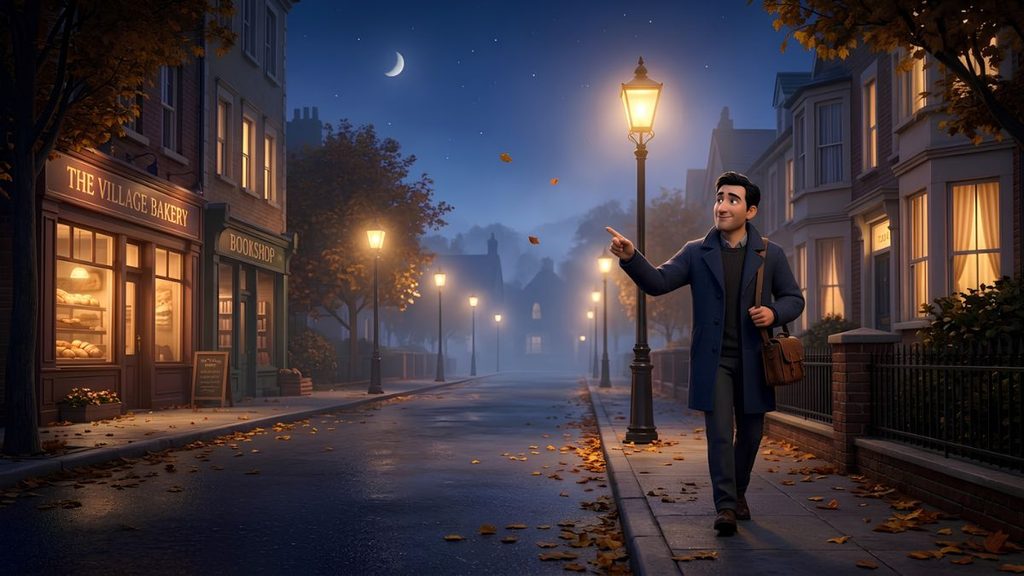
Type: Quiet Observation Story
Why it feels unique: The story turns an extremely ordinary act of observation into the entire narrative.
Daniel had never considered himself a person with unusual habits.
He liked his coffee warm but not too hot.
He preferred books with paper pages.
He watered his plants on Sunday mornings.
He kept his keys in the same small bowl beside the front door.
And every evening, when he walked home from work, he counted the streetlights.
There were forty-seven of them.
He had not originally intended to count them.
It had happened gradually.
Years earlier, Daniel had moved into a quiet neighborhood on the eastern side of town. His office was about twenty minutes away by bus, but he preferred to walk home whenever the weather was pleasant.
The road home was not particularly interesting.
It passed a bakery, a pharmacy, a small post office, several apartment buildings, a public garden, and a row of old houses.
There were no famous buildings.
No beautiful monuments.
No busy shopping streets.
It was simply a road people used to get home.
One evening, Daniel had been walking slowly because he had finished work earlier than usual.
The sun was setting.
The first streetlight had just come on.
He noticed it because the light appeared slightly brighter than the fading daylight.
A few steps later, another streetlight came on.
Then another.
Daniel smiled.
He wondered how many there were between his office and his apartment.
So he counted.
One.
Two.
Three.
By the time he reached home, he had counted forty-seven.
The next evening, he forgot about it.
But two days later, he found himself counting again.
Forty-seven.
The following week, forty-seven.
After a while, it became part of his evening walk.
Not an obligation.
Not a challenge.
Just something he did.
And Daniel liked the certainty of it.
There were forty-seven streetlights.
Every evening, he walked past them.
Every evening, they waited in the same places.
On a Tuesday in early autumn, Daniel left work at 6:05.
The day had been ordinary.
He had answered emails.
Attended two meetings.
Made notes.
Drunk three cups of coffee.
Nothing particularly memorable had happened.
Outside the office, the air was cool.
The sky was pale gray.
Daniel adjusted his coat and began walking.
The first part of his route was busy.
Cars moved slowly through the intersection.
People waited at the bus stop.
A cyclist passed him.
A woman carried a paper bag from the bakery.
Daniel walked past them.
He did not count yet.
The streetlights were still off.
The sun had not completely disappeared.
He continued toward the quieter part of the road.
At the corner of Maple Street, the first lamp switched on.
Daniel looked up.
“One.”
The light cast a soft circle onto the pavement.
He continued.
The second streetlight stood beside a narrow hedge.
“Two.”
The third was outside a pharmacy.
“Three.”
The fourth stood near a bus stop.
“Four.”
Daniel walked slowly.
He was not trying to finish quickly.
There was nowhere he needed to be.
His apartment was waiting.
Dinner could wait too.
He enjoyed walking.
The evening air was pleasant.
A few leaves moved across the pavement.
Somewhere nearby, a dog barked once.
Then became quiet.
“Five.”
The fifth streetlight stood beside a closed flower shop.
Daniel glanced through the dark window.
A few plants were still visible inside.
He wondered whether the shop owner had forgotten to move them away from the glass.
Then he continued.
At the sixth streetlight, Daniel noticed a bench.
He had passed it hundreds of times.
But he had never sat there.
The bench was made of dark wood.
It stood beneath a tree.
Daniel slowed down.
The evening had become darker.
The streetlight above the bench created a small pool of warm light.
Daniel decided to sit for a minute.
There was no particular reason.
He simply felt like sitting.
He rested his hands on his knees.
The road was quiet.
A car passed.
Then another.
A man walked a dog on the opposite side of the street.
The dog stopped to sniff a tree.
The man waited patiently.
Daniel smiled.
After a few minutes, he stood.
He continued walking.
He had almost forgotten the count.
Then he remembered.
“Six.”
He had already counted it.
He continued.
The seventh streetlight stood near a small grocery store.
The eighth was beside a brick apartment building.
The ninth stood at the entrance to a narrow side street.
The tenth was near a tree whose leaves had begun turning yellow.
Daniel liked the tenth one.
He had no idea why.
Perhaps because the tree beside it looked particularly good beneath the light.
The leaves seemed golden.
The branches made delicate shadows on the pavement.
Daniel stopped for a moment.
A leaf drifted down.
It landed near his shoe.
He continued.
“Eleven.”
The road became quieter.
The shops became fewer.
The houses became older.
Daniel passed a small blue door.
Then a red mailbox.
Then a garden with white stones arranged around a flower bed.
The eleventh streetlight stood near the garden.
The twelfth was beside a low wall.
The thirteenth stood near a pedestrian crossing.
Daniel crossed the road.
The crossing signal clicked softly.
There were no cars nearby.
He walked on.
At the fourteenth streetlight, Daniel heard music.
Someone was playing a piano.
The sound came from an apartment above a small café.
The music was quiet.
Daniel could not identify the song.
He stopped for a moment.
The melody drifted through the evening air.
It was slow and simple.
He listened until the song ended.
Then the apartment became quiet again.
Daniel continued.
“Fifteen.”
He realized that he was smiling.
There was something pleasant about noticing small things.
A piano.
A warm window.
A tree.
A bench.
A cat sitting on a wall.
None of these things were important.
Yet together they made the evening feel complete.
At the sixteenth streetlight, Daniel passed the bakery.
It was closed.
The metal shutters were down.
But the smell of bread still lingered in the air.
Daniel stopped.
He could smell butter and cinnamon.
Perhaps something had been baked shortly before closing.
He stood there for a few seconds.
Then continued.
“Seventeen.”
The eighteenth streetlight was near the post office.
The nineteenth stood beside a row of bicycles.
The twentieth was near a large tree.
Daniel reached twenty and paused.
Halfway to the halfway point.
He looked at his watch.
6:42.
He had been walking for nearly forty minutes.
He was not tired.
He had nowhere else to go.
So he continued.
The twenty-first streetlight was beside a narrow alley.
The twenty-second stood near an old stone wall.
The twenty-third illuminated a small fountain in front of a community building.
The fountain was not running.
Its basin was dry.
Daniel remembered that the fountain usually operated during summer.
Now autumn had arrived.
The water had been turned off.
He wondered when it would be turned on again.
Perhaps next spring.
He continued.
Twenty-four.
Twenty-five.
Twenty-six.
The street became almost completely quiet.
Most people were indoors.
Behind apartment windows, Daniel could see ordinary evening scenes.
Someone washing dishes.
Someone reading.
Someone sitting at a table.
A television flickering in one room.
A lamp beside a sofa.
Daniel never knew these people.
He never would.
Yet seeing those small signs of life made the neighborhood feel welcoming.
He continued walking.
At the twenty-seventh streetlight, Daniel saw a cat.
It was sitting beneath a parked car.
The cat looked at him.
Daniel stopped.
The cat remained still.
“Good evening,” Daniel said.
The cat blinked.
Daniel smiled.
“That’s all?”
The cat blinked again.
Then it disappeared beneath the car.
Daniel continued.
Twenty-eight.
Twenty-nine.
Thirty.
At thirty, he reached a small public garden.
The gates were closed.
Inside, the paths were dark.
Only a few streetlights illuminated the area from outside.
Daniel could smell damp soil.
The temperature had dropped.
He pulled his coat closer.
He walked along the garden fence.
Leaves moved gently in the trees.
The sound was soft.
Almost like rain.
At the thirty-first streetlight, Daniel stopped again.
There was another bench.
This one faced the garden.
He sat down.
The neighborhood seemed especially quiet from there.
He could hear distant traffic.
A bird moved somewhere in the trees.
A bicycle passed behind him.
Then everything became still.
Daniel looked at the light above him.
It hummed faintly.
He wondered how long the streetlight had been there.
Perhaps twenty years.
Perhaps longer.
Thousands of people had probably walked beneath it.
People going to work.
People returning home.
Children walking with their parents.
Older people carrying groceries.
Someone rushing to catch a bus.
Someone walking slowly just because they had nowhere else to be.
Daniel liked that thought.
The streetlight did not care who passed beneath it.
It simply illuminated the road.
He stood.
“Thirty-two.”
The next section of the road was lined with houses.
Some had small gardens.
Some had balconies.
Some had bicycles leaning against fences.
Daniel walked slowly.
Thirty-three.
Thirty-four.
Thirty-five.
At thirty-six, he noticed a window with a yellow curtain.
The light inside was warm.
A person was reading.
Daniel could only see the outline.
He imagined a comfortable chair.
A cup of tea.
A quiet evening.
Then the curtain moved slightly.
The person disappeared from view.
Daniel continued.
Thirty-seven.
Thirty-eight.
The sky was now completely dark.
The streetlights had become the main source of illumination.
They stood one after another.
Each creating its own small circle of light.
Daniel walked from one circle to the next.
At thirty-nine, he passed a small park.
At forty, he crossed another road.
At forty-one, he heard the sound of water.
There was a narrow canal running beside the street.
Daniel walked closer.
The water reflected the streetlights.
Long golden lines moved gently across the surface.
Daniel stopped.
He watched for a while.
The reflection broke whenever a leaf floated past.
Then it became still again.
He looked at the forty-first streetlight.
Its reflection stretched across the water.
For a moment, Daniel wondered whether the reflection should count as another light.
He decided it did not.
There were still forty-seven.
He continued.
Forty-two stood beside an old stone bridge.
Daniel crossed it.
Forty-three was on the other side.
He could see his apartment building in the distance now.
Not far.
But he continued slowly.
He had reached the part of his walk he enjoyed most.
The final four streetlights were close together.
Forty-four stood beside a small convenience store.
The store was still open.
A man behind the counter was reading a newspaper.
Daniel waved.
The man waved back.
Forty-five stood near a row of trees.
The leaves were beginning to fall.
One drifted down directly beneath the lamp.
Daniel watched it land.
Forty-six stood beside the entrance to his apartment complex.
He could already see his building.
One more remained.
The forty-seventh.
It stood just outside the gate.
Daniel walked toward it.
The light was warm.
The pavement beneath it was clean.
A small moth circled around the lamp.
Daniel stopped.
“Forty-seven.”
He had arrived.
Daniel entered the apartment building.
The hallway smelled faintly of polished wood.
Someone had left a small plant near the entrance.
Daniel climbed the stairs.
Second floor.
He reached his door.
Took out his keys.
Opened the door.
Inside, the apartment was quiet.
He placed his keys in the small bowl beside the entrance.
Removed his coat.
Hung it on the hook.
Then went into the kitchen.
He filled the kettle.
While the water heated, he opened the window slightly.
Cool evening air entered the room.
Daniel made tea.
He carried the cup into the living room.
The lamp beside the sofa was already on.
He sat down.
Outside the window, he could see one streetlight.
Not the forty-seventh.
Another one on a neighboring road.
Daniel watched it for a moment.
The light remained steady.
The neighborhood was quiet.
He took a sip of tea.
Then opened his book.
He read for a few pages.
Eventually, his eyes became heavy.
He closed the book.
Placed it on the table.
Turned off the lamp.
And went to bed.
The next evening, Daniel walked home again.
The first streetlight came on.
One.
Then two.
Then three.
The road looked almost exactly the same.
The bakery was closed.
The pharmacy was open.
The tree beside the tenth light had lost a few more leaves.
The bench was still there.
The piano was playing again.
The cat was nowhere to be seen.
Daniel continued.
Fourteen.
Fifteen.
Sixteen.
The evening passed gently around him.
Nothing important happened.
Nothing needed to.
There were simply forty-seven streetlights along the road.
Forty-seven small pools of light.
Forty-seven familiar moments.
And every evening, Daniel walked through them one by one.
Until he reached home.
Until he put his keys in the little bowl.
Until the kettle began to warm.
Until the apartment became quiet.
And until, eventually, the lights outside seemed very far away.
Daniel never knew exactly why he counted the streetlights.
Perhaps it gave his evening a rhythm.
Perhaps it helped him notice things he might otherwise overlook.
Or perhaps some ordinary habits did not need an explanation.
Some things were simply pleasant because they were repeated.
The same road.
The same lights.
The same quiet walk home.
And that was enough.
3. The Empty Museum After Closing
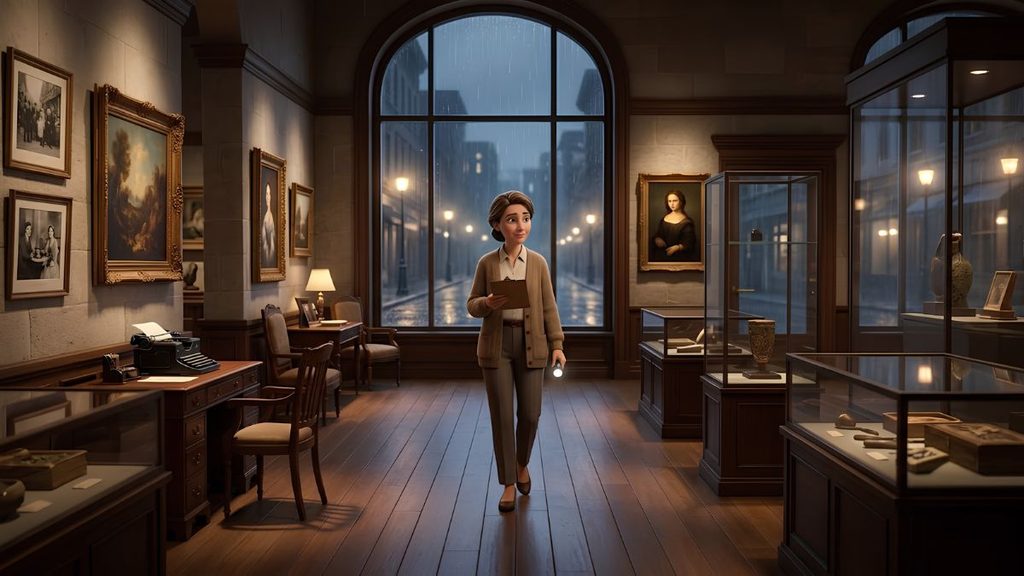
Type: Quiet Museum Story
Why it feels unique: It explores the atmosphere of a museum after visitors have gone rather than focusing on history or adventure.
At six o’clock every evening, the museum doors closed.
The last visitors usually left a few minutes before.
Some walked toward the train station.
Others stopped at the café across the street.
A few stood outside the entrance and looked at the building one last time before continuing home.
By six fifteen, the street became quieter.
And by six thirty, the museum belonged almost entirely to Sophie.
Sophie had worked at the small city museum for seven years.
Her official title was evening caretaker, although her responsibilities were simple enough that she rarely thought about the title.
She checked the galleries.
Made sure the windows were secure.
Adjusted the temperature controls.
Straightened brochures.
Turned off unnecessary lights.
Checked the doors.
And, most importantly, made sure everything was ready for the following morning.
She liked the evening shift.
During the day, the museum could be busy.
School groups moved through the galleries.
Tourists stopped to read descriptions.
Families gathered around displays.
Visitors asked questions.
People talked quietly as they walked from one room to another.
There was nothing wrong with the noise.
Sophie enjoyed seeing people interested in the exhibits.
But after closing time, the building changed.
The voices disappeared.
The footsteps stopped.
The ticket desk became empty.
The large entrance hall became still.
And the museum seemed to breathe more slowly.
Sophie liked that.
On one particular autumn evening, the final visitors left at 6:07.
Sophie watched them through the glass doors.
A couple walked down the steps.
A father and daughter crossed the street.
An elderly man stopped to look at the museum sign before putting his hat back on and walking away.
Then the street was quiet.
Sophie locked the main doors.
She checked the handle once.
Then twice.
Everything was secure.
She turned toward the entrance hall.
“Good evening,” she said quietly to the empty museum.
It was a habit.
She had started saying it several years earlier.
She smiled at herself.
Then began her evening round.
The museum occupied an old stone building that had once been a railway office.
It had high ceilings, wide corridors, wooden floors, and tall windows.
There were four main galleries.
The first contained paintings.
The second held old household objects.
The third displayed photographs and documents.
The fourth was a smaller gallery used for temporary exhibitions.
Sophie began in the entrance hall.
She collected several brochures left on a table.
There were six.
She placed them into a neat stack.
Then she straightened a small display about the history of the building.
One corner of the information card had curled upward.
Sophie pressed it down.
She stepped back.
It looked better.
She switched off one of the lights.
The entrance hall became slightly darker.
Then she moved toward the first gallery.
The painting gallery was always the quietest after closing.
The walls were pale.
The paintings hung at regular intervals.
Some were landscapes.
Some were portraits.
Others showed buildings, gardens, rivers, and streets from many years ago.
Sophie walked slowly along the room.
She did not need to inspect every painting.
She knew them all.
Still, she enjoyed looking at them.
A painting of a small harbor hung near the entrance.
A gray sky stretched across the upper half of the canvas.
Several fishing boats rested on the water.
The painting was not particularly famous.
Sophie liked it anyway.
She stood before it for a moment.
The museum lights reflected softly against the protective glass.
Outside, rain had begun to fall.
She could hear it against the windows.
Not loudly.
Just enough to be noticed.
Sophie continued.
She checked the windows.
Closed.
She checked the heating display.
Normal.
She straightened one brochure.
Then moved to the next room.
The second gallery contained ordinary objects from homes and workplaces.
There were old kitchen utensils.
Wooden chairs.
Typewriters.
Lamps.
Clocks.
A sewing machine.
A collection of ceramic plates.
A small radio.
Visitors often liked this room because the objects were familiar.
Many of them reminded people of things they had seen in their grandparents’ homes.
Sophie walked toward the old typewriter.
It sat beneath a glass case.
Its black keys were perfectly arranged.
She remembered using a similar machine when she was young.
Her father had kept one in a cupboard.
She had never been very good at typing on it.
The keys had always seemed too heavy.
Sophie smiled at the memory.
She continued.
Near the wall, an old clock showed the time.
It did not work anymore.
Its hands had stopped at 3:20.
The museum had decided to leave it that way.
Sophie thought it looked perfectly fine.
Not every clock needed to tell the correct time.
Some could simply remain as objects.
She walked past it.
At 6:50, Sophie returned to the entrance hall.
She made a cup of tea in the small staff kitchen.
The kitchen was behind the ticket desk.
It contained a kettle, a refrigerator, a microwave, and a small wooden table.
Sophie poured the hot water into her cup.
She added a tea bag.
Then waited.
She carried the cup to the entrance hall.
The museum was completely silent now.
Rain tapped gently against the windows.
Sophie sat behind the ticket desk.
She took a sip.
The museum clock showed 6:53.
She looked around.
During the day, this same room would contain dozens of people.
Now there was only her.
And the quiet sound of rain.
She finished her tea.
Then stood.
There was still work to do.
The third gallery contained photographs.
Sophie liked this room most.
Black-and-white photographs showed streets, markets, railway stations, farms, schools, shops, and families.
Many of the photographs were more than seventy years old.
Some were even older.
Visitors often spent a long time looking at them.
Sophie understood why.
The photographs were ordinary.
A group of workers standing outside a factory.
Children sitting beside a school wall.
A woman carrying a basket.
A man standing beside a bicycle.
A family sitting in front of a house.
Nobody in these photographs had expected to become part of a museum.
They had simply been living their lives.
Sophie walked slowly past them.
One photograph showed a quiet street after rain.
The road was wet.
Several lamps reflected on the pavement.
A man walked beneath an umbrella.
A woman stood beneath a shop awning.
The photograph reminded Sophie of the street outside the museum.
She paused.
Rain continued to fall against the windows.
She looked at the photograph.
Then at the real street outside.
The past and present seemed strangely similar.
At 7:15, Sophie entered the temporary exhibition gallery.
The current exhibition was about everyday life in the early twentieth century.
There were household objects, letters, photographs, clothing, and furniture.
The room was slightly warmer than the others.
Sophie checked the temperature.
It was fine.
She walked around the exhibition.
A wooden dining table stood in the center.
Beside it were four chairs.
On the table sat a ceramic bowl.
Nothing unusual.
Everything had been arranged carefully.
Sophie liked the simplicity of the display.
She imagined how many ordinary meals might once have been eaten around a table like that.
Breakfast.
Lunch.
Dinner.
Perhaps someone had sat in one of those chairs every morning.
Perhaps children had done homework at the table.
Perhaps someone had written letters there.
The objects did not explain everything.
They simply remained.
Quiet reminders of ordinary lives.
Sophie continued walking.
At 7:30, she returned to the second gallery.
She checked the windows again.
Then she noticed a small amount of dust beneath one display case.
She fetched a cloth.
Kneeling beside the case, she wiped the floor.
Slowly.
Carefully.
The rain continued outside.
She finished one section.
Then another.
When she stood, the floor looked clean.
She put the cloth away.
There was something satisfying about small tasks.
Nothing dramatic.
Nothing difficult.
Just one thing becoming slightly better.
Sophie walked toward the next display.
A wooden chair.
She checked the label.
Straightened it.
Then moved on.
At 8:00, the museum clock chimed.
The sound traveled through the galleries.
One.
Two.
Three.
Eight gentle chimes.
Sophie stood in the entrance hall and listened.
The sound faded.
The building became quiet again.
She checked the clock.
It was working correctly.
She smiled.
Then she continued her routine.
She closed several interior curtains.
The windows reflected the room behind her.
For a moment, the museum seemed to contain another museum inside the glass.
Sophie found that interesting.
She turned off a few lights.
The galleries became softer.
The paintings were still visible.
The old chairs were still visible.
The photographs remained behind their glass.
But the building no longer felt like a public space.
It felt like a quiet house.
A very large, very old house.
At 8:20, Sophie walked through the painting gallery again.
The rain had become lighter.
She stopped before the harbor painting.
The boats remained beneath the gray sky.
She wondered whether the artist had painted the scene during rain.
Perhaps.
Or perhaps the artist had simply remembered a cloudy morning.
Sophie liked paintings that did not explain everything.
She walked to another painting.
This one showed a countryside road.
A small house stood in the distance.
Trees lined the road.
A person walked toward the house.
Sophie had always wondered where the person was going.
But there was no answer.
She moved on.
The museum had a small reading room at the end of the third gallery.
It was not open every day.
There were several shelves containing local history books.
Sophie entered to check the lights.
She found one lamp still switched on.
She turned it off.
The room became dark.
Then she noticed the rain had stopped.
The windows were covered with tiny droplets.
Beyond them, the street shone beneath the lamps.
Sophie stood there for a moment.
Cars moved slowly along the road.
A bus passed.
Then the street became quiet again.
She closed the curtain.
The reading room disappeared into darkness.
At 9:00, Sophie sat at the staff desk.
She had finished most of her work.
She opened the evening checklist.
Entrance doors.
Checked.
Windows.
Checked.
Temperature.
Checked.
Galleries.
Checked.
Lights.
Mostly checked.
She had only one more round.
She drank some water.
Then began.
The final round was always the slowest.
Not because it required more work.
Because Sophie liked walking through the museum when everything was finished.
She moved from room to room.
First gallery.
Quiet.
Second gallery.
Quiet.
Third gallery.
Quiet.
Temporary exhibition.
Quiet.
She stopped at the entrance hall.
The museum was ready for morning.
At 9:25, Sophie turned off the final gallery lights.
The building became much darker.
Only the emergency lights remained.
They created small pools of soft illumination along the corridors.
Sophie walked slowly toward the entrance.
Her footsteps sounded against the wooden floor.
Tap.
Tap.
Tap.
She stopped at the old clock.
3:20.
Still.
She stopped at the typewriter.
Still.
She stopped at the harbor painting.
Still.
Everything was exactly where it should be.
She reached the entrance.
Outside, the rain had stopped completely.
The pavement was wet.
Streetlights reflected in small puddles.
Sophie put on her coat.
She checked the main doors.
Locked.
She checked the side entrance.
Locked.
She turned off the last staff light.
Then stood in the dark entrance hall.
For a few seconds, she simply listened.
Nothing.
The museum was quiet.
Not empty in a lonely way.
Just quiet.
Sophie liked the difference.
She opened the staff door and stepped outside.
Then locked it.
The street smelled of wet stone.
Sophie walked down the museum steps.
Across the street, the café was still open.
A few people sat inside.
Warm yellow light filled the windows.
Sophie began walking toward the bus stop.
She looked back once.
The museum stood quietly behind her.
Its tall windows were dark.
The stone walls looked almost silver beneath the streetlights.
Tomorrow morning, the doors would open again.
Visitors would arrive.
Children would ask questions.
People would read labels.
Someone would stand before the harbor painting.
Someone else would spend ten minutes looking at the old photographs.
The museum would become busy again.
But tonight, it was resting.
Sophie continued toward the bus stop.
She did not hurry.
There was no need.
The rain had cleaned the streets.
The air was cool.
The city was becoming quieter.
She reached the bus stop.
A bus arrived a few minutes later.
Sophie climbed aboard.
She found a seat beside the window.
As the bus moved away, she looked back toward the museum.
Its building disappeared behind a row of trees.
Then behind several houses.
Then it was gone.
Sophie leaned back.
The bus continued through the quiet streets.
She closed her eyes for a moment.
Tomorrow, at six in the morning, she would return.
She would unlock the doors.
Turn on the lights.
Open the curtains.
Straighten the brochures.
And welcome the first visitors.
But for now, the museum could remain exactly as it was.
Quiet.
Still.
And peacefully empty.
4. The Evening Window Cleaner

Type: Simple Repetitive Work Story
Why it feels unique: The story centers on repetitive visual maintenance rather than home routines or workshop work.
Arthur liked working after everyone else had gone home.
There was something pleasant about an empty building.
During the day, the office tower where he worked was full of movement. People arrived carrying coffee cups and laptops. Elevators opened and closed. Phones rang behind glass doors. Conversations drifted through corridors. Printers hummed. Chairs moved across floors.
But after six in the evening, everything gradually became quiet.
The offices emptied.
The elevators became less busy.
The corridors lost their footsteps.
And the large windows began reflecting the lights inside the building.
Arthur had been a window cleaner for many years.
He cleaned windows in apartment buildings, shops, hotels, schools, and offices.
Most of his work was done during the day, but occasionally he was asked to clean the interior windows of an office building after closing.
He preferred these evening jobs.
There was no one to hurry him.
No one waiting to use an office.
No meetings being interrupted.
No conversations.
Just a bucket, a cloth, a squeegee, and several hundred windows that needed a little attention.
On this particular evening, Arthur arrived at the office tower at 6:15.
The sky outside was beginning to darken.
The building stood at the end of a wide avenue.
Its glass walls reflected the fading blue of the evening.
Arthur entered through the main doors.
The security guard at the reception desk looked up.
“Evening, Arthur.”
“Evening.”
“Third through seventh floors tonight.”
Arthur nodded.
“That’s right.”
The guard handed him a small access card.
Arthur thanked him.
Then he wheeled his cleaning cart toward the elevator.
The wheels made a soft sound against the polished floor.
He pressed the button.
The elevator arrived.
The doors opened.
Arthur pushed the cart inside.
Then pressed three.
The doors closed.
For the next few hours, there would be very little conversation.
Arthur was perfectly happy with that.
The third floor was almost empty.
Only two offices still had their lights on.
Arthur stepped out of the elevator.
The corridor was quiet.
A few desk lamps were visible through glass walls.
Some employees were still working.
Arthur walked toward the first office.
A woman sitting behind a computer looked up.
“Are you cleaning the windows tonight?”
“Yes.”
“That’s fine.”
She returned to her computer.
Arthur smiled.
He placed his cart beside the wall.
Then entered the small meeting room.
The windows were large.
They stretched almost from the floor to the ceiling.
During the day, they provided a view of the city.
Now the outside sky was changing from blue to dark gray.
Arthur filled his bucket at the utility sink.
He added a small amount of cleaning solution.
Then carried the bucket back.
He dipped his cloth into the water.
Squeezed it.
And began.
The first window took only a few minutes.
Arthur wiped the glass carefully.
He worked from one side to the other.
Then he used the squeegee.
Slowly.
Steadily.
One movement downward.
Then another.
He wiped the edge of the squeegee.
Moved slightly to the side.
And continued.
When he finished, he stepped back.
The glass was clear.
He could see the city lights outside.
Arthur liked this moment.
A dirty window became clean.
The difference was subtle, but visible.
He moved to the next window.
The same process.
Wet cloth.
Squeegee.
Wipe the edges.
Check the glass.
Move on.
There was no reason to rush.
The evening was still young.
Outside, the first office lights were beginning to appear across the city.
Arthur noticed the reflections in the glass.
Before cleaning, the window had reflected the room more strongly.
After cleaning, the city beyond it became clearer.
He could see a row of buildings.
A distant hotel sign.
Several traffic lights.
Cars moving slowly along the avenue.
People walking on the sidewalks.
From the seventh floor, the city would look different.
But Arthur was still on the third.
He continued cleaning.
At 6:50, he finished the meeting room.
He packed the cloths into a small container.
Then moved to the next office.
It was empty.
There were six desks.
Six chairs.
Six computer monitors.
One large plant stood beside the window.
Arthur moved the plant slightly so he could reach the glass behind it.
He cleaned the window.
The leaves reflected against the glass.
When he finished, he moved the plant back.
He liked keeping things where he found them.
The office remained neat.
Arthur checked the window once more.
No streaks.
He moved on.
The next room had a long conference table.
Several chairs were arranged around it.
There was a whiteboard on one wall.
Someone had left a few words written on it.
Arthur did not read them.
He simply cleaned the windows.
Outside, the sky had become darker.
The buildings across the street were now illuminated.
One by one, windows came alive.
A small apartment.
Then another.
Then an entire office building.
Arthur wondered how many people were still working.
Some were probably finishing late.
Others might have forgotten the time.
Some might be preparing to go home.
He continued working.
He was not particularly interested in guessing.
He simply liked watching the city become brighter as the sky became darker.
At 7:20, Arthur took a short break.
He sat in an empty office near the windows.
He opened his thermos.
Inside was tea.
He poured some into the small cup.
The room was quiet.
Outside, traffic moved along the avenue.
From this height, the cars looked small.
Their headlights moved like tiny points of light.
Arthur took a sip of tea.
He checked his schedule.
Third floor.
Finished.
Fourth floor next.
He stood.
Put the cup away.
And pushed the cart toward the elevator.
The fourth floor was larger.
There were more windows.
Arthur started at the far end.
He cleaned one office at a time.
Some rooms contained desks.
Others contained meeting tables.
One room had several comfortable chairs arranged around a low table.
Another had a row of plants.
A small kitchen stood at the end of the corridor.
Arthur cleaned the glass door.
Then the window above the sink.
Everything was ordinary.
Everything was quiet.
He liked that.
There was a rhythm to the work.
Walk.
Prepare.
Clean.
Check.
Move.
Repeat.
Arthur had learned long ago that repetitive work could become almost meditative.
When he focused on one window, he thought about nothing else.
The cloth moved across the glass.
Water gathered.
The squeegee followed.
The surface became clear.
Then he moved to the next window.
Nothing more was required.
At 8:05, Arthur reached the largest room on the fourth floor.
It was a conference room with windows on two sides.
The city was visible from every direction.
He stood near the corner.
The sky was completely dark now.
The city stretched below him.
Buildings were covered in small lights.
The avenue looked like a long ribbon.
Arthur switched on the room light.
The windows immediately reflected the room.
He began cleaning.
One window.
Then another.
The city slowly became clearer.
He liked seeing the difference.
The clean glass almost disappeared.
It seemed as if there were no window at all.
Only the city.
Arthur finished the final pane.
Then stood back.
The view was clear.
He turned off the room light.
The reflections disappeared.
The city became even more visible.
Arthur stood there for a moment.
Then returned to his cart.
The fifth floor took longer.
It contained several small offices and a large open workspace.
Almost everyone had gone home.
A few desk lamps remained on.
Arthur did not disturb them.
He worked around the furniture.
Sometimes he had to move a chair.
Sometimes a small table.
He always put everything back exactly where he had found it.
At 8:45, he reached a window beside a large indoor plant.
The plant had long green leaves.
Some touched the glass.
Arthur gently moved them aside.
He cleaned the window.
Then wiped one leaf where it had left a small mark.
He returned the leaves to their original position.
The plant looked comfortable again.
Arthur smiled.
He had no idea whether plants could appreciate clean windows.
But he liked doing the job properly.
At 9:10, he went downstairs to the small staff kitchen.
He refilled his bucket.
Washed the cloth he had been using.
Then prepared a fresh one.
He checked the cleaning solution.
There was enough.
He returned to the elevator.
The security guard was still at reception.
“How’s it going?” the guard asked.
“Good. Almost halfway through.”
“Long night.”
“A little.”
The guard nodded.
Arthur entered the elevator.
The doors closed.
The sixth floor was quieter than the others.
There were no employees left.
The hallway lights were dimmed.
Arthur switched on only the lights he needed.
The office spaces looked different at night.
During the day, they were places of work.
At night, they looked almost peaceful.
Empty chairs stood beneath desks.
Computer screens were dark.
Notebooks were closed.
Coffee cups had been taken home.
Everything seemed to be waiting for morning.
Arthur began his work.
Window after window.
The same careful movements.
He noticed that the rain had started outside.
Small drops appeared on the glass.
Arthur paused.
He watched them for a moment.
Rain moved slowly down the window.
The city lights blurred behind it.
He smiled.
He had cleaned the inside.
The rain was taking care of the outside.
The sound of rain became slightly louder.
Arthur continued.
He did not mind working during rain.
In fact, he preferred it.
The city seemed quieter.
The traffic slowed.
The reflections became softer.
Inside the office, the only sounds were the movement of his cloth and the occasional hum of the building’s ventilation system.
He finished one window.
Then another.
The rain continued.
Arthur moved to the next room.
At 9:45, he reached a small office at the end of the corridor.
It belonged to someone who apparently liked books.
There were shelves on three walls.
Books filled nearly every space.
Arthur stood beside the window.
He could see the reflection of the books in the glass.
He cleaned carefully.
As the glass became clearer, the city appeared beyond the books.
For a moment, the window seemed to contain two worlds.
The quiet office behind him.
The rainy city outside.
Arthur thought it was beautiful.
He finished the window.
Then cleaned the edges.
No streaks.
Perfect.
He moved on.
At 10:15, he began the seventh floor.
This was the final floor.
There were fewer offices.
Most were used by senior staff and remained empty during the evening.
Arthur started near the elevator.
The first office had a large desk.
The second had a round table.
The third had a sofa.
The fourth had a small balcony door.
Arthur cleaned the glass carefully.
Rain continued outside.
The city was darker now.
Only the largest buildings remained brightly lit.
Arthur looked at the clock.
10:40.
He still had time.
He continued.
The final room was the largest.
It had windows on three sides.
Arthur had saved it for last because it took the longest.
He placed his cart near the entrance.
Filled the bucket one final time.
Prepared a clean cloth.
Then began.
First window.
Second.
Third.
Fourth.
He worked slowly.
The rain had stopped.
Water remained on the glass outside.
The city lights reflected across the wet surfaces.
Arthur cleaned each pane.
As he worked, he noticed the sky had begun to clear.
A few stars were visible between the buildings.
He could not see many.
But there were enough.
Arthur continued.
He wiped the final window.
Then stood back.
The glass was almost invisible.
Beyond it, the city stretched into the distance.
Arthur switched off the room lights.
The windows disappeared.
Only the city remained.
He stood quietly for a few seconds.
Then turned the lights back on.
His work was finished.
At 11:15, Arthur packed his equipment.
He emptied the bucket.
Rinsed the cloths.
Placed the cleaning supplies into their containers.
Folded the cart handle.
Everything had its place.
He walked through the seventh floor one final time.
The windows were clean.
The desks were untouched.
The chairs were exactly where they belonged.
The offices were ready for morning.
Arthur entered the elevator.
The doors closed.
He pressed the ground-floor button.
The elevator descended.
Seven.
Six.
Five.
Four.
Three.
Two.
One.
The doors opened.
The security guard looked up.
“Finished?”
“Finished.”
“Good night, Arthur.”
“Good night.”
Arthur pushed his cart toward the storage room.
He put everything away.
Locked the cabinet.
Returned the access card.
Then walked toward the main entrance.
Outside, the rain had stopped completely.
The pavement was wet.
Streetlights reflected in the puddles.
The air smelled fresh.
Arthur stood on the steps for a moment.
The office tower rose above him.
From outside, all the windows looked dark except for a few rooms near the top.
He smiled.
He knew that by morning the building would be busy again.
People would arrive.
Elevators would fill.
Computers would turn on.
Phones would ring.
Coffee would be poured.
Meetings would begin.
And nobody would think much about the windows.
They would simply look through them.
Arthur liked that.
A clean window was successful when people forgot it was there.
He picked up his bag.
Then began walking toward the bus stop.
The city was quiet.
A few cars passed.
Somewhere in the distance, a train moved through the night.
Arthur walked slowly.
His work was done.
Tomorrow there would be another building.
Another set of windows.
Another evening.
Another quiet routine.
And perhaps that was what he liked most about his work.
Nothing needed to happen.
The windows simply became a little clearer.
The rooms became a little brighter.
The building became ready for another day.
And when everyone else had gone home, Arthur could take his time.
One window.
Then another.
Then another.
Until there were no more left to clean.
5. The Hotel Room Prepared for Tomorrow

Type: Quiet Hospitality Story
Why it feels unique: It combines quiet preparation with the unusual atmosphere of an almost-empty hotel at night.
Every evening at a little after seven, Clara began preparing the hotel rooms for the following morning.
She worked at a small countryside hotel called The Willow House.
It stood beside a quiet road on the edge of a town.
The building was three stories high.
It had twenty-four guest rooms, a small restaurant, a reading lounge, and a narrow garden at the back.
During the daytime, the hotel was usually pleasant and moderately busy.
Guests arrived with suitcases.
People checked out after breakfast.
The restaurant served lunch.
The reception desk received phone calls.
Housekeeping staff moved quietly along the corridors.
But after seven in the evening, most of the day’s work was finished.
That was when Clara began her favorite part of the job.
Preparing the rooms for tomorrow.
There was nothing particularly difficult about it.
She checked the beds.
Straightened curtains.
Folded towels.
Refilled small bottles of soap.
Checked the lamps.
Adjusted the chairs.
Made sure the water glasses were clean.
And, if necessary, replaced anything that had been used during the day.
She had been doing this for almost six years.
She knew every room.
She knew which windows caught the morning sunlight.
She knew which rooms stayed especially quiet.
She knew which lamps sometimes needed their switches pressed twice.
She even knew which floorboards made a soft creaking sound when someone walked over them.
None of these details were especially important.
But Clara enjoyed knowing them.
They made the hotel feel familiar.
On a cool Thursday evening in October, Clara finished dinner at 7:05.
The restaurant had already closed.
The final guests had gone upstairs.
The kitchen staff were washing dishes.
Outside, a light breeze moved through the trees.
Clara collected her housekeeping cart.
Inside it were clean towels, folded sheets, small bottles of shampoo, soap, drinking glasses, tissues, and several other ordinary supplies.
She checked her list.
Room 101.
Room 102.
Room 103.
And so on.
She would prepare twelve rooms that evening.
The remaining rooms had either already been prepared or were occupied by guests who had requested no evening service.
Clara pushed the cart toward the staircase.
The wheels made a soft rolling sound.
She liked that sound.
It reminded her that the evening was beginning.
Room 101 was at the end of the first-floor corridor.
Clara unlocked the door.
The room was empty.
The curtains were partly open.
A small bedside lamp was still switched on.
Clara entered.
First, she opened the curtains completely.
The window showed the dark garden.
A few leaves moved in the breeze.
Then she turned off the lamp.
She checked the bed.
The white cover was smooth.
The pillows were neatly arranged.
There was nothing to change.
She walked to the bathroom.
Two towels had been used.
She replaced them with fresh ones.
She checked the soap.
There was enough.
She wiped the sink.
Cleaned the mirror.
Then returned to the bedroom.
The room was ready.
Clara placed two clean glasses on the small table.
She checked the lamp.
It worked.
She checked the television remote.
It worked too.
Then she closed the curtains.
She looked around the room.
Everything was in its place.
She wrote a small mark on her checklist.
Done.
Then she moved on.
Room 102 had a view of the road.
It was one of Clara’s favorite rooms because morning sunlight entered through the window.
The guest had left early that afternoon.
The bed needed changing.
Clara removed the used sheets.
She folded them neatly.
Then placed them into the laundry bag.
She carried fresh sheets from her cart.
First the fitted sheet.
Then the upper sheet.
Then the blanket.
She pulled each corner into place.
She smoothed the fabric with both hands.
Then she placed two pillows at the head of the bed.
She stepped back.
The bed looked simple and clean.
Clara liked the appearance of a freshly prepared room.
There was no evidence that anyone had been there before.
It was ready for someone new.
Someone who would arrive tomorrow.
Perhaps a traveler.
Perhaps a couple.
Perhaps someone visiting family.
Clara did not know.
She simply prepared the room.
She moved to the bathroom.
The mirror needed cleaning.
She sprayed a small amount of cleaner onto the cloth.
Wiped the mirror.
Then polished the edges.
The reflection became clear.
She checked the shower.
The water was warm.
She checked the towels.
Three clean towels.
One hand towel.
One small face towel.
Everything was ready.
Clara placed a fresh roll of toilet paper beside the sink.
Then returned to the bedroom.
She opened the curtains.
The road outside was quiet.
A car passed slowly.
Its headlights moved across the wall.
Then disappeared.
Clara closed the curtains again.
Room 102 was ready.
Room 103 belonged to an older couple who had stayed for three nights.
They had already checked out.
Clara entered.
There were two books on the bedside tables.
A pair of slippers sat beside the bed.
A folded sweater had been left on the chair.
The reception desk had confirmed that the guests had collected everything.
Clara placed the slippers in the housekeeping basket.
She returned the chair to its proper position.
Then she changed the sheets.
She had noticed that one pillow had been used more than the other.
She replaced both anyway.
She liked things to match.
While making the bed, she heard a faint sound from outside.
Wind moving through the trees.
The Willow House stood near a small line of willow trees.
When the wind passed through them, the leaves made a soft whispering sound.
Clara paused.
She listened.
Then continued.
At 8:00, she took a short break.
She pushed her cart into the small housekeeping room.
Inside was a chair, a table, and a kettle.
Clara made herself a cup of tea.
She sat beside the window.
The hotel corridor outside was quiet.
Somewhere upstairs, a guest closed a door.
Then the building became still again.
Clara looked at her checklist.
Three rooms finished.
Nine remaining.
She took another sip.
There was no rush.
The rooms would still be there.
The night was young.
She finished her tea.
Then returned to work.
Room 104 was almost identical to 103.
Clara changed the towels.
Checked the bed.
Refilled the soap.
Straightened the curtains.
Then she noticed a small vase on the windowsill.
It contained three dried flowers.
She dusted the vase carefully.
The flowers remained exactly where they were.
She liked small decorations like that.
They made the room feel lived in without being crowded.
Clara cleaned the windowsill.
Then put the vase back.
She checked the room one final time.
Lamp.
Working.
Curtains.
Straight.
Glasses.
Clean.
Towels.
Fresh.
Bed.
Ready.
She closed the door.
Room 105 was a corner room.
It had two windows.
One faced the garden.
The other faced the parking area.
Clara opened both curtains.
The garden was dark.
The parking area had only two cars.
One belonged to a guest.
The other belonged to the restaurant manager.
A small light near the entrance illuminated the pavement.
Clara cleaned the windows.
Then closed the curtains.
She changed the towels.
Checked the bathroom.
Straightened the chair.
Placed the information booklet on the desk.
Then she noticed that one of the bedside lamps was slightly crooked.
She adjusted it.
There.
Better.
She smiled.
A small thing.
But now it looked right.
At 8:45, Clara moved upstairs.
The second floor was quieter.
The carpets absorbed most of the sound.
Her cart made almost no noise.
Room 201 was occupied.
Room 202 was empty.
She prepared 202.
Then 203.
Then 204.
The work continued in the same gentle rhythm.
Open door.
Look around.
Make the bed.
Replace towels.
Check bathroom.
Straighten room.
Close curtains.
Check lights.
Leave.
Clara did not need to think much about the order.
Her hands knew what to do.
She had done it hundreds of times.
Room 203 had a small writing desk.
A guest had left a notebook on it.
Clara knew better than to touch personal belongings.
She simply cleaned around it.
The notebook was closed.
A pen lay beside it.
The chair was slightly pulled back.
Clara pushed the chair in gently.
Then she cleaned the desk surface.
The notebook remained untouched.
She liked that the room still held a small trace of its previous guest.
Not enough to make it untidy.
Just enough to suggest that someone had sat there.
Perhaps they had written a letter.
Perhaps they had made a list.
Perhaps they had simply looked out the window.
Clara did not know.
She left the room exactly as it should be.
At 9:30, she reached Room 205.
This room had a small balcony.
Clara opened the curtains.
Then stepped outside.
The air was cool.
The garden below was dark except for a few small lamps.
The leaves moved gently.
She stood there for a moment.
No cars passed.
No voices could be heard.
The town beyond the hotel was quiet.
Clara looked at the sky.
A few stars were visible.
Then she stepped back inside.
She closed the balcony door.
Checked the lock.
And continued.
By 10:00, Clara had prepared eight rooms.
Four remained.
She took another short break.
This time she did not make tea.
She simply drank some water.
Her cart stood beside her.
Everything was neatly arranged.
Clean towels.
Fresh sheets.
Small bottles.
Cloths.
Cleaning supplies.
She checked her list.
Then she continued.
Room 206 was the smallest room on the second floor.
It contained one bed.
One chair.
One desk.
One lamp.
One wardrobe.
Clara liked its simplicity.
There was less to arrange.
She changed the sheets.
Placed a fresh towel in the bathroom.
Cleaned the sink.
Checked the shower.
Straightened the chair.
Then stood in the center of the room.
Everything looked ready.
She switched off the main light.
The bedside lamp remained on.
Its warm glow filled the room.
Clara imagined someone arriving tomorrow evening.
They would open the door.
Put down their suitcase.
Turn on the lamp.
Perhaps order dinner.
Perhaps read a book.
Then sleep.
The room would serve its purpose.
Clara switched off the lamp.
Closed the door.
Room 207 had two beds.
Clara changed both.
She worked slowly.
First bed.
Then second.
She placed two pillows on each.
Four in total.
She checked the blankets.
Everything was smooth.
She cleaned the bathroom.
Then arranged the towels.
Two large.
Two medium.
Two small.
She checked the glasses.
Two.
Everything matched.
Clara stepped back.
The room looked balanced.
She made a note.
Done.
Room 208 had a view of the garden.
Clara opened the curtains.
She could see the willow trees.
The branches moved gently in the wind.
She left the curtains open for a few minutes while she worked.
The room slowly filled with cool night air.
When she finished, she closed the window.
Then closed the curtains.
The room became warm and quiet again.
Clara checked the alarm clock.
It displayed the correct time.
10:32.
She adjusted it slightly so it faced the bed.
Then left.
Only Room 209 remained.
It was the last room at the end of the corridor.
Clara pushed the cart toward it.
The hallway was silent.
The hotel seemed almost asleep.
She unlocked the door.
The room was larger than the others.
It had a small sofa beside the window.
A desk.
A double bed.
Two bedside tables.
And a bathroom with a large mirror.
Clara began her routine.
She removed the used towels.
Changed the sheets.
Straightened the sofa cushions.
Cleaned the bathroom.
Checked the lamps.
Refilled the water bottles.
Placed two clean glasses beside them.
Then she opened the curtains.
The view was beautiful.
The hotel garden stretched beneath the window.
The willow trees moved softly.
Beyond them, the lights of the town appeared in the distance.
Clara stood there for a moment.
The sky was clear.
A few stars were visible.
She enjoyed the view.
Then she closed the curtains.
At 11:10, Clara finished.
She stood in the center of Room 209.
The room was ready for tomorrow.
She checked everything one final time.
Bed.
Ready.
Bathroom.
Clean.
Towels.
Fresh.
Glasses.
Clean.
Lights.
Working.
Curtains.
Closed.
She switched off the main light.
Only the small bedside lamp remained.
Its warm glow fell across the bed.
Clara stood quietly.
She imagined tomorrow’s guest entering the room.
They might be tired.
They might have traveled for hours.
They might simply want somewhere peaceful to rest.
Clara liked knowing that the room was waiting for them.
Everything they needed would be there.
A clean bed.
A quiet room.
Fresh towels.
A warm lamp.
A place to put their suitcase.
Nothing more was necessary.
She switched off the bedside lamp.
The room became dark.
Clara closed the door.
She pushed her cart back toward the housekeeping room.
The corridors were completely quiet now.
The restaurant lights were off.
The reception area was dim.
Only one lamp remained on behind the desk.
The night receptionist sat reading a book.
“All finished?” he asked.
“All finished.”
“Good.”
Clara parked the cart.
She checked that the supplies were organized for the next evening.
Clean cloths in one basket.
Empty bottles in another.
Fresh towels stacked neatly.
Everything ready.
She switched off the housekeeping room light.
Then walked toward the staff entrance.
Before leaving, she looked back at the hotel.
The corridor lights were dim.
The rooms were quiet.
Behind every closed door was a bed prepared for someone.
Tomorrow morning, curtains would open.
Showers would run.
Kettles would boil.
Suitcases would be packed.
Guests would leave.
New guests would arrive.
The hotel would become busy again.
But tonight, everything could rest.
Clara stepped outside.
The night air was cool.
The garden was still.
The willow branches moved gently above the path.
She walked through the garden toward the staff parking area.
Her footsteps were soft against the gravel.
At the gate, she stopped.
She looked back at The Willow House.
The windows were mostly dark.
A few rooms still had lights on.
Some guests were probably reading.
Someone might be watching television.
Someone might already be asleep.
Clara smiled.
She liked the thought that every room had its own quiet evening.
She turned toward home.
Tomorrow evening, she would return.
There would be more rooms.
More beds.
More towels.
More curtains to straighten.
More small tasks.
And once again, she would prepare everything for tomorrow.
There was comfort in knowing exactly what needed to be done.
One room.
Then another.
One bed.
Then another.
Until every room was ready.
Until the hotel became quiet.
Until the lights were lowered.
And until the building settled into the peaceful stillness of night.
Clara walked home slowly beneath the cool evening sky.
Behind her, The Willow House remained quiet.
Waiting patiently for morning.
And for another ordinary day to begin.
6. The Quiet Radio Station at Midnight

Type: Gentle Nighttime Broadcasting Story
Why it feels unique: It uses the quiet atmosphere of a nighttime radio studio, giving you a completely different setting from the stories you’ve already covered.
At midnight, most radio stations were quiet.
The daytime programs had ended.
The afternoon presenters had gone home.
The news team had finished their final evening bulletin.
The producers had closed their laptops.
The reception desk was empty.
Even the coffee machine seemed to have given up for the night.
But at a small local radio station on the edge of the city, one light remained on.
It was the light above Studio Two.
Inside sat Daniel, the overnight technician.
Daniel had worked at the station for eleven years.
His job was simple.
He made sure the station stayed on air.
There were no dramatic responsibilities.
Most nights, nothing unexpected happened.
He checked the equipment.
Watched the meters.
Played scheduled music.
Adjusted the volume when necessary.
Recorded short announcements.
Checked the clock.
And waited.
Daniel liked waiting.
He liked the quiet hours between midnight and dawn.
During the day, the station was full of voices.
At night, the building seemed to settle.
The walls became quiet.
The corridors emptied.
And the soft glow of the equipment filled the studio.
Daniel often thought that the station sounded different after midnight.
Not because the machines changed.
Because there were fewer people around to notice them.
On a Wednesday night in November, Daniel arrived at 11:45 p.m.
The city outside was cool and quiet.
He parked his car behind the station.
The building was an ordinary two-story structure with a few narrow windows and a large antenna rising from the roof.
Daniel unlocked the side door.
The hallway lights came on automatically.
He walked toward Studio Two.
As always, the studio was ready.
Two microphones stood on their stands.
A mixing console covered most of the desk.
Several monitors displayed sound levels.
A wall clock showed 11:48.
Daniel put his bag beneath the desk.
Then he made tea.
He always made tea before midnight.
It was part of his routine.
He returned to the studio.
Sat down.
And waited.
At 11:59, the final evening program ended.
A voice said goodnight to the listeners.
Then the music faded.
Daniel watched the clock.
12:00.
He pressed one button.
The overnight schedule began.
Soft instrumental music filled the headphones.
The station was now officially in the quietest part of the day.
Daniel removed his headphones.
He did not need to wear them constantly.
He could hear the music through the studio speakers.
He checked the transmission meter.
Everything was normal.
He checked the backup system.
Normal.
He looked at the schedule.
12:05.
Music.
12:12.
Short station identification.
12:13.
Music.
12:20.
Another song.
12:30.
Weather update.
Nothing unusual.
Daniel smiled.
He liked schedules like this.
Predictable.
Simple.
Quiet.
He took a sip of tea.
Outside the window, the city lights were scattered across the darkness.
A few cars moved along the road.
Most buildings were dark.
A tall apartment block in the distance still had several illuminated windows.
Daniel wondered how many people were awake.
Someone might be working.
Someone might be reading.
Someone might be preparing for bed.
Someone might be listening to the radio.
He did not know.
But somewhere, perhaps, the station was part of someone’s quiet night.
At 12:15, Daniel walked to the equipment room.
The room was small and filled with racks of electronic equipment.
Tiny lights blinked.
Fans hummed softly.
Daniel checked the temperature.
It was normal.
He wrote the reading on his clipboard.
Then walked back to the studio.
The music continued.
He sat down.
The wall clock moved slowly.
12:18.
12:19.
12:20.
The weather update began.
Daniel listened.
The announcer mentioned cool temperatures and a light breeze.
Then the music returned.
Daniel looked outside.
The weather seemed exactly as described.
Cool.
Still.
Quiet.
At 12:40, Daniel made another cup of tea.
He had finished the first one.
The studio smelled faintly of warm tea and electronic equipment.
He opened a small notebook.
Inside were notes from previous nights.
Equipment checks.
Maintenance reminders.
Music schedules.
Small observations.
Daniel sometimes wrote down ordinary things.
“Replaced desk lamp.”
“Rain at 2:10.”
“Sunrise visible at 6:20.”
“Tea was particularly good tonight.”
He smiled at the last note.
Then wrote the date.
November 12.
Below it, he wrote:
“Clear night.”
He closed the notebook.
At 1:00 a.m., the station identification played.
“You’re listening to…”
Daniel barely paid attention.
He had heard the recording thousands of times.
The voice was warm and calm.
Then the music continued.
Daniel leaned back in his chair.
He looked at the studio clock.
1:03.
He had several hours ahead of him.
There was nothing to hurry toward.
He enjoyed that.
During the day, people often seemed to be moving toward something.
A meeting.
A train.
An appointment.
A deadline.
A lunch break.
A phone call.
At night, the hours felt different.
They did not seem to demand anything.
They simply passed.
At 1:20, Daniel walked down the corridor.
He checked the other studios.
Studio One was dark.
The news studio was empty.
The editing room was empty.
The small recording booth was empty.
He turned off one unnecessary light.
Then returned to Studio Two.
The building was quiet.
He could hear the ventilation system.
A distant electrical hum.
The soft music from the speakers.
Nothing else.
Daniel sat down.
He looked at the schedule.
1:30.
Music.
1:45.
Music.
2:00.
Weather.
2:05.
Music.
The night continued exactly as planned.
At 1:45, Daniel noticed the music had changed.
A piano melody played softly.
It was an old instrumental piece.
Daniel did not know its name.
He let it play.
Outside, a light mist had formed over the parking lot.
The streetlights looked slightly blurred.
Daniel watched the mist for several minutes.
A car entered the parking lot.
It stopped near the main entrance.
A man stepped out.
He walked inside.
Daniel recognized him.
It was the newspaper delivery driver.
The station received newspapers every night.
Daniel left the studio to collect them.
“Morning,” the driver said.
“Morning.”
It was technically morning now.
Daniel signed for the newspapers.
The driver left.
Daniel carried them inside.
He placed them neatly beside reception.
Then returned to the studio.
The piano music was still playing.
At 2:10, Daniel made another equipment check.
He walked into the equipment room.
The fans hummed.
The small indicator lights blinked.
Everything was working normally.
He checked the transmission monitor.
Stable.
He checked the backup power display.
Ready.
He wrote the readings down.
Then returned to the studio.
The city outside was darker than before.
Fewer cars moved along the road.
The apartment windows in the distance had mostly gone dark.
Only three remained illuminated.
Daniel wondered whether those three windows belonged to people who worked night shifts.
Perhaps they were reading.
Perhaps they had children awake.
Perhaps they simply had not gone to bed yet.
He did not know.
He turned back toward the studio.
At 2:30, the station played a recording of rain.
It was part of a late-night relaxation segment.
The sound was gentle.
Rain against windows.
Soft distant thunder.
Very quiet.
Daniel listened.
He had heard the recording many times.
Still, he liked it.
It made the studio feel warmer.
He looked at the actual window.
The sky remained clear.
No rain outside.
Only the recording.
For a moment, he could imagine being somewhere else.
A small house.
A lamp.
A chair near a window.
Rain outside.
Then the recording ended.
The next song began.
Daniel smiled.
At 3:00, he checked the clock.
Halfway through his shift.
He stretched his shoulders.
Then stood.
He walked into the small kitchen.
There was a refrigerator, a kettle, a sink, and a table with two chairs.
Daniel opened the refrigerator.
He took out a sandwich.
Sat down.
A small clock above the sink showed 3:02.
He ate slowly.
The station remained quiet.
Through the kitchen window, he could see the antenna above the roof.
It stood against the dark sky.
Daniel finished his sandwich.
Washed the plate.
Made another tea.
Then returned to Studio Two.
At 3:30, the station played another music block.
Daniel opened a book.
He read a few pages.
The music continued in the background.
Every so often, he looked up at the equipment.
The meters moved gently.
The clock moved slowly.
The song changed.
Then another.
He read another page.
The night seemed almost suspended.
Nothing needed his immediate attention.
Everything was functioning.
Everything was where it belonged.
Daniel liked this feeling.
A quiet machine doing its quiet work.
At 4:00, the weather update played again.
The announcer said the temperature had fallen slightly.
Daniel looked at the thermometer outside.
The announcer was correct.
He wrote down the temperature.
Then changed the station schedule display.
The next program would begin at 5:30.
A local morning presenter would arrive at 5:15.
That meant Daniel had less than two hours left.
He was surprised by how quickly the night had passed.
He always was.
At 4:20, Daniel walked through the station again.
The building looked different now.
The darkness outside was beginning to soften.
The eastern sky was not yet bright, but the deepest black had faded.
Daniel stood near a window at the end of the corridor.
He could see the first hint of morning.
The city was still quiet.
But somewhere far away, a few lights were switching on.
A bus moved along the road.
Then another.
The day was approaching.
Daniel returned to the studio.
The music continued.
At 4:45, he cleaned his desk.
He put the notebook away.
Straightened the headphones.
Moved the tea cup to the kitchen.
Checked the equipment again.
Everything was ready.
He looked at the studio.
The night had left no trace.
No mess.
No problems.
No unexpected events.
Just several hours of music and quiet.
Daniel liked nights like that.
They were not memorable.
And that was exactly what made them pleasant.
At 5:00, the sky had become noticeably lighter.
The city began waking slowly.
A few more cars appeared.
The bakery across the road switched on its lights.
Daniel could see a worker arriving.
The station played a gentle instrumental track.
He listened without looking at the schedule.
The music filled the room.
The first birds began making faint sounds outside.
Daniel smiled.
Morning was coming.
At 5:15, the morning presenter arrived.
Her name was Emma.
She opened the studio door.
“Good morning.”
“Morning.”
“Quiet night?”
“Very quiet.”
Emma smiled.
“That’s good.”
She placed her bag beside the desk.
Daniel gave her the overnight notes.
“Everything is normal.”
“Thank you.”
She looked at the schedule.
Then at the equipment.
“Tea?”
“Already had plenty.”
Emma laughed softly.
Daniel began preparing to leave.
He shut down the equipment that did not need to remain on.
Checked the logs.
Signed the final sheet.
Then put on his coat.
At 5:30, the morning program began.
Emma’s voice filled the station.
She welcomed listeners to a new day.
Daniel stood near the studio door.
He listened for a moment.
The overnight shift was over.
The city outside was brighter now.
People were beginning to leave their homes.
Buses were running.
The bakery was open.
The first commuters were walking along the road.
The world was returning to its daytime rhythm.
Daniel picked up his bag.
He walked through the quiet corridor.
At the entrance, he said good morning to the receptionist, who had just arrived.
Then he stepped outside.
The morning air was cool.
The sky was pale blue.
Daniel walked toward his car.
He looked back at the station.
Studio Two was still illuminated.
The antenna rose above the roof.
Inside, the music continued.
Voices were returning.
The day was beginning.
Daniel got into his car.
Before starting the engine, he sat quietly for a moment.
He thought about the night.
Nothing unusual had happened.
No important discovery.
No exciting event.
No dramatic story.
Just music.
Tea.
Equipment checks.
Rain recordings.
A few passing cars.
A newspaper delivery.
And the slow movement from midnight toward morning.
Daniel smiled.
Sometimes, he thought, a quiet night was a good night.
He started the car.
Then drove home.
Behind him, the radio station continued broadcasting.
The signal moved quietly through the morning air.
Perhaps someone in an apartment was listening while making breakfast.
Perhaps someone was driving to work.
Perhaps someone was still awake after a long night.
The station did not know who was listening.
It simply continued.
Music.
Voices.
Weather.
Time.
And another ordinary day.
Why Short Stories Can Be Good for Bedtime
Long stories can be enjoyable, but they are not always practical at night.
You may become interested in the plot and decide to keep reading.
You may reach an exciting chapter and want to know what happens next.
A short bedtime story offers a different experience.
You know that the story will end relatively soon.
That can make it easier to create a clear stopping point before sleep.
They Require Less Time
A short story may take only a few minutes to read.
This makes it suitable for people who have limited time before bed.
Instead of spending an hour reading, you can enjoy one small story and then turn off the light.
They Are Easy to Follow
Sleepy readers generally do not want to remember a large cast of characters or complicated storylines.
A simple story with one main character and one setting is easier to follow.
They Can Create a Transition
Reading can become a bridge between daytime activities and sleep.
The mind gradually moves away from work, responsibilities, messages, and entertainment.
A quiet story provides something gentle to focus on during that transition.
They Offer a Natural Ending
A short story can end after a small event.
Someone arrives home.
A cup of tea is finished.
The sun disappears.
A book is closed.
A train reaches a station.
A character turns off the light.
These endings naturally suggest that it is time to stop reading.
What Makes a Story Suitable for Sleep?
Not every short story is appropriate for bedtime.
A story can be short but still be exciting, frightening, stressful, or emotionally intense.
For sleep-focused reading, several characteristics can make a difference.
A Calm Pace
The story should not rush from one event to another.
Instead, actions can unfold gradually.
A character walks into a kitchen.
They fill a kettle.
The water begins to warm.
They prepare a cup.
They sit beside the window.
The rain continues outside.
Nothing needs to happen immediately.
This slower rhythm can make the story feel more relaxing.
Limited Conflict
Conflict is one of the main engines of traditional storytelling.
However, bedtime stories often benefit from minimizing it.
There is no need for arguments, dangerous situations, major disappointments, or urgent problems.
A small inconvenience can exist, but it should be resolved gently.
For example, a character might discover that they have forgotten to buy tea.
Instead of turning this into a major problem, they simply make coffee instead.
The story continues.
Familiar Settings
Familiar environments can make stories feel comfortable.
Popular settings include:
- Bedrooms
- Kitchens
- Libraries
- Bookshops
- Cafés
- Gardens
- Country houses
- Small hotels
- Quiet streets
- Beaches
- Trains
- Ferries
- Workshops
The reader does not have to spend much mental energy understanding the environment.
Gentle Sensory Details
Sensory descriptions can help create atmosphere.
A story might describe the sound of rain against a window.
The warmth of a blanket.
The smell of freshly baked bread.
The quiet movement of leaves.
The sound of a kettle.
The cool evening air.
The soft light of a lamp.
These details make the story immersive without requiring complicated action.
Different Types of Short Stories for Sleep
There is no single format that works for everyone.
Different readers may prefer different moods.
Cozy Stories
Cozy stories are built around comfort.
A character might spend an evening in a small cottage, prepare soup, light a lamp, and read beside a window.
Another might work in a quiet bookstore while rain falls outside.
The story does not need a dramatic conclusion.
The setting itself provides the enjoyment.
Nature Stories
Nature stories can follow someone walking beside a river, sitting near a lake, watching clouds, or listening to rain.
The emphasis can remain on the surroundings.
The movement of water.
The sound of birds.
The changing sky.
The wind through trees.
These stories are especially suitable for readers who find natural environments relaxing.
Gentle Romantic Stories
Romantic bedtime stories can focus on affection rather than conflict.
A couple might prepare dinner together.
Someone might leave a small note beside their partner’s coffee cup.
Two people might take an evening walk through a quiet neighborhood.
The romance can remain subtle.
Small gestures often work better for bedtime than intense emotional scenes.
Lightly Funny Stories
A bedtime story can also make the reader smile.
The humor should generally be gentle.
A cat might repeatedly choose the wrong chair.
A character might spend twenty minutes looking for their glasses before realizing they are wearing them.
A neighbor might become unnecessarily serious about growing tomatoes.
These situations provide amusement without creating excitement.
Gentle Fantasy
Fantasy can provide an escape from everyday life.
However, bedtime fantasy does not need battles or dangerous adventures.
A village might have lanterns that glow only after sunset.
A librarian might discover that certain books quietly change places overnight.
A gardener might find that one flower opens only under moonlight.
The magical element provides imagination while the peaceful setting maintains the relaxing mood.
Nostalgic Stories
Nostalgic stories can focus on familiar memories.
A character might discover an old recipe.
Someone might return to a childhood neighborhood.
A forgotten photograph might remind someone of an ordinary summer afternoon.
The story should emphasize warmth rather than grief.
Small details can make these stories especially effective.
An old wooden table.
A familiar song.
The smell of toast.
A childhood garden.
The sound of an old clock.
How Long Should a Sleep Story Be?
There is no universal ideal length.
The right length depends on the reader and the purpose of the story.
Very Short Stories
Stories of a few hundred words can work well for people who want something quick before turning off the light.
They can focus on one small moment.
For example, a character might prepare tea and watch the rain.
Short Bedtime Stories
Stories around 500 to 1,000 words provide enough room for atmosphere and a simple beginning, middle, and ending.
This is often a comfortable length for a single bedtime reading session.
Longer Short Stories
A story approaching 1,500 to 2,000 words can provide a more immersive experience while still remaining manageable.
These stories can include more sensory details, a secondary character, or a gentle journey.
The important thing is that length should not be confused with complexity.
A longer bedtime story can still remain simple.
How to Write a Short Story That Helps Readers Wind Down
If you are creating short stories specifically for sleep, the structure can remain very simple.
Start Somewhere Peaceful
Avoid beginning with an emergency.
Instead, introduce the reader to a calm environment.
For example:
The rain had been falling since late afternoon, and by eight o’clock the little café had become almost empty.
Immediately, the reader understands the atmosphere.
Introduce One Simple Activity
Give the character something ordinary to do.
They might prepare dinner.
Arrange books.
Walk home.
Water plants.
Clean a desk.
Prepare a cup of tea.
The activity gives the story structure.
Add Gentle Observations
The character can notice small things.
The sound of rain.
A warm light.
A distant train.
The smell of bread.
A quiet street.
A bird on a fence.
These observations create movement without requiring dramatic events.
Keep the Middle Relaxed
The middle of the story should not suddenly become intense.
The character can continue their activity.
Perhaps they talk briefly with someone.
Perhaps they remember something pleasant.
Perhaps they walk a little farther.
The story continues naturally.
End With Completion
A peaceful ending can involve finishing the activity.
The character returns home.
The dishes are washed.
The book is closed.
The garden is watered.
The workshop is cleaned.
The ferry reaches the harbor.
The lamp is switched off.
This creates a sense of completion.
Settings That Work Well for Short Sleep Stories
The setting can strongly influence the mood.
- A Quiet Cottage: A cottage during a rainy evening provides warmth, shelter, and natural background sounds.
- A Small Bookshop: The character can organize shelves, read descriptions on book covers, and close the shop at the end of the evening.
- A Lakeside House: The story can focus on water, wind, distant birds, and changing evening light.
- A Country Train: The character watches fields, villages, bridges, and distant lights through the window.
- A Small Bakery: The smell of bread and the slow preparation of food create a naturally comforting atmosphere.
- A Garden: A character can water plants, remove fallen leaves, arrange flowers, or simply sit beneath a tree.
- A Library: The quiet environment provides an obvious reason for slow movement and soft conversation.
Short Stories Versus Other Bedtime Content
Different forms of nighttime content serve different purposes.
| Type | Best For |
|---|---|
| Very short stories | Quick nighttime reading |
| Short sleep stories | Relaxing before bed |
| Long bedtime stories | Longer immersive reading |
| Poetry | Very brief reflective moments |
| Nature descriptions | Atmospheric relaxation |
| Gentle fantasy | Escaping everyday thoughts |
| Funny stories | Ending the day with a smile |
| Nostalgic stories | Warm reflection |
The best option depends on your mood.
If you are tired and want something simple, a very short story may be enough.
If you want to spend twenty minutes reading, a longer bedtime story may be more appropriate.
How to Build a Relaxing Nighttime Reading Routine
Short stories become even more useful when they are part of a consistent bedtime routine.
You can choose a regular time to begin reading.
Dim the lights.
Put your phone aside.
Make a warm caffeine-free drink if you enjoy one.
Get comfortable.
Then read one short story.
Try not to turn the activity into a challenge.
You do not need to finish multiple stories.
You do not need to remember every detail.
The purpose is simply to create a calm transition toward sleep.
A predictable routine can also make reading feel like a signal that the day is ending.
Choosing the Right Story for Your Mood
Your choice of story can depend on how you feel.
If you feel mentally busy: choose a simple routine story.
If you want comfort: choose a cozy story.
If you want imagination: choose gentle fantasy.
If you want something peaceful: choose a nature story.
If you want to smile: choose gentle humor.
If you feel reflective: choose nostalgia.
If you want emotional warmth: choose a soft romantic story.
There is no need to choose the same type every night.
The flexibility is part of the appeal.
Why Simple Stories Can Be More Enjoyable at Night
During the day, people often look for entertainment that demands attention.
They may watch complicated shows, play games, read thrillers, or follow dramatic news.
Bedtime can be different.
A simple story gives the mind permission to slow down.
There is no mystery to solve.
No complicated plot to remember.
No urgent problem waiting for a solution.
Someone is simply walking home.
Someone is making soup.
Someone is closing a bookstore.
Someone is watching rain.
Someone is sitting beside a quiet lake.
These ordinary moments can become surprisingly satisfying when they are given enough space.
Final Thoughts
Short Stories for Sleep do not need to be complicated to be enjoyable.
Their strength often comes from simplicity.
A quiet setting, a gentle character, a familiar activity, and a peaceful ending can be enough to create an enjoyable bedtime reading experience.
Whether you prefer cozy rooms, peaceful nature, gentle romance, light humor, soft fantasy, or nostalgic memories, short stories can provide a simple way to transition from the activity of the day toward the quiet of night.
The best bedtime story is often not the one that keeps you awake wondering what happens next.
It may be the one that makes you feel comfortable enough to stop wondering altogether.
Turn the page.
Read slowly.
Let the story become quieter.
And when the final sentence arrives, let the night take over.