
Good bedtime stories are not only for children. Adults can also benefit from reading or listening to a calming story before going to sleep. A well-written bedtime story can provide a gentle transition between a busy day and a quieter night, giving the mind something pleasant to focus on before rest.
The best bedtime stories for adults are usually different from ordinary fiction. They do not necessarily need complicated plots, dramatic twists, intense suspense, or emotional conflicts. Instead, they often emphasize atmosphere, comfort, familiar experiences, gentle relationships, peaceful settings, and satisfying endings.
A good bedtime story should make you want to slow down.
It should feel like a quiet conversation at the end of the day rather than another task demanding your attention.
This guide explores what makes a bedtime story effective for adults, the different types available, how to choose one according to your mood, and how to create a relaxing bedtime-reading routine.
What Are Good Bedtime Stories for Adults?
Good bedtime stories for adults are short or long narratives designed to create a peaceful, comfortable, and relaxing atmosphere before sleep.
They can take many forms.
A story might describe someone walking through a quiet village at sunset. Another might follow two people sharing a peaceful evening together. A gentle fantasy story might take place in a magical garden where nothing dangerous happens.
The subject is less important than the emotional experience.
A successful bedtime story generally encourages the reader to slow down rather than become increasingly alert.
Instead of asking:
What happens next?
A relaxing bedtime story encourages thoughts such as:
This feels peaceful.
I can imagine being there.
I don’t need to know what happens next.
That difference is important.
Traditional stories are often designed to create curiosity and tension. Bedtime stories can work in the opposite direction.
They gradually reduce stimulation.
Good Bedtime Stories for Adults
1. The Slow Train to Bellford
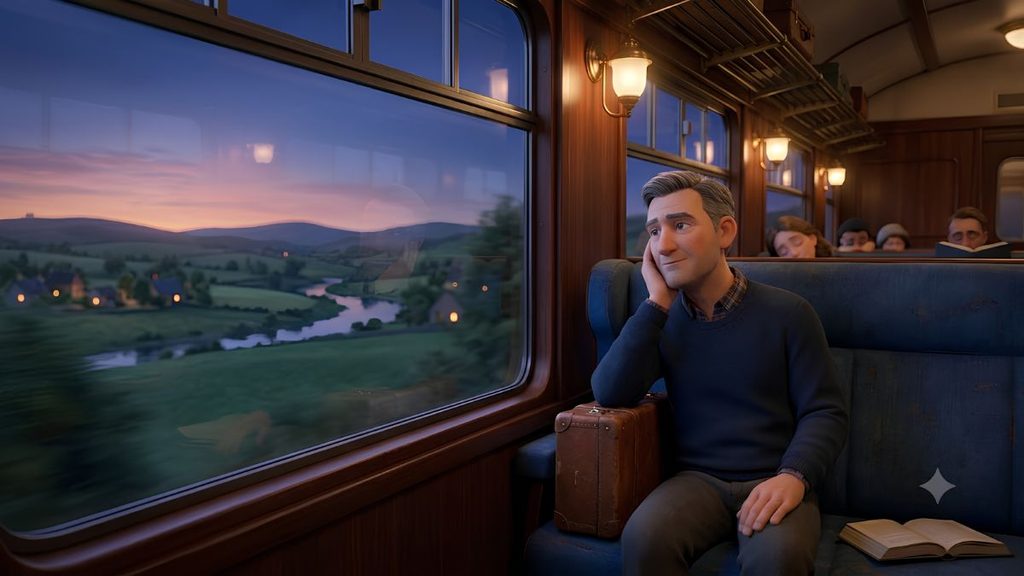
The train was scheduled to leave at 6:20 in the evening.
Daniel arrived at the station at 6:05.
He was not early because he was worried about missing the train.
He simply preferred to arrive with enough time to look around.
The station was small.
There were only two platforms, a ticket office, a waiting room, and a café that closed at seven.
A large clock hung above the entrance.
Its hands moved slowly toward 6:20.
Daniel stood beneath it with a small brown suitcase in one hand and a book in the other.
He had been traveling for work during the week and had decided to spend the weekend in Bellford, a small town several hours away.
There was no particular reason for choosing Bellford.
A friend had once mentioned that it was quiet.
That was enough.
Daniel had wanted somewhere quiet.
He had spent the previous few months surrounded by traffic, meetings, phone calls, emails, and crowded streets.
He wanted a weekend in which nothing was expected of him.
Bellford seemed suitable.
The platform was almost empty.
A woman sat on a bench reading a newspaper.
An elderly couple stood near the ticket machine.
A railway employee walked slowly along the platform carrying a small clipboard.
Daniel looked at the departure board.
BELLFORD — 18:20 — ON TIME
He smiled.
There was something comforting about seeing those words.
On time.
Nothing needed to be changed.
Nothing needed to be hurried.
The train would arrive at 6:20.
Daniel sat on a wooden bench.
He opened his book.
He read two pages.
Then he looked up.
The woman with the newspaper had folded it.
The elderly couple had found seats.
A man carrying a small suitcase had arrived.
The railway employee was now standing near the far end of the platform.
A few birds moved along the roof.
Daniel returned to his book.
The station clock moved from 6:12 to 6:13.
Then 6:14.
The train arrived at 6:18.
It came slowly around the curve.
Daniel closed his book.
The train stopped with a soft mechanical sound.
The doors opened.
He found his carriage.
Inside, the seats were covered in dark blue fabric.
There were only a few passengers.
Daniel placed his suitcase above his seat.
Then he sat beside the window.
Across the aisle, an elderly man was reading a magazine.
Two rows ahead, a woman was looking through a small bag.
Near the front of the carriage, a young couple spoke quietly.
Nobody seemed to be in a hurry.
At exactly 6:20, the train moved.
Daniel watched the station slide slowly away.
The platform became smaller.
The station building disappeared behind a row of trees.
Then the train passed several houses.
One had a yellow porch light.
Another had a garden with a small wooden fence.
A third had laundry hanging from a line.
Daniel watched until the houses disappeared.
The train continued.
He opened his book.
He read for several minutes.
Then he closed it.
The view outside was more interesting.
The railway line passed through open fields.
The grass was tall.
A few cows stood near a fence.
In the distance, several hills were turning dark beneath the evening sky.
The sun had not yet disappeared.
Its light rested softly on the fields.
Daniel leaned against the window.
The glass was cool.
He could feel the gentle movement of the train.
It was not fast.
This was an old railway line.
The journey took longer than the newer express route.
Daniel had deliberately chosen it.
He liked the idea of taking the slower train.
There was nowhere he needed to be quickly.
The first small station appeared after forty minutes.
Its name was Oakmere.
There was one platform.
A small shelter stood beneath a tree.
The train stopped.
Three people got off.
One man got on.
He carried a canvas bag.
He walked through the carriage and sat near the door.
The train remained at the station for three minutes.
Then the doors closed.
The train moved again.
Daniel watched Oakmere disappear.
The countryside became quieter.
There were fewer houses.
The fields became larger.
A river appeared beside the railway line.
It followed the train for several minutes.
Daniel could see the evening sky reflected in the water.
The river moved slowly.
Trees stood along its banks.
Some leaves had already begun changing color.
Daniel watched them pass.
He thought about nothing in particular.
That was one of the reasons he had wanted to take the journey.
At home, silence often gave him an opportunity to think about everything he had been avoiding.
On the train, there was nothing he needed to think about.
He could simply watch the landscape.
The carriage became quieter.
The woman with the small bag had fallen asleep.
The elderly man had put away his magazine.
The young couple were looking out of opposite windows.
Daniel checked his watch.
7:15.
The train had been traveling for almost an hour.
He stood and walked to the small refreshment area at the end of the carriage.
There was a vending machine.
He bought a bottle of water.
Then he returned to his seat.
The conductor passed through the carriage.
Daniel showed his ticket.
The conductor smiled.
“Bellford?”
“Yes.”
“Still a little while.”
“That’s fine.”
The conductor moved on.
Daniel looked out the window again.
The sky was darker now.
Lights appeared in distant houses.
A farmhouse stood on a hill.
Another light appeared.
Then another.
Soon the countryside looked like a collection of small glowing windows.
The train passed through a village.
There was a church.
A small grocery store.
A pub with warm lights.
Several parked cars.
A narrow road.
Then the village disappeared.
Daniel found himself wondering what the people inside those houses were doing.
Perhaps someone was preparing dinner.
Perhaps someone was washing dishes.
Perhaps a family was sitting around a table.
Perhaps someone was reading.
He smiled at the thought.
The train continued.
At 8:00, the conductor came through again.
Daniel looked at the timetable.
There were still several stations before Bellford.
He was not bothered.
The journey itself was becoming the point.
He opened his book again.
This time, he read for nearly twenty minutes.
Then he stopped.
His eyes had become tired.
He closed the book.
He placed it beside him.
Outside, it was almost completely dark.
The window now reflected the inside of the carriage.
Daniel could see his own face.
Behind it, the reflection of the lights.
The train moved steadily through the darkness.
Every so often, another light appeared outside.
A house.
A station.
A road.
A passing vehicle.
Then darkness again.
The sound of the train became more noticeable.
The gentle rhythm of the wheels against the tracks.
Click.
Clack.
Click.
Clack.
Daniel leaned back.
He closed his eyes for a moment.
The movement of the train was calming.
He opened them again.
The elderly man across the aisle was sleeping.
The woman near the front was also asleep.
The young couple were still awake.
They spoke quietly.
Daniel could not hear their words.
He did not need to.
Their voices blended with the sound of the train.
At 8:45, the train stopped at another station.
This one was called Millbrook.
The platform was nearly empty.
A station lamp illuminated the sign.
Two passengers got off.
No one boarded.
The doors closed.
The train waited.
Then it moved.
Daniel watched the platform disappear.
The journey continued.
He noticed that the carriage was warmer now.
The overhead lights had been dimmed slightly.
The train staff had turned down the heating.
Daniel pulled his jacket around himself.
He felt comfortable.
At 9:15, the conductor announced that Bellford was approaching.
Daniel looked outside.
The countryside had become almost completely dark.
He could see the faint outline of hills.
Then a line of streetlights appeared.
More houses appeared.
The train slowed.
Daniel picked up his suitcase.
He placed his book inside the side pocket.
The train passed several houses.
Then a row of shops.
A petrol station.
A small park.
Finally, the lights of Bellford station appeared.
The train slowed further.
It stopped at 9:28.
Daniel stepped onto the platform.
The air was cooler than he expected.
The station was quiet.
Only three other passengers got off.
The train doors closed.
A moment later, the train began moving again.
Daniel watched it leave.
Its red lights became smaller.
Then they disappeared around the bend.
He stood alone on the platform.
There was no rush.
He looked around.
Bellford station was smaller than he had imagined.
A brick building stood beside the platform.
There was a bench.
A lamp.
A timetable.
And a narrow path leading toward the town.
Daniel picked up his suitcase.
He walked through the station entrance.
Outside, the town was quiet.
Most shops were closed.
A bakery had already turned off its lights.
A small restaurant was still open.
Daniel walked along the main road.
His hotel was only ten minutes away.
He passed a bookstore.
A florist.
A grocery store.
A café.
Everything was closed.
But a few lights remained above the doors.
The streets were clean.
There were trees along the sidewalks.
The air smelled faintly of rain.
Daniel reached the hotel.
It was an old building with six rooms.
A small bell sat on the reception desk.
He pressed it.
After a few seconds, a woman appeared.
“Good evening.”
“Good evening. I have a reservation.”
She checked the book.
“Daniel?”
“Yes.”
“Room four.”
She handed him a key.
“The stairs are just there.”
“Thank you.”
Daniel carried his suitcase upstairs.
His room was simple.
A bed.
A wooden chair.
A small desk.
A lamp.
A wardrobe.
And a window overlooking the street.
He placed his suitcase beside the wardrobe.
Then he opened the window.
Cool air entered the room.
Somewhere outside, a clock struck ten.
Daniel closed the window.
He sat on the bed.
The mattress was comfortable.
He took his shoes off.
Then he looked at the room.
There was nothing particularly special about it.
And that was exactly what he wanted.
He changed into comfortable clothes.
Then he went downstairs.
The hotel restaurant was nearly empty.
Daniel ordered soup and bread.
He sat beside the window.
Outside, Bellford was quiet.
A few people walked along the street.
A bicycle passed.
A taxi stopped near the corner.
Then the road became empty again.
Daniel ate slowly.
The soup was warm.
The bread was fresh.
He drank a glass of water.
When he finished, he returned to his room.
He placed the key on the small table.
Then he sat beside the window.
The street below was almost completely empty.
A few lights remained on.
The hotel sign glowed softly.
Daniel thought about the train journey.
He remembered the fields.
The river.
The small stations.
The distant houses.
The lights in the countryside.
Nothing had happened.
And yet he felt as though he had gone somewhere far away.
Perhaps that was the value of slow travel.
You did not need an adventure.
You only needed enough time to notice things.
The next morning, Daniel woke at seven.
He opened the curtains.
Morning light entered the room.
Bellford was waking.
A baker pushed a cart down the street.
Someone opened the grocery store.
A woman walked her dog.
A bus stopped near the corner.
Daniel dressed.
He went downstairs for breakfast.
There was bread.
Butter.
Jam.
Tea.
Coffee.
Fruit.
He sat at a small table.
He spread butter on toast.
Then he looked through the window.
The town was beginning its ordinary day.
Daniel did not have plans.
He would walk around.
Perhaps he would visit the bookstore.
Perhaps he would sit in the café.
Perhaps he would walk toward the river.
He did not need to decide immediately.
He finished his tea.
Then he stood.
The morning was waiting.
There was plenty of time.
And for the first time in many months, Daniel was perfectly happy not to hurry anywhere.
The Evening Shift at the Little Hotel

Every evening at five o’clock, Clara arrived at the Bellwood Hotel.
The hotel stood on a quiet street near the edge of a small town.
It was not a large hotel.
There were only twenty-four rooms.
The ground floor contained a reception desk, a small sitting room, a dining room, and a narrow hallway leading to the kitchen.
Upstairs were the guest rooms.
The building itself was old, but it had been carefully maintained.
There were polished wooden floors, brass lamps, tall windows, and several comfortable chairs near the reception desk.
Clara had worked at the hotel for seven years.
She was the evening receptionist.
Her work was simple.
She welcomed guests.
Answered questions.
Checked reservations.
Gave people their room keys.
Occasionally answered the telephone.
And, at the end of the evening, she made sure the reception area was ready for the night.
There were no complicated responsibilities.
Most evenings passed quietly.
Clara liked that.
She arrived every evening at five.
She always walked from her apartment.
The walk took about twelve minutes.
She passed the same bakery.
The same flower shop.
The same small grocery store.
At the corner was a large tree that changed with the seasons.
In spring, it had pale green leaves.
In summer, it provided shade.
In autumn, its leaves became golden.
In winter, its branches were bare.
On this particular evening, the leaves were beginning to turn yellow.
Clara reached the hotel at 4:55.
She stood outside for a moment.
The street was quiet.
A bicycle passed.
A man walked a small dog.
The bakery across the road was closing.
Clara opened the hotel door.
A small brass bell sounded above her.
She stepped inside.
The lobby was warm.
The afternoon receptionist, Helen, was standing behind the desk.
“Good evening, Clara.”
“Good evening.”
Helen smiled.
“Quiet today.”
“That’s nice.”
Helen handed Clara the small notebook used for shift changes.
“There are three arrivals.”
Clara looked at the page.
Room 8.
Room 14.
Room 21.
She nodded.
“Anything else?”
“Nothing unusual.”
Clara smiled.
“Perfect.”
Helen put on her coat.
Then she left through the front door.
Clara was alone at the reception desk.
She placed her handbag beneath the counter.
Hung her coat in the small staff room.
Then returned to the lobby.
Her first task was always the same.
She checked the reception desk.
The computer was on.
The telephone was working.
The guest register was in place.
The room keys were arranged on their wooden board.
She counted them.
Everything was correct.
Then she looked around the lobby.
Three armchairs stood near the fireplace.
One was slightly crooked.
Clara moved it a few inches.
The small table beside it had a magazine.
She straightened the magazine.
There were two cushions on the sofa.
She adjusted them.
Then she looked at the flowers.
A vase stood on the reception counter.
The flowers were still fresh.
She moved the vase slightly toward the center.
That was better.
Clara stepped back.
The lobby looked neat.
She checked the clock.
5:08.
There was still plenty of time before the first guest arrived.
She went into the small staff kitchen.
She filled the kettle.
While the water heated, she opened the cupboard.
There were several tea boxes.
Clara chose chamomile tea.
She placed a tea bag inside her mug.
The kettle clicked.
She poured the water.
Then she carried the mug back to reception.
She sat behind the desk.
The lobby was quiet.
Outside, the afternoon light was beginning to soften.
Clara took a sip.
The hotel had a particular sound in the evening.
The refrigerator in the dining room hummed quietly.
The heating system made a faint sound.
Occasionally, footsteps could be heard upstairs.
A door would close.
Then everything would become quiet again.
Clara liked those sounds.
They made the hotel feel occupied without being busy.
At 5:30, the first guest arrived.
He was a middle-aged man carrying a small suitcase.
Clara stood.
“Good evening.”
“Good evening. I have a reservation.”
“Name, please?”
He gave his name.
Clara found it in the register.
“Room fourteen.”
She checked his details.
Then handed him the key.
“Breakfast is from seven until nine.”
“Thank you.”
“The dining room is just down the hall.”
The man nodded.
“Thank you.”
He picked up his suitcase.
Then walked toward the stairs.
Clara watched him disappear.
The lobby became quiet again.
At 5:50, the second guest arrived.
It was a woman traveling alone.
She had a small overnight bag.
Clara checked her reservation.
“Room eight.”
The woman smiled.
“Is there a lift?”
“No, I’m afraid not.”
“That’s all right.”
Clara pointed toward the staircase.
“The room is on the first floor.”
“Thank you.”
The woman walked upstairs.
Clara sat down again.
At six o’clock, she looked through the front window.
The sky was turning pale orange.
The streetlights had not yet come on.
A few people were walking toward the town center.
The bakery was now dark.
The flower shop had closed.
The grocery store remained open.
Clara watched the owner sweep the pavement.
Then she returned to her desk.
The telephone rang.
She answered.
“Good evening, Bellwood Hotel.”
It was a guest asking what time breakfast began.
“Seven o’clock.”
“Thank you.”
“You’re welcome.”
The call ended.
Clara wrote a small note in the notebook.
Then she returned the pen to its place.
She liked keeping everything organized.
At 6:20, the final guest arrived.
An older couple.
They had driven from another town.
Clara found their reservation.
“Room twenty-one.”
The husband thanked her.
His wife looked around the lobby.
“What a lovely hotel.”
Clara smiled.
“Thank you.”
The couple took their bags upstairs.
The lobby became quiet.
All three expected guests had arrived.
Clara looked at the clock.
6:35.
The busiest part of her evening was finished.
Now there was nothing urgent to do.
She walked through the lobby.
She checked the sitting room.
The chairs were still straight.
The magazines were arranged.
The curtains were open.
She adjusted one curtain so that it hung evenly.
Then she walked into the dining room.
The tables were prepared for breakfast.
Each table had a small vase.
There were clean glasses.
Napkins.
Small plates.
The coffee machine was ready for the morning.
Clara checked the refrigerator.
Everything was fine.
She closed the door.
Then she walked back to reception.
Outside, the sky was becoming darker.
The streetlights came on one by one.
Their warm reflections appeared on the windows.
Clara switched on the lamps in the lobby.
The room immediately felt warmer.
The brass lamps cast soft pools of light across the wooden floor.
She liked the hotel most at this time of day.
It was neither daytime nor fully nighttime.
Guests had returned to their rooms.
The street had become quiet.
The hotel seemed to settle into itself.
At seven o’clock, Clara made another cup of tea.
This time she chose ordinary black tea.
She sat in the armchair behind the reception desk.
She opened a small book.
She read for fifteen minutes.
Then she looked up.
A guest walked downstairs.
He wanted an extra towel.
Clara called housekeeping.
A few minutes later, the towel was ready.
The guest thanked her.
Then returned upstairs.
Clara opened her book again.
She read another few pages.
At 7:40, she heard rain.
It had begun quietly.
Drops tapped against the windows.
The street outside became shiny.
Cars passed more slowly.
Clara looked toward the front door.
The rain became slightly heavier.
She enjoyed rainy evenings at the hotel.
The lamps seemed brighter.
The lobby felt warmer.
She walked to the front window.
A few umbrellas moved along the street.
A man hurried toward the grocery store.
A woman stood beneath an awning.
Then the street became empty.
Clara returned to her desk.
She checked the reservations for the next morning.
Four guests were expected to leave.
Two new guests would arrive before noon.
She wrote the information in the notebook.
Then she closed it.
There was nothing else to do.
At eight o’clock, the dining room was completely quiet.
Clara walked through it again.
She checked each table.
Everything was ready.
She counted the chairs.
Twenty.
She did not really need to count them.
But she had done it so many times that it had become part of her routine.
She walked back to reception.
The rain continued.
At 8:30, the telephone rang again.
A guest asked whether the hotel had an umbrella.
“Yes.”
Clara found one in the cupboard.
She left it at reception.
A few minutes later, the guest came downstairs.
He borrowed it.
“Thank you.”
“You’re welcome.”
He walked outside.
Clara watched him open the umbrella.
Then he disappeared down the street.
At 9:00, the hotel became very quiet.
No guests were coming in.
No one needed anything.
The telephone remained silent.
Clara sat behind the desk.
She could hear the rain.
She could hear the clock.
She could hear the occasional sound of footsteps upstairs.
The hotel had settled into its nighttime rhythm.
Clara opened her book again.
She read slowly.
Every few pages, she looked around the lobby.
The lamps were still glowing.
The flowers still stood on the desk.
The armchairs remained in place.
Everything was as it should be.
At 9:45, Clara closed her book.
She stretched.
Then she began preparing for the final part of her shift.
She checked the front door.
It was locked.
She checked the side entrance.
Locked.
She checked the dining room.
Everything was ready for breakfast.
She checked the sitting room.
Everything was neat.
She checked the guest register.
Nothing unusual.
Then she returned to the desk.
She made another note in the shift book.
The note was short.
Quiet evening. Three arrivals. No problems.
She smiled.
That was all.
A quiet evening.
Three arrivals.
No problems.
She closed the notebook.
At 10:15, one guest came downstairs.
He asked whether there was somewhere nearby that sold bottled water.
Clara told him about the small shop two streets away.
“Is it still open?”
“Until eleven.”
“Thank you.”
He left.
Clara looked at the clock.
10:20.
She returned to her book.
The rain had stopped.
The pavement outside remained wet.
The streetlights reflected on the road.
The clouds were beginning to move away.
A small patch of clear sky appeared above the rooftops.
Clara watched it for a moment.
Then she sat down.
At 11:00, the hotel was completely still.
The last guest who had been downstairs had returned to his room.
The dining room was dark.
The sitting room was empty.
The lobby lights remained on.
Clara turned off two lamps.
Then one more.
She left the lamp beside the reception desk on.
The lobby looked softer.
She liked leaving that one light on.
It made the hotel feel welcoming even when nobody was downstairs.
She checked the clock.
11:10.
Her shift would end at midnight.
There was still time.
Clara made a final cup of tea.
She did not make coffee.
She preferred tea at night.
She sat behind the desk.
The hotel was so quiet that she could hear the ticking of the clock above the reception area.
Tick.
Tick.
Tick.
She took a sip.
The tea was warm.
Outside, a car passed.
Its headlights moved briefly across the lobby wall.
Then darkness returned.
Clara opened her book.
She read.
The words came slowly.
Her eyes became tired.
At 11:40, she closed the book.
She put it inside her handbag.
Then she began closing the lobby.
She switched off the remaining lamps.
Only the small desk lamp remained.
She checked the front door again.
Locked.
She checked the guest register.
Closed.
She checked the telephone.
Ready.
She placed the keys in their wooden slots.
Then she switched off the desk lamp.
The lobby became dark.
Clara stood for a moment.
The hotel was quiet.
She smiled.
Everything was ready for the morning.
She put on her coat.
Collected her handbag.
And walked toward the staff exit.
Before leaving, she looked back at the lobby.
The chairs were straight.
The flowers were in place.
The magazines were neatly arranged.
The wooden floor reflected the faint light from the hallway.
Nothing needed attention.
She turned off the final light.
Then she stepped outside.
The rain had completely stopped.
The air smelled fresh.
The street was almost empty.
Clara locked the door.
Then she began walking home.
The town looked different at midnight.
The shops were dark.
The bakery windows were empty.
The grocery store had closed.
The streetlights remained on.
Clara walked beneath them.
She passed the large tree at the corner.
Its leaves moved gently in the night breeze.
She reached her apartment twelve minutes later.
Inside, she removed her coat.
Placed her handbag on the chair.
Made herself a glass of water.
Then went into the bedroom.
Before going to sleep, she looked at the clock.
12:25.
Another evening had passed.
Nothing extraordinary had happened.
Three guests had arrived.
One guest had borrowed an umbrella.
Someone had asked about breakfast.
Rain had fallen.
A few pages of a book had been read.
The lobby had been arranged.
The doors had been locked.
And now the day was finished.
Tomorrow would be similar.
Clara would wake.
Have breakfast.
Walk to the hotel.
Unlock the door.
Take over the reception desk.
Arrange the chairs.
Check the flowers.
Welcome the guests.
Answer a few questions.
Make tea.
Watch the afternoon become evening.
Then she would do it all again.
There was comfort in knowing that.
Clara turned off the bedroom light.
She slipped beneath the blanket.
Outside, the town was quiet.
Somewhere down the street, a clock struck one.
Then silence returned.
Clara closed her eyes.
The Bellwood Hotel was quiet too.
The chairs were waiting in the lobby.
The flowers stood on the reception desk.
The guest keys rested in their wooden slots.
The dining room was ready for morning.
Everything was in its place.
There was nothing left to do.
And Clara fell asleep.
3. The Saturday That Went Exactly as Planned

On Saturday morning, Thomas woke at seven o’clock.
There was no alarm.
He had simply become accustomed to waking around that time.
For a few moments, he remained beneath the blanket and listened to the apartment.
It was quiet.
A car passed somewhere below.
A bird called from a nearby tree.
The heating system made a soft clicking sound.
Thomas opened his eyes.
Morning light had already begun entering through the curtains.
He turned toward the window.
The curtains were pale blue, and the sunlight made them look almost white.
He stayed in bed for another five minutes.
There was nowhere he needed to be.
That was one of the pleasant things about Saturday.
He did not have to hurry.
At seven-ten, Thomas got out of bed.
He folded the blanket.
Straightened the pillow.
Opened the curtains.
Then opened the window slightly.
The morning air was cool.
He could smell damp pavement from the rain that had fallen during the night.
Thomas stood there for a moment.
Across the street, a woman was watering plants on her balcony.
A delivery van was parked beside the curb.
A man walked past carrying a newspaper.
The town was beginning its ordinary Saturday.
Thomas closed the window.
Then he went into the bathroom.
He washed his face.
Brushed his teeth.
Shaved.
Took a shower.
Everything happened in the usual order.
He dried his hair.
Hung the towel neatly.
Then walked into the kitchen.
The kitchen was small.
There was a wooden table near the window.
Two chairs stood beside it.
A kettle sat on the counter.
Thomas filled it with water.
He pressed the switch.
The kettle began to heat.
While waiting, he opened the cupboard.
He took out a plate.
Then a bowl.
Then a spoon.
He placed them on the table.
The kettle clicked.
Thomas poured water into a mug.
He added tea.
Then he opened the refrigerator.
There was bread.
Butter.
Cheese.
A few eggs.
Milk.
Some vegetables from the previous day.
He decided to make toast and scrambled eggs.
He placed two slices of bread into the toaster.
Then cracked two eggs into a bowl.
He added a little salt.
Nothing else.
He stirred them slowly.
The toaster clicked.
Thomas removed the toast.
He placed it on the plate.
Then heated a small pan.
The butter melted.
He poured in the eggs.
They began cooking immediately.
Thomas moved them gently with a wooden spoon.
The kitchen smelled warm and familiar.
Outside, the morning became brighter.
Thomas finished the eggs.
He placed them beside the toast.
Then poured himself another cup of tea.
He sat at the table.
For a few minutes, he simply ate.
The toast was crisp.
The eggs were soft.
The tea was warm.
There was no music playing.
No television.
Only the quiet sounds of Saturday morning.
A spoon touched the side of the mug.
A car passed.
Someone closed a door in the neighboring apartment.
Thomas finished breakfast.
He carried the plate and mug to the sink.
He filled the sink with warm water.
Then added a little dish soap.
He washed the plate.
Then the bowl.
Then the spoon.
Then the frying pan.
He rinsed everything.
Placed the plate on the drying rack.
Then wiped the kitchen counter.
The routine took only a few minutes.
When he finished, the kitchen looked exactly as it had before breakfast.
Thomas dried his hands.
Then walked into the living room.
Several plants stood near the window.
A tall green plant.
Two small herbs.
A fern.
And a small flowering plant that had recently begun producing new leaves.
Thomas checked the soil.
The tall plant was fine.
The fern needed water.
He carried the watering can from the balcony.
He poured a little water into the fern’s pot.
Then moved to the herbs.
The soil was dry there too.
He watered them.
The small flowering plant did not need anything.
Thomas returned the watering can to the balcony.
He opened the door.
The morning air had become warmer.
He stepped outside.
The balcony overlooked a quiet street.
He leaned against the railing.
The woman across the street was still watering her plants.
The delivery van had left.
A bicycle was now leaning against a lamppost.
Thomas stood there for a while.
Then he went back inside.
It was eight-thirty.
He decided to read the newspaper.
He had bought it the previous afternoon.
It was sitting on the table.
Thomas made another cup of tea.
Then sat in his favorite chair.
He opened the newspaper.
He read about local road repairs.
Then an article about a new community garden.
Then the weather forecast.
The forecast predicted mild weather.
Thomas looked outside.
It seemed correct.
He turned the page.
There was an article about a bookstore opening a small reading room.
Thomas made a mental note to visit sometime.
He continued reading.
Nothing particularly interesting happened.
He liked that.
After half an hour, he folded the newspaper.
It was now nine-fifteen.
Thomas stood.
He looked around the apartment.
The bedroom was tidy.
The kitchen was clean.
The living room was fine.
There was no reason to do anything else.
But he remembered that he needed groceries.
So he took a reusable shopping bag from the cupboard.
He put his wallet and keys into his jacket pocket.
Then left the apartment.
The hallway was quiet.
He walked down the stairs.
On the ground floor, an elderly neighbor was checking her mailbox.
“Good morning,” Thomas said.
“Good morning.”
She held a small envelope.
“Looks like the electricity bill.”
Thomas smiled.
“Always something.”
“Always.”
They both laughed softly.
Thomas stepped outside.
The morning was pleasant.
The sky was pale blue.
A few clouds moved slowly above the rooftops.
He walked toward the grocery store.
It was about eight minutes away.
He passed the bakery first.
The smell of fresh bread drifted onto the pavement.
Thomas slowed down.
He looked through the window.
Several loaves were arranged on wooden shelves.
He decided to stop.
Inside, the bakery was warm.
A woman stood behind the counter.
“Good morning.”
“Good morning.”
Thomas bought a small loaf of bread.
The woman wrapped it in paper.
He placed it carefully inside his shopping bag.
Then continued walking.
The grocery store was quiet.
There were only a few customers.
Thomas picked up a basket.
He started with vegetables.
Potatoes.
Carrots.
Tomatoes.
A small bunch of spinach.
Then he walked to the fruit section.
Two apples.
Three bananas.
A few oranges.
He checked the milk.
There was plenty at home.
He did not buy any.
He picked up a carton of yogurt.
Then some rice.
A packet of pasta.
And a small jar of tomato sauce.
He walked slowly through the aisles.
He did not need to hurry.
A store employee was arranging boxes on a shelf.
An elderly man compared two brands of tea.
A woman pushed a shopping cart.
Somewhere near the entrance, a child was asking his mother for biscuits.
Thomas reached the checkout.
There were two people ahead of him.
He waited.
The cashier scanned the items.
Thomas paid.
He put everything into his bag.
Then walked home.
The bakery smelled even stronger on the way back.
Thomas passed the same flower shop.
This time, it was open.
Buckets of flowers stood outside.
Yellow flowers.
White flowers.
Pink flowers.
Thomas stopped for a moment.
He looked at them.
Then continued walking.
He reached his apartment at ten-fifteen.
He carried the groceries upstairs.
In the kitchen, he unpacked everything.
Potatoes went into the lower cupboard.
Rice went onto the middle shelf.
Pasta went beside it.
The fruit went into a bowl.
The vegetables went into the refrigerator.
The bread remained on the counter.
Thomas wiped the grocery bag.
Then folded it.
He placed it back inside the cupboard.
Everything was put away.
He looked at the clock.
Ten-thirty.
There was still most of the day ahead.
Thomas decided to wash some clothes.
He collected a small basket of laundry.
Shirts.
Trousers.
Socks.
A towel.
He carried everything to the washing machine.
Added detergent.
Closed the door.
Pressed the button.
The machine started.
Thomas listened to the water entering.
Then he walked away.
He returned to the living room.
The sunlight had moved across the floor.
It now reached the edge of the sofa.
Thomas opened a book.
He sat down.
The book was a quiet novel about a man who owned a small shop near the sea.
Thomas read for almost an hour.
Nothing dramatic happened.
The shopkeeper opened the shop.
A customer bought a postcard.
A fisherman stopped for coffee.
The shopkeeper swept the floor.
Thomas liked the book for exactly that reason.
At eleven-thirty, the washing machine stopped.
Thomas stood.
He took the clothes out.
Carried them to the drying rack.
He hung each shirt carefully.
Then the trousers.
Then the towel.
Socks went over the small rail.
He placed the rack near the open window.
A gentle breeze moved through the clothes.
Thomas looked at them.
Everything was ordinary.
Everything was done.
He returned to the living room.
It was almost noon.
He began preparing lunch.
He chopped two tomatoes.
Sliced an onion.
Washed some spinach.
Then put a pan on the stove.
He heated a little oil.
Added the onion.
Waited.
The kitchen slowly filled with the smell of cooking.
He added tomatoes.
Then spinach.
Finally, some rice that he had cooked the previous evening.
Thomas stirred everything together.
He tasted it.
Added a little salt.
Then turned off the stove.
He served the meal in a bowl.
Sat at the table.
And ate.
Outside, the street had become busier.
People were walking toward the town center.
A bus passed.
Someone was mowing a small lawn.
Thomas finished his lunch.
He washed the bowl.
Then wiped the table.
Afterward, he returned to his chair.
The apartment was warm.
The afternoon sun entered through the window.
Thomas felt slightly sleepy.
He closed his eyes.
He did not intend to sleep.
But he rested for twenty minutes.
When he opened his eyes, it was one-thirty.
The apartment was still quiet.
Thomas stood.
He looked at the plants.
The fern had already absorbed most of the water.
He smiled.
Then he decided to go for a short walk.
He put on his shoes.
Took his keys.
And went outside.
There was a small park about fifteen minutes away.
Thomas walked there slowly.
He passed houses.
Trees.
A small playground.
A café.
A bicycle repair shop.
At the park, people were sitting on benches.
Two children played with a ball.
An older man read a book.
A woman walked her dog.
Thomas followed the path around the pond.
The water was calm.
Several ducks moved slowly near the reeds.
He stopped beside a bench.
Sat down.
And watched them.
There was nothing to do.
That was fine.
He remained there for several minutes.
Then continued walking.
At three o’clock, he returned home.
The laundry was almost dry.
He folded the clothes.
Placed the shirts in the wardrobe.
Folded the towel.
Put the socks into a drawer.
Then he made tea.
This time, he took his mug to the balcony.
He sat in a small chair.
The afternoon was becoming quieter.
The sky was beginning to change.
Thomas drank his tea slowly.
He could hear birds.
A distant vehicle.
Someone talking on the street below.
The sound of a door opening.
Then closing.
He finished his tea.
At four o’clock, he returned inside.
He spent a few minutes organizing a bookshelf.
He moved three books to another shelf.
Dust collected near the back.
He wiped it.
Then arranged the books again.
That was enough.
He did not feel like doing anything else.
At five, he started preparing dinner.
He had bought vegetables in the morning.
He chopped carrots.
Cut potatoes.
Added onions.
He put everything into a pot.
Added water.
Then let it simmer.
The kitchen became warm.
Thomas stood by the stove.
He watched the soup.
Nothing changed quickly.
The vegetables softened.
The water moved gently.
Steam rose from the pot.
He stirred it once.
Then again.
At six, dinner was ready.
Thomas served himself a bowl.
He added a slice of the fresh bread from the bakery.
Then sat at the table.
Outside, the sun was setting.
The sky had become pale orange.
Thomas ate slowly.
When he finished, he washed the dishes.
The kitchen became quiet again.
He dried his hands.
Then switched on the small lamp above the table.
The apartment now felt like an evening place.
Thomas sat down with his book.
He read for an hour.
At seven-thirty, he closed it.
He did not feel like watching television.
Instead, he made another cup of tea.
Then sat beside the window.
The sky outside was dark.
The first stars were visible.
Streetlights illuminated the pavement.
A few people walked home.
A dog barked somewhere in the distance.
Thomas watched the street.
The day had gone exactly as he had expected.
Breakfast.
Dishes.
Plants.
Newspaper.
Groceries.
Laundry.
Lunch.
A walk.
Tea.
Books.
Dinner.
Nothing unusual.
Nothing exciting.
Nothing unexpected.
It had been a good day.
At eight-thirty, Thomas checked the plants one final time.
The apartment was tidy.
The kitchen was clean.
The laundry was finished.
The groceries were put away.
Everything was ready for tomorrow.
He turned off the kitchen light.
Then the living room lamp.
He walked through the apartment.
Bedroom.
Bathroom.
Kitchen.
Living room.
Everything was in order.
At nine, he brushed his teeth.
Changed into comfortable clothes.
Then climbed into bed.
He pulled the blanket over himself.
The apartment was silent.
Outside, the street continued its quiet nighttime rhythm.
A car passed.
A door closed.
A bird made one final sound.
Then there was silence again.
Thomas closed his eyes.
He thought briefly about the day.
There had been no special occasion.
No important meeting.
No journey.
No surprise.
Just a Saturday.
An ordinary Saturday.
The kind of day that could easily be forgotten.
And perhaps that was what made it pleasant.
Nothing needed to be remembered.
Nothing needed to be solved.
Everything had been simple.
Everything had been enough.
Thomas listened to the quiet apartment.
The refrigerator hummed softly in the kitchen.
The clock moved steadily on the wall.
Tick.
Tick.
Tick.
He breathed slowly.
Tomorrow would come when it came.
There would be breakfast.
Perhaps another walk.
Perhaps more reading.
Perhaps another cup of tea.
There was no need to decide now.
The day was finished.
The dishes were clean.
The plants had been watered.
The groceries were put away.
The clothes were folded.
The book was waiting on the table.
The curtains were closed.
The lights were off.
And Thomas slowly drifted to sleep.
The Chair by the Window

Every Saturday morning, Daniel worked on the old chair by the window.
It was not a valuable chair.
It had never belonged to anyone famous.
It was not an antique that collectors would search for.
It was simply an old wooden chair that had been in his apartment for many years.
Daniel had bought it at a small secondhand shop.
The chair had a curved back, four sturdy legs, and a wide wooden seat.
The varnish had become dull with age.
One of the arms had several scratches.
The fabric cushion was faded.
But Daniel liked it.
Most importantly, the chair was comfortable.
It stood beside the largest window in his living room.
From there, he could see the rooftops of the neighboring houses, a narrow street, and the tops of several trees.
He often sat there in the evening with a book.
Sometimes he drank tea.
Sometimes he simply watched the weather.
For years, he had thought about restoring the chair.
He never seemed to have enough time.
Then, one autumn Saturday, he finally decided to begin.
There was no deadline.
Nobody had asked him to do it.
He simply woke up and thought that it might be a good day to start.
At eight o’clock, Daniel made breakfast.
He toasted two slices of bread.
Made coffee.
And sat at the kitchen table.
Outside, the morning was gray.
The sky was covered with thin clouds.
A light breeze moved through the trees.
Daniel finished his breakfast.
He washed the plate and cup.
Then he looked toward the living room.
The chair was still beside the window.
He smiled.
“Today,” he said quietly.
He carried the chair into the middle of the room.
Then he examined it.
There were several scratches along the arms.
The wooden seat had a few marks.
The back was dusty.
One small area near the bottom had lost almost all of its varnish.
Daniel ran his hand across the wood.
It felt slightly rough.
He decided that the first thing to do was clean it.
He went to the cupboard and took out a soft cloth.
Then he brought a small bowl of warm water.
He added a little soap.
Daniel dipped the cloth into the water.
Squeezed it.
Then wiped the chair.
He started with the back.
Slowly, he moved the cloth across the wooden surface.
Left to right.
Then right to left.
He cleaned the spaces between the wooden bars.
Then the arms.
Then the sides.
Finally, the legs.
It was not difficult work.
It simply took time.
Daniel did not hurry.
He rinsed the cloth several times.
The water in the bowl became slightly cloudy.
He replaced it with fresh water.
Then continued.
By nine o’clock, the chair was clean.
Daniel placed it near the open window.
He let the wood dry naturally.
Then he made another cup of coffee.
He sat at the kitchen table.
There was no need to continue immediately.
The chair could dry while he rested.
Daniel opened a newspaper.
He read about the weather.
Then a local gardening article.
Then a small story about a new community center.
Nothing held his attention for long.
He looked toward the living room.
The chair was still drying.
At ten o’clock, he returned to it.
The wood felt dry.
Daniel examined the surface again.
Cleaning had revealed several scratches that had been hidden beneath the dust.
He ran his fingers over them.
They were shallow.
Most could be polished.
He decided to sand the wood lightly.
He carried the chair to a small work table near the balcony.
Then he gathered his materials.
A sheet of fine sandpaper.
A slightly rougher sheet.
A soft brush.
A clean cloth.
A small container of wood polish.
A pair of old gloves.
He placed everything neatly on the table.
Daniel liked preparing his workspace.
He never enjoyed having tools scattered around.
He put the sandpaper on the left.
The brush beside it.
The cloth on the right.
The polish behind them.
Then he placed the chair in front of him.
He sat down.
The chair looked slightly different without its faded cushion.
Daniel had removed it before beginning.
The wooden frame looked simple.
Almost plain.
He picked up the sandpaper.
Then began.
He moved slowly along one arm.
The sound was quiet.
Scratch.
Scratch.
Scratch.
He worked in one direction.
Then turned the chair slightly.
He continued along the other arm.
The morning became brighter.
A little sunlight appeared through the clouds.
Daniel paused.
He opened the balcony door.
Fresh air entered the room.
Somewhere outside, a bird was singing.
He returned to the chair.
The sanding continued.
There was something calming about repetitive work.
The same movement.
The same sound.
No decisions were necessary.
Daniel only needed to pay attention to the wood beneath his fingers.
After a while, he stopped.
He brushed away the fine dust.
The surface looked smoother.
He touched it.
Much better.
He continued with the back of the chair.
Then the seat.
Then the legs.
By noon, he had finished sanding.
Daniel stood back.
The chair looked older than before.
The faded varnish was almost completely gone.
But the wood itself looked good.
There were marks and scratches.
He did not mind them.
He had never wanted the chair to look new.
He wanted it to look cared for.
Daniel cleaned the dust from the chair.
Then washed his hands.
He made lunch.
A simple sandwich.
He ate it beside the window.
The chair stood nearby.
Daniel looked at it while he ate.
He thought about how long it had been sitting there.
Years.
He remembered reading books in it.
Drinking tea.
Listening to rain.
Talking on the telephone.
Watching snow.
Once, he had fallen asleep in it while reading.
The chair had been part of his life without him really noticing.
Perhaps that was why he wanted to restore it.
Not because it was valuable.
Because it was familiar.
After lunch, Daniel washed the dishes.
Then returned to the chair.
It was now one o’clock.
He opened the small container of wood polish.
The smell was mild.
He placed a little polish onto the cloth.
Then began rubbing it into the wood.
The first section became darker.
The natural color of the wood appeared beneath the dull surface.
Daniel continued.
The arm became smooth and slightly shiny.
He moved to the back.
Then the other arm.
Then the seat.
He worked slowly.
Every few minutes, he stopped to look at the surface.
Sometimes he added a little more polish.
Sometimes he used a clean part of the cloth.
Eventually, the chair began to look warmer.
The wood had a soft brown color.
The scratches were still visible.
But they were less noticeable.
Daniel liked the result.
He did not want a perfect chair.
He wanted the chair he remembered.
At two o’clock, he stopped.
He carried the chair to the balcony.
There was a light breeze.
He placed it in a shaded area.
The polish needed time to settle.
Daniel went inside.
He made tea.
Then sat on the sofa.
He picked up his book.
For the next hour, he read.
Outside, the weather changed.
The clouds moved away.
Sunlight appeared across the balcony.
Daniel watched it move slowly.
At three-thirty, he checked the chair.
The surface was dry.
He brought it inside.
Then examined the legs.
One leg had a small uneven area near the bottom.
Daniel had noticed it before.
It did not make the chair unstable.
Still, he decided to smooth it.
He turned the chair upside down.
Placed a cloth beneath it.
Then carefully worked on the small area.
A few minutes later, it felt smooth.
He stood the chair upright.
It was steady.
Daniel sat down.
The chair felt exactly as it always had.
That made him smile.
He stood again.
There was still one part left.
The cushion.
It had been covered with faded blue fabric.
The fabric was clean but worn.
Daniel had bought a new piece of fabric several months earlier.
He had chosen a simple beige material.
It was still inside a drawer.
He went to find it.
The fabric was folded neatly.
Daniel brought it to the work table.
He placed the cushion on top.
Then measured the fabric.
He cut it carefully.
There was no need to rush.
He checked the edges twice.
Then folded the fabric around the cushion.
Using a small stapler, he secured one side.
Then the opposite side.
He adjusted the corners.
One corner was slightly uneven.
Daniel removed the staple.
Tried again.
Better.
He continued.
The work required attention.
But it was quiet.
The room was peaceful.
Sunlight came through the window.
The clock on the wall moved slowly.
At four-thirty, the cushion was finished.
Daniel placed it on the chair.
The beige fabric looked good against the warm brown wood.
He stepped back.
The chair looked almost new.
But not quite.
It still had scratches.
A few marks remained.
The wood was not perfectly even.
The cushion had tiny imperfections.
Daniel liked all of that.
It looked like the same chair.
Only better cared for.
He moved it back beside the window.
Then sat down.
The chair felt comfortable.
The new cushion was slightly firmer than the old one.
Daniel leaned back.
Outside, the afternoon light was beginning to fade.
He watched people walking along the street.
A woman carried groceries.
A man rode a bicycle.
Someone walked a dog.
A bus passed.
Then the street became quiet again.
Daniel sat in the chair for twenty minutes.
He did nothing.
He simply looked outside.
The room smelled faintly of wood polish.
The chair felt solid beneath him.
He ran one hand along the arm.
Smooth.
He smiled.
There was no great achievement in restoring a chair.
Nobody would congratulate him.
There would be no photograph in a newspaper.
But Daniel felt satisfied.
He had taken something ordinary.
Something old.
Something slightly worn.
And given it some attention.
That was enough.
At five-thirty, Daniel stood.
He cleaned his workspace.
He gathered the sandpaper.
Folded the cloth.
Closed the polish container.
Put the tools away.
He swept the floor.
Fine wood dust had collected beneath the work table.
When everything was clean, he washed his hands.
Then made dinner.
He prepared a simple vegetable soup.
While it cooked, he occasionally glanced toward the chair.
It looked different in the evening light.
The polished wood reflected a soft golden glow.
The beige cushion looked warm.
Daniel finished cooking.
He served the soup.
Then carried his bowl to the living room.
Instead of sitting at the kitchen table, he sat in the restored chair.
The chair was comfortable.
Perhaps more comfortable than before.
He ate slowly.
Outside, the sky became darker.
The first streetlights came on.
Their light appeared through the window.
Daniel finished his soup.
He carried the bowl to the kitchen.
Washed it.
Then returned to the chair.
He made tea.
This time, he placed the mug on the small table beside him.
Then opened his book.
He read.
The evening became quieter.
The building around him settled into nighttime.
Someone closed a door upstairs.
A car passed outside.
The wind moved the branches of the trees.
Daniel continued reading.
Every so often, he touched the arm of the chair.
It was smooth.
He liked knowing that he had done the work himself.
At nine o’clock, he closed the book.
He looked at the chair.
It had taken the entire day.
Not continuously.
There had been breakfast.
Lunch.
Tea.
Reading.
Resting.
But the whole day had been gently connected by the chair.
Daniel thought that perhaps this was what he enjoyed about quiet hobbies.
They gave ordinary time a shape.
The day did not need to be busy.
It only needed something small to give attention to.
A piece of wood.
A ball of yarn.
A blank page.
A garden.
A photograph.
A musical instrument.
Something simple could be enough.
Daniel stood.
He picked up his mug.
The chair remained beside the window.
It looked as though it had always belonged there.
He turned off the living room lamp.
Then walked toward the bedroom.
Before closing the door, he looked back once more.
The chair stood quietly in the darkness.
Moonlight came through the window.
A soft outline appeared along its wooden frame.
Daniel smiled.
Tomorrow he might sit there and read.
Perhaps he would drink coffee.
Perhaps he would simply watch the morning.
There was no project left.
Nothing else needed to be repaired.
The chair was finished.
For tonight, that was enough.
Daniel went to bed.
The apartment became quiet.
Outside, the trees moved gently in the night breeze.
The restored chair waited beside the window.
And Daniel slowly fell asleep.
The Soup on a Rainy Evening

When Elena arrived home that evening, it was raining.
It was not a heavy rain.
It had begun sometime during the afternoon and had continued quietly through the evening.
By the time Elena reached her apartment building, the pavement was wet and shining beneath the streetlights.
She climbed the stairs slowly.
There was no reason to hurry.
She had finished work for the day.
Nothing was waiting for her.
She had no appointments.
No messages that needed an immediate reply.
Only dinner remained.
Elena unlocked her apartment door.
Inside, everything was quiet.
She placed her handbag on the small table near the entrance.
Then removed her shoes.
The rain could still be heard through the windows.
A gentle tapping.
Sometimes a little louder.
Sometimes softer.
Elena walked into the kitchen.
The kitchen was small but comfortable.
There was a wooden table near the window.
A refrigerator stood against one wall.
Above the stove were several shelves holding jars, cups, and small cooking utensils.
A yellow lamp hung above the table.
Elena switched it on.
Warm light filled the room.
She looked outside.
Rain covered the window with tiny drops.
The buildings across the street were slightly blurred.
Some windows were lit.
Others were dark.
A few people hurried along the pavement beneath umbrellas.
Elena watched them for a moment.
Then she turned toward the refrigerator.
She had already decided what she wanted for dinner.
Vegetable soup.
Nothing complicated.
Just a warm bowl of soup on a rainy evening.
She opened the refrigerator.
Inside were carrots, potatoes, onions, celery, spinach, and a small bunch of parsley.
There was also half a lemon.
Everything she needed was already there.
Elena took out the vegetables.
She placed them on the kitchen counter.
Then closed the refrigerator.
The rain continued outside.
She filled a bowl with water.
Washed the carrots.
Then the potatoes.
Then the celery.
She rinsed the parsley carefully.
The water ran over the leaves.
She shook them gently.
Then placed them on a clean towel.
Elena took out a cutting board.
She put it on the counter.
Then found a kitchen knife.
She sharpened it briefly.
There was a quiet scraping sound.
Then she began preparing the vegetables.
First the carrots.
She cut off the ends.
Then sliced them into small pieces.
The knife moved steadily.
Tap.
Tap.
Tap.
The sound was soft and regular.
Elena placed the pieces into a bowl.
Next came the potatoes.
She peeled them carefully.
The thin skins curled away from the vegetable.
She put the peels into a small container for compost.
Then cut the potatoes into cubes.
The pieces were almost the same size.
Elena liked making them even.
She did not need to.
But she enjoyed the small order of it.
The celery came next.
She sliced it into thin pieces.
Then she took two onions from the cupboard.
She peeled them.
One at a time.
The smell made her eyes water slightly.
She smiled.
She chopped them carefully.
When everything was ready, Elena looked at the collection of vegetables.
Carrots.
Potatoes.
Celery.
Onions.
Parsley.
Spinach.
It was enough for a simple dinner.
She placed a large pot on the stove.
Added a little olive oil.
Then turned on the heat.
The oil warmed slowly.
Elena waited.
She did not turn the heat higher.
There was no need.
When the oil was warm, she added the onions.
They made a soft sizzling sound.
Elena stirred them with a wooden spoon.
The onions became translucent.
The kitchen began to smell warm.
She added the carrots.
Then the celery.
She stirred everything together.
Outside, the rain tapped against the window.
Inside, the vegetables sizzled gently.
The two sounds blended together.
Elena liked that.
She added a little salt.
Then some black pepper.
She opened the cupboard.
There was a jar of dried thyme.
She added a small amount.
Then she stirred again.
The onions and vegetables softened.
Elena stood beside the stove.
She did not do anything else.
She simply watched the vegetables cook.
The kitchen felt warmer now.
Steam began appearing on the window above the stove.
Elena wiped it away with the back of her hand.
The view outside became clear again.
A man walked past carrying a black umbrella.
A bus moved slowly through the street.
Its headlights reflected on the wet road.
Then it disappeared around the corner.
Elena returned her attention to the pot.
She added the potatoes.
Then poured in water.
The sound changed.
The gentle sizzling disappeared beneath the soft movement of the water.
She stirred the soup.
Then added a little more salt.
She placed the lid on the pot.
The soup needed time.
Elena lowered the heat.
Then moved away from the stove.
She washed the cutting board.
Then the knife.
She rinsed the vegetable bowl.
The kitchen became tidy again.
Elena wiped the counter.
There were a few drops of water near the sink.
She wiped those too.
When everything was clean, she made tea.
She filled the kettle.
Pressed the switch.
Then placed a tea bag into a mug.
The kettle began to hum.
Elena leaned against the counter.
The rain continued.
She listened to it.
The kettle clicked.
She poured the hot water.
Steam rose from the mug.
Elena carried it to the kitchen table.
She sat down.
For a few minutes, she simply drank tea.
The soup was cooking quietly behind her.
She could hear the occasional bubbling beneath the lid.
She looked at the clock.
7:05.
There was no reason to hurry.
Dinner would be ready when it was ready.
Elena took another sip.
She watched the rain through the window.
The glass reflected the warm kitchen light.
For a moment, it almost looked as though the rain were falling inside the room.
She smiled.
After ten minutes, she stood.
She returned to the stove.
Lifted the lid.
Steam rose from the pot.
The potatoes were beginning to soften.
She stirred the soup.
Then covered it again.
She walked back to the table.
The tea was nearly finished.
Elena took the last sip.
Then washed the mug.
She put it on the drying rack.
She checked the soup again.
This time, the vegetables were almost ready.
She took a small spoon.
Carefully tasted the broth.
It needed a little more seasoning.
She added some pepper.
Then a small pinch of salt.
She stirred.
The smell had filled the kitchen.
It was simple.
Carrots.
Onions.
Celery.
Potatoes.
Thyme.
Warm broth.
Nothing unusual.
Nothing complicated.
Exactly what Elena wanted.
She added the spinach.
The leaves looked large at first.
Within a minute, they softened and became much smaller.
Elena stirred them into the soup.
Then turned off the heat.
The soup was ready.
She left the lid on for a few minutes.
While waiting, she prepared the table.
She took out a bowl.
Then a spoon.
A small plate.
A folded napkin.
She placed them neatly on the table.
Then she brought the pot to the table.
She used a wooden trivet beneath it.
The soup was still steaming.
Elena served herself one bowl.
She added a little chopped parsley.
The green leaves floated on top.
She sat down.
Outside, the rain had become softer.
Inside, the apartment was warm.
Elena took her first spoonful.
The soup was hot.
She waited a moment.
Then took another.
It tasted exactly as she had expected.
Simple.
Warm.
Comforting.
She ate slowly.
There was no television playing.
No music.
Only the rain.
Occasionally, a car passed outside.
Its tires made a soft sound against the wet pavement.
Then the street became quiet again.
Elena finished half the bowl.
She stopped for a moment.
The steam was still rising.
She looked through the window.
A small bird had landed on the railing of a nearby balcony.
It stayed there briefly.
Then flew away.
Elena returned to her soup.
She finished the bowl.
Then leaned back in her chair.
She felt warm.
The rain made the evening feel slower.
She did not want to do anything else.
There was still soup in the pot.
Elena decided to keep it for tomorrow.
She stood.
Carried her bowl to the sink.
Then washed it.
She rinsed the spoon.
Wiped the table.
The remaining soup was transferred into a glass container.
Elena put the lid on tightly.
Then placed it inside the refrigerator.
She washed the pot.
It took a few minutes.
She rinsed it.
Dried it.
Then placed it back on the shelf.
The kitchen was almost completely clean.
Elena wiped the stove.
There were a few tiny drops of soup near one burner.
She cleaned them.
Then wiped the counter one final time.
She looked around.
The kitchen was tidy.
The vegetables were put away.
The dishes were washed.
The leftovers were stored.
The stove was clean.
There was nothing else to do.
Elena switched off the kitchen light.
Then turned it on again.
She had forgotten the small lamp above the table.
She switched that one off too.
The kitchen became dark.
Only the light from the living room remained.
Elena walked into the sitting room.
She changed into comfortable clothes.
Then sat on the sofa.
She picked up a book.
It was an old collection of short essays about gardens.
She opened it.
The first essay described a small garden in spring.
Elena read slowly.
The rain continued.
Sometimes she stopped reading and listened.
The sound was steady.
Soft.
Almost like quiet background music.
At eight-thirty, Elena made another cup of tea.
She carried it to the sofa.
The apartment was warm.
The windows were slightly fogged from the temperature difference between inside and outside.
Elena took a sip.
Then continued reading.
The essay described someone planting flowers.
There were details about soil.
Small pots.
Watering cans.
Morning sunlight.
Elena smiled at the description.
She turned another page.
The rain grew slightly louder.
She could hear drops striking the window.
She closed the book.
For a while, she simply sat there.
There was something pleasant about having nothing left to prepare.
Dinner was finished.
The dishes were clean.
The kitchen was tidy.
Tomorrow’s lunch was already in the refrigerator.
The evening was becoming quiet.
Elena finished her tea.
She took the mug to the kitchen.
Washed it.
Then turned off the final light.
The apartment became dim.
She returned to the living room.
Outside, the streetlights continued to shine.
Their reflections stretched across the wet road.
A taxi passed.
Then another.
After a while, there were no cars.
Elena looked at the clock.
9:45.
She decided to prepare for bed.
She checked the front door.
Locked.
She checked the kitchen.
Everything was clean.
She checked the refrigerator.
Closed.
Then she went into the bathroom.
Washed her face.
Brushed her teeth.
Changed into pajamas.
She turned off the bathroom light.
Then walked into the bedroom.
The room was cool.
She closed the curtains.
Outside, the rain was still falling.
She could hear it even more clearly now.
Elena turned on the small lamp beside the bed.
She sat down.
For a few minutes, she thought about the evening.
Nothing unusual had happened.
She had come home.
Washed vegetables.
Cut carrots.
Peeled potatoes.
Chopped onions.
Heated a pan.
Added vegetables.
Poured in water.
Waited.
Stirred.
Seasoned.
Prepared the table.
Ate dinner.
Washed the dishes.
Stored the leftovers.
And turned off the kitchen light.
It had been an ordinary evening.
But ordinary evenings had their own kind of comfort.
They did not ask for attention.
They did not require decisions.
They simply passed.
Elena switched off the bedside lamp.
The room became dark.
She slipped beneath the blanket.
The rain continued.
She listened to it.
Tap.
Tap.
Tap.
Some drops ran slowly down the glass.
The apartment was quiet.
The kitchen was clean.
The pot was dry.
The leftover soup was waiting in the refrigerator.
Tomorrow, it would become lunch.
Elena smiled at the thought.
She closed her eyes.
The rain became softer.
Her breathing slowed.
The sounds of the street faded.
There was nothing left to prepare.
Nothing left to clean.
Nothing left to finish.
The evening was complete.
And with the gentle sound of rain against the window, Elena slowly fell asleep.
The Dog Who Waited by the Garden Gate

Every evening at half past six, Arthur took the same walk.
He lived in a small house at the end of a quiet residential street.
Behind the house was a narrow garden.
At the far end of the garden stood a wooden gate.
The gate opened onto a footpath that ran beside several fields.
Arthur had walked that path for years.
He knew every bend.
He knew where the path became muddy after rain.
He knew where wildflowers appeared in spring.
He knew where the grass grew tall during summer.
And he knew the large oak tree that stood beside the path.
For the last nine years, Arthur had rarely taken the walk alone.
His companion was an old golden retriever named Milo.
Milo was no longer young.
His muzzle had become white.
His movements had slowed.
He no longer chased birds or ran ahead.
But he still enjoyed the evening walk.
More than anything, he liked routine.
Every evening at six twenty-five, Milo would begin waiting near the garden door.
He never barked.
He simply stood there.
Arthur always noticed him.
“Almost time,” Arthur would say.
Milo would move his tail slowly.
At six-thirty, Arthur would put on his jacket.
He would take the leash from its hook.
Milo would walk toward the door.
Then they would leave.
That evening was no different.
It had been a quiet day.
Arthur had spent most of the afternoon reading.
The weather had been cloudy.
By evening, the clouds were beginning to break apart.
A pale orange light appeared between them.
Arthur finished his tea.
He washed the mug.
Then looked toward the garden.
Milo was already waiting.
He stood beside the door.
His tail moved once.
Arthur smiled.
“All right.”
He picked up the leash.
Milo came closer.
Arthur attached the leash to his collar.
Then opened the door.
The evening air was cool.
Milo stepped outside.
He stopped immediately.
He sniffed the grass.
Arthur waited.
There was no reason to hurry.
Milo walked toward the flower bed.
He sniffed one plant.
Then another.
Arthur stood beside him.
The garden was quiet.
A few birds moved between the branches of the apple tree.
The leaves rustled gently.
Somewhere beyond the houses, a tractor could be heard.
Milo finished inspecting the flower bed.
Then walked toward the gate.
Arthur followed.
The wooden gate made a soft creaking sound when he opened it.
They stepped onto the footpath.
The path was familiar.
Milo walked slowly.
Arthur walked beside him.
They did not need to go far.
The walk usually took about thirty minutes.
Sometimes forty.
If Milo was tired, they turned around earlier.
Arthur had learned not to measure their walks by distance.
There was no destination.
The walk itself was enough.
For the first few minutes, neither of them moved quickly.
Milo stopped beside a hedge.
He sniffed the leaves.
Then continued.
Arthur looked toward the fields.
The crops had recently been cut.
The land was covered with short golden stubble.
Beyond it were low hills.
The setting sun touched their edges.
The sky was becoming warmer.
Milo walked a little farther.
Then stopped.
Arthur stopped too.
Milo looked toward the field.
A small group of birds flew overhead.
They crossed the sky in a loose formation.
Milo watched them.
Then lowered his head.
Arthur smiled.
“You used to chase them.”
Milo looked at him.
His expression seemed almost thoughtful.
Arthur laughed softly.
“Not anymore.”
Milo continued walking.
The path curved around a large oak tree.
Arthur knew that tree well.
Its trunk was wide.
One branch had broken years earlier.
Another grew almost horizontally over the path.
In summer, the branches created a large patch of shade.
In winter, the bare branches made a complicated pattern against the sky.
Milo often stopped beneath the tree.
He did so again.
Arthur waited.
Milo sat down.
Arthur sat beside him.
The two remained there.
Neither needed to do anything.
The evening air moved gently through the grass.
A bird called from somewhere nearby.
Then another answered.
Arthur rested his hands on his knees.
Milo leaned slightly against his leg.
Arthur placed one hand on the dog’s back.
The fur was soft but thinner than it had once been.
Arthur moved his hand slowly.
Milo closed his eyes.
They stayed beneath the tree for several minutes.
Arthur thought about how many times they had sat there.
Hundreds, perhaps.
He remembered summer evenings.
Winter afternoons.
Spring mornings.
Autumn walks.
The tree had been there for all of them.
So had Milo.
Arthur continued stroking his back.
The dog breathed slowly.
A gentle breeze moved through the grass.
Eventually, Milo stood.
Arthur stood too.
They continued along the path.
The next section passed beside a small pond.
The pond was not very large.
Ducks sometimes visited it.
That evening, there were two ducks near the far edge.
Milo noticed them.
He looked.
The ducks looked back.
Neither side seemed particularly interested.
Milo continued walking.
Arthur smiled.
Years ago, Milo would have pulled toward the pond.
Now he simply glanced at it.
The path continued.
They reached a wooden bench.
Arthur had sat there many times.
Tonight, he decided to rest.
Milo lay beside the bench.
Arthur sat down.
The sun was almost below the horizon.
The sky had turned pale pink.
The first evening star appeared.
Arthur looked at it.
“Beautiful evening.”
Milo did not respond.
He had fallen asleep.
Arthur smiled.
He remained seated.
The dog slept beside him.
The world seemed very quiet.
A distant car moved along a road.
Someone closed a door in a nearby house.
Then everything became still again.
After several minutes, Milo opened his eyes.
He lifted his head.
Arthur stood.
“Ready?”
Milo stood too.
They began walking home.
The path looked different now.
The light was fading.
The fields had become darker.
The houses in the distance had begun switching on their lights.
One window.
Then another.
Then another.
Arthur walked slowly.
Milo stayed beside him.
They reached the large oak tree again.
Milo stopped.
Arthur waited.
Milo sniffed the grass.
Then moved on.
They reached the pond.
The ducks had disappeared.
The water was still.
Arthur looked at it briefly.
Then continued.
The wooden gate appeared ahead.
Milo recognized it.
His pace became slightly quicker.
Arthur smiled.
They reached the gate.
He opened it.
Milo walked into the garden.
Then stopped beside the flower bed.
Arthur knew what he was doing.
Milo inspected the same plants he had inspected before the walk.
Arthur stood patiently.
After a minute, Milo finished.
They went inside.
Arthur removed the leash.
Milo walked directly toward his water bowl.
He drank slowly.
Then walked into the living room.
His bed stood near the radiator.
He lowered himself carefully.
Arthur watched him.
“Good walk?”
Milo lifted his head.
His tail moved once.
Arthur took that as a yes.
He went into the kitchen.
He prepared his dinner.
Nothing complicated.
A bowl of soup.
Some bread.
A glass of water.
He carried the food to the dining table.
Milo remained in his bed.
Arthur ate quietly.
Every few minutes, he looked toward the dog.
Milo was resting.
His eyes were half closed.
The room was warm.
A small lamp illuminated the corner where Milo’s bed stood.
Arthur finished dinner.
He washed his bowl.
Then filled Milo’s water bowl.
Milo drank again.
Afterward, Arthur sat in the living room.
Milo lifted his head.
Arthur patted the chair beside him.
Milo did not move.
Arthur smiled.
“You’re comfortable there.”
Milo closed his eyes.
Arthur picked up a book.
He began reading.
The room was quiet.
Every so often, he heard Milo breathing.
Slowly.
Steadily.
The sound was reassuring.
Outside, night had arrived.
The garden was dark.
The wooden gate stood closed.
The footpath beyond it was almost invisible.
But Arthur knew it was there.
Tomorrow evening, they would walk it again.
Perhaps the weather would be sunny.
Perhaps it would rain.
Perhaps the path would be muddy.
Perhaps they would sit beneath the oak tree.
Perhaps Milo would stop beside the pond.
Perhaps they would simply walk a little way and return home.
There was no need to know.
The routine would take care of itself.
At eight-thirty, Arthur closed his book.
Milo was still sleeping.
Arthur stood quietly.
He walked into the kitchen.
Made himself a cup of tea.
Then returned to his chair.
Milo opened one eye.
Arthur smiled.
“Still here.”
The dog’s tail moved once.
Arthur took a sip of tea.
He looked toward the window.
The glass reflected the room.
He could see the lamp.
The chair.
The edge of the table.
And Milo sleeping on his bed.
It was a simple scene.
Arthur liked simple scenes.
They did not demand anything.
They simply existed.
At nine o’clock, Milo stood.
He stretched.
Arthur watched.
The dog walked toward the garden door.
Arthur understood.
“One last time?”
Milo waited.
Arthur put on his slippers.
He opened the door.
Milo stepped outside.
The night air was cool.
The garden smelled of damp grass.
Arthur followed.
They did not walk to the field this time.
It was too dark.
Instead, they walked slowly around the garden.
Milo sniffed the flower bed.
Then the apple tree.
Then the corner near the shed.
Arthur followed behind him.
It took about five minutes.
Then they returned to the door.
Milo walked inside.
Arthur closed it.
The house became warm again.
Milo returned to his bed.
Arthur turned off the garden light.
Then went back to the living room.
He read for another twenty minutes.
At nine-thirty, he closed the book.
He checked the doors.
Locked.
He checked the kitchen.
Clean.
He checked Milo’s water.
Full.
Everything was ready for the night.
Arthur went upstairs.
Milo remained downstairs.
That was normal.
Milo had always preferred his own bed.
Arthur changed clothes.
Washed his face.
Brushed his teeth.
Then turned off the bedroom light.
Before getting into bed, he looked through the window.
The garden was quiet.
The trees were dark silhouettes.
The wooden gate stood beside the footpath.
Beyond it, the fields disappeared into the darkness.
Arthur imagined tomorrow evening.
At six twenty-five, Milo would probably wait beside the door.
At six-thirty, Arthur would take the leash.
They would walk through the garden.
Open the gate.
Follow the path.
Pass the pond.
Stop beneath the oak.
Maybe sit on the bench.
Then return home.
The same walk.
The same path.
The same gate.
The same dog.
Arthur smiled.
There was something comforting about knowing that some things did not need to change.
He got into bed.
Downstairs, Milo shifted in his sleep.
The sound was faint.
Arthur closed his eyes.
The house became silent.
Outside, the night breeze moved through the trees.
The garden rested beneath the moonlight.
The old wooden gate remained closed.
The path waited quietly beyond it.
And Milo slept peacefully in his bed.
Arthur listened to the silence for a little while.
Then his breathing slowed.
The evening walk was finished.
The dishes were clean.
The doors were locked.
The garden was quiet.
Tomorrow would bring another ordinary evening.
There would be another walk.
Another pause beneath the oak tree.
Another quiet return home.
Nothing needed to happen beyond that.
And with the comforting knowledge that Milo was nearby, Arthur slowly drifted into sleep.
When the Evening Lights Came On
At six o’clock, the last sunlight of the day was beginning to disappear.
Maya noticed it while walking home.
The buildings along the street were still touched by a little golden light, but the shadows had already become longer.
The windows of the houses were beginning to glow.
One by one, small lamps appeared behind curtains.
A shopkeeper was pulling down the shutters of a bakery.
A man was carrying groceries toward his apartment.
Two bicycles were leaning against a wall.
The town was slowly becoming quieter.
Maya walked at an easy pace.
She had finished work a little earlier than usual.
There was nothing she needed to do that evening.
No appointment.
No shopping.
No plans to meet anyone.
She only wanted to go home.
Her apartment was about ten minutes from the office.
She passed a small park.
The benches were mostly empty.
A few people were walking their dogs.
Children were leaving the playground.
The sky above the trees was pale orange.
Maya looked at it for a moment.
Then continued.
When she reached her building, the hallway was quiet.
She climbed the stairs to the second floor.
Found her key.
Unlocked the door.
And stepped inside.
The apartment felt calm.
She closed the door behind her.
Then placed her handbag on the small table beside the entrance.
She removed her shoes.
Put them neatly against the wall.
Then walked toward the living room.
The curtains were still open.
The evening sky was visible through the window.
Maya stood there for a moment.
The last strip of sunlight rested above the rooftops.
She closed the curtains slowly.
The room immediately became quieter.
The outside world was still there.
Cars continued moving along the street.
People were still walking home.
But the curtains made the apartment feel separate from everything else.
Maya switched on a small lamp beside the sofa.
The warm light spread across the room.
She liked using that lamp in the evening.
The ceiling light was brighter, but she rarely needed it at night.
The little lamp was enough.
She went into the kitchen.
First, she filled the kettle.
Then she changed into comfortable clothes.
A soft sweater.
Loose trousers.
Warm socks.
She returned to the kitchen.
The kettle was beginning to make a quiet humming sound.
Maya prepared a cup of herbal tea.
She placed the tea bag into a mug.
Then waited.
The kettle clicked.
She poured the water.
Steam rose from the mug.
Maya carried it into the living room.
She sat on the sofa.
The apartment was warm.
The lamp beside her created a soft circle of light.
She held the mug between both hands.
The tea was too hot to drink immediately.
So she waited.
Outside, the sky became darker.
The last orange light disappeared.
Maya watched the window.
The glass now reflected the room.
She could see the lamp.
The edge of the sofa.
The small table.
And herself sitting quietly.
She took her first sip.
The tea was warm.
She placed the mug on the table.
Then picked up a book.
It was a novel she had been reading for several days.
She opened it to the page where she had stopped.
The story was slow.
That was why she liked it.
There were long descriptions of a countryside house.
A garden.
A small village.
The character in the book spent an entire chapter preparing for a rainy afternoon.
Maya smiled.
She continued reading.
The apartment became quieter as the evening progressed.
At seven o’clock, the street outside was almost dark.
The streetlights had come on.
Their pale reflections appeared on the window.
A bus passed.
Maya could hear the faint sound through the closed curtains.
Then it disappeared.
She turned another page.
At seven-thirty, she finished her tea.
She carried the mug to the kitchen.
The sink contained two small plates from breakfast.
Maya washed them.
Then washed the mug.
She wiped the counter.
The kitchen was already clean.
She turned off the main light.
Then returned to the living room.
Before sitting down again, she noticed the plants near the window.
There were four of them.
A tall plant with broad leaves.
A small fern.
A flowering plant.
And a little herb pot.
Maya touched the soil in the fern’s pot.
It felt slightly dry.
She brought the watering can from the balcony.
Added a small amount of water.
Then watered the fern.
The soil darkened.
She checked the other plants.
The tall plant did not need water.
The flowering plant was fine.
The herbs were still moist.
She returned the watering can.
Then stood near the window.
She opened the curtain slightly.
The sky was now dark blue.
A few stars were visible.
Maya looked upward.
She could not see many stars because of the town lights.
But three were bright enough to notice.
She watched them for a while.
Then closed the curtain again.
The room felt warmer.
She returned to the sofa.
The book was waiting where she had left it.
Maya sat down.
She read for another half hour.
The story moved slowly.
A character walked through a garden.
Then entered a kitchen.
Then prepared a meal.
Maya found herself enjoying the ordinary details.
She turned another page.
Then another.
At eight-thirty, she closed the book.
She did not feel tired yet.
She went into the kitchen.
There was still some soup in the refrigerator from the previous evening.
Maya took it out.
She poured it into a saucepan.
Turned on the stove.
Then waited.
The soup warmed slowly.
She stirred it once.
Then again.
She placed a bowl on the table.
A spoon beside it.
A napkin.
A small piece of bread.
When the soup was warm, she poured it into the bowl.
She sat at the table.
The kitchen lamp was the only light.
Outside, the street was quiet.
Maya ate slowly.
The soup was warm.
The bread was soft.
She did not turn on the television.
She simply ate.
When she finished, she washed the bowl.
Then the spoon.
Then wiped the table.
She put the remaining soup back into the refrigerator.
The kitchen was clean again.
Maya checked the clock.
Nine o’clock.
The evening was moving gently toward night.
She returned to the living room.
The lamp was still glowing.
She picked up her book again.
This time she read in the armchair near the window.
The chair was comfortable.
She pulled a small blanket over her legs.
Then opened the book.
The room became very still.
Every now and then, Maya heard a sound outside.
A car.
A distant voice.
Footsteps on the pavement.
Then silence.
She read slowly.
The words became softer as her eyes grew tired.
At nine-thirty, she looked out the window again.
The street below was almost empty.
Most of the apartment windows were lit.
A few had already gone dark.
Maya wondered how many people were settling down for the night.
Someone was probably washing dishes.
Someone else might be reading.
Another person might be making tea.
Perhaps someone was already asleep.
The thought made the town feel peaceful.
Everyone was slowly finishing their day.
Maya closed the curtain.
Then returned to her chair.
She continued reading.
At ten o’clock, she reached the end of the chapter.
She placed a bookmark between the pages.
Then closed the book.
She did not want to begin another chapter.
The day had become quiet enough.
Maya stood.
She walked into the kitchen.
There was one final thing to do.
She washed the glass she had used earlier.
Then wiped the sink.
She checked the stove.
It was off.
She checked the refrigerator.
Closed.
The dishes were clean.
The counter was clean.
Everything was ready for morning.
Maya turned off the kitchen light.
The apartment became darker.
Only the living room lamp remained.
She walked through the apartment slowly.
She checked the windows.
Closed.
She checked the balcony door.
Locked.
She checked the front door.
Locked.
Then she returned to the living room.
She picked up the plants’ watering can and returned it to its place.
She folded the blanket.
Placed it on the armchair.
Then switched off the lamp.
The living room became dark.
For a moment, Maya stood in the darkness.
She could see the faint outline of the curtains.
A small amount of moonlight entered around the edges.
She liked the room this way.
Quiet.
Simple.
Finished.
Maya went to the bedroom.
She changed into pajamas.
Brushed her teeth.
Washed her face.
Then returned to the bedroom.
She opened the curtains slightly.
The night sky was clearer now.
The moon was visible above the rooftops.
Maya looked at it.
The town below was quiet.
A few windows remained lit.
The streetlights continued to glow.
She stood there for another minute.
Then closed the curtains.
She turned on the small bedside lamp.
Placed her book on the table.
Set her alarm for the morning.
Then switched off the lamp.
The room became dark.
Maya slipped beneath the blanket.
She adjusted the pillow.
Then rested her head.
Outside, the town continued its quiet nighttime rhythm.
Somewhere far away, a vehicle moved along the main road.
A dog barked once.
Then silence returned.
Maya closed her eyes.
She thought about the evening.
She had come home.
Closed the curtains.
Turned on the lamp.
Changed clothes.
Made tea.
Read a book.
Watered the plants.
Prepared a simple dinner.
Washed the dishes.
Looked at the evening sky.
Turned off the lights.
And now she was in bed.
Nothing important had happened.
Nothing needed to happen.
The day had simply become evening.
Evening had become night.
And night had become quiet.
Maya took a slow breath.
The room was comfortable.
The pillow was soft.
The blanket was warm.
The apartment was peaceful.
Tomorrow would begin with morning light.
The curtains would open.
The kettle would boil.
The plants would still be beside the window.
The book would remain on the bedside table.
There would be another ordinary day.
But that was tomorrow.
Tonight was finished.
Maya closed her eyes.
The town became quieter.
The last lights in nearby windows slowly disappeared.
The street remained still beneath the moon.
And inside her small apartment, everything was in its place.
The curtains were closed.
The dishes were clean.
The plants had been watered.
The book was waiting.
The lights were off.
There was nothing left to do.
Maya breathed slowly.
Then, little by little, she drifted into sleep.
Why Adults Enjoy Bedtime Stories
Adults have busy minds.
During the day, people may move between work, household responsibilities, social conversations, financial concerns, entertainment, messages, and countless small decisions.
When the day finally becomes quiet, the mind does not necessarily become quiet immediately.
A bedtime story can provide a gentle transition.
Instead of continuing to think about unfinished tasks, the reader can follow a simple narrative.
The attention moves from everyday concerns toward the story’s setting.
A peaceful bedroom becomes a quiet train compartment.
A busy city becomes a small village.
A stressful workday becomes a walk beside a river.
The story provides a temporary change of mental scenery.
That is one reason bedtime storytelling can be appealing to adults.
What Makes a Good Adult Bedtime Story?
Not every relaxing story needs exactly the same ingredients.
However, several characteristics tend to work particularly well.
A Calm Opening
The beginning should establish a peaceful environment quickly.
Instead of opening with an emergency, argument, or dramatic event, the story might begin with someone arriving home after work, preparing tea, walking through a quiet neighborhood, or sitting beside a window.
The reader immediately understands that nothing urgent is happening.
For example, a story might begin with:
- A quiet evening at home
- A rainy afternoon
- A slow train journey
- A peaceful walk
- A small café closing for the night
- Someone preparing dinner
- A librarian arranging books
These situations create an atmosphere before the main narrative develops.
Simple Characters
Bedtime stories generally do not require a large cast.
One main character can be enough.
Two or three characters may create opportunities for gentle conversation and emotional connection.
Too many characters can make the reader remember names, relationships, and background information.
That can make the story feel more like a puzzle than a relaxing experience.
Simple characters are often more effective.
A librarian.
A baker.
A traveler.
A gardener.
A retired teacher.
A couple.
A bookstore owner.
A neighbor.
The character’s ordinary life can provide enough material for the story.
A Comfortable Setting
Setting plays a major role in adult bedtime stories.
A peaceful environment can make even a very simple plot enjoyable.
Some particularly effective settings include:
- Cozy homes: A warm home during a rainy evening can provide an immediately comfortable atmosphere.
- Small towns: Quiet streets, local shops, old houses, and familiar neighbors create a sense of belonging.
- Libraries: Bookshelves, soft lamps, wooden tables, and quiet rooms naturally lend themselves to bedtime storytelling.
- Countryside: Fields, rivers, forests, cottages, and distant hills can create slow and atmospheric narratives.
- Seaside locations: Gentle waves, evening walks, lighthouses, and quiet beaches can provide soothing imagery.
- Trains: Slow journeys allow the story to move naturally from one place to another without requiring major events.
- Cafés: A nearly empty café during the evening can provide a warm and intimate setting.
Different Types of Good Bedtime Stories for Adults
Adults have different preferences, so there is no single type of bedtime story that works for everyone.
Here are some popular categories.
Cozy Bedtime Stories
Cozy stories focus on comfort.
The main character might spend an evening cooking, reading, drinking tea, organizing a room, or watching rain through a window.
The plot can be extremely simple.
The atmosphere does most of the work.
These stories are particularly suitable when you want something warm and reassuring.
Romantic Bedtime Stories
Romantic bedtime stories can focus on emotional closeness rather than dramatic romance.
A couple might prepare dinner together.
Two people might remember how they first met.
Partners living apart might exchange letters.
Someone might return home after a long day and find that their partner has left a small light on.
These ordinary gestures can become meaningful without creating emotional tension.
For bedtime reading, gentle romance often works better than intense relationship drama.
Funny Bedtime Stories
Sometimes adults simply want something amusing before sleeping.
Funny bedtime stories can involve:
- Mischievous pets
- Awkward misunderstandings
- Funny neighbors
- Overly serious characters
- Everyday mistakes
- Unusual household situations
The humor should generally remain gentle.
Stories involving constant shouting, chaos, danger, or intense embarrassment may make the reader more alert.
A warm, low-stakes joke is often more suitable for bedtime.
Gentle Fantasy Stories
Fantasy can provide an escape from ordinary life.
However, bedtime fantasy does not need battles or dangerous adventures.
A magical garden may appear only at midnight.
A village might have a moon that changes color.
A librarian might discover that certain books quietly rearrange themselves.
A friendly dragon might run a bakery.
A forest might remember the footsteps of everyone who has walked through it.
The possibilities are endless.
The important point is that the fantasy remains peaceful.
Nature Bedtime Stories
Nature stories are especially useful for readers who enjoy descriptive writing.
A story might follow someone walking beside a river.
Another might describe a quiet evening near a mountain lake.
Another might take place in a forest after rain.
The story can emphasize:
- Wind
- Rain
- Leaves
- Water
- Birds
- Clouds
- Moonlight
- Sunset
- Ocean waves
- Mountain air
The narrative does not need to move quickly.
The environment itself becomes the experience.
Nostalgic Bedtime Stories
Nostalgic stories can create a reflective but comforting mood.
A character might return to a childhood home.
Someone might find an old photograph.
A forgotten recipe might bring back memories of family dinners.
Two old friends might meet again in their hometown.
The key is to emphasize warmth rather than sadness.
Nostalgia works particularly well when small sensory details are used.
The smell of freshly baked bread.
An old wooden chair.
A familiar garden.
A childhood bedroom.
A particular song.
The sound of an old clock.
These details can make a story feel personal and peaceful.
Should Adult Bedtime Stories Have a Plot?
Yes, but the plot does not need to be complicated.
A bedtime story still benefits from structure.
A simple structure might be:
Beginning: The character starts an ordinary activity.
Middle: They continue the activity while noticing small details.
Ending: The activity is completed and the character settles down.
For example, someone might decide to organize a kitchen cupboard.
They remove the items.
Clean the shelves.
Sort the jars.
Arrange the food.
Take a short tea break.
Finish the cupboard.
Then sit down for the evening.
Nothing dramatic happens.
Yet the story has a beginning, middle, and ending.
This type of structure can be highly effective for bedtime.
Why Slow Stories Can Be Better at Night
Many forms of entertainment are designed to keep people engaged.
They use cliffhangers.
Unexpected revelations.
Conflict.
Suspense.
Rapid changes.
Bedtime storytelling can take a different approach.
A slower story gives the reader time to settle into the environment.
For example, instead of saying:
Sarah rushed through the forest because someone was following her.
A bedtime story might say:
Sarah walked slowly beneath the trees, listening to the leaves move in the evening breeze.
The second version immediately reduces urgency.
The reader can imagine the environment.
That is often exactly what a bedtime story needs.
The Importance of Gentle Pacing
Pacing is one of the most important elements of bedtime storytelling.
A story does not have to move quickly from one event to another.
Instead, it can spend time describing small activities.
A character can prepare tea.
Then sit beside the window.
Then notice the rain.
Then read several pages.
Then turn off the lamp.
These actions may appear ordinary.
But their repetition creates rhythm.
A calm rhythm can make the story feel predictable in a comforting way.
Good Bedtime Stories Should Avoid Excessive Tension
This does not mean every adult bedtime story must be completely free of conflict.
Small problems can provide structure.
For example:
- A character cannot find their favorite book.
- Someone misses a bus.
- A recipe needs adjusting.
- A cupboard is unusually untidy.
- A character gets caught in light rain.
- A shop closes a few minutes early.
These situations can be resolved easily.
The important thing is that the reader should not feel pressured to discover what happens next.
For many bedtime stories, reassurance is more valuable than suspense.
The Role of Repetition
Repetition can be surprisingly effective in bedtime storytelling.
A character might take the same evening walk every day.
A librarian might open the same library each morning.
A baker might prepare bread before sunrise.
A train might stop at the same small stations.
A gardener might water the same plants every evening.
These repeated actions create familiarity.
Readers know what to expect.
That predictability can make the story feel safe and comfortable.
How Long Should an Adult Bedtime Story Be?
There is no universal ideal length.
A short bedtime story may be around 500 to 1,000 words.
A medium-length story may range from 1,000 to 2,000 words.
Long bedtime stories can be 2,000 words or more.
The right length depends on the reader.
Some adults prefer a story they can finish in ten minutes.
Others prefer longer narratives that gradually become slower and more atmospheric.
A useful approach is to provide different lengths.
For example:
- 2-minute bedtime stories
- 5-minute bedtime stories
- 10-minute bedtime stories
- 20-minute bedtime stories
- Long bedtime stories
This allows readers to choose according to their available time and mood.
Bedtime Stories for Different Moods
One of the advantages of having different types of bedtime stories is that readers can choose according to how they feel.
When You Feel Stressed
Choose:
- Cozy stories
- Nature stories
- Simple household stories
- Quiet workplace stories
Avoid highly dramatic plots.
When You Feel Lonely
Choose:
- Romantic stories
- Friendship stories
- Nostalgic stories
- Stories about welcoming communities
These can provide a sense of warmth and connection.
When You Want to Escape Reality
Choose:
- Gentle fantasy
- Magical villages
- Dreamlike nature stories
- Soft adventure stories
The story can transport you somewhere different without creating danger.
When You Want to Laugh
Choose:
- Funny bedtime stories
- Stories involving pets
- Gentle misunderstandings
- Lighthearted domestic situations
The goal is a smile rather than intense excitement.
When Your Mind Feels Busy
Choose stories with:
- Simple plots
- Few characters
- Repetitive activities
- Familiar settings
- Slow pacing
These stories give the mind something uncomplicated to follow.
Good Bedtime Stories Can Be About Ordinary Life
One of the biggest misconceptions about storytelling is that something extraordinary must happen.
It doesn’t.
A story can be about someone making breakfast.
Someone cleaning a room.
Someone walking home.
Someone watering plants.
Someone reading in a library.
Someone preparing bread.
Someone sitting beside a lake.
These activities may seem too ordinary for conventional fiction.
But that is exactly what can make them effective for bedtime.
The reader is not looking for excitement.
They are looking for a gentle experience.
Creating a Relaxing Bedtime Reading Routine
A good bedtime story becomes even more enjoyable when combined with a consistent nighttime routine.
You might begin by reducing bright lights.
Put away unnecessary distractions.
Choose a comfortable place to sit or lie down.
Select a story that matches your mood.
Read slowly.
You do not need to finish the story.
If your eyes become heavy halfway through, you can simply stop.
The story has already served its purpose.
It helped create a transition between daytime activity and nighttime rest.
Reading Versus Listening to Bedtime Stories
Adults can enjoy bedtime stories in different formats.
Some prefer reading.
Others prefer listening.
Audiobook-style storytelling can be particularly convenient when you do not want to look at a screen.
A calm narrator can describe the environment while the listener relaxes.
Written stories, however, give readers more control.
You can stop at any point.
Reread a paragraph.
Skip ahead.
Or simply let the story continue until you become sleepy.
Both approaches can work well.
What Makes a Bedtime Story Feel “Good”?
Ultimately, a good bedtime story does not need to impress the reader.
It needs to make the reader comfortable.
It should provide an atmosphere where nothing feels urgent.
The characters should be easy to follow.
The setting should be pleasant.
The language should be smooth.
The plot should be uncomplicated.
The ending should feel satisfying.
And the story should leave the reader feeling calmer than when they started.
A good bedtime story does not necessarily make you wonder what will happen tomorrow.
Sometimes, it simply makes you comfortable enough to stop thinking about tomorrow.
Tips for Writing Good Bedtime Stories for Adults
If you are creating bedtime stories yourself, several principles can help.
- Keep the opening gentle: Begin with an ordinary activity or peaceful setting.
- Use sensory details: Describe sounds, textures, smells, light, temperature, and surroundings.
- Limit unnecessary characters: One or two central characters are often enough.
- Avoid excessive conflict: Small problems are fine, but avoid constant tension.
- Use natural repetition: Repeating familiar actions can create a soothing rhythm.
- Let scenes breathe: Do not rush from one event to another.
- Use simple language: Clear, flowing sentences are generally easier to follow at night.
- Create a satisfying ending: The character can return home, finish a task, settle into bed, watch the sunset, or simply enjoy a peaceful moment.
- Don’t force a lesson: Bedtime stories do not always need a moral.
Sometimes comfort is enough.
How to Choose the Right Bedtime Story Tonight
Choosing the right story can be as simple as asking yourself one question:
What kind of feeling do I want before sleeping?
If you want comfort, choose a cozy story.
If you want affection, choose a romantic story.
If you want to escape, choose gentle fantasy.
If you want peace, choose nature.
If you want to smile, choose something funny.
If you want reflection, choose nostalgia.
If you feel mentally tired, choose a very simple story about an ordinary routine.
There is no need to choose the most interesting story.
At bedtime, the most interesting story may not always be the most helpful one.
Sometimes the best choice is the story that asks the least from you.
Final Thoughts
Good bedtime stories for adults can be simple, gentle, and surprisingly ordinary.
They do not need complicated plots or dramatic endings.
A quiet walk, a warm kitchen, an old library, a slow train, a peaceful village, or an evening spent with someone you love can provide everything a bedtime story needs.
The best stories create a comfortable rhythm.
They give the imagination somewhere peaceful to go.
They allow the day to gradually become quieter.
And when the final paragraph arrives, the ideal bedtime story should not leave you eager for another chapter.
It should leave you ready to close your eyes.
Sometimes, the most successful bedtime story is not the one you remember in the morning.
It is the one that gently carries you from an active day into a peaceful night.