Diwali, the Festival of Lights, is one of the most cherished celebrations in the world. Every year, more than a billion people across India and many other countries decorate their homes with diyas, exchange sweets, wear festive clothes, and gather with loved ones to celebrate the triumph of light over darkness and good over evil.
Yet Diwali is more than just a festival of lights.
It is a festival of stories.
This is one reason why short Diwali stories for kids have remained a beloved part of the celebration for generations. Through simple characters, festive adventures, and meaningful lessons, these stories help children connect with the traditions and values that make Diwali special.
For generations, families have shared stories during Diwali to explain traditions, teach values, and create lasting memories. Long before modern entertainment became part of everyday life, grandparents would gather children around and tell tales of courage, kindness, gratitude, and hope. These stories transformed festivals into meaningful experiences.
Research shows that storytelling plays an important role in childhood development. Studies indicate that stories improve memory retention, emotional intelligence, creativity, and cultural understanding. A lesson wrapped inside a story is often remembered far longer than a lesson delivered as a lecture.
That is why short Diwali stories for kids continue to captivate young readers and listeners year after year.
Whether it is a talking diya, a nervous firecracker, a forgetful grandfather hiding sweets, or a child discovering the true meaning of the festival, these stories entertain while gently teaching important life lessons.
In this collection, you will find a detailed short story on Diwali in English, followed by funny Diwali stories, stories for students, kindergarten tales, toddler bedtime stories, fascinating Diwali facts, and inspirational quotes. Together, these short Diwali stories for kids celebrate the spirit, joy, and timeless traditions of one of the world’s most beloved festivals.
Why Stories Are an Important Part of Diwali?
Stories have always been at the heart of human culture.
They help preserve traditions.
They explain celebrations.
They connect generations.
Diwali itself is associated with several famous stories. Many families celebrate the return of Lord Rama to Ayodhya after fourteen years of exile, while others focus on stories connected to Goddess Lakshmi, Lord Krishna, or regional traditions passed down over centuries.
No matter which tradition a family follows, storytelling remains one of the most effective ways to keep those traditions alive.
Stories make festivals personal.
They help children understand why a celebration matters.
And most importantly, they create emotional connections that last long after the decorations have been packed away.
As author Neil Gaiman once wrote:
“Stories may well be lies, but they are good lies that say true things.”
Diwali stories often feature imagination, humor, and fantasy. Yet beneath the fun lies a deeper message about kindness, generosity, family, and hope.
Short Story on Diwali in English
Diwali is not just a festival of lights, it is a story of hope, warmth, and togetherness that shines brightest in the darkest moments.
The Diya That Refused to Go Out
A House Preparing for Celebration
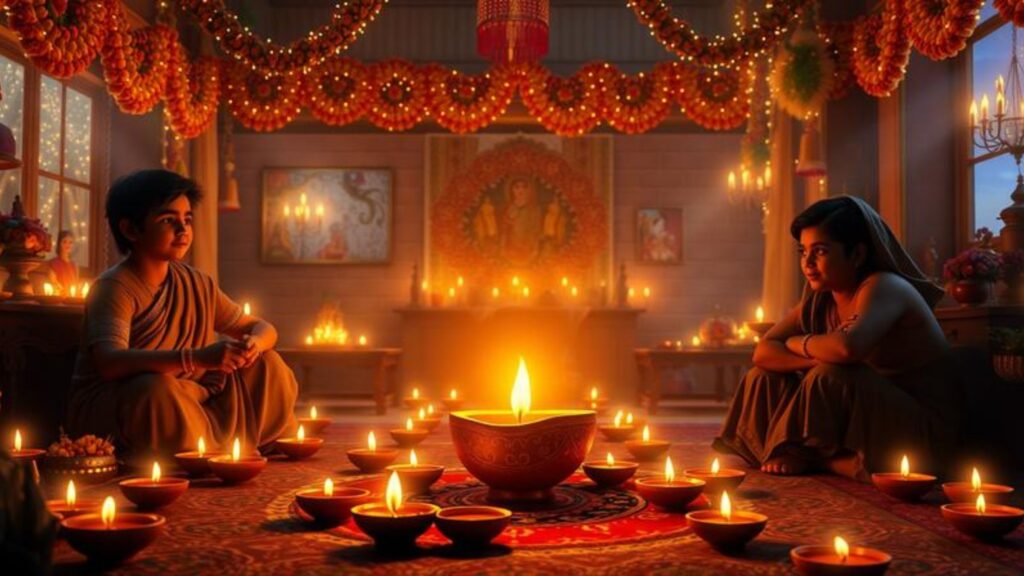
The Sharma family had spent weeks preparing for Diwali. Every room sparkled with cleanliness. Colorful rangoli decorated the entrance. Boxes of sweets appeared on every table. Strings of lights hung across balconies and windows.
But the most important decorations were the diyas.
More than two hundred clay lamps had been carefully arranged around the house.
Among them sat one small diya with uneven edges and a slightly crooked shape. Compared to the others, it looked ordinary.
Nobody paid much attention to it.
Yet this diya had been waiting all year for this night.
Waiting in Darkness
For eleven months, the diya had remained inside a storage box.
It spent its days surrounded by darkness, dreaming about the moment when its flame would finally shine again.
A diya’s purpose is simple.
It exists to give light.
And tonight, it would finally fulfill that purpose.
The Festival Comes Alive
As evening arrived, the Sharma family lit each diya one by one.
Instantly, the house transformed.
Golden light danced across the walls.
The rangoli seemed to glow.
Laughter echoed through the rooms.
Neighbors exchanged greetings.
Children played games.
Fireworks illuminated the distant sky.
The little diya felt proud.
For the first time in months, it felt useful.
For the first time, it felt important.
The Strange Discovery
Hours later, the celebrations began to wind down.
Guests departed.
The children grew sleepy.
One by one, the family started extinguishing the diyas before bed.
Every diya went out quietly.
Except one.
The small crooked diya.
Mr. Sharma blew out its flame.
A few seconds later, it relit itself.
Confused, he extinguished it again.
Once again, it burst back into flame.
This time, brighter than before.
Little Aarav stared in amazement.
“Why won’t it go out?” he asked.
The diya flickered.
Then, to everyone’s surprise, it spoke.
“I don’t want Diwali to end.”
The room fell silent.
A Conversation About Light
The diya explained that it had waited 364 days for this one special night.
For months it had remained forgotten inside a storage box.
Tonight was the only time it truly felt alive.
“Why should I stop shining now?” it asked.
Aarav thought carefully.
Then he sat beside the diya.
“Because Diwali isn’t only one night.”
The diya looked confused.
“It isn’t?”
Aarav shook his head.
“It’s not the lights that matter most.”
The diya listened closely.
“It’s spending time with family.”
“It’s helping others.”
“It’s sharing happiness.”
“It’s making people smile.”
The little flame grew quieter.
Understanding the True Meaning
Grandfather joined the conversation.
“When people remember Diwali years from now, they won’t remember every decoration.”
The diya listened.
“They’ll remember the people they celebrated with.”
Mrs. Sharma nodded.
“They’ll remember acts of kindness.”
Mr. Sharma added:
“They’ll remember laughter.”
The diya realized something important.
Its purpose was not simply to burn.
Its purpose was to inspire.
The flame itself was only a symbol.
The real light existed inside people’s hearts.
The Final Glow
For the first time that night, the diya felt peaceful.
Slowly, its flame became softer.
Not because someone extinguished it.
But because it finally understood.
Diwali is not measured by how long a flame lasts.
It is measured by how far its light travels.
As the family prepared for bed, Aarav smiled at the diya.
“Good night.”
The diya glowed one final time.
Then gently faded into darkness.
And somehow, the room still felt bright.
Moral
The true spirit of Diwali is not found in decorations or fireworks. It lives in kindness, generosity, gratitude, and the light we share with others.
What This Story Teaches Us?
- Small actions can have a big impact.
- Traditions become meaningful when shared with loved ones.
- True light comes from kindness and compassion.
- Celebrations are about people, not possessions.
- Happiness grows when it is shared.
Short Funny Diwali Stories
Humor makes stories memorable. In fact, educational researchers often note that children retain lessons better when they are connected to laughter and positive emotions.
Here are three short funny Diwali stories.
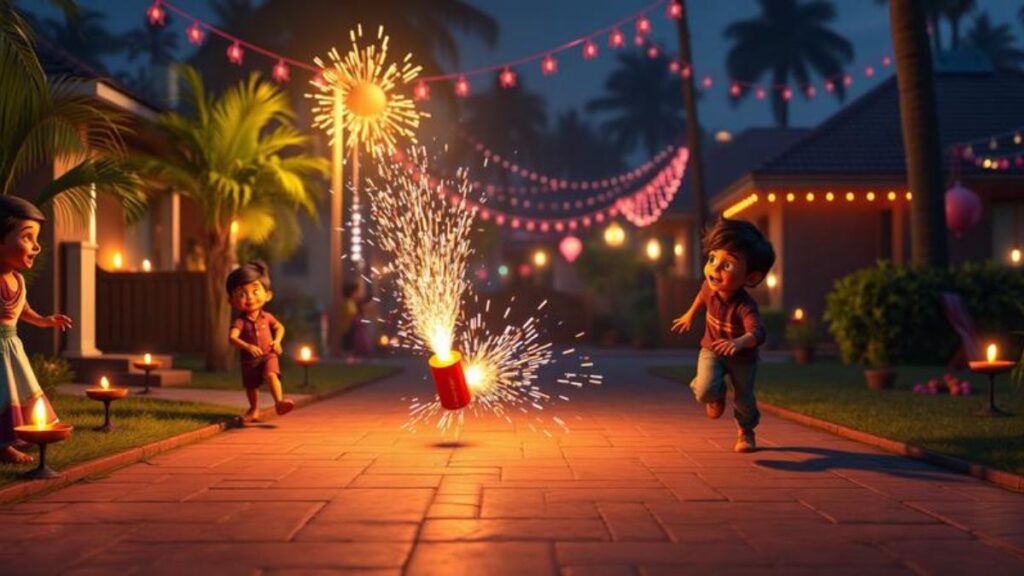
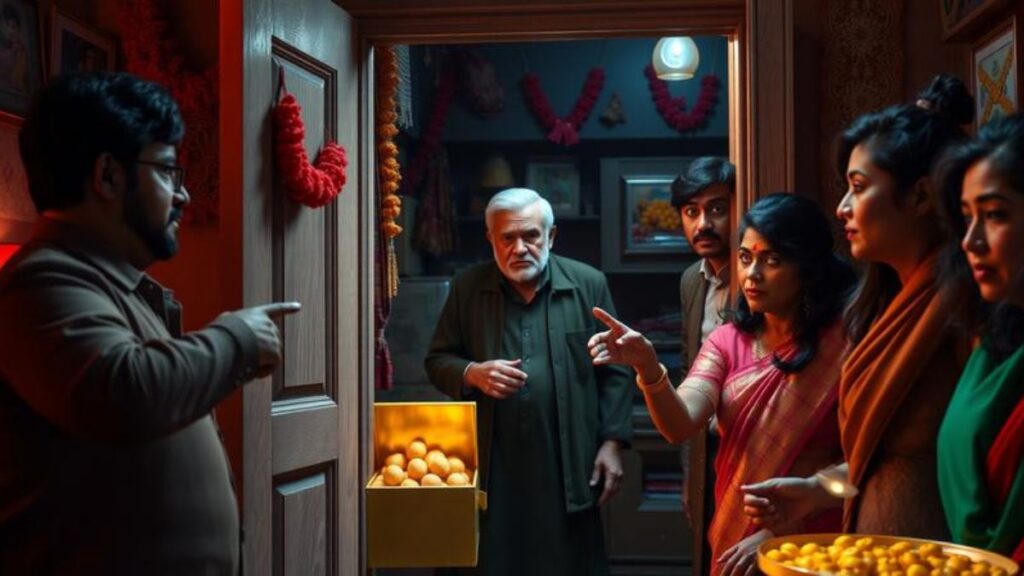

Funny Diwali Stories for Students
Diwali becomes even more exciting when a little humor is added. These funny stories for students combine festive fun with memorable lessons.
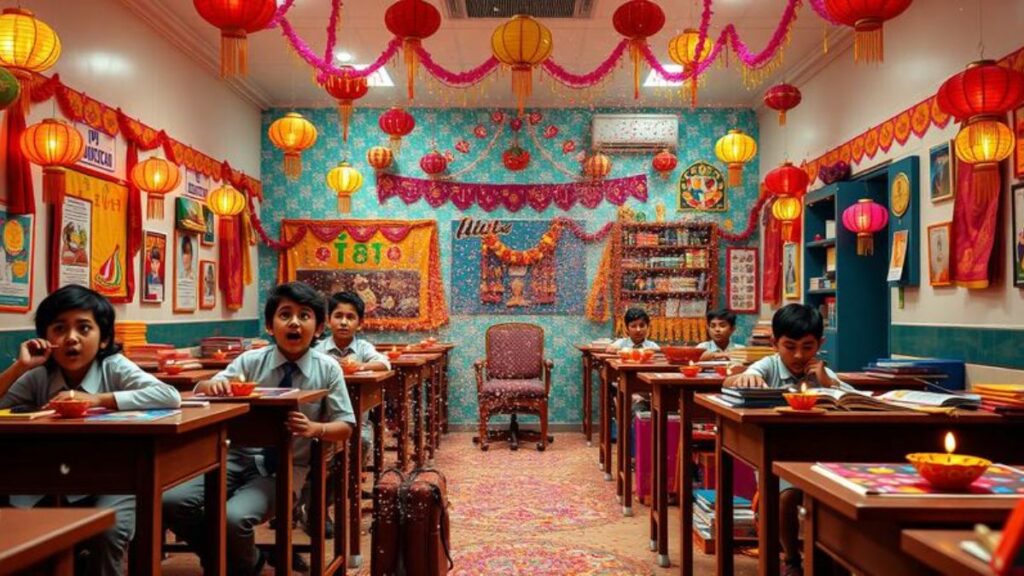
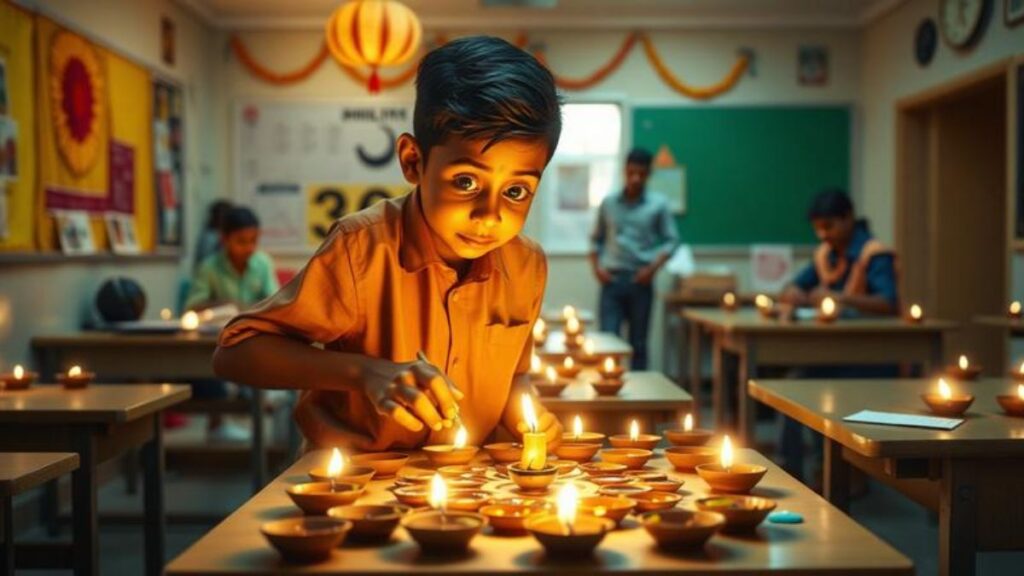
Why Students Love Festival Stories
Festival stories are not just a form of entertainment for students, they are a powerful educational tool that blends learning with imagination. Especially during festivals like Diwali, storytelling becomes an engaging bridge between culture, creativity, and classroom learning.
Modern education research consistently shows that students retain information far better when it is delivered through narratives rather than plain instruction. According to cognitive learning studies, story-based learning can improve memory retention by up to 70% compared to traditional rote methods. This is one of the key reasons festival stories remain popular in schools and homes.
Below are the major reasons why students are naturally drawn to festival stories:
Stories Make Learning Simple and Engaging
Stories help students learn about culture, creativity, and problem-solving while keeping learning fun.
Instead of memorizing definitions or historical facts, students experience lessons through characters, emotions, and situations. This makes complex ideas easier to understand and remember.
A Diwali story about a talking diya or a mischievous firecracker, for example, can teach moral values without feeling like a lecture.
They Build Cultural Awareness and Tradition
Festival stories help students understand cultural values, rituals, and traditions in a meaningful way.
Through Diwali stories, students learn:
- Why Diwali is celebrated
- What symbols like diyas and rangoli represent
- How families celebrate differently across regions
- The importance of sharing, gratitude, and togetherness
According to UNESCO cultural learning insights, storytelling is one of the most effective ways to preserve and transmit cultural identity across generations.
They Improve Creativity and Imagination
Festival stories encourage students to think beyond textbooks.
When students hear about:
- Talking diyas
- Emotional firecrackers
- Magical rangoli designs
- Funny classroom Diwali situations
their imagination becomes active and exploratory.
This improves:
- Creative writing skills
- Idea generation
- Visual thinking
- Narrative building
Creative education studies suggest that storytelling-based learning can increase creative engagement in students by 40–60% compared to standard instruction.
They Strengthen Problem-Solving Skills
Many festival stories include small conflicts or humorous challenges that need resolution.
For example:
- Lost sweets during Diwali preparations
- Classroom decoration disasters
- Firecrackers behaving unexpectedly
- Misunderstood traditions
These situations help students understand:
- Cause and effect
- Decision-making
- Teamwork
- Conflict resolution
Students subconsciously learn how problems are identified and solved in real life.
They Create Emotional Connection With Learning
One of the strongest benefits of festival stories is emotional engagement.
Students don’t just read the story, they feel it.
Whether it is laughter, curiosity, or surprise, emotions help strengthen memory and understanding.
Educational psychology research shows that emotionally engaging content is twice as likely to be remembered long-term compared to neutral content.
Festival stories connect learning with joy, which makes education feel less like pressure and more like experience.
They Encourage Classroom Participation
Teachers often use festival stories to make classrooms more interactive.
Students become more willing to:
- Ask questions
- Share ideas
- Act out stories
- Participate in group discussions
This increases confidence and communication skills, especially in younger learners.
They Connect Home and School Learning
Festival stories also act as a bridge between classroom learning and home traditions.
Students often retell these stories to parents and siblings, which reinforces:
- Memory retention
- Family bonding
- Cultural continuity
This shared storytelling experience strengthens learning outside the classroom environment.
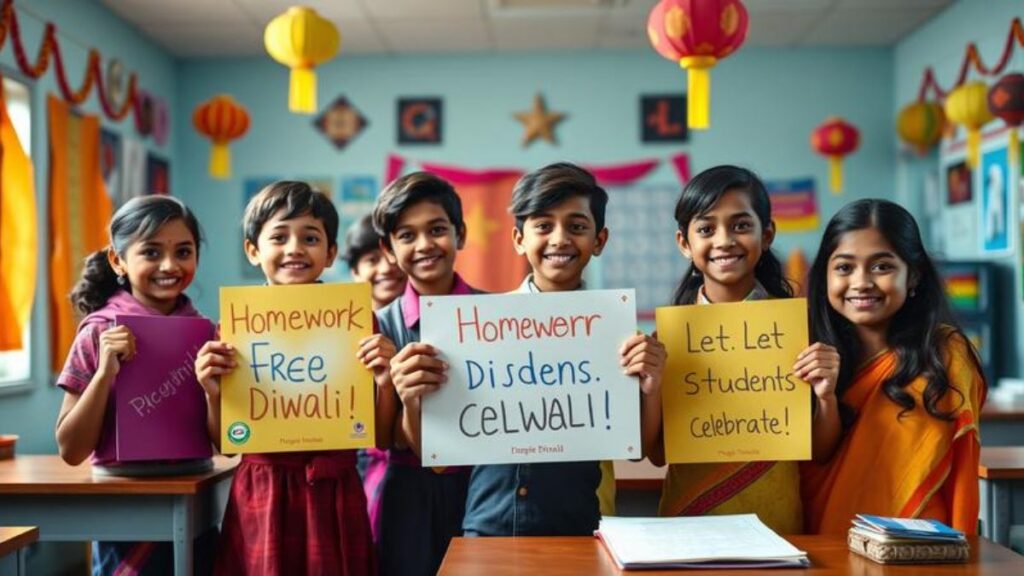
The Homework-Free Diwali Campaign (Story Example)
Students asked their teacher for a homework-free Diwali week, hoping to enjoy the festival without academic pressure. They created posters, collected signatures, and prepared a confident presentation explaining their request.
The teacher listened carefully and smiled.
The students felt successful.
Then came the twist.
Instead of removing homework completely, the teacher replaced it with a creative assignment:
“Write an essay on how discipline and celebration can coexist during festivals.”
The classroom went silent.
The campaign ended faster than it began.
Moral: Always understand the full meaning before celebrating a win.ut culture, creativity, and problem-solving while keeping learning fun.
Short Diwali Stories for Kindergarten
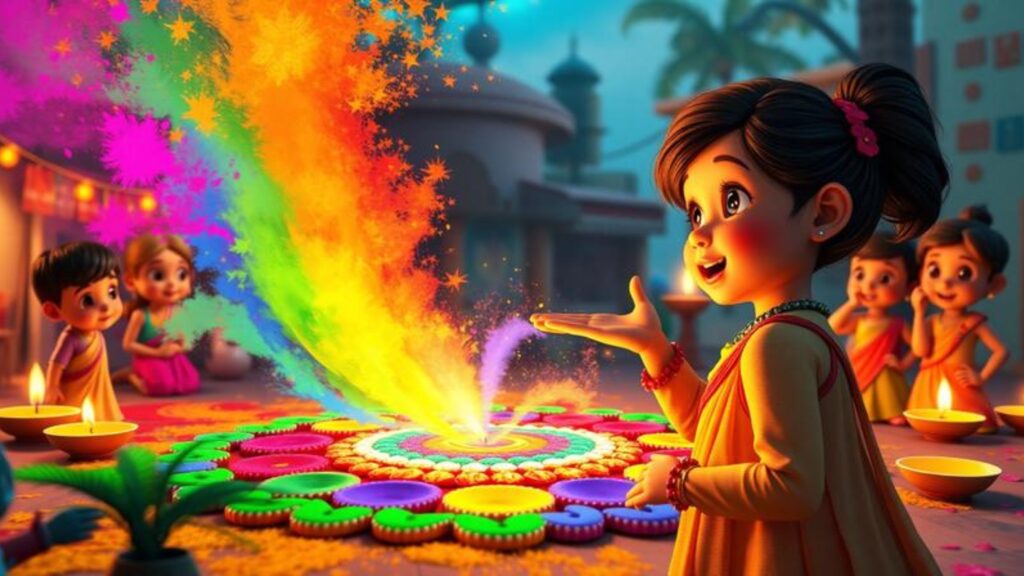
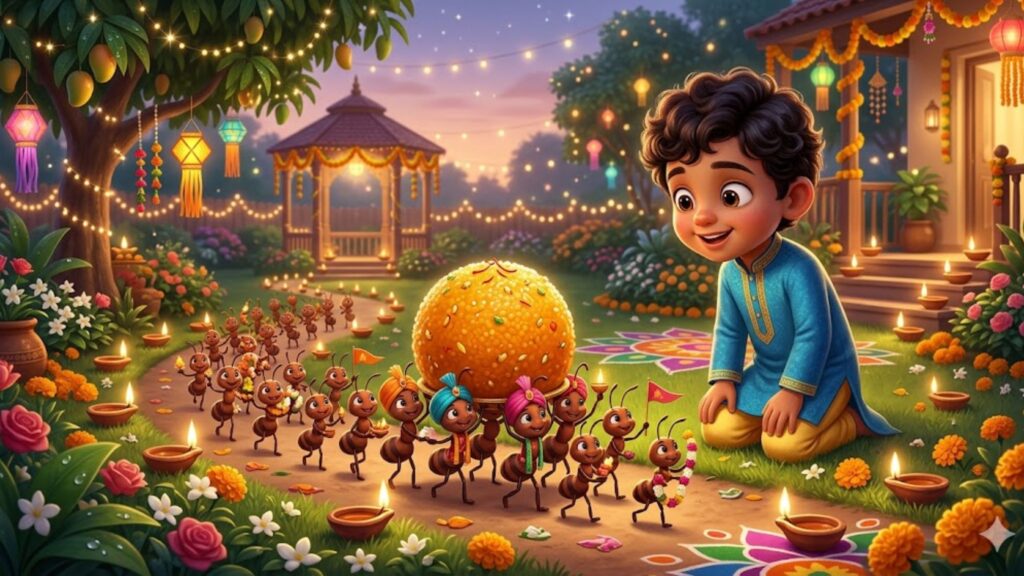
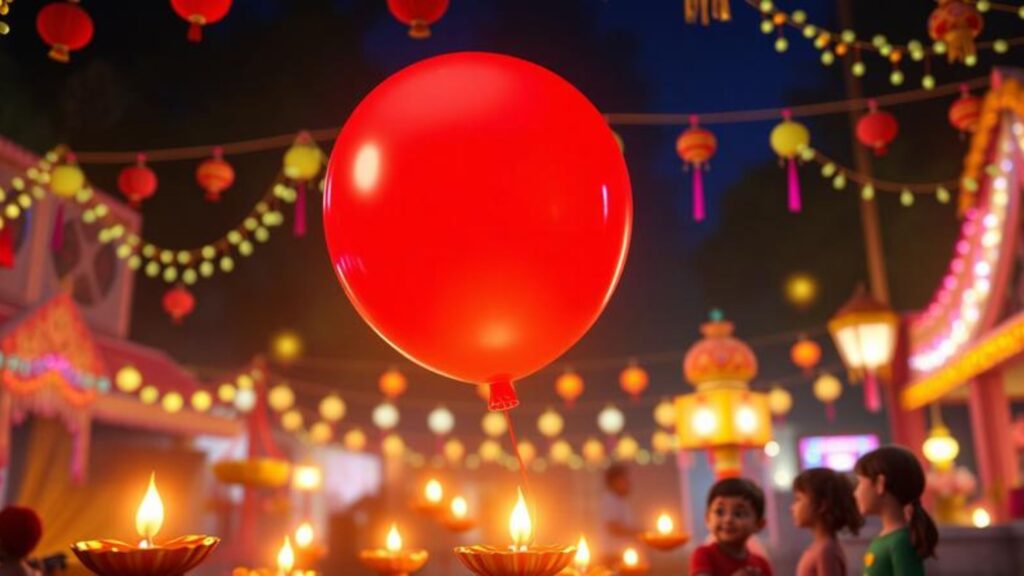
What happens when a tiny diya smiles, a rangoli becomes a rainbow, or a sweet goes on an unexpected adventure? These short Diwali stories for kindergarten are filled with fun, laughter, and festive surprises.
Short Diwali Stories for Toddlers in English
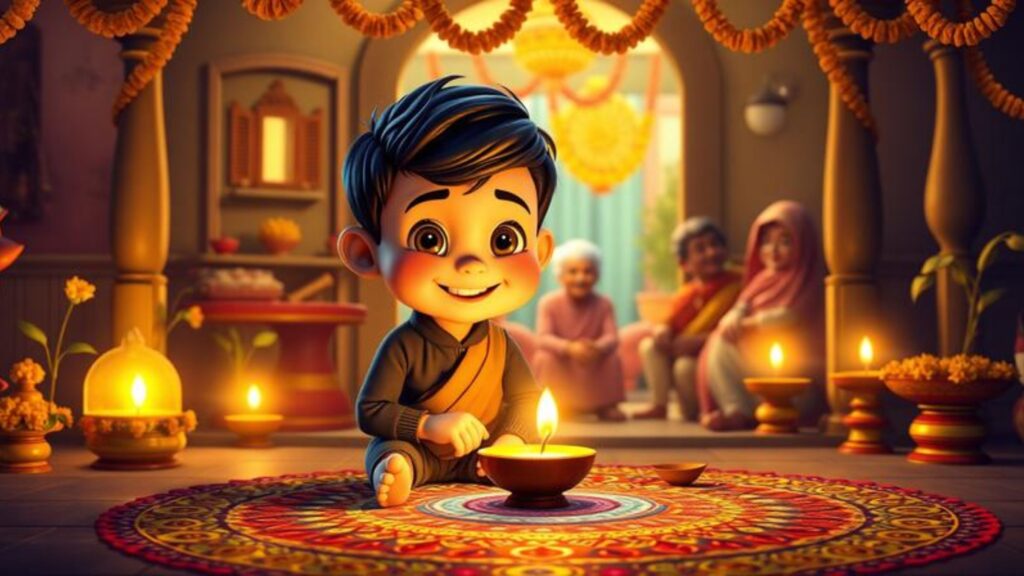
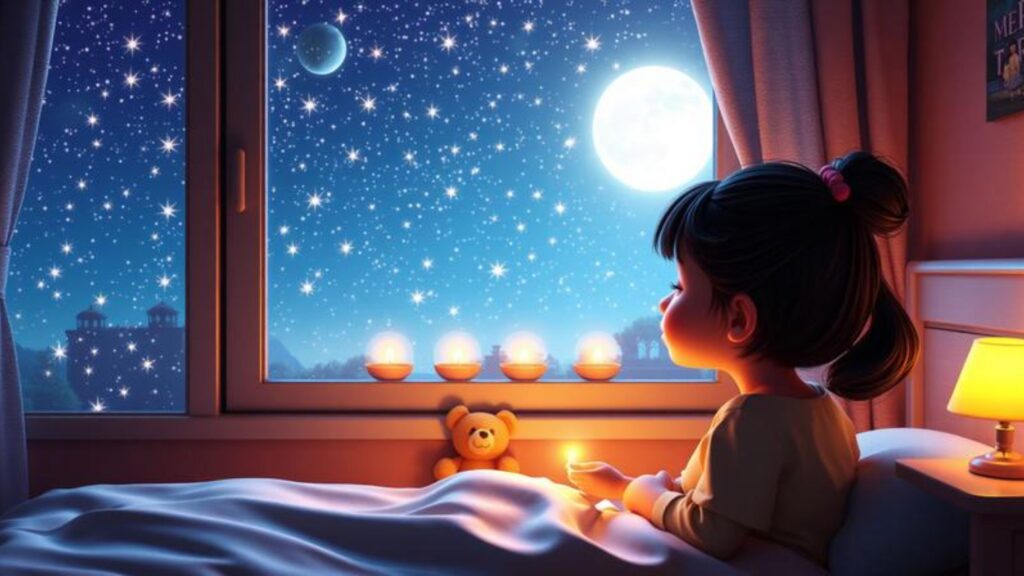
Bedtime stories can make Diwali even more memorable for young children. These delightful tales feature sleepy diyas, friendly stars, and playful festival adventures that help toddlers relax while learning about the spirit of Diwali.

Fun Diwali Facts for Children
Diwali is filled with lights, traditions, and fascinating surprises. Let’s explore some fun facts about the Festival of Lights!
- Diwali is celebrated by more than one billion people worldwide.
- The festival typically lasts five days.
- The word “Deepavali” means “row of lights.”
- Millions of diyas are lit during Diwali celebrations every year.
- Diwali is celebrated in countries including India, Nepal, Sri Lanka, Singapore, Malaysia, the United Kingdom, Canada, and the United States.
Inspiring Quotes About Light and Hope
“Be the change that you wish to see in the world.” – Mahatma Gandhi
“Faith is the bird that feels the light when the dawn is still dark.” – Rabindranath Tagore
“Dream, dream, dream. Dreams transform into thoughts and thoughts result in action.” – A.P.J. Abdul Kalam
Why Diwali Stories Continue to Inspire Generations
Diwali stories are much more than festive entertainment. They are a living bridge between generations, carrying forward culture, imagination, and values in a form that feels natural, emotional, and easy to remember.
Unlike formal lessons or written instructions, stories stay with people because they are experienced rather than simply learned. Research in educational psychology suggests that narrative-based learning improves long-term recall by nearly 2x compared to non-narrative information, especially among children and young adults. This is one of the key reasons Diwali stories remain powerful across time.
They Preserve Traditions Across Generations
One of the most important roles of Diwali stories is cultural preservation.
For centuries, families have passed down stories about the return of Lord Rama to Ayodhya, the victory of light over darkness, and the blessings of Goddess Lakshmi. These stories evolve slightly with each generation but retain their core meaning.
In many households, children learn about Diwali not through textbooks, but through:
- Grandparents narrating evening stories
- Parents explaining rituals during decoration
- Family discussions during celebrations
This oral tradition ensures that cultural knowledge remains alive even in modern, fast-changing societies.
They Strengthen Family Bonds
Diwali stories also create shared emotional experiences within families.
When children listen to stories together with parents or grandparents, it creates:
- Shared attention
- Emotional connection
- Meaningful conversation
- Intergenerational bonding
Sociological studies show that shared storytelling activities significantly increase family cohesion and communication, especially during festivals and holidays.
In many ways, a Diwali story becomes more than entertainment, it becomes a shared memory that families revisit year after year.
They Encourage Creativity and Imagination
Diwali stories often include magical and humorous elements such as:
- Talking diyas
- Emotional firecrackers
- Mischievous sweets
- Animated rangoli designs
These imaginative elements help children and even adults expand their creative thinking.
Creative education research suggests that exposure to imaginative storytelling can increase divergent thinking skills by up to 40%, helping individuals generate more original ideas and solutions.
This is why festival stories are frequently used in classrooms, art activities, and creative writing exercises.
They Teach Values in a Natural Way
Instead of directly telling children what is right or wrong, Diwali stories demonstrate values through characters and situations.
Through simple storytelling, children learn:
- Kindness through sharing sweets
- Responsibility through cleaning and decoration
- Respect through family interactions
- Gratitude through celebration of togetherness
Because these lessons are embedded in narratives, they feel natural rather than forced, making them easier to understand and remember.
They Make Simple Messages Deeply Memorable
One of the strongest reasons Diwali stories endure is their emotional simplicity.
A short story about a glowing diya or a playful firecracker often carries a deeper message about life, hope, and human connection.
As storytelling expert and author Brené Brown once noted:
“Stories are just data with a soul.”
Diwali stories turn simple festival moments into emotional experiences that stay in memory for years.
They Remind Us of the Power of Small Things
Perhaps the most beautiful theme in Diwali storytelling is the idea that even the smallest light can make a difference.
Whether it is:
- A single diya lighting up a dark room
- A child sharing sweets with a friend
- A simple act of kindness during celebrations
Each story reinforces the idea that small actions matter.
In a world that often focuses on scale and speed, Diwali stories remind us of the quiet power of simplicity.
Universal Message of Diwali Stories
Across cultures and generations, Diwali stories consistently deliver one timeless message:
Light shines brightest when it is shared.
This message remains relevant not just during Diwali, but in everyday life, making these stories meaningful far beyond the festival itself.
Conclusion
The beauty of Diwali lies not only in the lights that decorate our homes but also in the stories that illuminate our hearts.
Through humor, imagination, and timeless life lessons, Diwali stories transform a festival into an emotional experience that connects generations.
They are not just stories about diyas, sweets, or fireworks.
They are stories about people.
About values.
About memory.
And about meaning.
As families gather each year to celebrate, exchange sweets, and light diyas, they continue a tradition that is just as important as the festival itself:
The tradition of sharing stories that keep light alive long after the celebrations end.