Every Monday morning, before the first students arrived at Willow Creek Elementary, Room 7 looked exactly the same.
The desks were neatly arranged.
The whiteboard displayed the day’s schedule.
Fresh flowers rested on the teacher’s desk.
The reading corner was filled with colorful books waiting to be opened.
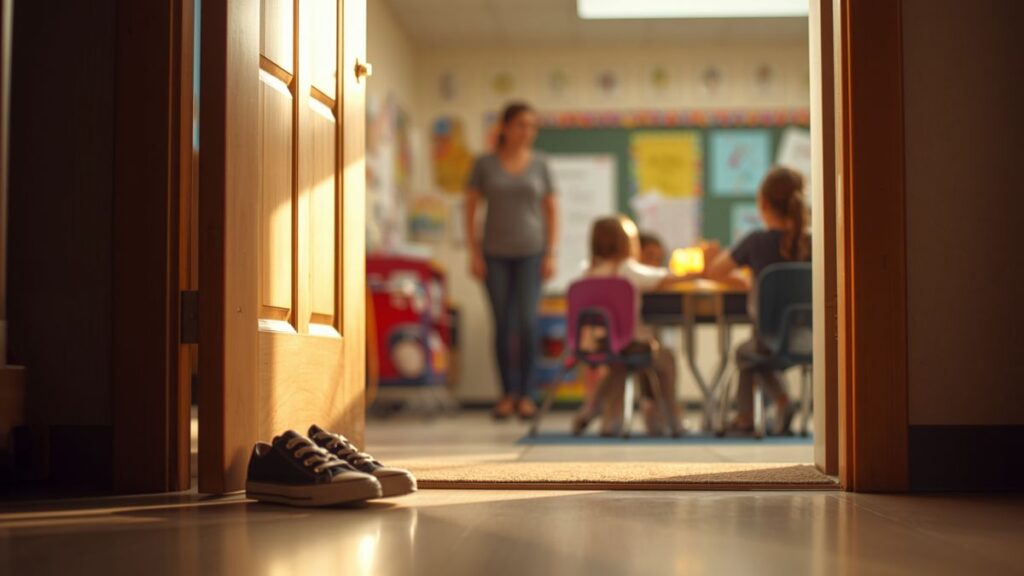
And beside the classroom door sat a single pair of brand-new shoes.
They were always clean.
Always the right size for someone.
Always without a note.
By lunchtime, the shoes were gone.
The following Monday, another pair appeared.
No one ever saw who left them there.
At first, the students thought it was a coincidence.
Perhaps a parent had forgotten them.
Maybe they belonged to another classroom.
But when the same thing happened every Monday for several weeks, curiosity spread through the school.
“Who keeps leaving the shoes?”
“I’ve never seen anyone bring them.”
“Maybe it’s the principal.”
“No,” another student whispered.
“I think it’s magic.”
Mrs. Bennett, the teacher of Room 7, simply smiled whenever someone asked.
“Sometimes,” she would say, “the best gifts don’t need a name attached.”
Her students found that answer even more mysterious.
One chilly October morning, a new student named Daniel entered the classroom wearing shoes that were far too small.
The toes had begun to separate from the soles.
The laces didn’t match.
One shoe was slightly different from the other.
Daniel tried to hide them beneath his desk.
He avoided looking at anyone.
At recess, he stayed inside the classroom, pretending to organize his backpack while the other children played outside.
Mrs. Bennett quietly noticed.
She didn’t mention his shoes.
She didn’t embarrass him.
Instead, she simply asked,
“Would you help me water the classroom plants?”
Daniel nodded.
As they worked together, she casually learned that Daniel’s family had recently moved after his father’s workplace closed.
Money was tight.
His parents were doing everything they could.
The next Monday morning, before the students arrived, another pair of shoes rested beside the classroom door.
This pair was exactly Daniel’s size.
A small note lay inside one shoe.
It read only,
“Every journey deserves comfortable steps.”
There was no signature.
When Daniel arrived, he froze.
Mrs. Bennett smiled gently.
“It looks like someone left these behind.”
Daniel picked them up carefully.
“They fit.”
He slipped them on.
Perfect.
His smile was brighter than anyone had seen since he arrived.
For the rest of the day, he walked with a confidence that hadn’t been there before.
Something as simple as a pair of shoes had changed the way he carried himself.
The students noticed too.
During lunch, whispers filled the room.
“The mystery shoes helped Daniel.”
“Whoever left them knew his size.”
“How?”
Mrs. Bennett only smiled.
“The important question isn’t who left them.”
“It’s what they helped someone feel.”
As autumn turned into winter, the Monday tradition continued.
Sometimes the shoes were tiny.
Sometimes they were larger.
Occasionally they were athletic shoes.
Other times they were sturdy boots.
Every pair found its way to a student who quietly needed them.
No announcements were made.
No names were mentioned.
The mystery remained.
One afternoon, Emma stayed late after school to finish an art project.
As she gathered her supplies, she noticed Mrs. Bennett carefully placing a sealed box inside the classroom closet.
The lid accidentally slipped open.
Inside were several pairs of children’s shoes.
Emma gasped.
Mrs. Bennett looked up.
For a moment, neither of them spoke.
“I didn’t mean to peek,” Emma whispered.
Mrs. Bennett smiled kindly.
“It’s alright.”
“Are those… the Monday shoes?”
Mrs. Bennett gently closed the box.
“They are.”
“So you’ve been buying them?”
Mrs. Bennett shook her head.
“Not by myself.”
Emma looked confused.
“What do you mean?”
Mrs. Bennett pulled out an old photograph from her desk drawer.
It showed a classroom from nearly thirty years earlier.
In the front row sat a little girl wearing oversized shoes with worn-out soles.
“That’s me,” Mrs. Bennett said quietly.
Emma looked surprised.
“When I was nine years old, my family struggled financially.”
“I only owned one pair of shoes.”
“They were falling apart.”
“I worried everyone would notice.”
She smiled softly.
“One Monday morning, I found a brand-new pair waiting outside my classroom.”
Emma listened without saying a word.
“I never discovered who left them.”
“But I never forgot how they made me feel.”
“What did they make you feel?”
Mrs. Bennett thought for a moment.
“Seen.”
“Respected.”
“Worthy.”
She paused.
“When I became a teacher, I decided to continue the tradition.”
Emma smiled.
“So you’re the mystery.”
Mrs. Bennett laughed.
“Only partly.”
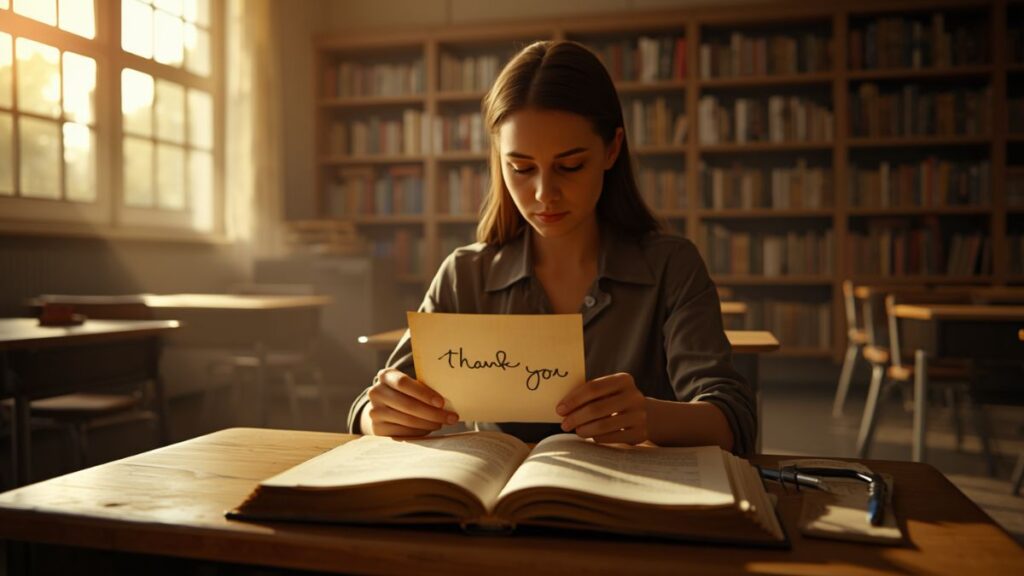
She opened another drawer filled with thank-you cards.
“They’re donated by former students.”
Emma began reading the notes.
“For another child who needs encouragement.”
“Thank you for teaching us kindness.”
“Please use this to buy another pair.”
One envelope contained enough money for ten pairs of shoes.
Another included a handwritten message.
“I wore the mystery shoes twelve years ago.
Now I’d like someone else to experience the same kindness.”
Emma looked up.
“They came back?”
“Many of them do.”
The following Monday, Emma quietly arrived at school earlier than usual.
She carried a neatly wrapped box.
Inside was a brand-new pair of shoes she had purchased using money she had saved from babysitting.
She placed the box beside the classroom closet.
Mrs. Bennett noticed.
“You don’t have to do this.”
Emma smiled.
“I know.”
“I want to.”
By the end of the school year, several students had secretly contributed.
Some donated new socks.
Others collected gently used coats.
Parents quietly joined the effort.
Without ever announcing it publicly, Room 7 had created a culture where helping others became normal.
Years passed.
The tradition never stopped.
Students graduated.
Teachers retired.
Families moved away.
But every Monday morning, another pair of shoes appeared by the classroom door.
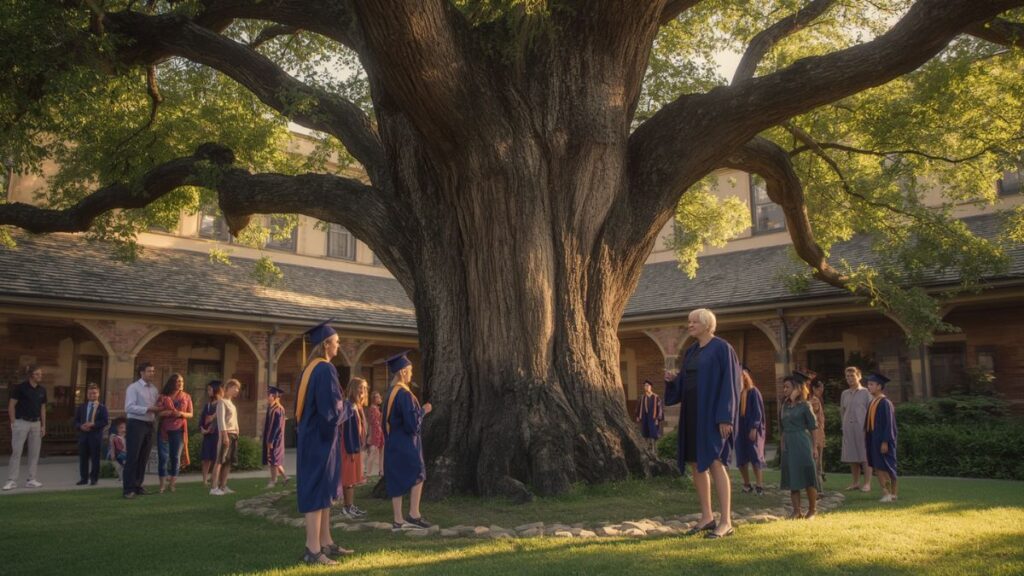
Twenty years later, Willow Creek Elementary celebrated Community Appreciation Day.
Former students returned from across the country.
Among the guests was Daniel.
He was now the owner of a successful shoe manufacturing company.
As he walked into Room 7, he immediately noticed a familiar sight.
A pair of children’s shoes rested quietly beside the classroom door.
He smiled.
Mrs. Bennett, now retired, greeted him warmly.
“You noticed.”
“I could never forget.”
Daniel reached into his bag and removed a small wooden box.
Inside lay the tiny pair of shoes he had received as a child.
Mrs. Bennett looked amazed.
“You kept them?”
“They reminded me that kindness changed the direction of my life.”
He looked around the classroom.
“Before that day, I was embarrassed to walk into school.”
“After that day, I felt like I belonged.”
Daniel then surprised everyone by making an announcement.
His company would donate new shoes to every student in the district who needed them.
Not just once.
Every year.
The audience applauded.
But Daniel wasn’t finished.
He turned toward Mrs. Bennett.
“I’ve designed thousands of shoes.”
“People often ask what inspired my career.”
He smiled.
“They expect me to talk about fashion or business.”
“But the truth is…”
“I chose this path because one anonymous gift taught me that something worn on your feet can also lift your heart.”
Mrs. Bennett quietly wiped away a tear.
She had never imagined that one small tradition would grow into something so meaningful.
Before leaving, Daniel gently placed the old pair of shoes inside a glass display case now standing in the school library.
Beneath them was a simple plaque.
Kindness Always Fits.
Students stopped to read those words every day.
Many never learned who had started the tradition.
It didn’t matter.
Because kindness doesn’t lose its value when its source is unknown.
If anything, it becomes even more powerful.
It teaches people to help because it is right, not because it brings recognition.
Years later, children who had once received those Monday shoes returned as adults.
Some became teachers.
Some became parents.
Others became business owners, nurses, and community leaders.
Many quietly continued the tradition in their own ways.
A backpack left anonymously for a student in need.
A winter coat placed on a school bench.
School supplies waiting on a teacher’s desk.
The gifts were different.
But the message was always the same.
You matter.
You belong.
You are worth caring for.
And that simple message walked with them long after they outgrew every pair of shoes they ever wore.
Moral: The greatest acts of kindness are often the quietest. When educators choose compassion over recognition, they inspire generations of students to care for others with the same selfless generosity.