
Being in a long distance relationship can be beautiful, but it can also make bedtime feel surprisingly lonely. When the person you love is miles away, the simple comfort of talking before sleep can become something you miss deeply. Different time zones, busy schedules, work commitments, and everyday responsibilities can make it difficult to share those quiet nighttime moments.
This is where soothing sleep stories for long distance relationships can become a meaningful part of a couple’s routine.
A gentle story can create a sense of closeness even when two people cannot physically be together. It gives couples something peaceful to share before bed, helping them slow down, relax, and end the day with thoughts of each other.
Unlike dramatic romance stories, soothing sleep stories are usually gentle, comforting, and emotionally warm. They are designed to create a peaceful atmosphere rather than excitement or suspense.
This article explores what makes these stories special, how couples can use them, what themes work best, and how to create a relaxing bedtime tradition across the distance.
What Are Soothing Sleep Stories for Long Distance Relationships?
Soothing sleep stories for long distance relationships are gentle romantic or comforting stories designed to be read, listened to, or shared between partners before sleeping.
The stories can be fictional, inspired by everyday life, or loosely based on a couple’s own relationship.
The main purpose is not simply entertainment.
Instead, these stories can help create a feeling of emotional closeness.
A couple might listen to the same story while talking on a video call, take turns reading paragraphs to each other, or send a recorded story for their partner to listen to before sleeping.
The story becomes a small nighttime ritual.
It can provide a sense of familiarity and reassurance when physical distance makes traditional bedtime routines difficult.
Soothing Sleep Stories for Long Distance Relationships
The Light in the Window

Emma had learned that distance had its own language.
It spoke through silent phone screens, delayed messages, airport departure boards, changing time zones, and the small ache that appeared whenever she reached for someone who was not there.
Daniel lived thousands of miles away.
Between them were an ocean, several countries, and a difference of six hours that made their ordinary routines feel like they belonged to different worlds. When Emma was preparing dinner, Daniel was already thinking about sleep. When Daniel was beginning his morning, Emma was usually finishing her day.
At first, they had tried to fight the distance.
They scheduled long video calls.
They sent dozens of messages throughout the day.
They counted the weeks until their next visit.
But eventually they discovered that love did not always need grand gestures.
Sometimes it lived in very small things.
A message that said, Did you eat?
A photograph of the sky.
A voice recording sent before bed.
A cup of coffee made while thinking about someone far away.
And, for Emma, it lived in a little light beside her bedroom window.
Every evening, she turned it on.
It was a warm, soft lamp with a cream-colored shade. It was not expensive or particularly beautiful. Daniel had never even seen it in person.
But he had noticed it during their video calls.
It always appeared behind Emma.
One night, after they had been talking for almost an hour, Daniel smiled at the screen.
“Your little lamp is always on.”
Emma glanced over her shoulder.
“It is.”
“Do you ever turn it off?”
“When I go to sleep.”
Daniel laughed softly.
“I suppose that makes sense.”
Emma smiled.
Neither of them knew that the lamp would eventually become one of the most meaningful things in their relationship.
That evening, rain tapped gently against Emma’s window.
She sat beneath a blanket with a cup of tea in her hands and waited for Daniel to call.
It was almost midnight where she lived.
For Daniel, it was still early evening.
Her phone finally lit up.
Daniel calling…
Emma smiled before answering.
“Hey.”
“Hey, sleepyhead.”
“I’m not sleepy.”
“You say that every night.”
“And every night you believe me.”
“I don’t.”
She laughed.
Their conversations had become wonderfully ordinary.
They talked about work.
They talked about what they had eaten.
They complained about annoying people.
They discussed movies they wanted to watch together.
Sometimes they talked for hours.
Other nights, they barely said anything.
Those were often Emma’s favorite nights.
She liked simply hearing Daniel breathe while they sat quietly on opposite sides of the world.
That evening, Daniel seemed unusually quiet.
“Long day?” Emma asked.
“Very.”
“Bad?”
“Not bad. Just tiring.”
Emma looked at his face on the screen.
She knew him well enough to recognize when he was pretending to be fine.
“You don’t have to talk about it.”
Daniel smiled.
“That’s one of the things I love about you.”
“What?”
“You don’t always ask me to explain everything.”
Emma lowered her eyes.
“I know sometimes you just need someone to stay.”
Daniel nodded.
“Exactly.”
For a few moments, neither spoke.
Rain continued to fall outside Emma’s window.
The lamp beside her glowed softly.
Daniel looked at it again.
“That light makes your room look cozy.”
“It is cozy.”
“I wish I were there.”
Emma swallowed.
“So do I.”
There was no sadness in her voice.
Just truth.
After they said goodnight, Emma placed her phone on the bedside table.
She turned toward the window.
Across the glass, the city was quiet beneath the rain.
She looked at the little lamp.
For some reason, she thought about Daniel’s words.
I wish I were there.
She imagined what it would be like.
Daniel sitting beside her.
His shoes by the door.
His jacket hanging from the chair.
Two cups of tea instead of one.
Someone beside her when she laughed.
Someone to say goodnight to without a screen between them.
The thought made her smile.
Then she turned off the lamp.
The room became dark.
She closed her eyes.
And slept.
The next morning, Daniel woke up to a message.
Emma: Good morning. I hope you slept well.
Daniel smiled.
He typed back.
Daniel: I did. Did you?
Emma replied almost immediately.
Emma: Yes. Dreamed about you.
Daniel stared at the message.
Daniel: Good dream?
Emma: Very.
He smiled.
Then he noticed something else.
She had sent him a photograph.
It was a picture of her bedroom.
The little lamp was visible beside the window.
Daniel saved the photograph.
He did not know why.
He simply wanted to keep it.
Weeks passed.
The lamp remained.
Every night, it appeared behind Emma during their calls.
Daniel began teasing her about it.
“Your lamp has become the third person in our relationship.”
Emma laughed.
“You’re jealous of a lamp?”
“Maybe.”
“Should I introduce you?”
“Please.”
She turned the camera toward it.
“Daniel, this is my lamp.”
Daniel waved.
“Nice to meet you.”
Emma burst out laughing.
It became their private joke.
Whenever Daniel had a difficult day, he would say:
“I need to talk to the lamp.”
And whenever Emma felt lonely, she would say:
“Your girlfriend and the lamp miss you.”
Their relationship was filled with small jokes like that.
They gave distance less power by making it part of their story.
One winter evening, Emma received an unexpected package.
She opened it at the kitchen table.
Inside was a small wooden box.
There was a note attached.
For the light in your window.
Emma smiled.
She opened the box.
Inside was a tiny wooden ornament shaped like a house.
On the front, someone had carved two small stars.
Beneath them were the words:
Same home. Different windows.
Emma’s eyes filled with tears.
She immediately called Daniel.
He answered.
“Did it arrive?”
“You made this?”
“Yeah.”
“You carved it?”
“Mostly.”
“Mostly?”
“There may have been some assistance from the internet.”
Emma laughed through her tears.
“It’s beautiful.”
“I wanted you to have something that reminded you of us.”
She held the little wooden house close to the camera.
“Why a house?”
Daniel looked at her.
“Because that’s what you feel like.”
Emma became quiet.
“What?”
“Home.”
The word stayed between them.
Simple.
Warm.
Enough.
Months later, Emma’s life became unexpectedly difficult.
Her company announced layoffs.
Her closest friend moved away.
Several things she had been depending on suddenly changed.
She tried to remain strong.
But one night, after a particularly difficult day, she called Daniel and said almost nothing.
He knew immediately.
“What happened?”
“I don’t know.”
“Do you want to talk?”
“No.”
“Okay.”
“Can you just stay?”
“I’m here.”
She placed the phone beside her pillow.
Daniel did the same on his side.
For nearly an hour, neither spoke.
Emma eventually fell asleep.
Daniel stayed on the call.
He could hear the soft rhythm of her breathing.
He smiled.
Before ending the call, he whispered:
“Goodnight, Emma.”
Then he hung up.
The next morning, Emma woke to another message.
Daniel: I hope today is gentler with you.
She smiled.
Then another message arrived.
Daniel: And turn the little light on tonight.
Emma laughed softly.
She knew exactly what he meant.
That evening, she turned it on.
The warm glow filled the room.
She placed the wooden house beside it.
Then she took a photograph.
Emma: The light is on.
Daniel replied:
Daniel: I know.
She frowned.
Emma: How?
A moment later, he sent a photograph.
It showed his bedroom.
On his desk was a small lamp.
It was glowing.
Emma stared at the picture.
Then she noticed the little wooden house beside it.
Her heart softened.
“You bought a lamp?”
She called him.
Daniel answered with a grin.
“I did.”
“You copied me.”
“I prefer to call it romantic adaptation.”
Emma laughed.
“So now we both have lights.”
“Yes.”
“Why?”
Daniel looked into the camera.
“So when one of us feels far away, we can remember that somewhere else, another little light is on.”
Emma was silent.
Then she whispered:
“I love you.”
“I love you too.”
From then on, their lights became a nightly ritual.
Emma turned hers on before their calls.
Daniel turned his on after waking.
Sometimes they talked.
Sometimes they laughed.
Sometimes they simply looked at each other through the screen.
And sometimes one of them was too tired to call.
It did not matter.
The light still came on.
Because love was no longer about proving that distance did not exist.
They knew distance existed.
They could feel it.
They missed each other.
They wished they could share ordinary mornings and ordinary evenings.
But they had also learned something important.
Love did not always close the miles.
Sometimes love simply made the miles easier to cross.
Nearly a year after their first conversation about the lamp, Daniel booked a flight.
He did not tell Emma.
He wanted to surprise her.
On a Friday evening, Emma turned on her lamp as usual.
She sat on the edge of her bed and opened her phone.
No call.
She waited.
Five minutes passed.
Then ten.
She smiled.
“He’s probably busy.”
She sent him a message.
Emma: Goodnight, whenever you see this.
Then she turned off her phone.
She heard a sound downstairs.
A door closing.
She frowned.
Emma walked into the hallway.
“Hello?”
No answer.
She walked downstairs.
The house was quiet.
Then someone knocked.
Her heart began beating faster.
She opened the door.
Daniel stood outside.
For a moment, neither of them moved.
Emma covered her mouth.
Daniel smiled.
“Hi.”
She began to cry.
Then she ran into his arms.
He held her tightly.
Neither of them spoke.
They did not need to.
After months of screens, messages, and photographs, there was finally no glass between them.
No time zone.
No delay.
No miles.
Just two people holding each other.
Later that night, they sat together beside Emma’s bedroom window.
The little lamp was glowing.
Daniel looked at it.
“So this is where it all started.”
Emma rested her head against his shoulder.
“Not exactly.”
He looked at her.
“What do you mean?”
“It started long before the lamp.”
“Where?”
She smiled.
“With us.”
Daniel kissed the top of her head.
Outside, the city was quiet.
Inside, the lamp cast a gentle circle of golden light around them.
Emma looked at it and realized that the lamp had never really been about keeping the darkness away.
It had been about remembering.
Remembering that someone was thinking of her.
Remembering that love could survive quiet nights.
Remembering that even when two people could not stand beside each other, they could still create little pieces of home.
Daniel squeezed her hand.
“Ready for bed?”
Emma smiled.
“Yes.”
“Together?”
She looked at him.
“Together.”
And for the first time in a very long time, there was no screen between their goodnight.
They turned off the lamp.
The room became dark.
But neither of them was afraid of the darkness.
They were finally home.
The Same Moon Above Us

Sophie had always believed that the moon belonged to everyone.
As a child, she used to sit beside her bedroom window and watch it move slowly across the night sky. She imagined that wherever she traveled, the moon would follow her.
Years later, when she fell in love with Lucas, she discovered another reason to look at it.
The moon became their meeting place.
Not a real place, of course.
They could not walk beneath it together.
They could not sit on the same bench or share the same blanket while looking up at the stars.
Lucas lived in Vancouver, while Sophie lived in Edinburgh. Between them were thousands of miles, an ocean, and eight hours of time difference.
When Sophie was getting ready for bed, Lucas was usually beginning his afternoon.
When Lucas was thinking about dinner, Sophie was already asleep.
Their relationship had started easily.
They had met during a summer photography workshop in Florence.
For three wonderful weeks, they had walked through narrow streets, shared gelato, explored old buildings, and talked until midnight.
They had promised each other that distance would not change anything.
But promises were easier to make when they were standing beside each other.
After Sophie returned to Scotland, reality arrived.
There were missed calls.
Busy schedules.
Different routines.
Lonely evenings.
Some nights, Sophie missed Lucas so much that even her bedroom seemed too large.
And one night, she discovered the moon.
It was almost two in the morning.
Sophie could not sleep.
She had spent the evening scrolling through photographs from Florence.
There was one picture she kept returning to.
Lucas was standing beside a fountain, laughing at something she had said.
His hair was messy from the wind.
His eyes were half closed because the afternoon sun was too bright.
Sophie smiled at the photograph.
Then she sighed.
“I miss you.”
She whispered the words to an empty room.
She put her phone down and walked toward the window.
The sky was clear.
A large full moon hung above the rooftops.
Sophie stood there quietly.
She wondered what Lucas was doing.
Then she remembered that because of the time difference, he was probably awake.
She opened her phone.
Sophie: Are you awake?
The reply arrived almost immediately.
Lucas: Always for you.
Sophie smiled.
Sophie: Come outside.
Lucas: Why?
Sophie: Just trust me.
A few seconds later, Lucas replied.
Lucas: Okay.
Sophie put on her sweater and stepped outside into the cold night air.
She looked up.
Then her phone rang.
Lucas appeared on the screen.
He was standing outside too.
Behind him were tall trees and a dark blue sky.
“What am I looking for?” he asked.
“The moon.”
Lucas looked upward.
Then he smiled.
“I see it.”
“So do I.”
For a few moments, they said nothing.
They simply looked at the same moon from two different parts of the world.
Sophie felt something inside her soften.
“Lucas?”
“Yes?”
“We’re looking at the same moon.”
“I know.”
“It feels strange.”
“Good strange?”
She smiled.
“Very good strange.”
Lucas laughed.
“Then let’s make it our thing.”
“Our thing?”
“Whenever we miss each other, we look at the moon.”
Sophie looked up again.
“I like that.”
“So do I.”
Neither of them knew how important that promise would become.
The next night, Sophie looked for the moon again.
It was hidden behind clouds.
She sent Lucas a message.
Sophie: No moon tonight.
He replied:
Lucas: Then we’ll wait.
The following night, the moon appeared.
Sophie sent him a photograph.
Lucas sent one back.
They were slightly different.
The angle was different.
The buildings were different.
The colors of the sky were different.
But the moon was the same.
They began collecting photographs.
Moon over Edinburgh.
Moon over Vancouver.
Moon behind clouds.
Moon above rooftops.
Moon reflected in puddles.
Moon between tree branches.
Each photograph became a small reminder that their lives, although separated by distance, were still connected.
Months passed.
The excitement of their first months together slowly changed into something quieter.
Deeper.
More ordinary.
Sophie learned that love was not always butterflies.
Sometimes it was patience.
Sometimes it was waiting.
Sometimes it was listening to someone complain about their day when you were exhausted yourself.
Sometimes it was staying awake ten extra minutes because the other person needed to hear your voice.
Sometimes it was sending a photograph without any explanation.
And sometimes it was simply saying:
“I am here.”
One evening, Sophie had an especially difficult day.
Nothing dramatic had happened.
That was the strange part.
Everything had simply gone wrong.
She missed an important deadline.
Her train was delayed.
She forgot her umbrella.
Then she spilled coffee on her coat.
By the time she arrived home, she was exhausted.
Lucas called.
“Hey.”
“Hi.”
He immediately noticed her expression.
“Bad day?”
“Very.”
“Do you want to talk about it?”
“No.”
“Okay.”
Sophie dropped onto her bed.
“I just want to sleep.”
“Then sleep.”
She smiled weakly.
“You’re not going to ask me what’s wrong?”
“I already know something’s wrong.”
“How?”
“I can hear it in your voice.”
Sophie closed her eyes.
“Stay with me?”
“Of course.”
They stayed on the call.
Lucas did not try to fix anything.
He simply remained there.
Eventually, Sophie opened her eyes.
“Lucas?”
“Yes?”
“Is the moon out?”
He looked toward his window.
“I think so.”
“Go check.”
He laughed.
“Okay.”
He carried his phone outside.
The moon was visible between the clouds.
Sophie walked to her own window.
She looked up.
There it was.
The same moon.
She smiled.
“My day doesn’t feel so bad anymore.”
Lucas smiled too.
“Good.”
Their moon ritual became more than a romantic habit.
It became a quiet promise.
Whenever life felt overwhelming, they looked upward.
Whenever they missed each other, they looked upward.
Whenever one of them had something important to celebrate, they looked upward.
When Lucas received a promotion, he sent Sophie a picture of the moon.
When Sophie completed an important project, she sent him one.
When Lucas’s sister had a baby, they looked at the moon together.
When Sophie moved into a new apartment, Lucas called her on the first night and asked:
“Can you see it?”
She looked through her new bedroom window.
“Yes.”
“Good.”
But distance was not always gentle.
There were difficult moments.
One winter, Lucas became extremely busy at work.
His days became long.
Their calls became shorter.
Sometimes he forgot to send a message.
Sometimes Sophie waited for him and fell asleep with her phone beside her.
At first, she told herself it was fine.
Then one evening, she finally said:
“I feel like I’m waiting for you all the time.”
Lucas became quiet.
“I know.”
“I don’t want to feel like that.”
“I don’t want you to.”
“But I do.”
They talked for a long time.
There were no angry words.
Only honesty.
They admitted that they were both tired.
They admitted that they were afraid.
They admitted that loving someone from far away sometimes felt like carrying a beautiful thing that was also very heavy.
At the end of the conversation, Lucas said:
“I don’t want us to survive by pretending distance is easy.”
Sophie wiped a tear from her cheek.
“Neither do I.”
“So let’s stop pretending.”
“What should we do?”
“Let’s make it easier.”
They created a new routine.
They chose two evenings each week that belonged completely to them.
No work.
No distractions.
No excuses unless something truly important happened.
The other nights could remain flexible.
It worked.
Not perfectly.
But well enough.
And Sophie realized something.
Love did not become stronger because they ignored their problems.
It became stronger because they faced them together.
One spring night, Sophie received a message from Lucas.
Lucas: Look outside.
She laughed.
Sophie: Again?
Lucas: Trust me.
She opened her curtains.
The moon was enormous.
But something else caught her attention.
A bright airplane crossed the sky.
She watched it disappear.
Then Lucas called.
“Did you see it?”
“Yes.”
“That’s my flight.”
Sophie froze.
“What?”
“I booked it.”
“When?”
“Today.”
She sat down on the edge of her bed.
“You are coming here?”
“Yes.”
“When?”
“Three weeks.”
Sophie covered her face.
Three weeks.
It suddenly felt both incredibly close and impossibly far away.
The next three weeks passed slowly.
Sophie counted days.
She prepared the apartment.
She bought his favorite tea.
She cleaned the spare room.
She placed photographs from Florence around the living room.
And every night, she looked at the moon.
Lucas did the same.
They knew that soon, the ritual would change.
Soon, they would no longer need the moon to feel close.
But neither wanted to stop.
On the final night before his flight, Lucas called.
“Are you nervous?” Sophie asked.
“Terrified.”
“Why?”
“What if I forget how to hug you?”
She laughed.
“You won’t.”
“What if I forget what you smell like?”
“Then you’ll remember.”
“What if…”
“Lucas.”
“Yes?”
“Come home.”
He smiled.
“Okay.”
The following evening, Sophie waited at the airport.
She stood near the arrivals gate.
People walked past with suitcases.
Families hugged.
Friends shouted greetings.
Children ran toward parents.
Sophie kept looking toward the doors.
Then she saw him.
Lucas stood there with a backpack over one shoulder.
For a moment, neither moved.
Then he smiled.
Sophie ran.
He dropped his bag.
They held each other.
Neither spoke.
There was nothing to say.
They had waited too long for words.
They simply stood there.
Together.
That evening, they walked home beneath a clear sky.
Sophie looked upward.
The moon was rising.
Lucas noticed.
“Look.”
“I know.”
They stopped on the sidewalk.
The city lights surrounded them.
The moon hung above the rooftops.
Lucas took her hand.
“So…”
“So?”
“Do we still need it?”
Sophie smiled.
“Need what?”
“The moon.”
She looked at him.
“No.”
Lucas smiled.
“Good.”
“But I think we should keep looking at it.”
“Why?”
“Because it brought us here.”
Lucas kissed her forehead.
“Then we’ll keep it.”
That night, they sat beside the window.
For the first time, there was no phone between them.
No screen.
No headphones.
No unstable internet connection.
Sophie rested her head on Lucas’s shoulder.
They looked at the moon together.
She thought about all the nights she had stood there alone.
All the nights Lucas had stood somewhere far away.
All the photographs they had exchanged.
All the difficult conversations.
All the waiting.
All the hope.
And she realized that the moon had never actually made them feel closer.
It had simply reminded them that they were never completely separate.
The same sky had always been above them.
Even when they could not see each other.
Even when they were angry.
Even when they were tired.
Even when distance felt unbearable.
There had always been something shared between them.
A sky.
A moon.
A promise.
Lucas squeezed her hand.
“What are you thinking?”
Sophie smiled.
“That I was right.”
“About what?”
“The moon belongs to everyone.”
Lucas laughed softly.
“Especially us.”
Sophie leaned closer.
Outside, the moon continued its slow journey across the night sky.
This time, neither of them had to say goodnight through a screen.
They could simply stay.
Together.
And as the hours passed, the room grew quiet.
Sophie closed her eyes.
Lucas gently pulled the blanket over her shoulders.
“Sleep,” he whispered.
She smiled.
“I’m trying.”
“I’m right here.”
“I know.”
And with those words, Sophie finally fell asleep.
For the first time in many months, she did not dream about the distance between them.
She dreamed about home.
And outside their window, beneath the same moon that had watched over them from opposite sides of the world, the night remained peaceful.
A Letter for Tomorrow Morning

Amelia had always loved handwritten letters.
She liked the feeling of paper beneath her fingers.
She liked the quiet sound of an envelope opening.
She liked the slight imperfections in someone’s handwriting, especially when a letter had been written quickly.
Most of all, she liked knowing that someone had sat down somewhere in the world and thought carefully about what they wanted to tell her.
That was why, when Noah moved across the Atlantic, letters became one of the most important parts of their relationship.
They had met in London during an autumn photography exhibition.
Amelia had been standing in front of a black-and-white photograph of an old railway station when Noah accidentally stepped backward into her.
He immediately apologized.
She laughed.
Then they started talking.
What began as a five-minute conversation became dinner.
Dinner became another meeting.
Another meeting became weekends together.
And before either of them realized what was happening, they had fallen in love.
For nearly a year, their relationship felt wonderfully ordinary.
Morning coffees.
Evening walks.
Sunday breakfasts.
Unexpected visits.
Long conversations on rainy afternoons.
Then Noah received an opportunity to work in New York.
It was the kind of opportunity people were expected to accept.
It was exciting.
It was important for his career.
And it was six months away from Amelia.
They promised each other that six months would not change anything.
They were wrong about one thing.
Six months did change them.
But not in the way they feared.
The first week after Noah left was surprisingly easy.
They talked every night.
They exchanged photographs.
Noah showed Amelia his tiny apartment.
Amelia sent him pictures of the dinner she cooked.
They laughed about the time difference.
But eventually, everyday life returned.
Noah became busy with work.
Amelia had responsibilities of her own.
There were nights when one of them was too tired to call.
There were mornings when messages remained unanswered for hours.
The distance became less romantic and more practical.
One evening, Amelia sat alone in her apartment.
Rain tapped against the windows.
Her phone was silent.
She knew Noah was not ignoring her.
He was probably working.
Still, she missed him.
She missed the ordinary things most.
His coat hanging near the door.
His shoes beside hers.
His habit of leaving a half-finished cup of tea on the kitchen table.
The sound of him humming while cooking.
She whispered:
“I miss home.”
Then she realized that she was thinking of Noah when she said it.
A few days later, a letter arrived.
The envelope was cream-colored.
Her name was written across the front.
Amelia.
She smiled immediately.
Noah’s handwriting.
She opened it carefully.
Inside was a single sheet of paper.
He had written:
My love,
I know we speak almost every day, but there are some things I wanted to tell you slowly.
I miss you.
Not only in the big ways.
I miss the small things.
I miss hearing you complain about being cold.
I miss the way you steal the warmest part of the blanket.
I miss your laugh when you try not to laugh.
I miss having someone beside me when nothing interesting is happening.
Most of all, I miss knowing that if I look up from my desk, you might be there.
But I want you to know something.
Distance has not made you smaller in my life.
It has made me notice you more.
I notice every little thing.
Every message.
Every photograph.
Every goodnight.
Every time you tell me to take care of myself.
You are still part of my ordinary days.
Even from here.
Love,
Noah.
Amelia read the letter twice.
Then a third time.
She folded it carefully.
She placed it beside her bed.
That night, she slept better.
From then on, letters became their tradition.
They still called.
They still texted.
But once every two weeks, one of them wrote a letter.
Sometimes the letters were long.
Sometimes they were only a page.
Sometimes they contained photographs.
Sometimes pressed flowers.
Sometimes silly drawings.
Sometimes grocery lists.
One letter from Noah contained nothing except:
I saw a dog today that looked exactly like the dog we said we’d adopt.
Underneath, he had drawn a terrible picture of a dog.
Amelia laughed for nearly ten minutes.
She kept the letter anyway.
Months passed.
The relationship settled into a rhythm.
Noah lived in New York.
Amelia remained in London.
Their love became less about counting the days until they could be together and more about sharing the days they currently had.
Still, Amelia missed him.
One morning, she received another envelope.
This one was thicker.
There was a small note on the front.
Do not open until tomorrow morning.
She smiled.
“What are you doing?” she whispered.
She placed the envelope on her bedside table.
She was tempted to open it immediately.
But she resisted.
The next morning, she woke before sunrise.
The room was still dark.
She remembered the letter.
For a moment, she simply looked at it.
Then she opened it.
Inside was a photograph.
It showed a quiet street in New York just after sunrise.
Beneath it was a handwritten note.
Good morning, Amelia.
Right now, you are waking up.
I’m writing this six hours earlier.
That means when you read this, I will probably be asleep.
I wanted to leave you something for your morning.
I wanted you to wake up knowing that somewhere in the world, I was thinking about you before you even opened your eyes.
Today might be ordinary.
You might have work.
You might have errands.
Something might annoy you.
You might spill your coffee.
You might have a wonderful day.
Whatever happens, remember that someone far away is quietly cheering for you.
Me.
Always.
Amelia held the letter against her chest.
Then she looked toward the window.
The first light of morning was appearing.
For the first time, she understood why Noah had written:
A letter for tomorrow morning.
He wanted his love to arrive before his voice could.
The tradition continued.
Every few weeks, a new letter arrived.
One was titled:
For the day you feel lonely.
Another:
For when you need to laugh.
Another:
For a rainy Sunday.
Another:
For when you doubt yourself.
And one simply said:
For no reason.
Amelia began keeping them in a wooden box.
She placed the box beneath her bed.
Whenever she missed Noah badly, she opened it.
She never knew which letter she would choose.
Sometimes she chose one randomly.
Sometimes she picked the one she needed.
One winter evening, Amelia had an especially difficult day.
She had received disappointing news about a project she had worked on for months.
She came home exhausted.
She did not want to call anyone.
She did not want to explain.
She wanted to be alone.
Then she remembered the wooden box.
She pulled it from beneath the bed.
Her fingers moved through the envelopes.
She found one labeled:
For when everything feels too heavy.
She opened it.
Noah had written:
Amelia,
If you are reading this, I imagine you are having a difficult day.
I wish I could be there.
I wish I could make tea for you.
I wish I could sit beside you without asking questions.
Since I cannot, let me tell you something instead.
You do not have to be strong every minute.
You are allowed to have bad days.
You are allowed to be disappointed.
You are allowed to rest.
Tomorrow does not need you to solve everything tonight.
So breathe.
Make yourself comfortable.
Let the day end.
I am still here.
And tomorrow will come.
Amelia closed her eyes.
A tear rolled down her cheek.
She smiled.
Then she made tea.
She wrapped herself in a blanket.
And she went to bed.
For the first time that day, she felt peaceful.
But distance eventually tested them again.
Noah’s work contract was extended.
The six months became a year.
The year became eighteen months.
Their next visit kept getting postponed.
Amelia tried to be understanding.
But one evening, she finally admitted:
“I don’t know how much longer I can do this.”
Noah was quiet.
“I know.”
“I love you.”
“I love you too.”
“But I am tired.”
“I am too.”
“What if we’re trying to hold on to something that isn’t working?”
Noah looked at her through the screen.
“Then let’s not hold on.”
Amelia’s heart sank.
“What?”
“Let’s change it.”
She stared at him.
“What do you mean?”
“We keep trying to make long distance feel like normal life.”
He took a breath.
“Maybe we need to stop doing that.”
“What should we do?”
“Make a plan.”
So they did.
They talked about finances.
Work.
Travel.
Homes.
Schedules.
Future possibilities.
It was not romantic.
It was practical.
But sometimes practical love is the strongest kind.
They created a timeline.
Noah would finish his project.
Amelia would begin looking for opportunities abroad.
They would visit each other whenever possible.
And they would stop treating their future as something that might happen someday.
They would work toward it.
Together.
Several months later, Amelia received another letter.
This one was different.
There was no label.
She opened it.
Inside was a single page.
Tomorrow morning, I will be on a plane.
She stopped breathing for a moment.
She read the sentence again.
Tomorrow morning, I will be on a plane.
At the bottom was a flight number.
A departure time.
And three words:
Come find me.
Amelia laughed.
Then she cried.
Then she called him.
He answered.
“Did you get it?”
“You are impossible.”
“That’s not an answer.”
“You’re coming home.”
“Yes.”
She covered her face.
“Tomorrow?”
“Tomorrow.”
The next morning, Amelia arrived at the airport early.
She stood near the arrivals gate.
People moved around her.
Announcements echoed through the terminal.
She checked the flight information again.
Then again.
Finally, the doors opened.
Passengers began appearing.
She saw a suitcase.
Then another.
Then a familiar face.
Noah.
He looked tired.
His hair was messy.
He was carrying too many bags.
But he was smiling.
Amelia ran toward him.
He dropped his luggage.
They held each other.
Neither cared who was watching.
For several seconds, the world seemed to disappear.
Then Noah whispered:
“I missed you.”
“So much.”
He kissed her forehead.
“I have one more thing.”
“What?”
He reached into his coat pocket.
He pulled out a folded piece of paper.
Amelia laughed.
“You brought a letter?”
“Of course.”
She opened it.
It contained only one sentence.
No more letters about missing you.
She looked at him.
“What’s the rest?”
He smiled.
“There is no rest.”
“Why?”
“Because now I can tell you in person.”
Amelia laughed through her tears.
That evening, they returned to her apartment.
The wooden box was still beneath the bed.
Amelia brought it out.
They sat together on the floor.
She opened it.
Hundreds of letters were inside.
Some were old.
Some had coffee stains.
Some were folded and unfolded so many times that the edges had softened.
Noah picked one up.
“You kept all of them?”
“Every one.”
“Even the dog drawing?”
“Especially the dog drawing.”
He laughed.
They spent the evening reading some of them.
They laughed at old jokes.
They remembered difficult days.
They remembered birthdays.
They remembered ordinary moments that might otherwise have disappeared.
Eventually, the room became quiet.
Noah looked at the letters.
“Do you know what I like about them?”
“What?”
“They made distance temporary.”
Amelia leaned against him.
“How?”
“Because every time you opened one, I was there.”
She smiled.
“Even when you weren’t.”
“Exactly.”
Later that night, Amelia woke briefly.
The room was dark.
Noah was sleeping beside her.
She looked at him.
For so long, she had imagined this moment.
She had imagined waking up and seeing him beside her.
Now it was real.
She smiled.
Then she noticed something on the bedside table.
A white envelope.
Her name was written across it.
She laughed quietly.
She opened it.
Inside was one final letter.
Amelia,
You probably think I am finished writing letters.
I’m not.
I just don’t need to write them for the same reason anymore.
I used to write because I could not be beside you.
Now I can write simply because I love you.
Tomorrow morning, when you wake up, I will be here.
And the morning after that.
And hopefully many mornings after that.
But if life ever takes us somewhere unexpected again, remember this.
Love does not disappear because people are far apart.
Sometimes it waits.
Sometimes it travels.
Sometimes it arrives in an envelope.
And sometimes it simply sits beside you while you sleep.
Goodnight, my love.
Tomorrow morning, I will still be here.
Amelia folded the letter.
She placed it carefully inside the wooden box.
Then she turned toward Noah.
He was still asleep.
She reached for his hand.
He instinctively held it.
Amelia closed her eyes.
Outside, the first hint of dawn appeared beyond the curtains.
Tomorrow morning was coming.
And this time, she would not wake up alone.
The Train That Carried a Promise

Clara loved train stations.
She loved the sound of arriving trains, the distant whistle before they appeared, the hurried footsteps of travelers crossing platforms, and the soft announcements echoing beneath enormous glass roofs.
To most people, a train station was simply a place where people arrived and departed.
To Clara, it was a place filled with possibilities.
Every Friday evening, she visited the same station.
She would stand near Platform 7 and watch the trains disappear into the distance.
She had started doing it because of Ethan.
Ethan lived in another country.
Clara lived in Manchester, England, while Ethan lived in Copenhagen, Denmark. Their relationship had begun during a summer trip to Amsterdam, where they had met by chance while waiting for a train.
Clara had been trying to understand the railway map.
Ethan had offered to help.
“You are going the wrong way,” he had said.
Clara had looked at him.
“That’s a terrible way to introduce yourself.”
He smiled.
“Would you prefer, ‘Hello, I’m Ethan, and you appear to be lost’?”
She laughed.
“Much better.”
They spent the afternoon together.
Then the evening.
Then most of the next day.
By the time Clara returned home, she knew she was going to miss him.
They stayed in touch.
Messages became calls.
Calls became video chats.
And eventually, they became a couple.
But there was always the distance.
One evening, Clara received a message.
Ethan: I found something.
Clara: What?
He sent her a photograph.
It was an old railway ticket.
On it was a faded date.
Clara smiled.
Clara: Where did you find that?
Ethan: My old travel box.
Clara: You kept it?
Ethan: Of course.
She stared at the photograph.
It was the ticket from the train they had taken together during their first trip.
Clara remembered the journey.
They had sat beside each other near the window.
They had shared a bag of pastries.
They had talked about everything.
Family.
Dreams.
Travel.
Childhood memories.
The future.
At one point, Clara had fallen asleep against Ethan’s shoulder.
When she woke, he was still sitting there quietly.
She had never forgotten that.
Neither had he.
That night, Ethan said something that changed Clara’s relationship with trains forever.
“One day,” he said, “I’ll take a train to you.”
Clara smiled.
“That’s your big romantic plan?”
“Yes.”
“Not a plane?”
“No.”
“Why a train?”
“Because that’s how we met.”
She laughed.
“That’s actually quite sweet.”
“I’m serious.”
“I know.”
“When we finally live in the same place, I want our first journey to begin on a train.”
Clara looked at him through the screen.
“Promise?”
“Promise.”
Months passed.
The promise became part of their private language.
Whenever they talked about the future, trains appeared.
“Where will we live?”
“Somewhere near a train station.”
“Why?”
“So I can keep my promise.”
“What promise?”
“The train.”
Clara would laugh.
“You never forget.”
“Never.”
Long distance was not always easy.
Their schedules were different.
Ethan worked late.
Clara often started early.
Some weeks, they barely had time for long conversations.
But every Friday evening, Clara visited Platform 7.
She did not know why she continued doing it.
Maybe she liked the feeling of movement.
Maybe she liked imagining that one day Ethan would step off one of those trains.
Or maybe she simply wanted a place where she could think about him.
She would buy a coffee.
Stand near the platform.
Watch the trains arrive.
Watch them leave.
Then she would go home.
She kept the original train ticket in her wallet.
It was worn and faded now.
The corners had softened.
But she carried it everywhere.
One rainy Friday, Clara stood on Platform 7 as usual.
A train arrived.
Passengers stepped onto the platform.
She watched them pass.
An elderly couple.
A young family.
A businessman.
A student carrying a large backpack.
Then the train doors closed.
It left.
Clara looked down at her phone.
No message from Ethan.
She felt disappointed.
She told herself not to be.
Then her phone vibrated.
Ethan: Look behind you.
Clara froze.
She turned around.
Nobody was there.
She laughed.
Clara: Very funny.
Another message arrived.
Ethan: No, really.
She looked toward the station entrance.
Still nothing.
Then she noticed a large advertisement screen.
A photograph of Copenhagen filled it.
She smiled.
“Very clever.”
She called him.
He answered.
“I made you look.”
“You did.”
“I miss you.”
“I miss you too.”
They talked until her train arrived.
Clara stepped aboard.
As she sat by the window, she looked at the ticket in her wallet.
The old promise felt suddenly very far away.
A few weeks later, Clara’s company offered her a promotion.
It was a good opportunity.
But it required her to move to another city.
She told Ethan.
He was happy for her.
“You should take it.”
“I’m not sure.”
“Why?”
“It would make things harder.”
“Clara.”
“What?”
“Don’t make your life smaller because we’re apart.”
She was quiet.
“I don’t want you to give up something important for me.”
“But what about us?”
“We’ll figure it out.”
She looked at him.
“You always say that.”
“Because I believe it.”
Clara accepted the promotion.
It meant another move.
Another unfamiliar apartment.
Another city.
Another beginning.
But Ethan remained constant.
The new city had a larger railway station.
Clara found herself visiting it too.
She discovered a quiet café near Platform 4.
Every Sunday morning, she would sit there with a coffee and write in a notebook.
She wrote about her week.
Her worries.
Her hopes.
Things she wanted to tell Ethan.
Sometimes she wrote letters.
She rarely sent them.
They were simply for herself.
One Sunday, she wrote:
I wonder whether promises are supposed to feel this difficult.
Then she stopped.
She thought about the train ticket in her wallet.
She added:
Maybe a promise isn’t something that makes waiting easy.
Maybe it’s something that makes waiting meaningful.
Several months passed.
Clara and Ethan had now been apart for more than a year.
They had visited each other several times.
But every visit ended at an airport.
Every goodbye felt harder.
One evening, Ethan called.
“I have news.”
Clara smiled.
“Good news?”
“I hope so.”
“Tell me.”
“My contract is ending.”
Her heart jumped.
“And?”
“I’ve been offered another position.”
“Where?”
Ethan smiled.
“Manchester.”
Clara stopped breathing.
“What?”
“They want me in Manchester.”
“You’re joking.”
“I’m not.”
“When?”
“Three months.”
Clara covered her mouth.
Three months.
She began laughing.
Then crying.
Then laughing again.
“You’re coming here?”
“Yes.”
“By plane?”
“No.”
She stared at the screen.
Ethan smiled.
“I’m taking the train.”
The next three months passed differently.
Clara counted days.
She made plans.
She searched for apartments.
She imagined ordinary evenings.
She imagined grocery shopping together.
Cooking.
Watching movies.
Arguing over what to eat.
Falling asleep on the sofa.
It was not the grand future she had once imagined.
It was better.
It was ordinary.
And that was exactly what she wanted.
On the night before Ethan’s journey, Clara took the old train ticket from her wallet.
She placed it on the bedside table.
Then she sent him a photograph.
Clara: Tomorrow.
His reply came quickly.
Ethan: Tomorrow.
The following morning, Clara arrived at the station early.
She stood on Platform 7.
The station was busy.
People hurried past.
Announcements echoed through the building.
Clara looked at the departure board.
Ethan’s train was scheduled to arrive at 4:20 p.m.
She checked the time.
3:45.
She had forty-five minutes.
She bought a coffee.
Then she waited.
At 4:00, she checked her phone.
No message.
At 4:10, still nothing.
At 4:15, she began feeling nervous.
At 4:18, the announcement came.
“The next train arriving on Platform 7…”
Clara’s heart began beating faster.
The train appeared in the distance.
Slowly.
Quietly.
It approached the platform.
Then stopped.
The doors opened.
People began stepping out.
Clara looked at every face.
A woman.
A man.
A family.
A student.
Then she saw him.
Ethan.
He stepped onto the platform carrying a suitcase.
For a moment, he simply stood there.
Clara smiled.
He smiled back.
Neither of them moved.
Then Clara ran.
Ethan dropped his suitcase.
They held each other.
Clara buried her face against his shoulder.
“You actually came.”
“I promised.”
She laughed through her tears.
“You took the train.”
“I told you I would.”
They remained there for several minutes.
People moved around them.
Announcements continued.
Trains arrived and departed.
But neither noticed.
Finally, Ethan picked up his suitcase.
“Ready?”
Clara nodded.
“Where are we going?”
“Home.”
The word sounded different now.
Not like a place.
Like a person.
That evening, they walked through the city together.
They stopped at a small restaurant.
They talked for hours.
There was no phone between them.
No frozen screen.
No poor connection.
No time zone.
When they returned home, Clara placed the old train ticket on the kitchen table.
Ethan looked at it.
“You still have it.”
“I told you.”
“You really kept everything.”
Clara smiled.
“Not everything.”
“What did you lose?”
“The feeling that we were far apart.”
Ethan took her hand.
“Good.”
Weeks passed.
They slowly adjusted to living together.
It was wonderful.
And occasionally chaotic.
Ethan left his shoes in the hallway.
Clara stole his blankets.
They disagreed about what to cook.
They discovered that one of them liked the bedroom window open while the other preferred it closed.
Their romantic reunion became ordinary life.
And somehow, that made it even more beautiful.
One Friday evening, Clara returned home from work.
She found Ethan sitting at the kitchen table.
There were two cups of tea.
And two train tickets.
She picked them up.
“What’s this?”
“Saturday morning.”
“Where are we going?”
“Somewhere.”
She smiled.
“That’s not an answer.”
“It doesn’t need to be.”
She laughed.
“Are you planning another train journey?”
“Yes.”
“Why?”
He stood and kissed her forehead.
“Because we started on a train.”
Clara looked at the tickets.
Then she smiled.
“Then let’s keep going.”
The next morning, they boarded a train together.
They sat beside the window.
The countryside slowly passed outside.
Clara rested her head against Ethan’s shoulder.
He looked down at her.
“Remember our first train ride?”
“Of course.”
“You fell asleep.”
“You remember everything.”
“Everything.”
She smiled.
“Do you remember what you promised?”
Ethan nodded.
“That I’d take a train to you.”
“You did.”
“And?”
“And what?”
“Did I keep my promise?”
Clara looked at him.
“You kept it beautifully.”
Outside the window, fields passed beneath the morning sunlight.
The train continued forward.
Clara thought about all the journeys they had taken.
Some had been measured in miles.
Some in months.
Some in difficult conversations.
Some in quiet moments.
But every journey had brought them closer.
She realized that the train had never really been the promise.
The promise had been this:
I will keep moving toward you.
No matter how far away they were.
No matter how complicated life became.
No matter how long the journey took.
Ethan squeezed her hand.
“Where are you going?”
Clara smiled.
“Anywhere with you.”
He leaned back against the seat.
“Good answer.”
She closed her eyes.
The gentle movement of the train rocked her into a peaceful sleep.
Ethan watched her for a moment.
Then he looked out the window.
The railway stretched ahead.
There was no rush.
They had already arrived at the most important destination.
They were together.
And sometimes, the most beautiful journeys were not the ones that took you somewhere new.
They were the ones that finally brought you home.
The Goodnight Between Time Zones
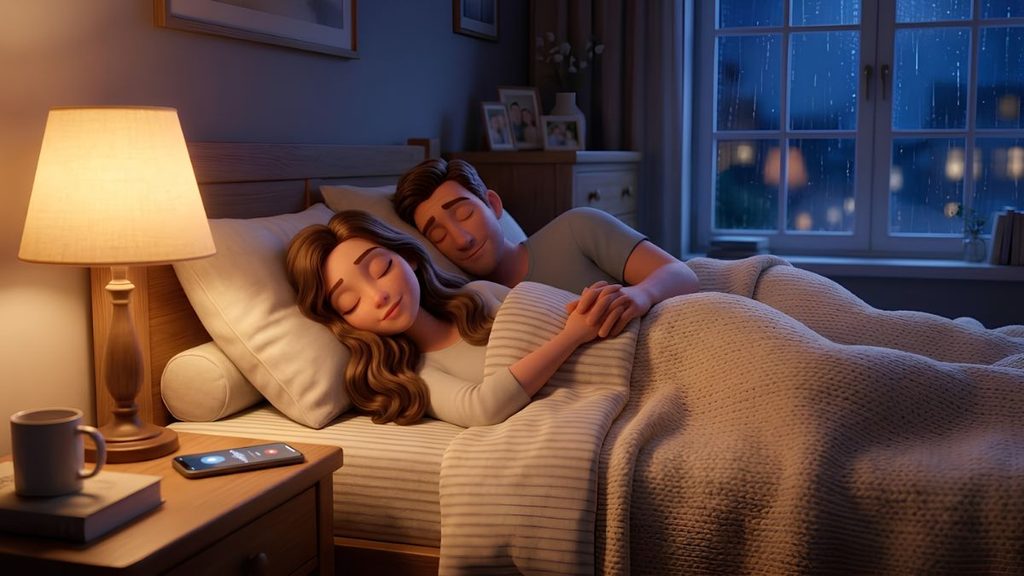
Olivia and James had learned that loving someone across time zones required a different kind of patience.
It meant saying good morning when the other person was saying goodnight.
It meant celebrating birthdays through screens when flights were too expensive.
It meant learning each other’s schedules almost as carefully as learning each other’s favorite foods.
Most importantly, it meant accepting that sometimes love had to fit into the small spaces left between busy lives.
Olivia lived in London.
James lived in Melbourne.
Between them were nearly ten thousand miles and a time difference that made ordinary conversations surprisingly complicated.
When Olivia woke up, James was usually finishing his evening.
When James opened his curtains to the morning sun, Olivia was often preparing for bed.
At first, they hated the time difference.
Eventually, they decided to make it part of their story.
It began with a simple voice message.
Olivia had been dating James for almost a year when he moved to Australia for work.
The move was supposed to last nine months.
Nine months, they thought.
They could manage that.
The first few weeks were exciting.
James sent photographs of Melbourne.
Olivia sent photographs of London.
They video-called almost every evening.
But after a while, their schedules became difficult.
James worked long hours.
Olivia had early mornings.
Some nights, she fell asleep before he finished work.
Some mornings, he was already commuting when she woke up.
Their conversations became shorter.
One evening, Olivia called James at midnight.
He answered immediately.
“Hey.”
“You’re awake.”
“Of course.”
“You sound exhausted.”
“So do you.”
Olivia smiled.
“I’m going to bed.”
“I know.”
There was a pause.
Then James said:
“I wish I could say goodnight properly.”
Olivia looked at the screen.
“What does properly mean?”
“I don’t know.”
He laughed.
“Maybe being there.”
She smiled sadly.
“Me too.”
They stayed on the call for another few minutes.
Then Olivia whispered:
“Goodnight.”
“Goodnight.”
She ended the call.
The room became quiet.
She put her phone beside the pillow.
Then, just before closing her eyes, she received a message.
It was a voice recording.
She pressed play.
James’s sleepy voice filled the room.
“Goodnight, Liv. Sleep well. I’ll talk to you when you wake up.”
Olivia smiled.
She listened again.
Then she fell asleep.
The next morning, Olivia sent him one too.
“Good morning, James. I hope you slept well. Have a good day.”
James listened to it while walking to work.
He smiled.
It was such a small thing.
But it made the distance feel different.
They had found a way to be part of each other’s mornings and nights even when their schedules would not allow them to be awake together.
So they made it a habit.
Every night before sleeping, one of them recorded a message.
Every morning, the other listened.
Sometimes it was long.
Sometimes only ten seconds.
Sometimes it contained a story.
Sometimes a joke.
Sometimes a reminder.
Sometimes just:
“I love you.”
Weeks passed.
The messages became a quiet part of their relationship.
Olivia would wake up and find James’s voice waiting for her.
James would finish his day and listen to Olivia before going to sleep.
They began calling the ritual the goodnight between time zones.
One evening, James sent:
“Today I saw a man walking a very serious-looking dachshund. The dog looked like he was late for an important meeting.”
Olivia laughed while brushing her teeth.
Another morning, she sent:
“Someone at work brought cake. I thought you’d be jealous.”
James replied later:
“Very jealous. Also offended that you ate it without me.”
The messages became tiny windows into their lives.
One particularly difficult week, Olivia became overwhelmed with work.
She had deadlines.
Meetings.
Emails.
Long evenings.
She barely had time to breathe.
One night, she came home exhausted.
She did not call James.
She did not message him.
She simply recorded a short voice note.
“I’m sorry. I’m exhausted. I love you. Goodnight.”
She sent it.
Then she fell asleep.
The next morning, she woke to seventeen messages.
She opened them.
Most were from work.
But there was one voice recording from James.
She pressed play.
His voice was gentle.
“You don’t need to apologize.”
A pause.
“I know you’re tired.”
Another pause.
“Today, don’t try to do everything.”
His voice became softer.
“Drink some water. Eat something. Take a breath.”
Then:
“And remember that someone is thinking about you.”
Olivia smiled.
The message ended.
She listened again.
Then she got out of bed.
James had difficult days too.
One evening, he called Olivia after work.
“I had a terrible day.”
She knew immediately.
“What happened?”
“Everything.”
She smiled.
“Do you want advice?”
“No.”
“Do you want sympathy?”
“Yes.”
She laughed.
“Come here.”
He leaned closer to the camera.
“Closer?”
“Closer.”
He moved his face toward the screen.
“That’s better.”
They both laughed.
After a few minutes, James became quiet.
“Can you send me one of your goodnight messages?”
“Of course.”
“Tonight?”
“Tonight.”
She recorded one after they hung up.
“James, I know today was difficult. Tomorrow doesn’t have to be perfect. You just need to get through it. Sleep well. I’ll be here when you wake up.”
James listened to it three times.
Then he slept.
Their ritual became more important than they realized.
It was not just a message.
It was consistency.
It was a promise.
Even if I cannot be beside you, I will leave something of myself with you.
The months passed.
Their relationship changed.
It became quieter.
Less dependent on constant conversation.
More comfortable with silence.
They learned that being in love did not mean needing to speak every minute.
Sometimes it meant trusting that the other person would still be there tomorrow.
One night, Olivia was sitting beside her bedroom window.
Rain was falling.
She had been thinking about the future.
“James?”
“Yes?”
“Do you ever worry?”
“About what?”
“About us.”
He was quiet for a moment.
“Sometimes.”
“So do I.”
“What worries you?”
“That we’ll get used to this.”
“To what?”
“Being apart.”
James thought about it.
“I don’t think I could.”
“Why?”
“Because every day I still wish you were here.”
Olivia smiled.
“Me too.”
He looked at her.
“But I don’t want us to spend all our time wishing.”
“What do you mean?”
“I want us to build something.”
“Even from here?”
“Especially from here.”
They began making plans.
Not vague plans.
Real ones.
They created a shared document.
They listed possible cities.
Jobs.
Savings goals.
Travel dates.
Places they wanted to visit.
Restaurants they wanted to try.
Things they wanted to do together.
Some plans changed.
Others disappeared.
New ones replaced them.
But they kept planning.
The future became something they were building instead of something they were merely waiting for.
Months later, James received an email.
His employer offered him another contract.
This time, he could choose where to work.
He immediately called Olivia.
“I have news.”
“What happened?”
“I can work remotely.”
She stared at him.
“From anywhere?”
“Almost.”
“What are you thinking?”
“I’ve been thinking about London.”
Olivia covered her mouth.
“When?”
“If I accept, I can move in two months.”
She began to cry.
James smiled.
“That’s a good reaction, right?”
She laughed through her tears.
“It’s the best reaction.”
The next two months passed slowly.
They continued their nightly ritual.
But now, each goodnight felt different.
There was an ending in sight.
One evening, James sent Olivia a voice message.
“Goodnight, Liv.”
He paused.
“Only forty-three more.”
Olivia smiled.
She counted.
Forty-three nights.
The number became their countdown.
Every night, they recorded a message.
Forty-two.
Forty-one.
Forty.
Thirty-nine.
The countdown became playful.
James sometimes exaggerated it.
“Goodnight. Only thirty days until I steal your blanket.”
Olivia replied:
“Goodnight. Twenty-nine days until I stop sharing my snacks.”
“Twenty-eight days until I move into your kitchen.”
“You already live there emotionally.”
“Twenty-seven days until I prove it.”
Finally, the last night arrived.
Olivia sat on her bed.
James sat in his apartment in Melbourne.
They knew it was the final goodnight between their time zones.
At least for a while.
Neither knew what to say.
James smiled.
“This feels strange.”
“I know.”
“We’ve done this hundreds of times.”
“Probably more.”
He laughed.
“Ready?”
“No.”
“Me neither.”
They looked at each other.
Then Olivia said:
“Record it.”
“Record what?”
“Our last goodnight.”
James pressed the recording button.
Olivia spoke first.
“Goodnight, James.”
He smiled.
“Goodnight, Olivia.”
“I’ll see you tomorrow.”
“I’ll see you tomorrow.”
They stared at each other.
Then Olivia whispered:
“Really.”
“Really.”
They ended the call.
The next day, Olivia went to the airport.
She waited near the arrivals area.
She had imagined this moment many times.
She had imagined running toward James.
She had imagined crying.
She had imagined hugging him.
But when he finally appeared, she forgot every version of the moment she had imagined.
He was simply there.
Standing with his suitcase.
Looking tired.
Smiling.
She ran toward him.
He opened his arms.
They held each other.
For a long time.
No screen.
No headphones.
No delayed connection.
No time zone.
Just warmth.
That evening, they returned to Olivia’s apartment.
It felt strange.
James placed his suitcase near the bedroom.
Olivia watched him.
“You’re really here.”
“I am.”
She smiled.
He walked toward her.
“So…”
“So?”
“What do we do tonight?”
She laughed.
“I don’t know.”
“For the first time, we don’t have to record anything.”
“That’s true.”
They sat together on the sofa.
Neither spoke.
They simply enjoyed being close.
Later, they cooked dinner.
James complained about the size of the kitchen.
Olivia complained about his cooking.
They laughed.
They argued over which movie to watch.
They shared dessert.
And when midnight arrived, they were still talking.
Eventually, they went to bed.
Olivia turned off the light.
James lay beside her.
He looked at her.
“Goodnight.”
She smiled.
“Goodnight.”
He laughed.
“That was easy.”
“What?”
“Being here.”
She moved closer.
“It wasn’t easy.”
“No.”
“But we made it.”
James kissed her forehead.
“We did.”
A few days later, Olivia woke up early.
She reached for her phone.
Out of habit, she expected to find a voice message.
There was none.
She smiled.
James was sleeping beside her.
She turned toward him.
For a moment, she simply watched him.
Then she whispered:
“Good morning.”
His eyes opened slightly.
“Morning.”
She smiled.
“No message?”
He shook his head.
“You’re here.”
She laughed softly.
“That’s true.”
He reached for her hand.
“Do you miss the messages?”
She thought about it.
“Sometimes.”
“Me too.”
She smiled.
“Maybe we don’t have to stop.”
James looked at her.
“What do you mean?”
“Sometimes, when you’re asleep, I can still leave you a message.”
“Why?”
“So you can hear it when you wake up.”
He smiled.
“Okay.”
That night, after James fell asleep, Olivia quietly picked up her phone.
She recorded:
“Goodnight, James. Sleep well. I’m right here.”
She placed the phone on the bedside table.
Then she slipped beneath the blanket beside him.
The next morning, James woke before her.
He saw the recording.
He smiled.
He pressed play.
Olivia’s sleepy voice filled the quiet room.
“I’m right here.”
James looked at her.
She was still sleeping.
He smiled.
The words meant something different now.
For months, I’m right here had meant:
I’m here, even though I am far away.
Now it meant something much simpler.
I’m here.
Literally.
Beside him.
And that was the greatest gift distance had given them.
It had taught them never to take ordinary closeness for granted.
A shared breakfast.
A sleepy good morning.
A hand reaching across the bed.
A quiet evening.
A whispered goodnight.
They had once believed love needed grand moments to survive.
Instead, they discovered that love often survives through tiny rituals repeated faithfully.
A voice message.
A photograph.
A promise.
A goodnight.
A morning.
Again and again.
Until one day, the distance disappears.
And you realize that all those little moments were quietly carrying you home.
The Little Blue Notebook

Mia had never been good at keeping diaries.
She had tried several times.
At thirteen, she bought a pink notebook and promised herself she would write in it every night.
She stopped after four days.
At nineteen, she bought a leather journal.
She filled three pages.
Then forgot about it.
Years later, when Oliver gave her a small blue notebook, she laughed.
“You know I don’t keep diaries.”
Oliver smiled.
“I’m not asking you to.”
“Then why did you buy it?”
“Because I want you to write our story.”
Mia looked at the notebook.
“Our story?”
“Yes.”
She opened the cover.
The first page was blank.
Oliver took a pen.
“Write something.”
“What?”
“Anything.”
Mia thought for a moment.
Then she wrote:
Today, Oliver gave me a blue notebook.
She looked at him.
“Happy?”
“Very.”
She closed it.
Neither of them knew that the little notebook would eventually become one of the most precious things they owned.
Mia and Oliver had met in Prague.
Mia was visiting the city with a friend.
Oliver was there for a photography conference.
They met in a small café after Oliver accidentally picked up Mia’s umbrella.
He realized his mistake almost immediately.
“I’m sorry.”
Mia looked at him.
“That’s mine.”
“I know.”
“Then why did you take it?”
“I wasn’t thinking.”
She smiled.
“Clearly.”
He laughed.
The conversation continued.
One coffee became two.
Two became dinner.
Dinner became a walk through the city.
By the end of the evening, they knew they lived in different countries.
Mia lived in Paris.
Oliver lived in Vienna.
The distance was not enormous compared with some long-distance relationships.
But it was still enough to make ordinary life complicated.
They decided to try.
At first, it was easy.
Trains connected their cities.
Weekend visits were possible.
They could see each other every few weeks.
But eventually work became demanding.
Travel became expensive.
Responsibilities increased.
Their visits became less frequent.
So they began searching for other ways to stay close.
That’s when Oliver gave Mia the notebook.
At first, they wrote simple things.
Mia wrote:
I had terrible coffee today.
Oliver replied on the next page:
You have terrible taste in coffee.
She wrote:
I miss you.
He wrote:
I miss you more.
She replied:
Impossible.
He wrote:
Challenge accepted.
The notebook became a conversation.
Sometimes Mia wrote in it and mailed it to Oliver.
Sometimes Oliver added his pages and mailed it back.
The little blue notebook traveled between Paris and Vienna.
Each journey took several days.
But they did not mind.
The waiting became part of the ritual.
One winter evening, Mia received the notebook in the mail.
She opened it eagerly.
Oliver had written several pages.
She turned to the first one.
Today I walked past the café where we first met.
I remembered your umbrella.
You looked annoyed.
She laughed.
On the next page:
I remember thinking you were beautiful.
Then:
I was too nervous to say it.
Mia smiled.
She continued reading.
Oliver wrote about his day.
A difficult meeting.
A funny conversation with his neighbor.
A song he had heard.
A dog he had seen in the park.
Small things.
Ordinary things.
Mia realized that was what she loved most.
He was not writing only about important moments.
He was giving her pieces of his everyday life.
She began doing the same.
She wrote about her morning coffee.
Her commute.
The bakery near her apartment.
The elderly woman who lived downstairs.
The book she was reading.
The rainy evenings she spent by the window.
Sometimes she wrote about loneliness.
Those entries were harder.
One night, she wrote:
I wish you were here.
Then she crossed it out.
She wrote:
I really wish you were here.
Then she left it.
When Oliver received the notebook, he added beneath it:
I wish I were there too.
Then:
But I’m coming.
Months passed.
The notebook became thicker.
Its blue cover became scratched.
The corners softened.
The pages began to smell faintly of the different places they had traveled.
Paris.
Vienna.
Prague.
Airports.
Train stations.
Coffee shops.
Bedrooms.
Kitchen tables.
The notebook had become a map of their relationship.
One page had a small coffee stain.
Another had a pressed flower.
Another contained a train ticket.
One page had nothing but:
I love you.
Oliver had written it repeatedly across the entire page.
Mia laughed when she saw it.
“You’re ridiculous.”
She called him.
“Did you like it?”
“I did.”
“Good.”
“Why did you write it so many times?”
“Because once didn’t feel like enough.”
She smiled.
“It was enough.”
“Maybe.”
Then came the hardest part.
Oliver was offered a position in Canada.
It was an incredible opportunity.
But it would take him much farther away.
Mia tried to be supportive.
“You should take it.”
Oliver looked at her through the video call.
“What about us?”
“We’ll manage.”
“That’s a long way.”
“I know.”
“You don’t have to pretend you’re okay.”
“I’m not.”
He was quiet.
“I’m scared.”
“So am I.”
“Then why are you telling me to go?”
Mia took a breath.
“Because loving you doesn’t mean I want you to stay small for me.”
Oliver looked down.
She continued.
“I want you to grow.”
“And what if growing takes me away from you?”
“Then we’ll find another way.”
Oliver accepted the position.
The next few months were difficult.
Their time difference became enormous.
Calls were harder.
Visits were rare.
The notebook became more important than ever.
They continued writing.
Sometimes weeks passed between letters.
But the notebook kept traveling.
One evening, Mia opened it and found a note.
I know this distance is difficult.
But every time I write here, I feel like I’m sitting across from you.
So I’m going to keep writing.
Even when I’m tired.
Even when I’m busy.
Even when I don’t know what to say.
Because I don’t want the distance to become the loudest thing between us.
Mia read it several times.
Then she wrote:
It won’t.
Years seemed to pass through the notebook.
They wrote about successes.
Failures.
Fears.
Dreams.
Arguments.
Apologies.
Plans.
There were pages where they disagreed.
Pages where they misunderstood each other.
Pages where they apologized.
Those pages became important too.
Because their relationship was not perfect.
It was real.
One evening, Mia wrote:
I don’t think love is about never hurting each other.
Oliver responded:
I think it’s about caring enough to repair what gets hurt.
She smiled.
Then added:
I think you’re right.
Eventually, they began talking seriously about living together.
The conversation was not easy.
Which country?
Whose career?
What kind of home?
How much money would they need?
What would they give up?
There were no simple answers.
But they kept talking.
One night, Oliver said:
“Maybe we should stop asking where we can both fit.”
“What should we ask?”
“Where do we want to build our life?”
Mia thought about it.
“Somewhere new.”
“Together?”
“Together.”
They decided to move to a city neither had lived in before.
It was frightening.
It was exciting.
And for the first time, their future did not belong to Paris, Vienna, or Canada.
It belonged to them.
The day they finally moved in together, Mia placed the blue notebook on the coffee table.
Oliver looked at it.
“We should write something.”
“Of course.”
He opened the final blank page.
Mia picked up the pen.
She wrote:
Today, we finally came home.
Oliver looked at the sentence.
Then he added:
And somehow, home was not a place.
Mia smiled.
She added:
It was us.
They closed the notebook.
Life together was not exactly what they had imagined.
It was better.
And sometimes messier.
They discovered each other’s habits.
Oliver left cupboard doors open.
Mia forgot where she put her keys.
Oliver cooked too much food.
Mia stole his sweaters.
They argued about chores.
They laughed about nothing.
They learned that love was not made only of romantic evenings.
It was made of grocery shopping.
Laundry.
Bills.
Shared breakfasts.
Quiet evenings.
Apologies.
Inside jokes.
A hand reaching for yours in the middle of the night.
The ordinary things they had once missed became the things they treasured most.
One rainy afternoon, Mia found the blue notebook in a drawer.
She had not opened it in months.
She carried it to the sofa.
Oliver sat beside her.
“Look.”
He smiled.
“I haven’t seen that in ages.”
They opened it.
Page after page.
Their old lives stared back at them.
There was the first entry.
Today, Oliver gave me a blue notebook.
There was the umbrella story.
The coffee stain.
The train ticket.
The pressed flower.
The difficult pages.
The hopeful pages.
The final page.
Mia became quiet.
“What?”
Oliver asked.
She pointed to the beginning.
“We were so young.”
He smiled.
“We were.”
“We had no idea.”
“About what?”
“About how much life was going to happen.”
Oliver took her hand.
“That’s the best part.”
“What?”
“We didn’t need to know.”
They continued reading.
Then Mia found one page she had forgotten.
It was dated several years earlier.
She read it aloud.
Sometimes I worry that our story is too complicated.
Too many miles.
Too many airports.
Too many goodbyes.
Too many nights when I wish I could reach across the bed and find you there.
But then I remember something.
Our story doesn’t need to be easy to be worth it.
It only needs to be ours.
Mia looked at Oliver.
He was smiling.
“You wrote that?”
She nodded.
“I forgot.”
“I didn’t.”
He kissed her forehead.
“I remembered.”
That evening, they placed the notebook on a shelf.
It stood between two framed photographs.
One from Prague.
One from their new home.
Mia looked at it.
“Should we start another one?”
Oliver smiled.
“Maybe.”
“What would we write?”
“Everything that happens next.”
She nodded.
“Together.”
“Together.”
Years later, their children would ask about the little blue notebook.
They would want to know why it was so important.
Mia would tell them:
“Because your father and I lived far apart once.”
“How far?”
“Very far.”
“Did you miss each other?”
“Every day.”
“Then why didn’t you stop?”
Mia would smile.
“Because sometimes love is a choice you make again and again.”
She would open the notebook.
The pages would be old by then.
The handwriting faded.
The cover worn.
But the words would still be there.
A record of two people who had once lived separate lives and slowly built a shared one.
Oliver would sit beside her.
He would take her hand.
And they would turn another page.
That night, after everyone was asleep, Mia and Oliver sat together by the window.
The city outside was quiet.
Oliver looked at the old notebook.
“Do you ever wish we had an easier story?”
Mia thought for a moment.
“No.”
“Why?”
“Because this story taught me how much the little things matter.”
He smiled.
“What little things?”
“Letters.”
“Coffee.”
“Train tickets.”
“Bad drawings.”
“Voice messages.”
“Goodnights.”
“Waiting.”
“Forgiving.”
“Choosing each other.”
Oliver squeezed her hand.
“And what about now?”
Mia leaned against him.
“Now we get to write the next chapter.”
He opened the notebook.
There was one final blank page.
Mia took the pen.
She wrote:
We thought the notebook was keeping our story.
She looked at Oliver.
He added:
But really, our story was keeping us.
They closed the notebook.
Outside, rain began falling softly.
Inside, the two people who had once lived thousands of miles apart sat together in the quiet.
The little blue notebook rested beside them.
Its journey was not finished.
Neither was theirs.
When We Finally Come Home

Hannah used to think that home was a place.
A house with familiar walls.
A kitchen where she knew exactly where everything belonged.
A bedroom where she could close the curtains and feel safe.
A street where she recognized the neighbors.
Then she met Benjamin.
And slowly, without realizing it, she began to understand that home could also be a person.
Benjamin lived in Toronto.
Hannah lived in Dublin.
Their relationship had started during a holiday in Lisbon, where they had met on a warm evening outside a small bookstore.
Hannah had been looking for a particular novel.
Benjamin had been holding the last copy.
“You want this?”
She looked at the book.
“Yes.”
He handed it to her.
“Then it’s yours.”
She smiled.
“That’s surprisingly generous.”
“I’ll survive.”
They laughed.
That was how it started.
A book.
A conversation.
A walk.
A coffee.
Then another.
When Hannah returned to Ireland, they exchanged numbers.
Neither expected anything serious.
But love rarely asks permission before arriving.
The first few months were beautiful.
They talked every day.
They sent photographs.
They planned visits.
They counted down the days.
But eventually, the distance became real.
There were airports.
There were expensive flights.
There were missed birthdays.
There were lonely evenings.
And there were moments when Hannah wondered whether loving someone she could not touch was worth the ache.
Benjamin felt the same.
One night, during a video call, Hannah said:
“I miss ordinary life.”
Benjamin nodded.
“Me too.”
“I don’t need a holiday.”
“I know.”
“I just want to buy groceries with you.”
He laughed softly.
“That’s romantic.”
“I’m serious.”
“I know.”
“I want to argue about what we’re having for dinner.”
“I would probably lose.”
“You definitely would.”
They laughed.
Then Hannah became quiet.
“I want boring days.”
Benjamin smiled.
“So do I.”
From that night onward, they started imagining ordinary evenings together.
Not vacations.
Not expensive restaurants.
Not perfect sunsets.
Ordinary evenings.
Hannah would say:
“Imagine we’re home.”
Benjamin would answer:
“Okay.”
“What are we doing?”
“Cooking.”
“What?”
“Pasta.”
“You’re making pasta?”
“Yes.”
“You’re going to burn it.”
“I am not.”
“You absolutely are.”
He laughed.
Then she would continue.
“After dinner?”
“We watch a movie.”
“Which one?”
“The one you choose.”
“I always choose.”
“I know.”
“Then what?”
“We fall asleep on the sofa.”
Hannah smiled.
“That sounds perfect.”
Their imaginary evenings became a ritual.
Whenever they missed each other, they created one.
Sometimes they imagined rain outside.
Sometimes snow.
Sometimes a lazy Sunday morning.
Sometimes a late-night kitchen conversation.
They talked about where they might live.
A small apartment.
A house near the sea.
A quiet neighborhood.
Maybe a dog.
Maybe a garden.
Maybe a bookshelf covering an entire wall.
They did not know exactly where their future would be.
But they knew what they wanted it to feel like.
Warm.
Safe.
Ordinary.
Together.
Then Hannah’s mother became ill.
It was not a serious illness, but it required Hannah to stay close to home for several months.
Benjamin understood.
He told her:
“Don’t worry about me.”
“I am worried about us.”
“We’ll be okay.”
“What if this delays everything?”
“It doesn’t change what we’re building.”
Hannah looked at him.
“You always make it sound easy.”
“It isn’t easy.”
“Then why are you so calm?”
“Because I don’t want you to carry my worry too.”
She smiled sadly.
“You carry mine all the time.”
“That’s what we’re doing.”
“What?”
“Sharing.”
The months became difficult.
Hannah spent more time with her family.
Benjamin worked long hours.
Their calls became shorter.
Sometimes they went several days without speaking properly.
But every night, Benjamin sent the same message:
I’m here.
No long explanation.
No pressure.
Just those two words.
Hannah began looking forward to them.
On difficult days, she would read the message again.
I’m here.
It became their quiet promise.
Eventually, things became easier.
Hannah’s family situation improved.
Benjamin received a promotion.
They could finally begin making serious plans.
They decided to meet halfway in New York for a short holiday.
It was not their final reunion.
But it felt like a beginning.
They spent seven days together.
They cooked.
They walked.
They laughed.
They argued over directions.
They watched movies.
They fell asleep on the sofa.
They did everything they had imagined.
On their final evening, they sat beside the hotel window.
Hannah rested her head on Benjamin’s shoulder.
“I don’t want tomorrow.”
“I know.”
“I don’t want another airport.”
“Neither do I.”
She looked at him.
“What if we stopped doing this?”
“Doing what?”
“Leaving.”
Benjamin was silent.
“What are you thinking?”
“Maybe it’s time.”
“For what?”
“For home.”
They spent the next few months planning.
Benjamin would move to Dublin.
It was a difficult decision.
He had a career in Toronto.
Friends.
A familiar life.
Hannah had her own responsibilities.
Neither wanted the other to sacrifice everything.
So they worked through every detail.
Money.
Jobs.
Housing.
Travel.
Timelines.
They discovered that love was not only about emotion.
Sometimes love was spreadsheets.
Sometimes it was difficult conversations.
Sometimes it was compromise.
Sometimes it was saying:
“Let’s find a way that works for both of us.”
Finally, the day came.
Benjamin packed his apartment.
He gave away furniture.
He packed books.
He folded clothes into suitcases.
Before leaving, he stood in the empty living room.
He looked around.
This had been his home for years.
He felt sadness.
But beneath it was excitement.
He took out his phone.
He called Hannah.
“I’m ready.”
She smiled.
“Are you sure?”
“No.”
She laughed.
“Good.”
“What?”
“If you were completely sure, I’d worry.”
Benjamin smiled.
“I love you.”
“I love you too.”
“See you tomorrow.”
“Tomorrow.”
Hannah arrived at the airport early.
Very early.
She had been awake since before sunrise.
She stood near the arrivals area.
People moved around her.
She watched the electronic board.
The flight landed.
Her heart began beating faster.
Passengers appeared.
One after another.
Then she saw him.
Benjamin.
He was pulling a suitcase.
His hair was slightly messy after the long flight.
He looked tired.
But the moment he saw Hannah, his face changed.
He smiled.
She ran toward him.
He opened his arms.
She fell into them.
For a long moment, neither spoke.
Then Benjamin whispered:
“I’m home.”
Hannah closed her eyes.
“Yes.”
She held him tighter.
“You’re home.”
They returned to her apartment.
Benjamin looked around.
“This is smaller than I imagined.”
Hannah laughed.
“You knew that.”
“I did.”
He put his suitcase down.
She watched him.
He looked strangely comfortable.
As though he had been there before.
As though he belonged.
Hannah walked into the kitchen.
“What do you want for dinner?”
Benjamin followed her.
“Anything.”
“No.”
“What?”
“You have to choose.”
He smiled.
“Pizza.”
“Of course.”
They ordered pizza.
Then sat on the floor because there were still boxes everywhere.
They ate directly from the boxes.
They talked.
They laughed.
At one point, Benjamin looked around.
“Do you realize what we’re doing?”
“What?”
“Nothing.”
Hannah smiled.
“Exactly.”
That night, they began unpacking.
Benjamin opened one suitcase.
Inside were books.
Hannah looked at them.
“Why did you bring so many?”
“I couldn’t leave them.”
She laughed.
“You’re going to need another bookshelf.”
“I know.”
They worked until midnight.
Then they became tired.
They sat on the sofa.
Hannah rested her head on Benjamin’s shoulder.
“Movie?”
“Sure.”
“Which one?”
“You choose.”
She smiled.
“I always choose.”
“I know.”
Twenty minutes later, Benjamin was asleep.
Hannah looked at him.
She smiled.
It was exactly like their imaginary evenings.
Only better.
Because it was real.
The next morning, Hannah woke early.
For a moment, she forgot Benjamin was there.
Then she saw him asleep beside her.
She smiled.
She quietly walked into the kitchen.
She made coffee.
She opened the curtains.
Morning sunlight entered the apartment.
Benjamin appeared in the doorway.
“Morning.”
She turned.
“Morning.”
He walked toward her.
“Coffee?”
“Already made.”
“You are officially my favorite person.”
“I thought I already was.”
“You were.”
She laughed.
He wrapped his arms around her.
For several seconds, they simply stood there.
Nothing extraordinary happened.
No fireworks.
No dramatic music.
No perfect moment.
Just two people standing in a kitchen in the morning.
Together.
And somehow, it felt like everything.
Weeks passed.
They settled into a routine.
Benjamin found work.
Hannah returned to her normal schedule.
They discovered favorite cafés.
They argued about grocery shopping.
They learned who was better at cooking.
They took evening walks.
They visited family.
They made new friends.
They built a life.
It was not perfect.
Sometimes they argued.
Sometimes they were tired.
Sometimes they needed space.
But now, when they had difficult days, there was no airport waiting at the end of the conversation.
They could simply sit together.
That changed everything.
One evening, months after Benjamin arrived, they went for a walk near the coast.
The sky was turning orange.
The water was calm.
Hannah held his hand.
“Do you remember our imaginary evenings?”
Benjamin smiled.
“Of course.”
“We actually did them.”
“Most of them.”
“Not all.”
“Which one didn’t we do?”
Hannah thought.
“We never had that house with the huge bookshelf.”
Benjamin laughed.
“Yet.”
“Yet?”
“Maybe someday.”
She smiled.
“And the dog?”
“Definitely.”
“You’re agreeing too quickly.”
“I’ve always wanted one.”
She looked at him.
“You never told me.”
“You never asked.”
She laughed.
Then they continued walking.
That night, they cooked pasta.
Benjamin insisted he could make it.
Hannah watched him.
“You’re going to burn it.”
“I am not.”
“You absolutely are.”
He looked at her.
“You’ve been waiting years to say that.”
“Yes.”
The pasta was slightly overcooked.
They ate it anyway.
After dinner, they watched a movie.
Benjamin fell asleep first.
Hannah smiled.
She pulled a blanket over him.
Then she sat beside him.
She remembered all those nights when she had imagined this exact moment.
Back then, it had seemed impossible.
Now it was ordinary.
And she realized something.
Sometimes the dreams we wait for do not arrive with a grand entrance.
Sometimes they quietly become part of a Tuesday evening.
Later, Benjamin woke.
“Did I fall asleep?”
“Yes.”
“How long?”
“An hour.”
He looked embarrassed.
“Sorry.”
“Don’t be.”
He looked at her.
“What were you doing?”
“Thinking.”
“About?”
Hannah smiled.
“Home.”
Benjamin looked around the room.
Then at her.
“Me too.”
They turned off the television.
The apartment became quiet.
Outside, the city continued moving.
Cars passed.
Lights appeared in windows.
People walked home.
Inside, Hannah and Benjamin sat together.
No one was waiting at an airport.
No one was counting down the days.
No one was checking flight prices.
No one was calculating time zones.
They were simply together.
Hannah rested her head against him.
“Benjamin?”
“Yes?”
“Do you remember what I said in New York?”
“What?”
“I said I wanted boring days.”
He smiled.
“You got them.”
She laughed.
“I did.”
“Are you disappointed?”
She shook her head.
“No.”
“Why?”
“Because I finally understand.”
“Understand what?”
She looked at him.
“Home isn’t supposed to be exciting all the time.”
He listened.
“Sometimes home is someone asking what you want for dinner.”
She smiled.
“Sometimes it’s someone stealing your blanket.”
Benjamin laughed.
“Sometimes it’s falling asleep beside someone while a movie plays.”
She squeezed his hand.
“Sometimes it’s just knowing that when you wake up, they will still be there.”
Benjamin kissed her forehead.
“That’s home.”
Years later, when someone asked Hannah how she and Benjamin had managed a long-distance relationship, she never gave a complicated answer.
She simply said:
“We stopped thinking about how far apart we were and started thinking about what we were building.”
They had learned that love was not the absence of distance.
It was the decision to keep moving toward each other.
They had survived airports.
Time zones.
Missed calls.
Lonely nights.
Difficult seasons.
Uncertain plans.
And eventually, they had discovered something beautiful.
The home they had spent so long imagining was never really a particular city.
It was not Toronto.
It was not Dublin.
It was not an apartment.
It was not a house.
Home was the place where they could be ordinary together.
A kitchen.
A sofa.
Two cups of coffee.
A half-finished movie.
A shared blanket.
A quiet morning.
A hand reaching across the bed.
A voice saying:
“Goodnight.”
And another answering:
“Goodnight.”
Together.
That night, Hannah turned off the lamp.
Benjamin reached for her hand.
She smiled.
“Home?”
He squeezed her fingers.
“Home.”
And they fell asleep beside each other, grateful for every mile they had once crossed and every difficult night that had taught them how precious ordinary closeness could be.
Because sometimes the longest journey in love is not the journey between two cities.
It is the journey from I miss you to I’m right here.
And when they finally made that journey, they discovered that home had been waiting for them all along.
Why Sleep Stories Can Help Long Distance Couples
Long distance relationships often require couples to create intentional ways of staying emotionally connected.
A short bedtime conversation can sometimes become rushed because one partner is tired or because their schedules don’t overlap.
A soothing story offers another option.
Instead of asking, “How was your day?” and immediately ending the call, couples can spend a few minutes sharing something peaceful.
They Create a Shared Experience
Physical distance means couples cannot always experience ordinary moments together.
You may not be able to sit on the same couch, drink tea together, or fall asleep beside each other.
A story can create a shared mental space.
Both partners can imagine the same cottage, beach, garden, train journey, or quiet evening.
For a few minutes, the distance can feel smaller.
They Make Bedtime More Relaxing
Some conversations become emotionally intense.
Couples may discuss problems, finances, work, family responsibilities, or plans for the future.
Those conversations are important, but they aren’t always ideal immediately before sleep.
A calming story can help transition from daily responsibilities into a quieter state of mind.
They Give Couples Something to Look Forward To
A regular bedtime story can become a small tradition.
Perhaps Monday is story night.
Perhaps one partner reads on Tuesday and the other reads on Wednesday.
The ritual doesn’t need to be complicated.
Consistency is often more important than length.
They Help Replace Physical Closeness With Emotional Closeness
A story cannot replace physical presence.
However, it can provide another form of intimacy.
Hearing your partner’s voice while imagining a peaceful scene can feel reassuring.
A familiar voice can become part of the bedtime environment, particularly when the story is slow and gentle.
What Makes a Good Sleep Story for a Long Distance Couple?
Not every romantic story works well as a bedtime story.
A suspenseful plot might keep someone awake.
A highly emotional conflict could leave the listener thinking about problems instead of relaxing.
The best soothing stories generally have several characteristics.
Gentle Pacing
A sleep story should not rush from one event to another.
The narrative can move slowly.
Descriptions of weather, landscapes, rooms, gardens, stars, oceans, forests, and quiet evenings can help establish a peaceful rhythm.
Emotional Warmth
The story should create feelings of safety, affection, comfort, and companionship.
The relationship between the characters should feel supportive rather than stressful.
Simple Conflict
If there is a problem, it should generally be mild.
For example, two characters might miss each other while living in different cities before finding a meaningful way to reconnect.
The story should eventually move toward comfort and reassurance.
A Peaceful Ending
The ending matters enormously in a sleep story.
A sudden twist or unresolved conflict can make the listener want to continue reading.
Instead, the story should gradually become quieter.
The characters might watch the stars, fall asleep during a phone call, listen to rain, sit beside a fireplace, or imagine waking up together.
How to Read a Sleep Story to Your Long Distance Partner
You don’t need special equipment or complicated technology.
A phone call can be enough.
Start With a Calm Conversation
Before beginning the story, spend a few minutes talking.
Ask about your partner’s day.
Don’t immediately jump into the story.
Give both of you a chance to transition from the day into bedtime.
Lower Your Voice
A soft, relaxed voice works better than an energetic storytelling style.
You don’t need to whisper.
Simply slow down and speak gently.
Pause Between Paragraphs
Don’t rush through the story.
Small pauses allow your partner to imagine the scene.
They also create a more natural bedtime rhythm.
Keep Background Noise Low
A quiet environment makes the story easier to follow.
If you’re using a phone call, consider moving somewhere comfortable where notifications and distractions are limited.
Don’t Worry About Perfect Storytelling
Your partner probably isn’t judging your narration.
The emotional connection matters more than professional storytelling.
A familiar voice can make an ordinary story feel special.
Take Turns Reading
One of the easiest ways to make sleep stories interactive is to alternate.
You read one paragraph.
Your partner reads the next.
This creates a shared experience rather than making one person the permanent storyteller.
You can also alternate nights.
For example:
- Monday: Partner A reads
- Tuesday: Partner B reads
- Wednesday: Listen together
- Thursday: Partner A reads
- Friday: Partner B reads
- Weekend: Choose a longer story together
This keeps the routine from becoming repetitive.
Record Stories for Your Partner
Different schedules can make live bedtime calls difficult.
Maybe one partner works late.
Maybe the other wakes early.
Maybe you’re separated by several time zones.
In these situations, recording a story can be a thoughtful alternative.
You could record yourself reading a short story and send it before your partner goes to sleep.
Your partner can listen whenever they have time.
You can even make the recording more personal by beginning with a simple message.
For example:
“I know we’re far apart tonight, but I wanted my voice to be the last thing you heard before sleeping. Close your eyes, get comfortable, and imagine we’re somewhere peaceful together.”
Then begin the story.
Personalize the Stories
One of the best ways to make a sleep story meaningful is to incorporate details from the relationship.
You don’t need to use your real names if you prefer fictional characters.
Instead, include things that belong to your relationship.
For example:
- The café where you first met
- Your favorite vacation destination
- A shared joke
- Your favorite dessert
- A song you both enjoy
- The place where you hope to live someday
- Your favorite season
- A memorable first date
- A future travel plan
- A special nickname
These details can transform a generic story into something that feels uniquely yours.
Create a Shared Imaginary Place
Couples can also create a fictional world together.
Imagine a small house somewhere in the countryside.
There is a garden behind it.
A wooden porch overlooks a lake.
There is a fireplace inside.
A bookshelf occupies one wall.
Every night, the couple adds another detail.
Perhaps there is a little bakery nearby.
Maybe they have a dog.
Maybe they grow roses.
Maybe there is a walking trail through the forest.
Over time, this imaginary place can become a recurring setting for your bedtime stories.
It gives couples a peaceful mental space they can return to whenever they want.
Sleep Story Ideas for Different Stages of a Long Distance Relationship
Different couples may want different kinds of stories.
When You Have Just Started Dating Long Distance
Choose stories about discovery.
Two people learning about each other.
Two strangers finding common ground.
A couple planning their first meeting.
These stories can reflect the excitement of a new relationship.
When You Have Been Apart for a Long Time
Choose stories about patience and reassurance.
Themes such as waiting, letters, shared memories, and looking at the same stars can feel particularly meaningful.
When You Have a Reunion Planned
Stories about anticipation can be wonderful.
The characters might imagine the airport reunion, first hug, first dinner, or first morning together.
These stories can turn waiting into something positive.
When the Distance Feels Difficult
Choose especially gentle stories.
Avoid unnecessary conflict.
Focus on reassurance, memories, emotional support, and the idea that difficult periods eventually change.
Romantic Without Being Overly Dramatic
A soothing sleep story doesn’t need grand declarations of love.
Sometimes the smallest moments are more comforting.
A character making tea for their partner.
Someone leaving a light on.
Two people watching rain through a window.
A couple sharing headphones.
Someone remembering exactly how their partner likes their coffee.
A voice saying goodnight.
These simple moments can make a story feel authentic.
For bedtime content, understated affection often works better than excessive drama.
Use Nature to Create a Sleepy Atmosphere
Nature is especially effective in bedtime stories.
Consider settings such as:
- Rain: Soft rain against a window can create an instantly calming atmosphere.
- Ocean: Waves moving gently against the shore can give the story a slow rhythm.
- Forest: A quiet forest at night can create a peaceful sense of isolation.
- Mountains: A small cabin surrounded by mountains can provide a cozy setting.
- Garden: Flowers, fireflies, fountains, and moonlight can create a romantic environment.
- Snow: A warm cottage while snow falls outside can create a particularly cozy bedtime scene.
Keep the Language Gentle and Easy to Follow
Sleep stories should be comfortable to listen to.
Avoid overly complicated sentences.
Shorter paragraphs can work particularly well.
Instead of filling every section with dramatic dialogue, allow descriptions to breathe.
For example, a peaceful scene might describe:
The rain tapping gently against the window.
A warm lamp beside the bed.
Two cups of tea cooling on the table.
The quiet sound of someone breathing nearby.
A soft blanket covering the couple.
These small details can help listeners visualize the scene without requiring intense concentration.
Avoid Excessive Suspense Before Bed
A major mystery may sound exciting, but it can work against the purpose of a sleep story.
If the listener keeps thinking:
“What happens next?”
they may stay awake.
Soothing stories generally benefit from predictable emotional movement.
A good structure might be:
Peaceful beginning → gentle emotional moment → comforting realization → quiet ending
This allows the listener to relax gradually.
Make the Ending Especially Calm
The final few paragraphs should slow down.
Instead of introducing a new event, return to the central emotional idea.
Perhaps the characters lie beneath the same moon.
Perhaps they fall asleep during a video call.
Perhaps one character imagines waking up beside the other.
Perhaps they hear rain outside their cottage.
The final words should feel like a soft landing.
Bedtime Rituals for Long Distance Couples
Sleep stories can become part of a broader nighttime routine.
Try combining them with other small rituals.
- Goodnight Voice Messages: Send a short voice message before sleeping.
- Shared Playlists: Listen to the same calming playlist while preparing for bed.
- Same-Time Tea: Make the same drink while talking.
- Virtual Stargazing: Go outside and look at the sky together during a call.
- Daily Gratitude: Each person shares one good thing from the day.
- Future Planning: Talk briefly about something you want to do together when you meet again.
These rituals can make distance feel more manageable.
How Long Should a Sleep Story Be?
There isn’t one perfect length.
For a quick bedtime routine, a story of 5 to 10 minutes may be enough.
For couples who enjoy longer nighttime sessions, 15 to 30 minutes can work well.
The important thing is that the story should not feel like an obligation.
If one partner is already sleepy, there’s no reason to finish the entire story.
The goal is comfort, not completion.
Why Small Bedtime Traditions Matter
Long distance relationships often involve major plans.
When will you meet?
When will you live together?
When will the distance end?
Those questions matter.
But relationships are also built through small daily moments.
A goodnight message.
A shared laugh.
A favorite story.
A five-minute phone call.
A familiar voice.
A small reminder that someone is thinking about you.
Soothing sleep stories fit naturally into this kind of relationship because they turn an ordinary part of the day into a shared ritual.
Making Sleep Stories Feel More Personal
If you want your stories to feel especially meaningful, create recurring elements.
Maybe every story includes the same fictional cottage.
Maybe the characters always have a favorite café.
Maybe they have a little dog.
Maybe there is a particular tree where they meet.
Maybe the moon appears whenever they miss each other.
These recurring elements create continuity.
After several stories, the fictional world can begin to feel familiar.
The couple isn’t just listening to unrelated stories.
They are returning to a world they have created together.
The Emotional Value of Hearing Your Partner’s Voice
For couples separated by distance, a voice can carry considerable emotional meaning.
Text messages communicate words.
Video calls provide visual connection.
But hearing someone’s voice can create a different sense of intimacy.
A calm bedtime story gives the listener an opportunity to hear that familiar voice without needing to maintain an active conversation.
They can simply listen.
This is especially useful on nights when one partner is too tired to talk much.
When You Can’t Call, Leave Something Behind
Not every night will go according to plan.
One partner may be working late.
The other may have an early morning.
There may be poor internet.
Someone may simply need sleep.
That doesn’t mean the bedtime connection has to disappear.
A short recorded story can bridge the gap.
Even a simple message such as:
“I know we couldn’t talk tonight, but I wanted to leave you something peaceful to listen to before you sleep.”
can make the night feel less lonely.
What Makes These Stories Different From Regular Romantic Stories?
Regular romantic stories may focus on attraction, conflict, dramatic reunions, or major emotional events.
Soothing sleep stories have a different purpose.
They prioritize:
- Calmness
- Emotional security
- Gentle romance
- Familiarity
- Comfort
- Hope
- Imagination
- Peaceful endings
The relationship is important, but the story should also help the listener relax.
That balance is what makes the format particularly suitable for bedtime.
Final Thoughts
Long distance relationships require creativity.
When you can’t share the same bedroom, you can still create bedtime rituals.
When you can’t hold hands, you can share a story.
When you can’t watch the same sunset, you can imagine one together.
When you can’t fall asleep beside each other, you can still let a familiar voice accompany you into the night.
Soothing sleep stories for long distance relationships offer a simple way to create that sense of connection.
They don’t eliminate the distance.
They don’t replace being together.
Instead, they make the distance a little softer.
A quiet story, a familiar voice, and a few peaceful minutes before sleep can become a small reminder that love doesn’t always require physical closeness.
Sometimes it simply needs two people who are willing to keep creating little moments together, even when they are miles apart.
And when the story ends, the most comforting thought can be a simple one:
You may be sleeping far away from each other tonight, but you’re still sharing the same night, the same sky, and the same love.