There is something uniquely thrilling about reading scary stories in the dark.
Whether you’re sitting around a campfire, spending the night at a sleepover, or reading alone under the covers with a flashlight, horror stories have a way of capturing our imagination like few other forms of storytelling.
The darkness adds an extra layer of suspense. Every creak in the floorboards sounds louder. Every shadow seems deeper. Even familiar surroundings can suddenly feel unsettling.
That’s why scary stories have remained popular for generations. They allow us to experience fear from a safe distance while still delivering the excitement of the unknown.
In this article, we’ll explore why dark storytelling remains so captivating, what makes a horror story effective, and share several chilling tales guaranteed to send shivers down your spine.
Why Scary Stories Remain So Popular?
People have been sharing frightening tales for centuries. Long before movies, television, and the internet, communities gathered around fires to tell stories about ghosts, mysterious creatures, and unexplained events. Today, the tradition continues because horror appeals to a natural human curiosity about the unknown.
Fear in a Safe Environment
One reason people enjoy horror is that it provides a controlled experience. Readers know they are not in real danger, yet they still experience suspense, tension, and excitement throughout the story.
The Power of Imagination
Unlike films, written stories require readers to create the scenes in their minds. This makes the experience more personal, and often far more terrifying, because imagination fills in the gaps in unpredictable ways.
Shared Experiences
Scary stories become even more powerful when shared with others. Whether told at sleepovers, camping trips, or Halloween gatherings, they create memorable moments that people talk about long afterward.
Emotional Release
Horror stories allow people to experience fear in a safe way, which can act as an emotional release. This “controlled fear” often leaves readers feeling relieved or even refreshed afterward.
Exploration of Deep Fears
Many horror stories tap into universal human fears such as darkness, isolation, loss of control, or the unknown. These stories give readers a way to confront those emotions indirectly.
Cultural and Folklore Influence
Scary stories often come from myths, legends, and traditional folklore. They preserve cultural history while evolving into modern interpretations that appeal to new generations.
Thrill and Adrenaline Rush
Fear triggers adrenaline, which increases alertness and excitement. This physical response is part of what makes horror engaging and enjoyable for many readers.
Hidden Moral Lessons
Some scary stories include subtle warnings or lessons. They may highlight consequences of curiosity, poor decisions, or ignoring danger, adding depth beyond entertainment.
Escapism from Daily Life
Horror provides an escape from routine life by placing readers in unusual, mysterious, or supernatural situations that feel completely different from everyday experiences.
Strong Emotional Impact
Scary stories are memorable because they create intense emotional reactions. Fear, suspense, and surprise make the story linger in the reader’s mind long after it ends.
What Makes a Story Truly Frightening?
Not every horror story leaves a lasting impact. The most memorable ones usually balance mystery, suspense, and relatable situations in a way that keeps the reader mentally engaged even after the story ends.
Mystery and the Fear of the Unknown
Mystery plays a central role in horror because the human mind is naturally drawn to unanswered questions. When a story does not fully explain what is happening, readers begin to imagine possibilities on their own.
This works especially well when:
- Events are unclear or partially hidden
- Strange incidents have no immediate explanation
- Characters discover more questions than answers
The less the reader knows, the more their imagination fills in the gaps, often creating something more frightening than the story explicitly shows.
Suspense and Gradual Tension
Suspense is what keeps readers emotionally invested. Instead of delivering fear all at once, good horror builds it slowly.
It is often created through:
- Small, unusual details that feel slightly wrong
- Delayed explanations or outcomes
- A steady increase in tension over time
- Quiet moments that feel “too calm”
This slow buildup makes readers expect something to happen, which itself becomes a source of anxiety.
Familiar Settings That Feel Unsafe
Horror becomes more powerful when it takes place in normal, everyday environments. This removes the sense of distance between fiction and reality.
Common settings include:
- Homes and bedrooms
- Schools and offices
- Hotels or road trips
- Quiet streets or neighborhoods
When something strange happens in a familiar place, it feels more believable and personally unsettling because it challenges the idea of safety in ordinary life.
Unanswered Questions That Linger
Some of the most frightening stories never fully explain everything. Instead, they leave certain elements unresolved.
This is effective because:
- The mind continues searching for meaning
- Readers imagine their own explanations
- Uncertainty keeps the story alive after it ends
Often, what is left unexplained becomes more memorable than what is revealed.
Psychological Fear and Human Instincts
Truly frightening stories often connect with deep-rooted human fears. These are not just about ghosts or monsters, but about emotional vulnerabilities.
Common triggers include:
- Being alone or isolated
- Losing control of a situation
- Not being able to trust what is real
- Darkness or limited visibility
When horror taps into these instincts, it feels more personal and realistic.
Imagination and Emotional Impact
Unlike visual media, written horror depends heavily on the reader’s imagination. This makes the experience more interactive and often more intense.
Readers build their own mental images, which means:
- Fear becomes personalized
- Details feel more real in the mind
- Each reader experiences the story differently
This is why subtle storytelling is often more powerful than explicit descriptions.
Lasting Effect on the Reader
A strong horror story does not end when the reading stops. It often leaves a lingering emotional effect.
This can include:
- Thinking about the story afterward
- Replaying scenes mentally
- Feeling slight unease in familiar places
- Wondering what was “really” happening
The longer a story stays in the reader’s mind, the more effective it is as a piece of horror storytelling.
Scary Stories to Tell in the Dark
Some stories seem harmless in daylight, but feel completely different after dark. When the room is quiet and the lights are off, every shadow and unexpected sound can make your imagination run wild. These scary stories to tell in the dark might stay with you long after you’ve finished reading.
Story 1: The Hallway Door
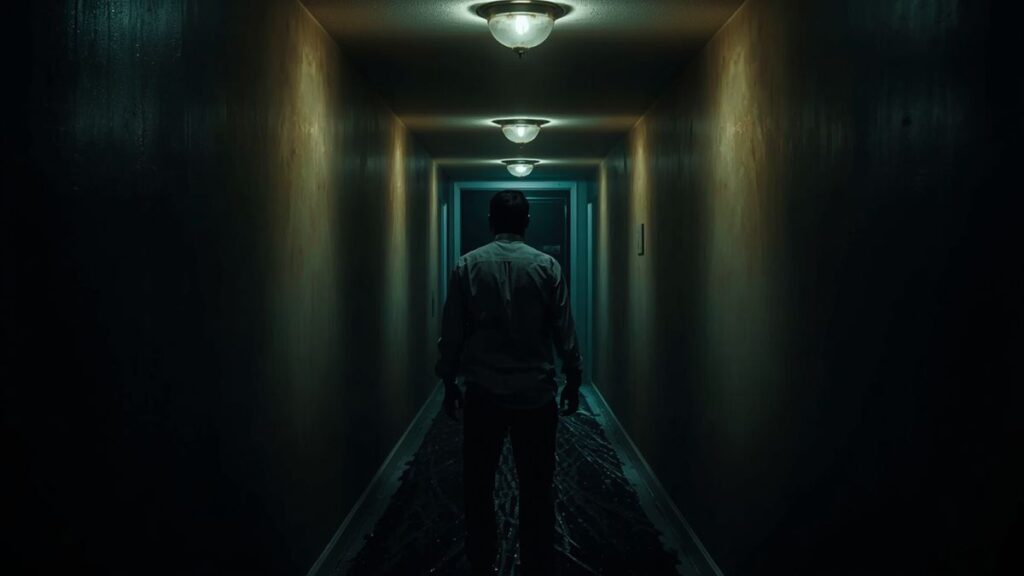
Michael had always liked predictability.
It was the reason he chose the apartment in the first place. Small, quiet, nothing fancy. A narrow hallway, thin walls, and neighbors who rarely made enough noise to matter. It was not exciting, but that was exactly what he wanted. After years of moving between busy places and unstable routines, silence felt like stability.
His apartment sat on the third floor of an older building on the edge of the city. The kind of place where the paint never quite looked fresh, no matter how many times it was redone. The lights in the hallway sometimes flickered, especially late at night, and the elevator worked only when it felt like cooperating.
But Michael did not mind. He had a system for everything.
Every night followed the same pattern.
He would come home from work, place his keys on the small table near the door, and take off his shoes in the exact same spot. He would check the stove twice, even if he had not used it. Then he would walk to the front door, press the lock once, then twice, and sometimes a third time just to be sure.
Only after that would he allow himself to relax.
It was not fear that drove the routine. At least, that is what he told himself. It was habit. Order. Control.
The building itself rarely gave him any reason to think otherwise. People came and went quietly. A neighbor upstairs sometimes played soft music late at night. Someone on the second floor had a dog that barked at nothing in particular. Normal things. Expected things.
Until the night the hallway changed.
It started subtly.
A sound.
A click.
Michael was getting ready for bed, standing near his kitchen sink, rinsing out a cup. The apartment was quiet except for the faint hum of the refrigerator. Then, clearly, from outside his door, came a sound like metal shifting into place.
Click.
He paused.
It sounded like a door lock.
Michael frowned slightly, set the cup down, and listened. Nothing followed. No footsteps. No voices. Just silence settling back into place as if the sound had never happened.
He told himself it was nothing. Old building noises. Pipes. The elevator resetting. Something mechanical.
He went to bed.
But sleep came slowly.
The next night, it happened again.
Click.
This time, he was sitting on his couch reading. The sound was sharper, more deliberate. It came from directly outside his apartment door, echoing slightly in the narrow hallway.
Michael stood up immediately and walked to the peephole.
The hallway was empty.
Yellowish light stretched across the corridor, flickering once near the far end. Every door he could see was closed. Still. Normal.
He stood there for a long moment, watching, waiting for something to explain it. A neighbor returning late. Someone fumbling with keys. Anything.
Nothing came.
Eventually, he stepped back.
“Probably just the building,” he muttered to himself.
But he did not sit down right away.
The sound lingered in his thoughts longer than it should have.
On the third night, the click returned again.
And this time, Michael felt something shift inside him.
It was not just the repetition. It was the timing. Almost exact. Late evening, when the building was quiet. When everything felt settled.
Click.
He opened his eyes slowly, already standing near the door without remembering walking there. He stared at it, listening carefully.
Nothing else followed. No footsteps. No voices. No movement.
Just that single sound, like a lock engaging somewhere down the hallway.
This time, he did not immediately look through the peephole.
Instead, he waited.
And for the first time, he noticed something he had ignored before.
The hallway was too quiet.
Not normal quiet. Not “people are sleeping” quiet. It was a deeper absence of sound, as if even the building itself had paused.
Michael’s rational mind tried to push the thought away.
Old building. Strange acoustics. Coincidence.
But curiosity had already begun to grow.
On the fourth night, he made a decision.
He would wait.
At exactly midnight, Michael opened his apartment door.
The hallway stretched out in both directions, dimly lit by weak ceiling lights. The air felt slightly colder than usual, though he could not explain why. He stepped out slowly, closing his door behind him without locking it fully.
He told himself it was just an experiment. Just to confirm there was nothing unusual.
He stood still.
Seconds passed.
One minute.
Two.
Nothing happened.
Michael almost laughed at himself. This is ridiculous, he thought. He was letting his imagination turn a simple sound into something bigger.
Then, at exactly 12:03 a.m., it happened.
Click.
But this time, it was different.
It did not come from outside his door.
It came from the far end of the corridor.
Michael’s body stiffened.
He looked down the hallway slowly. The lights flickered once, then steadied. The corridor seemed longer than usual, though he knew that made no sense.
Then he saw it.
A door at the very end of the hall.
It was slightly open.
Michael had walked past that end of the corridor hundreds of times. He knew the layout. There were storage rooms there. Maintenance closets. No apartments.
But the door that was now open looked like an apartment door.
Slowly, almost carefully, it moved wider.
No sound came from inside.
No light spilled out.
Only darkness.
Michael did not move.
He waited for footsteps. For a shadow. For anything that would explain what he was seeing.
Nothing emerged.
The door remained open for several seconds, long enough for Michael to feel his breathing become uneven. Then, just as slowly as it had opened, it began to close.
Click.
The sound echoed down the corridor again.
And then silence returned.
Michael stood frozen for what felt like several minutes. His mind tried to reconstruct what had just happened, but nothing fit properly. There had been no person. No visible mechanism. No reason for a door to behave like that.
Eventually, he retreated into his apartment and locked the door behind him.
He did not sleep that night.
The next morning, he told himself he would forget about it. That it was a trick of the mind. Fatigue. Stress. Something explainable.
But he could not let it go.
After work, instead of going straight home, he went to the building manager’s office on the ground floor.
The manager was an older man who usually sat behind a small desk filled with papers and keys. He looked up when Michael entered, slightly surprised.
“Everything okay?” the manager asked.
Michael hesitated. He was not sure how to phrase it without sounding irrational.
“Question about the third floor,” Michael said slowly. “At the end of the hallway. Is there an apartment there?”
The manager frowned.
“End of the hallway?”
“Yes,” Michael said. “There was a door. Last night. It opened.”
The manager leaned back slightly, as if trying to recall something.
Then he shook his head.
“There is no apartment there,” he said.
Michael blinked.
“I saw it,” he said.
The manager gave him a long, unreadable look.
Then he spoke again, more carefully this time.
“That section of the building was sealed off years ago,” he said. “After the renovation issue. It was never reopened.”
Michael felt a strange tightening in his chest.
“Then what is behind it?” he asked.
The manager did not answer immediately.
Instead, he looked down at the desk, as if deciding whether to continue.
Finally, he said something that made the room feel smaller.
“There is nothing behind it that should be accessible,” he said. “Just an old corridor that was never meant to be used again.”
Michael left the office without another word.
That night, he did not check his locks three times.
He checked them far more.
But even as he stood in his apartment, listening to the silence outside his door, he could not stop thinking about the sound.
Click.
And the door at the end of the hallway that should not have been there at all.
Story 2: The Midnight Passenger
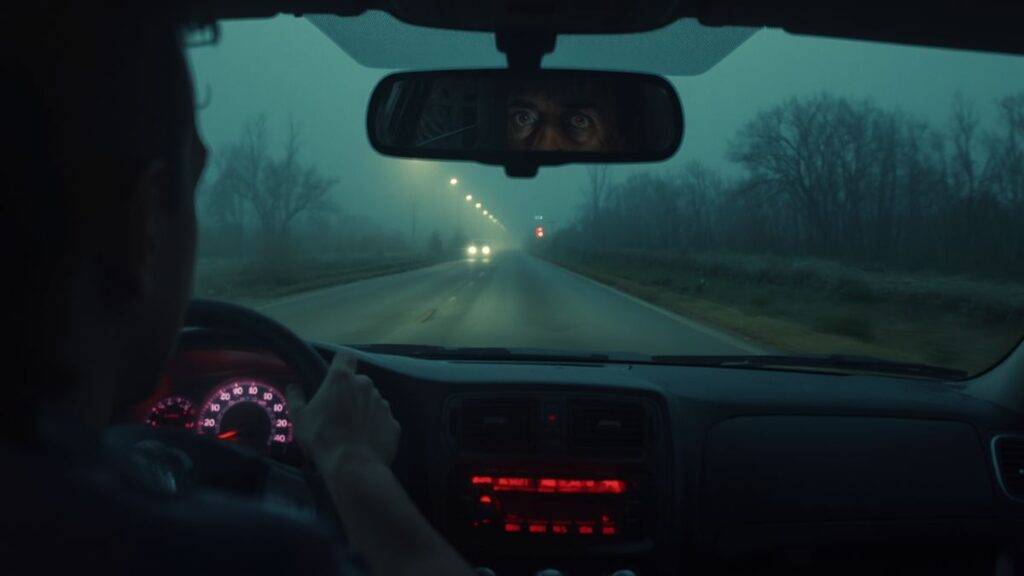
The night shift was always the hardest part of Daniel’s job.
Not because of the driving itself. He had been a taxi driver for nearly twelve years, and the roads at night were actually easier in some ways. Fewer cars. Fewer delays. Less noise from the city. It was the silence that made it difficult.
Silence gave space for thoughts.
And thoughts, at 2 a.m., tended to feel heavier than they should.
Daniel usually worked weekend nights when fares were more unpredictable. People leaving bars, late workers heading home, occasional airport runs. Normal passengers. Normal conversations, or no conversations at all.
That was how he preferred it.
Nothing unusual.
Nothing memorable.
Until the woman appeared.
It was just past 2 a.m. when he saw her.
He was driving along a long stretch of empty road outside the city limits, the kind of place where streetlights became rare and darkness felt wider than it should. He was about to head back toward the main road when his headlights caught something near the shoulder.
A figure standing alone.
No car nearby. No movement except a slight shift in posture as his taxi approached.
Daniel slowed down instinctively.
As he got closer, he could see she was a young woman, dressed in a plain coat. She did not wave or signal aggressively like most passengers. She simply stood there, facing the road, as if she had been waiting for a long time.
Something about it felt slightly off, but Daniel told himself it was normal. Late-night pickups often looked strange at first glance.
He pulled over.
The woman approached the back door and opened it without hesitation.
“Where to?” Daniel asked as she settled into the seat.
She paused for a moment before speaking.
Then she gave him an address.
Her voice was calm. Flat. Almost rehearsed.
Daniel nodded and set the GPS.
The car moved back onto the empty road.
At first, he tried to make small talk, like he usually did. It helped pass the time and made long drives less uncomfortable.
“So, out late tonight?” he asked casually.
No response.
He glanced in the rearview mirror.
She was sitting perfectly still. Hands in her lap. Eyes forward. Not looking at him. Not looking at anything in particular.
“Long night?” he tried again.
Still nothing.
Daniel shrugged slightly. Some passengers preferred silence. That was fine.
But as the minutes passed, something about her silence began to feel different.
It was not just quiet.
It was absence.
No shifting in the seat. No adjusting of posture. No reaction to turns or stops. Even when the car went over a bump, she did not move.
He checked the mirror again.
Still there.
Still the same.
The road stretched on, headlights cutting through darkness. The address was about twenty minutes away, in a residential area Daniel did not know well.
The entire drive passed without a single word from the back seat.
Eventually, the GPS announced arrival.
“You’ve reached your destination,” it said.
Daniel slowed the car and pulled up outside a small, isolated house.
Lights were off inside.
No other cars in the driveway.
He turned around in his seat.
“Here you go,” he said politely.
No answer.
He waited a moment, then spoke again.
“Ma’am?”
Silence.
A strange unease settled in his chest.
He opened the central light in the car and turned fully to look at the back seat.
It was empty.
Daniel froze.
His first thought was that she had somehow left the vehicle while it was still moving slowly or while he had been distracted. It made no sense, but there was no other explanation that came to mind.
He stepped out of the taxi quickly and looked around.
Empty road.
Empty driveway.
No footsteps in the dirt. No sound of a door closing.
Just stillness.
After a moment, he walked up to the house and knocked.
The door opened slowly.
An elderly man stood there, holding the frame as if he had been interrupted from sleep. His eyes moved from Daniel’s face to the taxi behind him.
“Yes?” the man asked cautiously.
“I dropped someone here,” Daniel said. “A woman. She said this was the address.”
The man’s expression changed immediately.
Not confusion.
Recognition.
His face went pale, and for a moment he did not speak.
Then he asked quietly, “What did she look like?”
Daniel described her carefully. Coat. Dark hair. Calm voice. Silence throughout the ride.
The man listened without interruption.
When Daniel finished, the man nodded slowly, as if confirming something he already feared.
“She didn’t speak?” he asked.
“No,” Daniel replied.
The man exhaled sharply and stepped back slightly from the door.
“That was my daughter,” he said.
Daniel frowned. “I think there’s been a mistake.”
The man did not respond immediately. Instead, he turned his head slightly and looked inside the house.
“Come in,” he said quietly.
Daniel hesitated but followed.
Inside, the house was dimly lit. The air felt still, heavy with age and memory. The man led him to a hallway wall where several framed photographs were arranged.
He stopped in front of one.
And pointed.
Daniel looked.
The woman in the photograph was identical to the passenger he had just driven.
Same face.
Same expression.
But older in the image. The photo looked like it had been taken years ago.
“She died ten years ago,” the man said softly.
The words did not immediately make sense to Daniel.
He stared at the photograph, then back toward the door, as if expecting clarification.
But there was none.
Outside, the taxi sat alone under a weak streetlight.
Empty.
Still running quietly.
And for a moment, Daniel could not remember exactly when the back seat had become silent enough for him not to notice anything leaving it.
Story 3: The Voice Upstairs
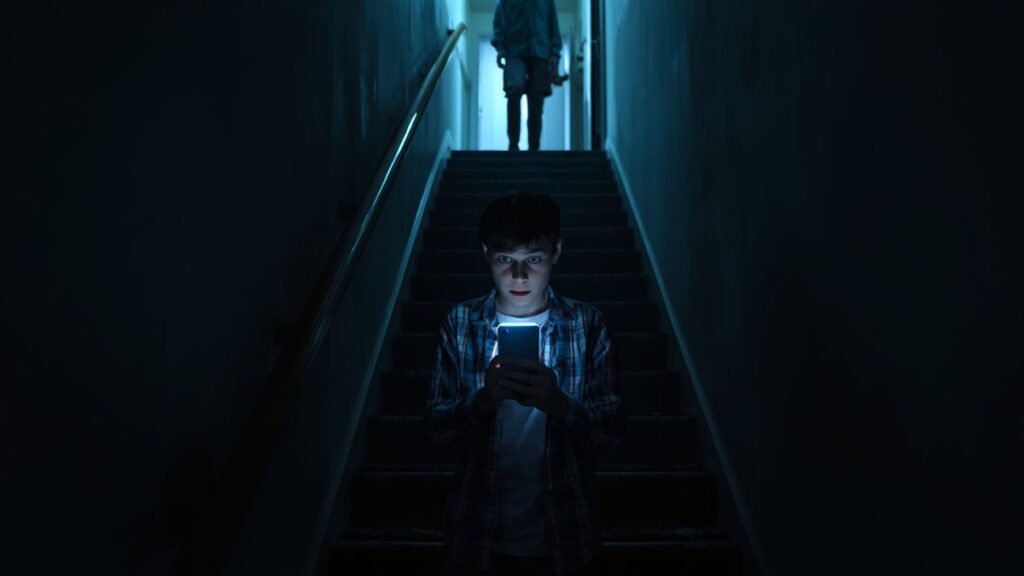
Noah did not like being home alone at night.
It was not something he admitted often, especially not to his parents. At thirteen, he felt he was supposed to be past that kind of fear. Too old for imaginary monsters. Too old for checking under beds.
But empty houses had a way of feeling different after sunset.
That evening, his parents had gone out for a dinner event and would not be back until after midnight. They had left him with instructions, food in the fridge, and a reminder to lock the doors.
Everything was normal.
At first.
Noah spent most of the early evening watching videos on his phone and occasionally switching between games. The house was quiet, but not uncomfortable. He was used to the usual sounds: the fridge humming, the occasional creak of wood settling, the wind brushing against the windows.
Around 9:30 p.m., he started to notice how still everything had become.
Even the usual background sounds felt softer than usual.
He paused his video.
Listened.
Nothing unusual.
Then he went back to scrolling.
About twenty minutes later, he heard it.
Footsteps.
Upstairs.
Noah froze immediately, lowering his phone slightly.
The sound was faint at first. Slow. Measured. Like someone walking carefully across a wooden floor.
He stared at the ceiling.
The house had two floors. His parents’ bedroom and study were upstairs. He was downstairs in the living room.
He told himself it was nothing.
Probably the house settling. Old pipes. Wind shifting the structure slightly.
He waited.
The sound stopped.
Noah exhaled slowly.
Then it started again.
Step.
Pause.
Step.
This time, it was clearer.
He turned off the TV without thinking.
The footsteps continued, moving from one room to another upstairs. Not random. Not chaotic. Deliberate.
As if someone was checking the rooms.
Noah felt a tightness in his chest.
He grabbed his phone and dialed his father.
It rang twice before being picked up.
“Hey, buddy,” his father’s voice came through, slightly muffled. “Everything okay?”
Noah kept his voice low. “Dad, I think someone is upstairs.”
A pause.
“That’s not funny,” his father replied.
“I’m serious,” Noah said quickly. “I hear footsteps. Upstairs. Like someone is walking around.”
There was silence on the line.
Then his father spoke again, slower this time.
“Noah,” he said, “I’m upstairs.”
Noah blinked.
“What?”
“I’m upstairs,” his father repeated.
Noah looked up at the ceiling again, confusion mixing with fear.
The footsteps had stopped.
The house was silent.
“That’s not possible,” Noah whispered.
His father’s voice changed slightly. Less calm now.
“Are you absolutely sure you’re hearing footsteps?” he asked.
Noah nodded instinctively before realizing his father could not see him.
“Yes. I heard them. I still hear them sometimes.”
Another pause.
Then his father lowered his voice even more.
“If you’re hearing footsteps,” he said carefully, “get out of the house.”
Noah froze.
The words did not make sense at first.
“Dad, what do you mean?” he asked.
But the line went quiet.
No response.
“Dad?” Noah said again.
Only silence.
Then, faintly, his father’s voice returned.
Not from the phone at first.
From somewhere else.
Very close.
“If you’re hearing footsteps,” it whispered again, “get out of the house.”
Noah pulled the phone away from his ear.
The call had ended.
The screen showed “Call Failed.”
He stood up slowly, every muscle in his body tense.
The house was completely silent now.
No footsteps.
No movement.
But the silence felt different than before. He suddenly became aware of how many places in the house were out of sight. The hallway upstairs. The landing. The dark corners he could not see from where he stood.
He backed away from the stairs.
One step.
Then another.
And then he heard it again.
Not upstairs this time.
Closer.
On the stairs.
A single step.
Followed by another.
Slow.
Deliberate.
Coming down.
Story 4: The Last Call
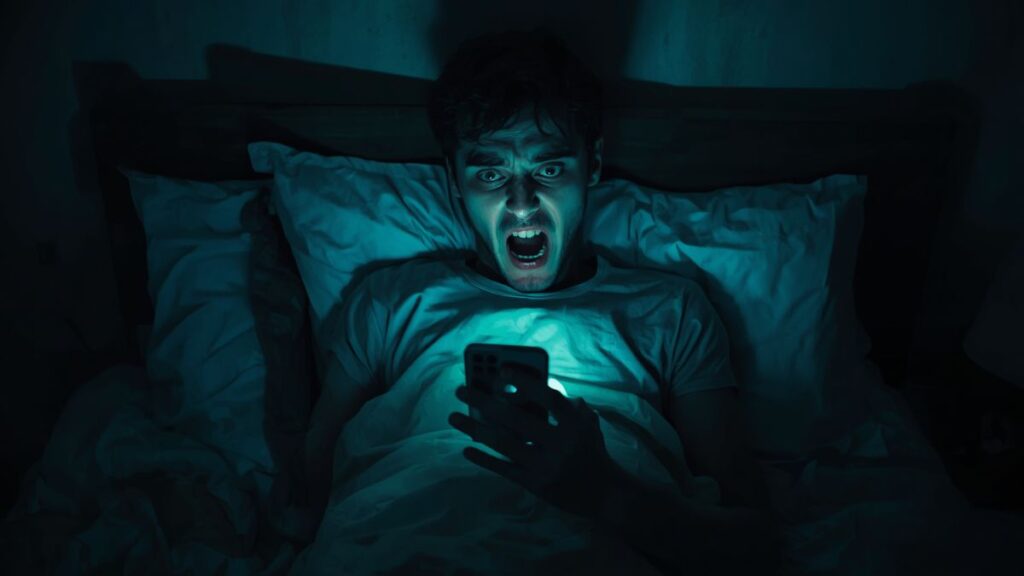
Ryan had a habit of leaving his phone on silent at night.
It was not intentional at first. Just something that became routine over time. Work messages, spam calls, notifications from apps he did not remember installing. None of it felt important enough to justify waking up.
So when he went to bed, the phone went face down on the bedside table, and the world outside his room disappeared.
That routine held for a long time without issue.
Until the first call.
It came at exactly 3:13 a.m.
Ryan did not hear it at first. He only noticed it the next morning when he saw a missed call notification.
Unknown number.
No name. No message.
He assumed it was nothing. Wrong number, telemarketer, some automated system.
He deleted it and moved on.
The next night, it happened again.
3:13 a.m.
Same unknown number.
This time, he saw it in real time while half-awake. The screen lit up in the darkness, casting a pale glow across his room.
He stared at it for a moment, annoyed more than anything.
Then it stopped.
By morning, there was no voicemail.
Ryan considered blocking the number but forgot to do it.
The third night was when curiosity began to take hold.
The phone rang again at 3:13 a.m.
Same number.
This time, Ryan hesitated only a few seconds before answering.
He pressed the green button.
“Hello?” he said, voice rough with sleep.
At first, there was nothing.
Just static.
A low, uneven sound like wind trapped inside a tunnel.
Ryan pulled the phone slightly away from his ear.
Then a voice came through.
Barely audible.
Not clear at first.
Then it formed words.
“Don’t answer tomorrow.”
Ryan frowned immediately.
“Who is this?” he asked.
But the line crackled again.
The voice did not respond.
Instead, the call ended abruptly.
The screen went dark.
For a long time, Ryan just sat there in bed, staring at the phone.
Eventually, he convinced himself it was a prank. Some kind of automated robocall with a broken recording. Or a wrong number with a bad connection.
Still, the phrase stayed in his mind longer than he expected.
Don’t answer tomorrow.
The next evening, he tried to ignore it.
He went through his usual routine. Dinner, TV, scrolling on his phone. But the memory of the call kept resurfacing in small moments of silence.
He checked the number again.
Still unknown.
Eventually, before going to bed, he made a decision.
He unplugged the phone from the charger.
“If it rings,” he muttered to himself, “it won’t matter.”
Then he placed it face down and tried to sleep.
The room was quiet.
Too quiet, in a way that made sleep feel slightly harder than usual.
At 3:13 a.m., Ryan woke up.
Not fully. Just enough to feel aware of the room.
And then he heard it.
Ring.
He froze.
His first thought was that it was impossible. The phone was unplugged. It should have been dead.
Ring.
The sound came again.
Clear. Close. Real.
Ryan slowly turned his head toward the bedside table.
The phone was still there.
Still dark.
But the sound was not coming from it.
It was coming from inside the room.
Ring.
This time, it sounded closer.
Like it was echoing from somewhere just beyond what he could see.
Ryan sat up slowly, heart beginning to beat harder.
The room was still dark, but not completely. Streetlight from outside filtered through the curtains, outlining shapes in faint gray tones.
Ring.
He looked around.
Nothing.
But the sound continued, steady and patient, as if waiting for him to understand something he had not yet realized.
Ring.
Then, finally, it stopped.
Silence returned.
Ryan stayed still, listening.
For a moment, he thought it was over.
Then his phone lit up.
Not on the table.
But in his hand.
Ryan froze completely.
He had not touched it.
The screen displayed one notification.
Incoming call.
Unknown number.
3:13 a.m. again.
And this time, the phone answered itself.
Story 5: The Reflection
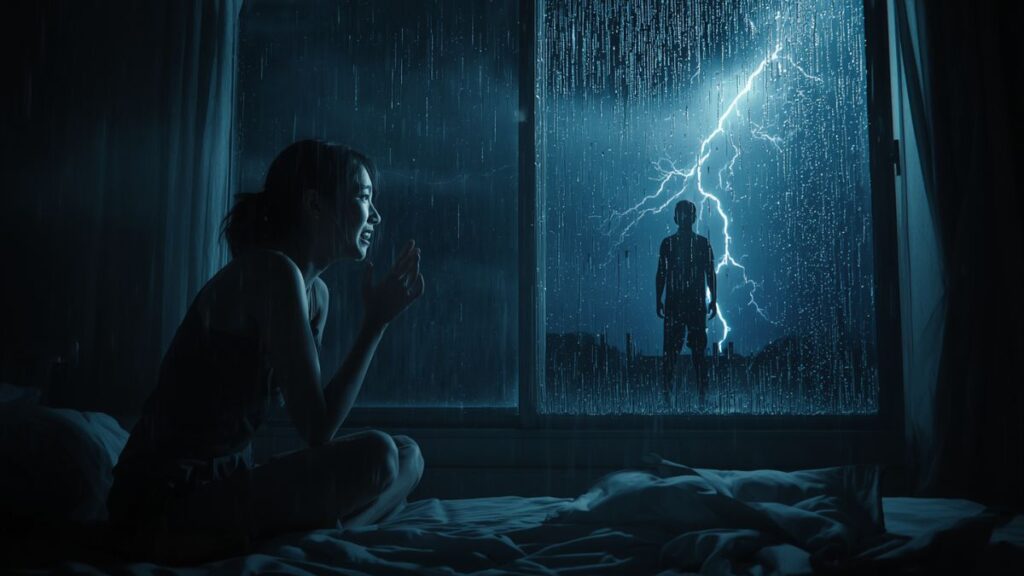
Emma did not mind storms.
In fact, she usually found them comforting. The sound of rain hitting the windows, distant thunder rolling across the sky, and the flickering rhythm of lightning made the world feel distant and contained, like everything outside had been paused for a while.
That night, however, felt different.
The storm arrived quickly, without warning. Wind pressed against the house, and rain struck the windows in sharp, uneven bursts. The power had flickered once earlier in the evening, but stayed on for now.
Emma was alone in her bedroom, sitting on the edge of her bed with a book she was not really reading.
She kept glancing toward the window.
Not because she was scared of the storm.
But because something about it felt unsettled.
Every flash of lightning briefly turned the room into a harsh white outline of shapes. Furniture. Curtains. The glass of the window reflecting everything back like a mirror.
Each flash was followed by darkness again, making the room feel like it was disappearing and reappearing in pieces.
Emma tried to ignore it.
Then came a stronger flash.
The entire room lit up clearly for a moment.
And that was when she saw it.
Her reflection in the window.
At first, everything seemed normal.
Her face, slightly tired. Her posture leaning forward. The familiar outline of her room behind her reflected in the glass.
Then the light faded.
Darkness returned.
Emma blinked.
Another flash struck almost immediately.
This time, she looked again more carefully.
Something was wrong.
Her reflection was still there.
But it was not matching her anymore.
Emma sat completely still.
In the reflection, her image was smiling.
Emma was not.
Her expression was flat, confused, slightly tense from the storm. But the reflection showed something different. A slow, deliberate smile that did not belong to her face.
She stared at it, trying to convince herself it was just an illusion caused by the lightning, a trick of timing and light.
But the reflection did not change when she did.
Another flash of lightning filled the room.
Emma’s real face remained frozen.
The reflection’s smile widened.
Not quickly. Not suddenly.
Slowly.
Like it was aware she was watching.
Emma’s breath caught in her throat.
She did not move.
Did not blink.
The reflection lifted one hand slightly from its lap.
A small motion.
Controlled.
Intentional.
Emma looked down at her own hands.
They were still.
Completely still.
Another flash.
In the reflection, her hand was now raised higher, fingers slightly bent, as if testing movement.
Emma’s own body had not shifted at all.
The storm outside grew louder, wind pressing harder against the walls. The house creaked slightly, but Emma barely noticed it.
Her attention was fixed entirely on the glass.
She slowly leaned back a little, hoping the reflection would correct itself.
It did not.
Instead, the reflection leaned forward slightly.
Closer to the glass.
Closer to her.
Emma’s mind raced through explanations. Lighting. Angles. Fatigue. Something logical. Something normal.
But nothing explained why the reflection was behaving independently.
Another flash hit.
And in that instant, Emma realized something that made her stomach tighten.
The reflection was no longer just copying a delayed version of her.
It was acting on its own.
And it was now watching her directly.
Emma slowly turned her head slightly toward the window, trying not to make sudden movements.
The reflection did not turn away.
It kept smiling.
Waiting.
Then the lightning stopped for a moment.
The room fell into deep darkness.
Emma could hear only the storm outside and her own breathing.
She stayed perfectly still.
Seconds passed.
Then, faintly, another sound.
Not from outside.
Not from the wind.
A soft tap against the window glass.
Emma did not move.
Another tap.
Closer.
Then silence.
She swallowed hard and forced herself to look again when the next flash came.
The room lit up.
The reflection was gone.
For a brief second, Emma felt a rush of relief.
But it lasted only until she noticed something new.
There was someone standing outside the window.
Why Stories Are Scarier in the Dark
Reading horror stories during the day can feel entertaining and light. At night, however, the same story often feels much more intense and immersive. The change in environment plays a major role in how fear is experienced.
Darkness Increases Tension
Darkness naturally heightens human awareness. When visibility is limited, the brain becomes more alert to potential threats.
This leads to:
- Greater sensitivity to small sounds
- Increased focus on unfamiliar movements
- A constant sense of anticipation
- Difficulty relaxing while reading
Because the senses are partially restricted, the mind begins to “fill in” missing information, which increases suspense.
The Environment Feels More Immersive
At night, especially in a quiet or dark room, the surroundings often match the mood of a horror story. This overlap between fiction and reality strengthens emotional engagement.
It becomes more effective because:
- The room feels quieter and emptier
- Shadows and darkness add atmosphere
- The reader feels more isolated
- The story feels closer to real life
This blending of environment and narrative makes the experience feel more believable and emotionally stronger.
Imagination Becomes More Active
Darkness encourages the brain to rely less on visual input and more on imagination. As a result, the mind becomes more active in interpreting sounds and sensations.
This can lead to:
- Overthinking small noises
- Connecting unrelated sounds to the story
- Creating mental images of unseen threats
- Heightened curiosity and fear
Because horror already relies heavily on imagination, darkness amplifies its effect significantly.
Reduced Distractions
Nighttime environments are usually quieter and less distracting than daytime settings. This allows readers to focus more deeply on the story.
With fewer interruptions:
- Emotional engagement increases
- Suspense builds more effectively
- The story feels more “personal” and absorbing
This focus makes every detail in the story feel more important and impactful.
Heightened Emotional Sensitivity
People are generally more emotionally sensitive at night due to fatigue and reduced stimulation. This can make fear feel stronger than it would during the day.
As a result:
- Suspense feels more intense
- Startling moments have a stronger impact
- The overall mood feels heavier and more immersive
Lingering Aftereffects
One of the strongest effects of reading horror at night is what happens afterward. Even after closing the book or stopping the story, the mind often continues processing it.
This can include:
- Replaying scenes in the mind
- Being more aware of surrounding sounds
- Feeling uneasy in the dark
- Thinking about “what if” scenarios
These lingering thoughts are what make nighttime horror experiences especially memorable.
Tips for Telling Scary Stories
Want to make your storytelling even more effective? A good scary story is not just about what happens, but how it is told. The right pacing, details, and delivery can turn a simple idea into something truly chilling.
Start with a Calm Beginning
Begin your story in a normal, everyday setting. This helps the listener feel comfortable before tension begins to build.
A calm start works because:
- It creates contrast later
- It makes the horror feel more realistic
- It lowers the listener’s guard
The stronger the normal beginning, the more effective the fear later becomes.
Build Suspense Slowly
Do not rush into the scary parts. Let tension grow step by step.
You can build suspense by:
- Adding small, strange details
- Pausing before important moments
- Describing sounds or movements indirectly
- Delaying the main reveal
Slow buildup often feels more frightening than immediate scares.
Use Simple but Vivid Details
Effective scary stories do not need overly complex language. Instead, they rely on clear, visual descriptions that let the listener imagine everything.
Focus on:
- What can be seen, heard, or felt
- Short but strong descriptions
- Specific details rather than general ones
The more the listener can “see” the scene, the more real it feels.
Control Your Pacing and Pauses
How you speak is just as important as what you say. Pauses can increase tension and make moments feel more dramatic.
Good techniques include:
- Slowing down before key moments
- Pausing after revealing something strange
- Using silence to build anticipation
Silence often creates more fear than words.
Leave Some Things Unsaid
Not everything in a scary story should be explained. Mystery keeps the listener engaged and thinking long after the story ends.
You can do this by:
- Avoiding full explanations of events
- Leaving certain details unclear
- Ending with unanswered questions
What the audience imagines is often more frightening than what is told.
Use Relatable Settings
Stories become scarier when they feel close to real life. Using familiar places helps the audience connect emotionally.
Examples include:
- A bedroom at night
- A quiet school hallway
- An empty road or house
- A familiar neighborhood
Familiarity makes fear feel possible.
Create a Strong Ending
A good ending should leave an impact. It does not always need a twist, but it should feel meaningful or unsettling.
Effective endings may:
- Reveal a final detail
- Suggest something still unknown
- End at the peak of tension
- Leave the listener thinking afterward
A strong ending is what makes a story unforgettable.
Match Your Tone with the Story
Your voice and expression can change how the story is received. A calm, controlled tone often works better than loud or exaggerated storytelling.
Focus on:
- Speaking clearly and steadily
- Using tone shifts for dramatic moments
- Avoiding overacting, which can reduce tension
A natural delivery makes the story feel more believable.
The Enduring Appeal of Dark Storytelling
From classic ghost stories told around fires to modern urban legends shared online, horror continues to captivate audiences across cultures and generations. Despite changes in technology and entertainment, the fascination with dark storytelling remains strong.
Curiosity About the Unknown
At the core of horror’s appeal is human curiosity. People are naturally drawn to mysteries and unanswered questions.
We often wonder:
- What exists beyond what we can explain?
- What might be hidden in abandoned or forgotten places?
- What happens when no one is watching?
This curiosity pushes the mind toward stories that explore the unknown, even when those stories are unsettling.
Safe Exploration of Fear
Scary stories create a safe space to experience fear. Readers or listeners can explore frightening ideas without real-world consequences.
This makes horror unique because:
- Fear is experienced in a controlled environment
- The audience remains physically safe
- Emotions are triggered without actual danger
This balance between fear and safety is a key reason horror remains enjoyable.
Imagination and Possibility
Dark storytelling leaves room for imagination, which is often more powerful than explicit detail. When a story does not explain everything, the mind continues building possibilities.
This includes imagining:
- What is unseen or unspoken
- What might be hiding in the shadows
- What could happen next
The uncertainty keeps the story alive in the reader’s thoughts long after it ends.
Emotional Contrast and Excitement
Horror also works because of contrast. It often begins with normal life before introducing something disturbing or unnatural.
This contrast creates:
- Stronger emotional impact
- Heightened suspense
- A deeper sense of surprise when things change
The shift from normal to unsettling makes the experience more memorable.
Cultural and Timeless Nature
Dark storytelling has existed for centuries because it adapts to every culture and time period. Ghost stories, folklore, and urban legends all reflect shared human fears in different forms.
Even as styles change, the core themes remain the same:
- Fear of the unknown
- Fear of danger in familiar places
- Fear of losing control
These universal themes ensure that horror continues to evolve while staying relevant.
Why It Still Feels So Entertaining
Ultimately, horror remains popular because it offers a unique emotional experience. It combines fear, curiosity, and imagination in a way few other genres can.
Final Thoughts
The best scary stories are not always the longest or the most complex. What makes them powerful is their ability to stay with you long after you finish reading.
They are the stories that make you pause for a moment before turning off the lights.
The stories that make you double-check a locked door, even when you know it is secure.
The stories that make you glance back at a quiet room when you hear an unexpected sound.
And the stories that quietly return to your thoughts when everything else is still.
So the next time you are looking for a real thrill, try reading a scary story in the dark, in a quiet place, where your imagination has space to take over.
Just remember, sometimes the scariest part is not the story itself, but how long it stays with you after it ends.