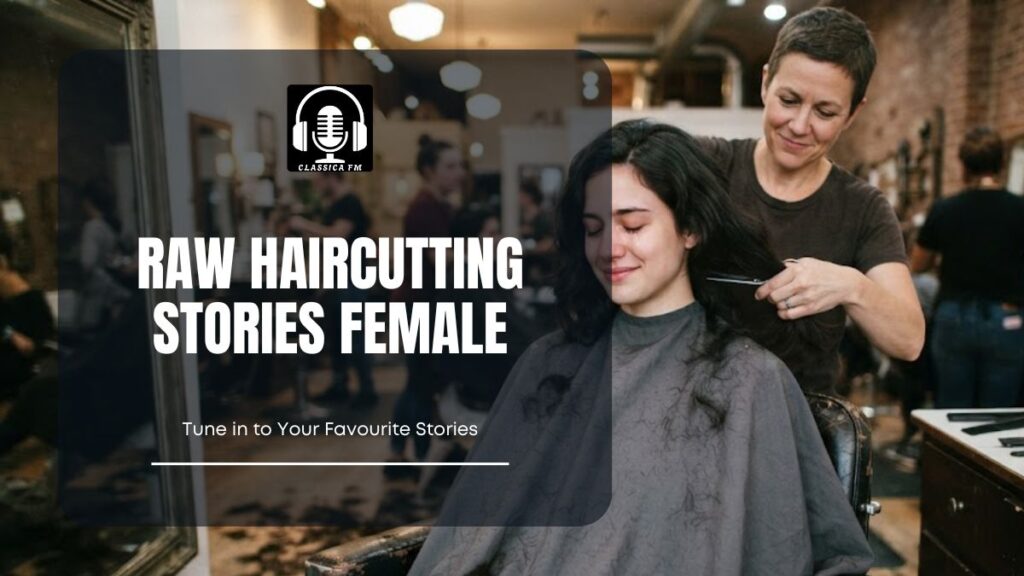
Haircuts can be simple grooming experiences, but they can also become deeply personal moments. A decision to cut, grow, change, or completely transform one’s hair can involve confidence, identity, family expectations, personal choices, memories, and major changes in life.
Raw haircutting stories female focuses on honest and unfiltered experiences involving women and girls and their relationships with haircuts and hairstyle changes. Unlike highly polished beauty content, raw haircutting stories can explore the uncertainty, emotions, mistakes, surprises, and personal decisions that surround a haircut.
These stories do not have to present every haircut as perfect. The appeal comes from authenticity and the human experience behind the change.
This guide explores what raw female haircutting stories are, why readers find them interesting, the major themes they can cover, different types of stories, and how to create meaningful content around the topic.
What Are Raw Haircutting Stories?
Raw haircutting stories are personal or fictional narratives that present haircut experiences in a straightforward and authentic way.
The word “raw” generally refers to content that feels:
- Honest
- Unfiltered
- Personal
- Realistic
- Emotionally open
- Less polished
- Relatable
A raw haircutting story may describe a haircut that was exciting, uncomfortable, unexpected, emotional, funny, or completely different from what was planned.
The haircut itself does not always have to be dramatic. The emotions and circumstances surrounding it can make the experience meaningful.
What Does Female Haircutting Content Cover?
Female haircutting content can explore a broad range of experiences.
These may include:
- Short hair transformations
- Long hair being cut
- First haircuts
- Childhood haircut experiences
- Salon experiences
- DIY haircut attempts
- Family haircut decisions
- Haircuts after major life changes
- Summer haircuts
- Back-to-school haircuts
- Changes in personal style
- Emotional decisions involving hair
The focus should remain on the individual’s experience rather than suggesting that a particular hairstyle is appropriate for every woman or girl.
Raw Haircutting Stories Female
The Woman Who Cut Her Hair After Losing Her Mother
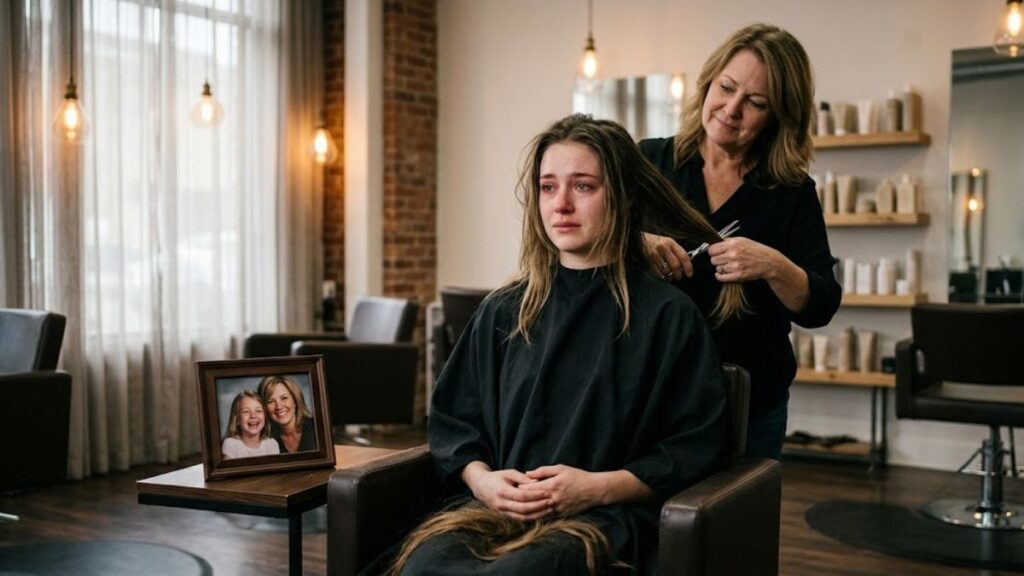
Moral: Healing does not mean forgetting. It means learning to carry love forward.
Every Sunday morning, before the rest of the house had fully awakened, Meera would sit on a small wooden stool in front of the bedroom mirror.
Without fail, her mother would stand behind her with a comb in one hand and a ribbon in the other.
“Sit still,” her mother would say with a smile.
“I’m trying,” little Meera would reply, even though she always moved around.
The gentle sound of the comb running through her long hair became one of the happiest parts of her childhood.
Her mother never hurried.
She carefully untangled every knot, divided the hair into neat sections, and braided it with patience that seemed endless.
By the time she tied the ribbon at the end, she would kiss Meera gently on the head.
“There,” she would say.
“My beautiful girl.”
Those Sunday mornings became a tradition that continued for years.
Even after Meera entered college, her mother still enjoyed helping her braid her hair whenever they had time together.
To anyone else, it looked like an ordinary routine.
To Meera, it became one of the purest expressions of love she had ever known.
The Sudden Goodbye
Life changed far more quickly than anyone expected.
One ordinary afternoon, Meera received a phone call that she would remember forever.
Her mother had suffered a sudden heart attack.
Despite every effort by the doctors, she did not survive.
The world that had always felt steady suddenly became unfamiliar.
The house felt quieter.
The kitchen no longer smelled like her favorite recipes.
Sunday mornings became painfully silent.
Every room reminded Meera of someone who was no longer there.
Friends and relatives visited constantly during those first few weeks.
Everyone offered comfort.
Everyone said time would help.
But time felt meaningless.
Holding Onto the Past
Months passed.
Life slowly returned to its routine.
Meera returned to work.
She smiled when necessary.
She completed her responsibilities.
But inside, the grief remained.
She noticed something strange.
She had stopped trimming her hair completely.
Whenever anyone suggested visiting a salon, she politely refused.
Her hair continued growing longer.
Friends assumed she simply preferred long hair.
Only Meera knew the truth.
Every strand reminded her of those Sunday mornings.
Whenever she brushed her hair, she could almost hear her mother’s gentle voice.
She feared that cutting it would somehow erase those memories.
It felt as though her mother’s hands still lived within those long braids.
A Gentle Question
Nearly a year later, Meera visited her grandmother.
As always, her grandmother welcomed her with warm tea and homemade snacks.
While talking together, her grandmother quietly noticed Meera struggling to brush her unusually long hair.
She smiled softly.
“Your mother would tell you to trim it.”
Meera looked down.
“I can’t.”
“Why?”
“If I cut it…”
Her voice broke.
“It feels like I’ll lose another part of her.”
Her grandmother gently took her hand.
“My child…”
“You are holding on to her love.”
“Not her hair.”
Remembering the Truth
That evening, Meera sat alone in her room looking through old family photographs.
She found dozens of pictures.
Birthday celebrations.
School functions.
Family vacations.
In nearly every photo, her mother stood behind her with the same warm smile.
Then she noticed something she had never realized before.
Across those photographs, her own hairstyle changed many times.
Sometimes it was shorter.
Sometimes longer.
Sometimes braided.
Sometimes tied into a ponytail.
Her mother had loved her through every version.
The hairstyle had never been what mattered.
The love had.
Tears quietly rolled down her face.
The Salon Appointment
The following weekend, Meera made a decision she had postponed for almost twelve months.
She booked a salon appointment.
Walking through the salon doors felt surprisingly emotional.
The stylist greeted her kindly.
“What would you like today?”
Meera looked into the mirror.
“My hair hasn’t been cut in over a year.”
The stylist smiled gently.
“We’ll take good care of it.”
As the cape settled around her shoulders, Meera closed her eyes.
She silently whispered,
“Mom…”
“I hope this is okay.”
The First Cut
The stylist carefully lifted a section of her long hair.
The scissors made the first gentle snip.
A thick lock of hair fell onto the floor.
For a brief moment, tears filled Meera’s eyes.
She wasn’t crying because she regretted the haircut.
She was crying because she realized how deeply she had connected her grief with something physical.
The stylist paused.
“Would you like to stop?”
Meera wiped away her tears.
“No.”
“I think…”
“I need this.”
A Quiet Goodbye
As more hair was trimmed, Meera felt unexpectedly calm.
Each section that fell seemed to carry not only hair…
But months of sadness she had quietly carried alone.
She realized something important.
She wasn’t saying goodbye to her mother.
She was saying goodbye to the fear that healing meant forgetting.
Those were two completely different things.
Looking Into the Mirror
When the haircut was finished, the stylist turned the chair toward the mirror.
Her hair now rested just below her shoulders.
It looked healthy.
Elegant.
Comfortable.
Meera gently touched it.
For the first time in months, she smiled without forcing herself.
She suddenly remembered something her mother used to say.
“Hair always grows.”
“But kindness stays forever.”
She laughed softly through her tears.
An Unexpected Visit
Instead of returning home immediately, Meera visited her mother’s favorite garden.
She sat quietly on a wooden bench beneath the large flowering tree they used to admire together.
The afternoon breeze gently moved her shorter hair.
She closed her eyes.
Instead of sadness, she felt gratitude.
She remembered laughter.
Family dinners.
Long conversations.
Sunday braids.
Warm hugs.
The memories remained exactly where they had always belonged.
Inside her heart.
Not in the length of her hair.
A New Sunday Tradition
The following Sunday morning felt different.
Instead of feeling empty, Meera decided to honor her mother’s memory in a new way.
She prepared breakfast using her mother’s favorite recipes.
She played the music her mother loved.
She looked through one old family photograph every Sunday.
Sometimes she smiled.
Sometimes she cried.
Often she did both.
Slowly, Sunday mornings stopped becoming reminders of loss.
They became celebrations of love.
Helping Someone Else Heal
Several months later, one of Meera’s colleagues lost her own mother.
Everyone at work offered sympathy.
But Meera understood something others couldn’t.
She quietly visited her friend one evening.
They spoke for hours.
Not about advice.
Not about moving on.
Simply about love.
Before leaving, Meera gently said,
“You’ll never stop missing her.”
“But one day…”
“The memories will make you smile more often than they make you cry.”
Her friend hugged her tightly.
Carrying Love Forward
Years passed.
Life continued.
Meera eventually married.
Had children.
Every Sunday morning, she gently brushed her daughter’s hair before school.
Sometimes her daughter moved around too much.
Sometimes she laughed.
Sometimes she complained.
And every time, Meera smiled.
She realized she had become the hands that once cared for her.
The love had never disappeared.
It had simply found a new way to continue.
The Lesson She Never Forgot
People occasionally complimented Meera’s hairstyle.
She always smiled politely.
Very few knew the story behind it.
Very few knew that one simple haircut had marked the moment she finally allowed herself to begin healing.
Whenever someone asked whether cutting her hair had been difficult, she answered honestly.
“Yes.”
“But I learned something important.”
“You don’t honor someone’s memory by refusing to move forward.”
“You honor them by living with the love they gave you.”
Moral of the Story
Healing does not mean forgetting. It means learning to carry love forward.
Grief often makes us hold tightly to objects, routines, or memories because we fear losing our connection with the people we love.
But true love is not stored in hairstyles, photographs, or possessions.
It lives within our hearts, our actions, and the kindness we continue to share because of them.
Sometimes, letting go of one thing is not the end of love.
It is the beginning of healing.
The Haircut She Never Planned on Her Wedding Morning
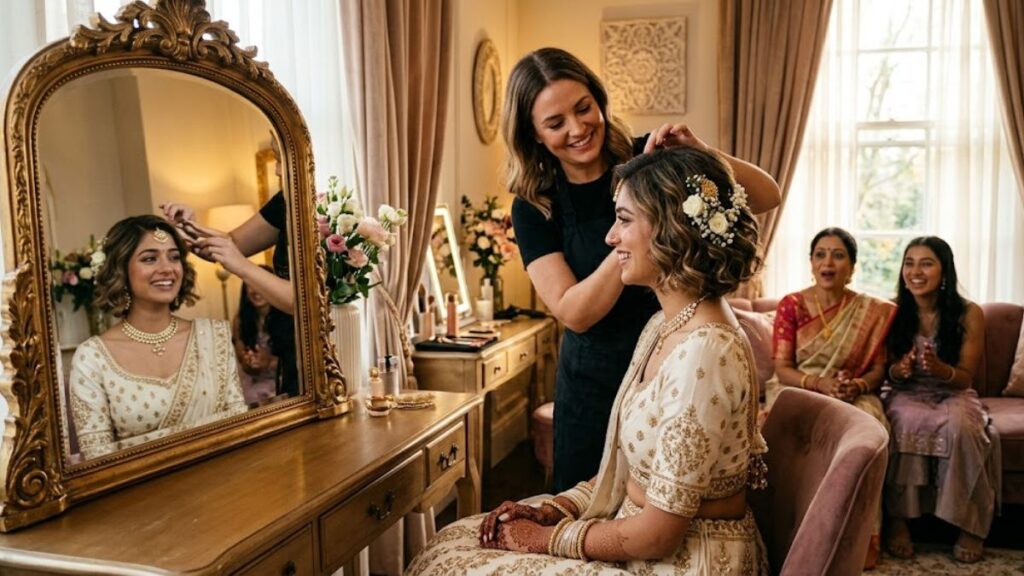
Moral: Life’s unexpected changes often reveal our greatest strength.
The wedding day was supposed to be perfect.
At least, that was how twenty-eight-year-old Aditi had imagined it for nearly a year.
Every detail had been planned carefully.
The venue was decorated with white jasmine and soft golden lights.
The music had been rehearsed.
The photographer had already scouted the best locations.
Even the weather forecast promised clear skies.
Her bridal lehenga had been stitched months in advance.
The jewelry had belonged to her grandmother.
Her makeup artist had confirmed the appointment weeks earlier.
Everything seemed ready.
Everything…
Except for the one thing nobody expected.
A Dream She Had Since Childhood
Like many girls, Aditi had spent years imagining her wedding day.
She wasn’t obsessed with perfection.
She simply wanted to feel like herself.
She had especially looked forward to her hairstyle.
Her long, silky hair reached below her waist.
She had cared for it patiently for years.
Hair masks every weekend.
Regular oil massages.
Careful trimming.
Friends often joked that her hair deserved its own social media account.
Her bridal hairstyle would feature soft curls woven into an elegant braid decorated with fresh jasmine flowers.
She had saved photographs for months.
Everything had been decided.
Or so she believed.
The Unexpected Problem
The wedding was scheduled for late afternoon.
Early that morning, Aditi arrived at the bridal salon with her mother and younger cousin.
The atmosphere buzzed with excitement.
Makeup artists moved quickly between clients.
Stylists prepared hair accessories.
Brides laughed nervously while photographers captured behind-the-scenes moments.
Aditi sat comfortably in front of the mirror.
“I’m finally getting married,” she whispered.
Everyone smiled.
Then something unexpected happened.
As the hairstylist gently brushed through her hair, she suddenly stopped.
Her smile disappeared.
“Is everything okay?” Aditi asked.
The stylist hesitated.
“I… found a problem.”
The Damage Nobody Knew About
A week earlier, while preparing for several pre-wedding events, Aditi had visited another salon for temporary hair extensions and heavy heat styling.
She hadn’t noticed the damage hidden underneath.
Now, as the stylist carefully examined her hair, the truth became clear.
Several sections near the ends had become badly damaged and uneven.
Trying to create the elaborate bridal hairstyle would only make everything more obvious.
The stylist quietly explained the situation.
“If I style it as planned…”
“The damaged sections will show.”
Aditi’s heart sank.
“So what do we do?”
The stylist took a deep breath.
“The healthiest option…”
“Is to cut it.”
Tears in the Mirror
For several seconds, nobody spoke.
Aditi stared silently at her reflection.
“My wedding is in a few hours.”
“I know.”
“I’ve spent years growing my hair.”
“I understand.”
“But if we don’t remove the damaged part…”
“It won’t look or feel the way you hoped.”
Tears slowly filled Aditi’s eyes.
This wasn’t how she had imagined her wedding morning.
Not even close.
Family Reactions
Her cousin immediately protested.
“There has to be another way.”
Her mother remained quiet.
She gently placed her hand on Aditi’s shoulder.
“What matters most today?”
Aditi whispered,
“My wedding.”
Her mother nodded.
“Not your hairstyle.”
Those words sounded simple.
But at that moment, they felt almost impossible to accept.
One Phone Call
Still uncertain, Aditi called her fiancé, Arjun.
He answered immediately.
“Everything okay?”
She tried to sound calm.
“My hair is badly damaged.”
“The stylist says it needs to be cut.”
Silence.
Then Arjun laughed softly.
“I thought something terrible had happened.”
“It is terrible.”
“No.”
“It isn’t.”
“It’s just hair.”
“You’ll still be the woman I’m excited to marry.”
She smiled through her tears.
“What if I don’t look the way we imagined?”
“You won’t.”
“You’ll look exactly like the person I love.”
The Decision
Aditi slowly looked back at the mirror.
Then at the stylist.
“Let’s do it.”
The stylist nodded respectfully.
“I promise we’ll make it beautiful.”
The first cut felt emotional.
Years of carefully grown hair gently fell onto the salon floor.
Each snip felt like letting go of a carefully planned expectation.
But strangely…
The more hair that fell…
The calmer Aditi became.
A New Bridal Look
Instead of the elaborate braid she had originally planned, the stylist created a graceful shoulder-length hairstyle with soft curls and delicate jasmine flowers tucked behind one side.
It looked elegant.
Fresh.
Timeless.
When the final mirror was placed in front of her, everyone became quiet.
Her mother smiled first.
“You look beautiful.”
Her cousin nodded.
“You actually look happier.”
The stylist smiled proudly.
“It suits you perfectly.”
For the first time that morning, Aditi believed them.
Walking Down the Aisle
Hours later, guests filled the wedding venue.
Soft music played.
As Aditi began walking toward the mandap, many guests admired her elegant appearance.
Very few even noticed her shorter hairstyle.
Arjun certainly did.
When their eyes met, he smiled exactly the way he always had.
No surprise.
No disappointment.
Only happiness.
After the ceremony, he quietly whispered,
“You were worried for nothing.”
Aditi laughed.
“I know.”
An Unexpected Compliment
Later that evening, an elderly woman approached Aditi.
“I’ve attended hundreds of weddings.”
“But today I noticed something special.”
“What?”
“You looked relaxed.”
“So many brides spend the entire day worrying about perfection.”
“You spent your day smiling.”
Aditi thanked her quietly.
She realized the woman was right.
The haircut had forced her to let go of perfection.
And because of that, she had actually enjoyed her wedding.
The Photograph
Several weeks later, the wedding photographs arrived.
Aditi carefully turned each page.
There she was…
Laughing with her family.
Holding Arjun’s hand.
Smiling during the ceremony.
Dancing with friends.
Not once did she think,
“I wish my hair had been longer.”
Instead, she noticed something else.
She looked genuinely happy.
That mattered far more.
Sharing Her Story
Years later, one of Aditi’s closest friends became engaged.
A month before the wedding, the friend nervously worried about tiny imperfections.
“The flowers might be the wrong color.”
“The weather might change.”
“My hairstyle might not turn out exactly right.”
Aditi smiled knowingly.
Then she shared the story of her own wedding morning.
Her friend listened carefully.
When the story ended, she laughed.
“You know…”
“I think I needed to hear that.”
A Lesson for Life
Whenever Aditi looked at her wedding album, she remembered one important truth.
Life rarely follows every plan.
Sometimes the unexpected becomes the most meaningful part of the journey.
Her wedding wasn’t memorable because everything happened perfectly.
It became unforgettable because she learned that love, joy, and family mattered far more than a hairstyle.
The haircut she never planned became a reminder she carried for the rest of her life.
Not every unexpected change is a loss.
Sometimes it is simply life making room for something even better.
Moral of the Story
Life’s unexpected changes often reveal our greatest strength.
We cannot control every situation, no matter how carefully we plan. What we can control is how we respond.
True beauty is not found in perfect hairstyles, flawless plans, or ideal moments. It comes from resilience, confidence, and the ability to embrace life’s surprises with grace.
Sometimes, the moments that don’t go according to plan become the ones we treasure the most.
She Hid Behind Her Hair Until She Found Herself
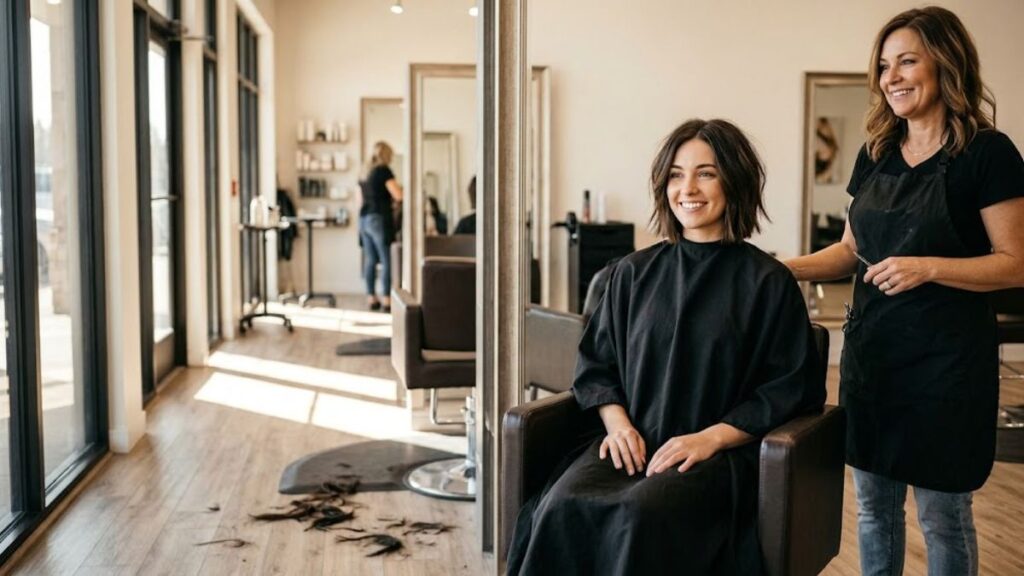
Moral: True confidence comes from accepting yourself, not hiding from the world.
For as long as anyone could remember, Nisha always wore her hair the same way.
It was long, thick, and carefully parted down the middle, falling over both sides of her face like a curtain.
Whenever she walked through the corridors of her college, her head was slightly lowered, and her hair covered most of her cheeks.
To her classmates, it was simply her signature style.
But for Nisha, it was something very different.
It was a shield.
A place to hide.
A way to avoid being seen.
She believed that if people couldn’t clearly see her face, maybe they wouldn’t notice her flaws.
Maybe they wouldn’t judge her.
Maybe they would simply leave her alone.
For three years, that was exactly how she lived.
The Girl Who Never Raised Her Hand
Nisha was one of the brightest students in her class.
She always completed her assignments on time.
Her exam scores were among the highest.
Yet very few students actually knew her.
Whenever professors asked questions, she kept her eyes on her notebook.
Even when she knew the answer, she remained silent.
Group discussions made her nervous.
Presentations felt impossible.
She worried about everything.
Her appearance.
Her voice.
Her smile.
Even the way she walked.
After every conversation, she replayed it repeatedly in her mind.
“Did I sound strange?”
“Did I say something wrong?”
“What if they laughed after I left?”
Most of the time, nobody was thinking about her at all.
But Nisha didn’t believe that.
The Reason She Hid
When she was thirteen, Nisha had severe acne.
Some classmates teased her relentlessly.
One boy once joked,
“You disappear behind your hair anyway.”
Everyone laughed.
The comment lasted only a few seconds.
But for Nisha, it stayed for years.
Even after her skin cleared completely, she continued hiding behind her hair.
The habit had become part of who she was.
Or at least who she thought she was.
A New Semester
At the beginning of her final year of college, a new professor joined the communication department.
Professor Aditi believed that education wasn’t only about marks.
It was about confidence.
During the first class, she surprised everyone.
“This semester,” she announced,
“Every student will give at least three presentations.”
Groans filled the classroom.
Nisha felt her heart sink.
Public speaking?
In front of everyone?
She quietly wished she could disappear.
The Observation
A week later, Professor Aditi asked Nisha to stay behind after class.
“You write beautifully,” the professor said.
“Thank you.”
“But I’ve noticed something.”
Nisha looked down.
“You always hide your face.”
Nisha immediately moved her hair even farther forward.
The professor smiled gently.
“I’m not criticizing you.”
“I’m simply wondering…”
“What are you hiding from?”
Nisha didn’t answer.
She honestly didn’t know.
Looking in the Mirror
That evening, she stood in front of her bedroom mirror.
For the first time, she carefully watched herself.
Then she slowly moved her hair away from her face.
The reflection felt unfamiliar.
She quickly let her hair fall back into place.
Somewhere deep inside, she realized something.
She wasn’t hiding from other people anymore.
She was hiding from herself.
A Conversation With Her Friend
The following weekend, her best friend Ritu invited her to lunch.
After listening quietly, Ritu finally asked,
“Have you ever thought about changing your hairstyle?”
Nisha laughed.
“I knew you’d say that.”
“I’m serious.”
“My hair is the only thing that makes me feel safe.”
Ritu smiled kindly.
“Maybe.”
“Or maybe it’s the thing that’s keeping you from seeing how confident you already are.”
Those words stayed with Nisha for days.
The Decision
A week later, while walking home, Nisha unexpectedly stopped outside a salon.
She looked through the glass window.
People were smiling.
Talking.
Trying new hairstyles.
Without giving herself time to overthink, she walked inside.
The stylist welcomed her warmly.
“What are we doing today?”
Nisha took a deep breath.
“I don’t want to hide anymore.”
The stylist smiled.
“I think I know exactly what you mean.”
The Haircut
Instead of covering her face, the stylist suggested soft shoulder-length layers with face-framing pieces that gently opened her features.
As the scissors moved through her long hair, Nisha felt strangely emotional.
She wasn’t simply cutting hair.
She was cutting away years of fear.
When the haircut was finished, the stylist handed her a mirror.
For several seconds, she simply stared.
Her face looked brighter.
Her eyes seemed more expressive.
She smiled.
Not because she suddenly believed she looked perfect.
But because, for the first time in years, she wasn’t trying to hide.
The First Day Back
Walking into college felt different.
She still felt nervous.
But this time, she resisted the urge to pull her hair across her face.
Several classmates immediately noticed.
“Nice haircut!”
“It really suits you.”
“You look different.”
She smiled politely.
The compliments felt nice.
But something mattered even more.
She had made the decision for herself.
Not for anyone else’s approval.
The Presentation
A month later, presentation day arrived.
Nisha stood at the front of the classroom holding her notes.
Her hands trembled.
She looked at the audience.
For a second, old fears returned.
Then she remembered something Professor Aditi had once said.
“Confidence doesn’t arrive before action.”
“It grows while you’re taking action.”
Nisha took one deep breath.
Then she began speaking.
At first, her voice was quiet.
Then it became steadier.
By the end of the presentation, she wasn’t reading from her notes anymore.
She was speaking naturally.
When she finished, the classroom applauded.
Not because she was perfect.
Because she had communicated sincerely.
Seeing Herself Differently
After class, Professor Aditi smiled.
“How do you feel?”
Nisha laughed.
“Like I just climbed a mountain.”
The professor nodded.
“You didn’t become confident today.”
“You discovered confidence that was already there.”
A Ripple Effect
As the semester continued, Nisha volunteered more often.
She joined the college magazine.
She made new friends.
She even mentored first-year students who struggled with anxiety.
One afternoon, a younger student quietly confessed,
“I’m scared people will judge me.”
Nisha smiled.
“I used to think the same thing.”
“What changed?”
“I stopped trying to hide.”
Graduation Day
On graduation morning, Nisha stood in front of the mirror wearing her graduation gown.
Her shoulder-length hair framed her face naturally.
Her mother smiled proudly.
“You’ve changed so much.”
Nisha thought for a moment.
Then she shook her head.
“I don’t think I’ve changed.”
“I think…”
“I finally stopped hiding.”
Looking Back
Years later, Nisha became a communications trainer.
Ironically, she spent her career helping people overcome stage fright and build self-confidence.
Whenever someone said,
“I don’t think I can do this,”
she smiled.
“I used to believe that too.”
She kept one old photograph in her office drawer.
It showed her during her first year of college.
Long hair covering most of her face.
She occasionally looked at it.
Not with sadness.
But with gratitude.
That quiet girl had survived long enough to become the confident woman she was today.
Moral of the Story
True confidence comes from accepting yourself, not hiding from the world.
Sometimes we create invisible shields because of past experiences or harsh words from others. Those shields may feel safe, but they can also keep us from growing.
Real confidence is not about looking perfect.
It begins when we stop hiding who we are and allow ourselves to be seen, flaws and all.
Why Raw Haircutting Stories Are Appealing
Highly polished hairstyle content usually focuses on the finished appearance.
Raw haircutting stories can show everything surrounding that result.
Readers may be interested in:
- The decision to get the haircut
- Uncertainty before the appointment
- Conversations about the desired style
- Reactions during the process
- Feelings about the final result
- Adjusting to a new appearance
- What the haircut represents
This creates a more complete experience than simply showing a before-and-after photograph.
Authenticity Is the Central Theme
Authenticity is one of the most important characteristics of raw haircutting content.
A realistic story does not necessarily need to end with a perfect haircut.
The experience might involve:
- Mixed emotions
- Unexpected results
- A learning experience
- Regret
- Relief
- Excitement
- Surprise
- Confidence
- Acceptance
Presenting these different possibilities can make the content feel more genuine.
Major Themes in Raw Female Haircutting Stories
1. Personal Transformation
A haircut can create a dramatic visual change.
Transformation stories may involve:
- Long hair becoming short
- Removing significant length
- Trying a completely different style
- Changing a hairstyle after many years
- Adopting a simpler haircut
The transformation can be physical while also representing an internal change.
2. Emotional Haircut Decisions
Some haircut decisions carry emotional significance.
A woman may decide to change her hairstyle during a period of:
- Personal growth
- Major transition
- New beginnings
- Career changes
- Graduation
- Moving
- Relationship changes
- Lifestyle changes
The haircut becomes part of a larger personal experience.
3. Cutting Long Hair
Long hair can have significant emotional value.
Someone may have spent years growing it, making the decision to cut it feel important.
Stories in this category can explore:
- Why the hair was grown
- Why the decision to cut it was made
- Feelings before the haircut
- The adjustment afterward
- The meaning attached to the change
4. First Haircut Experiences
First haircuts can become important childhood memories.
Parents may document these moments with photographs and family videos.
Stories can explore:
- Preparation for the haircut
- Reactions to the salon
- The first hairstyle
- Family responses
- Memories preserved afterward
5. Unexpected Haircut Results
Not every haircut produces the expected result.
Differences can arise because of:
- Miscommunication
- Different interpretations of a hairstyle
- Hair texture
- Hair length
- Styling techniques
- Unrealistic expectations
These experiences can become memorable because they teach people to communicate more clearly about their hair.
Raw Haircutting Stories and Self-Expression
Hair is an important form of personal expression for many people.
A hairstyle can reflect:
- Personality
- Lifestyle
- Creativity
- Fashion preferences
- Comfort
- Cultural practices
- Individual identity
Changing a hairstyle can therefore be a way of exploring personal expression.
Raw stories can focus on the decision-making process rather than simply describing the final appearance.
The Emotional Experience Before a Haircut
The period before a major haircut can be as important as the haircut itself.
A person may feel:
- Excited
- Nervous
- Curious
- Uncertain
- Confident
- Emotional
These feelings can change throughout the experience.
Someone may confidently decide to cut their hair and then feel uncertain when the first section is removed. Another person may initially hesitate and later feel excited about the transformation.
These changing emotions can add depth to haircutting content.
The Experience During the Haircut
The haircut itself provides several opportunities for storytelling.
A narrative can explore:
- Choosing the final length
- Discussing the style
- Preparing the hair
- The first cut
- Watching the transformation
- Conversations with the stylist
- Reactions during the process
The details should serve the story rather than becoming unnecessary descriptions of every haircutting step.
Adjusting to a New Hairstyle
The experience does not end when the haircut is finished.
A major hairstyle change may require time to adjust.
The person may need to learn:
- How to style the new length
- How to wash the hair
- How to dry it
- Which products work
- How frequently it needs trimming
This adjustment period can be an important part of a realistic haircutting narrative.
Haircutting Stories About Confidence
A haircut can influence how a person feels about their appearance, although confidence is not determined by hairstyle alone.
Finding a hairstyle that feels comfortable can help someone feel:
- Refreshed
- More comfortable
- More expressive
- Ready for a change
Raw storytelling can acknowledge both positive and uncertain feelings rather than presenting every transformation as an instant confidence boost.
Family Influence on Female Haircuts
Haircut decisions can sometimes involve parents, siblings, partners, friends, or other family members.
This can create interesting dynamics around:
- Personal choice
- Family traditions
- Different opinions
- Support
- Expectations
- Independence
For younger girls, parents or guardians may naturally play a larger role in haircut decisions.
As someone gets older, personal preferences may become increasingly important.
Haircuts and Growing Up
Haircuts can serve as visual markers of different stages of life.
A person may have different hairstyles during:
- Early childhood
- School years
- Teenage years
- College
- Early adulthood
- Professional life
Looking back at these changes can reveal how personal preferences and identity developed over time.
This makes haircutting stories particularly suitable for nostalgic content.
Raw Haircutting Stories vs. Polished Hair Content
There is an important difference between raw haircutting stories and conventional hairstyle content.
| Raw Haircutting Stories | Traditional Hair Content |
|---|---|
| Focuses on experience | Focuses on appearance |
| Can include uncertainty | Usually emphasizes results |
| May discuss mistakes | Often presents polished outcomes |
| Explores emotions | Often focuses on styling |
| Can feel personal | Usually provides practical information |
| May include imperfect results | Usually presents ideal results |
Both formats have value, but they serve different purposes.
Different Formats for Raw Haircutting Content
Raw haircutting experiences can be presented in several formats.
Personal Experiences
These are based on real experiences and focus on authenticity.
First-Person Narratives
The experience is described from the perspective of the person receiving the haircut.
Reflective Pieces
The writer focuses on what the haircut meant and how the experience changed their perspective.
Transformation-Based Content
The central focus is the change in hairstyle and appearance.
Short Experiences
These focus on one memorable moment.
Long-Form Narratives
These provide more background, emotional context, and reflection.
Topics for a Raw Female Haircutting Content Series
A broader content collection can explore subjects such as:
- Raw short haircut experiences
- Long hair cutting experiences
- First haircut memories
- Emotional haircut experiences
- Unexpected haircut results
- Summer haircut experiences
- Childhood haircut memories
- Salon experiences
- Haircut transformations
- DIY haircut mistakes
- Haircut decisions after major life changes
- Haircuts before important occasions
- Family haircut traditions
- Haircut and personal identity
- Learning to accept a new hairstyle
Each topic can be developed as a separate article or story.
How to Create Authentic Haircutting Content
If you are creating raw haircutting content, authenticity should remain the priority.
Focus on the Experience
Do not describe only the hairstyle. Explain why the haircut mattered.
Include Realistic Emotions
People can experience several emotions during one haircut.
Avoid making every experience perfectly positive.
Show the Decision-Making Process
Explain why the person chose the haircut.
Include Context
The surrounding circumstances can make the experience more meaningful.
Avoid Over-Polishing
Raw content should feel natural rather than like an advertisement for a salon.
Respect Personal Boundaries
If using real experiences, protect private information and obtain appropriate permission when necessary.
How to Make Raw Haircutting Stories Different From One Another
A collection of stories can quickly become repetitive if every piece follows the same pattern.
To create variety, change the central focus.
One piece might focus on:
- A major transformation
Another might explore:
- Family influence
Another could focus on:
- Personal confidence
Another might be about:
- Childhood memories
Another could explore:
- An unexpected result
Another might focus on:
- The emotional meaning of cutting long hair
Different themes allow the overall collection to remain connected without becoming repetitive.
The Role of Hair Length in Haircutting Stories
Hair length often influences the emotional and visual impact of a haircut.
Long Hair
Cutting long hair can represent a dramatic transformation.
Medium-Length Hair
A moderate change can provide a noticeable refresh without completely changing the person’s appearance.
Short Hair
Short hairstyles can represent practicality, experimentation, or a significant change in personal style.
The important element is not which length is better but why the individual chooses it.
Haircutting Stories and Major Life Changes
Haircuts frequently appear alongside major personal transitions.
These may include:
- Starting college
- Graduating
- Beginning a career
- Moving
- Becoming more independent
- Changing daily routines
- Starting a new chapter
In these situations, the haircut can serve as a physical symbol of change.
The Importance of Choice
Personal choice is an important aspect of authentic haircutting content.
A haircut should ideally reflect the preferences and comfort of the person receiving it, particularly when the person is old enough to make their own decisions.
For younger children, parents and guardians naturally have greater involvement, but age-appropriate participation can still make the experience more positive.
Common Mistakes When Creating Raw Haircutting Content
Making Every Story Perfect
Real experiences are rarely perfect.
Focusing Only on Appearance
The emotional and personal context is often more interesting.
Repeating the Same Transformation
A collection needs different themes and situations.
Using Excessive Drama
Raw does not necessarily mean dramatic. Simple experiences can also be meaningful.
Ignoring Individual Preferences
Different people have different relationships with their hair.
Treating One Hairstyle as Universally Better
Personal style is subjective.
Final Thoughts
Raw haircutting stories female provide an opportunity to explore hair from a more personal and authentic perspective. Instead of focusing only on polished hairstyles or perfect transformations, this type of content can examine the decisions, emotions, relationships, uncertainties, and memories surrounding a haircut.
A haircut can represent many things: a practical decision, an experiment with personal style, a childhood milestone, a family tradition, a major transformation, or a symbolic new beginning.
The strongest content in this category should respect individual preferences and focus on the experience behind the haircut. By exploring different themes such as transformation, identity, family, growing up, confidence, and personal choice, it is possible to create a diverse collection of content without repeating the same story.
Individual haircut experiences can then be developed separately, allowing each story to have its own characters, circumstances, emotions, and purpose while the broader Raw Haircutting Stories Female article serves as the central guide to the topic.