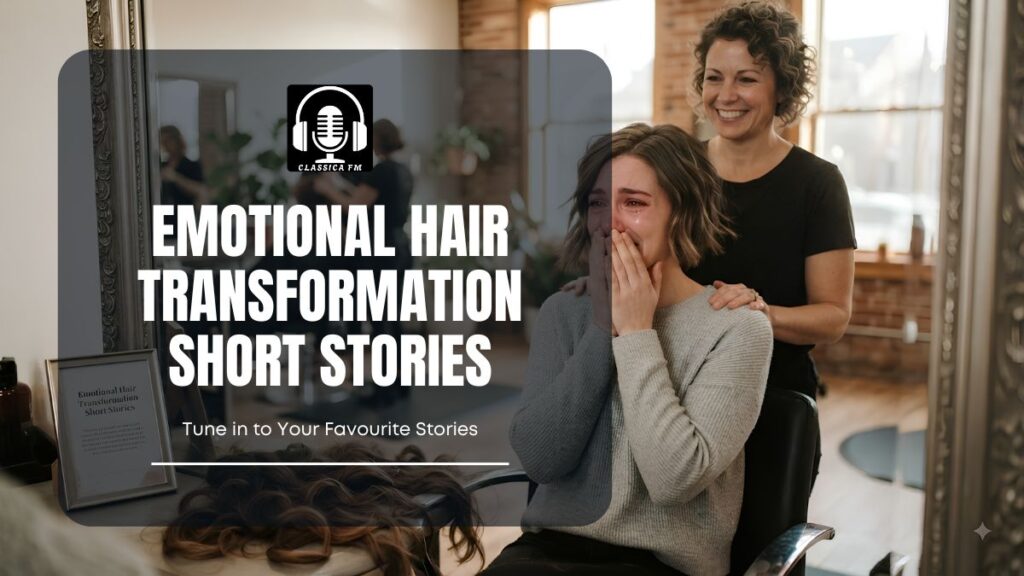
Hair can be deeply connected to memories, identity, confidence, and important moments in life. A change in hairstyle may look simple from the outside, but for the person experiencing it, cutting or transforming their hair can represent something much more meaningful.
Emotional hair transformation short stories focus on these personal moments. They explore the feelings behind a major hairstyle change rather than concentrating only on the final appearance.
A transformation might represent a fresh beginning, personal growth, letting go of the past, gaining confidence, or simply making a decision to try something different. The emotional meaning depends on the individual and the circumstances surrounding the change.
This article explores the concept of emotional hair transformation stories, common themes, different types of transformations, storytelling approaches, and ideas for creating a varied collection of short stories.
What Are Emotional Hair Transformation Short Stories?
Emotional hair transformation short stories are brief narratives centered around a meaningful change in someone’s hairstyle.
The transformation may involve:
- Cutting long hair short
- Changing a familiar hairstyle
- Trying a completely new look
- Cutting hair after an important life event
- Growing hair for years and eventually cutting it
- Changing a hairstyle as part of a fresh start
- Discovering greater confidence through personal style
The haircut or hairstyle change is usually the visible event, while the emotional experience provides the deeper story.
Why Hair Transformations Can Be Emotional
Hair can become connected to different periods of a person’s life.
Someone may associate their hair with:
- Childhood
- School
- College
- A relationship
- Family memories
- A particular career
- A difficult period
- A happy chapter of life
Changing the hairstyle can therefore feel like changing a small but visible part of one’s personal history.
Emotional Hair Transformation Short Stories
The Barber Who Gave a Homeless Musician His Confidence Back
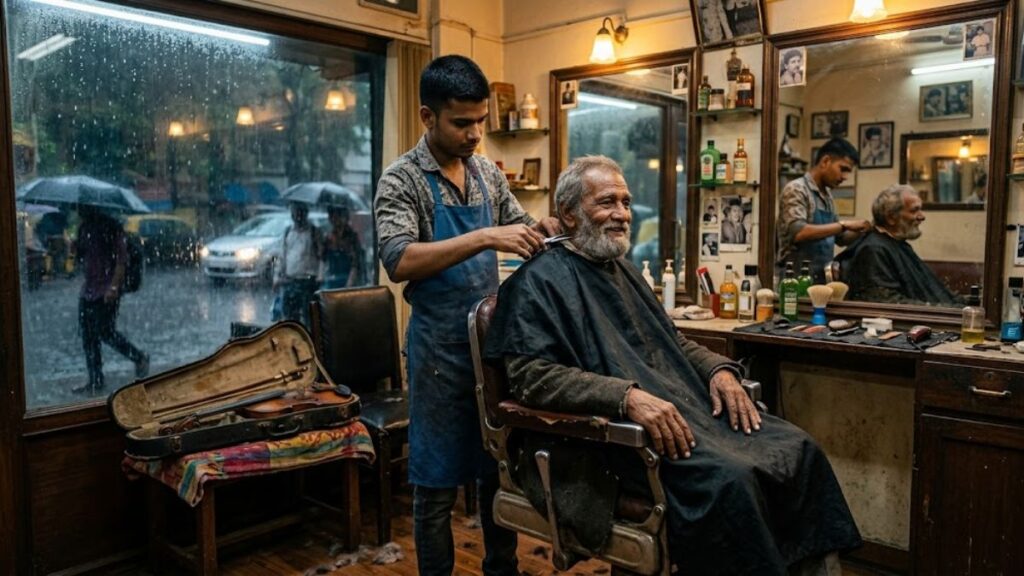
Moral: A small act of kindness can restore someone’s hope.
Every morning, people hurried through the crowded streets of Delhi without noticing the elderly man sitting quietly beneath the old banyan tree.
Some thought he was just another homeless person asking for spare change.
Others walked past without making eye contact.
Only a few ever stopped long enough to hear the soft melodies drifting from his worn-out violin.
His name was Daniel.
Years ago, music had filled concert halls with applause.
Now it echoed through busy sidewalks where most people never paused to listen.
His clothes were worn.
His beard had grown long and untidy.
His hair hung unevenly over his face.
People judged him before they ever heard him play.
But one rainy afternoon, a young barber decided to see the man instead of his appearance.
That single act of kindness changed two lives forever.
The Man Beneath the Tree
Daniel had not always lived on the streets.
In his younger years, he had been a respected violinist.
He performed at weddings, cultural festivals, and music schools.
Children admired him.
Students wanted to learn from him.
Music was not only his profession.
It was his identity.
His violin had been his closest companion since childhood.
But life rarely follows the plans we make.
When Life Changed
Daniel’s wife passed away after a long illness.
The medical expenses exhausted nearly all of their savings.
Soon afterward, the music academy where he taught permanently closed.
Work became difficult to find.
Without regular income, paying rent became impossible.
He sold many of his belongings.
Eventually, even his small apartment was gone.
The only thing he refused to sell was his violin.
“If I lose this,” he often whispered,
“I lose the last part of myself.”
Living Unnoticed
Every morning, Daniel chose the same spot beneath the banyan tree.
He played gentle classical melodies for anyone willing to listen.
Some people placed coins into the old violin case.
Many ignored him.
Children sometimes smiled.
Office workers rushed by without slowing down.
Daniel never complained.
Music still gave him peace.
But every passing year made him feel more invisible.
People no longer saw a musician.
They only saw untidy hair, worn clothes, and an aging face.
Across the Street
Directly opposite the banyan tree stood a modern neighborhood barbershop called Fresh Look Studio.
It belonged to twenty-six-year-old Aarav.
Unlike many businesses nearby, Aarav paid attention to the people outside.
Every morning, while opening his shop, he heard Daniel playing the violin.
The music filled the street before customers even arrived.
One evening, Aarav asked a tea seller,
“Who is the man with the violin?”
The tea seller sighed.
“They say he used to be a famous musician.”
“What happened?”
“Life happened.”
Those words stayed with Aarav.
A Rainy Afternoon
One afternoon, dark clouds covered the city.
Heavy rain began pouring within minutes.
People rushed indoors.
Daniel carefully wrapped his violin in an old cloth and searched for shelter.
Without thinking, Aarav stepped outside.
“Come inside.”
Daniel looked surprised.
“I don’t want to disturb your customers.”
“You won’t.”
“You’ll only get sick standing in the rain.”
Daniel quietly entered the shop.
An Unexpected Offer
After drying his violin, Daniel prepared to leave.
But Aarav stopped him.
“Would you let me give you a haircut?”
Daniel immediately shook his head.
“I can’t pay.”
Aarav smiled.
“I’m not asking for money.”
Daniel looked uncomfortable.
“I don’t want charity.”
“It’s not charity.”
“It’s respect.”
The elderly musician looked at him for several seconds.
Finally, he nodded.
Sitting in the Barber’s Chair
It had been years since Daniel sat in a barber’s chair.
He almost forgot what it felt like.
As Aarav gently combed his long, tangled hair, he noticed how carefully Daniel protected the violin resting beside him.
“You really love music.”
Daniel smiled.
“I don’t know who I am without it.”
A Conversation Worth Remembering
While trimming Daniel’s hair and beard, Aarav listened to his story.
Daniel spoke about concerts.
Students.
His late wife.
The academy.
The difficult years that followed.
He never blamed anyone.
He simply accepted that life sometimes changes unexpectedly.
Aarav asked,
“Do you miss performing?”
Daniel laughed softly.
“I never stopped performing.”
“I just have a different audience now.”
The Transformation
The haircut took nearly an hour.
Aarav trimmed Daniel’s hair neatly.
He carefully shaped his beard.
Then he offered him clean clothes that had been left behind by another customer for donation.
Daniel hesitated.
“You’ve already done enough.”
Aarav smiled.
“Let me finish what I started.”
Looking in the Mirror
When Daniel finally looked into the mirror, he became silent.
He barely recognized himself.
The tired eyes were still there.
The wrinkles remained.
But he no longer looked defeated.
He looked dignified.
Respectable.
Like the musician he had always been.
His eyes filled with tears.
“I haven’t seen this man in years.”
A Different Walk
The next morning, Daniel returned to the banyan tree.
He wore clean clothes.
His hair was neatly trimmed.
His violin rested proudly in his hands.
People reacted differently.
Office workers slowed down.
Children gathered around him.
Several people stopped to listen.
Not because he played better.
Because for the first time, many noticed him.
An Unexpected Invitation
Among the listeners was the principal of a nearby music school.
She stayed until Daniel finished playing.
Then she approached him.
“Excuse me.”
“Would you consider teaching our students once a week?”
Daniel stared at her.
“You mean…”
“You’d like me to teach?”
She smiled.
“Your music deserves to be heard.”
Daniel accepted with trembling hands.
Returning to Music
Teaching again brought joy back into Daniel’s life.
The children loved his patience.
They admired his stories.
Many of them had never met someone who viewed music with such love.
Each lesson reminded Daniel that his purpose had never disappeared.
It had only been waiting for another opportunity.
Aarav Learns Something Too
Months later, Daniel visited the barbershop again.
This time, not because he needed help.
He came carrying a small gift.
A framed photograph of himself performing with his students.
On the back he had written:
“Thank you for helping me see myself again.”
Aarav placed the photograph inside his shop.
Whenever customers asked about it, he told them,
“Sometimes the best haircut isn’t about appearance.”
“It’s about restoring someone’s confidence.”
The Real Transformation
Many people believed Aarav had changed Daniel’s appearance.
But that wasn’t the greatest change.
The haircut reminded Daniel that he still deserved dignity.
The clean clothes reminded him he still belonged in society.
The kindness reminded him he had not been forgotten.
Sometimes people don’t need someone to rescue them.
They simply need someone to remind them of who they already are.
Years Later
Years passed.
Daniel continued teaching music.
He still played beneath the banyan tree from time to time.
Not because he had nowhere else to go.
But because that tree reminded him of the day kindness changed his life.
Whenever someone complimented his music, he smiled.
Then he quietly visited Aarav’s shop for his regular haircut.
The two rarely spoke about the past anymore.
They didn’t need to.
Both understood that one small decision on a rainy afternoon had created a new beginning.
Moral of the Story
A small act of kindness can restore someone’s hope.
We often underestimate how much a simple gesture of respect can mean to another person.
Sometimes, offering dignity instead of judgment, compassion instead of assumptions, and kindness instead of indifference can help someone rediscover the confidence they thought they had lost forever.
The Woman Who Cut Off Twenty Years of Expectations
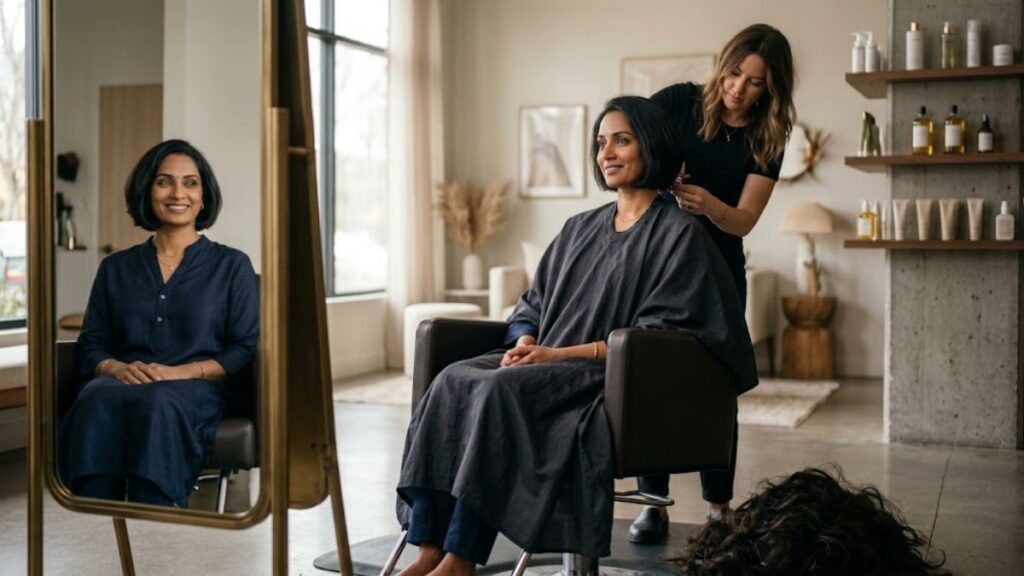
Moral: The greatest transformation begins when you choose yourself.
For twenty years, Sneha lived a life that looked perfect from the outside.
She had a loving family.
A successful career as a school principal.
A comfortable home.
Neighbors admired her.
Relatives respected her.
Everyone described her as responsible, graceful, and dependable.
But very few people realized something important.
Almost every decision she made was influenced by someone else’s expectations.
Even her hairstyle had never truly been her own choice.
She wore her long hair the way her family liked it.
She dressed in colors that others preferred.
She smiled when people praised her for being “traditional.”
Deep inside, however, Sneha often wondered what it would feel like to make a decision simply because it made her happy.
She didn’t know that her fortieth birthday would finally give her the courage to find out.
Always Thinking About Others
Sneha grew up in a close-knit family in Lucknow.
She was the eldest of three siblings, and from a young age she was taught to be responsible.
She helped her mother around the house.
She looked after her younger brother and sister.
She studied hard and rarely complained.
Whenever relatives visited, they praised her.
“Sneha is such a sensible girl.”
“She never argues.”
“She always does the right thing.”
Hearing those compliments made her happy.
But slowly, she developed a habit.
Before making any decision, she asked herself,
“What will everyone else think?”
She almost never asked,
“What do I want?”
The Hair Everyone Loved
Sneha’s long, thick hair became part of her identity.
Her grandmother loved oiling it every Sunday.
Her mother proudly told relatives,
“My daughter has never cut her hair short.”
At family gatherings, people admired it.
“Your hair is so beautiful.”
“You should always keep it this way.”
After hearing the same compliments for years, Sneha stopped thinking about what she actually liked.
She simply believed this was how she was supposed to look.
Marriage and More Expectations
When Sneha married Amit, life became busier.
Fortunately, Amit was kind and supportive.
But the expectations around her never disappeared.
Her in-laws admired her traditional appearance.
Friends often said,
“You look so elegant with long hair.”
At school, parents appreciated her calm personality and classic style.
Without realizing it, Sneha continued living according to everyone’s image of her.
Years passed.
Her hairstyle never changed.
Neither did many of her personal choices.
The Fortieth Birthday
As her fortieth birthday approached, Sneha’s children planned a surprise dinner.
Her daughter gifted her a beautiful journal.
On the first page she had written:
“Mom, I hope this year you do something you’ve always wanted to do.”
Sneha smiled.
Then she stopped.
She stared at the sentence for several minutes.
What had she always wanted to do?
The answer surprised her.
She wanted to cut her hair short.
It seemed like such a small wish.
Yet she had ignored it for over twenty years.
A Quiet Memory
That night, Sneha remembered something from college.
She had once shown her friend a magazine with short hairstyles.
“I wish I could try this,” she had said.
Her friend laughed.
“So why don’t you?”
Sneha had replied,
“My family would never like it.”
She smiled sadly.
Even at twenty, she had chosen other people’s opinions over her own.
Looking in the Mirror
The next morning, Sneha stood in front of the mirror.
Her long hair reached below her waist.
It was beautiful.
It carried memories of childhood, marriage, motherhood, and countless family celebrations.
But as she looked at herself, she asked a question she had never asked before.
“If nobody else’s opinion mattered… what hairstyle would I choose?”
The answer came instantly.
A simple shoulder-length haircut.
Elegant.
Easy to manage.
Comfortable.
It felt like her.
The Salon Visit
A few days later, Sneha quietly visited a salon.
She didn’t tell anyone.
Not because she was hiding.
Because she wanted this decision to belong only to her.
The hairstylist smiled warmly.
“What would you like today?”
Sneha hesitated.
Then she took a deep breath.
“I’d like to cut it short.”
The hairstylist looked at her long hair.
“Are you sure?”
Sneha smiled.
“For the first time in many years…
Yes.”
Twenty Years Falling Away
As the scissors moved through her hair, Sneha watched long strands fall onto the floor.
Unexpectedly, tears filled her eyes.
The hairstylist became concerned.
“Are you alright?”
Sneha laughed softly.
“I think so.”
“It just feels like…”
She searched for the right words.
“…I’m letting go of twenty years of trying to be perfect.”
The stylist smiled gently.
“Sometimes hair carries more than memories.”
“It carries expectations too.”
A Different Woman in the Mirror
When the haircut was complete, Sneha looked into the mirror.
She barely recognized herself.
Not because she looked like someone else.
Because she looked like the person she had imagined becoming years ago.
She touched her shorter hair and smiled.
It felt lighter.
Comfortable.
Natural.
For the first time in a long time, she wasn’t wondering what other people would think.
She simply liked what she saw.
Returning Home
As she walked through the front door, her daughter gasped.
“Mom!”
“You cut your hair!”
Sneha nodded nervously.
“Do you like it?”
Her daughter smiled.
“I’ve never seen you smile like this before.”
Amit came into the room.
He looked surprised for a moment.
Then he smiled.
“You look happy.”
Sneha laughed.
“I am.”
He gently replied,
“That’s all that matters.”
Different Reactions
Not everyone reacted the same way.
Some relatives questioned her decision.
“Why cut such beautiful hair?”
“It suited you before.”
“You looked more traditional.”
Earlier in life, those comments would have bothered Sneha.
This time, she simply smiled.
“I liked my long hair.”
“But I also like this.”
She realized something important.
People would always have opinions.
She didn’t have to live by them.
A Change Beyond Hair
The haircut became the beginning of many other changes.
Sneha joined a weekend painting class she had postponed for years.
She traveled with friends.
She started saying “no” without feeling guilty.
She spent more time reading, walking, and doing things that brought her joy.
Her children noticed she laughed more often.
Even her colleagues commented,
“You seem more confident.”
Sneha smiled.
She wasn’t trying to become someone new.
She was finally allowing herself to be who she had always been.
Inspiring Others
One afternoon, a young teacher at school asked,
“Ma’am… can I ask you something?”
“Of course.”
“You seem so confident now.”
“What changed?”
Sneha smiled.
“I stopped asking permission to be myself.”
The young teacher never forgot those words.
Years Later
Several years later, Sneha looked through old family photographs.
She saw herself with long hair in almost every picture.
She smiled with affection.
Those memories were precious.
She didn’t regret them.
But she also looked at newer photographs.
In those pictures, her hair was shorter.
Her smile was brighter.
Her confidence was unmistakable.
The difference wasn’t the hairstyle.
It was the woman behind it.
The Real Transformation
People often complimented Sneha’s haircut.
They assumed it had changed her appearance.
But the real transformation had happened much deeper.
She had stopped living according to everyone else’s expectations.
She had started listening to her own heart.
The haircut was only the visible beginning of that journey.
Moral of the Story
The greatest transformation begins when you choose yourself.
There is nothing wrong with caring about the opinions of those we love, but our happiness should not depend entirely on meeting everyone else’s expectations.
Sometimes, the smallest personal choice becomes the first step toward living a more authentic and fulfilling life.
The Little Girl Who Smiled Again After Losing Her Hair
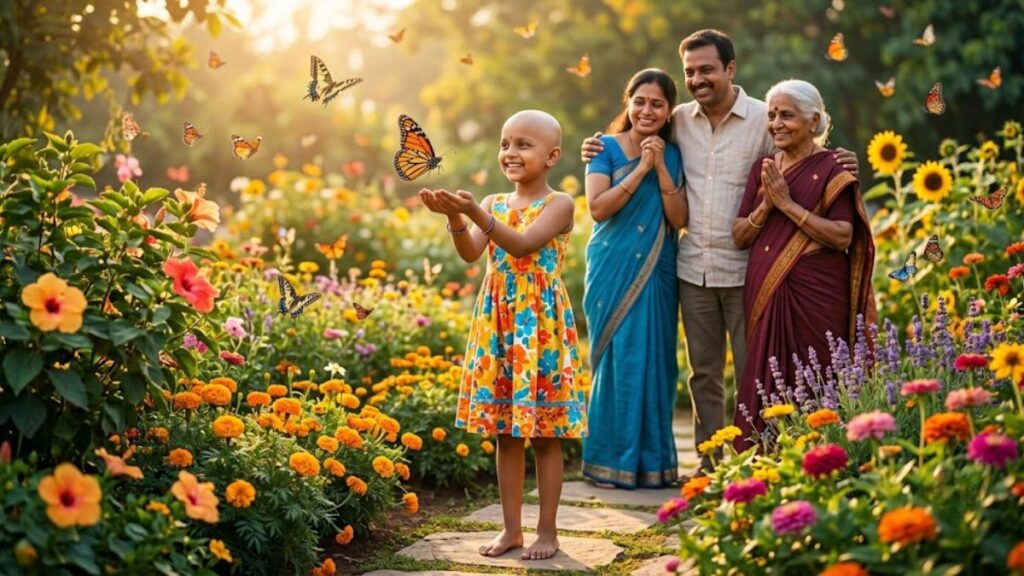
Moral: True beauty grows from courage, not appearance.
Eight-year-old Tara loved two things more than anything else in the world.
Drawing colorful butterflies.
And letting her grandmother braid her long black hair every morning before school.
Every braid ended with bright ribbons that matched her school uniform.
Her classmates often admired her beautiful hair.
Even strangers would smile and say,
“What lovely hair you have.”
Tara believed her hair was part of who she was.
She never imagined there would come a day when she would wake up, look in the mirror, and hardly recognize herself.
What began as a difficult medical journey became a lesson about courage, kindness, and discovering a kind of beauty that no mirror could ever measure.
A Happy Childhood
Tara lived with her parents and grandmother in a quiet neighborhood in Bengaluru.
She was cheerful, curious, and always asking questions.
She loved painting animals, reading fairy tales, and spending weekends feeding birds in the nearby park.
Every school morning followed the same routine.
Her grandmother gently combed her long hair.
She carefully divided it into two neat braids.
Then she tied colorful ribbons at the ends.
“Perfect,” Grandma would say with a smile.
Tara would spin around proudly before leaving for school.
To her, those braids were part of her identity.
The First Signs
One winter, Tara began feeling tired more often.
At first, everyone thought it was just a seasonal illness.
But the tiredness continued.
She lost her appetite.
She developed frequent fevers.
Her parents became worried.
After several medical tests, the doctors explained that Tara needed treatment for a serious illness.
Her parents listened carefully.
Their world suddenly felt very different.
The treatment offered hope.
But it would also bring difficult side effects.
One of them was hair loss.
A Conversation No Parent Wants
That evening, Tara’s mother sat beside her bed.
“Tara,” she said gently.
“The medicine is going to help you get better.”
Tara smiled.
“Good.”
“But…”
Her mother paused.
“It might make your hair fall.”
Tara touched her braids.
“My hair?”
Her mother nodded.
“But remember…”
“The medicine is fighting the illness.”
Tara stayed quiet.
She didn’t fully understand.
She only knew that something important was about to change.
Watching Her Hair Fall
The treatments began.
For the first few weeks, nothing happened.
Then one morning, Tara noticed strands of hair on her pillow.
She didn’t say anything.
The next day, there were even more.
Soon, every time she brushed her hair, more strands came away.
She stood silently in front of the mirror.
Tears filled her eyes.
“Mom…”
“My hair…”
Her mother hugged her tightly.
Neither of them knew exactly what to say.
The Day Everything Changed
One afternoon, Tara gently pulled one braid.
A large section came loose in her hand.
She stared at it.
Then she burst into tears.
“I don’t want my hair to go.”
Her grandmother cried too.
Not because of the hair.
Because she wished she could take away Tara’s pain.
That evening, Tara made a decision.
“I don’t want to watch it fall anymore.”
Her father asked softly,
“What would you like to do?”
“I want to cut it.”
The Salon Visit
The next morning, the family visited a children’s salon.
The hairstylist, Aarti, immediately understood the situation.
She knelt beside Tara.
“Would you like me to help?”
Tara nodded quietly.
Before the haircut began, Aarti asked,
“Can I tell you something?”
“What?”
“I have met many brave children.”
“And today…”
“I think I am meeting another one.”
Tara smiled a little.
The First Haircut
As the scissors moved through her hair, Tara held her mother’s hand.
Her grandmother quietly watched.
Every cut felt emotional.
Not because the hair was disappearing.
Because they were saying goodbye to something familiar.
When the haircut was finished, Tara looked in the mirror.
She had very short hair now.
She looked different.
But she still wasn’t ready to smile.
Losing the Rest
A few weeks later, the remaining hair fell out.
This time, Tara refused to look in the mirror.
She stopped asking to visit the park.
She no longer wanted to draw butterflies.
She even asked her mother,
“Can I stay home from school forever?”
Her mother gently replied,
“You don’t have to decide today.”
Feeling Invisible
Although everyone tried to encourage her, Tara felt different.
She worried that people would stare.
She imagined her classmates laughing.
She wondered if anyone would recognize her.
One afternoon, she whispered,
“I don’t feel beautiful anymore.”
Her grandmother sat beside her.
She smiled softly.
“You know what I see?”
“What?”
“I see the same little girl who laughs too loudly when she watches cartoons.”
“The same girl who feeds birds before feeding herself.”
“The same girl who hugs everyone.”
“Your hair changed.”
“You didn’t.”
An Unexpected Visit
A week later, Tara’s class teacher arrived with several classmates.
Tara became nervous.
She quickly covered her head with a cap.
But something unexpected happened.
None of her friends talked about her appearance.
Instead, they showed her something.
Each child held up a drawing.
Every picture showed Tara smiling.
Some drawings had long hair.
Some had short hair.
Some had no hair at all.
One picture simply said,
“Our friend.”
Tara looked at every drawing carefully.
No one had treated her differently.
The Butterfly Project
Her teacher smiled.
“We’re starting a class project.”
“What project?”
“Everyone will decorate paper butterflies.”
“And yours will be the first one.”
Tara asked,
“Why butterflies?”
“Because butterflies change.”
“But they never stop being beautiful.”
Those words stayed with her.
Smiling Again
Slowly, Tara began leaving her room more often.
She returned to drawing.
She visited the park again.
At first, she still wore a cap.
Then one sunny afternoon, she quietly removed it.
She felt the warm breeze on her head.
No one laughed.
No one pointed.
Children simply invited her to play.
For the first time in months…
She smiled.
A real smile.
A New Kind of Confidence
As treatment continued, Tara became stronger.
She learned that confidence wasn’t something her hair had given her.
It came from her courage.
From her family.
From her friends.
From believing that she was still herself.
Months later, tiny strands of hair began growing again.
Everyone celebrated.
But Tara surprised them.
She looked into the mirror and smiled just as brightly as she had when she had no hair.
Because by then…
She no longer believed beauty depended on hairstyles.
Years Later
Several years later, Tara visited the same hospital.
Not as a patient.
As a volunteer.
She met children beginning the same journey she once feared.
One little girl touched her own hair nervously.
“Will I still be pretty?”
Tara smiled.
She knelt beside her.
“You know something?”
“I asked that exact question.”
“And now I know the answer.”
“What is it?”
“The prettiest thing people will ever see is your courage.”
The little girl smiled.
The Real Transformation
Tara’s greatest transformation wasn’t when her hair grew back.
It happened much earlier.
It happened when she discovered that kindness, bravery, and hope were stronger than fear.
She learned that mirrors only show appearances.
But the people who truly love us…
See our hearts.
Moral of the Story
True beauty grows from courage, not appearance.
Hair, clothes, or appearance may change throughout life, but kindness, resilience, and confidence are what truly define a person.
The strongest transformations happen not on the outside, but within the heart.
The Meaning Behind a Hair Transformation
Not every haircut has a deeper meaning. Sometimes people simply want a different hairstyle.
However, when a transformation is emotionally significant, it can represent:
- A new beginning
- Letting go
- Personal growth
- Independence
- Confidence
- Change
- Acceptance
- Moving forward
The story becomes more meaningful when the reason behind the transformation is clearly established.
Common Themes in Emotional Hair Transformation Stories
1. A Fresh Start
One of the most common themes is using a new hairstyle to mark a new chapter.
The change might happen after:
- Graduation
- Starting a new job
- Moving to a new city
- Completing an important goal
- Beginning a new stage of life
The haircut becomes a symbolic marker of change.
2. Letting Go of the Past
For some people, hair can become associated with memories.
Cutting it may feel like physically leaving behind a period of life.
The story can explore the emotional conflict between:
- Holding on to familiar memories
- Wanting to move forward
- Feeling nervous about change
- Accepting a new version of oneself
3. Cutting Years of Growth
A significant amount of hair may take years to grow.
When someone decides to cut most of it, the decision can carry emotional weight.
The story can explore:
- Why the hair was grown
- What made the person reconsider
- The moment they decided to cut it
- Their feelings during the transformation
- Their reaction afterward
4. Rebuilding Confidence
A hairstyle change can sometimes help someone feel refreshed or more comfortable.
The emotional journey may involve:
- Feeling stuck
- Wanting change
- Taking a personal decision
- Seeing the transformation
- Becoming more comfortable with the new appearance
The story should emphasize that confidence comes from many sources, with the haircut being one part of the experience.
Hair Transformations After Major Life Changes
Major life changes often provide natural settings for emotional hair stories.
Examples include:
- Graduation
- Starting college
- Beginning a career
- Moving away from home
- Ending an important chapter
- Starting a new routine
- Reaching a personal milestone
The hairstyle change can serve as a visual reminder of the transition.
Emotional Hair Transformations and Personal Growth
A hairstyle can sometimes reflect how a person feels about their changing identity.
Someone who once preferred a particular style may eventually realize that their preferences have changed.
This can lead to a transformation based on:
- Maturity
- Self-discovery
- Independence
- Changing priorities
- Greater confidence
- A desire for something new
The emotional focus should remain on the person’s journey rather than suggesting that one hairstyle is inherently better.
Cutting Long Hair as an Emotional Experience
Long hair often takes considerable time and effort to maintain and grow.
As a result, deciding to cut it can feel significant.
A short story can focus on the contrast between:
Before: A familiar hairstyle connected to years of memories.
Decision: A growing desire for change.
Transformation: The moment the long hair becomes a shorter style.
After: The emotional reaction and reflection.
This simple structure can create a powerful short narrative.
Hair Transformations and Memories
Hair can become a physical reminder of a particular period.
For example, someone may have kept long hair throughout college. Years later, changing the hairstyle might bring back memories of that period.
The transformation can therefore involve two emotions at once:
- Saying goodbye to something familiar
- Appreciating the memories it represents
This combination can make a story more nuanced.
Emotional Hair Transformation and Family
Family can sometimes play an important role in hairstyle decisions.
A haircut may remind someone of:
- A parent
- A grandparent
- A childhood tradition
- A sibling
- A family celebration
Changing a familiar hairstyle can therefore create emotional conversations within the family.
Family reactions may be supportive, surprised, curious, or nostalgic.
Hair Transformations and Friendship
Friends can also become part of a transformation story.
A hairstyle may be connected to:
- School friendships
- College memories
- Shared experiences
- A friend’s encouragement
- A group celebration
A friend may be the person who encourages someone to try a new style, while the decision ultimately remains with the person receiving the haircut.
Hair Transformations and Romantic Memories
Relationships can also influence the emotional context surrounding hair.
A hairstyle may remind someone of:
- A first date
- A relationship milestone
- A memorable vacation
- A wedding
- A particular period of their relationship
A transformation can therefore become a way of creating a new memory without suggesting that someone’s appearance determines the success of a relationship.
Emotional Hair Transformations After Difficult Periods
Some stories may involve a person changing their hairstyle after a difficult period in their life.
The haircut can represent:
- Moving forward
- Reclaiming personal choices
- Creating a new routine
- Feeling refreshed
- Closing one chapter
These stories should avoid implying that a haircut automatically solves emotional difficulties. Instead, the transformation can serve as one small part of a broader personal journey.
The Emotional Moment Before the Transformation
The most interesting part of a short story may happen before the haircut begins.
The person might be:
- Looking at their reflection
- Thinking about how long they have had the hairstyle
- Wondering whether they are making the right choice
- Remembering why they originally grew their hair
- Feeling excited about the future
This creates anticipation before the transformation.
The Moment of Transformation
The actual haircut can serve as the story’s emotional turning point.
The focus does not need to be on detailed cutting instructions.
Instead, the narrative can emphasize:
- The decision becoming real
- Seeing the familiar length disappear
- Realizing how different the hairstyle feels
- Experiencing a mixture of emotions
- Looking at the result for the first time
The First Look in the Mirror
The first look at the finished hairstyle can be an important storytelling moment.
The person may initially feel:
- Surprise
- Relief
- Excitement
- Nervousness
- Happiness
- Uncertainty
The strongest stories allow the reaction to feel natural rather than forcing a dramatic response.
Emotional Transformation Does Not Always Mean Sadness
The word “emotional” does not necessarily mean the story must be sad.
An emotional hair transformation can involve:
- Happiness
- Relief
- Excitement
- Nostalgia
- Pride
- Gratitude
- Hope
- Confidence
A story can be emotional because something matters deeply to the person.
Short Story Formats
There are several ways to structure these stories.
First-Person Format
The narrator describes their own experience.
This can make the story feel intimate and personal.
Third-Person Format
The story follows a character from an outside perspective.
This can provide more flexibility when developing fictional narratives.
Before-and-After Format
The story contrasts the person’s life and feelings before and after the transformation.
Memory-Based Format
The current haircut triggers memories of an earlier period.
Milestone Format
The transformation happens around an important life event.
Suggested Structure for a Short Emotional Hair Story
A simple structure can keep short stories focused.
1. Establish the Character
Introduce the person and their relationship with their hair.
2. Explain the Meaning
Describe why the hairstyle matters to them.
3. Introduce the Decision
Explain what motivates the transformation.
4. Build Emotional Tension
Show uncertainty, anticipation, or excitement.
5. Present the Transformation
Describe the important moment without unnecessary technical detail.
6. Show the Reaction
Explore the person’s immediate feelings.
7. End With Reflection
Connect the new hairstyle to the larger meaning of the experience.
Examples of Emotional Hair Transformation Themes
A collection can explore many different ideas.
The First Major Haircut
A person who has always maintained long hair finally decides to try a shorter style.
The Graduation Transformation
A student changes their hairstyle after completing an important stage of education.
The New Job Haircut
A person starts a new career and chooses a style that feels more aligned with their current lifestyle.
The Goodbye Haircut
A character changes their hairstyle while closing an important chapter of their life.
The Confidence Transformation
Someone who has avoided change finally experiments with a new hairstyle.
The Childhood Memory
An adult changes their hairstyle and remembers a haircut from childhood.
The Family Connection
A hairstyle reminds someone of a family member and becomes part of a personal transformation.
The Unexpected Positive Change
A person is nervous about a major haircut but gradually realizes that they enjoy the new style.
How to Keep Short Stories From Becoming Repetitive
When creating a large collection, the emotional reason should vary.
One story might focus on:
- Nostalgia
Another on:
- Personal growth
Another on:
- Confidence
Another on:
- Family
Another on:
- A new beginning
Another on:
- Letting go
Another on:
- A major milestone
This keeps the collection diverse even when the central subject remains hair transformation.
What Makes an Emotional Hair Transformation Story Effective?
A strong story usually has three important elements.
A Meaningful Reason
Readers should understand why the transformation matters.
A Visible Change
The hairstyle should represent a noticeable shift in the story.
An Emotional Connection
The transformation should connect to the character’s memories, choices, relationships, or personal growth.
Without these elements, the story may feel like a simple description of a haircut.
Avoiding Overly Dramatic Hair Stories
Emotional storytelling does not require exaggerated reactions.
A character does not always need to cry, celebrate dramatically, or experience an extreme change in personality.
Subtle emotions can be more believable.
For example, a character might simply look in the mirror and realize:
“I finally feel ready for what comes next.”
A quiet realization can sometimes carry more emotional weight than a dramatic scene.
Respecting Personal Choice
Hair transformation stories should emphasize that changing one’s hairstyle is a personal decision.
A character can listen to:
- Friends
- Family
- Partners
- Stylists
But the final decision should belong to the person whose hair is being changed.
This approach creates healthier and more realistic narratives.
Realistic Hair Transformation Details
When writing these stories, consider realistic factors such as:
- Existing hair length
- Hair texture
- Maintenance needs
- Lifestyle
- Styling preferences
- The person’s reason for choosing the transformation
These details can make fictional stories feel more believable.
Final Thoughts
Emotional hair transformation short stories show how a seemingly simple change in appearance can carry deeper personal meaning. A haircut can mark the end of one chapter, the beginning of another, or simply represent a person’s decision to embrace something different.
The most effective stories focus on the person behind the transformation. The hairstyle provides the visible change, while the character’s memories, emotions, relationships, choices, and experiences provide the story’s depth.
For a larger collection, individual stories can explore different themes such as fresh starts, long-hair transformations, confidence, childhood memories, family connections, relationship milestones, graduation, career changes, nostalgia, and personal growth.
By giving every story a distinct emotional purpose and avoiding repetitive transformations, it is possible to create a collection that feels varied, relatable, and meaningful while keeping the focus on the human experience behind each hairstyle change.