Emotional crossdressing stories can explore far more than clothing. At their best, they are stories about self-discovery, vulnerability, acceptance, relationships, confidence, and the courage to express a part of oneself.
While humorous crossdressing stories often focus on awkward situations and unexpected adventures, emotional stories tend to slow down and explore what happens beneath the surface. A character may be questioning why certain clothes make them feel comfortable, worrying about how family or friends will react, or gradually learning that appearance and personal identity do not always fit neatly into traditional expectations.
These stories can be fictional, personal, reflective, romantic, or inspirational. What connects them is the emotional journey of a character who experiences something meaningful through crossdressing.
This article explores the major themes, storytelling approaches, character arcs, and emotional elements that can make this genre compelling.
What Are Emotional Crossdressing Stories?
Emotional crossdressing stories are narratives in which crossdressing plays an important role in a character’s emotional or personal journey.
The clothing itself is usually not the central point.
Instead, it becomes a way to explore questions such as:
- Who am I when nobody is watching?
- Why does this clothing make me feel different?
- Why am I afraid of other people’s opinions?
- Can I share this part of myself with someone I trust?
- What happens when someone I love discovers my secret?
- Can I accept myself without needing everyone else to understand?
- How can clothing become connected to memories, relationships, or important life moments?
The answers can differ dramatically from one story to another.
A character might discover that crossdressing gives them confidence. Another might use clothing as a way to explore an aspect of their personality. Someone else might initially feel ashamed but eventually learn that there is nothing inherently wrong with expressing themselves through clothing.
The emotional focus allows these stories to become more thoughtful and character-driven.
Emotional Crossdressing Stories
1. The Blue Dress in the Attic
Type: Inspirational Story
Core themes: self-acceptance, family memories, confidence, personal freedom.
Daniel Harper had always believed that houses remembered things.
Not literally, of course.
He wasn’t the sort of person who believed walls could speak or floorboards could whisper secrets.
But houses had a way of holding onto moments.
A scratch on a doorframe could remind you of childhood.
A faded mark on a wall could bring back an afternoon you had completely forgotten.
And sometimes, a forgotten object could make an entire chapter of your life feel close enough to touch.
Daniel discovered that on a rainy Saturday morning when he climbed into his grandmother’s attic.
His parents had decided to sell the old family house.
It had been empty for nearly a year since his grandmother had moved into assisted living, and now the family had finally accepted that maintaining the enormous old property was no longer practical.
There were boxes everywhere.
Old books.
Christmas decorations.
Photographs.
Furniture.
Letters.
Clothes.
Things nobody had touched in decades.
Daniel had volunteered to help.
He regretted that decision within twenty minutes.
“Why did Grandma keep six broken lamps?” he muttered.
His mother, downstairs, shouted:
“Because she liked them!”
“They don’t work!”
“I know!”
Daniel smiled.
That sounded exactly like his grandmother.
She had never thrown anything away simply because it was old.
To her, old things had stories.
The attic was larger than Daniel remembered.
As a child, he had thought it was enormous.
Now, at thirty-one, it seemed merely cluttered.
He moved several boxes aside.
Dust floated through the sunlight coming from a small round window.
He found an old wooden trunk.
The brass lock was broken.
Daniel opened it.
Inside were neatly folded clothes.
He recognized some of them immediately.
His grandmother’s old coats.
A wool scarf.
A collection of silk handkerchiefs.
Then, beneath the clothing, he saw something blue.
He carefully lifted it.
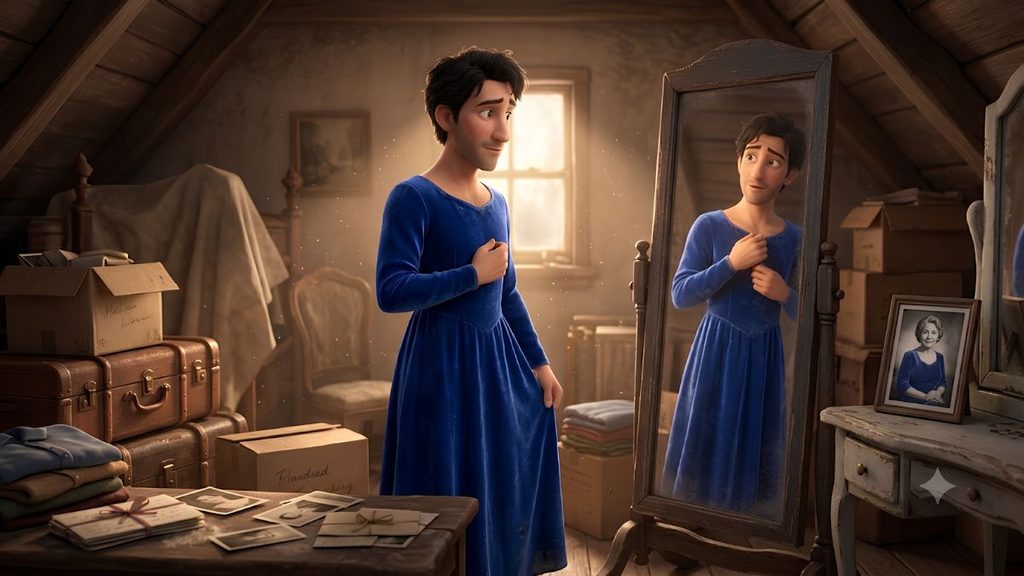
It was a dress.
A beautiful blue dress.
The fabric was soft despite its age.
It had tiny embroidered flowers along the sleeves and a delicate row of buttons down the front.
Daniel stared at it.
He had seen his grandmother wearing it in photographs.
Suddenly, a memory returned.
He was perhaps eight years old.
His grandmother was sitting in the garden wearing the same dress.
She had been laughing.
Daniel had been drawing flowers with colored pencils.
She had looked at his drawing and said:
“Never be afraid of making something beautiful.”
Daniel smiled.
He hadn’t thought about that moment in years.
He carried the dress toward the window.
There was something strangely comforting about it.
Perhaps it was the memory.
Perhaps it was the softness of the fabric.
Perhaps it was simply because it belonged to someone he had loved deeply.
He held it against himself.
Then laughed quietly.
“What am I doing?”
He almost put it back.
Instead, he looked at it again.
He had occasionally wondered what it would feel like to wear clothes like that.
Not because he wanted to make a dramatic statement.
Not because he had a clear explanation.
He simply liked certain feminine clothing.
The colors.
The shapes.
The softness.
The elegance.
It was something he had never talked about with anyone.
He had always kept those thoughts private.
As a teenager, he had once tried on a relative’s scarf while alone.
He had felt embarrassed afterward.
Years later, he still wasn’t entirely sure why.
The feeling had remained somewhere inside him.
Curiosity mixed with shame.
Interest mixed with fear.
He had never given himself permission to understand it.
Now he stood alone in his grandmother’s attic holding the blue dress.
He looked toward the door.
Nobody was coming upstairs.
He took a breath.
Then he decided to try it.
A few minutes later, Daniel stood in front of the dusty attic mirror.
He stared at his reflection.
The dress fit loosely but comfortably.
He adjusted the sleeves.
Then looked at himself again.
Nothing dramatic happened.
There was no sudden transformation.
No magical revelation.
He was still Daniel.
Same face.
Same tired eyes.
Same messy hair.
But something felt different.
He felt calm.
That surprised him.
He expected embarrassment.
Instead, he felt oddly peaceful.
He turned slightly.
The blue fabric moved gently around him.
He smiled.
Then immediately looked away from the mirror.
“What is wrong with me?”
The question sounded harsher than he intended.
He sat on an old wooden chair.
For several minutes, he simply looked at the dress.
Then he remembered his grandmother again.
She had always been unusually accepting.
When Daniel was a child, he had once shown her a drawing of a house painted completely purple.
His parents had laughed.
His grandmother had looked at it seriously.
Then she had said:
“Why shouldn’t a house be purple?”
Daniel had laughed.
She had always encouraged him to experiment.
To create.
To try.
To make mistakes.
He wondered what she would have thought about this.
The answer was impossible to know.
But somehow, remembering her made him less afraid.
That evening, Daniel returned home.
He didn’t mention the dress.
He didn’t mention the attic.
He didn’t mention anything unusual.
His mother asked:
“Did you find anything useful?”
“Some photographs.”
“Anything else?”
“Grandma’s blue dress.”
His mother smiled.
“I remember that.”
“You do?”
“Of course.”
She sat down.
“Your grandmother loved that dress.”
Daniel looked at her.
“She wore it often.”
“Very often.”
His mother laughed.
“She said it made her feel elegant.”
Daniel smiled.
“She looked happy in it.”
His mother nodded.
“She was.”
Daniel wanted to ask something.
He couldn’t.
Not yet.
Instead, he said goodnight.
Over the next few weeks, Daniel returned to the house several times.
Each visit gave him another reason to enter the attic.
At first, he told himself he was sorting belongings.
Then he stopped pretending.
He wanted to see the dress.
Sometimes he simply touched the fabric.
Sometimes he tried it on.
Each time, the experience became less frightening.
He began asking himself questions.
Why did he enjoy it?
Did it mean something?
Did it need to mean anything?
Eventually, he realized the last question mattered most.
Perhaps he didn’t need an immediate answer.
He simply enjoyed wearing it.
That could be enough.
One afternoon, Daniel found another box.
Inside were his grandmother’s letters.
He sat on the attic floor and read through them.
Most were ordinary.
Shopping lists.
Birthday cards.
Notes from friends.
Then he found a small envelope addressed to herself.
It wasn’t a letter.
It was a note.
Only a few sentences.
Daniel read it carefully.
It said:
There is no prize for spending your whole life trying to look like the person everyone expects you to be. Make room for the person you actually are.
Daniel stared at the words.
He read them again.
Then again.
He didn’t know when she had written them.
He didn’t know what she had meant.
But the words touched something inside him.
He sat quietly for a long time.
That evening, he called his mother.
“Can I ask you something?”
“Of course.”
“Was Grandma always confident?”
His mother laughed.
“Absolutely not.”
“Really?”
“She worried about everything.”
Daniel smiled.
“She never seemed worried.”
“That was her trick.”
“What trick?”
“She worried privately and lived publicly.”
Daniel thought about that.
“That’s a good way to put it.”
His mother paused.
“Why are you asking?”
Daniel looked toward the attic.
“I found something that made me think.”
“About what?”
He almost told her.
Instead, he said:
“About Grandma.”
His mother smiled through the phone.
“She would like that.”
A month later, the house was nearly empty.
The furniture had been sold or donated.
The walls looked strangely bare.
Daniel climbed into the attic one last time.
The blue dress was still there.
He took it down.
This time, he didn’t feel guilty.
He put it on.
Then he stood in front of the mirror.
The reflection no longer frightened him.
He looked thoughtful.
Comfortable.
Almost peaceful.
He understood something now.
He had spent years worrying that liking feminine clothing meant there was something wrong with him.
But where had that idea come from?
Nobody had told him directly.
He had simply absorbed it.
He had assumed that anything outside the expectations placed on him must be embarrassing.
The realization made him sad.
Not because he was ashamed anymore.
Because he wondered how many years he had spent being unnecessarily afraid.
He took out his phone.
For the first time, he took a photograph.
Not for social media.
Not for anyone else.
Just for himself.
He looked at the photograph.
It wasn’t perfect.
His hair was messy.
The lighting was poor.
The dress was slightly too large.
But he smiled.
He saved it.
Then he carefully folded the dress.
He didn’t put it back in the trunk.
Instead, he carried it downstairs.
His mother was in the kitchen.
She looked at the dress.
Then at Daniel.
There was a quiet moment.
Daniel’s heart began beating faster.
His mother didn’t say anything.
Finally, she asked:
“Is that Grandma’s?”
“Yes.”
“You’ve been wearing it?”
Daniel nodded.
He waited.
His mother touched the fabric.
“She loved this dress.”
Daniel swallowed.
“I like it too.”
His mother smiled.
“Then perhaps you should keep it.”
Daniel stared at her.
“You’re not upset?”
“Why would I be?”
He didn’t know how to answer.
His mother looked at him.
“Daniel, clothes are clothes.”
He laughed softly.
“It’s more complicated than that.”
“Maybe.”
She paused.
“But you’re still my son.”
Daniel felt tears forming.
He looked away.
His mother continued:
“And if wearing your grandmother’s dress makes you happy, then I think she’d be pleased.”
Daniel wiped his eyes.
“Thank you.”
She hugged him.
It was a short hug.
But it meant everything.
Months passed.
Daniel kept the dress.
He didn’t wear it every day.
Sometimes weeks passed without him touching it.
His life continued normally.
Work.
Friends.
Family.
Groceries.
Bills.
Weekend plans.
Nothing about his personality had suddenly changed.
But something inside him had.
He no longer felt ashamed of his curiosity.
He began experimenting with clothing privately.
Then occasionally in safe social spaces.
He discovered that he liked fashion more than he had realized.
He began learning about fabrics.
Colors.
Vintage designs.
Historical clothing.
He even started visiting small vintage stores.
One day, he bought a secondhand blue blouse.
It wasn’t his grandmother’s.
But it reminded him of the dress.
He wore it beneath his jacket.
Nobody noticed.
And for once, he wasn’t disappointed that nobody noticed.
The experience wasn’t about getting attention.
It was about knowing something privately true about himself.
A year after the attic discovery, Daniel visited his grandmother.
She was sitting beside a window in the care home.
Her memory had become less reliable.
Some days she remembered Daniel immediately.
Other days she needed several minutes.
Daniel brought photographs.
She looked through them slowly.
Then he showed her one of the blue dress.
Her eyes brightened.
“Oh,” she said.
“My dress.”
Daniel smiled.
“Yes.”
She touched the photograph.
“I loved that one.”
“I know.”
She looked at Daniel.
Then back at the photograph.
“Did you wear it?”
Daniel froze.
He hadn’t expected the question.
He smiled.
“Yes.”
His grandmother looked at him.
Then smiled.
“Good.”
That was all.
One word.
Good.
Daniel felt something break open inside him.
He took her hand.
She squeezed it.
For a moment, neither spoke.
Then she looked toward the window.
“Blue is a beautiful color.”
Daniel smiled.
“It is.”
That night, Daniel returned home.
He took the blue dress from his wardrobe.
He hung it carefully.
Then he stood in front of it.
He thought about the attic.
The dust.
The old mirror.
The fear.
The questions.
His mother’s acceptance.
His grandmother’s smile.
He realized that the dress had never really been about becoming someone else.
It had been about allowing himself to stop pretending that one narrow version of himself was the only acceptable one.
The dress had opened a door.
He had walked through it slowly.
There was still much he didn’t know.
Maybe there always would be.
But he no longer needed to be frightened by uncertainty.
He smiled.
Then carefully closed the wardrobe.
Outside, rain tapped softly against the window.
Daniel turned off the light.
For the first time in years, he felt that he was carrying something from his grandmother that was more valuable than an old dress.
He was carrying her permission.
Not permission to become someone else.
Permission to become more honestly himself.
And somehow, that felt like the most beautiful inheritance she could have left him.
2. The Friend Who Never Asked

Type: Friendship Story
Core themes: trust, privacy, friendship, vulnerability, unconditional acceptance.
Nathan Reed had known Marcus Bennett for fourteen years.
They had met in university over a broken printer, survived three disastrous apartment moves, attended countless birthday parties together, and once spent an entire night driving across three towns because Marcus insisted he knew where the best pancakes were.
He was wrong.
The pancakes had been terrible.
Nathan still remembered them fondly.
That was the strange thing about long friendships. The important memories weren’t always the impressive ones.
Sometimes they were ridiculous.
Sometimes they were ordinary.
And sometimes they were moments when you realized someone knew you better than you had imagined.
Nathan was about to discover one of those moments.
It started with a suitcase.
More specifically, a small black travel bag.
Nathan had been visiting Marcus for the weekend because Marcus’s apartment was closer to the city center, where they planned to attend a music festival.
Nathan had arrived Friday evening.
By Saturday night, they had ordered too much food, argued about which movie to watch, and discovered that neither of them remembered how the complicated television remote worked.
Sunday morning arrived too quickly.
Nathan packed his things in a hurry.
His regular clothes went into his suitcase.
Toiletries went into his backpack.
Phone charger.
Wallet.
Keys.
Headphones.
Everything seemed accounted for.
He said goodbye to Marcus and drove home.
It wasn’t until Monday evening that Nathan opened his bedroom wardrobe and noticed something missing.
The small black bag.
He froze.
“Oh no.”
He knew exactly where it was.
Marcus’s apartment.
Nathan sat on the edge of his bed.
Inside that bag were several pieces of clothing he had never told anyone about.
A blouse.
A long skirt.
A cardigan.
A pair of shoes.
Nothing dramatic.
Nothing dangerous.
Just clothing he enjoyed wearing privately.
For years, Nathan had kept that part of his life separate.
He didn’t even have a clear explanation for why he had hidden it so carefully.
He simply knew that he wasn’t ready to talk about it.
Now the bag was sitting in his best friend’s apartment.
Nathan grabbed his phone.
He typed:
Hey, I think I left a black bag at your place.
He stared at the message.
Then deleted it.
He typed again.
Did you happen to see a small black bag?
Delete.
Finally, he sent:
I left something at your apartment.
Marcus replied almost immediately.
Yeah. It’s here.
Nathan’s stomach dropped.
He stared at the words.
He knew.
Or perhaps he didn’t.
Nathan couldn’t tell.
He typed:
Can I pick it up tomorrow?
Marcus replied:
Sure.
Nothing else.
No questions.
No jokes.
No unusual punctuation.
Nathan should have felt relieved.
Instead, he became more nervous.
The next evening, Nathan drove to Marcus’s apartment.
He had prepared explanations.
If Marcus asked, he would say it was a costume.
If Marcus asked why he owned feminine clothing, he would explain that he liked fashion.
If Marcus asked whether it meant something deeper, Nathan wasn’t sure what he would say.
He parked outside the building.
He sat in the car for five minutes.
Then ten.
Finally, he called Marcus.
“Hey.”
“Hey.”
“I’m downstairs.”
“Come up.”
Nathan entered the building.
Marcus opened the door.
The black bag was sitting beside the sofa.
Nathan immediately looked at it.
Marcus noticed.
“You can take it.”
“Thanks.”
Nathan picked it up.
“Was everything okay?”
Marcus looked confused.
“With the bag?”
“Yeah.”
“Of course.”
Nathan nodded.
“Okay.”
Silence.
Marcus raised an eyebrow.
“You all right?”
“Yeah.”
“You’re acting strange.”
“I’m tired.”
“Right.”
Nathan smiled.
“See you.”
He left.
He didn’t breathe normally until he reached his car.
The following week was terrible.
Not because Marcus treated him differently.
That was the problem.
Marcus behaved exactly the same.
He sent memes.
He invited Nathan for coffee.
He complained about work.
He asked whether Nathan wanted to watch the football match on Saturday.
Everything was normal.
But Nathan couldn’t stop thinking about the bag.
Every conversation contained an imaginary question.
Every pause seemed suspicious.
When Marcus said:
“Come over Friday.”
Nathan wondered:
Does he know?
When Marcus laughed at something:
Is he laughing about me?
When Marcus asked:
“How’s your week?”
Nathan wondered:
Is this a test?
His imagination became exhausting.
One Friday evening, the two friends were sitting in Marcus’s living room.
A movie was playing.
Neither was paying much attention.
Nathan finally said:
“Can I ask you something?”
Marcus looked over.
“Sure.”
“Do you remember that bag I left here?”
Marcus nodded.
“The black one?”
“Yes.”
Nathan’s heart started pounding.
“What was inside it?”
Marcus stared at him.
Nathan immediately regretted the question.
“Nothing,” Marcus said.
Nathan blinked.
“What?”
“I didn’t open it.”
Nathan relaxed slightly.
“You didn’t?”
“No.”
“Why not?”
Marcus shrugged.
“It wasn’t mine.”
Nathan looked at him.
“But you knew it was mine.”
“Yes.”
“How?”
“You left it here.”
Nathan laughed nervously.
“Right.”
Marcus returned his attention to the television.
Nathan stared at him.
“That’s it?”
Marcus looked confused.
“What else would there be?”
Nathan didn’t answer.
The movie continued.
But something had changed.
For the first time, Nathan realized that Marcus might genuinely not know.
Or perhaps he knew and was simply choosing not to say anything.
Either possibility was strangely comforting.
Two weeks later, Nathan invited Marcus to his apartment.
It was unusual.
Normally they met at Marcus’s place.
Nathan wasn’t sure why he had suggested it.
Perhaps he was tired of hiding.
Perhaps he simply wanted to know whether he could trust his oldest friend.
They ordered pizza.
They played cards.
They talked about university memories.
Eventually, Marcus noticed something.
“You’ve been quiet lately.”
Nathan looked at him.
“I’m fine.”
“No, you’re not.”
Nathan smiled.
“You always do that.”
“Do what?”
“Notice things.”
Marcus shrugged.
“Someone has to.”
Nathan looked down at his hands.
“There’s something I haven’t told you.”
Marcus didn’t respond immediately.
He waited.
That was one of the things Nathan appreciated about him.
Marcus never rushed conversations.
Nathan took a breath.
“I sometimes wear women’s clothing.”
Silence.
Nathan felt his entire body tense.
He had imagined this moment dozens of times.
In some versions, Marcus laughed.
In others, he looked shocked.
In one particularly terrible version, Marcus stood up and left.
None of those happened.
Marcus simply nodded.
“Okay.”
Nathan looked up.
“Okay?”
“Yeah.”
“That’s all?”
Marcus smiled slightly.
“What were you expecting?”
“I don’t know.”
“Do you enjoy it?”
Nathan thought about the question.
“Yes.”
“Then I guess that explains it.”
Nathan laughed nervously.
“You aren’t surprised?”
Marcus leaned back.
“Honestly?”
“Yes.”
“I suspected.”
Nathan’s smile disappeared.
“You suspected?”
“For a while.”
“How long?”
Marcus thought.
“Maybe two years.”
Nathan stared at him.
“Two years?”
Marcus nodded.
“Probably.”
“How?”
Marcus laughed.
“You think you’re subtle.”
Nathan covered his face.
“Oh my God.”
“I noticed a few things.”
“What things?”
“I’m not giving you a list.”
“Why?”
“Because you’d spend the next six months analyzing everything you’ve ever done.”
Nathan laughed.
“Fair.”
Nathan was quiet for a moment.
Then he asked:
“When did you find the bag?”
Marcus answered honestly.
“Sunday morning.”
“And you didn’t open it?”
“No.”
“Not even a little?”
“No.”
“Why?”
Marcus looked at him.
“Because it wasn’t mine.”
Nathan swallowed.
“But you knew what was inside?”
“I had a pretty good idea.”
Nathan looked down.
“Why didn’t you ask me?”
Marcus was quiet.
Then he said:
“Because if you wanted me to know, you would tell me.”
Nathan felt tears beginning to form.
He looked away.
Marcus continued.
“You’re my best friend. I figured there was probably a reason you hadn’t told me.”
Nathan nodded.
“I was scared.”
“Of me?”
“Not exactly.”
“Then what?”
Nathan thought about it.
“Being judged.”
Marcus smiled sadly.
“Everyone worries about that.”
Nathan looked at him.
“I thought you might think differently about me.”
“I do.”
Nathan’s stomach tightened.
Marcus continued:
“I think you’re more complicated than I realized.”
Nathan smiled.
“That’s not necessarily good.”
“I didn’t say it was bad.”
They both laughed.
Marcus stood up and walked toward the kitchen.
Nathan remained on the sofa.
After a moment, Marcus returned carrying two glasses of water.
He handed one to Nathan.
“You don’t have to explain everything tonight.”
Nathan nodded.
“Thank you.”
“And you don’t have to explain why.”
Nathan looked at him.
“But I want to.”
Marcus sat down.
“Then I’ll listen.”
Nathan took a breath.
He talked.
For the next hour, he explained how he had first become interested in feminine clothing.
How he had initially been confused.
How he had experimented privately.
How he sometimes felt comfortable and confident wearing certain outfits.
How he had worried that someone might discover them.
How he had repeatedly asked himself what it meant.
And how he still didn’t have all the answers.
Marcus listened.
He didn’t interrupt.
He didn’t laugh.
He didn’t try to define Nathan.
When Nathan finished, Marcus said:
“That sounds exhausting.”
Nathan nodded.
“It has been.”
“Do you feel better now?”
Nathan thought about it.
“Yes.”
Their friendship didn’t transform overnight.
That was what made the moment feel real.
The next morning, Marcus still complained about his terrible coffee.
Nathan still teased him about his taste in music.
They still argued about movies.
But something had changed.
Nathan no longer had to calculate every sentence.
He no longer wondered whether Marcus was secretly judging him.
He could simply exist.
A few weeks later, Nathan mentioned that he wanted to buy a new outfit.
Marcus looked at him.
“Do you want company?”
Nathan laughed.
“You’d come shopping with me?”
“Why not?”
“You’d be bored.”
“I survived the pancake trip.”
Nathan laughed.
“That’s true.”
They went to a clothing store on Saturday afternoon.
Nathan was nervous.
Even though he had bought clothes privately before, shopping with another person felt different.
He looked through several outfits.
Marcus offered opinions.
“That color suits you.”
“No.”
“Why?”
“Too bright.”
“What about this?”
Nathan held up a dark green blouse.
Marcus nodded.
“That one.”
Nathan smiled.
“Really?”
“Yes.”
Nathan looked at himself in the mirror.
For once, he wasn’t thinking about whether someone might discover him.
His best friend was standing beside him.
Nobody was laughing.
Nobody was judging.
It was simply two friends shopping.
The simplicity of it moved Nathan more than he expected.
Later, they sat in a café.
Nathan said:
“You know what I keep thinking about?”
“What?”
“The bag.”
Marcus smiled.
“The infamous bag.”
“Yeah.”
“I still haven’t opened it.”
“I know.”
Nathan laughed.
“I spent weeks thinking you had discovered everything.”
“I had.”
Nathan looked at him.
Marcus smiled.
“Not because I opened the bag.”
“Then how?”
“You forgot something else.”
“What?”
“Your anxiety.”
Nathan laughed.
“That doesn’t make sense.”
“It does.”
Marcus leaned back.
“You spent weeks acting like someone who was waiting to be discovered.”
Nathan smiled.
“Maybe.”
“You were practically announcing it.”
Nathan shook his head.
“That’s embarrassing.”
“No.”
Marcus paused.
“It’s human.”
Nathan looked at him.
Years later, Nathan would remember that conversation more clearly than the moment he first told Marcus.
Because that was when he understood what friendship could actually mean.
Friendship wasn’t knowing every secret.
It wasn’t demanding explanations.
It wasn’t proving that someone trusted you by forcing them to reveal everything.
Sometimes friendship meant leaving a closed bag unopened.
Sometimes it meant noticing something and deciding to wait.
Sometimes it meant saying:
“I’ll listen when you’re ready.”
And sometimes it meant sitting beside someone while they tried to understand themselves.
One Sunday afternoon, Nathan received a message from Marcus.
Dinner tonight?
Nathan replied:
Sure.
A second message appeared.
Bring the blue jacket.
Nathan smiled.
The blue jacket was one of his favorite pieces.
He had bought it months earlier.
He had never worn it around Marcus before.
Now he did.
When Nathan arrived, Marcus opened the door.
He looked at the jacket.
“Good choice.”
Nathan smiled.
“Thanks.”
They went inside.
No announcement.
No dramatic moment.
No explanation.
Just two friends spending an ordinary evening together.
And that ordinary evening meant more to Nathan than he could have imagined.
Because for years, he had believed acceptance would feel like a grand event.
A declaration.
A dramatic conversation.
Instead, it felt surprisingly simple.
It felt like being invited to dinner.
It felt like being trusted.
It felt like not having to hide.
And most of all, it felt like knowing that the person standing beside you had seen something vulnerable and decided that it didn’t make you any less worthy of friendship.
Nathan looked across the room at Marcus.
“Hey.”
“What?”
“Thanks.”
Marcus smiled.
“For what?”
Nathan shook his head.
“For never asking.”
Marcus laughed.
“I’ll take that as a compliment.”
“It is.”
They smiled at each other.
Then Marcus picked up the remote.
“So, what are we watching?”
Nathan groaned.
“Not another superhero movie.”
Marcus looked offended.
“It’s a classic.”
“It’s terrible.”
“You have no taste.”
“You watched the same movie three times.”
“Because it’s good.”
Nathan laughed.
Some things, he realized, didn’t need to change at all.
And that was perhaps the greatest comfort of all.
3. A Mother’s Sunday Afternoon
Type: Family Story
Core themes: parent-child relationships, grief, acceptance, communication, unconditional love.
Ethan Miller had never been particularly good at talking about feelings.
His mother knew that.
She had known it since he was a little boy.
When Ethan was six and fell from his bicycle, he hadn’t cried until his mother asked whether he was hurt.
When he was sixteen and his first girlfriend broke up with him, he had simply said, “We’re fine,” and disappeared into his bedroom for the evening.
And when his father died, Ethan had spent three days organizing funeral arrangements, answering phone calls, and making sure his mother ate something.
He had talked about everything except how much he hurt.
His mother, Margaret, knew better than to force him.
So she waited.
That was something mothers sometimes learned with time.
You couldn’t always make someone open their heart.
Sometimes you simply had to leave the door unlocked.
Six months after his father’s death, Ethan was spending most Sundays at his mother’s house.
The old family home had become strangely quiet.
His father’s favorite chair remained in the living room.
His books were still arranged on the study shelves.
His gardening gloves hung in the garage.
Even his old coffee mug sat beside the kitchen sink.
Margaret couldn’t bring herself to move everything.
Ethan didn’t blame her.
He understood.
Grief wasn’t something you cleaned up.
It wasn’t a room you could organize.
It stayed in corners.
It appeared unexpectedly.
A song.
A photograph.
A familiar smell.
A chair that nobody used anymore.
Ethan tried to help however he could.
He repaired shelves.
Fixed the garden gate.
Sorted old paperwork.
Changed light bulbs.
Cleaned the garage.
His mother often watched him quietly.
“You don’t have to do everything,” she told him one Sunday.
“I know.”
“You say that, but you keep doing everything.”
Ethan smiled.
“Someone has to.”
Margaret looked at him.
“You’re just like your father.”
Ethan paused.
“Is that good?”
She smiled.
“Most of the time.”
They both laughed.
That particular Sunday began with rain.
It wasn’t a heavy storm.
Just a steady drizzle that covered the windows and made the house feel even quieter.
Margaret was in the kitchen preparing tea.
Ethan was upstairs sorting through boxes in the spare bedroom.
His mother had asked him to organize some old belongings before they decided what to donate.
He opened one box.
Old photographs.
Another.
Winter clothes.
Another.
Books.
Then he found a narrow wooden cabinet pushed against the wall.
He pulled it forward.
Behind it was a small storage compartment.
Margaret had forgotten it existed.
Inside were several neatly folded garments.
She picked up a piece of clothing.
Then another.
She recognized that none of them belonged to her.
They belonged to Ethan.
She stood quietly.
At first, she was confused.
Then she understood.
These were clothes traditionally associated with women.
A blouse.
A skirt.
A cardigan.
A pair of shoes.
Everything had been carefully folded.
Margaret sat on the edge of the bed.
She didn’t feel angry.
She didn’t feel frightened.
Mostly, she felt surprised.
Her son had apparently been carrying a private part of his life for years.
And he had never told her.
She wondered why.
Then she heard footsteps.
Ethan appeared in the doorway.
He stopped.
His face changed immediately.
“Mom.”
Margaret looked at him.
Neither spoke.
Ethan’s eyes moved toward the clothes.
Then back to his mother.
“I can explain.”
Margaret nodded.
“Okay.”
Ethan swallowed.
“It’s not what you think.”
Margaret smiled gently.
“I’m not sure what I think yet.”
That answer made Ethan even more nervous.
He stepped into the room.
“I should have put those somewhere else.”
“Maybe.”
“I didn’t mean for you to find them.”
“I know.”
He looked at the floor.
“I’m sorry.”
Margaret frowned.
“Why are you apologizing?”
Ethan didn’t answer.
The silence lasted several seconds.
Then Margaret asked:
“Do you like wearing them?”
Ethan looked up.
He hadn’t expected such a simple question.
“Yes.”
She nodded.
“Okay.”
He stared at her.
“Okay?”
“Yes.”
She folded one of the garments carefully.
“How long?”
Ethan hesitated.
“Several years.”
“Several?”
“Maybe eight.”
Margaret’s eyes widened slightly.
“Eight years?”
Ethan nodded.
She looked at him.
“Why didn’t you tell me?”
Ethan sat down.
“I was embarrassed.”
“Of the clothes?”
“Of what they might mean.”
Margaret was quiet.
“What do you think they mean?”
“I don’t know.”
“Then why were you afraid?”
Ethan sighed.
“Because I thought you’d think something was wrong with me.”
Margaret looked genuinely surprised.
“Why would I think that?”
“Because people can be judgmental.”
“People can be.”
She paused.
“But I’m your mother.”
Ethan looked away.
“I know.”
Margaret sat beside him.
“That doesn’t mean I understand everything immediately.”
Ethan nodded.
“But it means I’ll listen.”
That sentence stayed with him.
They didn’t solve everything that afternoon.
There was no dramatic revelation.
No sudden explanation that made every question disappear.
Instead, they talked.
Slowly.
Margaret asked questions.
Ethan answered some.
Others were difficult.
He explained that he had discovered he liked feminine clothing when he was younger.
He had initially thought it was strange.
He had hidden it.
Over time, he realized that wearing certain clothes simply made him feel comfortable.
Sometimes he liked the appearance.
Sometimes the feeling.
Sometimes it was simply enjoyable to experiment.
He wasn’t sure what it meant beyond that.
Margaret listened.
She didn’t interrupt.
When he finished, she said:
“Thank you for telling me.”
Ethan looked at her.
“You’re not angry?”
“No.”
“Disappointed?”
“No.”
“Confused?”
She smiled.
“A little.”
Ethan laughed nervously.
“That’s fair.”
“I don’t know everything about you.”
“Neither do I.”
Margaret smiled.
“Then perhaps we’re both learning.”
The following Sunday, they talked again.
This time, the conversation was easier.
Margaret asked whether Ethan had ever worn the clothes outside the house.
“Sometimes.”
“Does anyone know?”
“Not really.”
“Are you afraid?”
“Sometimes.”
“Why?”
Ethan thought about it.
“Because people might stare.”
Margaret nodded.
“People stare at everything.”
Ethan laughed.
“That’s true.”
She looked at him.
“But you shouldn’t have to spend your whole life making choices based on what strangers might think.”
Ethan smiled.
“You sound like Dad.”
Margaret laughed.
“No.”
She shook her head.
“Your father would have said something much less elegant.”
Ethan laughed.
“What would he have said?”
“He’d probably ask whether the clothes were comfortable.”
They both laughed.
For the first time since his father’s death, the room felt lighter.
A few weeks later, Margaret had an idea.
Her sister was hosting a small family lunch.
Only close relatives.
Nothing formal.
Ethan was invited.
He planned to wear his usual clothes.
But his mother stopped him before he left.
“Why don’t you wear the blue cardigan?”
Ethan looked at her.
“The one you found?”
“No.”
She pointed toward a new cardigan hanging in the hallway.
“I bought it.”
Ethan stared.
“You bought that?”
Margaret nodded.
“I thought you might like it.”
He touched the fabric.
It was soft.
Simple.
Elegant.
He smiled.
“Mom.”
“What?”
“Are you sure?”
She looked at him.
“About buying a cardigan?”
“No.”
He hesitated.
“About all of this.”
Margaret understood.
She reached out and adjusted the collar of his shirt.
“Ethan, I don’t need to understand every part of you immediately.”
She smiled.
“I just need to love you.”
His eyes became wet.
He looked down.
“I love you too.”
“I know.”
At the family lunch, Ethan wore the blue cardigan.
Nobody made a big deal about it.
His aunt complimented the color.
His cousin asked where he bought it.
His uncle talked about football.
Someone spilled juice.
Someone else argued about dessert.
It was completely ordinary.
And that was precisely why Ethan remembered it.
He had expected the world to change.
Instead, everyone simply continued eating lunch.
He realized that perhaps he had spent too much time imagining dramatic reactions.
Sometimes acceptance didn’t arrive with applause.
Sometimes it arrived quietly.
In the form of someone asking:
“Would you like more rice?”
After lunch, Ethan helped his mother clean the kitchen.
She handed him a plate.
“You looked happy today.”
Ethan smiled.
“I was.”
Margaret nodded.
“Good.”
He dried a glass.
“Can I ask you something?”
“Of course.”
“Did you ever worry about what people thought about you?”
She laughed.
“All the time.”
“Really?”
“Everyone does.”
“Then how did you stop?”
“I didn’t.”
Ethan looked at her.
“What?”
“You never completely stop worrying.”
She put a plate away.
“You just decide which opinions deserve your attention.”
Ethan considered that.
“That’s difficult.”
“Yes.”
She smiled.
“But it gets easier.”
Months passed.
Ethan continued visiting every Sunday.
The house slowly changed.
His father’s chair was finally moved.
Some books were donated.
The garden was repaired.
Photographs were rearranged.
Life continued.
But the blue cardigan became a small symbol of something important.
Ethan wore it frequently.
Sometimes with ordinary clothes.
Sometimes with outfits that were more feminine.
He still wasn’t completely comfortable being open with everyone.
He didn’t need to be.
His mother never pressured him.
She simply knew.
One afternoon, she asked:
“Do you want to go shopping?”
Ethan looked surprised.
“For what?”
“Clothes.”
He smiled.
“You want to come?”
“Yes.”
“Why?”
“Because I need a new sweater.”
“You have twenty.”
“Then I’ll help you choose something.”
Ethan laughed.
“That’s suspicious.”
Margaret smiled.
“Maybe.”
They spent the afternoon walking through stores.
Margaret picked up a blouse.
“What about this?”
Ethan shook his head.
“Too bright.”
She held up another.
“That?”
“Maybe.”
She found a soft green cardigan.
Ethan smiled.
“That’s nice.”
“Try it.”
He did.
He stood in front of the mirror.
Margaret looked at him.
“It suits you.”
Ethan smiled.
“Thanks.”
There was nothing dramatic about the moment.
No secret.
No fear.
Just a mother and son shopping together.
But Ethan knew how extraordinary it would have seemed to his younger self.
Years earlier, he had thought that if anyone ever discovered his secret, his world would collapse.
Now he was standing in a clothing store while his mother helped him choose a cardigan.
Life was strange.
And sometimes, unexpectedly kind.
One evening, Ethan found an old photograph of his father.
His father was standing in the garden wearing an absurdly large hat.
Ethan laughed.
Margaret looked over.
“What?”
“Look at Dad.”
She smiled.
“He loved that hat.”
“It was terrible.”
“Your father thought it made him look sophisticated.”
Ethan laughed.
“He looked ridiculous.”
Margaret smiled.
“He was happy.”
Ethan looked at the photograph.
“That’s what matters.”
She nodded.
Ethan realized something.
His father had spent his life wearing what he wanted.
That ridiculous hat.
Those old gardening shirts.
The same faded jacket every winter.
He had never worried much about fashion.
He simply liked what he liked.
Perhaps Ethan had inherited something more important than his father’s stubbornness.
Perhaps he had inherited permission to enjoy small things.
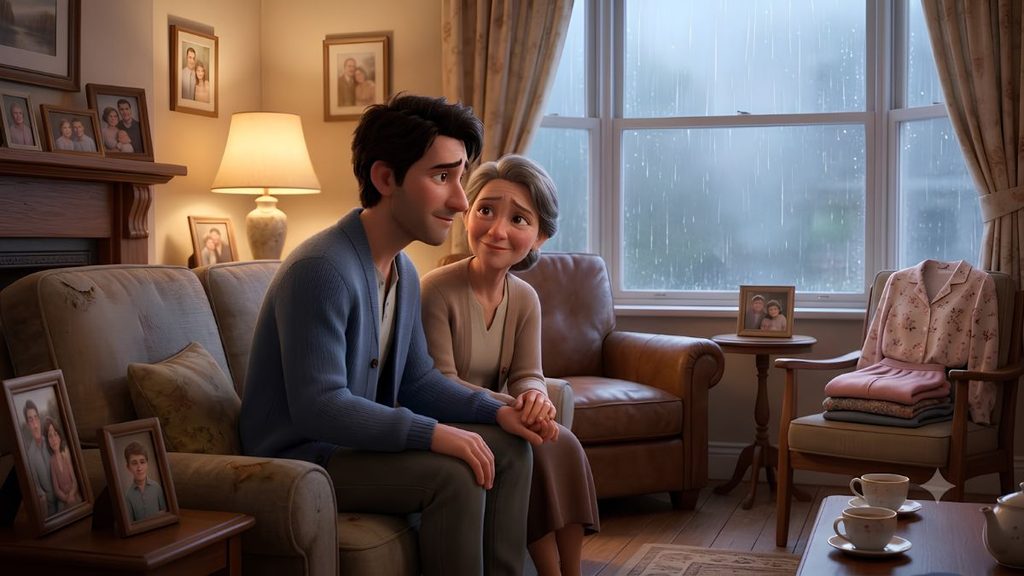
One Sunday afternoon, Ethan and Margaret sat together by the window.
Rain tapped gently against the glass.
The house was quiet.
Ethan wore the blue cardigan.
Margaret was reading a magazine.
After several minutes, Ethan said:
“Mom?”
“Yes?”
“Do you remember the day you found my clothes?”
“Of course.”
“I thought everything was going to change.”
Margaret lowered the magazine.
“Did it?”
Ethan smiled.
“Yes.”
She looked concerned.
“Badly?”
“No.”
He shook his head.
“Better.”
Margaret smiled.
“I’m glad.”
Ethan looked outside.
“I spent years thinking I needed to explain myself before I deserved acceptance.”
His mother was quiet.
“Maybe that’s how we all feel sometimes.”
He nodded.
Then he smiled.
“You didn’t ask me to become someone else.”
“No.”
“You didn’t ask me to stop.”
“No.”
“You just listened.”
Margaret reached over and squeezed his hand.
“That’s what mothers are for.”
Ethan laughed softly.
“I think you’re getting better at it.”
She pretended to be offended.
“I’ve been doing this for twenty-eight years.”
“Fair point.”
The rain continued.
The afternoon became evening.
Neither of them rushed.
Ethan realized that this was the memory he would keep.
Not the moment he was discovered.
Not the fear.
Not the embarrassment.
But this.
A quiet Sunday afternoon.
His mother beside him.
The rain outside.
A blue cardigan.
And the comforting knowledge that he didn’t have to hide every part of himself from the people who loved him.
He still didn’t know exactly what his relationship with clothing meant.
Perhaps he would understand more someday.
Perhaps he wouldn’t.
That was okay.
He no longer needed every question to have an immediate answer.
Some things could simply be lived.
Some parts of ourselves could be explored slowly.
And some relationships became stronger not because people understood everything about one another, but because they were willing to listen.
Ethan looked at his mother.
“Tea?”
She smiled.
“Always.”
He stood up.
“Do you want anything with it?”
“Biscuits.”
“Of course.”
He walked toward the kitchen.
Behind him, Margaret smiled.
The house was still quieter than it used to be.
His father’s chair was still empty.
There were still difficult memories.
Grief had not disappeared.
But the house no longer felt quite so heavy.
It had begun to hold something new.
Honesty.
Understanding.
And the quiet warmth of two people learning that love didn’t require having all the answers.
Sometimes it simply required staying.
Listening.
And leaving the door open.
4. The Photograph She Kept

Type: Romantic Story
Core themes: romantic trust, vulnerability, communication, acceptance.
Alex Morgan had been in love with Sophie Bennett for almost two years before she discovered the photograph.
It was an ordinary Tuesday evening.
There was nothing remarkable about it.
Rain tapped softly against the apartment windows. Sophie was sitting on the sofa with her laptop, working on a presentation she had been postponing for three days. Alex was in the kitchen making tea and complaining about the kettle.
“The kettle hates me,” he announced.
Sophie didn’t look up.
“You say that every time.”
“Because it’s true.”
“It’s a kettle.”
“Exactly. Completely unpredictable.”
She smiled.
“You press one button.”
“And yet somehow I still manage to make it complicated.”
Sophie finally looked at him.
“You’re thirty.”
“Age has nothing to do with kettle management.”
She laughed.
That was their relationship.
Comfortable.
Playful.
Ordinary.
They knew each other’s coffee orders.
They knew which side of the bed the other preferred.
They knew which movies the other secretly enjoyed.
They knew how to make each other laugh after a difficult day.
But there was one thing Sophie didn’t know about Alex.
Something he had never been brave enough to tell her.
Alex enjoyed wearing feminine clothing.
He had for years.
It wasn’t something he talked about.
He kept a small collection of clothes in a private storage box at his apartment.
He had never considered himself dishonest.
But he had been afraid.
Afraid that Sophie might see him differently.
Afraid that she might misunderstand.
Afraid that something he had kept private for so long might suddenly become bigger than their relationship.
So he had remained silent.
Until the photograph.
The photograph was hidden inside an old book.
Alex had forgotten it was there.
The book had been sitting on a shelf for years.
It was an old collection of poetry that he had bought during university.
Sophie was looking for something to read while waiting for her presentation to finish printing.
She pulled the book from the shelf.
A photograph slipped out.
It landed face-up on the floor.
Sophie picked it up.
She smiled.
Then stopped.
The photograph showed Alex.
But not the Alex she knew.
He was younger.
Perhaps twenty-four.
He was standing in front of a mirror wearing an elegant dark-green dress with a simple necklace and carefully styled hair.
There was no one else in the photograph.
Alex looked comfortable.
Confident.
Almost peaceful.
Sophie stared at the image.
Then she looked toward the kitchen.
“Alex?”
The kettle suddenly seemed very far away.
He walked into the room.
“Yeah?”
She held up the photograph.
His expression changed instantly.
He stopped.
For several seconds, neither spoke.
Sophie looked at the photograph.
Then at him.
“Is this you?”
Alex nodded.
“Yes.”
His voice was barely audible.
Sophie waited.
He looked terrified.
She had never seen him look like that.
“What happened?”
Alex swallowed.
“Nothing.”
“Nothing?”
“I mean…”
He sat down.
Sophie remained standing.
“Alex.”
He rubbed his hands together.
“I was hoping you’d never find that.”
“Why?”
He looked at the floor.
“Because I didn’t know how to tell you.”
Sophie sat beside him.
She looked at the photograph again.
“How long?”
Alex hesitated.
“Since I was in university.”
“That’s a long time.”
“I know.”
“Do you still do it?”
Alex nodded.
“Sometimes.”
Sophie took a slow breath.
She didn’t know what to say.
Not because she was angry.
She was simply trying to understand.
“Why didn’t you tell me?”
Alex laughed nervously.
“That’s the question I’ve been asking myself.”
“Alex.”
“I was scared.”
“Of me?”
He looked at her.
“Of losing you.”
Sophie was quiet.
“You thought I’d leave?”
“I didn’t know.”
“You’ve been worried about this for two years?”
“Longer.”
She looked down at the photograph.
Alex’s younger face seemed almost strange to her.
Not because he looked like a different person.
Because she realized there was a part of his life she had never seen.
She handed the photograph back.
“Tell me about it.”
Alex looked surprised.
“What?”
“The photograph.”
He stared at her.
“What do you want to know?”
“Everything you’re comfortable telling me.”
Alex took a breath.
He explained that he had discovered his interest in feminine clothing when he was younger.
At first, he had been confused.
Then embarrassed.
Eventually, he began understanding that wearing certain clothes simply made him feel comfortable.
Sometimes he enjoyed the appearance.
Sometimes he liked the feeling of expressing himself differently.
Sometimes it was simply fun.
He had never felt that clothing alone determined who he was.
But he had also never felt comfortable discussing it.
Sophie listened.
She asked questions.
Not accusing questions.
Curious ones.
“Does it change how you feel about yourself?”
“Sometimes.”
“How?”
Alex thought.
“More relaxed.”
“More confident?”
“Sometimes.”
She nodded.
“Do you want other people to know?”
“Not necessarily.”
“Why?”
“I don’t want attention.”
Sophie looked at him.
“Then why keep the photograph?”
Alex smiled sadly.
“Because I liked that person.”
Sophie looked at the photograph again.
“What do you mean?”
“I liked how comfortable I looked.”
He paused.
“I think I took that picture because I wanted proof that I could be myself without feeling ashamed.”
Sophie became quiet.
That sentence stayed with her.
The evening changed after that.
The presentation was forgotten.
The tea became cold.
The rain continued.
They talked for hours.
Sophie admitted that she was surprised.
Alex admitted that he had expected anger.
She asked:
“Do you still think I’m going to leave?”
He didn’t answer immediately.
Finally, he said:
“I don’t know.”
Sophie reached for his hand.
“I’m still here.”
Alex looked at her.
“I know.”
“No.”
She squeezed his hand.
“I don’t think you do.”
He smiled.
The next morning, everything felt slightly different.
Not bad.
Just different.
Sophie woke first.
She looked toward Alex.
He was asleep.
The photograph was still on the bedside table.
She picked it up.
She studied it again.
There was something about Alex’s expression that she couldn’t ignore.
He looked genuinely happy.
She realized she had spent years assuming she knew everything important about the person she loved.
But people were more complicated than that.
Everyone had private memories.
Private fears.
Private interests.
Private versions of themselves.
Maybe intimacy wasn’t knowing everything automatically.
Maybe intimacy was being trusted with what someone was afraid to share.
Over the next few weeks, they continued talking.
Sophie had questions.
Alex didn’t always have answers.
Sometimes he became uncomfortable.
Sometimes Sophie worried that her questions were too personal.
They learned how to slow down.
“Can I ask something?”
“Yes.”
“Do you want me to see you dressed that way?”
Alex thought.
“Maybe.”
“Are you sure?”
“Not yet.”
“Okay.”
That became their rhythm.
No pressure.
No assumptions.
No demands.
Just conversation.
One Saturday, Sophie found Alex standing in front of his wardrobe.
He was holding a blouse.
He looked nervous.
She stopped at the doorway.
“Everything okay?”
“Yeah.”
He turned.
“I was thinking.”
“About?”
“The photograph.”
She smiled.
“Still?”
“Yes.”
He looked at the blouse.
“I think I’d like to wear something like this around you.”
Sophie nodded.
“Okay.”
Alex looked surprised.
“That’s it?”
She smiled.
“What did you expect?”
“I don’t know.”
“Then what would make you comfortable?”
He thought.
“Maybe you could stay.”
“I can do that.”
Alex changed.
He came out wearing a simple feminine blouse with dark trousers and a cardigan.
Nothing dramatic.
Nothing theatrical.
Just an outfit.
He stood awkwardly.
Sophie smiled.
“You look nice.”
Alex laughed nervously.
“Really?”
“Really.”
He looked at himself in the mirror.
For a moment, he seemed uncertain.
Then his shoulders relaxed.
Sophie noticed.
“You look different.”
Alex became worried.
“In a bad way?”
“No.”
She smiled.
“You look less nervous.”
He laughed.
“That’s because I spent ten minutes preparing myself for you to laugh.”
“I would never.”
“I know that now.”
They went for a walk that evening.
Alex changed back before leaving.
It wasn’t because he was ashamed.
He simply wasn’t ready to wear the outfit outside.
Sophie understood.
They stopped at a café.
Alex looked at her.
“Do you think this changes us?”
Sophie considered the question.
“Yes.”
He looked concerned.
“How?”
She smiled.
“I know you better.”
Alex looked down.
“That’s all?”
“That’s a lot.”
Months passed.
Their relationship became more honest.
Sophie learned what clothing Alex liked.
Alex learned that Sophie was more curious than judgmental.
Sometimes they went shopping together.
Sometimes Sophie helped him choose colors.
Sometimes she had terrible opinions.
“That shirt is awful.”
“You picked it.”
“I was experimenting.”
“You experimented badly.”
They laughed.
The seriousness gradually became easier to carry.
The photograph remained in their apartment.
Not hidden inside a book anymore.
It sat inside a small frame on Alex’s desk.
Sophie asked him once:
“Why did you frame it?”
Alex smiled.
“Because I don’t want to be ashamed of it anymore.”
She nodded.
“Good.”
One evening, almost a year after the photograph was discovered, Sophie came home with a small package.
Alex looked at it.
“What is that?”
“A surprise.”
“Should I be worried?”
“Probably.”
He opened it.
Inside was an old-fashioned photo album.
Alex smiled.
“What is this?”
Sophie sat beside him.
“I thought we could make something.”
“What?”
She opened the album.
The first page was empty.
She handed him a pen.
“Photos.”
Alex looked confused.
“Of us?”
“Of us.”
He smiled.
“And the old photograph?”
“That goes here.”
She pointed to the first page.
Alex stared at her.
“Why?”
“Because it was part of your life before me.”
She turned the page.
“And this can be part of your life with me.”
Alex felt tears in his eyes.
He looked away.
Sophie noticed.
“Are you okay?”
He nodded.
“Yes.”
“You’re crying.”
“I know.”
She smiled.
“Good crying?”
“Very good crying.”
They filled the album slowly.
A photograph from a weekend trip.
A picture of Sophie cooking.
A ridiculous selfie.
A photograph of Alex wearing the blue blouse.
Another of them laughing in a clothing store.
There was no grand announcement.
No need for one.
The album simply became part of their home.
One evening, Alex turned to Sophie.
“Can I ask you something?”
“Sure.”
“Were you ever scared?”
She thought.
“Yes.”
“Of what?”
“Of saying the wrong thing.”
Alex smiled.
“Me too.”
“But I realized something.”
“What?”
“I don’t have to understand everything immediately.”
She touched his hand.
“I just have to care enough to listen.”
Alex smiled.
“That’s probably the best thing anyone has ever said to me.”
The photograph remained the most important picture in the album.
Alex eventually understood why.
It wasn’t because of the dress.
It wasn’t because of how he looked.
It represented the person he had been afraid to show anyone.
For years, he had looked at that photograph and remembered fear.
Now he looked at it and remembered courage.
Not the courage to wear the outfit.
The courage to tell Sophie.
The courage to let someone see a private part of his life.
And Sophie’s response had taught him something unexpected.
Trust wasn’t the absence of fear.
Trust was being afraid and choosing honesty anyway.
One rainy evening, almost two years after the photograph had been discovered, Alex and Sophie sat beside the same window where the whole conversation had begun.
Sophie held the album.
She turned to the first page.
The old photograph was still there.
She looked at Alex.
“You’ve changed.”
Alex smiled.
“Hopefully for the better.”
“For the better.”
He looked at the photograph.
“I used to hate this picture.”
“Why?”
“Because it reminded me of the secret.”
“And now?”
He smiled.
“Now it reminds me of the first time I was completely honest with you.”
Sophie closed the album.
“I’m glad I found it.”
Alex laughed.
“That’s not something I ever expected to hear.”
“Why?”
“Because I nearly died of embarrassment.”
She laughed.
“You survived.”
“Barely.”
She leaned against his shoulder.
“Would you have told me eventually?”
Alex thought about it.
“I hope so.”
“How long would it have taken?”
He smiled.
“Probably another ten years.”
Sophie laughed.
“Good thing I found the photograph.”
“Good thing.”
The rain continued outside.
The apartment was warm.
The album rested on the table.
Alex looked at Sophie.
He realized that the thing he had feared most, being fully seen, had become one of the safest experiences of his life.
He still had boundaries.
He still had questions.
He still didn’t share every part of himself with everyone.
He didn’t need to.
Privacy was different from shame.
That was something he had finally learned.
A private part of your life could still be a healthy part of you.
And sharing it with someone you trusted didn’t mean surrendering yourself.
It meant allowing someone you loved to know you more completely.
Alex reached for Sophie’s hand.
“Thank you.”
She smiled.
“For what?”
“For keeping the photograph.”
She looked at him.
“I didn’t just keep it.”
She squeezed his hand.
“I kept the story.”
Alex smiled.
And this time, he didn’t need to say anything else.
5. The Presentation After Five

Type: Workplace Story
Core themes: workplace identity, privacy, confidence, authenticity.
Michael Turner had built his professional reputation on precision.
As an architect, he believed every line mattered.
A wall had to meet the floor correctly.
A staircase needed the right proportions.
A window couldn’t simply look beautiful. It needed to bring in the right amount of light.
Even his presentations were carefully organized.
He arrived early.
He dressed conservatively.
He spoke calmly.
He rarely raised his voice.
His colleagues often joked that Michael could make a chaotic construction site look organized simply by standing in the middle of it.
He liked that reputation.
It had taken years to build.
What almost nobody knew was that after five o’clock, Michael sometimes became a very different version of himself.
Not a different person.
Just a less restricted one.
Michael’s interest in feminine clothing had begun quietly.
There had been no single dramatic moment.
He simply discovered that he enjoyed fashion.
He liked elegant fabrics.
He liked experimenting with silhouettes.
He liked the confidence that came from putting together an outfit that felt completely different from his everyday professional wardrobe.
At home, he occasionally wore feminine clothing.
Later, he began attending small private fashion gatherings where people could experiment with appearance without judgment.
He didn’t consider those evenings a secret life.
They were simply private.
His colleagues knew almost nothing about what he did after work.
That suited him.
Michael had always believed that everyone deserved a private corner of their life.
His office was located in a renovated warehouse in the center of the city.
There were forty employees.
Architects.
Designers.
Engineers.
Project managers.
Interns.
The atmosphere was generally friendly.
Michael had worked there for seven years.
He had friends among his coworkers.
But none of them knew about his fashion interests.
One of his closest colleagues was Laura Chen, a senior interior designer who sat across the corridor from him.
Laura was observant.
Sometimes too observant.
“You always leave exactly at five,” she once said.
Michael looked up from his computer.
“Not exactly.”
“Five-oh-three.”
“That’s different.”
“Three minutes.”
“I like punctuality.”
Laura laughed.
“I think you have a secret life.”
Michael smiled.
“Everyone has a secret life.”
She raised an eyebrow.
“That’s suspiciously philosophical.”
He returned to his computer.
“Go finish your presentation.”
She laughed and walked away.
Neither of them knew how accurate her joke would become.
One Thursday evening, Michael attended a small private fashion gathering.
It wasn’t a large event.
There were perhaps fifteen people.
They met in a rented studio above an art gallery.
The atmosphere was relaxed.
Some people wore unusual clothing.
Others experimented with makeup.
A few discussed fabrics and vintage fashion.
Michael wore an elegant black skirt, a cream blouse, a fitted jacket, and understated jewelry.
He felt comfortable.
For several hours, he forgot about deadlines and architectural drawings.
He wasn’t Michael Turner, senior architect.
He was simply Michael.
He talked.
He laughed.
He admired other people’s outfits.
He even received a compliment from another attendee.
“You have a great eye for proportion.”
Michael smiled.
“Occupational hazard.”
When the gathering ended, Michael changed his shoes but kept the rest of his outfit on.
He planned to take a taxi home.
He stepped outside.
And stopped.
Across the street was Laura.
She was standing outside a café.
Michael’s heart dropped.
For a second, neither moved.
Laura recognized him.
Michael knew it immediately.
Her eyes widened.
Michael felt his face become hot.
Then Laura looked away.
She didn’t laugh.
She didn’t point.
She simply turned and walked toward the subway station.
Michael stood frozen.
He eventually called a taxi.
During the entire ride home, he replayed the moment.
She had seen him.
His carefully separated worlds had collided.
The next morning, Michael arrived at work earlier than usual.
He had barely slept.
Every sound in the office made him nervous.
Two colleagues whispered near the printer.
Michael looked up.
Were they talking about him?
Laura entered.
Michael immediately looked at his computer.
She walked past.
Nothing happened.
At ten o’clock, nobody had said anything.
At noon, nobody had said anything.
By three, Michael realized that the office hadn’t exploded.
But the fear remained.
Finally, he sent Laura a message.
Can we talk privately?
Her response came quickly.
Of course.
They met in a small conference room.
Michael closed the door.
Laura sat down.
Michael remained standing.
“I’m sorry about last night.”
Laura frowned.
“For what?”
“You know.”
She nodded.
“I saw you.”
Michael took a breath.
“Yes.”
“I figured.”
“I don’t know what you think.”
Laura looked at him.
“I think you were wearing clothes.”
Michael blinked.
“That’s it?”
“What else should I think?”
Michael sat down.
“I thought you’d be surprised.”
“I was.”
“Judgmental?”
“No.”
“Uncomfortable?”
“No.”
He looked at her.
“Then why didn’t you say anything?”
Laura smiled.
“Because you looked like you didn’t want to be noticed.”
Michael looked down.
“You’re right.”
“I figured if you wanted to tell me, you’d tell me.”
Michael was quiet.
Laura leaned back.
“You know, Michael, you don’t owe me an explanation.”
“I know.”
“Do you?”
He smiled.
“Apparently not.”
She laughed.
Michael relaxed slightly.
Then Laura said:
“Can I tell you something?”
“Sure.”
“I have a secret too.”
Michael looked at her.
“What kind?”
Laura hesitated.
“I build miniature houses.”
Michael blinked.
“What?”
“Miniature houses.”
“You mean dollhouses?”
“Don’t call them dollhouses.”
She looked offended.
“They’re architectural models.”
Michael laughed.
“Sorry.”
“I’m serious.”
“I can tell.”
She smiled.
“I’ve been doing it for years.”
“Why keep it secret?”
Laura shrugged.
“People at work already think I’m obsessive about design. I didn’t want everyone knowing I spend my weekends building tiny kitchens.”
Michael laughed.
“How tiny?”
“Very tiny.”
“How tiny?”
“Six inches.”
He stared at her.
“That’s impressive.”
“Thank you.”
They both laughed.
The tension disappeared.
Michael realized something.
He had spent the entire night imagining Laura telling everyone.
Instead, she had respected his privacy.
And now she had trusted him with something personal of her own.
It felt strangely balanced.
Michael said:
“So we’re both weird.”
Laura smiled.
“Professionally accomplished and privately strange.”
“I like that.”
“Me too.”
Over the next few weeks, nothing changed at work.
Michael continued leading projects.
Laura continued designing interiors.
They still argued about color palettes.
They still complained about clients.
They still ate lunch together.
But there was an additional layer of trust between them.
One afternoon, Laura asked:
“Do you ever wish you could dress differently at work?”
Michael considered the question.
“Sometimes.”
“Why don’t you?”
“I don’t know.”
He paused.
“I’ve always thought professional environments required a certain version of me.”
Laura nodded.
“They do require professionalism.”
“Exactly.”
“But professionalism isn’t the same as looking identical to everyone else.”
Michael smiled.
“That’s true.”
A month later, the firm announced a charity presentation.
Employees were encouraged to participate in a creative evening showcasing personal interests outside architecture.
Michael almost ignored the announcement.
Then Laura approached him.
“You should participate.”
“Absolutely not.”
“Why?”
“Because my personal interests are complicated.”
Laura smiled.
“Mine involve six-inch furniture.”
Michael laughed.
“Fair.”
She looked at him.
“You don’t have to reveal anything you don’t want to.”
Michael nodded.
“That’s the important part.”
Michael decided to participate.
But not by discussing crossdressing.
Instead, he created a presentation about fashion and architecture.
He explained how clothing and buildings both used proportion, texture, structure, and visual balance.
He showed historical examples of how architectural movements influenced fashion.
His presentation was excellent.
The audience asked questions.
His colleagues were fascinated.
At the end, his manager said:
“Michael, I had no idea you were interested in fashion.”
Michael smiled.
“Neither did most people.”
Laura laughed from the back of the room.
Afterward, Michael realized something.
He had been hiding his interests because he believed they weakened his professional identity.
But they didn’t.
His knowledge of clothing had actually strengthened his understanding of design.
His appreciation of fabric informed his approach to texture.
His interest in proportion influenced his architectural work.
His private passion wasn’t competing with his career.
It was part of the same creative mind.
Several weeks later, Michael attended another private fashion gathering.
This time, he felt different.
He wasn’t suddenly fearless.
But he was less ashamed.
He understood that privacy wasn’t the same as secrecy born from fear.
He could choose who knew.
He could choose what he shared.
He could maintain professional boundaries without pretending his personal interests didn’t exist.
When he returned home, he changed clothes and made tea.
His phone buzzed.
It was Laura.
How was the fashion evening?
Michael smiled.
He replied:
Excellent. Learned about vintage tailoring.
Laura answered:
Good. I spent four hours making a tiny staircase.
Michael laughed.
Who is more ridiculous?
Obviously you.
He smiled.
Fair.
Months later, Michael was promoted.
During the celebration, Laura raised a glass.
“To Michael.”
Everyone applauded.
He smiled.
Later, when the office emptied, Laura stayed behind.
“You seem happier.”
Michael looked at her.
“I think I am.”
“Why?”
He thought for a moment.
“Because I finally realized I don’t have to divide myself into good parts and bad parts.”
Laura nodded.
“That’s important.”
He smiled.
“What about your miniature houses?”
She laughed.
“Still building them.”
“Can I see one?”
She looked surprised.
“Really?”
“Of course.”
The following Saturday, she invited him to her apartment.
She showed him an entire miniature town.
Tiny houses.
Tiny streets.
Tiny gardens.
Tiny cafés.
Michael was amazed.
“This is incredible.”
Laura smiled.
“I told you.”
“You were underselling it.”
“I know.”
They spent two hours examining the models.
Michael noticed that the tiny buildings had astonishingly precise proportions.
He looked at Laura.
“You should show this to people.”
She shook her head.
“Maybe someday.”
“Whenever you’re ready.”
She smiled.
“Same to you.”
That sentence stayed with Michael.
Whenever you’re ready.
It applied to everything.
His fashion.
His identity.
His boundaries.
His professional life.
His friendships.
He didn’t need to tell everyone.
He didn’t need to hide forever.
He simply needed to make his own choices.
One evening, several months after the incident, Michael was leaving the office.
It was five-ten.
Laura noticed.
“You’re late.”
He smiled.
“I know.”
“Everything okay?”
“Perfect.”
He put on his coat.
“You have plans?”
“Yes.”
She smiled.
“Fashion?”
Michael laughed.
“Maybe.”
Laura nodded.
“Have fun.”
Michael paused.
“Thanks.”
He walked toward the elevator.
For years, he had thought five o’clock marked a boundary.
Before five, he was the architect.
After five, he was someone else.
Now he understood that the line wasn’t necessary.
He was the same person throughout.
The architect.
The designer.
The quiet professional.
The person who enjoyed feminine fashion.
The friend who laughed at tiny houses.
None of those identities canceled the others.
They simply belonged to the same human being.
The elevator doors opened.
Michael stepped inside.
He looked at his reflection in the polished metal.
For once, he didn’t see separate versions of himself.
He saw one person.
A person who had spent years worrying that being authentic would cost him respect.
Instead, honesty had given him something better.
Trust.
Not everyone’s trust.
He didn’t need that.
Just the trust of the people who mattered.
And perhaps, most importantly, trust in himself.
The elevator descended.
Michael smiled.
Tomorrow morning, he would return to the office.
He would review drawings.
Meet clients.
Discuss deadlines.
He would be Michael Turner, architect.
And after work, he would be Michael Turner doing something he enjoyed.
There was no contradiction.
There never had been.
The only contradiction had existed in his own mind.
And now, finally, it was disappearing.
6. The Empty Theater Seat
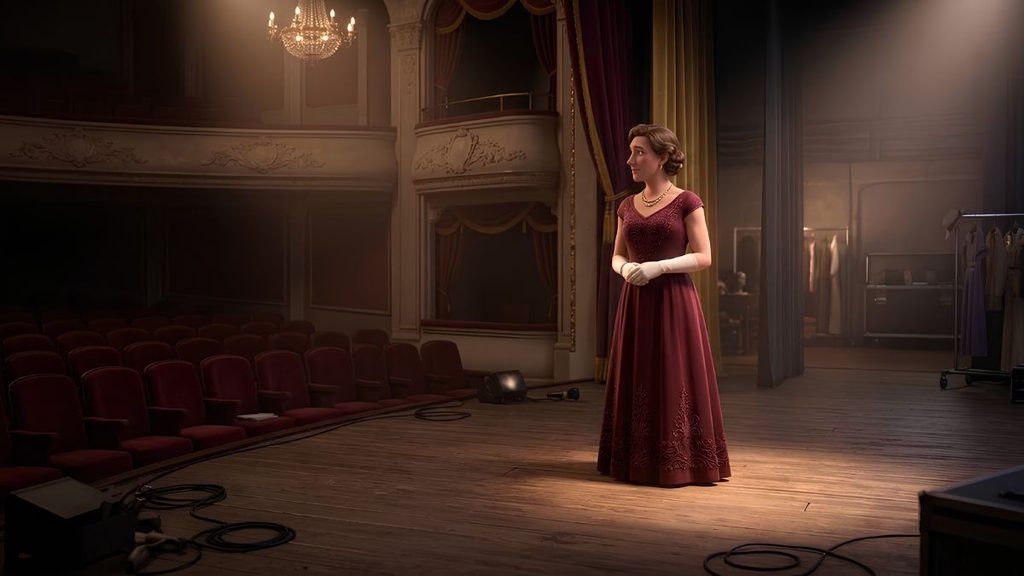
Type: Theater Story
Core themes: performance, creativity, confidence, emotional discovery.
Jonathan Wells had spent nearly six years behind the curtain.
He preferred it that way.
The community theater where he volunteered was an old brick building squeezed between a bookstore and a bakery on a quiet downtown street. From outside, it looked ordinary.
Inside, it was anything but.
The walls were covered with old posters.
The lobby smelled faintly of coffee and sawdust.
Painted scenery leaned against every available wall.
Costume racks filled the storage rooms.
And somewhere, almost every evening, someone was singing too loudly.
Jonathan loved it.
He loved the chaos.
He loved the smell of fresh paint.
He loved hearing an audience laugh from somewhere beyond the curtain.
Most of all, he loved knowing that a successful performance depended on dozens of people whose names never appeared on the program.
Lighting technicians.
Stagehands.
Costume assistants.
Set designers.
Props managers.
People like him.
Jonathan was perfectly happy being one of them.
He had no desire to stand beneath the spotlight.
At least, that’s what he told himself.
The theater was preparing for its biggest production of the year.
It was a historical comedy called The Duchess of Bellmont.
The story revolved around an aristocratic woman who secretly disguised herself to investigate a family scandal.
It was dramatic.
Ridiculous.
Romantic.
And full of costume changes.
The director, Clara Evans, was obsessed with historical accuracy.
“Nobody believes a nineteenth-century character wearing modern shoes,” she complained during rehearsal.
Jonathan had heard the sentence at least five times.
Clara trusted him with costume organization because he was meticulous.
“You alphabetize the wardrobe,” she once told him.
“Is that a compliment?”
“Absolutely.”
“What about the shoes?”
“By character.”
“The hats?”
“By scene.”
“The gloves?”
“By color.”
Jonathan smiled.
“You’re terrifying.”
“I’m a director.”
One afternoon, Clara asked Jonathan to help organize the costumes for the lead character.
The costume was extraordinary.
It consisted of a deep burgundy dress with embroidered sleeves, a fitted waist, a long flowing skirt, and an elaborate matching jacket.
There were gloves.
A necklace.
A decorative hairpiece.
Even a small vintage-style handbag.
Jonathan stared at it.
“That’s a lot.”
Clara smiled.
“That’s the point.”
He carefully lifted the dress from the rack.
The fabric was heavier than he expected.
He examined the stitching.
The detail was beautiful.
“Who made this?”
“Our costume designer.”
“It’s incredible.”
Clara watched him.
“You like it.”
“I appreciate the craftsmanship.”
“Of course.”
Jonathan ignored her smile.
That evening, he stayed behind after everyone else left.
He was supposed to organize the costume room.
Instead, he found himself standing in front of the mirror with the burgundy dress in his hands.
He had no intention of wearing it.
At least, that’s what he told himself.
He held it against his body.
The reflection looked strange.
Then strangely familiar.
He imagined what it would look like.
Not on an actor.
On him.
He quickly put it back.
“Ridiculous.”
He turned off the light and left.
But the thought stayed with him.
Two days later, everything changed.
The lead actor, Emily Carter, became ill.
At first, everyone assumed she would recover before opening night.
Then the doctor told her she needed several weeks of rest.
The theater went into panic.
Clara gathered the cast.
“We need a temporary replacement.”
Nobody volunteered.
The role was demanding.
It required memorizing hundreds of lines, several costume changes, and nearly two hours on stage.
Jonathan stood at the back of the room.
He had absolutely no intention of volunteering.
Then Clara looked at him.
“No.”
Jonathan immediately shook his head.
“I didn’t say anything.”
“You didn’t have to.”
The cast laughed.
Clara smiled.
“You know the script.”
“I’ve read it.”
“You’ve watched every rehearsal.”
“That doesn’t mean I can perform.”
“You understand the character.”
“I’m backstage.”
“Exactly.”
Jonathan stared at her.
She said:
“Just read the role during rehearsal.”
“Read?”
“Nothing more.”
Jonathan sighed.
“Fine.”
The first rehearsal was disastrous.
Jonathan forgot his lines.
He walked in the wrong direction.
He missed a cue.
He knocked over a chair.
And when Clara asked him to deliver an emotional monologue, he read it like he was announcing train schedules.
The cast laughed.
Jonathan wanted the floor to open.
“Again,” Clara said.
Jonathan groaned.
“Do I have to?”
“Yes.”
They tried again.
And again.
By the fourth attempt, something changed.
Jonathan stopped thinking about the audience.
He stopped thinking about whether he looked ridiculous.
He simply read the words.
The character was grieving.
Angry.
Confused.
Brave.
Jonathan understood those emotions better than he expected.
He had spent years keeping his own emotions carefully contained.
The character didn’t.
She expressed everything.
Jonathan found that strangely liberating.
After rehearsal, Clara approached him.
“You have something.”
Jonathan laughed.
“A terrible singing voice?”
“No.”
“What?”
“Presence.”
He looked confused.
“I was terrible.”
“At first.”
“Thanks.”
She smiled.
“You became better when you stopped worrying about being perfect.”
Jonathan thought about that.
It sounded familiar.
A week later, Emily was still recovering.
Jonathan continued rehearsing.
The role began to feel less like acting.
He learned the character’s movements.
The posture.
The gestures.
The confidence.
He learned how the costume changed the way the character moved.
One evening, Clara asked him to try the full outfit.
Jonathan froze.
“The dress?”
“Yes.”
“I’m not an actor.”
“Neither are half the people in community theater.”
The cast laughed.
Jonathan looked at the costume.
He remembered the first time he had held it.
His curiosity returned.
Slowly, he nodded.
“Okay.”
The costume fitting was private.
Only Clara and the costume designer were present.
Jonathan changed.
When he stepped out, he avoided the mirror.
“Look at yourself,” Clara said.
“I’d rather not.”
“Why?”
“I’m nervous.”
“That’s exactly why.”
Jonathan slowly turned toward the mirror.
He stared.
The transformation wasn’t perfect.
The dress needed some adjustment.
The hairpiece felt strange.
The shoes were unfamiliar.
But the reflection didn’t make him laugh.
Instead, he felt something he couldn’t easily explain.
He felt comfortable.
Not completely.
Not instantly.
But enough.
The character seemed to fit him.
Not just physically.
Emotionally.
Jonathan touched the fabric.
“It’s beautiful.”
Clara smiled.
“It suits you.”
Jonathan looked at himself again.
For once, he didn’t immediately search for everything that looked wrong.
He simply looked.
The rehearsal that evening was different.
Jonathan moved differently.
He became more confident.
He spoke more clearly.
He stopped apologizing after every mistake.
When he walked onto the stage, the room became quiet.
Clara watched from the front row.
At the end of the scene, nobody spoke for a moment.
Then someone applauded.
Jonathan laughed nervously.
“That was better.”
Clara smiled.
“Much.”
As the weeks passed, Jonathan discovered something unexpected.
He enjoyed performing.
Not because he wanted attention.
He enjoyed the freedom.
On stage, he could express emotions he normally kept hidden.
He could be dramatic.
He could be playful.
He could be vulnerable.
He could wear clothes that made him feel beautiful.
And when the curtain closed, he could return backstage.
Nobody demanded that he choose one version of himself.
The theater allowed him to explore.
That mattered.
One night, after rehearsal, Jonathan remained alone on stage.
The auditorium was empty.
Rows of red seats stretched into darkness.
One seat near the center had been left unfolded.
He looked at it.
He imagined someone sitting there.
Watching him.
Judging him.
Then he laughed quietly.
For years, he had imagined that imaginary audience everywhere.
At work.
On the street.
In clothing stores.
Even alone.
Now he realized that the harshest audience had always been inside his own head.
He sat on the edge of the stage.
The theater was silent.
For once, the silence felt peaceful.
Opening night arrived.
The theater filled quickly.
People stood in the lobby.
Children whispered.
Adults searched for seats.
The orchestra played.
Behind the curtain, Jonathan’s hands shook.
Clara noticed.
“Nervous?”
“Terrified.”
“Good.”
“Why is that good?”
“It means you care.”
Jonathan smiled.
The curtain rose.
The first act passed quickly.
Then the second.
Jonathan stopped thinking about himself.
He became the character.
The audience laughed at the jokes.
Gasped during the dramatic scenes.
Applauded after the major monologue.
Jonathan heard it all.
But something mattered more.
He felt free.
After the final scene, the curtain closed.
The cast gathered backstage.
Everyone hugged.
People cried.
Someone shouted:
“We did it!”
Jonathan stood quietly.
He looked at the costume.
The burgundy dress had become something more than clothing.
It had become part of a journey.
Clara came toward him.
“You were wonderful.”
Jonathan smiled.
“Thank you.”
“You okay?”
He nodded.
“Yeah.”
But he wasn’t entirely okay.
He felt emotional.
Not because the performance was over.
Because he knew something had changed.
After everyone left, Jonathan returned to the stage.
He was still wearing the costume.
The theater was empty.
He walked toward the center.
Then stopped.
He looked at the empty seat.
The same one he had noticed weeks earlier.
He smiled.
He suddenly understood why the seat had bothered him.
He had imagined someone sitting there.
Someone waiting to judge him.
But now the seat was empty.
And somehow, that emptiness felt like freedom.
There was nobody to impress.
Nobody to convince.
Nobody to satisfy.
There was simply Jonathan.
He looked down at the dress.
He didn’t want to take it off yet.
That surprised him.
For weeks, he had thought he was borrowing the character’s clothes.
Now he realized the costume had given him permission to discover something that had always belonged to him.
A love of fashion.
A love of performance.
A side of himself he had kept quiet because he feared what it might mean.
The dress hadn’t transformed him into someone else.
It had simply made it easier to see himself.
Clara entered the auditorium.
“You haven’t left.”
Jonathan smiled.
“I was thinking.”
“About the show?”
“About me.”
Clara sat in the front row.
Jonathan remained on stage.
“I don’t think I want to put this away.”
Clara looked at the dress.
“You don’t have to decide tonight.”
“I know.”
He smiled.
“But I think I understand something now.”
“What?”
Jonathan looked toward the empty seats.
“I thought I was hiding because I didn’t want people to see me.”
He paused.
“I think I was hiding because I didn’t want to see myself.”
Clara said nothing.
She didn’t need to.
The next morning, Jonathan returned the costume.
He carefully cleaned it.
Hung it properly.
Repaired a loose button.
Then he placed it in the wardrobe.
But before leaving, he took out his phone.
He photographed the costume.
Not because he wanted to preserve the character.
Because he wanted to preserve the memory.
That evening, he searched online for a local fashion group.
He hesitated before clicking the registration button.
Then he clicked.
It wasn’t a dramatic declaration.
He didn’t tell everyone.
He didn’t suddenly change his entire life.
He simply took one small step.
That was enough.
Months later, Jonathan remained involved with the theater.
He continued working backstage.
But occasionally, he performed.
Sometimes small roles.
Sometimes larger ones.
He also began helping with costumes.
He discovered that he had a natural talent for costume design.
Clara eventually told him:
“You should take this seriously.”
Jonathan smiled.
“I am.”
He started taking evening classes in costume design.
He learned about historical fashion.
Textiles.
Pattern construction.
Stage makeup.
Character development.
He discovered an entire world he had never considered.
And somewhere along the way, he stopped thinking of crossdressing as something embarrassing.
It was simply one part of his relationship with clothing and performance.
Something he enjoyed.
Something that helped him express himself.
Something that had taught him courage.
A year after the original production, the theater staged another play.
Jonathan wasn’t performing this time.
He was designing costumes.
One evening, he stood in the wardrobe room surrounded by fabrics.
A new volunteer approached.
“How do you know what works?”
Jonathan smiled.
“You try things.”
“What if they look strange?”
“They probably will.”
The volunteer laughed.
“That’s not very encouraging.”
Jonathan smiled.
“Strange isn’t always bad.”
He held up two fabrics.
“Sometimes strange is exactly what makes something memorable.”
That night, after everyone left, Jonathan walked onto the empty stage.
The same rows of seats stretched before him.
The same old curtains.
The same wooden floor.
He stood beneath the stage lights.
He remembered the frightened man who had once refused to read a role.
He remembered holding the burgundy dress.
He remembered avoiding the mirror.
He remembered the empty seat.
And he smiled.
He finally understood that confidence hadn’t arrived because he suddenly stopped caring what people thought.
Confidence had arrived because he had stopped allowing imaginary judgment to control every choice.
He could still be nervous.
He could still feel uncertain.
He could still keep parts of his life private.
But he no longer believed privacy required shame.
The theater had taught him that.
A costume had taught him that.
An empty seat had taught him that.
Jonathan switched off the stage lights.
The theater became dark.
He walked toward the exit.
Then stopped.
He looked back one last time.
For years, he had believed the stage belonged to actors.
Now he knew better.
The stage belonged to anyone willing to step onto it.
And sometimes, the most important performance wasn’t pretending to be someone else.
It was finally allowing yourself to discover who you could be.
Jonathan smiled.
Then he walked through the doors and into the night.
This time, he didn’t feel like he was leaving part of himself behind.
He was taking it with him.
7. The First Night in a New City

Type: Coming-of-Age Story
Core themes: independence, young adulthood, identity, exploration, confidence.
Ethan Brooks arrived in the city with two suitcases, one backpack, and a level of confidence that was mostly imaginary.
He was twenty-two.
Fresh out of university.
Freshly employed.
And, according to his mother, completely unprepared for living alone.
“You’ll forget to eat,” she had warned him.
“I won’t.”
“You’ll forget to clean.”
“I’ll clean.”
“You’ll spend all your money.”
“I won’t.”
She had looked at him for several seconds.
“You’re definitely going to spend all your money.”
Ethan had laughed.
Now, standing inside his tiny rented apartment on the eighth floor of an old building, he wondered whether she had been right about everything.
The apartment was smaller than it had looked in the photographs.
The kitchen contained exactly three cupboards.
The bedroom barely had enough space for the bed and wardrobe.
The view, however, was magnificent.
Beyond the window stretched a sea of buildings, streetlights, traffic, and distant towers.
Ethan stood there for several minutes.
This was his city now.
His job.
His apartment.
His life.
For the first time, nobody knew where he was going.
Nobody knew when he came home.
Nobody knew what he did after work.
The freedom felt wonderful.
It also felt frightening.
Ethan unpacked until midnight.
His books went onto the shelf.
His clothes went into the wardrobe.
His university photographs went onto the desk.
His laptop sat beside the window.
Then he opened his second suitcase.
He stopped.
At the bottom was a small fabric bag.
He knew exactly what was inside.
A blouse.
A skirt.
A soft cardigan.
A pair of shoes.
A few accessories.
He had kept them carefully hidden for years.
Nobody in his family knew.
None of his university friends knew.
As far as he knew, nobody knew.
He touched the bag.
Then closed the suitcase.
Not tonight.
He was too tired.
The next morning, Ethan began his new job.
The office was large and modern.
His colleagues were friendly.
His manager introduced him to everyone.
“New graduate,” she explained.
“Be patient with him.”
Ethan smiled.
“I’ll try.”
Someone laughed.
By lunchtime, he already felt more comfortable.
The work was demanding, but exciting.
He spent the afternoon learning systems and meeting clients.
At five-thirty, he left the building.
For the first time, he wasn’t going back to a dormitory.
He was going home.
His home.
That thought made him smile.
That evening, Ethan cooked dinner.
It wasn’t very good.
He ate it anyway.
Afterward, he sat on the edge of his bed.
He looked toward the suitcase.
The fabric bag was still inside.
He opened it.
He pulled out the blouse.
It was simple and soft.
He had bought it months earlier but had only worn it privately.
He looked at the apartment.
Nobody was there.
He changed.
Then he stood in front of the mirror.
His reflection looked unfamiliar.
But not unpleasant.
He adjusted the sleeves.
Then smiled.
He had expected to feel nervous.
Instead, he felt strangely relaxed.
There was something different about being alone in a city where nobody knew him.
He could experiment without worrying that someone from his past would suddenly walk through the door.
For the first time, the privacy felt less like hiding.
It felt like freedom.
Over the next few weeks, Ethan developed a routine.
Work during the day.
Dinner in the evening.
Reading.
Music.
Occasionally watching movies until too late.
And sometimes, when he was alone, experimenting with clothes.
He tried different combinations.
Some looked ridiculous.
Some looked surprisingly good.
He laughed at himself.
One evening, he wore a skirt with a sweater and stood in front of the mirror.
He turned sideways.
“Absolutely not.”
He changed the sweater.
Better.
He added a scarf.
“Worse.”
He laughed.
The process became fun.
That was important.
For years, he had treated the experience as something serious.
Something that needed an explanation.
Now he was beginning to realize that sometimes clothing could simply be enjoyable.
One Saturday afternoon, Ethan walked through a neighborhood market.
There were art stalls everywhere.
Paintings.
Handmade jewelry.
Vintage clothing.
Photography.
Small sculptures.
A musician played guitar near a coffee shop.
Ethan stopped at a clothing stall.
A woman around his age was arranging vintage jackets.
She noticed him looking.
“Interested?”
“Maybe.”
“That’s usually how it starts.”
He laughed.
She held up a jacket.
“Try this.”
Ethan hesitated.
“I wasn’t planning to buy anything.”
“Neither was I when I started this stall.”
He smiled.
“Fair enough.”
He tried it on.
It fit perfectly.
The woman smiled.
“See?”
“I hate that you’re right.”
She laughed.
“I’m Maya.”
“Ethan.”
They talked for several minutes.
Maya mentioned a small creative group that met every Thursday evening.
“Artists, designers, performers, fashion people. Everyone is welcome.”
Ethan hesitated.
“What kind of fashion?”
“All kinds.”
She shrugged.
“Nobody cares.”
The words stayed with him.
Nobody cares.
Could that really be true?
Thursday evening arrived.
Ethan almost didn’t go.
He stood outside the small community arts building for ten minutes.
Then fifteen.
Finally, he walked inside.
The room was full of people.
Someone was painting.
Someone else was sewing.
A man was practicing a dance routine.
Two women were discussing photography.
Maya waved.
“You came!”
Ethan smiled.
“I almost didn’t.”
“Most people almost don’t.”
She introduced him around.
Nobody asked uncomfortable questions.
Nobody demanded explanations.
People simply talked.
Ethan felt something loosen inside him.
He wasn’t suddenly fearless.
But he wasn’t alone.
Over the following months, Ethan became a regular.
He discovered that the group included people with wildly different interests.
One person designed costumes for theater.
Another made jewelry.
Someone else photographed fashion.
A woman named Claire created elaborate makeup designs.
They weren’t all interested in crossdressing.
They didn’t need to be.
The group was simply comfortable with experimentation.
That was enough.
Ethan slowly became more open.
At first, he mentioned his interest in clothing vaguely.
Then more directly.
Eventually, he admitted that he enjoyed wearing feminine clothing.
Nobody reacted dramatically.
Maya simply said:
“That’s cool.”
Claire asked:
“What styles do you like?”
Ethan thought.
“I don’t know.”
Claire smiled.
“Then that’s what we’re here to discover.”
One evening, Claire helped Ethan experiment with different looks.
They tried several outfits.
One was too formal.
Another looked ridiculous.
A third made Ethan laugh so hard he had to sit down.
Finally, they found something simple.
A dark skirt.
A soft cream blouse.
A light jacket.
Ethan looked in the mirror.
He smiled.
Claire stood beside him.
“How do you feel?”
“Comfortable.”
“That’s a good answer.”
Ethan looked at his reflection.
“I think that’s the first time I’ve ever said that without worrying about what it means.”
Claire smiled.
“Maybe it doesn’t need to mean anything more than that.”
That idea became important to Ethan.
He had spent years asking:
What does this mean?
Did it change his identity?
Did it say something about his personality?
Did he need a label?
Was he supposed to understand everything immediately?
The more time he spent with the creative group, the less important those questions became.
He could simply explore.
He could like one outfit and dislike another.
He could dress differently on different days.
He could experiment without writing a definition of himself.
That freedom felt enormous.
His confidence grew slowly.
One afternoon, Ethan wore a feminine jacket while shopping.
He felt nervous.
Someone glanced at him.
He immediately wondered whether they were judging him.
Then he noticed the person wasn’t even looking at him.
They were looking at a display behind him.
Ethan laughed quietly.
He had spent years imagining that everyone was watching.
Most people were too busy thinking about themselves.
The realization was almost funny.
His first public outing in a more feminine outfit happened accidentally.
The creative group had planned to visit an art exhibition.
Ethan had dressed carefully.
He wore a simple dark skirt, cream blouse, cardigan, and ankle boots.
He considered changing before leaving.
Maya saw him.
“You look great.”
“Thanks.”
“Are you changing?”
“I was thinking about it.”
“Why?”
Ethan shrugged.
“I’m nervous.”
Maya nodded.
“Then be nervous.”
He laughed.
“That’s your advice?”
“Yes.”
She smiled.
“You don’t have to wait until you’re fearless.”
That sentence stayed with him.
So Ethan went.
The exhibition was crowded.
Nobody paid much attention to him.
He looked at paintings.
Discussed photography.
Drank coffee.
Laughed with friends.
And slowly, the nervousness faded.
He realized that confidence didn’t mean feeling nothing.
It meant continuing even while feeling uncertain.
That night, on the train home, Ethan looked at his reflection in the window.
The city lights passed behind him.
He smiled.
It was his first night outside his apartment dressed in a way he had once been afraid to try.
And nothing terrible had happened.
In fact, he had enjoyed himself.
A few months later, Ethan’s mother visited.
She arrived with two bags of food.
“I knew you’d forget to eat.”
“I eat.”
She opened his refrigerator.
“Coffee doesn’t count.”
Ethan laughed.
She looked around the apartment.
“You seem happier.”
“I am.”
“Do you like the city?”
“Yes.”
She smiled.
“Made friends?”
“Some.”
“Good.”
They spent the evening talking.
Ethan considered telling her.
He almost did.
But then he realized something.
He wasn’t ready.
And that was okay.
He didn’t have to tell anyone simply because he had become more comfortable with himself.
Coming to terms with something privately was still progress.
Eventually, however, he decided to tell her.
Not everything.
Just enough.
They were sitting at his kitchen table on Sunday morning.
He said:
“There’s something about me I haven’t talked about.”
His mother looked at him.
“Okay.”
“I like wearing feminine clothes.”
She was quiet.
Then she asked:
“Do you enjoy it?”
“Yes.”
She nodded.
“Then I suppose that explains why you’re happier.”
Ethan smiled.
“You aren’t surprised?”
“A little.”
“Are you worried?”
“About you?”
“Yes.”
She thought.
“I worry about my children all the time.”
Ethan laughed.
“That’s not what I meant.”
“I know.”
She reached across the table.
“But no.”
She squeezed his hand.
“I’m not ashamed of you.”
Ethan looked down.
He hadn’t realized how badly he needed to hear those words.
When his mother left, Ethan stood in the doorway watching her taxi disappear.
He felt lighter.
Not because everything had been solved.
But because another wall had come down.
He returned to the apartment.
Opened his wardrobe.
Looked at the clothes inside.
Then smiled.
A year after moving to the city, Ethan returned to the same market where he had first met Maya.
The vintage clothing stall was still there.
Maya recognized him.
“Look at you.”
“What?”
“You’ve changed.”
Ethan laughed.
“Hopefully.”
She smiled.
“You used to look terrified.”
“I was.”
“And now?”
Ethan looked around.
At the market.
The artists.
The clothing.
The musicians.
The people walking through the streets.
“I still get nervous.”
Maya nodded.
“But?”
“I don’t treat nervousness like a warning anymore.”
She smiled.
“That’s growth.”
That evening, Ethan returned to his apartment.
He stood beside the window.
The city looked completely different from when he had first arrived.
He remembered the young man who had stood there with two suitcases.
He had been excited.
Afraid.
Curious.
Lonely.
He had thought independence meant knowing exactly who he was.
Now he understood that independence could also mean allowing yourself to discover who you might become.
He didn’t have every answer.
He didn’t need them.
He still enjoyed feminine clothing.
He still enjoyed ordinary clothes.
He still loved his career.
He still laughed at terrible cooking.
He still called his mother every Sunday.
Nothing had to disappear.
He had simply made more room for himself.
One Thursday evening, Ethan arrived at the creative group wearing a new outfit.
Maya looked at him.
“New?”
“Yes.”
“Good choice.”
Claire nodded.
“I agree.”
Ethan smiled.
“Thanks.”
Someone asked him how his week had been.
He started talking.
A difficult client.
A funny office incident.
A new project.
A restaurant he had discovered.
Ordinary things.
Nobody treated his clothing as a major event.
That was exactly what he wanted.
It was simply another part of him.
Later that night, Ethan walked home through the city.
The streets were bright.
Cars moved through intersections.
People hurried toward restaurants and train stations.
A cool breeze moved through the buildings.
Ethan stopped at a pedestrian crossing.
For a moment, he caught his reflection in a shop window.
He smiled.
The person looking back at him no longer seemed like someone he needed to explain.
He simply looked like Ethan.
Twenty-three now.
Working.
Living alone.
Making friends.
Learning.
Experimenting.
Growing.
Still figuring things out.
And finally understanding that growing up wasn’t about becoming a finished person.
It was about becoming comfortable with the fact that you were always changing.
When he reached his apartment, Ethan unlocked the door.
He stepped inside.
The place was still small.
The kitchen still had only three cupboards.
The view was still beautiful.
He put his keys on the table.
Then laughed.
His mother had been right.
He had forgotten to buy groceries again.
He opened the refrigerator.
Coffee.
Half a bottle of juice.
Nothing else.
He shook his head.
“She’s never going to let me forget this.”
He smiled.
Then picked up his phone.
Mom, I’m ordering groceries tomorrow.
Her reply arrived almost immediately.
You said that last week.
Ethan laughed.
Some things, apparently, didn’t need changing.
He put the phone down.
Then looked toward the window.
The city stretched endlessly beyond the glass.
When he had first arrived, it had seemed enormous.
Now it felt like home.
Not because he had figured everything out.
Because he had finally learned that he didn’t need to.
He only needed the courage to keep exploring.
One outfit.
One conversation.
One new friendship.
One uncertain step at a time.
And perhaps that was what growing up really meant.
Not discovering a final version of yourself.
But becoming brave enough to meet the versions of yourself waiting around the next corner.
8. The Suitcase From 1998
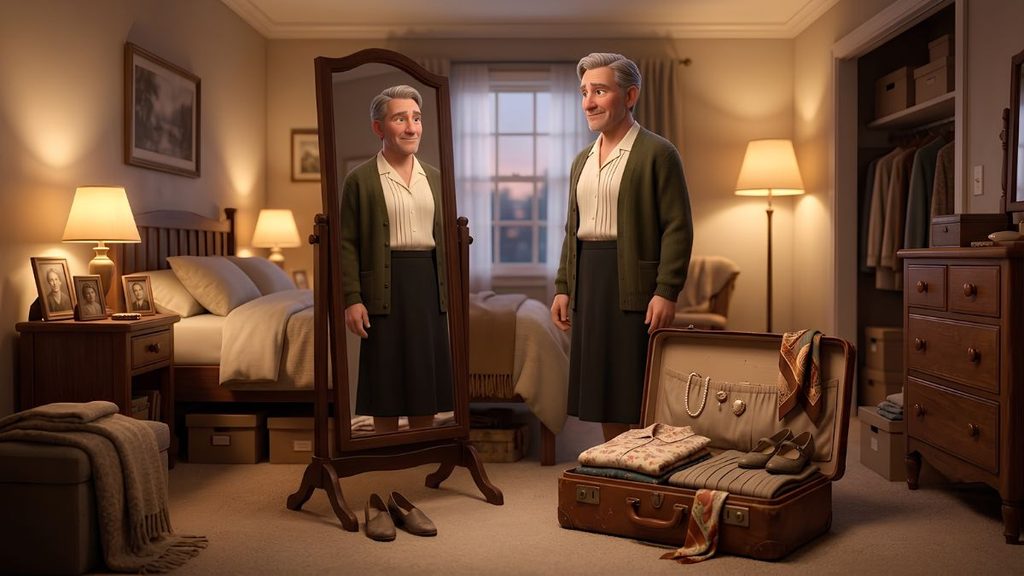
Type: Second-Chance Story
Core themes: second chances, aging, regret, courage, rediscovering yourself.
Richard Bennett found the suitcase on a Tuesday afternoon.
It was hidden behind three boxes of Christmas decorations, an old vacuum cleaner, and a lawn chair that had not been used in at least fifteen years.
He had been cleaning the garage because his daughter had told him he had too much stuff.
“You don’t need all this,” she had said.
Richard had disagreed.
“Of course I do.”
“You haven’t opened half these boxes since I was a child.”
“That doesn’t mean I don’t need them.”
“That’s exactly what it means.”
He had laughed.
Now, three hours into the cleanup, he was beginning to suspect she had a point.
He pulled another box toward the garage door.
Then he saw the suitcase.
It was small.
Brown.
Covered in dust.
One of the leather straps had cracked with age.
Richard stared at it.
He didn’t remember putting it there.
He crouched down and pulled it into the light.
There was a faded luggage tag attached to the handle.
The writing was almost impossible to read.
But he recognized the handwriting.
His own.
He brushed away the dust.
Then he saw the date written on the tag.
1998.
Richard stopped breathing for a moment.
He knew exactly what was inside.
He had been twenty-nine in 1998.
Young.
Single.
Ambitious.
Terrified of being judged.
Back then, he had lived in a small apartment above a hardware store.
He had worked long hours.
He had gone out with friends.
He had dated occasionally.
From the outside, his life had looked ordinary.
But there had been something he kept hidden.
He enjoyed wearing feminine clothing.
He had never told anyone.
Not his parents.
Not his friends.
Not his coworkers.
Nobody.
He had purchased a few outfits from different stores, always nervous that someone might recognize him.
Then he had placed them inside the suitcase.
He had imagined wearing them someday.
Maybe at home.
Maybe at a private gathering.
Maybe somewhere nobody knew him.
But someday never seemed to arrive.
There was always a reason.
What if someone saw him?
What if someone laughed?
What if someone recognized him?
What if it changed the way people thought about him?
So the suitcase had remained closed.
Eventually, Richard had married.
Then came children.
A mortgage.
School meetings.
Family holidays.
Promotions.
Bills.
Life.
The suitcase disappeared into storage.
And Richard forgot about it.
Or perhaps he simply learned not to think about it.
Now he sat on the garage floor staring at the old case.
His hands felt strangely cold.
He opened it.
Inside were carefully folded clothes.
A black skirt.
A cream blouse.
A light jacket.
A pair of shoes.
A scarf.
Some costume jewelry.
Everything looked impossibly old-fashioned.
Richard touched the blouse.
He remembered buying it.
He remembered standing in the store.
He remembered telling the salesperson it was a gift.
He remembered carrying the bag home with his heart racing.
He remembered trying the blouse on in front of the mirror.
He remembered smiling.
Then he remembered taking it off.
And putting it away.
For twenty-eight years.
Richard closed the suitcase.
His first thought was simple.
Throw it away.
He carried it toward the trash pile.
Then stopped.
He looked at the suitcase.
Why was he about to throw away a piece of his own history?
He returned it to the garage.
That night, he placed it in the spare bedroom.
He didn’t open it again.
Not yet.
His wife, Margaret, noticed the suitcase the following morning.
“What is that?”
“Old clothes.”
She smiled.
“More things you don’t need?”
“Probably.”
She walked past.
Richard watched her.
For years, he had wondered what she would think if she knew.
Now he was fifty-eight.
The fear hadn’t disappeared.
But it had changed.
When he was twenty-nine, he had been afraid of losing his future.
At fifty-eight, he suddenly became aware that time itself was not unlimited.
That realization unsettled him.
Richard began thinking about his younger self.
The twenty-nine-year-old man who had bought those clothes.
What had that young man wanted?
He didn’t know exactly.
Perhaps he wanted freedom.
Perhaps he wanted to experiment.
Perhaps he simply wanted to wear something beautiful.
Maybe he wanted to discover a part of himself without having to explain it.
Richard realized something painful.
He had spent almost three decades assuming there would always be another opportunity.
Another year.
Another time.
Another chance.
But opportunities don’t always announce themselves.
Sometimes they sit forgotten in a garage.
Sometimes they arrive when you’re almost sixty.
Sometimes you have to open an old suitcase to recognize them.
For several weeks, Richard did nothing.
The suitcase remained in the spare room.
Then one Sunday afternoon, he opened it.
He took out the cream blouse.
It looked ridiculous by modern standards.
The cut was old-fashioned.
The fabric had yellowed slightly.
Richard laughed.
“Well, that aged badly.”
He held it against himself.
Margaret walked past the doorway.
Richard froze.
She stopped.
For a moment, neither spoke.
She looked at the blouse.
Then at Richard.
He expected questions.
Instead, she said:
“That belonged to you?”
Richard nodded.
She looked at the suitcase.
“How long have you had it?”
“Since 1998.”
Margaret’s eyebrows rose.
“Twenty-eight years?”
“Yes.”
She sat down.
“Why didn’t you tell me?”
Richard didn’t know how to answer.
“I was afraid.”
“Of me?”
“Of what you’d think.”
She was quiet.
Then she said:
“You’ve been carrying that fear for twenty-eight years?”
Richard looked down.
“Apparently.”
Margaret smiled gently.
“That’s a long time to spend being afraid of your own wife.”
Richard laughed.
Then unexpectedly, he began to cry.
Margaret didn’t make a big deal of it.
She didn’t ask him to explain everything immediately.
She simply sat beside him.
After a few minutes, she asked:
“Do you still want to wear them?”
Richard looked at the blouse.
“I don’t know.”
“Then you don’t have to decide today.”
He smiled.
That was Margaret.
She had always been practical.
No dramatic speeches.
No unnecessary pressure.
Just room to breathe.
A few days later, Richard tried the blouse on.
It didn’t fit.
He laughed.
“Apparently twenty-eight years is not kind to waistlines.”
Margaret laughed from the doorway.
“You could have mentioned that before buying it.”
“I was twenty-nine.”
“Exactly.”
He looked in the mirror.
The blouse looked strange.
The man wearing it looked older than the person in his memories.
For a moment, Richard felt disappointed.
He had imagined seeing his younger self.
Instead, he saw a fifty-eight-year-old man.
Gray hair.
Wrinkles.
A slightly rounder face.
Then he realized something.
That wasn’t failure.
That was the point.
He wasn’t supposed to become twenty-nine again.
He didn’t need to.
He was fifty-eight.
This was his life now.
And if he wanted to explore this part of himself, he could do it as the person he had become.
Over the next few months, Richard experimented slowly.
He bought a modern cardigan.
A simple skirt.
A pair of comfortable shoes.
Nothing dramatic.
Nothing theatrical.
He learned what styles he liked.
He learned what didn’t suit him.
He discovered that some colors made him feel confident.
Others made him look, according to Margaret, “like an extremely confused curtains salesman.”
Richard laughed.
“I trusted you.”
“You shouldn’t.”
Their humor made everything easier.
One afternoon, Margaret showed him a flyer.
There was a costume evening at the local community center.
“Would you like to go?”
Richard looked at it.
“A costume evening?”
“Yes.”
He hesitated.
“With you?”
“Of course.”
He read the flyer again.
It was a small event.
Nothing glamorous.
People were encouraged to dress creatively.
There would be music.
Refreshments.
A few performances.
Richard immediately began imagining everything that could go wrong.
Someone might stare.
Someone might laugh.
Someone might ask questions.
Margaret watched him.
“You don’t have to go.”
Richard nodded.
“I know.”
She waited.
He looked at the flyer.
Then smiled.
“I think I want to.”
The night of the event, Richard stood in front of the mirror.
He wore a simple dark skirt.
A cream blouse.
A soft cardigan.
Small earrings.
Nothing extravagant.
He adjusted the cardigan.
Then stared at his reflection.
For a moment, he remembered 1998.
The young man in the apartment.
The secret suitcase.
The nervous smile.
The fear.
He almost wished he could tell that younger man something.
You don’t need to be perfect.
You don’t need to understand everything.
And you definitely don’t need to wait twenty-eight years.
Richard smiled.
Then another thought occurred to him.
He wasn’t trying to become that younger man.
He was giving that younger man something he had never received.
A second chance.
Margaret appeared behind him.
“You ready?”
Richard nodded.
Then shook his head.
“Not really.”
She smiled.
“Good enough.”
He laughed.
They left.
The community center was brighter than Richard expected.
People stood around talking.
Some wore elaborate costumes.
Others wore simple outfits.
There was a man dressed as a magician.
A woman dressed like a character from an old movie.
Someone had built an entire costume out of recycled cardboard.
Richard looked around.
Nobody seemed particularly interested in him.
They were too busy enjoying themselves.
He relaxed.
A woman approached.
“Lovely cardigan.”
Richard smiled.
“Thank you.”
“Where did you get it?”
He told her.
They talked about clothing for several minutes.
Then she walked away.
Richard looked at Margaret.
“That was surprisingly normal.”
Margaret laughed.
“Most things are.”
Later that evening, there was music.
People danced.
Richard didn’t usually dance.
But Margaret pulled him onto the floor.
“Absolutely not.”
“Absolutely yes.”
“I have dignity.”
“You left it in 1998.”
Richard laughed so hard that he almost stumbled.
They danced.
Not particularly well.
But nobody cared.
Richard felt something he hadn’t felt in years.
Playful.
Light.
Young.
Not physically young.
Emotionally young.
Curious.
Unburdened.
He realized he had confused aging with the loss of possibility.
They weren’t the same thing.
After the event, Richard and Margaret walked home.
The streets were quiet.
Richard carried his jacket over one arm.
“I had fun.”
“I know.”
“How?”
“You were smiling.”
He thought about that.
“Do you think it’s strange?”
Margaret shook her head.
“No.”
“Even after all these years?”
She looked at him.
“Especially after all these years.”
Richard smiled.
The suitcase remained in the spare room.
But it changed meaning.
It was no longer a container for something shameful.
It became a time capsule.
A reminder of the person Richard had once been.
He didn’t wear the old clothes much.
Some were too worn.
Some didn’t fit.
Some simply weren’t his style anymore.
But he kept them.
They represented something important.
Not a missed life.
A life that had continued.
One afternoon, Richard’s daughter visited.
She noticed the suitcase.
“What’s in there?”
Richard looked at it.
“Old clothes.”
“From when?”
“1998.”
She laughed.
“Why are you keeping clothes from 1998?”
Richard smiled.
“Because apparently I’m sentimental.”
She opened the suitcase slightly.
She saw the clothes.
Then looked at him.
Richard felt the old fear return.
He almost closed the suitcase.
Instead, he left it open.
His daughter examined the clothing.
“These are actually pretty nice.”
Richard smiled.
“They were.”
She held up the blouse.
“Why didn’t you wear them?”
Richard hesitated.
“Because I was afraid people wouldn’t understand.”
She looked at him.
“Understand what?”
Richard thought.
“Me.”
She smiled.
“You’re still you.”
The simplicity of the statement surprised him.
She put the blouse down.
“Do you still like wearing them?”
Richard nodded.
“Sometimes.”
“Then you should.”
She picked up another piece of clothing.
“Although maybe not this one.”
Richard laughed.
“Why?”
“Because it looks terrible.”
He laughed.
“Your mother said the same thing.”
After his daughter left, Richard sat beside the suitcase.
He smiled.
For decades, he had imagined disclosure as some enormous moment.
A confession.
A crisis.
A dramatic conversation.
Instead, it had been ordinary.
People had listened.
People had accepted him.
People had joked with him.
Life had continued.
He wondered how many years he had sacrificed to an imaginary catastrophe.
The following spring, Richard returned to the community center.
This time, he went alone.
He wore a simple outfit he had chosen himself.
He walked inside.
Someone recognized him.
“Richard!”
He smiled.
“Hello.”
They greeted him warmly.
He joined a table.
Someone asked about his week.
Someone else showed him photographs from a recent costume event.
Richard laughed.
He realized he no longer felt like an outsider.
He had found a small community.
Not because he had transformed himself.
Because he had finally allowed himself to participate.
That night, Richard returned home.
He opened the old suitcase one final time.
He took out the original blouse.
The fabric was fragile now.
He folded it carefully.
Then placed it inside a storage box.
Not because he was ashamed of it.
Because it belonged to the past.
He closed the box.
Then opened his modern wardrobe.
Inside were clothes he had chosen at fifty-eight.
He smiled.
The distinction mattered.
He wasn’t living in 1998.
He was living now.
And that was perhaps the most important discovery of all.
A second chance didn’t mean returning to the moment you had missed.
It meant creating a new moment with the time you still had.
Richard stood before the mirror.
For a moment, he imagined his younger self standing beside him.
The twenty-nine-year-old man with the suitcase.
The nervous man who had wanted to try something different.
Richard looked at him in his imagination.
“I wish you’d been braver.”
Then he smiled.
“But I’m glad we’re finally getting there.”
He turned off the light.
Years later, Richard would still remember the suitcase.
Not as evidence of everything he had missed.
But as proof that some parts of us can wait patiently.
Dreams don’t always disappear because we ignore them.
Sometimes they simply become quieter.
They wait.
And sometimes, decades later, they knock again.
Richard had been lucky.
He had opened the door.
He had discovered that courage didn’t have an expiration date.
Neither did curiosity.
Neither did self-expression.
Neither did the possibility of beginning again.
He didn’t know what the next ten years would bring.
For the first time in a long time, he didn’t need to know.
He only needed to keep living them.
And that was enough.
Why Emotional Crossdressing Stories Resonate With Readers
People often connect with stories about characters who are struggling to express something they have kept hidden.
The specific subject may be crossdressing, but the underlying emotions are universal.
Many people understand what it feels like to:
- hide an interest from others
- worry about being judged
- feel different from expectations
- want to be accepted
- struggle with confidence
- reveal something personal to someone they trust
- discover something new about themselves
This makes emotional crossdressing stories accessible even to readers who have never experienced crossdressing themselves.
The clothing provides the specific situation, while the emotions create the connection.
Common Themes in Emotional Crossdressing Stories
Self-Acceptance
Self-acceptance is one of the strongest themes in this genre.
A character may begin the story believing that something about their behavior is embarrassing or unacceptable.
They may hide clothing in a suitcase, closet, storage box, or private room.
They may worry that someone will discover it.
Over time, the character can begin questioning why they are ashamed.
The emotional turning point often comes when they realize:
They do not need to hate themselves simply because they express themselves differently.
The story does not necessarily need to end with a dramatic transformation.
Sometimes the most powerful ending is simply a character looking in the mirror and feeling comfortable with what they see.
Fear of Judgment
Fear is another important element.
A character might worry about:
- family reactions
- workplace judgment
- friendships changing
- romantic relationships ending
- social expectations
- being misunderstood
This creates natural emotional tension.
The character may want to be honest but fear what honesty could cost them.
A strong story can explore this fear without portraying every person around the character as cruel or hostile.
Sometimes the greatest obstacle is internal.
The character may discover that they have spent years imagining a terrible reaction that never actually happens.
A Secret Shared With a Friend
Friendship can provide one of the most emotional frameworks for this type of story.
A character may accidentally reveal their crossdressing to a trusted friend.
Initially, the character expects shock or rejection.
Instead, the friend responds calmly.
Perhaps they simply say:
“You don’t have to explain everything right now.”
That simple response can become a major emotional moment.
The friendship may become stronger because the character finally feels seen without judgment.
This theme works particularly well because it allows the story to explore trust.
Family Acceptance
Family-centered stories can be especially emotional.
A parent, sibling, or other family member might discover the character’s clothing unexpectedly.
The initial reaction may be confusion.
However, confusion does not necessarily have to become rejection.
A thoughtful story can show family members learning about something they did not previously understand.
Perhaps a parent asks questions.
Perhaps a sibling quietly offers support.
Perhaps someone who initially struggles eventually says:
“You’re still the same person I’ve always loved.”
Such moments can create powerful emotional resolutions.
Clothing Connected to Memory
Not every emotional crossdressing story needs to focus on identity.
Clothing can also represent memories.
A character might inherit an old garment from someone important.
A particular dress might remind them of a late family member.
A costume might be connected to childhood.
A piece of clothing could represent a promise, friendship, or important period in someone’s life.
This gives the story emotional depth without requiring the character to make a major identity discovery.
The clothing becomes a symbol.
Confidence Through Expression
Crossdressing can also become a source of confidence.
A character who normally feels quiet or insecure might feel unexpectedly confident when wearing an outfit that allows them to express another side of their personality.
They may become:
- more outgoing
- more creative
- more comfortable socially
- more willing to speak
- less concerned about judgment
The important storytelling distinction is that the clothing does not magically transform the character.
Instead, it may help them access confidence that was already inside them.
Discovering a Different Side of Yourself
Sometimes the emotional journey is about discovering personality rather than identity.
A character might realize that they enjoy:
- fashion
- makeup
- theatrical performance
- styling
- experimenting with appearance
- expressing themselves creatively
They may have assumed that these interests were “not for them.”
Trying something new challenges that assumption.
The story can then explore the relief that comes with discovering that personal interests do not always need to fit traditional expectations.
Romantic Acceptance
Romantic relationships can add another emotional dimension.
A character may hesitate to tell their partner about crossdressing because they fear rejection.
The partner may initially be surprised.
However, a healthy story can focus on communication rather than sensationalism.
The couple might discuss:
- why the character enjoys crossdressing
- what it means to them
- whether they feel comfortable sharing it
- boundaries and privacy
- how they can support one another
The emotional payoff comes from honesty.
The relationship becomes stronger because the character no longer feels that they must hide an important part of their life.
The Moment Someone Says, “I Know”
A particularly powerful storytelling device is discovery.
The character thinks they have successfully hidden their clothing.
Then someone quietly says:
“I’ve known for a while.”
This creates immediate tension.
The character may expect anger or embarrassment.
Instead, the other person explains that they noticed but waited until the character was ready to talk.
This can lead to a deeply emotional conversation.
The story becomes less about being discovered and more about finally being understood.
Starting Over
Some emotional stories can use crossdressing as part of a new beginning.
A character might have recently:
- moved to another city
- started a new job
- ended a relationship
- entered university
- retired
- begun living independently
The new environment gives them an opportunity to explore themselves without the expectations associated with their old life.
The emotional journey becomes one of reinvention.
Emotional Character Arcs
A compelling emotional crossdressing story usually benefits from a clear character arc.
One effective structure is:
Stage 1: Suppression
The character hides their interest.
They may feel embarrassed or confused.
Stage 2: Discovery
Something causes them to experiment.
This could be a costume, an old garment, a theatrical role, or a private moment.
Stage 3: Emotional Conflict
They begin enjoying the experience but worry about what it means.
Stage 4: Revelation
Someone discovers the secret or the character chooses to share it.
Stage 5: Acceptance
The character learns that they can be honest without losing their sense of self.
Stage 6: Growth
They become more comfortable expressing themselves.
This structure can produce satisfying emotional development without requiring a dramatic ending.
Crossdressing Does Not Automatically Define Gender Identity
One important aspect of writing this genre responsibly is recognizing that crossdressing and gender identity are not automatically the same thing.
A fictional character can crossdress for many different reasons.
For example, they might enjoy:
- fashion
- performance
- creativity
- personal comfort
- experimentation
- tradition
- humor
- emotional expression
Another character may discover that their experience is connected to their gender identity.
Another may simply enjoy wearing clothing traditionally associated with another gender.
Stories can acknowledge these possibilities without forcing every character into the same interpretation.
This allows characters to feel more realistic and individual.
The Importance of Internal Conflict
Emotional stories need more than external events.
The strongest conflict often happens inside the character.
For example, a character might think:
“Why do I feel happier dressed this way?”
Then immediately wonder:
“Does that mean something about me?”
That uncertainty creates emotional depth.
The character does not need an immediate answer.
Allowing them to sit with uncertainty can make the narrative more realistic.
Writing Supportive Relationships
Relationships should feel believable.
A supportive friend does not necessarily have to give a dramatic speech.
Sometimes support is shown through simple actions.
A friend might:
- protect the character’s privacy
- listen without interrupting
- help choose an outfit
- accompany them somewhere
- reassure them after an awkward experience
- treat them normally afterward
These small actions can be more emotionally powerful than exaggerated declarations.
Emotional Crossdressing Stories and Romance
Romance can work particularly well when the story emphasizes trust.
Instead of making crossdressing the entire romantic conflict, it can become one part of a larger relationship.
For example, two characters might already love each other.
One character simply has something they have never felt brave enough to reveal.
The emotional climax comes when they finally share it.
The partner’s reaction can then demonstrate the strength of their relationship.
This approach keeps the story focused on intimacy, trust, and communication rather than making the clothing itself the spectacle.
The Role of Humor in Emotional Stories
Emotional does not mean completely serious.
A little humor can make characters feel human.
A nervous character might spend thirty minutes trying to explain something only to realize they have been talking in circles.
A supportive friend might gently tease them.
A family member might react with an unexpectedly practical question.
These moments can provide emotional relief.
The important thing is that humor should generally come from the situation, rather than humiliating the character for expressing themselves.
Emotional Settings That Work Well
The setting can strengthen the mood.
- Bedroom: A private bedroom can represent secrecy and self-discovery.
- Dressing Room: A dressing room can symbolize transformation and uncertainty.
- Family Home: A family home creates opportunities for discovery and acceptance.
- Theater: A theater naturally connects clothing, performance, identity, and expression.
- Hotel Room: A hotel can represent temporary freedom and anonymity.
- Childhood Home: Returning to an old home can bring memories and unresolved emotions.
- New Apartment: A new apartment can symbolize independence and a fresh beginning.
- Quiet Café: A café can provide an intimate setting for an important conversation.
Symbolism in Emotional Crossdressing Stories
Clothing can carry symbolic meaning.
The Mirror
A mirror can represent self-reflection.
The character may initially avoid looking at themselves.
Later, they may look into the mirror with acceptance.
The Closet
A closet can symbolize secrecy.
Opening the closet can become a metaphor for becoming more honest with oneself.
A Photograph
A photograph can capture a moment when the character felt genuinely comfortable.
A Gift
A piece of clothing given by another person can symbolize acceptance.
A Door
Opening a door can symbolize entering a new stage of life.
These symbols can make stories feel deeper without requiring complicated plots.
What Makes These Stories Feel Authentic?
Authenticity comes from emotional honesty.
Characters should have mixed feelings.
They might feel:
- excited
- nervous
- embarrassed
- curious
- relieved
- confident
- uncertain
Sometimes several of these emotions can appear simultaneously.
That complexity makes characters believable.
A character might love an outfit while still feeling nervous about wearing it outside.
Another might feel confident privately but uncertain around friends.
These contradictions are valuable.
Avoiding Stereotypes
Crossdressing characters should not automatically be portrayed as:
- comic relief
- deceptive
- weak
- confused
- attention-seeking
- dishonest
- defined entirely by clothing
A character can be an accountant, teacher, engineer, artist, parent, entrepreneur, student, traveler, or retiree while also enjoying crossdressing.
Their clothing is one aspect of their life.
It does not need to define their entire personality.
Building Emotional Tension Without Cruelty
Stories can create tension without relying on humiliation.
Instead of:
“Everyone laughs at the character.”
Consider:
“The character worries everyone will laugh, but discovers that most people are far more accepting than expected.”
This creates emotional suspense while maintaining a compassionate tone.
The reader becomes invested in whether the character will find courage.
The Importance of Consent and Personal Boundaries
Emotional crossdressing stories are stronger when characters have agency.
If someone discovers another person’s clothing, the story can acknowledge that privacy matters.
If a friend encourages someone to experiment, the character should have the ability to say no.
If photographs are involved, permission can become an important part of the narrative.
Respecting boundaries makes relationships feel healthier and more realistic.
Different Types of Emotional Crossdressing Stories
The genre can support many different formats.
- Inspirational Stories: A character learns to accept themselves.
- Friendship Stories: A secret strengthens an important friendship.
- Family Stories: Relatives gradually learn to understand and support the character.
- Romantic Stories: A partner discovers the character’s private side and responds with compassion.
- Workplace Stories: A character learns that professional identity and personal expression can coexist.
- Theater Stories: A performance allows someone to explore an unexpected side of themselves.
- Coming-of-Age Stories: A young adult begins understanding their preferences and personality.
- Second-Chance Stories: An older character finally explores something they suppressed for years.
Creating Strong Emotional Climaxes
The emotional climax does not have to involve a dramatic confrontation.
It could be something very small.
A character might finally leave their bedroom wearing an outfit they have always been afraid to wear.
Their sibling sees them.
There is a pause.
Then the sibling simply says:
“You look happy.”
That sentence may be enough.
Another powerful moment could be a character putting an old garment back into a closet after years of hiding it, not because they are ashamed, but because they finally no longer feel compelled to hide.
The emotional power comes from what the moment means to the character.
Why Acceptance Is Often More Powerful Than Transformation
A common mistake in emotional storytelling is assuming the character must become someone completely different.
They do not.
A satisfying ending can simply show that the character has become more comfortable being themselves.
They may still dress conventionally most of the time.
They may continue experimenting privately.
They may occasionally dress differently for special events.
Or they may discover that crossdressing is an important part of their identity.
There is no single correct ending.
The meaningful change is often internal:
The character stops believing that they need to be ashamed of themselves.
Tips for Writing Emotional Crossdressing Stories
If you plan to create stories in this genre, keep these principles in mind:
- Give the Character a Life Beyond the Clothing: Show their work, friendships, interests, dreams, and personality.
- Focus on Emotion: Ask what the character feels rather than simply describing what they wear.
- Let Acceptance Develop Naturally: Avoid instant emotional resolutions.
- Use Dialogue Carefully: Quiet conversations can be more powerful than dramatic speeches.
- Include Complicated Feelings: Characters do not have to feel completely confident immediately.
- Avoid Unnecessary Humiliation: Comedy and emotional tension can exist without making the character the target of cruelty.
- Make Relationships Matter: Friends, partners, siblings, and parents can provide meaningful emotional stakes.
- Give the Story a Clear Emotional Destination: The ending should show how the character has changed emotionally.
Final Thoughts
Emotional Crossdressing Stories can be powerful because they use a simple outward detail, clothing, to explore much deeper human experiences.
At their heart, these stories can be about the fear of being judged, the relief of being understood, the courage to reveal something personal, and the gradual discovery that being different does not automatically mean being alone.
The strongest stories are not necessarily those with the biggest transformations.
Sometimes the most memorable moment is remarkably quiet: a character looks into a mirror, takes a breath, smiles, and realizes they no longer feel the need to hide.
That moment of self-acceptance can say more than any dramatic ending ever could.