
After a long and demanding day, many adults want something simple before going to sleep. They may not have the time or concentration for a long novel, complicated television series, or an intense story filled with suspense. Sometimes, a few peaceful pages are enough.
Small bedtime stories for adults are designed for exactly this kind of moment.
These short stories can provide a gentle transition between daytime activity and nighttime rest. They can create a sense of comfort, offer a little imagination, or simply give the mind something pleasant to focus on before sleep.
Unlike stories designed to keep readers awake with constant twists and cliffhangers, bedtime stories can move at a slower pace. Their value often comes from atmosphere, emotion, familiar situations, gentle humor, and satisfying endings.
This guide explores what makes small bedtime stories effective for adults, the different types you can enjoy, how to choose a story based on your mood, and how to create a relaxing bedtime reading routine.
What Are Small Bedtime Stories for Adults?
Small bedtime stories for adults are short fictional narratives intended to be read during the period immediately before sleep.
The word “small” refers primarily to their length and simplicity. These stories can often be completed in a single sitting, making them convenient for people who want to read without committing to a long chapter or extended narrative.
They can explore many subjects, including:
- Romance
- Friendship
- Everyday life
- Nature
- Travel
- Nostalgia
- Gentle fantasy
- Humor
- Family
- Personal reflection
- Cozy adventures
- Quiet mysteries
The important distinction is that the story should generally feel appropriate for winding down.
A bedtime story does not necessarily need to be completely uneventful. A little curiosity, emotion, or humor can make the experience enjoyable. However, stories intended specifically for relaxation usually avoid excessive tension, complicated conflicts, or endings that leave the reader desperate to continue.
Small Bedtime Stories for Adults
The Little Bookshop at Rainy Lane
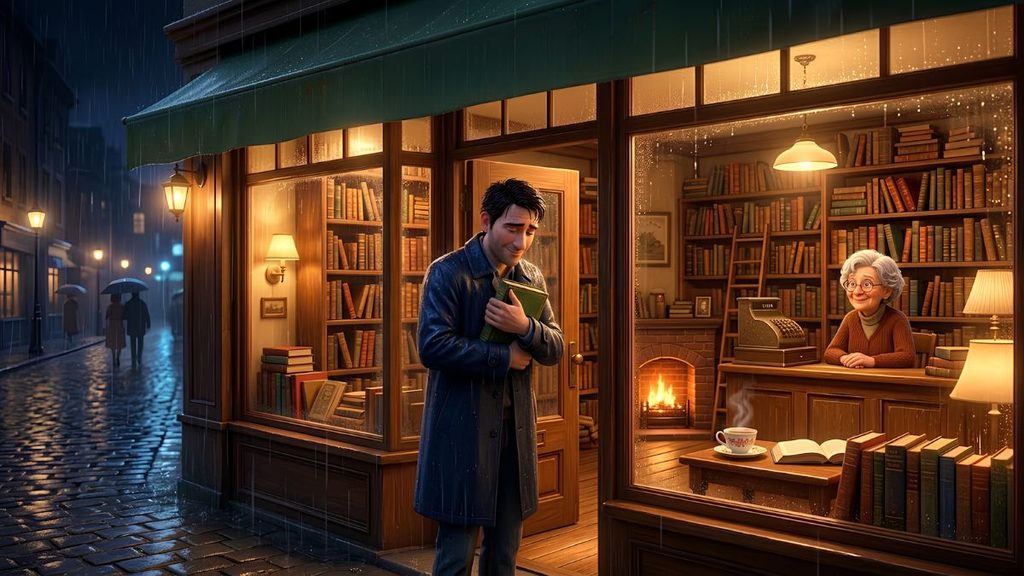
Type: Cozy Bedtime Story
Rain had been falling since late afternoon.
Not the dramatic kind of rain that arrived with thunder and flooded streets, but a soft, steady rain that seemed determined to wash the entire city clean. It covered the sidewalks with silver reflections and turned the yellow streetlights into little glowing halos.
Daniel stood beneath the narrow awning of a closed flower shop, watching the rain.
He had been walking home for almost twenty minutes when the clouds finally became too heavy to ignore. His coat was damp at the shoulders, his shoes were beginning to feel uncomfortable, and his briefcase seemed heavier than it had that morning.
It had been a long day.
Actually, it had been a long month.
Daniel worked in an office on the other side of the city. Every morning, he took the same train, bought the same coffee, sat at the same desk, answered the same kinds of emails, and watched the clock slowly move toward evening.
Nothing was terribly wrong with his life.
That was perhaps what bothered him most.
Everything was simply ordinary.
He had a comfortable apartment, a steady job, a few good friends, and enough money to pay his bills. Yet lately, he had begun to feel as though his days were passing without leaving anything behind.
He checked his phone.
8:17 p.m.
The rain showed no sign of stopping.
Daniel sighed and stepped away from the flower shop.
He could continue walking and arrive home wet, or he could wait somewhere.
As he looked down the street, he noticed something he had never seen before.
A small wooden sign stood beneath a green awning.
RAINY LANE BOOKS
Below the name was a smaller handwritten message:
Open late on rainy evenings.
Daniel smiled.
“That’s convenient,” he whispered.
He crossed the street.
The shop was narrower than he expected. Its front window displayed several old books, a brass reading lamp, and a small ceramic cup filled with pencils.
A warm golden light spilled through the glass.
Daniel opened the door.
A tiny bell rang overhead.
“Good evening.”
The voice came from somewhere behind a tall bookshelf.
Daniel looked around.
The shop seemed almost impossibly full of books. Shelves covered every wall, with narrow wooden ladders leaning against some of them. Books were stacked on tables, chairs, windowsills, and even on the floor.
It smelled of paper, wood, cinnamon, and something warm that Daniel could not quite identify.
“Good evening,” he replied.
An elderly man appeared from behind the shelves.
He had silver hair, round glasses, and a dark cardigan with several pens tucked into the pocket.
“You look like someone who has been arguing with the weather,” the man said.
Daniel laughed.
“I think the weather won.”
“Then you should have tea.”
The man disappeared before Daniel could answer.
A moment later, he returned carrying a small ceramic cup.
“Chamomile,” he said. “You look as though you need something that doesn’t require a decision.”
Daniel accepted the cup.
“Thank you.”
The old man smiled.
“My name is Arthur.”
“Daniel.”
“Welcome to Rainy Lane Books, Daniel.”
Daniel took a sip.
The tea was warm and lightly sweet.
He glanced toward the window.
“I’ve walked past this street hundreds of times. I’ve never noticed this place.”
Arthur shrugged.
“Bookshops are like that.”
“Like what?”
“They don’t always appear when you’re looking for them.”
Daniel smiled.
Arthur pointed toward a wooden chair near the fireplace.
“Sit. The rain will tell us when you can leave.”
Daniel sat.
Outside, rain tapped gently against the glass.
For the first time that day, nobody needed anything from him.
No email.
No meeting.
No deadline.
No phone call.
Just rain.
Daniel finished his tea slowly.
After a few minutes, he stood and began wandering through the shelves.
He ran his fingers over the spines of old novels.
Some had beautiful covers. Others looked as though they had survived several generations.
He found travel books, mysteries, poetry collections, histories, cookbooks, biographies, and novels whose pages had turned yellow with age.
“Looking for anything in particular?” Arthur asked.
“Not really.”
“That’s usually when people find something.”
Daniel smiled.
He continued walking.
Near the back of the shop, he discovered a narrow staircase.
A handwritten sign above it said:
SECOND FLOOR
Daniel looked at Arthur.
“Are customers allowed upstairs?”
Arthur nodded.
“Especially customers who don’t know what they’re looking for.”
Daniel climbed.
The second floor was quieter.
There were fewer shelves, but each one seemed carefully arranged. A large window overlooked Rainy Lane.
Daniel walked slowly past the books.
Then something caught his attention.
It was a dark green novel sitting alone on a shelf.
There was no price sticker.
The title was printed in faded gold letters:
The House at Evening Hill
Daniel pulled it from the shelf.
When he opened the cover, a small piece of paper fell onto the floor.
He picked it up.
It was an old handwritten note.
The handwriting was neat and slightly faded.
It said:
For the person who finds this book on a difficult evening:
You do not need to have everything figured out tonight.
Tomorrow is allowed to be unfinished.
Daniel stared at the words.
For some reason, they made his chest feel strangely tight.
He read them again.
Then once more.
“You found one.”
Daniel turned.
Arthur was standing at the bottom of the staircase.
“Found what?”
“A book that was waiting.”
Daniel looked down at the note.
“Did you write this?”
Arthur shook his head.
“No.”
“Then who did?”
“I don’t know.”
“You don’t know?”
Arthur climbed the stairs.
“That book came into the shop many years ago. There was already a note inside.”
Daniel held it out.
“Do you know who wrote it?”
Arthur smiled.
“Probably someone who needed to hear it themselves.”
Daniel looked at the book again.
“How much?”
Arthur shook his head.
“Take it.”
“I can’t just take it.”
“You can.”
“Why?”
Arthur looked toward the window.
“Because sometimes a book is more useful when it leaves the shop.”
Daniel hesitated.
Then he slipped the note back between the pages.
He held the book against his chest.
“Thank you.”
Arthur nodded.
“You’re welcome.”
Daniel started toward the stairs.
Then he stopped.
“Arthur?”
“Yes?”
“How long have you owned this shop?”
Arthur smiled.
“Long enough to know that people rarely enter by accident.”
Daniel laughed softly.
“That’s a strange thing to believe.”
“Perhaps.”
They returned downstairs.
The rain had become quieter.
Daniel looked at his watch.
9:42 p.m.
He had spent more than an hour in the shop.
It felt like ten minutes.
Arthur walked toward the front door.
Daniel placed his hand on the handle.
“Do you always stay open this late?”
“Only when it rains.”
“Why?”
Arthur glanced at the rain-covered window.
“Because people need somewhere to go when the world becomes too loud.”
Daniel looked around the little shop.
The fireplace.
The books.
The warm lamps.
The old wooden shelves.
The quiet.
He understood.
Outside, the rain had softened to a gentle mist.
Daniel stepped onto the sidewalk.
“Goodnight, Arthur.”
“Goodnight, Daniel.”
Daniel walked away.
After a few steps, he turned around.
The green awning was still glowing beneath the streetlight.
For a moment, he wondered why he had never noticed the shop before.
Then he continued home.
His apartment was quiet when he arrived.
He changed into comfortable clothes, made another cup of tea, and sat beside his living-room window.
The city looked different from above.
The wet streets reflected the lights of passing cars.
Somewhere in the distance, a train moved slowly through the darkness.
Daniel opened the green book.
He began reading.
The story inside was about a man who lived in a small house on a hill and spent years waiting for his life to become something different.
Daniel read for nearly an hour.
Then he closed the book.
The story wasn’t extraordinary.
There were no grand adventures.
No unexpected treasures.
No dramatic endings.
Yet Daniel liked it.
Perhaps because it reminded him of something he had forgotten.
A life did not have to be extraordinary to be meaningful.
The next morning, Daniel woke before his alarm.
He made coffee.
He opened his curtains.
The rain had stopped.
Sunlight touched the rooftops.
For the first time in weeks, he didn’t immediately reach for his phone.
Instead, he opened the green book again.
The handwritten note fell onto his lap.
You do not need to have everything figured out tonight.
Daniel smiled.
He folded the note carefully and placed it inside his wallet.
Then he went to work.
The day was still ordinary.
There were emails.
There were meetings.
There were problems that needed solving.
But something inside Daniel had changed.
At lunch, he walked outside instead of eating at his desk.
On the way home, he took a different street.
He noticed a bakery he had never seen before.
A man playing guitar beneath a train station.
A woman carrying yellow flowers.
A small dog sitting patiently outside a café.
The city had not changed.
He had.
Three weeks later, it rained again.
Daniel remembered the little bookshop.
He left work early.
He walked down Rainy Lane.
The green awning was there.
The warm light was glowing through the window.
The bell rang when he entered.
Arthur looked up from behind the counter.
“I wondered when you’d return.”
Daniel smiled.
“I brought something.”
He placed a small envelope on the counter.
Arthur opened it.
Inside was a handwritten note.
Arthur read it silently.
Then he smiled.
“What does it say?” Daniel asked.
Arthur folded the paper.
“That’s between me and the note.”
Daniel laughed.
He looked around.
“Tea?”
“Of course.”
Daniel sat near the fireplace.
Arthur brought him a cup.
Outside, the rain began tapping against the windows.
Daniel opened another book.
The evening passed quietly.
And somewhere between the sound of rain, the smell of old paper, and the warmth of the little shop, Daniel realized that perhaps life did not always need to be fixed.
Sometimes it simply needed a quiet place to rest.
Sometimes the best thing a person could do was stop running for a while.
Sit down.
Drink something warm.
Open a book.
Listen to the rain.
And allow tomorrow to remain unfinished.
From that evening onward, Daniel became a regular visitor to Rainy Lane Books.
He came when he was tired.
He came when he was happy.
He came when he had nothing to say.
Arthur never asked why.
He simply made tea.
And whenever Daniel left, Arthur always said the same thing.
“Come back when the rain does.”
Daniel always smiled.
“I will.”
And somehow, he always did.
The Light in Apartment 7B

Type: Romantic Bedtime Story
Every evening, just before sunset, Clara turned on the small lamp beside the window.
It was an ordinary lamp.
It had a cream-colored shade, a wooden base, and a tiny scratch near the bottom where it had once fallen from a moving box.
But to Clara, it meant something.
It meant home.
And to Daniel, it meant something too.
It meant that someone was waiting for him.
They had lived together in Apartment 7B for nearly four years.
Their apartment was not large. It had two bedrooms, a narrow kitchen, a living room with an old blue sofa, and a balcony that overlooked a row of apartment buildings.
There was nothing luxurious about it.
The kitchen cabinets had started losing their paint.
The bathroom door made a strange squeaking sound.
One of the living-room windows refused to close properly during winter.
But Clara loved the place.
Daniel did too.
They had moved into the apartment when they were still figuring out what kind of life they wanted.
At the time, they had very little furniture.
They owned one mattress, two chairs, a small table, three cooking pans, and far too many books.
Their first dinner in the apartment had been instant noodles eaten from mismatched bowls.
They had sat on the floor because they didn’t own a sofa yet.
Clara had looked around the empty room and said, “I think this place will be happy.”
Daniel had laughed.
“How can an apartment be happy?”
“Because we’re going to live here.”
He had smiled.
“That’s your argument?”
“Yes.”
Four years later, the apartment was full of memories.
There were photographs on the refrigerator.
A small plant sat beside the kitchen window.
Their bookshelf was overflowing.
A pair of Daniel’s old running shoes rested near the balcony door.
Clara’s favorite blanket was always folded over the sofa.
And every evening, the lamp beside the window came on.
Daniel worked as an architect.
His job was usually demanding, but once every few months, a project became particularly intense.
That month was one of those times.
He had been staying late at the office for almost two weeks.
There were presentations.
Revisions.
Deadlines.
Phone calls.
Meetings that seemed to multiply overnight.
Clara understood.
She never complained.
But she missed him.
One Thursday evening, Daniel looked at the clock on his computer.
10:18 p.m.
He closed his laptop.
He was exhausted.
On the train home, he leaned against the window and watched the city pass.
Office towers gave way to apartment buildings.
Bright stores became quiet streets.
Cars became fewer.
People disappeared from the sidewalks.
When he finally reached his building, it was nearly 11.
He entered the lobby and pressed the elevator button.
The elevator arrived with a soft bell.
Daniel stepped inside.
As the doors closed, he looked at his reflection.
He looked tired.
Very tired.
When the elevator reached the seventh floor, he stepped into the hallway.
And then he saw it.
The light.
Apartment 7B was at the end of the corridor.
A warm yellow glow shone through the narrow glass panel beside the door.
Daniel stopped for a moment.
He smiled.
Clara had left the lamp on.
He unlocked the door.
“I’m home.”
From the kitchen came Clara’s voice.
“You’re finally here.”
Daniel smiled.
“I’m sorry.”
“Don’t apologize.”
She appeared carrying two bowls.
“I made soup.”
Daniel took off his coat.
“You waited?”
“I was hungry.”
“You could have eaten.”
“I did.”
She looked at him.
“Mostly.”
Daniel laughed.
“Mostly?”
“I saved you some.”
He walked into the kitchen.
The smell of tomato soup filled the room.
There were two slices of toasted bread on a plate.
Daniel sat down.
Clara placed the bowl in front of him.
For a few moments, neither of them spoke.
Daniel ate slowly.
Clara sat across from him.
“Good?”
“Very.”
“You sound surprised.”
“I’m always surprised when someone feeds me.”
“You’re impossible.”
“I know.”
She smiled.
After dinner, they moved to the sofa.
Clara pulled the blanket over both of them.
Daniel rested his head against her shoulder.
“I’m sorry I’ve been absent.”
“You’ve been busy.”
“It’s not the same thing.”
Clara looked at him.
“What do you mean?”
“I’ve been here physically, but I’ve been thinking about work all the time.”
She was quiet for a moment.
Then she said, “You don’t have to apologize for having a difficult month.”
Daniel looked at her.
“I miss us.”
Clara smiled gently.
“We’re still here.”
Outside, a car passed on the street.
Its headlights moved across the ceiling.
Daniel reached for her hand.
She squeezed his fingers.
“Do you remember our first date?” she asked.
Daniel laughed.
“Unfortunately.”
“Unfortunately?”
“You spilled coffee on my shirt.”
“You ordered the coffee.”
“That doesn’t make the coffee innocent.”
Clara laughed.
“I was nervous.”
“You were nervous?”
“Of course.”
“You looked completely confident.”
“I was pretending.”
Daniel smiled.
“I was nervous too.”
“You never told me that.”
“I thought you knew.”
“I didn’t.”
“I thought you were going to decide I was boring.”
Clara looked genuinely surprised.
“Daniel, I thought you were the most interesting person I’d ever met.”
“Really?”
“Really.”
He smiled.
“What changed?”
“You became less interesting.”
She laughed.
He nudged her shoulder.
They stayed on the sofa for a long time, remembering things they had not discussed in years.
Their first date.
Their first trip together.
The terrible hotel breakfast.
The time Daniel got lost in a foreign city.
The rainy weekend when they stayed inside and watched old movies.
The first plant they bought.
The plant that died three weeks later.
The second plant.
The third.
The fact that they had finally learned that some plants needed sunlight.
Eventually, the conversation became quieter.
Daniel looked toward the window.
The lamp was glowing.
“Why do you always turn that on?”
Clara looked at it.
“The lamp?”
“Yes.”
She shrugged.
“I like it.”
“There are other lights.”
“I know.”
“So why that one?”
Clara thought for a moment.
Then she said, “Because you can see it from the street.”
Daniel looked at her.
“What?”
“When you come home late.”
She smiled.
“I know you’re tired. I know sometimes the building looks the same from every direction.”
“So?”
“So I thought maybe you’d see the light and know which window was ours.”
Daniel didn’t say anything.
Clara continued.
“It’s silly.”
“No.”
He looked at the lamp.
“It’s not silly.”
She smiled.
“It started the first winter we lived here. You were working late all the time.”
“I remember.”
“You called me one night because you couldn’t find the building.”
Daniel laughed.
“I had forgotten that.”
“You were standing across the street.”
“I was tired.”
“You said every building looked the same.”
“I was right.”
“Anyway, I turned on the lamp.”
Daniel looked at her.
“And you saw it?”
“I did.”
He remembered.
The night had been cold.
He had been exhausted.
And suddenly, among dozens of dark windows, there had been one warm light.
Their light.
He had walked toward it.
They sat silently for a while.
Then Clara asked, “Do you want tea?”
Daniel shook his head.
“No.”
“Sleep?”
“Yes.”
They stood.
Clara turned off the living-room lights.
The lamp remained on.
Daniel looked at it one more time.
“Leave it on.”
Clara smiled.
“I always do.”
The next morning, Daniel woke before Clara.
Sunlight was entering through the curtains.
He watched her sleep for a moment.
Then he quietly got out of bed.
He went into the kitchen and made coffee.
When Clara woke, she found two cups waiting.
“What’s this?” she asked.
“Breakfast.”
“You made breakfast?”
“Don’t get excited.”
She smiled.
They sat together.
Daniel looked at his calendar.
The weekend was approaching.
He had originally planned to spend Saturday at the office.
Instead, he closed the calendar.
“What are you doing?” Clara asked.
“Canceling Saturday.”
“Why?”
“I’m taking you somewhere.”
“Where?”
“That’s a secret.”
Clara narrowed her eyes.
“Should I be worried?”
“Probably.”
She laughed.
Saturday arrived.
Daniel took Clara to a small town outside the city.
They walked through quiet streets.
They found a little café.
They ate pastries.
They visited a market.
They bought a ridiculous ceramic bird that neither of them needed.
On the way home, they stopped beside a lake.
The sun was setting.
Clara rested her head on Daniel’s shoulder.
“Thank you.”
“For what?”
“For remembering us.”
Daniel kissed her forehead.
“I never forgot.”
That evening, they returned home just after sunset.
Clara opened the door.
Daniel walked into the apartment.
Then he stopped.
The lamp was off.
He looked at Clara.
“You forgot.”
She smiled.
“I wanted you to turn it on.”
Daniel walked toward the window.
He switched on the lamp.
Warm light filled the room.
He stood there for a moment.
Clara came beside him.
“Better?” she asked.
“Much.”
She slipped her hand into his.
Outside, the city was beginning to glow.
Apartment windows lit up one by one.
Somewhere, someone was preparing dinner.
Someone else was reading.
A child was laughing.
A couple was arguing about what movie to watch.
An old man was watering his plants.
Life continued quietly behind hundreds of windows.
Daniel looked at their reflection in the glass.
“Do you know what I like about this place?” he asked.
“What?”
“It doesn’t look special from outside.”
Clara smiled.
“It is special.”
“I know.”
He squeezed her hand.
“Because you’re here.”
She rested her head against him.
The evening became quiet.
They made dinner together.
They washed dishes.
They argued playfully about whose turn it was to take out the trash.
Then they curled up on the sofa.
The lamp remained on.
Years passed.
Their lives changed.
Daniel eventually changed jobs.
Clara started a small business.
They traveled.
They bought new furniture.
They replaced the old sofa.
The squeaky bathroom door was finally repaired.
The plant by the kitchen window grew taller.
And the lamp remained.
Sometimes Daniel came home late.
Sometimes Clara did.
Sometimes they both arrived together.
But whenever one of them was coming home after dark, the lamp was turned on.
It became their quiet tradition.
Not because they needed help finding the apartment.
They knew where they lived.
It simply became a way of saying:
I’m here.
You’re expected.
Come home.
Years later, when they moved to a larger apartment across town, Clara packed the lamp carefully.
Daniel watched her wrap it in an old towel.
“Are you really taking that?”
“Of course.”
“It barely matches anything.”
“I don’t care.”
She placed it into the box.
Daniel smiled.
“You’re sentimental.”
“You’re sentimental.”
“I am not.”
She raised an eyebrow.
He laughed.
“Fine.”
On their first evening in the new apartment, Clara unpacked the lamp.
She placed it beside the window.
Then she turned it on.
Daniel stood in the doorway.
The apartment was still unfamiliar.
There were boxes everywhere.
The furniture had not yet been arranged.
The walls were empty.
But the warm light made the room feel different.
It felt like home.
Daniel walked over.
He wrapped his arms around Clara.
“We’re home,” he whispered.
She smiled.
“We are.”
Outside, the city continued moving.
Cars passed.
People walked beneath streetlights.
Windows glowed in the darkness.
And in Apartment 7B, or whatever apartment came next, one small lamp continued to shine.
Not for decoration.
Not because the room was too dark.
But because somewhere in the world, two people had discovered that love was sometimes nothing more complicated than leaving a light on for someone you loved.
And on the nights when the world felt too busy, too tiring, or too uncertain, that little light remained.
A quiet promise.
A warm welcome.
A simple message waiting in the window:
You can come home now.
The Moonlight Tea Shop
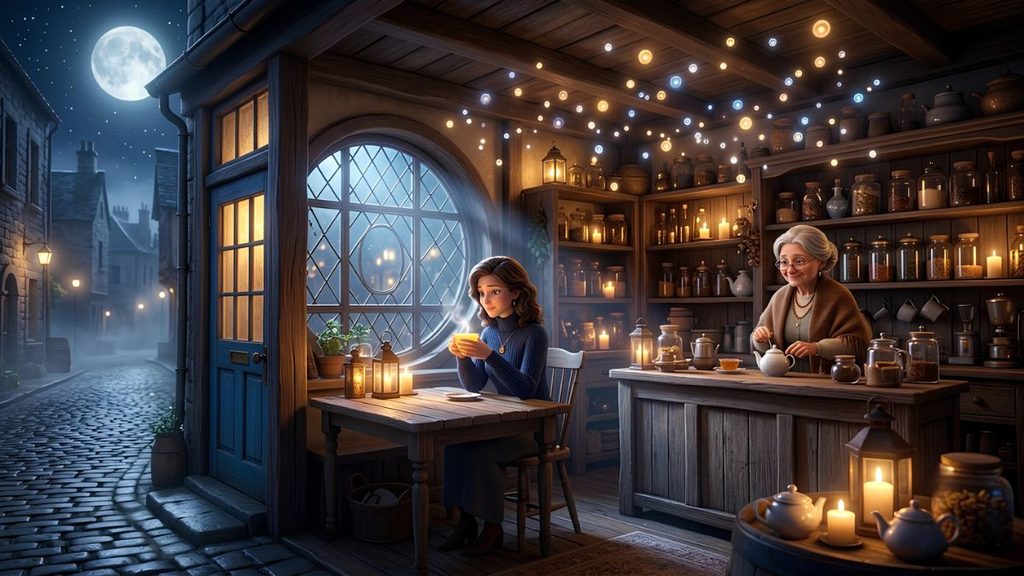
Type: Gentle Fantasy Story
Every evening at exactly eleven minutes past ten, a little tea shop appeared at the end of Willow Street.
Nobody knew who built it.
Nobody knew where it came from.
And most importantly, nobody could find it during the daytime.
The shop was simply there at night.
Its windows glowed with a soft golden light, its blue wooden door was always slightly open, and a small brass bell hung above the entrance.
There was only one unusual thing about it.
The shop appeared only to people who needed somewhere quiet to go.
Mara discovered it on a Tuesday evening.
She had not planned to be outside.
She had spent the entire day working, answering messages, attending meetings, and trying to finish a project that seemed to grow larger every time she completed something.
By nine thirty, she was exhausted.
By ten, she was irritated.
By ten fifteen, she realized she had forgotten to buy groceries.
So she put on her coat and walked outside.
The streets were quiet.
A cool breeze moved between the buildings.
Mara decided to take the longer route to the small grocery store because she needed fresh air.
She walked past the old post office.
Then the closed flower shop.
Then the narrow lane behind the library.
That was when she noticed something strange.
There was a light at the end of the street.
Mara slowed down.
She had lived in the neighborhood for almost six years.
She knew every shop.
Every corner.
Every shortcut.
There had never been a tea shop there.
Yet now there was one.
A small wooden building stood between two brick walls.
Above the door hung a sign:
THE MOONLIGHT TEA SHOP
Beneath it, written in smaller letters, were the words:
Tea for those who are not ready to go home yet.
Mara smiled.
“That’s oddly specific.”
She almost continued walking.
Then she noticed the smell.
Warm cinnamon.
Honey.
Fresh bread.
Something floral.
Her stomach growled.
Mara opened the door.
A tiny bell chimed.
Inside, the shop was much larger than it appeared from outside.
There were wooden tables, comfortable chairs, shelves filled with jars, and dozens of tiny lamps hanging from the ceiling.
A large round window looked out onto a night sky filled with stars.
Behind the counter stood a woman with silver hair.
She looked perhaps seventy years old, although her eyes were bright and youthful.
“Good evening,” she said.
“Good evening.”
“First visit?”
Mara nodded.
“How did you know?”
The woman smiled.
“First-time visitors always look at the ceiling.”
Mara glanced upward.
There were tiny lights moving above her.
“They’re beautiful.”
“They’re not lights.”
Mara looked closer.
The little glowing objects were floating like fireflies.
“What are they?”
“Unfinished thoughts.”
Mara blinked.
“Excuse me?”
The woman laughed.
“You’ll understand later.”
She pointed toward a table near the window.
“Sit wherever you like.”
Mara sat.
The woman brought a menu.
It was handwritten.
There were no ordinary teas.
Instead, the menu listed:
Tea for Remembering
Tea for Letting Go
Tea for Courage
Tea for Quiet Evenings
Tea for Things Left Unsaid
Tea for Starting Again
Mara read the list twice.
“What kind of tea is ‘Things Left Unsaid’?”
“Depends on what you haven’t said.”
Mara looked at the woman.
“Who are you?”
“My name is Celeste.”
“And you run this place?”
“Most nights.”
“Most nights?”
“Some nights the shop runs itself.”
Mara decided not to ask.
Instead, she pointed to the menu.
“I’ll have Quiet Evenings.”
Celeste nodded.
“A good choice.”
She disappeared behind the counter.
A few minutes later, she returned with a small blue cup.
The tea was pale gold.
Steam rose gently from its surface.
Mara took a sip.
It tasted like chamomile, honey, and something she couldn’t identify.
Then something strange happened.
The sounds of the city disappeared.
No traffic.
No distant voices.
No ringing phones.
Nothing.
Only silence.
Mara looked toward the window.
The street outside seemed frozen.
A falling leaf hung motionless in the air.
“What happened?”
Celeste smiled.
“Nothing.”
“But everything stopped.”
“No.”
She sat across from Mara.
“You’re simply hearing yourself.”
Mara didn’t understand.
Then she realized something.
For the first time all day, her mind wasn’t racing.
She wasn’t thinking about tomorrow.
She wasn’t replaying a conversation.
She wasn’t planning her next task.
She was simply sitting.
Drinking tea.
Breathing.
She closed her eyes.
“This is strange.”
“Most peaceful things are.”
Mara smiled.
They sat quietly.
After several minutes, Mara noticed something floating above another table.
A tiny glowing sphere.
It drifted slowly through the air.
“What is that?”
“Someone’s unfinished thought.”
“Whose?”
Celeste pointed toward the empty chair.
“Someone who isn’t here anymore.”
Mara watched it.
“What happens to them?”
“They come here.”
“Why?”
“Because some thoughts need somewhere safe to exist before they disappear.”
The glowing sphere moved toward the window.
It passed through the glass.
Then vanished.
Mara looked at Celeste.
“Where did it go?”
“Somewhere it needed to be.”
Mara looked back at her tea.
She suddenly thought about her father.
She hadn’t called him in two weeks.
Not because they had argued.
Not because anything was wrong.
Life had simply become busy.
She had kept telling herself:
I’ll call tomorrow.
Tomorrow became another tomorrow.
Mara looked at the menu.
“Do you have tea for things left unsaid?”
Celeste nodded.
“Of course.”
Mara hesitated.
“Could I have that?”
Celeste took her cup.
When she returned, the tea was darker.
It smelled faintly of orange peel.
Mara took a sip.
A memory appeared.
She was twelve years old.
Her father was teaching her how to ride a bicycle.
She had fallen.
She was angry.
She wanted to quit.
Her father had crouched beside her.
“You don’t have to be good at something immediately,” he had said.
Mara opened her eyes.
She remembered the exact sound of his voice.
She had not thought about that afternoon in years.
A tear rolled down her cheek.
Celeste did not comment.
Instead, she placed a small plate of biscuits on the table.
Mara smiled.
“Does everyone cry in here?”
“Not everyone.”
“Most people?”
“Only those who are honest.”
Mara laughed softly.
She finished her tea.
The shop remained peaceful.
At some point, she noticed that the glowing objects above the tables had begun disappearing.
One by one.
Celeste watched them.
“Where do they go?”
“People take them with them.”
“How?”
“They remember.”
Mara looked at the clock.
It was still ten fifteen.
She frowned.
“That’s impossible.”
Celeste smiled.
“Time behaves differently here.”
“How differently?”
“Enough.”
Mara laughed.
She looked out the window.
The street had begun moving again.
The leaf continued falling.
A car passed.
A bicycle crossed the intersection.
Everything had returned to normal.
Mara stood.
“How much do I owe you?”
Celeste shook her head.
“Nothing.”
“Nothing?”
“Come back when you need another cup.”
“How will I find you?”
Celeste smiled.
“Walk slowly.”
Mara frowned.
“What?”
“That’s the only instruction.”
She thanked Celeste and walked toward the door.
The brass bell rang softly as she stepped outside.
The shop was behind her.
Mara turned.
The little blue door was still there.
She took three steps.
Then she looked back again.
The shop had disappeared.
There was only a brick wall.
Mara stood there for several seconds.
Then she laughed.
“Of course.”
She walked to the grocery store.
She bought bread, fruit, milk, and a packet of tea she didn’t need.
When she reached home, it was nearly midnight.
She placed the groceries on the kitchen counter.
Then she picked up her phone.
She hesitated.
Finally, she called her father.
He answered after three rings.
“Mara?”
“Hi, Dad.”
There was a pause.
“Everything okay?”
“Yes.”
She smiled.
“I just wanted to hear your voice.”
Her father laughed.
“That’s unusual.”
“I know.”
They talked for almost an hour.
They discussed ordinary things.
The weather.
His garden.
Her work.
A neighbor’s dog.
Nothing important.
Everything important.
When the call ended, Mara sat quietly in her kitchen.
She felt lighter.
Not because her problems had disappeared.
They hadn’t.
She still had work tomorrow.
There would still be emails.
There would still be deadlines.
But something had shifted.
She understood that not every difficult day needed to be solved.
Some days simply needed to end gently.
The next evening, Mara walked home more slowly.
She passed the old post office.
The flower shop.
The library.
She reached Willow Street.
There was no tea shop.
She smiled.
She continued walking.
A week later, she found it again.
Eleven minutes past ten.
The blue door.
The golden windows.
The brass bell.
She entered.
Celeste looked up.
“Tea?”
Mara smiled.
“Yes.”
“What kind?”
Mara thought about it.
“Starting Again.”
Celeste nodded.
“A good choice.”
They both smiled.
The tea shop remained a secret.
Mara never told her friends about it.
She never took photographs.
She never tried to prove it existed.
Some things were better left unexplained.
Over time, she visited whenever life became too loud.
Sometimes she ordered Quiet Evenings.
Sometimes Remembering.
Once, she ordered Letting Go.
Another time, she ordered Courage.
And one rainy evening, she ordered Things Left Unsaid again.
Each visit left her a little calmer.
A little lighter.
A little more present.
Years passed.
Mara changed jobs.
She moved apartments.
She traveled.
She fell in love.
She lost someone she cared about.
She celebrated birthdays.
She made mistakes.
She started over.
Through all of it, the Moonlight Tea Shop appeared whenever she needed it.
Then one winter evening, Mara walked into the shop and noticed something different.
Celeste was not behind the counter.
Instead, there was a young woman standing there.
She looked nervous.
Mara recognized the expression immediately.
First-time visitor.
The young woman looked around.
“Is this your shop?”
Mara smiled.
“Sometimes.”
The woman frowned.
“What does that mean?”
Mara laughed.
“I’ve been trying to understand that for years.”
She walked behind the counter.
The tea jars were still there.
The tiny lights still floated above the tables.
The moon still shone through the round window.
Mara looked toward the doorway.
Celeste stood outside.
Older now.
Or perhaps simply farther away.
She smiled.
Mara understood.
The shop did not belong to one person.
It belonged to anyone who needed a quiet place to breathe.
Mara turned toward the young woman.
“What would you like?”
The woman looked at the menu.
“I don’t know.”
Mara smiled.
“That’s usually when people find something.”
She poured a cup of tea.
Outside, the city moved beneath the moon.
Inside, everything was quiet.
The young woman took her first sip.
Her shoulders relaxed.
Mara smiled.
Above them, hundreds of tiny glowing thoughts floated beneath the ceiling.
Some belonged to yesterday.
Some belonged to tomorrow.
Some belonged to people who had forgotten they were carrying them.
One by one, they drifted toward the window.
And disappeared into the night.
The Moonlight Tea Shop remained open.
Not every night.
Not for everyone.
Only when someone needed it.
And if you ever find yourself walking home late, feeling tired without knowing exactly why, don’t rush.
Take the long way.
Walk slowly.
Look carefully at the streets you think you know.
Because at eleven minutes past ten, on a quiet night, there may be a little blue door waiting somewhere at the end of Willow Street.
And behind it, someone may already be preparing a cup of tea.
Not to fix your life.
Not to answer every question.
Just to remind you that sometimes, before going home, you need a quiet place where you can sit for a while.
Breathe.
Remember.
Let go.
And begin again.
The Last Walk Along Silver Lake

Type: Nature Bedtime Story
By the time Daniel reached Silver Lake, the sun had already begun to disappear behind the mountains.
The lake looked almost exactly as he remembered it.
Perhaps that was why he stood at the edge of the old wooden dock for several minutes without moving.
The water stretched quietly toward the distant hills, reflecting the pale evening sky. A few clouds floated above the mountains, their edges glowing softly in the last light of day.
Some things had changed.
The dock was older.
The wooden railing had been repaired.
The little boathouse near the shore had been painted a different color.
But the lake itself seemed untouched.
Daniel took a slow breath.
The air smelled of pine trees, cold water, and distant woodsmoke.
He had not been here for twenty-two years.
Not since he was seventeen.
Back then, he had believed twenty-two years was an impossibly long time.
Now it seemed like yesterday.
He placed his hands inside his coat pockets and looked across the water.
“Still here,” he whispered.
The lake offered no answer.
It never had.
That was one of the things he had liked about it.
Silver Lake had always been quiet.
When Daniel was a child, his family came here every summer.
They stayed in a small wooden cabin at the edge of the forest.
His parents loved the mountains.
His mother collected wildflowers.
His father woke before sunrise and went fishing.
Daniel and his younger sister, Sophie, spent most days running between the cabin and the lake.
They built small fires.
Skipped stones.
Collected pinecones.
Argued about who had found the best swimming spot.
At night, they sat outside beneath a sky filled with stars.
Those summers had seemed endless.
Then they weren’t.
Life changed.
His parents grew older.
Sophie moved to another country.
Daniel went to university.
Then he found a job in the city.
There were apartments.
Promotions.
Relationships.
Bills.
Birthdays.
Funerals.
New Year’s celebrations.
Ordinary Tuesdays.
Years accumulated quietly.
And somehow, Silver Lake became a place Daniel remembered rather than a place he visited.
Until the letter arrived.
He had received it three weeks earlier.
The small cabin was being sold.
The owner wanted to clear the property before winter.
Daniel had inherited the cabin after his father’s death, but he had never returned to see it.
He had avoided the place.
Perhaps because he knew that returning would mean discovering how much time had passed.
The cabin would be sold in two days.
Daniel had decided to come one final time.
He had told himself it was practical.
He needed to collect a few belongings.
Sort through old boxes.
Lock the door.
Drive home.
That was all.
But standing beside the lake, he knew he had lied to himself.
He had come to say goodbye.
Daniel began walking.
The path beside Silver Lake was narrow and covered with fallen pine needles.
He remembered it immediately.
As a boy, he had raced along this path.
Now he walked slowly.
He passed the old birch tree where he and Sophie had once carved their initials.
The marks were still there.
Faint.
Almost invisible.
But there.
Daniel ran his fingers over them.
D + S.
He smiled.
“Some things survive.”
A breeze moved through the branches.
The leaves whispered overhead.
Daniel continued.
A little farther along the path stood a flat gray stone.
He remembered sitting there with his father.
One summer evening, when Daniel was sixteen, he had told his father that he wanted to leave the small town.
“I don’t want to stay here forever,” he had said.
His father had nodded.
“Then don’t.”
Daniel had been surprised.
“You aren’t going to tell me I should stay?”
His father had laughed.
“No.”
“Why not?”
“Because a place can love you without keeping you.”
Daniel had remembered those words for years.
At the time, he had not completely understood them.
Now he did.
He sat on the stone.
The lake stretched before him.
A bird called somewhere in the forest.
Another answered.
Daniel closed his eyes.
For a moment, he could almost hear his father’s voice.
He opened them again.
The sun had fallen lower.
He continued walking.
Near the northern end of the lake stood a small wooden bench.
Daniel remembered it too.
His mother used to sit there in the mornings.
She would bring coffee in a blue cup and read the newspaper.
Sometimes she would bring a book.
Sometimes she simply watched the water.
Daniel sat on the bench.
He looked at the empty space beside him.
He imagined her sitting there.
She would probably complain that the bench needed painting.
Then she would ask whether he had eaten.
He smiled.
“I have.”
The wind moved through the trees.
Daniel laughed softly.
“Yes, Mom. I ate.”
The thought made him feel strangely peaceful.
He remained there until the sky turned pink.
Then purple.
Then deep blue.
The first star appeared above the mountains.
Daniel stood.
He walked back toward the cabin.
The path was becoming dark, but he knew the way.
He had walked it hundreds of times.
When he reached the cabin, he unlocked the door.
The smell inside was different.
Dust.
Wood.
Old fabric.
Time.
He switched on the light.
Everything looked smaller.
That surprised him.
The living room where he had once thought the furniture enormous now seemed almost tiny.
The kitchen counter came only to his waist when he was a child.
The fireplace was much smaller than he remembered.
He smiled.
Memory had enlarged everything.
Daniel walked from room to room.
His father’s old fishing jacket still hung behind the door.
He touched it.
Then he opened a cupboard.
Inside were several plates.
A chipped blue mug.
A metal kettle.
He found an old box beneath the bed.
Inside were photographs.
He sat on the floor.
The first photograph showed his family standing beside the lake.
His father was holding a fishing rod.
His mother was wearing a wide sun hat.
Sophie was making a ridiculous face.
Daniel was pretending to be annoyed.
He laughed.
He looked at another photograph.
Then another.
Each one carried a little piece of a life that no longer existed.
He expected sadness.
Instead, he felt gratitude.
He realized something that evening.
He had spent years thinking that those summers were gone.
But perhaps they weren’t.
Perhaps the places we loved never completely disappeared.
They simply changed location.
A lake became a memory.
A song became a feeling.
A recipe became a smell.
A photograph became a doorway.
A person’s voice became something we carried inside ourselves.
Daniel placed the photographs carefully back into the box.
He took one with him.
The family photograph.
He placed it in his coat pocket.
Then he went outside.
The moon had risen above the mountains.
Silver Lake had earned its name.
The water reflected the moonlight in a long shimmering path.
Daniel walked toward the dock.
The wooden boards creaked beneath his feet.
He sat at the edge.
His shoes nearly touched the water.
He listened.
Nothing dramatic happened.
There was no sudden revelation.
No voice from the past.
No sign from the universe.
Only water.
Wind.
Trees.
Night.
And somehow, that was enough.
Daniel remembered being seventeen.
He remembered sitting on this same dock.
He had been angry with his father.
He had wanted to leave.
He had wanted a bigger life.
He had wanted something beyond the mountains.
He remembered looking at the lake and thinking:
I’ll never come back.
Daniel smiled.
“I was wrong.”
He looked across the water.
“I’m glad.”
A soft breeze touched his face.
For a while, he sat without thinking.
Eventually, he heard footsteps behind him.
He turned.
An older woman was walking along the path.
She stopped when she recognized him.
“Daniel?”
He stood.
“Susan?”
She smiled.
“I thought that was you.”
Susan had been his father’s friend.
When Daniel was a child, she had lived in a cabin farther down the lake.
They had not seen each other for decades.
“You came back,” she said.
“For the cabin.”
Susan nodded.
“Your father talked about you.”
Daniel looked down.
“Did he?”
“Often.”
“What did he say?”
Susan smiled.
“He said you were always looking toward the horizon.”
Daniel laughed.
“That sounds like me.”
“He was proud of you.”
Daniel looked across the lake.
“I wish I’d known.”
Susan was quiet.
Then she said, “He thought you did.”
Daniel swallowed.
They stood together for a while.
Finally, Susan pointed toward the lake.
“Beautiful tonight.”
“Yes.”
“You remember the old summer festival?”
Daniel smiled.
“The terrible music?”
“The terrible music.”
“The burnt pancakes?”
“Your sister burned them.”
“She blamed me.”
“You deserved it.”
They laughed.
For a few minutes, they were children again.
Then Susan said goodnight and continued toward her cabin.
Daniel watched her disappear into the darkness.
He sat down again.
The lake was quiet.
He wondered how many people had stood there before him.
How many had arrived carrying memories.
How many had left carrying new ones.
The next morning, Daniel woke early.
He made coffee.
He opened the cabin windows.
Cold mountain air filled the rooms.
Then he began packing.
He kept only a few things.
The photographs.
His mother’s blue cup.
His father’s fishing compass.
A small wooden boat Sophie had carved when they were children.
Everything else could stay.
Before leaving, Daniel stood in the middle of the empty cabin.
He looked around.
“Thank you,” he whispered.
He wasn’t sure whether he was speaking to the cabin, the lake, his parents, or his younger self.
Maybe all of them.
He locked the door.
Then he walked down to the lake one final time.
The morning sun was rising.
Mist floated above the water.
The mountains were reflected in the still surface.
Daniel took the old path.
He stopped at the birch tree.
Touched the faded initials.
Then he walked to the bench.
He sat.
He listened to birds.
He watched the sunlight slowly reach the opposite shore.
For the first time, he understood why his mother had loved mornings here.
Nothing demanded attention.
The world simply arrived.
Quietly.
Naturally.
One moment at a time.
Daniel continued toward the dock.
He sat at the edge.
His father had once told him that fishing required patience.
Daniel had never been very good at it.
He had always wanted the fish immediately.
Now, decades later, he finally understood.
Some of the best things in life could not be rushed.
Friendship.
Love.
Grief.
Healing.
Growing older.
Forgiveness.
Even goodbye.
They needed time.
Daniel reached into his pocket and took out the family photograph.
He looked at it one final time.
His younger self was standing beside the lake.
Seventeen years old.
Restless.
Impatient.
Certain he knew where life was going.
Daniel smiled at him.
“You were doing fine.”
He placed the photograph back in his pocket.
Then he stood.
It was time to leave.
He walked slowly back toward the car.
At the edge of the forest, he stopped and looked behind him.
Silver Lake was shining beneath the morning sun.
He expected to feel heartbroken.
Instead, he felt strangely calm.
He knew this was his last walk along the lake.
But he also knew it wasn’t really the end.
The lake would remain.
The mountains would remain.
The trees would grow.
The seasons would change.
Someone else would sit on the dock.
Someone else would watch the sunset.
Someone else would discover the quiet magic of this place.
And perhaps, years from now, they too would return.
They might walk the same path.
Touch the same birch tree.
Sit on the same bench.
Listen to the same water.
And understand that life was not measured only by the places we stayed.
It was also measured by the places that stayed with us.
Daniel walked toward his car.
He placed the box of memories in the passenger seat.
Then he started the engine.
Before driving away, he looked back one last time.
The lake was visible between the trees.
Silver in the morning light.
Quiet.
Patient.
Waiting for nothing.
Daniel smiled.
“Goodbye.”
Then he drove down the mountain road.
The lake slowly disappeared behind him.
But the sound of water remained in his memory.
And somehow, that was enough.
Years later, Daniel would sometimes wake before sunrise.
On those mornings, he would make coffee and stand beside his apartment window.
The city would still be sleeping.
The streets would be quiet.
The sky would slowly brighten.
And whenever he felt life moving too quickly, he would remember Silver Lake.
The wooden dock.
The pine trees.
His mother’s blue cup.
His father’s fishing compass.
His sister’s laughter.
The old bench.
The fading initials on the birch tree.
And the final walk.
He would remember that some goodbyes were not really endings.
They were acknowledgments.
A way of saying:
I was here.
I loved this.
It mattered.
And now I can carry it with me.
Outside his window, morning would arrive.
Daniel would take a sip of coffee.
And for a few quiet minutes, before beginning another ordinary day, he would feel the lake again.
Cool mountain air.
Soft water.
Distant birds.
The first light touching the hills.
Silver Lake.
Still there.
Not in the world outside.
But somewhere inside him.
And perhaps that was where the places we truly loved were meant to remain.
Not waiting for us to return.
But traveling with us wherever we went.
The Cat Who Managed the Hotel

Type: Funny Bedtime Story
Everyone in the little town of Bellmere knew that Mr. Whiskers was not an ordinary cat.
He was large.
He was gray.
He had a white patch beneath his chin and bright green eyes that seemed to judge everything.
But his most unusual quality was his sense of responsibility.
At least, that was what Mr. Whiskers believed.
He lived at the Willow & Bell Hotel, a small family-run hotel at the end of Maple Street.
The hotel had only twelve rooms.
There was a narrow garden behind it, a dining room with eight wooden tables, a small reception desk, and a bell above the front door that rang whenever a guest entered.
The hotel belonged to Margaret Bell, a cheerful woman in her late fifties.
She had inherited it from her parents and had managed it for almost thirty years.
Mr. Whiskers had arrived at the hotel as a tiny stray kitten.
Margaret had found him sleeping beneath the reception desk during a winter storm.
She had given him a bowl of milk.
He had stayed.
Nobody remembered exactly when he had decided the hotel belonged to him.
But eventually, everyone accepted it.
Mr. Whiskers slept on the reception desk.
He inspected the dining room before breakfast.
He walked through the hallways every evening.
He sat outside guest rooms and listened to mysterious noises.
And every morning, he stood beside Margaret while she counted the day’s reservations.
Margaret often said, “You are not actually helping.”
Mr. Whiskers would blink slowly.
Margaret interpreted this as disagreement.
“You don’t even have opposable thumbs.”
Mr. Whiskers blinked again.
“And don’t touch the reservation book.”
Mr. Whiskers placed one paw directly on the reservation book.
Margaret sighed.
“Fine.”
That was how their relationship worked.
One Monday morning, a businessman named Mr. Harrison arrived at the hotel.
He was tall, serious, and carrying two large suitcases.
He approached the reception desk.
“Good morning. I have a reservation.”
Margaret smiled.
“Welcome to the Willow & Bell.”
Mr. Harrison looked around.
Then he looked at Mr. Whiskers.
“Is that your cat?”
Margaret nodded.
“Yes.”
“He seems to be sitting on the guest register.”
“He does that.”
Mr. Whiskers stared at Mr. Harrison.
Mr. Harrison stared back.
“I see.”
Margaret moved the cat gently.
Mr. Whiskers returned immediately.
Mr. Harrison raised an eyebrow.
Margaret smiled.
“He’s very committed to his position.”
“What position?”
“Manager.”
Mr. Harrison laughed.
“Manager?”
“According to him.”
Mr. Whiskers looked pleased.
That evening, Mr. Harrison returned from dinner.
He found Mr. Whiskers sitting in the hallway outside his room.
“Excuse me,” he said.
Mr. Whiskers did not move.
“That’s my room.”
Mr. Whiskers looked at the door.
Then at Mr. Harrison.
Then back at the door.
Mr. Harrison sighed.
“Are you checking my room?”
Mr. Whiskers stood.
He walked around Mr. Harrison once.
Then he sat down again.
Mr. Harrison shook his head.
“You’re very strange.”
Mr. Whiskers purred.
The next morning, Mr. Harrison found the cat sitting beside the breakfast room.
As he approached, Mr. Whiskers walked inside.
Mr. Harrison followed.
Margaret was preparing coffee.
“Your manager is working again,” he said.
Margaret laughed.
“He likes mornings.”
Mr. Whiskers walked to each table.
He inspected the chairs.
Then the tablecloths.
Then the windows.
He stopped beside one table.
A spoon was lying slightly crooked.
Mr. Whiskers stared at it.
Margaret noticed.
“Oh, don’t start.”
Mr. Whiskers looked at her.
Margaret moved the spoon.
“Happy?”
Mr. Whiskers walked away.
Mr. Harrison watched.
“Does he really do this every day?”
“Every day.”
“What happens if you ignore him?”
“He becomes more persistent.”
As if to demonstrate, Mr. Whiskers jumped onto the counter and sat directly beside the coffee machine.
Margaret looked at him.
“Don’t.”
Mr. Whiskers reached out one paw.
“Don’t.”
He touched the coffee machine.
“Mr. Whiskers.”
He looked innocent.
Mr. Harrison laughed.
By Thursday, Mr. Harrison had become fascinated by the cat.
He had started taking photographs.
He photographed Mr. Whiskers sitting behind the reception desk.
He photographed him walking through the dining room.
He photographed him sleeping on a folded towel.
He even photographed him standing beside the hotel entrance as if welcoming guests.
Mr. Harrison sent one photograph to his daughter.
She replied:
Dad, is the cat actually running the hotel?
He wrote back:
I think so.
That evening, something unusual happened.
Margaret received a phone call from the hotel supplier.
A delivery had been delayed.
The replacement would not arrive until the next morning.
This meant the hotel would have no fresh bread for breakfast.
Margaret sighed.
“Wonderful.”
Mr. Whiskers was sitting on the counter.
She looked at him.
“Don’t tell me you have a solution.”
He blinked.
“You don’t.”
Blink.
“Exactly.”
Mr. Harrison was nearby.
“What happened?”
“No bread tomorrow.”
“That’s serious.”
“Not exactly a crisis.”
Mr. Whiskers suddenly jumped down.
He walked toward the kitchen.
Then he looked back.
Margaret followed.
Mr. Whiskers stopped beside the back door.
Margaret opened it.
The cat walked outside.
A few minutes later, he returned.
He was carrying something.
A small piece of paper was stuck to his paw.
Margaret picked it up.
It was a handwritten note.
Fresh bread available at Miller’s Bakery from 6 a.m.
Margaret stared.
“Where did you get this?”
Mr. Whiskers sat down.
Mr. Harrison laughed.
“Perhaps he really is the manager.”
The next morning, Margaret went to Miller’s Bakery.
She returned with enough bread for the guests.
She placed the first loaf on the breakfast table.
Mr. Whiskers sat beside it.
Margaret shook her head.
“You are becoming unbearable.”
Mr. Whiskers purred.
After breakfast, the hotel became busy.
A family arrived with two children.
An elderly couple checked in.
A young woman asked for directions to the lake.
A traveler complained that his room was too warm.
Margaret handled everything.
Mr. Whiskers supervised.
He greeted the children.
He inspected the elderly couple’s luggage.
He walked into the warm room and sat beside the window.
Then he returned to reception.
By lunchtime, Margaret was exhausted.
She sat behind the desk.
Mr. Whiskers jumped onto her lap.
“At least you don’t ask questions,” she said.
He purred.
She scratched behind his ears.
“You know, sometimes I wonder what this place would be like without you.”
Mr. Whiskers opened one eye.
Margaret smiled.
“Probably quieter.”
He closed his eye again.
“Much quieter.”
That afternoon, Margaret received a letter.
The hotel had been selected for a local hospitality award.
She stared at the letter.
She had not expected it.
The Willow & Bell was not the largest hotel in the town.
It was not modern.
It did not have a swimming pool or a fancy restaurant.
But guests often returned.
They remembered the warm breakfasts.
The quiet rooms.
Margaret’s smile.
And, of course, Mr. Whiskers.
The award ceremony was scheduled for Saturday.
Margaret decided to bring the cat.
Mr. Harrison had already returned to the city, but he sent her a message:
Make sure the manager wears something respectable.
Margaret laughed.
On Saturday afternoon, she placed a small blue ribbon around Mr. Whiskers’s neck.
He immediately tried to remove it.
“No.”
He pulled at the ribbon.
“Leave it.”
He pulled harder.
“Mr. Whiskers.”
He stopped.
Margaret smiled.
“Good boy.”
The ceremony took place in the town hall.
Several hotel owners attended.
Margaret stood near the back with Mr. Whiskers in her arms.
When the Willow & Bell was announced as the winner, the room filled with applause.
Margaret walked to the stage.
Mr. Whiskers followed.
Someone laughed.
The mayor smiled.
Margaret accepted the award.
Then she looked down.
Mr. Whiskers was sitting beside her.
She picked him up.
“This award belongs to everyone who has made this hotel feel like home,” she said.
She paused.
“That includes our unofficial manager.”
The audience laughed and applauded.
Mr. Whiskers looked completely unimpressed.
Margaret returned to her seat.
That night, the hotel was quiet.
The guests had gone to bed.
The lights were dim.
Margaret sat behind the reception desk, looking at the award.
Mr. Whiskers sat beside her.
“You know,” she said, “my parents would have loved this.”
Mr. Whiskers looked at her.
“They always said the hotel was never about the building.”
She stroked his fur.
“It was about how people felt when they stayed here.”
Mr. Whiskers rested his head against her hand.
Margaret smiled.
“I think you understand that better than anyone.”
The clock approached midnight.
Margaret stood.
“Time for bed.”
Mr. Whiskers did not move.
“Come on.”
Nothing.
“Mr. Whiskers.”
He looked toward the front door.
Margaret followed his gaze.
A man was standing outside.
He looked tired.
His coat was wet from the rain.
Margaret quickly opened the door.
“Good evening. Can I help you?”
The man nodded.
“I need a room.”
“Of course.”
He entered.
Mr. Whiskers walked toward him.
The man smiled.
“Hello.”
Mr. Whiskers sniffed his shoes.
Then his suitcase.
Then his coat.
Finally, he sat beside him.
The man laughed.
“I think he approves.”
Margaret smiled.
“He’ll decide.”
The man checked in.
Margaret handed him a key.
“Room six.”
The man thanked her.
He picked up his suitcase.
Then stopped.
“Does the cat always do that?”
“Usually.”
“What does it mean?”
Margaret looked at Mr. Whiskers.
“I think he wants to make sure you’re all right.”
The man smiled.
“I’ve had a difficult day.”
Mr. Whiskers walked toward the stairs.
Then he looked back.
The man followed.
Margaret watched them disappear.
She smiled.
Perhaps Mr. Whiskers really was the manager.
Not because he knew how to handle reservations.
Not because he could make coffee.
Certainly not because he understood accounting.
He managed the hotel in his own way.
He noticed people.
He noticed when someone was lonely.
He noticed when a guest was tired.
He noticed when something was out of place.
He noticed when Margaret needed company.
And somehow, he made the hotel feel warmer simply by being there.
Years passed.
The Willow & Bell remained small.
The carpets became older.
The walls were repainted.
The furniture changed.
Guests came and went.
But Mr. Whiskers continued his duties.
He sat behind the reception desk.
He inspected breakfast.
He guarded the hallway.
He slept in sunny windows.
He occasionally stole pieces of chicken from the kitchen.
Margaret never managed to catch him.
Eventually, Mr. Whiskers became famous in Bellmere.
People came to the hotel hoping to meet him.
Some guests asked for rooms near his favorite chair.
Children left small toys for him.
One woman mailed him a Christmas card.
Margaret kept them all.
Then one spring morning, Mr. Whiskers stopped climbing onto the reception desk.
He was old now.
His movements were slower.
He spent more time sleeping beside the fireplace.
Margaret knew.
She sat beside him.
“You’ve worked long enough.”
Mr. Whiskers opened his eyes.
“No more inspections.”
He blinked.
“No more chasing guests.”
Blink.
“No more sitting on the reservation book.”
He blinked again.
Margaret smiled through tears.
“You’ve been a good manager.”
Mr. Whiskers rested his head against her hand.
That evening, Margaret carried his bed beside the reception desk.
She wanted him to spend the night where he had spent so many years.
The hotel was quiet.
Rain tapped against the windows.
A guest came downstairs.
He stopped when he saw Mr. Whiskers.
“Is he okay?”
Margaret nodded.
“He’s resting.”
The guest knelt beside him.
“I remember this cat.”
Margaret smiled.
“Everyone does.”
One by one, guests came to say goodbye.
Some had known him for years.
Others had met him only that week.
Nobody was quite sure what to say.
So they simply sat with him.
Mr. Whiskers remained peaceful.
Near midnight, Margaret turned off the dining-room lights.
Only the reception lamp remained.
Mr. Whiskers opened his eyes.
He looked around the hotel.
The desk.
The stairs.
The hallway.
The fireplace.
The familiar door.
Then he closed his eyes again.
Margaret held his paw.
“Goodnight, manager.”
The rain continued outside.
The hotel remained still.
And for the first time in many years, Mr. Whiskers did not wake for his morning inspection.
The next morning, Margaret placed a small photograph of him behind the reception desk.
Beneath it, she wrote:
MR. WHISKERS
MANAGER
2008–2026
Guests often stopped to look at the photograph.
Some smiled.
Some laughed.
Some told stories.
And whenever someone asked who had really run the Willow & Bell Hotel, Margaret always gave the same answer.
“I did the paperwork.”
She would point toward the photograph.
“But he managed everything else.”
The hotel continued.
New guests arrived.
Old guests returned.
Children grew up.
Couples celebrated anniversaries.
Travelers found shelter during storms.
And the Willow & Bell remained what it had always been.
A small, peaceful place where people could rest.
Years later, a young couple checked into the hotel.
Their little daughter noticed the photograph behind the desk.
“Who is that?”
Margaret’s successor smiled.
“That’s Mr. Whiskers.”
“Was he the owner?”
“No.”
“The boss?”
“Something like that.”
The girl studied the photograph.
“Was he a good manager?”
The woman smiled.
“The best.”
That evening, the girl left a small stuffed mouse beneath the photograph.
Nobody moved it.
It stayed there.
A tiny reminder of a gray cat with green eyes who had taken his responsibilities very seriously.
And somewhere, in the quiet memory of the Willow & Bell Hotel, Mr. Whiskers continued doing what he had always done.
Watching.
Waiting.
Keeping an eye on things.
Making sure everyone felt welcome.
Because sometimes the best managers don’t need schedules, meetings, or spreadsheets.
Sometimes they simply need four paws, a warm place to sleep, and the confidence to believe that everything belongs to them.
Especially the hotel.
The Recipe in the Old Tin Box

Type: Nostalgic Story
The old tin box had always been in the kitchen.
Sophie remembered seeing it when she was a little girl.
It sat on the highest shelf beside a stack of blue-and-white plates, partly hidden behind a glass jar filled with dried beans.
The box was small and rectangular, with faded red flowers painted across its lid.
One corner was dented.
The metal had begun to rust around the edges.
And there was a tiny scratch near the handle that looked like a crescent moon.
Sophie had never been allowed to open it.
Not because it contained anything dangerous.
Her grandmother simply said, “Some things should be opened when you’re ready.”
As a child, Sophie had assumed the box contained something magical.
Perhaps jewelry.
Perhaps old letters.
Perhaps a secret family treasure.
Once, when she was eight, she had asked her grandmother.
“What’s inside?”
Her grandmother had smiled.
“Recipes.”
“That’s all?”
“Recipes are never just recipes.”
Sophie had not understood.
She had rolled her eyes and gone outside to play.
Now, thirty years later, she stood in the same kitchen.
The house was quiet.
Too quiet.
Her grandmother had passed away three weeks earlier.
The funeral was over.
The visitors had gone.
The flowers had begun to fade.
And Sophie had returned to the old house to decide what should stay and what should be given away.
She stood in the middle of the kitchen and looked around.
The room seemed smaller than she remembered.
The wooden table was still beneath the window.
The old clock still ticked on the wall.
The curtains were still pale yellow.
A blue ceramic bowl sat on the counter.
For a moment, Sophie expected her grandmother to walk in from the garden carrying vegetables.
Instead, there was only silence.
She opened a cupboard.
Inside were neatly arranged dishes.
She opened another.
Tea towels.
Pans.
Glasses.
Everything was exactly where it had always been.
Then Sophie looked up.
The tin box was still there.
She reached for it.
It was heavier than she expected.
She placed it on the kitchen table.
The faded red flowers were almost completely worn away.
Sophie ran her fingers over the lid.
“Some things should be opened when you’re ready.”
She smiled sadly.
“Okay, Grandma.”
She opened the box.
Inside were dozens of handwritten recipe cards.
Some were yellow with age.
Others were written on scraps of paper.
A few had been torn from notebooks.
There were recipes for soup.
Bread.
Apple cake.
Jam.
Biscuits.
Roasted vegetables.
And something called “Sunday Pudding,” although Sophie had no idea what that meant.
She lifted each card carefully.
Some had notes written in the margins.
Too much cinnamon.
Use less sugar next time.
Daniel likes this one.
Sophie doesn’t like raisins.
Sophie laughed.
“I still don’t.”
Then she found a folded piece of paper at the bottom.
Her grandmother’s handwriting was unmistakable.
The note said:
For Sophie.
Sophie stopped.
She unfolded it.
There were only a few lines.
If you’re reading this, you’re probably cleaning the kitchen and pretending you don’t want to cry.
Sophie laughed through the tears gathering in her eyes.
I know you.
Make the cinnamon bread.
Don’t rush it.
And when the house feels too quiet, remember that kitchens are meant to be filled with smells, sounds, and people.
Love, Grandma.
Sophie held the note against her chest.
For several minutes, she did nothing.
Then she wiped her eyes.
“All right.”
She looked at the recipe cards.
“Let’s make the bread.”
She found the recipe.
It was written in faded blue ink.
Grandmother’s Cinnamon Bread
Flour
Milk
Butter
Eggs
Sugar
Cinnamon
A little patience
Sophie smiled.
“A little patience isn’t exactly an ingredient.”
Apparently, her grandmother disagreed.
Sophie gathered everything from the kitchen.
She found the old mixing bowl.
The same one her grandmother had used for decades.
She measured the flour.
Added the milk.
Cracked the eggs.
Melted the butter.
Then came the cinnamon.
She remembered watching her grandmother make the bread when she was a child.
Her grandmother never measured cinnamon.
She simply held the jar above the bowl and sprinkled.
Sophie had once asked how she knew how much to use.
Her grandmother had replied:
“You listen.”
“To what?”
“The smell.”
Sophie had thought this was nonsense.
Now she laughed.
“How am I supposed to listen to cinnamon?”
She sprinkled some into the mixture.
Then more.
Then stopped.
The kitchen smelled wonderful.
She stirred the dough.
It became thick and soft beneath the wooden spoon.
Sophie remembered another afternoon.
She was seven.
Her grandmother was standing beside the oven.
Sophie was sitting on the counter.
“Can I help?”
“You already are.”
“I haven’t done anything.”
“You kept me company.”
Sophie remembered feeling proud.
She had not understood that companionship could be considered work.
Now she did.
She placed the dough into a pan.
Then she sprinkled cinnamon and sugar across the top.
The recipe said to let it rest.
So she waited.
While she waited, she continued cleaning the kitchen.
She opened drawers.
Found old spoons.
A broken timer.
A collection of magnets.
A faded grocery list.
At the back of one drawer, she found a photograph.
Her grandmother was standing beside a young man.
Sophie recognized him immediately.
Her grandfather.
They were young.
Very young.
Her grandmother was laughing.
Her grandfather was holding a loaf of bread.
Sophie stared at the photograph.
She had never seen it before.
She turned it over.
There was a date written on the back.
June 1964.
And beneath it:
Our first kitchen.
Sophie smiled.
She placed the photograph beside the recipe box.
Then she found another photograph.
Her grandmother holding a baby.
Sophie.
Her mother stood beside her.
Everyone was laughing.
Sophie remembered almost nothing about that day.
But seeing the photograph made the memory feel close.
The timer rang.
Sophie opened the oven.
Warm cinnamon filled the kitchen.
The smell was exactly as she remembered.
Not similar.
Not close.
Exactly.
For a moment, she was eight years old again.
She was standing on a chair.
Her grandmother was cutting bread.
Her mother was making tea.
Rain was tapping against the windows.
Someone was laughing.
The kitchen was warm.
The world was safe.
Sophie closed her eyes.
Then she heard a knock at the front door.
She wiped her eyes and went to answer it.
Her neighbor, Mrs. Ellis, stood outside.
She was carrying a basket.
“I saw your car,” she said.
“Hi.”
“I thought you might need some company.”
Sophie smiled.
“I just made cinnamon bread.”
Mrs. Ellis’s face brightened.
“Your grandmother’s?”
Sophie nodded.
“Then I’m staying.”
They laughed.
They returned to the kitchen.
Sophie cut the bread.
Mrs. Ellis took one bite.
She closed her eyes.
“That’s it.”
“What?”
“That’s the taste.”
“You remember it?”
“Everyone remembers it.”
Sophie looked at her.
“What do you mean?”
Mrs. Ellis smiled.
“Your grandmother used to make this whenever someone in the neighborhood was having a difficult time.”
“Really?”
“Of course.”
Sophie had never known.
“She never told me.”
“She didn’t need to.”
Mrs. Ellis took another bite.
“Your grandmother believed food could say things people sometimes couldn’t.”
Sophie looked at the recipe box.
“She wrote that recipes are never just recipes.”
Mrs. Ellis nodded.
“She was right.”
They sat at the kitchen table.
For the next hour, Mrs. Ellis told stories.
Stories Sophie had never heard.
How her grandmother once baked thirty loaves of bread for a village celebration.
How she had forgotten the salt in a large batch of soup.
How she had taught three generations of neighbors how to make jam.
How she used to leave biscuits on the doorstep of anyone who was sick.
Sophie laughed.
“She did all that?”
“More.”
Mrs. Ellis smiled.
“Your grandmother was always feeding someone.”
Sophie looked around the kitchen.
Suddenly, the room didn’t feel empty.
It felt full.
Not with people.
With memories.
After Mrs. Ellis left, Sophie washed the dishes.
She dried the plates.
She put the mixing bowl away.
Then she returned to the tin box.
There were more notes.
She hadn’t noticed them before.
One was attached to the bread recipe.
Make this when you miss someone.
Another said:
Make soup when you don’t know what else to do.
Another:
Never serve cake without tea.
Sophie smiled.
Her grandmother had turned cooking into a philosophy.
At the very bottom of the box, Sophie found one final card.
It was blank except for a title.
Recipes for the Future
Below it was written:
Add your own.
Sophie stared at it.
She understood.
The box had never been intended to preserve the past alone.
It was meant to continue.
She sat at the table with a pen.
For several minutes, she couldn’t think of anything.
Then she remembered something.
Her grandmother had loved orange cake.
Sophie had learned to make it during university.
She found a blank card.
At the top, she wrote:
Sophie’s Orange Cake
Then she wrote the ingredients.
She paused.
At the bottom, she added:
Best served on Sunday afternoons.
She placed the card inside the box.
Then she closed the lid.
The kitchen was quiet again.
But it was a different kind of quiet.
Sophie looked toward the window.
The evening sky was turning pink.
She imagined her grandmother sitting at the table.
Perhaps she would complain that Sophie’s recipe was missing measurements.
Perhaps she would say:
“Recipes need room for people to make mistakes.”
Sophie smiled.
“I know.”
She made another cup of tea.
Then she took a piece of cinnamon bread and sat beside the window.
Outside, the garden was becoming dark.
The old apple tree moved gently in the breeze.
Sophie remembered climbing it as a child.
Her grandmother had stood beneath it shouting:
“Don’t go too high!”
Sophie had shouted back:
“I’m not!”
She had been very high.
She laughed at the memory.
After finishing her tea, Sophie carried the tin box upstairs.
She placed it in her suitcase.
The next morning, she would drive back to the city.
The house would be sold eventually.
Someone else would live there.
The kitchen would change.
The walls might be painted.
The garden might look different.
But the recipe box would come with her.
Weeks later, Sophie returned to her apartment.
She placed the tin box in her own kitchen.
At first, she left it on a shelf.
Then she began using it.
She made the soup.
She made the biscuits.
She made the apple cake.
Some turned out perfectly.
Some did not.
The first time she made the Sunday pudding, it collapsed in the middle.
She laughed.
She could almost hear her grandmother saying:
“Good.”
Sophie laughed harder.
“You’d call that good?”
“Of course.”
She began inviting friends over.
She cooked for them.
They sat around her table.
They talked.
They laughed.
They stayed too late.
Sometimes someone brought wine.
Sometimes someone brought dessert.
Sometimes they simply drank tea.
The kitchen became noisy.
Warm.
Alive.
One Sunday afternoon, Sophie’s mother came to visit.
Sophie opened the tin box.
“I found something.”
Her mother looked at the recipes.
Then she saw the photograph.
She became quiet.
“I haven’t seen this in years.”
“Did you know about the box?”
Her mother nodded.
“Your grandmother kept it forever.”
“Why didn’t you tell me?”
“I thought you knew.”
Sophie smiled.
“Apparently I didn’t.”
Her mother picked up the new recipe card.
“Orange cake?”
“I made it last week.”
“Your grandmother would have liked that.”
“I hope so.”
Her mother smiled.
“She would have complained about the amount of sugar.”
Sophie laughed.
“That’s exactly what I thought.”
They baked the cake together that afternoon.
Mother and daughter stood side by side in the kitchen.
They measured.
Mixed.
Argued about the oven temperature.
Burned one edge.
Laughed.
And when the cake was ready, they sat at the table.
For a while, neither spoke.
Then Sophie’s mother said:
“Your grandmother always worried that the family would stop gathering.”
Sophie looked at her.
“Did she?”
“Yes.”
“Why?”
“Because everyone was getting older. Everyone was moving away.”
Sophie looked at the tin box.
“I think she solved that problem.”
Her mother smiled.
“How?”
Sophie pointed toward the kitchen.
“She left us recipes.”
Years passed.
Sophie eventually had children of her own.
When they were old enough to reach the kitchen table, she showed them the tin box.
“What is it?” her daughter asked.
“Family recipes.”
“What’s inside?”
“Stories.”
Her daughter looked confused.
Sophie smiled.
“You’ll understand.”
She opened the box.
The children carefully examined the cards.
Some were stained.
Some were torn.
Some were barely readable.
But they were all there.
The recipes.
The notes.
The memories.
The laughter.
Sophie added new cards over the years.
A birthday cake.
A winter soup.
A strawberry pie.
A recipe her daughter invented.
A recipe her son insisted was perfect even though everyone else disagreed.
The tin box grew fuller.
Its lid became more scratched.
The red flowers almost disappeared.
But it remained.
One evening, many years after she had found it, Sophie sat alone in her kitchen.
Rain tapped against the window.
She made cinnamon bread.
She followed the old recipe carefully.
Flour.
Milk.
Butter.
Eggs.
Sugar.
Cinnamon.
And patience.
When the bread came out of the oven, she cut a slice.
She made tea.
Then she opened the tin box.
The old note from her grandmother was still there.
Sophie read it again.
When the house feels too quiet, remember that kitchens are meant to be filled with smells, sounds, and people.
Sophie smiled.
She looked around.
Her kitchen was quiet.
But it wasn’t empty.
The room carried years of laughter.
Birthday celebrations.
Late-night conversations.
Family dinners.
Friends who had stayed until midnight.
Children who had grown up.
People who had come and gone.
Memories had settled into the walls.
She took a bite of cinnamon bread.
It tasted like home.
Not the old house.
Not the childhood kitchen.
Something larger.
Something that had traveled with her.
She finally understood what her grandmother had meant.
Recipes were never just recipes.
They were instructions for remembering.
They told you how much sugar to add.
How long to bake something.
When to turn the heat down.
But they also carried voices.
Hands.
Laughter.
Mistakes.
Love.
They were small maps leading back to moments we thought we had lost.
Sophie closed the tin box.
Outside, rain continued falling.
She sat quietly with her tea.
And for a moment, she imagined her grandmother sitting across from her.
Not as she had been near the end.
Not old or tired.
But young.
Laughing.
Holding a wooden spoon.
Telling Sophie not to eat the cinnamon sugar before the bread was finished.
Sophie smiled.
“I still do.”
The imagined grandmother laughed.
The kitchen remained quiet.
But Sophie didn’t mind.
She knew now that quiet didn’t always mean absence.
Sometimes it meant memory.
Sometimes it meant peace.
Sometimes it meant that the people we loved had become part of the ordinary things around us.
A recipe card.
A blue cup.
The smell of cinnamon.
Rain against a window.
A wooden spoon.
A warm kitchen.
Sophie took another sip of tea.
Then she opened the tin box one final time.
She added a new card.
At the top, she wrote:
The Recipe in the Old Tin Box
Underneath, she wrote:
The ingredients are simple.
Flour.
Sugar.
Cinnamon.
Butter.
Time.
And someone you love.
She paused.
Then she added one final line.
Make it slowly.
Sophie placed the card inside.
Closed the lid.
And turned off the kitchen light.
The little tin box remained on the shelf.
Waiting patiently.
As it had always done.
Waiting for the next person who needed to remember that some things never truly disappear.
They simply change form.
A voice becomes a recipe.
A recipe becomes a smell.
A smell becomes a memory.
And a memory becomes a warm light inside us whenever we need it most.
That night, Sophie went to bed with the faint scent of cinnamon still lingering in the kitchen.
Outside, the rain fell softly.
Inside, the old tin box rested quietly on the shelf.
And somewhere between yesterday and tomorrow, the recipe continued.
Why Adults Enjoy Short Bedtime Stories
Bedtime stories are often associated with childhood, but adults can benefit from storytelling just as much.
Reading fiction gives the mind an opportunity to move away from everyday responsibilities.
During the day, your attention may be focused on work, finances, family responsibilities, communication, schedules, and countless small decisions. A gentle story creates a different mental environment.
Instead of thinking about what needs to happen tomorrow, you can spend a few minutes following a fictional character through a quiet evening, peaceful countryside, cozy café, or imaginative world.
They Are Easy to Finish
One of the biggest advantages of a short bedtime story is that you can finish it in one sitting.
There is no pressure to remember dozens of characters or complicated plot points.
You can read for a few minutes and then put the story away.
This makes short stories especially useful for people who want to maintain a reading habit but have limited time at night.
They Create a Transition Between Day and Night
Going directly from work or entertainment to sleep can feel abrupt.
A short story can act as a bridge.
You finish your evening responsibilities, settle into bed, read a few pages, and gradually shift your attention toward a quieter activity.
The routine itself can become comforting.
They Encourage Imagination
A gentle fictional setting can give your imagination something pleasant to explore.
You might picture a small cabin beside a lake, a quiet bookstore during rainfall, a moonlit garden, or a couple walking through a peaceful neighborhood.
This kind of mental imagery can feel very different from scrolling through fast-moving social media content.
They Provide Emotional Comfort
Stories can also provide companionship.
A character returning home after a difficult day, two old friends reconnecting, or someone discovering a forgotten memory can create a warm emotional experience.
For many readers, the emotional tone matters more than the complexity of the plot.
Different Types of Small Bedtime Stories for Adults
There is no single formula for a good bedtime story.
Different moods call for different kinds of stories.
Cozy Bedtime Stories
Cozy stories are among the easiest choices for nighttime reading.
They often take place in familiar, comfortable environments such as:
- Small cottages
- Bookshops
- Cafés
- Bakeries
- Country inns
- Libraries
- Lakeside houses
- Quiet neighborhoods
The plot is usually simple.
Perhaps someone visits an old bookstore during a rainy evening.
Perhaps a traveler discovers a peaceful café in a small town.
Perhaps a character spends a winter evening preparing dinner while listening to music.
The atmosphere becomes the central attraction.
These stories work well when you want something comforting rather than dramatic.
Romantic Bedtime Stories
Romantic stories can be particularly enjoyable before sleep when they focus on affection and emotional connection rather than intense conflict.
A story might follow two people remembering their first meeting, walking beneath evening lights, sharing a quiet conversation, or planning a future together.
Romantic bedtime stories can also explore established relationships.
Instead of focusing entirely on falling in love, they can show the beauty of ordinary affection.
A partner leaving a light on for someone coming home late can become just as meaningful as a dramatic declaration of love.
Gentle Fantasy Stories
Fantasy does not have to involve battles, danger, or complicated mythology.
For bedtime reading, gentle fantasy can be especially effective.
Imagine:
- A garden floating above the clouds
- A village where the stars come down at night
- A friendly dragon who runs a bakery
- A magical library
- Trees that remember people’s stories
- A moon that quietly watches over a village
These concepts allow readers to escape everyday life without creating an intense emotional experience.
Nature Stories
Nature provides natural inspiration for peaceful storytelling.
A character might walk along a beach after sunset.
Another might spend an evening beside a mountain lake.
Someone might return to a childhood countryside home.
The story can focus on sensory details such as rain, wind, birdsong, moonlight, forests, rivers, or waves.
Nature stories are especially suitable for readers who enjoy slow, atmospheric narratives.
Funny Bedtime Stories
Adults don’t always want something emotional before sleeping.
Sometimes they simply want to smile.
Small funny bedtime stories can involve harmless misunderstandings, amusing pets, awkward situations, or characters who take ordinary problems far too seriously.
A cat that believes it owns a hotel, for example, can provide humor without creating stressful conflict.
The best bedtime humor tends to be warm and gentle rather than loud or chaotic.
Nostalgic Stories
Nostalgic stories focus on memories.
A character might return to their childhood neighborhood.
Someone might discover an old photograph.
Two childhood friends might meet again after many years.
A forgotten recipe might remind someone of a grandparent.
These stories can create a reflective mood while emphasizing warmth, connection, and belonging.
What Makes a Good Small Bedtime Story?
A short bedtime story doesn’t need a complicated plot.
In fact, simplicity can be one of its greatest strengths.
A Calm Opening
The story should establish its setting without immediately introducing a major crisis.
Instead of beginning with an emergency, the narrative might open with someone arriving home, walking through a quiet town, entering a café, or watching the sunset.
A Small Point of Curiosity
There should still be something that encourages the reader to continue.
Perhaps a character discovers an old letter.
Maybe they notice a mysterious garden.
Perhaps they meet an unusual stranger.
The curiosity doesn’t need to become dangerous.
Gentle Conflict
A little conflict gives the story movement.
But bedtime stories generally benefit from manageable problems.
For example:
- Finding a lost object
- Reconnecting with someone
- Preparing for an event
- Solving a harmless mystery
- Helping a friend
- Finding a forgotten place
A Satisfying Resolution
The ending should ideally feel complete.
The reader shouldn’t be left with a major unanswered question or a dramatic cliffhanger.
A peaceful resolution allows the mind to settle.
A Comfortable Atmosphere
Setting is extremely important.
Rain against a window, warm lamps, fireplaces, gardens, bookshelves, quiet streets, and peaceful landscapes can all contribute to the mood.
Small Bedtime Stories vs Long Bedtime Stories
Both formats have their place.
| Feature | Small Bedtime Stories | Long Bedtime Stories |
|---|---|---|
| Length | Short | Extended |
| Reading time | A few minutes | Longer sessions |
| Plot | Simple | More developed |
| Characters | Usually few | Potentially many |
| Best for | Quick nighttime reading | Extended relaxation |
| Commitment | Low | Higher |
| Ending | Usually immediate | May span multiple chapters |
If you’re already tired, a short story may be the better choice.
If you enjoy spending twenty or thirty minutes reading before sleep, a longer story may be more satisfying.
How to Choose a Bedtime Story Based on Your Mood
Your mood can determine what type of story feels most appropriate.
Feeling Stressed?
Choose a cozy or nature story.
Avoid stories with complicated conflicts or intense suspense.
Feeling Lonely?
A romantic, friendship, or nostalgic story may provide emotional warmth.
Feeling Mentally Restless?
Try a gentle fantasy story that gives your imagination a peaceful setting to explore.
Want to Laugh?
Choose a short humorous story involving everyday situations or amusing characters.
Feeling Nostalgic?
Look for stories about childhood, family traditions, old friendships, or returning home.
Want Something Completely Different?
Gentle fantasy can provide an escape from ordinary routines without becoming frightening or intense.
How to Build a Bedtime Reading Routine
Reading before bed becomes more effective as a routine when you make it predictable.
You don’t need a complicated ritual.
A simple routine might look like this:
- Finish your evening responsibilities.
- Reduce bright screen exposure.
- Prepare your bedroom.
- Get comfortable in bed.
- Choose one short story.
- Read slowly.
- Put the book or device aside when you feel ready to sleep.
The important part is consistency.
Over time, the routine itself can become a signal that the day is ending.
Keep the Environment Comfortable
Your surroundings influence the reading experience.
Consider using:
- Soft lighting
- Comfortable bedding
- A quiet room
- A warm drink
- A physical book or distraction-free reading device
- A comfortable pillow
You don’t need to create a perfect environment.
The goal is simply to make bedtime reading easy and pleasant.
Should You Read on a Phone?
You can, but phones also contain many distractions.
A bedtime reading session can quickly turn into checking messages, social media, news, or notifications.
If you prefer digital stories, consider reducing notifications and keeping the reading session focused on the story.
A dedicated e-reader or physical book can also make it easier to separate reading time from general phone use.
How Long Should a Small Bedtime Story Be?
There is no universal ideal length.
For some adults, a story of five minutes may be enough.
Others may prefer ten or fifteen minutes.
The important consideration is how the story affects your bedtime routine.
If you regularly find yourself staying awake because you want to finish another story, shorter stories may be better.
If reading helps you slow down and you have plenty of time before bed, slightly longer stories can work well.
Why Simple Stories Can Be More Relaxing
Complexity isn’t always necessary for a satisfying reading experience.
A story about someone drinking tea beside a rainy window may not contain a dramatic plot.
Yet it can still create a strong emotional atmosphere.
Bedtime reading is often less about discovering what happens next and more about enjoying the experience of being somewhere else for a few minutes.
That’s why simple stories can work so well.
They allow readers to focus on atmosphere, characters, memories, and small moments.
Creating Your Own Small Bedtime Stories
You can also create your own bedtime stories.
A simple structure can help.
Start With a Peaceful Setting
Choose somewhere naturally calming.
For example:
A small cottage beside a lake on a quiet autumn evening.
Introduce One or Two Characters
Keep the cast manageable.
A single character or a pair of friends can be enough.
Give Them a Small Goal
Perhaps they want to:
- Find an old letter
- Prepare dinner
- Watch the sunrise
- Visit a childhood friend
- Find a lost cat
- Explore a garden
Add One Memorable Moment
This could be discovering something unexpected or remembering something meaningful.
End With Comfort
The character might return home, watch the stars, share a conversation, or simply settle down for the night.
This structure keeps the story engaging without making it overly complicated.
Small Bedtime Stories Can Become a Daily Escape
Modern life can make it difficult to create moments of genuine quiet.
A short bedtime story offers a simple alternative.
For a few minutes, you can leave behind work, schedules, responsibilities, and notifications.
You can enter a quiet café.
Walk through a forest.
Visit an old friend.
Watch rain fall against a window.
Explore a magical garden.
Or simply follow an ordinary character through a peaceful evening.
The story doesn’t need to change your life.
It only needs to give your mind a softer place to rest at the end of the day.
Final Thoughts
Small bedtime stories for adults are an easy way to make nighttime reading more relaxing, enjoyable, and manageable.
They don’t require a major time commitment.
They can be romantic, funny, nostalgic, cozy, imaginative, or inspired by nature.
The best ones usually share a few qualities: simple plots, comfortable settings, relatable characters, gentle emotional movement, and satisfying endings.
Whether you have five minutes or fifteen, a small bedtime story can become a pleasant final chapter in your day.
Sometimes, you don’t need a grand adventure before sleep.
You simply need a quiet story, a comfortable place to read, and a few peaceful minutes before the lights go out.