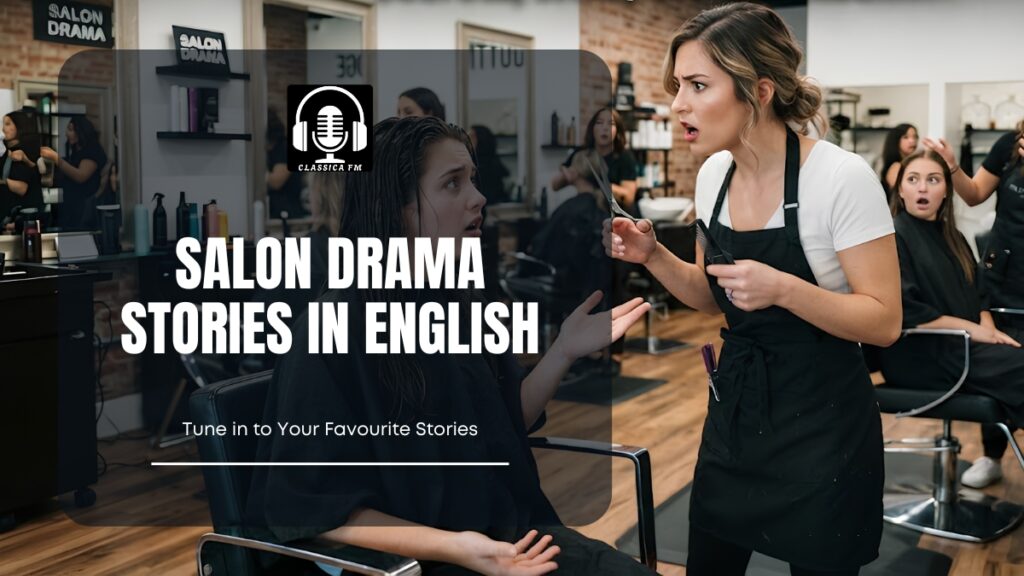
A visit to a salon can be a routine part of personal grooming, but it can also become an unexpectedly memorable experience. Misunderstandings, unexpected results, difficult decisions, personality clashes, last-minute changes, and surprising reactions can all create situations that feel dramatic enough to become stories.
Salon drama stories in English explore these experiences through fictional or real-life-inspired narratives. The drama does not necessarily have to involve serious conflict. It can come from an awkward conversation, a misunderstanding about a haircut, an unexpected transformation, a disagreement about a hairstyle, or a situation that becomes funny in hindsight.
This guide explores what salon drama stories are, the themes they can cover, different types of salon situations, storytelling formats, and ways to create an engaging collection.
What Are Salon Drama Stories?
Salon drama stories are narratives centered around unexpected, tense, funny, emotional, or complicated situations that happen in or around a salon.
They may involve:
- Haircuts
- Hairstyle changes
- Hair coloring
- Styling appointments
- Client and stylist misunderstandings
- Friends or family members
- Special occasions
- Unexpected results
- Last-minute decisions
- Personal disagreements
The salon provides the setting, while the people and circumstances create the drama.
Why Salon Drama Stories Are Popular
Salon visits involve expectations. A customer usually arrives with an idea of what they want and expects the stylist to understand and deliver it.
When reality differs from expectations, a story naturally develops.
Readers may become curious about:
- What was requested?
- What went wrong?
- How did everyone react?
- Was the problem resolved?
- What happened afterward?
This combination of expectation and uncertainty makes salon-based stories engaging.
Salon Drama Stories in English
The Mistaken Hair Appointment That Changed Two Lives

Moral: Sometimes the people we meet by accident become the ones who help us move forward.
At exactly 10:00 a.m. on a busy Saturday, the receptionist at Mirror & Grace Salon smiled as another customer walked through the glass doors.
“Good morning. You must be Ms. Priya Sharma.”
The woman nodded politely.
“Yes.”
Without asking another question, the receptionist checked her name off the appointment list and led her to one of the salon’s premium styling chairs.
Twenty minutes later, another woman entered.
She also smiled and said,
“Hi, I’m Priya Sharma. I have a 10 o’clock appointment.”
The receptionist looked up in confusion.
“But… you’re already here.”
Both women looked at each other.
Neither had met before.
Both were named Priya Sharma.
Both had appointments at the same salon.
And both had unknowingly arrived on the same morning.
What began as an embarrassing scheduling mistake would become the beginning of an unexpected friendship that changed both of their lives.
Two Women, One Name
The salon staff quickly realized what had happened.
When the appointments had been booked weeks earlier, only the name “Priya Sharma” had been entered into the system.
The receptionist never noticed they belonged to two different customers.
One appointment was for a dramatic haircut and color transformation.
The other was for a simple trim before an important job interview.
Now both appointments had become mixed up.
The hairstylists paused.
The receptionist apologized repeatedly.
“I am so sorry. This has never happened before.”
The two women exchanged awkward smiles.
“It wasn’t your fault,” one of them said kindly.
Different Lives
Although they shared the same name, their lives couldn’t have been more different.
The first Priya was thirty-eight years old.
She owned a successful bakery.
Confident, cheerful, and talkative, she had recently decided to donate her long hair and completely change her look after celebrating ten years in business.
The second Priya was twenty-six.
Quiet and reserved, she had recently lost her marketing job after her company downsized.
She had an interview on Monday and only wanted a neat trim to look professional.
Neither imagined that this unexpected mix-up would become the most memorable salon visit of their lives.
Waiting Together
Because the salon was fully booked, one appointment would have to wait.
The receptionist offered complimentary coffee while they sorted everything out.
The two women sat together near the window.
At first, the conversation was polite.
“So… what brings you here today?”
The older Priya laughed.
“I’m cutting off nearly twelve inches of hair.”
The younger Priya looked surprised.
“Really? Aren’t you nervous?”
“A little.”
“But I think it’s time.”
“What about you?”
The younger Priya smiled softly.
“Just a trim.”
“I have a job interview.”
“I don’t want anything risky.”
An Honest Conversation
As they waited, their conversation became more personal.
The older Priya asked,
“How long have you been job hunting?”
“Almost six months.”
“That must be difficult.”
“It is.”
“I’ve started doubting myself.”
She looked down at her coffee.
“I keep wondering if I’m simply not good enough.”
The older Priya remained quiet for a moment.
Then she smiled gently.
“I’ve felt that way too.”
A Story of Failure
The younger Priya looked surprised.
“You?”
“You own a successful business.”
The older woman laughed.
“You only see the bakery now.”
“You didn’t see my first three businesses fail.”
“I lost almost everything before opening the bakery.”
The younger Priya blinked.
“I thought successful people always knew what they were doing.”
“No.”
“We just keep trying after things go wrong.”
The Haircut Begins
Soon, the hairstylist called the older Priya.
As long strands of hair fell to the floor, the younger Priya watched nervously.
“Weren’t you attached to your hair?”
“Very.”
“So why cut it?”
The older woman smiled.
“Because I realized I was holding onto a version of myself that no longer existed.”
The younger Priya thought about those words.
A Different Kind of Confidence
When the haircut was finished, everyone admired the transformation.
The older Priya looked refreshed.
More confident.
Lighter.
She caught the younger woman’s expression.
“What are you thinking?”
“I wish I had your confidence.”
The older Priya shook her head.
“This haircut didn’t give me confidence.”
“I already decided to be confident before the scissors touched my hair.”
The Interview
Finally, it was the younger Priya’s turn.
She still chose only a small trim.
But something had changed.
Instead of sitting nervously, she smiled.
She spoke with the stylist about what suited her face instead of worrying about everyone else’s opinions.
When she looked in the mirror afterward, the haircut wasn’t dramatically different.
But she stood a little straighter.
A Small Gift
As they prepared to leave, the older Priya handed her a business card.
“If your interview doesn’t work out…”
“Come see me.”
“I might not have a marketing position today.”
“But businesses grow.”
“You never know.”
The younger Priya smiled gratefully.
“I hope I won’t need it.”
“I hope you won’t either.”
Monday Morning
Two days later, the younger Priya attended her interview.
She answered confidently.
Not because of her haircut.
Because she remembered something the older Priya had said.
“Successful people don’t avoid failure.
They keep moving after it.”
For the first time in months, she stopped apologizing for the gap in her resume.
Instead, she confidently explained everything she had learned during that period.
Unexpected News
The following Friday, her phone rang.
“We’re happy to offer you the position.”
She could hardly believe it.
The first person she wanted to tell wasn’t a family member.
It was the woman she had met at the salon.
A Celebration
The younger Priya visited the bakery.
The older Priya immediately recognized her.
“You got the job?”
“Yes!”
The bakery owner hugged her warmly.
“I knew you would.”
“You just needed someone to remind you.”
Months Later
Months passed.
The two women remained friends.
Sometimes they met for coffee.
Sometimes they simply exchanged encouraging messages.
When the bakery eventually expanded, guess who managed its new marketing campaigns?
The younger Priya.
She accepted the project as a freelance consultant alongside her new job.
Their accidental meeting had become a professional partnership.
The Salon’s Lesson
Back at Mirror & Grace Salon, the receptionist updated the booking system.
Every customer now had both their phone number and date of birth listed to prevent future mistakes.
But whenever someone apologized for a scheduling delay, the receptionist smiled.
“Sometimes mistakes create wonderful stories.”
Few customers understood what she meant.
But the staff never forgot the day two women with the same name walked into the salon.
Years Later
Years later, people often laughed when they heard how the friendship began.
“You met because of a salon booking mistake?”
Both women smiled.
“Yes.”
“And it turned out to be one of the best accidents of our lives.”
Neither remembered the inconvenience anymore.
They remembered the conversation.
The encouragement.
And the reminder that strangers sometimes arrive in our lives exactly when we need them most.
Moral of the Story
Sometimes the people we meet by accident become the ones who help us move forward.
Life doesn’t always follow perfect plans. Unexpected delays, mistakes, and chance encounters can lead to meaningful friendships, new opportunities, and fresh confidence if we remain open to them.
The Salon That Closed for One Afternoon to Help a Stranger
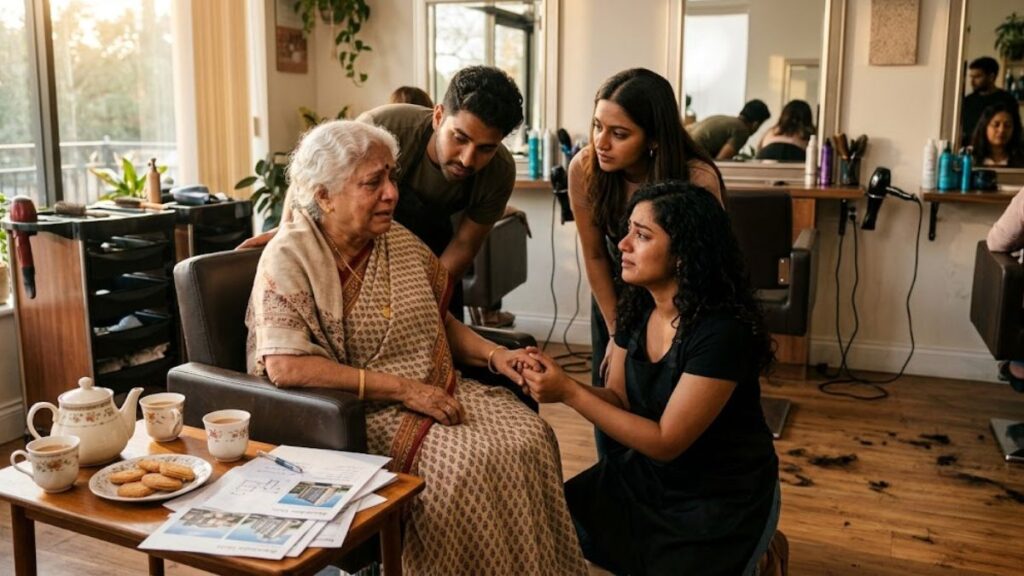
Moral: True success is measured not by how much business you do, but by how much kindness you show.
On most Saturdays, Bella Vista Salon was impossible to get into without an appointment.
Every chair was occupied.
Hairdryers buzzed from morning until evening.
Stylists moved quickly from one customer to another.
The owner, Maya, had spent fifteen years building the salon into one of the busiest in the city.
She believed in punctuality, professionalism, and giving every customer the best possible experience.
But one ordinary Saturday, she made a decision that shocked everyone.
At exactly 2:30 in the afternoon, she walked to the reception desk, turned the sign on the front door from OPEN to CLOSED, and cancelled every remaining appointment for the day.
Not because of an emergency.
Not because of bad weather.
But because of one elderly customer who had nowhere else to go.
A Regular Customer
Every month, seventy-eight-year-old Mrs. Eleanor D’Souza visited Bella Vista Salon.
She always arrived ten minutes early.
She wore a neatly pressed floral dress, polished shoes, and carried a small handbag that had clearly been with her for many years.
She never asked for anything complicated.
A simple shampoo.
A careful trim.
A gentle blow-dry.
She tipped every stylist, thanked everyone individually, and always left with a smile.
To the staff, she wasn’t just another customer.
She felt like family.
The Woman Who Never Missed an Appointment
Mrs. D’Souza lived alone after her husband passed away eight years earlier.
Her only son worked overseas.
They spoke often on video calls, but visits were rare because of work and distance.
Still, she remained cheerful.
The salon became part of her monthly routine.
It wasn’t only about her haircut.
It was about conversation.
Laughter.
Human connection.
The stylists often joked,
“Mrs. D’Souza knows more about our lives than our own relatives.”
She laughed every time.
A Different Visit
One Saturday, Maya immediately noticed something unusual.
Mrs. D’Souza looked quieter than usual.
She smiled politely but didn’t tell any stories.
Even during her haircut, she stared silently into the mirror.
The stylist gently asked,
“Everything alright today?”
She forced a smile.
“Oh, just a little tired.”
But something didn’t feel right.
The Phone Call
Halfway through her appointment, Mrs. D’Souza’s phone rang.
She answered quietly.
Nobody meant to overhear.
But the salon suddenly became silent.
“Yes…”
“I understand.”
“No… I’ll manage.”
“Thank you for letting me know.”
She ended the call.
Then sat perfectly still.
A single tear rolled down her cheek.
Devastating News
Maya walked over carefully.
“Mrs. D’Souza…”
“Is everything okay?”
The elderly woman tried to smile.
“My landlord called.”
“He sold the building.”
“I have thirty days to leave.”
The room became silent.
Maya knew the small apartment.
Mrs. D’Souza had lived there for more than thirty years.
It wasn’t just a house.
It was filled with memories of her late husband.
No Family Nearby
“Can your son help?” Maya asked gently.
Mrs. D’Souza looked down.
“He wants me to move abroad.”
“But I’m too old to start over.”
“My friends are here.”
“My church is here.”
“My memories are here.”
She whispered,
“I don’t even know where to begin.”
A Decision Nobody Expected
Maya looked around the busy salon.
Every chair was occupied.
Seven appointments remained.
The waiting area was full.
For a moment, she thought about business.
Then she looked back at Mrs. D’Souza.
Business could wait.
People couldn’t.
She walked to reception.
“We’re closing early today.”
The receptionist stared.
“What?”
“Cancel every appointment after three.”
The staff looked equally surprised.
“Tell everyone there’s an unexpected emergency.”
There was.
Just not the kind anyone expected.
Staying Together
After the customers left, the stylists gathered around Mrs. D’Souza.
No one rushed.
No one checked the time.
One assistant made tea.
Another ordered sandwiches.
Someone else brought tissues.
For the first time all day, Mrs. D’Souza smiled.
“I’ve caused so much trouble.”
Maya gently held her hand.
“No.”
“You’ve given us an opportunity.”
Solving Problems Together
Within an hour, everyone began helping.
One stylist searched apartment listings online.
Another called a cousin who worked in real estate.
The receptionist contacted a local senior citizens’ support organization.
Someone else offered temporary storage for furniture.
The salon had quietly transformed into a planning center.
Nobody complained.
A Surprise Visitor
Later that afternoon, Maya’s husband arrived.
He had expected to pick her up after work.
Instead, he found everyone sitting around a table covered with notebooks, tea cups, and apartment brochures.
After hearing the story, he smiled.
“My friend’s family owns a small apartment nearby.”
“It recently became available.”
The room suddenly became hopeful.
A New Home
The next morning, Maya drove Mrs. D’Souza to see the apartment.
It was smaller.
But bright.
Close to her church.
Only fifteen minutes from the salon.
The landlord agreed to reduce the rent after hearing her situation.
When Mrs. D’Souza received the keys, she cried.
Not because she had lost her old home.
Because she realized she wasn’t facing the future alone.
The Customers Respond
On Monday, Maya worried about the cancelled appointments.
Would customers be upset?
Instead, something unexpected happened.
Several customers returned with flowers.
Others brought homemade food.
Some offered help moving furniture.
One customer even donated moving boxes.
Word spread quickly throughout the neighborhood.
People admired the salon even more than before.
Not because of hairstyles.
Because of humanity.
Moving Day
Two weeks later, the entire salon staff gathered outside Mrs. D’Souza’s old apartment.
Stylists carried boxes.
Receptionists wrapped dishes.
Customers arrived to help.
Even delivery drivers volunteered.
By evening, everything had been moved.
Mrs. D’Souza looked around her new apartment.
Then quietly said,
“I thought I had lost my home.”
“But instead…”
“I found another family.”
A New Tradition
After that experience, Bella Vista Salon started something new.
Once every three months, the salon closed for one afternoon.
Not for business meetings.
Not for renovations.
But for community service.
Sometimes they visited senior care homes.
Sometimes they organized free grooming sessions.
Sometimes they helped local families in need.
The tradition became known as Kindness Afternoon.
Years Later
Five years passed.
Mrs. D’Souza never missed another monthly appointment.
She always brought homemade cookies for the staff.
New employees often asked,
“Why do we close every few months?”
The older staff smiled.
Then someone would point toward a framed photograph hanging on the wall.
It showed the entire salon team standing beside Mrs. D’Souza outside her new apartment.
Below the picture was a simple sentence.
*“People will forget your hairstyle.
They will never forget how you made them feel.”*
The Real Success
Bella Vista Salon continued growing.
It won local business awards.
It expanded to a second location.
Customers praised its talented stylists.
But Maya believed none of those achievements were the salon’s greatest success.
Whenever someone congratulated her, she smiled and thought about that Saturday afternoon.
The day the salon closed.
The day business paused.
The day kindness became more important than profit.
That was the day she became proudest of everything they had built.
Moral of the Story
True success is measured not by how much business you do, but by how much kindness you show.
Achievements, profits, and popularity may define a successful business, but compassion defines truly successful people. Sometimes, taking time to help one person in need creates an impact that lasts far longer than any appointment ever could.
The Bride Who Walked Out Before Her Makeup Was Finished
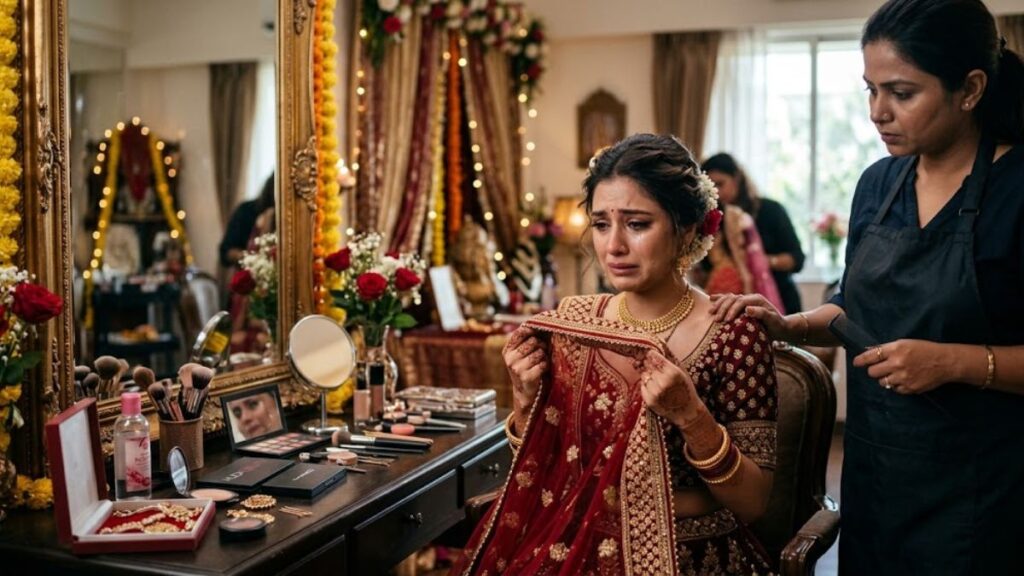
Moral: Honest communication can solve problems before they become regrets.
At six o’clock on a cool winter morning, Elegance Studio was already full of excitement.
Hairdryers hummed.
Makeup brushes moved quickly.
Wedding dresses hung neatly on racks.
Fresh flowers filled the room with their fragrance.
Everyone was preparing for what should have been one of the happiest days in Ananya’s life.
She was getting married in just six hours.
Her family had booked one of the city’s most respected bridal salons months in advance.
Every appointment had been carefully planned.
Every minute mattered.
But before noon, Ananya would leave the salon in tears.
Her makeup unfinished.
Her family in shock.
And everyone wondering whether the wedding itself would survive the day.
A Bride With One Simple Wish
Unlike many brides who dreamed of glamorous transformations, Ananya had only one request.
She wanted to look like herself.
When she met the salon owner, Meera, during the trial session two weeks earlier, she had explained clearly.
“I don’t want heavy makeup.”
“I don’t want to look like a different person.”
“I just want to look like the happiest version of myself.”
Meera smiled confidently.
“Don’t worry.”
“We’ll create something elegant and natural.”
Satisfied, Ananya happily confirmed the booking.
Wedding Morning
On the wedding day, Ananya arrived with her mother and younger sister.
The salon buzzed with energy.
Everyone congratulated her.
Assistants offered coffee and snacks.
Photographers captured behind-the-scenes moments.
For a while, everything felt perfect.
Her hairstylist carefully created soft curls.
The jewelry was arranged beautifully.
The bridal outfit looked exactly as she had imagined.
Only the makeup remained.
A Last-Minute Change
Unfortunately, Meera received an emergency phone call.
Her father had suddenly fallen ill.
She apologized sincerely.
“I’m so sorry.”
“My senior artist, Riya, will complete your bridal makeup.”
Ananya nodded politely.
She assumed the trial notes would explain everything.
Different Styles
Riya was talented.
She specialized in glamorous bridal looks.
Bold eyes.
Sharp contouring.
Full-coverage foundation.
Sparkling highlighter.
Thousands of brides loved her work.
But she hadn’t participated in Ananya’s consultation.
When she glanced through the notes, she focused mostly on the wedding colors rather than the words:
“Keep makeup soft and natural.”
The First Concern
Halfway through the makeup session, Ananya looked into the mirror.
Something felt different.
The foundation looked much heavier than expected.
Her eyebrows appeared darker.
The eye makeup looked dramatic.
She smiled politely.
“Could we make it a little softer?”
Riya responded confidently.
“Trust me.”
“It will look perfect once everything is complete.”
Ananya tried to relax.
Growing Unease
Twenty minutes later, more layers had been added.
False eyelashes.
Extra contouring.
Brighter lipstick.
When Ananya looked again, she barely recognized herself.
Her heart sank.
She quietly said,
“This isn’t really what I wanted.”
Riya smiled while continuing her work.
“Every bride says that.”
“You’ll love it when you’re fully dressed.”
But Ananya wasn’t convinced.
The Breaking Point
Finally, Riya reached for glitter pigment.
Ananya gently stopped her hand.
“I don’t want glitter.”
“It photographs beautifully.”
“I understand…”
“But I don’t want it.”
Riya sighed.
“I’ve been doing bridal makeup for fifteen years.”
“Please trust my experience.”
The room became silent.
Ananya looked at herself once more.
She didn’t see a bride.
She saw someone pretending to be one.
Without saying another word, she stood up.
Walking Away
Everyone stared in surprise.
Her mother asked,
“Ananya?”
She quietly replied,
“I need some air.”
She walked out of the salon before anyone could stop her.
Half of her makeup remained unfinished.
The hairstylist froze.
Assistants looked confused.
Customers whispered.
Inside the salon, panic spread quickly.
Outside
Ananya sat alone on a nearby bench.
She wasn’t angry.
She wasn’t trying to embarrass anyone.
She simply felt unheard.
She whispered to herself,
“I only wanted to look like me.”
Tears rolled down her face.
For months she had imagined this day.
Now she worried everyone thought she was overreacting.
Meera Returns
Meanwhile, Meera hurried back to the salon after learning what had happened.
She immediately understood something had gone wrong.
She read the consultation file carefully.
There, highlighted in bold letters, were the words:
Natural. Minimal. Soft.
She closed the file.
Then quietly walked outside.
A Different Conversation
Instead of defending the salon, Meera sat beside Ananya.
Neither spoke for a minute.
Finally, Meera asked,
“Can you tell me how you’re feeling?”
Not,
“What’s wrong?”
Not,
“Why did you leave?”
Simply,
“How are you feeling?”
That one question changed everything.
Being Heard
Ananya finally spoke.
“I know everyone keeps saying I’ll look beautiful.”
“But I don’t feel like myself.”
“I spent months imagining this day.”
“I wanted my fiancé to see… me.”
“Not someone else.”
Meera listened without interrupting.
Then she apologized.
Not because the makeup was poorly done.
Because the salon had failed to listen.
Starting Again
Back inside, Meera gathered the team.
“No one is blaming anyone.”
“But today we remember something important.”
“Our job isn’t creating the look we prefer.”
“Our job is creating the look the bride dreams about.”
She gently removed the heavy makeup.
Slowly.
Patiently.
No rushing.
No pressure.
Ananya relaxed.
A New Beginning
This time, every step included conversation.
“What do you think about this shade?”
“Would you like less eyeliner?”
“Is this closer to what you imagined?”
For the first time that morning, Ananya smiled.
“Yes.”
“This feels like me.”
The transformation wasn’t dramatic.
It was subtle.
Natural.
Exactly what she had hoped for.
The Wedding
When Ananya finally arrived at the venue, she was running slightly behind schedule.
Her fiancé, Arjun, smiled the moment he saw her.
“You look beautiful.”
She laughed.
“Really?”
“You look exactly like yourself.”
Those words meant everything.
Because that had always been her goal.
A Lesson for the Salon
A week later, Meera introduced a new policy.
Every bridal appointment would now begin with one simple question:
“How do you want to feel when you look in the mirror?”
Not,
“What style do you want?”
Not,
“What trend do you like?”
Because feelings mattered more than fashion.
Months Later
Months after the wedding, Ananya visited the salon again.
This time, only for a regular haircut.
Riya greeted her warmly.
“I owe you an apology.”
Ananya smiled.
“You also taught me something.”
“What?”
“Speaking honestly doesn’t ruin relationships.”
“It strengthens them.”
Riya nodded.
“And listening matters just as much.”
The Real Transformation
People often remembered the story as the bride who walked out before her makeup was finished.
But that wasn’t the real story.
The real story was about what happened afterward.
Instead of allowing pride to create lasting conflict, both sides chose understanding.
The salon became better.
The bride felt respected.
And one difficult morning became a lesson that improved countless weddings afterward.
Moral of the Story
Honest communication can solve problems before they become regrets.
People cannot understand our feelings unless we express them honestly, and true professionals know that listening is just as important as skill.
Sometimes, the most beautiful transformation begins not with makeup or hairstyles, but with empathy, respect, and open communication.
Common Themes in Salon Drama Stories
1. The Haircut That Went Wrong
One of the most recognizable salon story themes involves a haircut that does not turn out as expected.
The problem might involve:
- Incorrect length
- Unwanted layers
- An unexpected shape
- Miscommunication
- Styling differences
- A result that looks different from the reference
The story can focus on how the situation unfolds and how the characters respond.
2. The Misunderstood Request
Communication between a customer and stylist can sometimes be complicated.
A customer may use terms that mean something different to the stylist, or a reference photograph may create different expectations.
This type of story can explore how a simple misunderstanding develops into an uncomfortable or humorous situation.
3. The Last-Minute Change
A customer may change their mind immediately before or during an appointment.
They might decide to:
- Cut more length
- Try a different hairstyle
- Change the original plan
- Add a new styling element
Last-minute decisions can create tension because everyone has to adapt quickly.
Salon Drama Between Friends
Friends can create another layer of drama during a salon visit.
For example, two friends might disagree about:
- Which hairstyle looks best
- Whether someone should make a major change
- How much hair should be cut
- Whether a particular trend suits them
The disagreement can become funny, emotional, or meaningful depending on the characters.
Salon Drama Between Family Members
Family members may also become part of salon-related stories.
Parents, siblings, spouses, or other relatives may have different opinions about hairstyles.
A story could explore:
- A parent disagreeing with a hairstyle choice
- Siblings teasing each other
- Family members reacting to a dramatic transformation
- Different generations having different opinions about hair
The focus should remain on realistic interactions rather than exaggerated conflict.
Client and Stylist Conflicts
A salon drama story can also center around a disagreement between a client and stylist.
Potential sources of conflict include:
- Different expectations
- Miscommunication
- Time pressure
- Styling preferences
- Changes requested during the appointment
- Disagreement over the final result
A well-written story should show both sides where appropriate rather than automatically portraying one person as the villain.
The Importance of Communication
Many salon dramas can be traced back to unclear communication.
Customers may assume the stylist understands exactly what they mean, while the stylist may interpret the request differently.
Clear conversations about:
- Length
- Shape
- Layers
- Styling
- Maintenance
- Color
- Previous experiences
can help reduce misunderstandings.
This practical element can also make salon stories more useful to readers.
Salon Drama Before an Important Event
A salon visit becomes more stressful when it happens before an important occasion.
Possible settings include:
- Weddings
- Graduations
- Birthdays
- Job interviews
- Photoshoots
- Parties
- Festivals
- Vacations
- Family celebrations
A customer may have high expectations because they want to look their best for the event.
An unexpected result can therefore create immediate tension.
Wedding Salon Drama Stories
Wedding-related salon experiences can provide particularly rich storytelling opportunities.
The drama may involve:
- A hairstyle changing at the last minute
- Different opinions about a bridal look
- Family expectations
- Scheduling problems
- A stylist misunderstanding
- A bride reconsidering her hairstyle
- Friends or relatives offering too many suggestions
The story can explore the pressure surrounding a major event while keeping the characters and their choices at the center.
Salon Drama and Unexpected Transformations
Not every dramatic salon experience has a negative ending.
A customer may arrive nervous about a major change and eventually discover that they enjoy the result.
This creates a positive salon drama storyline.
The emotional progression might be:
Expectation → uncertainty → transformation → surprise → acceptance
This type of story can be more nuanced than simply describing a bad salon experience.
Funny Salon Drama Stories
Salon situations can also become humorous.
Examples include:
- A customer changing their mind repeatedly
- A friend giving conflicting advice
- Someone misunderstanding a hairstyle term
- An unexpected reaction to a new look
- A customer arriving late and creating scheduling chaos
- A hairstyle turning out differently than expected
Humor works best when it comes from the situation and character interactions rather than mocking someone’s appearance.
Emotional Salon Drama Stories
Salon experiences can sometimes become emotional because hair may have personal significance.
A customer might be:
- Saying goodbye to very long hair
- Changing their hairstyle after a major life event
- Revisiting a hairstyle associated with a memory
- Preparing for an important transition
- Making a personal decision about their appearance
The salon becomes the setting for a larger emotional moment.
Salon Drama and Personal Choice
Hair is personal, so salon stories should recognize the importance of individual choice.
A customer can listen to:
- A stylist’s recommendation
- A friend’s opinion
- Family suggestions
- A partner’s perspective
But the final decision about their appearance should remain with them.
This principle can create stronger and more realistic stories because characters can disagree without one person automatically having control over another person’s appearance.
Salon Drama Stories About Long Hair
Long hair can create particularly interesting salon narratives because significant changes may require careful decisions.
A customer might:
- Request a trim
- Consider cutting substantial length
- Change their mind
- Decide to keep more length
- Suddenly choose a shorter hairstyle
The emotional significance depends on the character’s relationship with their hair.
Salon Drama Stories About Short Hair
Short hairstyles can also create dramatic experiences.
A character who has always had long hair might decide to try a short style, creating uncertainty for both the character and the people around them.
The story can focus on:
- The decision
- The salon consultation
- The transformation
- The first reaction
- Adjusting to the new hairstyle
Salon Drama and Social Expectations
Some salon stories can explore the tension between personal preferences and social expectations.
A character might feel pressure from:
- Family
- Friends
- Workplace expectations
- Fashion trends
- Social media
- Cultural traditions
The story can explore how the character decides what feels right for them.
Salon Drama Stories Across Generations
Different generations may approach hairstyles differently.
A story might involve:
- A younger person wanting a modern style
- A parent preferring a traditional look
- A grandparent remembering an older hairstyle
- Different opinions within a family
These differences can create conflict without requiring extreme drama.
Salon Drama and Social Media
Social media can add another dimension to salon stories.
A customer may arrive with a hairstyle inspired by:
- A viral trend
- A celebrity
- A beauty creator
- A social media photograph
The challenge is that online images may not accurately represent how a style will look on every person.
This can lead to an unexpected salon experience and a useful lesson about realistic expectations.
Salon Drama Stories About Reference Photos
Reference photographs can help communicate a desired hairstyle, but they can also create misunderstandings.
Differences in:
- Hair texture
- Hair density
- Face shape
- Length
- Styling
- Lighting
- Professional editing
can affect the final appearance.
A story built around a reference photograph can explore how expectations and reality differ.
Salon Scheduling Drama
Not all salon drama involves hair.
Scheduling problems can create their own stories.
For example:
- An appointment starts late
- Several customers arrive at once
- A stylist is unexpectedly unavailable
- A customer has limited time
- An important event is approaching
These situations can create tension without requiring a major haircut problem.
Salon Drama and Customer Expectations
Customers and stylists may have different ideas about what makes a successful appointment.
A customer may prioritize:
- Exact appearance
- Length
- Convenience
- Speed
while a stylist may focus on:
- Hair condition
- Manageability
- Styling requirements
- What is technically achievable
Good communication can help bridge these differences.
How to Write Salon Drama Stories
A strong salon drama story should establish the situation quickly.
- Introduce the Customer: Explain who they are and why they are visiting the salon.
- Establish the Expectation: Describe what they want or what they expect to happen.
- Introduce the Problem: Something unexpected occurs.
- Build the Tension: Show how the customer and other characters respond.
- Reach the Turning Point: The situation reaches its most important moment.
- Resolve the Situation: The characters find a solution, accept the result, or learn something from the experience.
- End With Reflection: Explain why the experience remained memorable.
Example Story Structures
A collection can use different structures to avoid repetition.
- The Misunderstanding: A simple request is interpreted differently.
- The Last-Minute Decision: A customer makes a major change during the appointment.
- The Unexpected Result: The final hairstyle looks completely different from what was expected.
- The Family Disagreement: Different family members have different opinions.
- The Positive Surprise: A customer is initially uncertain but eventually loves the result.
- The Important Event: A salon experience becomes stressful because an important occasion is approaching.
- The Second Chance: A disappointing experience leads to another salon visit and a new solution.
How to Create a Diverse Salon Drama Collection
If you plan to publish many salon drama stories, vary the setting and central conflict.
You can create categories such as:
- Haircut drama stories
- Salon misunderstanding stories
- Funny salon stories
- Emotional salon stories
- Wedding salon stories
- Family salon stories
- Client and stylist stories
- Unexpected transformation stories
- Last-minute haircut stories
- First salon experience stories
- DIY-to-salon rescue stories
- Salon friendship stories
- Hair makeover stories
This allows the collection to remain focused while giving every story a distinct premise.
What Makes Salon Drama Stories Engaging?
The most effective stories usually contain a clear conflict or unexpected development.
Important elements include:
- A strong opening situation
- Clear expectations
- A believable problem
- Natural dialogue
- Emotional reactions
- A turning point
- A satisfying resolution
The drama should come from the situation rather than relying on exaggerated behavior.
Common Mistakes to Avoid
- Making Every Salon Visit Disastrous: Not every appointment needs to end badly.
- Overusing Extreme Reactions: Realistic reactions are generally more relatable.
- Turning Stylists Into Villains: Miscommunication can happen without deliberate wrongdoing.
- Focusing Only on Appearance: The characters and their relationships should drive the story.
- Repeating the Same Conflict: Vary the source of the drama.
- Ignoring Resolution: Even a short story benefits from showing what happens after the conflict.
Final Thoughts
Salon drama stories in English provide a flexible storytelling category because salons naturally bring together expectations, personal appearance, professional services, relationships, and sometimes unexpected situations.
A simple haircut appointment can become memorable because of a misunderstanding, a last-minute decision, an unexpected transformation, a family disagreement, a special event, or an interaction between a customer and stylist.
The strongest stories do not need excessive conflict. A realistic situation with believable characters, natural dialogue, emotional reactions, and a satisfying resolution can be more engaging than an exaggerated disaster.
For a broader content collection, salon drama can be divided into funny stories, emotional experiences, haircut misunderstandings, client-stylist conflicts, wedding salon drama, family disagreements, unexpected transformations, scheduling problems, and positive makeover surprises.
By giving every story a different central conflict and keeping the characters’ experiences at the heart of the narrative, Salon Drama Stories in English can support a diverse collection of engaging and relatable content.