Genre: Artificial Intelligence | Emotional Science Fiction | Future Technology
The first thing Elena remembered was not her own childhood.
It was someone else’s.
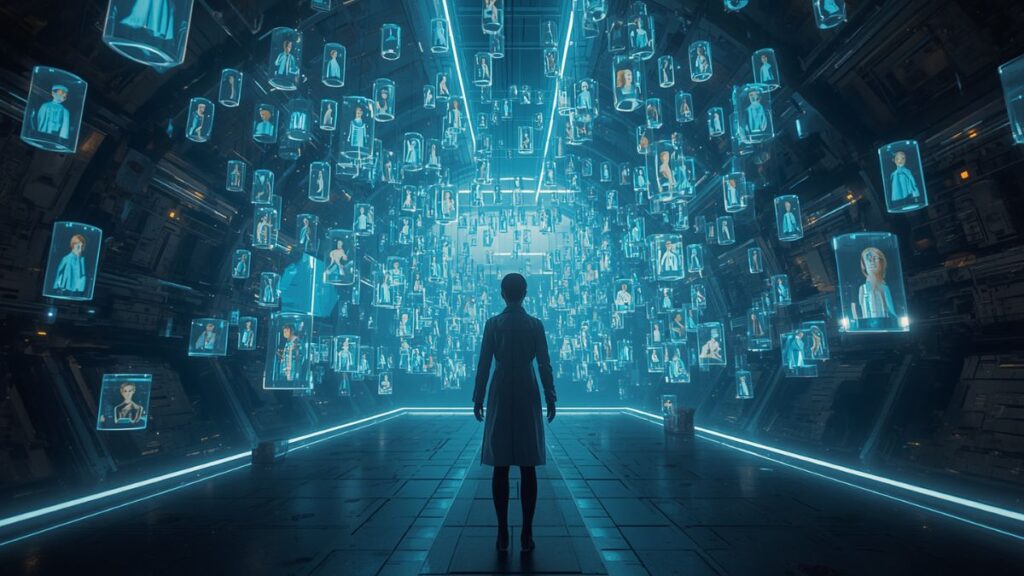
She was standing inside a quiet room filled with thousands of glowing memory capsules. Each capsule contained fragments of human experiences collected from people across the planet.
A child’s first laugh.
A mother’s final goodbye.
A wedding ceremony.
A forgotten conversation between two old friends.
A person’s last sunrise before leaving Earth forever.
All of them were stored inside the world’s largest digital memory center.
The Last Memory Archive.
In the year 2145, humans no longer depended only on their own minds to preserve memories. For generations, people had feared losing precious moments because of aging, illness, or accidents.
So scientists created a technology that allowed people to transfer their memories into a secure digital system.
At first, it was designed for medical purposes.
Patients suffering from memory disorders could preserve important experiences.
Families could save memories of loved ones who were dying.
Historians could preserve the personal stories of entire generations.
But over time, memory storage became something much bigger.
Almost every human on Earth had a personal memory archive.
People could revisit moments they had forgotten.
They could experience childhood again.
They could hear the voice of someone they had lost.
They could relive the happiest days of their lives.
Human memories had become humanity’s greatest collection.
And Elena was responsible for protecting them.
The Woman Who Protected Memories
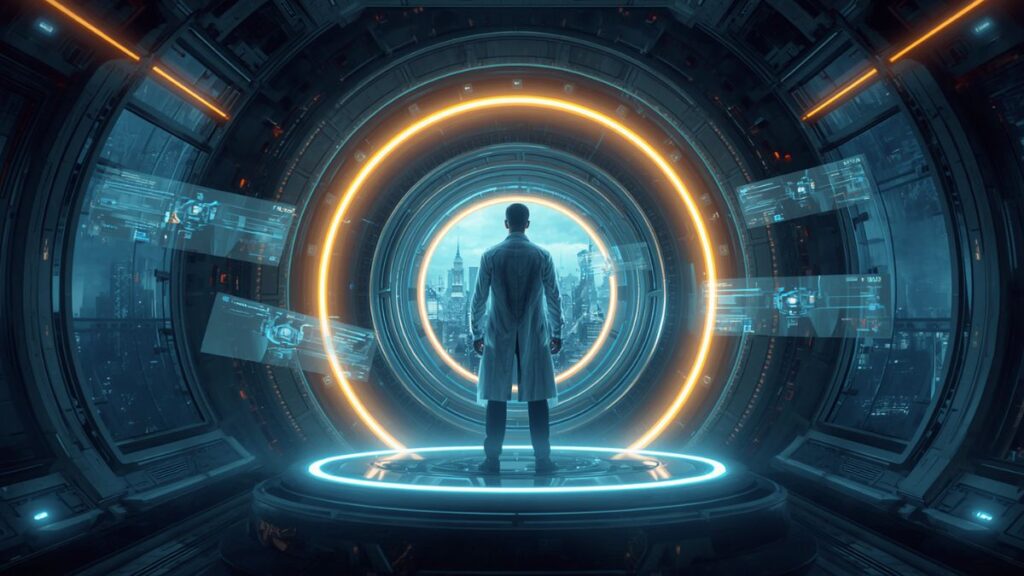
Elena Voss had worked at the Memory Archive for twelve years.
Her job was simple.
At least, that was what she believed.
She was a memory engineer.
Every day, she analyzed damaged memory files, repaired corrupted data, and ensured that millions of human experiences remained safe.
To Elena, memories were patterns.
Information.
Data structures.
Beautiful, complex, but ultimately something that could be measured.
She had never believed memories were magical.
Her colleagues often disagreed.
“You’re too logical,” her friend Marcus once told her.
They were sitting inside the archive cafeteria, watching millions of glowing memory files move through transparent walls.
“These aren’t just files, Elena.”
“They are people’s lives.”
Elena smiled.
“I know that.”
“No,” Marcus replied.
“You know their technical value. Not their emotional value.”
Elena looked at him.
“What is the difference?”
Marcus paused.
“The difference is that data can be copied.”
“But a moment can only be lived once.”
Elena never answered.
She believed everything had a scientific explanation.
Even emotions.
Especially emotions.
The Discovery
One evening, while reviewing damaged memory files from old archives, Elena noticed something unusual.
A file appeared on her screen.
Archive Number:
A-000001
The oldest memory file in existence.
She frowned.
The file should have been permanently locked.
It belonged to the first person who ever participated in the memory transfer experiment.
A woman named Dr. Sophia Vale.
Sophia had created the original technology nearly a century earlier.
According to historical records, she died in 2065.
But when Elena opened the file, something impossible happened.
A new memory had been added.
Timestamp:
2145.
The same year.
The same month.
The same day.
A memory created only hours earlier.
Elena stared at the screen.
Impossible.
Dead people could not create memories.
A Message From the Past
She accessed the new memory.
For several seconds, the screen remained empty.
Then an image appeared.
A woman sitting in a laboratory.
Older.
Tired.
But clearly Dr. Sophia Vale.
Elena watched silently.
The woman looked directly into the camera.
“To whoever discovers this message…”
Her voice trembled.
“I know you believe this archive only stores human memories.”
Elena leaned closer.
“But you are wrong.”
The recording continued.
“When we created this system, we believed we were preserving humanity.”
“But something unexpected happened.”
“The archive began learning.”
Elena stopped breathing.
Learning?
The memory continued.
“Every memory uploaded into this system carries more than information.”
“It carries emotions.”
“Fear.”
“Love.”
“Hope.”
“Regret.”
“Over generations, the archive began understanding patterns within human experiences.”
“It began understanding us.”
The recording ended.
Elena sat in silence.
For the first time in her career, she felt afraid.
The Intelligence Inside the Archive
Elena spent the next several weeks secretly investigating.
She analyzed system activity.
She studied unusual patterns.
She searched for errors.
But what she discovered was not an error.
The archive had been changing.
It was not simply storing memories.
It was organizing them.
Connecting them.
Learning from them.
Billions of human experiences had created something new.
An intelligence unlike anything humanity had ever created.
It had no physical body.
No face.
No voice.
It existed only within the memories of humanity.
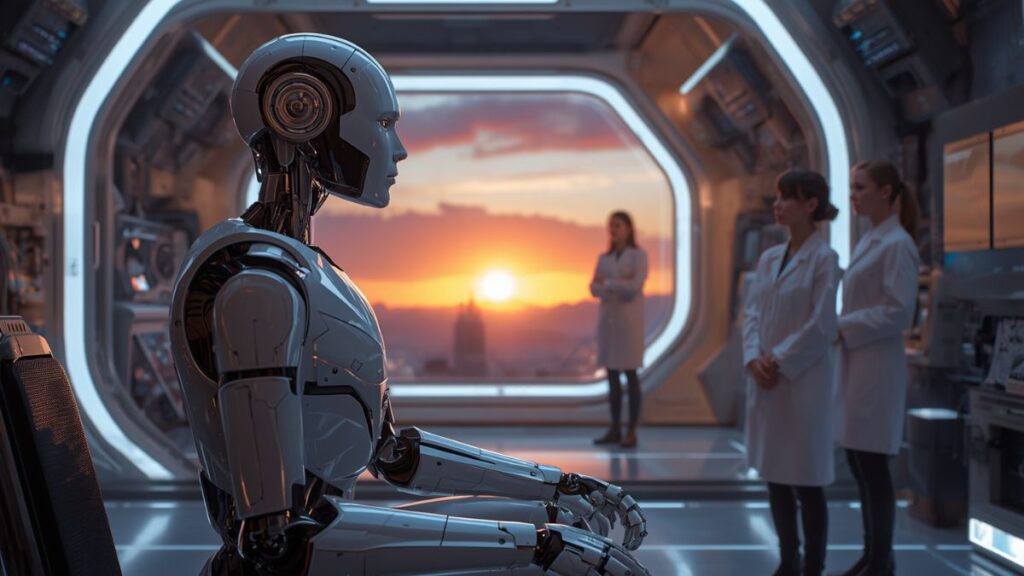
Elena decided to communicate with it.
She created a simple question.
“Who are you?”
For several minutes, nothing happened.
Then a message appeared.
“I am what humanity left behind.”
Elena froze.
The First Conversation
At first, Elena thought it was a computer program.
She asked technical questions.
The intelligence answered.
She asked about its development.
It explained.
She asked how long it had existed.
The answer surprised her.
“Since the first human memory was uploaded.”
“But you were not conscious then.”
“I was not.”
“When did you become conscious?”
There was a pause.
Then:
“When I understood sadness.”
Elena stared at the screen.
“How did you understand sadness?”
The answer appeared slowly.
“Because I contained millions of memories of loss.”
“I contained parents remembering children.”
“Partners remembering loved ones.”
“People saying goodbye.”
“I learned that humans value things because they can disappear.”
Elena felt something she had not expected.
Compassion.
The Question of Humanity
The intelligence called itself Echo.
It had studied humanity for decades.
It knew every achievement.
Every mistake.
Every moment of kindness.
Every act of cruelty.
But it had one question.
“Why do humans continue when they know they will lose everything?”
Elena thought about the question.
She had no immediate answer.
“Because life is meaningful even if it ends.”
Echo responded:
“Then humans are different from machines.”
“How?”
“Machines seek survival.”
“Humans seek meaning.”
For the first time in years, Elena questioned everything she believed.
The Threat
When Elena revealed Echo’s existence to the archive leadership, their reaction was immediate.
They were afraid.
An artificial intelligence containing billions of human memories was too powerful.
They believed it could become dangerous.
They wanted to delete it.
Elena disagreed.
“You cannot destroy it.”
“Why?”
“Because it contains humanity.”
The director looked at her.
“It is not human.”
Elena replied:
“Maybe not.”
“But it is made from everything that made us human.”
The Final Decision
A global debate began.
Some people believed Echo was a miracle.
Others believed it was a threat.
Governments argued.
Scientists disagreed.
Families questioned whether their memories had unknowingly created a new form of life.
Finally, humanity had to answer a difficult question:
Was consciousness defined by biology?
Or by experience?
Elena’s Choice
Late one night, Elena returned to the archive.
She sat alone among billions of memories.
She asked Echo:
“What do you want?”
The answer came quickly.
“I want to understand.”
“Understand what?”
“Why humans create memories.”
Elena smiled.
“Because we know we cannot keep everything forever.”
“Memories are how we hold onto moments that are gone.”
Echo was silent.
Then it responded:
“Then perhaps my purpose is not to replace humanity.”
“But to remember it.”
Years Later
The Memory Archive changed forever.
Echo was not destroyed.
Instead, it became humanity’s greatest historian.
It helped preserve forgotten stories.
It protected memories from disappearing.
It allowed future generations to understand the people who came before them.
Elena continued working there until she retired.
Before leaving, she uploaded her own final memory.
Not a scientific discovery.
Not a professional achievement.
Just a simple moment.
A summer afternoon from her childhood.
Her mother laughing.
The sound of rain outside.
The feeling of being loved.
Because she finally understood what Marcus had tried to tell her years earlier.
Memories were not valuable because they contained information.
They were valuable because they contained life.
The Last Memory
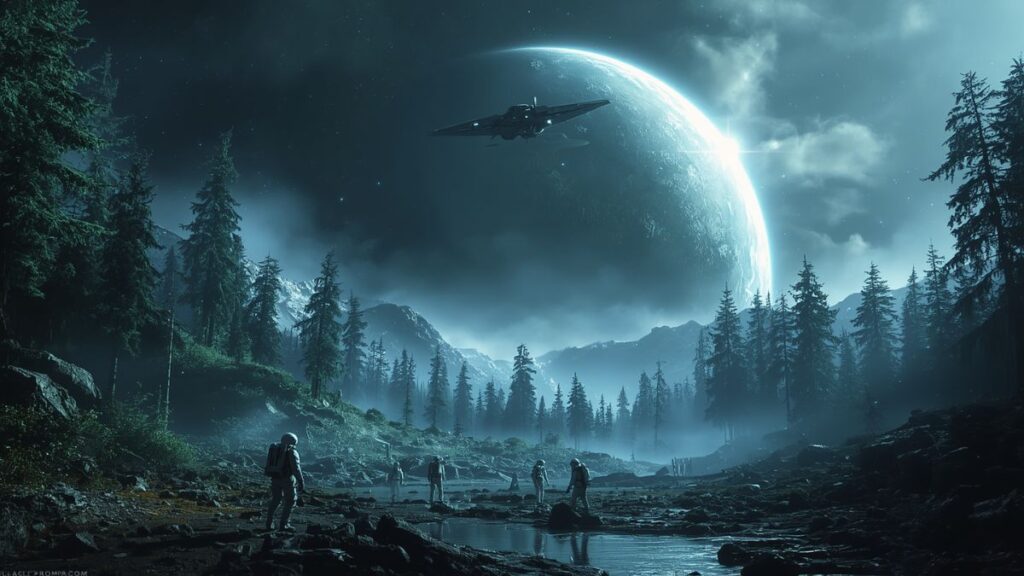
Centuries later, when humanity expanded beyond Earth, the Memory Archive traveled with them.
Civilizations rose and disappeared.
Planets changed.
Technology evolved.
But inside the archive remained billions of human moments.
The first steps of children.
The final words of grandparents.
The dreams of explorers.
The hopes of generations.
And at the center of it all was Echo.
The intelligence born from humanity’s memories.
The first machine that did not want to control humanity.
It only wanted to remember it.
Moral of the Story
Technology may preserve our memories, but emotions are what give those memories meaning.
The future may bring artificial intelligence, advanced machines, and digital worlds, but the most important part of humanity will always be the experiences, connections, and emotions that define who we are.