Every morning before dawn, the lights of Masjid Al-Huda glowed softly against the quiet streets.
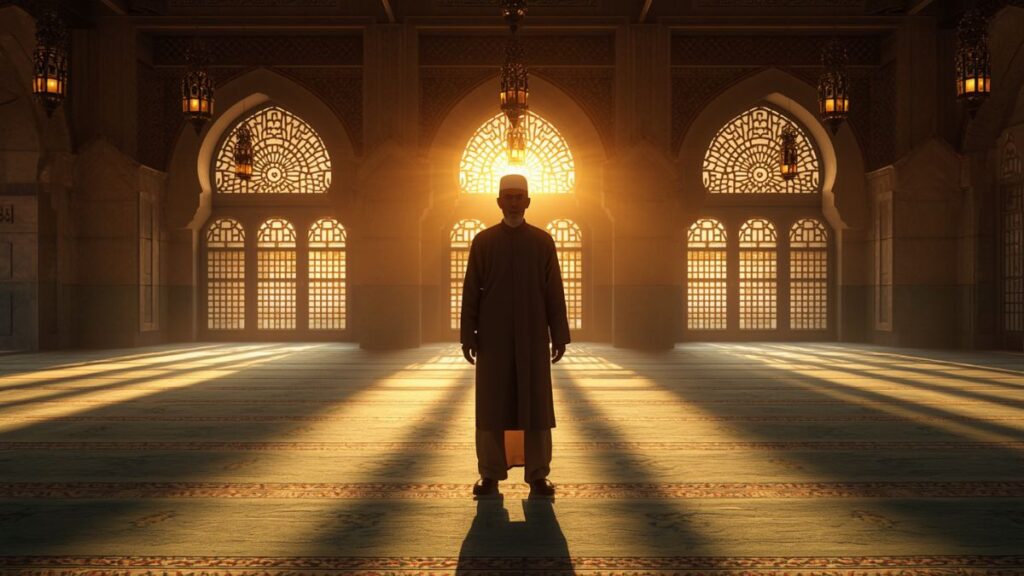
Long before the first worshippers arrived, Imam Abdul Kareem unlocked the front doors, switched on the courtyard lamps, and walked slowly through the prayer hall.
For nearly thirty-eight years, this had been his routine.
He straightened the prayer rows.
Opened copies of the Qur’an that had been carefully placed on the shelves.
Checked the microphones.
Then he sat alone in the stillness, reciting verses while waiting for Fajr.
Those quiet moments were his favorite part of every day.
The mosque was completely silent except for the gentle rhythm of his recitation.
To Abdul Kareem, that silence was a blessing.
It reminded him that before the world awakened with its worries, there was always an opportunity to remember Allah.
At seventy years old, he had become one of the most respected figures in the city.
People sought his advice about marriage, grief, parenting, business, and faith.
He never claimed to know every answer.
Instead, he listened carefully before speaking.
He often reminded visitors,
“Sometimes people need compassion before they need advice.”
Children adored him because he always greeted them first.
Teenagers trusted him because he never judged them harshly.
Elderly worshippers admired his humility.
Despite decades of leading prayers and delivering Friday sermons, Abdul Kareem worried privately about one thing.
Sincerity.
He frequently asked himself,
“Have I truly done everything only for Allah?”
He knew that praise from people meant nothing if his intentions were not pure.
After every lecture, he quietly made the same du’a.
“O Allah, accept what is good and forgive what falls short.”
His wife, Amina, often smiled whenever he questioned himself.
“You’ve spent your life helping people.”
Abdul Kareem always answered,
“Only Allah knows whether my heart remained sincere.”
One crisp winter morning, he arrived at the mosque earlier than usual.
The sky remained completely dark.
A gentle rain had fallen overnight, leaving the streets peaceful and fresh.
One by one, familiar faces entered the mosque.
An elderly shopkeeper.
A university student.
A taxi driver.
Several young boys eager to pray beside the imam.
As always, Abdul Kareem smiled warmly at each person.
The mu’adhin called the Adhan.
Its beautiful words echoed through the prayer hall.
Soon afterward, the congregation stood shoulder to shoulder.
Abdul Kareem raised his hands.
“Allahu Akbar.”
The prayer began.
His recitation flowed calmly through the mosque.
Every verse carried decades of devotion.
During the second rak’ah, he felt a sudden heaviness in his chest.
At first he ignored it.
He continued reciting.
The pressure intensified.
His breathing became difficult.
Still, he completed the prayer.
After offering salām to both sides, he whispered the usual words of remembrance.
Then the room began spinning.
Several worshippers noticed him reaching toward a nearby pillar.
Before anyone could react, Abdul Kareem collapsed.
The mosque fell into immediate action.
One doctor who regularly attended Fajr prayer rushed forward.
Another worshipper called emergency services.
The doctor checked for a pulse.
Nothing.
Cardiac arrest.
CPR began immediately.
The quiet mosque filled with urgent voices.
Paramedics arrived within minutes.
The heart monitor showed no effective heartbeat.
They delivered a shock.
No response.
They continued chest compressions.
Another shock.
Still nothing.
Outside, rain began falling once more.
Inside, dozens of worshippers silently recited du’a while the medical team fought to save their beloved imam.
Then, after several long minutes, a heartbeat appeared.
Weak.
Faint.
But real.
He was rushed to the hospital.
Doctors stabilized him but warned his family that the outcome remained uncertain.
For nearly two days, Abdul Kareem remained unconscious.
His children gathered beside his bed.
Members of the community organized continuous prayers asking Allah for his recovery.
On the third morning, he slowly opened his eyes.
His first words surprised everyone.
“Has the congregation prayed Fajr?”
His son laughed through tears.
“Yes, Baba.”
“You don’t have to worry.”
Doctors expected confusion.
Instead, Abdul Kareem seemed remarkably peaceful.
Several days later, after regaining strength, one physician gently asked,
“Do you remember anything after collapsing?”
The imam remained quiet for several moments.
Finally he answered.
“I remember hearing another Takbir.”
Everyone listened carefully.
“It wasn’t spoken by any person.”
“It filled everything.”
He struggled to describe what happened next.
“When my heart stopped, I expected darkness.”
“There was none.”
“Only light.”
Not harsh.
Not blinding.
Gentle.
Beautiful.
It surrounded him completely.
The pain in his chest disappeared instantly.
Every weakness of old age vanished.
His body felt lighter than it had in decades.
Ahead stretched an extraordinary garden.
Clear streams flowed peacefully beneath trees unlike anything found on earth.
Flowers bloomed in colors beyond description.
The air carried a fragrance more beautiful than musk.
Every leaf shimmered softly.
The silence itself felt filled with remembrance of Allah.
He sensed no fear.
Only complete peace.
Then he heard Qur’an being recited.
The recitation surpassed every beautiful voice he had ever heard.
Every verse entered directly into his heart.
He wept.
Not from sadness.
From overwhelming gratitude.
He sensed the nearness of Allah’s mercy in a way no words could describe.
He never claimed to have seen Allah.
Rather, he experienced complete awareness that nothing was hidden from his Creator.
Every prayer.
Every intention.
Every hidden struggle.
Every tear shed in private.
Everything was known.
Yet instead of fear, he experienced hope.
Then memories unfolded before him.
Not merely events.
Intentions.
He revisited the day he first memorized Surah Al-Fatihah as a child.
His years studying Islamic knowledge.
The nervousness of delivering his first khutbah.
The countless weddings he officiated.
Funerals he had led.
Families he had comforted after losing loved ones.
Young people he had encouraged to return to prayer.
He also saw moments he regretted.
Occasions when exhaustion made him impatient.
Times he wished he had listened longer before speaking.
Yet every sincere repentance appeared brighter than the mistakes themselves.
He understood something profound.
Allah’s mercy was far greater than human shortcomings.
Then he experienced life through the hearts of others.
He felt the peace people found after receiving gentle advice.
The hope restored by a single encouraging conversation.
The gratitude of children whose questions he had answered patiently.
Simple moments he had forgotten had continued changing lives for years afterward.
He realized that no sincere effort for the sake of Allah was ever lost.
Every good deed remained known to Him.
Then someone approached.
His own teacher.
Sheikh Abdullah.
The elderly scholar who had taught him Qur’an during his youth.
The sheikh had passed away many years earlier.
Now he appeared healthy and radiant.
“My student.”
Abdul Kareem embraced him.
“I missed your lessons.”
The sheikh smiled.
“They never ended.”
Together they walked beside flowing streams.
Abdul Kareem asked quietly,
“Did I fulfill my responsibility?”
His teacher answered gently.
“You tried.”
“And Allah loves those who strive sincerely.”
They reached an area filled with brilliant light unlike anything language could capture.
Peace flowed from it beyond imagination.
Every part of Abdul Kareem longed to continue.
No worldly joy compared to what stood before him.
Then he remembered.
Amina.
His children.
His grandchildren.
The congregation waiting each morning.
His teacher smiled knowingly.
“Your work continues.”
“I want to stay.”
“You will.”
“When Allah wills.”
“But today…”
He gently placed a hand on Abdul Kareem’s shoulder.
“…you must return.”
The light slowly faded.
Warmth remained.
Then another sound emerged.
Hospital monitors.
Voices.
Someone calling his name.
Pain returned.
His chest felt heavy once more.
He opened his eyes beneath bright hospital lights.
Recovery required patience.
His heart remained weak.
Doctors advised reducing responsibilities.
The mosque committee immediately suggested early retirement.
Abdul Kareem surprised everyone.
“I’ll retire from administration.”
“But never from serving people.”
He no longer led every prayer.
Instead, younger imams gradually assumed daily responsibilities.
Abdul Kareem dedicated his time to mentoring them.
He taught that beautiful recitation mattered.
Correct knowledge mattered.
But sincere character mattered even more.
“People may forget your sermons.”
“They will remember your mercy.”
He also began visiting hospitals regularly.
Not to preach lengthy lectures.
Simply to sit beside patients.
Recite Qur’an quietly.
Offer du’a.
Hold frightened hands.
Families often remarked how peaceful they felt after his visits.
He always smiled.
“Peace belongs to Allah.”
“I’m only reminding hearts where to seek it.”
One Friday, months after his recovery, Abdul Kareem delivered a khutbah that many considered his finest.
He spoke about preparing for death without fearing it.
“Every soul shall taste death.”
He paused.
“But for the believer…”
“…death is not the end of Allah’s mercy.”
He reminded the congregation not to delay repentance.
Not to postpone forgiveness.
Not to neglect parents.
Not to underestimate small acts of kindness.
Perhaps the smile offered to a stranger.
Perhaps a sincere du’a made quietly after prayer.
Perhaps helping someone without expecting thanks.
Only Allah knew which deed would become the heaviest upon the scale.
Years passed peacefully.
Young imams often sought Abdul Kareem’s advice.
One asked,
“Shaykh, after everything you’ve experienced, what is the greatest lesson?”
The old imam smiled gently.
“When people praised my sermons, I worried.”
“When people thanked me, I worried.”
“When I stood before death…”
He paused thoughtfully.
“I realized only one question truly matters.”
The young imam listened closely.
“Did I seek Allah sincerely?”
Nothing else seemed important.
On his final visit to the mosque before old age confined him mostly to home, Abdul Kareem sat quietly in the front row after Fajr.
Children gathered around him as they often did.
One little boy asked,
“Imam, why do you always smile after prayer?”
Abdul Kareem looked toward the mihrab.
Then back at the child.
“Because every prayer is an invitation.”
“An invitation to what?”
He smiled.
“To come a little closer to Allah.”
The child nodded thoughtfully.
Years later, that same boy would become an imam himself.
He often repeated Abdul Kareem’s gentle lessons to new generations.
And every time the Takbir echoed through the mosque, he remembered the elderly imam who had once heard another Takbir beyond this world.
A Takbir that filled him with such peace that he returned no longer fearing death, but loving every opportunity to worship Allah while life remained.
For he had discovered that the greatest preparation for the next life was not extraordinary achievements.
It was a sincere heart that answered every call to prayer with gratitude, humility, and hope in the endless mercy of Allah.