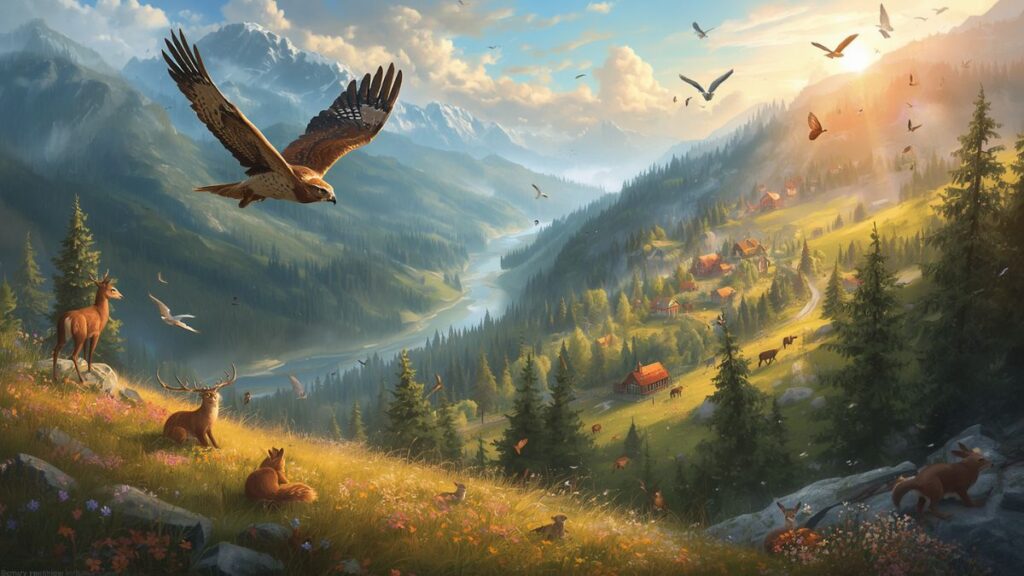
Long ago, where a wide river flowed between green forests and gentle hills, there was a peaceful village that gathered every year for a special day of storytelling, gratitude, and remembrance. Families traveled from nearby valleys carrying handmade blankets, woven baskets, musical instruments, and delicious food to share with one another.
The most anticipated part of the celebration took place after sunset.
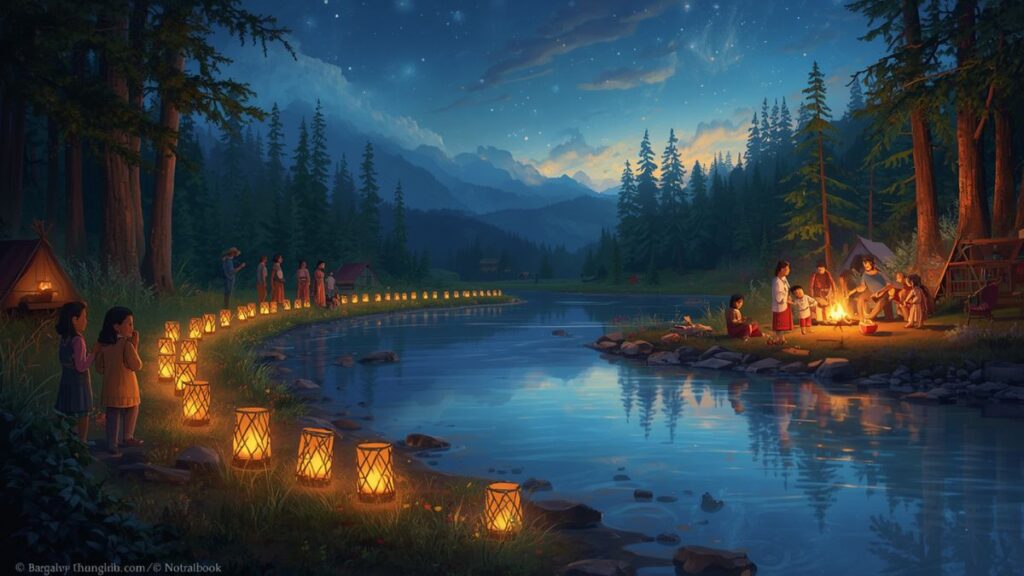
As darkness covered the valley, every family crafted a small lantern from thin branches, colorful leaves, and soft animal-safe wax. One by one, they placed the glowing lanterns along the riverbank, where their warm light reflected on the calm water like hundreds of tiny stars.
To the children, it was the most magical sight in the world.
Among them lived a curious girl named Kaya.
Kaya loved asking questions.
She wondered why birds always returned in spring, why rivers never stopped flowing, and why the tallest cedar trees could live through countless seasons.
This year, however, she had only one question.
“Why do we place lanterns beside the river every year?”
Her grandfather smiled.
“You’ll understand before the celebration ends.”
Kaya wasn’t satisfied with such a mysterious answer, but she decided to wait.
The days before the gathering were filled with excitement.
Children decorated lantern frames with carefully collected leaves and colorful berries.
Parents prepared food to share with visiting families.
Elders practiced songs and stories they would tell around the evening fire.
Kaya carefully built her own lantern using slender willow branches and bright autumn leaves she had gathered after they had naturally fallen to the ground.
“It doesn’t have to be perfect,” her grandfather reminded her.
“It only needs to be made with care.”
When the celebration finally arrived, the valley came alive with laughter.
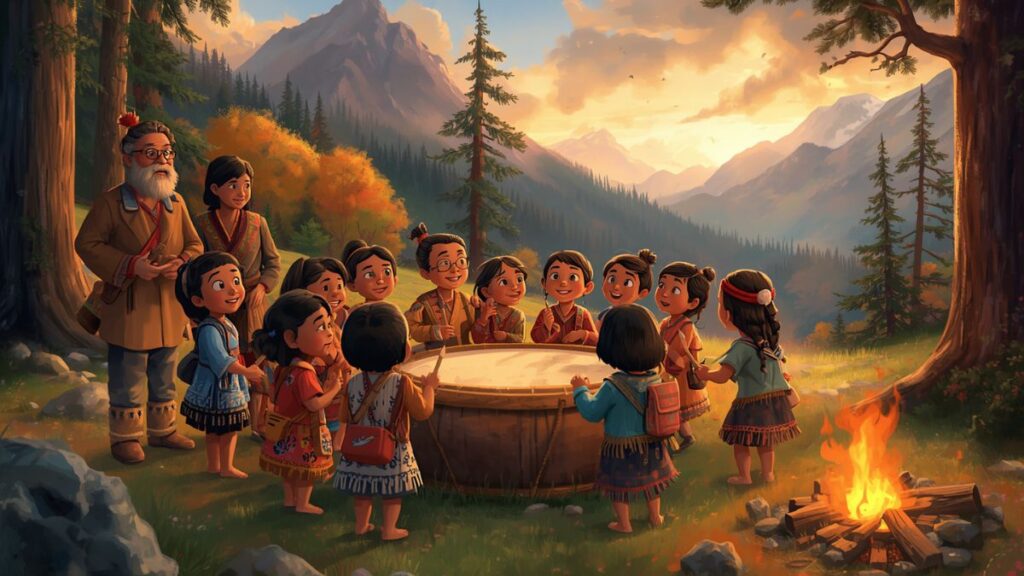
Storytellers welcomed children beneath tall cedar trees.
Musicians filled the air with gentle drumbeats and songs.
Artists demonstrated weaving, carving, and painting inspired by the beauty of the natural world.
Throughout the afternoon, Kaya listened closely to every elder.
Each story carried an important lesson.
One spoke about kindness.
Another reminded everyone to care for rivers and forests.
A third explained that every generation learns from the one before it.
As evening approached, everyone gathered beside the wide river.
The setting sun painted the sky with shades of gold, orange, and deep purple.
Families quietly placed their lanterns along the water’s edge.
Soon hundreds of tiny lights shimmered beside the flowing river.
Kaya admired the beautiful sight.
Still, she wondered.
“What do the lanterns mean?”
Her grandfather invited her to sit beside him.
“When I was your age,” he began, “I asked the same question.”
He pointed toward the gently flowing river.
“Notice something.”
“The water never stays in one place.”
Kaya watched carefully.
“It keeps moving.”
“Exactly.”
“The river reminds us that time keeps moving too.”
He continued softly.
“Every generation learns from those who came before.”
“Our stories, values, and traditions continue flowing forward, just like this river.”
Kaya looked at the glowing lanterns.
“So each lantern represents a story?”
“In a way.”
“It represents the light each person shares with others.”
Before Kaya could ask another question, an unexpected gust of wind swept across the valley.
Several lanterns tipped over.
One small lantern drifted toward deeper water.
Children gasped.
Without hesitation, Kaya and several friends carefully gathered long branches from the riverbank.
Working together, they gently guided the drifting lantern back toward shore without stepping into the water.
The families applauded.
Her grandfather smiled proudly.
“You’ve already added your own light.”
Kaya looked puzzled.
“I only helped.”
“Exactly.”
“Every kind action becomes part of the story future generations remember.”
Later that evening, the eldest storyteller stood before the gathering.
“When we remember acts of kindness,” he said, “they never truly disappear.”
“They become lights that guide those who come after us.”
His words stayed in Kaya’s heart.
The next morning, many visitors prepared to return home.
As families packed their belongings, Kaya noticed pieces of paper, bits of string, and food scraps scattered around the celebration grounds.
Without being asked, she began cleaning the area.
Her friends soon joined her.
Before long, children from every village were helping collect litter, organize supplies, and leave the valley cleaner than they had found it.
The elders watched with quiet smiles.
One grandmother whispered,
“The stories are already becoming actions.”
Over the following months, Kaya often remembered the glowing lanterns beside the river.
Whenever someone needed help carrying firewood, she volunteered.
She planted young trees after spring rains.
She shared food with neighbors during difficult seasons.
She listened respectfully whenever elders shared their experiences.
Every act reminded her of another tiny lantern shining beside the river.
Years passed.
Kaya grew into a thoughtful young leader admired throughout the valley.
Each year, she helped organize the annual gathering.
Children loved walking beside her as she explained the meaning of the lantern tradition.
“Do the lanterns honor the past?” one little boy asked.
“Yes,” Kaya replied.
“But they also remind us to create good memories today.”
A young girl held up her finished lantern.
“Will someone remember mine?”
Kaya smiled.
“If you fill your life with kindness, many people will.”
One autumn, heavy rains caused the river to rise higher than usual just before the celebration.
Some families worried the lantern tradition might have to be canceled.
Kaya gathered everyone together.
“The river has always taught us to adapt.”
Instead of placing the lanterns at the edge of the water, the families carefully arranged them along higher stone paths overlooking the river.
The lights still reflected beautifully in the water below.
The tradition continued.
Children learned another lesson that year.
Respecting nature sometimes means changing our plans wisely rather than forcing them to stay the same.
As generations came and went, the lantern celebration became more than a beautiful tradition.
It became a reminder that stories live on through actions.
Every helpful deed.
Every honest word.
Every lesson shared with love.
Every act of respect toward nature.
Each one became another light added to the growing line of lanterns stretching through time.
Travelers who visited the valley often asked why the celebration felt so peaceful.
The villagers simply pointed toward the glowing lanterns.
“Each light reminds us that we are connected to those who came before us and responsible for those who will come after us.”
Even today, whenever families gather beside rivers to share stories, celebrate community, or remember important traditions, many imagine rows of glowing lanterns reflecting across calm water.
The lanterns remind us that while seasons change and years pass, kindness, wisdom, gratitude, and respect continue shining from one generation to the next.
Like a river that never stops flowing, the lessons we share today become the guiding light for tomorrow.
Moral of the Story
Traditions, kindness, and wisdom become lasting lights when they are shared with future generations. By honoring the past through our actions today, we help guide a brighter tomorrow.