

Sacrifice is one of the most powerful expressions of human character. Throughout history, countless individuals have willingly given up comfort, opportunities, possessions, and even personal dreams for the benefit of others. These acts of selflessness often leave lasting impressions because they reveal the strength of compassion, courage, and commitment.
The most inspiring stories about sacrifice are not always about grand heroic gestures. Sometimes, they involve ordinary people making difficult choices for their families, friends, communities, or causes they believe in. A parent working multiple jobs to support a child, a teacher dedicating extra hours to help struggling students, or a stranger stepping forward to assist someone in need can all demonstrate the true meaning of sacrifice.
These stories remind us that meaningful achievements and strong relationships often require giving something of ourselves. Whether motivated by love, duty, faith, or generosity, sacrifice has the power to inspire others and create positive change.
In this collection of inspiring stories about sacrifice, we explore real-life lessons and timeless examples that highlight the extraordinary impact of putting others before ourselves.
Why Stories of Sacrifice Inspire Us
People are naturally drawn to stories of sacrifice because they reveal the best qualities of human nature.
When individuals willingly give up something valuable for a greater purpose, they demonstrate strength that goes beyond personal gain. These actions often inspire admiration because they show courage in situations where selfishness might seem easier.
Sacrifice Demonstrates Love
Many sacrifices are motivated by love.
Parents sacrifice sleep, time, and personal ambitions to provide better opportunities for their children. Friends stand by one another during difficult periods. Family members often place the needs of loved ones above their own comfort.
These actions show that genuine love is often expressed through service and commitment.
Sacrifice Builds Character
Making sacrifices requires discipline and resilience.
People who consistently choose long-term goals over immediate rewards develop patience, responsibility, and determination. These qualities help them overcome challenges and achieve meaningful success.
Sacrifice Creates Positive Change
Throughout history, progress has often been driven by individuals willing to make personal sacrifices for a larger cause.
Many social reforms, humanitarian efforts, and community improvements exist because someone chose to act selflessly despite personal costs.
Inspiring Stories About Sacrifice
1. The Scholarship Letter

The envelope arrived on a rainy Thursday afternoon.
Ethan almost missed it.
He had returned home from school carrying a backpack full of textbooks and notes, his mind occupied by upcoming exams and final assignments. The last thing he expected was a large white envelope sitting on the kitchen table with his name written neatly across the front.
His mother stood nearby, trying unsuccessfully to hide her excitement.
“You should open it,” she said.
Ethan looked at the logo in the corner and immediately recognized it.
It belonged to Westbridge University.
His dream school.
For years, he had imagined attending Westbridge. Ever since he was a child, he had talked about studying there. While other students changed career goals every few months, Ethan had remained focused.
He wanted to become an engineer.
Not because someone told him to.
Not because it sounded impressive.
But because he genuinely loved solving problems.
As a boy, he spent weekends taking apart broken radios and old appliances just to see how they worked. Sometimes he managed to put them back together. Sometimes he did not.
His parents never complained.
Instead, they encouraged his curiosity.
That support became one of the reasons he worked so hard throughout school.
Now the envelope sat before him.
Years of effort seemed to rest inside a few folded pages.
His hands trembled slightly as he opened it.
He unfolded the letter.
His eyes moved quickly across the page.
Then stopped.
For a moment he said nothing.
His mother waited anxiously.
Finally, he looked up.
A smile spread across his face.
“I got in.”
His mother covered her mouth.
“What?”
“I got in.”
The words felt unreal.
He looked back at the letter to make sure he had read it correctly.
There it was.
An official acceptance.
Even better, the university had awarded him a substantial scholarship based on academic achievement.
His years of hard work had paid off.
For the rest of the evening, the house felt lighter.
His father came home from work and celebrated the news.
His younger sister, Lily, danced around the living room as if she had received the scholarship herself.
Everyone talked about the future.
The campus.
The classes.
The opportunities ahead.
For the first time, Ethan could clearly picture the next chapter of his life.
It felt exciting.
Hopeful.
Earned.
Over the next few weeks, preparations began.
Forms were completed.
Housing applications were submitted.
Scholarship documents were finalized.
Every step brought him closer to his goal.
Then everything changed.
It started with a doctor’s appointment.
Lily had been feeling tired for several weeks.
At first, everyone assumed it was a minor illness.
Nothing serious.
Children got sick sometimes.
Life moved on.
But the fatigue persisted.
Then came additional symptoms.
The family doctor recommended further testing.
A few days later, Ethan sat in a hospital waiting room with his parents.
The atmosphere felt different.
Heavy.
Quiet.
The kind of silence that carried worry.
When the doctor entered the room, Ethan immediately sensed that something was wrong.
The conversation that followed changed everything.
Lily had a serious medical condition.
Treatment would begin immediately.
Although doctors were optimistic, the process would be long and expensive.
Medical appointments.
Specialists.
Medication.
Ongoing care.
The costs began accumulating almost immediately.
His parents tried to remain positive.
They reassured Lily.
They reassured each other.
And they reassured Ethan.
But late at night, Ethan overheard conversations.
Conversations they thought he could not hear.
Discussions about bills.
Insurance.
Savings.
Loans.
The numbers frightened them.
For the first time in years, his father seemed uncertain.
His mother seemed exhausted.
The scholarship letter remained pinned to Ethan’s bedroom wall.
Yet every time he looked at it, his feelings became more complicated.
A month earlier, it represented possibility.
Now it represented distance.
Distance from his family.
Distance from a crisis unfolding at home.
One evening, he sat at the kitchen table reviewing university paperwork.
His mother entered the room.
She looked tired.
The previous weeks had taken a visible toll on her.
“You should be excited,” she said softly.
“I am.”
She smiled.
But it was a fragile smile.
“We’ll figure everything out.”
Ethan nodded.
Yet neither of them seemed entirely convinced.
That night, sleep refused to come.
He stared at the ceiling for hours.
His mind kept returning to the same question.
What mattered most?
His dream?
Or his family?
The answer felt obvious.
And impossible.
For years, everyone had encouraged him to pursue this opportunity.
His parents had sacrificed so much to help him succeed.
Walking away now seemed unthinkable.
Yet leaving also felt wrong.
The next morning, Ethan visited the university website.
He searched for information about deferments.
Could he postpone enrollment?
Would his scholarship remain valid?
He read every detail carefully.
The possibility existed.
Nothing was guaranteed.
But it was possible.
For several days, he told no one.
He continued thinking.
Reflecting.
Questioning.
Then one evening, he made his decision.
The family was eating dinner when he spoke.
“I’ve been thinking about college.”
His parents looked up.
His mother immediately sensed something important.
“What about it?”
Ethan took a deep breath.
“I’m going to defer for a year.”
Silence filled the room.
His father frowned.
“What?”
“I want to stay.”
“No,” his mother said immediately.
“Ethan…”
“I’ve already researched it.”
His parents exchanged worried glances.
“You worked too hard for this,” his father said.
“I know.”
“You earned this opportunity.”
“I know.”
His mother shook her head.
“We’ll manage.”
Ethan looked at both of them.
For a moment, he saw how tired they truly were.
How much they were carrying.
How hard they were trying to protect everyone else.
Including him.
“No,” he said gently. “We’ll manage.”
The conversation lasted for hours.
Arguments.
Discussions.
Emotions.
Tears.
But eventually, his parents understood.
The decision came from love.
Not fear.
Not uncertainty.
Love.
Months later, while many of his classmates moved into dormitories and began university life, Ethan started working.
The job was not glamorous.
Long hours.
Early mornings.
Physical labor.
But it provided income.
More importantly, it provided stability.
He helped with expenses.
Drove Lily to appointments.
Supported his parents whenever possible.
The year was difficult.
Harder than he expected.
There were moments when he questioned his choice.
Social media often showed friends enjoying college experiences.
New campuses.
New friendships.
New adventures.
Meanwhile, Ethan spent many evenings returning home exhausted from work.
Yet whenever doubt appeared, he remembered why he stayed.
And then he would see Lily smiling after a successful treatment.
Or his mother’s relieved expression when a bill was paid.
Or his father’s gratitude that never needed words.
And the doubt would fade.
Slowly, things improved.
Lily responded well to treatment.
Medical appointments became less frequent.
Financial pressure eased.
Hope returned.
One year later, Ethan reopened the scholarship file he had carefully stored away.
The university honored its deferment agreement.
His place remained available.
This time, when he prepared to leave, the circumstances were different.
The family gathered once again.
But now the atmosphere felt peaceful.
Lily hugged him tightly.
“You can go now,” she said.
Ethan laughed.
“I know.”
“Don’t worry about us.”
He smiled.
“I never will.”
A few weeks later, he arrived on campus.
The dream he once feared losing had finally become reality.
Yet something had changed.
He was not the same person who opened that acceptance letter a year earlier.
He carried greater maturity.
Greater perspective.
Greater appreciation.
His sacrifice had delayed his journey.
But it had also shaped him.
Years later, after graduating and beginning a successful engineering career, people occasionally asked whether he regretted postponing college.
His answer never changed.
“No.”
Because when he looked back on his life, he realized something important.
The scholarship had opened a door.
But the sacrifice had defined his character.
And in the end, that mattered even more.
Lesson
True sacrifice is not about giving up a dream forever. Sometimes it means placing the needs of others before your own ambitions for a season, trusting that the right path will still be waiting when the time comes.
2. The Last Fishing Boat

The storm arrived without much warning.
For most of the afternoon, the sky had looked ordinary enough. A few dark clouds gathered beyond the horizon, but fishermen in the small coastal village had seen similar weather countless times before.
No one expected what came next.
By evening, powerful winds swept across the shoreline.
The sea, usually calm and predictable, transformed into a wall of crashing waves and roaring water.
Rain fell so heavily that visibility disappeared.
Fishing boats rocked violently against their moorings.
Families gathered indoors, listening to the storm batter windows and rooftops.
All night, the village endured the fury of the weather.
And when morning finally arrived, the damage became clear.
The harbor had changed completely.
Several boats had broken loose during the night.
Some had been smashed against rocks.
Others had sunk beneath the water.
A few were carried far from shore and never found again.
For a village that depended almost entirely on fishing, the destruction felt devastating.
The boats were more than transportation.
They were livelihoods.
Without them, families had no reliable way to earn income.
Among the villagers stood an elderly fisherman named Samuel.
At sixty-eight years old, Samuel had spent nearly his entire life on the sea.
The ocean had provided food for his family, paid for his children’s education, and shaped every stage of his life.
His face carried the marks of decades spent under sun, wind, and saltwater.
He knew the sea better than most people knew their own neighborhoods.
As Samuel walked toward the harbor that morning, his heart sank.
Boat after boat lay damaged.
Wood splintered.
Masts broken.
Engines ruined.
The sight was painful.
Then he noticed something surprising.
His own boat had survived.
The vessel showed signs of wear, but it remained intact.
A few scratches.
Minor damage.
Nothing serious.
Compared to the destruction surrounding it, the boat looked almost untouched.
For a moment, Samuel felt relief.
Then guilt followed immediately afterward.
Around him, neighbors stared helplessly at the remains of their boats.
Some stood silently.
Others tried to calculate repair costs they could not afford.
Several younger fishermen looked especially worried.
Unlike Samuel, many still had children at home.
Young families.
Mortgages.
Bills.
Responsibilities that could not simply wait for better times.
The village council organized a meeting later that day.
Everyone gathered inside the community hall.
The atmosphere was heavy.
People discussed options.
Government assistance might eventually arrive.
Charitable organizations might help.
But those solutions would take time.
Days.
Weeks.
Perhaps even months.
The problem was immediate.
Families needed income now.
Without working boats, there would be no fish to sell.
And without fish to sell, there would be little money coming into the village.
As the discussion continued, Samuel sat quietly in the back of the room.
Listening.
Thinking.
Watching.
Finally, someone spoke.
“At least one boat survived.”
Several heads turned toward Samuel.
The room fell silent.
Everyone knew which boat they meant.
For a moment, Samuel wished they had not looked at him.
Not because he wanted to hide his good fortune.
But because he already understood what they were thinking.
His boat represented opportunity.
The only opportunity currently available.
After the meeting ended, several fishermen approached him.
None directly asked for help.
They didn’t need to.
The concern in their eyes said enough.
That evening, Samuel sat alone on the dock beside his boat.
The sun was setting.
The water had returned to its usual calmness, as if the storm had never happened.
He stared at the vessel.
For years, this boat had been his security.
His independence.
His connection to the life he loved.
He depended on it just as much as everyone else depended on theirs.
Perhaps even more.
At his age, rebuilding would not be easy.
If something happened to this boat, he had very little to fall back on.
The practical decision was obvious.
Protect the boat.
Use it for himself.
Maximize his income while demand remained high.
No one would blame him.
No one would expect otherwise.
Yet the thought left him uncomfortable.
Because every time he imagined keeping the boat exclusively for himself, he saw the faces of the younger fishermen.
He saw worried parents.
Children whose futures depended on opportunities their families currently lacked.
And he remembered something his own father once told him many years ago.
“A boat catches fish,” his father had said.
“But a good heart feeds people.”
Samuel smiled faintly at the memory.
The next morning, he made a decision.
He walked to the harbor and gathered several fishermen.
“You’ll use my boat.”
The men looked confused.
“What do you mean?”
“I mean exactly what I said.”
One fisherman shook his head.
“Samuel, that’s your boat.”
“It is.”
“Then you should use it.”
Samuel smiled.
“We all should.”
The arrangement was simple.
Different fishermen would take turns using the boat.
Each family would receive opportunities to earn income while repairs continued throughout the village.
The plan wasn’t perfect.
Schedules were complicated.
Resources remained limited.
But it worked.
And more importantly, it gave people hope.
Over the following weeks, the boat rarely rested.
Before sunrise, one crew would leave the harbor.
Later, another group would use it.
Day after day.
Trip after trip.
Fish returned to local markets.
Families began earning money again.
Not enough to solve every problem.
But enough to survive.
Samuel continued helping however he could.
Often, he gave others priority over himself.
Some days, he didn’t fish at all.
Instead, he spent time repairing nets, maintaining equipment, and helping younger fishermen plan their trips.
His own income dropped significantly.
Friends noticed.
“You’re sacrificing too much,” one neighbor told him.
Samuel simply shrugged.
“Maybe.”
“You need the money too.”
“I do.”
“Then why keep doing this?”
Samuel looked toward the harbor.
Because he understood something many people overlooked.
Wealth was important.
But community mattered more.
Years earlier, when he was a young fisherman struggling to support his family, neighbors had helped him.
Older fishermen had shared advice.
Loaned equipment.
Offered opportunities.
Without their support, he might never have succeeded.
Now it was his turn.
Weeks became months.
Gradually, damaged boats returned to the water.
Repairs were completed.
New engines installed.
Fresh paint covered storm scars.
The harbor slowly came back to life.
One by one, families regained independence.
Eventually, the day arrived when Samuel’s boat was no longer needed as the village’s shared lifeline.
By then, everyone knew what his sacrifice had meant.
The community organized a gathering near the harbor.
Nothing extravagant.
Just neighbors coming together.
Families bringing food.
Children running along the docks.
Laughter returning after difficult months.
During the celebration, one of the younger fishermen stood to speak.
He thanked many people.
Volunteers.
Workers.
Community leaders.
Then he turned toward Samuel.
“When the storm took our boats, many of us thought we had lost everything.”
The crowd listened quietly.
“But one man reminded us that we hadn’t.”
He paused.
“Because while the storm damaged our boats, it couldn’t damage generosity.”
Several people nodded.
Others wiped away tears.
Samuel felt embarrassed by the attention.
He never enjoyed being the center of recognition.
He had not helped because he wanted praise.
He helped because it felt right.
Yet seeing the families gathered there that evening brought him a deep sense of satisfaction.
Not pride.
Gratitude.
Gratitude that he had been given an opportunity to make a difference.
Years later, new fishermen entered the village.
Children grew up.
Families changed.
The storm gradually became part of local history.
But one story remained.
The story of the last fishing boat.
Older residents continued telling it to younger generations.
Not because of the boat itself.
But because of what it represented.
A reminder that sometimes the most valuable thing we possess is not what we own.
It is our willingness to share it.
Lesson
True sacrifice means placing the well-being of others above personal advantage. Samuel could have protected his only remaining boat for himself, but by sharing it with his neighbors, he helped an entire community recover from hardship and demonstrated that generosity often creates a greater legacy than wealth.
3. The Teacher’s Evening Classes
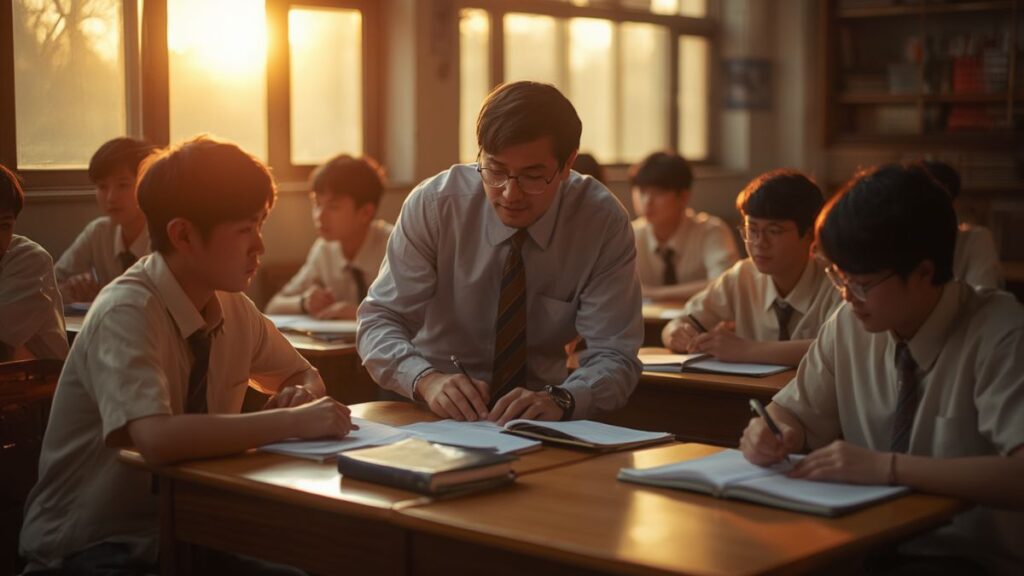
When most teachers left school at the end of the day, Mrs. Carter stayed behind.
Not because she had to.
Because she chose to.
For nearly twenty years, Mrs. Carter had taught mathematics at Riverside Secondary School, a modest public school located in a working-class neighborhood.
The school wasn’t famous.
It didn’t appear in national rankings.
Its buildings were old.
Its classrooms were crowded.
Its resources were limited.
Yet Mrs. Carter loved teaching there.
She believed education could change lives.
Not instantly.
Not magically.
But steadily.
One student at a time.
Every year she met children with incredible potential.
Some came from supportive homes where education was encouraged and celebrated.
Others faced challenges most adults would struggle to handle.
Some worked part-time jobs after school.
Some cared for younger siblings.
Some lived in households where money was constantly tight.
And many simply lacked academic support outside the classroom.
Over time, Mrs. Carter noticed a troubling pattern.
Several students weren’t failing because they lacked intelligence.
They were failing because they lacked help.
When lessons became difficult, there was no one available to guide them.
When homework became confusing, questions went unanswered.
When confidence disappeared, no one was there to rebuild it.
The realization stayed with her.
And eventually, it led to a decision.
One afternoon, after grading a disappointing set of exam papers, Mrs. Carter sat alone in her classroom.
The results reflected more than academic performance.
They reflected frustration.
Confusion.
Lost confidence.
Many students had simply given up.
Not because they didn’t care.
Because they believed they couldn’t succeed.
Mrs. Carter looked around the empty classroom.
Rows of desks.
Whiteboard markers.
Stacks of textbooks.
Everything would remain unused until the following morning.
Unless she changed something.
That evening, she created a simple announcement.
FREE AFTER-SCHOOL MATH SESSIONS
No registration required.
All students welcome.
Bring questions.
Bring homework.
Bring determination.
The following day, she pinned the notice outside her classroom.
She wasn’t sure how many students would come.
Maybe a handful.
Maybe none.
At three-thirty that afternoon, after the final bell rang, she arranged several desks together and waited.
The classroom remained empty.
For five minutes.
Then ten.
She began organizing papers.
Perhaps students weren’t interested.
Then she heard footsteps.
A student appeared in the doorway.
“Is this really free?”
Mrs. Carter smiled.
“It is.”
The student entered cautiously.
A few minutes later, another arrived.
Then another.
By four o’clock, twelve students occupied the classroom.
The first session lasted nearly two hours.
Students asked questions.
Solved problems.
Made mistakes.
Learned.
For the first time in months, many seemed engaged.
When the session ended, several thanked her before leaving.
Mrs. Carter locked the classroom and headed home feeling unexpectedly hopeful.
The following week, attendance doubled.
By the end of the month, more than thirty students regularly participated.
Word spread quickly.
Students who once dreaded mathematics began attending.
Not because they suddenly loved the subject.
But because they finally had a place where they could ask questions without embarrassment.
Mrs. Carter’s classroom became something more than a classroom.
It became a refuge.
A place where mistakes were accepted.
A place where effort mattered.
A place where students felt supported.
The extra classes required sacrifice.
Far more than most people realized.
Every afternoon extended well beyond normal working hours.
While other teachers headed home, Mrs. Carter remained at school.
She spent evenings creating worksheets.
Reviewing lessons.
Preparing explanations for concepts students found difficult.
Weekends often disappeared beneath piles of papers and lesson plans.
Friends occasionally invited her to social events she couldn’t attend.
Family members encouraged her to rest more.
“You work too much,” her sister often said.
Mrs. Carter would laugh.
“Probably.”
Yet she continued.
Not because it was easy.
Because it mattered.
One student in particular reminded her why.
His name was Daniel.
At the beginning of the school year, Daniel sat in the back row.
Quiet.
Withdrawn.
Convinced he was bad at mathematics.
His grades reflected that belief.
Every test ended poorly.
Every assignment seemed to confirm his doubts.
When Mrs. Carter announced the evening sessions, Daniel ignored them.
For several weeks.
Then one afternoon, after receiving another disappointing grade, he reluctantly attended.
He sat near the door.
As if prepared to leave at any moment.
Mrs. Carter noticed.
But she didn’t pressure him.
Instead, she offered help when needed.
Nothing more.
Gradually, Daniel began asking questions.
Then more questions.
Then even more.
For the first time, someone patiently explained concepts he had never fully understood.
Weeks passed.
Confidence slowly replaced frustration.
Mistakes became opportunities rather than evidence of failure.
Months later, Daniel earned one of the highest grades in the class.
When he received the result, he stared at the paper in disbelief.
Then smiled.
A genuine smile.
The kind Mrs. Carter rarely forgot.
Stories like Daniel’s became increasingly common.
Students who once struggled began improving.
Not overnight.
Not effortlessly.
But steadily.
Parents noticed changes.
Teachers noticed changes.
Most importantly, students noticed changes.
They started believing in themselves.
The evening classes continued year after year.
Some years attendance was small.
Other years the classroom overflowed.
Mrs. Carter adapted.
She rearranged schedules.
Created additional resources.
Found new ways to support students.
Still, the sacrifices accumulated.
There were evenings when exhaustion followed her home.
Days when balancing responsibilities felt overwhelming.
Moments when she questioned whether she could continue.
Yet something always renewed her determination.
Sometimes it was a student’s breakthrough.
Sometimes a parent’s gratitude.
Sometimes a graduation ceremony where former students returned to share their achievements.
One afternoon, nearly ten years after starting the evening sessions, Mrs. Carter received a letter.
The envelope looked ordinary.
The handwriting unfamiliar.
Curious, she opened it.
Inside was a handwritten note.
Dear Mrs. Carter,
You probably don’t remember me.
I was one of the students who attended your evening classes years ago.
I wanted to tell you something.
I recently graduated from university with a degree in engineering.
There was a time when I believed college would never be possible for me.
I struggled constantly.
I doubted myself every day.
Your classes changed that.
You taught me mathematics.
But more importantly, you taught me confidence.
You sacrificed your time so students like me could have opportunities we never thought possible.
Thank you.
The letter was signed:
Daniel.
Mrs. Carter read it twice.
Then a third time.
She placed it carefully inside her desk drawer.
Not because she needed recognition.
But because the letter represented something important.
Proof that sacrifice creates ripples.
The hours she gave.
The evenings she surrendered.
The weekends she invested.
None of them disappeared.
They multiplied.
Through students.
Through opportunities.
Through futures changed forever.
Years later, when retirement finally approached, the school organized a celebration.
Former students traveled from different cities.
Some had become doctors.
Others engineers.
Teachers.
Business owners.
Scientists.
Parents.
Many spoke about Mrs. Carter’s influence.
Many mentioned the evening classes.
Again and again, the same theme emerged.
She had given her time when no one required her to.
And because of that choice, countless lives had changed.
As the event ended, one former student approached her.
“Do you ever regret how much time you sacrificed?”
Mrs. Carter thought for a moment.
Then smiled.
“Not for a second.”
Because she understood something simple yet profound.
Time invested in helping others is never truly lost.
It becomes part of their story.
And part of yours.
Lesson
Sacrifice is not always dramatic. Sometimes it means giving your time, energy, and attention to help others succeed. Mrs. Carter’s willingness to stay after school changed countless lives and proved that the greatest investments are often made in people.
4. The Runner Who Stopped

The morning of the marathon began perfectly.
The sky was clear.
The air was cool.
Thousands of runners filled the city streets, stretching, warming up, and preparing themselves for months, and in some cases years, of training.
Among them stood Marcus Reed.
At thirty-two years old, Marcus had spent most of the past year preparing for this race.
He wasn’t a professional athlete.
He worked as an accountant during the week and trained before sunrise each morning.
While many people were still asleep, Marcus was already running through quiet streets, building endurance one mile at a time.
The marathon had become more than a fitness goal.
It was personal.
Three years earlier, Marcus had attempted the same race and failed to finish.
At mile twenty-one, severe cramps forced him to stop.
Watching other runners continue while he stood on the sidelines had been one of the most disappointing moments of his life.
Since then, he had promised himself he would return.
And this time, he would finish.
Not only finish.
He wanted to achieve his best time ever.
The goal required discipline.
Months of sacrifice.
Early mornings.
Missed social events.
Strict training schedules.
Careful nutrition.
Countless miles.
Friends often joked that Marcus planned his life around running.
In many ways, they were right.
Everything had led to this morning.
As he stood among thousands of runners waiting for the starting signal, excitement mixed with nervous anticipation.
The energy was contagious.
Spectators lined the streets.
Music played.
Volunteers moved through the crowd offering encouragement.
Then the starting horn sounded.
The race began.
At first, everything felt effortless.
Marcus settled into his planned pace.
The early miles passed quickly.
He moved smoothly through the city, maintaining exactly the speed he had practiced during training.
Five miles.
Ten miles.
Fifteen miles.
His body felt strong.
His breathing remained controlled.
Even experienced runners know that marathons are unpredictable, but today everything seemed to be going according to plan.
At mile eighteen, Marcus checked his watch.
He was ahead of schedule.
Not by much.
But enough.
For the first time, he began believing he might achieve the personal record he had spent months pursuing.
The thought energized him.
Spectators continued cheering from the sidewalks.
Children held handmade signs.
Volunteers offered water.
Fellow runners pushed forward with determination.
Marcus focused on maintaining rhythm.
One step.
Then another.
Then another.
Mile twenty arrived.
The point many runners call “the real beginning” of a marathon.
This is where fatigue becomes impossible to ignore.
Where determination matters as much as physical fitness.
Marcus expected discomfort.
He welcomed it.
He had trained specifically for this moment.
His legs felt heavy.
But manageable.
His pace remained strong.
Everything still looked promising.
Then, a little after mile twenty-two, something unexpected happened.
About fifty yards ahead, a runner suddenly stumbled.
At first, it appeared minor.
Perhaps a missed step.
Perhaps fatigue.
But then the runner collapsed completely.
The crowd gasped.
Several runners glanced toward him.
Most continued forward.
Not out of selfishness.
Out of uncertainty.
Marathons are large events.
Medical teams are positioned throughout the course.
Many assumed help would arrive immediately.
Marcus slowed instinctively.
Then stopped.
The runner lay motionless near the side of the road.
People nearby looked concerned.
Yet confusion often creates hesitation.
Everyone expected someone else to act.
Marcus looked at his watch.
Months of preparation.
A personal record within reach.
The finish line only a few miles away.
Everything he had worked for remained possible.
He hesitated.
Just for a second.
Then he turned around.
Without another thought, he ran toward the fallen runner.
As he approached, he saw the man’s condition.
He was conscious but clearly struggling.
His face was pale.
His breathing shallow.
Sweat covered his forehead.
“Can you hear me?” Marcus asked.
The runner nodded weakly.
“My name’s Marcus.”
The man tried to respond.
His voice barely emerged.
Marcus immediately signaled for assistance.
Nearby spectators contacted race officials.
Medical personnel began moving toward them.
But it would take time.
Every second felt longer than normal.
Marcus stayed beside him.
Talking.
Reassuring.
Trying to keep him calm.
The runner’s name was Eric.
Forty-six years old.
Running his first marathon.
He had trained for nearly a year.
His family waited at the finish line.
As they spoke, Marcus could hear runners continuing past them.
Thousands of footsteps.
Thousands of opportunities disappearing.
His personal record was gone.
He knew that.
The realization felt strangely unimportant.
At that moment, only one thing mattered.
Helping Eric.
Several minutes later, medical staff arrived.
They assessed the situation quickly.
Eric was suffering from severe dehydration and exhaustion.
Fortunately, he had received help in time.
The medical team began treatment immediately.
One medic looked at Marcus.
“You can continue if you want.”
Marcus glanced toward the course.
Then back toward Eric.
The runner managed a weak smile.
“You should go.”
Marcus considered it.
Technically, he still could.
The race wasn’t over.
He could finish.
But something told him to stay.
So he did.
He accompanied Eric to the medical station.
They talked during recovery.
About running.
Family.
Life.
Goals.
Hours later, once doctors confirmed Eric was stable, Marcus finally left.
The marathon was long over.
The finish line had been dismantled.
Most runners had already gone home.
For the first time all day, Marcus allowed himself to think about what he had sacrificed.
The personal record.
The accomplishment.
The months of preparation.
The disappointment surprised him.
Not because it was overwhelming.
Because it was smaller than expected.
Somehow, losing the record didn’t hurt nearly as much as he thought it would.
The following morning, Marcus woke up to dozens of messages.
Friends had seen photos online.
Spectators had shared the story.
Someone recorded part of the incident.
Local news outlets picked it up.
By evening, the story had spread far beyond the running community.
Headlines described the runner who stopped.
Interviews followed.
People praised Marcus for his actions.
The attention made him uncomfortable.
He didn’t consider himself a hero.
He had simply made a choice.
The choice he hoped someone would make for him if the situation were reversed.
Several days later, Marcus received a letter.
Inside was a photograph.
It showed Eric standing with his wife and two daughters.
Everyone was smiling.
A handwritten note accompanied it.
Marcus,
There are moments in life when you discover what truly matters.
For me, that moment happened at mile twenty-two.
You gave up something important to help a complete stranger.
Because of your decision, I returned home to my family.
No race result could ever equal that gift.
Thank you.
Eric
Marcus stared at the photograph for a long time.
Then carefully placed it on his desk.
Months passed.
Life returned to normal.
Work resumed.
Training continued.
The story gradually faded from public attention.
But one thing remained.
Perspective.
The following year, Marcus entered another marathon.
Again he trained hard.
Again he pursued ambitious goals.
Again he stood among thousands of runners waiting for the race to begin.
A reporter covering the event approached him before the start.
“Do you think you’ll finally get your personal record today?”
Marcus smiled.
“Maybe.”
“And if something similar happened again?”
The reporter expected hesitation.
Perhaps a complicated answer.
Instead, Marcus responded immediately.
“I’d stop.”
“Without thinking?”
Marcus nodded.
“Without thinking.”
Because over the previous year, he had learned something important.
Success matters.
Goals matter.
Achievements matter.
But people matter more.
When the race began, Marcus ran with confidence.
This time, he achieved his personal best.
Friends congratulated him.
Family celebrated.
The accomplishment felt wonderful.
Yet even as he crossed the finish line, he knew something.
His proudest moment as a runner had not happened during a victory.
It had happened on a day when he chose compassion over competition.
And that lesson would stay with him forever.
Lesson
True sacrifice often means giving up personal success to help someone else in need. Marcus lost the chance to achieve a record-breaking race, but gained something far more valuable: the knowledge that kindness and character matter more than any finish time.
5. The Candle Maker’s Gift

The town of Willow Creek was known for many things.
Its narrow cobblestone streets.
Its historic buildings.
Its friendly residents.
But perhaps most of all, it was known for its annual Winter Market.
Every year, as the cold season approached, people traveled from neighboring towns to visit the festival. Wooden stalls lined the town square, decorated with lanterns and evergreen branches. Merchants sold handmade crafts, baked goods, knitted scarves, and seasonal decorations.
For local business owners, the Winter Market was more than a celebration.
It was often the most important financial event of the year.
Among those merchants was a candle maker named Oliver Hayes.
For nearly fifteen years, Oliver had operated a small workshop on the edge of town. His candles were famous throughout the region for their quality and craftsmanship.
Each candle was handmade.
Each scent carefully developed.
Each design created with attention to detail.
Customers loved them.
The Winter Market was particularly important to Oliver because it generated nearly half of his annual income.
Every year he spent months preparing.
And this year was no different.
Throughout the autumn, Oliver worked tirelessly.
He woke before sunrise.
He stayed in his workshop long after dark.
Day after day, he poured wax, trimmed wicks, mixed fragrances, and packaged finished products.
Lavender candles.
Pine-scented candles.
Vanilla candles.
Holiday-themed collections.
Decorative lantern sets.
By late November, his workshop shelves were overflowing.
Thousands of candles stood ready for sale.
The inventory represented months of effort.
Months of planning.
Months of sacrifice.
Oliver often joked that he had spent more time with candles than with people.
His friends laughed.
But it was almost true.
Everything depended on a successful Winter Market.
Then disaster struck.
It happened three days before the festival.
A fire broke out in a residential neighborhood near the river.
No one knew exactly how it started.
Some blamed an old heating system.
Others suspected faulty wiring.
Whatever the cause, the fire spread quickly.
Strong winds carried sparks between buildings.
Within hours, several homes were destroyed.
Families escaped safely, but many lost nearly everything they owned.
Furniture.
Clothing.
Photographs.
Personal belongings.
Years of memories disappeared in a single night.
The entire town felt the impact.
Residents gathered to help.
Volunteers provided food.
Community centers opened temporary shelters.
Donations began arriving from neighboring towns.
Yet the needs remained enormous.
Winter was approaching.
Temperatures were dropping.
And many families suddenly found themselves without reliable heat or light.
The morning after the fire, Oliver walked through the affected neighborhood.
The sight was heartbreaking.
Blackened foundations.
Collapsed roofs.
Smoke lingering in the air.
Children standing beside temporary shelters.
Parents trying to remain optimistic despite overwhelming uncertainty.
Oliver recognized many faces.
These were not strangers.
They were neighbors.
Customers.
Friends.
People he had known for years.
One family in particular caught his attention.
The Mitchell family.
They had lived two streets away from Oliver for nearly a decade.
Their home was gone.
Completely destroyed.
Mrs. Mitchell sat quietly on a folding chair outside the shelter while her children played nearby.
She smiled when she saw Oliver.
But the smile carried exhaustion.
The kind that comes from losing more than possessions.
The kind that comes from uncertainty.
Oliver returned home troubled.
All afternoon, he walked through his workshop.
Rows of candles surrounded him.
Months of work.
Months of preparation.
Months of inventory.
Normally, seeing the shelves filled with products would have brought satisfaction.
Instead, he felt conflicted.
The Winter Market could still be successful.
People would still attend.
Customers would still buy candles.
He needed the income.
His business depended on it.
No one would expect him to sacrifice his inventory.
No one would blame him for protecting his livelihood.
Yet the thought continued bothering him.
As evening arrived, he sat alone in the workshop.
The scent of pine and vanilla filled the room.
Outside, snowflakes drifted through the air.
Inside, thousands of candles waited.
Then an idea entered his mind.
At first, he dismissed it.
Too extreme.
Too costly.
Too impractical.
But the thought refused to leave.
The next morning, Oliver visited the town council office.
Several volunteers were organizing relief efforts.
“We need supplies,” one coordinator explained.
“Blankets. Food. Portable heaters. Anything that can help.”
Oliver listened carefully.
Then he asked a simple question.
“What about candles?”
The coordinator looked surprised.
“Candles?”
“Yes.”
“We could definitely use them.”
Oliver nodded slowly.
“How many?”
The coordinator laughed softly.
“As many as possible.”
For a moment, Oliver remained silent.
Then he spoke.
“You can have all of mine.”
The room became quiet.
“All of them?”
Oliver nodded.
“Every candle in my workshop.”
The coordinator stared at him.
“Oliver, that’s your Winter Market inventory.”
“I know.”
“You’ve spent months preparing.”
“I know.”
“Are you sure?”
Oliver thought about the families who had lost their homes.
The children sleeping in temporary shelters.
The uncertainty facing so many neighbors.
Then he smiled.
“Yes.”
The news spread quickly.
Within hours, volunteers arrived at his workshop.
Together, they loaded boxes of candles into trucks.
Hundreds.
Then thousands.
The shelves gradually emptied.
By sunset, the workshop looked almost abandoned.
Months of inventory had disappeared.
Not through sales.
Through generosity.
The candles were distributed throughout the community.
Some provided light.
Others created warmth and comfort inside temporary shelters.
Many families received supplies that helped them endure difficult winter nights.
The response was immediate.
People were deeply moved by Oliver’s sacrifice.
Yet Oliver avoided attention whenever possible.
When reporters requested interviews, he declined.
When community leaders praised him publicly, he redirected credit toward volunteers.
To him, the decision seemed simple.
People needed help.
He had something useful.
So he shared it.
The Winter Market arrived three days later.
Unlike previous years, Oliver’s stall stood nearly empty.
He displayed a handful of leftover candles.
Nothing more.
Visitors immediately noticed.
Many had already heard the story.
Customers approached throughout the day.
Some purchased the remaining products.
Others insisted on placing future orders.
Several simply stopped to thank him.
One elderly woman bought a single candle and handed Oliver a small note.
“Please read this later,” she said.
That evening, after returning home, Oliver opened the note.
Inside were only a few sentences.
My granddaughter slept peacefully last night because your candles gave our shelter light after dark.
Thank you for reminding us that kindness still exists.
Oliver folded the note carefully.
Then placed it inside a drawer.
Months passed.
Winter gradually gave way to spring.
The affected families slowly rebuilt their lives.
New homes replaced damaged ones.
Recovery continued.
And something unexpected happened.
Oliver’s business began growing.
Not because he sought recognition.
Because people remembered.
Customers traveled from neighboring towns specifically to support him.
Local organizations partnered with his workshop.
New opportunities emerged.
Yet the financial success never became the most important part of the story.
Years later, residents still talked about the winter when the candle maker gave everything away.
Children who were young during the fire grew up hearing the story.
Parents shared it.
Teachers repeated it.
Community leaders referenced it whenever discussing generosity.
One evening, long after the fire had become a distant memory, Oliver attended a town gathering.
Several families who had benefited from the relief efforts were present.
One young woman approached him.
At first, he didn’t recognize her.
Then she introduced herself.
She was one of the Mitchell children.
Now an adult.
“You probably don’t remember me,” she said.
Oliver smiled.
“Of course I do.”
The woman laughed.
“I wanted to thank you.”
“You already have.”
“No,” she said gently. “Not properly.”
She explained how difficult those months had been.
How uncertain everything felt.
How small acts of kindness helped her family keep moving forward.
Then she said something Oliver never forgot.
“The candles weren’t just candles.”
“What do you mean?”
“They were hope.”
Oliver stood quietly for a moment.
Then nodded.
Because he finally understood.
The true value of his gift had never been the candles themselves.
It was what they represented.
Compassion.
Community.
Humanity.
The reminder that even during life’s darkest moments, light can still be shared.
And sometimes, the brightest light comes from sacrifice.
Lesson
True sacrifice is giving something valuable when keeping it would be easier. Oliver gave away months of work to help families in need, proving that kindness can illuminate lives long after the gift itself is gone..
6. The Musician’s Promise
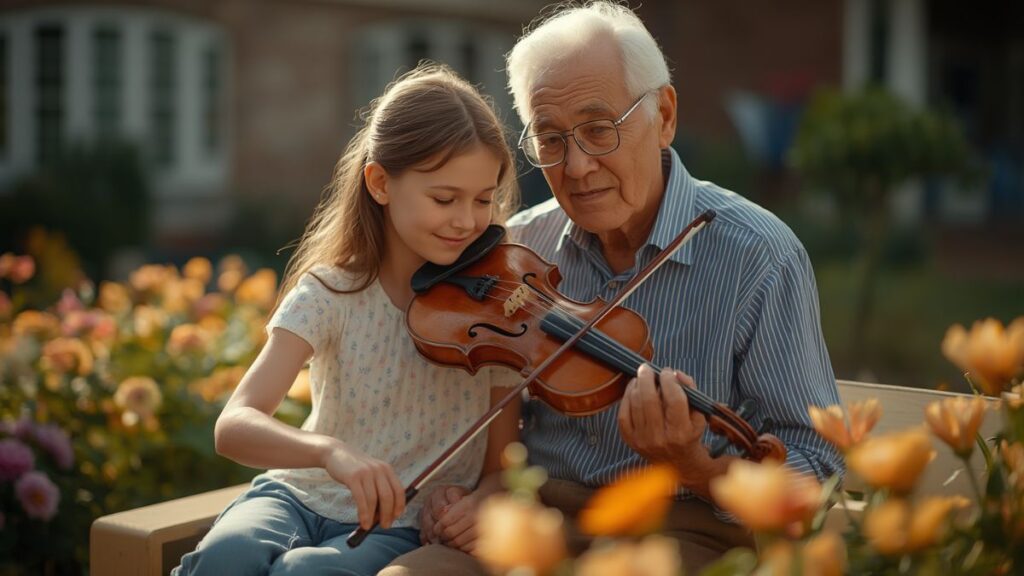
The applause echoed through the concert hall long after the final note faded.
Lena Hart stood beneath the stage lights, violin in hand, her heart racing.
She was twenty-four years old.
Young.
Talented.
And standing at the edge of everything she had ever dreamed about.
For years, Lena had worked toward this moment.
Since childhood, music had been her world.
While other children spent afternoons playing outside, Lena spent countless hours practicing scales, studying compositions, and perfecting techniques.
Her violin was more than an instrument.
It was part of her identity.
Part of her future.
Part of her dream.
That dream had always been clear.
She wanted to perform professionally.
Not just locally.
Not occasionally.
She wanted to travel.
To perform in famous concert halls.
To share her music with audiences around the world.
And now, for the first time, that dream seemed within reach.
After the performance, a representative from a prestigious touring orchestra approached her.
The conversation lasted less than fifteen minutes.
But it changed everything.
The orchestra planned an international tour beginning the following year.
Several countries.
Major venues.
Thousands of people.
And they wanted Lena to join them.
The opportunity was extraordinary.
The kind musicians wait their entire lives to receive.
When Lena returned home that evening, she could barely contain her excitement.
Her parents celebrated.
Friends congratulated her.
Teachers called to express pride.
Everyone understood how significant the offer was.
Everyone except one person.
Her grandfather.
Not because he wasn’t happy.
Because he wasn’t there.
A few weeks earlier, health complications had forced him into a long-term care facility several miles outside town.
The man who had once seemed invincible was growing weaker.
Lena visited him regularly.
But every visit reminded her that time was changing things neither of them could control.
The following morning, she drove to see him.
His room overlooked a small garden.
Birds gathered outside the window.
Sunlight filled the space.
When Lena shared the news, his face lit up.
“I knew it would happen,” he said.
She laughed.
“No, you didn’t.”
“I did.”
“You always say that.”
“Because I’m always right.”
The familiar joke made both of them smile.
For nearly an hour they talked about the opportunity.
The cities she might visit.
The concerts she might perform.
The future awaiting her.
Yet as the conversation continued, Lena noticed something.
Her grandfather seemed more tired than usual.
More fragile.
The realization unsettled her.
For the first time, she wondered how much time remained.
Weeks passed.
Preparations for the tour accelerated.
Contracts arrived.
Schedules were finalized.
Travel arrangements began.
Everything moved forward.
Everything except her peace of mind.
The closer the departure date approached, the more conflicted she became.
Her grandfather’s health continued declining.
Doctors remained honest but cautious.
No one could predict exactly what would happen.
But everyone understood the situation.
One evening, after visiting him, Lena sat alone in her apartment.
The tour documents rested on the table.
Beside them sat a photograph.
A picture taken years earlier.
She was twelve years old.
Standing beside her grandfather.
Holding her first violin.
The image carried countless memories.
Memories most people never knew.
Because her grandfather had been the reason she started playing music in the first place.
When Lena was young, her family struggled financially.
Professional lessons seemed impossible.
Instruments were expensive.
Opportunities were limited.
Yet somehow, her grandfather always found a way.
He worked extra hours.
Saved money quietly.
Made sacrifices no one fully understood.
Eventually, he bought her first violin.
A modest instrument.
Nothing extraordinary.
Yet to Lena, it felt priceless.
Later came lessons.
Competitions.
Travel expenses.
Every step of her musical journey carried traces of his support.
And now she faced a decision.
The opportunity of a lifetime.
Or precious time with the man who helped make it possible.
For weeks, she wrestled with the choice.
Friends encouraged her to accept the tour.
Family members urged her to follow her dream.
Even her grandfather insisted she should go.
Yet something felt unresolved.
One afternoon, she arrived at the care facility and found him sitting near the garden.
The weather was pleasant.
Flowers bloomed nearby.
For a while, they sat in comfortable silence.
Then Lena finally spoke.
“I’m thinking about turning it down.”
Her grandfather looked surprised.
“The tour?”
She nodded.
“Why?”
“You know why.”
He shook his head.
“No.”
“Because of you.”
He laughed softly.
“That’s a terrible reason.”
“It’s not.”
“It is.”
Lena looked away.
Tears threatened to surface.
“I don’t want to miss this time.”
Her grandfather remained quiet.
Then he spoke carefully.
“Lena, do you know what sacrifices are for?”
She frowned.
“What do you mean?”
“When people sacrifice something, it should help someone else move forward.”
She listened.
“I made sacrifices because I wanted you to have opportunities I never had.”
He paused.
“If you refuse those opportunities because of me, then what was the point?”
The words stayed with her long after she left.
Yet they did not erase her uncertainty.
Over the following months, his condition worsened.
Simple tasks became difficult.
Conversations became shorter.
Visits became more precious.
Eventually, Lena made her decision.
She declined the tour.
The response shocked nearly everyone.
Industry professionals questioned her choice.
Friends tried changing her mind.
Some even suggested she was making a mistake.
Perhaps they were right.
From a career perspective, the decision made little sense.
Opportunities like this rarely appeared twice.
But Lena understood something others didn’t.
Success could wait.
Time could not.
For the next two years, she remained in her hometown.
She continued performing locally.
Teaching music lessons.
Participating in community concerts.
Most importantly, she spent time with her grandfather.
They shared meals.
Conversations.
Stories.
Quiet afternoons.
Small moments many people overlook until they’re gone.
During those years, she learned more about him than she had during the previous twenty.
She discovered stories from his youth.
Challenges he had overcome.
Dreams he once held.
Lessons he wanted to pass along.
The time became a gift for both of them.
Eventually, the day everyone feared arrived.
Her grandfather passed away peacefully.
The loss was painful.
Profoundly painful.
Yet amid the grief, Lena felt gratitude.
She had been there.
Not occasionally.
Consistently.
She had not missed the moments that mattered.
Months later, she returned to performing with renewed purpose.
Her music changed.
Not technically.
Emotionally.
Audiences noticed.
Critics noticed.
Fellow musicians noticed.
There was greater depth in her performances.
Greater sincerity.
Greater humanity.
The experiences she gained during those years shaped every note she played.
Then something unexpected happened.
A new opportunity appeared.
Different from the original tour.
Yet equally significant.
A respected chamber orchestra invited her to join.
This time, she accepted.
As her career flourished, journalists occasionally asked about the decision she made years earlier.
Many seemed surprised she carried no regret.
Her answer always remained the same.
“No opportunity is more valuable than people you love.”
One evening, after a successful performance in Vienna, Lena returned to her hotel room.
Among her belongings sat the old photograph.
The same one she had stared at years earlier.
The picture of a young girl holding her first violin beside her grandfather.
She smiled.
Because she finally understood something.
The sacrifice had never been about giving up a tour.
It had been about honoring the person who made the dream possible.
And in doing so, she gained memories far more valuable than any concert stage could provide.
Years later, during interviews and public appearances, she often shared a lesson her grandfather taught her.
Success is important.
Ambition is important.
Dreams are important.
But the people who help us reach those dreams are even more important.
And sometimes, the greatest achievement isn’t pursuing an opportunity.
It’s recognizing when someone matters more.
Lesson
True sacrifice is choosing people over personal ambition when the moment calls for it. Lena delayed a major career opportunity to spend precious time with her grandfather, discovering that some memories become far more valuable than success itself.
7. The Bridge Builder

The river had always divided the village.
For as long as anyone could remember, the Silverbrook River flowed between the small farming community and the nearest town.
Most days, the river looked peaceful.
Its waters moved gently over smooth stones.
Children played along its banks.
Fishermen cast lines from the shore.
Visitors often admired its beauty.
But the villagers knew another side of the river.
When heavy rain arrived, the water rose quickly.
Currents became dangerous.
Crossing became nearly impossible.
And every year, the river created the same problems.
Students missed school.
Workers struggled to reach jobs.
Emergency services faced delays.
Families became isolated.
The nearest bridge stood nearly twelve miles away.
For people with vehicles, the detour was inconvenient.
For those without transportation, it was often impossible.
Over the years, many promises had been made.
Officials discussed bridge proposals.
Committees formed.
Plans were drafted.
Studies were conducted.
Yet nothing changed.
The bridge remained an idea.
Not a reality.
Among the villagers lived a retired engineer named Victor Bennett.
At seventy-one years old, Victor had spent most of his life designing infrastructure projects.
Roads.
Water systems.
Public facilities.
After retiring, he returned to the village where he had grown up.
He expected to spend his retirement quietly.
Gardening.
Fishing.
Reading books.
Enjoying peaceful mornings.
Instead, he found himself increasingly bothered by the river.
Not because it inconvenienced him personally.
Because he saw how it affected others.
One rainy afternoon, Victor witnessed something that stayed with him.
A young mother stood on one side of the river holding her child’s hand.
Across the water, a school bus waited.
The river had risen overnight.
Crossing safely wasn’t possible.
The child missed school that day.
It wasn’t the first time.
And it wouldn’t be the last.
As Victor watched them walk home, a thought entered his mind.
Someone needs to solve this.
The idea seemed simple.
The challenge was not.
Building a bridge required funding.
Permits.
Engineering.
Materials.
Labor.
Time.
The village lacked most of those resources.
Still, Victor couldn’t stop thinking about it.
The following week, he began studying the area.
He measured distances.
Examined soil conditions.
Observed water levels.
Reviewed historical flood data.
Old habits returned quickly.
Before long, notebooks filled with calculations.
Sketches covered his dining room table.
Neighbors became curious.
“What are you working on?” they asked.
Victor smiled.
“A bridge.”
Most people laughed.
Not because they doubted him.
Because the idea sounded impossible.
Victor understood their skepticism.
The project was ambitious.
Perhaps unrealistic.
Yet the more he studied the problem, the more convinced he became.
It could be done.
Months passed.
Victor developed detailed plans.
A pedestrian bridge.
Strong enough to withstand seasonal flooding.
Affordable enough to build with limited resources.
Simple enough to maintain.
When the design was complete, he presented it at a village meeting.
The room filled with interest.
And doubt.
“It’s a wonderful idea,” one resident said.
“But how will we pay for it?”
The question lingered.
Everyone knew it was important.
Materials alone would cost more than the community could easily afford.
Victor went home that evening deep in thought.
The following morning, he made a decision.
A difficult one.
He would use his retirement savings.
Not all of them.
But enough to start.
The choice surprised his family.
“Are you sure?” his daughter asked.
“This is money you’ve spent your whole life saving.”
Victor nodded.
“I know.”
“You don’t have to do this.”
“Maybe not.”
“Then why?”
Victor looked toward the river visible through his kitchen window.
“Because someone should.”
His contribution inspired others.
Local businesses donated materials.
Skilled workers volunteered labor.
Residents organized fundraising events.
Students held community drives.
Slowly, momentum grew.
What once seemed impossible began looking achievable.
Construction started in the spring.
The process wasn’t easy.
Unexpected challenges appeared constantly.
Weather caused delays.
Material shortages created setbacks.
Several design adjustments became necessary.
At times, progress felt painfully slow.
Yet Victor remained committed.
Every morning he arrived at the construction site before sunrise.
Every evening he stayed until work ended.
His retirement became something entirely different from what he originally imagined.
Months turned into years.
The bridge gradually took shape.
Support beams emerged.
Walkways formed.
Railings were installed.
Piece by piece, the vision became reality.
Throughout construction, Victor sacrificed more than money.
He sacrificed time.
Comfort.
Personal plans.
Energy.
Many people questioned why he continued.
Especially when challenges intensified.
His answer never changed.
“Because it’s worth finishing.”
Finally, after nearly four years of effort, the bridge was complete.
The village organized a celebration.
Residents gathered along both sides of the river.
Children carried banners.
Families shared food.
Local musicians performed.
For many older residents, it felt surreal.
They had spent their entire lives hearing promises about a bridge.
Now they stood beside one.
When the ribbon-cutting ceremony began, community leaders invited Victor forward.
The crowd erupted into applause.
Victor looked uncomfortable.
Recognition had never been his goal.
Still, he stepped forward.
A young girl handed him a pair of ceremonial scissors.
He smiled.
Then cut the ribbon.
Cheers echoed across the river.
People crossed the bridge for the first time.
Children ran across excitedly.
Parents followed.
Neighbors greeted one another from opposite sides.
The moment felt historic.
Yet the true impact emerged over the following years.
School attendance improved.
Emergency response times decreased.
Businesses gained customers.
Families connected more easily.
Daily life became simpler.
Safer.
Better.
The bridge changed the village in ways no one fully anticipated.
Years later, visitors often asked about it.
Residents proudly shared the story.
Not just about the bridge.
About the man behind it.
The retired engineer who refused to wait for someone else to solve the problem.
One afternoon, nearly a decade after construction ended, Victor sat on a bench overlooking the river.
Children crossed the bridge on bicycles.
Workers walked home from town.
Families strolled together.
Life moved naturally around the structure.
A young boy approached him.
“Did you really build this bridge?”
Victor smiled.
“Not alone.”
“But you started it.”
Victor nodded.
The boy looked across the river.
“It’s amazing.”
Victor watched people crossing back and forth.
Then he replied quietly.
“The bridge isn’t the amazing part.”
“What is?”
“The people using it.”
The boy didn’t fully understand.
But Victor did.
Because the bridge had never been about concrete, steel, or engineering.
It was about opportunity.
Connection.
Community.
And the willingness to sacrifice something today so others can benefit tomorrow.
When Victor eventually passed away, the village placed a small plaque near the entrance of the bridge.
It contained only a few words:
Built through sacrifice. Sustained through community.
And every person who crossed it became part of that legacy.
Lesson
True sacrifice often means investing your time, resources, and energy into a future you may never fully see. Victor’s willingness to give up comfort and savings created opportunities that benefited generations of people long after the bridge was completed.
Sacrifice in Everyday Life
Many people associate sacrifice with extraordinary events, but meaningful sacrifices occur every day.
Examples include:
- Helping a friend during a difficult period
- Supporting family members financially
- Volunteering in the community
- Donating time to charitable causes
- Mentoring younger individuals
- Sharing resources with those in need
These actions may seem small compared to historic acts of heroism, but they contribute significantly to the well-being of others.
Small sacrifices performed consistently can create powerful positive change.
What Sacrifice Teaches Us
Stories of sacrifice continue to inspire because they reveal important truths about life.
Success Often Requires Giving Something Up
Many achievements require discipline and delayed gratification.
People frequently sacrifice comfort, convenience, or leisure to pursue meaningful goals.
Relationships Require Commitment
Strong relationships are built through acts of service, understanding, and compromise.
Character Is Revealed Through Choices
Difficult situations often reveal what people value most.
Acts of sacrifice demonstrate integrity, courage, and compassion.
Small Actions Matter
Not every sacrifice changes the world.
However, many small sacrifices can profoundly change individual lives.
Conclusion
The most inspiring stories about sacrifice remind us that true strength is often found in selflessness. Whether expressed through generosity, service, responsibility, or love, sacrifice reflects a willingness to place the needs of others above personal comfort or gain.
From parents supporting their children to teachers helping students succeed, from community volunteers to everyday acts of kindness, sacrifice continues to shape families, communities, and societies.
These stories inspire because they demonstrate what is possible when people choose compassion over convenience and service over self-interest.
Although sacrifice is rarely easy, its impact often extends far beyond the moment itself. The lessons learned, lives touched, and opportunities created can continue influencing others for years to come.
Ultimately, inspiring stories about sacrifice remind us that some of the most meaningful contributions in life come not from what we receive, but from what we are willing to give.