Scary Halloween Stories That Are True: Chilling Tales That Still Haunt People Today
Halloween has always been associated with ghosts, mysterious encounters, and things that go bump in the night. Every year, people gather to share frightening tales around bonfires, at costume parties, and during late-night Halloween events. While many horror stories are fictional, some are based on real events that continue to puzzle investigators and frighten those who hear them.
These scary Halloween stories that are true have become legendary because they involve unexplained occurrences, eerie coincidences, and terrifying experiences reported by real people. Whether you enjoy classic Halloween stories, paranormal mysteries, or creepy accounts meant for mature audiences, these tales will make you think twice before turning off the lights.
In this collection of Halloween stories for adults, we’ll explore some of the most chilling real-life incidents that have earned a place in Halloween folklore.
Why True Halloween Stories Feel Scarier
There is something uniquely unsettling about a story that actually happened.
When watching a horror movie, we know the monsters are actors, the haunted houses are movie sets, and the ghosts are created with special effects. Even the most terrifying fictional story comes with the comfort of knowing that it was designed for entertainment. Real stories are different. They remind us that strange, unexplained, and sometimes frightening events can happen to ordinary people in ordinary places.
That sense of reality is what makes true Halloween stories so powerful. A mysterious encounter becomes far more chilling when it involves a real person, an actual location, or an event that was reported by witnesses. Knowing that someone genuinely experienced the event, or believed they did, adds a level of authenticity that fictional tales often cannot match.
Why Do True Halloween Stories Feel More Frightening?
Several factors make real-life Halloween stories especially memorable:
- They involve real people. Knowing that an actual person experienced the event makes the story feel more believable.
- Many mysteries remain unsolved. The lack of answers often creates more fear than the answers themselves.
- They happen in ordinary places. Homes, roads, schools, hotels, and neighborhoods can feel unsettling when connected to strange events.
- Witness accounts add credibility. Multiple reports of the same incident can make readers question whether something unusual truly occurred.
- They trigger universal fears. Darkness, isolation, being watched, and the unknown are fears shared by many people.
- They leave room for imagination. Without a clear explanation, readers naturally imagine worst-case scenarios.
The Power of the Unknown
One reason true Halloween stories remain popular is that they often end without a complete explanation. Unlike horror movies, where the mystery is usually solved before the credits roll, real-life cases can remain unresolved for decades.
Questions such as these continue to haunt people:
- What caused the strange sounds?
- Who was the mysterious figure witnesses reported seeing?
- Why did an otherwise ordinary event take such a frightening turn?
- Could there be a logical explanation that was never discovered?
The fact that these questions remain unanswered is often what makes the stories so memorable.
Why People Keep Telling These Stories
Many Halloween stories survive for generations because they combine mystery, fear, and curiosity. Some are passed down through families, while others become part of local folklore. Each retelling keeps the story alive and often adds to its reputation.
Whether the explanation is paranormal, psychological, or simply unknown, these stories continue to fascinate readers year after year. Their blend of reality, suspense, and unanswered questions is what makes them some of the most chilling Halloween stories ever told.
Scary Halloween Stories that Are True
What if the scariest Halloween stories weren’t fiction at all? These true tales of mystery, hauntings, and unexplained events may leave you questioning what is really possible.
1. The Porch Light That Never Turned Off
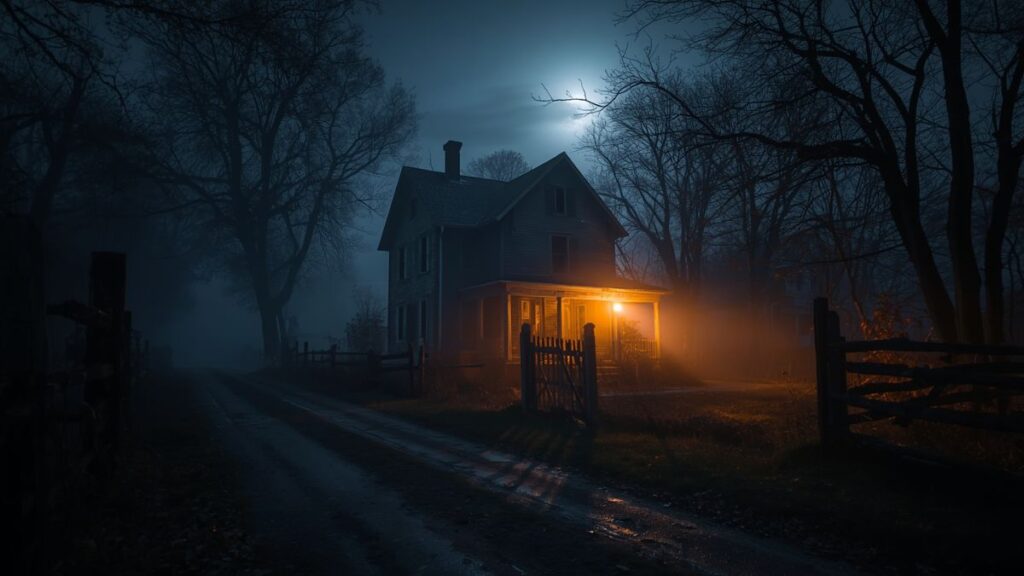
The town of Millfield wasn’t the kind of place that made national headlines.
It sat quietly between rolling fields and dense patches of woodland, the sort of town where everyone knew everyone else’s name and where very little changed from one year to the next.
People liked it that way.
The old brick buildings downtown looked almost exactly as they had decades earlier. The diner still served breakfast to the same customers every morning, and children still rode their bicycles down streets lined with maple trees.
Yet despite its peaceful reputation, Millfield had one mystery that resurfaced every Halloween.
It involved an abandoned house.
And a porch light that should not have worked.
The house stood at the far end of Willow Lane.
Years earlier, it had belonged to a widow named Eleanor Harper.
Mrs. Harper had lived alone for nearly twenty years after her husband passed away. Neighbors described her as kind but private. She kept her garden immaculate, baked pies for church fundraisers, and never missed a town meeting.
Then one autumn, she died unexpectedly.
After her death, distant relatives inherited the property but showed little interest in maintaining it.
Within a few years, the once-beautiful home fell into disrepair.
Paint peeled from the wooden siding.
Weeds overtook the flower beds.
The front gate hung crooked on rusted hinges.
Eventually, the electricity was disconnected, and the property sat empty.
At least, that’s what everyone believed.
The first report came three years after Mrs. Harper’s death.
A teenager named Kyle Dawson was walking home from a Halloween party shortly after midnight.
As he passed the abandoned house, he noticed something unusual.
The porch light was on.
At first, he assumed someone had purchased the property.
But when he looked closer, the rest of the house remained dark.
No lights shone through the windows.
No cars sat in the driveway.
Only the porch light glowed softly against the darkness.
The next morning, Kyle mentioned it to friends.
Most laughed.
A few suggested someone had installed a generator.
Others accused him of imagining things after spending the evening telling ghost stories.
The incident was quickly forgotten.
Until the following Halloween.
Again, shortly after midnight, the porch light appeared.
This time, multiple people saw it.
By the third year, it had become impossible to ignore.
Residents noticed a strange pattern.
The light always turned on at exactly midnight.
It remained illuminated for one hour.
At precisely one o’clock, it switched off.
The timing never varied.
Not by a minute.
Not by a second.
As word spread, the abandoned house became something of a local attraction.
Teenagers gathered at the end of Willow Lane every Halloween to watch.
Some treated it as harmless entertainment.
Others believed something supernatural was responsible.
Adults dismissed the stories publicly but often drove past the property themselves just to see if the rumors were true.
Almost everyone eventually witnessed it.
Including Sheriff Daniel Brooks.
The sheriff considered himself a practical man.
He didn’t believe in ghosts.
When residents repeatedly complained about trespassers gathering near the property, he decided to investigate personally.
On Halloween night, he parked across the street shortly before midnight.
At 11:59, nothing happened.
The house remained dark.
Then, exactly as the church bell downtown struck twelve, the porch light flickered once.
A moment later, it turned on.
Sheriff Brooks stared at it in disbelief.
The light remained steady.
No flickering.
No obvious power source.
The following morning, utility companies confirmed what everyone already knew.
No electricity had been supplied to the property in years.
The mystery deepened.
Speculation spread throughout town.
Some residents recalled stories about Eleanor Harper.
According to local legend, she always left her porch light on during Halloween to welcome trick-or-treaters.
Even in her final years, she reportedly sat by the front window with bowls of candy waiting for neighborhood children.
Older residents remembered seeing groups of children gathered on her porch every October 31st.
The tradition became part of the story.
People began suggesting that Mrs. Harper still turned on the light every Halloween.
The explanation sounded ridiculous.
Yet no one could provide a better one.
The mystery might have remained harmless folklore if not for what happened in 1998.
That year, four high school students decided to enter the house.
Their names were Ryan, Tyler, Megan, and Sarah.
All four had grown tired of listening to ghost stories about the property.
They intended to prove there was a logical explanation.
Armed with flashlights and far more confidence than caution, they waited until midnight.
The porch light switched on.
As expected.
While dozens of spectators watched from the road, the group crossed the yard.
Dead leaves crunched beneath their feet.
The front porch groaned as they climbed the steps.
Ryan reached for the doorknob.
To everyone’s surprise, the door opened.
The interior smelled of dust and old wood.
Furniture remained exactly where Mrs. Harper had left it years earlier.
A grandfather clock stood frozen in the hallway.
Family photographs covered the walls.
Everything appeared untouched.
The deeper they ventured inside, the stranger the atmosphere became.
Layers of dust covered every surface.
Spiderwebs stretched between furniture.
Nothing suggested anyone had entered the house for years.
Yet the porch light remained illuminated outside.
Eventually, the group reached the front hallway.
There, Ryan noticed something unusual.
The wall beside the front door appeared damaged.
He directed his flashlight toward it.
The others gathered around.
What they saw made little sense.
The porch light switch was gone.
Not broken.
Not disconnected.
Gone.
The section of wall where it should have been had been removed and patched years earlier.
There was no visible wiring.
No switch.
Nothing.
Yet outside, the porch light continued glowing.
The teenagers quickly left the house.
For once, none of them joked about ghosts.
News of their discovery spread rapidly.
The following year, curiosity surrounding the house reached its peak.
Visitors arrived from neighboring towns.
Some came hoping to witness a paranormal event.
Others sought evidence of an elaborate prank.
Local newspapers even published short articles about the phenomenon.
Investigators visited.
Electricians inspected the property.
Engineers examined old wiring.
No explanation satisfied everyone.
Then something even stranger occurred.
In 2002, a local historian began researching Eleanor Harper’s life.
While reviewing old records, he discovered an entry in a community newsletter published years before her death.
The article described Mrs. Harper’s favorite Halloween tradition.
Every year, she left her porch light on until one in the morning so late trick-or-treaters would know they were welcome.
The exact time matched the mysterious appearances perfectly.
Midnight until one o’clock.
The discovery fueled rumors throughout Millfield.
Some residents considered it proof.
Others dismissed it as coincidence.
Still, the story persisted.
As years passed, the abandoned house became inseparable from Halloween in Millfield.
Children grew up hearing about it.
Teenagers challenged one another to visit it.
Adults shared stories about witnessing the light firsthand.
Some swore they had seen movement behind the windows while the light was on.
Others reported hearing faint footsteps on the porch.
None of these claims were ever verified.
Yet each account added another layer to the legend.
Then, unexpectedly, the mystery ended.
In 2011, developers purchased the property.
The old house was demolished.
A modern home replaced it.
Residents assumed the phenomenon would disappear forever.
Halloween arrived.
Midnight came and went.
Nothing happened.
The legend, it seemed, was finally over.
Then someone noticed a glow.
Across the street.
The new home’s porch light had turned on.
Exactly at midnight.
It remained illuminated for one hour.
Then switched off.
No one could explain it.
The owners insisted they had not programmed any automatic timers.
Electricians found nothing unusual.
And so, even after the original house vanished, the mystery continued.
Today, people still gather on Willow Lane every Halloween.
Some come for tradition.
Others hope to solve the mystery.
Most leave with more questions than answers.
Was there a hidden electrical source?
An elaborate prank?
A coincidence repeated over decades?
Or was Eleanor Harper still keeping her promise to welcome visitors on Halloween night?
No one knows.
What everyone agrees on is this:
Every Halloween, just after midnight, a porch light appears where it shouldn’t.
And for one quiet hour, the darkness of Willow Lane is broken by a glow that refuses to be explained.
2. The Last Trick-or-Treater
Every town has a Halloween story.
In the small town of Ashbrook, the story people told each October was not about a haunted house, a ghostly hitchhiker, or a cursed cemetery.
It was about a child.
A child who, according to many residents, still went trick-or-treating long after his death.
Most people first heard the story from older relatives.
Parents told it to their children.
Grandparents told it to their grandchildren.
Some dismissed it as a local legend designed to make Halloween more exciting.
Others believed there was far more truth behind it than anyone wanted to admit.
The story centered on a quiet couple named Harold and Martha Benson.
For nearly forty years, the Bensons lived in the same white house on Maple Street.
Every Halloween, they decorated their front yard with carved pumpkins, orange lights, and handmade scarecrows.
Neighborhood children loved visiting their home because Martha always handed out full-sized candy bars instead of the small fun-sized treats everyone else gave away.
By the late 1990s, the Bensons had become something of a Halloween tradition themselves.
Children often made their house the first stop of the evening.
What happened on Halloween night in 1998 would ensure that people remembered them forever.
That year, Halloween fell on a cold Saturday.
The weather forecast had predicted rain, but the storm never arrived.
Instead, a thick fog settled across Ashbrook shortly after sunset.
By six o’clock, children dressed as witches, superheroes, pirates, and monsters filled the streets.
Parents followed behind carrying flashlights and cameras.
The town felt alive.
Laughter echoed through the neighborhood.
Porch lights glowed from nearly every house.
The Bensons spent the evening as they always did.
Harold greeted visitors at the door while Martha handed out candy.
By ten o’clock, most families had gone home.
By eleven, the streets were nearly empty.
The Bensons expected the night to end soon.
Then, just before midnight, there was one final knock.
Harold opened the door.
Standing on the porch was a young boy.
At first glance, nothing seemed unusual.
The child appeared to be around ten years old.
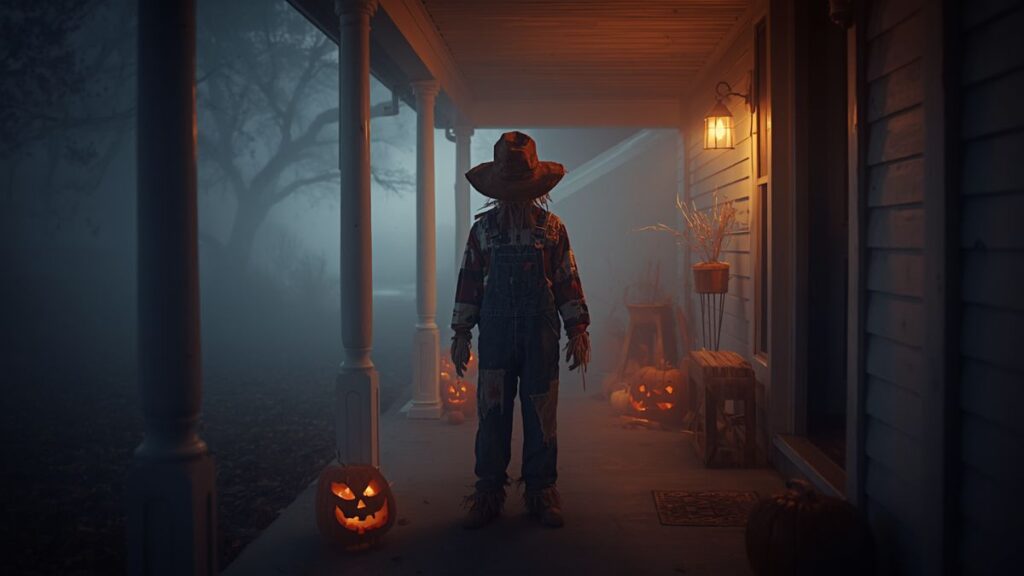
He wore an old-fashioned scarecrow costume made from patched denim overalls and a straw hat.
Unlike the elaborate store-bought costumes popular at the time, his outfit looked handmade.
The boy carried no flashlight.
No candy bucket.
No parent stood nearby.
He simply smiled.
“Trick or treat,” he said softly.
Martha later described his voice as unusually calm.
Almost too calm for a child.
She handed him a candy bar.
The boy thanked her politely.
Then he turned and walked down the front steps.
Neither Harold nor Martha thought much about the encounter.
At least not initially.
But after closing the door, Martha realized something odd.
The boy had been alone.
Completely alone.
No other trick-or-treaters remained outside.
No vehicles passed through the neighborhood.
No adults were visible on the street.
The realization made her uneasy.
Harold stepped onto the porch to look around.
The road was empty.
The fog had grown thicker.
The boy was gone.
Not walking away.
Not crossing the street.
Gone.
Harold assumed the child had simply disappeared into the fog.
Yet he found himself thinking about the encounter long after going to bed.
The following morning brought an even stranger discovery.
While taking their usual walk, the Bensons noticed something lying near the entrance of Oak Hill Cemetery.
It was a candy wrapper.
Not unusual by itself.
Except it matched the exact candy bar Martha had given the boy.
The wrapper appeared freshly opened.
Harold picked it up and threw it away.
The incident might have ended there.
But later that afternoon, Martha mentioned the scarecrow costume while speaking with a neighbor.
The neighbor’s expression immediately changed.
“Did the costume have patches on the knees?” she asked.
Martha nodded.
“What color was the hat?”
“Brown,” Martha replied.
The neighbor became quiet.
Then she told them a story.
Many years earlier, a local boy named Thomas Reed had died while trick-or-treating.
Thomas had been ten years old.
According to town records, he had worn a handmade scarecrow costume created by his mother.
The description matched perfectly.
The accident occurred in 1967.
On Halloween night, Thomas became separated from friends while walking home.
A sudden storm rolled through the area.
When he failed to return home, residents organized a search.
His body was discovered the following morning near Oak Hill Cemetery.
The exact circumstances surrounding his death remained unclear.
Some reports suggested exposure to extreme weather.
Others claimed he may have become injured while seeking shelter.
Regardless of the cause, the tragedy deeply affected Ashbrook.
For years afterward, residents left flowers near the cemetery entrance every Halloween.
The Bensons listened politely.
They found the story interesting but remained skeptical.
Coincidences happen.
Costumes repeat.
Memories become unreliable over time.
Yet something about the story continued to bother them.
A week later, Harold visited the local library.
He searched through archived newspaper records.
Eventually, he found an article about Thomas Reed.
The article included a photograph.
Harold stared at it for several minutes.
The scarecrow costume looked nearly identical to the one worn by the boy who had visited their house.
When Harold showed the photograph to Martha, she immediately recognized it.
Neither spoke for several moments.
Still, they refused to jump to conclusions.
There had to be a reasonable explanation.
There always was.
At least, that was what they believed.
The following Halloween arrived.
The Bensons once again decorated their yard.
Children filled the streets.
Candy disappeared quickly.
As midnight approached, Harold found himself glancing repeatedly toward the front door.
He told himself he was being foolish.
Yet he couldn’t shake the feeling that something unusual might happen.
At 11:58 p.m., there was a knock.
Harold froze.
Martha looked at him.
Slowly, he opened the door.
The same boy stood on the porch.
The same patched overalls.
The same straw hat.
The same gentle smile.
Neither Harold nor Martha spoke immediately.
The child simply said:
“Trick or treat.”
Martha handed him a candy bar.
The boy thanked her.
Then he walked away.
Again, he vanished into the darkness.
This time, Harold followed.
He rushed down the sidewalk and turned the corner.
No one.
The street remained empty.
The boy had disappeared.
Word spread quickly after that.
Some residents dismissed the story.
Others admitted experiencing similar encounters.
An elderly woman claimed she had seen a scarecrow-costumed child standing beside Oak Hill Cemetery several Halloweens earlier.
A delivery driver reported spotting a lone child walking through fog near midnight.
Neither person had connected the sightings to Thomas Reed until hearing the Benson story.
Over time, more reports emerged.
Most shared common details.
The child always appeared alone.
He always wore the same costume.
He always appeared near Halloween.
And he always vanished unexpectedly.
The reports became so frequent that local historians eventually investigated.
They interviewed residents.
Reviewed records.
Compared witness accounts.
While no evidence proved anything supernatural had occurred, they noted the remarkable consistency among stories spanning several decades.
Interestingly, none of the encounters were frightening.
Witnesses described the child as polite.
Quiet.
Friendly.
There were no threats.
No terrifying apparitions.
No violent hauntings.
Only a child trick-or-treating.
This detail made the story even more unsettling.
If the reports were true, why would he continue appearing?
What was he searching for?
Some believed the answer was simple.
Thomas never made it home on Halloween night.
Perhaps, in some way, he was still trying.
Others suggested the sightings were the result of community memory.
A shared legend repeated so often that people convinced themselves they had seen something unusual.
Psychologists pointed to expectation and suggestion.
Believers pointed to the consistency of witness accounts.
The debate continues today.
Harold and Martha remained part of the story until their deaths years later.
Neither ever changed their version of events.
Whenever someone asked about that first Halloween encounter, they described it exactly the same way.
A polite boy.
A scarecrow costume.
A candy bar.
And a disappearance they could not explain.
Today, visitors to Ashbrook still hear stories about the Last Trick-or-Treater.
Every Halloween, some residents leave an extra piece of candy on their porches.
Others place flowers near Oak Hill Cemetery.
A few even claim to keep watch near midnight hoping for a glimpse of the mysterious child.
Most never see anything unusual.
But every few years, a new report surfaces.
A homeowner mentions a lone scarecrow-costumed boy at the door.
A driver reports seeing a child walking through the fog.
Someone finds a candy wrapper near the cemetery entrance the following morning.
None of these stories can be verified.
Yet they continue.
Generation after generation.
Perhaps they are simply part of Ashbrook’s folklore.
Or perhaps somewhere between midnight and the early hours of Halloween morning, a young trick-or-treater still walks the streets he never managed to leave behind.
No one knows for certain.
What people do know is this:
If you answer a knock at your door just before midnight on Halloween and find a quiet child dressed as a scarecrow standing alone on your porch, you should offer him a piece of candy.
After all, it might be his last stop of the night.
3. The Voice in the Cornfield
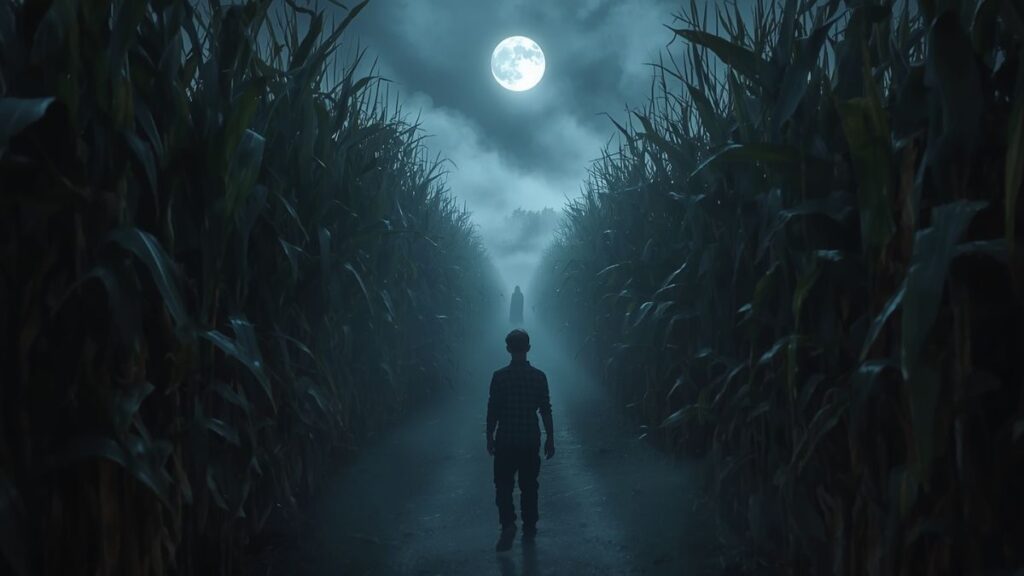
For most people, cornfields are harmless.
They are symbols of harvest season, country life, and quiet rural landscapes. During autumn, families visit corn mazes, pumpkin patches, and harvest festivals without giving them a second thought.
But in the town of Briar Creek, there is one cornfield people avoid after dark.
Not because of what can be seen there.
Because of what can be heard.
The story began on Halloween night in 2004.
At the time, Briar Creek hosted one of the largest fall festivals in the region. Visitors traveled from neighboring towns to enjoy hayrides, bonfires, pumpkin carving contests, and the famous Cornfield Challenge, a massive maze cut into nearly twenty acres of farmland.
The attraction was especially popular among teenagers.
Every Halloween, groups of friends competed to see who could complete the maze the fastest.
That year was no different.
Thousands of people attended the festival.
Music played from loudspeakers.
Children ran between attractions carrying bags of candy.
The smell of popcorn, roasted corn, and apple cider filled the cool evening air.
Among the crowd were four friends: Ethan Carter, Jake Morrison, Rachel Lee, and Olivia Grant.
All four were seventeen years old and had attended the festival together for years.
Shortly after 9 p.m., they decided to enter the Cornfield Challenge.
The maze was larger than usual that year.
Organizers had added new paths, dead ends, and observation towers.
Visitors were warned that it could take more than an hour to complete.
The friends laughed and entered anyway.
At first, everything seemed normal.
They joked, took pictures, and deliberately chose random paths just to make the challenge more difficult.
The towering walls of corn blocked out much of the festival noise.
Within minutes, they felt isolated from the crowds outside.
Still, they weren’t concerned.
That was part of the fun.
About thirty minutes into the maze, the group reached a crossroads.
Jake suggested going left.
Rachel wanted to go right.
The disagreement lasted only a few seconds.
When they finally chose a direction and turned around, Ethan was gone.
At first, they assumed he was playing a prank.
“Ethan!” Jake shouted.
No response.
The others laughed.
“Ethan, stop messing around!”
Still nothing.
The laughter slowly faded.
The maze suddenly felt much quieter.
The friends began searching nearby paths.
After several minutes, they found no sign of him.
Then they heard his voice.
Or at least they thought they did.
It came from somewhere deeper inside the maze.
“Over here!”
Relieved, they followed the sound.
But the path led to a dead end.
There was no Ethan.
Only rows of corn swaying gently in the wind.
Confused, they called out again.
This time, a voice answered from a completely different direction.
“Help!”
The voice sounded distant.
Urgent.
The friends hurried toward it.
Again, they found nothing.
What they didn’t know was that Ethan was experiencing something far stranger.
After becoming separated from the group, he had wandered down a narrow path he didn’t remember seeing before.
The maze seemed unusually quiet.
The sounds of the festival had disappeared entirely.
Then he heard someone call his name.
“Ethan.”
The voice belonged to a woman.
Soft.
Calm.
Familiar.
He stopped walking.
For a moment, he thought it was his mother.
But that made no sense.
She wasn’t at the festival.
“Ethan.”
The voice came again.
Somewhere ahead.
He followed it.
At first, he expected to find another visitor.
Instead, every turn revealed another empty pathway.
The voice continued calling.
Always just beyond sight.
Always sounding closer than it actually was.
As Ethan walked deeper into the maze, an uneasy feeling settled over him.
The air seemed colder.
The corn appeared taller.
Even the moonlight felt dimmer.
Yet the voice remained comforting.
Familiar.
Trustworthy.
It called his name again.
Without thinking, he continued following it.
Meanwhile, festival staff became aware of the situation.
Security volunteers joined the search.
They assumed a teenager had simply become lost.
Such things happened occasionally.
Still, as time passed, concern grew.
The maze was carefully designed.
No one should have remained missing for this long.
By 10 p.m., dozens of people were searching.
Flashlights illuminated pathways.
Volunteers called Ethan’s name repeatedly.
Yet no one found him.
Then something strange happened.
Several searchers reported hearing a woman’s voice inside the maze.
Some believed it was another volunteer.
Others assumed it was a concerned parent.
But whenever they followed the sound, they found nothing.
One volunteer later described the experience as deeply unsettling.
“It sounded like someone was standing right beside me,” he said.
“But every time I turned around, nobody was there.”
Around 10:30 p.m., Ethan finally emerged.
A security worker spotted him standing motionless in a section of the maze that had been closed to visitors all evening.
The area was blocked off due to storm damage from earlier in the week.
No one understood how he had entered it.
When volunteers approached, Ethan appeared confused.
Disoriented.
Almost frightened.
He repeatedly asked the same question.
“Where did she go?”
No one knew what he meant.
Back at the festival office, Ethan explained what had happened.
He described hearing a woman’s voice calling his name.
He said it sounded familiar but couldn’t identify who it belonged to.
He followed it through the maze for what felt like only a few minutes.
According to his watch, however, more than an hour had passed.
Even stranger, he insisted he had seen someone.
Near the center of the closed-off section.
A woman standing between the rows of corn.
He claimed she was too far away to identify clearly.
Whenever he tried to approach, she moved farther away.
Eventually, she disappeared entirely.
Most people dismissed the story.
Festival organizers blamed confusion and panic.
Friends suggested Ethan had become disoriented.
The explanation seemed reasonable.
At least initially.
Then reports began surfacing.
Several former festival employees admitted hearing similar stories over the years.
Visitors occasionally claimed to hear voices calling their names from inside the maze.
Most never reported the incidents publicly because they feared being ridiculed.
A local farmer added another layer to the mystery.
According to him, the land used for the maze had a tragic history.
Decades earlier, a young woman named Emily Harper had disappeared while walking through the area.
Despite extensive searches, she was never found.
The story became local folklore.
Few people took it seriously.
Until Ethan’s experience.
Over the following years, additional reports emerged.
A married couple claimed they heard their daughter calling for help while exploring the maze.
Their daughter had been standing beside them the entire time.
A security guard reported hearing his name whispered repeatedly while patrolling after closing hours.
Several visitors described feeling as though someone was walking behind them despite seeing no one there.
Most incidents were minor.
None caused physical harm.
Yet the similarities were difficult to ignore.
Almost every witness described the same thing:
A familiar voice.
Calling their name.
Drawing them deeper into the maze.
As the stories spread, the Cornfield Challenge gained an unusual reputation.
Attendance actually increased.
People wanted to experience the mystery themselves.
Some entered the maze specifically hoping to hear the voice.
Most never did.
A few claimed they had.
No evidence ever explained the phenomenon.
Investigators found no hidden speakers.
No elaborate pranks.
No obvious source for the reports.
Psychologists suggested the maze environment itself might be responsible.
Isolation, darkness, and heightened expectations can influence perception.
People often hear what they expect to hear.
The explanation satisfied some residents.
Not others.
Ethan Carter never returned to the maze.
Years later, he rarely discussed the incident.
When interviewed by a local newspaper, he offered only a brief statement.
“I know what I heard,” he said.
“It wasn’t my imagination.”
When asked whose voice it was, he hesitated.
Then he shook his head.
“I still don’t know.”
Today, the Briar Creek Fall Festival continues every Halloween.
The corn maze remains its most popular attraction.
Thousands of visitors walk through it each year.
Most leave with nothing more than photos and memories.
But every so often, a new story emerges.
A visitor hears someone calling their name.
A volunteer follows a voice into an empty pathway.
A child insists they saw someone standing among the rows of corn.
The reports are rare.
Usually impossible to verify.
Yet they continue.
And every Halloween, as darkness settles over the maze and the festival noise fades into the distance, some visitors find themselves listening a little more carefully than they otherwise might.
Because somewhere beyond the rustling corn, a voice may be waiting.
A voice that sounds strangely familiar.
A voice calling your name.
And if you hear it, the people of Briar Creek have one piece of advice:
Don’t follow it.
4. The Photograph Nobody Could Explain
The Photograph Nobody Could Explain
Most Halloween mysteries begin with a strange sound, an unexplained sighting, or a story passed down through generations.
This one began with a photograph.
A single image.
One frame captured during an ordinary Halloween party.
A photograph that should have shown nothing unusual.
Instead, it revealed a figure nobody could identify.
More than twenty years later, people in the town of Hollow Creek still talk about it.
And despite countless attempts to explain what appeared in that picture, no one has ever found a convincing answer.
The story began on Halloween night in 2003.
The Morgan family had recently moved into a large Victorian house on the edge of town.
Built in the late 1800s, the home was one of Hollow Creek’s oldest properties.
It featured tall windows, ornate woodwork, and a sweeping staircase that curved elegantly through the center of the entrance hall.
The house had changed owners several times throughout its history.
While locals occasionally shared rumors about strange occurrences there, the Morgans paid little attention.
To them, it was simply an old house with character.
After spending months restoring the property, they decided to host a Halloween party.
Friends, neighbors, coworkers, and family members were invited.
More than forty guests attended.
The evening was a success.
Children ran through the hallways collecting candy.
Adults gathered in decorated rooms filled with Halloween music and seasonal treats.
Costumes ranged from classic witches and vampires to movie characters and superheroes.
Throughout the night, David Morgan carried a digital camera.
Digital photography was still relatively new at the time, and David enjoyed documenting family events.
He took pictures constantly.
Guests posing in costumes.
Children carving pumpkins.
Friends gathered around the dining table.
Decorations hanging from the staircase.
By the end of the night, he had captured more than one hundred photographs.
Nothing unusual occurred.
At least, not that anyone noticed.
The party ended shortly after midnight.
Guests returned home.
The house grew quiet.
The following afternoon, David transferred the photos to his computer.
His wife, Lisa, sat beside him as they reviewed the images.
Most photographs showed exactly what they expected.
Smiling guests.
Costumes.
Decorations.
Typical memories from a successful Halloween celebration.
Then they reached photograph number seventy-three.
Everything changed.
At first glance, the image appeared ordinary.
It showed a group of guests standing in the entrance hall near the staircase.
Five people smiled toward the camera.
Pumpkin decorations lined the walls.
Orange lights illuminated the room.
But something else appeared in the background.
Standing halfway up the staircase was a woman.
She wasn’t part of the group.
She wasn’t looking at the camera.
In fact, she appeared completely unaware of the photograph.
The woman wore what looked like a pale gray dress.
Her skin appeared unusually white.
Her dark hair hung loosely around her shoulders.
One hand rested on the staircase railing.
The other hung at her side.
She seemed perfectly solid.
Perfectly real.
Yet neither David nor Lisa recognized her.
At first, they assumed she was a guest.
After all, more than forty people had attended the party.
It seemed entirely possible they simply didn’t remember everyone.
Still, something felt strange.
The woman didn’t appear to be wearing a costume.
Her clothing looked old-fashioned.
Not theatrical.
Not decorative.
Just old.
Lisa began contacting guests.
She emailed photographs and asked a simple question:
“Does anyone know this woman?”
The responses were immediate.
And consistent.
No one recognized her.
Guests studied the image carefully.
Some believed she might be a neighbor.
Others suggested she was a friend of another attendee.
Several thought she looked familiar without knowing why.
Yet no one could identify her.
The mystery deepened when David reviewed additional photographs.
Picture seventy-two had been taken only seconds before.
The staircase appeared empty.
Picture seventy-four was taken moments later.
Again, the staircase was empty.
The woman appeared in only one photograph.
One frame.
One image.
Then she was gone.
David examined the files repeatedly.
Perhaps the camera had malfunctioned.
Maybe images had somehow overlapped.
Yet every expert he consulted rejected the idea.
The photograph showed no obvious signs of digital manipulation.
No evidence of editing.
No technical errors that could explain the figure.
Word spread quickly.
Friends shared copies.
Neighbors discussed the image.
Before long, nearly everyone in Hollow Creek had seen the photograph.
Opinions varied dramatically.
Skeptics dismissed it as a coincidence.
Believers claimed it was evidence of something paranormal.
The Morgans themselves remained uncertain.
They wanted a rational explanation.
Unfortunately, none emerged.
Determined to solve the mystery, Lisa began researching the history of the house.
She visited the local library.
Examined property records.
Read newspaper archives.
Interviewed longtime residents.
What she discovered only raised more questions.
The house had been built in 1891 by a wealthy businessman named Charles Whitmore.
Several generations of the Whitmore family lived there.
Among them was Charles’s daughter, Eleanor.
Old photographs showed Eleanor frequently standing on the staircase.
The same staircase visible in the Halloween photograph.
When Lisa located one particular family portrait, she felt a chill run through her body.
The resemblance was remarkable.
The woman in the portrait looked strikingly similar to the figure in photograph seventy-three.
The same dark hair.
The same facial structure.
The same style of dress.
Yet there was a problem.
Eleanor Whitmore had died in 1912.
Nearly a century before the Halloween party.
News of the discovery fueled local speculation.
Some residents became convinced the photograph captured Eleanor herself.
Others argued the resemblance was merely coincidence.
After all, old black-and-white photographs often make people appear similar.
Still, the comparison generated enormous interest.
Paranormal investigators soon arrived.
Several groups requested access to the house.
The Morgans reluctantly agreed.
Over the next few years, investigators conducted numerous examinations.
They photographed rooms.
Recorded audio.
Monitored environmental conditions.
Most found nothing unusual.
Yet a few reported strange experiences.
One investigator claimed to hear footsteps on the staircase when nobody else was present.
Another reported seeing movement reflected in a mirror.
Neither event could be verified.
Neither explained the photograph.
The image remained the mystery’s centerpiece.
As technology improved, experts analyzed the file again.
Image specialists examined pixel patterns.
Photography professionals reviewed exposure settings.
Computer analysts searched for evidence of manipulation.
The results remained inconclusive.
No one could prove the figure was genuine.
No one could prove it wasn’t.
Years passed.
The story became part of local folklore.
New residents heard about the mysterious photograph shortly after moving to Hollow Creek.
Teenagers challenged one another to visit the house.
Ghost tours occasionally referenced the image.
The photograph appeared in books, websites, and documentaries dedicated to unexplained mysteries.
Yet the central question never changed.
Who was the woman?
Some believed she was simply an uninvited guest who slipped away before anyone noticed.
Others suggested a camera artifact or visual illusion.
A few insisted the image showed something far stranger.
The Morgans themselves never reached a conclusion.
David continued reviewing the photograph occasionally.
Each time, he hoped to notice some overlooked detail.
Something that would finally explain everything.
Nothing ever did.
Then, in 2018, another curious detail emerged.
A local historian reviewing old town records discovered a diary written by a former resident of the house.
One passage described seeing a woman standing on the staircase late at night.
The entry had been written in 1947.
More than fifty years before the Halloween party.
The description was brief.
Yet it matched the figure in the photograph remarkably well.
Again, skeptics dismissed the connection.
Again, believers embraced it.
The debate continued.
Today, the original photograph remains carefully preserved.
Copies exist throughout Hollow Creek.
Most residents have seen it.
Many have formed their own opinions.
Few agree.
Some see nothing more than a misunderstanding.
Others see evidence of something that cannot be easily explained.
What everyone agrees upon is this:
The woman was never identified.
No guest claimed to be her.
No records placed her at the party.
No technical examination revealed how she appeared.
She exists only in a single image.
One photograph among more than one hundred taken that night.
A single frame captured within seconds of dozens of ordinary pictures.
A moment frozen in time.
A mystery preserved by a camera lens.
And every Halloween, when conversations turn toward ghosts, haunted houses, and unexplained events, someone inevitably mentions the photograph.
The photograph nobody could explain.
The image of a pale woman standing silently on a staircase.
Watching.
Waiting.
And somehow disappearing before anyone realized she was ever there.
5. The Empty Classroom
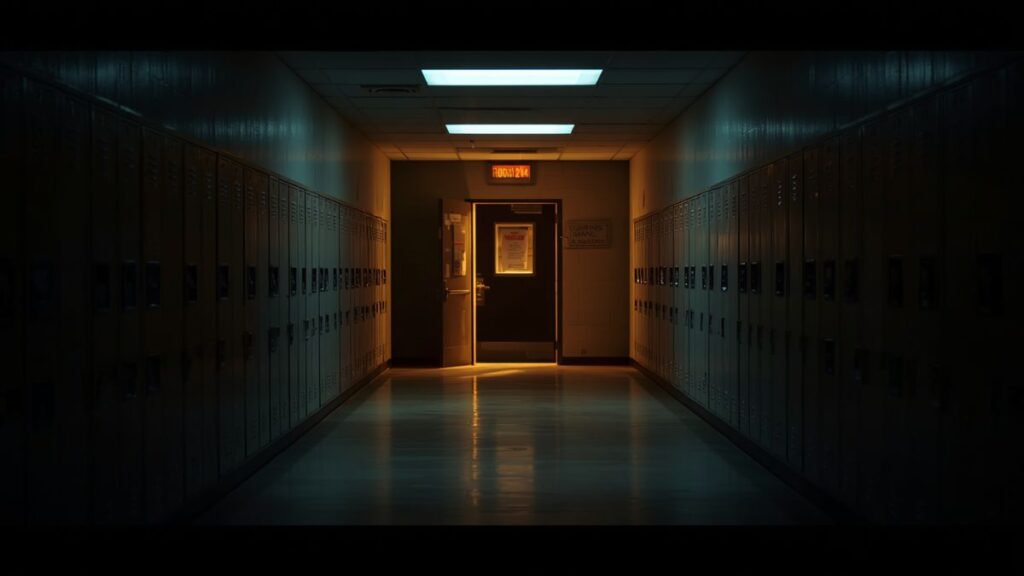
Most schools are quiet after dark.
Once the final bell rings and the students leave, hallways that were once filled with noise become eerily silent. Lockers stand closed. Classrooms sit empty. The only sounds usually come from air-conditioning units, distant footsteps, or the occasional creak of an aging building.
For the staff of Westbridge Elementary, Halloween night in 2007 proved that sometimes silence can be far more unsettling than noise.
The story has since become one of the town’s most discussed Halloween mysteries.
And it all began with laughter.
Westbridge Elementary sat near the center of town.
Built in the 1960s, the two-story brick building had educated generations of local children. Teachers described it as welcoming and familiar. Students considered it ordinary.
There were no stories about ghosts.
No haunted hallways.
No local legends.
At least, not before Halloween 2007.
That year, Halloween fell on a Wednesday.
Classes ended normally.
Children arrived in costumes for a school parade during the afternoon. Teachers handed out candy, parents took photographs, and everyone looked forward to evening celebrations.
By 4 p.m., the building was empty.
Teachers went home.
Students left with their families.
The only person remaining was the evening janitor, Michael Turner.
Michael had worked at Westbridge for nearly fifteen years.
He was known for being practical, reliable, and difficult to scare.
While other employees enjoyed sharing ghost stories, Michael preferred facts.
He didn’t believe in haunted houses, spirits, or paranormal activity.
That would make what happened later all the more difficult to explain.
His shift began at 5 p.m.
As usual, he cleaned classrooms, emptied trash bins, and prepared the school for the next day.
Everything seemed normal.
Outside, children moved through neighborhoods collecting candy.
Inside, the school remained silent.
Shortly after 8 p.m., Michael finished cleaning the first floor and moved upstairs.
The second floor contained older classrooms rarely used after school hours.
Most lights were turned off.
Only emergency lighting illuminated the hallways.
At approximately 8:30 p.m., Michael heard something unexpected.
Laughter.
Children laughing.
The sound came from somewhere farther down the hallway.
At first, he wasn’t concerned.
He assumed a teacher had forgotten something and returned with family members.
The laughter continued.
Several voices.
Boys and girls.
Sounding as though they were playing inside one of the classrooms.
Michael sighed.
If someone had entered the building without permission, he would need to ask them to leave.
He followed the sound.
The laughter seemed to come from Room 214.
An old classroom used primarily for storage and occasional tutoring sessions.
As he approached, the noise grew clearer.
Children laughing.
Running.
Talking.
The sounds seemed completely normal.
Michael stopped outside the door.
He listened carefully.
The room sounded occupied.
Without hesitation, he opened the door.
The classroom was empty.
Completely empty.
No children.
No teachers.
No movement.
No sound.
The laughter stopped instantly.
Michael stood frozen for several seconds.
He checked beneath desks.
Looked inside closets.
Examined every corner of the room.
Nothing.
He stepped back into the hallway.
Silence.
The experience left him unsettled, but he quickly convinced himself there was a reasonable explanation.
Perhaps sound had traveled through ventilation ducts.
Maybe children outside had somehow created an echo.
The building was old.
Strange noises happened.
Michael returned to work.
Approximately twenty minutes later, it happened again.
This time, the laughter sounded even closer.
The voices seemed to come directly from Room 214.
Michael immediately walked toward the classroom.
As he approached, he heard what sounded like desks moving across the floor.
Children talking excitedly.
Someone shouting.
Then laughter.
Again.
When he opened the door, the room was empty.
The silence was immediate.
Absolute.
Michael later admitted this was the moment he began feeling genuinely uncomfortable.
The building no longer felt normal.
It felt as though someone was present.
Watching.
Waiting.
He decided to finish his shift quickly and leave.
Before doing so, he completed one final walkthrough.
At approximately 9:15 p.m., he returned to Room 214.
Everything appeared normal.
Until he looked at the chalkboard.
A message covered the center of the board.
Large white letters.
Neatly written.
Two simple words:
Happy Halloween
Michael stared at the message.
He knew the board had been clean earlier that evening.
He remembered wiping it himself.
There was no doubt in his mind.
The writing had not been there before.
For several seconds, he simply stood motionless.
Trying to understand what he was seeing.
Eventually, he grabbed a piece of chalk from the tray.
His hands shook slightly.
Underneath the message, he wrote:
Who wrote this?
Nothing happened.
The classroom remained silent.
Feeling foolish, Michael turned toward the door.
Before he reached it, a loud bang echoed from somewhere inside the room.
He spun around.
A textbook had fallen from a shelf.
The book now rested on the floor.
Michael left immediately.
The following morning, he reported the incident to school administrators.
Most assumed there was a logical explanation.
Perhaps someone had entered the building.
Maybe students had hidden inside after school.
Security footage would provide answers.
Or so everyone believed.
The principal reviewed camera recordings from the previous evening.
The footage revealed something strange.
No one entered Room 214 after classes ended.
No students appeared on the second floor.
No unauthorized visitors entered the building.
According to the recordings, Michael was alone the entire night.
The discovery should have ended the mystery.
Instead, it made it worse.
News spread among staff members.
Teachers began sharing unusual experiences they had previously dismissed.
One teacher recalled hearing footsteps after everyone had gone home.
Another remembered finding classroom supplies moved overnight.
Most had ignored such incidents.
Now they seemed more significant.
The school district eventually requested a more detailed review of security footage.
Technicians found nothing unusual.
No hidden visitors.
No technical malfunctions.
No explanation for the laughter.
No explanation for the writing.
No explanation for the falling textbook.
Yet the story continued to grow.
A retired teacher soon came forward with an unexpected piece of information.
Decades earlier, Room 214 had served as a classroom for younger students.
One Halloween in the 1970s, a teacher reportedly organized an after-school costume party there.
Former students remembered the event fondly.
Photographs showed children laughing, playing games, and celebrating Halloween.
The connection seemed minor.
But local residents found it intriguing.
Some wondered whether the sounds Michael heard somehow echoed from the past.
Others dismissed the idea entirely.
Years passed.
The story became part of local folklore.
New teachers heard it during their first year at Westbridge.
Students whispered about it whenever Halloween approached.
Most treated it as nothing more than a spooky legend.
Then, in 2016, another incident occurred.
A teacher staying late to prepare lessons reported hearing children laughing upstairs.
The sound came from Room 214.
When she investigated, the room was empty.
Just as Michael had described.
The report reignited interest in the mystery.
More stories followed.
A substitute teacher claimed she found “Happy Halloween” written faintly on the chalkboard one October morning.
A maintenance worker reported hearing footsteps in the hallway outside Room 214 after midnight.
None of these incidents could be verified.
Yet they shared remarkable similarities.
Always Halloween.
Always Room 214.
Always children.
Today, Westbridge Elementary remains open.
Students attend classes there every day.
Most know nothing about the story.
Those who do often visit the second floor during October hoping to experience something unusual.
Almost none do.
But every Halloween, some staff members still avoid Room 214 after dark.
Not because they believe it is haunted.
Not because they expect to see ghosts.
But because of one unanswered question.
If Michael Turner was truly alone in the building that night, then who was laughing inside the empty classroom?
No one has ever found an answer.
And perhaps that’s what makes the story so unsettling.
Not what was seen.
But what was heard.
The sound of children laughing in a room where no children were supposed to be.
A sound that echoed through an empty school on Halloween night.
And then vanished without a trace.
6. The Knock at 3 A.M.
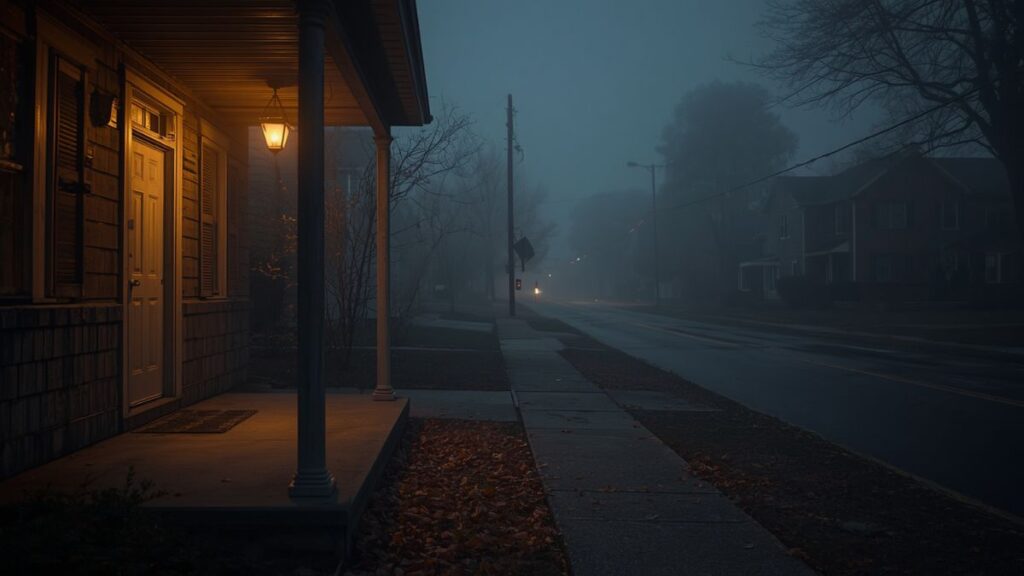
Every neighborhood has its own strange stories.
Some involve abandoned houses. Others revolve around mysterious lights, unexplained sightings, or local legends passed down from one generation to the next.
In the quiet neighborhood of Pine Hollow, however, the story people still talk about every Halloween is much simpler.
It involves a knock.
Three knocks.
Always at the same time.
Always on Halloween night.
And always with no one standing outside.
The mystery began in 1996.
Pine Hollow was a peaceful suburban community located on the outskirts of a small town. The streets were lined with maple trees, children played basketball in driveways, and neighbors knew one another by name.
Nothing unusual ever happened there.
At least, that’s what residents believed until the morning after Halloween.
The first report came from a retired couple named George and Linda Harris.
The two had lived in the neighborhood for nearly twenty years.
On Halloween night, they handed out candy until around 10 p.m., turned off their porch light, and went to bed.
At exactly 3 a.m., they were awakened by three loud knocks on their front door.
Knock.
Knock.
Knock.
George assumed it was a prank.
Teenagers occasionally caused trouble during Halloween.
Grumbling, he got out of bed and walked to the front door.
He turned on the porch light.
Opened the door.
And found no one there.
The street was empty.
No children.
No vehicles.
No footsteps disappearing into the darkness.
Nothing.
Annoyed, George returned to bed.
The next morning, he told a few neighbors about the incident.
To his surprise, another family reported hearing the exact same thing.
Three knocks.
At 3 a.m.
No one outside.
The coincidence seemed strange but harmless.
Most people forgot about it.
Until the following Halloween.
Once again, residents throughout Pine Hollow reported hearing three knocks on their front doors at precisely 3 a.m.
Some ignored the sound.
Others opened their doors immediately.
Every person reported the same result.
Nobody was there.
The mystery spread quickly.
By the third year, nearly a dozen households claimed to have experienced the phenomenon.
The reports were remarkably consistent.
Three knocks.
Exactly 3 a.m.
No visible visitor.
No explanation.
As the story grew, curiosity replaced concern.
Residents began treating the event like a local tradition.
Some stayed awake specifically to hear the knocking.
Others positioned chairs near their front windows.
A few organized neighborhood watch groups.
Everyone hoped to catch the prankster responsible.
No one succeeded.
In 1999, a group of teenagers decided to solve the mystery themselves.
Armed with flashlights, cameras, and far more confidence than experience, they spent Halloween night patrolling the neighborhood.
They positioned themselves at various locations and agreed to remain in radio contact.
At 2:55 a.m., everything appeared normal.
The streets were empty.
No suspicious individuals were visible.
At exactly 3 a.m., the first knock echoed through the neighborhood.
Then another.
Then another.
The teenagers heard the sound clearly.
The problem was that it seemed to come from everywhere at once.
Several houses reported hearing knocks simultaneously.
When the teenagers rushed toward the homes, they found nothing.
No people.
No vehicles.
No signs of movement.
The mystery deepened.
Over the next few years, the reports continued.
Not every house experienced the knocking.
Not every resident heard it.
But enough people did that the story became impossible to dismiss entirely.
Eventually, local police became involved.
Although no crimes had occurred, officers agreed to monitor the neighborhood on Halloween night.
In 2002, two patrol cars remained in Pine Hollow during the early morning hours.
The officers expected a simple prank.
Instead, they encountered the same problem everyone else had.
At 3 a.m., multiple residents reported hearing knocks.
The officers arrived within seconds.
No one was present.
One officer later admitted the experience was difficult to explain.
“There should have been somebody there,” he said.
“But there wasn’t.”
The lack of evidence only fueled speculation.
Residents developed theories.
Some believed mischievous teenagers had discovered an elaborate method of creating the sound remotely.
Others suspected neighborhood children working together.
A few suggested wildlife might somehow be responsible.
None of the theories held up under scrutiny.
Then came the security cameras.
By the early 2000s, home surveillance systems had become more common.
Several residents installed cameras specifically to capture the mysterious visitor.
Everyone expected the footage to finally solve the mystery.
Instead, it created even more questions.
One homeowner named Richard Miller captured video during Halloween 2004.
The footage showed his front porch from midnight until sunrise.
At exactly 3 a.m., three distinct knocking sounds could be heard.
The audio was clear.
Loud enough to wake someone sleeping inside.
Yet the camera showed an empty porch.
No person approached the door.
No animal appeared.
Nothing touched the house.
The knocking occurred anyway.
When Richard shared the recording with neighbors, reactions varied.
Some believed the audio had been manipulated.
Others pointed out that the camera footage appeared authentic.
No one could explain how a door could be knocked without anyone present.
The video became the most discussed piece of evidence in Pine Hollow’s history.
Interest in the mystery grew.
Local newspapers published articles.
Paranormal investigators visited the neighborhood.
Amateur researchers interviewed longtime residents.
Several discovered an intriguing historical detail.
Decades before Pine Hollow existed, the land had belonged to a large farm.
Historical records revealed that the original farmhouse burned down in the early 1900s.
According to local folklore, a traveler had reportedly sought shelter there during a severe autumn storm.
Some versions of the story claimed he knocked repeatedly on the door before collapsing from exposure.
Whether the event actually occurred remained uncertain.
The records were incomplete.
Still, the coincidence fascinated residents.
The legend soon became connected to the knocking.
Skeptics dismissed the connection immediately.
Believers embraced it.
As often happens with local mysteries, the story took on a life of its own.
By 2010, the Knock at 3 A.M. had become part of Pine Hollow’s identity.
Children grew up hearing about it.
New residents learned the story shortly after moving in.
Every Halloween, people stayed awake waiting to see if they would experience it themselves.
Most never did.
But enough reports continued to keep the mystery alive.
One of the strangest incidents occurred in 2014.
A resident named Emily Foster decided to conduct her own experiment.
Rather than staying inside, she sat on her front porch beginning at 2:30 a.m.
She reasoned that if someone was knocking on doors, she would see them.
At exactly 3 a.m., she heard the three knocks.
Knock.
Knock.
Knock.
The sound seemed to come from directly behind her.
She turned immediately.
The front door remained closed.
No one stood nearby.
No movement appeared anywhere on the street.
Emily later described the experience as deeply unsettling.
“It sounded like someone was standing inches away,” she said.
“But there was nobody there.”
Even today, reports occasionally surface.
Not every year.
Not every Halloween.
But often enough to keep the legend alive.
Residents still compare stories.
Some claim they heard the knocks only once.
Others insist they have experienced them multiple times.
Most agree on the same details.
Three knocks.
Exactly 3 a.m.
No visible visitor.
No explanation.
Over the years, countless theories have emerged.
Pranksters.
Acoustic phenomena.
Animals.
Structural noises.
Psychological suggestion.
Paranormal activity.
None have fully explained the reports.
Perhaps there is a perfectly ordinary answer waiting to be discovered.
Perhaps several unrelated events combined to create a legend.
Or perhaps some mysteries resist easy explanations.
Today, Pine Hollow remains a quiet neighborhood.
Children still trick-or-treat along its streets.
Families still decorate their homes every October.
Life continues much as it always has.
But when Halloween night arrives and the clock begins approaching 3 a.m., some residents find themselves listening carefully.
Waiting.
Watching.
Wondering.
Because somewhere in Pine Hollow, a front door may receive three slow knocks in the darkness.
And when someone opens the door to see who is there, they will find exactly what generations of residents have found before them.
Nothing.
Just an empty porch.
A silent street.
And another unanswered question added to one of Halloween’s most enduring mysteries.
7. The Mask in the Attic
Old farmhouses have a way of collecting stories.
Some are passed down through generations. Others are discovered accidentally, hidden inside dusty rooms, forgotten closets, and attics filled with objects left behind by previous owners.
Most of those discoveries are harmless.
A box of photographs.
An antique piece of furniture.
A collection of old letters.
But for the Henderson family, one discovery became the source of a mystery that people in the town of Blackwood still discuss every Halloween.
It all started with a mask.
A simple vintage Halloween mask hidden in an attic.
At least, that’s how it seemed at first.
The Hendersons purchased the farmhouse during the summer of 2008.
The property sat several miles outside town, surrounded by fields and dense woods. Built in the 1920s, the house had belonged to the same family for nearly eighty years before being sold.
Although the structure showed signs of age, it remained in surprisingly good condition.
The family fell in love with it immediately.
There was plenty of space.
A large front porch.
A red barn.
And enough land for their children to explore.
The family consisted of Mark and Jennifer Henderson and their two children, Ethan and Lily.
The move represented a fresh start.
For the first few months, everything went smoothly.
They unpacked.
Renovated several rooms.
And gradually settled into their new home.
One afternoon in early October, Mark decided to organize the attic.
The space stretched across most of the house and contained decades’ worth of forgotten belongings.
Boxes filled with newspapers.
Broken furniture.
Dust-covered trunks.
Old holiday decorations.
Near the far corner of the attic, Mark discovered a small wooden chest.
Inside were various Halloween items dating back several decades.
Paper decorations.
Plastic pumpkins.
And one unusual object.
A vintage Halloween mask.
The mask appeared handmade.
Its faded orange paint was cracked with age.
Black circles surrounded the eyes.
A thin smile stretched across the face.
It wasn’t especially frightening.
In fact, it looked almost cheerful.
Mark brought it downstairs.
The family found it amusing.
Jennifer suggested displaying it among their Halloween decorations.
The children loved the idea.
So the mask was placed on a shelf in the living room.
At first, nothing seemed unusual.
Visitors occasionally commented on the decoration.
Most assumed it was an antique.
The family barely thought about it.
Then the mask moved.
The first incident occurred three days later.
Jennifer entered the kitchen one morning and found the mask sitting on the dining table.
She assumed Mark had moved it.
Mark assumed Jennifer had done it.
Neither gave the matter much attention.
The mask was returned to the living room shelf.
The following evening, it appeared on the staircase.
Again, everyone blamed someone else.
Ethan accused Lily.
Lily accused Ethan.
The children denied touching it.
Their parents assumed one of them was playing a prank.
The explanation seemed reasonable.
Until the incidents continued.
Over the next two weeks, the mask appeared in increasingly unusual places.
On a windowsill.
Inside the laundry room.
Near the front door.
Resting on a chair in the kitchen.
Each time, family members insisted they hadn’t moved it.
Arguments became common.
Someone had to be responsible.
Yet no one admitted anything.
One evening, Jennifer discovered the mask sitting on her bedside table.
She was certain it had been downstairs earlier that day.
The discovery genuinely unsettled her.
She questioned everyone in the family.
No one claimed responsibility.
Mark remained skeptical.
He believed one of the children was secretly moving it.
The situation became something of a household joke.
At least initially.
Then came Halloween.
The family hosted a small gathering for friends and neighbors.
During the party, several guests noticed the vintage mask displayed in the living room.
One elderly visitor immediately recognized it.
Her name was Margaret Dawson.
She had lived in Blackwood her entire life.
The moment she saw the mask, her expression changed.
“Where did you find that?” she asked.
Mark explained the discovery.
Margaret remained silent for several seconds.
Then she told them a story.
Decades earlier, the farmhouse had belonged to the Walker family.
According to local rumor, one of the Walker children had owned a Halloween mask remarkably similar to the one displayed in the living room.
The child reportedly wore it every October.
After a serious illness, he died unexpectedly at a young age.
The mask was never seen again.
Most people assumed it had been discarded.
Margaret admitted she didn’t know whether the story was true.
It was simply something older residents occasionally discussed.
The Hendersons listened politely.
Interesting as the story was, they didn’t connect it to the moving mask.
After all, local legends exist in every town.
The incidents continued throughout November.
Then December.
Then January.
Sometimes weeks passed without anything unusual happening.
Then the mask would suddenly appear somewhere unexpected.
The family grew increasingly frustrated.
Mark eventually decided enough was enough.
One evening, he removed the mask from its display.
He placed it inside a storage box.
The box was sealed with tape and stored in the attic.
“There,” he announced.
“Problem solved.”
For several months, the strange occurrences stopped.
Life returned to normal.
The family forgot about the mask.
Summer arrived.
Then autumn.
As Halloween approached once again, Jennifer suggested retrieving the holiday decorations from storage.
On a cool October afternoon, Mark climbed into the attic.
The space was exactly as he remembered.
Dusty.
Quiet.
Unchanged.
He carried a flashlight and moved toward the storage area.
Halfway across the attic, he stopped.
For a moment, he thought he was imagining things.
Then he realized he wasn’t.
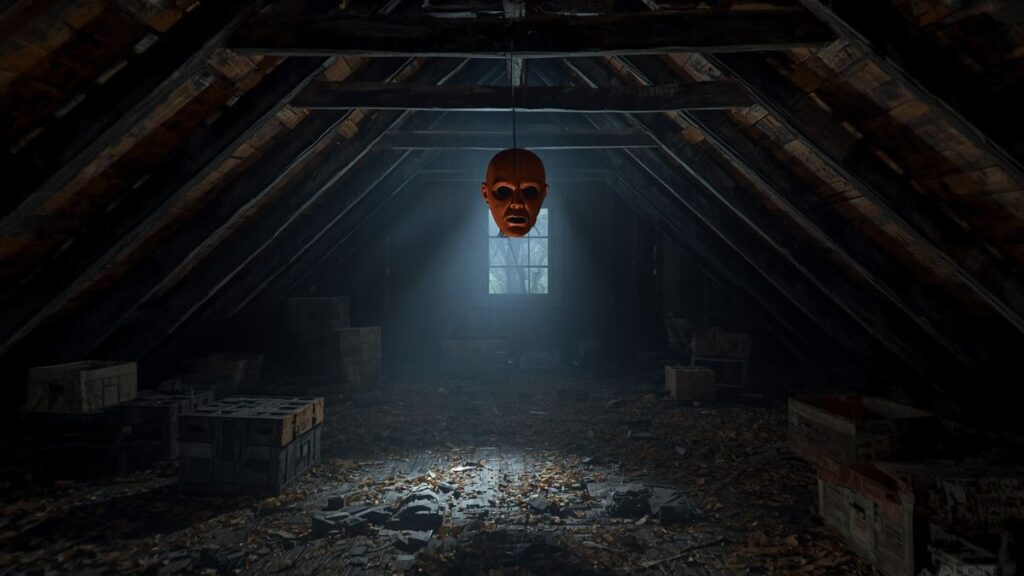
Directly above the attic ladder hung the mask.
Suspended from a wooden beam.
Slowly rotating in the breeze.
Mark stared in disbelief.
The storage box remained nearby.
Still sealed.
Still covered with tape.
Yet the mask was no longer inside.
At least, that’s what it appeared.
He carefully examined the box.
The tape had not been disturbed.
The lid remained closed.
When he opened it, the interior was empty.
The mask was gone.
Mark never found a logical explanation.
Neither did anyone else.
The incident disturbed him enough that he immediately removed the mask from the attic.
This time, he had no intention of storing it.
A few days later, he discarded it.
The family assumed the mystery had finally ended.
Yet even after the mask disappeared, strange stories continued.
Several visitors later claimed they saw something resembling the mask in old family photographs.
One neighbor insisted she briefly spotted it through an upstairs window.
No evidence supported these claims.
Most were likely products of imagination and suggestion.
Still, the stories persisted.
Years later, the Henderson family moved away.
The farmhouse eventually changed owners.
The new residents reported no unusual experiences.
No moving objects.
No mysterious masks.
Nothing out of the ordinary.
Yet the story never disappeared.
Blackwood residents continue discussing it every Halloween.
Some believe the mask moved because of elaborate family pranks.
Others suspect forgotten memories and misunderstandings.
A few insist something far stranger occurred.
No one knows for certain.
What everyone agrees upon is the central mystery.
The mask appeared throughout the house for months.
It somehow emerged from a sealed storage box.
And it was later discovered hanging above the attic ladder where no one claimed to have placed it.
Perhaps there is a perfectly ordinary explanation waiting to be discovered.
Perhaps not.
The farmhouse still stands today, quiet and weathered beneath the trees.
Most people pass it without giving it a second thought.
But older residents sometimes glance toward the attic windows when Halloween approaches.
And when conversations turn toward local legends and unexplained mysteries, someone inevitably mentions the story of the vintage Halloween mask.
The mask that refused to stay where it was left.
The mask in the attic.
And the mystery nobody ever managed to solve.
The True Horror of Halloween Night
Many people assume the scariest Halloween stories involve ghosts, haunted houses, or supernatural encounters. While paranormal tales are a major part of Halloween tradition, some of the most frightening stories are entirely human.
Throughout history, Halloween has occasionally been linked to real crimes, disappearances, and unusual incidents that captured public attention. Because these events occurred in real life, they often leave a stronger impression than fictional horror stories.
One well-known example is the long-standing fear of tampered Halloween candy. For decades, parents have warned children to be cautious when collecting treats. Although confirmed cases are extremely rare, the stories became so widespread that they evolved into one of Halloween’s most famous urban legends.
What makes these stories particularly unsettling is that they are rooted in real-world fears. Unlike ghosts or monsters, crimes and unexplained incidents can happen in everyday life, making them feel much more personal and believable.
Several factors contribute to the lasting impact of these stories:
- They are often inspired by real events or investigations.
- They reflect common fears about safety and the unknown.
- They spread through rumors, media coverage, and local legends.
- They blur the line between documented facts and folklore.
Over time, isolated incidents can grow into larger legends as stories are retold and details change. This mixture of truth and speculation is one reason Halloween remains so fascinating.
The line between fact and folklore continues to captivate people every Halloween season. Sometimes the most frightening stories are not about ghosts at all, but about real mysteries and events that remind us how strange reality can be.
Why Halloween Stories for Adults Remain Popular
Children often enjoy simple ghost stories filled with spooky creatures, haunted houses, and jump scares. Adults, however, are usually drawn to stories that offer deeper mysteries, complex characters, and unsettling questions that linger long after the story ends.
Unlike traditional children’s Halloween tales, Halloween stories for adults often blur the line between reality and fiction. They focus less on monsters and more on psychological tension, unexplained events, and mysteries that challenge our understanding of the world.
Some of the most common themes found in adult Halloween stories include:
- Unexplained disappearances that leave investigators with more questions than answers.
- Historical mysteries connected to real events, locations, or legends.
- Haunted locations with long histories of strange reports and eyewitness accounts.
- Psychological fear that explores the darker side of the human mind.
- Paranormal encounters involving ghosts, apparitions, and unexplained phenomena.
- Unsolved crimes that continue to fascinate investigators and true-crime enthusiasts.
- Real-life investigations where evidence and witness testimony create an enduring mystery.
What makes these stories particularly compelling is their ambiguity. Rather than providing clear answers, many leave important questions unresolved. Readers are encouraged to draw their own conclusions and decide what they believe happened.
Why Adults Enjoy These Stories
Several factors contribute to the lasting popularity of Halloween stories among adult audiences:
- They offer a mix of entertainment, suspense, and mystery.
- They encourage critical thinking and speculation.
- They explore fears that feel more realistic and relatable.
- They often involve historical events or real-world locations.
- They create discussion and debate among readers.
- They provide a safe way to experience fear and excitement.
Many adults also enjoy stories that challenge their beliefs. Was the event truly supernatural, or was there a logical explanation that was never discovered? Could witnesses have misunderstood what they saw, or did they experience something genuinely unexplained?
This uncertainty is often what makes adult Halloween stories so memorable. The best tales do not simply scare readers for a moment. Instead, they leave lingering questions that continue to spark curiosity long after the story is finished.
Whether focused on paranormal encounters, historical mysteries, or real-life investigations, Halloween stories for adults remain popular because they combine fear, intrigue, and the unknown. They remind us that some mysteries may never be fully explained, and sometimes that possibility is more frightening than any monster.
The Enduring Appeal of Halloween Stories
Halloween has survived for centuries because it taps into a universal fascination with the unknown. Across different cultures and generations, people have always been drawn to stories that explore mysteries, unexplained events, and things that exist beyond everyday understanding.
Part of the appeal lies in our natural curiosity. People enjoy testing the boundaries between reality and imagination, fact and folklore, belief and skepticism. Halloween provides the perfect setting for exploring these ideas through stories that challenge ordinary explanations and invite us to consider the possibility that not everything can be easily understood.
The best Halloween stories are not always the bloodiest, most graphic, or most shocking. In many cases, the stories that stay with us the longest are the ones that leave important questions unanswered.
Consider a few classic examples:
- A shadow seen standing at the end of an empty hallway.
- A voice heard inside an abandoned house with no one nearby.
- A mysterious letter from an unknown watcher.
- A hitchhiker who disappears without a trace.
- Footsteps echoing through a deserted building.
- An unexplained photograph containing a figure no one remembers seeing.
- A local legend that refuses to fade despite decades of skepticism.
These simple yet mysterious scenarios are often more effective than elaborate horror scenes because they allow the imagination to take over. What we cannot fully explain often feels more frightening than what we can clearly see.
Why Halloween Stories Continue to Fascinate
Several factors contribute to the lasting popularity of Halloween stories:
- They spark curiosity about the unknown.
- They blend history, folklore, and mystery.
- They provide a safe way to experience fear.
- They encourage discussion and speculation.
- They connect people through shared storytelling traditions.
- They remind us that some questions may never have definitive answers.
Another reason Halloween stories endure is their ability to evolve. Stories are passed down through families, communities, books, films, and online discussions. Each generation adds new interpretations while preserving the mystery that made the story memorable in the first place.
Whether the events are paranormal, psychological, or simply misunderstood, they continue to inspire fear, curiosity, and debate. Readers may disagree about what truly happened, but that uncertainty is often what makes the stories so compelling.
As Halloween approaches each year, these tales are told once again around campfires, at parties, and across the internet. They remind us that the unknown remains one of humanity’s greatest fascinations and that sometimes the most terrifying stories are not the ones with monsters, but the ones that might actually be true.
Final Thoughts
Scary Halloween stories that are true occupy a unique place in popular culture. They combine documented events, witness accounts, local legends, and enduring mysteries into stories that continue to fascinate people year after year. Whether rooted in history or surrounded by folklore, these tales often leave a lasting impression because they blur the line between fact and fiction.
From haunted houses and ghostly encounters to unexplained disappearances and unsolved mysteries, these stories remind us that not every question has a clear answer. Their mystery is often what makes them so memorable.
If you’re looking for memorable Halloween stories or chilling Halloween stories for adults, real-life mysteries often provide some of the greatest scares. Knowing that an event may have actually happened adds a level of suspense that fictional horror cannot always achieve.
As Halloween approaches each year, these stories are shared once again, keeping old legends and unexplained events alive for a new generation. After all, fiction can be frightening, but the possibility that something might be true is often what makes a story truly unforgettable.