
Look, let’s just say it: the world is overwhelming when you’re barely three feet tall. Every single day is this nonstop assault of bright lights, sudden loud noises, people towering over you, smells you can’t even name yet, and feelings so big they don’t have words.
By dinner time most toddlers are basically a top that’s been spun way too fast—still buzzing with energy but starting to wobble hard, one wrong move from crashing.
That’s exactly why bedtime stories actually matter more than we sometimes give them credit for. They’re not just another thing to tick off so you can finally collapse on the couch with your phone. They’re like someone quietly turning down the volume on the whole house.
A slow, steady dimming from the afternoon chaos into something cooler, quieter, darker. When you sit there and open a book (or even just talk through a made-up story), you’re giving them a soft place to land. You’re showing them—without having to spell it out—that the noise stopped, the day’s done, and it’s safe to let everything go now.
I’ve had nights where I was half-dead tired, reading the same page three times because my brain was fried, and my kid still fell asleep with that little sigh like the weight finally lifted. It’s not fancy. It’s not perfect. But it works.
Why these stories actually matter
We all know books are supposed to be good for “development”—vocabulary, letters, whatever. Sure, that’s true. But let’s be real: at 8:00 PM, when the toddler’s finally winding down, the real magic isn’t in teaching them anything. It’s invisible stuff that you feel more than you see.
The “you’re not alone” feeling
The whole day everyone’s rushing—phones, dinner, laundry, work emails. Then for those ten minutes, it’s just you and them. No distractions. Your voice, right there, steady. It’s like your presence literally weighs them down into the bed in the best way.
The unspoken message lands: Day’s over. You’re safe. I’m not going anywhere. I’ve seen my own kid relax into the pillow the second he realizes it’s just us and the book—no more demands.
The rhythm thing
Toddlers soak up patterns like little sponges. It’s not really about fancy words; it’s the music of it. The way your voice goes up and down softly, the same line coming back around, the predictable beat. It’s calming on a level they don’t even know how to explain. I swear half the time my kid isn’t even listening to the story—he’s just riding the sound of my voice like a lullaby on repeat.
The body knows what’s next
Brains love routine more than we do. Bath → pajamas → story → lights out. Do it enough nights in a row and the whole sequence becomes this quiet chemical signal: “Okay, time to power down.” No arguing, no second wind. It’s like flipping an internal switch. Skip the story one night and you can practically feel the nervous system go “wait, what? We’re not done yet?”
It’s not glamorous. It’s not Instagram-perfect. Some nights I’m reading with my eyes half closed and my kid’s already snoring on page two. But those little invisible things—the safety, the rhythm, the signal—add up. They’re why the ritual sticks even when everything else about bedtime feels like a battle.
How to pick a book that actually works at bedtime?
Not every kids’ book deserves a spot on the nightstand. Some are perfect for 11 a.m. when you’re desperate to burn off energy before lunch; the good bedtime ones are made for when the house is finally starting to quiet down and everyone’s half-asleep already.
Keep it short and sweet
Toddler attention spans are brutal—five to ten minutes tops before they’re squirming or asking for “one more” of something else. Pick stories with one clear thing happening: a duck going for a walk in the rain, a cat curling up in a sunbeam, whatever.
If it’s got ten characters and a big adventure, save it for daytime. I’ve learned this the hard way after trying to power through a longer book and ending up with a wide-awake kid staring at me like “why are we still doing this?”
Look for the echo (repetition is your friend)
Toddlers go nuts for books where the same line or sound comes back over and over. They start mouthing the words, pointing, sometimes yelling the phrase before you even get there.
It turns them from a passive listener into part of the story, and that predictability? Gold. It’s like they’re in on the secret. My kid still finishes “Brown Bear, Brown Bear” lines even though we haven’t read it in months.
Go for “visual silence” (calm pictures, please)
In a world full of flashing screens and bright toys, their little eyes are tired by evening. Pick books with soft colors, watercolors, lots of empty space on the page—not busy, high-contrast pages that make their eyes dart everywhere.
A quiet picture of a bunny yawning or a moon over a house does more to settle them than a page crammed with 20 animals doing circus tricks. Trust me, I once grabbed a neon-colored “search and find” book thinking “it’s cute”—big mistake. Kid was wired for another hour.
Living in Dallas, where even evenings can feel sticky and loud from traffic or AC blasting, the calmer the book looks and feels, the faster everyone chills out. It’s not about fancy illustrations; it’s about giving their brain and eyes a break so the whole room can finally exhale.
How to actually read the damn story?
The way you say the words matters way more than the book itself. Think of your voice as the background music the kid drifts off to. You don’t need to be some dramatic narrator doing funny voices or sound effects—honestly, that can backfire and keep them wired. You just need to show up, be present, and keep it low-key.
Go low and slow (seriously, slower than you think)
Drop your pitch a little—high and excited is for playground time; soft and low feels like safety. And slow your words way down. Put real space between sentences. Let each line hang for a second so they can actually hear it, look at the picture, let it sink in.
I used to race through books thinking “let’s get this done,” and my kid would pop right back up like “wait, what happened?” Now I drag it out on purpose, and half the time they’re already dozing before the end.
Point and notice, don’t quiz them
Skip the interrogation vibe (“What color is the mouse? How many stars do you see?”). That turns it into school. Instead, just point gently and say something simple like “Look at that little mouse… he’s yawning so big.”
Or “See how the blanket’s all fuzzy?” It keeps them involved without pressure. If they point or babble back, great—roll with it. If they’re quiet, that’s fine too. Some nights my kid just stares at the page like he’s hypnotized, and that’s the win.
Make the room help you
Dim the overhead light—use a little lamp or book light if you have one. Let the shadows creep in; they’re part of the cozy. Turn off the TV in the other room, mute the phone, kill the AC hum if you can (Dallas evenings are loud enough already with the traffic and crickets).
The quieter the space, the more your voice becomes the only thing they tune into. I’ve had nights where I forgot to dim the lights and the kid kept pointing at the ceiling fan like it was part of the plot—lesson learned.
It’s not rocket science. Some nights I’m mumbling half-asleep myself, voice cracking, stumbling over words—and guess what? Kid still conks out. The magic isn’t in perfect delivery; it’s in you being there, steady, not rushing off to the next thing.
Bedtime Stories for Toddlers
Here are six original Bedtime Stories for Toddlers designed to be read slowly, with a pause at every period.
The Sleepy Little Elephant
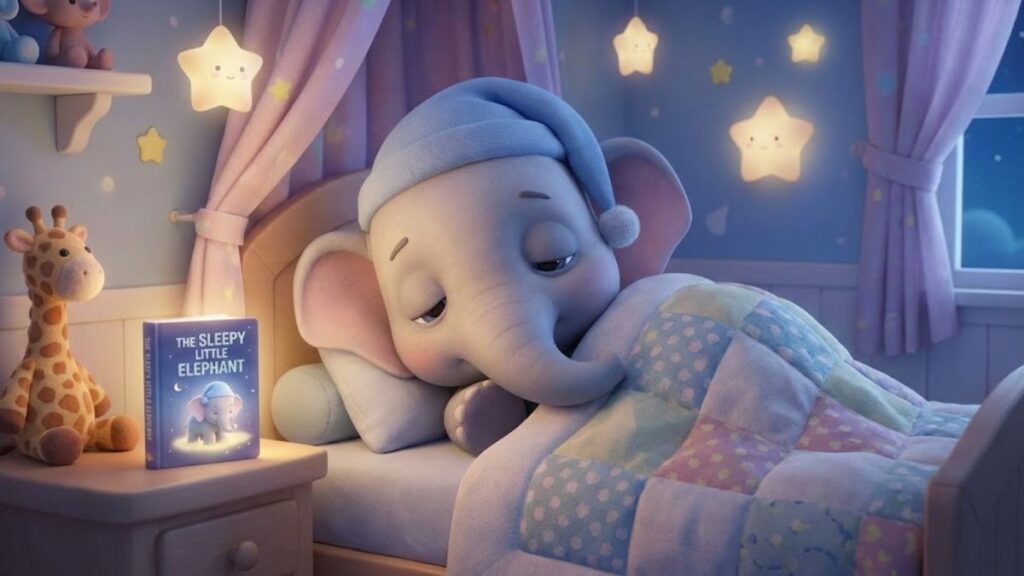
Hey, sweet pea… you all snuggled? Blanket up to your chin? Good. Let’s breathe together once… in… out… There we go.
Now, picture a little elephant—let’s call her Ellie. She’s small for an elephant, with big floppy ears and a trunk that wiggles when she’s happy.
Ellie spent the whole day playing. Chasing butterflies through the tall grass… splashing in warm puddles… trumpeting little hellos to her friends. She ran and jumped and laughed until her legs felt wobbly.
But then the sun started to get tired too. It slipped lower in the sky, turning everything gold, then pink, then soft purple. The air got cooler. The birds stopped their loud songs and just chirped sleepy ones.
Ellie felt it in her tummy first—a heavy, cozy feeling. Then in her eyes. Blink… blink… slower.
She yawned. A great big yawn that started way down deep and rolled all the way out her trunk. Ahhhhhhh… It sounded like the wind saying goodnight.
Her ears flapped once… twice… lazy, like they were too tired to stay up.
Ellie walked slow steps to her favorite spot under a big shady tree. The grass brushed her legs gently. The ground felt warm and soft, like a big bed waiting just for her.
She curled her trunk around herself, like a soft scarf. Folded her legs… one… two… plop… down she went, belly against the earth. The grass hugged her sides. It tickled a little, but in a nice way.
Everything got quieter. The butterflies went home. The wind took a rest. Even the crickets waited.
Ellie breathed slow. In… out. In… out. You could almost hear it—whoosh… whoosh—like a lullaby.
The first stars popped out. Twinkle… twinkle… saying hello.
The moon came up, big and round, smiling down like a nightlight.
Ellie yawned again—smaller this time. Her eyes closed all the way.
Dreams came soft and easy. Dreams of walking with mama elephant… splashing tomorrow… everything warm and safe.
And Ellie slept. Deep, happy, peaceful sleep. Curled up under the tree, with the moon watching and the stars singing quiet songs.
The whole wide world got still around her… waiting for morning.
But for now… just sleep.
Goodnight, Ellie.
Goodnight, my love. (I usually pause here, rub their back, match the breathing till they’re out. Even works when the Dallas heat makes everything sticky and the fan’s humming loud.)
Better start? I cut the “okay buddy close your eyes” bit—sometimes that feels too direct when they’re already fading. This one flows right into picturing it. If you want it even softer, shorter, or with your kid’s name/stuffie swapped in, tell me.
Milo and the Starry Breath
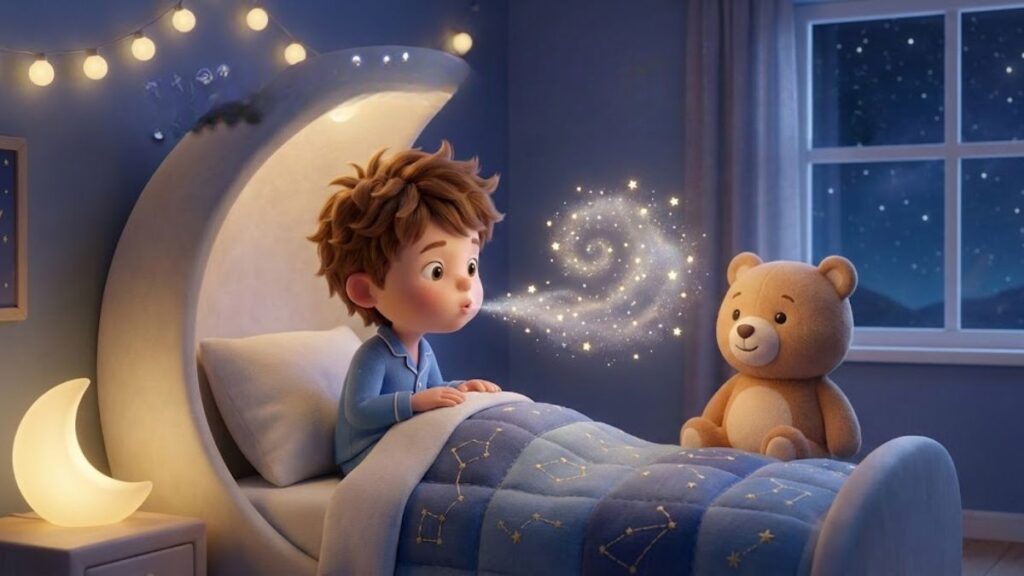
Okay, kiddo… you ready? Blanket tucked? Let’s do some slow breaths first… in… out… Good.
Now, this one’s about a little mouse named Milo.
Milo was a tiny mouse with soft gray fur and whiskers that twitched when he was excited. He lived in a cozy spot under a big old fence in a field where the grass grew tall.
Every night, when the sun went down and the sky got dark, Milo loved to climb up to the top of the fence and look at the stars.
He’d sit there on his little paws and count them. “One… two… three…” he’d whisper. The stars twinkled back like they were saying hello just to him.
One evening, the sky was extra clear—no clouds at all. Milo counted higher than usual. “Four… five… six…” His eyes got wide. There were so many!
Then a wise old owl landed softly on the fence next to him. Hoo… hoo… The owl didn’t say much at first, just watched Milo with big, kind eyes.
Finally, the owl whispered, “Milo… you’re counting fast. Try it slower. Count the stars… and breathe with them.”
Milo tilted his head. “Like this?”
The owl nodded. “One star… breathe in slow. Two stars… breathe out slow. Three… soft and easy.”
Milo tried it.
One… (big breath in through his tiny nose)…
Two… (slow breath out)…
Three… (soft and slow, like letting go of the day).
Milo felt it right away. His paws got heavy, like they didn’t want to climb anymore. His whiskers stopped twitching. His tail curled around him cozy.
Four… in…
Five… out…
The stars seemed to shine brighter, but softer somehow. Like they were breathing with him.
Milo yawned—a little mouse yawn that made his whole body stretch.
He climbed down the fence slow… one paw… then another… back to his nest made of soft leaves and grass.
He curled up small, tail over his nose.
The owl watched from the fence. “Goodnight, Milo.”
The stars kept twinkling, quiet and steady.
Milo breathed one more time… in… out…
And his eyes closed. He dreamed of stars floating close, like friends keeping watch.
The night stayed quiet around him. No rush. No noise. Just peace.
And Milo slept… deep, happy sleep.
Goodnight, Milo.
Goodnight, my sweet one. (I love this one on clear Dallas nights when the stars actually show up past the city lights. We count a few real ones out the window sometimes. The breathing part? I do it with them—helps me wind down too.)
Lulu’s Found Treasure
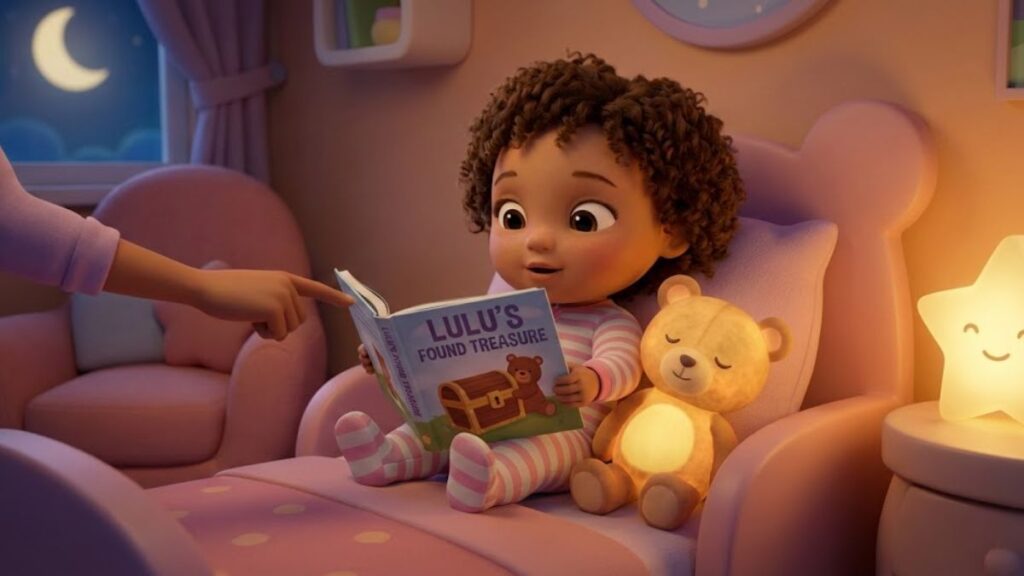
Okay, sweetie… you comfy? Let’s get that blanket just right. One big breath together… in… out… Nice and slow.
This one’s about a little bunny named Lulu.
Lulu was a soft, fluffy bunny with long ears that flopped when she hopped and a pink nose that twitched when she was thinking.
One evening, right before bed, Lulu couldn’t find her Teddy. Teddy was her favorite—worn and cuddly, with one ear a little bent from all the hugs.
She looked under her pillow. Fluff… fluff… Not there.
She looked inside her little shoe by the door. Nope, not there either.
She checked the toy box. Lifted toys one by one. No Teddy.
Lulu felt a tiny worry start in her tummy. It wasn’t big and scary—just a little wobble, like when you lose something important.
She sat down for a second and her ears drooped.
Then Mama Bunny came in. “What’s wrong, Lulu?”
“I can’t find Teddy,” Lulu whispered.
Mama took Lulu’s paw. “Let’s look together. We’ll find him.”
They checked the shelf… nope.
They checked under the bed… just dust bunnies.
Then Mama opened the laundry basket. And there—peeking out—was one fuzzy Teddy ear.
“There he is!” Lulu hopped over and pulled Teddy out. He smelled like warm clothes and home.
Lulu hugged him so tight. “I missed you, Teddy.”
The worry in her tummy went poof—just gone.
Mama helped tuck them both into bed. Lulu put Teddy right next to her cheek.
She took a slow breath… in… out.
The room got quiet. The light was soft and low.
Lulu yawned—a little bunny yawn that made her nose twitch.
Her ears relaxed. Her paws held Teddy close.
One more breath… in… out…
And Lulu slept. Safe and cozy, with Teddy found and Mama nearby.
The moon outside the window smiled, like it knew everything was okay again.
Goodnight, Lulu.
Goodnight, Teddy.
Goodnight, my little bunny. (This one’s great when they’ve lost a stuffie that day—makes the finding feel real. I drag out the looking parts if they’re chatty, skip to the hug if they’re fading. Even helps on those humid Dallas nights when nothing feels settled.)
Short Bedtime Stories for Toddlers
Honestly, I don’t always pull out a book. Some nights I just make up a quick, calm one—super short, lots of yawns and slow breaths, nothing exciting. They’re my backups for when everyone’s wiped out.
I’ve got a few favorites stashed in my phone notes, and I add more when the kids give me ideas. If you want the full ones (or new ones I throw together), they’re all over on the blog link below—no fancy stuff, just what actually works.
Pick whatever fits the night. Short and sweet is the key.
Bedtime Stories for Toddlers to Fall Asleep
Real talk—these are the ones that actually work when everyone’s running on empty and you just need the kid to crash without the usual 47 “one more” requests.
I don’t always grab a book. Some nights it’s just me making something up on the spot—short, slow, heavy on the yawns and breaths, nothing that’ll wind them up. They’re calm, repetitive, and end with everyone asleep (including the cloud or whatever character we’re on).
I’ve got a handful I rotate through, tweaking them depending on what stuffie they’re clutching or what happened that day. They’re not fancy—just what gets us through those sticky Dallas evenings when the house is finally quiet (except the AC humming).
If you want the full set (or new ones I throw together when the kids give me random ideas), they’re all listed over on the blog link below.
Pick one, drag it out, whisper the quiet parts. Works way better than fighting it.
Bedtime Stories for Toddlers to Read
These are the go-to ones I actually read out loud—nothing complicated, just calm words that flow easy when you’re half-asleep yourself and the kid’s finally still.
I keep a few favorites rotating, tweaking them on the fly depending on what they’re into that night (dinosaurs one week, trucks the next). Short, slow, lots of pauses for yawning. They’re what get us through without the endless “again!” loop.
Got the full set (and extras I jot down when inspiration hits at 2 AM) over on the blog link below.
Grab one, whisper it slow, make it yours. Some nights that’s all the magic you need.
Common ways the bedtime routine goes sideways
Even when you’ve got the whole routine down to a science, things can still get noisy or off-track. Here are the traps I fall into way too often—and yeah, they sneak up on you.
The “I need to be entertaining” trap
It’s tempting to go full performer—funny voices, big gestures, acting out the bunny hopping. But at bedtime? That usually backfires. You’re basically turning storytime into playtime, and the kid’s brain goes “oh, we’re revving up again!”
Instead, aim for what I call “boring cozy”—soft, steady, almost monotone warmth. My kid falls asleep fastest when I’m half-mumbling like I’m reading to myself. Less show, more calm. Learned that after too many nights where the “fun” reading kept him giggling for 20 extra minutes.
The “tablet seems easier” trap
I get it—swipe, tap, done. But that glowing screen is like a little alarm clock for their brain. The blue light tells their system “stay awake!” even if it’s a bedtime story app. A real paper book (the crinkle of pages, the smell, the way light bounces off it instead of blasting out) plus your actual voice?
That’s what actually dials down the heart rate and cues sleep. I’ve caught myself reaching for the iPad on rough nights and regretted it every time—the kid’s wired, I’m frustrated, and bedtime drags on.
The “let’s just rush through it” trap
We’ve all done it—you’re starving, the dishes are piled up, you’ve got emails waiting, and you speed-read like it’s a race. But toddlers are pros at picking up on your tension. They feel the hurry in your voice, and suddenly they’re fighting sleep harder, asking for “one more page” or stalling just to keep you there.
It’s way better to read three pages slowly, with real pauses and eye contact, than blast through ten while glancing at the clock. Some nights I literally tell myself out loud: “Slow down, it’s okay if we don’t finish.” And weirdly, that’s when the kid settles fastest.
Living in Dallas, where evenings can stay humid and restless even after dark, these little traps hit harder—everything feels stickier and louder. The fix is usually just breathing, slowing my own roll, and remembering it’s not about perfection. It’s about showing up calm so they can borrow that calm from you.
A Final Thought for the Caregiver
One last thing before you crash tonight
Look, some evenings the house is finally quiet except for the usual creaks and the AC kicking on (Dallas nights, am I right?), and the sky outside is doing that deep blue thing where everything feels like it’s winding down.
That’s when I try to remind myself: I’m not just flipping pages to get this over with. I’m giving my kid something that sticks—a little pocket of “I’m safe” that they’ll carry way past tonight, even when they don’t remember the actual book.
Bedtime stories don’t have to be perfect. You don’t need fancy voices or flawless reading (half the time I’m stumbling over words because I’m exhausted). They just need you—your tired, real self showing up. Pick the soft voice when you can.
Slow it down, even if you’re counting the minutes till you can have coffee or scroll your phone. Let the quiet between the words do some of the work. It’s those moments that turn into the bridge they cross to sleep, and honestly, to feeling okay in the world.
You’ve got this. Even on the rough nights, you showing up is enough.