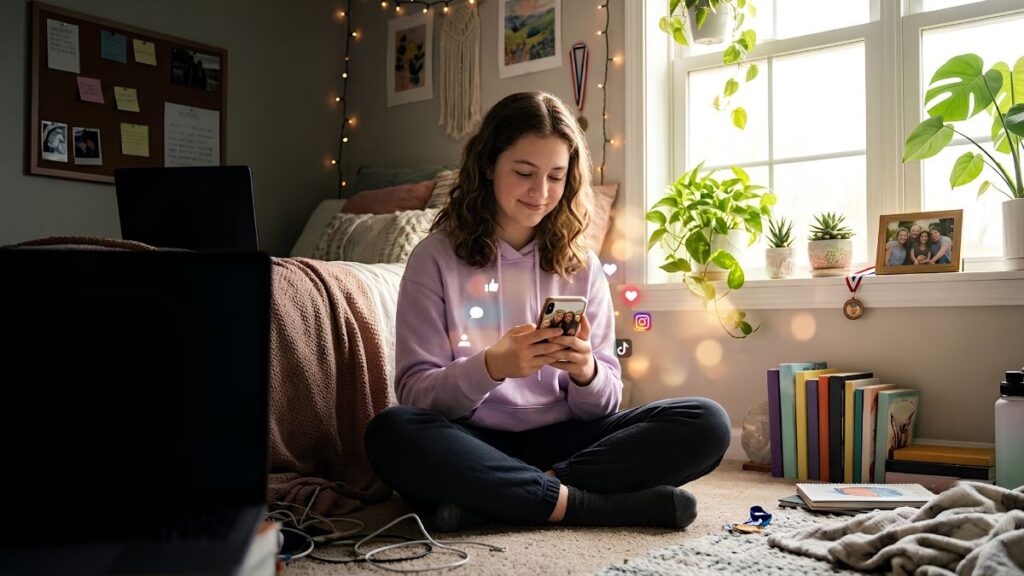
Meera loved taking pictures.
She enjoyed capturing beautiful moments, sharing memories with friends, and discovering new ideas online. Like many teenagers, social media was a big part of her daily life.
Every morning after waking up, she checked her phone.
During breakfast, she looked through posts.
After school, she watched videos and checked updates from classmates.
At first, social media felt fun.
It helped her stay connected.
It helped her discover new hobbies.
It gave her inspiration.
But slowly, something changed.
Instead of making her feel connected, social media started making her feel like she was falling behind.
Everyone Seemed Perfect Online
Meera followed many people from her school and several popular creators online.
Whenever she opened her feed, she saw pictures of people having amazing experiences.
Someone was traveling to beautiful places.
Someone was celebrating a major achievement.
Someone was sharing a perfect outfit.
Someone was posting about exciting events with friends.
The more Meera looked, the more she felt that everyone else had a better life.
She started asking herself:
“Why don’t I look like that?”
“Why don’t I have so many friends?”
“Why is my life not as interesting?”
She knew, logically, that people only shared selected moments.
But emotionally, it was difficult to remember.
Comparing Her Real Life With Other People’s Highlights
One weekend, Meera attended a family gathering.
Her cousin took many pictures and posted them online.
The photos looked cheerful and perfect.
Everyone was smiling.
The decorations looked beautiful.
The food looked amazing.
Later that evening, Meera opened social media and saw the pictures.
Many people commented:
“Looks like such a fun day!”
“Your family is amazing!”
But Meera remembered something different.
Before those pictures were taken, everyone was tired.
The preparation had been stressful.
Some family members had argued about small things.
Everyone had moments when they were not smiling.
The picture showed only a few seconds.
It did not show the entire day.
This made Meera think:
“Maybe online posts are not the complete story.”
The Effect on Her Confidence
Despite knowing this, Meera continued comparing herself.
She started becoming more critical of herself.
She looked at other teenagers and noticed what they had instead of appreciating what she had.
She stopped enjoying some of her favorite activities because she thought they were not impressive enough to share online.
She loved painting, but she rarely painted anymore because she believed:
“Nobody would care about my artwork.”
She enjoyed reading, but she felt that reading was less exciting compared with seeing others attend events or travel.
Slowly, she began measuring her happiness by what received attention online.
A Conversation With Her Sister
One evening, Meera’s older sister noticed that she seemed unhappy.
“You have been spending a lot of time on your phone lately,” her sister said.
“I’m just checking things,” Meera replied.
Her sister looked at her carefully.
“Does checking things make you feel better?”
Meera stayed quiet.
Then she admitted:
“Sometimes I feel like everyone is doing better than me.”
Her sister sat beside her.
“Do you know something interesting?” she asked.
“What?”
“Many people you think have perfect lives probably look at someone else and feel the same way.”
Meera looked confused.
“But they look so happy.”
Her sister smiled.
“People usually share their best moments. They don’t post every difficult day, every mistake, or every insecurity.”
Seeing Social Media Differently
That conversation stayed in Meera’s mind.
The next day, she looked through her social media feed differently.
She noticed something.
Almost every post showed a special moment.
A birthday celebration.
A vacation.
An achievement.
A beautiful photograph.
Very few people shared ordinary days.
Nobody posted:
“I had a difficult exam today.”
“I felt nervous before my presentation.”
“I made a mistake and learned from it.”
“I spent the whole afternoon doing homework.”
Meera realized she had been comparing her everyday life with other people’s carefully selected moments.
It was not a fair comparison.
Taking a Small Break
Meera decided to make some changes.
She did not delete social media completely.
She simply created healthier habits.
First, she stopped checking her phone immediately after waking up.
Instead, she started her morning with activities she enjoyed.
She drank water.
She stretched.
She listened to music.
She prepared for school without comparing herself to others.
She also unfollowed accounts that constantly made her feel negative.
Instead, she followed pages that inspired her creativity and learning.
Returning to Her Own Interests
With more time away from constant comparison, Meera returned to painting.
One afternoon, she created a painting of a sunset.
She did not make it because she wanted likes.
She made it because she enjoyed creating something beautiful.
Later, her friend saw it and said:
“This is really good. You should share your artwork.”
Meera smiled.
A few months earlier, she would have worried about whether people would like it.
Now she understood something important.
The value of her work did not depend on how many people noticed it.
Learning to Celebrate Small Wins
Meera also started appreciating small moments in her own life.
She celebrated:
Completing a difficult assignment.
Having a good conversation with a friend.
Learning a new skill.
Helping someone.
Spending time with family.
She realized that a meaningful life is not created only through big achievements.
Small moments matter too.
Becoming a Better Friend
As Meera became more comfortable with herself, she also became more present with others.
During conversations, she stopped checking her phone constantly.
She listened more.
She enjoyed real-life experiences instead of worrying about how they would look online.
Her friends noticed the difference.
“You seem happier recently,” one friend told her.
Meera smiled.
“I think I stopped trying to live someone else’s life.”
Understanding That Everyone Has Struggles
One day, Meera saw a popular student from her school post about an achievement.
Everyone congratulated her.
Normally, Meera would have compared herself.
But this time, she remembered something.
That same student had once told her privately that she often felt stressed and worried about disappointing others.
The post showed success.
It did not show the pressure behind it.
Meera understood that everyone has challenges, even people who seem confident online.
Lesson From Meera’s Story
Social media can be enjoyable and useful, but it can also create unrealistic comparisons if we forget how it works.
People usually share selected moments, not their complete lives.
A picture does not show someone’s worries.
A success post does not show someone’s struggles.
A happy video does not show every difficult day.
Instead of asking:
“Why is my life not like theirs?”
Try asking:
“What do I appreciate about my own life?”
Remember:
- Your journey does not need to look like someone else’s.
- Your achievements do not need online approval to matter.
- Your everyday moments are valuable.
- Your worth is not measured by likes, followers, or popularity.
The happiest people are not always those who have the most impressive online presence.
They are often the ones who learn to appreciate the life they are already living.