At the edge of a quiet mountain village stood the oldest building anyone could remember.
It wasn’t the village hall.
It wasn’t the marketplace.
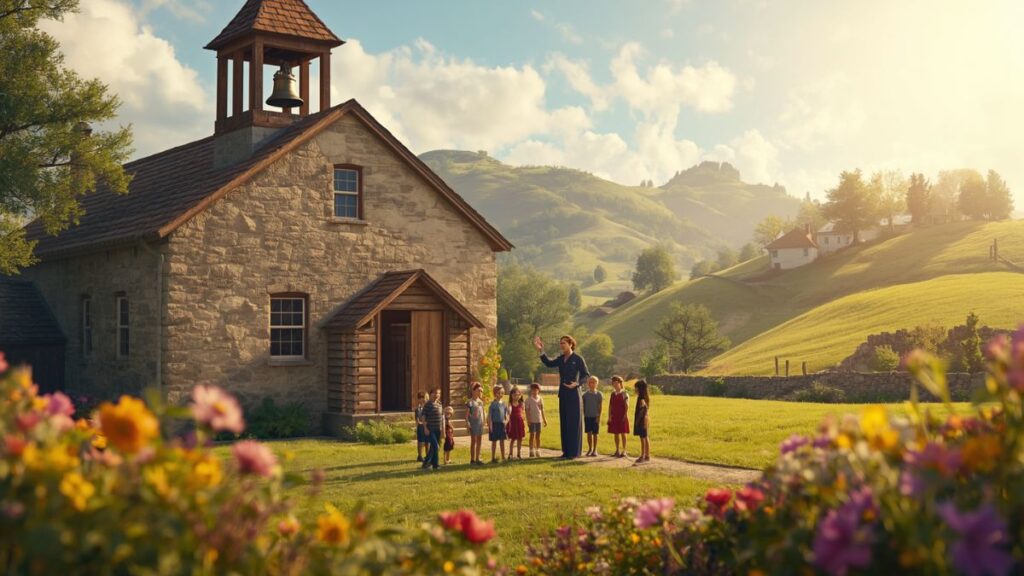
It was the little stone schoolhouse with its weathered wooden doors and a rusty brass bell hanging from a tall wooden tower.
For nearly seventy years, that bell had welcomed generations of children to class.
Parents remembered hearing it when they were young.
Grandparents smiled whenever it rang.
To the people of the village, the bell was more than a signal that lessons were about to begin.
It was the sound of hope.
But as the years passed, the village began to change.
Many families moved to larger towns in search of work.
Fewer children remained.
Some parents believed their sons and daughters should help in the fields instead of attending school every day.
Others felt education wasn’t necessary because most children would eventually stay in the village anyway.
Each year, fewer students filled the classrooms.
Eventually, only twelve children remained.
One rainy afternoon, the district education office sent an official letter.
The principal, Mr. Daniel, opened it slowly.
His hands trembled as he read.
The school would close at the end of the academic year.
The students would be transferred to another school nearly twenty kilometers away.
Mr. Daniel folded the letter carefully.
He looked through his office window toward the old bell.
For a long time, he said nothing.
That evening, after every student had gone home, he climbed the narrow wooden stairs leading to the bell tower.
He gently touched the worn brass surface.
It had rung every school day for decades.
“I don’t think you’re finished yet,” he whispered.
The next morning, the bell rang exactly as it always had.
Its familiar sound echoed across the valley.
The students arrived smiling, completely unaware of the letter.
Mr. Daniel greeted every one of them.
He knew he had a choice.
He could quietly accept the school’s fate.
Or he could fight for it.
He chose the second.
Instead of waiting for families to come to the school, he decided to visit every home in the village himself.
Each afternoon after classes ended, he walked dusty roads carrying only a notebook and a small satchel.
At the first house, he met a father repairing farming tools.
“My son is needed here,” the father explained.
“He helps me every morning.”
Mr. Daniel nodded respectfully.
“I understand.”
“But imagine what your son could build if he learned new farming methods.”
The father remained silent.
The next evening, Mr. Daniel visited another family.
Their daughter rarely attended school because she cared for her younger siblings.
He didn’t criticize the parents.
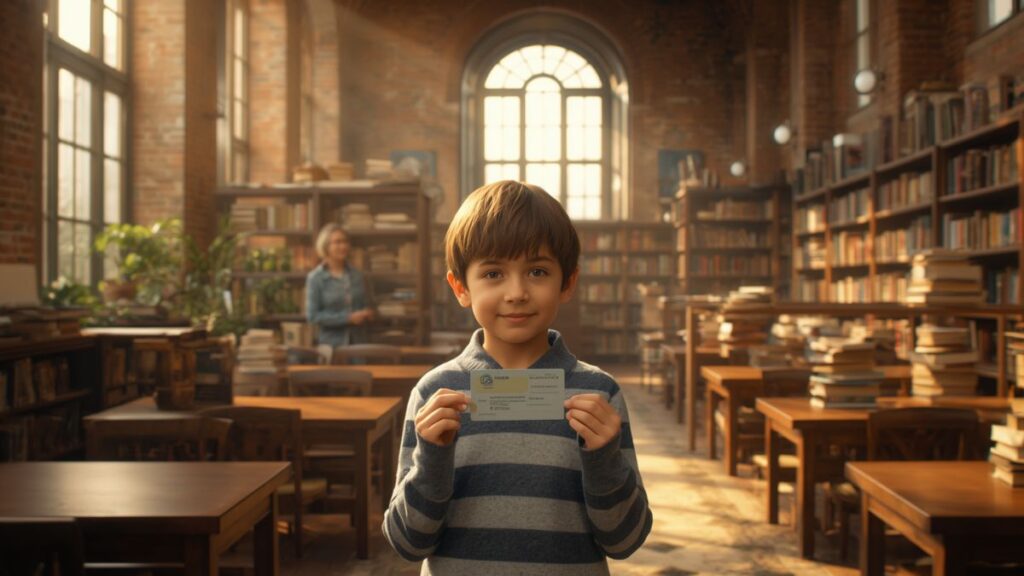
Instead, he asked the children to read one of the library books he had brought.
As they listened to the story together, the parents noticed their daughter’s excitement.
Before leaving, Mr. Daniel said quietly,
“Education doesn’t take children away from their families.”
“It gives them more ways to help them.”
Night after night, he continued visiting homes.
Sometimes families welcomed him warmly.
Sometimes they politely disagreed.
Occasionally, people laughed.
“Books won’t grow crops.”
“School won’t repair a roof.”
“We’ve managed without much education for generations.”
Mr. Daniel never argued.
He simply shared stories.
He spoke about former students who had become teachers, nurses, carpenters, mechanics, and business owners.
He reminded parents that education wasn’t about leaving the village.
It was about improving it.
Weeks passed.
Slowly, small changes appeared.
One father decided his daughter should attend every day.
Another family rearranged chores so their son could arrive on time.
A grandmother convinced her grandchildren not to miss classes.
Attendance slowly increased.
Then something unexpected happened.
Former students heard rumors that their old school might close.
Many returned to visit.
One became a doctor in a nearby city.
Another owned a successful construction company.
A third had become an agricultural scientist.
They gathered in the tiny schoolyard one Saturday morning.
Mr. Daniel greeted them with surprise.
“What brings all of you back?”
The doctor smiled.
“We heard the bell might stop ringing.”
“And we couldn’t let that happen.”
The former students spent the entire day sharing memories.
They remembered learning multiplication beneath the old oak tree.
They laughed about classroom plays and spelling competitions.
Most importantly, they remembered Mr. Daniel encouraging them when they doubted themselves.
Before leaving, they made a promise.
They would help save the school.
Over the next several months, remarkable things began happening.
The construction company donated materials to repair the aging classrooms.
The agricultural scientist created a small school garden where students learned modern farming techniques.
The doctor organized free health checkups for local families to encourage school attendance.
Parents who had once doubted education now volunteered to repaint classrooms, repair desks, and plant flowers around the school grounds.
The little school slowly came back to life.
Word spread beyond the village.
Volunteers arrived carrying books.
Local businesses donated computers.
Retired teachers offered extra tutoring.
The once-forgotten school became a symbol of community pride.
At the end of the school year, district officials returned for one final inspection.
They expected to find an empty school preparing to close.
Instead, they found something entirely different.
The classrooms were full.
Children eagerly answered questions.
The library had doubled in size.
Attendance had reached its highest level in years.
Parents filled the schoolyard, proudly watching their children perform songs and science demonstrations.
The officials looked at one another in surprise.
One inspector quietly asked,
“What happened here?”
A little girl standing nearby smiled.
“Our teacher wouldn’t let the bell stop ringing.”
The inspector looked toward Mr. Daniel.
He smiled modestly.
“I only reminded people what education was already giving them.”
A month later, another letter arrived.
This time, everyone gathered as Mr. Daniel opened it.
The school would remain open.
Cheers erupted across the playground.
Children hugged one another.
Parents applauded.
Some even wiped away tears.
Mr. Daniel quietly climbed the bell tower once more.
He pulled the thick rope.
The old brass bell rang louder than it had in years.
Its joyful sound echoed across the hills.
It no longer announced the beginning of a school day.
It celebrated a new beginning for an entire community.
Years passed.
The school continued growing.
Its students won academic competitions.
Graduates earned scholarships.
Some became engineers.
Others became teachers, nurses, architects, farmers using innovative techniques, entrepreneurs, and community leaders.
Many returned to the village after finishing their education.
They didn’t forget where their journey had begun.
Twenty-five years later, the school celebrated its centennial anniversary.
Hundreds of former students gathered beneath colorful banners.
Children performed music.
Teachers shared stories.
Families filled every seat.
An elderly Mr. Daniel, now retired, was invited to ring the bell one more time.
As he slowly climbed the familiar wooden stairs, the audience stood in respectful silence.
His hands rested on the same rope he had held decades earlier.
He smiled and pulled.
The bell echoed across the valley.
Its sound was clear, strong, and full of life.
After the applause faded, one former student approached the stage.
She was now the Minister of Education for the region.
She addressed the crowd.
“When people ask where my education began, they expect me to mention a university.”
“But my real education began right here.”
“It began when one teacher refused to believe that a small village school had nothing left to offer.”
She turned toward Mr. Daniel.
“You taught us that schools don’t change lives because of buildings.”
“They change lives because someone believes every child deserves a chance to learn.”
The audience applauded once again.
As the celebration came to an end, children gathered around the old brass bell, listening as grandparents shared stories about its history.
Some reached up to touch it.
Others imagined the generations who had stood beneath it before them.
The bell had become far more than a piece of metal.
It represented every opportunity education creates.
Every dream it awakens.
Every future it transforms.
Long after the school day ended, the bell tower stood proudly against the evening sky.
Its sound continued to echo through the village, reminding everyone that knowledge is an inheritance no one can take away.
Buildings grow old.
Books wear out.
Desks eventually need replacing.
But the lessons learned inside a classroom can continue shaping families and communities for generations.
And as long as there are teachers who believe in their students and communities willing to value education, the bell of opportunity will never truly stop ringing.
Moral: Education is the greatest inheritance a community can give its children. When teachers, families, and neighbors work together to protect learning, they create opportunities that can transform generations to come.
Related stories
Most of the stories based on inspirational . when childern read the inspirational story and think about the that greatmen.
Inspiring Stories
Inspiring Stories About Sacrifice
Sacrifice is one of the most powerful expressions of human character. Throughout history, countless individuals have willingly given up comfort, opportunities, possessions, and even personal dreams for the benefit of others. These acts of selflessness often leave lasting impressions because they reveal the strength of compassion, courage, and commitment.
The most inspiring stories about sacrifice are not always about grand heroic gestures. Sometimes, they involve ordinary people making difficult choices for their families, friends, communities, or causes they believe in. A parent working multiple jobs to support a child, a teacher dedicating extra hours to help struggling students, or a stranger stepping forward to assist someone in need can all demonstrate the true meaning of sacrifice.
These stories remind us that meaningful achievements and strong relationships often require giving something of ourselves. Whether motivated by love, duty, faith, or generosity, sacrifice has the power to inspire others and create positive change.
In this collection of inspiring stories about sacrifice, we explore real-life lessons and timeless examples that highlight the extraordinary impact of putting others before ourselves.
Why Stories of Sacrifice Inspire Us
People are naturally drawn to stories of sacrifice because they reveal the best qualities of human nature.
When individuals willingly give up something valuable for a greater purpose, they demonstrate strength that goes beyond personal gain. These actions often inspire admiration because they show courage in situations where selfishness might seem easier.
Sacrifice Demonstrates Love
Many sacrifices are motivated by love.
Parents sacrifice sleep, time, and personal ambitions to provide better opportunities for their children. Friends stand by one another during difficult periods. Family members often place the needs of loved ones above their own comfort.
These actions show that genuine love is often expressed through service and commitment.
Sacrifice Builds Character
Making sacrifices requires discipline and resilience.
People who consistently choose long-term goals over immediate rewards develop patience, responsibility, and determination. These qualities help them overcome challenges and achieve meaningful success.
Sacrifice Creates Positive Change
Throughout history, progress has often been driven by individuals willing to make personal sacrifices for a larger cause.
Many social reforms, humanitarian efforts, and community improvements exist because someone chose to act selflessly despite personal costs.