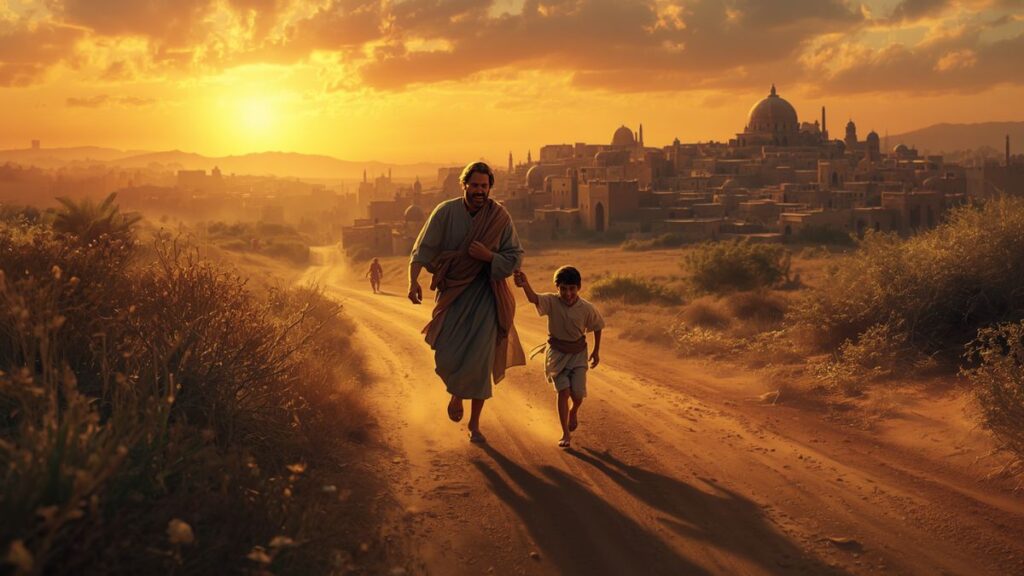
Life can be exhausting.
Even the strongest people sometimes become discouraged, overwhelmed, and emotionally drained. Responsibilities pile up. Expectations feel heavy. Problems seem endless. In those moments, people often wonder where God is and why He seems silent.
One of the most powerful Bible stories for adults addresses exactly these struggles.
It is the story of Elijah and the still small voice.
Found in 1 Kings 19, this remarkable account reveals a side of faith that many people overlook. Elijah was not facing an enemy army or performing a miracle when this story occurred. Instead, he was battling fear, disappointment, loneliness, and exhaustion.
The story teaches that God does not always speak through dramatic events. Sometimes His guidance comes quietly, gently, and personally.
For adults navigating the pressures of life, Elijah’s experience offers encouragement, wisdom, and hope.
Who Was Elijah?
Elijah was one of the greatest prophets in the Old Testament.
He lived during a difficult period in Israel’s history when many people had turned away from God and begun worshiping false gods.
The nation was ruled by King Ahab and Queen Jezebel.
Ahab was considered one of Israel’s most wicked kings.
Jezebel actively promoted the worship of Baal, a false god.
As a result, spiritual corruption spread throughout the nation.
God called Elijah to confront this growing rebellion.
Unlike many prophets who worked quietly, Elijah often found himself at the center of dramatic events.
He boldly challenged kings.
He announced divine judgments.
He performed miracles.
And he became one of God’s most visible servants.
Yet despite his faith and courage, Elijah was still human.
The Drought
One of Elijah’s earliest missions involved announcing a severe drought.
God instructed him to tell King Ahab that rain would stop falling upon the land.
The drought lasted for years.
Crops failed.
Water sources dried up.
People suffered greatly.
During this period, God provided for Elijah in miraculous ways.
At one point, ravens brought him food.
Later, a widow shared her last meal with him, and God miraculously multiplied her supply of flour and oil.
These experiences strengthened Elijah’s faith.
He saw firsthand that God could provide even during impossible situations.
Eventually, however, God prepared Elijah for an even greater challenge.
The Contest on Mount Carmel
One of the most famous events in Elijah’s life took place on Mount Carmel.
The nation had become divided between worshiping God and worshiping Baal.
Elijah proposed a public test.
Hundreds of prophets of Baal gathered on the mountain.
Large crowds assembled to watch.
Elijah challenged the people:
“How long will you waver between two opinions? If the Lord is God, follow Him.”
The contest was simple.
Both sides would prepare a sacrifice.
Neither would light it.
Instead, they would pray.
The true God would answer by sending fire from heaven.
The prophets of Baal went first.
For hours they prayed.
They shouted.
They danced.
They pleaded.
Nothing happened.
No fire appeared.
No answer came.
Then Elijah rebuilt the altar of God.
He drenched the sacrifice with water.
He prayed a simple prayer.
Immediately, fire fell from heaven.
The flames consumed the sacrifice, the wood, the stones, and even the water surrounding the altar.
The crowd was stunned.
They recognized the power of God.
It was one of the greatest victories recorded in Scripture.
Yet surprisingly, Elijah’s darkest moment came immediately afterward.
The Threat from Jezebel
After the events on Mount Carmel, Queen Jezebel became furious.
She blamed Elijah for the defeat of Baal’s prophets.
Rather than accepting God’s power, she chose revenge.
She sent a message threatening Elijah’s life.
The message was clear.
Within twenty-four hours, Elijah would be killed.
The fearless prophet who had stood before kings and challenged hundreds of false prophets suddenly became afraid.
Very afraid.
Instead of staying and fighting, he fled.
Running Away
Elijah traveled deep into the wilderness.
The journey was long and exhausting.
Eventually he sat beneath a tree and prayed.
But this prayer was different.
It was not a prayer of victory.
It was not a prayer of confidence.
It was a prayer born from exhaustion and despair.
Elijah told God that he had had enough.
He felt alone.
Defeated.
Overwhelmed.
The prophet who had witnessed incredible miracles now struggled to find hope.
This moment is important because it reminds readers that even great people experience weakness.
Faithful believers can still become discouraged.
Strong leaders can still feel exhausted.
Spiritual victories do not make someone immune to emotional struggles.
God’s Compassion
God could have rebuked Elijah.
Instead, He responded with compassion.
The first thing God provided was rest.
Elijah fell asleep.
An angel woke him and provided food and water.
After eating, Elijah rested again.
The angel returned and encouraged him to eat a second time.
The journey ahead would require strength.
This detail often gets overlooked.
Before addressing Elijah’s spiritual concerns, God addressed his physical needs.
He needed sleep.
He needed nourishment.
He needed recovery.
Sometimes people assume every problem requires a dramatic spiritual solution.
Yet Elijah’s story shows that rest and renewal are also important.
The Journey to Horeb
Strengthened by the food God provided, Elijah traveled to Mount Horeb.
This mountain held special significance in Israel’s history.
It was associated with Moses and God’s covenant with His people.
There Elijah found a cave and spent the night.
While alone on the mountain, God spoke to him.
The question was simple:
“What are you doing here, Elijah?”
The question was not asked because God lacked information.
Rather, it invited Elijah to express his thoughts and emotions.
Elijah responded honestly.
He described his frustrations.
He explained his fears.
He believed he was the only faithful servant remaining.
He felt isolated.
Abandoned.
Defeated.
Many adults can relate to these feelings.
There are times when challenges seem overwhelming and it feels as though nobody understands.
Elijah poured out those emotions before God.
The Powerful Wind
After speaking with Elijah, God instructed him to stand on the mountain.
Something extraordinary was about to happen.
A powerful wind swept across the landscape.
The force was so strong that rocks shattered.
It was an incredible display of power.
Anyone witnessing such an event would be amazed.
Yet the Bible says something unexpected.
God was not in the wind.
The dramatic display captured attention, but it was not how God chose to communicate.
The Earthquake
After the wind came an earthquake.
The ground shook violently.
Mountains trembled.
Everything around Elijah must have seemed unstable.
Again, it was a breathtaking event.
Again, the Bible states:
God was not in the earthquake.
The lesson continued.
God’s presence was not revealed through the dramatic spectacle.
The Fire
After the earthquake came fire.
Throughout Scripture, fire often symbolizes God’s presence.
Moses encountered a burning bush.
Israel followed a pillar of fire.
Fire fell from heaven on Mount Carmel.
Surely this would be the moment.
Yet once more the Bible says:
God was not in the fire.
Three dramatic events occurred.
A mighty wind.
A powerful earthquake.
A blazing fire.
Yet none contained the message Elijah needed.
The Still Small Voice
Then everything changed.
After the fire came a gentle whisper.
A still small voice.
The sound was quiet.
Subtle.
Easy to overlook.
Yet Elijah immediately recognized its significance.
He covered his face and stepped forward.
This was the moment when God spoke.
Not through overwhelming force.
Not through spectacular displays.
But through a gentle voice.
The contrast is remarkable.
The Creator of the universe chose quietness instead of noise.
Power instead of spectacle.
Relationship instead of performance.
What God Told Elijah
God listened to Elijah’s concerns.
Then He responded.
First, He gave Elijah renewed purpose.
There was still work to do.
There were people to appoint.
There were tasks to complete.
Elijah’s story was not over.
Second, God corrected Elijah’s perspective.
Elijah believed he was completely alone.
God revealed that thousands of faithful people still remained in Israel.
Elijah was not isolated.
He simply could not see the full picture.
Third, God prepared the next generation.
He instructed Elijah to mentor Elisha, who would eventually succeed him.
This provided reassurance that God’s work would continue.
A Lesson About Burnout
One reason this story resonates with adults is its honest portrayal of burnout.
Elijah experienced many common symptoms:
- Exhaustion
- Fear
- Isolation
- Discouragement
- Negative thinking
- Loss of perspective
Many modern adults experience similar struggles.
Work pressures.
Family responsibilities.
Financial concerns.
Health issues.
Emotional burdens.
Elijah’s experience demonstrates that these feelings are not signs of failure.
Even great servants of God face difficult seasons.
God Speaks in Different Ways
Another major lesson involves the way God communicates.
People often expect dramatic signs.
They look for spectacular experiences.
Yet God’s guidance frequently comes through quieter means.
For many believers, God’s direction comes through:
- Scripture
- Prayer
- Wisdom
- Godly counsel
- Conviction
- Peace
- Reflection
The still small voice reminds readers to slow down and listen.
Constant noise can make it difficult to hear God’s guidance.
Bible Stories for Adults
This story is especially meaningful for adults because it addresses real-life struggles.
Adults often feel pressure to appear strong.
Like Elijah, they may experience moments of discouragement while continuing to fulfill responsibilities.
The story teaches that God understands human weakness.
He responds with compassion rather than condemnation.
He provides rest before demanding action.
He listens before correcting.
He restores before sending people back into service.
Stories of Sacrifice in the Bible
Elijah’s life was marked by sacrifice.
He gave up comfort.
He faced opposition.
He risked his safety.
He devoted himself to God’s mission despite personal cost.
Yet this particular story highlights another form of sacrifice.
The sacrifice of pride.
Elijah had to admit his weakness.
He had to acknowledge his fear.
He had to receive help.
For many adults, accepting help is harder than offering it.
Elijah’s story shows the importance of humility and dependence upon God.
Why This Story Still Matters
Thousands of years later, people continue to connect with Elijah’s experience.
The world has changed dramatically.
Technology has advanced.
Societies have evolved.
Yet human struggles remain remarkably similar.
People still experience fear.
They still face disappointment.
They still feel overwhelmed.
And they still need reassurance that God sees them.
The still small voice continues to symbolize God’s personal care and presence.
Lessons from Elijah and the Still Small Voice
God Understands Human Weakness
Even prophets need encouragement.
Rest Is Important
Physical recovery can be part of spiritual renewal.
We Are Not Alone
God often sees resources and support that we cannot.
God Speaks Quietly
His guidance may come gently rather than dramatically.
Purpose Remains
Difficult seasons do not mean God’s plans have ended.
Perspective Matters
What feels hopeless may not be as hopeless as it appears.
Conclusion
The story of Elijah and the still small voice is one of the most encouraging accounts in the Bible.
After experiencing a great spiritual victory, Elijah faced fear, exhaustion, and discouragement.
He ran into the wilderness believing he was alone.
Yet God met him there.
Not with condemnation.
Not with anger.
But with compassion, provision, and a gentle voice.
Through wind, earthquake, and fire, God demonstrated that His presence is not always found in dramatic events.
Sometimes His guidance comes quietly.
Sometimes it arrives through rest, wisdom, encouragement, and renewed purpose.
For adults navigating the challenges of life, Elijah’s story offers a powerful reminder:
God is present even when life feels overwhelming.
He sees our struggles.
He understands our fears.
And often, when the noise of the world fades, His still small voice is waiting to be heard.