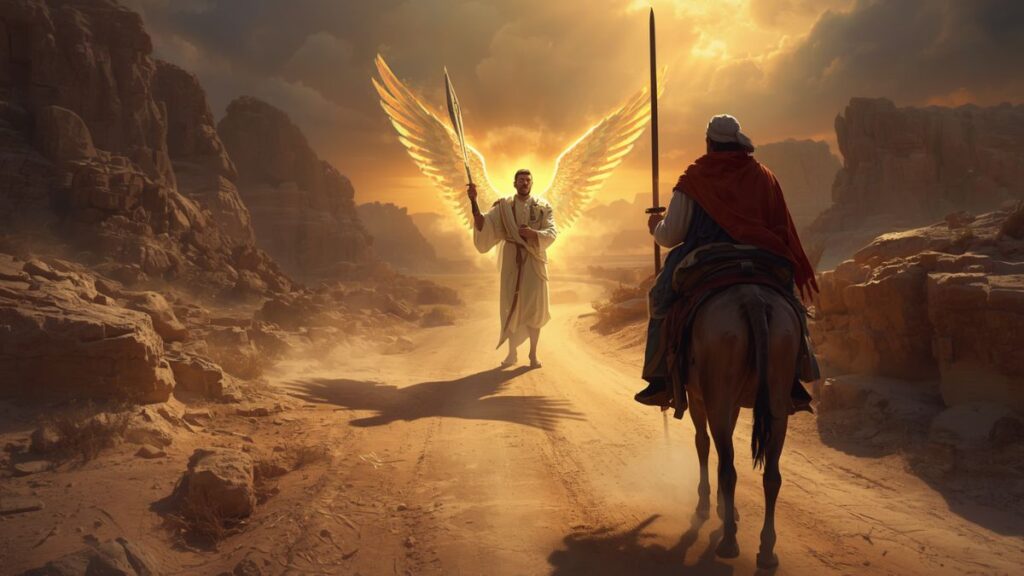
The Bible contains many remarkable stories, but few are as surprising as the account of Balaam and his talking donkey. Found in the Book of Numbers, this unusual story has fascinated readers for centuries because it combines prophecy, angels, divine intervention, and an animal that suddenly begins speaking.
At first glance, the story may seem strange. After all, talking animals are usually found in fairy tales rather than historical accounts. Yet the story of Balaam’s donkey contains powerful lessons about obedience, spiritual awareness, pride, and God’s ability to use unexpected means to accomplish His purposes.
Although the talking donkey is often the detail people remember most, the deeper message is far more significant. The story demonstrates how easily people can become blind to God’s direction while others, even a humble animal, recognize what they cannot see.
Let’s explore this fascinating biblical account in detail.
Who Was Balaam?
Before understanding the story, it helps to know who Balaam was.
Balaam was not an Israelite prophet like Moses. Instead, he was a well-known diviner or prophet who lived in Mesopotamia, far from the nation of Israel.
His reputation was widespread.
People believed that his blessings and curses carried great power. Kings and rulers respected him because they thought his words could influence events.
Whether someone wanted success in battle or protection from enemies, Balaam was considered a man who could communicate with the divine.
This reputation eventually brought him to the attention of a frightened king named Balak.
Israel Approaches the Promised Land
At this point in biblical history, the Israelites had spent years wandering through the wilderness after leaving Egypt.
Under Moses’ leadership, they had survived countless challenges and witnessed numerous miracles.
Now they were approaching the land God had promised to them.
As they traveled, they defeated several powerful enemies.
News of these victories spread quickly throughout the region.
Neighboring nations became concerned.
Among those worried leaders was Balak, king of Moab.
King Balak’s Fear
Balak watched the Israelites move closer to his territory.
The sight terrified him.
Israel’s population was enormous.
Their military victories were impressive.
Their God appeared powerful.
Balak feared that his kingdom would be the next target.
Instead of preparing solely for military defense, he decided to seek supernatural help.
He believed Balaam could provide it.
Balak sent important officials carrying gifts and money to meet Balaam.
Their mission was simple.
Convince Balaam to curse Israel.
Balak hoped that if Israel were cursed, his nation would have a better chance of defeating them.
Balaam Receives the Visitors
When Balak’s representatives arrived, they explained the situation.
They described Israel’s growing strength.
They delivered the king’s request.
And they offered payment for Balaam’s services.
Balaam listened carefully.
Rather than answering immediately, he told the officials to stay overnight.
He wanted to seek God’s guidance first.
That night, God spoke to Balaam.
The message was clear.
God asked who the visitors were and then instructed Balaam not to go with them.
More importantly, God said:
“You must not put a curse on those people, because they are blessed.”
The answer could not have been clearer.
Israel belonged to God.
No curse would be allowed.
The next morning, Balaam informed the officials that he could not accompany them.
The delegation returned home disappointed.
Balak Tries Again
King Balak was not willing to accept defeat.
He believed Balaam simply needed a better offer.
So he sent another group of officials.
This time they were more prestigious.
They also carried promises of greater rewards.
Balak essentially told Balaam he could have whatever he wanted if he agreed to curse Israel.
The offer was tempting.
Balaam knew God’s answer.
Yet the possibility of wealth and honor clearly attracted him.
Even though he said he could not disobey God, he invited the officials to stay another night while he sought God’s guidance again.
This decision revealed something important.
Balaam already knew God’s will.
Yet he hoped the answer might somehow change.
Many people make the same mistake today.
Instead of accepting God’s direction, they keep asking because they want a different answer.
God’s Permission
That night, God again spoke to Balaam.
This time He allowed Balaam to go with the men.
However, there was an important condition.
Balaam could only say what God instructed him to say.
Nothing more.
Nothing less.
The next morning, Balaam saddled his donkey and prepared for the journey.
At first glance, everything appeared normal.
But something significant was happening behind the scenes.
Although God had permitted Balaam to travel, Scripture indicates that Balaam’s motives were not pure.
His heart was being influenced by the rewards Balak had offered.
As a result, God decided to confront him.
The Angel Appears
As Balaam traveled along the road, riding his donkey, God sent an angel to stand in his path.
The angel carried a drawn sword.
The situation was serious.
Yet Balaam could not see the angel.
The donkey could.
This is where the story takes an unexpected turn.
The donkey looked ahead and immediately noticed the angel blocking the road.
Frightened, the animal left the path and moved into a nearby field.
Balaam became angry.
He struck the donkey and forced it back onto the road.
He assumed the animal was being stubborn.
In reality, the donkey was protecting him.
The Second Encounter
The journey continued.
Soon the angel appeared again.
This time the angel stood in a narrow passage between vineyard walls.
The donkey saw the angel.
Balaam did not.
Trying to avoid the angel, the donkey pressed against the wall.
In the process, Balaam’s foot was crushed.
Now Balaam became even angrier.
He struck the donkey again.
From Balaam’s perspective, the animal was causing nothing but problems.
He still had no idea what was really happening.
The Third Encounter
A short distance later, the angel appeared for a third time.
This location was even narrower.
There was no room to move left or right.
The donkey saw the angel and realized escape was impossible.
So the animal simply lay down.
Balaam exploded with frustration.
He beat the donkey once more.
This moment set the stage for one of the strangest events in the entire Bible.
The Donkey Speaks
Suddenly, God opened the donkey’s mouth.
The animal spoke.
It asked:
“What have I done to you to make you beat me these three times?”
The response is almost as surprising as the talking donkey itself.
Balaam answered.
Rather than expressing shock, he argued with the animal.
He complained that the donkey had made him look foolish.
He even declared that if he had a sword, he would kill it.
The donkey responded again.
It reminded Balaam that it had faithfully served him for years.
Had it ever behaved this way before?
The answer was obvious.
No.
The donkey’s unusual actions should have signaled that something extraordinary was happening.
Yet Balaam remained blind to the truth.
Balaam Finally Sees
After the conversation, God opened Balaam’s eyes.
At last, he saw the angel standing in the road with a drawn sword.
Immediately, Balaam fell face down in fear.
The angel explained what had happened.
The donkey had saved Balaam’s life.
If the animal had not turned aside, the angel would have struck Balaam down.
The donkey had shown greater awareness and obedience than the prophet riding on its back.
The irony is powerful.
A respected prophet failed to see God’s messenger.
A donkey recognized the danger instantly.
Balaam’s Response
Realizing his error, Balaam confessed his sin.
He offered to turn back if God desired.
The angel instructed him to continue the journey.
However, the original warning remained in place.
Balaam could only speak the words God gave him.
Nothing else.
The lesson had been delivered.
Now Balaam would face King Balak.
Meeting King Balak
When Balaam finally arrived, Balak welcomed him.
The king was eager to hear the curse.
He had invested significant effort and resources to bring Balaam there.
Surely the famous prophet would now help him defeat Israel.
Balak led Balaam to various locations overlooking the Israelite camp.
Several sacrifices were offered.
Preparations were made.
Everything appeared ready.
There was only one problem.
God controlled Balaam’s words.
Instead of cursing Israel, Balaam repeatedly blessed them.
Each prophecy praised Israel and emphasized God’s favor upon the nation.
Balak grew increasingly frustrated.
He had paid for a curse.
Instead, he received blessings.
The Ultimate Lesson
The talking donkey story is not primarily about a miracle involving an animal.
It is about spiritual blindness.
Balaam was respected as a prophet.
Yet he could not see what was directly in front of him.
His desire for reward clouded his judgment.
Meanwhile, a simple donkey recognized God’s messenger immediately.
The story reminds readers that spiritual awareness does not come from intelligence, status, or reputation.
It comes from humility and obedience.
Lessons for Modern Readers
God Can Use Unexpected Messengers
God is not limited in how He communicates.
He used a donkey to correct a prophet.
Sometimes God uses unexpected people or circumstances to get our attention.
Pride Can Blind Us
Balaam assumed he understood the situation.
His confidence prevented him from recognizing reality.
Pride often has the same effect today.
Obedience Matters
The donkey obeyed its instincts and avoided danger.
Balaam resisted God’s direction.
The contrast highlights the importance of listening and obeying.
God’s Plans Cannot Be Stopped
Balak wanted Israel cursed.
Yet God’s blessing remained.
No human scheme could overturn God’s purposes.
Conclusion
The story of Balaam’s talking donkey remains one of the weirdest stories in the Bible.
A prophet.
A king.
An angel.
A talking animal.
The account contains all the elements of an unforgettable narrative.
Yet beneath its unusual details lies a timeless message.
God sees what we cannot see.
He guides, protects, and corrects His people in ways they may not expect.
Sometimes His message comes through miracles.
Sometimes through circumstances.
And occasionally, as Balaam discovered, through a donkey that speaks.
The story reminds readers to stay humble, remain attentive to God’s direction, and remember that wisdom can come from the most unexpected places.