
A mother is often the first teacher, the first friend, and the first source of unconditional love in a person’s life. Her care begins long before a child understands its value, and her sacrifices often continue long after the child becomes independent. Whether through small daily acts of kindness or life-changing sacrifices, mothers leave an unforgettable mark on the lives of their children.
This is why heart touching short stories on mother in English continue to inspire readers around the world. These stories capture emotions that everyone can understand: love, gratitude, sacrifice, hope, and family bonds. They remind us that a mother’s love is often expressed not through grand gestures but through countless small acts of devotion.
The following collection of stories celebrates the strength and kindness of mothers. Each story carries a meaningful lesson and highlights a different aspect of motherhood that touches the heart.
Why Stories About Mothers Never Lose Their Meaning?
Every person has a unique relationship with their mother, yet certain experiences are universal.
Most people remember moments when their mothers:
- Encouraged them during difficult times
- Made sacrifices without seeking recognition
- Offered comfort during sadness
- Celebrated their successes
- Forgave their mistakes
Because these experiences are shared by people across cultures and generations, stories about mothers often create powerful emotional connections.
These stories are not simply about family. They are about love, resilience, patience, and the quiet strength that helps families overcome life’s challenges. They remind us that mothers often play many roles throughout our lives. They can be teachers when we need guidance, protectors when we face difficulties, and friends when we need someone to listen.
Many heart touching stories about mothers focus on ordinary moments rather than extraordinary events. A packed lunch, a late-night conversation, a comforting hug, or a personal sacrifice may seem small at the time, but these moments often become treasured memories years later.
As people grow older, they often gain a deeper appreciation for everything their mothers did for them. Actions that once seemed routine are suddenly recognized as acts of love and devotion. This realization is one reason why stories about mothers continue to move readers of all ages.
7 Heart Touching Short Stories on Mother in English
Some heroes wear capes. Others spend a lifetime quietly sacrificing for their children. These heart touching stories celebrate the unconditional love of mothers.
1. The Last Umbrella

The sky was gray when twelve-year-old Ethan woke up.
Dark clouds stretched across the horizon, and the sound of distant thunder echoed through the small town of Maple Grove.
Ethan looked out the window and groaned.
“Great. It’s going to rain.”
His mother, Sarah, was already in the kitchen preparing breakfast.
She smiled when he entered the room.
“Looks like we’ll have quite a storm today.”
Ethan sat at the table and glanced at the weather outside.
The rain had not started yet, but it looked inevitable.
“I have soccer practice after school,” he said.
“Then you’d better take an umbrella.”
Sarah walked to the hallway closet and pulled out the only umbrella in the house.
It was old but sturdy.
The black fabric had faded slightly over the years, and the wooden handle showed signs of wear.
Still, it worked perfectly.
The umbrella had been with the family for as long as Ethan could remember.
He took it without much thought.
“Thanks, Mom.”
“Be careful with it,” she said.
“I will.”
Like many children, Ethan did not think much about the sacrifices his mother made.
He loved her, of course.
But he assumed that meals appeared because they always had.
That clean clothes magically found their way into his closet.
That problems somehow solved themselves.
He never stopped to wonder how much effort happened behind the scenes.
At twelve years old, life felt simple.
His biggest concerns were homework, soccer practice, and spending time with friends.
He had no idea how much his mother quietly carried on her shoulders.
A Difficult Life
Sarah had been raising Ethan alone since he was six.
His father had passed away unexpectedly after a workplace accident.
The loss devastated the family.
Emotionally.
Financially.
In every possible way.
At the time, Sarah worked part-time at a grocery store.
After her husband’s death, she took additional shifts whenever possible.
She worked mornings.
Sometimes evenings.
Occasionally weekends.
Anything necessary to support her son.
Money was always tight.
Every expense required careful planning.
Sarah learned to stretch every dollar.
She rarely bought new clothes for herself.
Rarely spent money on personal comforts.
Whenever she had to choose between her own needs and Ethan’s needs, the choice was easy.
She always chose Ethan.
And she never complained.
Not once.
The Storm Arrives
By afternoon, the weather had worsened dramatically.
Heavy rain poured from the sky.
Strong winds rattled windows.
Students crowded near school entrances waiting for rides home.
Ethan stood under the covered walkway watching the rain.
The storm looked worse than he expected.
Fortunately, he had the umbrella.
When soccer practice was canceled, he opened it and started walking home.
The umbrella protected him perfectly.
Rain bounced off the fabric while he remained dry underneath.
Halfway home, he noticed several classmates running through puddles without protection.
For a brief moment, he felt lucky.
The walk home was easy.
Comfortable.
Dry.
He never considered what would happen after he arrived.
A Mother’s Choice
Meanwhile, Sarah finished her shift at the grocery store.
The storm had intensified.
The rain fell in sheets.
Customers rushed toward their cars.
Employees waited near the entrance.
Sarah looked around.
No umbrella.
Of course not.
She had given the family’s only umbrella to Ethan.
For a moment, she considered waiting for the storm to pass.
But she still needed groceries.
And she wanted to be home before Ethan arrived.
So she pulled her jacket tighter and stepped outside.
The rain immediately soaked her.
Within seconds, her hair was drenched.
Water ran down her face and clothes.
The wind made walking difficult.
Yet she continued.
One block.
Two blocks.
Three blocks.
The grocery bags grew heavier.
The rain grew colder.
But she kept moving.
Not because she enjoyed it.
Because her son needed the umbrella more than she did.
To Sarah, the decision felt completely natural.
A mother rarely calculates sacrifices.
She simply makes them.
That Evening
When Ethan arrived home, he found dinner already cooking.
The house smelled wonderful.
His mother stood near the stove.
Her hair was still slightly damp.
He barely noticed.
“How was school?” she asked.
“Good.”
“Did the umbrella help?”
“Definitely.”
Sarah smiled.
“Good.”
That was the end of the conversation.
Neither mentioned the storm.
Neither mentioned the long walk home.
Neither mentioned the soaked clothes.
To Ethan, it was just another day.
To Sarah, it was another quiet act of motherhood.
One of thousands she would perform throughout her life.
The Fever
The following morning, Sarah woke up feeling weak.
Her throat hurt.
Her body ached.
By afternoon, she had developed a fever.
Still, she went to work.
Bills needed to be paid.
Groceries needed to be purchased.
Responsibilities did not disappear simply because she felt sick.
For several days, she pushed through exhaustion.
Eventually, the illness became severe enough that she could no longer ignore it.
She stayed home.
Rested.
Recovered.
And then returned to work.
Life moved forward.
The incident faded from memory.
At least for Ethan.
His mother never mentioned that the storm had contributed to her illness.
She saw no reason to.
Mothers often protect their children from burdens they are too young to understand.
Growing Up
Years passed.
Ethan grew older.
Middle school became high school.
High school became college.
College became a career.
Life became busy.
Very busy.
Like many adults, Ethan became consumed by responsibilities.
Deadlines.
Meetings.
Goals.
Ambitions.
He loved his mother deeply.
Yet phone calls became less frequent.
Visits became shorter.
Months sometimes passed without meaningful conversations.
Sarah never complained.
She understood.
Children grow up.
Lives become complicated.
She remained proud of him regardless.
Whenever friends asked about her son, her face lit up with pride.
She celebrated every achievement.
Every promotion.
Every success.
Even from a distance.
Returning Home
One autumn afternoon, Ethan returned to Maple Grove for a weekend visit.
His career had been demanding.
The visit felt overdue.
As he entered the house, memories flooded back.
The familiar furniture.
The family photographs.
The scent of home.
Everything felt smaller than he remembered.
Yet somehow warmer.
During the visit, Ethan helped clean the attic.
The space contained decades of forgotten belongings.
Old boxes.
Childhood toys.
School projects.
And tucked into one corner, something unexpected.
The black umbrella.
The same umbrella from years ago.
Its fabric was faded.
Its handle worn.
But it remained intact.
Curious, Ethan picked it up.
Immediately, he remembered the storm.
The walk home.
The rain.
The day seemed insignificant at first.
Then he asked a simple question.
“Mom, how did you get home that day?”
Sarah looked up.
“What day?”
“The day of that big storm when I took the umbrella.”
She smiled softly.
“Oh, I walked.”
“In that weather?”
“Yes.”
“Without an umbrella?”
“Of course.”
The answer surprised him.
Then another memory surfaced.
“Didn’t you get sick afterward?”
Sarah shrugged.
“A little.”
The conversation lasted only seconds.
Yet something shifted inside Ethan.
For the first time, he viewed the event through adult eyes.
Not as a child.
As a grown man.
He suddenly understood.
She had given him comfort at the expense of her own.
Not because she had to.
Because she wanted to.
Because that’s what mothers do.
Seeing the Truth
That night, Ethan lay awake thinking.
The umbrella was not the real story.
The real story was everything it represented.
The birthday gifts she somehow afforded.
The meals she never skipped preparing.
The extra shifts she worked.
The opportunities she created.
The dreams she encouraged.
The worries she carried alone.
The sacrifices she never mentioned.
The storm had simply revealed something larger.
His mother’s entire life had been filled with quiet acts of love.
Acts he rarely noticed when he was younger.
Acts he now understood with painful clarity.
Tears filled his eyes.
Not because he felt guilty.
Because he finally saw the truth.
Every success he achieved had been supported by sacrifices he never fully appreciated.
A New Umbrella
The following morning, Ethan visited several stores.
Eventually, he found a beautiful umbrella.
It was elegant and durable.
Far nicer than the old one.
When he returned home, he handed it to his mother.
She laughed.
“What’s this for?”
“For that storm.”
Sarah looked confused.
“That was years ago.”
“I know.”
She smiled.
“You don’t need to do this.”
“Maybe not.”
He paused.
“But I want to.”
For a moment, neither spoke.
Then Sarah hugged him.
The gift itself wasn’t important.
The umbrella wasn’t important.
What mattered was the understanding behind it.
The gratitude.
The recognition.
The love.
The Lesson That Remained
Years later, long after the old umbrella was gone, Ethan still remembered that story.
Not because of the rain.
Not because of the illness.
Because it taught him something essential.
Love is not always loud.
It rarely announces itself.
Sometimes it appears as a shared meal.
A late-night conversation.
A handwritten note.
Or a mother walking home through a storm so her child can stay dry.
Those moments may seem ordinary at the time.
Yet they often become the memories that matter most.
Because hidden inside them is the purest form of love.
A love that asks for nothing.
Expects nothing.
And gives everything.
Moral of the Story
A mother’s greatest sacrifices are often the ones her children never see. True love is not measured by grand gestures but by the countless quiet acts of care, protection, and selflessness that shape a child’s life every day.
2. The Empty Chair
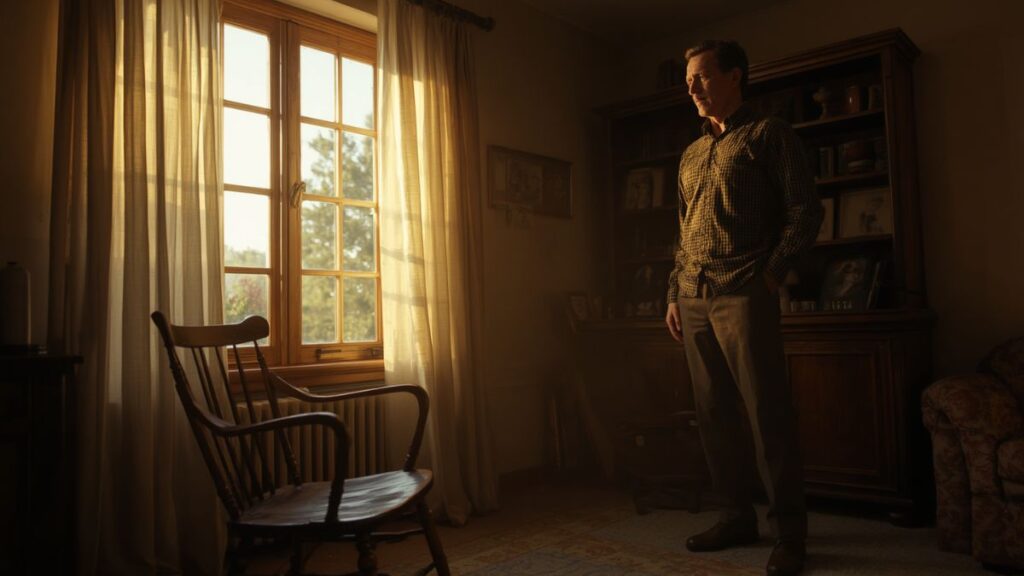
The chair stood beside the window.
It wasn’t remarkable.
The wood had lost its shine years ago, and the fabric on the seat had faded from countless afternoons in the sun.
Most people would have walked past it without a second glance.
But to David Parker, that chair meant everything.
It was more than a piece of furniture.
It was a reminder.
A reminder of love, patience, and years that could never be reclaimed.
As he stood alone in the living room, his eyes fixed on the empty seat, a deep ache settled in his chest.
The house felt different now.
Too quiet.
Too still.
And for the first time in a very long time, David wished he could hear his mother’s voice calling his name.
A Boy With Big Dreams
David grew up in a small town where life moved slowly and neighbors knew one another by name.
His mother, Margaret, worked at the local library.
She loved flowers.
She loved stories.
And she loved her son more than anything in the world.
When David was nine years old, his father died unexpectedly.
From that day forward, Margaret carried the responsibilities of two parents.
She worked long hours.
She stretched every dollar.
She sacrificed countless comforts without ever mentioning them.
Yet David rarely noticed how difficult things were.
Margaret made sure of that.
Whenever he talked about his dreams, she listened.
Whenever he doubted himself, she encouraged him.
Whenever he stumbled, she helped him stand again.
David dreamed of something bigger than the town where he lived.
He wanted to travel.
To succeed.
To build a life filled with opportunities.
Margaret never tried to hold him back.
Even though she knew those dreams might one day take him far away from her.
The Window Routine
Every evening after dinner, Margaret followed the same routine.
She would sit in the chair beside the window.
From there, she could see the driveway and the road beyond.
When David was a child, she waited there for him to come home from playing outside.
As a teenager, she waited for him after football practice, school events, and part-time jobs.
No matter how late he arrived, she was always there.
Watching.
Waiting.
Smiling when she saw him.
Over time, the routine became part of everyday life.
Neither of them thought much about it.
It was simply what she did.
And what she loved doing.
Leaving Home
After high school, David earned a scholarship to a respected university several hours away.
It was the opportunity he had always hoped for.
The chance to begin building the future he imagined.
On the morning he left, Margaret helped load boxes into the car.
She smiled throughout the entire process.
But her eyes revealed emotions she tried hard to hide.
Before he drove away, she wrapped her arms around him.
“Make every opportunity count,” she said.
“I will.”
“And remember to call your mother.”
David laughed.
“Of course I will.”
At first, he kept his promise.
He called often.
Sometimes every day.
He shared stories about classes, professors, and new friends.
Margaret treasured every conversation.
But university life became busy.
Assignments piled up.
Exams demanded attention.
New friendships filled his schedule.
Gradually, the calls became less frequent.
Days turned into weeks.
Weeks occasionally turned into months.
Margaret never complained.
She simply waited for the phone to ring.
Success Arrives
After graduation, David moved to a large city.
He accepted a position at a rapidly growing company.
The work was challenging.
The pace was relentless.
But he loved it.
His dedication earned recognition.
Recognition led to promotions.
Promotions led to greater responsibilities.
Within a few years, David had achieved many of the goals he once imagined.
He had a successful career.
A beautiful apartment.
Financial security.
Everything seemed to be falling into place.
Yet success came with a cost.
His schedule became crowded.
Phone calls home became shorter.
Visits became less frequent.
Sometimes holidays passed without him returning home.
Whenever he apologized, Margaret responded the same way.
“Don’t worry about me.”
“You focus on your future.”
David appreciated her understanding.
What he didn’t realize was how much she missed him.
The Chair by the Window
Back in the small town, Margaret’s routine never changed.
Every evening she sat beside the window.
The same chair.
The same view.
The same quiet hope.
Neighbors often waved as they walked by.
Friends occasionally stopped for tea.
But the moments she treasured most were the moments she heard from David.
Whenever the phone rang, her face lit up.
Whenever he announced a visit, she immediately began preparing.
She cleaned the house from top to bottom.
She bought his favorite foods.
She planned meals days in advance.
Those visits became the happiest moments of her year.
Unfortunately, they became increasingly rare.
Not because David didn’t care.
He loved his mother deeply.
He simply believed there would always be another opportunity.
Another weekend.
Another holiday.
Another visit.
There was always tomorrow.
Or so he thought.
The Missed Visit
One autumn afternoon, Margaret called David.
She sounded unusually cheerful.
“The town festival is next month,” she said.
David smiled.
“I remember. We used to go every year.”
“You always loved the fireworks.”
“I did.”
There was a brief pause.
Then Margaret spoke softly.
“I was hoping you might come this year.”
David opened his calendar.
The coming weeks were packed with meetings and deadlines.
A major project was approaching completion.
He hesitated.
“I’ll try.”
Margaret recognized the uncertainty immediately.
But she kept her voice warm.
“That’s alright. Only if you can.”
“I’ll do my best.”
And he genuinely meant it.
Yet as the weeks passed, work consumed his attention.
One deadline led to another.
One meeting became ten.
Before he realized it, the festival weekend had arrived.
And he was still in the city.
That evening he called home.
“I’m sorry, Mom. I couldn’t make it.”
Margaret looked out the window toward the distant festival lights.
“It’s okay.”
“I’ll visit soon.”
“I know.”
After the call ended, she remained in her chair.
Outside, families laughed together beneath strings of colorful lights.
Music drifted through the cool evening air.
Margaret watched quietly.
And waited for another day.
The Last Christmas
A few months later, David promised he would come home for Christmas.
Margaret was thrilled.
She decorated the house earlier than usual.
She bought gifts.
She baked cookies using recipes David loved as a child.
For weeks she looked forward to his arrival.
Then, three days before Christmas, David called.
A crisis at work required his immediate attention.
He couldn’t leave.
His voice was filled with regret.
“I’m so sorry.”
Margaret closed her eyes briefly.
Then she smiled.
“It’s alright.”
“We’ll celebrate another time.”
After they hung up, she carefully placed the wrapped gifts beneath the tree.
And spent Christmas Day alone.
The Phone Call
Spring arrived.
Then summer.
Life continued.
One afternoon, David received a call from a neighbor back home.
The moment he answered, something felt wrong.
“David,” the woman said gently, “you need to come home.”
Fear gripped him instantly.
“What happened?”
There was a pause.
Then came the words he would never forget.
“It’s your mother.”
The drive home felt endless.
Every mile seemed heavier than the last.
When he finally arrived, the truth was waiting for him.
Margaret had passed away peacefully in her sleep.
Gone without warning.
Gone before he could make another visit.
Gone before he could keep his promise.
The Journal
After the funeral, David remained in the house for several days.
One afternoon, while sorting through drawers, he discovered a journal.
Inside were years of handwritten entries.
Most were simple observations about daily life.
Weather notes.
Gardening updates.
Stories about neighbors.
But scattered throughout the pages were references to him.
“David called today. He sounds happy.”
“His promotion came through. I’m so proud of him.”
“He says he’ll visit next month.”
“I miss him, but I know he’s busy.”
David continued reading.
Tears blurred the words.
One entry stopped him completely.
“Sometimes the house feels lonely.”
“But seeing him succeed makes every sacrifice worthwhile.”
“That’s what mothers do.”
“We learn to let go while never stopping our love.”
There were no complaints.
No bitterness.
Only pride.
Only love.
The Empty Chair
That evening, David returned to the living room.
The setting sun cast golden light through the window.
The chair remained exactly where it had always been.
Waiting.
Silent.
Empty.
Slowly, David sat down.
For the first time, he saw the world from his mother’s perspective.
The driveway where she watched for his car.
The road where she hoped to see him arrive.
The window through which she spent years waiting for moments together.
Suddenly, he understood.
The chair had never been about sitting.
It had been about love.
A quiet, patient love that expected nothing in return.
A love willing to wait.
A love willing to forgive.
A love that remained constant even when time and distance grew between them.
Tears filled his eyes.
Not because the chair was empty.
But because he finally understood what it represented.
Years of devotion.
Years of hope.
Years of a mother’s unwavering heart.
What Remained
Before returning to the city, David made a decision.
He took the chair with him.
It now sits beside a window in his own home.
Whenever life becomes overwhelming, he sits there and remembers.
He remembers phone calls he should have made.
Visits he should have taken.
Moments he should have prioritized.
But most of all, he remembers his mother.
Her kindness.
Her patience.
Her love.
The chair reminds him that success means little if there is no time left for the people who matter most.
And whenever he sees it, he picks up the phone and calls someone he loves.
Because he learned a lesson too late.
Tomorrow is never guaranteed.
Moral of the Story
The people who love us most often ask for very little—just our time, attention, and presence. Never assume there will always be another opportunity to visit, call, or say what matters. One day, an empty chair may remind you of everything you wish you had done sooner.
3. The Birthday Candle

The small candle flickered gently in the center of the cake.
Its soft light danced across the room, illuminating the smiling face of eight-year-old Lily Carter.
“Make a wish,” her mother said.
Lily closed her eyes tightly.
For a few seconds, she thought about all the things she wanted.
A new bicycle.
A dollhouse.
Colorful art supplies.
A shiny backpack like the one her friend owned.
Then she blew out the candle.
Everyone clapped.
Lily smiled.
It was a simple birthday celebration.
A homemade chocolate cake.
A few decorations.
A handful of family members.
Nothing extravagant.
Nothing expensive.
Yet Lily felt happy.
What she didn’t know was how much effort had gone into creating that special day.
Or how many sacrifices her mother had made to ensure her daughter never felt deprived.
Years later, one small birthday candle would teach Lily a lesson she would never forget.
A Small Home Filled With Love
Lily grew up in a modest house on the edge of town.
Her father worked long hours as a mechanic.
Her mother, Grace, worked part-time at a local bakery.
The family didn’t have much money.
Every expense required careful planning.
Every purchase involved difficult choices.
Still, Lily rarely noticed.
Her parents worked hard to create a happy childhood.
The refrigerator was always stocked.
The bills were paid.
Birthdays were celebrated.
Christmas mornings felt magical.
To Lily, life seemed normal.
She assumed every family lived the same way.
She had no idea how carefully her parents managed their finances behind the scenes.
Especially her mother.
Grace possessed a remarkable ability to make little feel like plenty.
A simple dinner felt special.
A family outing felt exciting.
A homemade gift felt valuable.
She turned ordinary moments into cherished memories.
And she did it without seeking recognition.
Birthday Traditions
Birthdays were especially important to Grace.
Every year, regardless of the family’s financial situation, she found a way to make Lily feel celebrated.
The traditions never changed.
A homemade cake.
A birthday card.
A special breakfast.
And one candle placed in the center of the cake.
Even when money was scarce, the birthday candle remained.
To Lily, it was just part of the celebration.
To Grace, it represented something deeper.
Hope.
Love.
And the promise that her daughter would always feel valued.
One year, when Lily turned nine, things became particularly difficult.
Her father’s work hours had been reduced.
Unexpected expenses piled up.
Money became tighter than ever.
Yet Grace refused to let her daughter see the stress.
She smiled.
She reassured everyone.
And she quietly searched for ways to make Lily’s birthday special.
The Wish List
Several weeks before her birthday, Lily created a list.
It contained everything she hoped to receive.
The list was long.
Very long.
She wanted a bicycle.
A collection of books.
New clothes.
Art supplies.
A toy kitchen.
And several other items she had seen in store windows.
Like many children, Lily didn’t fully understand financial limitations.
She simply dreamed.
When she showed the list to her mother, Grace smiled.
“Those are wonderful ideas.”
“Do you think I’ll get them?”
Grace gently brushed a strand of hair from Lily’s face.
“We’ll see.”
The answer seemed ordinary.
But behind the smile, Grace felt a wave of sadness.
She knew many of those gifts were impossible.
At least that year.
Still, she wanted her daughter to have a happy birthday.
So she began planning.
Quiet Sacrifices
Over the following weeks, Grace made several decisions.
She postponed replacing her worn winter coat.
She skipped buying new shoes despite needing them.
She stopped purchasing coffee during work breaks.
Every small amount of money she saved went into an envelope hidden inside a kitchen drawer.
Dollar by dollar.
Coin by coin.
The envelope slowly grew.
No one noticed.
Not her husband.
Not Lily.
Because mothers often hide their sacrifices.
Not out of pride.
But out of love.
Grace never wanted Lily to feel guilty.
She wanted her daughter to experience childhood without carrying adult worries.
And so she quietly continued.
The Birthday Morning
When Lily’s birthday finally arrived, she rushed downstairs.
Colorful decorations hung throughout the kitchen.
A handwritten birthday card waited beside her breakfast.
And a neatly wrapped package sat on the table.
Her excitement was impossible to contain.
The gift wasn’t a bicycle.
Or a dollhouse.
Or any of the expensive items on her list.
It was a beautiful art set.
Colored pencils.
Paints.
Sketchbooks.
Brushes.
Everything she needed to create artwork.
Lily’s eyes widened.
“It’s perfect!”
She hugged her mother tightly.
Grace smiled.
Watching her daughter’s happiness made every sacrifice worthwhile.
That evening, family members gathered for the birthday celebration.
The homemade cake sat proudly in the center of the table.
One candle flickered gently.
Everyone sang.
Lily made a wish.
And life moved forward.
Growing Older
Years passed.
Lily grew up.
Middle school became high school.
High school became college.
Eventually, she moved to another city and started her career.
Life became busy.
Work.
Responsibilities.
Deadlines.
Like many adults, she found herself constantly occupied.
Yet she remained close to her parents.
Frequent phone calls.
Holiday visits.
Weekend trips home.
The relationship remained strong.
One winter, while helping her parents clean the attic, Lily discovered an old box filled with family keepsakes.
Photographs.
Greeting cards.
School projects.
And tucked between them, an envelope.
Inside were small notes and receipts.
Curious, she examined them.
Many dated back to the year she turned nine.
Several receipts showed tiny purchases.
One for a coffee.
Crossed out.
One for a winter coat.
Postponed.
One for new shoes.
Canceled.
At first, the information seemed random.
Then she noticed handwritten notes.
“Save for Lily’s birthday.”
“Almost enough.”
“Keep going.”
Suddenly, everything became clear.
Understanding the Truth
Lily carried the envelope downstairs.
Her mother was reading in the living room.
“Mom?”
Grace looked up.
“Yes?”
Lily held the papers.
“What are these?”
For a moment, Grace stared silently.
Then she smiled softly.
“Oh.”
The single word carried years of memories.
Lily sat beside her.
“You gave up all of that?”
Grace shrugged.
“It wasn’t a big deal.”
“It was to me.”
Tears filled Lily’s eyes.
For years she had remembered the art set.
The decorations.
The cake.
The candle.
But she never understood what they cost.
Not financially.
Personally.
Her mother had sacrificed her own needs to create joy for her daughter.
And she never mentioned it.
Never asked for appreciation.
Never expected recognition.
She simply did what mothers often do.
She gave.
The Candle’s Meaning
That evening, Lily thought about the birthday candle.
For years she viewed it as decoration.
Now she understood its true meaning.
The candle wasn’t important because it sat on a cake.
It was important because of everything it represented.
Love.
Dedication.
Sacrifice.
Hope.
The flame had illuminated more than a birthday celebration.
It illuminated the heart of a mother.
A woman who consistently placed her daughter’s happiness above her own comfort.
A woman who quietly turned limitations into opportunities.
A woman who transformed ordinary moments into lasting memories.
Returning the Gift
The following year, on her mother’s birthday, Lily planned something special.
Nothing extravagant.
Nothing expensive.
Instead, she organized a family gathering filled with meaningful memories.
Photographs decorated the room.
Favorite meals filled the table.
Stories filled the air.
At the center sat a homemade cake.
And in the middle of that cake stood a single candle.
When Grace saw it, she smiled.
After everyone sang, Lily stood.
“I want to thank someone.”
The room grew quiet.
Lily looked at her mother.
“For every sacrifice I never noticed.”
Grace immediately shook her head.
“You don’t have to—”
“Yes, I do.”
Her voice trembled.
“For every birthday.”
“For every opportunity.”
“For every time you put me first.”
Tears appeared in both their eyes.
The room remained silent.
Because everyone understood.
Some expressions of love require no further explanation.
A Memory That Lasted Forever
Years later, Lily still remembered that birthday candle.
Not because it was beautiful.
Not because it was expensive.
Because it represented one of the most important lessons of her life.
Children often measure gifts by size.
Adults eventually learn to measure them by sacrifice.
The art set eventually wore out.
The decorations disappeared.
The cake was long forgotten.
But the love behind them remained.
And it always would.
Because the most valuable gifts are not purchased in stores.
They are created through devotion.
Through effort.
Through sacrifice.
Through love.
The kind of love only a mother can give.
Moral of the Story
Many of a mother’s sacrifices go unnoticed until years later. The greatest gifts are often not the most expensive ones but the ones given with love, selflessness, and a desire to see a child happy.
4. The Letter in the Drawer
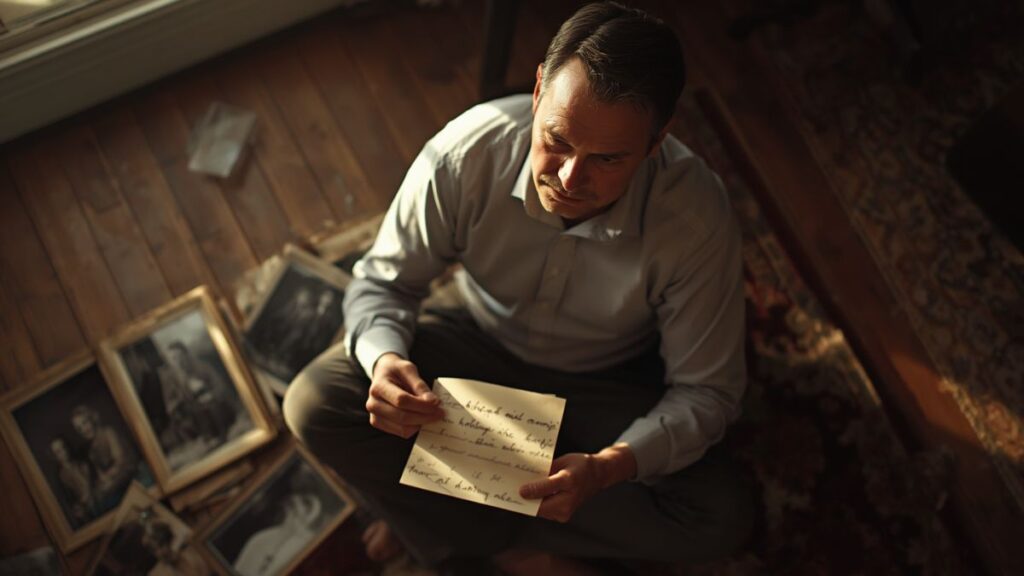
The letter was hidden beneath a stack of old photographs.
Its edges had yellowed with age.
The envelope was slightly worn.
And written across the front, in familiar handwriting, was a single name.
Michael.
As Michael Turner sat on the floor of his childhood home, he stared at the envelope in disbelief.
His hands trembled slightly.
The handwriting belonged to his mother.
But she had passed away nearly six months earlier.
Slowly, he opened the envelope.
Inside was a neatly folded letter.
The paper carried the faint scent of lavender, a fragrance his mother had always loved.
Michael unfolded the page and began reading.
Within moments, tears filled his eyes.
Because the words on the page revealed a side of his mother he had never fully understood.
And the letter would change the way he remembered her forever.
A Quiet Woman
Michael’s mother, Eleanor, was not someone who expressed emotions openly.
She loved deeply.
But she rarely spoke about her feelings.
Instead, she showed love through actions.
She cooked meals.
Remembered birthdays.
Attended school events.
Offered encouragement when needed.
If someone looked at her life from the outside, they might describe her as quiet.
Reserved.
Practical.
Yet beneath that calm exterior lived a heart overflowing with love.
Michael appreciated his mother.
But like many children, he often took her presence for granted.
He assumed she would always be there.
Always available.
Always waiting.
It never occurred to him that someday he would have to live without her.
Growing Up
Michael was an energetic child.
Curious.
Adventurous.
Constantly asking questions.
Whenever he faced problems, he ran to his mother.
Whenever he achieved something exciting, she was the first person he told.
As he grew older, however, things changed.
Teenage years arrived.
Friendships became more important.
School became more demanding.
Eventually, adulthood followed.
Then came college.
Work.
Relationships.
Responsibilities.
The conversations that once happened daily became weekly.
Then monthly.
Visits home became less frequent.
Life grew busy.
And although Michael loved his mother, he often assumed there would always be more time later.
More visits.
More conversations.
More opportunities.
The Drawer
Several months after Eleanor’s passing, Michael returned to his childhood home to help organize her belongings.
The process was emotionally exhausting.
Every room contained memories.
Every object seemed connected to a story.
One afternoon, while sorting through an old dresser, he discovered a drawer that had remained untouched for years.
Inside were photographs.
Greeting cards.
Newspaper clippings.
And a small collection of sealed envelopes.
Each envelope had a date.
Each envelope had Michael’s name.
Confused, he opened the first one.
The date on the envelope showed it had been written nearly twenty years earlier.
The year he graduated from elementary school.
Inside was a handwritten letter.
The First Letter
The letter began simply.
“Dear Michael,”
“Today you graduated from elementary school.”
“You looked so proud standing on that stage.”
“I know you think you’re growing up quickly, but when I looked at you today, I still saw the little boy who used to hold my hand everywhere we went.”
Michael paused.
His vision blurred.
He continued reading.
The letter described how proud Eleanor felt.
How much she admired his determination.
How excited she was to watch him grow.
The words were warm.
Honest.
Deeply personal.
When he finished reading, he noticed tears on the paper.
His own tears.
He quickly reached for another envelope.
More Letters
There were dozens.
Each one marked an important moment.
His first day of high school.
His sixteenth birthday.
His graduation.
The day he left for college.
His first job.
Every major milestone had a letter.
And every letter contained thoughts his mother had never spoken aloud.
In one letter, she wrote:
“You may not realize it now, but I still worry about you every day.”
“Not because I don’t trust you.”
“Because loving someone means part of your heart travels with them wherever they go.”
Michael stopped reading.
The sentence struck him deeply.
He remembered how often he dismissed his mother’s concerns.
How often he told her not to worry.
Yet she worried anyway.
Not because she doubted him.
Because she loved him.
The Letter From College
One envelope carried a date from his first year away at university.
Michael opened it carefully.
Inside, Eleanor described the day she dropped him off at campus.
“You seemed so excited.”
“I was excited too.”
“But after I returned home, the house felt unusually quiet.”
“I walked past your room several times without realizing it.”
“I wanted to check if you needed anything, and then I remembered you weren’t there.”
Michael closed his eyes.
He remembered that day clearly.
He had been focused on his new adventure.
New friends.
New opportunities.
A new chapter.
He never considered how difficult it might have been for his mother.
The letter continued.
“I didn’t tell you how much I cried after leaving.”
“I wanted you to feel confident, not guilty.”
“A mother’s job is to help her child leave the nest, even when her heart wishes they could stay a little longer.”
A New Understanding
For hours, Michael sat on the floor reading letter after letter.
Each one revealed hidden emotions.
Hidden worries.
Hidden hopes.
His mother had recorded her feelings throughout his life.
Not because she expected him to read them.
But because writing helped her express emotions she struggled to say aloud.
The letters showed how much she celebrated his successes.
How deeply she felt his disappointments.
How fiercely she loved him.
And perhaps most importantly, how proud she had always been.
Even during times when he doubted himself.
The Final Letter
Near the bottom of the drawer sat the last envelope.
Unlike the others, it had no date.
Just his name.
Michael opened it slowly.
The handwriting appeared slightly shakier.
The words immediately felt different.
More reflective.
More personal.
“Dear Michael,”
“If you are reading this letter, it means I am no longer there to tell you these things myself.”
Michael swallowed hard.
His heart raced.
He continued reading.
“First, I want you to know that you brought me more happiness than you will ever understand.”
“Watching you grow has been the greatest privilege of my life.”
“I know you sometimes worried that you didn’t spend enough time with me.”
“Please don’t carry that burden.”
“Every phone call mattered.”
“Every visit mattered.”
“Every conversation mattered.”
Tears streamed down Michael’s face.
The letter seemed to answer thoughts he had carried for months.
Thoughts he never shared with anyone.
Then he reached the final paragraph.
“If there is one thing I hope you remember, it is this:”
“You were loved every single day of your life.”
“Not occasionally.”
“Not conditionally.”
“Every day.”
“And you always will be.”
The Empty House
After reading the final letter, Michael sat quietly for a long time.
The house remained still.
Outside, evening sunlight filtered through the windows.
For months, grief had dominated his thoughts.
He focused on what he had lost.
The conversations that would never happen.
The visits that would never occur.
The memories he wished he could relive.
But the letters changed something.
They reminded him not only of loss.
They reminded him of love.
A lifetime of love.
The kind that remains even after someone is gone.
Carrying Her Words Forward
In the years that followed, Michael kept the letters safely stored.
Whenever life became difficult, he reread them.
Whenever he doubted himself, he revisited his mother’s words.
Whenever he missed her, he opened an envelope.
The letters never removed the sadness completely.
But they provided comfort.
Guidance.
Perspective.
And a powerful reminder that love leaves traces behind.
Sometimes in memories.
Sometimes in photographs.
And sometimes in handwritten letters hidden inside a drawer.
The Legacy of a Mother
Eventually, Michael became a father himself.
One evening, while watching his young daughter sleep, he thought about Eleanor.
For the first time, he truly understood.
He understood the worry.
The pride.
The hope.
The unconditional love.
And he realized something important.
His mother’s greatest gift wasn’t the letters.
The letters simply revealed the gift that had always been there.
Her love.
A love that shaped his life.
A love that continued influencing him even after she was gone.
A love that would now be passed to the next generation.
Because the lessons of a good mother never truly disappear.
They live on in the hearts of the children she raised.
Moral of the Story
A mother’s love is often deeper than words can express. Even when unspoken, that love leaves a lasting impact that continues to guide and comfort her children throughout their lives.
5. The Pair of Glasses

The glasses were held together with tape.
One arm was slightly bent.
The lenses were scratched from years of use.
Yet every morning, Margaret carefully placed them on her face and continued with her day as if nothing was wrong.
To everyone else, they looked like an old pair of glasses that needed replacing.
To Margaret, they were simply something she could manage without changing.
There were always more important things to spend money on.
At least, that was what she told herself.
What her son didn’t know was that those worn-out glasses would eventually teach him one of the most important lessons of his life.
A lesson about sacrifice.
A lesson about gratitude.
And a lesson about a mother’s quiet love.
A Mother Who Always Put Others First
Margaret had spent most of her life taking care of other people.
When her husband passed away unexpectedly, she found herself raising her son, Daniel, alone.
Life became difficult almost overnight.
Bills arrived.
Responsibilities multiplied.
And every decision carried financial consequences.
Still, Margaret never allowed her son to feel the weight of those struggles.
She worked long hours at a local bookstore.
Managed the household.
Prepared meals.
Helped with homework.
And somehow found time to attend every school event Daniel participated in.
Whenever challenges appeared, she handled them quietly.
Without complaints.
Without seeking sympathy.
Without expecting recognition.
That was simply who she was.
A woman who measured success by her ability to care for the people she loved.
Daniel’s Dreams
From a young age, Daniel dreamed of becoming an engineer.
He loved building things.
Fixing things.
Understanding how things worked.
His curiosity seemed endless.
Margaret encouraged every interest.
She bought secondhand science books.
Helped him find educational programs.
And supported his goals whenever possible.
Money was often limited.
Yet somehow she always found ways to provide opportunities.
If Daniel needed supplies for a school project, she found the money.
If he needed transportation to a competition, she made it happen.
If he needed encouragement, she always had plenty to give.
Daniel noticed her support.
What he didn’t notice were the sacrifices behind it.
Not yet.
The Glasses
Margaret’s eyesight had gradually worsened over the years.
Her glasses were already old when Daniel entered high school.
By the time he graduated, they were visibly worn.
The lenses made reading difficult.
The frame often slipped.
One side had been repaired multiple times.
Friends occasionally suggested replacing them.
Margaret always smiled.
“These still work.”
The truth was more complicated.
New glasses were expensive.
And there always seemed to be something more important.
A utility bill.
A school expense.
A household repair.
Daniel’s needs came first.
As they always had.
The Scholarship Opportunity
During Daniel’s final year of high school, an incredible opportunity appeared.
A prestigious engineering program offered scholarships to talented students.
The program included advanced training, mentorship, and networking opportunities.
Acceptance could significantly improve his future.
There was only one problem.
The application process required travel to another city for interviews and assessments.
The trip wasn’t cheap.
Transportation.
Accommodation.
Food.
Application fees.
The total cost exceeded what the family could comfortably afford.
Daniel immediately became discouraged.
“I don’t think it’s possible.”
Margaret shook her head.
“We’ll find a way.”
“But it’s too expensive.”
“We’ll find a way.”
Her answer never changed.
A Quiet Decision
Several weeks later, Daniel’s travel expenses were fully covered.
Everything was arranged.
The trip was possible.
Daniel assumed his mother had used savings.
He didn’t ask questions.
He was simply grateful.
The interview went well.
Exceptionally well.
Months later, he received wonderful news.
He had earned the scholarship.
The achievement changed his life.
It opened doors.
Created opportunities.
And moved him closer to achieving his dream.
Margaret celebrated alongside him.
No one was happier.
No one was prouder.
What Daniel Didn’t Know
Years passed.
Daniel attended university.
Graduated with honors.
Secured an excellent engineering position.
His career flourished.
The future looked bright.
Throughout that time, Margaret remained his biggest supporter.
Phone calls became weekly traditions.
Holiday visits remained important.
Their relationship stayed strong.
Yet there was still something Daniel didn’t know.
Something hidden behind those old glasses.
The truth about how the scholarship trip had been funded.
Coming Home
One weekend, several years after starting his career, Daniel visited home.
While helping organize paperwork, he stumbled across an old receipt folder.
Inside were documents dating back many years.
Most were ordinary.
Utility bills.
Store receipts.
Medical paperwork.
Then he noticed something unusual.
A receipt from an optical store.
The date matched the year of his scholarship interview.
The receipt showed an eye examination.
And a canceled order for new glasses.
Confused, Daniel brought the document to his mother.
“What’s this?”
Margaret glanced at it.
Her expression immediately changed.
“Oh.”
The single word revealed everything.
“You were supposed to get new glasses?”
She smiled weakly.
“It wasn’t important.”
“It says you canceled the order.”
Margaret looked away.
The silence told the rest of the story.
Suddenly, Daniel understood.
The money intended for new glasses had paid for his trip.
His opportunity.
His future.
His success.
For a moment, he couldn’t speak.
Seeing Clearly
The realization hit harder than he expected.
For years, he viewed his scholarship as the result of hard work and talent.
And it was.
But now he understood something else.
Success rarely belongs to one person alone.
Behind every achievement are people who make sacrifices.
People who provide support.
People who quietly help create opportunities.
His mother had literally sacrificed her ability to see comfortably so he could pursue his dream.
And she never mentioned it.
Never sought credit.
Never expected gratitude.
She simply did what mothers often do.
She chose her child.
The Conversation
That evening, Daniel sat beside Margaret in the living room.
Neither spoke for several minutes.
Finally, he broke the silence.
“Why didn’t you tell me?”
Margaret smiled.
“What would have been the point?”
“I would have found another way.”
She shook her head.
“No.”
“You needed that opportunity.”
“But so did you.”
Margaret looked at her son.
Her eyes softened.
“Daniel, parents spend their lives investing in their children.”
“It’s not a sacrifice when it’s someone you love.”
The statement lingered in the room.
Simple.
Honest.
Powerful.
A Surprise Appointment
The following week, Daniel scheduled an appointment.
Not for himself.
For his mother.
At one of the best optical clinics in the city.
Margaret protested immediately.
“My glasses are fine.”
“They are not.”
“I don’t need anything fancy.”
“Good.”
Daniel smiled.
“Because you’re getting everything.”
The examination revealed what everyone suspected.
Her prescription had changed significantly.
The old glasses were no longer providing adequate correction.
When she finally received her new pair, the difference was remarkable.
Colors appeared sharper.
Details became clearer.
Reading felt easier.
Margaret laughed as she looked around.
“I forgot things could look this clear.”
Daniel smiled.
For the first time, he felt like he was repaying a tiny fraction of what she had given him.
The Real Vision
Months later, Daniel reflected on the experience.
The glasses themselves weren’t what mattered most.
The real lesson was deeper.
For years, he saw only the visible parts of his mother’s love.
The encouragement.
The phone calls.
The support.
But hidden beneath those things were countless sacrifices he never noticed.
The canceled purchases.
The postponed comforts.
The personal needs set aside.
The old glasses represented all of them.
And they reminded him of something important.
Love often works quietly.
It rarely announces itself.
It doesn’t demand recognition.
It simply gives.
Again and again.
Without expecting anything in return.
A Legacy of Love
As time passed, Daniel carried that lesson with him.
Whenever he faced important decisions, he remembered his mother’s example.
Whenever he succeeded, he remembered the people who helped him along the way.
And whenever he looked at his mother’s smiling face behind her new glasses, he remembered the truth.
The clearest vision in the family had never come from a pair of lenses.
It came from a mother who always saw her child’s future as more important than her own comfort.
And that kind of vision is something no pair of glasses can provide.
Moral of the Story
Many of a mother’s sacrifices go unnoticed because she rarely speaks about them. True gratitude comes from recognizing the quiet acts of love that helped shape our lives and appreciating them before it’s too late.
6. The Midnight Light
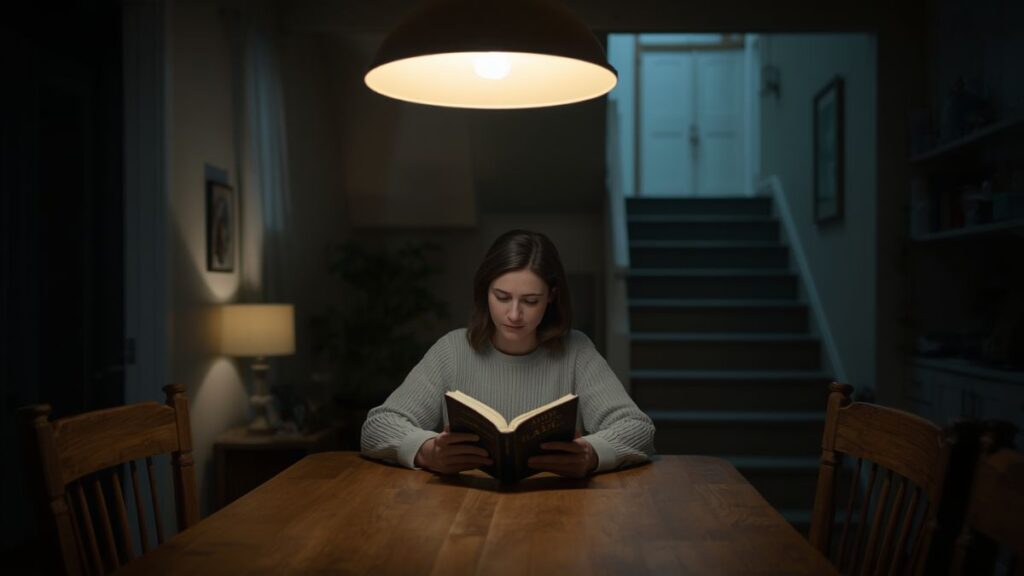
Every night at exactly eleven o’clock, the light in the kitchen turned on.
It stayed on for hours.
Sometimes until midnight.
Sometimes until one in the morning.
Occasionally even later.
From his bedroom upstairs, seventeen-year-old Alex could see the warm glow shining beneath the kitchen door.
For months, he assumed nothing of it.
Perhaps his mother couldn’t sleep.
Perhaps she was reading.
Perhaps she was simply cleaning.
He never asked.
Life was too busy.
Final exams were approaching.
College applications needed attention.
Assignments seemed endless.
Every day felt like a race against time.
Alex focused entirely on his studies.
What he didn’t realize was that the midnight light carried a story he would never forget.
A story about silent support.
A story about devotion.
And a story about a mother’s love that worked quietly in the background.
The Dream
Alex had always dreamed of becoming a doctor.
The goal began when he was ten years old.
After spending several days in a hospital following an accident, he became fascinated by medicine.
The doctors seemed extraordinary.
Confident.
Knowledgeable.
Compassionate.
From that moment forward, he knew what he wanted.
His dream never changed.
As he grew older, he worked tirelessly.
Excellent grades.
Advanced classes.
Volunteer programs.
Science competitions.
Everything pointed toward a future in medicine.
Yet achieving that dream required one final challenge.
The entrance examinations.
The exams were notoriously difficult.
Thousands of students competed for limited positions.
Months of preparation were necessary.
Alex understood the stakes.
The pressure felt enormous.
Long Nights
As the examination date approached, Alex’s schedule became intense.
School occupied his days.
Studying consumed his evenings.
Practice tests filled his weekends.
By nighttime, exhaustion became constant.
Still, he pushed forward.
Every evening after dinner, he carried books to his room and continued working.
Hours passed.
Sometimes he barely noticed.
While friends spent weekends relaxing, Alex studied.
While others enjoyed holidays, Alex reviewed notes.
He understood that success required effort.
What he didn’t understand was that someone else was making sacrifices too.
His Mother
Alex’s mother, Rebecca, worked as a nurse at a local clinic.
Her days were demanding.
Patients.
Paperwork.
Long shifts.
Unexpected emergencies.
Most people would have welcomed rest after returning home.
Rebecca rarely rested.
Instead, she focused on her family.
Preparing meals.
Managing the household.
Supporting her son’s education.
She knew how much the upcoming examination meant to Alex.
She also knew how much pressure he carried.
The stress was visible.
The fatigue obvious.
The self-doubt occasional but real.
As a mother, watching her son struggle was difficult.
She wanted to help.
The question was how.
The Kitchen Light
One evening, Rebecca noticed something.
Around midnight, Alex often walked downstairs.
Sometimes he needed water.
Sometimes a snack.
Sometimes simply a brief break from studying.
He looked exhausted.
Drained.
Overwhelmed.
Yet he always returned to his books.
That night, Rebecca made a decision.
After finishing her household responsibilities, she remained awake.
She sat in the kitchen reading.
When Alex eventually came downstairs, she smiled.
“Tough night?”
He nodded.
“A little.”
She handed him a cup of hot tea.
The conversation lasted only five minutes.
Yet when Alex returned upstairs, he felt slightly better.
The next night, she did the same thing.
And the night after that.
Soon it became a routine.
Small Conversations
The conversations were rarely serious.
Sometimes they discussed school.
Sometimes sports.
Sometimes random memories.
Occasionally they sat together in comfortable silence.
The topics hardly mattered.
What mattered was the feeling.
Whenever Alex came downstairs, someone was there.
Someone who believed in him.
Someone who listened.
Someone who reminded him he wasn’t facing the challenge alone.
The kitchen light became more than illumination.
It became reassurance.
A quiet reminder that support was always available.
Even at midnight.
The Difficult Week
Several weeks before the exam, Alex experienced his lowest point.
Practice test scores dropped unexpectedly.
Confidence disappeared.
Frustration replaced motivation.
One evening, he slammed a textbook shut.
“I’m not good enough.”
The words escaped before he could stop them.
Rebecca looked up from the kitchen table.
“What makes you say that?”
Alex sighed heavily.
“No matter how hard I study, it never feels enough.”
His mother listened carefully.
Then she shared a story.
When she was younger, she had also struggled while preparing for nursing school.
There were moments when she wanted to quit.
Moments when success seemed impossible.
“What changed?” Alex asked.
Rebecca smiled.
“I kept going.”
The answer seemed simple.
Yet it carried tremendous power.
Because it came from someone who understood perseverance.
Someone who had lived it.
Someone who genuinely believed he could succeed.
That conversation helped Alex more than any textbook ever could.
Sacrifices He Never Noticed
Weeks passed.
The midnight light continued shining.
Every night.
Without exception.
What Alex didn’t realize was how tired his mother had become.
She still worked full shifts.
Still managed responsibilities.
Still woke early every morning.
Yet she stayed awake long after she needed sleep.
Not because she enjoyed being tired.
Because she wanted her son to feel supported.
Many nights she struggled to keep her eyes open.
Many mornings she felt exhausted.
But she never complained.
Not once.
The kitchen light remained on.
And so did her commitment.
Exam Day
Eventually, the day arrived.
Months of preparation led to this moment.
Alex woke before sunrise.
Nervous energy filled the house.
Rebecca prepared breakfast.
Offered encouragement.
And drove him to the examination center.
Before he entered the building, she squeezed his shoulder.
“You’ve worked hard.”
Alex nodded.
“Whatever happens, I’m proud of you.”
The words calmed him immediately.
Because they removed the fear.
Success mattered.
But his worth didn’t depend on a score.
His mother had already made that clear.
The Waiting
After the exam ended, a long waiting period followed.
Results would not arrive for several weeks.
Those weeks felt endless.
Every student speculated.
Every conversation returned to scores and rankings.
Alex tried to remain patient.
It wasn’t easy.
Whenever anxiety appeared, Rebecca reminded him of the same thing.
“You did your best.”
Simple words.
Yet remarkably effective.
The Results
The email arrived on a Tuesday afternoon.
Alex stared at the screen.
His hands trembled.
For several seconds, he couldn’t bring himself to open it.
Finally, he clicked.
The message loaded.
His eyes scanned the words.
Then widened.
He had passed.
Not only passed.
He earned one of the highest scores in the region.
A place at his dream medical school was guaranteed.
For a moment, he sat frozen.
Then he shouted.
His mother rushed into the room.
“What happened?”
Alex turned the screen toward her.
Tears immediately filled her eyes.
Neither spoke.
Words weren’t necessary.
The years of effort.
The months of preparation.
The countless late nights.
Everything had led to this moment.
Discovering the Truth
Several days later, Alex overheard a conversation.
A family friend was speaking with Rebecca.
“You must be exhausted after staying up every night.”
Alex paused.
“What do you mean?”
The room became quiet.
Rebecca looked uncomfortable.
The friend smiled.
“Your mother stayed awake every night while you studied.”
Alex stared at her.
“Every night?”
Rebecca shrugged.
“It wasn’t a big deal.”
But it was.
Suddenly, everything made sense.
The kitchen light.
The tea.
The conversations.
The consistent presence.
For months, she had sacrificed sleep simply to make sure he never felt alone.
The realization hit him harder than expected.
The Light That Never Went Out
Years later, Alex became a doctor.
Long shifts.
Busy schedules.
Demanding responsibilities.
His dream became reality.
Yet he never forgot the kitchen light.
Whenever people asked about his success, he mentioned hard work.
But he also mentioned his mother.
Because success is rarely achieved alone.
Behind many accomplishments stand people who provide encouragement, support, and sacrifices that often go unnoticed.
For Alex, that person was Rebecca.
A woman who turned on a kitchen light every night.
A woman who stayed awake when she should have been sleeping.
A woman who understood that sometimes the greatest gift isn’t advice.
It’s simply being there.
And although the light eventually stopped shining at midnight, its impact remained forever.
Because some lights continue illuminating our lives long after they are switched off.
Moral of the Story
A mother’s support is often expressed through quiet actions rather than grand gestures. Sometimes simply being present during difficult moments provides the strength and confidence needed to achieve great things.
7. The Mother’s Promise

The hospital room was quiet except for the steady beeping of machines.
Eight-year-old Noah lay in bed staring at the ceiling.
The past few weeks had been confusing.
Doctors came and went.
Nurses checked his temperature.
Tests seemed endless.
Nothing about life felt normal anymore.
The only thing that remained constant was his mother.
Every morning when he opened his eyes, she was there.
Every evening before he fell asleep, she was there.
And whenever fear crept into his mind, she was there holding his hand.
To Noah, her presence felt as dependable as the sunrise.
What he didn’t know was that behind every reassuring smile was a mother carrying fears of her own.
Yet she had made a promise to herself.
No matter how difficult the journey became, she would never allow her son to face it alone.
The Diagnosis
Only a month earlier, life had been ordinary.
Noah attended school.
Played soccer with friends.
Rode his bicycle around the neighborhood.
His mother, Emily, worked as a teacher at a nearby elementary school.
Their lives were simple and happy.
Then Noah began feeling tired.
At first, everyone assumed it was a minor illness.
A few days of rest should solve the problem.
But the symptoms continued.
More doctor visits followed.
Then came the tests.
And finally, the diagnosis.
Although treatment was possible, the road ahead would be long and challenging.
The news felt overwhelming.
Emily remembered sitting in the doctor’s office struggling to process the information.
Questions filled her mind.
Fears appeared instantly.
But when she looked at Noah, she knew one thing.
He needed strength.
Not fear.
And so she made a silent promise.
No matter what happened, she would remain strong for him.
The First Night
The first night in the hospital was the hardest.
Noah struggled to sleep.
The unfamiliar environment made him anxious.
Machines beeped.
Footsteps echoed through the hallways.
Everything felt strange.
Around midnight, he turned toward his mother.
“Mom?”
“Yes?”
“Are you scared?”
The question caught her off guard.
For a brief moment, she hesitated.
The truth was simple.
She was terrified.
Terrified of uncertainty.
Terrified of seeing her child suffer.
Terrified of everything that might happen.
But she couldn’t allow those fears to become his fears.
So she smiled gently.
“No.”
The answer brought immediate comfort.
Noah relaxed.
If his mother wasn’t afraid, perhaps he didn’t need to be afraid either.
That night, after he finally fell asleep, Emily quietly cried in the hospital bathroom.
Then she wiped away her tears and returned to his bedside before he woke up.
Days Become Weeks
Treatment began.
Some days were encouraging.
Others were difficult.
Noah experienced exhaustion, frustration, and moments of sadness.
Yet through everything, Emily remained beside him.
She read stories aloud.
Played card games.
Helped with school assignments.
Decorated the hospital room with colorful drawings.
She turned a frightening environment into something a little less intimidating.
Nurses frequently commented on her dedication.
“Do you ever go home?” one asked jokingly.
Emily smiled.
“Only when absolutely necessary.”
Most nights, she slept in an uncomfortable chair beside Noah’s bed.
The chair was far from comfortable.
But she never complained.
Being close to her son mattered more than comfort.
The Promise
One afternoon, Noah became discouraged.
Treatment had been especially difficult that week.
He stared out the window without speaking.
Emily sat quietly beside him.
Eventually, he broke the silence.
“What if I don’t get better?”
The question pierced her heart.
She moved her chair closer.
Then she gently took his hand.
“Do you remember when you learned to ride a bicycle?”
Noah nodded.
“You fell a lot.”
“A lot.”
“And what happened every time you fell?”
“You helped me get back up.”
Emily smiled.
“Exactly.”
She squeezed his hand.
“And that’s what we’re going to do now.”
The answer wasn’t a guarantee.
It wasn’t a prediction.
It was something more powerful.
A promise.
No matter how many challenges appeared, they would face them together.
Hidden Strength
As the months passed, Noah continued improving.
Progress was slow but steady.
Doctors remained optimistic.
Friends and family visited regularly.
Cards filled the room.
Support arrived from every direction.
Yet the person who made the biggest difference remained his mother.
What Noah didn’t see were the sacrifices happening behind the scenes.
The missed social events.
The unpaid leave from work.
The sleepless nights.
The endless worry.
Emily carried those burdens privately.
She wanted Noah focused on recovery.
Not on her struggles.
Whenever she felt overwhelmed, she reminded herself of the promise she made.
Be strong.
Be present.
Keep going.
A Difficult Conversation
One evening, Noah woke unexpectedly.
The room was dark.
His mother wasn’t in her chair.
Concerned, he slowly climbed out of bed.
As he approached the hallway, he heard a familiar voice.
His mother was speaking softly on the phone.
“I am scared,” she admitted.
“I don’t know what’s going to happen.”
Noah stopped.
For a moment, he felt shocked.
His mother was afraid.
The realization surprised him.
After ending the call, Emily turned around and saw him standing there.
Their eyes met.
Neither spoke immediately.
Finally, Noah asked the question.
“You told me you weren’t scared.”
Emily knelt beside him.
Then she smiled gently.
“I am scared sometimes.”
“Then why did you say no?”
She brushed a strand of hair from his forehead.
“Because being brave doesn’t mean you’re never afraid.”
“It means you keep going even when you are.”
The answer stayed with Noah forever.
The Turning Point
Several months later, positive news finally arrived.
Treatment was working.
Doctors were pleased with his progress.
Recovery remained ongoing, but the outlook was increasingly hopeful.
For the first time in a long while, genuine optimism filled the room.
When the doctor shared the update, Emily smiled.
But this time, her smile wasn’t hiding fear.
It reflected relief.
The promise she had carried for so long finally felt lighter.
Going Home
The day Noah returned home felt like a celebration.
Neighbors decorated the street.
Friends made welcome-home signs.
Family members gathered to celebrate.
As Noah stepped through the front door, he felt grateful.
Grateful for the doctors.
Grateful for the nurses.
Grateful for everyone who helped.
Most of all, grateful for his mother.
That night, after everyone left, he sat beside her on the couch.
“Mom?”
“Yes?”
“Thank you.”
“For what?”
“For keeping your promise.”
Emily looked confused.
“What promise?”
“The promise that I wouldn’t have to do it alone.”
Tears filled her eyes.
She wrapped her arms around him.
And for a moment, neither said anything.
They didn’t need to.
Some emotions are too meaningful for words.
Years Later
Time passed.
Noah grew up.
School became university.
University became a career.
Life moved forward.
His illness eventually became a distant memory.
Yet one lesson remained.
Whenever challenges appeared, he remembered his mother’s words.
“Being brave doesn’t mean you’re never afraid.”
“It means you keep going even when you are.”
Those words guided him through difficult moments.
They shaped his character.
They influenced the person he became.
Because the greatest gift his mother gave him wasn’t protection from fear.
It was teaching him how to face fear with courage.
A Promise That Lasted Forever
Many years later, Noah reflected on that chapter of his life.
The hospital room.
The long nights.
The uncertainty.
The recovery.
Most memories faded with time.
One memory never did.
His mother’s presence.
She couldn’t remove every obstacle.
She couldn’t guarantee every outcome.
But she gave him something just as valuable.
Her unwavering support.
Her strength.
Her promise.
And that promise became one of the greatest sources of courage he would ever know.
Moral of the Story
A mother’s love provides strength during life’s hardest moments. True courage is not the absence of fear but the willingness to keep moving forward while knowing someone believes in you and stands beside you every step of the way.
What These Stories Teach Us
These heart touching stories reveal several timeless truths about motherhood, love, and family relationships.
Love Is Often Quiet
Many of the greatest acts of love happen without recognition or praise.
A mother does not always express her love through words. Often, it appears in everyday actions such as preparing meals, offering encouragement, staying awake during difficult times, or simply being present when needed most. These quiet acts may seem ordinary, but they often have the deepest impact.
Sacrifice Is a Part of Parenthood
Mothers frequently place their children’s needs ahead of their own.
Whether it involves working extra hours, giving up personal comforts, or making difficult decisions for the family’s benefit, many mothers willingly make sacrifices out of love. These sacrifices often go unnoticed until children are older and better able to understand them.
Small Gestures Matter
A note, a letter, a smile, or a simple act of support can leave a lifelong impact.
Many of the most meaningful memories are not connected to expensive gifts or grand celebrations. Instead, they come from small moments of kindness and care that make children feel loved, valued, and supported.
Gratitude Should Not Wait
Many people recognize their mother’s sacrifices only years later. Appreciating those efforts while we still can is important.
A simple thank you, a thoughtful conversation, or spending quality time together can mean more than we realize. Expressing gratitude today helps strengthen relationships and creates memories that both mothers and children will cherish.
Together, these lessons remind us that a mother’s love is one of life’s greatest blessings, and its influence often lasts far beyond childhood.
Conclusion
Heart touching short stories on mother in English remind us that a mother’s love is one of life’s greatest gifts. Through encouragement, sacrifice, patience, and unwavering support, mothers help shape the people we become.
The stories in this collection may be simple, but their messages are powerful. They encourage us to appreciate the countless sacrifices mothers make and to express gratitude for the love they give so freely.
Whether through a handwritten note, a sleepless night, a personal sacrifice, or a comforting embrace, mothers demonstrate every day that true love is not measured by words alone but by actions.
And that is why stories about mothers continue to touch hearts generation after generation.