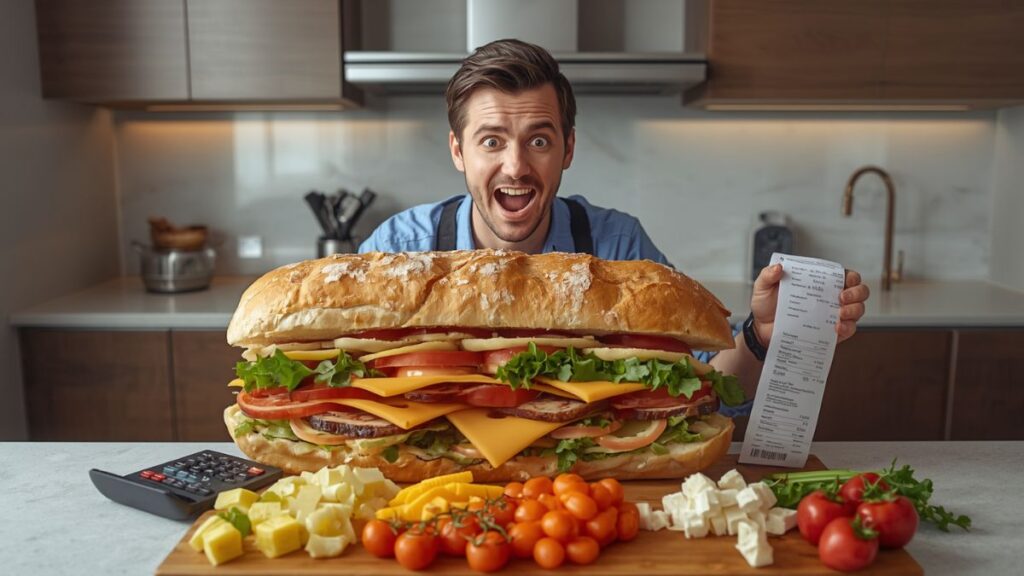
Kevin had a simple goal.
He wanted to save money.
Like many people, he occasionally looked at his monthly expenses and wondered how small purchases managed to grow into surprisingly large numbers.
Coffee.
Snacks.
Lunches.
Takeout.
The expenses never seemed significant individually.
Together, however, they behaved like a highly organized financial conspiracy.
One Monday afternoon, while purchasing a sandwich from a café near his office, Kevin stared at the receipt.
The total made him pause.
It wasn’t outrageous.
But it wasn’t cheap either.
Suddenly, inspiration struck.
He would start making lunch at home.
The plan seemed brilliant.
Practical.
Responsible.
Financially wise.
He imagined future versions of himself thanking present-day Kevin for such excellent decision-making.
By the time he reached home, he felt proud.
This was exactly the kind of mature financial habit successful adults probably practiced regularly.
That evening, Kevin announced his plan to his friend Ryan during a phone call.
“I’m done buying lunch.”
Ryan laughed.
“For how long?”
“Forever.”
“That’s ambitious.”
“I’m serious.”
Ryan had known Kevin for years.
Experience suggested caution.
Kevin often became enthusiastic about new ideas.
The enthusiasm usually lasted somewhere between three days and three weeks.
Still, Ryan supported him.
“Good luck.”
“I won’t need luck.”
Those words would become important later.
The following Saturday, Kevin decided preparation was essential.
If he was going to make excellent lunches, he needed excellent ingredients.
Naturally, this required research.
A lot of research.
He began by searching online for sandwich recipes.
Thirty minutes later, he had opened seventeen browser tabs.
One hour later, he had developed strong opinions regarding bread quality.
Two hours later, he found himself watching a documentary about artisan cheese production.
The project had escalated.
By evening, Kevin possessed a detailed shopping list.
Not just any shopping list.
A professional shopping list.
The kind of list that suggested its owner might secretly operate a high-end restaurant.
The next morning, he visited a specialty grocery store.
The first item was bread.
Ordinary bread would have been perfectly acceptable.
Kevin ignored ordinary bread immediately.
Instead, he purchased freshly baked artisan bread made by local bakers.
The loaf cost significantly more than expected.
But quality mattered.
Next came cheese.
Again, Kevin ignored standard options.
After sampling several varieties, he selected imported cheese recommended by an enthusiastic employee.
The employee described flavor notes with the seriousness of an art critic discussing a masterpiece.
Kevin became convinced.
Into the basket it went.
Then came vegetables.
Not regular vegetables.
Premium vegetables.
Organic vegetables.
Vegetables apparently raised under ideal emotional conditions.
The tomatoes looked magnificent.
The lettuce appeared flawless.
The peppers practically glowed.
Kevin purchased them all.
By the time he reached the checkout counter, the basket looked impressive.
The receipt looked even more impressive.
Kevin examined the total.
It seemed… higher than expected.
Much higher.
Still, these ingredients would create multiple sandwiches.
This was an investment.
An investment in future savings.
At least that was his explanation.
Back home, Kevin prepared for sandwich construction.
The process felt surprisingly serious.
He arranged ingredients neatly across the kitchen counter.
Selected appropriate utensils.
Even played background music.
If anyone observed him, they might have assumed he was competing in a culinary championship.
Carefully, he sliced the bread.
Layered vegetables.
Added cheese.
Applied specialty sauce.
Adjusted ingredient placement for visual balance.
The sandwich looked spectacular.
Genuinely spectacular.
It belonged on magazine covers.
Possibly museum exhibits.
Kevin admired his creation.
Then he took a bite.
The sandwich tasted incredible.
Every ingredient worked perfectly.
The bread remained crisp.
The vegetables tasted fresh.
The cheese added richness.
The sauce connected everything beautifully.
For several moments, Kevin simply enjoyed the experience.
The sandwich exceeded expectations.
Then curiosity appeared.
Exactly how much had this masterpiece cost?
Kevin retrieved the receipt.
Then a calculator.
The calculation seemed straightforward.
He estimated ingredient portions.
Divided costs accordingly.
Added everything together.
The result made him blink.
Then calculate again.
The second calculation produced the same number.
The sandwich cost more than the café sandwich he originally intended to replace.
Significantly more.
Kevin stared at the calculator.
The calculator remained confident.
The numbers appeared correct.
Somehow, in his effort to save money, he had created an exceptionally expensive sandwich.
A sandwich so costly that it defeated its own purpose.
The realization was deeply amusing.
Also slightly disappointing.
Mostly amusing.
That evening, Ryan called.
“How’s the money-saving lunch plan?”
Kevin hesitated.
“Complicated.”
Ryan immediately laughed.
“What happened?”
“I accidentally made a luxury sandwich.”
“A what?”
Kevin explained.
The artisan bread.
The imported cheese.
The specialty ingredients.
The final cost.
By the time he finished, Ryan could barely speak through laughter.
“You spent extra money to save money.”
“When you say it like that, it sounds bad.”
“It is bad.”
“The sandwich was excellent.”
“I don’t doubt it.”
Kevin defended himself.
“Quality has value.”
“Apparently a lot of value.”
The conversation ended with Ryan promising never to let Kevin forget the story.
This promise was fulfilled consistently.
Over the following weeks, Kevin continued making lunches.
However, he adjusted his strategy.
The expensive ingredients disappeared.
Simpler options replaced them.
Regular bread.
Normal cheese.
Reasonably priced vegetables.
The sandwiches remained delicious.
And finally became less expensive than restaurant lunches.
Progress.
Still, Kevin occasionally remembered the original sandwich.
The legendary sandwich.
The financial disaster disguised as lunch.
Months later, the story grew.
Friends shared it.
Coworkers heard about it.
Eventually, someone nicknamed the sandwich “The Executive Lunch.”
The name stuck.
One afternoon, a coworker asked whether the sandwich had actually been worth the money.
Kevin considered the question carefully.
Objectively?
Probably not.
Financially?
Definitely not.
Yet he smiled.
Because the memory itself remained valuable.
The experience had become a story.
One of those harmless mistakes people laugh about for years.
Sometimes that’s worth something too.
A year later, Kevin attended a neighborhood food festival.
Local vendors sold pastries, coffee, sandwiches, and specialty foods.
As he wandered between booths, one sign immediately caught his attention.
The vendor advertised:
“Artisan Gourmet Sandwiches.”
Kevin laughed.
The memory returned instantly.
Curious, he ordered one.
When the total appeared on the register, he smiled again.
The price matched his famous homemade sandwich almost exactly.
For a moment, he felt strangely proud.
Without professional training.
Without restaurant equipment.
Without culinary experience.
He had accidentally created a sandwich worthy of gourmet pricing.
The thought amused him greatly.
As he sat eating lunch, he reflected on the entire adventure.
The original goal had been saving money.
That part failed spectacularly.
Yet the experience taught him something useful.
Sometimes people become so focused on optimization that they forget simplicity works perfectly well.
Not everything requires premium upgrades.
Not every project requires perfection.
Sometimes a normal sandwich is exactly what a person needs.
Still, every now and then, Kevin treated himself.
A fancy loaf of bread.
A specialty cheese.
A carefully crafted sandwich.
Not because it saved money.
Because it made him smile.
And unlike financial strategies, smiles were difficult to calculate.
Years later, friends still mentioned the story.
Kevin no longer protested.
The sandwich had become part of his personal history.
A reminder that good intentions occasionally produce hilarious results.
And honestly, that was perfectly fine.
After all, life would be much less entertaining if every plan worked exactly as expected.
Reflection
Funny bedtime stories often reveal how ordinary goals can lead to extraordinary mistakes. The World’s Most Expensive Sandwich reminds us that perfection sometimes costs more than practicality. Fortunately, the best mistakes often become the funniest stories.