Margaret had never considered herself a remarkable person.
She had not traveled the world.
She had never written a book.
She had never appeared in newspapers or achieved anything that would attract attention from strangers.
Yet she had lived a life she quietly appreciated.
For nearly forty years, she had lived in the same small cottage at the edge of a village surrounded by rolling hills and open fields.
The cottage was modest but comfortable.
White-painted walls reflected the afternoon sunlight.
A stone pathway led to the front door.
Climbing roses framed the windows.
Behind the house sat a garden that had become Margaret’s favorite place in the world.
The garden was not large.
A visitor could walk from one end to the other in less than a minute.
Yet to Margaret, it felt endless.
Every corner held memories.
Every flower represented patience.
Every season brought its own quiet lessons.
She spent countless evenings there.
Especially at sunset.
There was something about the final hour of daylight that she loved.
The world seemed to slow down.
Birdsong softened.
The air cooled.
Shadows stretched across the grass.
Even the flowers appeared calmer.
Margaret often joked that her garden prepared for sleep the same way people did.
Slowly.
Gently.
Without hurry.
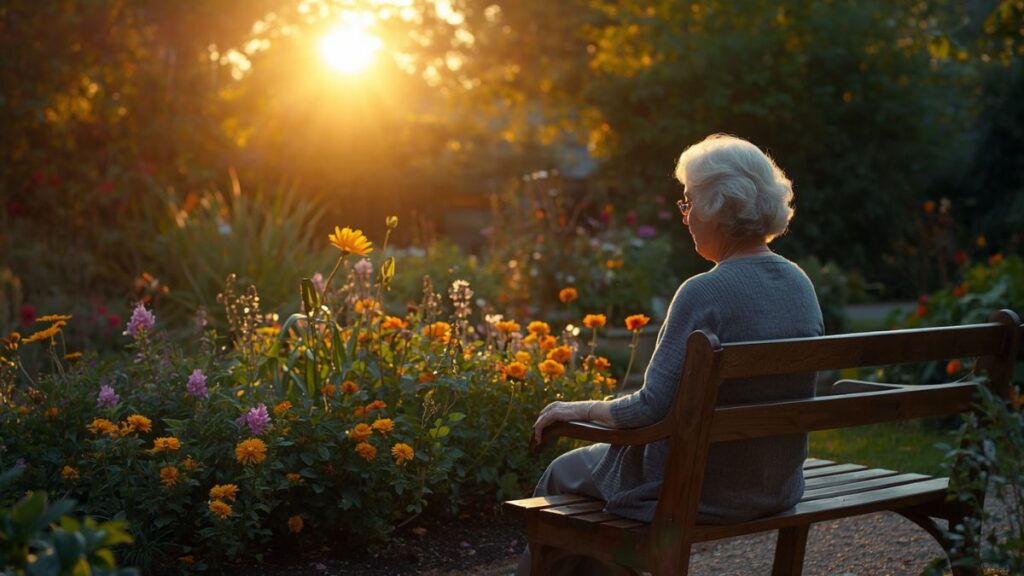
On one particular summer evening, the sky glowed with shades of gold and orange.
A warm breeze drifted through the village.
The scent of lavender filled the air.
Margaret stepped outside carrying her watering can.
As always, she followed the same routine.
She checked each flower bed.
She removed a few weeds.
She watered plants that needed attention.
She paused occasionally to admire new blooms.
The garden had changed a great deal over the years.
Some plants had flourished.
Others had disappeared.
New flowers replaced old ones.
Yet the cycle remained familiar.
Growth.
Change.
Renewal.
Nature never seemed concerned about moving too quickly.
Everything arrived when it was ready.
Margaret appreciated that.
Especially as she grew older.
Many people spent their lives rushing.
Rushing to succeed.
Rushing to achieve goals.
Rushing toward the next stage of life.
Yet the garden followed a different schedule.
It bloomed according to its own timing.
And somehow, that felt wiser.
As she moved between rows of flowers, something caught her attention.
Near the far corner of the garden stood a small plant she had almost forgotten about.
Months earlier, she had planted several seeds in that section.
Most had grown quickly.
Their flowers had already appeared.
Some had even finished blooming.
But one plant remained stubbornly unchanged.
Week after week, it had shown little progress.
Margaret had nearly given up on it.
She continued watering it out of habit rather than expectation.
Yet now, standing beneath the golden evening sky, she noticed something surprising.
A single flower had appeared.
Its petals were fully open.
Delicate and beautiful.
Margaret smiled immediately.
“There you are,” she whispered.
The flower seemed almost shy.
As though it had arrived quietly after everyone else had already finished.
She knelt beside it.
For several moments she simply looked at it.
The bloom wasn’t larger than the others.
It wasn’t brighter.
It wasn’t extraordinary.
Yet somehow it felt special.
Perhaps because of the wait.
Perhaps because it appeared when she least expected it.
Or perhaps because it reminded her of something important.
Margaret lowered herself onto a nearby bench.
The flower remained in view.
The sun slowly drifted toward the horizon.
Everything felt peaceful.
As she sat there, memories surfaced.
She thought about different periods of her life.
Times when she believed certain things should happen sooner.
Moments when she grew impatient.
Moments when she worried she had fallen behind.
She remembered being twenty-five and believing she should already have everything figured out.
She remembered watching friends move faster than she did.
Some built successful careers.
Others started families.
Others traveled and experienced adventures she could only imagine.
At times, she compared her progress to theirs.
And comparison rarely brought peace.
There always seemed to be someone achieving more.
Someone moving faster.
Someone reaching milestones first.
Back then, she often felt behind.
Yet looking back now, she realized how misleading those feelings had been.
Life had unfolded differently than expected.
Not worse.
Simply differently.
Many of her happiest experiences arrived later than planned.
Friendships developed gradually.
Opportunities appeared unexpectedly.
Lessons required time.
Even happiness sometimes arrived quietly and without warning.
Much like the flower blooming before her.
Margaret laughed softly.
“It seems you took the scenic route.”
The flower offered no response.
Yet somehow it felt like a conversation.
The garden had always been a patient teacher.
One season, a storm destroyed several plants she loved.
She thought they were gone forever.
Yet months later, new growth appeared.
Another year, a harsh winter delayed spring blooms.
When they finally arrived, they seemed even more beautiful.
Nature constantly reminded her that delays were not always failures.
Sometimes they were simply part of the process.
The sky darkened slightly as the sun continued sinking.
Birds flew overhead.
A distant church bell rang.
The village settled into its evening rhythm.
Margaret remained seated.
There was no need to rush indoors.
Moments like this deserved time.
Modern life often encouraged speed.
People wanted immediate results.
Immediate answers.
Immediate success.
Yet gardens operated differently.
They rewarded patience.
No amount of worrying could force a flower to bloom sooner.
No amount of frustration could accelerate the seasons.
Growth happened when conditions were right.
Not when people demanded it.
Margaret found comfort in that truth.
Especially now.
At her age, she had learned that many worthwhile things required patience.
Trust required patience.
Friendship required patience.
Healing required patience.
Even understanding required patience.
The flower seemed to embody that lesson perfectly.
Its late arrival did not diminish its beauty.
If anything, the wait made it more meaningful.
As twilight approached, Margaret thought about her late husband, Henry.
He had loved the garden too.
Years earlier, they spent countless evenings sitting together on the same bench.
Watching sunsets.
Sharing stories.
Enjoying simple silence.
Henry often reminded her that life was not a race.
Whenever she became anxious about the future, he would smile and say:
“The flowers aren’t competing with each other.”
At the time, she laughed.
Now she understood.
The rose never compared itself to the lavender.
The lavender never worried about the sunflower.
Each bloom arrived in its own season.
Each contributed something unique.
Perhaps people should do the same.
Margaret looked around the garden.
Every flower appeared different.
Different colors.
Different heights.
Different bloom times.
Yet together they created something beautiful.
The diversity was part of the charm.
Life worked similarly.
Not everyone followed the same path.
Not everyone moved at the same pace.
And that was perfectly fine.
The realization brought an unexpected sense of peace.
The flower continued swaying gently in the breeze.
The final rays of sunlight illuminated its petals.
For a brief moment, it seemed to glow.
Margaret knew the bloom would not last forever.
No flower did.
Yet that wasn’t the point.
Beauty rarely depended on permanence.
Its value often came from being temporary.
The sunset would disappear soon.
The season would eventually change.
The flower would fade.
Yet each moment remained worthwhile.
Because it happened.
Because it was experienced.
Because it mattered.
A cool evening breeze drifted across the garden.
Margaret stood slowly.
Her knees complained slightly, as they often did these days.
She smiled at the flower one last time.
“Thank you.”
Again, no response.
But none was needed.
Some lessons arrive without words.
Some wisdom emerges through observation.
The garden had spent years teaching her that.
As she walked toward the cottage, she glanced back once more.
The flower remained visible against the fading light.
Small.
Quiet.
Patient.
Its journey had taken longer than expected.
Yet it arrived exactly when it was meant to.
Margaret stepped inside her home.
The windows glowed warmly.
A kettle waited in the kitchen.
A comfortable chair sat near the fireplace.
The evening ahead promised simple comforts.
Yet her thoughts remained with the garden.
Specifically, with that single bloom.
The world often celebrates speed.
Fast success.
Fast results.
Fast progress.
But many of life’s most meaningful experiences cannot be rushed.
They unfold gradually.
Patiently.
Naturally.
Just like flowers.
Margaret prepared her tea and settled beside the window.
Outside, darkness slowly replaced daylight.
The garden faded into shadows.
Tomorrow morning she would return.
The flower would still be there.
And perhaps another lesson would be waiting too.
That possibility always made her smile.
Because gardens, much like life, have a way of revealing wisdom to those willing to slow down and pay attention.
Reflection
Life rarely unfolds according to a perfect schedule. Some opportunities, relationships, and achievements arrive later than expected, but that does not make them any less meaningful. Like the flower that bloomed at its own pace, many of life’s best moments appear when the time is right. Patience often allows us to appreciate them even more.